Isaiah 5:2
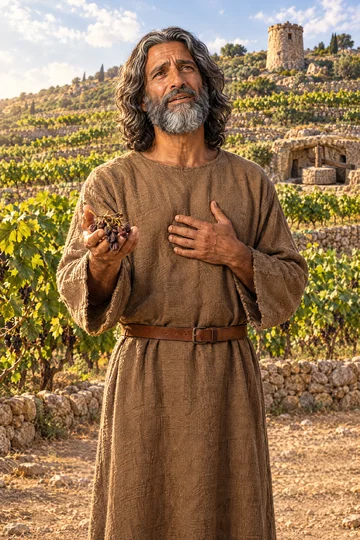
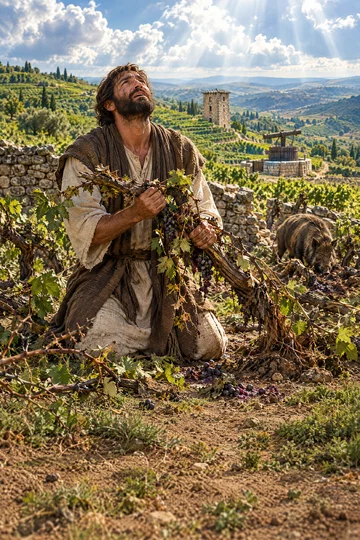
And he fenced it, and gathered out the stones thereof, and planted it with the choicest vine, and built a tower in the midst of it, and also made a winepress therein: and he looked that it should bring forth grapes, and it brought forth wild grapes.
Translations
And he fenced it, and gathered out the stones thereof, and planted it with the choicest vine, and built a tower in the middle of it, and also made a wine press therein: and he looked that it should bring forth grapes, and it brought forth wild grapes.
And he fenced it, and gathered out the stones thereof, and planted it with the choicest vine, and built a tower in the midst of it, and also made a winepress therein: and he looked that it should bring forth grapes, and it brought forth wild grapes.
And he fenced it, and gathered out the stones thereof,
And planted it with the choicest vine,
And built a tower in the midst of it,
And also made a winepress therein:
And he looked that it should bring forth grapes,
And it brought forth wild grapes.And he fenced it, and gathered out the stones of it, and planted it with the choicest vine, and built a tower in the midst of it, and also made a wine-press therein: and he expected that it would bring forth grapes, and it brought forth wild grapes.
and he made a trench about it, and gathered out the stones thereof, and planted it with the choicest vine, and built a tower in the midst of it, and also hewed out a winepress therein: and he looked that it should bring forth grapes, and it brought forth wild grapes.
and he digged it, and gathered out the stones thereof, and planted it with the choicest vine, and built a tower in the midst of it, and also hewed out a winepress therein: and he looked that it should bring forth grapes, and it brought forth wild grapes.
And he fenceth it, and casteth out its stones, And planteth it [with] a choice vine, And buildeth a tower in its midst, And also a wine press hath hewn out in it, And he waiteth for the yielding of grapes, And it yieldeth bad ones!
And he dug it, and gathered out the stones thereof, and planted it with the choicest vine; and he built a tower in the midst of it, and also hewed out a winepress therein; and he looked that it should bring forth grapes, but it brought forth wild grapes.
And he thoroughly digged it, And gathered out the stones thereof, And planted it with a precious vine, And built a tower in the midst thereof, Moreover also a wine-press, hewed he therein,—Then waited he that it should bring forth grapes. And it brought forth wild grapes:
Berean Standard Bible, Majority Standard Bible
He dug it up and cleared the stones
and planted the finest vines.
He built a watchtower in the middle
and dug out a winepress as well.
He waited for the vineyard to yield good grapes,
but the fruit it produced was sour!He dug it up,
gathered out its stones,
planted it with the choicest vine,
built a tower in the middle of it,
and also cut out a wine press in it.
He looked for it to yield grapes,
but it yielded wild grapes.And after working the earth of it with a spade, he took away its stones, and put in it a very special vine; and he put up a watchtower in the middle of it, hollowing out in the rock a place for the grape-crushing; and he was hoping that it would give the best grapes, but it gave common grapes.
And hee hedged it, and gathered out the stones of it, and he planted it with the best plants, and hee builte a towre in the middes thereof, and made a wine presse therein: then hee looked that it should bring foorth grapes: but it brought foorth wilde grapes.
Douay-Rheims (Challoner revision)
And he fenced it in, and picked the stones out of it, and planted it with the choicest vines, and built a tower in the midst thereof, and set up a winepress therein: and he looked that it should bring forth grapes, and it broutht forth wild grapes.
Pictures
Cross-references 20 of 29
- Matthew 21:33
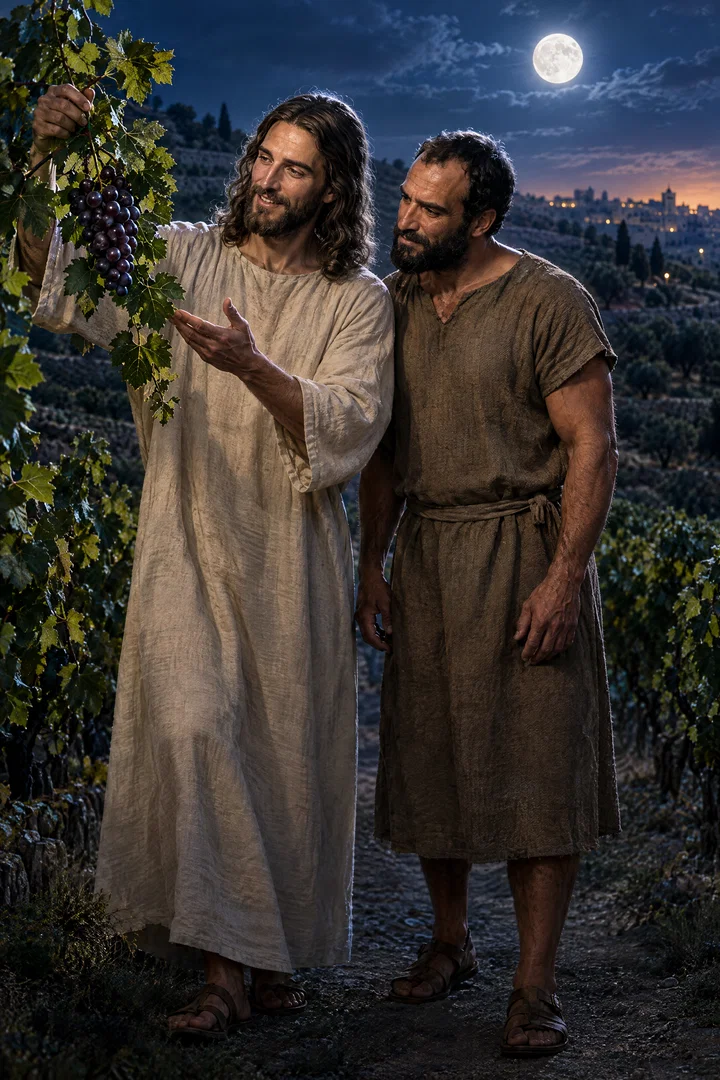
Hear another parable: There was a certain householder, which planted a vineyard, and hedged it round about, and digged a winepress in it, and built a tower, and let it out to husbandmen, and went into a far country:
Jesus echoes Isaiah’s carefully prepared vineyard and its failure to yield good fruit.
- Psalms 80:8-9
Thou hast brought a vine out of Egypt: thou hast cast out the heathen, and planted it.
Both picture God bringing Israel out of Egypt and planting it as a vine.
- Isaiah 5:7
For the vineyard of the LORD of hosts is the house of Israel, and the men of Judah his pleasant plant: and he looked for judgment, but behold oppression; for righteousness, but behold a cry.
Identifies the Lord’s vineyard as Israel and its bad fruit as oppression instead of justice.
- John 15:1-5
I am the true vine, and my Father is the husbandman.
Contrasts Israel’s wild grapes with Christ, the true Vine, in whom branches bear fruit.
- Luke 20:9-16
Then began he to speak to the people this parable; A certain man planted a vineyard, and let it forth to husbandmen, and went into a far country for a long time.
The vineyard parable echoes Isaiah’s vineyard and depicts the tenants’ rejection and judgment.
- Isaiah 27:3
I the LORD do keep it; I will water it every moment: lest any hurt it, I will keep it night and day.
Both describe the Lord’s constant care in keeping and watering his vineyard.
- Mark 12:1-9
And he began to speak unto them by parables. A certain man planted a vineyard, and set an hedge about it, and digged a place for the winefat, and built a tower, and let it out to husbandmen, and went into a far country.
The vineyard parable repeats the vineyard imagery and portrays the husbandmen’s guilt and judgment.
- Jeremiah 2:21
Yet I had planted thee a noble vine, wholly a right seed: how then art thou turned into the degenerate plant of a strange vine unto me?
Israel is pictured as a choice vine turned degenerate.
- Matthew 21:43
Therefore say I unto you, The kingdom of God shall be taken from you, and given to a nation bringing forth the fruits thereof.
The kingdom is taken from an unfruitful people and given to a fruit-bearing nation.
- Hosea 10:1
Israel is an empty vine, he bringeth forth fruit unto himself: according to the multitude of his fruit he hath increased the altars; according to the goodness of his land they have made goodly images.
Both describe Israel’s degenerate vine and its fruit.
- Luke 13:6-9
He spake also this parable; A certain man had a fig tree planted in his vineyard; and he came and sought fruit thereon, and found none.
The barren fig tree illustrates the judgment facing fruitless Israel.
- Galatians 5:22-23
But the fruit of the Spirit is love, joy, peace, longsuffering, gentleness, goodness, faith,
Names the fruit the Lord expects from his vineyard.
- Isaiah 61:3
To appoint unto them that mourn in Zion, to give unto them beauty for ashes, the oil of joy for mourning, the garment of praise for the spirit of heaviness; that they might be called trees of righteousness, the planting of the LORD, that he might be glorified.
Both describe God’s people as His planting, meant to bear fruit and glorify Him.
- Matthew 21:41
They say unto him, He will miserably destroy those wicked men, and will let out his vineyard unto other husbandmen, which shall render him the fruits in their seasons.
The vineyard’s wicked tenants are sentenced to destruction.
- Matthew 21:38
But when the husbandmen saw the son, they said among themselves, This is the heir; come, let us kill him, and let us seize on his inheritance.
The vineyard tenants plot to kill the heir.
- Revelation 14:19
And the angel thrust in his sickle into the earth, and gathered the vine of the earth, and cast it into the great winepress of the wrath of God.
The earthly vine is gathered into God’s winepress for judgment.
- Matthew 7:16-20
Ye shall know them by their fruits. Do men gather grapes of thorns, or figs of thistles?
God judges by the fruit produced.
- Matthew 21:37
But last of all he sent unto them his son, saying, They will reverence my son.
The vineyard owner sends his son after the servants.
- Matthew 21:39
And they caught him, and cast him out of the vineyard, and slew him.
The vineyard’s owner’s son is cast out and killed.
- John 15:5
I am the vine, ye are the branches: He that abideth in me, and I in him, the same bringeth forth much fruit: for without me ye can do nothing.
Fruitfulness comes through abiding in the vine, whereas the vineyard’s planting fails to yield good fruit.
Commentary
Each commentary is drawn from primary sources: the writings of Ellen G. White and Adventist pioneers and periodicals. Each commentary is separate. Its own words are not a quotation; follow the references to read the source passages.
Ellen G. White
59 sources
The vineyard of the Lord is the house of Israel, planted in the fruitful hill of Canaan with every temporal and spiritual advantage and with nothing left undone to make it flourish to His honor.PK 13.2–4GC88 20.1COL 214.2–3GC 19.1–2COL 284.2–285.1 Its fence is His law, especially the Ten Commandments to guard and bless the obedient, its tower is the temple where His glory dwelt, and its choicest vine is Christ Himself planted among the people.Ms 23, 1900, par. 2–3PK 17.3COL 287.2–288.1RH Jan 25, 1906 God rightly looked for good grapes of obedience, righteousness, faith, love and self-sacrificing service, but it brought forth wild grapes of formalism, unrighteousness and misrepresentation of Him before the nations.GC88 20.1ST Jan 6, 19096MR 318.1–2Lt 147, 1899, par. 13Ms 123, 1899, par. 10–11 After long care through servants and prophets and Christ's own ministry of healing, pardon and invitation, Israel beat and killed the messengers and at last cast out and slew the Son, so unfaithfulness brought desolation, the destruction of city and temple, and the taking of the kingdom to a people bringing forth its fruits.4SP 19.2–20.1ST Feb 27, 1896DA 102.3–4Ms 73, 1901, par. 5–6ST Feb 17, 1898 The same charge rests now on God's church and on every family and person, who have received every provision to bear fruit to His glory and whose mere profession without conversion and obedience is only wild fruit that He cannot bless.COL 296.2Ms 14, 1888, par. 10–11PK 22.1RH Apr 10, 1900Ms 83, 1901, par. 2–4
Careful Vineyard Preparation
The verse describes a work left nothing undone, fencing the vineyard, gathering out its stones, planting it with the choicest vine, building a tower in its midst and making a winepress therein, so that it had everything needed to flourish and bring honor to its owner.PK 13.2–4COL 214.2–3COL 284.2–285.1Ms 166, 1898, par. 1–316MR 331.1 That protection and clearing, planting and equipping express the special blessings, opportunities and religious and national advantages given to Israel, with the expectation of a fruitful harvest of good fruit.COL 214.2–3COL 284.2–285.1Ms 23, 1900, par. 2–316MR 331.1 The planting was in a fruitful place on a very fruitful hill, which is Canaan, with its temporal and spiritual prosperity, its oracles and commandments given through Moses, and its appointed guides and ministers.GC88 20.1GC 19.1–2ST Jan 6, 1909Ms 23, 1900, par. 2–3 God brought the vine from Egypt, drove out its enemies, transplanted it into good soil, and continued to tend it, placing it where nothing need hinder it.GC88 20.1GC 19.1–2ST Jan 6, 1909
The fence or hedge around the vineyard is the law, especially the Ten Commandments, which fenced Israel off as distinct from other nations.Ms 23, 1900, par. 2–3ST Oct 31, 1900Ms 153, 1899, par. 33–35Ms 73, 1901, par. 1–2 It was given for the people's good and protection, to guard those who obey from evil and from self-destruction through sin, and obedience brings true happiness, life, abundant blessing and great reward on condition of obedience, for the commandments are not grievous.Ms 23, 1900, par. 2–3ST Oct 31, 1900Ms 153, 1899, par. 33–35Ms 73, 1901, par. 1–214MR 343.1–3 That guarding hedge began in Eden, where the marriage law and the Sabbath law were plainly and distinctly defined so there would be no ignorance or misunderstanding.13MR 184.1Ms 91, 1899, par. 17 When creation was finished God rested on the seventh day and blessed the day of His rest, while the morning stars sang together and all the sons of God shouted for joy.13MR 184.1Ms 91, 1899, par. 17
The tower in the midst of the vineyard is the holy temple in the midst of the land at its center in Canaan, where God's glory dwelt above the mercy seat.COL 287.2–288.1RH Jan 25, 1906 The choicest vine planted on the hills of Palestine inside the fenced vineyard is Christ Himself, planted among Israel.PK 17.3 The men of Israel despised Him and finally cast Him over the vineyard wall, bruising Him and trampling Him underfoot in hope of destroying Him forever.PK 17.3 Then the Husbandman removed the vine and hid it from their sight and planted it again on the other side of the wall, where its stock is no longer visible and is placed beyond the power of men to reach or harm, while its branches hang over the wall so that grafts can still be joined to it.PK 17.3
Israel's standing as the planted and prosperous vine was publicly represented by the great vine at the entrance to the temple in Jerusalem.2SP 389.1–390.14RED 121.1–122.1 It was made of gold and silver with green leaves and massive clusters of grapes, wrought at enormous expense by the most skillful artists, twined about white glistening pillars and shining in the sun as a thing of beauty and pride.2SP 389.1–390.1 That golden vine displayed Israel as prosperous and honored, even as the vineyard song's expectation of good fruit stood in contrast to the wild grapes produced.4RED 121.1–122.1
Vineyard Identity and Purpose
The vineyard of the Lord of hosts is the house of Israel, the Jewish nation and church, Jerusalem and the once-chosen people, very dear to His heart.PK 13.2–4GC88 20.16MR 318.1–2Ms 123, 1899, par. 10–11 It was planted in a fruitful place on a very fruitful hill, fenced and cleared, planted with the choicest vine, and furnished with a tower and a winepress, so that nothing was left undone that could make it fruitful and an honor to its owner.PK 13.2–4GC 19.1–26MR 318.1–2Ms 123, 1899, par. 10–11 That preparation gave Israel every advantage and opportunity, His oracles and commandments through Moses, appointed guides and ministers, and temporal and spiritual prosperity, with the law of the Ten Commandments fencing it off as distinct from other nations.PK 13.2–4Ms 123, 1899, par. 10–11 Christ Himself brought it out of Egypt, drove out its enemies, guarded and cared for it, tended it through His servants, and at last came in person to plead with it, still expecting good fruit but finding wild grapes.PK 13.2–4GC88 20.1GC 19.1–2 The same care reaches His saints who gather year by year to worship Him, from whom He desires the fruits of obedience and faithful worship, for the verse is part of the song of the wellbeloved about His vineyard, to be sung with the heart and with the understanding by lips touched with the live coal from the altar, and the obedience Christ wants makes souls precious in His sight.6MR 318.1–2Ms 123, 1899, par. 10–11
God chose and trained Israel and richly blessed it with privileges so that it would represent Him in the world, honor Him by steadfast obedience, preserve practical godliness kept from idolatry, and represent heaven in a sinful world.PK 13.2–4COL 284.2–285.1Ms 23, 1900, par. 2–3COL 292.1–3 Its calling was to display His kingdom's principles and His character and glory among the nations, to restore His moral image in humanity, to preserve His truth and justice and purity, to spread His light, to extend His kingdom over the earth, to reach the perfection of righteousness, and to bring blessing to all mankind.PK 13.2–4COL 284.2–285.1Ms 23, 1900, par. 2–3COL 292.1–3Ms 134, 1899, par. 5–6 That high purpose depended on obedience, for its prosperity, strength and growth were to follow from obedience to God's law, and the fruitfulness and honor of the vineyard rested on that obedience.Ms 23, 1900, par. 2–3Ms 134, 1899, par. 5–6
The vineyard was let out to keepers occupying it as husbandmen, especially the priests and teachers, to render Him the fruits in their seasons.COL 292.1–3PK 22.1COL 304.3–305.1ST Feb 17, 1898 Their charge was faithfully to teach His goodness and mercy and His claim to the people's love and service, and to lead the nation to return what He claimed.COL 292.1–3COL 304.3–305.1ST Feb 17, 1898 That same charge to keep His vineyard as faithful husbandmen belongs now to His church on earth, entrusted with the vineyard and its fruit.Ms 123, 1899, par. 10–11PK 22.1
Expected and Wild Fruit
The grapes the owner looked for and had every right to expect were good fruit, obedience to His commandments that makes souls precious in His sight.6MR 318.1–2Ms 123, 1899, par. 10–1116MR 331.1 That expected fruit is the fruits of righteousness, faith, patience, love, forbearance, heavenly unity, and meekness, with love, humility, and self-sacrificing service required of His vineyard.Lt 147, 1899, par. 13COL 305.2–306.1ST Jan 7, 1913 Such fruit must ripen even amid hardship and darkness, and it is the obedience and faithful worship He desires from His church and people, who have received every provision needed to bear it.Lt 147, 1899, par. 13Ms 123, 1899, par. 10–11COL 305.2–306.1 The verse stands as the song of the wellbeloved about His vineyard, very dear to His heart, reaching His saints who gather year by year to worship Him, to be sung with the heart and with the understanding by lips touched with the live coal from the altar.6MR 318.1–2
Instead the vineyard brought forth wild grapes, degenerate like a wild vine, unrighteous and fruitless despite all care and every advantage.GC88 20.1GC 19.1–2Ms 138, 1899, par. 13–16ST Jan 7, 1913 In Christ's day especially there was greater outward piety and outward show, yet the people lacked godly character, the graces of God's Spirit, and the beautiful character seen in Joseph.ST Jan 6, 1909COL 215.1–2 God sought fruit through His Son and found none, for the generation of Christ's day bore no good fruit despite profession.ST Jan 6, 1909 The failure was not mere fruitlessness but hindrance, withholding from the world the blessings God intended to give, misrepresenting Him among the nations and giving the Gentiles a false picture of Him and His kingdom.ST Jan 6, 1909COL 215.1–2COL 292.1–3 Its religion misled people and brought ruin rather than salvation.
Wild fruit proves the vine has no living attachment to the true and living Vine.Ms 14, 1888, par. 10–11 Mere profession of faith will never save, for without being truly converted to God and sanctified through the truth there is no beauty in the soul, only deception and a fruitless life contrary to what was planted.Ms 83, 1901, par. 2–4Lt 10, 1890, par. 30–311MR 380.2–3 One who lets the heart be hardened and natural inclinations prevail fails to receive heaven's impress and becomes spiritually sapless and impoverished, bearing only wild fruit and failing the purpose of planting, which true Christian life fulfills by bearing righteousness in conduct that distinguishes believers from the world.RH Apr 10, 1900Ms 83, 1901, par. 2–4 Such a condition reveals a hidden wisdom from below that is earthly, sensual, and devilish, like a fountain that should send forth sweet water but is poisoned.Ms 14, 1888, par. 10–11 Obedience to God's law is the condition of bearing fruit to His glory, and teachers who lead people to disregard that law withhold the vineyard's fruit from God and are unfaithful servants.COL 305.2–306.1
Persistent Care and Rejection
Christ Himself brought Israel out of Egypt and transplanted the vine into good soil in Canaan, driving out its enemies and nourishing and caring for it there, and He continued to tend it through His servants with a continuing hope of saving it from destruction even after it failed to bear the fruit He sought.GC88 20.1GC 19.1–24SP 19.2–20.1ST Feb 27, 1896 The digging and pruning and cherishing of the vineyard was His own unwearied three-year ministry in Jerusalem seeking fruit from His own planting.4SP 19.2–20.1 Going in and out among the people, He healed the sick, comforted the sorrowing, raised the dead, spoke pardon and peace to the repentant, and invited the weak and weary and helpless and desponding without respect to age or character to come for rest.4SP 19.2–20.1
That continued care also included sending prophets to warn and to receive fruit, and establishing sacrifices that pointed to the one great Sacrifice.ST Feb 27, 1896 When the time of fruit drew near He sent His servants the prophets to receive the fruits in their seasons, but the husbandmen beat one and killed another and stoned another, and did likewise to others sent afterward.ST Feb 17, 1898 Last of all He sent His Son, whom they cast out of the vineyard and slew in order to seize the inheritance.ST Feb 17, 1898
Israel's history became one of rebellion and forgetfulness of God, resisted grace, abused privileges, ignored warnings and national apostasy.Lt 20, 1892, par. 31–32ST Feb 27, 1896 Religion was reduced to hollow formalism while grace was resisted and God's messengers were persecuted and killed.ST Feb 27, 1896 Steadfast love and mercy beaten back and returning in untiring love were answered with indifference and contempt, with pleadings of love despised, counsel spurned and warning ridiculed, as an impenitent city turned from her best friend and only helper.4SP 19.2–20.1 Yet Jesus bore long with offenders and grieved over them, and came in person pleading with the people despite their failure.GC88 20.1GC 19.1–2Lt 20, 1892, par. 31–32
The unfaithful keepers entrusted with the vineyard were the priests and teachers, who sought their own glory and the vineyard's benefits instead of faithfully teaching God's goodness and mercy and His claim to love and service.COL 292.1–3 They distorted Scripture, burdened the people with human requirements, misused the resources entrusted for God's work, and withheld from God the service He claimed.COL 292.1–3COL 304.3–305.1 By misleading the people they turned the nation away from Christ and led them from God's commandments, giving the Gentiles a false picture of God and His kingdom.COL 292.1–3COL 304.3–305.1
Israel also failed to take possession of the land as intended, crowding into Jerusalem instead of spreading by faith through the territory provided.Ms 135, 1899, par. 13–14 That failure to occupy the vineyard marked a departure from God, and following His plan would have led to a very different future history.Ms 135, 1899, par. 13–14 Through ingratitude and refusal of God's opportunities the vineyard became fruitless.ST Feb 27, 1896
Judgment and Transfer Foretold
The fruitful vineyard became a desolate waste, picturing Israel in its degraded condition after rich care failed to yield the fruit sought.DA 102.3–4Ms 73, 1901, par. 5–6 Great light, blessing and prosperity had been given, yet unfaithfulness and failure to render the Lord the fruits due to Him brought desolation.Ms 73, 1901, par. 5–6 The vineyard stands for Jerusalem and the people Christ came to redeem, who received light and offers of mercy and rejected them, so that stubbornness and iniquity led to their being cast off and to the destruction of Jerusalem.Ms 41, 1886, par. 12–14
God does not bless and sustain His people when they abandon His commandments, for while He forgives those who repent He withdraws His favor from those who persist in sin, exalt themselves and treat the sacred as common.ST Oct 31, 1900 The vineyard was the once-chosen people entrusted with sacred responsibility and guilty of breaking that trust.ST Oct 31, 1900 The question of what more could have been done for the vineyard measures the full light, care and mercy already bestowed on the people Christ came to redeem.Ms 41, 1886, par. 12–14
God planted Israel as a fenced vineyard with a hedge round about, a winepress and a tower, set it with the choicest vine, and let it out to husbandmen to render Him the fruits in their seasons.ST Feb 17, 1898 The vineyard is the Jewish nation and its national privileges, the husbandmen are its leaders, and the grapes looked for are the fruits of righteousness.ST Feb 17, 1898 When the time of fruit drew near He sent His servants the prophets to receive the fruits, but the husbandmen beat one and killed another and stoned another, and did likewise to others sent afterward, and last of all He sent His Son, whom they cast out of the vineyard and slew in order to seize the inheritance.ST Feb 17, 1898 By this the past and the future history of the Jews is faithfully illustrated and their true religious character exposed, and their own answer condemns them and admits the justice of the punishment soon to fall, that the lord of the vineyard will miserably destroy those wicked men.ST Feb 17, 1898 The kingdom of God and national privileges shall be taken from them and given to a nation bringing forth its fruits, a taking away already commenced that will end in the destruction of their temple and city and the dispersion of the nation.ST Feb 17, 1898
The Master of the vineyard planted, tended and looked for fruit, but Israel failed and rejected Him, and that same charge to keep His vineyard as faithful husbandmen now belongs to His church on earth.PK 22.1 Yet His love for the lost race and His plan for their salvation and His eternal purpose are revealed in Israel's call, successes and failures, restoration to divine favor, rejection of the Master, and carrying out of the plan of the ages by a goodly remnant to whom all the covenant promises will be fulfilled.PK 22.1
Application to Church Today
The parable of the vineyard belongs not to the Jewish nation alone but to the church in the present generation, even now to God's church on earth.COL 296.2PK 22.1 That church has received great privileges and blessings, with every provision needed to bear good fruit, and God expects corresponding returns from it.COL 296.2PK 22.1 The same charge to keep His vineyard as faithful husbandmen that once belonged to Israel belongs today to its keepers.PK 22.1 His love for the lost race, His plan for salvation, and His eternal purpose are seen in Israel's call, successes and failures, restoration to favor, rejection of the Master, and the carrying out of the plan of the ages by a goodly remnant to whom all covenant promises will be fulfilled.PK 22.1
The Lord's church is a vine planted in a fruitful field and in a fruitful place, tended with tender care so that it would bear good fruit, even the fruits of righteousness.ST Jan 18, 18835T 240.2ST Jan 7, 1913 Yet it can become like a degenerate vine and produce wild grapes despite God's care and blessings.5T 240.2ST Jan 7, 1913 Its branches spread widely but come to depend on earthly human supports rather than remaining fruitful under God's care.ST Jan 18, 18835T 240.2 God's expectation to bring forth fruit applies to His people now, for their lives should show the results of His care.8T 52.1–2 Selfish pursuits and strife fail that expectation and offend Him.8T 52.1–2
The world is the Lord's vineyard, belonging to Him and to be worked in all its parts without partiality to elevate the standard of truth everywhere.14MR 31.1–2 No portion is to be robbed to absorb means in one location while other places are hindered.14MR 31.1–2 He does not judge as man judges by finite judgment, but looks at the character of the fruit borne and by that judges the tree.14MR 31.1–2 The vineyard image therefore calls for missionary advance, for the Southern field is a neglected part of the Lord's work that has received only minimal attention despite duty clearly laid out for years.SPBC 164.4 Other places stand ready and waiting to be worked, needing workers and freely given means, while the prepared vineyard waits for labor.STB 291.1–2 God's work as a field requires spreading workers and people across the ground to bring more under cultivation, extend the work, and bring in new elements, rather than concentrating people and effort in one part and leaving other parts unworked.Lt 4, 1895, par. 2
God as Master of the vineyard is the one to whom workers should bring their needs.CNA 140.2 The warning of the cultivated plant expected to bear good grapes but producing wild fruit reaches individuals, families, and institutions.Ms 14, 1888, par. 10–11RH Apr 10, 1900Lt 10, 1890, par. 30–31Lt 8a, 1896, par. 14 It pictures godless families and corrupted institutions in danger of becoming nurseries of folly and ungodliness that God cannot bless.Ms 14, 1888, par. 10–11 It pictures a home where criticism and censure damage patience and sweet disposition so that the household yields harmful rather than loving results.Lt 8a, 1896, par. 14 It pictures a person whose hardened heart and prevailing natural inclinations keep heaven's impress away, leaving the life spiritually sapless and impoverished, and a person whose mere profession lacks genuine conversion and sanctification.RH Apr 10, 1900Lt 10, 1890, par. 30–31
Wild fruit proves no living attachment to the true and living Vine, revealing a hidden wisdom from below that is earthly, sensual, and devilish, like a fountain that should send forth sweet water but is poisoned.Ms 14, 1888, par. 10–11 A vine that once bore grapes now yielding wild grapes means people who once lived the faith and bore good fruit can depart into a sad experience, with present history contrasting painfully with the past.7MR 196.4Lt 356, 1908, par. 16–18 It is like the same fountain sending forth sweet water and bitter, bringing grief, weariness, pain of heart, and sadness of soul.7MR 196.4Lt 356, 1908, par. 16–18 Since the end is near when truth alone will triumph, truth as it is in Jesus must be planted in the heart by the Holy Spirit and tended daily there by grace.7MR 196.4Lt 356, 1908, par. 16–18
The wild grapes also represent truth displaced by error, as when a wild branch is grafted in producing a corrupt result and bringing centuries of darkness and ignorance.Ms 54, 1898, par. 3 Human theories are like the forbidden fruit Satan offered the first parents, false and ruinous, disordering the imagination unlike God's Word.Ms 54, 1898, par. 3 The verse is part of the song of the wellbeloved about His vineyard, very dear to God's heart, reaching His saints who gather year by year to worship Him.6MR 318.1–2 It is to be sung with the heart and with the understanding by lips touched with the live coal from the altar, and the fruit Christ wants is obedience to God's commandments, which makes souls precious in His sight.6MR 318.1–2 God expects His people to bear fruit, for Christianity that does not produce righteousness in conduct is a strange vine failing its planting purpose and failing to distinguish believers from the world, while true Christian life bears fruit.Ms 83, 1901, par. 2–4
The people who received great light and every advantage are responsible to share that light with those who lack it rather than reject the blessing.STMW7 61.1–2
Sources
Pioneers and periodicals
49 sources
The vineyard is Israel and Judah, especially Jerusalem, planted by God in the fruitful hill and land of Canaan after He brought them out of Egypt.ST Jan 6, 1909ST Apr 18, 1878ST Feb 5, 1902ST Nov 20, 1901RH Nov 6, 1900 He left nothing undone to make it fruitful, fencing it with His law of the Ten Commandments, clearing out stones and obstacles, planting it with the choicest vine, building a watch-tower in its midst picturing His temple dwelling among them, making a winepress therein, and tending it night and day year after year.RH Jan 25, 1906STST Apr 18, 1878ST Feb 5, 1902ST Feb 13, 1901 He looked for good grapes of justice and righteousness, mercy and upright character, the fruits of righteousness and of the Spirit, but it brought forth only wild, sour, bitter and poisonous grapes of oppression, wickedness and self-serving emptiness.ST Jan 18, 1883STST Apr 18, 1878RH Nov 5, 1872ST Nov 8, 1905 There was no neglect or fault in God, so His disappointment is just and His judgment is right in taking away the hedge and protection, breaking down the wall, laying the vineyard waste and withholding rain.ST Apr 18, 1878RH Nov 5, 1872ST Nov 8, 1905RH Feb 4, 1915 The same care and expectation reaches to Christ's sending of servants and finally the Son, and to His church and to each soul today, which as branches of the true Vine must bear the fruit of the Spirit in vital connection with Christ or else repeat Israel's failure and rejection.ST Sep 24, 1894ST Apr 26, 1905ST Jul 7, 1909ST Oct 11, 1899ST Mar 18, 1897
Vineyard Picture and Terms
The vineyard stands on a very fruitful hill and fruitful ground, a fruitful field and place, which is Canaan, the land promised to Abraham and once occupied by Judah.ST Jan 18, 1883ST Feb 5, 1902RH Nov 5, 1872RH May 30, 1854 It is where God took Israel from Egypt and planted them after establishing them in that fruitful place with obstacles cleared away.ST Jan 6, 1909RH May 30, 1854 The planting there was with the choicest vine, given special care and every advantage so it might glorify Him.ST Feb 5, 1902
The owner fully prepares it by fencing it, gathering out the stones and brush, breaking it up, and planting it with the choicest vines.ST Apr 18, 1878RH Nov 5, 1872ST Apr 8, 1903 He builds a tower in the midst of it and also makes a winepress therein for its care and harvest.RH Nov 5, 1872ST Apr 8, 1903ST Feb 5, 1902 Moreover He waters it every moment and keeps it night and day, and carefully cultivates it year after year till the time to expect fruit.RH Nov 5, 1872ST Apr 8, 1903 Just as the vine needs the support of trellis or tree, being unable to stand alone, so people unable to do anything of themselves must be upheld by the right hand of His righteousness.ST Apr 8, 1903
A well-ordered vineyard had a watch-tower built in its midst as an outlook station where watchmen looked out for persons or animals that would damage it, a practice still common in Palestine.ST Feb 13, 1901 The tower also pictures the temple at the center of Canaan, where God's glory dwelt above the mercy seat.RH Jan 25, 1906 In that sense it means God establishing His temple among the people in His chosen possession.RH Jan 25, 1906ST Nov 7, 1895
The fence or hedge means the law of the Ten Commandments fencing Israel off as distinct from other nations.ST Oct 31, 1900 It means divine barriers placed around them and a safeguard for the people, even keeping in mind God as Creator and Benefactor, so that while it remains unbroken they are safe from every outward foe.ST Nov 8, 1905ST Nov 7, 1895 The planting with the choicest vine means making them custodians of His law.ST Nov 7, 1895 Planted and let out to husbandmen, they were to render Him the fruits in their seasons.ST Feb 17, 1898
The good grapes looked for are righteous judgment and upright character.ST They are justice and righteousness, mercy and just judgment, and the fruits of righteousness.ST Jan 18, 1883ST Feb 17, 1898ST Apr 18, 1878ST Feb 5, 1902 The fruit now expected is the fruit of the Spirit — love, joy, peace, patience, gentleness, goodness, faith, meekness, and temperance — with evidence of faith, love, and patience and use of every spiritual advantage.ST Feb 5, 1902
The wild grapes yielded instead are in Palestine sour and bitter and inedible, little wild sour grapes.ST Apr 18, 1878RH Nov 5, 1872 They are common wild fruit and wild worthless grapes, mere sour grapes rather than expected well-developed grapes.ST Nov 8, 1905ST Feb 5, 1902RH Apr 9, 1901 There are false vines that bear such wild grapes, and their fruit is poisonous and noxious and sets on edge the teeth of the eater, in contrast to the True Vine from which true life comes.ST Mar 11, 1897
God's Complete Provision
Nothing was left undone that could make the vineyard fruitful and an honor to its owner, for there was no neglect, no missing means, and no fault in God.RH Nov 5, 1872RH Feb 4, 1915ST Apr 8, 1903ST Sep 3, 1902 The well-beloved chose a very fruitful hill well adapted to grapes, fenced it, gathered out the stones and brush, broke it up, planted it with the choicest vines, built a tower and made a winepress in it, watered it every moment and kept it night and day, and carefully cultivated it year after year till the time to expect fruit.RH Nov 5, 1872ST Apr 8, 1903ST Dec 20, 1910 There is no more He can do for His vineyard, so there is no excuse for refusing His appeal, which comes from love and mercy, and He rightly looks for rich, sweet grapes and expects good fruit.RH Nov 5, 1872ST Dec 23, 1889ST Apr 8, 1903ST Dec 20, 1910ST Sep 3, 1902 As the vine needs the support of trellis or tree, being unable to stand alone, so people unable to do anything of themselves must be upheld by the right hand of His righteousness.ST Apr 8, 1903 This is put to each person individually to ask whether he is bearing good fruit or sour grapes — whether he is a Christian child of God with sins pardoned and a good hope of heaven, or still in the broad road with himself to blame if lost at last.RH Nov 5, 1872
The advantages given were His oracles and commandments through Moses, appointed guides and ministers, and temporal and spiritual prosperity. He established the nation in a fruitful place, cleared away obstacles, removed what would hinder it, and planted it with the choicest vine.ST Jan 6, 1909ST Nov 7, 1895 The Lord's Word, and custodianship of His law, was entrusted to priests and people with extraordinary opportunity to live by it and bring good fruit to themselves and others.ST Feb 5, 1902ST Nov 7, 1895 The whole preparation with its divine barriers, its temple established among them, and its fencing by the law of the Ten Commandments to keep them distinct from other nations, fitted them to let light flow to the world and to glorify Him.ST Nov 7, 1895
Israel was planted as a carefully tended choice vine, closely fenced and hedged about with divine care and protection.ST Jan 18, 1916RH Apr 1, 1915 It was initially patterned after the tree of Eden, planted with expectation that it would continue to bear good fruit.ST Jan 18, 1916 Yet it showed the human tendency to sin and brought forth evil instead of good, transgressing the covenant like Adam did, with its branches at last broken.ST Jan 18, 1916RH Apr 1, 1915
Rebellion and forgetfulness did not make Him withdraw His love, for His care continued in fullness of provision for salvation and called for a fitting return of fruit.ST Feb 27, 1896ST Dec 23, 1889 He took Israel from Egypt and planted and nourished them in Canaan, preserved and cared for them, sent prophets to warn them, and established sacrifices pointing to the one great Sacrifice.ST Feb 27, 1896ST Jun 3, 1897 At last He sought fruit through His Son, whom He sent to them, showing what more could have been done and rightly expecting fruitfulness from a vineyard so protected, cleared, planted, and equipped with tower and winepress.ST Feb 27, 1896ST Dec 23, 1889ST Dec 20, 1910ST Jun 3, 1897
Israel's Failure and Judgment
The vineyard is Israel and Judah, especially Judah and Jerusalem, the house of Israel and the men of Judah His pleasant plant.ST Apr 18, 1878ST Nov 20, 1901RH Nov 6, 1900ST Apr 8, 1903ST Feb 5, 1902 It is the Jewish nation with its national privileges, God's cultivated field, entrusted as husbandmen with His Word to live by it and bring forth good fruit.ST Oct 31, 1900ST Feb 5, 1902ST Feb 5, 1902 Instead of the good fruit looked for it brought forth wild grapes, which are oppression rather than justice and a cry of distress rather than righteousness.STRH Nov 6, 1900ST Apr 8, 1903ST Feb 5, 1902 The wild grapes are wickedness and empty worldly pleasures, serving self rather than the Lord, and continual dissipation leaving the vineyard almost fruitless.ST Jan 6, 1909 Though showing greater outward piety in Christ's day, the people lacked the graces of God's Spirit and the beautiful character shown in Joseph, turning toward earthly supports until become a degenerate wild vine.ST Jan 6, 1909
Israel thus failed its purpose and to fulfil what God sought, failing to return what He required and to practice mercy and just judgment.ST Oct 31, 1900ST Feb 5, 1902ST Feb 5, 1902 It bore no good fruit, with no nourishment for itself and no appeal to others, its apostasy and distortion of the Word yielding only a spirit and conduct foreign to what God sought.ST Feb 5, 1902ST Feb 5, 1902 It misrepresented God among the nations and hindered the blessings He intended for the world, withholding them from men.ST Jan 6, 1909 Its religion misled people and brought ruin rather than salvation.
The passage belongs to Isaiah's forceful presentation of awful backsliding in chapters 1 to 5, portraying Israel and Judah as an unfruitful vineyard failing to live faithfully to God.ST Nov 20, 1901ST May 30, 1911ST Sep 22, 1909 It pictures nourished children rebelling against Him, showing the human tendency to sin and transgressing the covenant like Adam did.RH Apr 1, 1915RH Jan 8, 1857 That breaking of His conditional covenant came by disobedience and by forsaking His law and voice.RH Jan 8, 1857
Therefore judgment rightly follows, and rejection is just rather than unfair, since God had done all that could be done.ST Apr 18, 1878RH Feb 4, 1915ST Feb 5, 1902 Disappointed at finding only common wild fruit instead of expected well-developed grapes, He takes away the hedge so the whole vineyard may be freely entered and its growth be either eaten up or entirely trodden down.ST Apr 18, 1878ST Nov 8, 1905RH Jan 8, 1857 It is laid waste, burned and cut down, its wall broken down.ST Apr 18, 1878ST Apr 26, 1905RH Jan 8, 1857ST Feb 5, 1902 The clouds are commanded to send no rain upon it, meaning blessing withdrawn, with scattering and consuming judgment for forsaking His law.RH Jan 8, 1857 God so withdraws favor from those persisting in sin, exalting themselves and treating the sacred as common, though He forgives those who repent.RH Feb 4, 1915RH Jan 8, 1857
Christ and Prophetic History
The song of the vineyard in Isaiah 5:1-7 is the Old Testament parable that stands behind Jesus' parable of the vineyard in Luke 20 concerning the wicked husbandmen.ST Sep 24, 1894ST Oct 11, 1899 It draws on facts about vineyards familiar to the Jews because Palestine abounded in them.ST Mar 18, 1897 It also gives the background for Christ's teaching that He is the true vine and His Father is the husbandman.ST Mar 18, 1897
The planting and tending of the vineyard set forth God's work for His people leading to the sending of servants and finally the Son and the attempt to seize the inheritance by killing Him.ST Sep 24, 1894 God took Israel from Egypt and planted them in Canaan, nourished and cared for them, preserved them, sent prophets to warn them, established sacrifices pointing to the one great Sacrifice, and finally sent His Son, yet they produced wild grapes, remained sinful and rebellious, reduced religion to hollow formalism, resisted grace, and rejected Him.ST Feb 27, 1896ST Jun 3, 1897 The vineyard is the Jewish nation with its national privileges, the husbandmen let out to render fruits in season are its leaders, and the looked-for grapes are the fruits of righteousness.ST Feb 17, 1898 When the time of fruit drew near God sent His servants the prophets to receive the fruits, but the husbandmen beat one, killed another and stoned another, and did likewise to others sent afterward, and last of all He sent His Son, whom they cast out of the vineyard and slew to seize the inheritance.ST Feb 17, 1898 By this the past and future history of the Jews is faithfully illustrated and their true religious character exposed, and by their own answer they condemn themselves and admit the justice of the punishment soon to fall.ST Feb 17, 1898
The lord of the vineyard will miserably destroy those wicked men, and the kingdom of God shall be taken from them and given to a nation bringing forth its fruits.ST Feb 17, 1898 That taking away of national privileges, already commenced, will end in destruction of their temple and city and dispersion of the nation.ST Feb 17, 1898 By rejecting Christ the Jews were to become a wilderness, a waste uncultivated place, while the Gentiles, before like an uncultivated wilderness, were by receiving the gospel to become a fruitful field.RH Dec 8, 1874
This complete care for Israel as His vineyard was shown more than one hundred years before the Babylonian captivity, fitting them with divine barriers around them, custody of His law, and His temple among them to let light flow to the world, and setting forth both the blessings bestowed and why judgment followed their failure to bear fruit.ST Nov 7, 1895 The backsliding of God's people in Judah in Isaiah's day in chapters 1 to 5 types apostasy in the last days.ST Sep 22, 1909 The vine figuratively represents government, so to dwell under one's own vine and fig tree means to live under one's own government with civil and religious liberty protected, including the right to worship God according to conscience.RH Feb 21, 1856 The vineyard land promised to Abraham and once occupied by Judah, prepared for Christ the true vine, is soon to be devoted to His use, and Christ's believing people as the branches, together with Him as vine and root or good olive tree, will be transplanted into that holy land to flourish forever.RH May 30, 1854
Church and Personal Calling
The tended vineyard pictures the Lord's church as a vine set in a fruitful field and cared for in every way so that it would bear the fruits of righteousness.ST Jan 18, 1883ST Jan 7, 1913ST Jul 7, 1909 The care looks for vital connection between Christ and the church, with Christ as the true Vine and believers as fruit-bearing branches, whose fruit leads to eternal life.ST Apr 26, 1905ST Jul 7, 1909ST Mar 11, 1897 Where that connection is broken the vine turns toward earthly supports and becomes degenerate, bringing forth a wild vine's fruit instead of the good fruit expected.ST Jan 18, 1883ST Jan 7, 1913ST Jan 18, 1916 That wild fruit is wickedness and empty worldly pleasure serving itself rather than the Lord, and the false vines that bear it yield what is poisonous and noxious and sets on edge the teeth of the eater.ST Jan 18, 1916ST Mar 11, 1897 Israel's bringing forth such wild grapes explains why the vineyard was left to be burned and cut down.ST Apr 26, 1905
The fruit now looked for is the fruit of the Spirit — love, joy, peace, patience, gentleness, goodness, faith, meekness, and temperance.ST Feb 5, 1902 When Christ went to prepare a home for His people He gave the Holy Spirit as a continuing Comforter and guide into truth to secure that fruit.ST Feb 5, 1902 Those who grieve the Spirit and neglect the lessons given through the prophets fail to produce what is expected.ST Feb 5, 1902 In so doing they repeat Israel's rejection, including the spiritual seed's rejection of the prophets, and by falling away crucify the Son afresh.ST Feb 5, 1902
The same picture searches each person whether he bears good fruit or sour grapes.RH Nov 5, 1872 The question is whether he is a Christian child of God with sins pardoned, God as friend, a good hope of heaven and salvation from sin, or still in the broad road with himself alone to blame if lost at last.RH Nov 5, 1872 One who lets Satan harden the heart and lets natural inclinations prevail misses heaven's impress and becomes spiritually sapless and impoverished, bearing only wild fruit.RH Apr 10, 1900 One who fails to cultivate the good life God intends lets sin take root as seed sown, bringing a bitter harvest of little wild sour grapes instead of rich sweet grapes.RH Nov 5, 1872ST Nov 29, 1899 There is no neglect and no missing means and no fault in God for the lack, for the fruitful hill was chosen, fenced, cleared of stones and brush, broken up, planted with the choicest vines, furnished with tower and winepress, and carefully cultivated year after year till fruit was due.RH Nov 5, 1872
The vineyard is God's people and, personally, the soul needing faithful cultivation.ST Feb 3, 1909RH Jun 2, 1904 Tending and pruning belongs to its care, including cleansing the church through discipline and the removal of unworthy members.RH Jun 2, 1904 God looks for evidence of faith, love, and patience and for the use of every spiritual advantage in becoming skilled workers.ST Feb 3, 1909 The vineyard is not to be limited to one church or group, but those who receive instruction and grace are to share them with others and extend it throughout the earth.ST Feb 3, 1909
The fence about the vineyard is for protection so its fruit may be preserved to acceptance, and the hedge means keeping God in mind as Creator and Benefactor.ST Nov 8, 1905 So long as it remains unbroken God's people are safe from every outward foe, and harm comes only from failure to keep Him in mind; when disappointed by common wild fruit instead of well-developed grapes, He takes the hedge away so the vineyard is freely entered and eaten up or trodden down.ST Nov 8, 1905 That hedge of God's law as safeguard has been broken down.ST Aug 9, 1905 God has done all that divine wisdom and power can do, leaving no excuse for refusing His appeal from love and mercy, and calling sinners to turn and be saved.ST Sep 3, 1902 The same completeness of provision rebukes seeking approval by outward adornment instead of the character God values, comforts sorrowing parents when children bear sour wild grapes instead of hoped-for good fruit since God knows and pities their burden, and urges workers to labor before the coming vintage and harvest of the carefully planted vineyard with its tower and winepress.ST Jul 31, 1893RH Apr 9, 1901RH Mar 19, 1914
Sources