Psalms 80:8
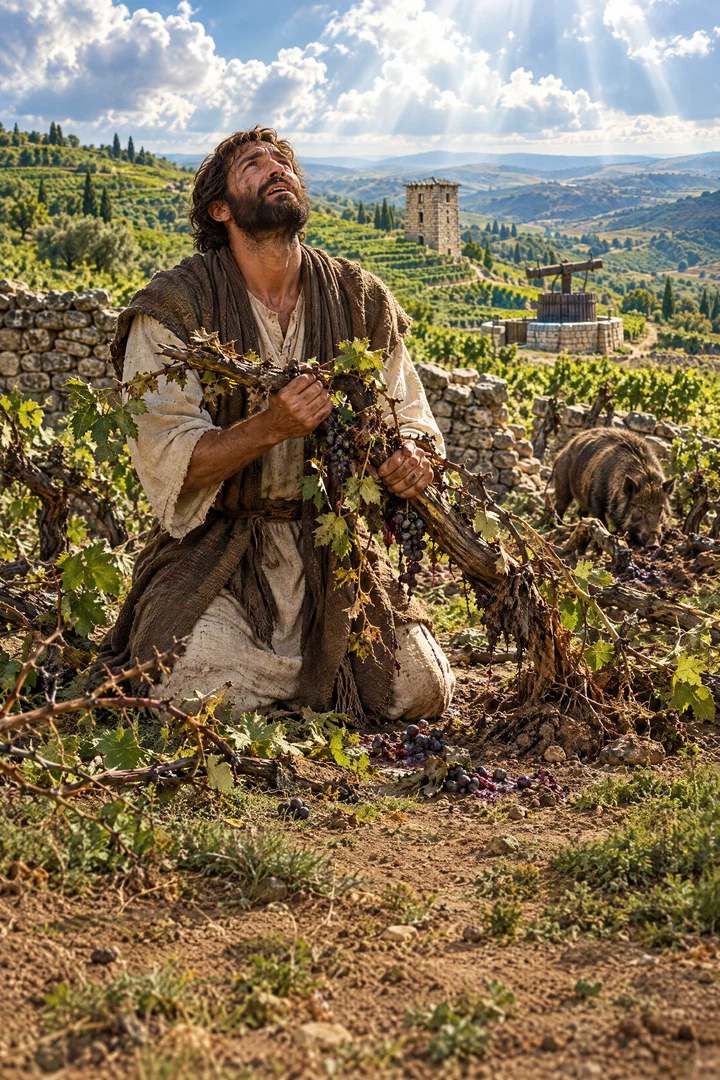
Thou hast brought a vine out of Egypt: thou hast cast out the heathen, and planted it.
Translations
You have brought a vine out of Egypt: you have cast out the heathen, and planted it.
King James Version, Webster Bible, Geneva Bible
Thou hast brought a vine out of Egypt: thou hast cast out the heathen, and planted it.
Thou hast brought a vine out of Egypt:
Thou hast cast out the heathen, and planted it.Thou broughtest a vine out of Egypt: thou didst drive out the nations, and plantedst it.
Thou broughtest a vine out of Egypt:
Thou didst drive out the nations, and plantedst it.A vine out of Egypt Thou dost bring, Thou dost cast out nations, and plantest it.
Thou broughtest a vine out of Egypt; thou didst cast out the nations, and plant it:
A vine out of Egypt, thou didst remove, Thou didst cast out nations, and plant it;
Berean Standard Bible, Majority Standard Bible
You uprooted a vine from Egypt;
You drove out the nations and transplanted it.You brought a vine out of Egypt.
You drove out the nations, and planted it.You took a vine out of Egypt: driving out the nations, and planting it in their land.
Douay-Rheims (Challoner revision)
Thou hast brought a vineyard out of Egypt: thou hast cast cut the Gentiles and planted it.
Pictures
Cross-references
- Isaiah 5:7
For the vineyard of the LORD of hosts is the house of Israel, and the men of Judah his pleasant plant: and he looked for judgment, but behold oppression; for righteousness, but behold a cry.
Identifies Israel as the Lord’s vineyard, expected to bear good fruit.
- Isaiah 5:1-2
Now will I sing to my wellbeloved a song of my beloved touching his vineyard. My wellbeloved hath a vineyard in a very fruitful hill:
Israel is pictured as God’s carefully planted and tended vineyard.
- Jeremiah 2:21
Yet I had planted thee a noble vine, wholly a right seed: how then art thou turned into the degenerate plant of a strange vine unto me?
Both describe God’s people as a planted vine, though Jeremiah’s vine became corrupt.
- Matthew 21:33
Hear another parable: There was a certain householder, which planted a vineyard, and hedged it round about, and digged a winepress in it, and built a tower, and let it out to husbandmen, and went into a far country:
The parable’s planted vineyard recalls God bringing his vine out of Egypt.
- Psalms 80:14-15
Return, we beseech thee, O God of hosts: look down from heaven, and behold, and visit this vine;
Continues the picture of Israel as God’s planted vine.
- John 15:1-5
I am the true vine, and my Father is the husbandman.
Jesus identifies Himself as the true Vine and His followers as branches.
- Exodus 15:17
Thou shalt bring them in, and plant them in the mountain of thine inheritance, in the place, O LORD, which thou hast made for thee to dwell in, in the Sanctuary, O Lord, which thy hands have established.
God brings Israel out of Egypt and plants them in the land.
- Genesis 49:22
Joseph is a fruitful bough, even a fruitful bough by a well; whose branches run over the wall:
Both describe Israel as a fruitful plant through Joseph.
- Isaiah 61:3
To appoint unto them that mourn in Zion, to give unto them beauty for ashes, the oil of joy for mourning, the garment of praise for the spirit of heaviness; that they might be called trees of righteousness, the planting of the LORD, that he might be glorified.
God calls his people his planting, trees of righteousness for his glory.
- Exodus 12:41
And it came to pass at the end of the four hundred and thirty years, even the selfsame day it came to pass, that all the hosts of the LORD went out from the land of Egypt.
God brought Israel out of Egypt.
- Mark 12:1-9
And he began to speak unto them by parables. A certain man planted a vineyard, and set an hedge about it, and digged a place for the winefat, and built a tower, and let it out to husbandmen, and went into a far country.
The parable’s vineyard imagery recalls Israel’s history.
- Deuteronomy 7:8
But because the LORD loved you, and because he would keep the oath which he had sworn unto your fathers, hath the LORD brought you out with a mighty hand, and redeemed you out of the house of bondmen, from the hand of Pharaoh king of Egypt.
God brought Israel out of Egypt because of his love and covenant oath.
- Luke 20:9
Then began he to speak to the people this parable; A certain man planted a vineyard, and let it forth to husbandmen, and went into a far country for a long time.
Jesus uses the vineyard image for God’s people and their leaders.
- Isaiah 27:2-3
In that day sing ye unto her, A vineyard of red wine.
The Lord keeps and tends His vineyard.
- Isaiah 27:6
He shall cause them that come of Jacob to take root: Israel shall blossom and bud, and fill the face of the world with fruit.
Both describe Israel as a planted vine flourishing and bearing fruit.
- Isaiah 5:4
What could have been done more to my vineyard, that I have not done in it? wherefore, when I looked that it should bring forth grapes, brought it forth wild grapes?
Both describe God’s care for his vineyard and ask what more he could do for it.
- Deuteronomy 8:8
A land of wheat, and barley, and vines, and fig trees, and pomegranates; a land of oil olive, and honey;
Both describe God bringing Israel to a land rich in vines and other produce.
Commentary
Each commentary is drawn from primary sources: the writings of Ellen G. White and Adventist pioneers and periodicals. Each commentary is separate. Its own words are not a quotation; follow the references to read the source passages.
Ellen G. White
20 sources
The vine is Israel, God's church and His own planting, which He Himself brought out of Egypt in the exodus deliverance and led through the wilderness.GC88 20.1GC 19.1–2Ms 23, 1900, par. 2–3Ms 123, 1899, par. 10–116MR 318.1–2 He drove out the nations inhabiting Canaan and settled and planted His people in their own promised land.RH May 27, 1915PK 355.2–359.1Ms 134, 1899, par. 18–20 There He gave it room to take deep root, spread widely and fill the land, tending and blessing it with every benefit so it would flourish and bear the fruits of righteousness and share the knowledge of His kingdom.RH May 27, 1915PK 355.2–359.1GC 19.1–2Ms 134, 1899, par. 18–20ST Jan 18, 1883 Instead it produced wild grapes, the fruit of a degenerate vine, forgetting God and rebelling, and even Christ's three years of labor among His people could not save it because it rejected His appeals.GC 19.1–24SP 19.2–20.1ST Jan 18, 1883ST Feb 27, 1896 Mere membership in that planted vine gave no spiritual life or claim to salvation, for Jesus alone is the true Vine through whom life and promise come, yet its past deliverance and planting remains the ground of prayer for God to return, cause His face to shine, visit the vine and quicken His people so His honor will be vindicated before all kingdoms.RH May 27, 1915PK 355.2–359.1DA 674.2–675.3
Vine Brought and Planted
The vine is Israel, the house of Israel, the Jewish church and God's church, His vineyard and His own planting, established and cared for by Him in Canaan.Ms 23, 1900, par. 2–3Ms 123, 1899, par. 10–116MR 318.1–2COL 214.2–3Lt 127, 1899, par. 2–3 The same vine represents the Jewish church given every benefit and blessing to bear fruit for Him.COL 214.2–3Lt 127, 1899, par. 2–3Ms 138, 1899, par. 13–16 The one who brought the vine out of Egypt is God, even Christ, in the exodus deliverance from Egypt.GC88 20.1GC 19.1–24SP 19.2–20.1Ms 110, 1899, par. 1–3 He led His people through the wilderness and set them in His vineyard to be trained for His service.4SP 19.2–20.1Ms 110, 1899, par. 1–3
Casting out the heathen and planting it means He drove out the nations, the heathen nations and inhabitants of the land, displaced them from its land, and settled and planted His people there.RH May 27, 1915PK 355.2–359.1Ms 134, 1899, par. 18–2016MR 331.1ST Jan 6, 1909 That planting was in Canaan, the Holy Land, the promised land, their own land, where Israel was established as God's chosen people under His care and blessing.PK 355.2–359.116MR 331.1ST Jan 6, 1909Lt 127, 1899, par. 2–3DA 674.2–675.3 After planting, He gave the vine room to take deep root, flourish, spread widely and fill the land.RH May 27, 1915PK 355.2–359.1Ms 134, 1899, par. 18–20 In this He established the nation in its land and gave it prosperity.RH May 27, 1915PK 355.2–359.1Ms 134, 1899, par. 18–20
The golden vine at the entrance of the temple represented Israel as this prosperous vine brought out of Egypt and planted by God.2SP 389.1–390.1
Care, Failure and Restoration
After planting, the vine was patiently tended, provided for, nourished, cared for and blessed in a fruitful place of special care, with every benefit and blessing given so that it would bear fruit for God and be trained for His service.GC 19.1–24SP 19.2–20.1ST Jan 18, 1883Ms 138, 1899, par. 13–16ST Feb 27, 1896 Christ Himself brought Israel out, drove out the nations before them, and sought fruitfulness from this vine of His own planting even when it produced wild grapes.GC 19.1–24SP 19.2–20.1 His three-year ministry among His people was a continued effort to save and care for that same vine.4SP 19.2–20.1
God planted the church in a fruitful place to bear the fruits of righteousness, to be trained for His service and to share the knowledge and principles of His kingdom.ST Jan 18, 1883Ms 110, 1899, par. 1–3 He intended His people to take possession of the land and to spread throughout the territory He had given them and to occupy the vineyard as He planned.Ms 110, 1899, par. 1–3Ms 135, 1899, par. 13–14 Instead of good fruit the vine produced wild grapes and the fruit of a degenerate vine, turning toward human support rather than God.GC 19.1–2ST Jan 18, 1883 It rebelled, forgot Him, and abused the privileges He gave, and by failing to occupy the vineyard as planned it began to depart from Him, so that had it followed His plan its history would have been different.ST Feb 27, 1896Ms 135, 1899, par. 13–14
Being God's planted vine did not itself give its people spiritual life or a claim to salvation, for Jesus is the true Vine and spiritual life and God's promises are received through Him alone.DA 674.2–675.3 The vine shows how God's people depend on Him for life and fruitfulness.DA 674.2–675.3 Israel rejected Christ's appeals during His continued care for the vine.4SP 19.2–20.1
The record of past deliverance and planting is the ground of prayer in the Assyrian crisis, recalling God's deliverance from Egypt and establishment of the nation in its own land where He gave it room to take deep root and fill the land.RH May 27, 1915PK 355.2–359.1 The plea is for God to return, cause His face to shine, save, visit the vine and quicken His people when it is damaged.RH May 27, 1915PK 355.2–359.1 That deliverance is sought not only for survival but so the honor of Jehovah will be vindicated and all the kingdoms of the earth will know that the God of the Hebrews still lives and reigns alone over heaven and earth.PK 355.2–359.1 In this history the church is precious to God, and His people are called to sing it with heart and understanding.Ms 123, 1899, par. 10–11
Sources
Pioneers and periodicals
14 sources
The vine is Israel, which God brought out of Egypt, drove out the heathen nations before it, and planted in its own land in Canaan.RH May 27, 1915ST Apr 26, 1905 After planting it He made it take root and flourish until it spread through the land with abundant fruit.RH May 27, 1915ST Feb 10, 1914 That planting established Israel as His chosen people under His care and blessing in a fruitful place prepared for them to serve Him.ST Jan 6, 1909ST Jan 18, 1883ST Apr 8, 1889 It was planted to bear the fruits of righteousness, but it became wild and degenerate, rebelling against God, forgetting Him, and abusing the privileges He had given.ST Jan 18, 1883ST Feb 27, 1896ST Apr 8, 1889 The same vine points to Christ as the living source of spiritual life for believers joined to Him as branches, and to God's church which He did not destroy but entrusted to other husbandmen when it was taken from unfaithful leaders.ST Sep 24, 1894ST May 1, 1901
Israel, the Transplanted Vine
The vine is Israel, brought out of Egypt when God delivered the nation from bondage there.RH May 27, 1915ST Jan 6, 1909ST Apr 26, 1905ST Sep 24, 1894 He cast out the heathen nations and drove the inhabitants from before it, clearing the land for it.RH May 27, 1915ST Sep 24, 1894ST Apr 8, 1889 Then He planted it in its own land in Palestine, in Canaan.RH May 27, 1915ST Apr 26, 1905ST Sep 24, 1894ST Apr 8, 1889
After planting it He caused it to take deep root and flourish, so that it grew and spread through the land.RH May 27, 1915ST Feb 10, 1914 Its branches spread through Immanuel's land and bore abundant fruit.RH May 27, 1915ST Feb 10, 1914
The psalm belongs to the sorrows and afflictions of the Hebrew captives in the Babylonian captivity, mingled with exhortations, encouragements, and assurance of divine help and final deliverance from persecutors.RH May 27, 1915RH Aug 31, 1916 It was written by Asaph during that captivity, in its latter portion during the reign of Belshazzar when the persecution and distress of the Jews were greatest.RH Aug 31, 1916 When the vine is damaged the psalm pleads for God to visit and restore it.RH May 27, 1915 By this planting God gave Israel a place where it could grow and serve Him, establishing the land where Jerusalem and the sanctuary became the special dwelling place of His name and the center from which His light and salvation were to reach the world.ST Apr 8, 1889
The spreading vine covering mountains and hills is part of the beauty of nature.ST Mar 8, 1910 It stands in contrast to valuing grapes only as something to crush and use.ST Mar 8, 1910
Care, Fruit, and Continuance
The planting shows Israel established as God's chosen people and placed under His care, blessing and nourishment.ST Jan 6, 1909ST Jan 18, 1883ST Feb 27, 1896ST Apr 8, 1889 The church was set as a vine in a fruitful place with favorable conditions to serve Him and bear fruit.ST Jan 18, 1883ST Feb 27, 1896ST Apr 8, 1889 It was planted to bear the fruits of righteousness, but it turned toward human support and produced the fruit of a degenerate vine instead.ST Jan 18, 1883ST Apr 8, 1889 Though nourished and cared for, the vine became wild, and instead of producing good fruit the people rebelled, forgot God, and abused the privileges He gave them.ST Feb 27, 1896
The vine imagery points to Christ as the living source of spiritual life, with believers as branches joined to Him by faith and sharing His life. The vine represents God's church, and when spiritual dominion was transferred from the Jewish leaders to other husbandmen, God did not destroy the vine or plant a new one but entrusted the same church to others.ST May 1, 1901
The verse is one of the Old Testament passages that compares God's people to a vineyard.ST Sep 24, 1894ST Mar 18, 1897 It provides background for the vineyard in Jesus' parable.ST Sep 24, 1894ST Mar 18, 1897 The same pattern of bringing His people out of oppression and planting them in a new land is seen in the forefathers being brought from an oppressive country and planted in America among the Indigenous people.ST Aug 8, 1900
Sources