Luke 7:38
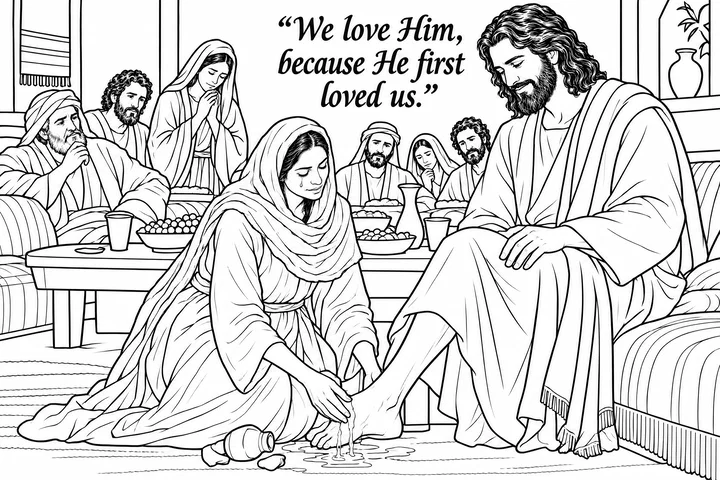
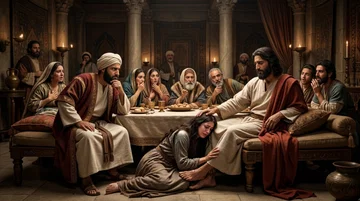
And stood at his feet behind him weeping, and began to wash his feet with tears, and did wipe them with the hairs of her head, and kissed his feet, and anointed them with the ointment.
Translations
American King James Version, King James Version
And stood at his feet behind him weeping, and began to wash his feet with tears, and did wipe them with the hairs of her head, and kissed his feet, and anointed them with the ointment.
and stood at his feet behind him weeping, and began to wash his feet with tears, and did wipe them with the hairs of her head, and kissed his feet, and anointed them with the ointment.
And stood at his feet behind him weeping, and began to wash his feet with tears, and wiped them with the hairs of her head, and kissed his feet, and anointed them with the ointment.
Revised Version, American Standard Version
and standing behind at his feet, weeping, she began to wet his feet with her tears, and wiped them with the hair of her head, and kissed his feet, and anointed them with the ointment.
and having stood behind, beside his feet, weeping, she began to wet his feet with the tears, and with the hairs of her head she was wiping, and was kissing his feet, and was anointing with the ointment.
and standing at his feet behind [ him] weeping, began to wash his feet with tears; and she wiped them with the hairs of her head, and kissed his feet, and anointed [ them] with the myrrh.
and standing behind, near his feet, weeping, with the tears, began she to be wetting his feet, and, with the hair of her head, was wiping off [the tears], and was tenderly kissing his feet, and anointing them with the perfume.
Berean Standard Bible, Majority Standard Bible
As she stood behind Him at His feet weeping, she began to wet His feet with her tears and wipe them with her hair. Then she kissed His feet and anointed them with the perfume.
Standing behind at his feet weeping, she began to wet his feet with her tears, and she wiped them with the hair of her head, kissed his feet, and anointed them with the ointment.
And went in and took her place at the back of him, near his feet, weeping, so that his feet were washed with the drops from her eyes, and with her hair she made them dry, and kissing his feet she put the perfume on them.
And shee stoode at his feete behinde him weeping, and began to wash his feete with teares, and did wipe them with the heares of her head, and kissed his feete, and anoynted them with the oyntment.
Douay-Rheims (Challoner revision)
And standing behind at his feet, she began to wash his feet, with tears, and wiped them with the hairs of her head, and kissed his feet, and anointed them with the ointment.
Pictures


Cross-references 20 of 22
- Luke 7:47
Wherefore I say unto thee, Her sins, which are many, are forgiven; for she loved much: but to whom little is forgiven, the same loveth little.
Jesus connects her great love with the forgiveness of her many sins.
- Matthew 26:6-13
Now when Jesus was in Bethany, in the house of Simon the leper,
The woman’s costly ointment honors Jesus and prepares him for burial.
- Mark 14:3
And being in Bethany in the house of Simon the leper, as he sat at meat, there came a woman having an alabaster box of ointment of spikenard very precious; and she brake the box, and poured it on his head.
A woman anoints Jesus with costly ointment at a meal.
- John 12:3
Then took Mary a pound of ointment of spikenard, very costly, and anointed the feet of Jesus, and wiped his feet with her hair: and the house was filled with the odour of the ointment.
Mary anoints Jesus’ feet with precious ointment and wipes them with her hair.
- 1 Timothy 5:10
Well reported of for good works; if she have brought up children, if she have lodged strangers, if she have washed the saints’ feet, if she have relieved the afflicted, if she have diligently followed every good work.
Both texts describe washing feet as an act of service.
- John 13:14-15
If I then, your Lord and Master, have washed your feet; ye also ought to wash one another’s feet.
Jesus makes foot washing an example for his disciples to follow.
- John 11:2
(It was that Mary which anointed the Lord with ointment, and wiped his feet with her hair, whose brother Lazarus was sick.)
Identifies Mary as the woman who anointed Jesus and wiped his feet with her hair.
- Luke 7:44-46
And he turned to the woman, and said unto Simon, Seest thou this woman? I entered into thine house, thou gavest me no water for my feet: but she hath washed my feet with tears, and wiped them with the hairs of her head.
Jesus contrasts Simon’s neglect with the woman’s tears, kisses, and ointment.
- John 12:5
Why was not this ointment sold for three hundred pence, and given to the poor?
Judas objects that the costly ointment should have been sold for the poor.
- Luke 7:50
And he said to the woman, Thy faith hath saved thee; go in peace.
Jesus says her faith has saved her and sends her in peace.
- John 12:7
Then said Jesus, Let her alone: against the day of my burying hath she kept this.
Jesus accepts the anointing and connects it with his burial.
- Genesis 18:4
Let a little water, I pray you, be fetched, and wash your feet, and rest yourselves under the tree:
Water is provided for guests to wash their feet.
- Mark 14:6-9
And Jesus said, Let her alone; why trouble ye her? she hath wrought a good work on me.
Jesus defends a woman’s costly act of devotion.
- Matthew 26:7
There came unto him a woman having an alabaster box of very precious ointment, and poured it on his head, as he sat at meat.
A woman pours precious ointment on Jesus.
- Matthew 26:13
Verily I say unto you, Wheresoever this gospel shall be preached in the whole world, there shall also this, that this woman hath done, be told for a memorial of her.
Her deed is to be told wherever the gospel is preached.
- John 13:6-10
Then cometh he to Simon Peter: and Peter saith unto him, Lord, dost thou wash my feet?
Peter does not understand Jesus’ unusual act of washing the disciples’ feet.
- Matthew 26:10
When Jesus understood it, he said unto them, Why trouble ye the woman? for she hath wrought a good work upon me.
Christ defended it as a good work
- Matthew 26:12
For in that she hath poured this ointment on my body, she did it for my burial.
paired as anointing Jesus for burial
- 1 Samuel 25:41
And she arose, and bowed herself on her face to the earth, and said, Behold, let thine handmaid be a servant to wash the feet of the servants of my lord.
Both women offer to wash another’s feet, one in humility and service.
- John 20:11-18
But Mary stood without at the sepulchre weeping: and as she wept, she stooped down, and looked into the sepulchre,
Mary’s earlier act of love connects with her meeting the risen Christ.
Commentary
Each commentary is drawn from primary sources: the writings of Ellen G. White and Adventist pioneers and periodicals. Each commentary is separate. Its own words are not a quotation; follow the references to read the source passages.
Ellen G. White
16 sources
At a meal Jesus accepted at Simon the Pharisee's house, Mary Magdalene stood behind Him at His feet weeping, washed His feet with her tears, wiped them with the hair of her head, kissed them, and anointed them with costly ointment.DA 557DA 557.1–22SP 381.1SCEV 37.1–2Ms 24, 1891, par. 88 Her tears and humble service expressed repentance and grief for sin with loving devotion, gratitude, honor and appreciation for His pardoning mercy in rescuing her from despair and sin.DA 557.1–22SP 381.1DA 568.1–2 Receiving forgiveness with gratitude produces love and heartfelt courtesy, so that the one forgiven much loves much and love for Christ grows with a clear sense of sin and deliverance.2SP 381.1Ms 24, 1891, par. 8819MR 259.1–3 Her devotion stands against Simon's self-righteous failure to show Jesus due respect and love, for he did not recognize his own sin, neglect, unbelief and great debt nor value Christ as she did, until Jesus' patient kindness led him to see it and touched his heart.2SP 382.32SP 381.1RH Sep 25, 1900 Jesus in merciful welcome accepted her gift without condemning her, showing compassion toward women and readiness to help all who trust in Him, unlike the strictness of the Pharisees who condemned Him for acting outside their ideas of proper conduct.ST15MR 132.2–3Lt 189, 1909, par. 2–3 Her washing, wiping and anointing remains an example of footwashing as a gospel duty and order, even of sisters washing the feet of brethren, which humbles the one who serves and glorifies God when done as a duty He lays upon her, with understanding and without making it a tedious ceremony.SCEV 37.1–2Lt 9, 1853, par. 7EW 95.2–96.1
Setting and Humble Devotion
The scene belongs to the feast at Simon's house.DA 557Ms 24, 1891, par. 8819MR 259.1–3MH 24.2MYP 406.2 It was a meal Jesus accepted at a Pharisee's invitation.DA 557MH 24.2MYP 406.2 He made that meal and the personal encounter there an occasion to teach those around Him, speaking truth with tact so as to touch the heart.Ms 24, 1891, par. 8819MR 259.1–3MYP 406.2 Through that encounter He reached the people present and opened to them spiritual riches.MH 24.2MYP 406.2
The woman is Mary, Mary Magdalene.2SP 381.1SCEV 37.1–2Lt 9, 1853, par. 7DA 568.1–2ST She stood behind Jesus at His feet weeping, and began to wash His feet with her tears.DA 557.1–22SP 381.1DA 568.1–2RH Sep 25, 1900ST She wiped them with the hairs of her head, kissed them, and anointed them with ointment.DA 557.1–22SP 381.1SCEV 37.1–2Lt 9, 1853, par. 7EW 95.2–96.1 That ointment was a costly gift, tenderly bestowed.DA 557.1–2RH Sep 25, 190015MR 132.2–3
Her tears flowed from humility, repentance, grief, and loving devotion.DA 557.1–2DA 568.1–2RH Sep 25, 1900ST By them she expressed love and gratitude, honor and appreciation, for His pardoning mercy and His work for her.DA 557.1–22SP 381.1RH Sep 25, 1900ST15MR 132.2–3 She had been rescued by Christ from despair and sin.DA 568.1–2 Through His grace she had overcome and had drawn near to Him in fellowship and service.DA 568.1–2
Forgiveness, Contrast and Example
Receiving forgiveness with gratitude produces love and heartfelt courtesy, expressed in humble acts of washing feet with tears, wiping them with hair, kissing them, and anointing them with ointment and costly gift.2SP 381.1RH Sep 25, 1900Lt 189, 1909, par. 2–3 The one forgiven much loves much, and the one forgiven more loves more.Ms 24, 1891, par. 8819MR 259.1–3 Love for Christ grows with a clear awareness of sin and gratitude for deliverance, as sorrowful repentance and tears show love for Jesus.Ms 24, 1891, par. 88RH Sep 25, 1900
Her devotion contrasts with Simon's failure to show Jesus the respect and love due to a Benefactor who had shown him mercy.2SP 381.1RH Sep 25, 1900 Simon the Pharisee thought he loved Jesus, but in self-righteousness he did not recognize his own sin, neglect, unbelief and great debt, nor value Christ as she did in her humility and repentance.2SP 382.32SP 381.1RH Sep 25, 1900 Jesus' patient kindness led Simon to recognize his neglect, unbelief, and great debt to his Lord, touching his heart to change.2SP 382.32SP 381.1
Jesus is compassionate toward women and ready to help those who trust in Him, as seen in forgiving Mary Magdalene amid her grief and gratitude while she wept at His feet, wiped them with her hair, kissed them, and anointed them.STLt 189, 1909, par. 2–3 He accepted her gift in merciful, welcoming conduct without condemning her or her action, showing her appreciation of His work for her.15MR 132.2–3Lt 189, 1909, par. 2–3 This was unlike the self-righteous strictness of the Pharisees, who condemned Him for acting outside their ideas of proper conduct.ST15MR 132.2–3
Her act of washing, wiping and anointing is an example of a woman washing a man's feet and supports footwashing as a gospel duty and gospel order.SCEV 37.1–2Lt 9, 1853, par. 7EW 95.2–96.1 Sisters washing the feet of brethren is according to that order.SCEV 37.1–2EW 95.2–96.1 Such service can humble the one who performs it and glorify God when done as a duty God lays upon her, and it should be carried out with understanding and without making it a tedious ceremony.Lt 9, 1853, par. 7EW 95.2–96.1
Sources
Pioneers and periodicals
81 sources
While Jesus reclined at meat in Simon the Pharisee's house with His feet extended behind Him, a sinful woman of the city came to Him there with an alabaster box of very costly spikenard, and standing behind at His travel-stained feet weeping, she washed them with her tears, wiped them with the hair of her head, kissed them continually, and anointed them with the ointment.ST May 17, 1899ST May 17, 1899ST Oct 11, 1899ST Jul 29, 1889ST Jan 3, 1911 She was Mary Magdalene out of whom He had cast seven demons, once fallen into open sin yet turned to repentance, though those who held her to have been Mary of Bethany, sister of Martha and Lazarus, place her coming at the supper made in His honor after His healing where Martha served.ST Oct 11, 1899ST Jul 29, 1889RH May 12, 1903RH Dec 22, 1904 In giving the water for the feet, the kiss of welcome, and the anointing oil that the host failed to give, her tears, hair, kisses, and costly gift expressed sorrow for sin, humility, gratitude, and much love belonging to one whose many sins are forgiven.ST May 17, 1899ST Apr 9, 1894RH Dec 3, 1867ST Sep 2, 1897ST Aug 13, 1902 Her saving response was by faith, and Jesus welcomed the guilty timid sinner with gentleness, defended her against Simon who judged her and against complaint that the ointment should have been sold for the poor, told her that her sins were forgiven and her faith had saved her, and sent her away in peace.RH Feb 5, 1861ST Sep 2, 1897ST Aug 13, 1902RH Aug 27, 1914RH Dec 10, 1901 Bowing to weep at His feet over sin and need should not drive the sinner away as too sinful to approach Him, but lead to earnest prayer, fuller trust, and lavish love that offers what it can to honor Christ, judged by love rather than by human measure.RH Dec 3, 1867ST Dec 10, 1894ST Apr 9, 1894ST Apr 27, 1882RH Jul 15, 1862
Setting and Posture
While Jesus reclined at meat in the Pharisee's house, guests no longer sat with feet crossed beneath the body but lay after the Persian, Greek, and Roman custom on cushions on the left arm with feet extended outside, so the woman coming behind Him could stand behind at His feet.ST May 17, 1899ST May 17, 1899 The host was Simon the Pharisee, also called Simon the leper and Simon the sinner, whom Jesus had healed of leprosy and who gave a dinner with Jesus as the honored guest.ST Oct 11, 1899ST Jul 29, 1889RH Oct 16, 1913 Jesus went there humbly and befriended sinners because He was seeking lost souls and wanted to save them.
She brought an alabaster cruse or box of ointment, very precious and costly spikenard, and broke the box and poured it upon Him.ST May 17, 1899ST Jul 29, 1889RH Dec 10, 1901 She poured the ointment from the alabaster box on His feet to anoint Him until the house was filled with the odor of the perfume.ST Jul 29, 1889RH Dec 10, 1901ST Oct 5, 1904 His feet that she thus approached were travel-stained and worn from His journeying.ST Jan 3, 1911RH Apr 16, 1867RH Oct 4, 1870 They are described as soiled and weary, humbly washed and kissed by the sinful woman in contrast to a life of comfort that does not share His humility, suffering, and burden-bearing.RH Dec 2, 1873
Woman and Her Actions
She was a woman of the city who was a sinner, regarded as defiled, despised and outcast and unfit for ordinary company, who had lived an openly sinful life yet believed and responded to the call to repentance.ST May 17, 1899ST May 17, 1899ST Oct 11, 1899ST Oct 11, 1899ST Apr 9, 1894 Her humble bowing behind at the Saviour's feet to bathe them with tears and costly ointment, wiping and kissing them, is gladness so complete that subtle thought and curious fears are borne down, and the same tearful devotion is found in poor, despised, enslaved and emancipated people who weep over Christ dying even for them.ST Oct 10, 1878ST Apr 9, 1894 Her coming close despite disapproval shows a sinner should not be driven away by feeling too sinful to approach Jesus, for by abiding with him sin is driven away.ST Oct 11, 1899ST Apr 9, 1894
She is Mary Magdalene, from whom Jesus had cast seven demons, once pure and beautiful but fallen into sin, whom he had repeatedly lifted up and forgiven and whose good he saw.ST Oct 11, 1899RH May 12, 1903RH Dec 22, 1904RH Aug 27, 1914RH Jan 6, 1859 Without asking aloud for forgiveness she bathed his feet with tears and wiped them with her hair, kneeling in grateful heartfelt worship that was not mere service but worship expressing gracious affection through humble brokenhearted devotion.RH May 12, 1903RH Dec 22, 1904RH Aug 27, 1914RH Jan 6, 1859 Jesus pardoned her when she wept at his feet, proving he is touched by woe, understands heart struggles, knows human weakness, pities infirmity and forgives error.RH Aug 27, 1914ST Sep 9, 1886
She is also understood as Mary of Bethany, sister of Martha and of Lazarus, the sinner of the city who knew Jesus was eating in the Pharisee's house and came uninvited to the supper made in his honor after his healing, where Martha served and Lazarus sat at table.ST Jul 29, 1889 She brought an alabaster box of very precious and costly spikenard, broke it and poured it upon his head and feet until the house was filled with the odor, and her loving devotion in giving her costly gift was found fault with by Judas Iscariot, Simon's son, who complained it should have been sold for three hundred pence and given to the poor, while Jesus comforted her by calling it a good work upon him that shall be told for a memorial wherever the gospel is preached in the whole world.ST Jul 29, 1889 She is also described simply as an unnamed penitent adorer serving and adoring Jesus in Simon's house, whose act stands among many such acts showing the conspicuous place women hold in the primitive church and how largely the womanly element prevails in his life.
Standing behind at his feet weeping, she began to wet or wash his feet with her tears, wiped them with the hairs of her head, kissed his feet continually without ceasing, and anointed them with the ointment.ST May 17, 1899ST May 17, 1899ST Apr 9, 1894RH Feb 5, 1861RH Jun 7, 1906 Her sorrow and love in weeping, wiping, kissing and anointing belong to the account of her forgiveness, expressing devotion whose saving response is by faith and not by feelings.ST Apr 9, 1894RH Feb 5, 1861ST Sep 2, 1897 Simon took her actions as evidence Jesus could not be a prophet, but Jesus did not scorn her humble service and told her that her sins were forgiven and that her faith had saved her, sending her away in peace.RH Jun 7, 1906ST Sep 2, 1897
She wiped his feet with her long flowing and raven hair, covered them all over with kisses, and anointed the worn feet with ointment from love to do him honor as a holy tearful delight and privilege of drawing near his person.ST May 17, 1899RH Dec 10, 1901RH Apr 16, 1867 She came timidly and unobserved while he reclined at dinner, having heard rumors he might be taken away and fearing no other opportunity to show love and gratitude for mercy, breaking a very precious alabaster box upon his feet, weeping tears of gratitude, reverently kissing his feet and wiping them until the perfume filled the room.RH Dec 10, 1901 Conscience-stricken, falling on her knees at his feet and catching at his robe and bathing his feet with tears, she begged for one more chance not to be left in displeasure, confessing she had lived for self as now seen and felt for the first time, pleading that he knows all things and knows she loves him, and then still kneeling offered him her wealth, her time, her life, her all without reserve and begged him in mercy to accept the gift.
Love Forgiveness and Faith
Her tears and wiping and kissing and anointing are sorrow for sin and repentance and humility and gratitude and loving devotion.ST Apr 9, 1894ST Sep 2, 1897ST Jun 9, 1881ST Aug 13, 1902ST Jun 9, 1881 They are the humble loving gratitude of one who weeps over the feet, wipes them with the hair, kisses them, and anoints them with fragrant and costly and precious ointment.ST Apr 9, 1894ST Sep 2, 1897ST Jun 9, 1881ST Aug 13, 1902ST Aug 13, 1902 Her choice of the feet, since anointing the head was customary, reflects humility and reverence, and her distress and devotion belong to her forgiveness and to her plea for pardon and her hope of restoration.ST Jun 9, 1881ST Aug 13, 1902ST Jun 9, 1881ST Aug 13, 1902 She is comforted and healed, she is told she loves much and has done what she could, and she is not scorned but welcomed and treated as capable of restoration.ST Sep 2, 1897ST Aug 13, 1902ST Jun 9, 1881ST Aug 13, 1902 Her sorrow includes sorrow for lightly holding God's least command, and holy grief in turning toward holiness.ST Apr 9, 1894ST Sep 2, 1897
She supplies what the host failed to supply, the water for the feet and the kiss of welcome and the anointing with oil, and this is the much love of one whose many sins are forgiven.ST Oct 9, 1879ST May 17, 1899RH Dec 3, 1867ST Dec 10, 1894 While sitting at meat in the Pharisee's house with feet extended outside as he reclined, he is honored by a woman of the city who was a sinner bringing an alabaster cruse of ointment, standing behind at his feet weeping, wetting the feet with tears, wiping them with the hair of the head, not ceasing to kiss them, and anointing them.ST May 17, 1899 Her tears and hair and kisses and ointment honor the Saviour amid haughty neglect, expressing both grief at his treatment and gratitude for finding a Saviour.RH Dec 3, 1867 Her costly gift reflects the gratitude of a pardoned sinner, measured by the love that prompts it, for people see the outward act but Christ sees the heart and rewards accordingly.RH Dec 3, 1867ST Aug 13, 1902ST Dec 10, 1894 Her heartfelt attention contrasts with Simon's failure to show the regard due an honored guest, and his displeasure reveals pride and failure to recognize his own need of pardon.ST Oct 9, 1879ST Dec 10, 1894
Her gift is costly because she brings her sinful past and broken pride to him.RH Dec 22, 1904 Her tears express repentance and she is washed from blame.RH Dec 22, 1904 Her reproach is washed away in the blood of Christ and she is made a pure white soul in the beauty of holiness, with glad new spirit rising in rich fragrance to God as Saviour and Restorer and Friend.ST Jul 4, 1900 She is left humble and teachable as a child looking to the Father for instruction and help.ST Jul 4, 1900
Her saving response is by faith and not by feelings.RH Feb 5, 1861 She expresses devotion by weeping at the feet, washing them with tears, wiping them with hair, kissing them, and anointing them with precious ointment.RH Feb 5, 1861ST Sep 2, 1897ST Aug 13, 1902ST Aug 13, 1902 Jesus does not reject sinners who come in grief and devotion but meets them with tender practical care, telling her that her sins are forgiven and that her faith has saved her, comforting and healing her and sending her away in peace.ST Sep 2, 1897ST Aug 13, 1902ST Aug 13, 1902RH May 9, 1871 He declares forgiveness and life to the one sinful woman coming in grief, showing the value of saving even one soul.RH May 9, 1871ST Jul 8, 1886 Her burden is lifted.ST Sep 2, 1897ST Aug 13, 1902ST Aug 13, 1902
Being forgiven gives rise to love, and love is shown in forgiving others, for forgiveness and love are inseparable.RH May 12, 1903 Without asking aloud for forgiveness, by bathing the feet with tears and wiping them with hair, Mary Magdalene shows repentance and love.RH May 12, 1903 Love for Christ grows with a clear awareness of sin and gratitude for deliverance, and her humility and repentance expose self-righteousness that does not recognize its own sin or value Christ as she does.RH Sep 25, 1900 The story illustrates God's love for sinners and their obligation to love him in return, making the lesson clear in its practical force.ST Jun 1, 1882
The verse belongs to the parable of the two debtors in Luke 7:35-50, which teaches the forgiving spirit.ST Apr 7, 1898 It is to be compared with the teaching on forgiving a brother in Matthew 18:21-35. It is also to be compared with the duty to forgive one another and to forgive enemies.ST Apr 7, 1898
There are degrees of guilt among transgressors of God's law according to light or knowledge possessed and motive prompting the act.RH Jul 28, 1910 Those who had lived openly sinful lives but believed and responded to the call to repentance illustrate the change of heart by which such people entered God's kingdom before religious leaders who saw their response but did not repent and believe.ST Oct 11, 1899 The weeping woman at the feet is repentant before the Master, while the proud pretentious Pharisee who accused her is under far greater condemnation before God than she is, his character far more spotted with defilement than hers.RH Jul 28, 1910
Sincere faith may be weak, and a heart conscious of its weakness and seeking divine mercy humbly is preferable to self-confidence that leads to spiritual pride.RH Jul 9, 1872 Her humble tears and devotion at the feet were more acceptable than the Pharisee's pride.RH Jul 9, 1872 The same forgiveness that made her a pure white soul can reach anyone however low they have fallen, both the destroyed and the destroyer, when sought with a broken and contrite heart for forgiveness and cleansing, calling for resolve and prayer for a life of purity and holiness through Christ Jesus.ST Jul 4, 1900 People regarded as deeply sinful are not beyond saving power and should be met with compassion rather than treated as hopeless.ST Jul 9, 1896
Her tears are a plea for mercy, washing away faults and fears and hiding sin from sight.RH Aug 18, 1868 They are a baptism through which a weeping outcast is drawn to the loving heart and brought near.RH Jan 1, 1861 Coming into contact at the point of faith and touching eternal life, by washing the holy feet with tears and wiping them with the hairs of the head, the poor penitent is brought within the sphere of his life, and his life cleanses away sins and dries tears.ST Jul 28, 1898 Her tears and actions reflect the hope and renewed self-respect found in one who welcomes and treats her as capable of restoration.ST Jun 9, 1881 His feet are those that brought the news of peace from heaven.RH Aug 18, 1868
Hospitality Honor and Footwashing
Her tears, hair, kisses and ointment supplied the water for the feet, the kiss of welcome and the anointing with oil that the host had failed to give, for Simon gave no water for His feet, no kiss and no oil, while she wet His feet with her tears, wiped them with the hair of her head, did not cease to kiss them and anointed them.ST Oct 9, 1879ST May 17, 1899ST Aug 5, 1886RH Jun 16, 1868ST Feb 7, 1884 Her care is the much love that belongs to one whose many sins are forgiven, expressing sorrowful gratitude and loving devotion to an honored guest.ST Oct 9, 1879ST May 17, 1899ST Aug 5, 1886 Even weary, her loving act reached His heart despite the judgment of men that it was foolish or useless.
An ordinary act of hospitality was to anoint both a guest's feet and head, and the account of the feet adds another feature to the account of the head.ST Feb 24, 1914ST May 12, 1914 Mentioning the feet without the head does not mean the head was not anointed, for Mary did both though not every detail is recorded in every account.ST Feb 24, 1914 Since anointing the head was customary, her choice of the feet reflects humility and reverence, with humble loving gratitude, distress and devotion in weeping over His feet, wiping them with her hair, kissing them and anointing them with fragrant ointment.ST Jun 9, 1881 The custom of those times was simply to set water before guests so they might wash their own feet, not for the master of the house to wash them, so He reproved Simon for failing to provide water, not for failing to wash Him himself.RH Jun 16, 1868ST Feb 7, 1884 One person washing another's feet was therefore outside the usual custom and was not an act of ordinary hospitality, but a distinct token of love that does not prove hosts customarily washed their guests' feet.ST Aug 5, 1886RH Jul 21, 1868
He used her act to reprove lack of hospitality and to give instruction about hospitality when the occasion called it forth.RH Jun 16, 1868 That is unlike the washing of the disciples' feet at the supper, which was after eating and had no connection with hospitality.RH Jun 16, 1868 It is also distinct from the gracious favor He extended to Mary, whose sins were many, and from the example He gave His disciples in foot-washing.ST Aug 5, 1886 The anointing of His feet was an act of honor and hospitality that also had the deeper meaning of preparing His body for burial.ST May 12, 1914
The woman washing and anointing His feet stands as a New Testament instance of a sister washing a brother's feet, supporting such service on special occasions.RH Jan 8, 1867 It shows that women and men taking part in feet-washing does not violate propriety.RH Apr 22, 1862 Her humble washing and kissing of His soiled and weary feet contrasts with ceremonial foot-washing joined to a life of comfort, as in the pope's ceremonial washing, which does not share Christ's humility, suffering and burden-bearing for His people.RH Dec 2, 1873
Christ's Reception and Defense
Jesus did not scorn her humble service but let her approach and serve him despite Simon's judgment.ST Sep 2, 1897ST Jun 9, 1881ST Jun 9, 1881RH May 9, 1871RH Sep 4, 1855 She stood behind at his feet weeping, washing them with tears, wiping them with her hair, kissing them and anointing them with costly fragrant ointment, and he told her that her sins were forgiven and that her faith had saved her and sent her away in peace.ST Sep 2, 1897ST Jun 9, 1881ST Jun 9, 1881RH May 9, 1871 Since anointing the head was customary, her choice of the feet reflected humility and reverence, and her tears and acts expressed sorrow, repentance, distress, devotion and loving gratitude.ST Sep 2, 1897ST Jun 9, 1881ST Jun 9, 1881 He welcomed a guilty, timid, grieving sinner with gentleness in the face of austere hypocrisy, treating her as capable of restoration and giving her hope and renewed self-respect.ST Jun 9, 1881RH May 9, 1871RH Sep 4, 1855 His tender, practical care showed that he did not reject sinners who came to him.RH May 9, 1871RH Sep 4, 1855 His pardoning her when she wept at his feet proves he is touched by woe, understands heart struggles, knows the weakness of human nature, pities infirmity and forgives error, and reveals God's character and his own gentleness and tenderness.RH May 9, 1871ST Sep 9, 1886
Simon took her weeping, washing, wiping, kissing and anointing as evidence that Jesus could not be a prophet.RH Jun 7, 1906 Tolerating her outward touch and anointing did not nullify his high claims or prove lack of prophetic insight. He rewarded her outward touch with his inward touch, binding up her broken heart and anointing her with the oil of joy for mourning.
Jesus accepted her timid, unobserved coming into Simon's house while he reclined at dinner as her way of manifesting love for him.RH Aug 27, 1914RH Dec 10, 1901 She knelt at his feet in grateful, heartfelt worship, not merely serving him but worshiping him, as one he had repeatedly lifted up and forgiven.RH Aug 27, 1914RH Dec 10, 1901 Having heard rumors that he might be taken away and fearing no other opportunity to show love and gratitude for his mercy, she broke a very precious alabaster box of ointment upon his feet, wept tears of gratitude, reverently kissed his feet and wiped them with her long flowing hair until the perfume filled the room.RH Dec 10, 1901 He defended her against Simon, who thought the Messiah would not let a great sinner touch him, and against Judas, who said the ointment should have been sold and given to the poor, commanding that she be let alone.RH Aug 27, 1914RH Dec 10, 1901RH Sep 22, 1874 His defense protected her from condemnation that could have crushed her, and warns against judging others while overlooking repeated mercy received.RH Aug 27, 1914RH Dec 10, 1901 To accuse such repentant, humble devotion of a base or degrading motive is evil surmising.RH Sep 22, 1874
Her act was a good work upon him done from love to do him honor, a holy, tearful delight and privilege and joy of drawing near his person.ST Jul 29, 1889ST Aug 13, 1902RH Apr 16, 1867 She was Mary, sister of Martha and of Lazarus, the sinner of the city who knew he was eating in the Pharisee's house and came uninvited to the supper made in his honor in the house of Simon the leper in Bethany after his healing from leprosy, where Martha served and Lazarus sat at table with him.ST Jul 29, 1889 Standing at his feet behind him weeping, she washed his feet with tears and wiped them with the hairs of her head and kissed his feet and anointed them with the ointment, pouring very precious and costly spikenard from the broken alabaster box upon his head and feet until the house was filled with the odor.ST Jul 29, 1889ST Oct 10, 1878RH Apr 16, 1867 She bedewed his worn feet with tears, wiped them with her raven hair, covered them all over with kisses and anointed them with ointment, accompanying her plea for pardon with humility and sorrow for sin.ST Aug 13, 1902ST Oct 10, 1878RH Apr 16, 1867 Though others criticized it and Judas Iscariot, Simon's son, complained that it should have been sold for three hundred pence and given to the poor, Jesus appreciated it, comforted and healed her, tenderly declared her many sins forgiven because she loved much, said she had done what she could, and called it a good work upon him that shall be told for a memorial of her wheresoever the gospel shall be preached in the whole world.ST Jul 29, 1889ST Aug 13, 1902ST Oct 5, 1904RH Apr 16, 1867 His response reveals his hunger for human love and appreciation.ST Oct 5, 1904 That same tearful devotion is found in poor, despised, enslaved and emancipated people who weep over Christ dying even for them, with gladness so complete that all subtle thought and curious fears are borne down.ST Oct 10, 1878
She came fearing displeasure yet trusting his patience, feeling unworthy to serve or draw near yet longing to be accepted by the redeeming King who had redeemed and freed the soul.RH Feb 12, 1914RH Dec 10, 1901 Her tears were an offering of humble, tearful, grateful love toward him.RH Feb 12, 1914RH Dec 10, 1901
Simon hated her act of kissing his travel-stained feet and wetting them with tears and felt that it had humbled him before his guests.ST Jan 3, 1911ST Jan 3, 1911 His displeasure and scant honor and ingratitude, set against her honoring devotion in weeping over his feet, wiping them with her hair, kissing them and anointing them, revealed pride and failure to recognize his own sin and need of pardon.RH Sep 25, 1900ST Dec 10, 1894ST Jan 3, 1911 Though Simon the Pharisee thought he loved Jesus, the woman's humility and repentance exposed his self-righteousness, for he did not recognize his own sin or value Christ as she did.RH Sep 25, 1900ST Dec 10, 1894 The gift is measured by the love that prompts it: people see the outward act, but Christ sees the heart and rewards accordingly, and love for Christ grows with a clear awareness of sin and gratitude for deliverance.RH Sep 25, 1900ST Dec 10, 1894
Jesus was at the Pharisee's dinner for the sake of the poor sinner who wept at his feet.ST Apr 10, 1907ST Oct 2, 1893 He draws near to the sorrowful, rejected and outcast to gather them as his own instead of standing aloof.ST Apr 10, 1907 He went there humbly and befriended sinners because he was seeking lost souls and wanted to save them, consorting with publicans and sinners on his holy mission to save them that were lost, going into the dives to reach them, where he saw Mary Magdalene, the woman who washed his feet, and spoke to her in words of love and hope.ST Apr 10, 1907ST Oct 2, 1893
Example for Believers
The anointing here need not be the same event as the one recorded in Matthew 26, for similar events can stand in close scriptural context though they happened at different times.ST Sep 20, 1899
Her coming close despite disapproval teaches that a sinner should not be driven away by feeling too sinful to approach Jesus, for by abiding with him sin is driven away.ST Apr 9, 1894 The scene of falling at his feet with tears, kisses, and anointing illustrates the heartfelt approach possible even when he is not visibly present.RH Jul 15, 1862
Bowing to weep at his feet over shortcomings and mistakes belongs to seeing need and sin and praying for strength to follow and to meet temptation.ST Apr 27, 1882 Such sorrow should lead not to discouragement but to more earnest prayer, fuller trust, and renewed effort to grow into his likeness.ST Jul 18, 1911ST Dec 26, 1892 When believers fail in daily efforts to copy the divine pattern and grow in spiritual loveliness, they bow down to weep at the feet of Jesus because of shortcomings and mistakes, and this weeping becomes a place to pray more fervently, believe more fully, and try again with more steadfastness, distrusting their own power while trusting the power of their Redeemer and rendering praise to God, who is the health of their countenance and their God.ST Dec 26, 1892
Love offers what it can to honor Christ, and its worth is not measured by human standards.RH Dec 3, 1867 The costly gift is measured by the love that prompts it, for people see the outward act but Christ sees the heart and rewards accordingly, and the pardoned sinner's gratitude stands against pride that fails to recognize its own need of pardon.ST Dec 10, 1894 Her lavish anointing of the one she loved shows that love sets the measure and decisions should be judged by love rather than financial calculation, even when reason focuses on the expense.ST Jan 10, 1906
Love and honor should be expressed while a person is present, bringing precious ointment during life rather than waiting until after death, urging comfort and praise for loved ones while they can still hear and receive it.RH Jul 3, 1913 Expressions of love for Christ should not be frozen by cold censure or criticism.RH Dec 10, 1901 Devotion poured out at his feet is the image of sweet wholehearted service for which waiting souls are called.ST Jun 1, 1904
Her tearful washing and wiping present a picture of heaven as loving devotion with sin's conflict left out.RH Mar 9, 1916 That act is peace, joy, victory, triumph, life, love, and tireless faithful unselfish service going on forever, shared by following Christ today, tomorrow, and the day after through prayer and right living.RH Oct 28, 1915 Her serving and adoring stands among many such acts showing the conspicuous place women hold in the primitive church and how largely the womanly element prevails in the life of Christ. He is compassionate toward women, ready to help those who trust in him and to aid women in every relation of life.STST Apr 4, 1911
Her act tells plain people the straightforward doctrine of repentance more impressively than any abstract system, picturing the heart in sinfulness and divineness and holding before all the dark destiny of sin to be dreaded and the bright destiny of virtue to be loved.ST Oct 10, 1878
Holy love for God flows from a broken heart and is humble.RH Jan 6, 1859 Her humbling of herself at his feet expresses longing to draw near to the Savior in humble devotion.RH Jul 29, 1862 Tears at his feet express grateful love, applied to one who recognizes he bore their guilt and shame and longs to honor him with grateful tears.ST Jan 17, 1911 Her place at his feet is a blessed example inviting people to come to Jesus and remain devoted to him. Tears at his feet are a believer's portion amid the toil and sorrow of following him, and an image of drawing near to Christ and honoring him.RH Sep 29, 1874RH May 15, 1900
Her costly loving offering is honored as a loving offering to him in love and sorrow.RH May 8, 1879 Like every offering made in righteousness, such a gift is purified, accepted by God, and will reappear as treasure in heaven.RH Jun 2, 1904
Her example warns against judging others while overlooking received mercy, since defense from crushing condemnation protects the worship that comes from one repeatedly lifted up and forgiven.RH Aug 27, 1914 One regarded as outcast and defiled is to be pitied rather than simply condemned.ST Jul 12, 1883 Those cast out as evil who approach in humble love and sorrow warn against scorning people with fear or pride or passing them by, for they may need compassion and hope.RH Aug 17, 1911
Her place at his feet stands as a blessed example inviting devotion, in contrast to ostentatious display that would protect curls and use an expensive shawl instead of hair.RH Apr 24, 1856 Her daring in love as a greater sinner to kiss worn feet makes fitting the pressing of lips to Jesus in death through bold reverent touch.RH Oct 4, 1870 Her image supplies words for deep humility and desire to make amends, as one saying she could wash another's feet with tears and wipe them with hair in heartfelt repentance for harm done.RH Dec 31, 1861 It expresses unworthiness and gratitude to Christ, who alone saves and deserves the crown.RH Jun 9, 1853
Christ's Compassionate Reception
The weeping at his feet brought Mary Magdalene pardon, showing a Saviour who is moved by sorrow and enters into the struggles of the heart.ST Sep 9, 1886 He knows the frailty of human nature, looks with pity upon infirmity, and forgives error rather than turning the erring one away.ST Sep 9, 1886 In this compassion he stands as woman's best friend.ST Sep 9, 1886 He remains ready now to help women in every relation and need of life.ST Sep 9, 1886
Sources