Philippians 2:7
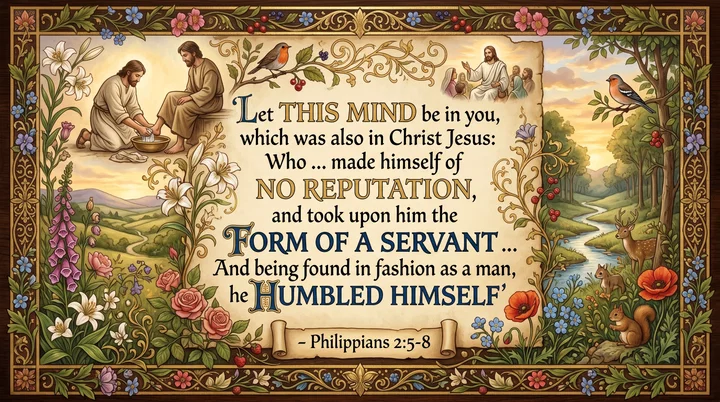
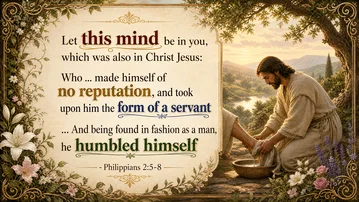
But made himself of no reputation, and took upon him the form of a servant, and was made in the likeness of men:
Translations
But made himself of no reputation, and took on him the form of a servant, and was made in the likeness of men:
King James Version, Webster Bible
But made himself of no reputation, and took upon him the form of a servant, and was made in the likeness of men:
but made himself of no reputation, and took upon him the form of a servant, and was made in the likeness of men:
Revised Version, American Standard Version
but emptied himself, taking the form of a servant, being made in the likeness of men;
but did empty himself, the form of a servant having taken, in the likeness of men having been made,
but emptied himself, taking a bondman's form, taking his place in [ the] likeness of men;
But, himself, emptied, taking, a servant’s form, coming to be, in men’s likeness;
Berean Standard Bible, Majority Standard Bible
but emptied Himself,
taking the form of a servant,
being made in human likeness.but emptied himself, taking the form of a servant, being made in the likeness of men.
But he made himself as nothing, taking the form of a servant, being made like men;
But he made himself of no reputation, and tooke on him ye forme of a seruant, and was made like vnto men, and was founde in shape as a man.
Douay-Rheims (Challoner revision)
But emptied himself, taking the form of a servant, being made in the likeness of men, and in habit found as a man.
Pictures
Cross-references 20 of 152
- 2 Corinthians 8:9
For ye know the grace of our Lord Jesus Christ, that, though he was rich, yet for your sakes he became poor, that ye through his poverty might be rich.
Christ became poor for humanity’s sake so people might become rich through him.
- Hebrews 2:14-18
Forasmuch then as the children are partakers of flesh and blood, he also himself likewise took part of the same; that through death he might destroy him that had the power of death, that is, the devil;
Christ shares human nature to redeem humanity and help those who are tempted.
- John 1:14
And the Word was made flesh, and dwelt among us, ( and we beheld his glory, the glory as of the only begotten of the Father,) full of grace and truth.
The divine Word became flesh and dwelt among humanity.
- Hebrews 4:15
For we have not an high priest which can not be touched with the feeling of our infirmities; but was in all points tempted like as we are, yet without sin.
Christ shared human weakness and was tempted as humans are, yet remained without sin.
- Isaiah 53:5
But he was wounded for our transgressions, he was bruised for our iniquities: the chastisement of our peace was upon him; and with his stripes we are healed.
The servant suffers for human transgressions to bring peace and healing.
- Matthew 20:28
Even as the Son of man came not to be ministered unto, but to minister, and to give his life a ransom for many.
Christ came to serve rather than be served and gave his life as a ransom.
- Hebrews 1:3
Who being the brightness of his glory, and the express image of his person, and upholding all things by the word of his power, when he had by himself purged our sins, sat down on the right hand of the Majesty on high;
Christ is God’s exact image, whose divine glory precedes his humiliation.
- John 17:5
And now, O Father, glorify thou me with thine own self with the glory which I had with thee before the world was.
Christ speaks of the glory he shared with the Father before the world, which he left in humbling himself.
- 1 Timothy 3:16
And without controversy great is the mystery of godliness: God was manifest in the flesh, justified in the Spirit, seen of angels, preached unto the Gentiles, believed on in the world, received up into glory.
Both describe Christ’s humble coming in human flesh.
- Hebrews 2:14-15
Forasmuch then as the children are partakers of flesh and blood, he also himself likewise took part of the same; that through death he might destroy him that had the power of death, that is, the devil;
Christ shared human flesh and blood to die, break death’s power, and free its captives.
- Matthew 11:29
Take my yoke upon you, and learn of me; for I am meek and lowly in heart: and ye shall find rest unto your souls.
Christ’s meek and lowly heart is the example he invites people to learn from.
- Isaiah 53:3
He is despised and rejected of men; a man of sorrows, and acquainted with grief: and we hid as it were our faces from him; he was despised, and we esteemed him not.
Both describe Christ’s lowly, sorrowful life and rejection.
- Romans 8:3
For what the law could not do, in that it was weak through the flesh, God sending his own Son in the likeness of sinful flesh, and for sin, condemned sin in the flesh:
Both describe the Son taking human flesh and condemning sin.
- John 3:16
For God so loved the world, that he gave his only begotten Son, that whosoever believeth in him should not perish, but have everlasting life.
God gave his Son to save the world, the reason for Christ’s condescension.
- Galatians 4:4-5
But when the fulness of the time was come, God sent forth his Son, made of a woman, made under the law,
Christ became human and came under the law to redeem those under it.
- John 1:1
In the beginning was the Word, and the Word was with God, and the Word was God.
The preexistent Word, who is God, became human.
- Colossians 2:9
For in him dwelleth all the fulness of the Godhead bodily.
Christ’s divine fullness dwells bodily in Him, linking His deity with His human form.
- Hebrews 2:9
But we see Jesus, who was made a little lower than the angels for the suffering of death, crowned with glory and honour; that he by the grace of God should taste death for every man.
Connects Christ’s lowered state to suffering death.
- 1 Peter 2:21-23
For even hereunto were ye called: because Christ also suffered for us, leaving us an example, that ye should follow his steps:
Christ’s life and conduct under suffering provide an example for his followers.
- Matthew 8:20
And Jesus saith unto him, The foxes have holes, and the birds of the air have nests; but the Son of man hath not where to lay his head.
Christ’s lack of a home illustrates his self-emptying and poverty.
Commentary part 1 of 6
Each commentary is drawn from primary sources: the writings of Ellen G. White and Adventist pioneers and periodicals. Each commentary is separate. Its own words are not a quotation; follow the references to read the source passages.
Ellen G. White
204 sources
Though eternally one with God in supreme glory, majesty and dominion, Christ voluntarily emptied Himself of royal position, riches, honor and reputation to clothe His divinity with humanity and take the place and work of a servant in the likeness of men.RH Sep 4, 1900ST Dec 9, 18979T 274.2–275.1 He did not cease to be God but veiled the dazzling splendor of deity in humble human flesh, because fallen people could not have endured His unveiled glory.RH Sep 4, 1900RH Jun 15, 1905Ms 54, 1905, par. 11–12 He took human nature as it was after four thousand years of sin, with its frailty, poverty and temptation yet without sin, living a real life from helpless babe to manhood in obscurity, toil, homelessness and suffering without using divine power for Himself.RH Sep 4, 1900RH Jun 15, 1905ST Feb 20, 1893ST May 30, 1911ST May 30, 1911 As innocent substitute and second Adam He bore the world's guilt, curse and death to satisfy justice, vindicate God's law, break Satan's hold and open the way for fallen people to be cleansed, renewed and exalted to eternal life with Him.RH Sep 4, 1900ST Dec 9, 1897ST Mar 9, 1888ST Feb 20, 1893RH May 31, 1870 His self-emptying reveals God's infinite love and calls all believers to receive the same humble mind, esteeming others above self and giving themselves in unselfish, self-denying service.9T 274.2–275.1MH 424.2MH 501.2–3JIOKP 32.2–33.2ST Oct 14, 1908
Glory Voluntarily Veiled
Before taking humanity Christ preexisted as one with God and equal with God, as Majesty, King of glory, Commander of heaven, the brightness of the Father's glory and express image of His person, possessing divine greatness, glory, majesty, honor, riches, dominion, royal authority, throne, high command and power over the universe.RH Sep 4, 1900ST Dec 9, 18979T 274.2–275.1MH 424.2MH 501.2–3 He dwelt in heaven in the bosom, presence, glory and home of the Father, honored with angels' homage and worship.MH 501.2–3DA 20.4–21.1COS 11.1–4ST Feb 20, 1893ST Dec 5, 1892 He was God, the eternal Son, the eternal Word, Creator who laid the foundations, the I AM and Fountain and source of life.RH Sep 4, 1900ST May 19, 1909ST May 30, 1911ST May 30, 1911
Made Himself of no reputation means He voluntarily emptied Himself, laying aside and setting aside royal position, robe, crown, throne, command, riches, honor, glory, majesty and reputation, clothing and veiling His divinity with humanity and taking the form of a servant in the likeness of men.RH Sep 4, 1900ST Dec 9, 18979T 274.2–275.1MH 424.2MH 501.2–3 He laid aside His royal robe and crown and clothed His divinity with humanity, exchanging heaven's riches and honor for earthly poverty and humiliation.RH Jun 15, 1905Ms 54, 1905, par. 11–12Ms 141, 1901, par. 12–13COS 11.1–42RED 14.2 This humbling from the form of God to the form of a servant in the likeness of men and sinful flesh was His willing condescension in behalf of sinners.MH 501.2–3JIOKP 32.2–33.2ST May 30, 1911ST May 30, 19111SP 45.2–46.1
He did not give up divinity but veiled its visible expressions, manifestations and dazzling splendor while remaining God, retaining dignity and oneness with the Father.RH Sep 4, 1900RH Jun 15, 1905Ms 54, 1905, par. 11–12Ms 141, 1901, par. 12–13ST May 19, 1909 His character and relation to the Father remained unchanged, unstained and untouched by sin, and the union of divinity with humanity in Him is a mystery.RH Sep 4, 1900RH Jun 15, 1905Ms 54, 1905, par. 11–12ST May 19, 1909 He was mortal as a member of the human family yet the source of life as God, like us in all things yet knowing no sin.RH Sep 4, 1900Ms 141, 1901, par. 12–13ST May 30, 1911ST May 30, 1911
Sinful people could not have endured His unveiled heavenly glory without being consumed or destroyed, just as they could not endure a bright angel from glory, so He withheld divine glory and revealed only so much of the nature and attributes of the invisible God as they could bear in order that they might become acquainted with their Creator.RH Sep 4, 1900RH Jun 15, 1905Ms 54, 1905, par. 11–12Ms 141, 1901, par. 12–13ST May 19, 1909 He concealed majesty in humble human form and the body of humiliation, refrained from display of rank, power or angelic escort to compel belief, and lived among people in poverty and humility unrecognized and often scorned.RH Sep 4, 1900RH Jun 15, 1905Ms 54, 1905, par. 11–12Ms 141, 1901, par. 12–1312MR 99.4–100.1 At times He appeared outwardly only as son of David so that even disciples struggled to believe.RH Sep 4, 1900RH Jun 15, 1905
He gave the scepter back to the Father and stepped down from the throne of the universe, leaving the heavenly courts, the Father's glory, presence, bosom and home, the companionship of angels and its priceless treasure, in self-exile.ST Mar 9, 1888DA 20.4–21.1COS 11.1–4ST Dec 5, 18924T 268.2 He did not treat heaven as desirable while humanity was lost, though this world is only an atom among His vast dominions, because the one lost sheep was precious to Him.ST Mar 9, 1888DA 20.4–21.1ST Feb 20, 1893ST Dec 5, 18922RED 14.2 He walked among men not as a king demanding homage but as one whose work was to serve, entering the world He had made without being recognized or honored.ST Mar 9, 188812MR 99.4–100.1COS 11.1–4
His self-humbling was wholly voluntary and uncompelled, though under no obligation and free from any yoke and able to remain as Prince at God's right hand beside the Father.DA 20.4–21.1ST Feb 20, 1893ST Jun 27, 1911ST Dec 5, 18921SP 45.2–46.1 Even before taking humanity He saw the whole path from manger to Calvary with every pang, insult, privation and anguish open to view, and willingly consented to come to delight to do God's will, tasting the bitterness of death.ST Feb 20, 1893ST May 30, 1911ST Jun 27, 1911ST Dec 5, 18921SP 45.2–46.1 He chose suffering and dreadful death in His Father's appointed way rather than clinging to equality with God while man was lost in sin and misery.ST Feb 20, 1893ST May 30, 1911ST May 30, 1911ST Jun 27, 1911ST Dec 5, 1892
Servant Humanity Assumed
He took the form and status of a servant, assuming its role, position, duties and nature, and was made in the likeness of men by truly becoming human.RH Sep 4, 1900ST Dec 9, 18979T 274.2–275.1MH 424.2MH 501.2–3 In that becoming, divinity was clothed with humanity and united to humanity, veiling its visible expressions while remaining God.RH Sep 4, 1900ST Dec 9, 1897MH 424.2MH 501.2–3JIOKP 32.2–33.2 By that union He combined divine power with humanity so that humanity could touch humanity and lay hold of divinity, bringing moral power and divine strength within human reach.RH Sep 4, 1900ST Dec 9, 1897MH 424.2MH 501.2–3JIOKP 32.2–33.2
He took fallen, deteriorated human nature as it existed at His advent after four thousand years of sin, described as the likeness of men and sinful flesh.ST Feb 20, 1893ST May 30, 1911ST May 30, 1911ST Jun 27, 19111SP 45.2–46.1 That nature carried its heredity, frailties, degeneracy, decreased physical strength and lowered moral worth, with its ills, afflictions, burdens, griefs, sorrows and temptation.ST Feb 20, 1893ST May 30, 1911ST Jun 27, 1911ST Dec 5, 18921SP 45.2–46.1 Yet He knew no sin, being without evil propensity or moral stain, though made sin for humanity.ST Feb 20, 1893ST May 30, 1911ST May 30, 1911ST Dec 5, 18921SP 45.2–46.1
With His human arm He embraced the race while with His divine arm He grasped the throne of the Infinite.RH Sep 4, 1900ST Dec 9, 18979T 274.2–275.1MH 424.2MH 501.2–3 He thus became the ladder and connecting link between earth and heaven and between fallen people and the Father.RH Sep 4, 1900ST Dec 9, 1897MH 424.2MH 501.2–3JIOKP 32.2–33.2 Through Him divinity reaches humanity and humanity reaches divinity to receive power, righteousness, cleansing, sanctification and transformation into the divine likeness.RH Sep 4, 1900ST Dec 9, 1897MH 424.2MH 501.2–3JIOKP 32.2–33.2
He lived a real human life, found in fashion as a man, from helpless babe to childhood, youth and manhood for about thirty to thirty-three years in the divine order.9T 173.3–174.2RH Jan 14, 190917MR 31.6Ms 83, 1903, par. 21–24Lt 249a, 1904, par. 11–14 He was perfect at each stage, passing through the stages people pass through, learning by experience and growing in physical and spiritual nature.9T 173.3–174.2RH Jan 14, 1909Ms 83, 1903, par. 21–24Lt 249a, 1904, par. 11–14Lt 1, 1880, par. 5–6 So coming as a little child He could know human experience, understand necessities, and know how to deal with people.9T 173.3–174.2RH Jan 14, 190917MR 31.6Ms 83, 1903, par. 21–24Lt 1, 1880, par. 5–6
In that assumed weak humanity His strength was not even equal to angels, and He truly endured hunger, weakness, weariness and suffering.5RED 56.1ST Mar 11, 1875ST Apr 4, 1900EW 121.12RED 87.1–3 He refused to use divine power for His own benefit to ease labor, create sensation, prove Himself, satisfy curiosity, spare pain or save Himself from injury and peril.5RED 56.1ST Mar 11, 1875ST Apr 4, 19002RED 87.1–36RED 97.2 Keeping that low level put Him to the closest test, requiring the strength of all His faculties to resist the inclination to use His power for Himself.5RED 56.1ST Mar 11, 1875ST Apr 4, 19002RED 87.1–36RED 97.2 He was braced by prayer to the Father, spending whole nights in mountain or desert, and was rescued and protected by angels by God's order until His mission was finished.ST Mar 11, 1875ST Apr 4, 1900EW 121.12RED 87.1–36RED 97.2
Poverty and Obscurity Endured
For humanity's sake He became poor, laying aside heavenly wealth and comfort with royal robe and crown to be born as a helpless babe in a manger and stable among beasts in Bethlehem to humble parents, with God as His Father.Ms 141, 1901, par. 12–13Ms 12, 1900, par. 24–27Ms 12a, 1900, par. 18–21 He was brought up in obscurity in despised Nazareth, subject to His parents, sharing family care and working with His hands at the carpenter's trade in a peasant home in coarse clothes like a common laborer.CTBH 78.2TSSW 75.1STE 42.3–43.1 He supported the family by daily labor without using divine power to lessen burdens, and His poverty was part of His legacy in humanity and part of the atonement, not only betrayal in the garden and agony on the cross but the whole series of sorrows compassing humanity borne upon His divine soul.Ms 12, 1900, par. 24–27Ms 12a, 1900, par. 18–21 His self-emptying in this rebukes self-love and obligates every believer rich or poor to use every God-given power in unselfish liberality to help souls for whom He died.Ms 12, 1900, par. 24–27Ms 12a, 1900, par. 18–21
He lived in poverty, humility and lowliness from childhood to manhood, having no home of His own, not even a place to lay His head, often hungry, thirsty, weary and traveling on foot.RH Sep 4, 1900RH Jun 15, 1905Ms 54, 1905, par. 11–12 He shared toil, hardship, homelessness, hunger, thirst, weariness and continual humiliation, though taller than any angel in heaven and educated under heavenly angels.RH Sep 4, 1900TSSW 75.1 So the poorest would know He understood pinching poverty, and He was like us in all things, becoming poor that people might become rich through Him.Ms 141, 1901, par. 12–13TSSW 75.1CNA 119.1–2
He came without worldly splendor, outward display, kingly authority, parade or outward beauty to attract people, taking ordinary features of the Jewish race and being only a little taller than common men when ministry began.SG4 116.317MR 30.3 With perfect human form yet face showing unmatched benevolence, love and holiness, He hid claims to deity and would not explain His birth's mystery or point to miracles to defend Himself.BS 13.1Lt 67, 1895, par. 4–5 So people would be drawn by heavenly truth, character, words, works and prophecy and accept Him by faith on God's word rather than by sight.BS 13.1Lt 67, 1895, par. 4–5
Unknown to earth's great men and unrecognized in the world He made, though Commander who laid the foundations, He walked unrecognized scattering blessing yet receiving curses, blasphemy, insult, hatred and rejection instead of praise.RH Sep 4, 1900Ms 12, 1900, par. 24–27 With scarcely a voice calling Him blessed, a hand in friendship or a roof for shelter, He was despised, forced to flee to save His life, and met with indifference and hearts as hard as adamant despite fulfilling prophecy.RH Sep 4, 1900Ms 79, 1886, par. 10 He lived among people in poverty and humility, unrecognized and often scorned, veiling but not giving up His divinity because sinful people could not have endured His heavenly glory.RH Sep 4, 1900RH Jun 15, 1905Ms 54, 1905, par. 11–12
His humble coming was contrary to the Jews' expectation of a majestic king with worldly splendor to deliver from earthly oppressors and compel obedience, and they rejected Him.SG4 116.3AA 227.4 His disciples' expectation of kingly power according to human desires also obscured His appointed suffering.DA 799.3 Because His quiet mercy ministry without display did not accord with a religion of display, public prayer and trumpeted charity, those measuring religion by display rejected Him, though He was constantly employed in works of mercy and wonderful acts of healing and was the light of the world.AA 227.4BS 13.1
His lowly life sanctifies humble work and shows sympathy for the lowliest, dignifying useful labor and industry by precept and example in Nazareth's little shop.CTBH 78.2Lt 17, 1883, par. 13–17STE 42.3–43.1 By living in Nazareth among the poor, working as a carpenter with His hands for thirty years subject to His parents, He teaches diligence in labor and the duty to provide for those entrusted to care, and gives humble people who face difficulties reason not to be discouraged.CTBH 78.2TSSW 75.1 He removed poverty's disgrace, making no distinction by wealth or rank so lowly people were welcome, showing earthly wealth and rank do not determine worth before God, and laying the foundation for a religion without caste where Jew and Gentile, free and bond are equal.Lt 17, 1883, par. 13–17CNA 119.1–217MR 30.3
Humiliation to Exaltation
Philippians 2:7 teaches a deliberate, progressive humiliation downward from heaven to earth to obedience even to the shameful, ignominious death of the cross from which He could go no farther, step after step to the cruel death, tasting the curse as a Man of sorrows wounded for transgressions and bruised for iniquities.MH 424.2Ms 17, 1911, par. 3–4Ms 42, 1897, par. 31Lt 11, 1887, par. 15–19SG1 23.1 Though in the form of God and equal with God He emptied Himself and took the form of a servant by being made in the likeness of men and found in fashion as a man, humbling Himself in obedience unto death, even the death of the cross.MH 424.2Ms 17, 1911, par. 3–4Ms 129, 1907, par. 7–12RH Apr 19, 1906CT 262.2 This voluntary laying aside and becoming man is the center of the revelation of God's love, and the mind believers are to have in themselves, to be likeminded with the same love in one accord, doing nothing through strife or vainglory but in lowliness esteeming others better than themselves and looking also on the things of others.MH 424.2Ms 17, 1911, par. 3–4Ms 129, 1907, par. 7–12RH Apr 19, 1906 That humble mind works out salvation with fear and trembling as God works to will and to do His pleasure, keeping believers blameless as lights in a crooked nation holding forth the word of life.Ms 17, 1911, par. 3–4Ms 129, 1907, par. 7–12RH Apr 19, 1906 His descent was followed by burial, resurrection, ascension, and ministry in the heavenly courts to plead for wayward guilty people.Lt 11, 1887, par. 15–19SG1 23.1
His whole life of humiliation was part of the atonement and ransom, not only betrayal in the garden and agony on the cross but living at humanity's level for thirty years.Ms 12, 1900, par. 24–27Ms 12a, 1900, par. 18–21PK 701.1–3MYP 255.2 His poverty was part of His legacy in humanity and part of the atonement, for the whole series of sorrows compassing humanity He bore upon His divine soul, standing side by side with the fallen race to restore the moral image of God and to pay the ransom through humiliation and death.Ms 12, 1900, par. 24–27Ms 12a, 1900, par. 18–21PK 701.1–3 His humility stepped still lower to bear insult, reproach, shameful accusations, abuse, betrayal, denial, mocking, crowning with thorns, scourging, bearing the cross, and contempt as a condemned criminal and public malefactor numbered with transgressors, suspended between heaven and earth amid taunting and derision.PK 701.1–3Lt 11, 1887, par. 15–19SG1 23.1 He suffered almost every cruelty with bodily pain and far greater mental pain under the weight of the sins of the whole world taken into His own sinless bosom, enduring the contradiction of sinners, paying the debt, breaking bondage, and working out deliverance by every pang and every insult while only a few received Him.PK 701.1–3Lt 11, 1887, par. 15–19SG1 23.1 His self-emptying in poverty thus rebukes self-love and obligates rich and poor alike to use every God-given power in unselfish liberality for souls.Ms 12, 1900, par. 24–27Ms 12a, 1900, par. 18–21
After paying the ransom, making expiation, bringing life and immortality to light, and proving God's administration without flaw, God highly exalted Him and gave Him a name above every name.Ms 17, 1911, par. 3–4Ms 42, 1897, par. 31Ms 129, 1907, par. 7–12RH Apr 19, 1906CT 262.2 To that name every knee in heaven and earth and under the earth shall bow and every tongue confess that Jesus Christ is Lord to the glory of God the Father, receiving universal homage.Ms 17, 1911, par. 3–4Ms 129, 1907, par. 7–12RH Apr 19, 1906 With judgment placed in His hands He remains the Fountain of life who brings immortality to light and makes expiation to fulfill Scripture.Lt 11, 1887, par. 15–19SG1 23.1 His suffering and death fulfilled the Scriptures and the covenant made together by Father and Son before the world was created and before man was created, required because sin brings death.DA 799.3ST Jul 29, 1908ST Dec 23, 1897 By causing His death outside Jerusalem Satan defeated his own purposes and laid open his administration, and His death led not to defeat but to eternal victory, bursting death's fetters and triumphing over death and the grave.DA 799.318MR 362.1–3ST Jul 29, 1908LC1 51.1
Like a high priest laying aside gorgeous pontifical robes to minister in the plain white linen dress of a common priest, He emptied Himself to offer Himself as both priest and victim.18MR 362.1–3AA 227.4 He combined priest and victim as the Passover sacrificed for humanity and true High Priest forever after the order of Melchizedek, given up at terrible cost to establish God and carry the unfallen worlds with Him.ST Jul 15, 188018MR 362.1–3AA 227.4 In that humiliation type reached antitype, and His cross-death gave significance to the entire Jewish economy, fulfilling every requirement of the broken law, though He was under no obligation and was sinless and above the law.ST Jul 15, 1880DA 799.3AA 227.4 His earthly humiliation in behalf of humanity to give immortal life leaves marks He will ever carry as one that has been slain, even while the redeemed host and the pure angels honor and worship Him.LC1 199.318MR 362.1–3RH Apr 15, 1875
Salvation Through Substitution
Made himself of no reputation means He voluntarily took human nature and the form of a servant, veiling the visible expressions of divinity while remaining God, and lived among people in poverty and humility, unrecognized and often scorned, though mortal as a member of the human family and the source of life as God, freely accepting death and bearing the world's sins to give humanity life as willing steps in the plan to save fallen people.RH Sep 4, 1900ST Dec 9, 18972T 200.1 Though one with God and in the form of God and equal with God, He was innocent and obedient, yet took upon Himself the world's sin and suffered as the Sin-bearer, making reconciliation possible.ST Dec 9, 1897ST Dec 17, 1902Ms 12, 1900, par. 24–27 Though the Majesty of heaven and brightness of the Father's glory and express image of His person, possessing divine majesty, perfection, excellence and equality with God with all fullness dwelling in Him, out of infinite love in the plan of salvation He left the heavenly courts and clothed divinity with humanity, and walked among men not as a king demanding homage but as one whose work was to serve, caring how to aid and bless humanity out of compassion for a fallen world, giving His life as a ransom to cleanse from sin and bring to share eternal glory.ST Mar 9, 18882T 200.1Ms 12, 1900, par. 24–27 On the cross this self-emptying made atonement for the fallen race, and His whole series of sorrows compassing humanity which He bore upon His divine soul was part of the atonement, not only betrayal in the garden or agony on the cross, for His humiliation and death on the cross paid the ransom to restore the moral image of God in man.ST Dec 17, 1902Ms 12, 1900, par. 24–27 His becoming human and suffering was to save a friendless lost world marred, polluted and seared by sin and the curse, as obedient substitute, surety, second Adam, priest and sacrificial victim taking the world's sin, bearing the curse, guilt, transgression and wrath that should fall on man, suffering in man's stead, paying the debt and ransom with His blood, and making reconciliation, atonement and expiation.RH Sep 4, 1900ST Dec 9, 1897ST Mar 9, 18882T 200.1ST Dec 17, 1902
The Son of God alone can redeem humanity and satisfy justice's claims, which an angel could not do.LC1 191.2MYP 16.2 The Prince of Life clothed divinity with humanity to carry out the plan undertaken for salvation, though He had received honor in the heavenly courts and was familiar with absolute power, yet kept Himself down on the level of humanity, and keeping that human level was as difficult for Him as rising above depraved nature to be partakers of the divine nature is for men.LC1 191.2 The Majesty of heaven who laid the foundations of the world became a servant for humanity's sake, patiently accepting scorn and insult, enduring insult, rejection, reproach, abuse, mockery and crucifixion from the very people He came to bless, and made the path of service easier for followers, showing no service or self-denial for God is too great.4T 248.1ST Nov 28, 1911MYP 16.2 Leaving heaven's royal throne and glory and the bosom of the Father, He exiled Himself to a friendless lost world to save those who would be saved, exchanging pure companionship of angels for fallen humanity polluted with sin, and devoted Himself wholly to redemption in unselfish service to turn people from sin to righteousness and reconcile humanity to God.RH Sep 30, 1909STPW 14.1 He held nothing back but gave His whole being and precious life that people might live with a life measuring with God's life, providing the bread and water of life for all who hunger and thirst.MYP 16.2RH Sep 30, 1909STPW 14.1
By perfect obedience in human nature and death He pledged to maintain the sacred and exalted honor of the Father's law, to convince men of sin as transgression of the law, to vindicate its binding claims and make manifest the holiness of every principle, and through divine mediation to bring men back to obedience.ST Feb 20, 1893 Though possessing divine excellency and greatness and equality with God, He voluntarily exchanged the throne of light and glory with the Father and came from heaven to earth, not compelled but choosing it while man was lost in sin and misery, clothing divinity with humanity to become man's substitute and surety, bearing the curse that should fall upon man and the results of transgression so man might escape eternal death.ST Feb 20, 1893 His humiliation, suffering and sacrifice became a stepping stone for fallen people, who can rely on His merits and through His virtue receive God's acceptance as they strive to keep His law, for He overcame for humanity so His merits, power and virtue can be claimed, and as people cooperate with Him and live in harmony with His law He cleanses natures from sin and imparts righteousness.RH May 31, 1870RH Jul 16, 1908 His sacrifice did not abolish God's law or save people so they could continue in sin, but gave another opportunity to prove loyalty, demonstrating perfect obedience in human nature and vindicating its requirements, entering covenant to refute Satan's claim that people could not keep God's law and to show the law is changeless and eternal, revealing God's character as expressed in the law.ST Oct 29, 1885ST Jun 13, 1900
He secured and paid for a time of probation and second probation in which people can be transformed, purchased freedom from Satan's bondage and gave another trial to prove loyalty as the only acceptable means.LC1 118.2Ms 80, 1903, par. 14 Looking with infinite pity on Adam and Eve in wretched helpless condition under the prince of darkness through transgression, He offered the only means acceptable with God to give another trial on probation, consenting to leave honor, kingly authority and glory with the Father and humble Himself to humanity in poverty to redeem man.LC1 118.2 Laying aside heavenly honor and glory, royal robe and kingly crown, clothing divinity with humanity and coming as a little child to live from infancy to manhood the life human beings must pass through, by this self-emptying to the lowest depths He secured the time of probation in which people can become transformed into the divine likeness.Ms 80, 1903, par. 14 Descending into human suffering to reach people where sin had brought them and through divine power connect humanity with God, He identified with weaknesses of the fallen race to engage the mighty prince of darkness, and by firm humble obedience to undo Adam's disgraceful failure and show man can obey and regain lost Eden.ST Oct 29, 1885LC1 118.2
Through Him humanity may take hold of divinity and share the divine nature, for He gave up wealth, honor and comfort, lived among ordinary people and took the place of the poor and oppressed, and for humanity's sake became poor so people might become rich through Him in heavenly treasure.RH May 15, 1900ST May 30, 1911 Veiling signs of divinity and taking the humble role of a servant in likeness of sinful flesh, He united divinity with humanity so humanity could be a channel of communication between God and people, and divine power could restore people to God's likeness.ST May 30, 1911RH Jul 16, 1908 Laying aside glory, dominion and riches to meet humanity's needs, He stepped down from throne, left crown and royal scepter, clothed divinity with humanity and humbled Himself even to death on the cross in love to reveal the Father, to reconcile man to God, and to make him a new creature renewed after the Creator's image, that man might be exalted to sit with Him on His throne.2T 549.1ST Dec 5, 1892 In Him there is a complete offering, an infinite sacrifice and a mighty Saviour able to save to the uttermost all who come to God by Him, lifting to hope, joy and heaven, making rich with imperishable heavenly treasure, eternal riches and eternal weight of glory, to inherit the prepared kingdom as sons of God, heirs of God and joint-heirs with Christ.ST Jun 27, 19112T 549.1ST Dec 5, 1892
His sacrifice is sufficient for the whole world and not Israel alone, as propitiation not for believers alone but for the sins of the whole world, paying with His blood for transgression of the law.Lt 63, 1895, par. 39–41ST Jul 15, 1880 Though sinless and above the law and under no obligation to become humanity's sacrifice, He bore humanity's reproach and suffered outside Jerusalem, tempted as people are, developing a righteous character not for Himself since already pure and spotless but for fallen humanity.ST Jul 15, 1880STSE 45.2 He offers that character to sinners, so that through repentance, forsaking sin, faith in Jesus and obedience to God's perfect law, Christ's righteousness is imputed to them and becomes theirs, implanted within, their names recorded in the Lamb's book of life, and they become children of God and members of the royal family with power given to obey and keep the law.ST Dec 17, 1902Lt 76, 1898, par. 16–17STSE 45.2 On the cross this self-emptying made atonement for the fallen race, and holiness is the fruit of that sacrifice promised because He died, and He longs to bestow holiness and make believers partakers of His nature and save those separated by sin, calling them to have His mind by choosing His service, giving themselves wholly into His control, learning from Him to do God's will, while the sweet voice of mercy still pleads to hear, repent and be made perfect and furnished for every good work to obtain the crown of life.ST Dec 17, 1902Lt 76, 1898, par. 16–17Lt 63, 1895, par. 39–41
Victory Over Satan
He volunteered to pass over the very ground where Adam fell and to place His feet in Adam's steps, entering where Adam failed to engage in contest with the mighty prince of darkness and to cope with the foe who had triumphed over Adam.RH Jun 15, 1905Ms 54, 1905, par. 11–12RH Nov 3, 1904HMW 10.2–3 As divine-human Saviour and head and representative of the fallen race He took the position, form and likeness of a servant and man, veiling but not giving up His divinity and royal glory because sinful people could not have endured its sight.RH Jun 15, 1905Ms 54, 1905, par. 11–12 In that united divine-human nature He lived from childhood to manhood in perfect, firm, humble obedience on every point, becoming Redeemer and Restorer and raising the race to vantage-ground with power vested in Him for redemption and partaking of the divine nature.RH Jun 15, 1905Ms 54, 1905, par. 11–12Ms 67, 1898, par. 2–3RH Nov 3, 1904
By becoming human He could suffer temptation and understand human trials in order to help those tempted, passing through childhood, youth and adulthood and being tested by suffering, ridicule, grief, sorrow and Satan's fiercest attacks.ST Dec 9, 1897RH Sep 13, 1906SW 57.1–58.1STB 187.2–3 He met Satan single-handed in the wilderness without sin at the risk of failure and eternal loss, learning by personal experience the pressures on people and meeting life's peril in common with every soul.ST Dec 9, 1897Lt 10, 1899, par. 13–14STB 187.2–3 His humble life of self-denial and self-sacrifice in the form and role of a servant, representing the Father and coming to meet humanity in its most sinful, corrupt, fallen and helpless condition, is the pattern His followers must live, while as advocate before the Father He secures immortal inheritance for heirs of God and joint-heirs with Christ.Lt 10, 1899, par. 13–14RH Sep 13, 1906SW 57.1–58.1
Taking a servant's lowly condition and fallen humanity, He faced human temptations and trials as humans must with the same facilities available to them, tempted in all points yet without sin from childhood to manhood.ST Apr 10, 1893RH Aug 6, 1908 He met the temptations human beings must meet and overcame through strength from above, His obedience not depending on a special power unavailable to people but on divine power and strength working through humanity.ST Apr 10, 1893RH Aug 6, 1908 By that sinless life and victory under trial He demonstrated that God's law can be kept and that through God's power people can withstand Satan, bear trial and live righteously as He did, escaping the world's corruption, sharing the divine nature and laying hold on immortality through revealed truth and sanctification by the Holy Spirit.ST Apr 10, 1893STE 224.1–225.1RH Aug 6, 1908 In His own life He worked out the controversy between Christ and Satan and defeated the powers of darkness, facing them single-handedly to win the victory on humanity's behalf, and contemplating this self-humbling softens, purifies, ennobles and strengthens the heart and mind.MYP 263.2–3STE 224.1–225.12RED 27.1–28.1
His taking humanity placed Him within Satan's reach, and Satan exulted and hoped to overpower Him as easily as the holy pair in Eden and thereby save his own life and kingdom and hinder the plan of salvation, bringing every temptation from birth through death.ST Jan 30, 1879LC1 51.13SP 183.2PP 66.1 Satan expected that in fallen-like human nature Jesus could be overpowered and prevented from carrying out salvation, and sought to tempt Him to depart from His Father's will.ST Jan 30, 1879LC1 51.1PP 66.1 Jesus refused to bow to Satan or to receive earth's kingdoms from Satan's hand as a way to save Himself from suffering, choosing instead a life of suffering and dreadful death in His Father's appointed way in order to redeem Satan's claimed possessions by His own life and to become the lawful heir to whom the kingdoms of earth would be given as an everlasting possession.LC1 51.1 Afterward all in heaven and earth will submit to Him and Satan himself will be given into His hands to be destroyed by death and never again annoy Jesus or the saints in glory, while Satan's attacks only revealed Christ's spotless character.LC1 51.13SP 183.2
As heaven's Majesty humbling Himself to become substitute and surety, He faced the powers of darkness alone and single-handedly and won the victory on humanity's behalf.5T 25.2CT 52.3MYP 263.2–3STE 224.1–225.1 He came to confront the powers of darkness, hold Satan's power in check, limit and contest it, and give man power to overcome Satan's devices.RH Jan 21, 19092RED 27.1–28.1 By accepting the curse and dying in self-denial and perfect submission to the Father He exposed Satan's deceptions and disobedience, bore witness against him as liar, thief and murderer, broke his hold, defeated him, opened salvation, freed humanity from evil's power and made Satan's destruction unavoidable.STE 224.1–225.12RED 27.1–28.13SP 76.2–78.1
His self-emptying in unselfish service stands opposite Lucifer's desire for God's power and the highest place and opposite Satan as destroyer and self-exalting misuser of power.DA 435.2–436.4Ms 67, 1898, par. 2–318MR 362.1–3 Whereas Lucifer supposed he should occupy Christ's and even God's place and made warfare until thrust down, Christ though exalted and equal with God made Himself of no reputation and humbled Himself in obedience even to death on the cross, becoming Redeemer and Restorer.DA 435.2–436.4Ms 67, 1898, par. 2–3DA 20.4–21.1 Though He could have remained beside the Father with glory and angels' homage, He gave the scepter back to the Father and stepped down from the throne of the universe to bring light and life, and like a high priest laying aside gorgeous robes for white linen He emptied Himself to offer Himself as both priest and victim given up as Satan's victim at terrible cost to God.DA 20.4–21.118MR 362.1–3 By causing His death Satan defeated his own purposes and laid open his administration, revealing a character entirely opposite to Satan's and establishing God with the unfallen worlds and heavenly universe.ST Nov 5, 1894SW 19.118MR 362.1–3
Revelation of God's Character
His self-emptying is the center and full expression of God's infinite benevolence, disinterested love, mercy and goodness, revealing His character, attributes, personality, heart, mind and administration including long forbearance, wisdom, justice and perfect obedience.MH 424.2MH 501.2–3ST Oct 14, 19082T 200.1ST Dec 17, 1902 Though in heaven in the bosom of the Father in the form of God and equal with God, He voluntarily laid aside glory and subjected Himself to the humbling conditions of human life, assuming the responsibilities, position and status of a servant in behalf of sinners.MH 424.2MH 501.2–3ST Oct 14, 1908ST Sep 21, 1915ST Dec 17, 1902 This amazing sacrifice and wonderful condescension by the Majesty of heaven is meant to banish selfishness from the heart, teaching looking not only on one's own things but also on the things of others, possessing His mind, and serving such a Master from gratitude and love with a deep sense that one is not one's own, not from grudging, selfish motives.MH 501.2–3ST Oct 14, 1908ST Sep 21, 1915 Given as a clearer revelation than nature so people may become acquainted with their Creator, His becoming human and accepting indignity and abuse expressed love for sinners, and on the cross made atonement for the fallen race, with holiness as its fruit and partaking of His nature as its promise to those separated by sin who give themselves wholly into His control to do God's will.MH 424.22T 200.1ST Dec 17, 1902
As Prince of heaven and Commander of the heavenly hosts He stepped down from high position and command, laid aside royal robe and kingly crown, and clothed divinity with humanity to become the divine Teacher of all classes and live before human beings a life free from all selfishness and sin as an example of what they may become through grace.RH Aug 2, 1906ST Mar 18, 1897Lt 117, 1903, par. 5–6 At the time He was most needed He came in the garb of humanity to live out God's holy law that had been misrepresented and buried beneath human tradition and commandments of men, when forms and ceremonies had been put in place of the Word until its pure and holy principles were almost extinct.RH Aug 2, 1906ST Mar 18, 1897 He came as representative of God and Light of the world, employing human God-given powers for men's benefit while drawing on divine power in every mercy and healing, living the standard of the ten precepts and making divine character visible by teaching the heavenly unknown through the earthly familiar, showing what the Father would do.RH Aug 2, 1906ST Mar 18, 1897Lt 48, 1909, par. 9 His ministry united humanity with the strength of divinity, a union essential to redeem the race, and provides the pattern of unselfish service in which serving Him is honor and not humiliation, lifting people from worldly ideas of importance to the knowledge of God that brings peace and happiness now and eternal life.Ms 157, 1904, par. 4–7Lt 48, 1909, par. 9FE 469.2
Coming as Light and Teacher with divine power and infinite knowledge because men needed His presence and could not come to correct knowledge without it, He dispelled moral darkness with clear bright rays.MH 424.2MH 501.2–3ST Mar 18, 1897 He swept away the misrepresentation hiding the Father, confronted Satan's claims, proved his charge false, and vindicated the Father's word and righteousness.MH 424.2ST Mar 18, 1897 In doing so He showed what human lives may become when lived in obedience even to death on the cross.MH 424.2ST Dec 17, 1902
The gift and self-emptying amazed the holy angels, revealing the marvelous love of God to the fallen race and the value of the atonement and cost of salvation.2T 200.1LC1 32.2ST Feb 20, 1893 It is wonderful and almost incredible, which cannot be described by tongue, portrayed by pen, or taken in by imagination.CT 448.2CE 107.2ST Feb 20, 1893 It was infinite and costly to heaven at infinite price which only Calvary's reflected light can estimate, yet many estimate it too lowly because they see His sufferings only dimly, and few appreciate it.2T 200.1LC1 32.2SC 118.1 Sinless and exalted by nature, He knew beforehand all the steps in the path of humiliation yet refused none, consenting to be made flesh and to descend step by step to the depths of man's woe to make expiation for the condemned, perishing world.SC 118.1ST Feb 20, 1893
Contemplating who He was, what He laid aside, His single-handed victory and love softens, purifies, ennobles and elevates the heart, strengthens the mind, transforms workers, makes labor effectual, and brings harmony with heaven.MH 501.2–3ST Oct 14, 1908ST Sep 21, 1915CT 448.2CE 107.2 It awakens gratitude and love, drives selfishness from the heart, gives rejoicing and assurance of rescue, and enables rejoicing in every condition.MH 501.2–3ST Oct 14, 1908ST Sep 21, 1915SC 118.1 Every Scripture student contemplating it is purified and given clearer views, discernment and judgment.CT 448.2CE 107.2
His condescension proves the greatness of salvation and the price paid to redeem souls, showing the value God places on them as more precious than fine gold and exceeding costly treasures.RH Nov 21, 1912Ms 81, 1910, par. 4–8Ms 25a, 1891, par. 5–6 From manger to Calvary He lived continual self-denial, self-sacrifice and humiliation, though all the fullness of the Godhead dwelt bodily in Him, becoming poor so that through His poverty man might be made rich not in houses and lands but with eternal inheritance and the hope of eternal life centered in Him.Ms 81, 1910, par. 4–8Ms 71, 1912, par. 8Ms 25a, 1891, par. 5–6 Because heaven gave all it afforded in this one gift at infinite sacrifice to unite humanity with divinity and save guilty rebels, exhausting the resources of infinite love in goodness, mercy, compassion and love, to neglect it is to refuse full consecration, reject divine mercy, and choose eternal ruin, leaving nothing more that can move or save the hard, proud, indifferent heart, though every provision is made without compulsion and safety lies in contemplating Calvary with determined purpose so it never loses force upon the mind.RH Nov 21, 1912Lt 330, 1907, par. 10–11Ms 25a, 1891, par. 5–6
Mind of Humility Required
The mind described is the mind to be in believers when born from above: lowliness of mind esteeming others better than self, looking not only on one's own things but also on the things of others, doing nothing through strife or vainglory, being likeminded with the same love in one accord and of one mind, meeting the mind of the Spirit of God.9T 274.2–275.1JIOKP 32.2–33.2Ms 27, 1911, par. 19–21Lt 187, 1903, par. 5–7Lt 266, 1903, par. 18–21 Though in the form of God and thinking it not robbery to be equal with God, with all things by right, He claimed none of them for Himself but set aside reputation, honored position, heavenly glory and royal state to take the status, position and form of a servant and become truly human in human life and condition.JIOKP 32.2–33.2Ms 27, 1911, par. 19–21Ms 17, 1911, par. 3–4Lt 130, 1901, par. 9–11Ms 116, 1904, par. 1–4 That self-emptying and lowliness rejects rivalry, pride, self-exaltation, self-importance, self-conceit, selfish ambition and pursuit of human praise, and is the pattern and true godliness believers follow in putting others before themselves and caring for what concerns them.9T 274.2–275.1JIOKP 32.2–33.2Lt 130, 1901, par. 9–11ST Feb 8, 1883Ms 187, 1898, par. 26–31 Moving toward deeper humbling in obedience to death on the cross, which God answered by highly exalting Him to receive universal homage and confession as Lord, it sets the same self-renouncing path for believers as God works in them to will and do His pleasure while they work out salvation with fear and trembling.Ms 17, 1911, par. 3–4Ms 67, 1898, par. 2–3Ms 153, 1898, par. 14–19
His humility did not consist in a low estimate of His own character, qualifications or abilities.3T 566.2–3ST Oct 21, 1897CE 179.2–3CTBH 78.3Ms 5, 1875, par. 17 It consisted in humbling Himself from equality with God and highest authority to the lowest place of a servant and adapting Himself to fallen humanity in order to raise people with Him to sonship and a higher life.3T 566.2–3ST Oct 21, 1897CE 179.2–3CTBH 78.3FE 142.3 Holding riches, splendor, honor and glory, He left them for a life of humility, shame and reproach, making His home in Nazareth proverbial for wickedness with lowly poor parents, working as a carpenter with His hands to do His part in sustaining the family and submitting to parents for thirty years in diligent labor and care for those entrusted to Him.ST Oct 21, 1897CE 179.2–3 He came not to be ministered unto but to minister, not to do His own will but the will of Him that judges righteously, not seeking honor or putting self first but subordinating everything to His Father's will, saying I can of Mine own self do nothing.ST Oct 21, 1897MYP 162.1–2 True greatness is measured by moral worth in living for others, and seeing His glory makes people humble, regarding the lowest place in His service as honorable and rejecting pursuit of status, supremacy and self-exaltation to follow His self-sacrifice for the good of others.CE 179.2–3CTBH 78.3MYP 162.1–2FE 142.3
Seeing His humility calls the converted to lay aside lofty ideas of self, feel nothingness without Christ, be emptied of pride and self-esteem, and come down in meekness to be willing even to be a servant in imitation of Christ.STB 250.2TSSW 25.215MR 245.1–2Ms 187, 1898, par. 26–31 It refuses self-centeredness and making self the center, refuses self-exaltation, great display and self-importance, and refuses to demand one's word be unquestioned or to rule with arbitrary authority.STB 250.2ST Feb 8, 1883Ms 5, 1875, par. 17Ms 187, 1898, par. 26–31 Constantly looking unto Jesus reveals a self-denying love and deep humility to be copied in lowliness esteeming others better than self, doing nothing through strife, vainglory or selfish ambition, desiring in devotion and consecration to serve others rather than to be served.TSSW 25.2ST Feb 8, 188315MR 245.1–2 Pride, ambition, deceit, hatred and selfishness must be cleansed and thoroughly uprooted from the heart rather than partially subdued, lest under favorable circumstances they spring up anew and ripen into rebellion against God and cause ruin, and this is especially required of ministers who without converting power and without learning Christ hinder rather than help the church even if they have learned doctrines.ST Feb 8, 188315MR 245.1–2Ms 187, 1898, par. 26–31
Believers gain His mind by filling the mind with His self-denial, self-sacrifice and great humiliation in disrobing Himself of divine majesty and glory to clothe divinity with humanity, a marvel of angels.15MR 25.2ST Dec 16, 1880ST Mar 31, 1887 They study and copy His character of humility and meekness rather than pride, envy, jealousy, resentment or unkind criticism, comparing character with His as Pattern and turning attention from self to Him as Author and Finisher of faith to run the race with patience with the crown in view.ST Mar 31, 18871MR 151.1–5Lt 28, 1888, par. 28–33 His whole life on earth exerts influence to destroy selfishness and pride in the human heart and to encourage tenderness, pity, compassion, meekness and fidelity, with nothing boastful in word or manner and whole influence against vain boasting and pride in human wisdom, a constant rebuke to ambitious feeling and human pride and self-esteem.ST Mar 31, 1887Lt 28, 1888, par. 28–33 No one can have fellowship with Him as Teacher and Master or come into union with Him until pride of heart is subdued to become meek and lowly of heart, thus having the mind of Jesus and sympathizing with His feelings, in which rest and growth in grace are found only where meekness and lowliness are cherished and selfishness does not reign, requiring daily self-denial, lifting the cross and following where His example leads.Lt 60, 1874, par. 11MR 151.1–5Lt 28, 1888, par. 28–33 That mind is unselfish self-sacrifice taking the form of a servant instead of seeking high esteem, highest position and highest remuneration, in earnest spirit, fervent devotion, purity and love, giving service not merely for wages nor for honor but for God's glory and salvation of lost men, by which every worker is tested whether the heart is enlisted and bears fruits of self-sacrifice.1MR 151.1–5Lt 28, 1888, par. 28–33
His life is the pattern for character to be studied, copied and made part of life, showing what those who serve Him may become and revealing in human nature the character all admitted to God's city must form, including sanctification of body, soul and spirit to gain life measuring with God's life.RH Aug 6, 1908STA 96.1Ms 186, 1907, par. 26–27Ms 83, 1886, par. 19–22 His life and death for sinful people reveal love and give the converted a pattern, His perfect humanity lived out to the perfection God requires in obedience to every law of God through self-denial and good works, with sinless victory under trial as example for those who bear His name.TSSW 25.2RH Aug 6, 1908Ms 186, 1907, par. 26–27 Through His sacrifice humanity may share the divine nature and escape the world's corruption, encircling the race with His human arm while with His divine arm He grasps the throne of the Infinite to unite earth to heaven, giving divine power and strength to everyone to overcome.RH Aug 6, 1908Ms 83, 1886, par. 19–22 His self-emptying sets a path of sacrifice believers must follow, separating from self, defects, error, sin, inclination and self-indulgence to be lights to the world, and sharing in His suffering is part of being a co-worker to partake with Him in glory and receive an eternal weight of glory.STA 96.1Ms 186, 1907, par. 26–27Ms 83, 1886, par. 19–22 He stepped from the highest position to the lowliest to become humanity's Pattern, to bless and save people and raise them to be sons and daughters of God, a sacrifice greater than any ever required of believers to be believed, appreciated and imitated.Ms 186, 1907, par. 26–27Ms 83, 1886, par. 19–22Ms 34, 1899, par. 1
In His self-emptied state for salvation of lost humanity the Holy Spirit was given to Jesus without measure.RH Nov 5, 1908Lt 67, 1902, par. 39–45 The same giving follows for every follower when the whole heart is surrendered for His indwelling, so that emptying of glory enables filling believers with His Spirit for power and efficiency in His work.RH Nov 5, 1908Lt 67, 1902, par. 39–45
The passage containing the verse is essential education and the best instruction for the present time, especially for leading brethren, ministers and all workers, to replace pride and ambition with a meek and lowly spirit.Lt 187, 1903, par. 5–7Lt 190, 1905, par. 5–6Ms 67, 1898, par. 2–3 It is so clear there is no excuse for walking contrary to it, to be thankfully obeyed and earnestly fulfilled, revealing God's character and attributes of benevolence, mercy, long forbearance and perfect obedience with infinite wisdom, love, justice and mercy in life, character and mediatorial work.Lt 187, 1903, par. 5–7STE 151.2Ms 153, 1898, par. 14–19 It is to be read and studied together with the whole second chapter and also the third chapter as the lesson book for traveling heavenward, studied day by day, a most valuable study taxing the intellect, strengthening mental ability, expanding in brightness as beheld, elevating to perfection, giving faith and trust in God, and yielding hidden treasure to diligent searching.Lt 187, 1903, par. 5–7Ms 67, 1898, par. 2–3STE 151.2Ms 153, 1898, par. 14–19
That mind produces thorough change of character necessary before God can acknowledge believers as His children, producing order in the church, right dealing toward brethren and sisters, correct observing of the Sabbath, and hearty repentance with confession of wrong and shame before God.Lt 266, 1903, par. 18–21Ms 66, 1886, par. 32 It calls ministers and physicians and all workers away from self-exaltation to bowed prayer, confession of withheld sin, conversion of heart, and walking as wholly consecrated dependent children in unity and humility, meeting the mind of the Spirit.Lt 266, 1903, par. 18–21Ms 66, 1886, par. 3210MR 105.5–8 It gives directions for parents to do training work intelligently honoring the Redeemer, so that when all meet the Judge over His broken law they and their children will not stand condemned, and it sets the Bible standard of self-denial and self-sacrifice to be met at once with determination and persevering energy, no longer neglecting duty to lighten others' burdens but with Christ's help lifting burdens directly in the path.Ms 66, 1886, par. 3210MR 105.5–8Lt 1, 1877, par. 13
Sources