Luke 22:24
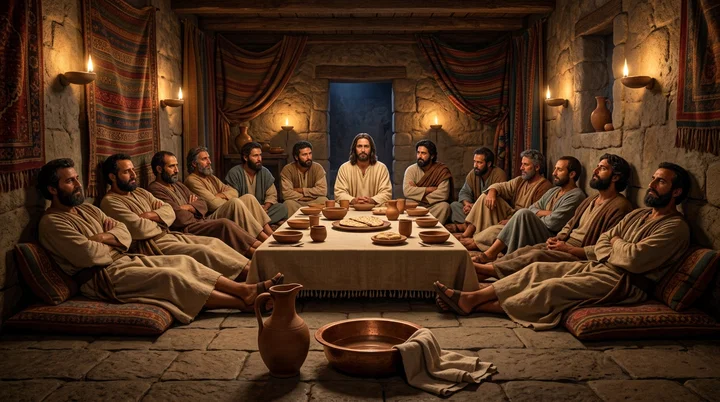
And there was also a strife among them, which of them should be accounted the greatest.
Translations
American King James Version, King James Version, KJV Cambridge Paragraph Bible, Webster Bible
And there was also a strife among them, which of them should be accounted the greatest.
And there arose also a contention among them, which of them is accounted to be greatest.
And there arose also a contention among them, which of them was accounted to be greatest.
And there happened also a strife among them — who of them is accounted to be greater.
And there was also a strife among them which of them should be held to be [ the] greatest.
And it came to pass that there was, a rivalry also, among them, as to which of them seemed to be greater [than the rest].
A dispute also arose among the disciples as to which of them would be considered the greatest.
A dispute also arose among the disciples as to which of them should be considered the greatest.
A dispute also arose among them, which of them was considered to be greatest.
And there was an argument among them about which of them was the greatest.
And there arose also a strife among them, which of them should seeme to be ye greatest.
Douay-Rheims (Challoner revision)
And there was also a strife amongst them, which of them should seem to be the greater.
Pictures
Cross-references 20 of 27
- John 13:14-15
If I then, your Lord and Master, have washed your feet; ye also ought to wash one another’s feet.
Jesus answers the dispute over greatness by giving an example of humble service.
- Matthew 20:25-28
But Jesus called them unto him, and said, Ye know that the princes of the Gentiles exercise dominion over them, and they that are great exercise authority upon them.
Jesus teaches that greatness among his followers means serving others.
- Mark 10:41-44
And when the ten heard it, they began to be much displeased with James and John.
The ten dispute over rank, and Jesus teaches that greatness means serving others.
- Philippians 2:3
Let nothing be done through strife or vainglory; but in lowliness of mind let each esteem other better than themselves.
Reject rivalry and esteem others above yourself.
- John 13:5
After that he poureth water into a bason, and began to wash the disciples’ feet, and to wipe them with the towel wherewith he was girded.
Jesus answers their rivalry by washing the disciples’ feet.
- Luke 14:7-11
And he put forth a parable to those which were bidden, when he marked how they chose out the chief rooms; saying unto them,
Jesus teaches against seeking places of honor at a feast.
- Mark 9:33-34
And he came to Capernaum: and being in the house he asked them, What was it that ye disputed among yourselves by the way?
The disciples dispute over who is greatest.
- Matthew 20:20-24
Then came to him the mother of Zebedee’s children with her sons, worshipping him, and desiring a certain thing of him.
James and John seek places of greatest honor, provoking the other disciples’ displeasure.
- Matthew 23:6
And love the uppermost rooms at feasts, and the chief seats in the synagogues,
Jesus reproves seeking honored places.
- Luke 9:46-48
Then there arose a reasoning among them, which of them should be greatest.
Both describe the disciples disputing who is greatest; Jesus teaches that the least is great.
- John 13:16
Verily, verily, I say unto you, The servant is not greater than his lord; neither he that is sent greater than he that sent him.
Jesus teaches that servants are not greater than their lord after washing the disciples’ feet.
- Philippians 2:5-8
Let this mind be in you, which was also in Christ Jesus:
Christ’s humility and servant’s form exemplify the mind he commends.
- Matthew 23:8
But be not ye called Rabbi: for one is your Master, even Christ; and all ye are brethren.
Both condemn rank-seeking and affirm that believers are brethren under one Master.
- Luke 22:28-30
Ye are they which have continued with me in my temptations.
Jesus promises a kingdom to those who continued with him in his trials, despite their dispute.
- Mark 10:42-45
But Jesus called them to him, and saith unto them, Ye know that they which are accounted to rule over the Gentiles exercise lordship over them; and their great ones exercise authority upon them.
Greatness is linked to serving others.
- Matthew 20:28
Even as the Son of man came not to be ministered unto, but to minister, and to give his life a ransom for many.
states He lived to serve others
- Matthew 20:24
And when the ten heard it, they were moved with indignation against the two brethren.
The disciples dispute over greatness and react angrily to the brothers’ request.
- Matthew 23:12
And whosoever shall exalt himself shall be abased; and he that shall humble himself shall be exalted.
Both condemn self-exaltation.
- John 13:15
For I have given you an example, that ye should do as I have done to you.
Christ’s example of washing feet answers the disciples’ rivalry.
- Matthew 18:3
And said, Verily I say unto you, Except ye be converted, and become as little children, ye shall not enter into the kingdom of heaven.
Jesus contrasts seeking greatness with becoming as little children.
Commentary
Each commentary is drawn from primary sources: the writings of Ellen G. White and Adventist pioneers and periodicals. Each commentary is separate. Its own words are not a quotation; follow the references to read the source passages.
Ellen G. White
36 sources
At the last Passover meal on the final evening before His suffering and death, even as He had just spoken of His betrayer, His disciples fell into strife among themselves.Ms 115, 1902, par. 1–4Lt 195, 1903, par. 3–7Ms 19, 1897, par. 30–33 Their dispute was over which of them should be accounted the greatest, meaning who should be most honored and hold the highest place in His kingdom.Ms 19, 1897, par. 30–33Ms 54, 1897, par. 5–6ST May 23, 1878 They still clung to the hope that He would assert His power, be made king and establish a temporal kingdom at Jerusalem, each longing for the highest place in it despite His repeated teaching about His coming agony and death.Ms 106, 1903, par. 12–15Ms 54, 1897, par. 5–6DA 643.2–644.1 The contention sprang from jealousy, worldly ambition, self-confidence and selfishness, stirred especially by Judas, and it grieved Christ and kept them from the blessing He longed to give them.Ms 115, 1902, par. 1–4Lt 195, 1903, par. 3–7Ms 106, 1903, par. 12–15DA 643.2–644.1COS 107.1–3 He checked them by teaching that unlike Gentile kings the greatest must be as he that serves, and then without a word took the servant's place and washed their feet, showing that true greatness is expressed in humble service to others.Ms 115, 1902, par. 1–4GW92 245.3–246.2ST May 23, 18784T 373.23SP 84.2–4
Time and Cause of Strife
The strife broke out at the last Passover meal the disciples held with their Lord, on the last evening spent with Him in the last hours before He offered Himself as a sacrifice, shortly before His suffering and death as He faced Gethsemane and the cross.Ms 115, 1902, par. 1–4Lt 195, 1903, par. 3–7Ms 19, 1897, par. 30–33GC88 348.2GC 348.2 It came even as He had just spoken of His betrayer, during that Passover supper which was their last meeting with Him before His death.Lt 195, 1903, par. 3–7COS 107.1–3 They argued over which of them should be accounted the greatest, meaning who should be most honored and hold the highest place in Christ's kingdom, the promised kingdom, and the kingdom of heaven.Ms 19, 1897, par. 30–33Ms 54, 1897, par. 5–6ST May 23, 18785RED 5.2–33SP 84.2–4 Each claimed honor for himself, longing for the highest place in that kingdom.Ms 106, 1903, par. 12–15Ms 54, 1897, par. 5–6Ms 102, 1904, par. 1–3
They still clung to the idea that Jesus would assert His power, be made king, establish a temporal kingdom in Jerusalem and take His position on the throne of David, despite His express and repeated teaching to the contrary about the true nature of His kingdom and His coming agony and death.Ms 106, 1903, par. 12–15Ms 54, 1897, par. 5–6DA 643.2–644.1ST May 23, 18783SP 84.2–4 They still thought He was soon to be made king and to claim power, and each wanted the highest place in the kingdom they thought He would establish.Ms 54, 1897, par. 5–6DA 643.2–644.1COS 107.1–3 The demonstrations and honor shown at His entry into the city, and the manner in which He received them, had revived that hope.ST May 23, 18785RED 5.2–33SP 84.2–4 Their desire for rank, worldly glory, and a throne blinded them to His teaching and kept them from understanding it.GC88 348.2GC 348.2
The dispute arose from jealousy over honored place, worldly ambition for rank and glory, assurance and presumptuous self-confidence, and selfishness.Ms 115, 1902, par. 1–4Lt 195, 1903, par. 3–7Ms 19, 1897, par. 30–33GC88 348.2 They compared their abilities and qualifications, debated who would best advance the kingdom, each put his own estimate upon himself and one another, and put himself first instead of regarding his brethren as more worthy.Ms 19, 1897, par. 30–33Ms 106, 1903, par. 12–15Ms 54, 1897, par. 5–6 There were whisperings, flushed faces, tempers heated by contention, and jealous, angry, resentful feelings, with hearts filled with selfishness instead of being in a right frame of mind to receive great blessing.Ms 115, 1902, par. 1–4Ms 106, 1903, par. 12–15COS 107.1–3 Satan made a determined effort at that time to arouse contention, angels were present unseen and listened with regret, and bitterness and dissension marred their fellowship and Christ's last evening with them.Ms 115, 1902, par. 1–4Ms 106, 1903, par. 12–1520MR 149.2–4
The request of James and John to sit on the right and left of Christ's throne had excited the indignation of the ten until alienation threatened, as they felt misjudged and that their fidelity and talents were not appreciated.Ms 106, 1903, par. 12–15DA 643.2–644.1 Judas was most severe and especially harsh toward the brothers.Ms 106, 1903, par. 12–15DA 643.2–644.1 The dispute was generally stirred up by Judas, whose suggestions, selfish ambitions, and critical influence fed their ambition for worldly position, spread among them, and turned their attention from important things they should have considered.Ms 106, 1903, par. 12–15DA 719.2ED 91.4 Many of their struggles for supremacy and much of their dissatisfaction originated with him.DA 719.2ED 91.4
Entering the supper room with resentful hearts, Judas pressed next to Christ on the left and John on the right, Judas being determined to have what was thought the highest place next to Christ even though he was a traitor, showing his desire for the highest position persisted.Ms 106, 1903, par. 12–15DA 643.2–644.1Ms 54, 1897, par. 7 They were divided by resentful feelings and ambition over who should be considered greatest.Ms 106, 1903, par. 12–15Ms 54, 1897, par. 7 The same pride kept each from doing the servant's work of foot-washing for which pitcher, basin, and towel stood ready, revealing lack of humility and that selfish ambition kept them from understanding Christ's teaching about loving service and true humility.Ms 106, 1903, par. 12–15Ms 54, 1897, par. 7
The strife grieved and wounded Christ and filled His heart with sorrow to see them yielding to strife with selfish hearts.Ms 115, 1902, par. 1–4Ms 106, 1903, par. 12–15COS 107.1–3 He waited in silence in their presence, unable to give the warning and comfort He longed to impart that would have saved them from anguish, disappointment, and unbelief.Ms 115, 1902, par. 1–4Ms 106, 1903, par. 12–15 He could not then tell them the things He had hoped to speak to stay their hearts when He would walk no more with them, because they were not ready to listen.Ms 106, 1903, par. 12–15COS 107.1–3 Their selfishness and contention kept them from receiving the blessing they could have had.Ms 115, 1902, par. 1–46MR 24.2–3
Their frequent contending as to who should be greatest proves Christ gave Peter no preference nor power above the other disciples and delegated no special authority to one of them as head.2SP 273.2–274.1 For if He had selected one as head they would at once have submitted to His wish and paid honor to the one chosen.2SP 273.2–274.1
Christ's Humble Rebuke
Jesus first met the disciples' reach for honor with plain teaching that the rulers of the nations dominate through lordship, but among His own the one counted greatest must become as the younger and the one who leads as the one who serves, for He Himself stood among them as One who serves.Ms 115, 1902, par. 1–4ST May 23, 18783SP 84.2–4 He then drove that word home by action, for though He was the most exalted and honored One and the One they called Lord and Master, He humbled Himself without a word, laid aside His outer garment, wrapped Himself with a towel as a servant, took the lowliest place of service, and washed their feet while their dispute was still fresh, near the close of His earthly ministry at their last gathering before His suffering.Ms 115, 1902, par. 1–4GW92 245.3–246.24T 373.2RH Nov 4, 1902 Their quarrel had shown their lack of humility and unreadiness for the solemn events before them, each claiming honor for himself, yet He answered their ambition by serving them in this menial office and by making His example a lesson in humility especially for gospel ministers.GW92 245.3–246.24T 373.2Ms 102, 1904, par. 1–3Lt 92, 1900, par. 21–22
That silent service opened their eyes and showed them themselves in a new light, leaving them too astonished and ashamed to speak, filling their hearts with bitter shame and humiliation, making the dispute seem insignificant, and giving them an experience that stayed with them and that they would remember as long as life lasted.Ms 115, 1902, par. 1–46MR 24.2–3RH Nov 4, 1902 Their selfishness and contention had kept them from receiving the blessing they might have had, but now shame replaced argument as they saw their condition.6MR 24.2–3RH Nov 4, 1902 By this sharp contrast between their self-exalting contest for greatness and His lowly service, He rebuked the seeking of one's own preference at the expense of others and taught that true greatness is expressed in serving others, that self-exaltation and selfishness must give way to humility and service, and that the one who serves humbly may be safely honored because he has Christ's Spirit.RH Nov 4, 1902Lt 92, 1900, par. 21–22RH Nov 4, 1902RH Apr 1, 1909 Greatness is therefore to be sought in humility with the aim of glorifying God rather than in strife and ambition for high place or human praise.RH Nov 4, 1902RH Apr 1, 1909
He thereby gave an act of humility and love to impress their mutual obligations, that instead of quarreling and striving for place and honor each should count the others better than himself, exercise loving care for others, and wash one another's feet as He had done to them.ST May 23, 18785RED 5.2–3Ms 43, 1897, par. 243SP 84.2–4 True humility and unselfish ministry consist in such ministry to one another, for their great error was seeking to be first and to be regarded as greater than their associates.Ms 43, 1897, par. 243SP 84.2–4Ms 183, 1898, par. 49–50 The same episode exposes assurance and presumptuous self-confidence even in those who know the truth, the very self-confidence in which Peter fell on that last evening after the supper when Jesus had just spoken of His betrayer.Lt 195, 1903, par. 3–7 It teaches not to fix the eyes on what men attempt to do and not to trust in what poor, finite beings suppose they are able to do, but to have strong, persevering faith and entire trust in Christ as Leader and in what Christ will do.Lt 195, 1903, par. 3–7
End of Rivalry Today
Striving for supremacy and seeking to become the greatest springs from selfish principles and love of dignity and position, it is contrary to Christian fellowship, and such ambition must never come into the mind nor be once named, for there is to be no contention as to who shall be greatest but followers are to stand together without contending for greatness.Lt 50, 1908, par. 27–29STMW7 51.121MR 304.4 That strife for supremacy will cease among the people of God when the storm of persecution really breaks upon them, for in view of the common peril they will draw together and present a united front to the enemy, with no disputing as to who shall be accounted greatest, but each cleaving to Christ and rejoicing in Him as personal Saviour.6T 400.3 Afterward, in earnest prayer for fitness to meet men and to speak words in daily intercourse that would lead sinners to Christ, the disciples put away all differences and all desire for supremacy and came close together in Christian fellowship.AA 37.1 As they drew nearer to God they realized what a privilege had been theirs in being permitted to associate so closely with Christ, and sadness filled their hearts as they thought how many times they had grieved Him by slowness of comprehension and failure to understand the lessons He was trying to teach them for their good.AA 37.1
The contention ceases when the truth is practiced and when God's people are obedient to all His commandments, giving place to love that brings peace and joy into the home and usefulness into the church, honors the Redeemer, and fulfills the command to let light shine in good works before men to glorify the Father in heaven. Striving to be first and to have supremacy comes from envy and jealousy cherished in the heart, and where that envy is present Christ is not present.Lt 55, 1886, par. 23 It is the opposite of loving one another as Christ loved and of having the love of Jesus and the law of God in the heart, whereas in heaven there is no struggling to be first or to have supremacy but peace and rest where all love their neighbor as themselves, so giving up this strife and loving one another is part of getting ready for heaven and calls for earnest self-examination.Lt 55, 1886, par. 23
Striving for supremacy is out of place because Jesus alone is to be exalted, and ability, success, talent, and wisdom are entrusted by God rather than made by people themselves, to be used wisely in His service and for His glory rather than to draw attention to oneself.RH Sep 4, 1900 Because growth, development, and success depend wholly on Christ, no one has grounds for boasting or claiming superiority, but greatness is to be sought in humility with the aim of glorifying God.Ms 25, 1892, par. 16–17RH Apr 1, 1909 Followers are to let the Lord Jesus be their instructor, take the words of Christ, and be glad to obtain counsel from lips that never err and from a heart that responds to every sincere desire.Lt 50, 1908, par. 27–29 They are to let no man interpose himself between them and their Redeemer or succeed in discouraging them, for they are bought with the price of Christ's precious blood, and they are to cling to the Mighty One who paid the ransom price for their souls that they might have eternal life, having faith in Him, being uplifted by the words He speaks in the Scriptures, and being of good courage in the Lord.Lt 50, 1908, par. 27–29
The same spirit has no place among Christian physicians, who are to recognize one another as fellow workers and brethren united as branches of the same vine rather than compete for status.Ms 25, 1892, par. 16–17 It applies equally to canvassers and gospel ministers, whose positions are equal, forbidding acting from selfish motives such as selling only the cheapest and easiest books for greater personal gain while neglecting the books that give most light, because the field must be worked from a missionary standpoint.STMW7 51.1 The same spirit of rivalry appears when people compete to excel in recreation, fostering strife and selfishness, offending God, and diverting money and thought from caring for souls and advancing His work.8T 52.1–2
Sources
Pioneers and periodicals
66 sources
The disciples quarreled among themselves over which of them should be counted greatest at the farewell Passover meal on the night before Jesus died, where he instituted the Lord's Supper and washed their feet.ST Nov 15, 1883ST May 21, 1896RH Mar 27, 1913 They did so because they still expected him to set up a temporal earthly kingdom at Jerusalem and thought their place at the table would fix their rank in it.ST May 23, 1878ST Feb 11, 1897ST Nov 15, 1883ST Nov 15, 1883ST Nov 7, 1916 Their rivalry exposed pride, selfishness and self-seeking still ruling them after three years of instruction, leaving them unfit in spirit for his teaching and communion.ST Mar 24, 1914RH Jul 6, 1868ST May 11, 1904ST Apr 11, 1906RH Jan 27, 1916 Jesus answered by contrasting the lordship of the kings of the Gentiles with rule in his kingdom, where the greatest must be as the younger and the chief as one who serves, and he enforced it by girding himself and washing their feet.ST May 23, 1878RH Jul 3, 1856RH Aug 3, 1916RH Aug 31, 1911ST Nov 20, 1901 That answer forever forbids supremacy among his followers, as in the papacy, and calls them to put away ambition for rank in order to come into unity, humility and loving service to one another.RH Mar 27, 1913ST Nov 20, 1901ST May 8, 1884RH May 21, 1914
Setting and Chronology
The dispute over which of the disciples should be accounted the greatest took place in the upper room at the Passover farewell meal on the night before Jesus' death.ST Nov 15, 1883ST May 21, 1896RH Mar 27, 1913ST Jan 10, 1911 It belonged to that same meal, shortly before his betrayal, where he also instituted the Lord's Supper and foot washing as reminders of his humility and saving work.ST May 21, 1896ST Jan 10, 1911 Each wanted to be chosen for the highest and most honored place in the kingdom they expected, even as they sat in the shadow of the cross.RH Mar 27, 1913ST Jan 10, 1911
Luke places the dispute after the supper and the identification of the traitor, but that placement does not establish chronological order, since Luke often does not arrange events in sequence.ST Nov 15, 1883 He includes this dispute among the events of the Passover night which Matthew and Mark omit.ST Nov 15, 1883ST Nov 15, 1883 The dispute occurred before the Passover meal over precedence and honored places at the table, most likely the seat nearest Jesus.ST Nov 15, 1883ST Jul 30, 1885ST Jul 30, 1885ST Jul 30, 1885 Their concern reflected the customary assignment of seats by age or rank.ST Jul 30, 1885 Luke places the event out of chronological order, and Christ's reproof in the following verses accompanied the foot washing near the beginning of the meal.ST Nov 15, 1883ST Jul 30, 1885 The disciples could not reasonably have resumed that dispute after receiving its lesson in humility, and their strife gave Christ occasion to teach humility through foot washing at the outset.ST Nov 15, 1883ST Jul 30, 1885 Their argument, revealing self-esteem and selfishness still governing them near the end of his work, showed they thought rank in the temporal kingdom they expected would be reflected in present position.ST Jul 30, 1885ST Jul 30, 1885RH Jan 27, 1916
On the other reading, the dispute is placed after they were seated at the Passover table and during the supper.ST Mar 29, 1899ST Jul 12, 1905 There they sought the place of honor next to the Master and struggled to secure rank beside the host, where seating rank mattered.ST Mar 29, 1899ST May 18, 1904 Their jealousy repeated a spirit Jesus had rebuked before, and their struggle for honor directly prompted him to rise and wash their feet.ST Mar 29, 1899ST May 18, 1904 Judas was present with Jesus and the disciples through the dispute and the subsequent foot-washing and Lord's Supper.ST Jul 12, 1905 The foot-washing took place during supper, though having a part with Jesus depended on more than a formal washing.
The supper with its breaking of bread was celebrated on Thursday evening, not on the first day of the week.ST Jan 13, 1881 The verse belongs to the Passover supper before they went to Gethsemane where he prayed in agony.ST May 28, 1896 It stands at the start of the course leading through the betrayal by Judas, Peter's denial, the mock trial before Caiaphas and the Sanhedrin, the visits to Pilate and Herod, the release of Barabbas the robber, and the crucifixion at Calvary.ST May 28, 1896 This was in the spring of A.D. 31, when Tiberius Caesar ruled the Roman Empire, Herod was tetrarch of Galilee, and Pontius Pilate was governor of Judea.ST May 28, 1896
Earthly Kingdom Expectation
The strife shows the disciples still clinging to the expectation that Jesus would set up a temporal earthly kingdom at Jerusalem.ST May 23, 1878ST Feb 11, 1897ST Nov 15, 1883RH Jun 20, 1854ST Jul 21, 1898 That hope had been revived by the demonstrations attending his entry into the city and the manner in which he received them, even though he had given express instruction to the contrary beforehand.ST May 23, 1878ST Feb 11, 1897 They supposed the rank they would hold in that kingdom would depend on the standing they secured before it began.ST Nov 15, 1883 Because they linked precedence at the table with place in the coming kingdom, they treated who should sit nearest Jesus and hold the most honorable place as a matter of importance.ST Nov 15, 1883ST Nov 15, 1883RH Aug 2, 1906 They contended for that honor because they were thinking in earthly terms and could not distinguish the living realities of his spiritual kingdom from worldly status.ST Nov 15, 1883ST Nov 7, 1916 The correction of that misunderstanding is that his first coming was for suffering and death, while his kingdom belongs to his second coming.RH Jun 20, 1854
The contest for supremacy included the request for the places of greatest honor for James and John and the displeasure of the other disciples.RH Nov 5, 1901 It especially involved the sons of Zebedee.RH Nov 5, 1901ST Dec 30, 1889 Judas too pressed for what he reckoned the highest place next to Christ.RH Aug 2, 1906
Jealousy over the favor each hoped to gain from Jesus made them ready to find fault with Mary's sacrifice and lessen its merit.ST Mar 22, 1899 Each wanted himself to be chosen for the highest place and feared that taking a servant's part would endanger his claim to honor, so jealousy and selfish ambition kept them from serving one another.RH Aug 3, 1916RH Jul 6, 1868ST Apr 11, 1906 They criticized one another to expose faults and disqualify rivals, wrongly making ability to detect error a title to the highest place.RH Aug 3, 1916 They compared gifts and works to exalt themselves rather than to learn how best to serve.RH Jul 6, 1868
Pride and Unreadiness Exposed
The dispute shows pride, selfishness, self-confidence and self-esteem still governing the disciples at the very close of Christ's ministry.ST Mar 24, 1914RH Jul 6, 1868RH Jan 27, 1916 They were comparing gifts and works to exalt themselves rather than to discover how best to serve, with Peter, James and John perhaps counting themselves especially qualified to lead.RH Jul 6, 1868RH Jan 27, 1916 Selfishness lies at the foundation of all sin in seeking the best for self no matter what misery it brings to others, in contrast to the spirit of Christ which seeks to give the best to others no matter the sacrifice.ST Mar 24, 1914
Even after three years of close association and instruction they had not learned the lesson of humility in practice.ST Mar 24, 1914ST Aug 8, 1906ST Aug 8, 1906RH Feb 10, 1916 They had learned many valuable lessons but had not comprehended and partaken of his meek and lowly spirit of self-abnegation by which he humbled himself to elevate mankind.ST Mar 24, 1914 The strife proves they were not fully converted, for there is none of self in the heart wholly regenerated by the love of Christ.ST Mar 24, 1914 Ambition to be great and jealousy over rank still filled their hearts despite repeated lessons and reproofs, persisting in discord contrary to the unity he prayed they would have, and continuing until their conversion after the resurrection.ST May 11, 1904RH Feb 10, 1916
That ambition was one of the worst hindrances to their understanding of the true character of his mission and kingdom.ST May 11, 1904 Jealousy and selfish ambition kept them from serving one another, because each feared that taking a servant's place would jeopardize his claim to honor.ST Apr 11, 1906 Such ambition fitted them neither for the highest place nor for any place in his kingdom, whose law is loving service to one another.ST Apr 11, 1906 They were not clean of heart but in alienation and dissension, and were unfit in spirit to receive his instruction and the bread and wine as the emblems of true communion, which they were not really enjoying.RH Jun 23, 1910RH Jul 23, 1901
They disputed even as they sat in the shadow of the cross at the farewell meal before his death.RH Mar 27, 1913 They fell into rivalry even as they faced the warning that one would betray Jesus, failing to examine their weakness and watch against temptation, which showed their need for conversion.RH Jul 6, 1868 Their desire for status kept them from heeding his warning that he was soon to leave, and their strife grieved him.RH Aug 2, 1906
Peter's continued failure to heed the lesson of humility reflected his selfishness and helps explain why he did not recognize his own moral weakness.ST Mar 24, 1914ST Dec 30, 1889 One seeking the highest place for himself could not strengthen his brethren.ST Mar 24, 1914
Their foolish rivalry did not erase the fact that they had continued with him through his testing, sharing his struggle and many of its victories. For that continuance he promised they would be appointed to a kingdom, and their companionship with him in those trials would not be forgotten. Their ambition and rivalry marked them as unworthy, yet he continued to love them despite their failings.ST Mar 24, 1914RH Jun 4, 1914 Only after they saw his agonies in Gethsemane, the judgment-hall and Calvary and got a true view of him in suffering and death did they realize the true nature of sin and the wickedness of exalting self, receive a humble opinion of themselves, and become truly converted.ST Mar 24, 1914
Christ's Servant Answer
The dispute over who should be counted greatest drew the contrast between rule as the world practices it and leadership among his followers: the kings of the Gentiles exercise lordship and are called benefactors, but among his own it shall not be so, for the greatest must be as the younger and the chief as one who serves, and he himself was among them as one who served.RH Jul 3, 1856RH Aug 31, 1911ST Nov 20, 1901 Christians therefore are not to seek greatness by ruling others or exercising authority over people, but are to look to God's government and serve.ST Aug 3, 1904ST Sep 13, 1899
He first checked their aspirations for honor and then strengthened the lesson by girding himself like a servant and washing their feet, an act of humility and love meant to impress their obligation to one another.ST May 23, 1878RH Nov 4, 1902 After he had washed them the dispute seemed insignificant and shame replaced argument, and their unholy ambition began to appear sinful to them at the ordinance.RH Nov 4, 1902RH Aug 3, 1916
He took advantage of that strife to institute foot-washing then and there as an impressive object lesson, to stand as a continual memorial that he, their Lord, had been among men as one who served.ST Apr 19, 1905ST Oct 24, 1900 It was set apart to be observed by his disciples and to commemorate his humility until he comes, as his death is commemorated, the more needed by those coming into the church afterward, especially when the falling away comes in the last days, since even men who had spent much time in his personal company needed such a lesson at that solemn moment.ST Oct 24, 1900ST Oct 5, 1882 He taught through example that humility, not status, is the ground of honor in his kingdom: instead of quarreling for place each should count others better than himself, wash one another's feet, and serve one another in love.ST May 23, 1878ST Feb 11, 1897ST Nov 15, 1883 In love's kingdom the greatest does the most and best service, even the lowliest service when called for, and all are absolutely equal as brethren, as sons of a common Father, and as servants of a common Master.ST Mar 30, 1904
True dignity and strength lie in humility and love, not in self-exaltation; thinking less of self and seeking others' happiness brings divine strength, while pride brings discontent and disappointment.ST Feb 11, 1897 The one who serves humbly may be safely honored by the Lord because he has Christ's Spirit, for no man can safely rule in greatness unless he has first learned to obey gladly.RH Nov 4, 1902 His washing of their feet answered their rivalry with an example of humility, service, and love to one another, without requiring foot washing to be part of the Lord's Supper.RH May 3, 1864
Church Order and Papacy
The dispute over who should be regarded as greatest introduces the contrast between worldly rule, in which rulers dominate others, and leadership among followers, where the greatest is to be like the younger and the chief like one who serves.RH Jul 3, 1856 Church leadership is therefore service rather than a contest for rank or power.RH Jul 3, 1856 Elders are to lead and oversee without lording it over the church, with mutual submission and love.RH Jul 3, 1856
The striving over who should be counted greatest was met by a reply that forever settles all supremacy among followers.ST Nov 20, 1901 While the kings of the Gentiles rule by lordship and are called benefactors, disciples shall not be so, but the greatest must be as the younger and the chief as one who serves, and whoever exalts himself in that way shall be abased.ST Nov 20, 1901 That command forbids the pope's supremacy, where even an emperor must approach him in abject humility.ST Nov 20, 1901 The desire for preeminence came from carnal hearts and was rebuked, showing that no apostle was meant to hold primacy over the others or serve as visible head of the church.ST May 8, 1884 The dispute over who should be first does not establish that one apostle was appointed to rule over the others, which challenges the claim that Peter held supremacy over them. The argument over who should be first and head of the others drew reproof of the desire for rank, with the teaching not to seek honor or authority over one another.ST Apr 13, 1915
As earthly ministry approached its crisis, the apostles were caught up in selfish ambition in disputing who should be considered greatest.RH Nov 5, 1901 That contest for supremacy, like the request of James and John for the places of greatest honor and the displeasure of the other disciples, reveals self-exaltation among followers and foreshadows later struggles for authority in the church that culminated in the papacy.RH Nov 5, 1901 The spirit of self-seeking that entered even among disciples and led them to contend over who should be greatest was an early expression of the self-exalting spirit later manifested in the papacy.RH Feb 20, 1900
The same strife over who should be greatest still exists, now seen in lord priests and bishops and archbishops and popes and in orders and classes and castes in the church.ST Mar 30, 1904 Such ranks would never have arisen if the foot-washing instruction had been obeyed, because the true order is one Master with all as brethren.ST Mar 30, 1904 The hierarchy of the Eastern Church views itself as heir to those disciples in demanding dignity in a political organization and holding to a dream of supremacy as a political power for the glory of the Lord.ST Jan 22, 1902
The pope's yearly washing of the feet of twelve beggars is only a counterfeit preservation of that instruction.ST Mar 30, 1904 Human pride is the only reason urged against continuing the Lord's example, while that same pride demands its continuance in order to learn humility.ST Mar 30, 1904
Present Warning and Unity
The striving over which should be accounted greatest was a spirit of ambition and desire to be greatest that is still present among Christ's followers today and was not confined to that early time, continuing in an age laden with decorations, certificates, honors, and thronging toward chief seats.ST Nov 14, 1906ST Aug 25, 1881 Striving to be greatest is ambition for status that reaches to ministers seeking political influence through church politics, which is like ordinary political competition.ST Jan 18, 1899 The disciples struggled over which would be greatest while expecting an earthly kingdom, misunderstanding his mission as in the request for highest honor made for the sons of Zebedee, and religious leaders' pursuit of political power repeats that mistaken desire for worldly rule.
The question who shall be greatest marks the strife as ambition for superiority and distinction, and aiming at such eminence proves a person unworthy of it while true worth is modest and unassuming.RH Mar 13, 1856 That same dispute reveals the conflict between self-denial and self-seeking and warns that desire for preeminence and power can arise among church leaders as well as others.RH May 14, 1901 Authority and position in Christ's church are regulated by the opposite course of conversion and conquest of self, the indispensable condition both for entering the kingdom of heaven and for holding any place in it.ST Aug 25, 1881 True greatness follows Christ's example of making himself of no reputation and humbling himself and washing his disciples' feet, where the dominion of self is broken and the part is no longer held greater than the whole.ST Aug 25, 1881 Working only for self, even with theological learning, is not Christian and does not run on the line that terminates in the cross because the spirit of self-crucifixion is missing, a principle applying in all relations of life.ST Aug 25, 1881
At the farewell meal in the upper room before Jesus' death the disciples disputed over who would hold the highest and most honored place in the kingdom they expected him to establish, each wanting to be chosen even as they sat in the shadow of the cross, and that selfish desire for supremacy had to be put away before they could come into unity and be prepared for the promised blessing of the Holy Spirit.RH Mar 27, 1913 When they ceased this strife and put away discord they were clothed with the Holy Spirit's power and became a mighty means of saving people.RH May 21, 1914 Strife for first place arose among the twelve even as Christ sought to unite them in perfect unity, and the Savior's humility and love bound them together against a common enemy.ST Jul 18, 1916
The disciples were striving over which should be considered greatest at the time of the communion service, and their ambition alongside Judas's intent to betray shows the communicants were faulty, yet Christ washed the feet of all and gave them the bread and cup, and his example does not authorize examining and judging one another before the service.RH Dec 28, 1911 They disputed about the highest place just before he washed their feet and gave the bread and wine, meaning they were not clean of heart and not fit to receive the emblems of true communion but were in alienation and dissension, and he washed their feet to wash all this away and to establish an ordinance for the church that would always take away such feelings and conditions and prepare participants for communion.RH Jun 23, 1910
Jesus' example is complete unselfishness and devotion to others in becoming a servant, and his followers should serve for the greater glory and accept the place assigned to them.ST Jun 11, 1896 Striving for supremacy is out of place because Jesus alone is to be exalted, and ability, success, talent, and wisdom are entrusted by God and not made by people themselves, to be used wisely in his service and for his glory rather than to draw attention to oneself.RH Sep 4, 1900 Strife and ambition for high position or human praise are warned against, for greatness is to be sought in humility with the aim of glorifying God.RH Apr 1, 1909
Contention over who should be counted greatest and strife for supremacy cease when truth is practiced and when God's people obey all his commandments. Its absence gives place to love bringing peace and joy into the home and usefulness into the church, honoring the Redeemer and letting light shine in good works before men to glorify the Father in heaven. Even at the last supper the disciples remained ambitious and self-seeking and unfit in spirit to receive instruction, which is reason to offer a brother kindness and hope for repentance rather than condemnation or rejection.RH Jul 23, 1901 Envy and striving for rank, wanting to be accounted greatest, lingered among his disciples and the same selfishness can remain among God's still-imperfect people, whom Jesus' enduring love calls to love one another despite imperfections.RH Jun 4, 1914 Christ excuses ignorance and pities weakness but cannot endure vanity, and calls all to take his yoke and learn meekness and lowliness of heart from him.ST Aug 25, 1881
Sources