John 19:20
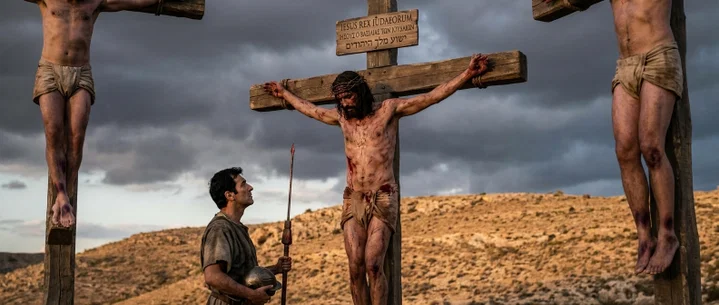
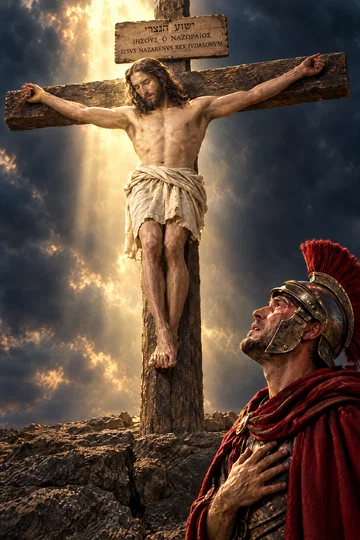
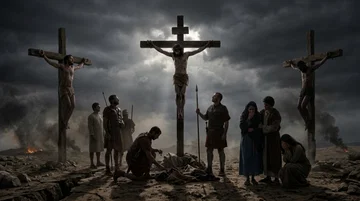
This title then read many of the Jews: for the place where Jesus was crucified was nigh to the city: and it was written in Hebrew, and Greek, and Latin.
Translations
This title then read many of the Jews: for the place where Jesus was crucified was near to the city: and it was written in Hebrew, and Greek, and Latin.
King James Version, KJV Cambridge Paragraph Bible
This title then read many of the Jews: for the place where Jesus was crucified was nigh to the city: and it was written in Hebrew, and Greek, and Latin.
Many of the Jews then read this title: for the place where Jesus was crucified was nigh to the city: and it was written in Hebrew, Greek, and Latin.
This title therefore read many of the Jews: for the place where Jesus was crucified was nigh to the city: and it was written in Hebrew, and in Latin, and in Greek.
This title therefore read many of the Jews, for the place where Jesus was crucified was nigh to the city; and it was written in Hebrew, and in Latin, and in Greek.
this title, therefore, read many of the Jews, because the place was nigh to the city where Jesus was crucified, and it was having been written in Hebrew, in Greek, in Roman.
This title therefore many of the Jews read, for the place of the city where Jesus was crucified was near; and it was written in Hebrew, Greek, Latin.
This title, therefore, read many of the Jews, because, near, was the place to the city where Jesus was crucified; and it was written in Hebrew, in Latin, in Greek.
Many of the Jews read this sign, because the place where Jesus was crucified was near the city, and it was written in Hebrew, Latin, and Greek.
Many of the Jews read this sign, because the place where Jesus was crucified was near the city, and it was written in Hebrew, Greek, and Latin.
Therefore many of the Jews read this title, for the place where Jesus was crucified was near the city; and it was written in Hebrew, in Latin, and in Greek.
The writing was seen by a number of the Jews, for the place where Jesus was put to death on the cross was near the town; and the writing was in Hebrew and Latin and Greek.
This title then read many of the Iewes: for the place where Iesus was crucified, was neere to the citie: and it was written in Hebrewe, Greeke and Latine.
Douay-Rheims (Challoner revision)
This title therefore many of the Jews did read: because the place where Jesus was crucified was nigh to the city: and it was written in Hebrew, in Greek, and in Latin.
Pictures
Cross-references
- Matthew 27:37
And set up over his head his accusation written, THIS IS JESUS THE KING OF THE JEWS.
Both texts describe the title placed above Jesus on the cross.
- Mark 15:26
And the superscription of his accusation was written over, THE KING OF THE JEWS.
It records the inscription over Jesus on the cross.
- John 19:15
But they cried out, Away with him, away with him, crucify him. Pilate saith unto them, Shall I crucify your King? The chief priests answered, We have no king but Cæsar.
The leaders reject Jesus as king and claim Caesar as their king.
- Matthew 27:29
And when they had platted a crown of thorns, they put it upon his head, and a reed in his right hand: and they bowed the knee before him, and mocked him, saying, Hail, King of the Jews!
Soldiers mock Jesus with a crown of thorns and a reed scepter.
- Luke 23:38
And a superscription also was written over him in letters of Greek, and Latin, and Hebrew, THIS IS THE KING OF THE JEWS.
Both texts report the written title displayed at the crucifixion.
- John 19:2-3
And the soldiers platted a crown of thorns, and put it on his head, and they put on him a purple robe,
Describes the crown of thorns, purple robe, and mock homage.
- Matthew 27:33
And when they were come unto a place called Golgotha, that is to say, a place of a skull,
Names Golgotha as the place of Jesus’ crucifixion.
- Mark 15:16-20
And the soldiers led him away into the hall, called Prætorium; and they call together the whole band.
Both describe Jesus’ mockery and abuse before his crucifixion.
- Luke 23:33
And when they were come to the place, which is called Calvary, there they crucified him, and the malefactors, one on the right hand, and the other on the left.
names the place near the city
- John 19:12
And from thenceforth Pilate sought to release him: but the Jews cried out, saying, If thou let this man go, thou art not Cæsar’s friend: whosoever maketh himself a king speaketh against Cæsar.
The title identifies Jesus as king, behind the charge of disloyalty to Caesar.
Commentary
Each commentary is drawn from primary sources: the writings of Ellen G. White and Adventist pioneers and periodicals. Each commentary is separate. Its own words are not a quotation; follow the references to read the source passages.
Ellen G. White
12 sources
Jesus left Pilate's court for Calvary carrying on bruised and bleeding shoulders the cross prepared for Barabbas, while two companions of Barabbas also bore crosses to die at the same time.DA 741.4–742.1 He had taken neither food nor drink since the Passover supper, had agonized in Gethsemane in conflict with satanic agencies, had endured betrayal and the flight of the disciples, had been taken to Annas then Caiaphas then Pilate then Herod then Pilate again, had passed from insult to insult and mockery to mockery, had been twice tortured by the scourge, and had borne Himself with firmness and dignity speaking no word but to glorify God until after the second scourging human nature could bear no more.DA 741.4–742.1 He fell fainting beneath the burden while the crowd from the judgment hall showed no compassion but taunted Him for being unable to carry it, and when it was laid on Him again He fell fainting again so His persecutors saw He could go no farther.DA 741.4–742.1 Yet the Jews themselves would not bear the humiliating load lest defilement prevent keeping the Passover, and none even of the mob would stoop to bear it.DA 741.4–742.1
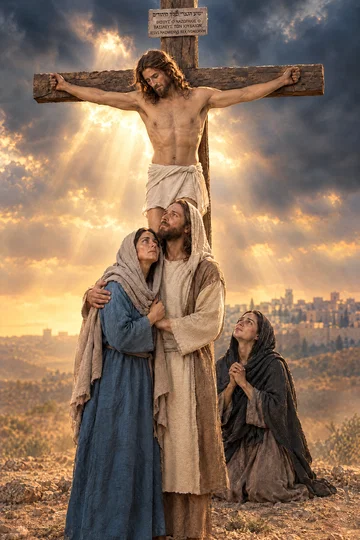
He was crucified nigh to but outside the boundaries of Jerusalem, without the gate of the city, where felons and murderers were executed.DA 741.1–2 The inscription was set conspicuously above His head on the cross in Hebrew, Greek, and Latin, and many of the Jews read it because the crucifixion place was near the city while thousands of people from all lands were then at Jerusalem.ST Oct 7, 1886DA 745.2–4ST Jul 18, 18785RED 74.2–75.13SP 154.2–155.1 The inscription identified Him as Jesus of Nazareth the King of the Jews and named no other offense against Him.ST Oct 7, 1886DA 745.2–4ST Jul 18, 18785RED 74.2–75.13SP 154.2–155.1
Its public wording turned the Jews' own court cries for His crucifixion, that they had no king but Caesar and that anyone claiming kingship besides Caesar was a traitor, back upon them, declaring in effect as all understood that by their allegiance to Rome they judged anyone aspiring to Jewish kingship, however innocent otherwise, worthy of death.ST Oct 7, 1886DA 745.2–4ST Jul 18, 18785RED 74.2–75.1 The wording angered the Jews and the chief priests asked Pilate to change it to say only that He claimed to be King of the Jews, but Pilate, angry at his own weakness and despising their jealous scheming, refused to alter what he had written.ST Oct 7, 1886DA 745.2–4ST Jul 18, 18785RED 74.2–75.13SP 154.2–155.1 A higher power than Pilate or the Jews directed the placing of that inscription, and in the providence of God it was to awaken thought and investigation of the Scriptures, declaring Jesus of Nazareth the Messiah as living truth transcribed by a hand God guided.DA 745.2–4
The inscription revealed the hypocrisy of the priests who to destroy Christ were ready to sacrifice even their national existence, although Caiaphas had said it was expedient that one man die to save the nation.DA 745.2–4 Dying there as substitute sanctified the people with His own blood and redeemed them from the curse of the law by being made a curse for them, answering the banishment of Adam and Eve from Eden for transgression of the law of God.DA 741.1–2 The scene shows the cost of His sacrifice: He was led away weak and fainting, nailed through His hands and feet to the cross, and suffered there in agony.Lt 1a, 1861, par. 2–5
The verse belongs to the taking away of the Bridegroom when the disciples would have cause to mourn and fast, as Jesus approached the cross and descended into humiliation with the hopes of eternal life centered in Him in the hands of wicked men.ST Jul 7, 1898 His own nation clamored for His blood, the crown of thorns was plaited for His brow, clad in the purple robe He was mocked by persecutors bowing before Him and striking Him with the reed placed in His hand, He was scourged as the worst of criminals though expected to take His place on David's throne, the murderous Barabbas was chosen in place of their Teacher, and He was lifted up on the cross dying as a malefactor, and witnessing this tried their faith and caused their hope and courage to fail.ST Jul 7, 1898 It belongs to the terrible, trying hour of gloom and darkness when the Son of God was dying upon the cross, when beholding Him dying brought the disciples over the ground of test and trial where His predictions came to pass and they failed to endure the proving and lost their faith, as Peter denying his Lord before his enemies shows.Ms 126, 1907, par. 9–10 Had they remained watching and praying instead of being overcome with sleep, they would have received the light of the knowledge of His sufferings and the glory that should follow and shared His self-sacrifice, and some rays of hope from that manifestation would have lighted up the darkness and sustained their faith while beholding Him dying.Ms 126, 1907, par. 9–10
The cross of Calvary shows that Jesus is at hand to help, for by hanging there as a bleeding victim He made grace and power available, with His blood as the price paid for humanity and with saving power available for soul and body, which calls people to surrender themselves to Christ and bring their lives into conformity with His will.Ms 8, 1886, par. 8Lt 122, 1901, par. 15
Sources
Pioneers and periodicals
27 sources
Many Jews could read the title over the cross because He was crucified near the city, and it was set conspicuously above His head in Hebrew, Greek, and Latin naming Jesus of Nazareth as King of the Jews with no other offense named.ST Oct 7, 1886ST Jul 18, 1878ST May 20, 1897ST Jun 7, 1899ST Apr 8, 1903 Pilate placed it as a small tribute to Jesus and a protest against the rulers who pressured him, yet also as bitter sarcasm to turn the disgrace of the crucifixion against the Jews, and when the chief priests angrily asked him to change it he refused to alter what he had written.ST Oct 7, 1886ST Jul 18, 1878ST Oct 12, 1876ST May 17, 1899ST May 17, 1905 Though written in derision, it stated the truth, so that Pilate unknowingly proclaimed His kingship to the world, while as a Roman charge it implied that claiming kingship without Rome's appointment was a crime worthy of death.ST Oct 7, 1886ST Jul 18, 1878ST May 17, 1899ST May 17, 1905ST Oct 13, 1881 In what He suffered He fulfilled Scripture and all the law, and His death on Calvary was the finished sacrifice for fallen humanity standing at the center of the plan of redemption from the fall to final restoration.ST Jun 7, 1899RH Jun 23, 1910ST Jan 13, 1881ST Apr 3, 1884 The title in the three principal languages of those gathered for Passover truthfully declares that His death brings the blessing promised to all nations and opens salvation to all, and His death was not the end for He rose as conqueror over sin and death.ST Apr 8, 1903ST May 17, 1905ST Nov 13, 1893ST Aug 26, 1875ST May 25, 1904
Title, Languages, and Place
Many of the Jews could read the title over the cross because the place where Jesus was crucified was near the city, and it was written in Hebrew and Greek and Latin.ST Jul 18, 1878ST Jun 7, 1899ST Apr 8, 1903ST May 17, 1905 The notice identifying Jesus was set up where many people passing near the city could see it, since the principal languages reached the crowds gathered from many places.ST Jul 18, 1878ST Apr 8, 1903ST May 17, 1905 It was fixed conspicuously above His head on the cross, above His brow.ST Oct 7, 1886ST Jan 24, 1911 Its full form was Jesus of Nazareth the King of the Jews, and it stated only that kingship with no other offense named.ST Oct 7, 1886ST May 20, 1897ST Jan 24, 1911
The place of crucifixion was near Jerusalem, outside the city wall and near a gate at a spot visible from afar.ST Apr 8, 1903ST Feb 18, 1913 That description fits the proposed site of Calvary north of the Damascus Gate.ST Feb 18, 1913 It was the hill of His sorrow for lost sinners and the climax of His sacrificial love for the world.ST Sep 10, 1902
The crucifixion took place on the day before the Sabbath, commonly called Friday.ST Apr 21, 1914 It occurred in the afternoon of the Passover and stands as a recorded event expressly mentioned with its time in Jewish records.RH Sep 5, 1865
The verse belongs to the account of Jesus crucified and buried that corresponds to Luke 23:35-53, including the placing of the superscription over Him declaring Him the King of the Jews.ST Mar 20, 1901 That span runs from His hanging dead upon the Roman cross to His lying dead in the tomb, seen by those who crucified Him.ST May 25, 1904 Even after He was thus seen dead, His death was not the end, for He rose as conqueror over sin and death.ST Apr 8, 1903
Pilate's Motive and Providence
Pilate set the notice over Jesus as a small public tribute to Him and as a protest against the rulers who had pressed for His condemnation.ST Oct 12, 1876 At the same time he meant it as bitter sarcasm, a slur that turned the disgrace of the crucifixion back upon the Jews.ST May 17, 1899ST May 17, 1905 The wording took up their own court cries — crucify Him, we have no king but Caesar, and that anyone claiming kingship besides Caesar was a traitor — and turned them against them.ST Oct 7, 1886 It declared in effect, as all understood, that by their professed allegiance to Rome they judged anyone aspiring to Jewish kingship, however innocent otherwise, worthy of death.ST Oct 7, 1886ST Jul 18, 1878ST May 20, 1897 No other offense was named besides that He was King of the Jews.ST Oct 7, 1886ST May 20, 1897
The chief priests were angered by that public statement and asked Pilate to alter it to say that He said He was King of the Jews.ST Oct 7, 1886ST Jul 18, 1878 Pilate was angry at his own weakness in yielding to them and despised their jealous scheming, and he answered with what he had written he had written and refused to change it.ST Oct 7, 1886ST Jul 18, 1878 That refusal showed an independence he had failed to exercise when he authorized the death of the innocent Jesus.ST May 17, 1899 Though written in derision the title stated the truth, for Pilate unknowingly and providentially declared who Jesus was.ST May 17, 1899 In Hebrew, Greek, and Latin His kingship was thus publicly proclaimed to the world.ST May 17, 1899ST Oct 13, 1881
The title also carried the force of a Roman charge, implying that to claim to be King of the Jews without Roman appointment was a crime.ST May 17, 1905 Since the Jews expected a Messiah who would free them from Roman rule, it declared the fate awaiting such a king.ST May 17, 1905 Hebrew, Greek, and Latin were the principal languages of the people gathered from many places for Passover, so many could read it near the city.ST May 17, 1905ST Nov 13, 1893 Its magnificent royal titles stood in bitter contrast to the shame and pain of the crucifixion.ST Nov 13, 1893
Redemption and Present Application
In what He suffered on the cross He fulfilled Scripture and fulfilled all the law, though Israel's learned teachers failed to recognize it.ST Jun 7, 1899ST Jan 13, 1881 His death on Calvary's hill was a sacrifice for fallen humanity, declared finished at His death.RH Jun 23, 1910 That death was the culmination of His earthly path of sacrifice and stands at the center of the plan of redemption, reaching back through human history to the fall and forward to the gospel's provisions and the final restoration of humanity.ST Apr 3, 1884 The one put to death on the cross and shedding His blood there is the same divine person John calls the Word who was in the beginning as God with God by whom all things were made, made flesh dwelling among men, come from the Father and returned to Him, who asked the Father to restore the glory He had before the world was, who taught and worked miracles and was falsely accused by the Jews, then crucified, buried and risen, with no other person introduced, so that the humbling and obedience unto death of the cross belong to that one divine person.RH Apr 14, 1874
The title declaring Him King of the Jews, written in Hebrew, Greek and Latin, though written in derision truthfully declares that His death brings the blessing promised to all nations and opens salvation to all, for those three languages represent the divisions and the gathered whole of humanity.ST Aug 26, 1875 At that crucifixion near Jerusalem His sorrow for lost sinners was revealed and His sacrificial love for the world reached its climax, with hands and feet pierced and brow scarred with a crown of thorns.RH Feb 4, 1904ST Sep 10, 1902 The glory of the ascending Lord and a seat with Him on His throne cannot be rightly understood apart from the wilderness of temptation, days of patient toil and nights of prayer, and the experiences of Gethsemane and Calvary, for the crucified Lord stands between believers and the throne and the only way to the throne of God is by the way of Calvary through denying self, taking up the cross daily, following Him, and drinking His cup and sharing His baptism of suffering.RH Feb 4, 1904
He bore suffering and taunts silently and submissively.RH Jun 28, 1870 As a man of sorrows who in pitying love came to share every burden and care after days of toil and nights of prayer, bearing the heavy cross, wearing the piercing crown of thorns, and enduring the nails, the spear and the blood, He leaves sufferers no room to murmur or complain in grief and pain, calls no one to ask a life of ease or to live one hour to please self, and makes pain sweet by bringing the sufferer lower at His feet to meet Him in closer sympathy. Reading the inscription placed above His brow declaring Him Jesus of Nazareth the King of the Jews tore the hearts of His followers with grief.ST Jan 24, 1911 His approach to the cross was a descent into humiliation, with the hopes of eternal life centered in Him in the hands of wicked men, His own nation clamoring for His blood, the crown of thorns plaited for His brow, clad in the purple robe with persecutors bowing before Him and striking Him with the reed placed in His hand, scourged as the worst of criminals though expected to take His place on David's throne, the murderous Barabbas chosen in place of their Teacher, and Him lifted up on the cross dying as a malefactor, so that witnessing this tried the faith of the disciples when the Bridegroom was taken away and caused their hope and courage to fail.ST Jul 7, 1898
The magnificent title inscribed over the cross on which He was fixed to perish in ignominy, shame and pain joined outward honor with cruel shame, as did bowing the knee while spitting, crying Hail while smiting on the cheek, putting a fragile reed in His hand for a scepter, crowning Him with thorns, and covering with purple the wounds inflicted on Him.ST Nov 13, 1893 That inscription was outward honor given by the same power that put Him to death, displayed publicly near the city, whose magnificent royal titles stood in bitter contrast to the shame and pain of the crucifixion by those who treated Him as a temporal king while mocking Him and putting Him to death.ST Nov 13, 1893 It pictures what happens when temporal sovereignty is thrust upon Christianity and temporal powers claim authority over it: alliance with state power honors her with titles and earthly power while wounding, corrupting and crucifying her, with honors and titles concealing the wounds inflicted, showing she is in far greater danger of being corrupted by the alliance of power than of being crushed by its opposition.ST Jan 24, 1906 Yet His death was not the end, for though the crucifixion near Jerusalem with its notice readable by many was followed by burial in a tomb, He rose as conqueror over sin and death.ST Apr 8, 1903 Though He was seen hanging dead upon a Roman cross and lying dead within the tomb by those who crucified Him, power remained in His Name to hold influence over many of His followers and to win believers to the truth.ST May 25, 1904
Sources