John 19:2
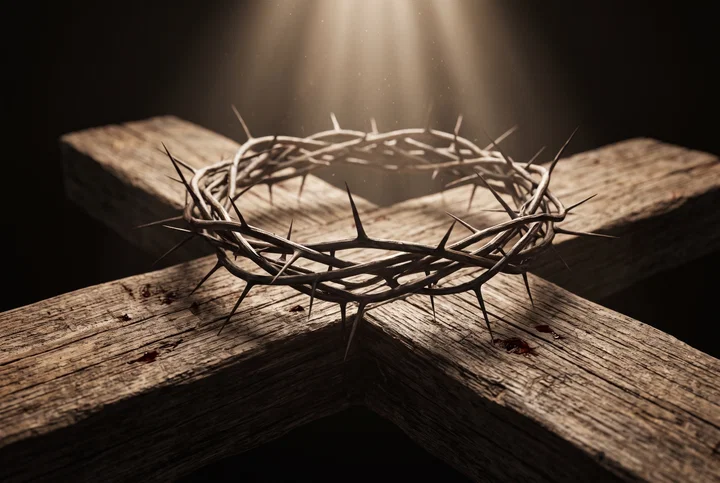
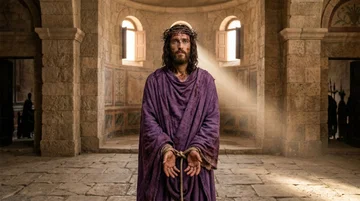
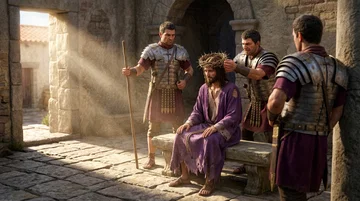
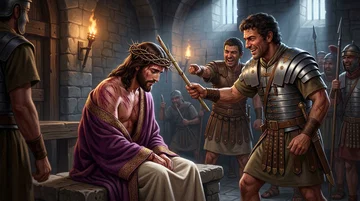
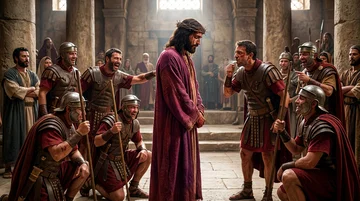
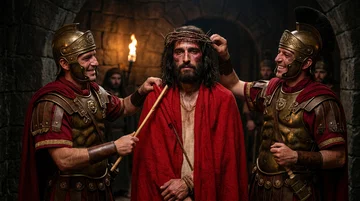
And the soldiers platted a crown of thorns, and put it on his head, and they put on him a purple robe,
Translations
American King James Version, King James Version, KJV Cambridge Paragraph Bible, Webster Bible
And the soldiers platted a crown of thorns, and put it on his head, and they put on him a purple robe,
And the soldiers plaited a crown of thorns, and put it on his head, and arrayed him in a purple garment;
And the soldiers platted a crown of thorns, and put it on his head, and arrayed him in a purple garment;
and the soldiers having plaited a crown of thorns, did place [it] on his head, and a purple garment they put around him,
And the soldiers having plaited a crown of thorns put it on his head, and put a purple robe on him,
And, the soldiers, plaiting a crown out of thorns, placed it upon his head, and, a purple robe, cast they about him;
Berean Standard Bible, Majority Standard Bible
The soldiers twisted together a crown of thorns, set it on His head, and dressed Him in a purple robe.
The soldiers twisted thorns into a crown and put it on his head, and dressed him in a purple garment.
And the men of the army made a crown of thorns and put it on his head, and they put a purple robe on him.
And the souldiers platted a crowne of thornes, and put it on his head, and they put on him a purple garment,
Douay-Rheims (Challoner revision)
And the soldiers platting a crown of thorns, put it upon his head; and they put on him a purple garment.
Pictures
Cross-references
- Matthew 27:28-30
And they stripped him, and put on him a scarlet robe.
Soldiers dress Jesus in a robe, crown him with thorns, and mock him.
- Mark 15:17-19
And they clothed him with purple, and platted a crown of thorns, and put it about his head,
The soldiers dress Jesus in purple, crown him with thorns, and mock him.
- Luke 23:11
And Herod with his men of war set him at nought, and mocked him, and arrayed him in a gorgeous robe, and sent him again to Pilate.
Herod’s soldiers mock Jesus by clothing him in a splendid robe.
- Isaiah 53:3
He is despised and rejected of men; a man of sorrows, and acquainted with grief: and we hid as it were our faces from him; he was despised, and we esteemed him not.
Christ’s humiliation reflects the prophecy of the Man of Sorrows.
- John 19:19
And Pilate wrote a title, and put it on the cross. And the writing was, JESUS OF NAZARETH THE KING OF THE JEWS.
The title over the cross completes the imagery of Jesus’ humiliation.
- Genesis 3:18
Thorns also and thistles shall it bring forth to thee; and thou shalt eat the herb of the field;
Thorns are named as a result of the curse.
- John 18:28-40
Then led they Jesus from Caiaphas unto the hall of judgment: and it was early; and they themselves went not into the judgment hall, lest they should be defiled; but that they might eat the passover.
The trial before Pilate leads into the events in the judgment hall.
- Revelation 19:12
His eyes were as a flame of fire, and on his head were many crowns; and he had a name written, that no man knew, but he himself.
Christ’s crown of thorns contrasts with his many crowns in glory.
- John 19:16
Then delivered he him therefore unto them to be crucified. And they took Jesus, and led him away.
handed over to be crucified after mockery
- Isaiah 53:5
But he was wounded for our transgressions, he was bruised for our iniquities: the chastisement of our peace was upon him; and with his stripes we are healed.
His wounds bear our transgressions and bring healing and peace.
- John 19:23
Then the soldiers, when they had crucified Jesus, took his garments, and made four parts, to every soldier a part; and also his coat: now the coat was without seam, woven from the top throughout.
Jesus wore a plain, seamless coat.
- Hebrews 2:9
But we see Jesus, who was made a little lower than the angels for the suffering of death, crowned with glory and honour; that he by the grace of God should taste death for every man.
thorn crown contrasted with glory crown
- John 19:18
Where they crucified him, and two other with him, on either side one, and Jesus in the midst.
same suffering described together
- Revelation 19:16
And he hath on his vesture and on his thigh a name written, KING OF KINGS, AND LORD OF LORDS.
The mocked, thorn-crowned Jesus is contrasted with the glorified King of Kings.
- Isaiah 53:7
He was oppressed, and he was afflicted, yet he opened not his mouth: he is brought as a lamb to the slaughter, and as a sheep before her shearers is dumb, so he openeth not his mouth.
Jesus bears suffering without complaint.
- Matthew 26:67-68
Then did they spit in his face, and buffeted him; and others smote him with the palms of their hands,
The passage links this earlier abuse with the later insults Jesus endured.
- Luke 23:26-33
And as they led him away, they laid hold upon one Simon, a Cyrenian, coming out of the country, and on him they laid the cross, that he might bear it after Jesus.
Describes events leading to Jesus’ crucifixion and suffering.
Commentary
Each commentary is drawn from primary sources: the writings of Ellen G. White and Adventist pioneers and periodicals. Each commentary is separate. Its own words are not a quotation; follow the references to read the source passages.
Ellen G. White
32 sources
In Pilate's judgment hall after scourging and before He was led to Calvary, bound soldiers mocked His kingship by clothing Him in an old cast-off purple robe, placing a reed in His hand and bowing before Him, and pressing a plaited crown of sharp thorns upon His head.DA 722.5DA 723.1–724.15RED 58.1–2Ms 51, 1897, par. 31–32SG1 50.1 When they struck His head with the reed the thorns pierced His temples and brow so that blood ran down His face and beard, leaving Him weary and wounded in pain from scourging.COS 149.7–150.15RED 58.1–2SG1 50.1 Even bloodied and exhausted He showed patience, meekness, composure and kingly dignity that filled Pilate with awe and moved onlookers to sympathy.ST Jul 11, 18783SP 143.1–25RED 63.1 He endured this cruelty without complaint, retaliation or use of divine power, in voluntary exchange of His royal crown and robe of glory for shame, wounded for transgressions and bruised for iniquities to bear the sins of the whole world and redeem by His blood as an unblemished offering.COS 149.7–150.13SP 138.1–2EW 138.116MR 31.1Ms 95, 1897, par. 14 His wearing of shame rebukes pride and devotion to outward adornment and gives the example of self-denying service, and at His second coming as heaven's King the shame will be reversed when instead of thorns He wears a crown of glory and instead of purple is clothed in dazzling white.3T 379.2STSE 58.11T 240.2Ms 95, 1908, par. 37–38
Mockery in Pilate's Hall
The plaiting of the crown of thorns and the putting on of the purple robe belong in Pilate's judgment hall before Jesus was led from there to Calvary for crucifixion.DA 722.5DA 723.1–724.1 There He stood bound as a prisoner while the Jewish leaders and a crowd gathered outside.DA 723.1–724.1 This mockery came after He had been scourged and before the nailing of His hands and feet and His hanging on the cross with thieves.DA 735.1–5Ms 95, 1897, par. 14Ms 78, 1910, par. 29
The soldiers mocked His kingship by dressing Him in mock royal garments and presenting Him as a mocked king.5RED 58.1–2Ms 51, 1897, par. 31–32 They put on Him an old, tattered, cast-off purple kingly robe that had belonged to a king, placed a reed in His hand, bowed before Him in mockery, and set on His head a plaited crown of sharp, barbed thorns bound around it.5RED 58.1–23SP 138.1–2EW 138.31T 240.2 Herod and the priests encouraged the insult, with Herod's soldiers joining in the abuse.5RED 58.1–2
The thorns pierced His holy temples and brow when the soldiers struck His head with the reed, driving them in to cause all suffering possible.5RED 58.1–2SG1 50.1EW 138.3Ms 78, 1910, par. 29 Blood from the barbed crown ran down His face and beard and left blood upon His face.5RED 58.1–2SG1 50.1Ms 95, 1897, par. 14 Already weary and wounded from scourging, He was left wounded, exhausted, and in pain, in bodily agony greater than any person can endure, so severe that when the cross was later laid on Him He could bear no more and fell fainting beneath its burden.COS 149.7–150.1Ms 95, 1897, par. 14Ms 122, 1909, par. 33
Despite exhaustion, pain, and abuse, His patience, gentleness, pity, meekness, composure, patient submission, strength, and kingly dignity remained evident.ST Jul 11, 18783SP 138.1–2DA 735.1–5 Though bloodied and with blood-stained face, His bearing remained kingly and could not hide His noble character.5RED 63.13SP 144.2–3DA 735.1–5 His bloody wounds made the punishment visible, yet His face and manner showed a noble, patient, dignified character.3SP 143.1–25RED 63.1
That noble character stood in sharp contrast to Barabbas, the hardened criminal and robber beside Him.ST Jul 11, 18783SP 143.1–25RED 63.1 The sight filled Pilate with awe and wonder whether Jesus was a divine person.3SP 144.2–3 Pilate hoped the sight of the robe of mockery and crown of thorns after scourging would satisfy the crowd and spare His life.DA 735.1–5 The contrast moved some spectators to sympathy and left a lasting impression on the watching soldiers.DA 735.1–5
Sacrifice for Human Sin
The mocking with the crown of thorns and purple robe came when Jesus was already weary and wounded from scourging, dressed as a false king to insult Him.COS 149.7–150.13SP 138.1–2 The sharp thorns pierced His temples when He was struck, so that blood ran down His face and beard, and He bore it with meekness and composure.3SP 138.1–2Ms 95, 1897, par. 14 This cruelty was meant to provoke Him to complain, to retaliate, or to use His divine power to escape, which would have thwarted the plan of salvation.COS 149.7–150.1EW 138.1 He endured without doing so, and His perfect faithfulness under this test was necessary for Him to be an unblemished offering for humanity's redemption.COS 149.7–150.1 So solemn was that sight that angels laid aside their own crowns because they could not wear them while their Commander wore this crown.EW 138.1
The crown belonged to His voluntary sacrifice in which the Commander of heaven exchanged His royal crown for a crown of thorns and His robe of majesty and glory for a cast-off robe put on Him in mockery.EW 138.1Lt 106a, 1896, par. 27 He was wounded for transgressions and bruised for iniquities, and by His stripes healing comes.Lt 106a, 1896, par. 27 In that suffering He bore the sins of the whole world and gave His life to redeem people to God by His precious blood.16MR 31.1 It followed the second scourging and left Him so spent that when the cross was laid on Him He could bear no more and fell fainting beneath its burden.Ms 95, 1897, par. 14
Satan moved his agents to inflict this abuse on the Son of God, the world's Redeemer.Ms 75, 1886, par. 19 His holy temples were crowned with thorns as the earthly exchange for His crown of glory, as the King of heaven accepted insult, shame, and mockery in a self-denying, self-sacrificing life given as an example to imitate.Ms 75, 1886, par. 19Ms 79, 1886, par. 10 His suffering was not punishment for any fault in Him.Ms 79, 1886, par. 10 He came as the light of the world to save people, yet He was rejected because He taught heaven's truth by those He came to save, who did not receive Him.Ms 79, 1886, par. 10
Because He was scourged, mocked, and degraded in the proceedings before Herod and Pilate, with the crown of thorns pressed upon His holy brow, He stands close beside those who suffer for the truth.Ms 137, 1897, par. 6–8 When His people are persecuted, Christ suffers in them.Ms 137, 1897, par. 6–8
Call and Coming Glory
He wore the shameful crown of thorns because of human sin, and that sorrow and shame rebukes pride and love of vanity.3T 379.2STSE 58.1 Those who spend time adorning themselves are to remember what their sins brought upon Him, and to resist devotion to outward display.3T 379.2STSE 58.1
His suffering shows the great cost of what He gave up for humanity and puts every act of self-denial in perspective.1T 240.2 The King of heaven accepted insult, shame, and mockery in exchange for His crown of glory, living a self-denying, self-sacrificing life as an example for people to imitate.Ms 79, 1886, par. 10 He came to save and uplift people, and those who follow Him serve others and become His co-workers.Ms 34, 1897, par. 46 He was without fault and was not punished for any fault in Himself, but was rejected because He taught heaven's truth, coming as the light of the world to save people who did not receive Him.Ms 79, 1886, par. 10
Remembering His meekness and loveliness in suffering and death for sin humbles the heart and exposes the shame of continuing in sin.21MR 379.3–4 His brow bled under the barbed crown driven on with blows, and His hands were pierced with cruel nails, in bodily agony greater than any person can endure.Ms 122, 1909, par. 33 That suffering calls sinners to arise, take hold of Him as He is, and give Him the heart.Ms 122, 1909, par. 33 Children are to be taught they can be saved, because the Christ who so suffered also takes little children in His arms and blesses them.Ms 122, 1909, par. 33
His betrayal, condemnation, humiliation, rejection by the crowd, scourging as the worst of criminals, the choosing of the murderous Barabbas in His place, and His lifting up on the cross to die as a malefactor belonged to the great trial for which He prepared His disciples.4RED 102.2–103.1ST Jul 7, 1898 In the depths of humiliation as He approached the cross He was in the hands of wicked men with His own nation clamoring for His blood, while Herod and his soldiers plaited the crown for His sacred brow, clothed Him in the purple robe, bowed before Him in mockery, and struck Him with the reed they had placed in His hand.ST Jul 7, 1898 This was the time when the Bridegroom would be taken away from the children of the bride-chamber, giving them cause to mourn and fast.ST Jul 7, 1898 The disciples had centered their hopes of eternal life in Him and hoped He would take David's throne, yet they saw Him treated as a criminal and mocked, so their faith was tried and their hope and courage failed.ST Jul 7, 1898Ms 3, 1898, par. 20–21 Their earlier experience of the world's fickle favor helped them endure that sight without losing faith.4RED 102.2–103.1
His wearing the crown of shame has been invoked in devotion by later sufferers accepting their own crown of shame for Him, as when Huss did so.GC88 108.3–109.1 What He wore at His first coming in humility and suffering will be reversed at His second coming as heaven's King. Instead of the crown of thorns He will wear a crown of glory, and instead of the purple robe He will be clothed in dazzling white. He endured temptation on behalf of people and wore the crown of thorns for sinners, and that suffering crowning will give way to His being crowned with glory, when those who desire to see Him will see Him as He is, fall at His feet in worship, receive harps placed in their hands by Him, and raise their voices in music never heard on earth.Ms 95, 1908, par. 37–38
Sources
Pioneers and periodicals
75 sources
The soldiers scourged Jesus and then humiliated him as a mock king, pressing a plaited crown of thorns into his brow until blood flowed and dressing him in a purple robe while hailing him, kneeling, spitting on him and striking him.ST May 13, 1897ST Jul 14, 1881ST Oct 31, 1916RH Nov 8, 1864
The divine Son of God stood bleeding and crushed and unlike a king, yet he was truly King and his divinity still shone beneath the thorns and purple, for the only material crown he wore on earth was thorns because he rejected an earthly throne and his kingdom was to come from the Father.ST Jan 27, 1904RH Jan 2, 1900RH Jun 24, 1902RH Aug 26, 1875ST Mar 25, 1903
In bearing the thorns he bore the curse brought on the ground by human sin, offering himself as the continuous sacrifice for the lost race so that the curse would end and a crown might rest on the believer's brow.RH Jun 4, 1908ST May 8, 1884ST Mar 12, 1912ST Jun 11, 1902
He will not return in purple and thorns, but as heaven's King and Conqueror in the Father's glory with angels, wearing a crown of everlasting glory and dazzling white instead of mockery.RH Dec 12, 1865RH Jul 24, 1856ST Mar 21, 1906ST Oct 23, 1901
The same thorn crown belongs to all the princes of his kingdom, so his patient endurance without malice is the pattern for his followers to suffer with him, bear the cross without murmuring, and share his triumph.ST Apr 17, 1879RH Apr 14, 1859RH May 26, 1868ST Mar 11, 1908RH Dec 22, 1874
Mockery Scene Described
The soldiers scourged Jesus and then humiliated him by plaiting a crown of thorns and putting it on his head and dressing him in a purple robe, in one account an old purple royal robe, in mockery of his claim to be King of the Jews.ST May 13, 1897ST Jul 14, 1881ST May 13, 1897ST Jan 13, 1898 They hailed him as king, knelt before him in derision, gave him a reed for a scepter, spat on him, and struck him, striking his head so that the thorns pierced it.ST May 13, 1897ST Jul 14, 1881RH Dec 9, 1858 The scene was a renewal of mockery of his kingship carried out by the Roman soldiers before his crucifixion, adding bodily pain to scourging and humiliation.ST Jul 14, 1881RH Dec 9, 1858
The thorns were pressed and forced into his head until they pierced his brow and temples and made blood flow, joining shame with bodily pain.ST Jul 14, 1881ST Oct 31, 1916RH Nov 8, 1864 He wore the thorn crown beneath the midday sun as he was struck with the reed and led toward Calvary to die, the crown marking his suffering on the way to death.ST Oct 31, 1916ST Jan 17, 1911RH May 12, 1904 Placed on a block and arrayed in purple, he was bowed to in mockery and beaten even as his miracles and healing power testified to who he was.RH Nov 8, 1864ST Jan 17, 1911
The abuse belonged to Pilate's judgment hall after Jesus had been declared innocent, a double and unmerited punishment in which compromise scourging meant to appease his enemies was joined with torture and mockery by the soldiers of Herod and Pilate before he was handed over to be crucified.ST Nov 9, 1882ST Apr 4, 1906ST Mar 13, 1901 The gorgeous garments put on to ridicule him, with the purple robe, were afterward removed without tenderness and his own clothes put back on before he was led away, after he had been crowned with thorns, struck, beaten, and scourged.ST Nov 9, 1882ST Apr 4, 1906RH Nov 3, 1868 The whole cruel course is counted among the terrible events of Calvary and part of the sacrifice of his life so that human lives might be saved.ST Feb 16, 1882ST Mar 13, 1901
Pilate brought him forth bloody, meek, helpless, and wretched in crown and robe with the reed in his hand, and for the third time declared he found no fault in him, saying behold the man.ST Nov 9, 1882 The presentation was a last effort to deliver him from death, hoping the sight would awaken compassion and touch the hearts of the people as it had touched his own, meaning this man is no king, no insurgent, no one to be feared or dangerous, but innocent and miserable, and this suffering is enough.ST Nov 9, 1882 The appeal failed, and the chief priests and officers answered the sight with a renewed cry to crucify him.ST Nov 9, 1882
The mock coronation imitated the Roman Saturnalia festival, in which soldiers appointed a mock king, put royal robes on him, let him direct wild carousing for days, and then put him to the sword.ST Jun 8, 1904 That mock imitation of the Saturnalia king was a favorite amusement of soldiers with condemned culprits handed over to executioners as objects of sport, and with others who had incurred their displeasure.ST Jun 8, 1904 The Gospel record gives only a few simple and precious words that a crown of thorns was put on his head, with no record of drops or gouts of blood following it.ST Jan 9, 1901 Its plain facts stand against dramatic and legendary additions in painting, carving, and church furniture that distort or exaggerate the facts, the few words being better a thousand-fold.ST Jan 9, 1901
Christ's Suffering and Kingship
John 19:2 shows the divine Son of God brought low for humanity, bleeding, poor, disrobed and crownless even with thorns pressed upon His head, crushed and torn and unlike a king as He stands forsaken by His own before Pilate amid the pride of Zion and Rome compelling the world by arms.ST Jan 27, 1904RH Sep 28, 1911RH Jun 24, 1902RH Aug 26, 1875 In that weakness He is sublime and awful, and in that meekness He is more than kingly, for the glory and honor that the world divides among its monarchs, crowning and unmaking them, are not His.RH Jun 24, 1902 He is truly King though without a throne and sovereign Lord though without command, who submitted to a mocking mob placing a cruel crown upon Him for all, and who will reign, now interceding in glory.ST Jan 27, 1904RH Jun 24, 1902RH Aug 26, 1875 Beneath the purple robe and thorns His divinity still shines out, and that light falls upon the Roman's heart, wakening his conscience and breaking his proud spirit.RH Aug 26, 1875
Exhausted, scourged and exposed with wounded body and thorn-crowned head, His bloodied appearance did not hide His noble character.ST Jul 11, 1878ST Oct 7, 1886 Despite pain, exhaustion and abuse His patience, gentleness and dignity remained evident.ST Jul 11, 1878 That nobility contrasted sharply with Barabbas, the hardened criminal set beside Him.ST Jul 11, 1878ST Oct 7, 1886
He stands there as Truth itself before Pilate, harmless, sinless and spotless, lowly and humble in crown and purple robe amid unjust humiliation, yet godlike in appearance.RH Sep 28, 1911RH Jan 9, 1900 His outward weakness does not change who He is.RH Sep 28, 1911 Pilate recognizes His innocence yet yields to the mob and to fear of the crowd and sentences Him to crucifixion, though he could have recognized and accepted Him.RH Sep 28, 1911 The scene therefore warns against judging truth by appearances or turning away from it under pressure.RH Sep 28, 1911
The only material crown He wore on earth was a crown of thorns.ST Mar 25, 1903 He did not seek temporal honor or kingship, but when men would have made Him a temporal king He withdrew to pray, for His kingship and crown were to come from the Father as an eternal kingdom and crown.ST Mar 25, 1903 So at the close of His ministry He accepted the thorn crown and purple robe in mockery of His kingship, preferring that mockery to the reality of earthly rule.RH Jan 2, 1900
The crown and robe are signs of scorn and cruel parody of royal honor, soldiers dressing Him in purple and crowning Him with thorns in mockery as king.ST Sep 23, 1889ST Dec 17, 1912 Yet His suffering and meek endurance reveal His true royal dignity, making His royal nature plain through suffering, meekness and lowliness.ST Sep 23, 1889ST Dec 17, 1912 Through sorrow and humiliation the crown of thorns becomes His diadem and a sign of His kingship, associated with His majesty and grace and with the love through which He comes to abide within as humanity's closest kin.ST Sep 23, 1889ST Dec 17, 1912ST Jan 28, 1913
He wore that human crown of thorns as the Man of Sorrows, receiving thorns instead of a wreath of honor amid rejection and contempt rather than the world's admiration.RH Apr 2, 1867ST Jan 14, 1897 As man He could feel with people in troubles and temptations, enduring weariness, tears, blood, temptation and death, and that suffering gives comfort to sufferers because He has borne suffering Himself.ST Jan 14, 1897 He willingly exchanged the crown of glory He had in heaven for the crown of thorns on earth, just as He exchanged heaven's wealth for earth's poverty and angelic adoration for scoffs, bitter taunts and revilings, with every motive, feeling and action devoted to the good and happiness of others, with no selfish end but solely for our good, in pitying love to share every human burden.ST Jan 14, 1897RH Jun 13, 1871
The piercing pain of the crown is sorrow He bore for guilty people as wondrous love, as the thorn-crowned, pierced sufferer who bled for human souls.ST Jul 18, 1878 That love calls the guilty to accept His grace with gratitude and to turn the heart from neglect, unkindness and anxious distrust of God.ST Jul 18, 1878 Remembering His bleeding suffering and loving care should move people to refuge and rest in Him and to speak kindly even of the disgraced and fallen.ST Apr 10, 1901
Sacrifice for Sin Accomplished
The crowning belongs to the account of Christ our Passover sacrificed on the fourteenth day of the first month, the day appointed for the Passover sacrifice.RH Oct 30, 1855RH Dec 15, 1868 His death corresponded to the slaying of the paschal lamb exactly as to time, so that the grand event for which the Passover was noted met its antitype on the very day of the type.RH Oct 30, 1855RH Dec 15, 1868 More preliminary and circumstantial offerings did not prevent that exact-time fulfillment, and the record of John 18-19 is the record of the slaying of the Passover lamb fulfilled in the death of Christ the Lamb of God.ST Aug 13, 1874RH Dec 15, 1868
The plaiting of thorns is one step in the same continuous divine sacrifice for the lost and fallen race, joined with cruel mocking, scourging, journey to the cross, and death.ST Mar 13, 1901 It was part of the double and unmerited punishment laid on him after he had been declared innocent, torture and mockery by soldiers joined with compromise scourging meant to appease his enemies before he was handed over to be crucified.ST Mar 13, 1901 In this cruel manner his life was sacrificed so that human lives might be saved.ST Mar 13, 1901
It belongs to the time when the Bridegroom would be taken away from the children of the bride-chamber, giving them cause to mourn and fast.ST Jul 7, 1898 In the depths of humiliation as he approached the cross, in the hands of wicked men with his own nation clamoring for his blood, his sacred brow was crowned and he was clothed in purple while persecutors bowed in mockery and struck him with the reed placed in his hand as a scepter.ST Jul 7, 1898 The disciples who had centered their hopes of eternal life in him witnessed this scourging as the worst of criminals, and the choosing of murderous Barabbas in his place, and his lifting up to die as a malefactor, with faith tried and hope and courage failing.ST Jul 7, 1898
The thorns recalled the ground's curse because of human sin, being the result of the curse.ST May 8, 1884ST Jun 11, 1902 By bearing them in his offering for sin he bore the earth's curse and purchased its redemption, and would bring the curse to an end forever so that through him humanity may finally be free of it.ST May 8, 1884ST Jun 11, 1902 His mockery and suffering became part of his final triumph vindicating God's justice before humanity and angels in the judgment.ST May 8, 1884 The thorns pressed his temples until blood dripped slowly as the price he pays, making him the perpetual sacrifice over whom heaven mourns.RH Jun 4, 1908ST Nov 17, 1898 He endured that cruel mocking and scourging for humanity so that a crown might rest on the believer's brow, and through that heartrending anguish love and new life are born, leaving him the sweet, suffering Saviour whom people need truly to see and know.RH Jun 4, 1908ST Mar 12, 1912ST Nov 17, 1898
He bore this for sinners on the way to Calvary's cross, with thorn-crowned head in trial and crucifixion marked by realistic agony and gaping wounds that affect the emotions and arouse pity even in the most callous heart.RH Oct 5, 1911RH Aug 26, 1873 Nailed to the cross with the crown on his holy head and tender feet pierced with cruel nails, he bore earth's sins and shed precious blood that sinners might have pardon.RH Aug 26, 1873 The scene was so dreadful that angels refuse to look and heaven and earth were veiled in deepest gloom, while sinful man alone remains unmoved, and this suffering love presses sinners not to resist but to flee to him for refuge and rest.RH Oct 5, 1911RH Aug 26, 1873
Second Coming in Glory
He will not come back in the humiliation of the purple robe and the crown of thorns.RH Jul 24, 1856 At his second coming he comes as Conqueror to certain victory, descending in all the Father's glory with shining hosts of angels attending him to gather his saints home.RH Jul 24, 1856 The heavens part back and the Son of man appears clothed with power, wearing a brighter crown on his brow than ever shone on a monarch, before whose avenging wrath the loftiest bow and the stoutest quail.RH Jul 24, 1856
At his first coming he came in humility and suffering, wearing thorns and purple. At his second coming he appears as heaven's King, wearing a crown of glory instead of thorns and clothed in dazzling white instead of purple. He who was crowned with thorns in this world and mocked by soldiers will then be crowned with everlasting glory rather than mockery.ST Mar 21, 1906ST Oct 23, 1901
The thorn-crowned Man of Sorrows will then be seen in contrast with his future glory as King of Kings and Lord of Lords, crowned forevermore.ST Feb 14, 1911 A brighter and golden crown will adorn the head once crowned with thorns.RH Dec 12, 1865RH Jul 24, 1856 Then he brings deliverance to his saints and recompense to their oppressors.RH Dec 12, 1865
Thorns formed his first visible crown.ST Aug 18, 1909 That teaches that the crown is worn only through suffering, sorrow, and care, and life is reached only through the cross, for God's choice may bring pain and danger rather than earthly pleasure, and suffering with Christ comes before sharing in his reign.ST Aug 18, 1909 His wearing the crown of thorns stands with Gethsemane and the cross as the cost of remaining faithful to his holy mission rather than compromising with worldly power, and that faithfulness was followed by triumphant resurrection.ST Jul 25, 1911
His load of reproach in humiliation was a work he did alone that stands by itself in history and belongs to Christ alone.RH Dec 2, 1873 No other man can share or reproduce his life and death, for there is but one Christ, the crucified Son of God, the divine Redeemer, the Lamb slain from the foundation of the world.RH Dec 2, 1873 To put its emblem on another man signifies taking the place of Christ and sharing his work and is blasphemy, for Jesus only wore the crown of thorns.RH Dec 2, 1873 That crown was the true insignia of Christ in his life of self-denial and suffering as the Man of Sorrows, real thorns that pierced his head and brought wounds and blood and agony, not costly and kingly and not sparing pain.RH Dec 2, 1873 To claim to be his vicar and representative on earth, claiming his prerogatives and titles while living with throne and palace and robes of state and bearing no burden or cross and suffering no pain for the people, yet scorning that insignia, is the work of a usurper, and a crown of gold thorns that will not hurt the head only displays the distant contrast between gold and thorns.RH Dec 2, 1873
Warning Against Earthly Power
The soldiers' false royal honor was really cruelty and shame, a crown that wounded instead of honoring and purple that covered wounds inflicted by the same hands that offered homage.ST May 21, 1912ST Jul 4, 1900ST Apr 3, 1928 That mockery is an image of Christianity when temporal sovereignty and state alliance are thrust upon her.ST May 21, 1912ST Jul 4, 1900 Worldly rulers outwardly honor her while wounding and degrading her, pretending to dignify and strengthen her while corrupting her by the alliance.ST May 21, 1912ST Jul 4, 1900ST Apr 3, 1928
When worldly rulers grant her temporal power they humiliate and harm her, so their honors are a thorn crown and a purple covering over wounds they themselves have inflicted.ST Jan 23, 1907ST Jan 24, 1906 Those who give her worldly sovereignty treat her with the same cruel, mocking gestures used against her Author.ST Jan 23, 1907ST Jan 24, 1906
Her false friends bow the knee and spit, cry Hail and smite on the cheek, put a fragile reed for a scepter in her hand, crown her with thorns, cover with purple the wounds their own hands inflicted, and fix her under magnificent titles over her cross to perish in pain.ST Feb 22, 1910 The knee bowed, the Hail cried, the scepter given, the crown put on, and the purple covering are not true honor but spitting, smiting, a fragile reed, thorns, and a covering for wounds, ending in ignominy and shame.ST Feb 22, 1910 Alliance with power corrupts her far more dangerously than opposition crushes her.ST Feb 22, 1910
Those who seek to make Christ a temporal ruler through politics repeat the soldiers' false homage and mockery as king while opposing the truth that his kingdom is not of this world.ST Nov 13, 1893 The thorny crown with the scourge and the Roman cross was the last argument brought by the chief priests and Pharisees against his teachings when they could not maintain their position.RH Oct 11, 1870 Anger and abuse mark those on the wrong side in religious controversy, while those who contend for what they regard as truth with love of truth in the heart never need to become angry or act unworthy.RH Oct 11, 1870
Example for Believers Lives
The same crown of thorns worn in mockery belongs to all the princes of his kingdom, so to follow him is to suffer with him and share that crown.RH Apr 14, 1859 It would be shameful to wear roses of ease and comfort on the brow while the King wears thorns, and his followers accept even an ignominious crown in imitation of him, as Huss did when he suffered willingly for his sake.RH Apr 14, 1859RH Dec 22, 1874
He endured the soldiers' abuse with patience when buffeted and scorned, spit upon and mockingly adorned with thorns and purple, yet with no malice in his heart.RH May 26, 1868ST Mar 11, 1908 That endurance of insult and abuse without resentment is the pattern for enduring suffering and shame in saving work, for walking in peace and union with God no matter what vexes the soul, and for facing hardship or mockery for his name.RH May 26, 1868ST Mar 11, 1908ST Aug 6, 1896
His road through mocking and jeers, scourging and tears, cross and nails, anguish and spear, blood-sweat and lone grave, with the thorn-crown put on amid it all, sanctified suffering and made it divine.RH Apr 27, 1905 Remembering the piercing crown and the bitter depths of woe he bore in toil and prayer in pitying love to share every human burden, with heavy cross, nails, spear, and shed blood, leaves no room to murmur or complain in grief and pain, to ask for a life of ease, or to live to please self, but makes pain sweet by bringing the sufferer lower at his feet in closer sympathy.RH Apr 27, 1905 His sufferings subdue pride and cast out discontent, so that keeping them in mind helps the fretful and gloomy Christian.ST Apr 17, 1879 They rebuke complaining in sickness, despondency, weariness of life, heartache, sorrow, and longing for death, teaching that trials lead upward to God and must be accepted without murmuring and rejoiced over as gain, for the thorn-crown comes before the final crown, the crown is worn only through suffering, sorrow and care, life is reached only through the cross, and the sweetest peace comes after strife.RH Apr 27, 1905
His head pierced by thorns until blood flowed from his temples displays the anguish he endured for sinners and calls followers to give their whole hearts to God and bear the cross rather than shrink from sacrifice.RH Nov 8, 1864 Against his suffering and shame is set the smaller cross of grief and pain his followers must patiently bear, for none can follow him without carrying the cross, and those who bear it will wear the crown in triumph.RH Nov 8, 1864RH Jan 26, 1864 His suffering rebukes professed followers who shun the cross for fear of reproach and yield to the contaminating influence of fashionable sins instead of standing in evil times with unsullied integrity, since he is the great pattern by which judgment-bound people must measure obedience to God's word in order to be fitted for the society of angels in glory.RH Jun 20, 1871 Remembering the thorn crown helps the believer endure loneliness and hardship in following him, and beside Peter's indifference in warming himself in the hall, even physical suffering is a small matter.RH Dec 3, 1857ST Oct 21, 1897
The thorn-crowned suffering Man in the judgment hall remains the same complete, victorious Man who overcame sin for all humanity and can help and lead them, with the crown marking his humiliation and trials without diminishing who he is.ST Mar 21, 1906 That crown has become the symbol of the pain that accompanies loving him.ST Jul 30, 1902 The true crown on earth is a crown of thorns, the mark of nobility in courageously facing danger and hardship for the sake of others.ST Sep 8, 1881
Sources