John 19:27
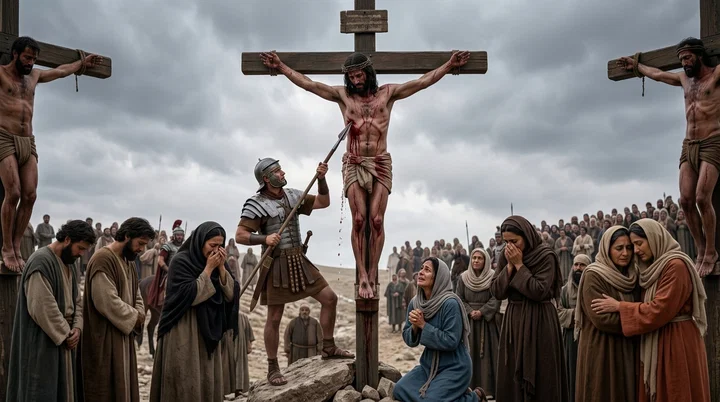
Then saith he to the disciple, Behold thy mother! And from that hour that disciple took her unto his own home.
Translations
Then says he to the disciple, Behold your mother! And from that hour that disciple took her to his own home.
Then saith he to the disciple, Behold thy mother! And from that hour that disciple took her unto his own home.
Then saith he to the disciple, Behold thy mother. And from that hour that disciple took her unto his own home.
Then saith he to the disciple, Behold thy mother! And from that hour that disciple took her to his own home.
Revised Version, American Standard Version
Then saith he to the disciple, Behold, thy mother! And from that hour the disciple took her unto his own home.
afterward he saith to the disciple, 'Lo, thy mother;' and from that hour the disciple took her to his own [home].
Then he says unto the disciple, Behold thy mother. And from that hour the disciple took her to his own home.
Afterwards, he saith unto the disciple—See! thy mother! And, from that hour, the disciple took her unto his own home.
Berean Standard Bible, Majority Standard Bible
Then He said to the disciple, “ Here is your mother.” So from that hour, this disciple took her into his home.
Then he said to the disciple, “ Behold, your mother!” From that hour, the disciple took her to his own home.
Then he said to the disciple, There is your mother! And from that hour the disciple took her to his house.
Then saide he to the disciple, Beholde thy mother: and from that houre, the disciple tooke her home vnto him.
Douay-Rheims (Challoner revision)
After that, he saith to the disciple: Behold thy mother. And from that hour, the disciple took her to his own.
Pictures



Cross-references
- Exodus 20:12
Honour thy father and thy mother: that thy days may be long upon the land which the LORD thy God giveth thee.
Jesus’ care for his mother exemplifies honoring a parent.
- Luke 2:35
( Yea, a sword shall pierce through thy own soul also,) that the thoughts of many hearts may be revealed.
Mary’s sorrow at the cross fulfills Simeon’s words about a sword piercing her soul.
- John 18:15
And Simon Peter followed Jesus, and so did another disciple: that disciple was known unto the high priest, and went in with Jesus into the palace of the high priest.
The disciple present in the judgment hall is also at the cross.
- John 20:4
So they ran both together: and the other disciple did outrun Peter, and came first to the sepulchre.
identifies same John at tomb and at cross
- Luke 23:26-46
And as they led him away, they laid hold upon one Simon, a Cyrenian, coming out of the country, and on him they laid the cross, that he might bear it after Jesus.
parallel Gospel account of Calvary
- Mark 15:40-41
There were also women looking on afar off: among whom was Mary Magdalene, and Mary the mother of James the less and of Joses, and Salome;
Names women who remained near the cross.
- John 13:23
Now there was leaning on Jesus’ bosom one of his disciples, whom Jesus loved.
John recalls leaning on Jesus’ breast.
- Matthew 13:55
Is not this the carpenter’s son? is not his mother called Mary? and his brethren, James, and Joses, and Simon, and Judas?
Names Jesus’ brothers, whose relationship to Mary is questioned.
- Luke 2:51
And he went down with them, and came to Nazareth, and was subject unto them: but his mother kept all these sayings in her heart.
His care for his mother accords with his earlier subjection to his parents.
- Matthew 12:50
For who soever shall do the will of my Father which is in heaven, the same is my brother, and sister, and mother.
Obedience to God makes believers Christ’s brother, sister, and mother.
Commentary
Each commentary is drawn from primary sources: the writings of Ellen G. White and Adventist pioneers and periodicals. Each commentary is separate. Its own words are not a quotation; follow the references to read the source passages.
Ellen G. White
29 sources
Even as He hung dying in agony on the cross, Jesus looked on His grieving mother and His beloved disciple John standing near and entrusted her to John as his mother and him to her as her son, and from that hour John took her to his own home to care for her as a dutiful son.Ms 2, 1867, par. 8–9Ms 45, 1897, par. 12–14Ms 21, 1902, par. 2–4Lt 106, 1896, par. 31–36 Having no money to leave to secure His widowed mother's future comfort, He provided for her by giving her a home with John, lifting her distress and giving her a tender-hearted caretaker to comfort her sorrow.Ms 45, 1897, par. 12–14Ms 21, 1902, par. 2–4Lt 106, 1896, par. 31–36 This was His last lesson of filial love, shining with unselfish love as a loving Son who did not forget those around Him even in death.Ms 21, 1902, par. 2–4Ms 167, 1904, par. 1ST Oct 7, 1886 It teaches compassion, humanity and filial love amid personal distress, calling all to respect and provide for parents with thoughtful care as a religious duty that no claim of devotion excuses.Ms 2, 1867, par. 8–9Lt 106, 1896, par. 31–365RED 80.2–81.1 His care also shows His tenderness toward women and His continuing sympathy for mothers in their burdens and sorrow, and the sacred trust became a great blessing to John as a constant reminder of his Master and a sign of the Saviour's confidence and love.Ms 53, 1890, par. 46–47ST Oct 7, 1886ST Mar 23, 1882
Crucifixion Scene and Setting
John 19:27 belongs to the crucifixion, when Jesus was hurried away with loud shouts of triumph toward death while fear and retribution already rested on those guilty of His blood, enduring mockery, the crown of thorns, and the agony of the cross.ST Oct 7, 1886Lt 1a, 1861, par. 2–5 It belongs to the movement from the judgment-hall to Calvary to be crucified, when news of His condemnation spread throughout Jerusalem and people of all classes and ranks flocked toward the place, and disciples and believers from the city and surrounding region joined the throng that followed because the priests and rulers were bound by a promise not to molest His followers if He Himself were delivered to them.DA 741.3
Mary had followed Jesus to Calvary, unable to stay away from her Son, and stood at the foot of the cross in deep anguish supported by John the beloved disciple.ST Oct 7, 1886COS 157.2–5ST Jul 18, 18785RED 69.23SP 149.2 She longed to care for Him but was not allowed to do so, and when His hands were nailed to the cross the sight overcame her so that she was carried fainting from the scene.ST Oct 7, 1886COS 157.2–5 She remembered His words about the events taking place that day, and she and the disciples still hoped He would reveal His power.ST Jul 18, 18783SP 149.2
John remained near the cross with the women from Galilee despite the danger, showing his devotion, and stayed with the body of Jesus.DA 772.4–773.1AA 539.2 They wanted to give Him an honorable burial but could not prevent the soldiers from handling and burying Him.DA 772.4–773.1
The verse belongs to the taking away of the Bridegroom, when the disciples beheld the Son of God lifted up and dying as a malefactor, Him in whom their hopes of eternal life were centered, and that sight gives cause to mourn and fast.Ms 8, 1886, par. 8ST Jul 7, 1898Ms 126, 1907, par. 9–10 At that sight amid gloom and darkness their faith was tried and their hope and courage failed.ST Jul 7, 1898Ms 126, 1907, par. 9–10 It became a test they failed to endure, losing faith with Peter denying his Lord before His enemies, whereas had they watched and prayed instead of sleeping and received the light of His sufferings and the glory that should follow, rays of hope would have lighted the darkness and sustained faith.Ms 126, 1907, par. 9–10 The cross is evidence that He is at hand to help and through His sacrifice gives grace and power.Ms 8, 1886, par. 8
Tender Provision for Mary
Even in dying agony on the cross, bearing the sins of a guilty world upon His divine soul and dying for the fallen race in painful conflict with the powers of darkness, Jesus did not forget His grieving, weeping mother.Ms 2, 1867, par. 8–9Ms 45, 1897, par. 12–14Ms 21, 1902, par. 2–4Ms 205, 1899, par. 6Lt 106, 1896, par. 31–36 Though every movement brought pain, He thought of her with throbbing love and sympathy, knowing her cruel disappointment and that the sword had entered her heart.Ms 21, 1902, par. 2–4Lt 106, 1896, par. 31–36 He looked upon her grief-stricken face and upon John, His near and close beloved disciple who loved Him and had remained near, and committed her to John's care.Ms 21, 1902, par. 2–4Ms 205, 1899, par. 6Ms 53, 1890, par. 46–47Ms 167, 1904, par. 1ST Oct 7, 1886 He entrusted her to him as his mother and him to her as her son, bidding John to take His place as her son and establishing John's responsibility to care for her.Ms 45, 1897, par. 12–14Ms 21, 1902, par. 2–4Ms 205, 1899, par. 6Ms 167, 1904, par. 1
He had no money to leave to secure His widowed mother's future comfort, so He provided the tender sympathy and care she needed by giving her a home with John.Ms 21, 1902, par. 2–4ST Oct 7, 1886DA 751.5–752.1 His wish lifted her distress, gave her a tender-hearted caretaker to comfort her sorrow, and spared her from having to choose a home or risk offending her relatives.Ms 45, 1897, par. 12–14Lt 106, 1896, par. 31–36 John understood the sacred trust and at once removed Mary from the fearful scene to his own home.Ms 21, 1902, par. 2–4ST Oct 7, 18863SP 160.2–161.1 From that hour he took her into his home and cared for her as a dutiful son.Ms 21, 1902, par. 2–4Lt 106, 1896, par. 31–36ST Oct 7, 18865RED 80.2–81.1DA 751.5–752.1
The act is His last lesson of filial love, with unselfish love shining from Him.Ms 21, 1902, par. 2–4ST Oct 7, 1886 Though dying, He remained a loving, affectionate Son, not forgetful of those around Him.Ms 21, 1902, par. 2–4 His respectful address to Mary did not lessen His love but was His final act of tenderness toward her.Ms 21, 1902, par. 2–4ST Oct 7, 1886DA 145.4–146.1
The verse teaches compassion, pity, humanity and filial love even amid personal distress, and calls people to show the same care.Ms 2, 1867, par. 8–9EW 145.3 Following Christ includes respecting and providing for parents with thoughtful care and tender sympathy as a religious duty that no claim of religious devotion excuses a child from fulfilling.5RED 80.2–81.1DA 751.5–752.13SP 160.2–161.1 It illustrates the importance of faithful care in the ordinary duties of life, and that nothing is too small to be done carefully, the Lord desiring His children to be faithful in little things so they will give due attention to weightier matters.Lt 106, 1896, par. 31–36
His concern for His mother shows His tenderness toward women and His continuing sympathy for mothers in their burdens, grief, sorrow and need.ST Mar 23, 1882DA 512.2MH 41.4–42.4 He still comforts and helps mothers, and gives an example of sympathy and help for women in distress.ST Mar 23, 1882DA 512.2MH 41.4–42.4 The entrusting was a sacred trust and legacy enshrined in John's heart that became a great blessing to him as a constant reminder of his Master and a sign of the Saviour's confidence and love for him.ST Oct 7, 1886BS 45.1–3 The words spoken from the cross were the same voice John later heard in vision as the glorified Son of man.Ms 53, 1890, par. 46–47
Sources
Pioneers and periodicals
59 sources
Even in agony on the cross Jesus entrusted his widowed, grieving mother to the care of the beloved disciple standing by, bidding him receive her as his own mother and creating a mother-son bond between them.ST May 20, 1897ST May 17, 1899 From that hour John honored the dying wish, taking her from Calvary into his own home and caring for her as a dutiful son for the rest of her life.ST May 20, 1897ST May 17, 1899 Having no money or possessions to leave her, and with Joseph apparently no longer living, Jesus gave her John himself as a sacred trust and precious legacy for her comfort and protection.ST Oct 7, 1886ST May 20, 1897ST Sep 12, 1916 In doing so even while dying he kept the command to honor father and mother, showing perfect obedience to God's law and filial love as part of the Father's will.RH Jul 13, 1869RH May 4, 1911 His putting aside his own pain to provide for her temporal need reveals tender, self-forgetting compassion in the midst of his atoning sacrifice for the world, leaving an example of loving service and care for parents that his followers are to imitate.ST Oct 7, 1886ST Jun 14, 1905ST Sep 3, 1896RH Mar 2, 1905ST Aug 28, 1884
Setting at the Crucifixion
The saying belongs to the crucifixion, when Jesus was hurried away with loud shouts of triumph toward death while fear and retribution already rested on those guilty of his blood.ST Oct 7, 1886 It stands on the journey from the Roman court to the cross that culminated in his crucifixion and death.
It is part of John's account of Jesus crucified and buried, parallel to Luke 23:35-53, Matthew 27:31-66, and Mark 15:21-47.ST Mar 20, 1901 That account places the crucifixion on the day before the Sabbath, commonly called Friday.ST Apr 21, 1914 It records one of the seven sayings Jesus spoke from the cross, his last message from the cross to John in entrusting his mother to the disciple's care. It belongs to the taking away of the Bridegroom from the disciples, when seeing him lifted up and dying as a malefactor, in whom their hopes of eternal life were centered, gives cause to mourn and fast as faith is tried and hope and courage fail.ST Jul 7, 1898
It belongs to the scene at Calvary where Christ hangs upon the cross at the center of the divine plan of redemption.ST Apr 3, 1884 There his sorrow for lost sinners was revealed and his sacrificial love for the world reached its climax.ST Sep 10, 1902 There the way to share his throne passes through his suffering and the cross, so that the glory of the ascending Lord cannot be separated from the cost of Calvary.RH Feb 4, 1904
Mary is at the cross in deep anguish and sorrow, having returned to Calvary unable to stay away from her son.ST Oct 7, 1886ST Jul 18, 1878 She stands at the foot of the cross, supported by John the beloved disciple who tenderly upholds her as she is carried away.ST Oct 7, 1886ST Jul 18, 1878ST Jan 24, 1911 Her sorrow there was afterward joined by wonder at the news of the resurrection.ST Jun 14, 1905 The beloved disciple stands by and beneath the cross.RH Aug 25, 1904RH Nov 7, 1907 He had watched with Christ in the judgment hall, was the last of the Twelve to leave Jesus on the cross and the only one left alive, and of the twelve was first at the tomb, yet the first message sent after the resurrection named not John but Peter.RH Jan 11, 1906RH Nov 7, 1907
At the cross Mary and the disciples still hoped Jesus would reveal his power, while she remembered his words about the events taking place that day.ST Jul 18, 1878 John's concern for her after Jesus' death continued as one who had received her as his own mother and taken responsibility for her.ST Jan 31, 1911 The report that the temple veil was torn deepened her grief, as if her own heart were torn.ST Jan 31, 1911 John alone remembers Jesus' words, voice, and look toward him there, a look that said everything and took all fear from his soul even though he was too dull to grasp it at the time, its full meaning becoming clear only after many years.RH Jan 11, 1906 After this entrusting of Mary to John, Scripture does not mention Mary by name again.RH Jun 11, 1901 The entrusting, and the taking of her into his home, is part of the account of Jesus' suffering and death that stands contrasted with his promised return in glory.ST Dec 7, 1904
Provision for His Mother
While suffering in agony on the cross, Jesus entrusted his mother to the care and protection of the beloved disciple John standing by, telling him to behold his mother and to regard her as his own mother, thereby creating a bond between them as mother and son.ST May 20, 1897ST May 17, 1899ST May 20, 1897RH Dec 2, 1909 The disciple honored that dying wish and from that hour took her into his own home.ST May 20, 1897ST May 17, 1899ST May 20, 1897RH Dec 2, 1909
At once he removed Mary from the fearful scene at Calvary, took her to his own home, and from that hour cared for her as a dutiful son for the rest of her life.ST Oct 7, 1886ST May 20, 1897ST Jun 18, 1902 This was Jesus' last message from the cross to John, entrusting his mother to the disciple's care.ST May 20, 1897
Jesus gave his mother to John as a sacred trust, last lesson of filial love, and precious legacy.ST Oct 7, 1886ST May 20, 1897ST Sep 12, 1916 Having no money, home, or possessions to leave to secure her future comfort, and being himself enshrined in John's heart, John himself was the legacy he gave her.ST Oct 7, 1886ST May 20, 1897ST Sep 12, 1916
The trust became a great blessing to John as a constant reminder of his Master.ST Oct 7, 1886 In caring for her he received rich blessings.ST Oct 7, 1886ST Jun 18, 1902
Jesus could no longer support Mary himself, so in filial love he provided for her temporal needs even amid intense physical pain and mental anguish.ST Jun 18, 1902RH Oct 28, 1909 She was his widowed, heartbroken, weeping mother in her declining years, treated as a suffering, childless mother who needed comfort, protection, and provision.ST Jun 18, 1902RH Oct 28, 1909RH Jan 30, 1866 In the midst of his own anguish he thought of her and paid his last tribute of love and honor to her.RH Oct 28, 1909
The entrusting indicates that Joseph was probably no longer living and that Mary had no other sons or support to care for her.ST Jun 20, 1911ST Sep 13, 1910ST Sep 16, 1913 This supports the conclusion that Jesus' brothers were Joseph's sons from an earlier marriage.ST Jun 20, 1911ST Sep 13, 1910
The verse does not establish that Mary was immortal or taken to heaven.ST Sep 16, 1913 It presents her not as an object of worship but as a mother needing care.RH Jan 30, 1866ST Sep 16, 1913
Honor for Parents and Law
Even in dying on the cross Jesus honored his earthly mother by making provision for her, entrusting her care to the disciple he loved who took her into his home.ST Dec 25, 1901 Caring for his mother was part of the Father's will, so that to have neglected her would have displeased the Father, and practical care for a parent is itself the duty of honoring that parent.ST Dec 25, 1901
His act exemplifies love and obedience to the command to honor one's parents, for even while suffering on the cross he entrusted her to his beloved disciple who took her into his home.RH Jul 13, 1869 Even in his anguish he cared for her as a widowed woman, acting in filial love by committing his mother to the care of the beloved disciple John.RH May 4, 1911 His care for her in the anguish of the cross, entrusting her to the disciple and making provision for her, was an expression of the law perfectly observed.ST Aug 28, 1884 This attending to his mother's need even in agony exemplifies the self-renouncing benevolence and perfect obedience to God's law seen throughout his life, a compassionate, self-forgetting act in which the law of God was perfectly observed.ST Sep 11, 1884RH Sep 18, 1860
Even while dying on the cross Jesus tenderly provided for his mother by entrusting Mary to John's care, and John understood this as a sacred responsibility, took Mary away from the scene at Calvary and cared for her in his home as a dutiful son.ST Jul 25, 1878ST May 20, 1897 He left no money for her future comfort, but John himself was the legacy he gave her, and John cared for her for the rest of her life, receiving rich blessings in doing so.ST May 20, 1897ST Jun 18, 1902 Honoring and providing for one's parents is a religious duty that religious devotion cannot excuse a son or daughter from, and those who have God's love will show loving interest and tender care toward their parents.ST Jul 25, 1878ST May 20, 1897ST Jun 18, 1902
His tender care for his mother even while enduring intense personal suffering, entrusting her to the disciple who took her into his home, is evidence of his regard for family duties and of his habit of serving others in the home as well as elsewhere.RH Feb 24, 1910 From the cross he paid his last tribute of love and honor to his mother, thinking of her in the midst of his own anguish and providing for her declining years. His example teaches children to obey and respect their parents and to take up their share in making a happy Christian home. Before his death he thus arranged for his mother to be tenderly cared for by John, providing for the needs of his work without leaving unpaid obligations.RH Feb 13, 1913
Atonement and Suffering Saviour
The verse belongs to the account of the crucifixion in which a sacrifice was made for the whole world and for fallen humanity, revealing God's suffering for the sins of humanity, and only those who believe and obey the gospel receive benefit from that offering.ST Jun 14, 1905RH Aug 20, 1908 The crucifixion shows the Son of God who came from heaven dying on the cross as a sin-atoning sacrifice, not the death of a merely human being.RH Nov 10, 1863 The one put to death on the cross, whose blood was shed, who was buried and rose again, is the same single person as the Word who was in the beginning, who was God and with God, by whom all things were made.RH Apr 14, 1874 That Word was made flesh and dwelt among men, came from the Father and returned to him, taught and worked miracles, and was falsely accused, so that the death on the cross is not the death of a different person from the one who humbled himself, but the divine Word himself, the Creator made flesh, laying down his life in death.RH Apr 14, 1874 In that crucifixion what Scripture had said was fulfilled, though Israel's learned teachers failed to see it.ST Jun 7, 1899
Amid physical pain and mental anguish tender, thoughtful care was shown, with personal pain put aside to meet another's need, displaying meekness and concern for others.ST Oct 7, 1886ST Sep 3, 1896ST Feb 5, 1880 The grief-stricken mother who bore him, who had returned unable to stay away and stood at the foot of the cross supported by the disciple, was looked upon and committed to him as a sacred trust and last lesson of filial love.ST Oct 7, 1886ST Feb 5, 1880 Having no money to leave to secure her future comfort, the mother was given to the beloved disciple as a sacred legacy, and the disciple at once removed her from the fearful scene, took her to his own home, and from that hour cared for her as a dutiful son, a trust that became a great blessing to him as a constant reminder of his Master.ST Oct 7, 1886ST Sep 3, 1896 With dying breath toil for others did not cease, but needs were still ministered to as by the burden-bearer of human woe, the same service given at the last supper and in washing feet and in the garden and in praying for enemies and to be given at the marriage supper of the Lamb.RH Mar 2, 1905 That care for a weeping mother, treated as a suffering, childless mother needing comfort and protection and not as an object of worship, shows a life and death that were a ministry of loving service calling followers to serve others.RH Mar 2, 1905RH Jan 30, 1866
The verse stands in the record of a man of sorrows who suffered bitter depths of human woe below, sharing every burden and care in pitying love after days of toil and nights of prayer, bearing the heavy cross, wearing the piercing crown of thorns, and enduring the nails and the spear and the blood. With such a record remaining, grief and pain give no cause to murmur or complain, no one should ask a life of ease or live one hour to please self, and pain becomes sweet because it brings lower at his feet in closer sympathy with him. The sufferings in this chapter give spiritual correction, so that reading it can help a fretful or discontented Christian overcome pride and discontent.ST Apr 17, 1879 Calvary shows the unutterable compassion and affection of one who has watched over believers with sleepless vigilance, and that same compassion and affection, best seen in Gethsemane and Calvary, will be beheld face to face when he returns in glorious majesty and beauty, when believers grasp his hand with immortal love and his eyes gaze into theirs.RH Dec 23, 1873
Sympathy and Present Example
Even in intense physical and mental anguish on the cross, Jesus remembered his mother and provided for her temporal needs by entrusting her to the care of his faithful disciple who took her into his home.STRH Oct 28, 1909RH Nov 13, 1860ST Sep 9, 1886 Even while dying his final moments were marked by thoughtful attention rather than haste, and even in the greatest trial he attended to humble, personal duties.ST May 20, 1897RH Nov 13, 1860 His loving care for others at the point of death is an example of compassion.RH Nov 16, 1869 Caring for a loved one by entrusting Mary to John's protecting care was a meaningful response even amid the suffering and apparent helplessness surrounding the cross.
His concern for his mother shows his tenderness toward women and his continuing sympathy for mothers in their burdens and grief.ST Mar 23, 1882ST It shows his compassion and care for women in the needs and relationships of daily life, and he is a compassionate friend who cares for women and is ready to help them in every part of life and in every trouble.ST Apr 4, 1911ST Aug 20, 1902ST Sep 9, 1886 His care for her needs on the cross is an example of his sympathy and help for women in distress.ST Aug 20, 1902
Because in his agony upon the cross he remembered his own mother, he knows the burden of every mother's heart and is touched today by a mother's sorrow.ST Jun 23, 1914ST Dec 18, 1907 Because he had a mother who struggled with poverty and privation, he sympathizes with every mother in her labors.ST Jun 23, 1914 As he cared for his mother then, he will comfort and help mothers now in every grief and every need and in every trouble.ST Jun 23, 1914ST Dec 18, 1907 At the last he tenderly committed Mary to John, Mary's son providing for his mother, a human and personal act revealing his ideal of the rank of the mother in his kingdom and a great example for every mother and every son.RH Sep 16, 1902 That committal is also a last and sweetest promise given at the cross that stands to this day, by which all motherhood may share the blessedness of Mary: she who does the will of the Father in heaven, she who trains her own children to the Christ-life, and she who mothers any of his little ones enters into divinest companionship with him.RH Sep 16, 1902
Sources