Jonah 1:5
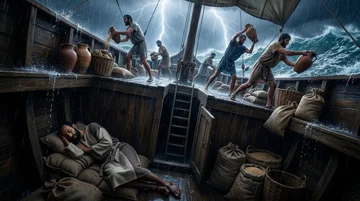
Then the mariners were afraid, and cried every man unto his god, and cast forth the wares that were in the ship into the sea, to lighten it of them. But Jonah was gone down into the sides of the ship; and he lay, and was fast asleep.
Translations
Then the mariners were afraid, and cried every man to his god, and cast forth the wares that were in the ship into the sea, to lighten it of them. But Jonah was gone down into the sides of the ship; and he lay, and was fast asleep.
King James Version, KJV Cambridge Paragraph Bible
Then the mariners were afraid, and cried every man unto his god, and cast forth the wares that were in the ship into the sea, to lighten it of them. But Jonah was gone down into the sides of the ship; and he lay, and was fast asleep.
Then the mariners were afraid, and cried every man to his god, and cast the wares that were in the ship into the sea, to lighten it of them. But Jonah had gone down into the sides of the ship; and he lay, and was fast asleep.
Revised Version, American Standard Version
Then the mariners were afraid, and cried every man unto his god; and they cast forth the wares that were in the ship into the sea, to lighten it unto them. But Jonah was gone down into the innermost parts of the ship; and he lay, and was fast asleep.
and the mariners are afraid, and cry each unto his god, and cast the goods that [are] in the ship into the sea, to make [it] light of them; and Jonah hath gone down unto the sides of the vessel, and he lieth down, and is fast asleep.
And the mariners were afraid, and cried every one unto his god; and they cast forth the wares that were in the ship into the sea, to be lightened of them. But Jonah had gone down into the lower part of the ship; and he lay, and was fast asleep.
Then were the mariners, afraid, and made outcry every man unto his own god, and they hurled the wares which were in the ship, into the sea, to lighten it of them,—but, Jonah, had gone down into the hinder parts of the vessel, and had lain down, and fallen into a sound sleep.
Berean Standard Bible, Majority Standard Bible
The sailors were afraid, and each cried out to his own god. And they threw the ship’s cargo into the sea to lighten the load. But Jonah had gone down to the lowest part of the vessel, where he lay down and fell into a deep sleep.
Then the mariners were afraid, and every man cried to his god. They threw the cargo that was in the ship into the sea to lighten the ship. But Jonah had gone down into the innermost parts of the ship and he was laying down, and was fast asleep.
Then the sailors were full of fear, every man crying to his god; and the goods in the ship were dropped out into the sea to make the weight less. But Jonah had gone down into the inmost part of the ship where he was stretched out in a deep sleep.
Then the mariners were afraide, and cryed euery man vnto his God, and cast the wares that were in the ship, into the sea to lighten it of the: but Ionah was gone downe into the sides of the ship, and he lay downe, and was fast a sleepe.
Douay-Rheims (Challoner revision)
And the mariners were afraid, and the men cried to their god: and they cast forth the wares that were in the ship, into the sea, to lighten it of them: and Jonas went down into the inner part of the ship, and fell into a deep sleep.
Pictures


Cross-references
- Jonah 2:1-2
Then Jonah prayed unto the LORD his God out of the fish’s belly,
Jonah calls on God from the fish after the storm.
- Jonah 1:12
And he said unto them, Take me up, and cast me forth into the sea; so shall the sea be calm unto you: for I know that for my sake this great tempest is upon you.
Jonah admits his fault and offers himself to calm the sea.
- Jonah 1:17
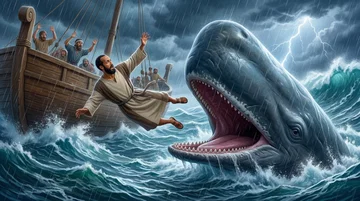
Now the LORD had prepared a great fish to swallow up Jonah. And Jonah was in the belly of the fish three days and three nights.
God preserves Jonah after the sailors cast him into the sea by sending a great fish.
- 2 Kings 14:25
He restored the coast of Israel from the entering of Hamath unto the sea of the plain, according to the word of the LORD God of Israel, which he spake by the hand of his servant Jonah, the son of Amittai, the prophet, which was of Gath-hepher.
Identifies Jonah as the son of Amittai and a prophet in Israel.
- Psalms 107:25-28
For he commandeth, and raiseth the stormy wind, which lifteth up the waves thereof.
Sailors face a God-sent storm at sea and cry out in their trouble.
- Jonah 1:9
And he said unto them, I am an Hebrew; and I fear the LORD, the God of heaven, which hath made the sea and the dry land.
Jonah identifies the Lord as maker of sea and land and the true God.
- Matthew 8:24
And, behold, there arose a great tempest in the sea, insomuch that the ship was covered with the waves: but he was asleep.
same sudden Galilee storms terrifying fishermen
- Matthew 8:26
And he saith unto them, Why are ye fearful, O ye of little faith? Then he arose, and rebuked the winds and the sea; and there was a great calm.
Christ commands the storm-tossed sea.
- Jonah 1:15
So they took up Jonah, and cast him forth into the sea: and the sea ceased from her raging.
lot fell on Jonah and he was thrown into the sea
- Jonah 2:10
And the LORD spake unto the fish, and it vomited out Jonah upon the dry land.
The fish vomits Jonah onto dry land.
- Jonah 1:10
Then were the men exceedingly afraid, and said unto him, Why hast thou done this? For the men knew that he fled from the presence of the LORD, because he had told them.
The sailors learn Jonah is fleeing from the Lord.
Commentary
Each commentary is drawn from primary sources: the writings of Ellen G. White and Adventist pioneers and periodicals. Each commentary is separate. Its own words are not a quotation; follow the references to read the source passages.
Ellen G. White
2 sources
This verse belongs to the account of Jonah's experience recorded in the first and second chapters of Jonah.RH Oct 18, 1906 The storm was sent by the Lord and placed the ship in grave danger of being lost.RH Dec 4, 1913 In their fright the mariners cried every man unto his own god and cast forth the wares that were in the ship into the sea to lighten it of them.RH Dec 4, 1913
Jonah had gone down into the sides, the lower parts of the ship, where he lay and was fast asleep, in contrast to the sailors' fear and urgent efforts to survive.RH Dec 4, 1913 Because of this contrast, the shipmaster told him to wake up and call upon his God so that they would not perish.RH Dec 4, 1913 Through severe affliction in these events, God in providence taught Jonah the lesson of obedience that enabled him to fulfill God's purpose for the inhabitants of Nineveh.RH Oct 18, 1906 This record is worthy of most careful study.RH Oct 18, 1906
Sources
Pioneers and periodicals
29 sources
The verse tells of a voyage from Joppa toward Tarshish when the Lord sent a great wind that put the ship in danger of perishing with all on board.RH Dec 4, 1913RH Mar 5, 1914RH Aug 29, 1871 The frightened sailors each cried to his own god in fear of death, yet their idolatrous cries were futile and the storm grew more violent while they threw valuable cargo into the sea to lighten the vessel.RH Dec 4, 1913ST Mar 23, 1904ST Oct 29, 1885 Jonah himself had gone down below deck into the sides of the ship and lay fast asleep, continuing his downward flight from God and sleeping through the height of danger while others struggled to survive.RH Dec 4, 1913RH Jul 1, 1862ST Oct 29, 1885 His disobedience in fleeing the work given him brought trial and peril not only on himself but on his innocent shipmates, and his sleep pictures carnal security and spiritual slumber in which sin quiets the conscience and leaves the soul heedless of danger.ST Mar 23, 1904RH Jul 1, 1862ST Oct 29, 1885ST Nov 12, 1885 Even that flight served God's mercy, for after Jonah was cast into the sea the sailors were led to fear the Lord, offer sacrifice, and make vows to Jehovah.ST Mar 23, 1904RH Mar 5, 1914ST Dec 11, 1901 The account is true history and stands as warning against neglecting God-given duty for a self-chosen way, since flight from duty ends in ruin while obedient trust is the safe way that brings peace.RH Apr 1, 1902RH Sep 17, 1901RH Aug 29, 1871RH Jan 10, 1871
Flight, Storm, and Sleep
The verse belongs to the account of God sending Jonah to warn Nineveh of coming judgment before its overthrow.ST Mar 8, 1883 It was a hard mission to go to a strange people whose capital was then the greatest city on earth and rebuke them for their sins.ST Dec 15, 1909 The record in the first two chapters shows how God in providence taught Jonah obedience through severe affliction to fit him for that purpose, and it is worthy of careful study.RH Oct 18, 1906 It stands as part of the graphically told story in chapters 1-4 counted with them as striking prophecies.ST Dec 15, 1909 Outside his book Jonah is known by his prediction to Jeroboam II of victories over the Assyrians, and his name means dove though his disposition was fiery.ST Dec 15, 1909
The storm arose on a voyage from Joppa toward Tarshish on the Mediterranean Sea.ST Feb 2, 1915 It was sent by the Lord as a great wind that put the ship in grave danger of perishing and threatened the lives of all on board.RH Dec 4, 1913ST Feb 2, 1915 The same kind of great wind and mighty tempest still arises off Joppa today, so the sea itself witnesses to the truth of the account.RH Aug 29, 1871 The scene presents the sea as a force of danger and distress yet under God's rule in which He preserves His servant.ST Aug 27, 1896
The frightened, experienced sailors each cried to his own god, not knowing the God of heaven.RH Mar 5, 1914ST Mar 18, 1913 Their idolatrous cries in awful fear of death were futile and did not stop the storm, which grew more violent.RH Mar 5, 1914ST Mar 23, 1904 While seeking to determine who was responsible for the storm, they struggled bravely to keep the ship afloat.ST Mar 18, 1913ST Feb 2, 1915 At the captain's command under black heavens and mighty wind, they threw bale after bale of valuable merchandise and cargo into the seething sea to lighten the vessel.RH Dec 4, 1913ST Mar 23, 1904ST Oct 29, 1885ST Mar 23, 1904ST Mar 18, 1913
Jonah had gone down into the sides of the ship below deck and lay fast asleep from weariness of his journey, continuing the downward road he chose in fleeing God.ST Oct 29, 1885ST Mar 18, 1913 His sleep while fleeing from the Lord contrasts with the sailors' fear and urgent efforts to survive.RH Dec 4, 1913 He lay fast asleep and felt safe though he knew he was disobeying God, leaving him asleep at the height of danger.ST Oct 29, 1885RH Apr 1, 1902 His sleep below deck while the violent storm threatened the ship left him unprepared to face death.RH Jul 1, 1862
The shipmaster found Jonah below, woke him hastily in terror, and told him to arise and call upon his God so they would not perish.RH Dec 4, 1913RH Mar 5, 1914RH Apr 1, 1902ST Mar 18, 1913
Sin Brings Trouble and Mercy
Jonah's disobedience in fleeing the work given him brought trial, distress and peril not only on himself but on innocent shipmates, for while the frightened sailors cried each to his own god and cast the cargo into the sea to lighten the ship, he lay fast asleep below.ST Mar 23, 1904ST Oct 29, 1885RH Apr 1, 1902RH Sep 17, 1901 His careless disobedience, though he knew he was disobeying, left him feeling safe amid their fear, and his neglect of a commission to warn those in danger helped bring his shipmates into peril while he remained asleep even at the height of danger until the heathen shipmaster called him to wake and recognize their need.ST Oct 29, 1885RH Apr 1, 1902 Neglect of duty makes a man careless and asleep to the dangers around him, and his sleep directly followed his flight from the work appointed him.RH Apr 1, 1902RH Sep 17, 1901
His going down into the ship and sleeping was the experiment of trying to escape trouble by running away from duty, which proves impossible, because flight brought him into trouble where all who imitate him will in the end find themselves.ST Nov 4, 1930RH Dec 3, 1867 That descent was part of the downward road chosen in fleeing God, continuing step by step below deck while the storm arose, and the storm awakened him to the consequences of that choice.ST Nov 4, 1930RH Dec 3, 1867 The lesson is to manfully meet and overcome the difficulties and trials of the post assigned by providence instead of fleeing them.RH Dec 3, 1867
His sleep pictures disobedience followed by carnal security, a quieted conscience and false peace, a spiritual sleep heedless of danger to the soul while a violent storm threatened the ship and left him unprepared to face death.RH Jul 1, 1862ST Mar 23, 1904 A troubled conscience does not always keep a person awake, since sin can blunt the conscience so it no longer disturbs rest, and ease in sleeping can show indifference to the danger facing others or failure to act when action is needed, which is not always to be commended.RH Jul 1, 1862ST Nov 12, 1885 That false peace does not last but is broken by sudden and terrible awakening when sin finds the sinner out, and self-examination then reveals only eternal destruction ahead.ST Mar 23, 1904
His failure did not mean his heart was false to God, for though he had petulantly refused the command he later frankly acknowledged his fault and offered himself to save the ship.ST Dec 11, 1901ST Feb 4, 1903 He had fled toward Tarshish from a displeasing foreign mission that offered him no glory, out of pride and easy irritation, and the severe test of the storm stripped away pride and irritation to bring out greatness of soul hidden beneath surface littleness.ST Dec 11, 1901ST Feb 4, 1903 Noble souls are often hidden by faults and by ill health such as dyspepsia, catarrh and indigestion and the irritation they cause, with victory given to him who cooperates with divine power.ST Dec 11, 1901 The greatness of soul in that self-offering so impressed the ignorant heathen sailors that they strove all the harder to save him.ST Dec 11, 1901
Even his flight and the sailors' distress served the purpose of bringing souls to salvation, for the storm was sent by God and their futile casting of cargo and crying to their gods ended in their being led to fear the Lord, offer a sacrifice, make vows and pray to the great Jehovah.ST Mar 23, 1904RH Mar 5, 1914ST Dec 11, 1901 The frightening of the experienced sailors until each cried to his own god happened on the Mediterranean Sea on a voyage from Joppa toward Tarshish, during a raging storm threatening the lives of all on board while they sought to determine who was responsible for the storm.RH Mar 5, 1914ST Feb 2, 1915 Jonah was below deck fast asleep until awakened and urged to call upon his God, and after the lot fell on him he was thrown into that same sea.ST Mar 23, 1904RH Mar 5, 1914ST Feb 2, 1915
True History and Warning
The account is true history and literal fact, a truthful and important Old Testament narrative not to be ridiculed or rejected.RH Jan 10, 1871ST Mar 9, 1888ST Jan 30, 1901 In it into means really into and not merely close by or near to, so that Jonah was truly cast into the whale's belly and taken inside it and was truly inside it, not merely set beside it or carried on its back to swim ashore.RH Jan 10, 1871 The sea itself witnesses to the truth of the account, for the same kind of great wind and mighty tempest sent by the Lord in Jonah's flight off Joppa still arises there today.RH Aug 29, 1871 To call Jonah an allegory is not believing the Bible but practical infidelity and higher criticism, the same unbelief as that of Tom Paine and Bob Ingersoll only phrased in elegant sentences.ST Jan 30, 1901 That unbelief comes from ministers educated under infidel professors and goes together with calling Genesis a myth, questioning the miracles of the Son of God, and rejecting prayer, conversion, and hell.ST Jan 30, 1901 It produces worldliness, prayerlessness, love of riches, and a pandemonium of doctrines of devils such as Christian Science, Unitarianism, Spiritualism, Universalism, Babism, and metaphysical healing.ST Jan 30, 1901
Fear of immediate danger and death can prompt people to pray though they are not ordinarily devoted to prayer, as the mariners in the storm each cried to his god from distress and fear of death.RH Nov 4, 1858 Such urgent prayer alone does not prove a sincere heart or true Christianity.RH Nov 4, 1858 Their each calling upon his own god illustrates the way of ancient idolaters who, though lacking sense, had unselfishness enough to place their gods outside themselves even while clothing them with their own attributes, rather than placing self upon the throne invested with all knowledge and wisdom.ST May 6, 1897 That illustrates the characteristic of heathenism and all false religions to exalt self, not God.ST May 6, 1897
The verse warns against neglecting God-given duty and choosing one's own way instead of God's way.RH Sep 17, 1901RH Dec 3, 1867RH Jan 27, 1874 Jonah's flight and sleep illustrate his attempt to evade the commission to go to Nineveh and proclaim God's message, which he was not free to replace with a safer, more popular message.RH Nov 25, 1858 His experiment of trying to escape trouble by running away from duty proves that escape impossible, because his flight brought him into trouble where all who imitate him will in the end find themselves.RH Dec 3, 1867 His self-chosen course, the path that seems most pleasant to self, ends in ruin and being sent overboard into the raging sea, while afterward taking God's way in obedient trust step by step is the right and safe way that brings the sweetest peace and led Jonah to Nineveh on a mission of love.RH Jan 27, 1874 The lesson is to manfully meet and overcome the difficulties and trials of the post assigned by God's providence instead of fleeing them.RH Dec 3, 1867
Though commissioned to warn people in danger, Jonah's neglect helped bring his shipmates into peril, as the sailors grew afraid, each cried to his god, and threw cargo and merchandise overboard to lighten the ship while Jonah slept below.RH Apr 1, 1902RH Sep 17, 1901RH Nov 25, 1858 His unfaithfulness brings danger not only on himself but also on those with him, and neglect of duty can make people careless and asleep to the dangers around them.RH Sep 17, 1901 He remains asleep even at the height of danger until the heathen shipmaster calls him to wake and recognize their need.RH Apr 1, 1902 Like Jonah going down into the vessel and falling asleep while danger advances, theologians who avoid warning people about Spiritualism fall asleep in silence as Satan gathers followers.ST Nov 16, 1882
Sources