Jude 1:9
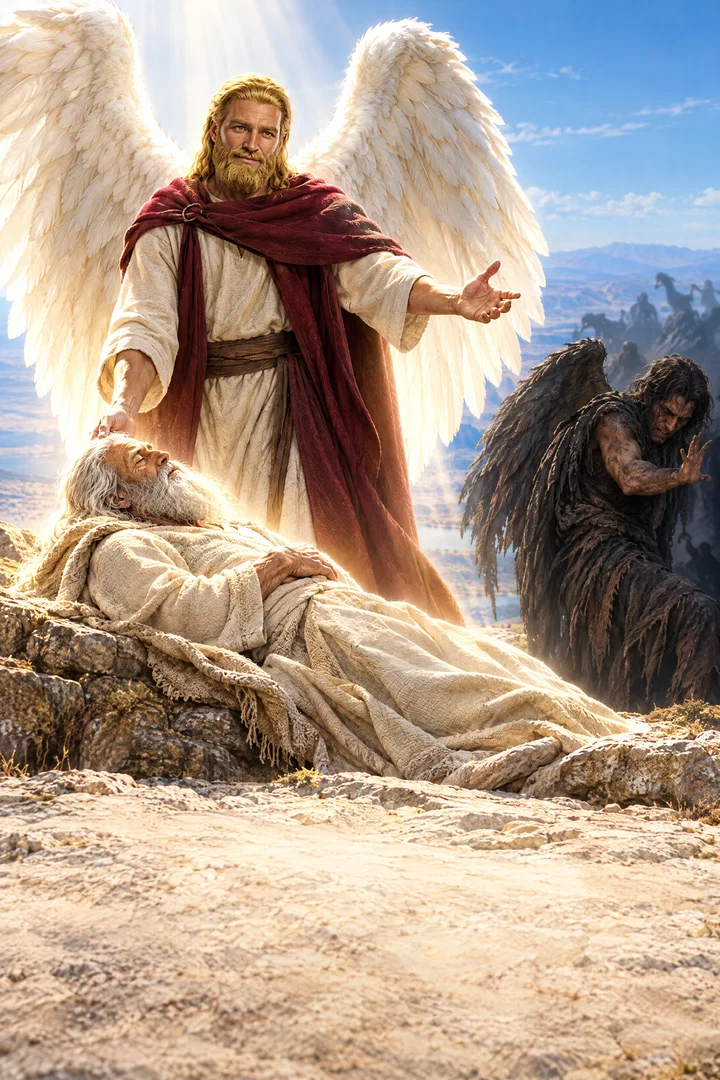
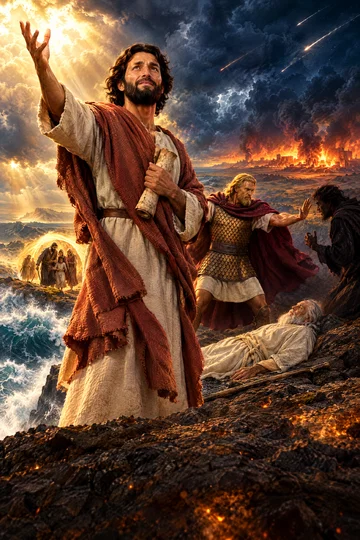
Yet Michael the archangel, when contending with the devil he disputed about the body of Moses, durst not bring against him a railing accusation, but said, The Lord rebuke thee.
Translations
Yet Michael the archangel, when contending with the devil he disputed about the body of Moses, dared not bring against him a railing accusation, but said, The Lord rebuke you.
King James Version, KJV Cambridge Paragraph Bible, Webster Bible
Yet Michael the archangel, when contending with the devil he disputed about the body of Moses, durst not bring against him a railing accusation, but said, The Lord rebuke thee.
Revised Version, American Standard Version
But Michael the archangel, when contending with the devil he disputed about the body of Moses, durst not bring against him a railing judgment, but said, The Lord rebuke thee.
yet Michael, the chief messenger, when, with the devil contending, he was disputing about the body of Moses, did not dare to bring up an evil-speaking judgment, but said, 'The Lord rebuke thee!'
But Michael the archangel, when disputing with the devil he reasoned about the body of Moses, did not dare to bring a railing judgment against [ him], but said, [ The] Lord rebuke thee.
Whereas, Michael, the chief-messenger, when, with the adversary, disputing, he was reasoning about the body of Moses, durst not impose on him a defamatory sentence, but said—The Lord rebuke thee!
Berean Standard Bible, Majority Standard Bible
But even the archangel Michael, when he disputed with the devil over the body of Moses, did not presume to bring a slanderous charge against him, but said, “ The Lord rebuke you!”
But Michael, the archangel, when contending with the devil and arguing about the body of Moses, dared not bring against him an abusive condemnation, but said, “ May the Lord rebuke you!”
Now when Michael, one of the chief angels, was fighting against the Evil One for the body of Moses, fearing to make use of violent words against him, he only said, May the Lord be your judge.
Yet Michael the Archangell, when hee stroue against the deuill, and disputed about the body of Moses, durst not blame him with cursed speaking, but sayd, The Lord rebuke thee.
Douay-Rheims (Challoner revision)
When Michael the archangel, disputing with the devil, contended about the body of Moses, he durst not bring against him the judgment of railing speech, but said: The Lord command thee.
Pictures
Cross-references
- Matthew 17:3
And, behold, there appeared unto them Moses and Elias talking with him.
Moses appears bodily with Christ in glory, showing that he was raised.
- Deuteronomy 34:5-6
So Moses the servant of the LORD died there in the land of Moab, according to the word of the LORD.
Records Moses’ death and hidden burial, whose body is later disputed.
- Zechariah 3:2
And the LORD said unto Satan, The LORD rebuke thee, O Satan; even the LORD that hath chosen Jerusalem rebuke thee: is not this a brand plucked out of the fire?
The Lord rebukes Satan, echoing Michael’s appeal for the Lord to rebuke the devil.
- Daniel 12:1
And at that time shall Michael stand up, the great prince which standeth for the children of thy people: and there shall be a time of trouble, such as never was since there was a nation even to that same time: and at that time thy people shall be delivered, every one that shall be found written in the book.
Michael stands as the great prince who protects God’s people.
- Luke 9:30-31
And, behold, there talked with him two men, which were Moses and Elias:
Moses appears in glory with Jesus and speaks of his coming death.
- Revelation 12:7-9
And there was war in heaven: Michael and his angels fought against the dragon; and the dragon fought and his angels,
Michael and his angels fight Satan and his angels.
- Daniel 10:13
But the prince of the kingdom of Persia withstood me one and twenty days: but, lo, Michael, one of the chief princes, came to help me; and I remained there with the kings of Persia.
Both identify Michael as a chief prince aiding against satanic opposition.
- Daniel 10:21
But I will shew thee that which is noted in the scripture of truth: and there is none that holdeth with me in these things, but Michael your prince.
Both texts identify Michael as an archangel and prince of God’s people.
- 1 Thessalonians 4:16
For the Lord himself shall descend from heaven with a shout, with the voice of the archangel, and with the trump of God: and the dead in Christ shall rise first:
The Lord descends with an archangel’s voice as the dead in Christ are raised.
- 2 Peter 2:11
Whereas angels, which are greater in power and might, bring not railing accusation against them before the Lord.
Both describe angels refraining from railing accusations and leaving judgment to the Lord.
- Mark 9:4
And there appeared unto them Elias with Moses: and they were talking with Jesus.
Moses appears with Jesus at the transfiguration, consistent with his being raised.
- Zechariah 3:1
And he shewed me Joshua the high priest standing before the angel of the LORD, and Satan standing at his right hand to resist him.
Satan opposes a servant of God, who is met with restraint.
- Numbers 20:10-12
And Moses and Aaron gathered the congregation together before the rock, and he said unto them, Hear now, ye rebels; must we fetch you water out of this rock?
Moses’ sin at the rock explains Satan’s claim against him.
- Hebrews 11:24-26
By faith Moses, when he was come to years, refused to be called the son of Pharaoh’s daughter;
Moses chose God’s people and the reproach of Christ over Egypt’s riches.
- Titus 3:2
To speak evil of no man, to be no brawlers, but gentle, shewing all meekness unto all men.
both forbid speaking evil even if true
- Joshua 5:13-15
And it came to pass, when Joshua was by Jericho, that he lifted up his eyes and looked, and, behold, there stood a man over against him with his sword drawn in his hand: and Joshua went unto him, and said unto him, Art thou for us, or for our adversaries?
Michael appears to Joshua as captain of the Lord’s host.
- Acts 7:38
This is he, that was in the church in the wilderness with the angel which spake to him in the mount Sina, and with our fathers: who received the lively oracles to give unto us:
Both texts describe an angel’s dealings with Moses.
- Matthew 4:10
Then saith Jesus unto him, Get thee hence, Satan: for it is written, Thou shalt worship the Lord thy God, and him only shalt thou serve.
Both answer Satan with careful words, refusing reviling speech.
- Revelation 12:9
And the great dragon was cast out, that old serpent, called the Devil, and Satan, which deceiveth the whole world: he was cast out into the earth, and his angels were cast out with him.
The Devil is identified as the old serpent.
Commentary
Each commentary is drawn from primary sources: the writings of Ellen G. White and Adventist pioneers and periodicals. Each commentary is separate. Its own words are not a quotation; follow the references to read the source passages.
Ellen G. White
48 sources
Michael the archangel is Christ Himself, the Son of God and Commander of heaven.LC1 128.1–22RED 24.1–219MR 106.2–4 Soon after Moses died He came to raise him with a glorified body before decay, but Satan stood by claiming the body as his lawful prey and accusing Him of unjustly invading his dominion.LC1 128.1–22RED 24.1–2RH Mar 3, 1874 Though He had every provocation and had already overcome Satan in heaven, He would not answer with insult or retaliation but meekly left judgment to God.LC1 128.1–2Lt 11, 1895, par. 1–6Lt 35, 1895, par. 4–71T 625.1–626.2 His restraint stands as the right example against false teachers who defile the flesh, despise authority, and speak evil of things they do not understand.Ms 94, 1903, par. 22–27Lt 330, 1908, par. 17–25Lt 35, 1895, par. 4–7 Those who contend for truth must therefore never bring a railing accusation against anyone, not even the devil, but guard word and pen, refuse sarcasm and personal attack, and let truth spoken in love do its work.16MR 158.2Ms 143, 1901, par. 88–893T 220.23T 220.1Lt 66, 1894, par. 8–11
Michael Is Christ
Michael the archangel in the verse is Christ Himself, the Son of God, the world's Redeemer and Prince of Life.LC1 128.1–22RED 24.1–2SG4 58.11SP 342.2–3ST Jun 7, 1877 He is the Commander of heaven, revealed as the Angel of Jehovah and Captain of the Lord's host.ST Oct 24, 1900 Soon after Moses died He came contending with Satan over the body, disputing about it, resurrecting Moses and taking him to heaven before his body decayed, with a resurrected glorified body.LC1 128.1–22RED 24.1–2SG4 58.11SP 342.2–3ST Jun 7, 1877 Satan stood claiming Moses as his lawful prey and rightful property, enraged and accusing Christ of invading his dominion and acting unjustly by taking from the grave one he claimed.LC1 128.1–22RED 24.1–2SG4 58.11SP 342.2–3ST Jun 7, 1877 Christ answered without a railing accusation, meekly leaving rebuke and judgment to God and to His Father, saying the Lord rebuke thee.LC1 128.1–22RED 24.1–219MR 106.2–4SG4 58.11SP 342.2–3
His example in so contending is the pattern for how to contend for the faith, teaching that aggressive warfare is to be maintained yet without self-created zeal born of hereditary and cultivated traits counted as zeal for God.19MR 106.2–4 All human qualifications are to be yielded to divine influence and brought into subjection, with self hid in Christ and Christ in God, forbidding one-sided extravagance, cold-hearted criticism, selfish practice, and disregard for another's individuality, so that truth is seen on all sides in perfect harmony.19MR 106.2–4 The verse presents Him as the Archangel Himself, one of the chief princes and among angels of the highest rank in the kingdom of God.Ms 95, 1903, par. 1–5 It shows a scene in the heavenly courts where angels of that rank take interest in the affairs of men, and reveals the active part taken by both good and evil angels in matters connected with earthly kingdoms.Ms 95, 1903, par. 1–5 Thus Michael came to the assistance of Gabriel when satanic forces opposed God's purpose, as when evil influence was exerted on the mind of the king of Persia to block the answer to Daniel's earnest prayer.Ms 95, 1903, par. 1–5 Even though as Commander He had every excuse and provocation to answer otherwise, His restraint in refusing a railing accusation is Christlike humility and the need for sanctified speech.ST Oct 24, 1900
Dispute Over Moses
Soon after Moses died, Christ came to raise him before his body could decay and took him to heaven with a resurrected glorified body.LC1 128.1–22RED 24.1–2EW 133.3–4SG1 42.2–43.11SP 342.2–3 Angels had buried him on the mount where his strength was still undiminished and his eyesight clear, and after he had lain briefly in the grave Christ called him from the grave to life.1SP 342.2–32SP 329.2–330.110MR 159.3–6 Moses had already been raised and taken to heaven, though this was not generally known.EW 133.3–4SG1 42.2–43.11SP 342.2–3
Satan stood by disputing for the body, claiming Moses as his lawful prey and property belonging to death and his dominion.LC1 128.1–22RED 24.1–2RH Mar 3, 1874EW 133.3–4SG1 42.2–43.1 He was enraged at being deprived of his prey and accused Christ of invading his dominion and acting unjustly by taking from the grave one who belonged to death.2RED 24.1–2RH Mar 3, 1874DA 421.3–4SG4 58.1EW 133.3–4 He claimed Moses because of his sin and contended that the taking of the body was unfair treatment.DA 421.3–4SG4 58.110MR 159.3–6Lt 96, 1898, par. 16–19Ms 69, 1912, par. 59–65
Moses had come under the power of death through transgression at the rock, where he failed to give God glory and took to himself glory belonging to God.EW 133.3–4SG1 42.2–43.11SP 342.2–32SP 329.2–330.13RED 118.2–119.1 There he struck the rock in anger, spoke presumptuously, lost patience and self-control, and was barred from the promised land.3RED 118.2–119.110MR 159.3–6Lt 96, 1898, par. 16–19 Had he remained faithful God would have brought him into the promised land and translated him to heaven without death.3RED 118.2–119.1
His sin was not premeditated but a surprise into which he was drawn when he took to himself the people's murmuring that was really against God.10MR 159.3–6 He had humbly repented, so his character bore no stain and his name and record in heaven remained untarnished.SG4 58.1ST Mar 31, 18811SP 342.2–3SG4 57.4 Though his sin made him subject to death his title to life rested in Jesus his Head.SG4 58.1ST Mar 31, 1881Ms 69, 1912, par. 59–65
Satan contended earnestly and renewed his controversy over the justice of God's law, charging that he was not fairly treated.EW 133.3–410MR 159.3–6 Christ did not retaliate by bringing up Satan's cruel deceptive work in heaven by deceptive misrepresentation, his falsehoods in Eden that led to Adam's transgression, or his stirring up Israel to murmur and rebel until Moses lost self-control.EW 133.3–410MR 159.3–6
Humble and Restrained Reply
When contending and disputing with the devil about the body of Moses, Michael dared not bring a railing or reviling accusation against him but meekly left rebuke and judgment to the Lord.LC1 128.1–2Ms 94, 1903, par. 22–27Lt 330, 1908, par. 17–252RED 24.1–2RH Mar 3, 1874 Michael is Christ, who after Moses' death resurrected him and took him to heaven, while Satan stood claiming Moses as his lawful prey belonging to death and accusing Christ of invading his dominion by taking one from the grave.LC1 128.1–22RED 24.1–2RH Mar 3, 1874 Christ answered that claim without a railing charge, saying in effect that rebuke belonged to the Lord.LC1 128.1–22RED 24.1–2RH Mar 3, 1874 This restraint stands as the right example in contrast to false teachers and filthy dreamers who defile the flesh, despise dominion, speak evil of dignities and dignitaries, and speak evil of things they do not know or understand, exposing the evil-speaking and apostasy to be met in the present day.Ms 94, 1903, par. 22–27Lt 330, 1908, par. 17–25 Even one so high would not speak careless and venturesome words against the prince of darkness, which condemns finite humans who dare unkind thrusts and harsh words.Lt 11, 1895, par. 1–6
The restraint is weighty because even the Majesty of heaven guarded every word lest He stir up the spirit of Satan and the fallen angels.Lt 11, 1895, par. 1–6Lt 35, 1895, par. 4–7 Though Christ had overcome Satan and expelled him from heaven, He met him over Moses' body without abuse or retaliation.1T 625.1–626.2Ms 95, 1894, par. 4–6 Though He had every provocation and every excuse to answer otherwise, He would not be aroused to retaliation but spoke with great carefulness.Ms 95, 1894, par. 4–6Lt 289, 1905, par. 1–5ST Oct 24, 1900 His refusal to answer with a railing accusation even when He had every excuse is an example of Christlike humility and sanctified speech.ST Oct 24, 1900
He would not enter into dispute on Satan's ground, turn from His straightforward course of truth to follow Satan's wanderings and twistings and prevarications, or give Satan occasion or semblance of excuse to misrepresent His spirit and distort His conduct.ST Mar 31, 18819T 239.4–240.2RH Oct 14, 1902Lt 187, 1902, par. 12Ms 95, 1894, par. 4–6 Satan provoked Him and hoped to stir Him to retaliation and sought to misrepresent His actions, but Christ stayed on the straightforward course and referred the matter to God.ST Mar 31, 18819T 239.4–240.2RH Oct 14, 1902 To rail would be to use the devil's weapons and to place the speaker on the enemy's ground, and Satan would at once seize on it as proof that the speaker has his own railing spirit and proclaim it to his synagogue and evil angels and everyone.Ms 96, 1894, par. 3–4Lt 187, 1902, par. 12 Workers for souls must therefore reveal the meekness of Christ when they meet opponents, not meeting them in their own strength, not speaking inadvisedly when provoked to bear hard things, and speaking no words that Satan can take advantage of, while the angel of God stands by to help answer questions asked.Lt 187, 1902, par. 12
When tempted He met temptation with God's Word, teaching followers to resist the enemy without adopting Satan's methods and to rely on Scripture as their defense.RH Aug 6, 1908 Conflict with the devil as an invisible terrorizing foe is met not by human strength but by calling on the Lord to rebuke Satan.Lt 123, 1893, par. 19–23 That rebuke must be made in the name of the Lord, with earnest prayer, and this appeal brings victory, deliverance, and peaceful rest from Satan's assault.Lt 123, 1893, par. 19–23
Warning Against False Teachers
The verse holds up the right example of restraint in speech against the opposite course of false teachers.Ms 94, 1903, par. 22–27Lt 330, 1908, par. 17–25Lt 35, 1895, par. 4–7 Even Michael, while contending and disputing with the devil about the body of Moses, dared not bring a railing or reviling accusation against him but left rebuke and judgment to the Lord.Ms 94, 1903, par. 22–27Lt 330, 1908, par. 17–25Lt 35, 1895, par. 4–7 That guarded carefulness stands in contrast to filthy dreamers who defile the flesh, despise dominion, and speak evil of dignities and dignitaries.Ms 94, 1903, par. 22–27Lt 330, 1908, par. 17–25Lt 35, 1895, par. 4–7 It stands in contrast also to those who speak evil of things they do not know or understand, set against the pollution of the world and the working agencies to corrupt it described in the opening of Jude.Ms 94, 1903, par. 22–27Lt 330, 1908, par. 17–25Lt 35, 1895, par. 4–7
The verse belongs to Jude's message to guard believers against the seductive influences of men with a form of godliness who are not safe leaders.Ms 94, 1903, par. 28 That warning applies in the last days, when such teachers arise and become actively zealous.Ms 94, 1903, par. 28 They present all kinds of theories to divert minds from the very defining truth that marks the position that can be occupied with safety, at a time when Satan works with power upon religionists who make a pretense of righteousness while failing to place themselves under the guidance of the Holy Spirit.Ms 94, 1903, par. 28
The verse thus exposes the evil-speaking and apostasy to be met in the present day.Lt 330, 1908, par. 17–25 Workers must study it in order to meet that apostasy.Lt 330, 1908, par. 17–25
Hope and Heavenly Ministry
Jude 1:9 shows Satan claiming the body of Moses as his rightful prey because of Moses's sin, yet Michael the Son of God prevailing in the dispute and bringing Moses out of the grave to life before his body saw decay.DA 421.3–4ST Jun 7, 1877 Raised and taken to heaven with a resurrected, glorified body, Moses became one of the two heavenly messengers who appeared to Jesus at the transfiguration.DA 421.3–4ST Jun 7, 1877 Brought from the grave in this way, he witnesses to Christ's victory over sin and death and represents those who will come forth from the dead at the resurrection of the just.DA 421.3–4ST Jun 7, 1877
Moses had already been resurrected from the dead and taken to heaven, though the Jews who asked whether John was Moses raised to life did not know it.RH Jan 21, 1873
The verse opens a scene in the heavenly courts in which angels of the highest rank in the kingdom of God take interest in the affairs of men.Ms 95, 1903, par. 1–5 Michael is the Archangel Himself, one of the chief princes, who contends with the devil about the body of Moses without bringing a railing accusation.Ms 95, 1903, par. 1–5 It reveals the active part taken by both good and evil angels in matters connected with earthly kingdoms, with Michael coming to assist Gabriel when satanic forces work to oppose God's purpose.Ms 95, 1903, par. 1–5 So evil influence was exerted upon the mind of the king of Persia to hold back the answer to Daniel's earnest prayer.Ms 95, 1903, par. 1–5
Pattern for Believers Speech
Those who advocate truth must never rail, not even once, bringing no railing or reviling accusation against anyone, not even the devil himself, nor against deceived opposers, overseers, nations, or people without conscience who connive at evil, make false statements, and seek to gain control of sacred property, since to speak so gives the enemy advantage.16MR 158.2Ms 143, 1901, par. 88–897MR 79.2–3Ms 159, 1898, par. 14Lt 264, 1906, par. 2–4 They are to be fair and pleasant, with no sharpness, taunting, twits, flings, sarcasm, or flinging retorts, praying more and loving others more, and they must not mix self into the work or try to use the Holy Spirit, but let the Holy Spirit use them, so that the Spirit is life and voice in them and the tongue acts as His instrument as the pen of a ready writer without human mixture.Ms 143, 1901, par. 88–89Lt 66, 1894, par. 8–117MR 79.2–3 Every statement must be carefully considered, strong retaliatory statements repressed, and no advantage given to opposers, with truth put strongly as in Jesus with self hidden in Christ in its beautiful, solemn, dignified, uplifting character, giving perishing souls only enduring impressions and opportunity for the Holy Spirit to mold those turning from error to truth, without stirring retaliation or arousing the dragon-like spirit, guarding every word and controlling every emotion and striving lawfully, because careless, impulsive words spoken in attacking error will be remembered, reproduced, and confronted when witnesses stand before kings and rulers, magistrates and powers.Lt 66, 1894, par. 8–11
Even in direct controversy with Satan no word of retaliation and nothing bearing even the appearance of railing is permitted, for Christ in dispute over the body of Moses did not answer with a railing accusation or retaliate though provoked and though Satan sought to misrepresent His actions and stir Him to retaliation.GW 325.29T 239.4–240.2RH Oct 14, 1902Ms 95, 1894, par. 4–6Lt 66, 1894, par. 8–11 He stayed on His straightforward course of truth and gave Satan no excuse or semblance of excuse to distort His conduct, refusing to be aroused to retaliation and refusing to turn to follow Satan's wanderings and twistings and prevarications.9T 239.4–240.2RH Oct 14, 1902Ms 95, 1894, par. 4–6 His restraint is the example for all dealings with others, never to bring a railing accusation against any, and much less to use harshness or severity toward those who are anxious to know the right way and sincerely seeking it, but to manifest love and meekness and gentleness and present truth with Christ's love, letting truth itself do the cutting.GW 325.2RH Oct 14, 1902Ms 95, 1894, par. 4–6
Ministers and all who defend God's cause must refuse sarcasm, insult, contempt, personal attack, and retaliation when contending for truth, learning Christ's meekness and lowliness and relying on God rather than meeting opponents in their own strength in a spirit that gives Satan advantage.3T 220.23T 220.1RH Oct 14, 1902 Even when their claims are true they must act with caution and the spirit of peace, doing nothing through harsh words, denunciation, retaliation, or needless controversy to give adversaries advantage.Lt 96, 1898, par. 16–19 This sets the limit on response to opposition, that insulting or contemptuous speech has no place in vindicating truth.3T 220.1RH Oct 14, 1902Lt 96, 1898, par. 16–19
Word and pen must be strictly guarded, for even one so high and even the Majesty of heaven guarded every word lest He stir up the spirit of Satan and the fallen angels, and would not speak careless and venturesome words against the prince of darkness.Lt 11, 1895, par. 1–6Lt 35, 1895, par. 4–7Lt 66, 1894, par. 8–11 Finite humans therefore must not dare unkind thrusts, sharp personalities, sharp critical sayings, taunts, retorts, scathing rebukes, denunciation, retaliation, defiance, or needless controversy and drives against churches and individuals, which stir up enemies, arouse the powers of hell and the dragon-like spirit against the saints, provoke wrath, bring back suffering in double measure, and hinder reaching all classes.Lt 11, 1895, par. 1–6Lt 66, 1894, par. 8–11Lt 96, 1898, par. 16–19 They are to speak the truth in love with careful attention, Christian politeness, courtesy, meekness and lowliness of heart after Christ's methods, with self-examination, weeding out of all discourses everything savoring of retaliation and defiance, not making prominent the objectionable features of faith until people know belief in Christ and His divinity and pre-existence, not pronouncing scathing rebukes against those who know not the truth, and publishing nothing to provoke wrath unless positively essential to vindicate the truth.Lt 11, 1895, par. 1–6Lt 35, 1895, par. 4–7
Workers for souls must meet people where they are, hidden in Jesus with self hid in Christ, letting truth itself cut and speaking no words that cut with sharp, critical or smart sayings.Ms 96, 1894, par. 3–4Ms 143, 1901, par. 88–89Lt 66, 1894, par. 8–11 Railing is using the devil's weapons and placing oneself on the enemy's ground, and Satan would at once seize on it as proof that the speaker has his own railing spirit and proclaim it to his synagogue and evil angels and everyone, while the angel of God stands by to help answer questions asked when workers reveal Christ's meekness, do not meet opponents in their own strength, do not speak inadvisedly when provoked to bear hard things, and speak no words Satan can take advantage of.Ms 96, 1894, par. 3–4Lt 187, 1902, par. 12Ms 95, 1894, par. 4–6 In humility before dense darkness covering minds like the pall of death, they must acknowledge that human words cannot strip away blindness, weigh every word and bridle the tongue lest words be misunderstood and misrepresented and bring reproach on the work and cause their good to be evil spoken of, and allow the Holy Spirit to use them as His instrument rather than mixing self into the work or trying to use the Spirit.Ms 96, 1894, par. 3–4Ms 143, 1901, par. 88–89Lt 289, 1905, par. 1–5
Aggressive warfare for the faith is to be maintained, yet believers must not put on zeal of their own creating, born of hereditary and cultivated traits of character, and count it true zeal for God, giving Satan advantage.19MR 106.2–4 All human qualifications are to be yielded to divine influence and brought into subjection to Christ, with self hid in Christ and Christ in God, avoiding one-sided extravagance, cold-hearted criticism, selfish practice, and ignoring another man's individuality, with truth seen on all sides in perfect harmony.19MR 106.2–4 Those whose wrestling is not against flesh and blood but against spiritual wickedness must do nothing to provoke the powers of darkness and must not single out individuals and attack their false statements, since such words do not advance the truth but are treasured up against them and used by the enemy to hinder the work, and they are to be in the world without being of the world.Ms 22a, 1895 [Copy 1], par. 28–29
Loyalty when the law of God is trampled in the dust and made void by national law must vindicate the sacredness of the commandments by loyalty and obedience rather than by railing against the nations, because railing would close the way to set the light of truth before the people.Ms 15, 1896, par. 35 Every objection against the commandments then becomes an opening to present the value, beauty, and force of truth, and opposition and persecution make many convert to the truth.Ms 15, 1896, par. 35 God sees the malice of those who attack His law and people, so His servants need not take judgment into their own hands.Ms 23, 1885, par. 3 Those in whom Christ abides follow the same rule by not retaliating and not bringing a railing accusation against anyone, not even repeating the false statements they hear, since doleful, discouraging words do no good, and bringing a railing accusation wounds one's own soul deeply and makes one forget the resting place of confidence and peace in Christ.Ms 23, 1885, par. 3Lt 87, 1900, par. 7
Sources
Pioneers and periodicals
116 sources
Michael the archangel is Jesus Christ the Son of God acting as Prince and commander of the angels, whose voice at the second coming raises the dead.ST Aug 12, 1889ST Mar 17, 1898ST Jul 23, 1885ST Jul 23, 1912ST Jul 13, 1882
When contending with the devil about the body of Moses, He came to reclaim His servant from death and the grave which Satan claimed as his lawful captive because of sin.ST Aug 12, 1889ST Mar 17, 1898ST Jul 23, 1885RH Dec 28, 1911ST Jul 6, 1915
He was triumphant, and Moses was raised bodily a short time after death and taken to heaven, later appearing alive in glory beside Christ at the transfiguration as the representative of those who will be raised.ST Aug 12, 1889ST Mar 17, 1898ST Jul 23, 1885RH Dec 28, 1911ST Jul 6, 1915
Though He was the Prince of life, He did not dare bring a railing accusation against Satan but said, The Lord rebuke thee, leaving judgment to the Father.RH Apr 7, 1868RH Aug 26, 1862ST Jan 11, 1905ST Jul 23, 1912ST Apr 28, 1898
That restraint is the pattern for believers, who must not return insult for insult or speak evil of others, but bear reproach patiently and appeal to the Lord to rebuke evil.RH Aug 26, 1862RH May 1, 1900ST Aug 6, 1896RH Dec 2, 1858RH Jan 2, 1866
Michael's Identity and Office
Michael the archangel is Jesus Christ, the Son of God, before His incarnation, acting in angelic form as Prince of life and as ruler and commander of the angels.ST Aug 12, 1889ST Mar 17, 1898ST Jul 23, 1885ST Jul 23, 1912ST Jan 11, 1905 He alone raises the dead, and as Life-giver He opposed the devil's claim over Moses to take the dead from the captor and give life by the Lord's rebuke.ST Aug 12, 1889ST Mar 17, 1898ST Jul 23, 1885RH Dec 28, 1911 Moses was in fact raised and afterward stood with Him in glory on the mount of transfiguration, and the dispute concerned bodily resurrection rather than an immortal soul already in heaven.ST Jul 23, 1885RH Dec 28, 1911ST Jan 11, 1905 The dead could enter heaven only through bodily resurrection, and Moses was later present bodily while Elijah had been bodily translated.RH Dec 28, 1911
The name Michael means who is like God or He who is like God, showing He is like God.ST May 22, 1907ST Apr 28, 1898ST Apr 9, 1902ST Feb 21, 1878RH Dec 27, 1870 Michael later became the Lord Jesus among men, and together with 1 Thessalonians 4:16 and Daniel 12:1 this shows Michael is Christ.ST May 22, 1907 The title archangel means chief, head, or prince of the angels, even chief of all the angels and commander of all the heavenly host.ST May 22, 1907ST Jul 13, 1882ST Apr 9, 1902ST Aug 26, 1880ST Feb 21, 1878 There is only one archangel and the word is never used in the plural, and Gabriel calls Michael one, or the first, of the chief princes.RH Dec 27, 1870 This headship and office as ruler of the angelic host belongs to Christ, who leads the invisible armies of heaven, without making Him a common angel.ST Aug 26, 1880ST Feb 21, 1878RH Dec 27, 1870ST Apr 29, 1903
Michael is identified as Christ because the voice of the archangel that raises the dead at the second coming is Christ's own voice, and the dead hear the voice of the Son of God and live.ST Aug 12, 1889ST Jul 23, 1912ST Jul 13, 1882RH Dec 20, 1870ST Nov 3, 1914 Jude names Michael as the archangel, Paul says the Lord descends with the voice of the archangel to raise the dead in Christ, and Christ says His own voice calls the dead from their graves.ST Jul 23, 1912 From that connection of the archangel's voice at the resurrection, Michael is identified with the Son of God who existed personally before His incarnation.RH Nov 17, 1868 This proves Michael has power to resurrect the dead, since Moses is next seen bodily on the mount with Elijah and Christ, not as a disembodied spirit.RH Dec 20, 1870 At Christ's coming His own voice is the archangel's voice because He Himself is chief over all the heavenly host and holds the keys of death and the grave to call the dead to life.ST Apr 29, 1903
As Michael He was the Angel of Jehovah sent with God's children and the Angel of His presence, who took the nature of angels and serves as their commander.ST Apr 9, 1902ST May 27, 1913ST Jul 23, 1912 He met with Abraham and with Jacob, delivered Israel from bondage, overcame their enemies, provided water from the rock and fed them with bread from heaven for forty years, led Israel, gave water and bread, spoke the law at Sinai, and appeared in the burning bush.ST May 11, 1904ST May 27, 1913 He appeared as Captain of the Lord's host and as the man clothed in linen to Daniel, as the chief of the princes who shares understanding with Gabriel and came to Daniel's help, and as the angel standing among the myrtle trees at the head of the angels who report to Him, directing the chariots in Zechariah's vision.ST Apr 12, 1883ST Jul 29, 1880ST May 30, 1895 His successful work in that angelic role was part of His testing before becoming human, and God was with Christ as He lived on the angels' plane and met Satan's accusations by His life of loyalty.ST May 11, 1904ST Jul 23, 1912 His warfare with Satan, who fought Him in heaven, continues in Revelation 12, working out and continually working toward the glorious results of the sacrifice made in the beginning which culminated on Calvary, until the incarnation and cross.ST May 27, 1913
The verse does not mean Christ sends Michael to awaken the dead; the Lord Himself descends and the dead in Christ rise.RH Feb 9, 1869
Dispute Over Moses' Body
The contention was real, between Michael and the devil over the body of Moses itself, and a dispute over a dead body has point only if it is about bringing it to life in resurrection.ST Mar 17, 1898RH Dec 28, 1911ST Jul 6, 1915ST Mar 20, 1879RH Jan 31, 1865 Michael is Christ the Prince of life, the archangel and Life-giver, while the devil is Lucifer the instigator of sin who has power over death, and Christ opposed his claim in order to raise Moses to life.ST Mar 17, 1898ST Jul 6, 1915ST May 6, 1897ST Apr 26, 1905 Michael prevailed and Moses was in fact raised, later appearing alive and bodily with Elijah on the mount of transfiguration, which proves the raising and shows the verse concerns resurrection and not a conscious soul living apart from the body.RH Dec 28, 1911ST Jul 6, 1915ST Mar 20, 1879RH Jan 31, 1865ST Apr 26, 1905
After Moses died God Himself buried him in a valley in Moab in a lonely grave without a name, hidden and never known to man.ST Aug 28, 1901RH Mar 10, 1868RH Nov 20, 1860ST Apr 5, 1905RH Nov 20, 1860 Heavenly angels were the only attendants, with no human assistance, and the concealment kept the grave from discovery.ST Aug 28, 1901RH Mar 10, 1868RH Nov 20, 1860ST Mar 12, 1912 From that hidden burial the same body the Lord buried would be called to life before the judgment day, clothed in glory to stand on the hill he had not entered in life and speak of the struggle that won life through the incarnate Son, a mystery of God's grace.RH Nov 20, 1860ST Apr 5, 1905ST Jan 18, 1877ST Mar 12, 1912
Satan, who has the power of death and rules over death and the grave, claimed Moses as his lawful captive and prisoner because sin brings death and Moses had sinned.ST Aug 12, 1889ST Mar 17, 1898ST Jul 23, 1885RH Jul 31, 1866ST May 13, 1903 He resisted releasing God's servant from the enemy's prison-house the grave, claimed the earth by conquest as his own, and claimed every sinner and all who died as his lawful slaves and captives, determined to keep them in the grave.ST Mar 17, 1898ST Jan 11, 1905RH Jul 31, 1866ST May 13, 1903 Christ the Prince of life and Life-giver came to reclaim Moses from death, oppose that claim, and take the dead from the captor, and the Lord's rebuke of the enemy gave Moses life.ST Aug 12, 1889ST Mar 17, 1898ST Jul 23, 1885ST Jan 11, 1905ST May 6, 1897 By the victory gained in causing man to fall Satan's stronghold had to be met in fallen flesh, so that through death the one having the power of death would be destroyed.ST Mar 17, 1898
Moses was raised a short time after death, before his body saw corruption or returned to dust, the same body buried in Moab being called to life.ST Jun 7, 1877RH May 7, 1872ST Apr 24, 1901ST Aug 27, 1912ST Jan 18, 1877 Like Christ he was an exception to the general rule that the dead return to dust, and this immediate resurrection before corruption is comparable to the change the living saints will undergo at the second coming and to Christ resting three days and rising incorruptible.ST Apr 24, 1901ST Jan 18, 1877 Michael was triumphant and Moses was in fact raised from the dead and taken to heaven, though the verse itself does not state how the dispute ended or when the raising occurred.ST Aug 12, 1889ST Mar 17, 1898ST Jul 23, 1885ST Jul 6, 1915ST Aug 24, 1904
The raising occurred before the victory of Calvary, before Christ had gained the keys of death and the grave through the cross, when He was in humiliation and under testing and had not yet borne the test of the cross or met the fullness of the sacrifice.ST Jul 23, 1912ST Apr 28, 1898ST May 13, 1903ST May 30, 1911 He did not meet Satan in His own strength, name, or Deity authority, did not argue the question or stoop to dispute, and did not present His own claims or position as the reason the grave should unlock.ST Apr 28, 1898ST May 13, 1903ST May 30, 1911ST Jan 20, 1904 As God's messenger and servant He appealed to the Father and to the Lord to rebuke Satan, met evil with righteousness, rested victory on loyalty to God and certainty of the cross's triumph, and left His right to release the prisoners to the eternal future while waiting God's time for vindication.ST Jul 23, 1912ST Apr 28, 1898ST May 13, 1903ST May 30, 1911ST Jan 20, 1904
The verse gives this event as an illustration of restraint and evidently refers to the resurrection, but it is not presented as a doctrine and Scripture gives no other account of it.RH Apr 7, 1868 To make the dispute prove a resurrection to eternal life is inference, and inference proves nothing, for the dispute over the body may be because it fell on the devil's territory.ST Apr 28, 1898 The dispute is inferential evidence for a raising if Moses was literally seen at the transfiguration, but the transfiguration may have been only a vision and does not establish Moses' bodily presence there or a separately conscious soul.RH Oct 16, 1855 The verse does not describe a dispute now going forward and does not identify Moses' body with the Ten Commandments.RH Feb 13, 1866 The reference is commonly understood to indicate Moses was raised bodily from the dead, though what the dispute itself involved is uncertain.ST Nov 16, 1888
Moses Raised and Glorified
Moses was raised from the dead, called back to life when the rebuke of the Lord broke the enemy's hold, and was taken bodily to the third heaven where he now lives in redeemed flesh with Jesus, Enoch, and Elijah, no longer among the unconscious dead.ST Aug 24, 1904ST Apr 27, 1904RH May 7, 1872ST Sep 12, 1911 The dispute was over his body in order to raise him, ending in resurrection and translation, an act of divine honor displaying resurrection power.ST Aug 24, 1904ST Apr 27, 1904RH Feb 4, 1875 His body was made to live again soon after death, and therefore he appeared bodily at the transfiguration.RH May 7, 1872ST Sep 12, 1911
His later appearance alive in a glorified body with Elijah beside the transfigured Christ proves he had come out of the tomb and confirms the resurrection.ST Jul 23, 1885RH Dec 28, 1911ST Jul 6, 1915ST Mar 20, 1879 Although Deuteronomy records his death and burial, his standing with Elijah shows he lived again by resurrection, reclaimed from death by the One who alone raises the dead and who has right and power over death.ST Jul 23, 1885ST Mar 20, 1879ST May 9, 1906 The dispute concerned the body itself rather than an immortal soul already in heaven, so entrance into heaven came only through bodily resurrection, while Elijah entered it by bodily translation without dying.RH Dec 28, 1911ST Jul 6, 1915ST Mar 20, 1879 Christ did not suffer defeat, but raised Moses to life and immortality and took his body, and Moses stood with Him in glory on the mount speaking of His coming trials.ST Jul 23, 1885 If he was really present there it was by resurrection and not as a conscious soul apart from the body, and if the scene were only a vision it would not establish consciousness of the dead.RH Sep 8, 1859
At the transfiguration Moses represents those who sleep in Jesus and will be raised at the second coming, while Elijah who was translated without dying represents the living righteous who will be translated then.ST Jul 23, 1885ST Jul 6, 1915ST Sep 22, 1881 Together with Christ as King they form a miniature representation of the kingdom of glory, showing forth its glory, its territory, and its subjects at His second coming.ST Jul 6, 1915ST Apr 24, 1901 Moses was raised a short time after death without seeing corruption, as a type of Christ resting in the tomb and rising incorruptible, and therefore stands as the resurrected righteous in contrast to the translated righteous.ST Apr 24, 1901 His resurrection fitted him to represent the raised saints in the kingdom rather than disembodied spirits.ST Sep 22, 1881
His raising was a special, early resurrection and an exception to the general rule and timing that the dead wait unconscious in their graves until the general resurrections of the righteous and the wicked at the coming of the Lord.RH Apr 28, 1874ST Dec 9, 1913RH May 4, 1869ST Sep 28, 1915 He was raised before the general resurrection of the righteous and before the second coming, and this special resurrection does not change the two general resurrections.RH May 4, 1869ST Sep 28, 1915ST Mar 19, 1912 With Enoch and Elijah who were translated and the company raised at Christ's death who ascended with Him, these few exceptions prove the rule is in force that the dead remain till the coming of the Lord instead of receiving reward at death.ST Sep 28, 1915ST Mar 19, 1912 Like other raisings before Christ's, his depended on God's promise and anticipated Christ's death and resurrection, whose victory is the basis for restoring humanity to life. He may also have served as a type of Christ.RH Apr 28, 1874
Moses serves as a pledge, type, and representative of the resurrection, manifesting Christ's majesty and power to destroy death, break open the grave, and set captives free.ST Sep 7, 1904ST Apr 24, 1901ST Mar 25, 1897RH Sep 8, 1859ST Mar 5, 1902 The crisis between Christ the Prince of Life and Captain of salvation and Satan over death's right to the body came when death had reigned from Adam to Moses, as God's chosen demonstration of His power and the faithfulness of His promise of resurrection.ST Sep 7, 1904 Because Moses had been overcome by death and buried in the prison-house of death, unlike Elijah who had never been in that prison, the dispute arose in God's purpose that Moses should represent the power of Christ in the resurrection when the kingdom was expounded to Peter, James, and John.ST Mar 25, 1897 Christ gained a faith-inspiring victory by bringing the man of God out from the enemy's land, proving His ability to release all captives of death and giving His people courage to defy the foe, with the same exposition to meet the eyes on a larger scale when the dead are raised incorruptible and the living changed.ST Sep 7, 1904ST Mar 25, 1897 Moses alive again stands as representative of those to be raised at Christ's second coming in power and glory and as pledge of the greater victory when all who sleep in Jesus will come forth.RH Sep 8, 1859ST Mar 5, 1902
Moses being raised before Christ's resurrection does not prevent Christ being called first-fruits, first-born, and first by the resurrection.RH Jan 31, 1865STST Dec 30, 1903 Those titles mean preeminence in honor and position rather than earliest in time, for God had already translated Enoch and Elijah and raised others.RH Jan 31, 1865STST Dec 30, 1903 All life depends on the virtue of Christ's sacrifice as the Lamb slain from the foundation of the world, in whom all fullness dwells, and through whose merit others are brought back to life, so Christ demonstrated in Himself the power over death to proclaim light.STST Dec 30, 1903 Scripture does not state that Christ was the first to go to heaven; His preeminence stands though Moses was in heaven before His death and resurrection.
Moses was victorious because he trusted implicitly in God's unfailing promises, and though shut out of earthly Canaan by death after leading his people to its borders, he was raised from death and transported to the heavenly Canaan, afterward appearing as a comforter of Jesus on the mount.ST May 27, 1889AUST Jun 21, 1920 He was taken to heaven and sent to Christ with a message of love.ST May 27, 1889 His repentance and pardon show that mercy extends even to a servant who committed great sin, though his sin kept him from entering Canaan and from translation without death as Elijah was.ST May 27, 1889 His resurrection proves he has an undisputed interest in the greater inheritance promised to Abraham and his spiritual seed.ST Sep 10, 1902
Restraint Instead of Railing
When disputing with the devil about the body of Moses, Michael did not dare to bring a railing accusation or insulting judgment against him, but said the Lord rebuke thee, leaving rebuke and judgment to the Lord, meaning the Father.RH Apr 7, 1868ST Jan 11, 1905ST May 27, 1889ST Mar 20, 1879RH Jan 31, 1865 The dispute is given as an illustration of restraint and evidently refers to the resurrection, but it is not presented as a doctrine and Scripture gives no other account of this event.RH Apr 7, 1868ST Jan 11, 1905 Because the contention was over the body itself it concerned the resurrection, implying Moses was raised since otherwise the devil would have prevented the purpose from being carried out, and it therefore supports bodily resurrection and not the continued conscious life of a soul apart from the body.ST Jan 11, 1905ST Mar 20, 1879RH Jan 31, 1865 Even Michael would not answer the devil with insult or cursing, which shows a person should not return insults or cursing with more insults or cursing.RH Aug 26, 1862 Moses being raised before others does not deny Christ being first, since first means preeminence and importance rather than first in time.RH Jan 31, 1865
His restraint shows meekness, submission, and trust in God's authority.RH Oct 14, 1902ST Oct 24, 1900RH Apr 13, 1911ST May 30, 1911RH Jan 2, 1866 Though in humiliation and under testing before bearing the test of the cross, He had never lost the victory and would not bring a railing judgment but left the rebuke to the Father.ST Mar 31, 1881ST May 30, 1911 Though He had every excuse to retaliate, He would not argue the question, stoop to dispute, insult or condemn, or give excuse, but stayed on the straightforward course of truth.ST Mar 31, 1881RH Oct 14, 1902ST Oct 24, 1900RH Jan 2, 1866 Satan hoped to stir Him to retaliation in order to misrepresent His spirit, but He gave no such occasion.RH Oct 14, 1902 Moses had humbly repented so that his record in heaven was untarnished, and Christ then raised him from death by the power of His word without entering into dispute.ST Mar 31, 1881 This meekness is the pattern for avoiding retaliation, defiance, and harsh condemnation in Christian work, for bearing insults patiently, for treating erring fellow believers with tenderness and pity, and for presenting truth with love, meekness, and gentleness without harsh or severe speech and with sanctified speech.RH Oct 14, 1902ST Oct 24, 1900RH Apr 13, 1911RH Jan 2, 1866
The words the Lord rebuke thee are like the rebuke in Zechariah 3:2, identifying Michael as the speaker there.ST Apr 26, 1883 They express the way He met Satan's attacks during spiritual warfare.ST Apr 26, 1883
The devil who contended with Michael is a real, personal being and actual opponent, not merely evil in the abstract, a principle of evil, a literary figure, or human lusts.RH Nov 5, 1914RH Jun 26, 1856RH Dec 3, 1867 If the opponent had been lusts, a spirit without flesh and bones would have been contending with fleshly desires, and if the opponent had been the dead body's lusts they would no longer exist, so the dispute over Moses' body cannot be explained as a struggle with lusts of the flesh.RH Jun 26, 1856
The verse belongs to a message of warning and instruction applying to believers in the last days, guarding them against false teachers who use deceptive teachings to lead people away from truth.RH Jan 7, 1904 It also illustrates Satan's determined opposition to God's work, for after a failure in Moses' life he contested with Michael seeking to claim him as his victim but was disappointed, and he will contend for mastery during the final crisis and the judgments upon the earth.
Everlasting or eternal fire does not mean unending torment, for the fire and brimstone rained on Sodom and Gomorrah is called eternal fire yet those cities were turned into ashes and made an example of the doom of those who live ungodly.ST Jun 25, 1874 If eternal fire meant eternal existence in sin and torment the flames would still be ascending and the inhabitants wailing, but they are silent and reduced to ashes.ST Jun 25, 1874 To be reduced to ashes is the final doom of the ungodly, when the proud and wicked shall be burned up as stubble leaving neither root nor branch, and Satan as the root and his followers as the branches will all be consumed together.ST Jun 25, 1874
Even Michael as chief of the heavenly host and conqueror of Satan and his rebellious angels, and the other angels, cannot break the devil's hold on a sinner who has trusted in evil, while a priest can.ST Sep 16, 1875
Doctrine and Scripture Links
The dispute was over the body of Moses itself, not over an immortal soul or spirit already living in heaven, which shows that Moses was truly dead and could enter heaven only by bodily resurrection.RH Dec 28, 1911ST Mar 20, 1879ST Sep 22, 1881ST Apr 7, 1914ST Nov 10, 1898 The dead remain in their graves until Christ calls them forth, and no one goes to heaven without a body.ST Sep 22, 1881ST Apr 7, 1914RH Sep 8, 1859 If Moses was really present at the transfiguration, he was there by resurrection and not as a disembodied spirit existing apart from his body, and his appearance there is the appearance of a resurrected man and a pledge of the resurrection.RH Dec 28, 1911ST Mar 20, 1879RH Dec 20, 1870ST Nov 10, 1898RH Sep 8, 1859 Moses there represents those raised from the dead at Christ's second coming, while Elijah, who was bodily translated without dying, represents those translated without seeing death.RH Dec 28, 1911ST Sep 22, 1881ST Nov 10, 1898 If the transfiguration was only a vision, it does not establish that the dead are conscious.RH Sep 8, 1859
The conflict proves Christ's authority over death and the devil and His power to resurrect the dead, for Michael the archangel is Christ, who disputed the devil's claim to the body of Moses and prevailed.ST May 22, 1907ST Apr 26, 1905ST Jul 13, 1882RH Dec 20, 1870ST Sep 7, 1904 Satan held power over the grave and refused to release its prisoners, claiming right to the body, but Jesus has power to bring the dead out of the grave, and God's supernatural power overcame that opposition, raised Moses, and transported him to the third heaven.ST Feb 10, 1914ST Sep 7, 1904ST Mar 4, 1875ST Oct 10, 1906 Michael came to redeem Moses' body from the prison of the grave, and that rescue portrays Christ's work of redemption, like the release of the widow's land in the year of jubilee against the landholder's refusal.ST Feb 10, 1914ST Sep 7, 1904 It was a crisis in the great controversy between Christ and Satan, between life and death, taking place when death had reigned from Adam to Moses as God's chosen demonstration of His power and the faithfulness of His promise of resurrection.ST Sep 7, 1904 By bringing Moses the man of God out from the enemy's land, Christ gained a faith-inspiring victory over death and the grave which proves His ability to release all the captives of death and gives His people courage to defy the foe.ST Apr 26, 1905RH Dec 20, 1870ST Sep 7, 1904
Michael means who is like God, and archangel means chief, head, or prince of the angels, identifying Michael as the Son of God before He became human, later become the Lord Jesus among men.ST May 22, 1907ST Jul 13, 1882RH Nov 17, 1868ST May 27, 1913 The voice of the archangel that raises the dead is Christ's own voice, since the dead hear the voice of the Son of God and live, so the archangel in Jude and in 1 Thessalonians 4:16 is Christ.ST May 22, 1907ST Jul 13, 1882RH Nov 17, 1868 Daniel's Michael as chief Prince and great Prince who stands for the children of Daniel's people is Christ, whose standing up in Daniel 12:1 is Christ standing up to begin His reign when the kingdoms of this world become His.ST May 22, 1907ST May 27, 1913ST Jan 7, 1913 As Michael He was the Angel of Jehovah and the Angel of His presence sent with God's children, who met Abraham and Jacob, who came to Daniel, who appears as the man clothed in linen, and whose warfare with Satan continues in Revelation 12 toward the glorious results of the sacrifice culminated on Calvary.ST May 27, 1913ST Jul 29, 1880
Moses' tomb in Moab was lonely, hidden, and without a name, laid by God Himself, and his body would rise before the judgment day, clothed in glory.RH Nov 20, 1860ST Apr 5, 1905 He would stand on the hill he had not entered in life to speak of the struggle that won life through the incarnate Son of God, and that hidden burial and resurrection is a mystery of God's grace and of His mysterious ways.RH Nov 20, 1860ST Apr 5, 1905 His being raised and taken to heaven does not contradict John 3:13, because that text means no man entered heaven and came back to teach what Jesus taught.ST May 12, 1909 Moses, like Elijah who ascended and Enoch who was translated, was taken to heaven but did not return to teach as Jesus who came from heaven did.ST May 12, 1909
Restraint in Christian Life
Even Michael would not answer the adversary with insult for insult or curse for curse when disputing over Moses' body, but left rebuke to the Lord.RH Oct 14, 1902RH Aug 26, 1862RH Jan 2, 1866 That restraint is the spirit needed to bless persecutors and not curse them, which means to speak well of them and not ill of them whether persecution comes by law or by violence, and never to hold them up to contempt, as Christ prayed for His betrayers and murderers.ST Aug 6, 1896 His followers are to bear insults patiently and treat erring fellow believers with tenderness and pity, learning His meekness and lowliness rather than retaliating.RH Oct 14, 1902RH Jan 2, 1866 Satan hoped to stir Him to retaliation in order to misrepresent His spirit, but He gave no excuse, would not stoop to dispute, and stayed on the straightforward course of truth.RH Oct 14, 1902 Truth therefore is to be presented with love, meekness and gentleness, without harsh or severe speech, and temptation is to be met not with Satan's methods but with God's Word as defense.RH Oct 14, 1902RH Aug 6, 1908
Even the head angel disputing with the head demon dared not bring a railing accusation, which puts restraint in speech on a higher plane than human quarrels, for even angels walk with care and circumspection in the province of judgment.RH May 1, 1900 To speak evil of others and to judge them usurps a prerogative belonging to God only and violates the law of charity and the golden rule, and this holds even when the fault reported is positively known to be true.RH May 1, 1900 Lying, misrepresentation, slander and attempts to injure others are therefore to be restrained, rather than presuming to speak more harshly than Michael did.RH Dec 2, 1858 People must not speak contemptuously, lightly, wantonly or abusively, even against Satan himself or against those in authority, and especially not about matters they do not understand.RH Jun 22, 1916RH Nov 17, 1910ST Jun 10, 1875RH Oct 26, 1869
There is no room for accusations against the brethren unless a person is better than Jesus and the enemy is worse than the devil, since even Christ the Prince of glory contending with the prince of darkness would not bring a harsh accusation but left rebuking to the Lord.ST Dec 21, 1915 For a human to claim authority to rebuke others as Michael did is an almost blasphemous assumption.RH Feb 19, 1867
Sin must still be denounced, yet even the wicked must be treated with care and love for the sinner.RH Aug 20, 1914 Those seeking to win sinners and confront wrongdoing should speak with gentleness, humility, tenderness and pity, not as if entitled to punish or condemn them, remembering that a sinner is a brother and that anyone now free from God's wrath owes that change to grace and not personal merit.RH Nov 17, 1910RH Jun 5, 1866RH Sep 18, 1855 Genuine concern for the Lord's work does not express itself in railing accusations.ST Sep 11, 1884
When vile people attack, the response in the heart is to be that the Lord rebuke them, rather than answering with resentment or a railing accusation, while still standing firmly for truth.RH Jan 2, 1866 Contending for right does not bring a railing accusation even against an unrighteous decree, as shown when Shadrach, Meshach and Abednego withstood Nebuchadnezzar to his face and refused in the face of death to betray their sacred trust, yet without reviling the king or his decree.RH May 1, 1900 That self-control reveals greater power than fury and loss of self-control, and makes man's wrath praise God, while keeping any case grounded in its merits rather than attacking an opponent's character.RH Jan 10, 1871RH May 1, 1900
It is always disreputable to rail at any nation or at any individual of any nation.ST Apr 28, 1898 Christians in one nation cannot go to war with Christians in other nations and brutally kill one another while still being Christians in fact, because the real Christian has no carnal sword or cannon among his weapons.ST Apr 28, 1898
What was not safe for Christ is not safe for finite human beings, so God's people must not condemn or speak abusively even of the wicked but leave them for the Lord to deal with.RH Dec 4, 1913 This restrains harsh, contemptuous accusations when speaking about public schools and their pupils, and condemns a factious spirit that hotly condemns others and speaks abusively about matters not understood.RH Jun 22, 1916RH Oct 4, 1906RH Jun 22, 1916 Careless and venturesome words dare not stir up the powers of hell against the saints, for every unwise word is treasured up by the prince of darkness to inspire satanic agencies and evil men to bring speedy and severe suffering on believers, and although difficulties cannot be avoided believers must not stir up the natural temperament of those who love not the truth but let truth work by love and purify the soul.RH Mar 16, 1911 Reproach directed against the Word of God belongs to the spread of error and doubt and is likewise to be avoided, as is making railing accusations against opponents.ST Oct 18, 1905
Satan's claim over God's people is unjust and usurping, though he is a powerful adversary, and God's people may appeal to the Lord to rebuke him and thwart his plans, seeking deliverance for God's sake, for Christ's sake, and for the sake of those who keep God's law and hate his works.RH Feb 13, 1866 His contention over Moses' body applies to his claim over children as his lawful captives, and Christ's victory over Moses' adversary can be claimed by parents on their behalf.
Sources