Matthew 17:3
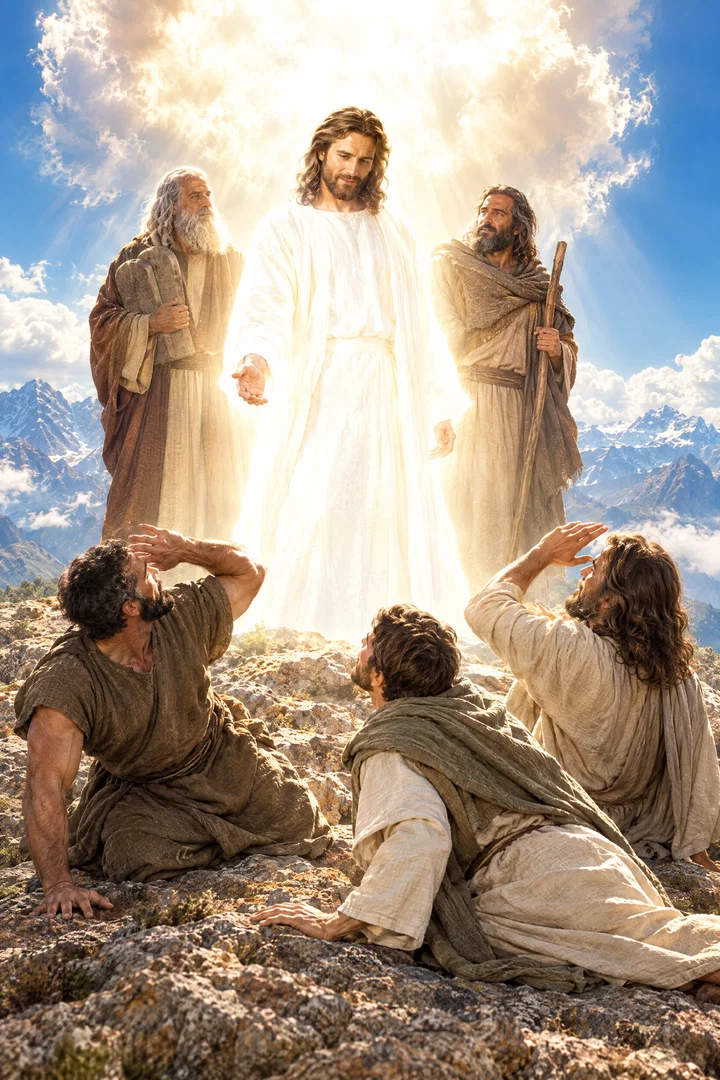
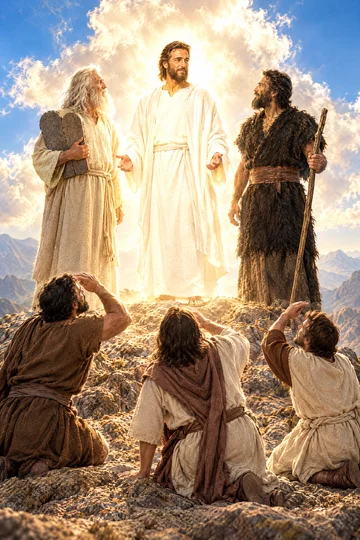
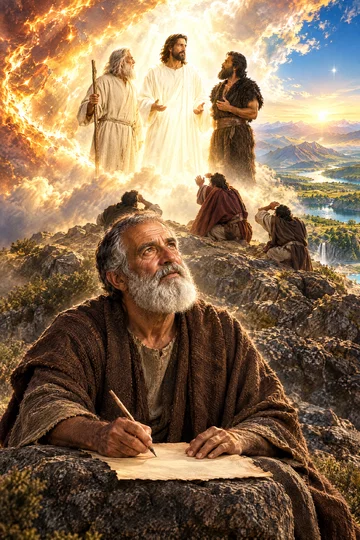
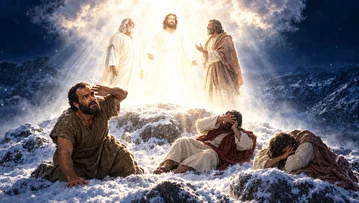
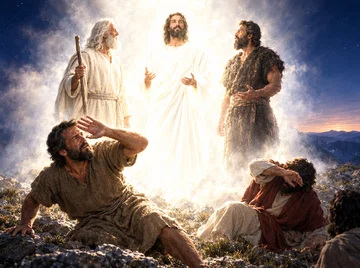
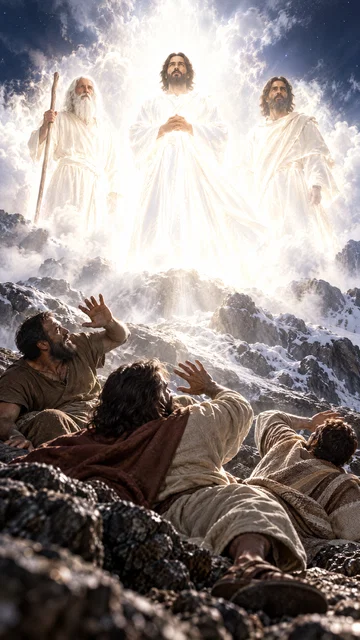
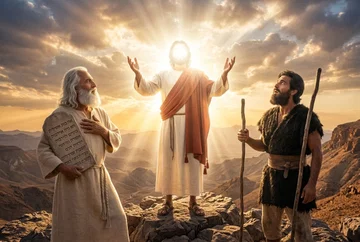
And, behold, there appeared unto them Moses and Elias talking with him.
Translations
And, behold, there appeared to them Moses and Elias talking with him.
And, behold, there appeared unto them Moses and Elias talking with him.
And behold, there appeared unto them Moses and Elias talking with him.
And behold, there appeared to them Moses and Elijah talking with him.
Revised Version, American Standard Version
And behold, there appeared unto them Moses and Elijah talking with him.
and lo, appear to them did Moses and Elijah, talking together with him.
and lo, Moses and Elias appeared to them talking with him.
And lo! there appeared to them Moses and Elijah, conversing with him.
Berean Standard Bible, Majority Standard Bible
Suddenly Moses and Elijah appeared before them, talking with Jesus.
Behold, Moses and Elijah appeared to them talking with him.
And Moses and Elijah came before their eyes, talking with him.
And beholde, there appeared vnto them Moses, and Elias, talking with him.
Douay-Rheims (Challoner revision)
And behold there appeared to them Moses and Elias talking with him.
Pictures
Cross-references 20 of 44
- Luke 9:30-31
And, behold, there talked with him two men, which were Moses and Elias:
Moses and Elijah appear in glory and speak with Jesus about his coming death.
- 2 Peter 1:16-18
For we have not followed cunningly devised fables, when we made known unto you the power and coming of our Lord Jesus Christ, but were eyewitnesses of his majesty.
Peter recalls witnessing Christ’s majesty on the mount as evidence of his coming.
- 2 Kings 2:11
And it came to pass, as they still went on, and talked, that, behold, there appeared a chariot of fire, and horses of fire, and parted them both asunder; and Elijah went up by a whirlwind into heaven.
Elijah is taken bodily to heaven without dying.
- Mark 9:2-8
And after six days Jesus taketh with him Peter, and James, and John, and leadeth them up into an high mountain apart by themselves: and he was transfigured before them.
Parallel account of the Mount of Transfiguration.
- Matthew 16:28
Verily I say unto you, There be some standing here, which shall not taste of death, till they see the Son of man coming in his kingdom.
The transfiguration fulfills Jesus’ promise that some would see the Son of Man coming in his kingdom.
- Jude 1:9
Yet Michael the archangel, when contending with the devil he disputed about the body of Moses, durst not bring against him a railing accusation, but said, The Lord rebuke thee.
Michael’s dispute over Moses’ body is cited as evidence of Moses’ resurrection.
- Deuteronomy 34:5-6
So Moses the servant of the LORD died there in the land of Moab, according to the word of the LORD.
Moses died and was buried before appearing with Jesus.
- Luke 9:27
But I tell you of a truth, there be some standing here, which shall not taste of death, till they see the kingdom of God.
The transfiguration fulfills the promise that some would see the kingdom of God.
- Matthew 17:9
And as they came down from the mountain, Jesus charged them, saying, Tell the vision to no man, until the Son of man be risen again from the dead.
Jesus identifies the mountain experience as a vision and says when it may be told.
- Luke 9:31
Who appeared in glory, and spake of his decease which he should accomplish at Jerusalem.
Moses and Elias speak with Jesus about his coming death at Jerusalem.
- Malachi 4:5
Behold, I will send you Elijah the prophet before the coming of the great and dreadful day of the LORD:
The disciples recognize Elijah’s appearance as the promised prophecy of his coming.
- Exodus 33:11
And the LORD spake unto Moses face to face, as a man speaketh unto his friend. And he turned again into the camp: but his servant Joshua, the son of Nun, a young man, departed not out of the tabernacle.
Moses spoke with God face to face.
- Mark 9:1
And he said unto them, Verily I say unto you, That there be some of them that stand here, which shall not taste of death, till they have seen the kingdom of God come with power.
The promise of seeing the kingdom come with power is fulfilled in the Transfiguration.
- Deuteronomy 34:6
And he buried him in a valley in the land of Moab, over against Beth-peor: but no man knoweth of his sepulchre unto this day.
Moses was buried before appearing with Jesus on the mount.
- 2 Peter 1:17-18
For he received from God the Father honour and glory, when there came such a voice to him from the excellent glory, This is my beloved Son, in whom I am well pleased.
Peter recalls the transfiguration and the heavenly voice, revealing Christ’s glory.
- Matthew 17:10-13
And his disciples asked him, saying, Why then say the scribes that Elias must first come?
Jesus identifies John the Baptist as the Elijah who had already come.
- Matthew 17:8
And when they had lifted up their eyes, they saw no man, save Jesus only.
Only Jesus remains after Moses and Elias disappear.
- Hebrews 3:2-5
Who was faithful to him that appointed him, as also Moses was faithful in all his house.
Moses and Jesus are both faithful, but Moses serves in God’s house while Christ rules as Son.
- Luke 9:32
But Peter and they that were with him were heavy with sleep: and when they were awake, they saw his glory, and the two men that stood with him.
The disciples awaken and see Christ’s glory with the two men.
- 1 Kings 18:36-39
And it came to pass at the time of the offering of the evening sacrifice, that Elijah the prophet came near, and said, LORD God of Abraham, Isaac, and of Israel, let it be known this day that thou art God in Israel, and that I am thy servant, and that I have done all these things at thy word.
recalls Elijah prevailing over Baal on Carmel
Commentary
Each commentary is drawn from primary sources: the writings of Ellen G. White and Adventist pioneers and periodicals. Each commentary is separate. Its own words are not a quotation; follow the references to read the source passages.
Ellen G. White
59 sources
On a high mountain apart with only Peter, James and John present, Jesus let His veiled divinity shine forth and Moses and Elijah appeared in heavenly glory talking with Him.Ms 72, 1901, par. 1–3Lt 93, 1901, par. 7–82SP 336.12SP 330.2–37RED 68.1
Moses was there in a resurrected glorified body after dying and being raised before decay, and Elijah was there translated without dying in a chariot of fire.ST Jun 7, 18773RED 126.1DA 421.1–23RED 115.1–116.12SP 329.2–330.1
They communed with Jesus about the completion of His mission through suffering, death and humiliation at Jerusalem and the glory to follow, sent to comfort and strengthen Him for His last dreadful sufferings.2SP 328.1–329.11SP 343.1ST Jun 7, 18773RED 117.1–118.1SG4 268.4
The scene was Christ's kingdom in miniature fulfilling His promise that some would see Him coming in His kingdom, with Moses representing those raised from the dead and Elijah those taken alive without seeing death.Lt 354, 1907, par. 4–10Lt 93, 1901, par. 7–8SG1 43.22SP 336.2EW 134.1
It was given to strengthen the disciples for His agony and crucifixion and to prove Him the promised Messiah and Son of God, showing Him pre-eminent above the law and the prophets which Moses and Elijah represent.DA 419.1–4Lt 354, 1907, par. 4–10Lt 93, 1901, par. 7–8SG1 40.1EW 131.3
Mountain Setting and Witnesses
The appearing took place on a high mountain apart, where only Peter, James, and John were present with Jesus to witness His transfiguration.Ms 72, 1901, par. 1–3Lt 93, 1901, par. 7–87RED 68.1AA 539.1ST Nov 2, 1882 On that mountain Jesus, who had veiled and clothed His divinity with humanity, let it shine forth in all its glorious brightness with face shining as the sun and raiment white as light.Ms 72, 1901, par. 1–3Lt 93, 1901, par. 7–8Ms 126, 1907, par. 3–8 That brightness was transfigured glory flashing through His humanity, as much of His glory as humanity could bear, in contrast to the humble garments in which He walked the hills and valleys of Palestine.Ms 126, 1907, par. 3–8Lt 64, 1900, par. 4Lt 144, 1902, par. 24–25 God thereby recognized His Son and lifted Him above humanity to commune with Him.Lt 64, 1900, par. 4
The appearing followed earnest prayer, for Jesus stepped aside from the three to pray with strong crying and tears.Ms 126, 1907, par. 3–8 He prayed for strength to bear the test in behalf of humanity, for His disciples that their faith would not fail in the hour of the power of darkness, and for a manifestation of the glory He had with the Father before the world was, so that His kingdom would be revealed to human eyes, His disciples would be strengthened to behold it, and they would be comforted in His supreme agony by knowing He is of a surety the Son of God and His shameful death is part of the plan of redemption.Ms 126, 1907, par. 3–8 Meanwhile the disciples, weary from traveling and teaching and the toilsome climb, had fallen asleep, and communion with God in that night of prayer prepared for what lay ahead.Ms 126, 1907, par. 3–8ST Jul 27, 1915
The scene also included a bright cloud overshadowing them and a voice declaring the beloved Son in whom God is well pleased and commanding to hear Him, at which the disciples fell afraid and then saw Jesus only.Ms 72, 1901, par. 1–3 There the disciples saw Jesus in glory and heard Him proclaimed the Son of God by the voice from the radiant glory.DA 429.2–430.1 That audible testimony from the Father was the second of three such testimonies in His ministry, after His baptism and before the voice heard near the end of His ministry.ST May 16, 1878 Those who held it as two occasions taught that the proclamation of Christ as His Son was heard at His baptism and at His transfiguration.Ms 101, 1897, par. 30–32
John's presence as one of only three disciples permitted to witness Christ's glory on the mount, along with witnessing Christ's agony in Gethsemane and receiving Christ's mother into his care at the cross, shows the pre-eminent friendship he enjoyed with Christ and the special tokens of Christ's love and confidence given to him as the disciple whom Jesus loved.AA 539.1ST Nov 2, 1882ST Oct 16, 1884BS 45.1–3 Judas was not among the three chosen disciples who witnessed Moses and Elijah appearing and speaking with Jesus, and his exclusion fed his jealousy.ST Dec 17, 1912 The same three who saw Moses and Elijah appear and talk with Jesus were later chosen to accompany Him in Gethsemane and to the garden, because their earlier sight of the heavenly visitors and of His glory and their hearing of the voice from heaven fitted them for that hour.ST Dec 2, 1897DA 686.1–2Ms 42, 1897, par. 1–3
Visitors and Their Conversation
Moses and Elijah appeared in radiant heavenly glory as honored messengers from God, recognized by the disciples as favored ones and paying homage to the glorified Jesus.2SP 336.12SP 330.2–3ST Jun 7, 1877ST Jun 7, 1877 Their presence together with the heavenly voice gave clear evidence that Jesus is the promised Messiah.3RED 122.1ST Jun 7, 1877 Moses had dishonored God when in anger he struck the rock and took honor to himself, and for this he was barred from the promised land, dying before entering it, but the Son of God raised him before his body decayed and brought him to heaven, so he stood on the mount in a resurrected, glorified body.DA 421.1–22SP 329.2–330.1 Elijah had not died but had been translated to heaven, taken up in a chariot of fire as God's prophet to Israel.ST Jun 7, 18773RED 126.13RED 115.1–116.1SG4 58.2
Moses had been greatly honored by God above all others who ever lived, talking with God face to face as a friend amid the thunder and lightnings of Sinai and receiving a revelation of God's glory given to no one else.ST Jun 7, 1877SG4 58.2 The Father chose these two whom He had favored above all others, sending them rather than angels as bearers of light and glory to honor Jesus, to glorify Him, and to lift Him above humanity to commune with Him.SG1 40.1ST Mar 31, 1881SG4 58.2Lt 64, 1900, par. 4PP 479.2–480.2 God recognized His Son there, with His veiled glory flashing through His humanity as He talked with the heavenly visitants, beheld by the disciples as fully as humanity could bear.SG4 268.4Lt 64, 1900, par. 4 For Moses this was the last scene of his history revealed to mortal sight, fulfilling his long-ago prayer to stand within the heritage of his people and to bear witness to Christ in whom Israel's promises centered.ST Mar 31, 1881PP 479.2–480.2 In this Moses is a type of Christ, in that he received God's words and spoke them to the people, while Christ is the divine Leader who died to secure His people's entrance into the heavenly Canaan.ST Mar 31, 1881
They talked with Jesus about the completion of His mission, especially His coming sufferings, death, and humiliation at Jerusalem and the glory that would follow, with the cross as the center and redemption through reconciliation for sin and everlasting righteousness by His sacrifice bringing everlasting deliverance to His followers.2SP 328.1–329.11SP 343.1ST Jun 7, 1877SG1 40.13RED 117.1–118.1 The Father sent them to bring heaven's glory to Jesus and to comfort and strengthen Him for betrayal, crucifixion, and His last dreadful sufferings.2SP 328.1–329.13RED 117.1–118.1SG4 268.42SP 327.1RH May 27, 1862 They were the fittest of all around God's throne to minister to Him because they had lived as men and experienced human sorrow, suffering, trial, and the trials of earthly life, and so could sympathize with His trial.2SP 328.1–329.1ST Jun 7, 1877SG1 40.1EW 131.33RED 117.1–118.1 Moses had led Israel in Christ's place under His direction, communing with Him and following His directions, and Elijah's prophetic work to Israel had in some measure represented Christ's, which made them fit messengers to minister to the Son of God.2SP 328.1–329.1ST Jun 7, 18773RED 117.1–118.13RED 115.1–116.1
Kingdom in Miniature
Shortly before the mount, Jesus had promised that some standing with Him would not taste death till they saw Him coming in His kingdom and saw the kingdom of God come with power, and on the mount that promise was fulfilled for Peter, James and John.Lt 354, 1907, par. 4–10SG1 43.22SP 336.2EW 134.1 They were given a glimpse of the future glory of Christ in His kingdom while still living, so that eyewitness sight would stand as proof of what was to come.Lt 354, 1907, par. 4–10Lt 93, 1901, par. 7–8 The appearing of Moses and Elijah talking with Jesus belonged to that fulfillment, as part of the kingdom seen with power.SG1 43.22SP 336.2EW 134.1
What the three beheld was Christ's kingdom in miniature, a miniature picture of the kingdom of the redeemed and of the Saviour's future glory.2SP 336.23RED 126.1PK 227.2 Jesus stood revealed in heaven's glory and declared by the Father to be the Son of God, seen as King in the midst of that glory.Lt 93, 1901, par. 7–83RED 126.1DA 421.1–2 In that brightness, where He who had clothed divinity with humanity let divinity shine forth, the disciples were permitted to look forward to the kingdom of glory.Lt 93, 1901, par. 7–83RED 126.1DA 421.1–2
In that miniature the two visitors pictured the two classes of the redeemed at Christ's second coming.2SP 336.2DA 421.1–2PK 227.2 Moses, who had died and was raised from the grave by Christ before his body decayed, represents those who will be raised from the dead.SG1 43.22SP 336.2EW 134.13RED 126.1DA 421.1–2 Elijah, who was translated to heaven without dying, represents those who will be alive on earth at the advent, changed from mortal to immortal and taken to heaven without seeing death.SG1 43.22SP 336.2EW 134.13RED 126.1DA 421.1–2 Together with Christ as King, Moses as the risen saints and Elijah as the translated ones complete the picture of the future kingdom.DA 421.1–2PK 227.2
Christ opened these future scenes before the disciples for this very purpose, that they should be held in mind.Ms 29, 1909, par. 2–4 They were to be borne in mind together with His following words about His betrayal.Ms 29, 1909, par. 2–4 They were to be remembered together with what He said of His death and of His work.Ms 29, 1909, par. 2–4
Strength for the Disciples
The revelation of divine glory on the mountain, when divinity shone forth through humanity with face as the sun and raiment white as light, was given to Peter, James and John to strengthen them for the trying experience before them in Christ's agony, humiliation and crucifixion and for test and trial of faith.DA 419.1–4Lt 354, 1907, par. 4–10Lt 93, 1901, par. 7–8Ms 126, 1907, par. 3–8 It was an answer to prayer offered with strong crying and tears after stepping apart from the three, while they slept weary from travel and the climb, asking for strength to bear the test for humanity, that their faith would not fail in the hour of darkness, and for a manifestation of the glory He had with the Father so His kingdom would be revealed to human eyes.Ms 126, 1907, par. 3–8 It assured them that His shameful death is part of the plan of redemption and necessary for His own glory and the Father's glory and for humanity's sharing in that glory, and that they would be comforted in His supreme agony by knowing of a surety He is the Son of God.DA 419.1–4Ms 126, 1907, par. 3–82SP 327.1 As a glimpse of His future glory in His kingdom, fulfilling the promise that some would not taste death till they saw Him coming in His kingdom, it was to be borne in mind together with His words about betrayal and death and to be told to the others that their faith might be strengthened.Lt 354, 1907, par. 4–10Lt 93, 1901, par. 7–8 Moses and Elijah came as co-laborers who shared His longing for souls, honoring Him and conversing about His approaching suffering and death at Jerusalem and the glory to follow, bringing comfort and confirming that death was God's plan.SG1 40.1EW 131.33RED 122.12SP 327.1
The manifestation of divinity with the homage of Moses and Elijah and the Father's voice declaring Jesus His Son was meant to remove doubts and give the three strong, clear proof that Jesus is the promised Messiah and Son of God.SG1 40.1EW 131.33RED 122.12SP 332.1–3 That evidence was to preserve their confidence and strengthen their faith for the sorrow and disappointment ahead and to help them endure His humiliation and crucifixion.SG1 40.1EW 131.33RED 122.12SP 327.1 God meant Christ's talk with Moses and Elijah about His coming sufferings and the glory to follow as light for the three and as a share in His self-sacrifice to strengthen their faith for His agony and death.Ms 126, 1907, par. 9–10 But overcome with sleep instead of watching and praying they heard little of it and lost the blessing, slow of heart to believe and unappreciative of the treasure Heaven sought to give.Ms 126, 1907, par. 9–10 Had they stayed awake and received it, rays of hope from that night would have lighted the darkness of the cross and kept their faith from failing when His predictions came true and testing came, including Peter's denial before His enemies.Ms 126, 1907, par. 9–10
The disciples at first misunderstood the vision, recognizing the visitors as honored, radiant messengers from God yet believing Elijah had come as prophecy foretold and that Christ's earthly kingdom was about to be established.2SP 330.2–3ST Jun 7, 1877 Peter's offer to make shelters reflected his mistaken hope that Moses and Elijah would protect Jesus from the death awaiting Him in Jerusalem, forgetting that salvation must be accomplished through suffering and death and that the vision did not remove what the plan required.2SP 330.2–3ST Jun 7, 1877 The three were to bear testimony of what they had seen to the others after the resurrection, when its significance could be understood.Lt 93, 1901, par. 7–82SP 332.1–3 As eyewitnesses of His majesty on the holy mount and hearers of the heavenly voice declaring the Father's pleasure in His beloved Son, they were qualified to speak of God's purposes for the race and to make known the power and coming of Christ rather than following cunningly devised fables.2SP 332.1–3AA 534.2Lt 212, 1903, par. 20
The remembered glory and heavenly voice sustained their hope when He was on trial, strengthening faith that He was the Son of God and that He would reveal His power and deliver Himself.EW 139.3 The same glory remembered from the mount reassured them in Gethsemane, when glory again surrounded Him and an angel came to Him, that God had taken Him in charge and taken Him in care and that an angel was present to protect Him.ST May 30, 18785RED 22.1–33SP 101.3–102.2DA 693.3–694.2 Joined to that eyewitness sight stands the more sure word of prophecy, to be heeded as a light in a dark place until the day dawns.Lt 212, 1903, par. 20
Christ Supreme and Scriptures
On a high mountain apart before Peter, James, and John, Jesus was transfigured with face shining as the sun and raiment white as light when Moses and Elias appeared talking with Him.Ms 72, 1901, par. 1–3 Much is learned about Christ from that appearance together with the bright cloud overshadowing them and the voice declaring the beloved Son in whom God is well pleased and commanding to hear Him, after which the disciples fell afraid and then saw Jesus only.Ms 72, 1901, par. 1–3 That leaving of Jesus alone shows Him pre-eminent above every teacher and authority in the world, whose every word is to be obeyed as law and life.Ms 72, 1901, par. 1–3 Every son and daughter of Adam must give attention to Him for eternal interest.Ms 72, 1901, par. 1–3
The presence of Moses and Elias is wonderfully significant because as co-laborers with Christ they shared His longing for the salvation of souls.Lt 354, 1907, par. 4–10 In that fellowship they represent the law and the prophets, showing that the teachings of the Old Testament are not done away by the preaching of the gospel of Christ but are fully in accord with the teachings of the New.Lt 354, 1907, par. 4–10 The new dispensation embraces the Old.Lt 354, 1907, par. 4–10 So given to the disciples, the transfiguration was a visible sign of Christ's divinity and a symbol of His kingdom.Ms 202, 1899, par. 12
Call to Believers Today
Just as Jesus was glorified by His Father on the mount before His betrayal and crucifixion to strengthen Him for His last dreadful sufferings, so the members of His body approaching their last conflict in the time of Jacob's trouble will grow up into Christ and partake largely of His Spirit and of that glory.RH May 27, 18621T 353.3 As the third message swells to a loud cry with great power and glory attending the closing work, the faithful will be revived and strengthened by the latter rain to pass through the time of trouble.RH May 27, 18621T 353.3 Their faces will shine with the glory of the light attending the third angel.RH May 27, 18621T 353.3
Standing with Christ on the mount is beholding His beauty as the chiefest among ten thousand and altogether lovely until the soul becomes radiant with the glory of the Lord risen upon it.ST Jan 22, 1902 Such nearness to Christ belongs to those who drink most deeply of His self-sacrificing love that seeks not its own.ST Jan 22, 1902 Those who have stood there receive the word to arise and shine and to go down into the plain where souls enslaved by Satan wait for the word of faith and prayer to set them free, living and laboring and sacrificing even unto death for the saving of humanity.ST Jan 22, 1902
He still comes to believers at times in that transfigured brightness, in contrast to the humble garments in which He walked the hills and valleys of Palestine, and they are to receive Him by faith with delight when He does.Lt 144, 1902, par. 24–25 In Him so received they find light and grace and joy and quickened strength to do the will of God.Lt 144, 1902, par. 24–25 James, who with Peter and John was thus brought into close relationship with Christ at the transfiguration, later understood more fully the meaning of Jesus' words about sharing His cup and baptism when he faced imprisonment and death.RH Apr 27, 1911
Sources
Pioneers and periodicals
167 sources
Moses and Elijah were really and bodily present in glory as themselves, talking with Jesus on a high mountain apart, seen and recognized by Peter, James and John alone.ST Mar 20, 1879RH Oct 16, 1860RH Oct 28, 1858ST Jul 28, 1881ST Jul 23, 1885 They spoke with Him about His suffering, death, burial and resurrection to be accomplished at Jerusalem, sent by the Father to bring heaven's glory to honor, comfort and strengthen Him for the cross.ST Sep 12, 1911ST Sep 12, 1911ST Jan 16, 1901ST Jun 29, 1904 The scene was a miniature preview and epitome of Christ's glorious second coming and kingdom in power, with Christ as the glorified King in majesty.ST Mar 20, 1879ST Jul 28, 1914RH Apr 9, 1857RH Jul 31, 1866ST Oct 25, 1883 In it Moses represents the righteous dead to be raised to glory and immortality at His coming, and Elijah represents the righteous living to be changed and translated without seeing death, showing the two ways the redeemed enter glory.ST Mar 20, 1879ST Oct 6, 1881ST Jul 28, 1914 So the appearance proves future life by bodily resurrection and translation rather than by an immortal soul conscious in death, though those who held immortality taught that Elijah appeared as a disembodied spirit whose robe of flesh had fallen and Moses as a disembodied spirit after death and burial.ST Mar 20, 1879RH Jan 5, 1860ST Apr 22, 1897RH Jul 31, 1866ST Oct 12, 1876
Wording, Witnesses and Setting
Elias is the Greek and Latin form of the Hebrew name Elijah used in the Authorized Version of the New Testament, while newer renderings of the transfiguration account use Elijah every time, the difference reflecting Greek and Hebrew pronunciation and spelling.ST Jul 12, 1883ST Dec 9, 1908 The Elias who talked with Jesus on the mount is the prophet who ascended in the chariot and whirlwind of fire, appearing glorified with Moses and Jesus.ST Jul 12, 1883ST Aug 7, 1901 His appearing leads to the question why the scribes say Elijah must first come, answered that Elijah truly shall first come and restore all things, but Elijah is come already unrecognized and mistreated, meaning John the Baptist, who came in the spirit and power of Elijah as Elijah's antitype.ST Aug 7, 1901
The appearance belongs to the transfiguration, when Jesus revealed his glory to disciples discouraged by his announcement of coming suffering and death, fulfilling his promise that some standing with him would not taste death till they see the Son of man coming in his kingdom and the kingdom of God.ST Oct 6, 1881ST Jan 11, 1905ST Jun 25, 1874 It took place in seclusion on a high mountain apart from worldly concerns to pray, probably on a spur of Mount Hermon near Caesarea Philippi, the peak identified only as the supposed site.ST Oct 6, 1881ST Jan 15, 1880RH Apr 26, 1906 It came about six days and about eight days after Jesus predicted his suffering, death, resurrection and coming glory, a week after that prediction, when after six days Jesus took Peter, James and John apart up into the high mountain and was transfigured before them with face shining as the sun and raiment white as the light.ST Jan 11, 1905ST Jun 25, 1874 Tradition naming Mount Tabor as the scene is set aside by investigation pointing instead to some part of Mount Hermon.ST May 19, 1898 Before Peter answered to make three tabernacles the bright cloud overshadowed them with the Father's voice declaring his beloved Son.ST Jun 25, 1874
Only Peter, James and John were taken up and witnessed the event on the mountain, while the other nine disciples were left below, and John was one of the three permitted to witness Christ's glory.ST Nov 2, 1882RH Jan 28, 1862RH Feb 10, 1916 The three were heavy with sleep, asleep so near the glory, yet saw two men in glory talking with Jesus about his decease to be accomplished at Jerusalem when awake from sleep and standing with Jesus in his glory, departing as Peter proposes three tabernacles before the cloud overshadows them and the voice declares Jesus the beloved Son to be heard.ST Jan 16, 1901RH Oct 27, 1874 The accounts in Matthew 17:1-9, Mark 9:1-10 and Luke 9:28-36 vary only in additional details, and Peter later testified to seeing Jesus' majesty and hearing the voice on the holy mount, showing the event was not a cunningly devised fable.ST Jan 16, 1901RH Jan 28, 1862 The nine left below evidently felt jealous that the three had been favored, and jealousy and rivalry divided them so that while Jesus was on the mountain they failed to heal a young man.RH Feb 10, 1916RH May 7, 1914 This sleeping near glory pictures the present church near the glory, since prophecy shows the second coming and the glory of the millennium near at hand, yet those who ought to be watching are asleep, and Judas was not among the chosen three.RH Oct 27, 1874
Moses and Elijah appeared in glory as two glorified men in bodily form, not spirits and not merely figures resembling them, talking with Jesus, and read literally the verse means Moses was physically present just as Elijah was, the same wording identifying both men.ST Mar 20, 1879RH Oct 16, 1860ST Jul 23, 1885 Peter, James and John recognized and named them while still mortal, Peter identifying them by name when speaking to Jesus about tabernacles for Jesus, Moses and Elias.ST May 13, 1908 Their recognition shows people will know one another in the coming life, including the redeemed and earthly friends, when understanding is complete and powers of knowing are increased.ST May 13, 1908RH Jul 29, 1875
The barren mountain where Moses and Elijah and the disciples saw him is one of the ways God has chosen to reveal himself to man.ST Feb 4, 1903
Literal Bodily Appearance
Moses and Elijah were themselves really, literally and bodily present on the mount talking with Jesus, not merely figures who looked like them and not their souls or spirits or symbols, and not Moses in spirit with Elijah in body.RH Oct 16, 1860RH Oct 28, 1858RH May 28, 1861RH Oct 16, 1860RH Oct 28, 1858 The wording names two men appearing and speaking with him, and read literally it means Moses was physically present just as Elijah was.RH Oct 16, 1860RH Oct 28, 1858ST Jul 28, 1881 That bodily presence means Moses had been raised from the dead, since resurrection was the only way he could so appear, while Elijah was present as one translated without dying.ST Jul 28, 1881RH May 28, 1861 The account is plain historical fact that could be checked and was no devised fable, with Moses representing those to be raised from the dead at the last trump and Elijah representing those to be alive at Christ's coming without dying.RH Oct 16, 1860RH Oct 28, 1858ST Jul 28, 1881 The question concerns Moses' presence, not whether his soul was there, and the verse does not mention Moses' soul.RH Oct 16, 1860RH Oct 28, 1858
The event is called a vision in verse 9 and was a real supernatural sight and a real seeing, and it could still be called a vision while showing persons actually present.ST Apr 9, 1902ST Jan 9, 1901 Moses and Elijah were actually present on the mountain talking with Jesus about his coming death.ST Apr 9, 1902 The scene is a miniature representation of Christ's second coming, with Moses representing those to be raised to everlasting life and Elijah representing those to be translated without seeing death.ST Jan 9, 1901
Those who held the vision to be only visionary taught that an image of Moses and Elijah was formed before the disciples' minds to show the future state, so neither needed to be physically present for the vision.RH Sep 8, 1859RH Apr 8, 1858RH Dec 12, 1854RH Oct 16, 1855RH Dec 12, 1854 On that understanding the appearance gave Peter, James and John a sight of the power, majesty and glory of Christ's kingdom and of the saints' future state, rather than proving immortality of the soul or consciousness in death.RH Apr 8, 1858RH Dec 12, 1854RH Oct 16, 1855RH Dec 12, 1854RH Feb 20, 1855 If the event was real, they added, Elias had been translated and Moses was present by resurrection and not as a soul existing independently of the body, whether raised as a pledge of the resurrection or probably so raised; either way the verse does not establish the dead conscious or the soul existing separately from the body.RH Sep 8, 1859RH Apr 8, 1858
Prior Histories Explained
Elijah had been taken to heaven bodily without dying or tasting death, in a chariot and whirlwind of fire, without burial or funeral ceremonies, and the mantle that fell from him was a literal garment and not a robe of flesh.ST Mar 20, 1879ST Oct 6, 1881ST Apr 26, 1905RH Jul 31, 1866RH Dec 12, 1854 He appeared on the mount in that same bodily condition, changed to a spiritual immortal body.ST Mar 20, 1879ST Oct 6, 1881ST Apr 26, 1905ST Sep 12, 1911RH Dec 12, 1854 Moses, by contrast, had died near the close of the forty years of wilderness wandering after about fifteen hundred years absence from earthly life by the time of the mount.ST Apr 26, 1905ST Aug 18, 1887ST Sep 10, 1902ST Jan 15, 1880ST Oct 29, 1885 He had viewed Canaan from Nebo without crossing the Jordan, and was buried by God himself in a nameless uncoffined grave in the lonely land of Moab at Beth-peor with no human ceremonies, angels waiting, the place remaining unknown.ST Apr 26, 1905ST Jan 15, 1880ST Apr 5, 1905ST Jan 15, 1880ST Feb 25, 1875
Moses was raised bodily from the dead before the judgment day and brought from heaven to the mount.ST Apr 26, 1905STST Jan 16, 1901ST May 6, 1897RH Aug 6, 1872 Michael the Archangel, who is Christ the Prince of life, disputed with the devil who claimed Moses's body by the power of death won through Adam and sought to keep him in the grave and prevent his resurrection before its appointed time.ST Apr 26, 1905STST Mar 17, 1898RH Mar 4, 1862ST Dec 21, 1882 Michael said The Lord rebuke thee, prevailed and raised him, showing Michael's power to give life and that Christ's voice raises the dead and that Christ is the Door and life and light of men with power over the works of Satan.ST Apr 26, 1905ST Mar 17, 1898RH Mar 4, 1862ST Jan 16, 1901ST Mar 25, 1897 His appearance alive talking with Jesus, together with Jude's dispute over his body, is proof of his resurrection.ST Sep 10, 1902ST May 6, 1897RH Nov 20, 1860ST Aug 27, 1912RH Aug 6, 1872
That resurrection was a special early resurrection and an exception to the general resurrection of the righteous at the beginning of the thousand years.RH Jan 31, 1865ST May 6, 1897RH Nov 20, 1860ST Dec 21, 1882RH May 4, 1869 It was like the cases of others raised during Christ's lifetime and of many at his resurrection, was soon after death so that he was not left long in the tomb, and was not a public demonstration designed to show the people the path to future life as Christ's resurrection was.RH Jan 31, 1865RH Nov 20, 1860ST Aug 27, 1912RH May 4, 1869RH Aug 6, 1872 It gives him interest in the greater inheritance promised to Abraham and his spiritual seed.ST Sep 10, 1902ST May 6, 1897RH Nov 20, 1860 Calling Christ the first-born, the first-begotten of the dead, and the first-fruits of them that sleep does not mean none was raised in time before him.ST Mar 30, 1876RH Jan 31, 1865ST May 6, 1897ST Dec 21, 1882RH Jan 31, 1865
The widow's son, the Shunammite's son, the ruler's daughter, Lazarus and Moses were all raised before Christ's resurrection.ST Mar 30, 1876RH Jan 31, 1865RH Nov 20, 1860ST Dec 21, 1882ST Oct 29, 1885 First-fruits describes precedence in rank and station, not first event in time, denoting that he is chief, that all are raised through his merit and by virtue of his coming death and resurrection and on the strength of the promise that he should suffer, be buried, rise and proclaim light to Jews and Gentiles.ST Mar 30, 1876RH Jan 31, 1865ST May 6, 1897ST Dec 21, 1882RH Jan 31, 1865 It denotes that he is the one who by the resurrection brings light and immortality and pledges future life to all believers, and that he fulfilled the type by presentation after the Sabbath with the harvest at his coming, while earlier raisings were to mortal life and Enoch and Elijah had already passed from mortal life to immortality without being raised.ST Mar 30, 1876RH Jan 31, 1865ST May 6, 1897ST Dec 21, 1882RH Jan 31, 1865
Moses was the leader of Israel from Egypt to Canaan who talked with God face to face amid the thunder and lightnings of Sinai, stood in the place of Christ communing with him and following his directions, received God's words and spoke them to the people as a type of Christ the divine Leader who died to secure entrance into the heavenly Canaan, chose affliction with God's people over Egypt's riches and now lives and reigns.ST Jun 7, 1877ST Mar 31, 1881ST Jan 15, 1880ST Oct 11, 1905ST May 27, 1889 Elijah was the prophet of God taken in flame in a chariot of fire whose prayer prevailed against Baal's worshipers on Carmel and who as prophet to Israel had represented Christ with work in a degree similar to the Saviour.ST Jun 7, 1877ST Mar 31, 1881ST Jan 15, 1880ST Jan 15, 1880ST Oct 11, 1905 Moses had repented of his sin, been pardoned, forgiven and restored to life through faith in Christ despite having been forbidden to enter the promised land, and would have been translated without dying like Elijah if he had not committed that sin.ST Jun 7, 1877ST Mar 31, 1881ST May 27, 1889ST Oct 11, 1905ST May 27, 1889
Moses and Elijah are among the former inhabitants of earth who are now in heaven in redeemed bodily flesh as men who once lived on earth, dwelling and serving there together with Enoch and Christ, with Jesus among the first fruits of the resurrection as representative of redeemed humanity.ST Aug 20, 1912STST Nov 16, 1888ST Apr 27, 1904RH Dec 25, 1913 This proves heaven is a real and tangible place where beings in bodily form live and move and where heaven and the spiritual body are real, not merely a state or condition.ST Aug 20, 1912STST Nov 16, 1888ST Apr 27, 1904RH Dec 25, 1913 Their glory was like that surrounding Adam and Eve before sin.STST Nov 16, 1888ST Apr 27, 1904 Yet Moses appearing in vision of the future kingdom as translated to be with God does not show that he had entered the kingdom promised to Abraham to be established on the restored earth, nor that he entered the kingdom at death to rejoice in glory as soon as he died.ST Aug 20, 1912STST Nov 16, 1888ST Mar 25, 1897ST Apr 27, 1904
The account is presented as the only appearance after death of anyone of the human race before Christ's resurrection, identifying Moses and Elijah by name and not calling them angels, thus distinguishing them from angels.ST Jan 16, 1901STST Nov 16, 1888ST Oct 2, 1879ST Aug 17, 1882 It also supplies the possibility that they were the two heavenly messengers present at Jesus' ascension, though that identification is not stated as certain.ST Oct 2, 1879ST Aug 17, 1882
Talk and Encouragement Given
Moses and Elijah talked with Jesus about his decease to be accomplished at Jerusalem, about his suffering and death, his death at Calvary, his burial and his resurrection, with the shadow of the cross seen even in glory and against fadeless green, moving angels to tears.ST Sep 12, 1911ST Jan 16, 1901ST Nov 13, 1893RH Jan 8, 1875ST Sep 8, 1909 Their conversation had a definite burden concerning the death he was about to accomplish at Jerusalem and his crucifixion.ST Jan 16, 1901ST Jul 4, 1899ST Jul 18, 1900ST Nov 13, 1893 It was part of the transfiguration recorded in Matthew 17:1-9, Mark 9:1-10, and Luke 9:28-36, which vary only in additional details, seen by Peter, James and John when awake from heavy sleep standing with Jesus in his glory, departing as Peter proposes three tabernacles before the cloud overshadows them and the voice declares Jesus the beloved Son to be heard.ST Jan 16, 1901
The Father selected and sent them as radiant bearers of light and glory from realms of light to visit Christ, to honor him and bring him heaven's glory, and to comfort and encourage him for his coming suffering in carrying out redemption and completing his mission, especially his sufferings at Jerusalem.ST Jun 7, 1877ST Sep 12, 1911ST Sep 12, 1911ST Sep 8, 1909 They were the two persons last named in Old Testament prophecy and were chosen to comfort Jesus just before his suffering.ST Jun 29, 1904 They came to talk with the Son of God of all his agony before his last prayer for his persecutors to live forgiven.RH Jan 8, 1875
They were fittest of all the hosts around the throne to minister because as men who had lived on earth they had experienced human sorrow and suffering and could sympathize with the trial of Jesus in his earthly life.ST Jun 7, 1877 Elijah as prophet to Israel had represented Christ with work in a degree similar to the Saviour, and Moses as leader of Israel had stood in the place of Christ communing with him and following his directions.ST Jun 7, 1877 Moses is the one who talked with God face to face amid the thunder and lightnings of Sinai, and Elijah is the prophet who did not see death but was taken to heaven in a chariot of fire, two whom God favored above all others who ever lived on earth.ST Jun 7, 1877
The disciples were meant to hear the conversation, and words that would have helped and strengthened them when Jesus died were spoken for them.ST Sep 12, 1911ST Sep 12, 1911 Being heavy with sleep they failed to fully hear and therefore were unprepared for his death.ST Sep 12, 1911ST Sep 12, 1911ST Jan 16, 1901 Their intelligent converse illustrates that the redeemed will be able to hold intelligent converse with their associates in the kingdom.RH Jul 29, 1902 The scene also displays Christ in glory, whose glorious body is the pattern for the transformation of the bodies of the redeemed.RH Jul 29, 1902
Miniature of Coming Kingdom
The transfiguration fulfilled the promise that some standing with Jesus would not taste death till they see the Son of man coming in his kingdom and the kingdom of God, spoken at Caesarea Philippi about six days and about a week before, and including the promises in Matthew 10:23 and 16:28.RH Jul 31, 1866ST Oct 25, 1883ST Jan 11, 1905ST Jun 25, 1874RH Jul 9, 1872 It was given so that the announcement of the Son of man coming in the glory of his Father with his angels to reward every man according to his works would be perfectly understood as it will appear at the last day.ST Oct 25, 1883ST Aug 28, 1901 Moses had died and been buried, so his presence alive showed resurrection, while Elijah stood as the translated living, and together they represented the two classes who will make up the kingdom of heaven.ST Aug 28, 1901
The scene was a miniature representation, preview, type and epitome of Christ's personal, glorious second coming and of the kingdom of glory in power.ST Mar 20, 1879RH Apr 9, 1857RH Jan 5, 1860RH Jul 31, 1866RH Feb 10, 1874 It showed its nature, its King in majesty with face shining as the sun and raiment white as the light, its subjects and their condition, and that it will be immortal, heavenly not earthly political, established at the second advent and the resurrection of the just.ST Mar 20, 1879ST Jul 28, 1914RH Apr 9, 1857RH Feb 10, 1874ST Jun 25, 1874 It keeps before the disciples the literal kingdom promised to David and Abraham, to be revealed on earth after the last-day fires.ST Mar 20, 1879RH Apr 9, 1857RH Feb 10, 1874 It did not prove conscious life of the dead before the resurrection, but showed the disciples a preview of Jesus' future glorified state when he comes in his kingdom with his saints.RH Jan 5, 1860
Christ represented the glorified King; Moses represented the righteous dead to be raised and clothed with glory and immortality at his coming; Elijah represented the righteous living to be changed and translated without seeing death.ST Mar 20, 1879ST Jul 28, 1914RH Apr 9, 1857ST Apr 22, 1897ST Apr 26, 1905 Together they show the two ways the redeemed enter glory, through translation without death or through resurrection after death, and that glorified saints share the same bodily appearance whether translated or raised.ST Mar 20, 1879ST Oct 6, 1881 Their appearance also fulfilled a Jewish tradition that Moses and Elijah would appear in the Messiah's time.ST Oct 6, 1881 Moses was present as a living, glorified man because, though he died near the close of the wilderness wandering, Michael the Archangel, who is Christ, disputed the devil's claim over his body and prevailed to raise him as a pledge of the resurrection.ST Oct 6, 1881ST Apr 26, 1905
The disciples saw Christ's majesty and heard God's voice on the holy mount, giving eyewitness proof that his power and coming are not cunningly devised fables and confirming prophecy.STST Jul 15, 1913RH Apr 3, 1855RH Mar 12, 1908ST May 3, 1899 This visible and audible revelation showed the meaning of Christ's second coming.STST Oct 20, 1909 Yet the prophetic word is more sure than even sight and hearing combined, because human senses can be mistaken, and it stands as a light to be heeded before the day dawns, as reliable as God himself.STST Oct 20, 1909ST Jul 15, 1913RH Apr 3, 1855ST May 3, 1899
The transfiguration happened during Christ's first advent and was not itself his second coming.RH Jun 18, 1861 Its small company of only a few saints does not show how he will return, for when he comes he will come in all his own glory and the Father's glory with all the holy angels, world-wide with every eye seeing him.ST Jan 29, 1902 The glory on Tabor will be dim beside the glory of his personal return to reign revealed to every eye, when the faithful are brought from mortality to immortality.ST Jan 27, 1904ST Apr 15, 1875 Then Moses, Elijah and all who believe in the Lamb will meet together with Christ on a mountain whose glory will not fade, in a day that will have no night and a blessedness that will have no end, proving redemption no failure and Christianity no fable, with not one promise failed but all exactly fulfilled, all things made new, God in the midst of his people, the bride presented to the Bridegroom, creation restored and all things purified, glorified, elevated and ennobled, when the wise inherit glory in the fullest sense.ST Aug 21, 1884RH Mar 7, 1871
What Death Teaches Here
The appearing on the mount does not prove immortality of the soul, consciousness in death, or a spirit existing apart from the body, for the words soul and spirit are absent from the account and the dead are unconscious with perished thoughts, giving no support to Spiritualism.ST Mar 20, 1879RH Jan 5, 1860RH Sep 8, 1859RH Oct 16, 1855RH Dec 12, 1854 The event is called a vision in verse 9, so Moses and Elijah need not have been present even as immaterial beings, and if real they were bodily present, Elijah having been translated without dying or burial and Moses by resurrection, not as a soul existing independently of the body.RH Jan 5, 1860RH Sep 8, 1859RH Aug 6, 1872 Moses had died and been buried while Elijah had been taken bodily to heaven without dying, yet both appeared as men talking with Christ in glory before Peter, James and John, which is consistent with resurrection and return to earth and does not require a conscious disembodied human spirit.ST Mar 20, 1879RH Dec 12, 1854RH Aug 6, 1872 Elijah could appear in his own body because translated, and Moses appearing alive and conscious long after death shows he had been raised from the dead rather than that a conscious soul existed apart from his body.ST Mar 20, 1879RH Oct 16, 1855RH Aug 6, 1872
Moses being alive proves he was raised bodily from the dead and Elijah's presence proves translation, showing future life through resurrection and translation rather than conscious immortality.ST Mar 20, 1879RH Jul 31, 1866ST Aug 12, 1889ST Jul 28, 1881RH May 28, 1861 Moses himself appeared alive long after death, not merely his soul or spirit, as real as Elijah, Jesus and the disciples about fifteen hundred years after he died, and resurrection was the only way he could appear bodily.RH Jul 31, 1866ST Aug 12, 1889RH May 28, 1861 The transfiguration was an actual event and a miniature representation, preview and epitome of God's kingdom and of Christ's power and coming, with Christ as glorified King, Moses representing the dead raised to life and clothed with glory and Elijah representing the living saints translated at the Second Advent without dying.ST Mar 20, 1879ST Apr 22, 1897ST Aug 12, 1889ST Jul 28, 1881 A disembodied spirit would not fit that representation of the kingdom, whose subjects all have bodies, and their appearance confirmed the sure word of prophecy concerning Christ's power and coming.ST Mar 20, 1879ST Jul 28, 1881
A lesser-held teaching draws the opposite conclusion that the appearing teaches the immortality of the soul, with Elijah as a disembodied spirit because his mantle, his robe of flesh, fell back when he was translated, and Moses as a disembodied spirit because he died and was buried.ST Oct 12, 1876 In that same line Moses is said to have remained alive and conscious long after death and burial on the mount, not translated like Enoch and Elijah but dead in body.RH Mar 4, 1862 His spirit did not sleep with his body or lose personality and moral consciousness, and the dispute of Michael with the Devil was over his body only because the place of his soul was known.RH Mar 4, 1862 When the three disciples saw him talking with Christ they learned the destiny of his spirit, that the righteous dead enter into peace and remain conscious.RH Mar 4, 1862
In that line also the souls of the righteous live after their bodies are dead and appeared alive speaking with Jesus before Peter, James and John, who were not deceived but heard the conversation and understood that it concerned Jesus' coming death.RH Jun 26, 1866 Moses and Elijah in that reckoning were not resurrected bodies, since Jesus had not yet died and risen.RH Jun 26, 1866 Their appearing and speaking long after earthly life is taken as evidence that the dead remain conscious and can appear and converse with the living, existing after death as immaterial souls.ST Mar 11, 1880RH Sep 17, 1872 The disciples' spiritual senses were opened to see them.RH Jan 7, 1873
Moses taking part in an actual conversation about Jesus' approaching death in Jerusalem challenges the claim that the dead know nothing of what happens on earth.RH Apr 16, 1872 Their bodies had slumbered for hundreds of years when they appeared and talked, which is cited in the argument over immortality.RH Feb 10, 1859 From this arises the question whether only a raising to immortality should be called a resurrection as distinct from restoration of mortal life, as with the widow's son restored through Elijah, and whether a return to the same mortal life that was lost should be called resurrection or only restoration to life and health.RH Nov 20, 1860 The suggestion that Moses was there in a spiritual body or spiritual nature still means resurrection, since the spiritual body is the body received in the resurrection.RH Jul 22, 1862RH Jul 22, 1862 To say Moses was merely with a spiritual body rather than in his own does not avoid that conclusion, for it would mean that someone else's body had been raised for him to occupy.RH Jul 22, 1862
Christ Exalted and Followed
Moses stands as the law and Elijah as the prophets, drawing near in humble adoration to bear witness to Jesus and showing the perfect harmony of the Old Testament with the New.RH Jan 28, 1862ST Dec 10, 1885 Moses is the one to whom the law as schoolmaster brings every person, and Jesus is the burden of the prophets' song, the substance of all shadows in whom prophecy finds fulfillment.RH Jan 28, 1862 When Peter proposed a separate tabernacle for each, Moses and Elijah vanished in his radiance and the disciples saw Jesus only as the Pattern and source of life and light, for their authority came from him and they are not to be exalted above him or placed on his level.ST Jun 10, 1889ST Dec 10, 1885 Their disappearance teaches that Christ's honor is not to be shared with others as equal recipients of religious honor.ST Nov 13, 1893 He is the end of both law and prophecy, so that the law ceases its judgments, threatenings, condemnations and terrors toward the sinner found in Christ while leading that person to keep the law universally and more steadfastly than ever.RH Jan 28, 1862 Seeing Jesus only does not separate Christ from God's word or set him above the law and prophets, for Christ is revealed through that word and turning from it in the name of seeing Christ rejects it.ST Apr 2, 1894 The Father's voice identifying Christ as beloved Son and commanding hear him leaves the Father as highest authority and author of the Ten Commandments, not making Christ the lawgiver of an earlier dispensation in place of the Father.RH Dec 12, 1854
The voice from heaven at the mount belongs with the baptism and the voice near the end of his ministry as the second of three occasions when the Father audibly testified to Jesus.ST May 16, 1878 The transfiguration is a memorable day whose date Scripture does not identify, when his glory and majesty were revealed as they will be at his second advent and the Father spoke from heaven.RH Feb 13, 1872 That voice declares the beloved Son, approves his work and identifies him while the Father remains highest authority.ST May 16, 1878RH Dec 12, 1854
Their presence with that voice gives the three disciples evidence that he is the promised Messiah and strengthens them to endure his humiliation and crucifixion.ST Jun 7, 1877 The same glory remembered when an angel came to him in Gethsemane reassured them that God had taken charge of him and that an angel was present to protect him, which explains why he wanted these same disciples near him in his garden struggle.ST May 30, 1878ST Apr 11, 1900 The words now is the Son of man glorified and God is glorified in him were given before betrayal and crucifixion to strengthen him for his last dreadful sufferings, a pattern for members of his body approaching the time of Jacob's trouble when they will grow up into him, partake largely of his Spirit and glory as the third message swells to a loud cry, and be revived by the latter rain to pass through with shining faces.RH May 27, 1862 Peter misunderstood, thinking Elijah's appearance fulfilled prophecy to establish an immediate earthly kingdom and that Moses and Elijah would protect Jesus from death, forgetting salvation must come through suffering and death.ST Jun 7, 1877
The disciples' question why the scribes say Elijah must first come is answered that Elijah truly shall first come and restore all things, but Elijah is come already unrecognized and mistreated in John the Baptist, who came in the spirit and power of Elijah as his antitype, Elias being the Greek form of Elijah.ST Aug 7, 1901 Elijah's role also connects with restoring people before the great day of the Lord and with representing living saints to be translated.RH Dec 10, 1867 Elijah is the prototype of the remnant church in the last days, the grandest character Israel produced, whose rare sudden brief appearances, undaunted courage, fiery zeal, brilliancy of triumphs, pathos of despondency, glory of departure and calm reappearance throw brightness around his peerless record.ST May 24, 1905
Peter, James and John recognized Moses and Elijah by name while still mortal, showing people can recognize one another and friends in the next world and that personal identity continues beyond death.RH May 7, 1872 That recognition supports knowing one another in the future life when understanding is complete and powers of knowing are increased.RH Jul 29, 1875 Their recognition shows they had not lost identity, though the appearance just before the crucifixion does not prove the dead remain conscious in heaven since the dead sleep until the resurrection.ST Jan 28, 1889 Their appearance in glory gives an idea of the glorious bodies believers will receive when Christ redeems their bodies at his return.RH Dec 29, 1859
Peter's wish to build houses and remain in the blessed presence was exuberant gratitude wanting to sit with Jesus and stay, but true wise gratitude heeds the Master's directions to leave the mountain for the needy ignorant and those possessed by Satan in its very shadow.ST Mar 28, 1906 The vision did not end suffering and need below, so Christ and the disciples had to come down and continue work among them, for the experience was not meant to keep them apart from ordinary life but to prepare them for service.RH Jan 4, 1912RH Jan 4, 1912 The three did not appreciate the lesson and wished to abide there, while Jesus, encouraged by the vision and his Father's voice approving his work, came down with renewed zeal to help the suffering lost world waiting below.ST Aug 16, 1905 Its remembered light strengthens the soul through later days and daily duties, and life below is to follow the pattern shown on the mountain.ST Jun 23, 1909 Closeness to Christ on the mount prepares followers to serve the needy and confront evil below, and those who stood there receive the word to arise and shine and go down where souls enslaved by Satan wait for the word of faith and prayer to set them free, living and laboring and sacrificing even unto death.ST Jan 22, 1902ST Jun 13, 1900 Nearness there belongs to those drinking most deeply of self-sacrificing love that seeks not its own, beholding his beauty as chiefest among ten thousand until radiant with the Lord risen upon them.ST Jan 22, 1902
Beholding his glory changes people into his image, for as light changes what it shines upon, remaining with Christ transforms into his likeness visibly in the face.ST Mar 7, 1906ST Oct 7, 1880 The mountain represents a height of faith and reverent nearness to God, admission to secret places under the shadow of the Almighty, where an hour with the Lord outweighs earthly pain and sorrow.RH Sep 24, 1908RH Mar 16, 1905RH Jul 18, 1854 Returning to ordinary life they keep the vision's lesson in heart and show it in love and mercy reflecting divine love.RH Sep 24, 1908 By faith the believer sees the Saviour in this glory and is drawn into holy communion with God.RH Dec 10, 1857 Divine glory is not revealed on the mount alone, for Christ shows divinity in loving ministry among ordinary people, linking humanity to God, with inner sight recognizing divine beauty in humble service without outward glory.ST Jul 29, 1897
Christian perfection does not consist chiefly in extraordinary sights or ecstasies on Mount Tabor but in taking up the cross and following Christ through rejection and suffering.RH Aug 14, 1860 The mount gave a glimpse of glory before the path led down to Gethsemane and suffering, and to the demon-possessed boy in the valley.ST Dec 3, 1902 These same three who witnessed Moses and Elijah talking with Jesus were later chosen to be with him in Gethsemane.ST Dec 2, 1897
God's voice came from within a cloud giving instruction and encouragement, showing clouds as a setting for his communication.ST Mar 25, 1903 Even when Moses and Elijah appear and speak with Jesus, God remains sovereign and reigning on the mount.RH Jun 14, 1906 The mount foreshadows Christ's ascension and exaltation when, finishing his work in harmony with God's will, he was preeminently glorified and seated at God's right hand.ST Nov 12, 1912 The scene will remain one of the great sights of the redeemed earth and a lasting testimony to redemption through Jesus.RH Jan 12, 1864
Moses holds the place of representative of those to be raised from the dead, so seekers for a home in the everlasting kingdom should note Scripture's record of him and copy his faithfulness.ST Sep 13, 1905 The sight of Christ with Moses and Elijah in glory reminds believers to remain close to him in every circumstance, both in suffering and in glory.ST Mar 14, 1906
The mount hallowed by the Lord's presence and heavenly visitors and lighted by God's glory fittingly represents this earth after the last-day fires destroy sin and sinners, when Christ establishes righteous rule over it as his territory and God's glory covers the earth, appearing then as King in glory, splendor and majesty as at his second coming.ST Apr 24, 1901 The surrendered life is seen at its height on that mountain, where the will must be yielded to God as in Gethsemane and never raised against his will, picturing the harvest home when his people stand with him in glory and see he led them in the way best for their growth.ST Nov 29, 1899
The transfiguration belongs with giving the law on a mountain, delivering his longest sermon on a mountain, and ascending from a mountain, as mountains carrying lessons connected with comparisons.ST Sep 17, 1896 The scene on Tabor made a deep lasting impression on Peter and grounds lessons about the future from Scripture.ST Apr 15, 1875
Unlike the fading glory on Moses' face, the glory that excelleth was real and flooded and enfolded Christ, the Mediator of the New Covenant whose ministration offers life to the transgressor.AUST May 31, 1920 Moses and Elijah did not return to bring a message from heaven or salvation for humanity but stand as examples of resurrection and translation at his second coming. The divine manifestation with them does not prove a worldly sanctuary was established on earth after Christ's death and resurrection.
James, Peter and John were brought into close relationship with Christ there, so James later understood more fully sharing his cup and baptism when facing imprisonment and death.RH Apr 27, 1911 John was one of only three permitted to witness both that glory and the agony in Gethsemane, besides receiving Christ's mother at the cross, showing his preeminent friendship and special tokens of love and confidence.ST Oct 16, 1884
The disciples' wish to make a tabernacle for Elijah pictures Messiah's glory which saints of former times could see through, while many later Christians focused on outward signs, failed to recognize his person, doubted his promised return, and would now regard such a wish as out of place. Ordinarily they saw his person without glory, the transfiguration being the exception, yet going with Jesus there represents finding joy and fellowship in his presence and the truth of his word, making discipleship on the mount seem joyful against coming trial.RH Jun 8, 1869RH Sep 5, 1912 Seeing Jesus in glory makes his second coming vivid and urges turning to him.RH Jul 30, 1914 The baptism, transfiguration and ascension gave glimpses of the wealth of brightness covered by the word glory, to be far exceeded when the Son of man comes in his glory and the wise inherit glory in fullest dazzling splendor, beauty and loveliness. The mountain appearance of Moses and Elijah talking with Jesus is Christ's life in glory revealed, a scene inspiring worshipful admiration.RH Jan 28, 1902RH Mar 9, 1905
Sources