Deuteronomy 34:5
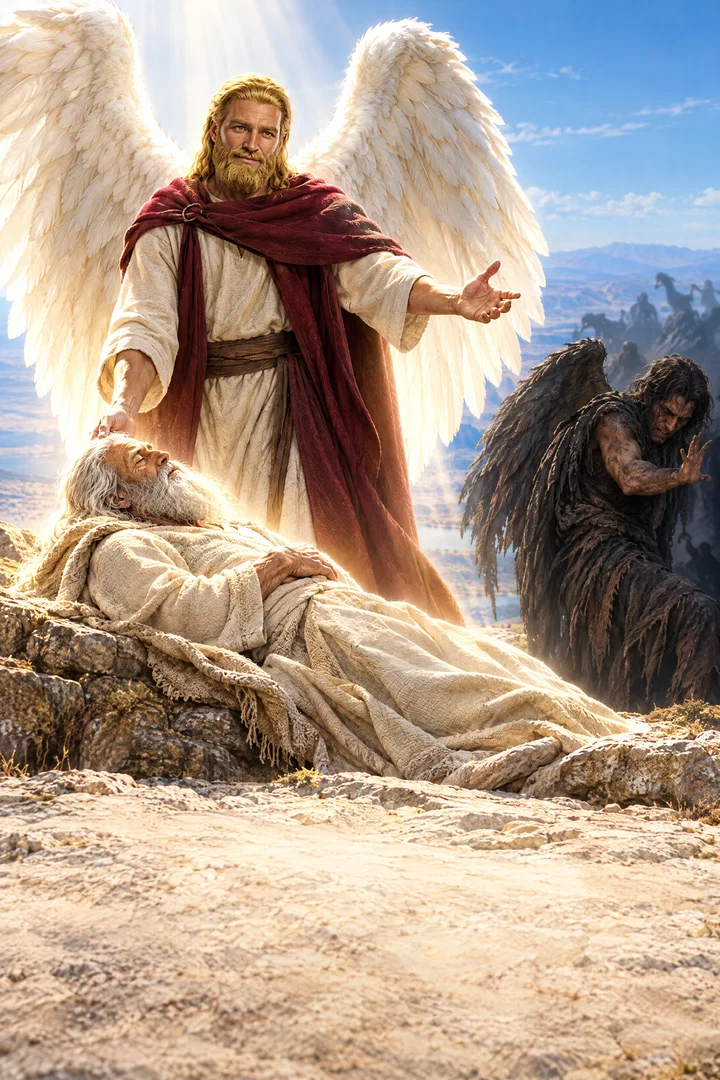
So Moses the servant of the LORD died there in the land of Moab, according to the word of the LORD.
Translations
American King James Version, King James Version, Webster Bible, Revised Version
So Moses the servant of the LORD died there in the land of Moab, according to the word of the LORD.
So Moses the servant of the Lord died there in the land of Moab, according to the word of the Lord.
So Moses the servant of Jehovah died there in the land of Moab, according to the word of Jehovah.
And Moses, servant of the Lord, dieth there, in the land of Moab, according to the command of Jehovah;
And Moses the servant of Jehovah died there in the land of Moab, according to the word of Jehovah.
So Moses, the servant of Yahweh, died there, in the land of Moab, at the bidding of Yahweh;
Berean Standard Bible, Majority Standard Bible
So Moses the servant of the LORD died there in the land of Moab, as the LORD had said.
So Moses the servant of the LORD died there in the land of Moab, according to the LORD’s word.
So death came to Moses, the servant of the Lord, there in the land of Moab, as the Lord had said.
So Moses the seruant of the Lord dyed there in the land of Moab, according to the worde of the Lord.
Douay-Rheims (Challoner revision)
And Moses the servant of the Lord died there, in the land of Moab, by the commandment of the Lord:
Pictures
Cross-references 20 of 26
- Matthew 17:3
And, behold, there appeared unto them Moses and Elias talking with him.
Moses appears alive with Elijah, speaking with Jesus at the transfiguration.
- Jude 1:9
Yet Michael the archangel, when contending with the devil he disputed about the body of Moses, durst not bring against him a railing accusation, but said, The Lord rebuke thee.
Michael and the devil dispute over Moses’ body.
- Numbers 20:12
And the LORD spake unto Moses and Aaron, Because ye believed me not, to sanctify me in the eyes of the children of Israel, therefore ye shall not bring this congregation into the land which I have given them.
Moses’ failure to honor God at the rock barred him from entering the land.
- Luke 9:30-31
And, behold, there talked with him two men, which were Moses and Elias:
Moses appeared in glory with Jesus and spoke of his coming death.
- Deuteronomy 32:49-50
Get thee up into this mountain Abarim, unto mount Nebo, which is in the land of Moab, that is over against Jericho; and behold the land of Canaan, which I give unto the children of Israel for a possession:
God tells Moses to view the land and die on Mount Nebo.
- Joshua 1:1-2
Now after the death of Moses the servant of the LORD it came to pass, that the LORD spake unto Joshua the son of Nun, Moses’ minister, saying,
Joshua takes up the work after Moses dies.
- Deuteronomy 3:26-27
But the LORD was wroth with me for your sakes, and would not hear me: and the LORD said unto me, Let it suffice thee; speak no more unto me of this matter.
Moses is denied entry into the land and told he will not cross the Jordan.
- Mark 9:4
And there appeared unto them Elias with Moses: and they were talking with Jesus.
Moses appears with Elijah and Jesus at the transfiguration.
- Hebrews 11:24-26
By faith Moses, when he was come to years, refused to be called the son of Pharaoh’s daughter;
Moses is presented as a faithful servant who chose suffering with God’s people and looked toward the promised reward.
- Deuteronomy 34:1
And Moses went up from the plains of Moab unto the mountain of Nebo, to the top of Pisgah, that is over against Jericho. And the LORD shewed him all the land of Gilead, unto Dan,
Moses ascends Mount Nebo before his death.
- Deuteronomy 34:10
And there arose not a prophet since in Israel like unto Moses, whom the LORD knew face to face,
It declares that no prophet like Moses arose after his death.
- Numbers 12:7
My servant Moses is not so, who is faithful in all mine house.
Moses was faithful in God’s service.
- Numbers 27:18-23
And the LORD said unto Moses, Take thee Joshua the son of Nun, a man in whom is the spirit, and lay thine hand upon him;
Moses commissions Joshua as his successor.
- Joshua 1:16-18
And they answered Joshua, saying, All that thou commandest us we will do, and whithersoever thou sendest us, we will go.
Israel pledged obedience and urged Joshua to be strong after Moses’ death.
- Deuteronomy 3:27
Get thee up into the top of Pisgah, and lift up thine eyes westward, and northward, and southward, and eastward, and behold it with thine eyes: for thou shalt not go over this Jordan.
Moses views the land from Pisgah before his death.
- Deuteronomy 34:9
And Joshua the son of Nun was full of the spirit of wisdom; for Moses had laid his hands upon him: and the children of Israel hearkened unto him, and did as the LORD commanded Moses.
Joshua succeeds Moses as Israel’s leader.
- Hebrews 3:5
And Moses verily was faithful in all his house, as a servant, for a testimony of those things which were to be spoken after;
contrasts worldly failure with heaven's verdict
- Deuteronomy 33:1
And this is the blessing, wherewith Moses the man of God blessed the children of Israel before his death.
records the tribal blessings before death
- Joshua 24:29
And it came to pass after these things, that Joshua the son of Nun, the servant of the LORD, died, being an hundred and ten years old.
Records the death of Joshua, another servant of the Lord.
- Luke 9:31
Who appeared in glory, and spake of his decease which he should accomplish at Jerusalem.
Moses appears in glory with Jesus on the mount.
Commentary
Each commentary is drawn from primary sources: the writings of Ellen G. White and Adventist pioneers and periodicals. Each commentary is separate. Its own words are not a quotation; follow the references to read the source passages.
Ellen G. White
19 sources
Moses the servant of the Lord died alone in the land of Moab according to the word and command of the Lord, on Pisgah in the presence of God and heavenly angels after viewing Canaan to his full satisfaction.ST Mar 31, 1881PP 477.2–478.11SP 341.2–3SG4 56.2–57.2ST Mar 31, 1881 He looked upon the whole land with clear and undimmed eyes and in full strength, realizing the rich blessings Israel would enjoy in obedience as a second Eden under God's blessing, then lay down like a tired warrior and slept the sleep of death.PP 477.2–478.11SP 341.2–3SG4 56.2–57.21T 658.3–659.2Ms 69, 1912, par. 57–58 His death followed his one transgression at the rock, where in anger and unbelief he smote the rock and took to himself the glory due to God, so that he fell under the dominion of death and was barred from entering Canaan as leader.ST Mar 31, 1881SG1 42.2–43.12SP 329.2–330.1Ms 177, 1907, par. 19–21 His death was not the end, for before his body saw corruption Michael the Son of God came down, gave him life by the power of His word against Satan's contending claim, and took him with a resurrected and glorified body to heaven to wait upon the Son at the transfiguration.ST Mar 31, 18811T 658.3–659.2SG1 42.2–43.12SP 329.2–330.1ST Jun 7, 1877 Angels buried his body in an unknown place and watched over his grave, keeping it secret so Israel could never find it and make it an object of idolatry, showing that even one so honored and entrusted was not excused for turning from the right path.ST Mar 31, 1881PP 477.2–478.11SP 341.2–3Ms 69, 1912, par. 69–70
Death and Burial in Moab
So Moses the servant of the Lord died there in the land of Moab according to the word and command of the Lord.ST Mar 31, 1881PP 477.2–478.1ST Mar 31, 1881ST Mar 31, 1881SG1 42.2–43.1 His death took place in Moab at God's command after the laws previously given had been repeated and enlarged for Israel.RH Jan 30, 1908Ms 177, 1907, par. 19–21 Because of his mistake he could not enter the promised land as Israel's leader, but went up the mountain and died, and Joshua took his place.Ms 177, 1907, par. 19–21
He died alone on the top of Pisgah, with no one permitted to go up with him, standing in the presence of God and heavenly angels.1SP 341.2–3SG4 56.2–57.2 He had first viewed Canaan from Pisgah to his full satisfaction, and had seen the promised land of Canaan.1SP 341.2–3SG4 56.2–57.2Ms 12, 1868, par. 16–17 He viewed the whole land with clear and undimmed eyes and in full strength, not from weakness of age, his strength and clear sight remaining undiminished until death.SG4 56.2–57.21T 658.3–659.2Ms 69, 1912, par. 57–58 In that view he fully realized the rich blessings Israel would enjoy if they faithfully obeyed the commandments of God, beholding the promised land with His blessing upon it as a second Eden.SG4 56.2–57.21T 658.3–659.2
Before he died God also showed him Christ's first coming, rejection by the Jews and death on the cross, Christ's second coming and the resurrection of the just, and the future meeting of the first Adam and Christ the second Adam when Eden blooms on earth again.1T 658.3–659.2 Before he died the laws previously given were repeated and enlarged, their enforcement explained, some precepts clarified, and the reasons for them made plain.RH Jan 30, 1908 Commands violated in earlier judgments were repeated to warn that disobedience would bring God's punishment.RH Jan 30, 1908
After seeing the land and beholding the scene revealed to him, he lay down like a tired warrior to rest, closed his eyes in death, and sleep came upon him as the sleep of death.PP 477.2–478.11SP 341.2–3SG4 56.2–57.2Ms 69, 1912, par. 57–5810MR 159.3–6 Angels took his body and buried it in the valley and on the mountain in an unknown place in Moab so Israel could never find his sepulchre.ST Mar 31, 1881PP 477.2–478.11SP 341.2–3SG4 56.2–57.2Ms 69, 1912, par. 57–58 They watched over his grave where he slept until Christ came to raise him to life, and the burial was kept secret so the people would not sin by making his body or grave an object of idolatry and worship.ST Mar 31, 1881PP 477.2–478.11SP 341.2–3SG4 56.2–57.210MR 159.3–6
Sin, Resurrection, and Lessons
Moses died because of his one transgression at the rock, where in anger and unbelief provoked by Israel's unbelief he smote the rock and took to himself the glory due to God instead of honoring Him.ST Mar 31, 1881SG1 42.2–43.12SP 329.2–330.1ST Jun 7, 1877 By that act he fell under Satan's power and came under the dominion of death, and was therefore barred from entering Canaan.ST Jun 7, 1877EW 133.3–4 Had he remained faithful and steadfast, God would have brought him into the promised land and then translated him to heaven without seeing death, but instead he passed through death in Moab according to the word of the Lord.ST Mar 31, 1881SG1 42.2–43.12SP 329.2–330.1ST Jun 7, 1877EW 133.3–4
As he looked over the promised land he recalled his life of service and judged wise his choice of affliction with God's people over sin's temporary pleasures.ST Mar 31, 1881 His one transgression remained a source of sorrow, and in humility and faith he confessed it with sorrow and sought pardon through Jesus, the Promised One who would die as humanity's sacrifice.ST Mar 31, 1881 His death was not the end, for before his body saw corruption or decay Michael, the Son of God, came down to his grave and gave him life by the power of His word.ST Mar 31, 1881SG1 42.2–43.12SP 329.2–330.1ST Jun 7, 1877EW 133.3–4 Satan contended for the body and claimed it as his prey, but Christ overcame Satan's claim and answered him by referring him to God the Father.SG1 42.2–43.12SP 329.2–330.1ST Jun 7, 1877EW 133.3–4
He was raised with a resurrected and glorified body and borne to heaven and to the courts above.1T 658.3–659.22SP 329.2–330.1ST Jun 7, 1877 There he was commissioned by the Father as one of the two to wait upon the Son at the transfiguration.ST Jun 7, 1877 His burial place was kept secret and not revealed, angels having buried him where Israel could never find his sepulchre, so the people would not sin by making his body or grave an object of idolatry and worship.ST Mar 31, 1881PP 477.2–478.11SP 341.2–3SG4 56.2–57.221MR 223.2 This withholding illustrates how God withholds knowledge of a sacred site lest people worship it, as they have worshiped the date they suppose was Christ's birthday.Ms 8, 1880, par. 7–11
Though honored by God and entrusted with instructing Israel, his death for one transgression demonstrates God's impartiality.Ms 69, 1912, par. 69–70 Even those whom God greatly honors are not excused when they turn from the right path.Ms 69, 1912, par. 69–70 It warns that people in positions of responsibility are accountable for their words and actions, since others may follow their example.Ms 69, 1912, par. 69–70
Sources
Pioneers and periodicals
93 sources
Moses the servant of the Lord died in the land of Moab according to the word and command of the Lord, on Mount Nebo the top of Pisgah opposite Jericho at the close of forty years of wandering after viewing the promised land he was not permitted to enter.ST Mar 31, 1881ST Mar 1, 1905ST Apr 27, 1904RH Feb 12, 1861ST Oct 7, 1897 He was shut out from earthly Canaan because at Meribah he failed to give God glory, speaking rashly and smiting the rock in anger at the people's murmurings, and though he repented and was forgiven he still laid down his life in full strength at the Lord's command.ST Mar 31, 1881ST Jun 7, 1877ST May 27, 1889ST Sep 17, 1902ST Sep 9, 1886 God Himself buried him with angels alone as attendants in a hidden grave no man dug or knows, to honor him and to keep his body from becoming an object of idolatry.ST Mar 31, 1881ST Mar 12, 1912RH Mar 10, 1868RH Jul 31, 1866ST Feb 25, 1875 He did not remain dead, but the Son of God as Michael the archangel came to the grave and raised him by the power of His word, contending with the devil who claimed him as prisoner of death and bringing him glorified to the heavenly Canaan.ST Mar 12, 1912ST Apr 27, 1904ST Apr 26, 1905ST Sep 7, 1904ST Dec 21, 1882 His bodily presence talking with Jesus on the mount proves he could live again only by resurrection, since the dead know nothing, while those who held otherwise taught that his appearance proves the immortality of the soul and that death did not end his consciousness.ST Oct 12, 1876ST Apr 9, 1902RH Jan 21, 1873RH Jan 14, 1873RH Sep 8, 1859 There he represents the righteous dead who will be raised immortal at Christ's coming, while Elijah who never died represents those who will be changed alive without death, together forming a miniature picture of the coming kingdom.ST May 6, 1897ST May 9, 1906ST May 14, 1894ST Jan 11, 1905ST Jan 15, 1880
Setting Place and Authorship
Moses the servant of the LORD died there in the land of Moab, according to the word or command of the LORD.ST Mar 1, 1905ST Apr 27, 1904RH Mar 10, 1868ST Sep 10, 1902ST May 27, 1889 He died in Moab after seeing the promised land but being told he could not enter it, and his death and burial show he had repented and been forgiven.ST Mar 31, 1881ST Sep 10, 1902ST May 27, 1889 He was buried by God Himself, his grave concealed so no one knew its location and it was apparently never found.ST Mar 31, 1881ST Apr 27, 1904RH Mar 10, 1868
The death took place on Mount Nebo, the top of Pisgah in the Abarim mountains opposite Jericho, east of the Jordan.RH Feb 12, 1861ST Oct 7, 1897ST May 23, 1911RH Aug 29, 1871 Nebo was the mountain from which he took his last view before his death, and it stands as a witness to the truth of the Bible.RH Aug 29, 1871 He was shown the promised land and Israel's future triumph, then was laid to rest on Nebo in a valley opposite Beth-peor.ST May 23, 1911 He died there after waiting many years to lead Israel to the land, without entering it, his long wait ending before he saw the promise fulfilled.RH Feb 12, 1861 His death followed the one transgression into which Israel's sin had led him.
It occurred near the close of Israel's forty years of wandering in the wilderness, while the people were east of the Jordan awaiting entry into Canaan.ST Apr 26, 1905ST Jul 1, 1889 Before he died the laws previously given were repeated and enlarged, their enforcement explained, some precepts clarified and reasons made plain, with violated commands repeated to warn that disobedience would bring punishment.RH Jan 30, 1908 He rehearsed God's laws and dealings with Israel in the wilderness, blessed the twelve tribes, viewed Canaan from Mount Nebo without crossing the Jordan into the land, and was told he would see it but not enter it.ST Sep 10, 1902ST May 23, 1911ST Jul 1, 1889ST Jan 15, 1880 It came at least several days after he said Israel would pass over Jordan "this day," with about two months including thirty days of mourning and Joshua's taking command and sending spies before the actual crossing, so "this day" did not mean the same day.RH May 26, 1874 It closed the third forty-year period of his life from the exodus to his death on Nebo, following forty years from infancy in Pharaoh's palace to flight to Midian and forty years from flight till return to Egypt.ST Nov 7, 1878 It marks the endpoint of more than twenty centuries from the creation of man told in only a few pages, as an example of selecting essential events from a much larger history.ST Oct 14, 1880
The verse closes Deuteronomy and marks the end of the Pentateuch with the death of Moses, just as the Gospels close with the passion of Christ, and is followed by richly successful conquests under Joshua proving that feebleness and smallness of numbers need not fear great cities.ST Mar 8, 1910ST Jul 1, 1889RH Mar 21, 1912 The record tells when he died, with whom he died, and who buried him, but does not tell how he died.ST Mar 18, 1897 The last chapter containing the verse was not written by Moses but was added by Joshua the son of Nun or Eleazar or some other servant of the LORD, possibly his close friend and successor, while Moses wrote the first five books.ST Mar 1, 1905ST Mar 24, 1898ST Mar 8, 1910RH Mar 2, 1916 That final chapter is regarded as a supplement added after his death which may originally have been the beginning of Joshua, and this supplement does not undermine inspiration or authority.RH Mar 2, 1916RH May 1, 1879 The dividing of the Bible into books and chapters and verses is modern, and Christ and His apostles nowhere refer by name to books or chapters or verses.RH May 1, 1879 By another view held by some, the account of his death and burial does not rule out Mosaic authorship, since God could have inspired Moses to write a prophetic history of his own death and burial.ST Jan 24, 1900
Reason and Manner of Death
Moses died in Moab after leading the people forty years through the wilderness to the border of the promised land without being permitted to go in with them.ST Sep 17, 1902ST Sep 9, 1886ST Feb 3, 1904 He was shut out because on one occasion at Meribah, at the waters of strife, he failed to give God the glory as the provider of the needed supply of water from the rock.ST Oct 7, 1880ST Sep 17, 1902ST Sep 9, 1886 When provoked by the perversity, murmurings, weakness, despair and stubbornness of the people he spoke rashly, yielded to anger at their unbelief, smote the rock instead of doing exactly as commanded, took the glory to himself instead of honoring God, and fell under Satan's power.ST Jun 7, 1877ST Oct 7, 1880ST Sep 10, 1902RH Mar 13, 1866ST Feb 3, 1904 God was not selfish or arbitrary in keeping him out, but the welfare of the people required that they must in everything recognize dependence upon Him, for without Him nothing can be done, as the words Without me ye can do nothing were true then as now.ST Sep 17, 1902RH Oct 21, 1902 A single failure to acknowledge and honor God before the people counted for much more in a man in Moses' position than the same failure would in an ordinary person, and having broken the connection with God and turned the stream of life from its proper channel he had to lay it down, though the break was only temporary.RH Oct 21, 1902 Though not a great crime by human standards, it was serious unbelief and serious mistakes with consequence even after a faithful life of service, close relationship with God, and meekness under great temptation, and not even Moses was an exception nor his example any claim to sinless perfection.ST Oct 7, 1880ST Sep 17, 1902RH Dec 22, 1868
As he looked over the land he recalled his life and judged his choice of affliction with God's people rather than sin's temporary pleasures to have been wise, yet his one transgression remained his sorrow.ST Mar 31, 1881 He confessed it in humility and faith and sought pardon through Jesus, the Promised One who would die as humanity's sacrifice, and his death and divine burial are evidence that he repented and was forgiven.ST Mar 31, 1881ST May 27, 1889ST Aug 27, 1912 Though he sincerely repented he still could not lead the people into the promised land.ST May 27, 1889ST Aug 27, 1912 Had he remained steadfast and not sinned, God would have brought him into Canaan and then translated him to heaven without seeing death like Elijah and Enoch, but as it was he passed through death rather than translation.ST Mar 31, 1881ST Jun 7, 1877ST May 27, 1889 He really died and was buried by the Lord, not taken without dying, so his body could not have been alive afterward by translation or inherent immortality.RH Mar 4, 1862ST Aug 28, 1901
He died in the full strength of manhood with eye undimmed and no trace of disease, still vigorous, strong, healthy and clear-eyed rather than worn out by age or physically unfit to lead.RH Oct 21, 1902ST May 19, 1914ST Sep 10, 1902 He did not die by suicide and not by God killing him, but by laying down his own life at the Lord's command as calmly as composing himself to sleep and going to sleep.ST Apr 7, 1909RH Oct 21, 1902 Only spiritual beings were present at his death.ST Apr 7, 1909 He died alone in a solitary place with solitary unknown grave and no monument and no family gathered to mourn him, after longing forty years to enter and waiting many years to lead Israel there.RH Feb 12, 1861ST Dec 22, 1881ST May 19, 1914 Though he had often prevailed in prayer for Israel, his own prayer for his life did not prevail.ST May 19, 1914 He died after seeing the beautiful land he was not allowed to enter.ST Dec 22, 1881
Burial by God Alone
God Himself buried Moses, with heavenly angels alone as attendants at the funeral and no human funeral or burial ceremony taking place.ST Mar 31, 1881ST Mar 12, 1912ST Feb 25, 1875 No friends performed rites over him and he received no funeral ceremonies from friends.ST Feb 25, 1875RH Feb 4, 1875 If funeral rites took place at all, they were conducted by God alone, and angels buried him and watched over his grave.ST Mar 31, 1881
He was laid in a lonely, unnamed grave in a valley in the land of Moab that no human dug or saw, where the sons of God laid him.ST Apr 5, 1905ST Apr 5, 1905ST Aug 28, 1901 The Lord buried him and purposely concealed his grave so that no man knows where it is.RH Mar 10, 1868ST Feb 25, 1875ST Sep 10, 1902 The exact spot was never known to man and the grave was apparently never found.RH Mar 10, 1868RH Jul 31, 1866ST Aug 28, 1901 Muslims later believed it lay about halfway between Jerusalem and Jericho, which is their belief and not a confirmed site.RH Mar 10, 1868
The hiding of the grave kept the people from turning his body into an object of idolatry and from idolatrous superstitions over it.ST Mar 31, 1881ST Sep 10, 1902 He was left with no gravestone because God does not remember death. In this he was honored as no other was ever honored, with a divine burial even though he died under judgment.ST Mar 12, 1912ST Sep 10, 1902
Resurrection and Transfiguration Appearance
Moses did not remain in death but was brought forth from death by a special act before the resurrection of Christ, rescued from the power of Satan, glorified and taken to heaven to the heavenly Canaan.ST Mar 31, 1881ST Mar 12, 1912ST Apr 27, 1904ST Dec 21, 1882ST May 4, 1915 Just before the crucifixion he talked with Christ about the trials He must pass through, His coming agony and cross.ST Mar 31, 1881ST Mar 12, 1912 His burial had been hidden in a lonely unnamed grave, yet he would rise before the judgment day clothed in glory and stand upon hills he had never entered in life, his victory in the strife that won life for humanity being through Christ God incarnate.ST Apr 5, 1905
The Son of God Himself came down to the grave and raised him by the power of His word before his body saw corruption.ST Mar 31, 1881ST Jun 7, 1877 The raising was soon after death, though the timing is not stated explicitly in the Bible, and is inferred from his role as a type of Christ and from the dispute over his body.ST Jun 7, 1877ST Aug 27, 1912 He had died because at the rock he yielded to anger at Israel's unbelief, smote the rock and took glory to himself instead of honoring God, fell under Satan's power and was forbidden to enter the promised land, though he sincerely repented.ST Jun 7, 1877ST Aug 27, 1912 Had he remained steadfast God would have brought him into the promised land and then translated him to heaven without seeing death, but as it was he passed through death and was borne with a resurrected and glorified body to the courts of heaven to be commissioned by the Father as one of the two to wait upon the Son at the transfiguration.ST Jun 7, 1877
Michael the Archangel, who is the Son of God before His earthly life, the Prince of Life and Captain of salvation, was sent to the grave to raise him.ST Sep 7, 1904RH Jan 14, 1873ST Jan 11, 1905 Satan claimed a right to the body as his prey and prisoner in his dominion of death, and Christ as Life-giver opposed Satan as prison-keeper at the gates of death.ST Jun 7, 1877ST Sep 7, 1904ST Jan 11, 1905 Michael did not dare bring a railing accusation but said, The Lord rebuke thee, and prevailed where defeat is impossible, bringing Moses the man of God from the enemy's land.ST Jun 7, 1877ST Sep 7, 1904RH Jan 14, 1873RH Jan 7, 1904ST Jan 11, 1905 His restraint condemns those who in dreamings defile the flesh and despise dominion and rail at dignities, who rail at what they do not know and in what they understand naturally like unreasoning creatures are destroyed.RH Jan 7, 1904
That resurrection ended the unbroken reign of death from Adam to Moses and was the first demonstration of God's power to resurrect.ST Sep 7, 1904 It was an illustrative partial fulfillment of God's promised deliverance from death, proving the faithfulness of His word and His ability to release all captives from death and the grave, and giving believers courage to defy the foe.ST Sep 7, 1904
Because he truly died in the land of Moab according to the word of the Lord and the Lord buried him, his living presence on the mount talking with Jesus proves he must have had a resurrection, for resurrection is the only way one who died and was buried can live again.ST Oct 12, 1876ST Apr 9, 1902RH Jan 14, 1873ST Jan 11, 1905ST Dec 2, 1880 The dead know nothing and have no more portion in anything done under the sun, their thoughts perish when their breath goes forth and they return to earth, so he could appear alive and bodily only by being raised, not by translation or by inherent immortality and not as an immaterial immortal spirit.ST Apr 9, 1902RH Jan 14, 1873ST Dec 2, 1880ST Aug 28, 1901 His body had been dead and buried, so it could not be alive on the mount by translation, and he was raised from his tomb through Christ's victory over the one who held power over death, then received life and was glorified.ST Dec 2, 1880ST Aug 28, 1901
His prior resurrection does not contradict Christ as the first-fruits of those who sleep, because first-fruits means first in pre-eminence and purpose rather than first in time.ST Jan 11, 1905 As Christ was the Lamb slain from the foundation of the world though He died thousands of years later, so by virtue of His determined death and resurrection all others are raised and victorious over death, as were Moses, Enoch, the Shunammite's son, Lazarus and others, even before Christ had won His fullest victory over death.ST Jan 11, 1905
On the mount he appeared alongside Elijah as a truly real, living, glorified, bodily man, wearing a crown of light, and the transfiguration being called a vision means only a real seeing.ST Jan 11, 1905ST Jan 15, 1880RH Apr 13, 1876 His appearance there was real, as was Elijah's, who had been bodily translated without dying and went up by whirlwind into heaven.RH Dec 28, 1911RH Apr 13, 1876 He came to the mount from heaven where he had been taken home, just as Elijah came from heaven, to join the twenty-four elders redeemed by the blood of the Lamb who are made kings and priests unto God around the throne as representatives of God's people until all the elect are gathered.RH Apr 13, 1876
There he represents the saints who die and are raised in the first resurrection to immortal life at Christ's coming and to inherit His future kingdom, pledging their resurrection, while Elijah who never died represents those who will be living at Christ's coming and changed without seeing death.ST May 6, 1897ST May 14, 1894RH Jan 14, 1873RH Jul 31, 1866ST Sep 22, 1881 Together with the transfigured Saviour they form a miniature picture of the coming kingdom.ST Aug 28, 1901 His death together with his burial and unknown grave establishes that he later appeared because Christ raised him from the dead, and Moses represents the righteous who die and are raised to immortal life at Christ's return.RH Jul 31, 1866ST Mar 20, 1879ST May 14, 1894
His case may have been an exception to the general rule that the dead wait unconscious in the grave as David still does, and an exception to the general resurrection as a type of Christ.RH Jan 14, 1873ST Sep 22, 1881 Objectors use his being seen and heard on the mount long afterward together with Elias to argue that Moses had an immortal soul which did not die and survived death, but it proves instead that he must have been raised from the dead in order to be personally present there.RH Jan 14, 1873RH Dec 12, 1854RH Dec 12, 1854 If the transfiguration was a reality, Moses could have been raised from the dead and represented the righteous dead who will be raised for God's kingdom, and his appearance does not require a conscious disembodied spirit.RH Aug 6, 1872 By the teaching of those who held the seeing to be only vision, the mount seeing was a vision not a literal presence of Moses or his soul and gives no proof of an immaterial invisible soul, with the dispute of Michael with the devil about the body giving inferential support that God sent the archangel to raise Moses for a wise purpose which the devil who has the power of death disputed, consistent with Moses as a type of Christ.RH Aug 6, 1872RH Oct 16, 1855RH Sep 8, 1859 By another teaching his later appearance shows that his death did not end his consciousness, and his appearance is presented as proof of the immortality of the soul.ST Oct 12, 1876RH Mar 4, 1862 The weight of the teaching holds that the verse means the dead are buried with nothing about an immortal spirit soaring away to a spirit land, that death is not merely the death of his body while an immortal part remains alive elsewhere, and that Moses remained dead so that God afterward speaks to Joshua of Moses as dead.RH Jan 21, 1873RH Oct 16, 1855RH Nov 13, 1860
The verse records that Moses himself died in Moab, and this death is the starting point for the argument that he was later raised to immortality, although the verse itself does not directly say that he was raised.ST May 14, 1894RH Jan 31, 1865 Together with the following verse it records that God buried him and that his grave remained unknown, and these circumstances are presented as evidence that Moses was later raised from the dead, not because his soul lived apart from his body.RH Jul 31, 1866ST Mar 20, 1879
Type Teaching and Application
Because he failed in one instance he could not be a perfect or complete type of Jesus Christ who carries His people through without failure and leads into the promised land, and that failure to acknowledge and honor God before the people counted for much more in a man in his position than in an ordinary person.ST Mar 12, 1912RH Oct 21, 1902 The refusal to let him enter and the command for him to die was not arbitrary punishment but grew out of the nature of the case, for having broken connection with God and turned life from its channel he had to lay it down, though the break was only temporary and taught that disharmony with God is no light thing.RH Oct 21, 1902 His death is contrasted with Christ's death for His people's sins, whose atoning blood opens heaven to believers.RH Feb 19, 1861
Yet his earthly end does justice to him better than poetic attempts, revealing him grand and luminous against former idolatry as one of history's greatest men, second only to Christ whom he feebly typified.ST Mar 12, 1912ST Mar 8, 1910 After going down to Midian mighty only in worldly learning, forty years schooled alone with God in the desert fitted him to lead from bondage to freedom with patience, wisdom, tender solicitude, devotion and self-sacrifice, through whom God gave lessons to the world and molded the Book whence civilizations followed.ST Mar 8, 1910 His faithful service did not exempt him from death, for even holy people die and even Moses had to enter the grave in Moab according to the Lord's word before the people reached the land.ST Oct 6, 1887RH Jan 29, 1867 Death barred him from earthly Canaan though he led Israel to its borders, yet his trust in unfailing promises brought victory over Satan to heavenly Canaan.AUST Jun 21, 1920
Dying on the journey in Moab before possessing the land was not proof his life or mission failed.RH Jan 18, 1912 After rejecting a throne to spend eighty years herding sheep and leading slaves, dying in a lonely grave on a mountain outside the goal while another took his place on its border looks like stupendous failure by worldly success, but in heaven success is faithfulness.ST Sep 9, 1930 His death teaches God is not dependent on any man regardless of experience, influence or qualification and is always ready for any emergency.ST Sep 10, 1902 Though changing leaders at that critical time looked dangerous to men, since he was still strong and not physically unfit to lead, God continued to guide Israel, prepared Joshua to carry the work forward, and raised others to serve in his place.RH Jul 29, 1915ST Sep 10, 1902RH Feb 2, 1911
Like Moses who by providence saw the land but died before entering, a faithful servant worn by years of labor may rest before the promised inheritance awaiting resurrection at Christ's coming and awakening when the Master calls.RH Aug 3, 1916 His death just before the typical promised land is compared to a faithful leader's 1915 death before the movement reached its destination.RH Aug 31, 1916 God withheld his definite request to enter because it lacked submission after the pattern Not my will but thine, having dictation at its heart, in order to give the far better honor of burial by the divine hand which he would never have received dying ordinarily in Canaan.RH Sep 10, 1903 When sincere prayer brings no definite answer, God's Fatherhood is reserving a better thing further on.RH Sep 10, 1903
Though his mortal life ended on Nebo where he beheld the land and Israel's future triumph and was buried by the Lord, his influence and eloquence continued long afterward.ST Aug 27, 1896RH Jun 19, 1900 It is one instance of God honoring mountains above other conformations of nature by marking them with His presence, Nebo standing as witness to Scripture's truth.ST Aug 27, 1896 After he who talked with God mouth to mouth and bore God's splendor to Israel dropped from sight, God gave the portable tabernacle for indwelling and the pillar of presence by night and day as visible proof to remain with the people.RH Feb 3, 1910 God honored his choice to suffer with His people rather than enjoy Egypt's riches and power by raising him to glory, and his appearance with Elijah and Christ shows he did not regret choosing faithfulness over worldly honor.RH Feb 25, 1915
His ascending to heaven where he now is differs from Christ's coming down to make known God's plan and bring salvation, for he brought back no message, and his one return to talk with Jesus stands as example of resurrection at the second coming as Elijah exemplifies translation. His reaching Pisgah's summit and passing on is presented as an example of a life journey continuing to its final transition.RH Jun 29, 1869
Sources