Leviticus 1:11
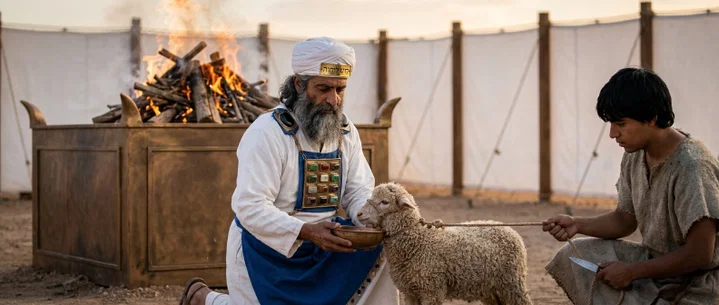
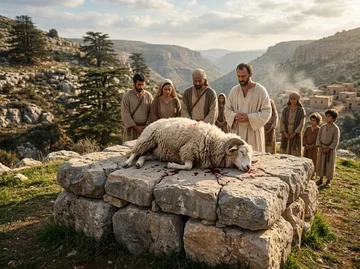
And he shall kill it on the side of the altar northward before the LORD: and the priests, Aaron’s sons, shall sprinkle his blood round about upon the altar.
Translations
And he shall kill it on the side of the altar northward before the LORD: and the priests, Aaron’s sons, shall sprinkle his blood round about on the altar.
And he shall kill it on the side of the altar northward before the LORD: and the priests, Aaron’s sons, shall sprinkle his blood round about upon the altar.
And he shall kill it on the side of the altar northward before the Lord: and the priests, Aaron’s sons, shall sprinkle his blood round about upon the altar.
And he shall kill it on the side of the altar northward before the LORD: and the priests, Aaron's sons, shall sprinkle his blood around upon the altar:
And he shall kill it on the side of the altar northward before the LORD: and Aaron’s sons, the priests, shall sprinkle its blood upon the altar round about.
And he shall kill it on the side of the altar northward before Jehovah: and Aaron’s sons, the priests, shall sprinkle its blood upon the altar round about.
and he hath slaughtered it by the side of the altar northward, before Jehovah; and sons of Aaron, the priests, have sprinkled its blood on the altar round about;
And he shall slaughter it on the side of the altar northward before Jehovah; and Aaron's sons, the priests, shall sprinkle its blood on the altar round about.
And he shall slay it on the side of the altar northward, before Yahweh,—and the sons of Aaron the priests shall dash its blood against the altar round about.
He shall slaughter it on the north side of the altar before the LORD, and Aaron’s sons the priests are to sprinkle its blood against the altar on all sides.
He shall slaughter it on the north side of the altar before the LORD, and Aaron’s sons the priests are to splatter its blood against the altar on all sides.
He shall kill it on the north side of the altar before the LORD. Aaron’s sons, the priests, shall sprinkle its blood around on the altar.
And he is to put it to death on the north side of the altar before the Lord: and Aaron's sons, the priests, are to put some of the blood on and round the altar.
And he shall kill it on the Northside of the altar before the Lord, and the Priestes Aarons sonnes shall sprinckle the blood thereof rounde about vpon the altar.
Douay-Rheims (Challoner revision)
And he shall immolate it at the side of the altar that looketh to the north, before the Lord: but the sons of Aaron shall pour the blood thereof upon the altar round about:
Pictures
Cross-references 20 of 23
- Leviticus 17:11
For the life of the flesh is in the blood: and I have given it to you upon the altar to make an atonement for your souls: for it is the blood that maketh an atonement for the soul.
The blood represents the life given in the offering to make atonement.
- Leviticus 3
And if his oblation be a sacrifice of peace offering, if he offer it of the herd; whether it be a male or female, he shall offer it without blemish before the LORD.
Cited with Leviticus 1 for the offering service.
- Hebrews 8:1-5
Now of the things which we have spoken this is the sum: We have such an high priest, who is set on the right hand of the throne of the Majesty in the heavens;
The earthly sanctuary and its service are presented as a pattern of Christ’s heavenly ministry.
- Hebrews 9:6-7
Now when these things were thus ordained, the priests went always into the first tabernacle, accomplishing the service of God.
Describes the priests’ repeated sanctuary services and the high priest’s yearly offering of blood.
- Hebrews 9:12
Neither by the blood of goats and calves, but by his own blood he entered in once into the holy place, having obtained eternal redemption for us.
Christ’s once-for-all ministry through his own blood contrasts with recurring typical services.
- Hebrews 10:4
For it is not possible that the blood of bulls and of goats should take away sins.
Animal offerings could not themselves remove sin.
- Hebrews 9:23-24
It was therefore necessary that the patterns of things in the heavens should be purified with these; but the heavenly things themselves with better sacrifices than these.
Earthly sanctuary service foreshadows heavenly realities purified through Christ’s priestly work.
- Leviticus 4:2-4
Speak unto the children of Israel, saying, If a soul shall sin through ignorance against any of the commandments of the LORD concerning things which ought not to be done, and shall do against any of them:
Describes the guilty person bringing and slaughtering the sin offering.
- Leviticus 7:2
In the place where they kill the burnt offering shall they kill the trespass offering: and the blood thereof shall he sprinkle round about upon the altar.
Both direct that the offering be killed where burnt offerings were killed and its blood sprinkled around the altar.
- Leviticus 1:5
And he shall kill the bullock before the LORD: and the priests, Aaron’s sons, shall bring the blood, and sprinkle the blood round about upon the altar that is by the door of the tabernacle of the congregation.
Uses the same Hebrew word, rendered “sprinkle.”
- Leviticus 8:19
And he killed it; and Moses sprinkled the blood upon the altar round about.
Uses the same Hebrew word, rendered “sprinkled.”
- John 1:29
The next day John seeth Jesus coming unto him, and saith, Behold the Lamb of God, which taketh away the sin of the world.
Jesus is identified as the Lamb offered for the world’s sin.
- Exodus 24:6
And Moses took half of the blood, and put it in basons; and half of the blood he sprinkled on the altar.
Uses the same Hebrew word for sprinkling blood.
- Deuteronomy 12:23
Only be sure that thou eat not the blood: for the blood is the life; and thou mayest not eat the life with the flesh.
Blood represents life surrendered to the Lord.
- Leviticus 6:25
Speak unto Aaron and to his sons, saying, This is the law of the sin offering: In the place where the burnt offering is killed shall the sin offering be killed before the LORD: it is most holy.
Both locate the killing of an offering in the sanctuary court.
- Ezekiel 36:25
Then will I sprinkle clean water upon you, and ye shall be clean: from all your filthiness, and from all your idols, will I cleanse you.
The same word is rendered “sprinkle” in the passage’s word comparison.
- Leviticus 1:3
If his offering be a burnt sacrifice of the herd, let him offer a male without blemish: he shall offer it of his own voluntary will at the door of the tabernacle of the congregation before the LORD.
The voluntary burnt offering represents surrender to God.
- Hebrews 8:4-5
For if he were on earth, he should not be a priest, seeing that there are priests that offer gifts according to the law:
Earthly priestly ministry is a figure of heavenly things.
- Hebrews 4:14
Seeing then that we have a great high priest, that is passed into the heavens, Jesus the Son of God, let us hold fast our profession.
Christ is the great High Priest foreshadowed by the sanctuary service.
- Leviticus 4:6
And the priest shall dip his finger in the blood, and sprinkle of the blood seven times before the LORD, before the vail of the sanctuary.
Contrasts sprinkling with dipping, showing the actions are distinct.
Commentary
Each commentary is drawn from primary sources: the writings of Ellen G. White and Adventist pioneers and periodicals. Each commentary is separate. Its own words are not a quotation; follow the references to read the source passages.
Pioneers and periodicals
20 sources
The verse lays out the procedure for a burnt offering of a sheep or goat, to be killed by the offerer on the north side of the altar in the court before the Lord while Aaron's sons as priests sprinkle its blood round about upon the altar.ST Jan 20, 1914RH Feb 3, 1853ST May 1, 1901 The victim served as the worshiper's substitute, receiving guilt by the laying on of hands with confession of sin and then dying to pay the penalty the sinner deserved.RH Feb 25, 1858 Since blood represents life, that ministering with the blood carried the confessed sin through the victim into the sanctuary, where forgiven sins were left in figure and accumulated through the year until the cleansing service.RH Feb 25, 1858 The burnt offering represents the surrender of all one's powers and life to God after confessing sin, accepted to make atonement, with the sprinkled blood representing life surrendered for the Lord to use wherever He chooses.ST Jan 20, 1914ST Jan 20, 1914 As part of the earthly sanctuary service it is a pattern, shadow, and type of the temple of God in heaven and Christ's priestly service there as High Priest, foreshadowing His death for sinners completed once for all and written for learning to give clearer views of the Saviour and hope through the Scriptures.ST Jun 19, 1907ST May 1, 1901ST Feb 3, 1909 It belongs to the levitical law given to the children of Israel, distinct from the perpetual law of God, and abolished by Christ.RH Aug 20, 1872
Procedure and Sanctuary Setting
The rite is for a burnt offering of a sheep or goat, in which the offerer himself kills the animal on the north side of the altar in the court before the Lord, and Aaron's sons as priests sprinkle its blood round about upon the altar.ST Jan 20, 1914RH Feb 3, 1853ST May 1, 1901RH Mar 28, 1854ST Feb 13, 1912 The blood was collected, some applied to the horns of the altar and the remainder poured out at its base.ST May 1, 1901 In the individual sin-offering ritual likewise the victim was brought to the altar, the offerer laid a hand on its head and killed it, and the priest then used its blood in the sanctuary service.RH Sep 16, 1852
The Hebrew word rendered sprinkle is zah-rak, meaning to scatter and thus to sprinkle, not to dip or immerse.ST May 6, 1880 The verse belongs to the instructions for individual offerings in Leviticus 1 to 7, given in connection with the tribe of Levi and the priesthood.RH Feb 25, 1858RH Mar 8, 1870ST Jun 19, 1907ST Feb 3, 1909 It is part of the first grand division of the earthly sanctuary ministration, the daily ministration in the first apartment during the year, alongside the regular morning and evening burnt offering, the burning of sweet incense, and the work on Sabbaths, new moons, and feasts, distinct from the second division, the yearly work in the most holy place for cleansing the sanctuary.RH Mar 8, 1870RH Feb 3, 1853ST Jun 19, 1907
In the order of the offerings the Lord begins with the burnt offering and ends with the sin offering, while a person coming to God begins with the sin offering and ends with the burnt offering, and the offerings chiefly point to worship.ST Jan 31, 1911 The law of sacrifice made offerings possible for people of different means, from more costly animals for the rich to less costly ones for the poor and even fine flour in extreme poverty, so the offering was within reach of even the poorest, yet everyone was required to bring something because everyone had sinned.RH Jan 20, 1859
The animal offerings include the same kinds prepared by Abraham, with a distinction between beasts cut into pieces and birds left undivided.ST Feb 9, 1915 Abel's offering matched the burnt-offering instructions of Leviticus 1:1-17 in every detail, which shows those instructions had already been given to Adam's family immediately after the fall so that acceptance rested on obedience, with Abel accepted for obeying and Cain rejected for disobeying by bringing fruit.ST Jul 16, 1894
Atonement and Christ Shadow
The offering served as the worshiper's substitute after laying a hand upon it and confessing sin to signify the transfer of guilt.RH Feb 25, 1858ST Feb 17, 1890RH Mar 28, 1854 The innocent victim bore the guilt and its death paid the penalty, acknowledging that the sinner deserved death.RH Feb 25, 1858ST Feb 17, 1890ST May 1, 1901 Its blood signified that a life had paid the penalty of transgression, showing hatred of sin and that sin demanded its penalty.ST May 1, 1901ST Feb 3, 1909 The victim was slain in the sinner's place and its blood was used by the priest in ministry for the one who confessed, with the priest mediating for the sinner before the Lord.RH Feb 25, 1858ST Feb 17, 1890ST May 1, 1901
Since blood represents life, the priest's ministry with the blood carried the confessed sin from the sinner through the victim into the sanctuary.RH Feb 25, 1858ST Feb 17, 1890RH Feb 3, 1853 Forgiven sins were left there in figure through the blood or the priest and accumulated through the year until the special cleansing service.RH Feb 25, 1858ST Feb 17, 1890RH Feb 3, 1853 The rite pictured guilt passing from the sinner to the substitute and then, through the blood sprinkled before the Lord, to the sanctuary.RH Feb 25, 1858RH Feb 3, 1853RH Mar 28, 1854
The burnt offering represents surrendering all one's powers and life to God after confessing sin, and is accepted to make atonement.ST Jan 20, 1914 Since the blood is the life, the priest's sprinkling of it on the altar represents surrendering one's life to the Lord for Him to use wherever He chooses throughout the world.ST Jan 20, 1914
As part of the earthly sanctuary and its service, the instruction is a pattern, shadow, and type given as an impressive object-lesson concerning the temple of God in heaven and Christ's priestly service therein as High Priest and Minister of the heavenly sanctuary.ST Jun 19, 1907 It typifies the work of Jesus Christ completed once for all and foreshadows His death for sinners, with the innocent animal giving its life as a substitute.ST May 1, 1901ST Nov 28, 1895ST Feb 13, 1912 People brought such sacrifices as expressions of faith in the Redeemer to come, and it is a shadow of the great substance which is in Jesus Christ.ST Feb 3, 1909ST Apr 2, 1912 It belongs to Scripture profitable for doctrine, reproof, correction, and instruction in righteousness to make the man of God perfect, and was written for learning so that through patience and comfort of the Scriptures hope may be had, so that study of it gives understanding of the heavenly temple and clearer views of the Saviour and His work in behalf of men.ST Jun 19, 1907
The verse belongs to the levitical law given to the children of Israel, distinct from the absolute and perpetual law of God, and abolished by Christ.RH Aug 20, 1872
Sources