Hebrews 9:6
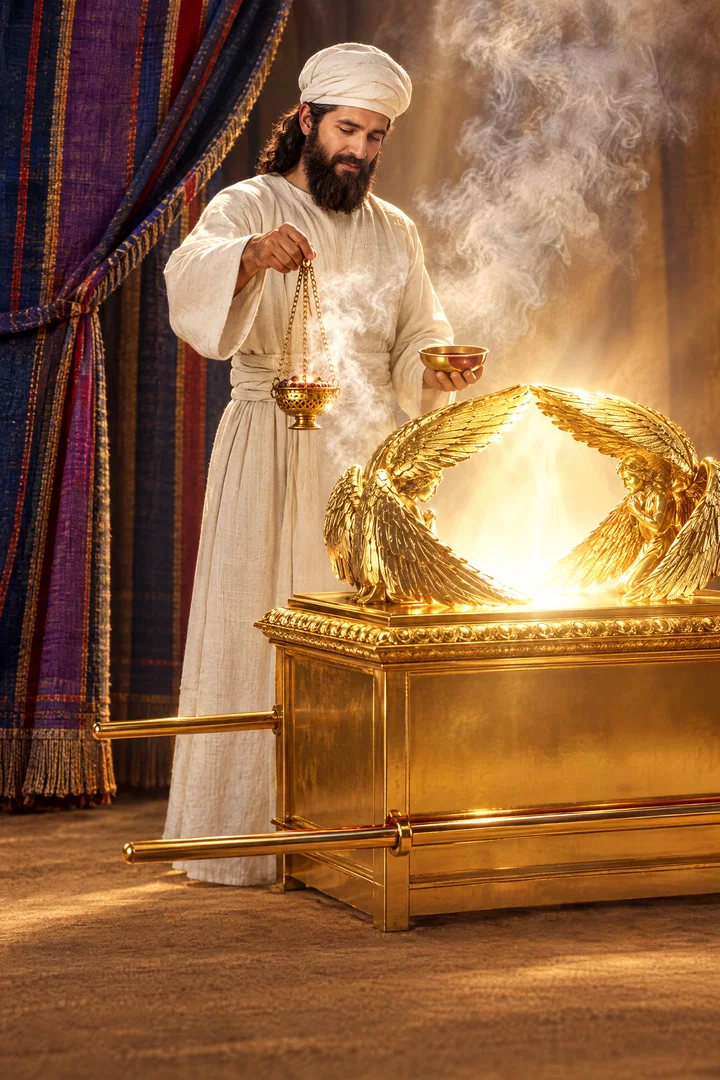
Now when these things were thus ordained, the priests went always into the first tabernacle, accomplishing the service of God.
Translations
American King James Version, King James Version, KJV Cambridge Paragraph Bible
Now when these things were thus ordained, the priests went always into the first tabernacle, accomplishing the service of God.
Now when these things were thus ordained, the priests went always into the first tabernacle, accomplishing the service of God:
Revised Version, American Standard Version
Now these things having been thus prepared, the priests go in continually into the first tabernacle, accomplishing the services;
And these things having been thus prepared, into the first tabernacle, indeed, at all times the priests do go in, performing the services,
Now these things being thus ordered, into the first tabernacle the priests enter at all times, accomplishing the services;
Now, these things having been thus prepared, into the first tent, indeed, continually do the priests enter, the divine services completing;
Berean Standard Bible, Majority Standard Bible
When everything had been prepared in this way, the priests entered regularly into the first room to perform their sacred duties.
Now these things having been thus prepared, the priests go in continually into the first tabernacle, accomplishing the services,
Now while these things were in existence, the priests went into the first Tent at all times, for prayer and the making of offerings.
Nowe when these things were thus ordeined, the Priestes went alwayes into the first Tabernacle, and accomplished the seruice.
Douay-Rheims (Challoner revision)
Now these things being thus ordered, into the first tabernacle the priests indeed always entered, accomplishing the offices of sacrifices.
Pictures
Cross-references 20 of 111
- Hebrews 8:1-5
Now of the things which we have spoken this is the sum: We have such an high priest, who is set on the right hand of the throne of the Majesty in the heavens;
shows earthly sanctuary as figure of heavenly
- Leviticus 16:15-16
Then shall he kill the goat of the sin offering, that is for the people, and bring his blood within the vail, and do with that blood as he did with the blood of the bullock, and sprinkle it upon the mercy seat, and before the mercy seat:
The high priest enters the most holy place and offers blood for sin.
- Hebrews 8:1-2
Now of the things which we have spoken this is the sum: We have such an high priest, who is set on the right hand of the throne of the Majesty in the heavens;
Contrasts the earthly tabernacle service with Christ’s ministry in the true heavenly tabernacle.
- Hebrews 9:11-12
But Christ being come an high priest of good things to come, by a greater and more perfect tabernacle, not made with hands, that is to say, not of this building;
Christ enters the greater heavenly sanctuary as High Priest by his own blood.
- Hebrews 9:23-24
It was therefore necessary that the patterns of things in the heavens should be purified with these; but the heavenly things themselves with better sacrifices than these.
Contrasts earthly copies with heavenly purification through Christ’s ministry in heaven.
- Hebrews 10:1-4
For the law having a shadow of good things to come, and not the very image of the things, can never with those sacrifices which they offered year by year continually make the comers thereunto perfect.
Repeated animal sacrifices could not take away sins; they foreshadow Christ’s effective offering.
- Exodus 25:8
And let them make me a sanctuary; that I may dwell among them.
God commands a sanctuary where he will dwell among his people.
- Exodus 25:22
And there I will meet with thee, and I will commune with thee from above the mercy seat, from between the two cherubims which are upon the ark of the testimony, of all things which I will give thee in commandment unto the children of Israel.
God meets with the priest above the mercy seat between the cherubim.
- Exodus 25:40
And look that thou make them after their pattern, which was shewed thee in the mount.
The earthly sanctuary was made according to the heavenly pattern shown to Moses.
- Hebrews 9:24
For Christ is not entered into the holy places made with hands, which are the figures of the true; but into heaven itself, now to appear in the presence of God for us:
Christ ministers in heaven itself, contrasting with the priests’ service in the earthly sanctuary.
- Exodus 29:38-43
Now this is that which thou shalt offer upon the altar; two lambs of the first year day by day continually.
Prescribes the continual morning and evening offerings, with God meeting Israel at the tabernacle.
- Exodus 30:7-8
And Aaron shall burn thereon sweet incense every morning: when he dresseth the lamps, he shall burn incense upon it.
details incense and lamps in holy place
- Leviticus 16:29-34
And this shall be a statute for ever unto you: that in the seventh month, on the tenth day of the month, ye shall afflict your souls, and do no work at all, whether it be one of your own country, or a stranger that sojourneth among you:
The annual high-priestly service cleanses the sanctuary and atones for Israel.
- Revelation 11:19
And the temple of God was opened in heaven, and there was seen in his temple the ark of his testament: and there were lightnings, and voices, and thunderings, and an earthquake, and great hail.
The opened heavenly temple reveals the ark where Christ ministers.
- Leviticus 16:2
And the LORD said unto Moses, Speak unto Aaron thy brother, that he come not at all times into the holy place within the vail before the mercy seat, which is upon the ark; that he die not: for I will appear in the cloud upon the mercy seat.
death for unbidden entry to most holy
- Hebrews 10:11
And every priest standeth daily ministering and offering oftentimes the same sacrifices, which can never take away sins:
Priests perform repeated daily service, unlike Christ’s single offering.
- Leviticus 8:10-15
And Moses took the anointing oil, and anointed the tabernacle and all that was therein, and sanctified them.
Moses anointed the sanctuary and consecrated the priests before service began.
- Hebrews 7:24-25
But this man, because he continueth ever, hath an unchangeable priesthood.
Christ’s enduring priesthood and continual intercession fulfill the priests’ regular service.
- Exodus 40:9-11
And thou shalt take the anointing oil, and anoint the tabernacle, and all that is therein, and shalt hallow it, and all the vessels thereof: and it shall be holy.
The tabernacle and its furnishings were anointed before service began.
- Hebrews 10:19-20
Having therefore, brethren, boldness to enter into the holiest by the blood of Jesus,
Christ opens access to the holiest through the veil by his blood and flesh.
Commentary
Each commentary is drawn from primary sources: the writings of Ellen G. White and Adventist pioneers and periodicals. Each commentary is separate. Its own words are not a quotation; follow the references to read the source passages.
Ellen G. White
15 sources
The verse describes the priests continually entering the first tabernacle to perform the daily service of God, distinct from entering the most holy place only once a year.WLF 18.3–4SG4 8.3SG1 160.1 That earthly sanctuary with its daily and yearly services was an example, shadow and pattern of heavenly things that explains Jesus' ministry in both apartments of the heavenly sanctuary.SG1 160.1EW 214.2–215.14SP 262.1–263.1 Jesus stands continually as minister of the true tabernacle which the Lord pitched, officiating in the presence of God by His own shed blood and presenting the prayers of the saints with incense before the mercy-seat.WLF 18.3–4SG4 8.3Ms 50, 1900, par. 15 At His death the temple veil was torn and the earthly sacrificial service ended because His sacrifice fulfilled the type and opened the way into the holiest, so repeated earthly sacrifices no longer have virtue.DA 755.1–756.4Ms 50, 1900, par. 15 After He entered the most holy place of the heavenly sanctuary the third angel directs disappointed believers there by faith, and since His ministry there was nearly finished only a short time remained for sins to be blotted out and God's people to be sealed before He leaves with no priest left to present further prayers.EW 39.2EW 216.1EW 48.3–49.1
Earthly Service Described
The verse describes the priests going always, regularly and continually, into the first tabernacle to accomplish the daily service of God, a work distinct from entering the most holy place only once a year.WLF 18.3–4SG4 8.3SG1 160.1EW 214.2–215.18T 284.3–285.1 That continual ministry belonged to the first apartment, while the second apartment was entered only on the one appointed day for ministry in the most holy place.SG1 160.1EW 214.2–215.18T 284.3–285.1EW 39.2 The daily round in the first apartment and the annual cleansing connected with the second together made up the divided ministry of the sanctuary.SG1 160.1EW 214.2–215.1
The first tabernacle in which this daily service was performed included the court and the holy place.PP 351.4 The holy place contained the incense altar, the lampstand, and the table of showbread, followed by a second veil into the Holy of Holies where the ark stands.WLF 18.3–4 The service centered on the ark containing the law of God, the cover of the ark which is the mercy-seat, and the angels at either end of the ark.Lt 253, 1903, par. 17 Other things connected with the heavenly sanctuary and the great day of atonement belong to the mysteries of heaven.Lt 253, 1903, par. 17
The daily service included burning incense mingled with the worshipers' prayers and offering animal sacrifices whose blood pointed to Christ's blood.4RED 125.2–127.1 By contrast, the second apartment was sacred to God's presence behind the veil inwrought with cherubim that no hand save one might lift.8T 284.3–285.1 To intrude unbidden into the sacred mystery of the most holy place was death, for above the mercy-seat and the bowed, worshiping angels dwelt the glory of the Holiest upon which no man might look and live.8T 284.3–285.1 Only on the one day of the year appointed for ministry in the most holy place did the high priest with trembling enter God's presence while clouds of incense veiled the glory from his sight, and throughout the courts of the temple every sound was hushed, no priests ministered at the altars, and the hosts of worshipers bowed in silent awe sent up their petitions for God's mercy.8T 284.3–285.1
Heavenly Ministry Revealed
The daily entrance of the priests into the first apartment to accomplish its continual service, set apart from the high priest's once-a-year entrance into the most holy to cleanse it from sins brought there, was one division of a sanctuary and ministry given as an example, shadow, and pattern of heavenly things.SG1 160.1EW 214.2–215.14SP 262.1–263.1PP 351.4 The sanctuary itself with its court and holy place, and the ministry divided into daily service in the first tabernacle and yearly service in the most holy, explain by their details the ministry of Jesus in both apartments of the heavenly sanctuary.SG1 160.1EW 214.2–215.14SP 262.1–263.1PP 351.4 The earthly priests who performed that first-apartment service died and could not continue indefinitely, but Jesus entered the heavenly sanctuary through the offering of His own blood and remains a priest forever.SG1 160.1
As the priest prayed toward the unseen mercy-seat, so God's people are to direct their prayers by faith to Christ, their Mediator before the mercy-seat in the heavenly sanctuary, trusting though unseen by natural sight that He is there and claiming the benefits of His mediation.SG4 8.3 He continually stands at the altar as minister of the true tabernacle which the Lord pitched and not man, officiating in the presence of God and offering up His shed blood as a lamb slain.Ms 50, 1900, par. 15 There by the ark He presents the oblation for every offense and every shortcoming of the sinner, and presents the saints' prayers to the Father with incense.WLF 18.3–4Ms 50, 1900, par. 15 The unceasing round of that typical daily service together with the yearly service points to the constant commission of sin and the continued need for mediation, and Israel's sacrifices and offerings enabled the people to lay hold of the merits of the coming Savior.SG1 160.1Ms 50, 1900, par. 15
At Christ's death the temple veil was torn and the earthly sanctuary's sacrificial service reached its end, for the lamb then being offered represented Christ whose sacrifice fulfilled the type.DA 755.1–756.4 The way into the holiest was thereby opened and Christ became priest and advocate in heaven, so there is no longer need to wait for an earthly high priest or to rely on repeated sacrifices for sin, and the daily typical shadow possesses no virtue after the cross.DA 755.1–756.4Ms 50, 1900, par. 15 Those priestly services and symbols, including burning incense mingled with the worshipers' prayers and animal sacrifices whose blood pointed to Christ's blood, continued for ages but came to an end when Jerusalem and its temple were destroyed.4RED 125.2–127.1
Prophetic Guidance and Urgency
The regular service of the priests in the first compartment provides the setting for understanding the change in Jesus' ministry, for after He enters the most holy place of the heavenly sanctuary the third angel directs the disappointed believers there by faith.EW 216.1 There they find Jesus and gain renewed hope and joy, and looking back to 1844 they understand their disappointment and see that God has led them.EW 216.1 Jesus now ministers in the heavenly sanctuary, receiving prayers, confessions, and sacrifices.EW 39.2 Before He leaves, sins are blotted out and God's people are sealed, but after He leaves the sanctuary there is no priest to present further prayers or confessions, so the work of rescuing souls must be done beforehand.EW 39.2
This priestly service stands in the context that Jesus' ministry in the most holy place was nearly finished and only a short time remained for the sealing work.EW 48.3–49.1 The continual priestly service in the first apartment, distinct from the second apartment sacred to His presence behind the veil inwrought with cherubim where unbidden intrusion was death, happened by way of example and was written for admonition upon those on whom the ends of the ages are come.8T 284.3–285.1 Above the mercy-seat and the bowed, worshiping angels dwelt the glory of the Holiest upon which no man might look and live, and only on the one appointed day of the year did the high priest with trembling enter veiled by clouds of incense while every sound in the courts was hushed and worshipers bowed in silent awe sending up petitions for mercy.8T 284.3–285.1
The ministration connected with the holy place belongs to the sanctuary question, which is present truth and a great pillar of faith.4MR 249.1–2 It has been endorsed over and over in a marked manner by the Holy Spirit, and light on it came when the Lord was earnestly sought, with so solemn a view of the heavenly sanctuary and its holy-place ministration that it could not be spoken of for many days.4MR 249.1–2 A true understanding of it means much to God's people, and theories that deny these approved truths or lead away from this light are not truth, and those who present them should not be accepted as teachers.4MR 249.1–2
Sources
Pioneers and periodicals
136 sources
After the two apartments were arranged and ordained, the priests entered regularly, daily and continually into the first apartment to perform the divinely appointed worship.RH May 14, 1867LDT 179.2ST Jan 27, 1890 That first tabernacle is the holy place or outer sanctuary, distinct from the second apartment within the veil, furnished with the candlestick, the table of showbread and the altar of incense, while the most holy held the ark, the tables of the law and the mercy-seat.RH Sep 21, 1905ST Aug 8, 1878ST May 11, 1876ST Mar 25, 1897ST Aug 18, 1881 The daily work there was the morning and evening burnt offering, the burning of sweet incense, the tending of the lamps with the appointed Sabbath, new moon and feast offerings, and the receiving of individual sin offerings whose blood carried confessed sin into the sanctuary.RH Sep 16, 1852ST Jun 26, 1901ST Aug 26, 1913RH Feb 3, 1853RH Jan 9, 1855 That continual first-apartment ministry stands distinct from the high priest alone entering the second apartment once a year on the Day of Atonement with blood to cleanse the sanctuary and put away sin.ST Jan 27, 1890RH Sep 21, 1905RH Aug 10, 1916 The order of the two apartments fixes the order of Christ's ministry, first in the holy place of the heavenly sanctuary from His ascension in A.D. 31, then within the second veil into the most holy at the end of the 2300 days in 1844 to cleanse the sanctuary, blot out confessed sins in the investigative judgment and finish mediation.ST Oct 22, 1874ST Aug 15, 1878RH Mar 10, 1874ST Dec 12, 1916RH Jul 28, 1868
Earthly Wording and Setting
Once the two apartments of the tabernacle had been arranged and ordained, the priests entered the first tabernacle continually to carry out the service of God.RH May 14, 1867LDT 179.2ST Jan 27, 1890ST Nov 20, 1879ST Oct 25, 1905 That going in always means going in regularly, daily and continually to perform divinely appointed worship.RH May 14, 1867LDT 179.2ST Jan 27, 1890ST Oct 25, 1905RH Mar 10, 1874 This recurring ministry in the first apartment stands distinct from the ministry in the most holy place, which took place only once a year.ST Jan 27, 1890ST Oct 25, 1905RH Mar 10, 1874 It belonged to the sanctuary of the first covenant, the earthly tabernacle built by Moses.ST Nov 20, 1879RH Mar 10, 1874
The first tabernacle is the first apartment, the holy place or outer sanctuary.ST Mar 25, 1897ST Aug 18, 1881RH Nov 10, 1863RH Jul 21, 1904RH Mar 17, 1853 It is distinct from the second apartment, the most holy place within the veil, with its own separate service performed at a different time and under different circumstances.ST Mar 25, 1897ST Aug 18, 1881RH Jul 21, 1904RH Mar 17, 1853RH Apr 21, 1851 The priests went always into that first apartment to accomplish the service of God throughout the year, while only the high priest went into the second apartment.ST Mar 25, 1897RH Jul 21, 1904RH Apr 21, 1851 The holy place and the most holy place were separate apartments, and the phrase most holy place does not mean heaven itself as contrasted with places made with hands.RH Nov 10, 1863RH Mar 17, 1853
The priests includes both the common priests and the high priest, and the high priest officiated in the first apartment along with the common priests.RH Dec 1, 1910ST Dec 3, 1912ST Oct 25, 1883 The common priests as well as the high priest regularly entered the first apartment to perform its services through the year.ST Dec 3, 1912ST Oct 25, 1883ST May 15, 1901RH Apr 15, 1873 The common priests could not officiate in the second apartment and were not permitted before the mercy-seat or to enter where the ark and God's throne were located, and there the high priest alone served.RH Dec 1, 1910ST May 15, 1901RH Apr 15, 1873RH Apr 21, 1851 The people themselves never went into the sanctuary, and the priests entered as their representatives, standing in their stead, so that only priests could enter the court of the priests and minister within the sacred precincts.ST Oct 25, 1883RH Nov 10, 1863RH Sep 19, 1912
The first apartment contained the golden candlestick with seven branches and lamps, the table for the show-bread, and the altar of incense.RH Sep 21, 1905ST Aug 8, 1878ST May 11, 1876ST Aug 16, 1910 The second apartment contained the ark of the covenant, a chest overlaid with gold holding the two tables of stone on which were engraved the ten commandments, the standard of righteousness.RH Sep 21, 1905ST Aug 8, 1878RH Apr 21, 1851 That ark was covered by the mercy-seat with the cherubim of glory, and the ark with the symbol of God's presence was in the inner room beyond the second veil.ST Aug 8, 1878ST Aug 16, 1910RH Apr 21, 1851 The sanctuary services followed the pattern shown to Moses, and priests washed before entering because nothing impure could enter in making atonement for sin.ST May 6, 1897ST Aug 16, 1910
The sanctuary described is the worldly sanctuary of the first covenant, which extends from the time of Moses to the death of Christ.ST Aug 8, 1878ST Oct 22, 1874ST Jan 18, 1883RH Jan 20, 1874 It was first the movable tabernacle erected by Moses, then afterward the temple erected by Solomon, then the temple built after the captivity by Zerubbabel and rebuilt by Herod as its continuation.RH Jan 20, 1853RH Jan 20, 1874RH Nov 3, 1863 Together these buildings were a figure or pattern of the true sanctuary, made according to the pattern shown on the mount.RH Jan 20, 1853ST Aug 8, 1878 When Christ died the veil of the temple was rent and God no longer had a sanctuary on earth.
Only after the entire earthly sanctuary with its holy place, most holy place, vessels and furnishings was anointed did the priests begin their continual service in the first tabernacle.RH Mar 8, 1870RH Feb 3, 1853RH Mar 15, 1870 That anointing of the two holy places and sacred vessels was the preparatory act that prepared the sanctuary for ministration to begin.RH Mar 8, 1870RH Feb 18, 1858RH Feb 3, 1853 This order shows the regular daily ministration belonged in the first apartment, distinct from the high priest's yearly entrance into the second apartment.RH Feb 3, 1853RH Mar 15, 1870 That earthly ministration was the pattern for Christ's work as High Priest in the true heavenly tabernacle, proving His ministration likewise begins in the first apartment and is not confined to the most holy place.RH Mar 8, 1870RH Feb 3, 1853RH Mar 15, 1870
Daily Service Contents
The regular work in the first apartment was the morning and evening burnt offering of one lamb in the morning and one in the evening with its grain and drink offerings, the burning of sweet incense on the golden altar when the lamps were lighted every morning and evening, and the tending of the lamps.RH Sep 16, 1852ST Jun 26, 1901ST Aug 26, 1913RH Mar 8, 1870RH Feb 3, 1853 To this belonged the special work upon the Lord's Sabbaths and upon the annual sabbaths, new moons and feasts as set out in Numbers 28:3-10, and the especial work for individuals as they presented their particular offerings through the year.ST Aug 26, 1913RH Mar 8, 1870RH Feb 3, 1853ST Jun 27, 1911 That continual service was performed at the altar of burnt offering and in the holy place, and it stands distinct from the high priest's yearly service in the Holy of Holies as copy and shadow of service in the heavenly sanctuary.RH Sep 16, 1852ST Jun 26, 1901RH Feb 3, 1853ST Jun 27, 1911
In the daily service for sin the transgressor confessed sin over the victim and the victim was slain for the transgression, acknowledging that breaking God's law merited death and expressing faith in the Lamb of God.RH Jan 9, 1855ST Mar 25, 1889ST Jun 4, 1885ST Nov 23, 1904 The priest then carried its blood or flesh into the first apartment and sprinkled it before the veil and upon the holy objects, the blood representing the life of the offering, so that sin was transferred from sinner to victim and through its blood into the sanctuary.RH Feb 3, 1853RH Jan 9, 1855ST Mar 25, 1889ST Jun 4, 1885ST Nov 23, 1904 The sanctuary thus became the receptacle of sin through the year, made unclean by Israel's uncleanness, and the daily carrying of the people's sins into the sanctuary made the yearly cleansing necessary, which the annual Day of Atonement service in the second apartment reversed by cleansing sanctuary and people.RH Jan 9, 1855ST Mar 25, 1889ST Jul 4, 1911ST Nov 23, 1904 Animal blood in these figures could not itself take away sin or make the worshiper perfect as pertaining to the conscience, but pardon was granted through the promised blood of Christ and the offerings helped worshipers grasp sin's seriousness and its penalty of death.RH Jan 9, 1855ST Mar 25, 1889
The daily ministry was done at the holy place where the Lord promised to meet with them, at its entrance where the continual offering was made.RH May 19, 1874RH Nov 17, 1863ST Jan 17, 1884 God's glory was manifested there and in the most holy, at times filling the whole sanctuary so that the priests could not enter to minister.ST Jan 17, 1884 The first tabernacle or outer sanctuary was the place of continual priestly service distinct from the holy of holies, holding the showbread table, the constantly burning seven-branched lampstand, and the incense altar, while the ark and the symbol of God's presence were in the inner room.RH Nov 10, 1863ST Aug 16, 1910 Priests alone were permitted to enter the court of the priests and to minister within the sanctuary, as when Zacharias offered incense within while the people prayed apart for pardon, and they washed before entering because nothing impure could enter in making atonement for sin.RH Nov 10, 1863ST Aug 16, 1910
This first-apartment work continued 359 days in the reckoning of some and 364 days in the reckoning of others, year after year while Israel remained faithful, as the first part of a complete yearly round.ST Mar 25, 1889ST Feb 17, 1890ST Jun 24, 1880RH Feb 25, 1858 That complete round of priestly service in both apartments covered one year and closed with the special service on the tenth day of the seventh month called the cleansing of the sanctuary and the Day of Atonement, when the annual service removed the sins from the sanctuary.ST Mar 25, 1889ST Nov 23, 1904ST Jun 24, 1880 Because the earthly service was a pattern of heavenly things, Christ's ministry in the heavenly sanctuary includes this first-apartment ministry before the later work of cleansing, otherwise most of the earthly service would have no counterpart.ST Feb 17, 1890ST Jun 24, 1880RH Feb 25, 1858
Yearly Service Contrast
The daily service in the first apartment stands distinct from the service in the most holy place, which took place once a year.ST Jan 27, 1890ST Oct 21, 1880RH Jun 28, 1864ST Nov 28, 1892 The priests went always into the first tabernacle through the whole ceremonial year to accomplish the divinely appointed ceremonies for cleansing, receiving sinners who came to confess sins by offering of blood.RH Sep 21, 1905RH Aug 10, 1916ST Oct 21, 1880ST Nov 28, 1892 That cleansing work was confined to the common priests and to the first apartment, for the regular priests were not permitted to serve before the mercy-seat in the second apartment.RH Sep 21, 1905RH Aug 10, 1916 At the end of each ceremonial year the work was taken up by the high priest, who on the tenth day of the seventh month entered the second apartment alone before the ark with blood for himself and for the errors or sins of his people to sprinkle before the mercy-seat, to complete the atonement, cleanse the sanctuary and put away sin.RH Sep 21, 1905RH Aug 10, 1916ST Oct 21, 1880ST Nov 28, 1892 This daily ministry did not close the work for the sinner, and complete cleansing from sin under the earthly typical system was not accomplished until the year's end when the high priest entered where the mercy-seat was.RH Sep 21, 1905RH Aug 10, 1916 Under the former dispensation this arrangement meant people approached God through an outward priesthood, unlike present access to God for oneself.RH Jun 28, 1864
There are two grand divisions, phases, kinds and degrees of ministration in the earthly sanctuary, which had two holy places patterned after the true tabernacle in heaven.RH Mar 8, 1870RH Feb 3, 1853RH Aug 10, 1916ST Mar 10, 1898RH Mar 22, 1870 The first is the daily service in the holy place by the Levitical priests after the anointing of its two holy places and sacred vessels, as the example and shadow of Christ's more excellent ministry in the true tabernacle in heaven.RH Mar 8, 1870RH Feb 3, 1853 That daily accomplishing of the service of God consisted of the regular morning and evening burnt offering, the burning of sweet incense upon the golden altar when the lamps were lighted every morning and evening, the special work upon the Lord's Sabbaths and upon the annual sabbaths, new moons and feasts, and the especial work for individuals as they presented their particular offerings during the year, in which sin was transferred from the sinner to the victim and through its blood or flesh carried into and sprinkled upon the sanctuary where it was lodged through the year.RH Mar 8, 1870RH Feb 3, 1853ST Nov 23, 1904 This continual work in the holy place through the year stands distinct from the yearly work of the high priest alone in the second tabernacle, the most holy place, performed by different people, at different times, and in separate apartments, arising because of the people's errors and pointing to a remedy for sin.RH Feb 3, 1853RH Aug 10, 1916ST Mar 10, 1898 The verse thus reveals two sets of ceremonies performed by two different degrees of priestly service, which as an accurate shadow show the process of operation in the heavenly sanctuary where Christ serves as High Priest, with the cleansing of the sanctuary changing the ministration from the one to the other.RH Aug 10, 1916RH Mar 22, 1870 In heaven the holy-place ministration began immediately after the typical system ended at the close of the sixty-nine and a half weeks, and the holiest-of-all ministration begins with the termination of the 2300 days when Christ as High Priest enters the holiest with His own blood to cleanse the sanctuary, a work having the two-fold purpose of forgiveness of iniquity and cleansing of the sanctuary.RH Mar 22, 1870
The continual ministration in the first apartment, the holy place, was part of a complete round of priestly service in both apartments that covered one year and closed with a special service on the tenth day of the seventh month called the cleansing of the sanctuary and the Day of Atonement, with the blotting out of sin and a work of judgment.ST Nov 23, 1904ST Nov 28, 1895 The short period of one year allowed each high priest to complete the entire round and thus shadow forth the complete priestly service of Christ, whose priesthood after the order of Melchizedek is unchangeable and does not pass from one to another by death, with each year's round foreshadowing His work which was once for all.ST Nov 23, 1904ST Nov 28, 1895 That yearly earthly service typified Christ's priesthood in the heavenly sanctuary, which He began when He ascended on high, and His ministry begins in the first apartment and continues before the sanctuary is cleansed.ST Nov 28, 1895RH Feb 25, 1858 The daily ministry occupied 364 days of the year, while service in the most holy apartment took place on one day for the cleansing of the sanctuary.ST Jun 24, 1880RH Feb 25, 1858 Because the earthly service was a pattern of heavenly things, Christ's ministry in the heavenly sanctuary includes the first-apartment ministry before the later work of cleansing the sanctuary; otherwise most of the earthly service would have no counterpart or antitype.ST Jun 24, 1880RH Feb 25, 1858
Shadow of Heavenly Ministry
The earthly sanctuary with its two apartments, its furniture, its ordinances and its priestly ministry was made exactly after the pattern shown on the mount as an example and figure and copy and shadow of heavenly things.LDT 179.2ST Jun 26, 1901ST Aug 15, 1878RH Sep 20, 1864RH Jan 9, 1855 That true tabernacle is greater and more perfect, not made with hands, which the Lord pitched and not man, and while the first tabernacle stood it signified that the way into its holy places was not yet opened.ST Aug 15, 1878RH Jan 9, 1855RH Aug 31, 1916 With the new covenant came the real sanctuary, and when Christ ascended He became great High Priest and entered the temple of God by His own blood to minister there by Himself once for all.ST Oct 22, 1874ST Feb 7, 1906ST Aug 15, 1878 There Jesus the Christian High Priest now intercedes for those who come to God through Him, and the continual service in the first apartment with its daily offerings and burning of incense, together with the service in the second compartment, provides the order of His complete ministry for sin.ST Jun 26, 1901ST Oct 22, 1874ST Feb 7, 1906RH Sep 20, 1864
The gifts and sacrifices of goats and calves and beasts, with meats and drinks and divers washings and carnal ordinances, were imposed until the time of reformation as types pointing forward to Christ's atoning work.RH Jul 18, 1854RH Jan 9, 1855RH Aug 31, 1916ST May 1, 1879RH Aug 22, 1854 They were a figure and shadow of the heavenly and of good things to come, whose full gospel meaning was not yet clearly understood in the old dispensation, and the Holy Spirit thereby signified that the way into the holiest of all was not yet clearly set forth until the better service through Christ should be established by the gift of His life and the offering of His blood for sin.ST Jan 13, 1914RH Aug 31, 1916 That blood of animals could not take away sin nor remit sin nor make him that did the service perfect as pertaining to the conscience nor save by itself.RH Jul 18, 1854RH Jan 9, 1855ST May 1, 1879 Pardon was granted through the promised blood of Christ, Christ's death is the true and effective atonement, Christ's own blood cleanses from sin, and salvation depends on His mediation.ST Mar 25, 1889ST May 1, 1879RH Aug 22, 1854
The Levitical and Aaronic priesthood with its typical daily and yearly services belonged to the temporary ceremonial system connected with the sanctuary and priesthood, distinguished from the enduring moral law.RH Jan 20, 1853ST Mar 20, 1879RH Sep 11, 1856 That priesthood was later replaced by the priesthood of Melchisedec, its offerings ceased at the cross, and its ministry continued only until Christ's death when the shadow ended and the substance began.RH Jul 7, 1853RH Jan 20, 1853RH Sep 11, 1856 Those earthly services ended when Jesus the true Sacrifice died, thereafter Christ ministers in heaven's true tabernacle of which the earthly was an exact pattern while the gospel continues and people receive forgiveness.RH Jul 7, 1853 Its fulfillment did not occur alongside the earthly type, each year's service representing in its main features Christ's priesthood from His ascension until His glorious coming, and it cannot be revived since renewing animal sacrifices would deny the finality of Christ's once-for-all offering and return from reality to shadow.RH Jul 18, 1854RH Jul 7, 1853
In one understanding, the daily service in the first room prefigures an antitypical tabernacle of earth and heaven with a veil between.RH Jan 24, 1856 In that understanding earth is the first room or sanctuary in which Christ offered Himself a sacrifice for sins once for all, before passing from thence through the veil into the second room or heaven itself to carry and present His own blood before the mercy-seat as officiating High Priest, distinct from the second room within the veil entered only once a year alone with blood to sprinkle before the mercy-seat to make atonement.RH Jan 24, 1856
The daily ministry began only after the priests received the sacrificial victim's blood, and the atonement made in this service was for the forgiveness of individual sins.RH Jan 6, 1916RH Sep 16, 1852 In that daily service a penitent confessed sins over an offering and killed it, the priest carried some of its blood into the first apartment and sprinkled it before the veil, symbolically transferring the sins there and acknowledging that breaking God's law merited death.ST Mar 25, 1889RH Jan 6, 1916 This expressed faith in the Lamb of God whose atoning blood would plead before the law on the sinner's behalf, helped worshipers grasp sin's seriousness and its penalty of death, and pardon was granted through the promised blood of Christ though animal blood could not take away sin.ST Mar 25, 1889RH Jan 6, 1916 The sanctuary's rites expressed faith and hope and reconciliation, taught that sin required cleansing and conscience needed healing and peace with God came through sacrifice, and access to God's presence came through the altar and the blood of a sacrificial victim, as the Passover lamb's blood taught that safety from judgment was found in the lamb's blood.RH Apr 24, 1913 The sacrifices pointed to Christ's blood shed at Calvary for remission of sin while the inner sanctuary represented God's throne with His law in the ark and the mercy-seat above it, the mercy-seat standing between sinner and broken law typifying Christ who bore the penalty of transgression, joining mercy with justice and revealing God as universal Lawgiver and loving Father, so that breaking the law affronts His throne.RH Apr 24, 1913
Timing of Christ's Ministry
The order of the two apartments fixes the order of Christ's ministry, for the regular service of priests in the first compartment was the pattern of His work as High Priest in the heavenly temple after His ascension.ST Oct 22, 1874ST Aug 15, 1878RH Mar 10, 1874ST Nov 20, 1879RH Aug 28, 1853 From Pentecost in A.D. 31 He ministered first in the first apartment of the heavenly sanctuary, and then at the appointed time at the end of the 2300 days in the fall of 1844 He passed within the second veil into the most holy place before the ark to cleanse the sanctuary and complete His mediation.ST Oct 22, 1874ST Aug 15, 1878RH Jan 1851ST Nov 20, 1879RH Aug 28, 1853 The continual service in the first belonged to the first covenant and pertained only to the earthly sanctuary, while that first tabernacle stood signifying that the way into the holy places of the heavenly temple was not yet opened.ST Aug 15, 1878RH Jan 1851ST Nov 20, 1879 With the introduction of the new covenant came the real sanctuary which the Lord pitched, entered by Christ by His own blood as great High Priest, and the service in its two apartments is traceable in the New Testament.ST Oct 22, 1874ST Aug 15, 1878RH Mar 10, 1874 The Levitical order began in the first apartment and ended with cleansing in the Most Holy Place, so Christ's work likewise begins in the first apartment and concludes with the cleansing of the sanctuary in the Most Holy Place.RH Mar 10, 1874ST Nov 20, 1879RH Aug 28, 1853
Of the 2300-year period, 400 years belonged to the earthly sanctuary, and only 490 years were allotted to the first covenant, the worldly sanctuary and the Jewish church.RH Oct 2, 1856ST May 27, 1880RH Feb 18, 1858 When the Saviour confirmed the new covenant at the close of the sixty-nine and a half weeks the typical system ended, the old covenant passed away, the services of the worldly sanctuary forever ceased, and the Jewish church no longer had pre-eminence above any other people.RH Oct 2, 1856ST May 27, 1880RH Feb 18, 1858 There still remained 1810 years to the cleansing, proving that the sanctuary to be cleansed belongs to the second covenant.RH Oct 2, 1856ST May 27, 1880RH Feb 18, 1858 Since the 2300 days reach into the gospel dispensation, that sanctuary is the true tabernacle in heaven which the Lord pitched and not man, the only thing properly called God's sanctuary in the gospel dispensation, and not the earth, Canaan, the people of God, or the earth renovated by fire.RH Jun 9, 1851RH Sep 2, 1851RH Feb 15, 1870 The pattern shown to Moses on the mount was that heavenly sanctuary itself, and Moses' obedience makes the type a perfect guide to the substance, leading to a correct view of Christ's priesthood fulfilled in heaven after His ascension as minister of the sanctuary and not on earth at the first advent.RH Jun 9, 1851ST May 27, 1880RH Feb 15, 1870 Its cleansing marks the time of the day of atonement, which began after the 2300 days ended in autumn 1844.RH Oct 2, 1856ST May 27, 1880RH Sep 2, 1851
The heavenly sanctuary is literal with two real holy places and a real distinction between holy and most holy, the holy place and most holy place being separate apartments with separate services performed at different times and under different circumstances.RH Aug 28, 1853RH Mar 17, 1853RH Feb 21, 1854RH Mar 17, 1853 The phrase most holy place in Hebrews 9 does not mean heaven itself as contrasted with places made with hands, for the contrast is between the holy places made with hands and heaven itself.RH Mar 17, 1853RH Mar 17, 1853 Christ did not begin in both compartments at once at His ascension, and His entrance into heaven's most holy place cannot at the same time be made the antitype of the first-apartment service, which had its own distinct antitype and cannot be treated as having no counterpart.RH Aug 28, 1853RH Apr 28, 1853RH Jul 7, 1853 There is no future human temple for its fulfillment, for the most holy place service corresponding to the ancient service on the tenth day of the seventh month is not to be placed in a future age in a sanctuary built by human hands.RH Mar 17, 1853RH Apr 28, 1853RH Jul 7, 1853 The day-for-a-year rule applies to prophetic periods, not to type days, so the length of the most holy ministry is not calculated by making each day of the type represent a year.RH Mar 17, 1853RH Apr 28, 1853 If the most holy duration is proportioned to the first-apartment ministry it may require several prophetic days as a brief period ending human probation and leading to the seven last plagues.RH Mar 17, 1853RH Apr 28, 1853RH Mar 17, 1853
As Moses and Aaron anointed the earthly holy places and vessels before ministration, Christ anointed and consecrated the heavenly sanctuary with His own blood when He entered upon His priestly work after His ascension.RH Feb 18, 1858RH May 8, 1856ST Mar 26, 1912RH Jan 20, 1853 That anointing of the most holy prepared the sanctuary for its ministration to begin, and Christ does in the true tabernacle in heaven, the Most Holy, the Holy of Holies, what Moses and Aaron did in the pattern.RH Feb 18, 1858RH Jan 20, 1853 The anointing of the earthly Holy of Holies preceded the sin offering before the mercy seat, and Christ had to enter within the veil to fulfill this pattern.RH Feb 18, 1858RH May 8, 1856ST Mar 26, 1912 Yet He began in the holy place where the seven lamps, candlestick, table and golden altar are, with the throne of God there located at the beginning of the gospel dispensation.RH Feb 18, 1858RH Jan 20, 1853RH May 11, 1869 The change of ministration from the holy to the most holy at the end of the 2300 days fulfills prophecy in the administration of God's government and does not mean God's nature or immutability has changed.RH Jan 14, 1858
Atonement Cleansing and Judgment
The regular service in the first tabernacle belonged to the typical dispensation as pattern and shadow, and the yearly cleansing that closed its round explains why the heavenly sanctuary also requires cleansing by a better sacrifice.RH Feb 21, 1856RH Sep 14, 1869RH Dec 15, 1868 That cleansing is a priestly work done with blood, not with fire and not as fiery vengeance, and it is the High Priest's concluding work in the tabernacle before Christ's second coming.RH Dec 5, 1854RH Apr 28, 1853RH Apr 30, 1857 It removes sin and iniquity rather than physical dirt, because the people's sins borne into the sanctuary through the year made cleansing by blood necessary.RH Feb 21, 1856RH Dec 15, 1868 While that work continues His intercession restrains God's wrath.RH Apr 30, 1857
Christ ministers in the true sanctuary by His own blood, having offered Himself once for all, and that ministry with His blood shed at Calvary both cleanses the heavenly sanctuary and purifies the worshipers purged from sin to prepare them for the second advent.ST Feb 7, 1906RH Apr 5, 1864 The language about entering by blood does not describe the priest's own bodily condition as flesh and blood.RH Aug 25, 1874 Aaron entered the most holy not by the blood in his veins but by the blood of the sin offering slain outside the sanctuary, and in the same way Christ entered Heaven itself as High Priest by His own blood shed as a sacrifice on the cross, which is the offering He presents to the Father.RH Aug 25, 1874 The cross was the offering of the sacrifice, while the atonement is the final part of the priestly work of presenting its merits and interceding for those who come to God, including those under the old covenant, and that work precedes His coming again to bring salvation.ST Sep 18, 1884RH Nov 24, 1874RH Apr 30, 1857
The patterns of things in the heavens had to be purified with blood of calves and goats, for without shedding of blood is no remission, but the heavenly things themselves must be purified with better sacrifices, meaning Christ who appeared once in the end of the world to put away sin by the sacrifice of Himself.ST Dec 12, 1916 That closing work disposes completely of the sins of those who by confession, repentance and faith placed their sins upon the sanctuary and maintained confidence steadfast unto the end, blotting out the confessed sins of the righteous forever in forgiveness and acquittal.ST Dec 12, 1916RH Aug 22, 1912 The earthly service continued through the year while the high priest made atonement on the last day, and when he left the sanctuary the work for Israel was finished; this represented Christ's ministry in the heavenly sanctuary, including the great atonement that is the real judgment taking place there.RH May 18, 1869ST Jan 3, 1911 After the sanctuary work is completed and the sanctuary is cleansed the sins are placed on the scapegoat, which represents Satan the originator of sin and not Christ, who bears them to a land not inhabited.RH May 9, 1871 The earthly yearly round was completed once a year, while the new-covenant fulfillment is a once-for-all service in which the plan of salvation draws to a close as the great High Priest makes atonement and will come forth to bring His people the everlasting covenant of peace.RH Jul 28, 1868
In the old-covenant system Aaronic priests received the confessions of Hebrew penitents in the first apartment, and this serves as the pattern for Christ who as priest receives Christians' confessions in the first apartment of the heavenly sanctuary in His continuing work of intercession.RH Oct 15, 1901RH Sep 26, 1912ST Mar 11, 1875 The regular ministry of the Levitical priests in the first apartment was a type of Christ's mediatorial ministry in heaven, while the high priest's later entrance into the most holy prefigured the final portion of His ministry in removing sins from the sanctuary.ST Feb 21, 1878 The daily ministry through the sacrificial blood carried confessed sins into the sanctuary through the year, prefiguring Christ's ministry in the first apartment before the day of atonement when the sanctuary would be cleansed.ST Mar 11, 1875 The sanctuary must be cleansed by Christ while yet a priest before He takes His kingdom, and the yearly order shows the practical lesson that atonement was made at the end of the service, not at its beginning.ST Apr 20, 1904ST Jan 3, 1911
The sanctuary is the temple in heaven where Christ the great High Priest ministers for sinners, and its cleansing is His concluding work which ends the sanctuary ministry and completes the plan of salvation.ST May 20, 1875RH May 13, 1875 The continual service in the first tabernacle through the year was distinct from the high priest's once-yearly entry into the second apartment on the Day of Atonement when the sanctuary was cleansed and sin put away.ST Oct 21, 1880 Its cleansing marks the time of the day of atonement, reached at the end of the 2300 days in autumn 1844.RH Sep 2, 1851RH May 13, 1875 This closing work is of indefinite duration but from its nature cannot be long and proves the end is at the doors, and it includes the judgment of Revelation 14:7.ST Apr 20, 1904RH May 18, 1869RH May 13, 1875
Covenant Law and Application
The verse belongs to the account of the sanctuary under the first or old covenant made at Horeb, which had a worldly sanctuary with ordinances of divine service and a priesthood continually entering the first tabernacle to accomplish the service of God.RH Feb 11, 1858RH Feb 18, 1858RH Jan 20, 1853RH Oct 8, 1857 To speak of a first covenant necessarily implies a second covenant, and to connect a sanctuary and divine service with the first clearly implies the second also has a sanctuary with divine service in heaven.ST May 27, 1880RH Feb 18, 1858 That second, new and better covenant with its own sanctuary commenced when the old passed away, the confirmation of the covenant was finished, the services of the worldly sanctuary forever ceased, and the Jewish church no longer held pre-eminence, with only 490 years of the 2300 years allotted to the first covenant, the worldly sanctuary and the Jewish church until the typical system ended at the close of the sixty-nine and a half weeks, leaving 1810 years to the cleansing of the true sanctuary at the termination of the 2300 days.ST May 27, 1880RH Feb 18, 1858 The ministration of service is distinct from the words engraven in stones, and the tables of the covenant and the Ten Commandments are distinguished from the first covenant itself as its basis and terms, which had them, while the first covenant was dedicated with blood.ST Dec 23, 1897 Its services belonged to the temporary typical dispensation of the law, and when they ended the way into the true heavenly sanctuary was laid open where Christ serves as high priest in the greater and more perfect tabernacle, a ministry that began at Pentecost.RH Jan 20, 1853RH Oct 8, 1857
The arrangement distinguished the regular service of the Levitical priests in the first apartment from the ministry associated with the second apartment where the ark containing God's perfect moral law was kept.RH Aug 22, 1854ST Jan 6, 1881 The ceremonial law and Aaronic priesthood with blood offerings taught how atonement could be made for transgression of that law, teaching that sin could not be pardoned without sacrifice, while their sacrifices were shadows pointing forward to Christ's sacrifice and priestly ministry in the heavenly sanctuary as the reality.RH Aug 22, 1854ST Jan 6, 1881 That typical ministry did not cancel or weaken the law kept in the sanctuary, including the fourth commandment, but the sin-offering blood sprinkled on the mercy-seat above that law extended pardon to the penitent without abolishing it.RH Aug 22, 1854 The mercy-seat stood between the sinner and the broken law and typified Christ who bore the penalty of transgression, so that breaking God's law affronts His throne and brings the sinner to answer to its Ruler, while God's throne joins mercy with justice and reveals Him as both universal Lawgiver and loving Father.RH Apr 24, 1913 The tabernacle services thus related to God's law and to Christ's mediatorial work of putting that law in the human mind and heart through His taking human flesh, and the moral law remains the foundation of God's moral government.ST May 14, 1902ST Oct 29, 1902
Hebrews 8 and 9 present in concise form matters described at length in the Old Testament without contradicting it, and Hebrews 9:2-7 gives a brief statement covering the essential features of the tabernacle, its furniture, and its services.RH May 20, 1902ST Jan 16, 1907 The actual tabernacle and later the temple with its round of services and orderly Levitical rites was a continual object lesson to Israel and a God-given type pointing to Christ's work of redemption.RH May 20, 1902RH Nov 8, 1915 The record even to the minutest details has been preserved not with the expectation that the same ritual should be performed, but so that the same benefit received from the visible forms may be received from the written word, making study of that portion of Scripture full of interest and profit.RH May 20, 1902 Its rites were acts of witness showing forth daily spiritual worship, giving knowledge of salvation through Messiah, teaching God's way in the sanctuary and Christ's work on behalf of humanity, and proving Jesus is the Messiah to whom Israel was called to witness before the nations.ST Jun 19, 1907RH Nov 8, 1915ST May 17, 1910
The verse means the heavenly sanctuary has a definite holy place ministry and a definite most holy place ministry with a change from one to the other, and in this generation the High Priest ministers in the most holy place with a definite special work.RH Dec 3, 1903 Knowing the definite place of His ministry makes a practical difference to the individual Christian and to the teacher of the gospel, and the sanctuary and its services and the change of ministry from the holy to the most holy place and relation to it constitute the true test of the third angel's message, to be made clear and prominent and strong in teaching and not spiritualized away into generalities about substance and shadow.RH Dec 3, 1903 The present Sabbath test in its connection with prophecy and the sanctuary began after that transition in 1844, and responsibility depends on the light people have received, so those who died before this light and test came did not bear the same responsibility as those who received it afterward.RH Jun 26, 1866 The sanctuary and its services provide scriptural teaching against the claim that a priest controls Christ's presence in a tabernacle, the rites continued steadfastly preserving priestly order, and a Christian church's holiness does not depend on grandeur but on Jesus' grace which makes even a humble house of prayer a sanctuary.RH May 21, 1908RH Mar 25, 1909RH May 30, 1912
Under the former dispensation people approached God through an outward priesthood, with priests regularly entering the first part of the tabernacle to carry out the service of God while access to the second part was restricted to the high priest entering alone once a year.RH Jun 28, 1864 Those first-apartment services represented the way saints could approach God and seek blessing before Christ's death, since as the priests could enter the first apartment at all times the saints could approach God while awaiting the promised sacrifice, with forgiveness freely promised.RH Jul 7, 1853 The distinction between this regular service and the high priest's yearly entry into the second apartment showed that a more perfect way of approaching God would become available through Christ's work.RH Jul 7, 1853 The sanctuary's rites expressed faith, hope and reconciliation through altar and blood, teaching that sin required cleansing, conscience needed healing, peace with God came through sacrifice, and safety from judgment and from Satan was found in the lamb's blood, while the blood-bought mercy-seat remains a refuge bringing sanctification, peace and comfort to mourners.RH Apr 24, 1913ST Aug 16, 1910ST May 14, 1902
Sources