Hebrews 9:12
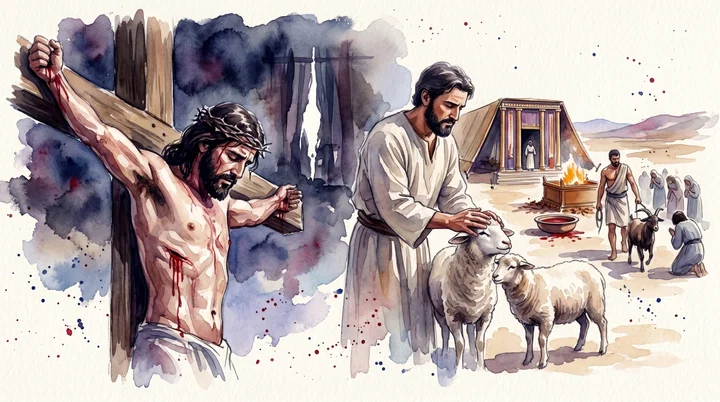
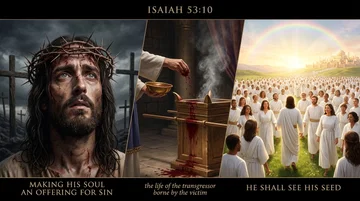
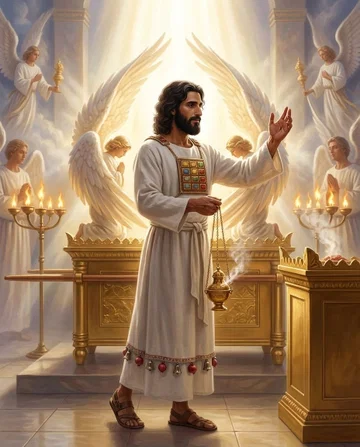
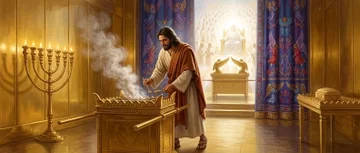
Neither by the blood of goats and calves, but by his own blood he entered in once into the holy place, having obtained eternal redemption for us.
Translations
American King James Version, King James Version
Neither by the blood of goats and calves, but by his own blood he entered in once into the holy place, having obtained eternal redemption for us.
neither by the blood of goats and calves, but by his own blood he entered in once into the holy place, having obtained eternal redemption for us.
Neither by the blood of goats and calves, but by his own blood; he entered in once into the holy place, having obtained eternal redemption for us.
Revised Version, American Standard Version
nor yet through the blood of goats and calves, but through his own blood, entered in once for all into the holy place, having obtained eternal redemption.
neither through blood of goats and calves, but through his own blood, did enter in once into the holy places, age-during redemption having obtained;
nor by blood of goats and calves, but by his own blood, has entered in once for all into the [ holy of] holies, having found an eternal redemption.
Nor yet through blood of goats and calves, but through his own blood he entered once for all into the Holy place, age-abiding redemption discovering.
Berean Standard Bible, Majority Standard Bible
He did not enter by the blood of goats and calves, but He entered the Most Holy Place once for all by His own blood, thus securing eternal redemption.
nor yet through the blood of goats and calves, but through his own blood, entered in once for all into the Holy Place, having obtained eternal redemption.
And has gone once and for ever into the holy place, having got eternal salvation, not through the blood of goats and young oxen, but through his blood.
Neither by the blood of goates and calues: but by his owne blood entred he in once vnto the holy place, and obteined eternall redemption for vs.
Douay-Rheims (Challoner revision)
Neither by the blood of goats, or of calves, but by his own blood, entered once into the holies, having obtained eternal redemption.
Pictures
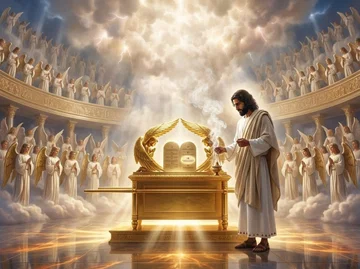
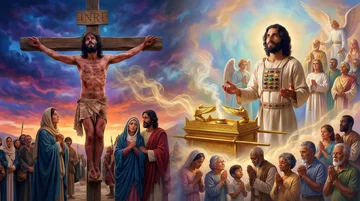
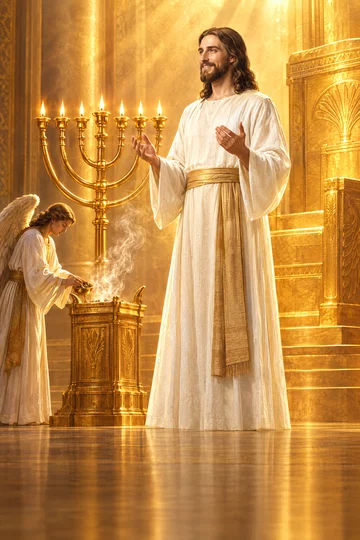
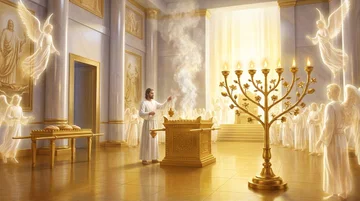
Cross-references 20 of 166
- Hebrews 8:1-2
Now of the things which we have spoken this is the sum: We have such an high priest, who is set on the right hand of the throne of the Majesty in the heavens;
Christ ministers as High Priest in the true heavenly sanctuary.
- Hebrews 9:24
For Christ is not entered into the holy places made with hands, which are the figures of the true; but into heaven itself, now to appear in the presence of God for us:
Christ appears in heaven before God on behalf of us.
- Leviticus 16
And the LORD spake unto Moses after the death of the two sons of Aaron, when they offered before the LORD, and died;
Describes the blood-based cleansing carried out by the high priest.
- Hebrews 8:5
Who serve unto the example and shadow of heavenly things, as Moses was admonished of God when he was about to make the tabernacle: for, See, saith he, that thou make all things according to the pattern shewed to thee in the mount.
Earthly priestly service is a pattern and shadow of heavenly things.
- Hebrews 10:1-4
For the law having a shadow of good things to come, and not the very image of the things, can never with those sacrifices which they offered year by year continually make the comers thereunto perfect.
Animal sacrifices were shadows and could not make worshipers perfect; Christ’s offering fulfills them.
- Hebrews 9:8
The Holy Ghost this signifying, that the way into the holiest of all was not yet made manifest, while as the first tabernacle was yet standing:
The first tabernacle signified that access to the heavenly holy places was not yet revealed.
- Hebrews 10:19
Having therefore, brethren, boldness to enter into the holiest by the blood of Jesus,
Christ’s blood gives believers bold access to the holiest.
- Hebrews 9:23
It was therefore necessary that the patterns of things in the heavens should be purified with these; but the heavenly things themselves with better sacrifices than these.
Christ’s blood cleanses the heavenly sanctuary, fulfilling the earthly pattern.
- Hebrews 10:12
But this man, after he had offered one sacrifice for sins for ever, sat down on the right hand of God;
Christ offers one sacrifice for sins and sits at God’s right hand.
- Revelation 11:19
And the temple of God was opened in heaven, and there was seen in his temple the ark of his testament: and there were lightnings, and voices, and thunderings, and an earthquake, and great hail.
The heavenly temple is opened, revealing the ark in God’s sanctuary.
- Hebrews 9:26
For then must he often have suffered since the foundation of the world: but now once in the end of the world hath he appeared to put away sin by the sacrifice of himself.
Christ’s once-for-all sacrifice puts away sin rather than repeating the yearly offering.
- Hebrews 7:25
Wherefore he is able also to save them to the uttermost that come unto God by him, seeing he ever liveth to make intercession for them.
Christ’s continuing priestly work makes salvation available.
- Leviticus 16:30
For on that day shall the priest make an atonement for you, to cleanse you, that ye may be clean from all your sins before the LORD.
The annual atonement cleansed the people from all their sins.
- Hebrews 9:1
Then verily the first covenant had also ordinances of divine service, and a worldly sanctuary.
Introduces the earthly sanctuary as the pattern.
- Hebrews 10:4
For it is not possible that the blood of bulls and of goats should take away sins.
Animal blood cannot take away sins; Christ’s blood alone atones.
- Colossians 2:17
Which are a shadow of things to come; but the body is of Christ.
Ceremonial shadows find their substance in Christ and end with his sacrifice.
- Hebrews 6:20
Whither the forerunner is for us entered, even Jesus, made an high priest for ever after the order of Melchisedec.
Christ enters within the veil as our forerunner and High Priest.
- Hebrews 9:28
So Christ was once offered to bear the sins of many; and unto them that look for him shall he appear the second time without sin unto salvation.
Christ is offered once, not repeatedly.
- Matthew 27:51
And, behold, the veil of the temple was rent in twain from the top to the bottom; and the earth did quake, and the rocks rent;
The torn veil at Christ’s death marked the end of earthly sanctuary services and opened the way to God.
- John 1:29
The next day John seeth Jesus coming unto him, and saith, Behold the Lamb of God, which taketh away the sin of the world.
Christ is the Lamb who takes away the world’s sin.
Commentary
Each commentary is drawn from primary sources: the writings of Ellen G. White and Adventist pioneers and periodicals. Each commentary is separate. Its own words are not a quotation; follow the references to read the source passages.
Ellen G. White
70 sources
After His resurrection and ascension He entered by His own blood, not by the blood of animals, into the heavenly holy place itself, the true and greater tabernacle not made with hands.GC88 421.1DA 165.5–166.3ST Aug 4, 1909 That entrance was once for all, not repeated every year like the earthly high priests, and by one sacrifice forever He obtained eternal redemption and everlasting deliverance from sin.DA 165.5–166.3Ms 101, 1897, par. 17–2012MR 392.1–3GC 180.1GC88 179.2–3 The blood of goats, calves and bulls could not by itself save or satisfy God's demands against transgression, because the life of a beast is of less value than the offending sinner and cannot be a ransom for sin.2SP 10.3–11.1RH Dec 17, 18723SP 10.1–2 At His death type met antitype in the great offering of His own life, the temple veil was torn, animal blood became valueless, and sacrifices and offerings for sin were ended.12MR 392.1–3DA 755.1–756.4SG1 169.1EW 220.2ST Apr 8, 1875 There He ever lives as great High Priest to plead His own blood before the Father for penitent believers, and at the close of the 2300 days in 1844 He entered the Most Holy Place to make the final atonement and cleanse the sanctuary in the investigative judgment.Ms 94, 1899, par. 38–40GC 420.2–421.1Ms 101, 1897, par. 17–20EW 214.2–215.1SG1 161.1
Heavenly Entry and Priesthood
After death and resurrection and ascension He entered the heavenly holy place, which is heaven itself and the true, greater and more perfect tabernacle not made with hands, by His own blood and not by the blood of goats and calves or other animal sacrifices.GC88 421.1DA 165.5–166.3GC 420.2–421.1Ms 101, 1897, par. 17–20Lt 128, 1909, par. 12 The earthly sanctuary and its sacrifices were types pointing to Him, and when the true sacrifice was made the earthly sacrificial service passed away and people were to look to Him as minister of the sanctuary and of the new covenant.DA 165.5–166.3ST Aug 4, 1909Lt 128, 1909, par. 12 His death fulfilled what the temple lamb represented, ended the need for sacrifices and offerings for sin, and opened the way into the holiest.DA 165.5–166.3ST Aug 4, 1909DA 755.1–756.4 The disciples' faith and hope followed Him where He entered as their forerunner, and there He pleads His blood for sinners and presents the prayers of penitent believers with the fragrance of His righteousness.GC88 421.1GC 420.2–421.1
His entrance was once, once for all, not repeated every year as the earthly high priest entered with the blood of others.DA 165.5–166.3Ms 101, 1897, par. 17–2012MR 392.1–3RH Jun 12, 1900LS 110.3–112.1 By one sacrifice for sins forever, by His own life offered as the atoning sacrifice, unlike the repeated animal offerings, He secured and obtained eternal redemption.DA 165.5–166.3Ms 101, 1897, par. 17–2012MR 392.1–3AA 246.2–247.1RH Jun 12, 1900 His completed sacrifice is distinct from the stages of His ministry, for He ministered in the holy place from His ascension until 1844 and then entered the most holy place to make a special atonement and cleanse the sanctuary.LS 110.3–112.1 His death opened access to God for everyone without a human priest or ruler, and opened a new and living way that removed the barrier between Jew and Gentile.12MR 392.1–3RH Jun 12, 1900
There He serves as great High Priest and Advocate in the courts of heaven, as forerunner, as minister of the true covenant with blood that speaks better things than that of Abel, and as the Branch who builds the temple of the Lord and is priest upon His throne, ever living to make intercession so He is able to save to the uttermost those who come to God by Him.GC88 421.1Ms 94, 1899, par. 38–40Lt 128, 1909, par. 12 He is the true High Priest, pure and undefiled without taint of sin and sinless, in contrast to the false and corrupted Caiaphas and the former priestly system that His sacrifice ended.Ms 101, 1897, par. 17–2012MR 392.1–3 He did not glorify Himself but was appointed by God, and having obtained eternal redemption He sat down on the right hand of God as representative, Advocate and friend who can be touched with the feelings of human infirmities.Ms 101, 1897, par. 17–20 He remains a priest forever, while earthly priests died and could not continue their ministry, for the earthly sanctuary and its services were given as a pattern so Israel could grasp His work in heaven and lay hold of the merits of the coming Saviour.Lt 128, 1909, par. 12SG1 160.1
The heavenly temple has a Holy Place and a Most Holy Place, where by the ark He presents the saints' prayers to the Father with incense.WLF 18.3–4 He entered the holiest of all with the blood of the atonement and sprinkles it upon the mercy-seat and upon His own garments and blesses the people.ST Apr 19, 1905Lt 90, 1898, par. 30 Having offered Himself a sacrifice, He entered still bearing the same humanity that was despised on earth as a Man of sorrows veiled in humanity, now triumphant and victorious, exalted and robed in glory.ST Apr 19, 1905Lt 90, 1898, par. 30 He has not entered into a holy place made with hands but into heaven itself, now to appear in the presence of God for us, having come as High Priest of good things to come by a greater and more perfect tabernacle not made by human hands.Ms 94, 1899, par. 38–40Ms 101, 1897, par. 17–20Lt 62, 1907, par. 5–6
Blood and Eternal Redemption
Blood is sacred because atonement for sin comes only through the shedding of the blood of the Son of God.ST Jul 15, 1880 The blood of the slain sacrificial victim symbolized His blood, and the blood used to cleanse the sanctuary from the sins of the people typified the blood of Christ which alone can cleanse from sin.ST Jul 15, 1880
Animal sacrifices and the Jewish priesthood represented His death and mediating work but could not save anyone by themselves, having no power to save apart from Him.2SP 10.3–11.1RH Dec 17, 1872 The blood of goats and calves, of bulls and other beasts, could not satisfy God's demands in atoning for transgression of His perfect law, because the life of a beast is of less value than the life of the offending sinner and therefore could not be a ransom for sin.2SP 10.3–11.1LC1 4.1 Their purpose was to point to Christ, whose perfect sinless offering alone met the demands of God's law, and the blood of beasts was acceptable only as a figure representing the perfect Offering it prefigured.2SP 10.3–11.1RH Dec 17, 1872LC1 4.1 Nor could the blood of bulls and goats wash away guilt where there was no genuine sorrow for sin, for a broken and contrite heart mattered more than many offerings without repentance, and those who rejected the mercies and warnings given in their own time were not cleansed.3SP 10.1–2
The law forbidding the eating of fat or blood was given to keep clear and definite ideas between the sacred and the common.ST Jul 15, 1880 It was to impress the fact that if there had been no sin there would have been no shedding of blood.ST Jul 15, 1880
By His own voluntary offering He obtained never-ending redemption and everlasting deliverance from sin.GC 180.1GC88 179.2–3 His passion is an eternal sacrifice of perpetual efficacy that heals and satisfies divine justice forever for those who rely on it with firm faith.GC 180.1GC88 179.2–3
He could pay that price with His own blood because in Him the divine and the human were united, Creator and creature meeting together.Ms 141, 1901, par. 10 In Him the nature of God whose law had been transgressed and the nature of Adam the transgressor met as Son of God and Son of Man.Ms 141, 1901, par. 10 Having passed through human experience, having met and conquered temptation on man's behalf, and having borne shame and guilt and burden though Himself sinless, He becomes man's Advocate and Intercessor, giving assurance to the tempted and struggling soul and to the witnessing universe that He is a merciful and faithful high priest.Ms 141, 1901, par. 10
His offering was infinitely valuable, and His ascent presented His sacrifice to the Father for acceptance, waiting for the assurance that it was accepted before receiving heavenly honor.RH Dec 17, 1872ST Aug 22, 1878 The atonement for His people was full and ample and sufficient, so that through His blood all may gain eternal life.ST Aug 22, 1878DA 790.3 The cost of His sacrifice at an immeasurable price is a divine mystery angels cannot fully comprehend.2SP 10.3–11.1RH Dec 17, 1872 Through the shedding of the Son of God's blood Satan's murderous deceptive character was exposed and his own destruction made unavoidable.18MR 362.1–3
Earthly Types Fulfilled
The earthly sanctuary with its priesthood, sacrifices and offerings was given as a pattern so Israel could grasp His work in heaven.SG1 160.1RH Dec 17, 1872 Its sacrifices let the people lay hold of the merits of the coming Saviour and preserved faith in the Redeemer to come.SG1 160.1ST Oct 7, 1913 They taught that sin separates people from God and that a mediator is needed, for they were symbols pointing to Him and had no power to save apart from Him.RH Dec 17, 1872ST Oct 7, 1913
All those animal offerings and priestly services pointed forward to Him and found their reality and fulfillment in His crucifixion and priestly sanctuary ministry as the perfect sinless offering.DA 165.5–166.3AA 246.2–247.12SP 10.3–11.1SLP 103.2–104.12SP 122.2–123.2 He is the foundation of the Jewish economy to whom all sacrifices and offerings pointed, and His voluntary sacrifice alone met the demands of God's law and restored communication between God and humanity.2SP 10.3–11.1Lt 164, 1902, par. 28 He entered the temple as His own place, unawed by its splendor, and proclaimed truth there, teaching even in the outer court so Gentiles might hear, while that temple was soon to become the tomb of a departed dispensation.Lt 164, 1902, par. 28
At His death type met antitype in the one great offering of His own life, which all former offerings had foreshadowed.SG1 169.1EW 220.2ST Apr 8, 18752SP 122.2–123.2 The temple veil was torn, showing the earthly sanctuary services and sacrifices had ended, the blood offerings of beasts became valueless, and the Jewish sacrifices, ordinances and ceremonies were no longer accepted by God.SG1 169.1EW 220.2ST Apr 8, 1875SG1 161.1 His death terminated the value of all the sacrificial offerings of the Jewish law, and with His entry by His own blood into the heavenly sanctuary the old system of types and shadows ceased to provide access to God.ST Apr 8, 1875GC88 430.2–3GC 430.2–3
His death fulfilled what the temple lamb represented, ended the need for sacrifices and offerings for sin and for the former priestly system, and opened the way into the holiest.12MR 392.1–3DA 755.1–756.4 It opened a new and living way, removed the wall of partition between Jew and Gentile, and opened access to God for everyone and for all mankind without a human priest or ruler, since He did not die for the Hebrews alone.12MR 392.1–3RH Jun 12, 19004T 121.2–122.112MR 399.2–400.1 The red heifer slain without the camp in solemn manner foreshadowed this whole and ample sacrifice outside the city walls and its cleansing application that remains in force at the present time.4T 121.2–122.1 Its blood the priest in pure white garments cast seven times toward the temple and its body was burned to ashes with cedar, scarlet and hyssop to make cleansing water, and so as both priest and victim in spotless robes of righteousness He cast the virtue of His offering as a crimson current toward the Holy Place to reconcile man to God through the blood of the cross.4T 121.2–122.14MR 243.3
Unlike the high priest who set aside ornate robes to serve in a common priest's white linen dress, He emptied Himself and took the form of a servant to give Himself as both priest and sacrifice.18MR 362.1–3 The Lord's Supper commemorates that greater deliverance through the sacrifice of His life, of which Israel's deliverance from Egypt was a type.SG3 228.1
1844 Closing Atonement
At the close of the prophetic periods in 1844, at the end of the 2300 days, He entered the Most Holy Place of the heavenly sanctuary by His own blood to make a final atonement and cleanse the sanctuary.EW 214.2–215.1SG1 161.1EW 206.116MR 177.3LS 204.1–3 That entry was what the sanctuary type warranted believers to expect on the tenth day of the seventh month in 1844, even though the event anticipated was mistaken.LS 116.1 It was not a cleansing of the earth by fire, and the mistake was not in the reckoning of time but in misunderstanding the sanctuary and its cleansing.SG1 161.1EW 206.1 The earthly priests' animal sacrifices and yearly entrance into the most holy place prefigured this ministry, for after shedding His blood at Calvary He entered to obtain redemption, the temple veil having been torn to show the earthly services and sacrifices had ended.EW 214.2–215.1SG1 161.1 In this prophetic application His entry after the disappointment finished the atonement for human sin for those who could benefit from His mediation, and the investigative judgment began for the dead.SG1 161.116MR 177.3LS 204.1–3
His completed sacrifice is distinct from the stages of His ministry.LS 110.3–112.1 After resurrection and ascension He ministered first in the holy place, in the first apartment, from His ascension until 1844, presenting His people's prayers, repentance and faith before God, purified by His merits.Ms 69, 1912, par. 46–4710MR 157.2–311MR 54.1–2LS 110.3–112.1 Then, at the close of the prophetic periods in 1844, after finishing His ministration in the first apartment, He passed through the second veil in priestly garments to minister in the second apartment, in the Most Holy Place, to atone for sin and cleanse the sanctuary.Ms 69, 1912, par. 46–4710MR 157.2–3EW 213.111MR 54.1–2 His entry did not end His work as intercessor, for He continued to plead His own blood before the Father on behalf of repentant sinners.GC 428.3 His high-priestly work thus brings the divine plan of redemption to completion through the final atonement for sin.Ms 69, 1912, par. 46–4710MR 157.2–311MR 54.1–2
His entrance into the Most Holy Place in 1844 began the closing work of the atonement and the investigative judgment, corresponding to the earthly sanctuary's service on the Day of Atonement.ST May 17, 188316MR 177.3GC 433.1–434.1 There the cases of the righteous dead pass in review before God and then judgment is pronounced upon the living, each judged individually according to the deeds done in the body while He pleads in their behalf and the final irrevocable decision is pronounced upon every case.ST May 17, 1883 As Israel on that typical day was to humble itself and seek pardon while the high priest performed the atonement in the most holy place of the earthly sanctuary, so now in the antitypical Day of Atonement sins must go beforehand to judgment by confession and repentance.ST May 17, 1883GC 430.2–3 God's people must afflict their souls and confess their sins that they may be atoned for and blotted out.ST May 17, 1883
The high priest's yearly entrance, when Israel was to humble itself and seek pardon, points to the need to understand His work as High Priest and the duties it requires.GC 430.2–3 The midnight cry was to prepare people to enter by faith with Him into the Most Holy Place, and those who rejected the earlier messages could not benefit from this sanctuary ministry or from His intercession there.EW 221.1 In the antitypical Day of Atonement He, the great High Priest, ministers in the most holy place beyond the second veil, blotting out the sins of His faithful people throughout history.4SP 499.3–500.1 Believers are urged to enter there by faith through the open door while His work continues, and that door remains open until probation closes and the gospel ministry ends.4SP 499.3–500.1
Light on His ministration in the heavenly sanctuary, especially the ministration connected with the holy place, is present truth and one of the great pillars of faith.4MR 249.1–2 The Holy Spirit has over and over in a marked manner endorsed the preaching of this sanctuary doctrine.4MR 249.1–2 Light on it comes when the Lord is earnestly sought for it, and a true understanding of it means much.4MR 249.1–2 Any teacher who presents theories that lead away from this light and deny these truths should not be accepted as a teacher.4MR 249.1–2
Mediation for Sinners
In the sanctuary He pleads His own blood before the Father and before the mercy-seat on the sinner's behalf, joining God's justice represented by the law with mercy.TSSW 86.1GC88 415.2 After ascending He ministered first in the holy place, presenting the prayers, repentance and faith of penitent believers before God purified by His merits and with the fragrance of His righteousness and the virtue of His merits, having entered once by His own blood and not by animal offerings to obtain eternal redemption.GC 420.2–421.1Ms 69, 1912, par. 46–47RH Nov 8, 191510MR 157.2–311MR 54.1–2 He then entered the Most Holy Place to atone for sin and cleanse the sanctuary, and His high-priestly work brings the divine plan of redemption to completion through the final atonement for sin.Ms 69, 1912, par. 46–4710MR 157.2–311MR 54.1–2
He ever lives to make intercession as representative, Advocate, friend, and merciful faithful High Priest who can be touched with the feelings of human infirmities, having met temptation on man's behalf.Ms 94, 1899, par. 38–40Ms 101, 1897, par. 17–20Lt 128, 1909, par. 12 He is able to save to the uttermost those who come to God by Him, and having entered once for all into the holy place above by virtue of His own blood He obtained eternal redemption and sat down on the right hand of God.Ms 94, 1899, par. 38–40Ms 101, 1897, par. 17–20Lt 128, 1909, par. 1212MR 392.1–3 Still bearing humanity, triumphant, victorious, exalted and robed in glory, He entered the holiest of all with the blood of the atonement, sprinkling it upon the mercy-seat and upon His own garments and blessing the people.ST Apr 19, 1905Lt 90, 1898, par. 30 His death opened access to God for everyone without a human priest or ruler, removing the barrier between Jew and Gentile by a new and living way, and He now appears before God for humanity as its interceding High Priest.12MR 392.1–3RH Jun 12, 1900
Through Him God justifies the repenting sinner, restores the fellowship and communication between God and humanity that sin severed, clothes the redeemed in His righteousness, and brings the blessings and pardon of His mediation to those who receive Him.2SP 10.3–11.1GC 430.2–34SP 269.1GC88 415.2 Animal sacrifices and the Jewish priesthood represented His death and mediating work but could not save by themselves, and with His entry into the heavenly sanctuary the old system of types and shadows ceased to provide access to God so that those who rejected Him could not receive those benefits.2SP 10.3–11.1GC 430.2–34SP 269.1 His heavenly work completes the atonement, so that when He appears the second time He declares that there is to be no more sacrifice for sin.Ms 69, 1912, par. 46–4710MR 157.2–3ST Apr 19, 190511MR 54.1–2Lt 90, 1898, par. 30
Because of transgression of God's law He became man's sin-bearer, substitute and surety, the only begotten Son giving His life to satisfy justice and vindicate the honor of God's law.STE 227.1Lt 60, 1895, par. 6–7 Himself undeserving, He took the punishment the guilty deserved to uplift fallen man degraded by sin, so that through faith in His sacrifice sins are pardoned, sinners are set free to return to allegiance to God through the merits of a crucified and risen Saviour, and repentant believers with contrite heart are reconciled to God.STE 227.1Lt 60, 1895, par. 6–7 Understanding His atoning sacrifice and His position and work as all-powerful Mediator and great High Priest in the heavenly sanctuary is necessary for the faith God's people need and for the work they are called to do.4SP 312.2–3
Christian Life Response
Benefits of the mediation and atonement secured when He entered the heavenly sanctuary by His own blood after the great Sacrifice was accepted are received by faith as believers follow Him in His work as High Priest.SG1 169.1GC88 430.2–3GC 430.2–3 At Pentecost the Holy Spirit turned the disciples' minds from the earthly sanctuary to His ministry in the heavenly one and brought them the benefits of His atonement, while the rending of the temple veil showed that Jewish sacrifices and ordinances were no longer accepted and the earthly sanctuary had given way to the heavenly.SG1 169.1GC88 430.2–34SP 269.1 With His entry the old service of types and shadows ceased to provide access to God, and forgiveness and communion with God come only through His heavenly ministry as the true sacrifice and only Mediator.GC88 430.2–3GC 430.2–34SP 269.1 Those who rejected John's message and Jesus, and those who rejected the earlier messages including the midnight cry that was to prepare people to enter by faith with Him into the Most Holy Place, could not receive the Pentecost blessing nor benefit from His mediation and intercession in the heavenly sanctuary, but continued trusting in sacrifices and ordinances that could no longer avail them.SG1 169.1GC88 430.2–3GC 430.2–34SP 269.1EW 221.1 The yearly entrance of the high priest into the most holy place, when Israel was to humble itself and seek pardon, points to the antitypical Day of Atonement and the need to understand His work as High Priest and the duties it requires.GC 430.2–3
Following Him by faith led believers to understand the church's closing work and to prepare to give the third angel's warning, for He undertook a further work of ministry as great High Priest who entered the heavenly sanctuary.4SP 271.2 Worshipers stand in a solemn relation to Him as great High Priest and Advocate in the courts of heaven, who has passed into the heavens and entered not a holy place made with hands but heaven itself to appear in the presence of God for us, and that relation must be understood for present and eternal good.Ms 94, 1899, par. 38–40 His work there continues without ceasing as He presents His blood before the mercy-seat and pleads in behalf of sinners, and this solemn continuing intercession gives every moment great value and calls His followers to work diligently in a way that reflects their living Head.Ms 94, 1899, par. 38–40TSSW 86.1
Those redeemed and consecrated to service through His own blood and not through animal blood show conversion through faithful unselfish works of righteousness and the virtues of Christ.Ms 94, 1899, par. 38–40Ms 9, 1906, par. 13–14 His sacrifice obtained a never-ending redemption and everlasting deliverance from sin as an eternal sacrifice of perpetual efficacy that satisfies divine justice forever for those who rely on it with firm faith, yet this grace does not permit continuing in sin, for faith in God brings a zeal that impels to good works and awakens zeal for good works.GC 180.1GC88 179.2–3 The converting power of God on the heart is needed, with the softening and subduing work of the Holy Spirit that removes faultfinding, brings unity of mind, binds those washed in His blood together in Christian brotherhood to love one another as He loved them, and makes people submissive so God can use them effectively in His great work.Ms 94, 1899, par. 38–40Lt 62, 1907, par. 5–6
His great atonement grounds confidence in God and the hope of eternal life.5T 353.4 The cleansing power of His blood must be continually applied to hearts for salvation, and the Lord's Supper commemorates that greater deliverance through the sacrifice of His life, of which Israel's deliverance from Egypt was a type.SG3 228.1 His merits avail with the Father for sinful people, and through faith in Him as the only Redeemer together with repentance for transgressing God's law paradise may be regained.2RED 12.2 Now is the time to make sure work for eternity by offering self as a free acceptable sacrifice, confessing sins instead of covering them in order to find mercy and grace to help in every time of need, putting away and loathing the sins that caused Him such suffering, showing compassion, and pouring out the soul in repentance and contrition to receive a new heart.Ms 94, 1899, par. 38–40
Forgiveness comes through God's mercy and love in Christ, whose blood is the atonement for sin and who now pleads for sinners as the sin-pardoning Saviour, revealing God's measureless mercy and compassion.19MR 304.3–305.1Lt 5, 1888, par. 11–12 People cannot remove sin by trying to improve themselves or by promising to amend, but must repent, forsake sin, and come as they are asking Him to forgive, pardon and remove their sins.19MR 304.3–305.1Lt 5, 1888, par. 11–12 Children and youth should be taught to ask Him for forgiveness and pardon.19MR 304.3–305.1
Sources
Pioneers and periodicals
131 sources
Christ entered heaven itself, the true and greater sanctuary not made with hands, not by the blood of goats and calves but by His own blood shed on the cross, thereby obtaining eternal redemption for us.RH Sep 30, 1852ST Jun 19, 1907RH Nov 11, 1909 That sanctuary is real, with two holy places answering to the two apartments of the earthly tabernacle, and His work follows that order in two phases and is not done in both at once.RH Sep 30, 1852ST Oct 22, 1874ST Aug 15, 1878RH Jul 7, 1853ST Jun 3, 1880 His blood was shed as sacrifice on earth outside the gate before He entered heaven at all, and as Priest He then presents and pleads that same shed blood before the Father and mercy-seat above the ark.RH Dec 1, 1910ST Sep 18, 1884ST Jan 17, 1884ST Jun 26, 1907RH Feb 13, 1900 Eternal means a completed redemption whose effects and benefits endure forever and never need repeating, not a redeeming act continuing forever.RH Apr 30, 1857ST Jun 2, 1881ST Sep 2, 1889 He began ministration in the first apartment at His ascension, and at the close of the 2300 days in the autumn of 1844 He entered the most holy place once for all to begin the cleansing of the heavenly sanctuary, the investigative judgment.LDT 179.2ST Apr 2, 1912ST Aug 26, 1913RH Dec 1, 1910ST Jun 26, 1901
Words and Sanctuary Context
The term translated holy place is plural in the Greek, hagia in the accusative plural, meaning holy places.RH Jan 23, 1855RH Feb 18, 1858ST May 16, 1878ST Dec 8, 1881RH Aug 18, 1863 It is the regular New Testament word for sanctuary or holy places, not a name for the first apartment alone, and Hebrews is the only New Testament book that uses sanctuary.RH Jan 23, 1855RH Nov 11, 1909RH Feb 18, 1858 Rendering it holy place obscures the full ministry of Christ, while sanctuary makes it clear that He entered the heavenly sanctuary as a whole.RH Nov 11, 1909 Greek may use a plural where English uses a singular, so the plural form alone is one supporting fact and not the whole basis for the two-apartment heavenly sanctuary.RH Feb 18, 1858ST May 16, 1878
The verse belongs to the account of the first covenant's worldly sanctuary, the Mosaic tabernacle continued in Solomon's and Zerubbabel's and Herod's temples.RH Jan 20, 1853ST Oct 22, 1874 That sanctuary consisted of two apartments, the first holding the golden candlestick with seven branches, the table for the showbread, and the altar of incense, and the second holding the ark of the covenant overlaid with gold and containing the two tables of stone engraved with the Ten Commandments as the standard of righteousness.RH Sep 21, 1905 The Sinai agreement was the people's promise to obey God and keep His covenant, with the Ten Commandments as its condition.RH Aug 13, 1857 The surrounding discussion places the verse within Paul's introduction of the sanctuary subject and his contrast between the old and new covenants and the superiority of the new.RH Aug 13, 1857RH Feb 11, 1858
By itself the verse does not identify the most holy place and does not prove Christ entered the most holy place at His ascension.RH Nov 11, 1909RH Jul 7, 1853RH Aug 28, 1853 It does not limit His work to the Day of Atonement and the inner apartment, for holy things together belong to the greater and more perfect tabernacle and His blood is the means of entrance into both apartments whose two-part pattern is reflected in the earthly tabernacle.RH Sep 30, 1852RH Nov 11, 1909RH Oct 2, 1856 It does not by itself decide whether He ministers with His own blood literally or only by virtue of its merits, while contrasting His shed blood obtaining remission in fact with goats' and calves' blood obtaining it only in figure.ST Dec 15, 1881 It places His entrance and cleansing within a dispute over beginning or conclusion of ministration, including whether He began work represented by both apartments at the same time and how forgiveness could extend after entry into the most holy.RH Aug 28, 1853ST Dec 15, 1881
While the first tabernacle stood the way into the holy places of the heavenly temple was not opened, but Christ's entry by His own blood opened that way.ST Aug 15, 1878RH Jan 9, 1855 His ascension as great High Priest brought the real tabernacle that the Lord pitched and not man, replacing the earthly sanctuary that was only its pattern and belonged to the first covenant when the time of reformation came.ST Aug 15, 1878RH Jan 9, 1855RH Mar 10, 1874RH Jan 20, 1853 Unlike repeated entries with animal blood He entered once by His own blood, having obtained eternal redemption, completing what the yearly inner-sanctuary service represented and opening a new and living way for people to approach God.RH Jul 7, 1853 In that heavenly sanctuary He ministers in mercy for fallen man, now to appear in the presence of God, and through the Spirit and the word the way into the heavenly Most Holy is now made clear, with His work following the order shown by the two apartments of the earthly sanctuary.ST Aug 15, 1878RH Jan 9, 1855RH Mar 10, 1874
Heavenly Sanctuary Reality
There is a literal real temple in heaven, the great original pitched by the Lord and not man where His throne stands, of which the earthly tent built exactly by the pattern shown to Moses with ark and mercy-seat and service was only type and figure and shadow and pattern and example.RH Jul 7, 1853ST Jun 3, 1880RH Aug 18, 1863ST Aug 8, 1878 Its holy places are real places containing altar of incense and candlestick and ark as seen by John, a sacred place in heaven not on earth, to be reverenced.ST Jun 3, 1880RH Aug 18, 1863ST Oct 22, 1874ST Aug 8, 1878 This is the sanctuary to be cleansed at the end of the 2300 days, where ministry continues until God's sanctuary is with His people on the New Earth.ST Jun 3, 1880
He entered heaven itself, the true holy place, the greater and more perfect tabernacle not made with hands, consecrating it through His own blood shed for transgressions of the law as the better sacrifice by which heavenly things are purified.RH Sep 30, 1852RH Jul 7, 1853RH Dec 1, 1863ST Feb 7, 1884RH Jan 20, 1853 In another figure earth is the first room where He offered Himself once for all and heaven beyond the veil is the second room or holy of holies where He presents blood before the mercy-seat.RH Jan 24, 1856 In another figure He Himself come in flesh is the greater tabernacle and meeting place founding the true temple the church, while the holy city the heavenly Jerusalem as God's tabernacle is purified by the same blood to become His throne.RH Sep 30, 1852RH Jul 7, 1853
The heavenly sanctuary has two holy places corresponding to the two apartments of the earthly tabernacle, and His work corresponds to work in both apartments following the earthly order but not begun in both at the same time.RH Sep 30, 1852ST Oct 22, 1874ST Aug 15, 1878RH Feb 18, 1858RH Aug 28, 1853 His entry upon work as Priest is the anointing of that sanctuary including both places and furnishings, also supported by His anointing with the Spirit, fulfilling what Moses and Aaron did in pattern. The anointing of the Most Holy at the close of the seventy weeks was preparatory and does not by itself mean ministry began there.ST Aug 15, 1878RH Aug 28, 1853
No table of showbread is needed in heaven because Christ Himself is the true bread from heaven and the bread of life, though sanctuary objects represented heavenly truths.ST May 6, 1897
Entrance by Own Blood
As High Priest Christ entered once for all into the heavenly sanctuary itself, which is heaven and God's presence and the greater and more perfect tabernacle not made with hands, after His ascension and resurrection and exaltation, not by the blood of goats and calves or other animal sacrifices but by His own blood, thereby obtaining eternal redemption for humanity.RH Sep 30, 1852ST Jun 19, 1907ST May 29, 1901ST Oct 22, 1874ST The word rendered holy place denotes the holy things of the heavenly sanctuary as a whole, the same word used for sanctuary in Hebrews 8:2, and therefore does not by itself limit His entrance to the Most Holy Place or to the Day of Atonement and the inner apartment.RH Sep 30, 1852RH Nov 11, 1909 His entrance begins His high-priestly work of atonement and the new-covenant heavenly services that replace the old-covenant worldly ceremonies, whose animal blood could only point forward and could not take away sin or make the conscience perfect.RH Sep 30, 1852ST Jun 19, 1907RH Jul 18, 1854ST Oct 22, 1874ST Nov 20, 1879 That entrance by His own blood belongs to both apartments of the heavenly sanctuary after the pattern of the two-part earthly tabernacle, with entrance into the most holy to cleanse it as a distinct once-for-all phase following earlier holy-place ministry.RH Sep 30, 1852ST Oct 22, 1874ST
Unlike mortal earthly priests who died and had to offer for their own sins and repeat their yearly round, Christ lives forever and completes His ministry in one grand once-for-all round that is not repeated.ST Oct 25, 1905RH Mar 28, 1854ST Nov 20, 1879ST Dec 12, 1892 His self-offering without sin perfects the worshipers, and its merits apply to past and future transgressions as the only blood ministered for the heavenly sanctuary, fulfilling what the repeated earthly sacrifices and the high priest's yearly inner-sanctuary service represented.RH Mar 28, 1854RH Jul 7, 1853ST Dec 12, 1892 The yearly round of sanctuary services typified His entire priestly work from ascension until return, and the Holy Spirit's sign at Pentecost showed He had taken this mediatorial position at the Father's right hand while awaiting the subjection of enemies.ST Oct 25, 1905ST Day of Atonement offerings therefore cannot represent separate later deaths or renewed offerings, since that would require Him to die repeatedly and would deny finality.ST Dec 12, 1892
His blood was shed as sacrifice on the cross on earth, in the court and outside the gate by sinners and not by Him as priest, before He entered heaven at all, dying once with nothing left to repeat with the same body in which He bore sins.ST Jan 17, 1884RH Mar 15, 1870RH Aug 3, 1916 As Priest He then entered with and presents and pleads that shed, fresh, pure and incorruptible blood before the Father and the throne and the mercy-seat above the ark, sprinkling atonement blood upon the mercy-seat and garments and blessing the people.RH Dec 1, 1910ST Sep 18, 1884RH Mar 15, 1870ST Jul 11, 1911 Because the earthly pattern sprinkled yearly sin-offering blood in the first apartment, His presentation of blood before the Father at His ascension began the first division of His two-part heavenly ministration in the holy place where lamps and altar of incense are, directed toward putting away sin and the final judgment.RH Dec 1, 1910STST Jul 11, 1911 Pentecost is witness that He was alive and ministering, like the bells on the high priest's garments, giving confidence to draw near as Advocate and Intercessor while His intercession restrains wrath.RH Mar 15, 1870ST Jun 26, 1907
The verse means the exalted pre-existent Son, the Word made flesh foretold as Immanuel, Himself shed His own heart's blood on Calvary as sin-atoning sacrifice, proving the divine Son died and not a separate human nature.RH Oct 27, 1863ST Dec 20, 1883 Blood was necessary because atonement requires blood and the high priest never entered without blood, and by it He purges and puts away sin, reconciles sinners to God, makes peace and saves His people from their sins on His Father's throne as King of Peace after Melchisedec.RH Feb 13, 1900RH Oct 27, 1863ST Dec 20, 1883 Its efficacy lies in the dignity of the Son of glory, showing sin's enormity, so a merely human sacrifice could not atone, and His victory was unlike military conquest won through enemies' blood because by His blood His Spirit enters the heart and brings peace.RH Feb 13, 1900RH Oct 27, 1863 Redemption is through His death and the shedding of His blood, not through His resurrection, though its full accomplishment remains future until He returns.ST Aug 13, 1874RH Sep 10, 1857
Eternal Redemption Accomplished
Eternal in the verse means eternal in effect and result, not in continuing action.RH Apr 30, 1857ST Jun 2, 1881ST Sep 2, 1889ST Mar 7, 1878 It does not mean God will go on redeeming forever, but that the redemption obtained is completed and irreversible and never to be repeated.RH Apr 30, 1857ST Jun 2, 1881ST Sep 2, 1889ST Mar 7, 1878 Those who share in it will never again come under the power of death or under the curse and stain of sin.ST Jan 27, 1881RH Dec 10, 1872 It is not an endless process of approaching a salvation never reached, but a salvation whose benefit endures forever.RH Apr 30, 1857ST Jun 2, 1881RH Dec 10, 1872 Eternal punishment and eternal judgment are eternal in the same sense of lasting result, as the fire that consumed Sodom, allowing endless consequences that end in destruction.ST Jun 2, 1881ST Sep 2, 1889ST Jan 27, 1881ST Mar 7, 1878
Redemption is the benefit given to people, their actual deliverance from sin and its effects, not the atonement itself.RH Dec 5, 1854 The atonement is the sacrifice offered to God as the ground of redemption, and redemption is its result applied personally to those who receive its blessings by faith.RH Dec 5, 1854 It includes pardon and deliverance from punishment, release from sin's dominion, and final deliverance of the body from the grave, and its extent is limited to those who actually partake of it.RH Dec 5, 1854ST Jan 4, 1916 It reaches recovery from sin and death, restoration of Eden and a renewed earth, redemption of the body, and completion of all God has promised, making humanity God's possession alongside His ownership by creation.RH Jan 21, 1909ST Jan 4, 1916 It brings an eternal inheritance with God's law written in the heart and forgiveness of sins under the new covenant, for people of every nation and kindred who make up spiritual Israel, so that holy men of old who loved God's law have a city prepared for them.RH Jun 14, 1870ST May 14, 1896 Its completion comes when Jesus returns in glory, when the dead saints are raised and the living saints are changed so that all are made perfect together, and it stands as one of religion's foundation principles planned before the world and secured like a deed binding God by word and oath.RH Jun 14, 1870ST Feb 8, 1905ST Jan 4, 1916
That redemption was obtained by His death with the world's sins laid upon Him at the cross, already accomplished on God's part.RH Jul 7, 1853RH Sep 3, 1861ST Mar 30, 1888 Individuals become partakers of it by willingly coming to God through Christ as High Priest, in faith, repentance, obedience, and keeping of the commandments.RH Jul 7, 1853RH Apr 5, 1864RH Dec 21, 1869 Even those who lived under the first covenant rest in hope through His blood while His mediation continues, and their sins are blotted out through His priestly work.RH Apr 5, 1864RH Dec 21, 1869 It is offered freely to the moral and to the openly wicked alike, with no better claim from a good life, yet it is not fully received until He returns to give endless life.ST Sep 18, 1884RH Apr 5, 1864ST Mar 30, 1888 Because He enters once, no one can be saved by His blood after His second return.RH Sep 3, 1861
His blood purifies the conscience from dead works and sin so that people can serve the living God in peace and access, leaving need for no other sacrifice.RH Jun 21, 1864RH Jul 15, 1902 It truly takes away sin, whereas the blood of bulls and goats could not take away a single sin but only typified the coming sacrifice and gave remission in figure, though having real virtue as expressing faith in it.RH Jun 21, 1864RH Jan 20, 1853ST Aug 28, 1884 The first tabernacle with its gifts, sacrifices, meats, drinks, and washings was a parable for the present time of carnal ordinances that could not make the worshiper perfect in conscience.RH Jun 21, 1864RH Jul 15, 1902RH Jan 20, 1853 Shedding of blood is necessary for remission, so the cross is more than goodness demonstrated, and Christianity was ratified by its divine Author's blood.ST Aug 28, 1884RH May 26, 1853 That blood redeems from the curse of the Ten Commandments, while the law of ordinances was abolished and nailed to the cross.RH May 26, 1853
The blood by which eternal redemption was obtained remains the enduring price of redemption rather than a payment that no longer exists.ST Sep 18, 1884 Its continuing reality makes the atonement eternally present and effective and gives faith an unchanging ground.ST Sep 18, 1884
Two Phase Priestly Ministry
He began His heavenly ministration in the first apartment, where the lamps and the altar of incense are, appearing before God for humanity and ministering His own life in their behalf.ST Aug 26, 1913ST As sin-offering blood was sprinkled in the first apartment of the pattern, so He presented His blood before the Father in the first apartment of the heavenly sanctuary when He ascended, transferring confessed sins there and looking toward the final cleansing from sin.RH Dec 1, 1910ST Jun 26, 1901 The yearly Aaronic service in its main features represented His priesthood from ascension until return, one yearly round symbolizing His entire once-for-all work, and His entry upon work as Priest was the anointing of that sanctuary including both places and furnishings.STST Jan 3, 1911 The Holy Ghost given at Pentecost was the sign that He had taken this mediatorial position and was alive ministering, while He sat at the Father's right hand awaiting the subjection of enemies.ST Jun 26, 1901ST
At the close of the 2300 days in the autumn of 1844, on October 22 the tenth day of the seventh Jewish month answering to the Day of Atonement, He changed place and entered the most holy place once for all by His own blood to begin the antitypical Day of Atonement.LDT 179.2ST Apr 2, 1912ST Jan 3, 1911 That date came after 490 years ended in A.D. 34 with 1810 years remaining, sixty years before 1904, proving the cleansed sanctuary is the new-covenant sanctuary and not the earth to be cleansed by fire.LDT 179.2ST May 27, 1880ST May 20, 1875 This is the cleansing of the heavenly sanctuary, the investigative judgment and closing work of intercession, of indefinite but short duration, proving the end at the doors.ST Jan 3, 1911ST May 20, 1875RH Apr 5, 1864 Cases of the righteous dead and then the living are reviewed by deeds with sins going beforehand by confession, and the acquitted are confirmed for immortality and the first resurrection, explaining the disappointment though the expected coming in 1844 was mistaken.ST Apr 2, 1912ST Jan 3, 1911RH Apr 5, 1864
That most-holy entry did not happen at ascension, which was to serve as compassionate priest and minister, not to receive a kingdom and David's throne.ST Mar 25, 1897RH Jun 9, 1851RH Jul 7, 1853 He first entered the first apartment and only later the second, as earthly priests ministered in the holy place throughout the year and only the high priest entered the second apartment on the day of atonement, distinct from descent in clouds, with obtaining redemption referring to the cross.ST Mar 25, 1897RH May 5, 1868ST Mar 14, 1878 An opposite view that He began in the most holy and first cleansed it before intercession, leaving nothing afterward to purify, is rejected, for then the first angel's judgment-hour message would have been due at ascension rather than at the later cleansing time.RH May 5, 1868RH Jul 7, 1853
His work in each place was not repeated; the complete yearly round typified His once-for-all service, and the timing of cleansing does not prove He would then leave heaven.RH Jul 28, 1868RH May 5, 1868ST Mar 14, 1878 The sanctuary to be cleansed is not the people of God, and the sanctuary teaching especially explains His closing heavenly ministration, its cleansing as investigative judgment and real judgment preparing for return.RH May 18, 1869RH Dec 11, 1855RH Nov 19, 1857 Heavenly events represented by the bridegroom's coming and shut door take place before He appears the second time, while He pleads during the third angel's warning until finished.RH Jul 28, 1868RH Jan 20, 1874RH Nov 12, 1857 His once-for-all service is the reality of Israel's yearly cleansing when people humbled themselves lest cut off, so the heavenly cleansing is a solemn period requiring understanding His position and readiness for Him to come forth pronouncing peace.RH Jul 28, 1868RH May 18, 1869RH Nov 19, 1857
Cleansing Judgment and Atonement
His own blood is the better sacrifice by which the heavenly things themselves are purified and cleansed, and this proves the heavenly sanctuary is cleansed from sins transferred there and not merely dedicated at the start of ministry.RH Dec 1, 1863RH Apr 5, 1864ST Feb 7, 1884ST Apr 20, 1904ST Oct 25, 1883 That cleansing is not from physical dirt and not by fire but by blood, for cleansing the sanctuary is a high priest's work performed by blood, corresponding to the yearly cleansing in which the high priest used sacrificial blood to cleanse the earthly sanctuary from the people's sins borne there by their representative.RH Apr 5, 1864ST Feb 7, 1884ST Apr 20, 1904ST Oct 25, 1883RH Dec 5, 1854 As the earthly high priest bore sins into God's dwelling, Christ bears and takes them from God's presence and throne of judgment, and bulls' and goats' blood never could do this, while His sacrifice both purifies the tabernacle itself and purifies worshipers from sin so the purged are prepared for the second advent, with remission bringing cleansing.RH Dec 1, 1863ST Dec 12, 1916RH Apr 5, 1864ST Feb 7, 1884ST Apr 20, 1904 His work is therefore connected with the day of judgment, fulfilling the Levitical offerings as the basis for cleansing the heavenly sanctuary and putting away sin.RH Dec 1, 1863ST Dec 12, 1916RH Apr 5, 1864ST Feb 7, 1884ST Apr 20, 1904
The verse is the antitype of sin-offering blood and of the slain Lord's-lot goat's blood brought behind the veil, picturing how the priest's entry with sin-offering blood transferred confessed sins to the sanctuary where they were hidden from view and covered by blood.RH Jun 27, 1912ST Dec 12, 1916RH Feb 19, 1867RH May 9, 1871RH Jun 27, 1912 That Day of Atonement atonement was complete and undeniable, and its reality is the final blotting out of confessed sins borne by the sanctuary, though recorded in heaven they will not be revealed if the penitent forgiven person remains faithful, but will finally be destroyed, cast behind God's back and remembered no more.RH Jun 27, 1912ST Dec 12, 1916RH Feb 19, 1867RH May 9, 1871RH Jun 27, 1912 After He finishes sanctuary work and cleanses it the sins borne there are removed, not destroyed there, and placed on the scapegoat Azazel representing Satan the originator of sin and not Christ, distinct from the slain goat covering the final blotting out of confessed sins, while unconfessed sins are removed by the scapegoat.ST Dec 12, 1916RH Dec 5, 1854RH May 9, 1871 Until that priestly work in God's sanctuary is finished His intercession stays the wrath of God, but at its close the sins of the church are transferred from the sanctuary to the antitypical scapegoat and God's saints are sealed, after which wrath is poured out and the redeemed stand acquitted amid final destruction on earth, the last work forever marking the last days when the gospel is finished.ST Dec 12, 1916RH Dec 5, 1854RH May 9, 1871
His death was real sacrifice and the true fulfillment of the Levitical sacrifices, the only true and effective atonement for sin making propitiation for sinners, opening the way to redemption through a sacrifice more perfect than the offerings of the old ceremonial law.RH Aug 22, 1854ST Oct 31, 1911RH Nov 18, 1862RH Mar 1, 1864RH Oct 4, 1864 Yet the death itself was not the atonement itself; atonement is the distinct priestly application of blood in heaven, for by pleading for those for whom He died He applies His sacrifice to remit sins and their penalty, a work as necessary for salvation as incarnation, suffering and death.RH Mar 8, 1906ST Aug 10, 1882ST Oct 31, 1911RH Aug 22, 1854RH Nov 21, 1854 That preparatory death for all made salvation possible without by itself saving or already blotting out all sins before birth, and receiving it does not mean all is completed, for for a season He pleads His blood before God so the penitent who believes can be saved from guilt.ST Oct 31, 1911RH Nov 21, 1854RH Nov 18, 1862RH Mar 1, 1864RH Oct 4, 1864 His heavenly pleading continues in either apartment while blood avails and mercy remains open, with most-holy work including both cleansing and atonement, ministering the merits of His blood until finished before the Second Advent when He lays down the censer, closes mercy, lays aside the priestly robe for the kingly robe, comes to bless and give immortality, announces vengeance and dwells on earth, after which no mediation remains and the filthy remain filthy under plagues, when sin is put away, atonement completed, ministry closed in judgment and eternal reign as king entered.RH Aug 22, 1854ST Oct 31, 1911RH Nov 21, 1854RH Mar 1, 1864RH Oct 4, 1864
His ministry centers on the ark containing the broken Ten Commandments defining sin and founding God's throne beneath the mercy-seat where atoning blood was sprinkled so the penitent transgressor could be pardoned.RH Mar 8, 1906ST Aug 10, 1882ST Jan 6, 1881ST The mercy-seat between sinner and broken law mingles mercy and justice, and His real atonement answers the law's demand by removing the sinner's guilt without abolishing or altering the law.RH Mar 8, 1906ST Aug 10, 1882RH Aug 22, 1854ST Jan 6, 1881 That includes the fourth commandment whose demands made His death necessary, so in pardoning the sinner God's law is magnified and honored and obedience upheld, presenting His service as the antitype in which the services of the first covenant meet their fulfillment.RH Mar 8, 1906ST Aug 10, 1882RH Aug 22, 1854ST Jan 6, 1881 What was abolished was the typical ministration of condemnation in ordinances and not the law itself, whose tables remain as the foundation of divine government in the ark in the heavenly tabernacle where He ministers and pleads before God's throne and the heavenly law so repentant sins may be blotted out and the sinner reconciled, without which no one would be acceptable; therefore the Sabbath remains and Ezekiel's future animal system cannot coexist with His priesthood.RH Mar 8, 1906RH Aug 22, 1854ST Jan 6, 1881ST
Covenants Types and Application
The earthly tabernacle with its priesthood, gifts, sacrifices and services was only figure, pattern, shadow, parable and example of the heavenly sanctuary where Christ ministers as High Priest, the reality illustrated by the type.ST Jun 19, 1907LDT 179.2RH Sep 20, 1864RH Mar 8, 1870ST Jun 10, 1880 Those gospel ordinances ran from Abel onward, using unblemished first-year beasts to typify the perfect Sacrifice, instructing that sin is transgression, preserving hope until Messiah should come, and pointing forward in faith to the One who could take away sin.RH Dec 17, 1872ST Apr 2, 1912ST Nov 23, 1904 The blood offered in the earthly sanctuary had no power in itself to take away even a single sin or to make the worshiper perfect in conscience, but obtained remission only in figure through faith in the coming sacrifice, while Christ by His own blood purges the conscience to serve the living God.RH Dec 17, 1872ST Jun 19, 1907RH Jul 18, 1854RH Jun 21, 1864ST Apr 2, 1912 The whole typical system ceased by expiration at the cross when the veil was rent and God left the earthly temple, for the type does not reach beyond the antitype, and the 490 years allotted to the Jewish church followed by 1810 years to 1844 prove the sanctuary to be cleansed is the new-covenant heavenly sanctuary, not the earthly.LDT 179.2ST Apr 2, 1912ST Sep 21, 1915 As those sacrifices ended at the first advent, so baptism, the Supper and humility will likewise cease at the second coming.ST Jun 19, 1907
His blood ratified the new covenant and made its better promises possible, the law written in the heart, forgiveness of sins, eternal inheritance, and a prepared city for holy men of old.RH Jul 18, 1854RH Aug 27, 1857RH Nov 24, 1863 The old covenant, sealed with the blood of calves and goats before Israel had received the written Ten Commandments which were its basis and not itself, is contrasted with the new sealed by His death as ratifying act through the eternal Spirit, ministered from the holy places not made with hands.RH Nov 24, 1863ST Feb 13, 1896 That new covenant is made with believing Israel on conditions of loving the commandments and knowing the Lord, and Gentiles partake through faith and obedience into spiritual Israel of every nation, providing present salvation and remission which the old ministers could not give.RH Aug 27, 1857RH Mar 8, 1870RH Jan 1851 Its fullness came only after Sacrifice and High Priest had died and entered heaven to appear in the presence of God for us, for His death was preparatory to atonement and His priesthood is not on earth but in heaven, where as priest He takes the blood shed by sinners without the gate and enters to atone, as the earthly priest was not required to slay the offering but to bring its blood within.RH Nov 24, 1863ST Sep 20, 1883 His Melchizedek priesthood thus took the place of the Levitical priesthood, fulfilling in more excellent ministry in all its branches what the first-covenant services shadowed.RH Jan 20, 1853RH Mar 8, 1870RH Jan 1851
He is sacrifice, offering and sole expiatory sacrifice, not an altar, the only priest forever after the order of Melchizedek, of Judah's tribe, fulfilling and replacing the Levitical and Aaronic priesthood whose budding staff marked authority.ST Sep 28, 1882ST Oct 13, 1909 His sinless, voluntary, infinitely valuable offering without spot opened access to God for guilty sinners, surpassing in dignity and glory the earthly priesthood at a cost angels cannot fully comprehend.RH Dec 17, 1872ST Feb 13, 1896 His priestly intercession is effective because it rests on that offering, and though His intercession is temporary until its necessity passes He remains Priest-King, His real priesthood based in heaven since ascension and replacing the shadow-like Levitical service.ST Sep 20, 1883ST Oct 13, 1909 Forgiveness therefore rests on His heavenly ministry rather than on services of an earthly church, mass, altars or earthly priests and sacrifices, and that definite heavenly place including the light of 1844 belongs to the gospel and the third angel's message to be taught plainly.RH Sep 20, 1864RH Jun 4, 1908 The goat sacrificed for the Lord on the Day of Atonement pointed to Him who died as offering for sin to make real the removal and blotting out of sin which the yearly cleansing only pictured.ST Nov 23, 1904
His once-for-all service is the reality of Israel's yearly cleansing when the people humbled themselves lest they be cut off, so the heavenly cleansing is a solemn period of the closing judgment concerning removal of the sins of God's people and decision of who belongs to God, not the return of the Jews to favor.ST Sep 21, 1915ST Jan 16, 1907 It requires understanding His position in both apartments by faith, watchfulness, putting away errors, afflicting the soul, examining character, seeking forgiveness for every sin, offering righteousness, and readiness for Him to come forth pronouncing peace.ST Sep 21, 1915ST Apr 18, 1878 Christ acts as priest for those who come to God through Him, presenting the merits of His blood and interceding until He lays down that office, His work including the eventual blotting out of sins on record of overcoming and completed before He comes.ST Apr 18, 1878ST Oct 25, 1905 When sinners confess and claim Jesus as Lamb and Sacrifice He pleads His blood before the Father and they are forgiven and go free in Him, for His blood, not an animal's, has power to cleanse, giving confidence to draw near and to proclaim the gospel, remembering His sacrifice in the Supper until He inherits the earth forever with feasts and ingathering as its result.ST Sep 21, 1915ST Oct 25, 1905
Sources