Leviticus 4:6
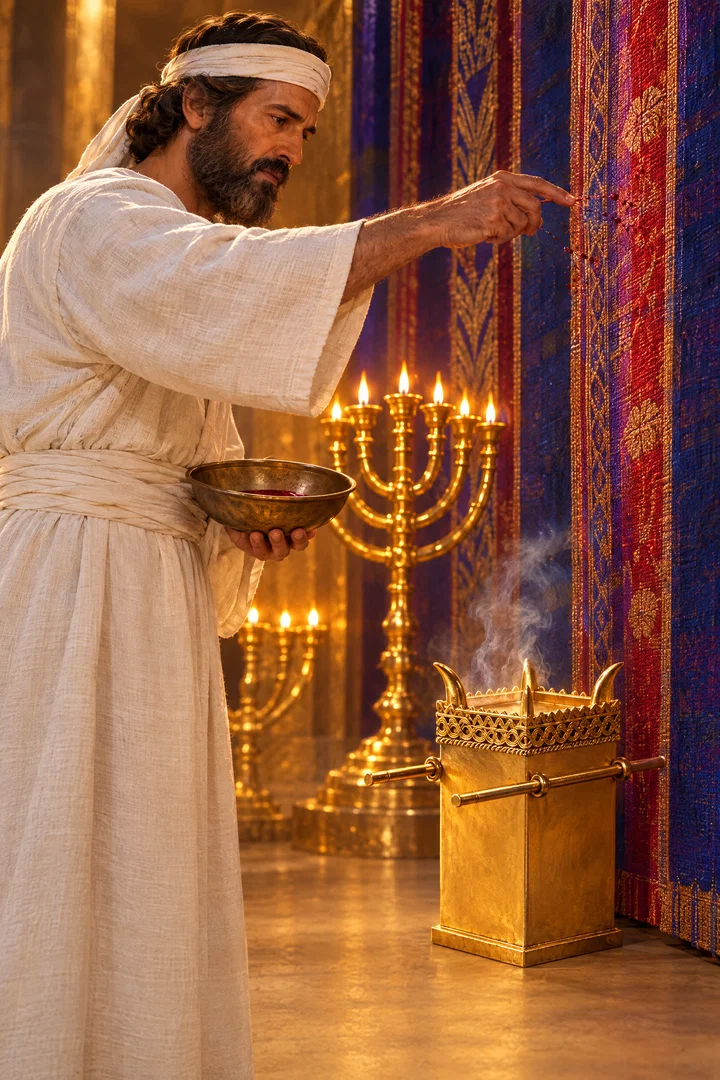
And the priest shall dip his finger in the blood, and sprinkle of the blood seven times before the LORD, before the vail of the sanctuary.
Translations
And the priest shall dip his finger in the blood, and sprinkle of the blood seven times before the LORD, before the veil of the sanctuary.
King James Version, Webster Bible
And the priest shall dip his finger in the blood, and sprinkle of the blood seven times before the LORD, before the vail of the sanctuary.
and the priest shall dip his finger in the blood, and sprinkle of the blood seven times before the Lord, before the vail of the sanctuary.
and the priest shall dip his finger in the blood, and sprinkle of the blood seven times before the LORD, before the veil of the sanctuary.
and the priest shall dip his finger in the blood, and sprinkle of the blood seven times before Jehovah, before the veil of the sanctuary.
and the priest hath dipped his finger in the blood, and sprinkled of the blood seven times before Jehovah, at the front of the vail of the sanctuary;
and the priest shall dip his finger in the blood, and sprinkle of the blood seven times before Jehovah before the veil of the sanctuary;
and the priest shall dip his finger in the blood,—and sprinkle of the blood seven times, before Yahweh, in front of the veil of the sanctuary.
Berean Standard Bible, Majority Standard Bible
The priest is to dip his finger in the blood and sprinkle some of it seven times before the LORD, in front of the veil of the sanctuary.
The priest shall dip his finger in the blood, and sprinkle some of the blood seven times before the LORD, before the veil of the sanctuary.
And the priest is to put his finger in the blood, shaking drops of it before the Lord seven times, in front of the veil of the holy place.
Then the Priest shall dippe his finger in the blood, and sprinkle of the blood seuen times before the Lord, before the vaile of the Sanctuarie.
Douay-Rheims (Challoner revision)
And having dipped his finger in the blood, he shall sprinkle with it seven times before the Lord, before the veil of the sanctuary.
Pictures
Cross-references 20 of 59
- Leviticus 16:15-16
Then shall he kill the goat of the sin offering, that is for the people, and bring his blood within the vail, and do with that blood as he did with the blood of the bullock, and sprinkle it upon the mercy seat, and before the mercy seat:
The high priest uses blood on the Day of Atonement to cleanse the sanctuary of Israel’s sins.
- Hebrews 8:5
Who serve unto the example and shadow of heavenly things, as Moses was admonished of God when he was about to make the tabernacle: for, See, saith he, that thou make all things according to the pattern shewed to thee in the mount.
The earthly sanctuary service is a pattern of heavenly things.
- Hebrews 9:12
Neither by the blood of goats and calves, but by his own blood he entered in once into the holy place, having obtained eternal redemption for us.
The sanctuary blood rite typifies Christ entering the heavenly sanctuary by his own blood.
- Hebrews 10:4
For it is not possible that the blood of bulls and of goats should take away sins.
Animal blood cannot take away sins.
- Leviticus 17:11
For the life of the flesh is in the blood: and I have given it to you upon the altar to make an atonement for your souls: for it is the blood that maketh an atonement for the soul.
Sacrificial blood represents life and makes atonement for the soul.
- Hebrews 9:6-7
Now when these things were thus ordained, the priests went always into the first tabernacle, accomplishing the service of God.
both describe priests' work in the two holy places
- Hebrews 10:1
For the law having a shadow of good things to come, and not the very image of the things, can never with those sacrifices which they offered year by year continually make the comers thereunto perfect.
The sanctuary service and its sacrifices were a shadow of Christ’s work.
- Hebrews 13:11-12
For the bodies of those beasts, whose blood is brought into the sanctuary by the high priest for sin, are burned without the camp.
Sin offerings entered the sanctuary, while their carcasses burned outside the camp, as Jesus suffered outside the gate.
- Leviticus 4:17
And the priest shall dip his finger in some of the blood, and sprinkle it seven times before the LORD, even before the vail.
The same sevenfold sprinkling before the veil is prescribed for the congregation’s offering.
- Hebrews 8:1-2
Now of the things which we have spoken this is the sum: We have such an high priest, who is set on the right hand of the throne of the Majesty in the heavens;
Christ ministers as High Priest in the true heavenly sanctuary.
- Leviticus 6:30
And no sin offering, whereof any of the blood is brought into the tabernacle of the congregation to reconcile withal in the holy place, shall be eaten: it shall be burnt in the fire.
Sin offerings whose blood entered the sanctuary were burned rather than eaten.
- Hebrews 9:23
It was therefore necessary that the patterns of things in the heavens should be purified with these; but the heavenly things themselves with better sacrifices than these.
Earthly sanctuary cleansing foreshadows Christ’s ministry in the heavenly sanctuary.
- Leviticus 16:33
And he shall make an atonement for the holy sanctuary, and he shall make an atonement for the tabernacle of the congregation, and for the altar, and he shall make an atonement for the priests, and for all the people of the congregation.
Both describe atonement and cleansing of the sanctuary.
- Colossians 2:17
Which are a shadow of things to come; but the body is of Christ.
The sanctuary blood rite is a ceremonial shadow pointing to Christ.
- Hebrews 9:24
For Christ is not entered into the holy places made with hands, which are the figures of the true; but into heaven itself, now to appear in the presence of God for us:
The earthly sanctuary service figures the true sanctuary where Christ appears before God for us.
- Hebrews 9:26
For then must he often have suffered since the foundation of the world: but now once in the end of the world hath he appeared to put away sin by the sacrifice of himself.
Christ puts away sin by his once-for-all sacrifice.
- Leviticus 10:17-18
Wherefore have ye not eaten the sin offering in the holy place, seeing it is most holy, and God hath given it you to bear the iniquity of the congregation, to make atonement for them before the LORD?
The offering’s flesh bore the congregation’s iniquity when its blood was not brought inside.
- Leviticus 16:14-15
And he shall take of the blood of the bullock, and sprinkle it with his finger upon the mercy seat eastward; and before the mercy seat shall he sprinkle of the blood with his finger seven times.
Blood is sprinkled before the Lord in the sanctuary.
- Leviticus 16:19
And he shall sprinkle of the blood upon it with his finger seven times, and cleanse it, and hallow it from the uncleanness of the children of Israel.
The sanctuary is cleansed from Israel’s transferred uncleanness by sprinkling blood seven times.
- Exodus 29:21
And thou shalt take of the blood that is upon the altar, and of the anointing oil, and sprinkle it upon Aaron, and upon his garments, and upon his sons, and upon the garments of his sons with him: and he shall be hallowed, and his garments, and his sons, and his sons’ garments with him.
Both texts describe ritual sprinkling with blood.
Commentary
Each commentary is drawn from primary sources: the writings of Ellen G. White and Adventist pioneers and periodicals. Each commentary is separate. Its own words are not a quotation; follow the references to read the source passages.
Ellen G. White
2 sources
This requirement concerns the sin offering appointed for a priest when he sinned and for the whole congregation when it sinned.PP 761.5 In that case the victim's blood was to be carried by the priest into the holy place and sprinkled before the veil of the sanctuary.PP 761.5PP 354.2–355.1 The fat of the victim was to be burned upon the altar of burnt offering out in the court.PP 761.5 The body of the victim was to be taken out and burned outside the camp.PP 761.5
The sprinkling of the blood before the veil signified the transfer of the repentant sinner's guilt by means of the blood into the sanctuary itself.PP 354.2–355.1 Where the blood was not carried into the holy place, the priest's eating of the sacrificial flesh served as the appointed sign of that same transfer of sin to the sanctuary.PP 354.2–355.1
Sources
Pioneers and periodicals
83 sources
The rite directs the anointed priest, for unintentional sin of a priest or of the whole congregation, to dip his finger in the bullock's blood and sprinkle it seven times in front of the inner veil, as a complete number, putting some on the horns of the incense altar and pouring the rest at the base of the burnt-offering altar.RH Sep 16, 1852ST May 22, 1901ST Jan 21, 1886RH Feb 25, 1875 It belongs to the daily ministration in the holy place through the year, distinct from the yearly work in the most holy place.RH Dec 8, 1915RH Mar 8, 1870ST Jun 6, 1878 The blood stands for the life of an innocent victim given in place of the lawbreaker's forfeited life, and by confession and by the priest carrying and sprinkling it before the Lord the guilt is transferred from sinner to victim to the sanctuary itself, which becomes in figure the storehouse of forgiven sins.ST Nov 20, 1879RH Dec 8, 1915ST Jan 18, 1883RH Mar 10, 1874 The atonement is made not by the slaying, which is only preparatory, but afterward by the priest with the blood in the sanctuary, typing how Christ's death made salvation possible while the atonement that makes it certain was begun by Christ as High Priest with His own blood in the heavenly sanctuary after His resurrection and ascension.RH Sep 16, 1852RH Jun 27, 1912ST Jul 2, 1885ST Aug 8, 1916RH Sep 30, 1852 That daily work only begins reconciliation and leaves the holy places defiled, making necessary the Day of Atonement on the tenth day of the seventh month, when the high priest with blood cleanses the sanctuary and blots out the sins stored there.ST Jun 6, 1878RH Jan 11, 1870RH Apr 6, 1869
Words and Ritual Actions
The priest performs two separate acts: he dips his finger in the blood and then he sprinkles some of that blood seven times before the Lord in front of the veil.ST Apr 22, 1880ST Oct 6, 1881ST May 6, 1880ST May 6, 1880ST Jan 21, 1886 Dipping and sprinkling are not two names for one act and cannot be interchanged, for dipping the finger does not mean immersing the sanctuary object and sprinkling does not mean dipping.ST Apr 22, 1880ST May 6, 1880ST May 6, 1880 The Hebrew word for the first act is tabal, whose syntax puts the finger as the object moved into the blood while the blood remains at rest, so it means to dip, plunge, or immerse, not to sprinkle.ST Sep 8, 1881ST Oct 6, 1881ST Sep 2, 1913 The Greek word for dip is bapsei, the future of bapto, meaning to dip, to plunge, to immerse, from the same root as baptizo and meaning the same act, so dip or baptize in the Old Testament means the same immersion as in the New Testament.ST Sep 2, 1913 The word for sprinkle is nazah in Hebrew, meaning to sprinkle or to scatter, rendered in Greek by a form of prosraino from rantizo, meaning to sprinkle around, while the word for pour is from ekkeo, meaning to pour.ST Oct 6, 1881ST Sep 2, 1913ST May 6, 1880ST May 6, 1880 Dipping or baptizing, sprinkling, and pouring are therefore three very different acts expressed by three very different words never used interchangeably, so dipping cannot mean sprinkling or pouring and sprinkling does not mean dipping or immersing.ST Sep 2, 1913ST May 6, 1880ST May 6, 1880
The sprinkling seven times signifies a full number or completeness.RH Feb 25, 1875 The word translated sanctuary is the Hebrew qodesh, which really means holy and is generally translated holy, but is translated sanctuary here because it refers to the sanctuary building, and in the Septuagint it is rendered by the Greek hagion in the nominative singular.RH Oct 5, 1916 The sanctuary here is the built wilderness tabernacle with its veil, vessels, and court where priestly ministry is done, the place where the priest sprinkles blood before the veil in ministry, not Palestine or any land.RH Apr 30, 1857RH Dec 5, 1854RH Apr 28, 1853RH Sep 2, 1852 It is counted among the places called the sanctuary during Israel's forty years of wandering.ST May 20, 1880
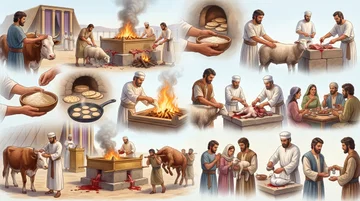
The rite belongs to the sin offering for sins of ignorance committed by the anointed priest and by the whole congregation when collectively guilty, prescribing what offerings were required and describing how they were made.RH Sep 16, 1852ST May 22, 1901ST Sep 5, 1900 For a priest or the whole congregation the offering is a bullock, and after confession and, where needed, restitution, the offerer lays a hand on the victim's head and kills it on the north side of the altar of burnt offering at the door of the tabernacle.RH Sep 16, 1852ST May 22, 1901ST Nov 19, 1894 The anointed priest then takes some of the blood into the Holy, the first apartment, dips his finger or fingers in it, and with his finger sprinkles some of the blood seven times before the Lord in front of the inner veil of the sanctuary.RH Sep 16, 1852ST Jan 21, 1886ST Apr 2, 1912ST Sep 5, 1900RH Jun 27, 1912 He also puts some of the blood upon the horns of the altar of sweet incense, the golden altar, then pours the remainder of the blood at the bottom or base of the altar of burnt offering in the court.RH Sep 16, 1852ST Sep 5, 1900RH Jun 27, 1912 The carcasses or bodies of those beasts whose blood is brought inside are then taken without the camp and burned in a clean place.RH Sep 16, 1852ST May 22, 1901
This procedure is dealt with differently from the sin offering for the same sin by a ruler or by any common person.ST May 22, 1901 Where the priest himself was concerned in the sin and the blood was brought into the holy place, he was not permitted to eat of the offering.ST May 22, 1901 Other sin offerings, when the blood was not taken into the holy place, were eaten by the priests in the holy place, which was given to bear the iniquity of the congregation and make atonement for them before the Lord.ST May 22, 1901ST Nov 19, 1894
Place in Sanctuary Service
The rite belongs to the daily ministration in the first apartment, the holy place, of the earthly sanctuary.RH Dec 8, 1915RH Mar 8, 1870ST Jun 6, 1878RH Jan 11, 1870RH Mar 8, 1870 It is part of the special work for individuals as they presented their particular offerings through the year, alongside the regular morning and evening burnt offering, the burning of sweet incense, and the work of Sabbaths, new moons and feasts.RH Dec 8, 1915RH Mar 8, 1870RH Mar 8, 1870 It is distinct from the second division of the ministration, the yearly work in the most holy place for the sins of the people and for the cleansing of the sanctuary.ST Jun 6, 1878RH Jan 11, 1870RH Mar 8, 1870 That daily service began the work of atonement and reconciliation by transferring sins through blood into the sanctuary, where the high priest later removed them in the Day of Atonement service.ST Jun 6, 1878RH Jan 11, 1870 This sprinkling ministry was continued day by day throughout the year.RH Dec 8, 1915RH Mar 8, 1870
The order is that after confession and, where needed, restitution, the sinner brings the victim to the door of the tabernacle, lays a hand on its head to transfer sin and guilt to it, and slays it on the north side of the altar of burnt offering as his substitute.RH Dec 8, 1915RH Sep 16, 1852RH Mar 8, 1870RH Apr 6, 1869 The anointed priest then takes some of the blood into the Holy, the first apartment, dips his finger in it, and sprinkles it seven times before the Lord before the veil.RH Dec 8, 1915RH Sep 16, 1852RH Mar 8, 1870 He also puts some of the blood upon the horns of the altar of sweet incense and pours the remainder at the bottom of the altar, and the carcasses of those sin offerings whose blood is thus brought inside are taken without the camp and burned in a clean place.RH Sep 16, 1852 When the blood is not taken into the holy place the priest instead eats the flesh, which was given to bear iniquity, and both ceremonies alike symbolize transfer of sin to the sanctuary.RH Nov 17, 1863
This work went on through the year until the sins were removed from the sanctuary on the Day of Atonement, forming the first part of the twofold ministration in the two holy places where the glory of God was manifested.RH Dec 8, 1915RH Mar 8, 1870RH Apr 6, 1869RH Nov 17, 1863 It was part of the individual sin offering and part of the complete round of service performed every year in the wilderness sanctuary and later temple.RH Feb 3, 1853 That ministration was the example and shadow of Christ's more excellent ministry in the true tabernacle, picturing the work of the great High Priest in the temple of God in heaven.RH Dec 8, 1915RH Mar 8, 1870
The blood-sprinkling rite belongs to the ordinances of divine service performed in the earthly sanctuary under the first covenant, included in the covenant's ministration of death.ST Aug 5, 1889 It belongs to the ceremonial law, which was instituted because of sin.RH Jan 10, 1916 It is part of the instructions for the offerings in Leviticus 1-7, which show that God hates sin and that sin demands a penalty as types pointing to Jesus Christ.ST Feb 3, 1909 It shows part of the added instruction God gave by the hand of Moses after speaking the Ten Commandments, instruction having reference to flesh in the form of animal offerings and their blood.ST Jul 8, 1886
Transfer of Sin Explained
The blood carried inside represents life, the life of an innocent victim given in place of the life of the one who broke God's law.ST Nov 20, 1879ST Jan 18, 1883RH Mar 10, 1874ST Oct 22, 1874ST Aug 15, 1878 Because life is in the blood, its presence in the sanctuary testifies that a life has been given for sin and that sin has defiled God's dwelling.ST Nov 20, 1879ST Jan 18, 1883ST Jun 4, 1885ST Jun 27, 1911 The priest takes some of the slain sin-offering's blood into the holy place, the first apartment, and sprinkles it before God in front of the veil.ST Nov 20, 1879ST Jan 18, 1883RH Mar 10, 1874ST Jun 4, 1885ST Oct 22, 1874
Through confession with the hand laid on the victim's head at the door, the repentant sinner transfers guilt to the offering, which is then slain by the sinner as substitute acknowledging deserved death.ST Nov 20, 1879RH Dec 8, 1915ST Jan 18, 1883ST Nov 19, 1894 By the priest carrying that blood inside and sprinkling it seven times before the veil, the guilt is transferred in figure from the victim to the sanctuary itself.ST Nov 20, 1879RH Dec 8, 1915ST Jan 18, 1883RH Mar 10, 1874ST Oct 22, 1874 The sprinkling ministry is continued day by day throughout the year, so the sanctuary becomes in figure the repository where forgiven sins confessed and laid on the offering are stored.RH Dec 8, 1915ST Jan 18, 1883RH Mar 10, 1874ST Jul 8, 1930 When the blood is not taken into the holy place the priest instead eats the flesh given to bear iniquity, and both ceremonies alike symbolize the transfer of sin to the sanctuary.ST Nov 19, 1894
The sprinkling is done before the Lord before the veil, behind which is the ark containing the ten-commandment law with the mercy seat above it.RH Dec 8, 1915ST Aug 8, 1878RH Mar 10, 1874ST Nov 19, 1894 By it through the priest the sinner acknowledges breaking the divine law and by the blood seeks mercy and pardon.RH Dec 8, 1915ST Aug 8, 1878RH Mar 10, 1874ST Nov 19, 1894 The blood stands as a sign of life forfeited presented before the broken law, and sprinkled before God it brings mercy from above the broken law to those who accompany the priest's work with repentance and faith.RH Dec 8, 1915ST Aug 8, 1878RH Mar 10, 1874
By this use of the blood the priest makes atonement for the individual or for the whole congregation when collectively guilty, and the sin is forgiven.RH Sep 16, 1852ST Jul 8, 1930RH Dec 1, 1910ST Jun 27, 1911 The sinner goes free and is separated from sin while speaking pardon to him, yet the sin is figuratively polluted into the worldly sanctuary and its record is carried there.RH Sep 16, 1852ST Jun 27, 1911ST Apr 1, 1886 Sinners are represented in this service by slain animals, and this blood rite belongs to offerings that especially prefigured Christ, whose blood is ministered in the heavenly sanctuary and whose offering typified the removal of sin from the sinner.RH Sep 16, 1852RH Aug 3, 1876RH Dec 1, 1910ST Apr 19, 1905
Sins Done Without Knowledge
Leviticus 4:6 belongs to the law for sins committed unknowingly, through ignorance or misunderstanding of circumstances.ST Apr 20, 1904ST Feb 20, 1893ST Aug 24, 1888 Such a sin is still a sin and is not passed by as of no consequence, for sin exists even where there is no consciousness of sin.ST Feb 20, 1893ST Mar 22, 1883ST Apr 26, 1883 Ignorance does not excuse sin, though it may lessen blame and make such sins less heinous than sins of presumption.ST Feb 20, 1893ST Nov 25, 1886ST Aug 24, 1888 A person may sin without knowing it, but the sin remaineth unless atonement is made.ST Nov 25, 1886ST Apr 26, 1883
When the sin becomes known and is brought to mind it must be confessed, repented of, and put away, with the required offering and atonement made for it in order to be forgiven and cleansed.ST Apr 20, 1904ST Feb 20, 1893RH Apr 28, 1910ST Apr 26, 1883 One who did not recognize the sin or who had good intentions must still deal with it once it is recognized.RH Apr 28, 1910ST Apr 26, 1883 A person is deemed guilty when the sin becomes known to him and must make the required offering in order to be forgiven.ST Feb 20, 1893ST Apr 26, 1883
Sins of ignorance are among the sins that made the death of Christ necessary.RH Mar 3, 1874 One who sinned through ignorance was called to repent and reform as soon as ignorance was removed, and that same duty to repent when light comes continues now.RH Mar 3, 1874ST May 31, 1905 A person is saved from sin only as far as he has light on duty from God's word and follows it, so Christian life must continue in increasing knowledge and reforming of life toward perfection in knowledge as far as circumstances permit.ST Mar 22, 1883 Refusal of light makes past sins of ignorance count as sins committed with full knowledge, and turning away from every known sin is required to be forgiven and received by grace at conversion and to retain pardon and remain under grace afterward by advancing in sanctification.RH Mar 3, 1874ST Mar 22, 1883ST May 31, 1905
Atonement by Blood Ministry
Atonement is made by the priest using the blood of an offering already slain, brought into the sanctuary and applied there before the Lord.RH Sep 16, 1852ST Jul 2, 1885ST Aug 8, 1916RH Sep 30, 1852ST Mar 29, 1883 The sinner lays a hand on the victim's head and slays it on the north side of the altar of burnt offering at the door of the tabernacle after confession and, where needed, restitution, and the anointed priest then takes some of the blood into the Holy and with his finger sprinkles it seven times before the veil, puts some on the horns of the altar of sweet incense, and pours the remainder at the base of the altar, and by that use of the blood makes atonement so the sin is forgiven, while the carcasses are burned without the camp in a clean place.RH Sep 16, 1852RH Sep 30, 1852 The slaying of the victim by the sinner does not make atonement but is only preparatory to it, and atonement is made afterward by the appointed priest with the blood in the sanctuary, not by the killing nor at the place of killing.ST Jul 2, 1885RH Sep 30, 1852ST Mar 29, 1883RH Jul 6, 1869 The priest does not slay the sacrifice and is not himself the sin offering.ST Aug 8, 1916
This types the work of Christ and proves the gospel atonement was not made on Calvary by the slaying of Christ, not by Roman soldiers and wicked Jews, not on earth where Christ could not act as priest, and not completed on the day Jesus rose.RH Sep 30, 1852ST Mar 29, 1883RH Jul 6, 1869 His death makes salvation possible, while the atonement that makes salvation certain is made by Christ as Priest presenting His own blood in the heavenly sanctuary.ST Aug 8, 1916ST Mar 29, 1883 That priestly work was begun by Christ as High Priest with His own blood in the heavenly sanctuary after His resurrection and ascension, entering the holy place to obtain eternal redemption.RH Jun 27, 1912RH Sep 30, 1852RH Jul 6, 1869 In certain sin offerings the priest carried the animal's blood into the sanctuary and sprinkled it before the Lord in front of the veil, typifying Christ entering the holy place by His own blood.RH Jun 27, 1912
The animal blood itself did not take away even one sin and could not really take away sins.ST Apr 15, 1886ST Jan 27, 1890ST Jul 8, 1886RH May 19, 1863 Pardon came through Christ's promised sacrifice, and those who followed the prescribed ordinances received forgiveness and showed faith in Him.ST Apr 15, 1886ST Jan 27, 1890 The sinner's sins were confessed over the innocent substitute, it was slain with the sin laid upon it as a whole, and either its flesh or its blood was carried within the sanctuary so the sinner was forgiven and the substitute entirely consumed, with the same pattern applied on the last day of the year for all the people by a goat whose blood was taken within and whose body was burned.ST Apr 15, 1886 After Christ suffered as the Lamb of God bearing sin in His own body on the tree to put away sin and take away the sin of the world, these blood offerings were no longer required but were abolished in His flesh, finding fulfillment in His body and His sacrifice of Himself, so eternal life now requires eating the flesh of the Son of man and drinking His blood.ST Apr 15, 1886ST Jul 8, 1886
The blood rites taught how mercy and pardon are granted to the repentant sinner while honoring the claims of the divine law.ST Jun 19, 1907 The blood, a symbol of life, represents the sinner's forfeited life demanded by the law, with the victim's death accepted in the offender's place by God's merciful provision, showing the law's penalty remains in force and testifying that sin has broken the covenant while God provides atonement through an appointed victim.ST Nov 23, 1904ST Jun 19, 1907RH Aug 3, 1876 His atonement was made for all but avails for those who humble themselves before God and confess their sin, since sin brings death and confession and renunciation are needed, and Christ is the true sin offering.ST Nov 23, 1904 The morning and evening incense covered the altar and the blood applied to the horns of the altar of incense, representing the sinner and the sinner's sins, and its continual fragrance pictured the sins being covered before God.RH Feb 19, 1901
The service gives the specific directions that record both sin and its remedy there.ST Sep 20, 1910RH Apr 10, 1900 When the whole sin offering was burned, the dipping of the finger and sevenfold sprinkling before the Lord in front of the veil represented Christ's death and showed faith that God has laid human iniquity on Jesus and that His blood cleanses from sin.ST Apr 15, 1889RH Nov 13, 1900RH Apr 10, 1900 The bleeding lamb pointed to Christ whose blood was given for humanity's redemption, and the penitent's prayer brings before God the sacrifice of His Son as a slain Lamb.RH Nov 13, 1900 The sin offering represents a sinner coming to God in repentance for being sinful by nature, pointing to yielding the sinful nature to God, who receives the repentant person, purifies and changes the life, and makes it a blessing to others, while the law exposes guilt and leads the sinner to bring the offering so atonement is made, sin forgiven, and guilt removed through Christ bearing human iniquity as an offering for sin.RH Apr 10, 1900ST Sep 5, 1900
Defilement and Final Cleansing
The sprinkling of the sin-offering blood seven times before the veil belonged to the first-apartment ministry and only began the work of atonement and reconciliation, leaving it unfinished.ST Jun 6, 1878RH Jan 11, 1870ST Aug 15, 1878RH Mar 10, 1874 Through that blood the guilt first laid on the victim was carried into the sanctuary and stored there, so that forgiven sins accumulated in figure within God's dwelling through the year.ST Jun 6, 1878RH Jan 11, 1870RH Mar 28, 1854 That daily transfer was only partial, and by receiving sin day by day the holy places were defiled and required a special atonement to cleanse and hallow them.RH Mar 28, 1854ST Aug 15, 1878RH Mar 10, 1874
The completion came on the Day of Atonement, on the tenth day of the seventh month, when the high priest removed by blood the sins stored by the priests' ministration.ST Jun 6, 1878RH Jan 11, 1870RH Apr 6, 1869ST This continual work went on through the whole year until that cleansing, when the sanctuary was cleansed and the people's sins were blotted out.RH Apr 6, 1869STST Aug 8, 1878ST Aug 15, 1878 At the close of the yearly service the high priest carried sin-offering blood into the most holy place and sprinkled it on and before the mercy seat.ST Jun 6, 1878RH Jan 11, 1870ST Aug 8, 1878ST Aug 15, 1878
The mercy seat stands over the broken ten-commandment law in the ark, and the blood presented before God brings mercy from above that broken law to those who join the priest's work with repentance and faith.ST Aug 8, 1878RH Mar 10, 1874 The first-apartment work that bears sins into the sanctuary and the second-apartment work that removes them by blood form together the example and shadow of Christ's ministry with His own shed blood for penitent sinners in the heavenly sanctuary.ST Jan 18, 1883RH Feb 3, 1853ST Aug 8, 1878ST Aug 15, 1878RH Mar 10, 1874 The tabernacle with this blood ritual is the sanctuary of the Bible, and its cleansing is a priestly work done by the High Priest with blood, not by fire.RH Apr 30, 1857RH Dec 5, 1854
Faith and Changed Life
The sprinkling of the blood taught that sin brings death and that confession and renunciation of sin are needed.ST Nov 23, 1904 The blood represents the sinner's forfeited life demanded by the law, and Christ as the true sin offering shows by his blood that the law's penalty remains in force.ST Nov 23, 1904 His atonement was made for all, but it avails only for those who humble themselves before God and confess their sin.ST Nov 23, 1904 God in the sacrifices provided a way to obtain forgiveness of sin, requiring the guilty who sin against the Lord's commandments to bring an offering so that atonement could be made, sin forgiven, and guilt removed.RH Sep 24, 1914RH Apr 10, 1900 The law exposes sin and leads the sinner to need this provision, and the offering points to Christ who bears human iniquity as an offering for sin.RH Apr 10, 1900
The ministry of individuals bringing offerings for their sins expressed faith in the coming Redeemer.ST Apr 2, 1912 Each sacrifice contained something pointing in type to the work of Jesus Christ.ST Feb 13, 1912 When the individual sin offering was offered in faith together with the daily offering, the priest's sprinkling of the blood seven times before the veil before the ark carried the penitent sinner's sin into the sanctuary and left the forgiven sin there.ST This work went on continually through the year, storing the forgiven sins of God's people in the sanctuary until the cleansing on the tenth day of the seventh month.ST
The blood represents life, showing that the sinner's life must be presented to God through Christ's merit and renewed by Christ's power and offered in His service.ST Sep 5, 1900ST Sep 5, 1900 The blood brought before God and sprinkled before the inner veil is explained by the incense altar as Christ's merit and its horns as Christ's renewing power, and the life represented by the blood must likewise be offered through that merit and renewed by that power.ST Sep 5, 1900 This means willingly renouncing the carnal nature and giving the life to God without self-righteousness, trusting Him to direct how it is spent even through insult or obscurity.ST Sep 5, 1900 The sin offering represents a sinner coming to God in repentance for being sinful by nature, pointing to yielding the sinful nature to God, who receives the repentant person, purifies and changes the life, and makes it a blessing to others.ST Sep 5, 1900
Christ's merit covers the unknown sin of the trusting person, so that one who sins unknowingly while walking in the light he knows may still entrust his life to God, and God does not count that iniquity against him.ST Sep 5, 1900ST Sep 5, 1900 The sin offering for those who sinned through ignorance is connected with the priest bearing their iniquity.ST Sep 5, 1900
The high priest offered this kind of sin offering for priests and for the congregation, taking its blood into the sanctuary and sprinkling it seven times before the veil.ST Dec 10, 1912 The sanctuary priests' work typified Christ's work, and the priest presenting the sin-offering blood before God in the sanctuary did so as part of the high priest's ministry for people who came to God through him.ST Dec 10, 1912ST Aug 8, 1878 The mercy seat stood over the law the people had broken, and the blood brought mercy when accompanied by repentance and faith.ST Aug 8, 1878 Through the priests' ministry the people's sins were borne into the sanctuary, and later the high priest cleansed the sanctuary by removing those sins through blood.ST Aug 8, 1878
Sources