Leviticus 1:10
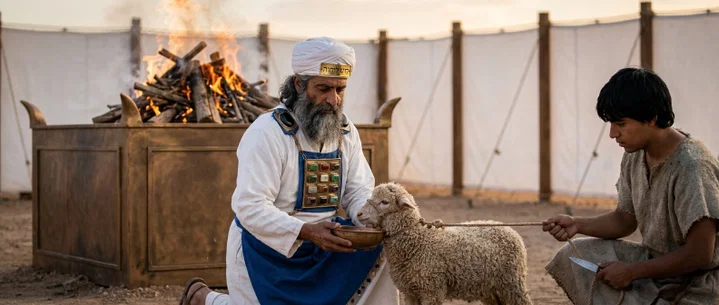
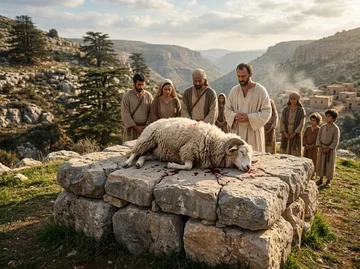
And if his offering be of the flocks, namely, of the sheep, or of the goats, for a burnt sacrifice; he shall bring it a male without blemish.
Translations
American King James Version, King James Version, KJV Cambridge Paragraph Bible
And if his offering be of the flocks, namely, of the sheep, or of the goats, for a burnt sacrifice; he shall bring it a male without blemish.
And if his offering be of the flocks, namely, of the sheep, or of the goats, for a burnt-sacrifice; he shall bring it a male without blemish.
And if his oblation be of the flock, of the sheep, or of the goats, for a burnt offering; he shall offer it a male without blemish.
And if his oblation be of the flock, of the sheep, or of the goats, for a burnt-offering; he shall offer it a male without blemish.
'And if his offering [is] out of the flock — out of the sheep or out of the goats — for a burnt-offering, a male, a perfect one, he doth bring near,
And if his offering be of the flock, of the sheep or of the goats, for a burnt-offering, he shall present it a male without blemish.
But, if of the flock, be his oblation,—of the sheep or of the goats, for an ascending-sacrifice, a male without defect, shall he bring near.
Berean Standard Bible, Majority Standard Bible
If, however, one’s offering is a burnt offering from the flock— from the sheep or goats— he is to present an unblemished male.
“‘If his offering is from the flock, from the sheep or from the goats, for a burnt offering, he shall offer a male without defect.
And if his offering is of the flock, a burned offering of sheep or goats, let him give a male without a mark.
And if his sacrifice for the burnt offering be of the flocks (as of the sheepe, or of the goats) he shall offer a male without blemish,
Douay-Rheims (Challoner revision)
And if the offering be of the hocks, a holocaust of sheep or of goats, he shall offer a male without blemish:
Pictures
Cross-references
- Numbers 28:3-4
And thou shalt say unto them, This is the offering made by fire which ye shall offer unto the LORD; two lambs of the first year without spot day by day, for a continual burnt offering.
Sets out the continual daily burnt offerings, offered morning and evening.
- Leviticus 1:3
If his offering be a burnt sacrifice of the herd, let him offer a male without blemish: he shall offer it of his own voluntary will at the door of the tabernacle of the congregation before the LORD.
Both require a male without blemish for a burnt sacrifice.
- John 1:29
The next day John seeth Jesus coming unto him, and saith, Behold the Lamb of God, which taketh away the sin of the world.
Christ is identified as the Lamb to whom the sacrificial victim pointed.
- Hebrews 10:4
For it is not possible that the blood of bulls and of goats should take away sins.
Animal sacrifices could not take away sin, prefiguring Christ’s work.
- Hebrews 9:23-24
It was therefore necessary that the patterns of things in the heavens should be purified with these; but the heavenly things themselves with better sacrifices than these.
Earthly sanctuary service points to the heavenly reality and its cleansing.
- Deuteronomy 17:1
Thou shalt not sacrifice unto the LORD thy God any bullock, or sheep, wherein is blemish, or any evilfavouredness: for that is an abomination unto the LORD thy God.
Both require sacrificial animals to be without blemish.
- 1 Peter 1:19
But with the precious blood of Christ, as of a lamb without blemish and without spot:
The spotless sacrificial animal points to Christ as the Lamb without spot.
- Leviticus 22:18-21
Speak unto Aaron, and to his sons, and unto all the children of Israel, and say unto them, Whatsoever he be of the house of Israel, or of the strangers in Israel, that will offer his oblation for all his vows, and for all his freewill offerings, which they will offer unto the LORD for a burnt offering;
Both require an unblemished male animal for an offering.
- 1 Peter 2:24
Who his own self bare our sins in his own body on the tree, that we, being dead to sins, should live unto righteousness: by whose stripes ye were healed.
Christ bore sins in his body, fulfilling what the sacrifices pictured.
- Deuteronomy 15:21
And if there be any blemish therein, as if it be lame, or blind, or have any ill blemish, thou shalt not sacrifice it unto the LORD thy God.
Both require an animal offered to the Lord to be without blemish.
- Isaiah 53:6
All we like sheep have gone astray; we have turned every one to his own way; and the LORD hath laid on him the iniquity of us all.
Animal sacrifices point to Christ bearing human iniquity.
- Leviticus 1:4
And he shall put his hand upon the head of the burnt offering; and it shall be accepted for him to make atonement for him.
The male animal is accepted as the sinner’s substitute for atonement.
- Hebrews 8:1-5
Now of the things which we have spoken this is the sum: We have such an high priest, who is set on the right hand of the throne of the Majesty in the heavens;
The earthly sacrificial service foreshadows Christ’s heavenly ministry.
- Genesis 4:4
And Abel, he also brought of the firstlings of his flock and of the fat thereof. And the LORD had respect unto Abel and to his offering:
Abel’s offering from the flock accords with the offering law.
- Leviticus 3:16
And the priest shall burn them upon the altar: it is the food of the offering made by fire for a sweet savour: all the fat is the LORD’s.
all fat burned to the Lord
Commentary
Each commentary is drawn from primary sources: the writings of Ellen G. White and Adventist pioneers and periodicals. Each commentary is separate. Its own words are not a quotation; follow the references to read the source passages.
Pioneers and periodicals
23 sources
A burnt offering taken from the flocks had to be a sheep or a goat, a male with no defect, a clean and sound animal.ST May 29, 1901ST Jan 20, 1914 The sinner brought it to the tabernacle, laid a hand on its head to transfer sin to the substitute, and it was slain in his place while the priest carried its life-blood bearing the guilt into the sanctuary.RH Feb 25, 1858 Its life paid the penalty the transgressor deserved, showing that sin demanded death and could be set forth only by the giving of life.ST May 29, 1901RH Feb 25, 1858 It was a shadow pointing to Jesus Christ, the great Sacrifice who bore human sin to free men from its bondage, and to His once-for-all ministry as High Priest in the heavenly temple.ST Jun 19, 1907RH Mar 8, 1870ST Feb 9, 1915ST Feb 3, 1909RH Mar 28, 1854 Offered in faith it represented the penitent's surrender of all his powers to God after confessing sin, and provision was made for rich and poor alike to bring an offering because all had sinned.ST Jan 20, 1914STST Apr 2, 1912RH Jan 20, 1859
The Flock Offering Ritual
A burnt offering taken from the flocks had to be a sheep or a goat, and it had to be a male without blemish, meaning a clean, healthy, sound animal with no defect.ST May 29, 1901ST Jan 20, 1914RH Apr 3, 1900ST Feb 17, 1890 Its instructions followed the same pattern as the offering from the herd.ST Jan 20, 1914ST Feb 9, 1915 Together with the other offerings in Leviticus 1 this flock offering is linked to Abraham's sacrifice.ST Feb 9, 1915
The flock animal for the burnt offering was slaughtered in the court, on the north side of the altar of burnt offering.ST May 1, 1901ST May 1, 1901 That altar stood before the door of the tabernacle of meeting and was first reached on entering through the door into the court.ST May 1, 1901
The instruction belongs to the individual offerings described in Leviticus 1 to 7, with their offerings and priestly ministry.ST Jun 19, 1907ST May 17, 1877 It provided the especial work for individuals as they presented their particular offerings during the year, belonging to the first grand division of the ministration of the earthly sanctuary, the daily service in the holy place.RH Mar 8, 1870ST Apr 2, 1912 That daily service stood alongside the regular morning and evening burnt offering, the burning of sweet incense when the lamps were lighted morning and evening, and the special work upon the Lord's Sabbaths, annual sabbaths, new moons, and feasts, and was distinct from the second division, the yearly work in the most holy place for the sins of the people and for the cleansing of the sanctuary.RH Mar 8, 1870 With the daily national ministration and the yearly cleansing it formed one entire yearly round of constant offering of beasts in which remembrance of sin was made.ST Nov 28, 1895ST Apr 2, 1912
In the ritual the sinner brought the victim to the tabernacle, to the entrance of the sanctuary and to the altar, and laid a hand on its head to signify the transfer of sin to the substitute.RH Feb 25, 1858RH Feb 3, 1853 The victim was then slain in the sinner's place because of the transgression.RH Feb 25, 1858RH Feb 3, 1853RH Mar 28, 1854 The priest carried some of its blood, which represented life and bore the sin and guilt, into the sanctuary and sprinkled it there, so the sin was represented as transferred from the sinner to the victim and then from the victim to the sanctuary.RH Feb 25, 1858RH Feb 3, 1853ST Feb 17, 1890
The offering depended on the sinner's confession over the victim, with the hand laid on the animal's head confessing sins and representing their transfer to the animal as substitute, and it depended on sacrifice and priestly ministry.ST Feb 17, 1890 Before atonement could be made any loss caused to another person had to be made right by restitution, after which through the blood ritual in the Holy Place and at the altar of incense the priest made atonement and the sin was forgiven, while the carcass was burned outside the camp in a clean place.RH Sep 16, 1852
The law of burnt offerings made sacrifice possible for people of different means, so those unable to bring the more costly animals could bring a less expensive offering, and the poorest could bring meal or fine flour.RH Jan 20, 1859 In this way the service was made accessible even to the poor, while everyone had to bring something because everyone had sinned.RH Jan 20, 1859
The requirement of an animal from the flock rather than fruit of the ground was first given to the family of Adam immediately after the fall, long before it was given to Israel in Leviticus 1:1-17.ST Jul 16, 1894 Abel's offering matched it in every respect because he obeyed, and God accepted him, while Cain's offering of fruit broke it, so God rejected him.ST Jul 16, 1894 God accepts nothing but obedience and rejects only disobedience, and sin is the transgression of the law.ST Jul 16, 1894
The rule specifying a male sheep or goat stands in contrast to cows sacrificed in Samuel's time, which were contrary to the law.RH Apr 3, 1900
The flesh the priests were allowed to eat came only from young, healthy animals without blemish and without fat, since all fat was to be burned to the Lord and eating fat was prohibited.RH Mar 31, 1868 They had no part of the real burnt offerings and no meat of any beasts whose blood was carried into the sanctuary, so what they ate was quite limited, only small amounts of lean meat of healthy young animals, not fat meat, diseased meat, or swine's flesh swimming in grease.RH Mar 31, 1868 This confirms that diseased and fat meat is unwholesome and unfitted for feeble men and women of this age.RH Mar 31, 1868
Its Meaning and Fulfillment
The life of the flock victim paid the penalty for the transgressor as his substitute, the animal being slain in the sinner's place after the sinner brought it to the tabernacle, laid a hand on its head to signify the transfer of sin, and confessed the sin over it.RH Feb 25, 1858ST Feb 17, 1890RH Mar 28, 1854 Its death acknowledged that the sinner deserved death under the law, while its blood, representing life and bearing the guilt, was carried by the priest into the sanctuary and sprinkled there, so that sin was represented as transferred from the sinner to the victim and then to the sanctuary.RH Feb 25, 1858ST Feb 17, 1890RH Mar 28, 1854 The offering thus pictured a life given for the transgressor and depended on confession, sacrifice, and priestly ministry for the penitent, and it showed that sin demanded its penalty.RH Feb 25, 1858ST Feb 3, 1909RH Mar 28, 1854 Every Levitical offering having to do with atonement had to be an animal, whether sheep or goats and in this case a male, so that the giving up of life in behalf of the sinner could be set forth in type.ST May 29, 1901 The burnt offering from the flock followed the same pattern as the offering from the herd and represented the sinner's surrender of all the powers of his being to God after confessing sin.ST Jan 20, 1914
The rule requiring a male sheep or goat without blemish and with no defect shows God's hatred of sin.ST Feb 3, 1909 Together with the other offerings in Leviticus 1 and linked to Abraham's sacrifice, the flock burnt offering represents Christ, the great Sacrifice who bore human sin and brings freedom from the bondage of sin.ST Feb 9, 1915RH Mar 28, 1854 It is a shadow and type pointing to the great substance found in Jesus Christ, belonging to the instructions in Leviticus 1-7 regulating the Levitical priesthood and its offerings.ST Feb 3, 1909ST Feb 13, 1912 The service described in Leviticus 1 to 7, 16 and 23 centers the worship of the true God by divine appointment, reveals God's way and His power and glory, and stands as an impressive object-lesson teaching in type about God's temple in heaven and Christ's priestly service there.ST Jun 19, 1907ST Nov 28, 1895ST Feb 13, 1912 That earthly sanctuary was a pattern of the heavenly, and its service was the example and shadow of Christ's more excellent, once-for-all ministry in the true tabernacle as High Priest and Minister of the heavenly sanctuary.ST Jun 19, 1907RH Mar 8, 1870ST Nov 28, 1895 Like all Scripture it was not written in vain or without purpose but is profitable for doctrine, for reproof, for correction, for instruction in righteousness that the man of God may be perfect, and was written for learning that through patience and comfort of the Scriptures hope may be had.ST Jun 19, 1907
When offered in faith the individual offerings represented the transfer of the penitent's sins to the sanctuary through the sacrifice's blood and the priest's service.STST Apr 2, 1912 They belonged to the first general ministry connected with the earthly sanctuary, the ministry of individuals who came burdened with sins bringing their offerings and showing their faith in the Redeemer to come.ST Apr 2, 1912 They formed part of the constant offering of beasts in which continual remembrance of sin was made in the sanctuary, forming with the daily national ministration and the yearly cleansing one entire yearly round, all looking forward to a future antitype.ST Apr 2, 1912 The provision for individuals presenting their particular offerings during the year belongs to the first grand division of the ministration of the earthly sanctuary, the daily service in the holy place alongside the regular morning and evening burnt offering, the burning of sweet incense when the lamps are lighted morning and evening, and the special work upon the Lord's Sabbaths, annual sabbaths, new moons, and feasts, distinct from the second division, the yearly work in the most holy place for the sins of the people and for the cleansing of the sanctuary.RH Mar 8, 1870 The verse belongs to the Levitical law given to the children of Israel, distinct from the law of God which is absolute and perpetual, holy, just and good, and that Levitical law was abolished by Christ.RH Aug 20, 1872 That Levitical law was written on stones, placed in the ark, read every seven years, to be copied by the king, and publicly read by Joshua and by Ezra.RH Aug 20, 1872
Sources