Leviticus 16:13
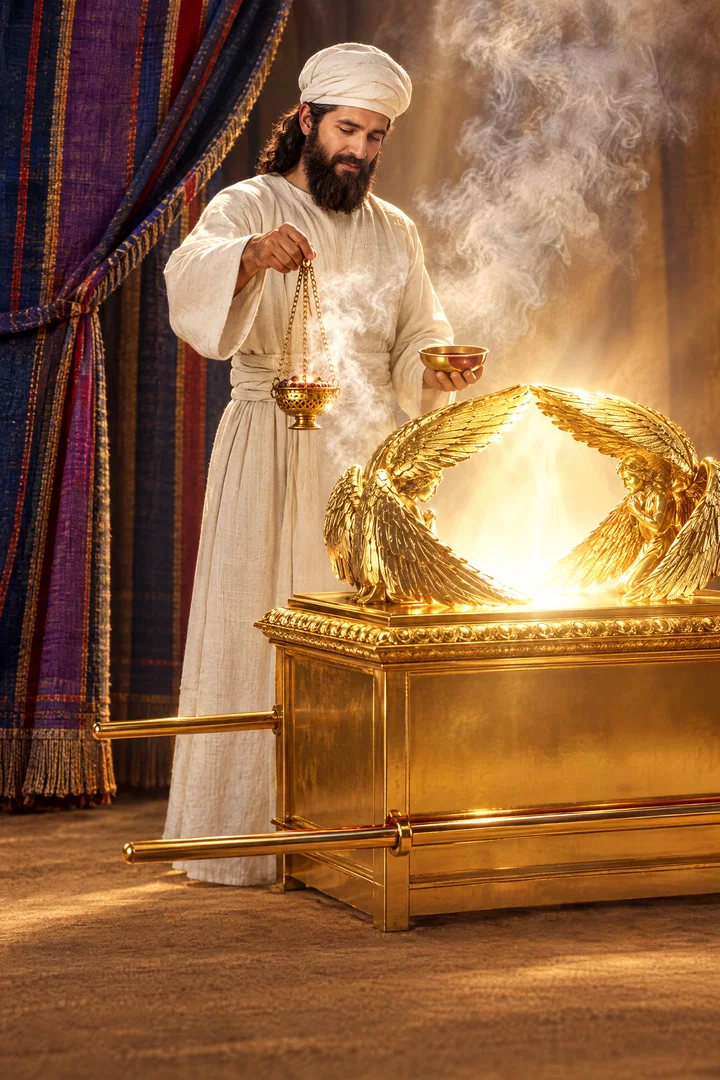
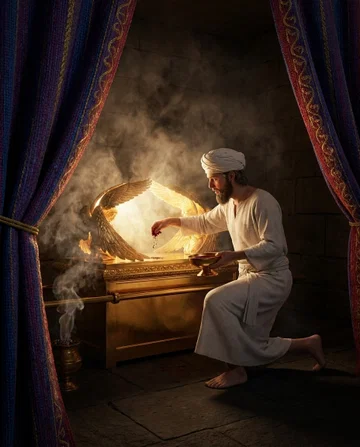
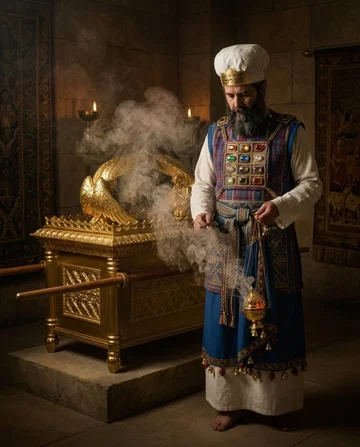
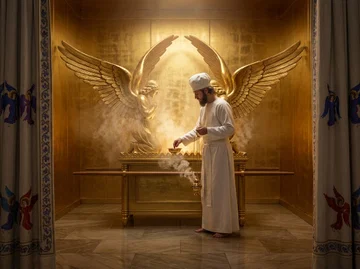
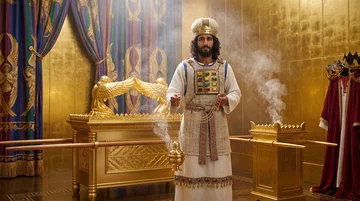
And he shall put the incense upon the fire before the LORD, that the cloud of the incense may cover the mercy seat that is upon the testimony, that he die not:
Translations
And he shall put the incense on the fire before the LORD, that the cloud of the incense may cover the mercy seat that is on the testimony, that he die not:
And he shall put the incense upon the fire before the LORD, that the cloud of the incense may cover the mercy seat that is upon the testimony, that he die not:
and he shall put the incense upon the fire before the Lord, that the cloud of the incense may cover the mercy seat that is upon the Testimony, that he die not:
And he shall put the incense upon the fire before the LORD, that the cloud of the incense may cover the mercy-seat that is upon the testimony, that he may not die.
and he shall put the incense upon the fire before the LORD, that the cloud of the incense may cover the mercy-seat that is upon the testimony, that he die not:
and he shall put the incense upon the fire before Jehovah, that the cloud of the incense may cover the mercy-seat that is upon the testimony, that he die not:
and he hath put the perfume on the fire before Jehovah, and the cloud of the perfume hath covered the mercy-seat which [is] on the testimony, and he dieth not.
And he shall put the incense upon the fire before Jehovah, that the cloud of the incense may cover the mercy-seat which is upon the testimony, that he die not.
and shall put the incense upon the fire before Yahweh,—and the cloud of incense shall cover the propitiatory which is over the testimony, and he shall not die.
Berean Standard Bible, Majority Standard Bible
He is to put the incense on the fire before the LORD, and the cloud of incense will cover the mercy seat above the Testimony, so that he will not die.
He shall put the incense on the fire before the LORD, that the cloud of the incense may cover the mercy seat that is on the covenant, so that he will not die.
And let him put the perfume on the fire before the Lord so that the ark may be covered with a cloud of the smoke of the perfume, in order that death may not overtake him.
And shall put the incense vpon the fire before the Lord, that the cloude of the incense may couer the Merciseat that is vpon the Testimonie: so he shall not dye.
Douay-Rheims (Challoner revision)
That when the perfumes are put upon the fire, the cloud and vapour thereof may cover the oracle, which is over the testimony, and he may not die.
Pictures
Cross-references 20 of 62
- Hebrews 8:5
Who serve unto the example and shadow of heavenly things, as Moses was admonished of God when he was about to make the tabernacle: for, See, saith he, that thou make all things according to the pattern shewed to thee in the mount.
Earthly priestly service is a pattern of Christ’s heavenly ministry.
- Hebrews 9:7
But into the second went the high priest alone once every year, not without blood, which he offered for himself, and for the errors of the people:
Both describe the high priest’s yearly entry into the inner sanctuary.
- Hebrews 9:23-24
It was therefore necessary that the patterns of things in the heavens should be purified with these; but the heavenly things themselves with better sacrifices than these.
Connects the earthly sanctuary’s cleansing with Christ’s ministry in the heavenly sanctuary.
- Hebrews 8:1-2
Now of the things which we have spoken this is the sum: We have such an high priest, who is set on the right hand of the throne of the Majesty in the heavens;
Christ ministers as High Priest in the true heavenly sanctuary.
- Leviticus 23:26-32
And the LORD spake unto Moses, saying,
Also describes the day of atonement ceremonies.
- Hebrews 9:12
Neither by the blood of goats and calves, but by his own blood he entered in once into the holy place, having obtained eternal redemption for us.
Christ enters the heavenly holy place by his own blood, fulfilling the sanctuary type.
- Hebrews 10:1
For the law having a shadow of good things to come, and not the very image of the things, can never with those sacrifices which they offered year by year continually make the comers thereunto perfect.
The yearly sanctuary service was a shadow of Christ’s effective offering.
- Leviticus 16:2
And the LORD said unto Moses, Speak unto Aaron thy brother, that he come not at all times into the holy place within the vail before the mercy seat, which is upon the ark; that he die not: for I will appear in the cloud upon the mercy seat.
God warns Aaron against entering the holy place at will, where He appears in a cloud over the mercy seat.
- Hebrews 9:24
For Christ is not entered into the holy places made with hands, which are the figures of the true; but into heaven itself, now to appear in the presence of God for us:
Christ appears before God in the true heavenly sanctuary for us.
- Exodus 25:21-22
And thou shalt put the mercy seat above upon the ark; and in the ark thou shalt put the testimony that I shall give thee.
God meets and speaks above the mercy seat over the testimony.
- Revelation 11:19
And the temple of God was opened in heaven, and there was seen in his temple the ark of his testament: and there were lightnings, and voices, and thunderings, and an earthquake, and great hail.
The opened heavenly temple reveals the ark, corresponding to the earthly ministration in the holiest place.
- Hebrews 9:3-5
And after the second veil, the tabernacle which is called the Holiest of all;
Describes the inner sanctuary, ark, and mercy seat.
- Hebrews 10:19-20
Having therefore, brethren, boldness to enter into the holiest by the blood of Jesus,
Christ opens access to God through the veil of his flesh.
- Leviticus 16:29-30
And this shall be a statute for ever unto you: that in the seventh month, on the tenth day of the month, ye shall afflict your souls, and do no work at all, whether it be one of your own country, or a stranger that sojourneth among you:
Sets the Day of Atonement’s timing and purpose: cleansing the people from sin.
- Leviticus 16:3
Thus shall Aaron come into the holy place: with a young bullock for a sin offering, and a ram for a burnt offering.
Sets the high priest’s entry into the most holy place in context.
- Hebrews 7:27
Who needeth not daily, as those high priests, to offer up sacrifice, first for his own sins, and then for the people’s: for this he did once, when he offered up himself.
Christ offered himself once, needing no sacrifice for himself, unlike the repeatedly sacrificing priests.
- Leviticus 16:33-34
And he shall make an atonement for the holy sanctuary, and he shall make an atonement for the tabernacle of the congregation, and for the altar, and he shall make an atonement for the priests, and for all the people of the congregation.
Concludes the yearly atonement for the sanctuary, priests, and people.
- Revelation 15:5
And after that I looked, and, behold, the temple of the tabernacle of the testimony in heaven was opened:
The heavenly sanctuary is called the tabernacle of the testimony.
- Exodus 40:20
And he took and put the testimony into the ark, and set the staves on the ark, and put the mercy seat above upon the ark:
The testimony, God’s law, is placed in the ark beneath the mercy seat.
- Hebrews 9:26
For then must he often have suffered since the foundation of the world: but now once in the end of the world hath he appeared to put away sin by the sacrifice of himself.
Christ’s once-for-all sacrifice puts away sin, unlike the yearly atonement.
Commentary
Each commentary is drawn from primary sources: the writings of Ellen G. White and Adventist pioneers and periodicals. Each commentary is separate. Its own words are not a quotation; follow the references to read the source passages.
Ellen G. White
21 sources
On the yearly day for cleansing the sanctuary where God dwelt among His people, only the high priest could enter the most holy place, and only after solemn preparation and with trembling.GC88 683.4–684.54SP 498.68T 284.3–285.1MH 437.1ST Mar 4, 1903 He was to place incense on the fire before the Lord so its cloud would veil God's glory above the mercy seat, making it possible to stand in His presence without dying.8T 284.3–285.1MH 437.1ST Mar 4, 1903 With that covering in place he sprinkled the blood of the offering on the mercy seat above the law, satisfying its claims and cleansing the people, then in figure removed their sins upon the scapegoat to be borne forever away.GC88 420.14T 124.3 This service was a shadow of Christ's ministry as great High Priest in the most holy place of the heavenly sanctuary, where He blots out the sins of His faithful people until the work is finished.4SP 499.3–500.1GC88 433.1 The fragrant cloud means prayers ascending with confession while the merits of His atoning blood and character are pleaded, so the present antitypical day of atonement, entered upon in 1844, calls every person to humility, repentance, and cleansing from all defilement through His blood.Ms 81, 1886, par. 914MR 129.2Lt 53, 1886, par. 4Ms 6, 1876, par. 5–6Lt 55, 1886, par. 9–10
The Earthly Day of Atonement
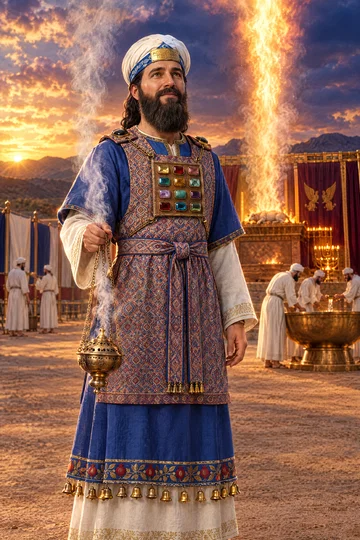
Leviticus 16 describes the process for cleansing the sanctuary, the sanctuary commanded to be made so that God might dwell among His people.GC88 683.4–684.54SP 498.6 It was first erected as a movable sanctuary made in the desert of Sinai, and afterward as the temple built by Solomon.GC88 683.4–684.54SP 498.6 That temple had a holy and a most holy place, and the vessels of the earlier sanctuary were transferred to it, as God's dwelling-place of glory upon the earth.GC88 683.4–684.54SP 498.6 The chapter sets forth the priestly attire and service of the Jewish high priest, including putting incense upon the fire before the LORD.WLF 9.1 That priestly attire is what Christ as great High Priest now wears, different from the many crowns in one crown He will wear as KING OF KINGS AND LORD OF LORDS when Michael stands up to reign.WLF 9.1
Only the high priest could enter the Most Holy Place, and only once a year on the appointed day.8T 284.3–285.1MH 437.1ST Mar 4, 1903 He could enter only after careful, solemn preparation, and he approached God with trembling.ST Mar 4, 1903 No one else could enter the sacred place unbidden.8T 284.3–285.1MH 437.1 He was to put incense upon the fire before the LORD so that its cloud would cover the mercy seat that is upon the testimony, that he die not.8T 284.3–285.1MH 437.1ST Mar 4, 1903Lt 253, 1903, par. 17 The cloud covered the mercy seat and veiled God's glory from his sight, and this covering made it possible to enter God's presence without dying.8T 284.3–285.1MH 437.1ST Mar 4, 1903 An unbidden or uncovered approach meant death, and this direction belongs to the sanctuary service for the great day of atonement.8T 284.3–285.1MH 437.1Lt 253, 1903, par. 17
While he ministered inside, the people waited outside in prayer.ST Mar 4, 1903 They feared that the Lord's glory might slay him because of their sins or his own.ST Mar 4, 1903 When they heard the bells on his garments they knew he had come out safely, and he blessed them.ST Mar 4, 1903 With the cloud of incense covering the mercy seat, he sprinkled the offering's blood on the mercy seat above the law, making satisfaction for the law's claims.GC88 420.1 As mediator he then took the sins from the sanctuary and transferred them in figure to the scapegoat, which bore them away as forever separated from the people.GC88 420.1 With the blood sprinkled there under the covering incense cloud as Aaron ministered before God, the people were cleansed from guilt, pointing to the merits of Christ the slain Lamb whom God accepts as the purifier from sin, whose atoning sacrifice remains effective through all time.GC88 420.14T 124.3
Christ's Ministry and Our Preparation
The service on the great day of atonement, when the holy of holies was opened for the cleansing of the sanctuary, was an example and shadow of Christ's ministry in the heavenly sanctuary.GC88 433.1 Its antitypical work takes place in the most holy place of the heavenly sanctuary, where Christ as great High Priest blots out the sins of His faithful people, and His ministry continues there until the work is complete and probation closes.4SP 499.3–500.1 The ministry performed on behalf of the children of Israel, including Joshua's service as high priest, typifies Christ's actual ministry in heaven for His people.Ms 124, 1901, par. 18–1917MR 242.1–2 Christ is the Sin-bearer and Substitute for the offender, to whom all the types point, who takes away the sin of the repentant, believing transgressor.Ms 124, 1901, par. 18–1917MR 242.1–2
As Satan then pointed to the defilement of God's people and triumphed in their discomfiture, so he accuses them now.Ms 124, 1901, par. 18–19 The warm blood sprinkled upon the mercy seat means the efficacy and merits of Christ's atoning blood, and the fragrant cloud of incense ascending before God means prayers ascending to heaven while sins are confessed and the efficacy of that blood is pleaded, made fragrant with the merits of Christ's character.14MR 129.2 Notwithstanding unworthiness, there is One who can take away sin and save the sinner, and every sin acknowledged before God with a contrite heart He will remove.14MR 129.2 Faith laying hold on these merits is the life of the church.14MR 129.2
The great antitypical day of atonement was fulfilled in heaven in 1844.Ms 6, 1876, par. 5–6 The sanctuary to be cleansed is in heaven, not the earth to be cleansed by fire at Christ's second coming to punish the wicked.Ms 6, 1876, par. 5–6 Christ entered the heavenly sanctuary at that time to cleanse it from the sins of the people by virtue of His own blood, in mercy and loving-kindness giving them still more time to repent of their sins and prepare for His coming instead of destroying the wicked.Ms 6, 1876, par. 5–6 The solemn ritual when incense was used in the sanctuary calls attention to the solemn work of judgment and atonement, a work concerning every person and not to be treated lightly.5T 420.3 It is connected with a final day of atonement before the books are opened and each person is judged by the record of deeds.Ms 52, 1905, par. 10
The Day of Atonement service points to the antitypical Day of Atonement now in progress, in which each person must consider how the case will stand in the judgment and seek cleansing from every defilement through the blood of Jesus.Lt 53, 1886, par. 4 It therefore calls for preparation, with sins confessed so they may go beforehand to judgment, and for drawing near to God for pardon from One able to cleanse from every stain of sin.Ms 81, 1886, par. 9 The work requires humility and putting away sin, and the present solemn time calls for the church to be purified through repentance, humility, and searching of heart.Ms 81, 1886, par. 9Lt 55, 1886, par. 9–10 The fire and fragrant incense by which the cloud covers the mercy seat so the priest does not die also picture using the means God provides, through which divine power is joined to the human agent, while self-sufficiency leaves a person unable to do God's work.STMW10 37.2
Sources
Pioneers and periodicals
118 sources
On the most solemn yearly day of atonement the high priest alone entered within the veil into the most holy place once a year, putting sweet incense on fire from the altar so its cloud covered the mercy seat over the testimony of the Ten Commandments where God manifested His presence, lest he die.ST May 27, 1897RH Nov 17, 1863ST Jul 4, 1911 The covering cloud shielded him from the divine glory, and it stands ever between the sinner and God as Christ and His righteousness covering sin and making prayer acceptable before unveiled justice and mercy.RH Nov 17, 1863RH Feb 19, 1901ST Nov 26, 1912RH Feb 2, 1911 That incense work belonged to the first entry to make atonement for the priest himself before the entry with blood for the people, when sins borne into the sanctuary through the year were borne out, blotted out, and sanctuary, altar and people cleansed by blood sprinkled seven times upon and before the mercy seat.ST Jul 9, 1894ST Jun 19, 1907ST Jun 6, 1878ST May 27, 1897ST Jul 4, 1911 The whole earthly round is the shadow of Christ's ministry in the true heavenly tabernacle, where at the end of the 2300 days in the autumn of 1844 He passed into the most holy place to begin the antitypical day of atonement, the investigative judgment in which cases are reviewed from the books and sins of the faithful are blotted out.ST Jul 9, 1894ST Nov 20, 1879ST Apr 20, 1904RH Aug 22, 1912RH Feb 3, 1853 Therefore as Israel had to afflict the soul, confess and make every wrong right on pain of being cut off while the priest trembled within and the people waited in solemn prayer without, the present generation stands in that testing last-day atonement and must overcome, confess until pardon, and live in conformity to God's holy law by faith.ST Mar 21, 1911ST Apr 20, 1904ST Sep 6, 1910ST Sep 9, 1875ST Apr 8, 1903
Day Place Participants
The verse belongs to the Day of Atonement on the tenth day of the seventh month Tishri.ST May 27, 1897RH Nov 17, 1863ST Jul 4, 1911ST Nov 20, 1879RH Feb 3, 1853 It was the one yearly day when ministration was transferred from the first apartment where it had continued through the year to the second apartment or most holy place.ST Jul 4, 1911ST Nov 20, 1879RH Feb 3, 1853 It was the most solemn day, the last and closing day of the yearly round of sanctuary service, heralded by the feast of trumpets and falling a few days before the Feast of Tabernacles, when the sanctuary itself and all things in it and all the congregation of Israel were atoned for and cleansed.ST May 27, 1897RH Nov 17, 1863ST Apr 3, 1879 The daily ministration had borne sins into the sanctuary through sin-offering blood, and this day reversed the process to bear them out, blot them out, and cleanse the sanctuary by removing them.ST Jul 4, 1911ST Nov 20, 1879ST Apr 3, 1879 On that day a sin offering was made in both apartments for the whole house of Israel so they might be cleansed from all their sins before the Lord, a decisive judgment work in which past remitted sins were in figure borne out by the high priest, placed on the head of the scapegoat, and sent away into a land not inhabited.ST Jul 4, 1911ST Apr 3, 1879
Until that day no one entered within the second veil where the ark and mercy seat are.ST Apr 3, 1879ST Nov 28, 1892 Only the high priest alone entered within the veil into the second apartment or most holy place, and only once a year on that day and not without blood which he offered for himself and for the errors of the people.RH Feb 2, 1911ST Jul 4, 1911ST Nov 28, 1892 He entered alone after the regular ministry in the first apartment had ceased and after the most careful and solemn preparation, first offering a young bullock for a sin offering and a ram for a burnt offering to make atonement for himself and his house.ST Mar 21, 1911ST May 7, 1912 By that service he became so far free from sin himself that he was prepared to act in the remaining solemn services of that day as mediator between God and the people.
The mercy seat is the covering resting over the testimony in the ark in the most holy place of the tabernacle.ST May 23, 1878RH Jan 4, 1870 The testimony is the law of God, the Ten Commandments kept beneath it in the ark, which made atonement necessary because it had been broken.RH Mar 4, 1862ST May 23, 1878RH Jan 4, 1870 The whole work of atonement and sin-offering in the earthly sanctuary related to that law placed beneath the mercy seat, and the Sabbath of the Lord constituted one-tenth part of that law.RH Mar 4, 1862RH Apr 28, 1874 The mercy seat above the commandments was therefore the central place of the atonement, where pardon was sought, though the earthly atonement was only a type and could not actually remove sin.RH Mar 4, 1862ST May 23, 1878
The place over the mercy seat between the cherubim is where God generally manifested His visible presence and glory and had promised to meet the priest on that day.ST Nov 28, 1892RH May 11, 1869 There God appeared specially in the most holy place, between the cherubim over the mercy seat, and when the high priest's ministry moved there from the holy place the cloud representing God's presence moved there too.RH Aug 3, 1916ST Nov 28, 1892RH May 11, 1869 It was the dwelling-place of God's visible glory where God conversed with him, which no eye but the high priest could look upon.ST Mar 21, 1911 Coming into His immediate presence was therefore an act of fearful solemnity, not to be done at all times or in a trivial or careless manner, and the priest went in with trembling while the people waited outside in solemn silence with hearts uplifted in earnest prayer.ST Mar 21, 1911 Without the covering cloud of incense veiling that glory dwelling between the cherubim, the high priest would die when he looked upon it.ST Oct 8, 1885
Incense Cloud Protection
The high priest took a censer full of burning coals from off the altar before the Lord and his hands full of sweet incense beaten small, brought them within the veil, and put the incense upon the fire before the Lord.ST May 27, 1897RH Sep 16, 1852ST Oct 25, 1905RH Aug 15, 1865 This was done while one of the rams for burnt offering was still burning, and a cloud arose to cover the mercy seat with a beautiful fragrant odor spread abroad.ST Oct 25, 1905RH Aug 15, 1865 It belonged to the closing work for the sinner on the tenth day of the seventh month, followed by sprinkling the blood upon and before the mercy seat to complete the work before the law of God.ST May 27, 1897RH Aug 15, 1865RH Feb 19, 1901 That sprinkling was the blood of the bullock and the Lord's goat sprinkled seven times upon and before the mercy seat to make atonement for the high priest himself, for all the congregation of Israel, and for the sanctuary itself and all things in it.ST May 27, 1897RH Sep 16, 1852RH Aug 15, 1865 It was for those who during the year had brought their sin offering and confessed sin, whose sins and sinful life were represented by blood on the horns of the altar of incense and covered by the continually ascending incense.RH Feb 19, 1901
The cloud of the incense had to cover the mercy seat that is upon the testimony, that he die not.RH Nov 17, 1863ST Mar 23, 1904ST Jan 21, 1886RH Aug 15, 1865 It shielded and veiled him from the divine glory and immediate presence in the place over the mercy seat between the cherubim where God manifested His presence and had promised to meet him on that day, so coming there was an act of fearful solemnity not to be done at all times or in a trivial or careless manner.RH Oct 31, 1854ST Apr 8, 1913ST Jan 21, 1886 He could not safely approach it and look upon it without this covering, for the mercy seat stood above the law he had broken.ST Mar 23, 1904RH Oct 31, 1854ST Apr 8, 1913 This was part of his ministry in the most holy place on the tenth day of the seventh month, when the sanctuary was cleansed from the people's sins.RH Nov 17, 1863 The covering was necessary so he would not die when entering the sacred presence.RH Nov 17, 1863ST Mar 23, 1904ST Jan 21, 1886
The incense is ever between the sinner and God, covering the sinner and his sins so he can be accepted, and no repentance and prayers can save without it but it must always be offered by the priest, the whole arrangement being the gospel in types and symbols.RH Feb 19, 1901 Its fragrant cloud represents Christ and Christ's righteousness covering human sin and mistakes, and when prayers are joined to that righteousness God receives them and sees the worshiper clothed in Christ's spotless righteousness.RH Feb 19, 1901ST Nov 26, 1912RH Oct 10, 1912RH Nov 8, 1915 Borne before him into the most holy place, the incense typifies Christ, carried with the blood of the atonement to sprinkle on the mercy seat and before the ark containing the law that condemned the transgressor.RH Feb 2, 1911RH Oct 10, 1912 When people's names come before the Judge, Christ imputes that righteousness to those who have confessed their sins and had them covered by His blood, its righteousness ascending as the cloud covered the mercy seat before the Lord.RH Oct 10, 1912RH Nov 8, 1915 The glory resting above the law had to be veiled by the cloud of smoke before he could stand in its presence, for that glory is God's character of justice and mercy which man cannot bear to look upon unveiled, just as Moses' shining face had to be veiled and God's glory was veiled in the human nature of Christ that men may look upon it.ST Oct 10, 1895
The incense work belonged to the first entry with the blood of the bullock to make atonement for himself and his house, before the second entry with the blood of the goat for the people.ST Nov 29, 1905RH Sep 16, 1852RH Aug 15, 1865 He first had to offer a young bullock for a sin offering and a ram for a burnt offering, bringing the bullock's blood within the veil with the incense cloud covering the mercy seat, and by that service becoming so far free from sin himself he was prepared to act in the remaining solemn services of that day as mediator between God and the people.RH Oct 31, 1854 He stood above the broken law and had to make atonement for himself through the bullock's sacrifice, whose death was accepted in his stead.RH Oct 31, 1854 This opening act of the yearly work on the tenth day of the seventh month changed the ministration from the holy place, where it had continued through the year, to the most holy place.RH Feb 3, 1853 That part of the ritual showed the high priest's infirmity and sinfulness and therefore did not typify Christ's work, for Christ fulfills only the part concerning the people's sins because He knew no sin and makes no offering for Himself.ST Jun 6, 1878RH Aug 15, 1865
Cleansing and Atonement Work
The Day of Atonement reversed the daily ministration, for through the year confessed sins had been figuratively carried into the sanctuary by sin-offering blood placed on the horns and altar, and on this day they were borne out, blotted out, and removed from the sanctuary.ST Jul 9, 1894ST Jun 19, 1907ST Jul 4, 1911ST Nov 20, 1879RH Mar 8, 1870 Its principal feature was the transfer of ministration from the first apartment to the second apartment or most holy place, where the high priest alone entered within the veil once in the year, not without blood offered for himself and for the errors of the people.ST Jul 9, 1894ST Jul 4, 1911ST Dec 12, 1916ST Nov 20, 1879RH Mar 8, 1870 That work cleansed and made atonement for the sanctuary and the altar and cleansed and reconciled the children of Israel, bringing final removal and remission of sin for the people and the sanctuary for that year as the figure of work afterward in the heavenly sanctuary.ST Jun 19, 1907ST Jul 4, 1911ST Dec 12, 1916ST Nov 20, 1879RH Mar 8, 1870 The incense upon the fire before the Lord whose cloud covered the mercy seat over the testimony belonged to this same final cleansing service that illustrated the way of salvation.ST Jul 9, 1894ST Jun 19, 1907ST Jul 4, 1911ST Dec 12, 1916ST Nov 20, 1879
That cleansing was accomplished by blood taken within the veil and applied with the finger, the blood of the bullock for the priest himself and the blood of the Lord's goat slain as a sin offering for the people.ST Jun 19, 1907ST May 27, 1897ST Jul 4, 1911ST Sep 6, 1910ST Oct 25, 1883 The high priest sprinkled it seven times upon the mercy seat eastward and before the mercy seat, and likewise upon the altar and its horns, to make atonement for himself, for all the congregation of Israel, and for the sanctuary itself and all things in it.ST Jun 19, 1907ST May 27, 1897ST Jul 4, 1911ST Nov 20, 1879ST Sep 6, 1910 The sevenfold sprinkling upon the mercy seat covering the ark containing the Ten Commandments transgressed in every sin indicated complete satisfaction for all transgressions of every repentant sinner.ST May 27, 1897ST Jul 4, 1911ST Sep 6, 1910 The sanctuary had been made unclean only by the sins of the children of Israel borne into it by the priest as their representative who bore their judgment, and by that blood the priest cleansed it and made atonement for it because of that uncleanness.ST Jun 19, 1907ST Nov 20, 1879ST Oct 25, 1883
The sanctuary is cleansed from sin by blood, not by fire, not by destruction of the wicked oppressing powers or governments that trod it under foot with its rightful heirs, and not from ordinary impurity.RH Jan 24, 1856RH Dec 15, 1868RH Dec 1, 1863RH Feb 3, 1853 Its uncleanness means the sins of the people borne there through the priest's mediatorial offering of sin-offering blood in its two apartments, the holy and the most holy places, and its cleansing is the priest's concluding mediatorial work in the tabernacle before he leaves it.RH Jan 24, 1856RH Dec 15, 1868RH Nov 24, 1874RH Feb 3, 1853 Blood is the Bible's method of cleansing or justifying the sanctuary, taking sins away from God's presence and removing them from the throne of judgment.RH Jan 24, 1856RH Dec 15, 1868RH Dec 1, 1863 Because the earthly priests could offer only animal blood, which cannot take away sin, the earthly sanctuary could be cleansed only in figure as the pattern for the purification of the heavenly sanctuary and true tabernacle by better sacrifice.RH Dec 15, 1868RH Dec 1, 1863RH Nov 24, 1874
Cleansing the sanctuary and making the atonement mean precisely the same thing, the high priest applying blood to the mercy seat and altar to cleanse them from the people's sins and remove those sins by blood and then place them upon the scapegoat to be sent away.RH May 14, 1867RH Dec 1, 1863RH Dec 15, 1868RH Mar 22, 1870RH Jun 2, 1874 It is a distinct and specific priestly work with an appointed time, the tenth day of the seventh month, and it is the final and closing work of the high priest's priesthood.RH May 14, 1867RH Dec 1, 1863RH Mar 22, 1870RH Jun 2, 1874 It follows and finishes reconciliation, covering and blotting out sins for those who repent, confess, and forsake them, not for those who remain opposed to God.RH Oct 30, 1855RH Dec 1, 1863RH Dec 15, 1868 In the antitype Christ as High Priest enters the most holy place of the heavenly sanctuary with His own blood to remove the confessed sins of God's people as individual cases, forgiving iniquity and cleansing the sanctuary while His blood continues to avail for them throughout that work.RH May 14, 1867RH Oct 30, 1855RH Dec 15, 1868RH Mar 22, 1870
Scapegoat Final Disposal
On the Day of Atonement two kids of the goats were brought to the door of the tabernacle and set before the Lord, and lots were cast upon them, one lot for the Lord and the other lot for the scapegoat or Azazel.ST Jul 4, 1911RH May 9, 1871ST Nov 29, 1905ST Feb 7, 1906ST Nov 28, 1895 The goat on which the Lord's lot fell was slain for a sin offering for the people, and its blood was borne by the priest within the veil and sprinkled with the finger upon the mercy seat eastward and before the mercy seat seven times to cleanse and make atonement for the sanctuary and altar and for the children of Israel.ST Jul 4, 1911RH May 9, 1871ST Feb 7, 1906ST Mar 11, 1875ST Nov 28, 1895 That slaying and blood-ministration gathered up the sins conveyed into the sanctuary during the whole year by confession over victims, and its cleansing was the last-day service of the complete yearly round, a judgment work of blotting out sin.ST Jul 4, 1911RH May 9, 1871ST Mar 11, 1875ST Nov 28, 1895 The Lord's goat with its precious blood typifies Christ and His work as High Priest in the heavenly sanctuary, while Azazel is the marginal name for the strong one who revolted, that is Satan, not Christ.RH May 9, 1871ST Nov 29, 1905ST Feb 7, 1906
When the sanctuary work was all done the high priest came out of the sanctuary and laid both his hands with confession of all iniquities, transgressions and sins upon the head of the live goat, placing them upon it.ST Jun 19, 1907RH Mar 24, 1863ST Apr 3, 1879RH May 9, 1871RH Jan 6, 1916 The sins transferred to the sanctuary through the daily service and then in figure borne out by the high priest were thus borne away from the camp, for the goat was sent by a fit man into the wilderness to a land not inhabited, a land of forgetfulness.ST Jun 19, 1907ST Apr 3, 1879RH May 9, 1871RH Jan 6, 1916ST Mar 25, 1889 That sending brought final removal of sin from the people and the sanctuary for that year, leaving penitent souls free and clear from sin and at one with God.ST Jun 19, 1907RH Jan 6, 1916ST Mar 25, 1889ST Feb 7, 1906 The yearly service in both apartments cleansed Israel from all sins before the Lord as a decisive work, and the old-covenant offerings themselves could not remove sin but helped worshipers understand sin and its penalty, with forgiveness resting on the promised sacrifice.ST Apr 3, 1879RH Jan 6, 1916ST Mar 25, 1889 The laying on of hands with confession was the congregation's acknowledgment of willingness to put away evil and live a righteous and godly life, while the defilement of the man who led the goat out and the washing and changing of vestments showed that contact with evil defiles.RH Mar 24, 1863
The scapegoat Azazel is the type of evil and the personal name of the Evil One, the originator and instigator of sin, and does not represent the Saviour, upon whom sins are not rolled back to be borne into exile.RH Mar 24, 1863RH May 9, 1871ST Nov 29, 1905 When Christ finishes His sanctuary work and comes again, Satan as the antitypical scapegoat receives the sins of God's people and of the righteous, bears them into the uninhabited bottomless pit, and there receives his just punishment.RH May 9, 1871ST Feb 7, 1906ST Oct 17, 1878 The desolate earth is the land not inhabited where he remains with that load of guilt upon him during the binding for a thousand years, while the saints sit in judgment upon fallen angels and upon the wicked.RH May 9, 1871ST Oct 17, 1878 That final work brings lasting atonement for those at peace with Him, and the fate of the scapegoat also types the final condition of those who die in sin after propitiation has been made for them.RH Mar 24, 1863
Those who held the earlier view presented the scapegoat ceremony as a type of Christ, who bore human sins and carried sorrows.RH Aug 27, 1857 The weight of teaching holds that the sanctuary's reconciliation and the people's cleansing from sin are accomplished through one offering, and that the cleansing is not completed or supplemented by Satan's death.RH May 9, 1871ST Dec 21, 1915
Type of Heavenly Ministry
The whole yearly round of earthly sanctuary service, including the putting of incense upon fire before the Lord to cover the mercy seat, is the example and shadow of heavenly things and the type of the entire ministry of Christ as great High Priest in the true tabernacle with its two holy places.ST Jul 9, 1894ST Nov 20, 1879ST Apr 3, 1879ST Aug 15, 1878RH Aug 3, 1916 On the tenth day of the seventh month ministration was transferred from the first apartment to the second apartment or most holy place, and the high priest took the blood of the goat on which the Lord's lot fell within the veil as a sin offering and sprinkled it upon and before the mercy seat to make atonement for the people.ST Nov 20, 1879ST Apr 3, 1879ST Aug 15, 1878RH Aug 3, 1916 That work completed what had been partially accomplished in the first apartment, where confessed sins had been figuratively carried into the sanctuary through sin-offering blood during the year, and by the second-apartment work those sins were borne out, blotted out, and the sanctuary cleansed.ST Jul 9, 1894ST Nov 20, 1879ST Apr 3, 1879 The cleansing on that closing day was decisive and judgment-like, with past remitted sins in figure placed on the head of the scapegoat Azazel and sent away into a land not inhabited, and it typifies Christ's final work of atonement now taking place for those at peace with Him, after which the instigator of sin receives his just punishment.ST Nov 20, 1879ST Apr 3, 1879 Until that day no one entered within the second veil where the ark and mercy seat are, and on that day God appeared specially between the cherubim over the mercy seat while a sin offering was made in both apartments so Israel might be cleansed from all sins before the Lord.ST Apr 3, 1879RH Aug 3, 1916
The high priest's first entry with incense and the bullock's blood to make atonement for himself and his house belongs before the second entry with the goat's blood for the people, with a burnt offering still burning and the blood afterward sprinkled with the finger upon the mercy seat eastward and seven times before it.ST Jun 6, 1878RH Aug 15, 1865RH Jan 11, 1870 That self-offering with its public acknowledgment of sinfulness showed his infirmity and sinfulness and proves he was high priest only in a typical sense and not in reality.ST Jun 6, 1878RH Jan 11, 1870ST Jan 17, 1884RH Feb 7, 1856 It does not typify anything in the work of Christ, who knew no sin, was separate from sinners, and needs no offering for Himself, and Christ fulfills only the part concerning the people's sins.ST Jun 6, 1878RH Aug 15, 1865ST Jan 17, 1884RH Feb 7, 1856 The type therefore cannot be carried out in every particular.RH Jan 11, 1870RH Feb 7, 1856
Unlike the repeated earthly round, Christ ministers in each apartment once for all without repetition, ministering in the first apartment until His work begins in the second.ST Sep 16, 1886RH Sep 18, 1900ST Dec 17, 1894RH Mar 10, 1874 His ministration in the first apartment of the heavenly sanctuary continued until the day of atonement or judgment, during which the sins of God's people are conveyed by faith in the blood of Jesus into the heavenly sanctuary.ST Sep 16, 1886ST Mar 11, 1875ST Jun 4, 1874 At the antitypical day of atonement the blood of the Lamb of God is offered to cleanse the heavenly sanctuary from those sins, taking away forever all sins borne by Him at the confession of believers who offer Him by faith as sacrifice.ST Mar 11, 1875RH Sep 18, 1900ST Dec 17, 1894 As the cleansing of the earthly sanctuary was the last work for that year and fell on the very last day of the annual round, the cleansing of the heavenly sanctuary is the last work forever and shows the world has entered the very last days of the gospel, when the mystery of God is finished.ST Sep 16, 1886RH Sep 18, 1900RH Mar 10, 1874
The slaying of the offering did not make atonement but was only preparatory to it, for the offering was never slain in the sanctuary and atonement was afterward made by the priest with the blood inside.RH Nov 24, 1874ST Feb 21, 1878ST Mar 29, 1883 The cross was therefore only the offering of the sacrifice, not the making of the atonement, for Christ is both sacrifice and priest but not both at the same time and He was not acting as priest when He died without the gate.RH Nov 24, 1874ST Feb 21, 1878ST Mar 29, 1883ST Jan 28, 1875 As priest He entered heaven by His own blood to appear before God and present that blood before the shekinah, where with His own blood as the only mediator in the heavenly sanctuary He makes atonement for sins as the very last portion of His priestly work.RH Nov 24, 1874ST Feb 21, 1878ST Mar 29, 1883ST Jan 28, 1875 His death reconciles and makes salvation possible, while His life and priesthood save and make salvation positive, fixed, and certain for those for whom atonement is made and whose sins are blotted out.ST Mar 29, 1883
Judgment Prophetic Fulfillment
The cleansing of the sanctuary is the event appointed at the termination of the 2300 days, when in the autumn of 1844 Christ passed from the holy into the most holy place of the heavenly sanctuary to begin its cleansing with His own blood.RH Aug 22, 1912RH Feb 3, 1853RH Apr 6, 1869RH Jan 10, 1854 That reckoning follows 490 years cut off and ending in A.D. 34, with 1810 years remaining to reach 1844.RH Aug 22, 1912RH Feb 3, 1853RH Jan 10, 1854 The yearly service on the tenth day of the seventh month, when the high priest entered within the veil with incense before the Lord and the cloud covered the mercy seat over the testimony, was the type of that priestly work, removing in figure the sins borne into the sanctuary through sin-offering blood.RH Feb 3, 1853RH Apr 6, 1869RH Feb 22, 1870 In the antitype the cleansing is not the burning of the earth but the entrance upon and completion of the final ministry, occupying a brief but indefinite time, blotting out the sins of believers, after which mercy for the world ends and the second advent comes.RH Aug 22, 1912RH Feb 22, 1870 Service for sin in the holy place then ceased and attention turned to ministry in the most holy place before God's law.RH Apr 6, 1869RH Jan 10, 1854
That antitypical day of atonement is the hour of God's judgment, the investigative judgment and miniature day of judgment.ST Apr 20, 1904RH May 18, 1869ST Sep 9, 1875RH Jan 11, 1870 Cases are reviewed from the books, the sins of the faithful are blotted out from God's presence, the wicked are condemned, and the righteous dead and living are acquitted for part in the first resurrection and exemption from the second death.RH May 18, 1869ST Sep 9, 1875RH Jan 10, 1907ST Sep 16, 1880 The earthly atonement on the last day of the year, when the high priest made atonement and came out with his work for Israel finished, prefigured Christ's great atonement carried out in the heavenly sanctuary as the real judgment.ST Apr 20, 1904RH May 18, 1869RH Jan 11, 1870 It does not typify the whole gospel dispensation but that part of Christ's work embraced in the hour of judgment in the days of the voice of the seventh angel when he begins to sound.RH Jan 11, 1870RH Jan 10, 1907ST Sep 16, 1880 Those who shared in the work had their sins figuratively blotted out, while those who did not humble themselves were cut off and their probation ended.ST Sep 9, 1875RH Jan 10, 1907ST Sep 16, 1880
Human probation continues while Christ ministers in the most holy place, for the day of atonement was not a cessation of priestly work but its culmination, with the high priest officiating in both apartments while the ordinary daily duties continued, and Christ's blood continuing to avail for His people throughout individual cases.ST Jun 19, 1879RH Oct 30, 1855RH Apr 6, 1869 The opening of the heavenly temple with the ark seen under the seventh angel is that most holy place opened for cleansing, the precursor of the close of probation and the signal for the Lord's final work of mercy as High Priest.RH Apr 6, 1869RH Apr 2, 1861RH Mar 25, 1875 When that concluding work and intercession finish there is no longer an intercessor, and He lays off His priestly robe for kingly vesture at the marriage of the Lamb.RH Apr 2, 1861RH Mar 25, 1875ST Apr 8, 1903 He then comes without sin unto salvation, no longer as slain victim or atoning priest bearing sins, but rewarding every man according to his work and taking vengeance on the ungodly, with the wrath of God without mercy in the seven last plagues following the finished mediation.RH Apr 6, 1869RH Mar 25, 1875ST Apr 8, 1903 The antitypical cleansing is the literal blotting out of recorded sins of the repentant from God's remembrance with retention of their names in the Lamb's book of life, while sins of the unrepentant stand against them, requiring investigation of character by which men are judged and the worthy are determined for translation and the marriage supper.RH Apr 2, 1861RH Mar 25, 1875ST Apr 8, 1903
As Passover, firstfruits and Pentecost were fulfilled chronologically at the first advent, the tenth day of the seventh month must be honored by completion of intercession and the second advent.RH Sep 1, 1904RH Aug 27, 1857RH Aug 28, 1856 The type required that on the tenth day of the seventh month He enter the holiest of all to cleanse the sanctuary, and in connection with the 2300 days that work was expected and accomplished on that very day in 1844.RH Sep 1, 1904RH Aug 27, 1857RH Aug 28, 1856 The high priest coming out from the Holy of Holies to bless the waiting congregation typifies Christ coming out of heaven itself to appear the second time without sin unto salvation.RH Sep 1, 1904RH Aug 27, 1857RH Aug 28, 1856 His return from the wedding shows that sanctuary work finished, the third angel's message closed, priestly garments laid aside, and Him ready to be anointed king over His father David's throne.RH Aug 27, 1857RH Aug 28, 1856
Law Mercy and Order
The atonement centered over the broken law kept beneath the mercy seat, for the ark held the testimony of the Ten Commandments that every sin had transgressed.ST Sep 6, 1910RH Jan 10, 1907RH Apr 15, 1862ST Feb 7, 1906ST Apr 23, 1902 The victim's life was taken so that its blood could be presented where the law had been violated, with the death of the bullock accepted in the high priest's stead because he stood above law he himself had broken.RH Oct 31, 1854ST Sep 6, 1910ST Apr 23, 1902 That blood sprinkled seven times upon and before the mercy seat covering the ark indicated complete satisfaction for all transgressions of every repentant sinner, picturing sin laid upon an innocent substitute.ST Sep 6, 1910RH Jan 10, 1907RH Apr 15, 1862 The service brought the atoning blood before the ark as representing the lives of confessing people who acknowledged that sin deserved death, and it prefigured Christ's death so believing sinners could be purged.ST Sep 6, 1910ST Apr 23, 1902 Animal blood itself could not actually take away sin but only typified Christ's precious blood, by whose atonement alone sins are forgiven, the soul temple cleansed, and the sinner sealed for eternity.ST Sep 6, 1910ST Apr 23, 1902 The yearly work was thus completed when confessed sins transferred into the sanctuary were atoned for and cleansed, first for the priests by a bullock and then for the people by a goat, with final confession over the scapegoat.ST Sep 6, 1910RH Jan 10, 1907ST Feb 7, 1906
The Hebrew word for atonement, cah-phar, means to cover, and the mercy seat is literally a covering.ST Oct 2, 1879 Atonement also conveys expiating or purging sin, pardon, and appeasement.ST Oct 2, 1879
The earthly tabernacle with its two apartments entered through veils proves the greater and more perfect heavenly tabernacle has two holy places, of which the earthly was a true shadow, resemblance, type and figure.RH Aug 18, 1863ST Jun 10, 1880ST Aug 18, 1881 Its purifying with the blood of calves and goats are patterns of things in heaven, showing that Christ cleanses the same heavenly sanctuary where He ministers, not the earth nor another place far away.RH Aug 18, 1863ST Jun 10, 1880RH Feb 14, 1854 Each heavenly holy place is likewise entered through a veil, through which Jesus has entered as minister of the sanctuary on behalf of believers, with His body and blood as the new and living way.ST Aug 18, 1881 The ark of God's testament was kept in the second apartment of the sanctuary, so the opening of the temple in heaven with the ark of His testament seen under the seventh trumpet means the second apartment of the heavenly temple is opened for investigative judgment and the blotting out of sins by the ark.RH Dec 30, 1873 That typical day of judgment for all the congregation is fulfilled when Christ as antitype of the earthly high priest entered the most holy place of the heavenly sanctuary in 1844 and began the antitypical work of judgment.
The glory of the old covenant was so great it had to be obscured by incense, for the smoke of the incense veiled God's visible presence and protected the high priest from death before the Lord.ST Feb 14, 1906ST Aug 5, 1889ST Mar 11, 1903 After sin separated humanity from God His presence was veiled as a loving safeguard until redemption makes it possible for people to see Him again.ST Feb 14, 1906ST Mar 11, 1903 The atonement was given as a new institution plainly setting forth its command and the circumstances and rites connected with it, including how it should be celebrated, when and by whom, and its purpose, and with those ordinances it shows why the ministration of the first covenant was called a ministration of death.RH Mar 9, 1905ST Aug 5, 1889 With the incense altar, the holy and most holy place, the ark of the covenant and the Shekinah between the cherubim, and the two goats on the great day of atonement, it stands among the symbolic institutions of the ceremonial law as wonderful types and shadows of good things to come under the gospel dispensation.RH Sep 25, 1900 What Calvary reveals and fulfills in Jesus is incomprehensible as a glittering insoluble enigma without the gospel but clear and beautiful and glorious in its light, and with the other types it gives strong confirmation in proof of Holy Writ and of Christianity.RH Sep 25, 1900 The entire system of religious service was one grand series of forms repeated each passing year, with departure in the least particular worthy of blame, showing God is not the author of confusion but the author of harmony and order, the same order seen in the six days of creation out of chaos, in the salvation of Noah, his family and the animals in the ark, and in the leading of Israel out of Egyptian slavery, showing God has not changed.ST Aug 18, 1881
Call to Repentance
The day was Israel's judgment day, the tenth day of the seventh month, the final balancing of accounts with God after the year's daily record of sin and its remedy in the sanctuary.ST Sep 6, 1910ST Sep 9, 1875RH Mar 28, 1912 On that day alone the high priest entered the most holy place containing the ark of the covenant and the Ten Commandments transgressed in every sin, putting incense on the fire before the Lord so its cloud covered the mercy seat above the testimony lest he die, and sprinkling the blood of atonement seven times upon and before the mercy seat to indicate complete satisfaction for all transgressions of every repentant sinner.ST Sep 6, 1910ST Sep 9, 1875RH Jan 10, 1907 That atonement cleansed both the sanctuary from the record of sin registered there by sprinkled blood through the year and the people from sin itself, first for the priests by a bullock and then for the people by the Lord's goat, with final confession over the Azazel goat sent away, and its yearly pattern looked forward to the great antitypical day when God closes the record of sin for the whole world.ST Sep 6, 1910ST Apr 2, 1912RH Mar 28, 1912 Every soul had to afflict the soul, be represented before God by faith, humble himself, confess sin and make every wrong right and finish transgression and make an end of sins, not by any righteousness of his own but only by the atonement of the blood of Christ forgiving sins, cleansing the soul temple and sealing the sinner for eternity, while those who did not were cut off from among God's people and their probation ended.ST Sep 6, 1910ST Sep 9, 1875RH Jan 10, 1907ST Apr 2, 1912ST Mar 28, 1906 That cutting off shows the cleansing of the sanctuary is a type of judgment, a miniature day of judgment in which the record was made up and every man's life came in solemn review, with sins of those who shared in the work figuratively blotted out, and ordinary individual offerings ceased so attention stayed fixed on the atonement.ST Sep 9, 1875RH Jan 10, 1907ST Apr 2, 1912RH Mar 28, 1912ST Mar 28, 1906
No eye but the high priest could look upon the inner apartment, the dwelling-place of God's visible glory where God conversed with him at the mercy seat, and he could enter there only once a year after the most careful and solemn preparation.ST Mar 21, 1911ST Jun 24, 1880ST Mar 4, 1903 He went in with trembling before God, placing incense on the fire before the Lord so its cloud covered the mercy seat over the testimony that he would not die, while the people waited outside in solemn silence with hearts uplifted in earnest prayer for the divine blessing.ST Mar 21, 1911ST Jun 24, 1880ST Mar 4, 1903 If he remained an unusual time the people were terrified, fearing that because of their sins or some sin of the priest the glory of the Lord had slain him.ST Mar 21, 1911ST Jun 24, 1880ST Mar 4, 1903 When the sound of the tinkling bells upon his garments was heard they were greatly relieved that he lived, and he then came forth and blessed the people.ST Mar 21, 1911ST Jun 24, 1880ST Mar 4, 1903
The high priest's work did not save an individual who failed to carry out faithfully the part required of him, for confessing sins and offering a lamb through the year was not enough if the atonement on the tenth day of the seventh month was neglected, and such a one would be cut off.RH Dec 1, 1904RH Mar 3, 1904 Holiness through conformity to God's holy law, faith in the Lamb of God who takes away the world's sin, overcoming, confessing until pardon is written against the last sin, trusting by faith in the unseen work before God, and living as before the Eternal throne are required, and all who ministered in the priest's office had to have perfect holiness because God Himself is holy and will not receive the unholy into His presence.ST Apr 8, 1903RH Dec 4, 1860RH Dec 1, 1904 At the close of His general mediatorial work Christ enters the final phase of His ministry as High Priest, reviewing every case before God, blotting out the sins of the faithful, cleansing the heavenly sanctuary's records and the church's lives, and separating the righteous from the wicked before mediation for humanity ends.ST Apr 8, 1903RH Dec 1, 1904 The whole solemn institution was a perpetual memorial of the way sin might be forgiven and taken away so as to be remembered against the sinner no more forever, with the priest purifying himself with special solemnities and bearing the blood of a slain sinless animal to make atonement first for his own sins before offering for the people, with two goats set before the Lord, lots cast, one sacrificed with its blood sprinkled seven times upon the mercy seat and the other sent into the wilderness after both hands were laid upon it with confession of all iniquities and transgressions and sins, giving brokenhearted penitents longing for divine mercy hope of pardon and removal of sin and teaching that God can forgive.RH Jan 15, 1861RH Dec 1, 1904RH Mar 3, 1904
The ceremonies point to the final judgment and connect with the cleansing of the heavenly sanctuary and the appointed day of judgment, whose heavenly counterpart is the Saviour's concluding ministry before the ark of God's testament in the time of judgment that calls for people to afflict their souls and confess their sins.ST Apr 20, 1904ST Aug 15, 1878RH Aug 7, 1860 The present generation stands in that antitypical day of atonement now going forward in the hour of judgment, the investigative judgment confronting the people of the last age as a testing message at a time of infidelity and unbelief, senses steeped in carnal delights, proud churches resisting present truth till their cup of iniquity is full, the love of many waxing cold, and the narrow way and strait gate, when the question is pressed who may abide the day of His coming and stand when He appears as refiner's fire and fuller's soap, with God's law as the rule of life.ST Aug 15, 1878RH Aug 7, 1860RH Mar 31, 1904 There the proclamation that the hour of His judgment is come applies, meaning not only its time fixed through the prophecies but the work for that time, so the whole teaching of the sanctuary and its services must be made plain anew to this generation as a most solemn testing message for the last age.ST Apr 20, 1904RH Oct 29, 1903RH Mar 31, 1904 That truth was once familiar in every detail to young and old like a great object lesson but was set aside by a perversion that introduced a new temple, new leader, new sacrifice, new service and new priesthood with no salvation, and brushing that aside brings forward the old truth in vividness and saving power, the truth of salvation through faith in Christ as sacrifice, substitute, surety, great high priest and God in the flesh.ST Apr 20, 1904RH Oct 29, 1903
Sources