Leviticus 16:12
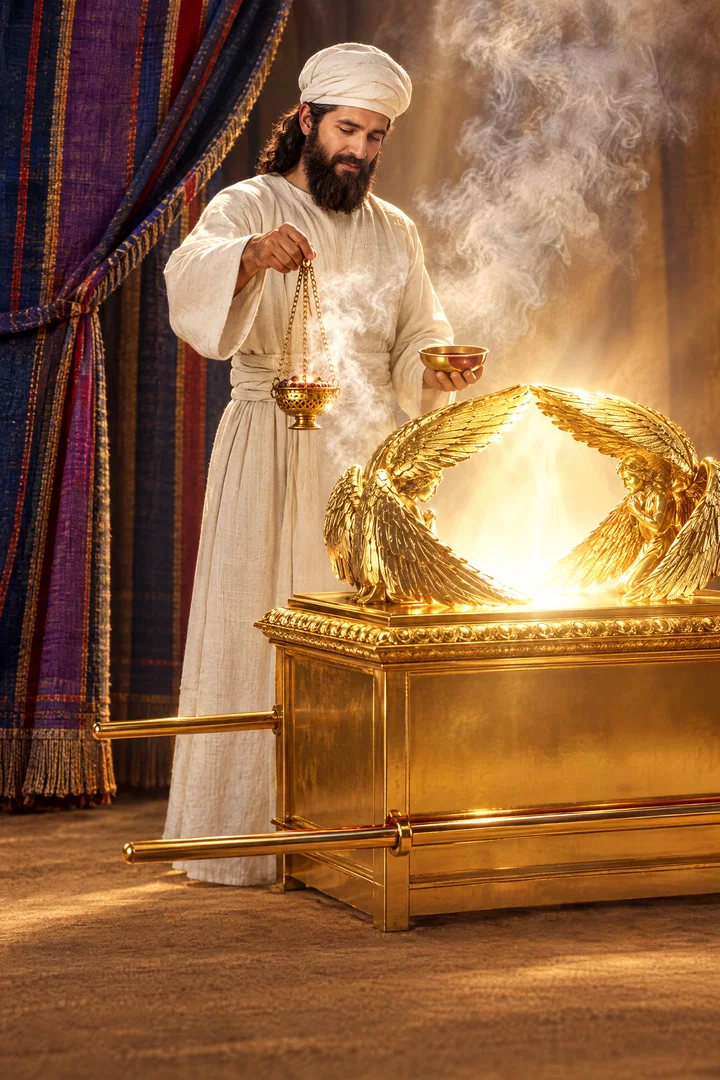
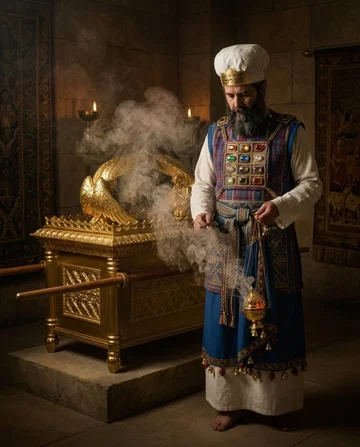
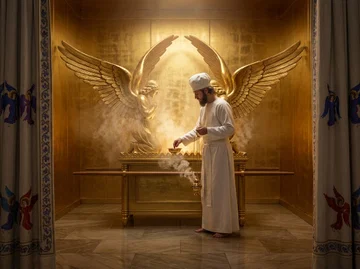
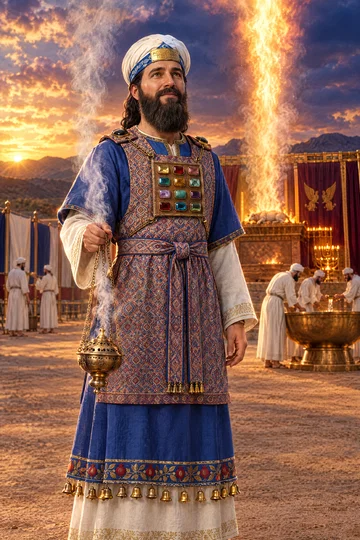
And he shall take a censer full of burning coals of fire from off the altar before the LORD, and his hands full of sweet incense beaten small, and bring it within the vail:
Translations
And he shall take a censer full of burning coals of fire from off the altar before the LORD, and his hands full of sweet incense beaten small, and bring it within the veil:
King James Version, Webster Bible
And he shall take a censer full of burning coals of fire from off the altar before the LORD, and his hands full of sweet incense beaten small, and bring it within the vail:
and he shall take a censer full of burning coals of fire from off the altar before the Lord, and his hands full of sweet incense beaten small, and bring it within the vail:
and he shall take a censer full of coals of fire from off the altar before the LORD, and his hands full of sweet incense beaten small, and bring it within the veil:
And he shall take a censer full of coals of fire from off the altar before Jehovah, and his hands full of sweet incense beaten small, and bring it within the veil:
and hath taken the fulness of the censer of burning coals of fire from off the altar, from before Jehovah, and the fulness of his hands of thin spice-perfume, and hath brought [it] within the vail;
And he shall take the censer full of burning coals of fire from off the altar before Jehovah, and both his hands full of fragrant incense beaten small, and bring it inside the veil.
and shall take the censer-full of burning coals of fire from off the altar from before Yahweh, and his hands full of fragrant incense, beaten small,—and bring within the veil;
Berean Standard Bible, Majority Standard Bible
Then he must take a censer full of burning coals from the altar before the LORD, and two handfuls of finely ground fragrant incense, and take them inside the veil.
He shall take a censer full of coals of fire from off the altar before the LORD, and two handfuls of sweet incense beaten small, and bring it within the veil.
And he is to take a vessel full of burning coal from the altar before the Lord and in his hand some sweet perfume crushed small, and take it inside the veil;
And he shall take a censer full of burning coles from off the altar before the Lord, and his handfull of sweete incense beaten small, and bring it within the vayle,
Douay-Rheims (Challoner revision)
And taking the censer, which he hath filled with the burning coals of the altar, and taking up with his hand the compounded perfume for incense, he shall go in within the veil into the holy place:
Pictures
Cross-references 20 of 61
- Hebrews 9:7
But into the second went the high priest alone once every year, not without blood, which he offered for himself, and for the errors of the people:
The high priest entered the inner sanctuary once yearly with blood.
- Hebrews 8:5
Who serve unto the example and shadow of heavenly things, as Moses was admonished of God when he was about to make the tabernacle: for, See, saith he, that thou make all things according to the pattern shewed to thee in the mount.
Earthly sanctuary service is a pattern of Christ’s heavenly ministry.
- Hebrews 9:23-24
It was therefore necessary that the patterns of things in the heavens should be purified with these; but the heavenly things themselves with better sacrifices than these.
The earthly sanctuary’s cleansing prefigures Christ’s ministry and the purification of the heavenly sanctuary.
- Hebrews 8:1-2
Now of the things which we have spoken this is the sum: We have such an high priest, who is set on the right hand of the throne of the Majesty in the heavens;
Christ ministers as High Priest in the heavenly sanctuary foreshadowed by the earthly service.
- Hebrews 10:1-4
For the law having a shadow of good things to come, and not the very image of the things, can never with those sacrifices which they offered year by year continually make the comers thereunto perfect.
The yearly sanctuary service was a shadow, and its animal sacrifices could not remove sins.
- Hebrews 9:12
Neither by the blood of goats and calves, but by his own blood he entered in once into the holy place, having obtained eternal redemption for us.
Christ enters the heavenly holy place as High Priest by his own blood.
- Leviticus 23:26-32
And the LORD spake unto Moses, saying,
Gives the related Day of Atonement observances.
- Hebrews 9:24
For Christ is not entered into the holy places made with hands, which are the figures of the true; but into heaven itself, now to appear in the presence of God for us:
Christ enters heaven’s true sanctuary to appear before God for us, fulfilling the earthly service.
- Hebrews 9:3-4
And after the second veil, the tabernacle which is called the Holiest of all;
Names the inner apartment beyond the second veil and its furnishings.
- Leviticus 16:2
And the LORD said unto Moses, Speak unto Aaron thy brother, that he come not at all times into the holy place within the vail before the mercy seat, which is upon the ark; that he die not: for I will appear in the cloud upon the mercy seat.
Sets the restriction and promise for entering within the veil.
- Leviticus 16:33
And he shall make an atonement for the holy sanctuary, and he shall make an atonement for the tabernacle of the congregation, and for the altar, and he shall make an atonement for the priests, and for all the people of the congregation.
Describes cleansing the sanctuary and its sacred vessels.
- Hebrews 10:19-20
Having therefore, brethren, boldness to enter into the holiest by the blood of Jesus,
Christ’s flesh is the veil through which believers enter God’s presence.
- Exodus 25:22
And there I will meet with thee, and I will commune with thee from above the mercy seat, from between the two cherubims which are upon the ark of the testimony, of all things which I will give thee in commandment unto the children of Israel.
God meets and communes above the mercy seat between the cherubim.
- Leviticus 10:1
And Nadab and Abihu, the sons of Aaron, took either of them his censer, and put fire therein, and put incense thereon, and offered strange fire before the LORD, which he commanded them not.
Nadab and Abihu offered unauthorized fire instead of following the command.
- Leviticus 16:3
Thus shall Aaron come into the holy place: with a young bullock for a sin offering, and a ram for a burnt offering.
Prescribes the bullock and ram for the high priest’s entry.
- Leviticus 16:30
For on that day shall the priest make an atonement for you, to cleanse you, that ye may be clean from all your sins before the LORD.
States that the people are cleansed from their sins on that day.
- Leviticus 16:16
And he shall make an atonement for the holy place, because of the uncleanness of the children of Israel, and because of their transgressions in all their sins: and so shall he do for the tabernacle of the congregation, that remaineth among them in the midst of their uncleanness.
Atonement is made for the sanctuary because of Israel’s sins.
- Hebrews 7:27
Who needeth not daily, as those high priests, to offer up sacrifice, first for his own sins, and then for the people’s: for this he did once, when he offered up himself.
Christ offered himself once, unlike priests who repeatedly offered sacrifices.
- Hebrews 6:19-20
Which hope we have as an anchor of the soul, both sure and stedfast, and which entereth into that within the veil;
Christ enters within the veil as our forerunner and high priest.
- Revelation 8:3-4
And another angel came and stood at the altar, having a golden censer; and there was given unto him much incense, that he should offer it with the prayers of all saints upon the golden altar which was before the throne.
Incense is offered with the saints’ prayers before God.
Commentary
Each commentary is drawn from primary sources: the writings of Ellen G. White and Adventist pioneers and periodicals. Each commentary is separate. Its own words are not a quotation; follow the references to read the source passages.
Ellen G. White
21 sources
On the one appointed day of the year the high priest alone entered within the veil with a censer of burning coals from the altar and hands full of sweet incense, whose cloud veiled the visible glory above the mercy seat from his sight as he stood trembling before God.8T 284.3–285.1MH 437.1ST Mar 4, 1903 That entrance into the Most Holy Place for the cleansing of the sanctuary was a pattern of Christ's ministry in the heavenly sanctuary, where He as great High Priest entered within the veil to plead His own blood for sinners.WLF 9.1GC88 433.1Lt 253, 1903, par. 17 The fragrant incense and the blood sprinkled on the mercy seat pointed to the merits of His sacrifice, by which God cleanses sinners from sin and by which the prayers of the confessing sinner ascend made fragrant with the merits of Christ's character.4T 124.314MR 129.2 In 1844 He entered the heavenly sanctuary upon the great antitypical day of atonement to cleanse it from the sins of the people, there blotting out the sins of His faithful people when confessed and pardoned in the judgment.Ms 81, 1886, par. 94SP 499.3–500.1Ms 6, 1876, par. 5–6 Its antitype is now taking place as a solemn time with eternal consequences for every person, calling for repentance, deep heart-searching, humility, and cleansing from defilement by the blood of Jesus before the judgment reviews the deeds.5T 420.3Lt 55, 1886, par. 9–10Lt 53, 1886, par. 4Ms 52, 1905, par. 10
Earthly Day of Atonement
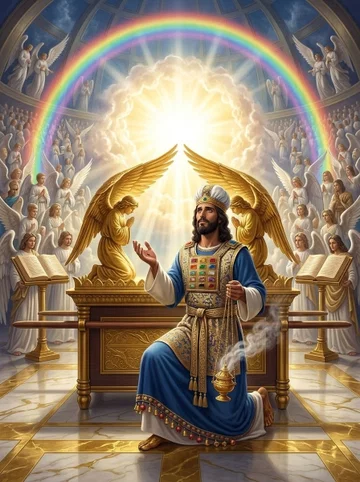
Leviticus 16 describes the process for cleansing the sanctuary, the earthly dwelling-place of God's glory upon the earth.GC88 683.4–684.54SP 498.6 That sanctuary was first made as the movable sanctuary in the desert of Sinai with its vessels, and afterward continued in Solomon's temple in Canaan with its holy and most holy place to which those vessels were transferred.GC88 683.4–684.54SP 498.6 The most holy place was the apartment sacred to His presence, closed by a veil inwrought with cherubim that only one hand could lift.8T 284.3–285.1 To lift it and intrude unbidden into the sacred mystery was death, because above the mercy-seat dwelt the glory of the Holiest on which no man might look and live.8T 284.3–285.1 The mercy-seat was the cover of the ark containing God's law, with bowed worshiping angels at either end.8T 284.3–285.1Lt 253, 1903, par. 17
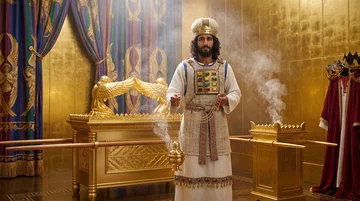
On the one appointed day of the year the high priest alone entered within the veil into God's presence, after careful and solemn preparation.8T 284.3–285.1ST Mar 4, 1903 He took a censer full of burning coals of fire from off the altar and his hands full of sweet incense beaten small and finely beaten, and brought it within the veil.MH 437.1ST Mar 4, 1903Ms 52, 1905, par. 10 He entered with trembling before God's visible glory and stood before the mercy seat, where God conversed with him.8T 284.3–285.1ST Mar 4, 1903 The cloud of sweet incense from his censer formed a cloud that veiled the glory above the mercy seat from his sight.8T 284.3–285.1MH 437.1 That yearly entrance belonged to the great day of atonement as a day of confession before the judgment when deeds are reviewed.Ms 52, 1905, par. 10
While he ministered every sound in the temple courts was hushed and no priests ministered at the altars.8T 284.3–285.1 The hosts of worshipers waited in silence, bowed in silent awe, and sent up petitions for God's mercy and blessing.8T 284.3–285.1ST Mar 4, 1903 If he stayed unusually long they feared that their sins or his had caused God's glory to slay him.ST Mar 4, 1903 The bells on his garments reassured them when they heard him move, and he came out and blessed the people.ST Mar 4, 1903 The service taught that the sacrifice provided a substitute for the sinner, while the sin was transferred to the sanctuary.GC88 420.1 The high priest then acted as mediator in dealing with the sanctuary's claims and bearing the sins away in the service's final act.GC88 420.1 The fragrant incense and the blood sprinkled on the mercy seat accompanied the cleansing of Israel from guilt.4T 124.3
Christ's Heavenly Atonement Ministry
The service of entering the Most Holy Place with censer and incense for the cleansing of the sanctuary was the pattern of Christ's ministry in the heavenly sanctuary, where He entered the Most Holy Place to plead His blood for sinners.GC88 433.1Lt 253, 1903, par. 17 Jesus is the great High Priest now attired and ministering like the Jewish high priest on the Day of Atonement, bringing the censer and incense within the veil while finishing the work of atonement, an attire He will lay off to put on kingly robes and crowns when He stands up to reign.WLF 9.1 The sanctuary to be cleansed at the end of the 2300 days is not the earth to be purified by fire at Christ's second coming, but the sanctuary in heaven.Ms 6, 1876, par. 5–6 In 1844 Christ entered it upon the great antitypical day of atonement to cleanse it from the sins of the people by virtue of His own blood, in mercy giving sinners still more time to repent of their sins and prepare for His coming.Ms 6, 1876, par. 5–6
The high priest's ministry with incense and burning coals inside the veil corresponds to Christ's ministry as High Priest in the most holy place in the great antitypical Day of Atonement, where He blots out the sins of His faithful people.Ms 81, 1886, par. 94SP 499.3–500.1 There sins are confessed and taken away and the repentant receive pardon in the judgment.Ms 81, 1886, par. 9 That ministry is Christ in actual ministry for His people as Sin-bearer and Substitute for the offender, who cannot be accused as a sinner and who takes away the sin of the repentant, believing transgressor, while Satan points to the defilement of God's people and triumphs in their discomfiture.Ms 124, 1901, par. 18–19 The same ministry, in which Joshua ministered on behalf of Israel on the Day of Atonement, pointed to Christ's work for His people as Redeemer and Sin-bearer, taking away the sin of the repentant believer.17MR 242.1–2
The fragrant incense carried behind the veil and the blood sprinkled on the mercy seat accompanied the cleansing of Israel from guilt and pointed to the merits of Christ's sacrifice, which God accepts to cleanse sinners from sin.4T 124.3 The fragrant cloud ascending while the high priest sprinkled the warm blood means that while sinners confess their sins and plead the efficacy of Christ's atoning blood, their prayers ascend to heaven made fragrant with the merits of Christ's character.14MR 129.2 The efficacy of Christ's blood is to be represented with freshness and power so faith can lay hold on its merits, with the assurance that notwithstanding unworthiness there is One who can take away sin and save the sinner, and every sin acknowledged before God with a contrite heart He will remove.14MR 129.2 The opened entrance into the most holy place remains open while this work is unfinished, and people are urged to enter it by faith.4SP 499.3–500.1
Solemn Present Application
The censer full of burning coals and hands full of sweet incense beaten small belongs to the ritual of the great day of atonement, when incense was carried within the veil behind the veil into God's presence.5T 420.3Ms 52, 1905, par. 10 It is connected with the solemn sanctuary work and judgment that concern every person.5T 420.3 It belongs to the picture of the great day of atonement as a day of confession before the judgment when deeds are reviewed.Ms 52, 1905, par. 10
Its antitype is now taking place as a solemn time with eternal consequences.Lt 55, 1886, par. 9–10Lt 53, 1886, par. 4 In this time each person's case must be considered in the judgment, and the soul must be cleansed from defilement by the blood of Jesus.Lt 53, 1886, par. 4 It calls for repentance, humility, deep heart-searching, and purification before God.Lt 55, 1886, par. 9–10
The Day of Atonement ministry in the most holy place was carried on in an apartment sacred to God's presence and closed by a veil inwrought with cherubim that only one hand could lift, and to lift it and intrude unbidden into the sacred mystery was death, because above the mercy-seat and the bowed, worshiping angels dwelt the glory of the Holiest on which no man might look and live.8T 284.3–285.1 On the one appointed day of the year the high priest alone entered with trembling, and the cloud of sweet incense from his censer veiled the glory from his sight.8T 284.3–285.1 While he ministered every sound in the temple courts was hushed, no priests ministered at the altars, and the hosts of worshipers bowed in silent awe sending up petitions for God's mercy.8T 284.3–285.1 These things happened by way of example and were written for admonition upon those on whom the ends of the ages have come.8T 284.3–285.1 The sacred fire and fragrant incense on the censer represent the God-given means by which human agents are joined to divine power.STMW10 37.2 Using what God provides makes a firm connection with Him, while relying on oneself instead leads to pride and corruption and leaves a person unusable in His work.STMW10 37.2
Sources
Pioneers and periodicals
142 sources
On the Day of Atonement the high priest alone, only once in the year, enters within the second veil into the most holy place with a censer full of burning coals from the altar before the Lord and his hands full of sweet incense beaten small to put upon the fire before the mercy-seat.ST Apr 8, 1913ST Apr 3, 1879ST May 27, 1897ST Jun 19, 1907 The cloud of its smoke covers the mercy-seat and veils the glory of the Shekinah from him so that he does not die while standing in God's immediate presence over His broken law.ST Apr 8, 1913RH Oct 31, 1854RH Sep 16, 1852ST Feb 14, 1906ST Mar 11, 1903 The coals must be sacred fire taken from the specified altar kindled by the Lord and kept ever burning, for common fire may not be used, as Nadab and Abihu showed when they offered holy incense upon strange fire and made it an abomination.RH Feb 3, 1916ST Dec 11, 1928ST Apr 22, 1889ST Dec 11, 1928 The incense stands between sinner and God and represents the righteousness of the heavenly High Priest imputed when each name comes before the Judge, without which repentance and prayer alone cannot secure acceptance.RH Feb 19, 1901RH Dec 1, 1863RH Feb 2, 1911RH Oct 10, 1912 The yearly cleansing of the sanctuary from Israel's sins transferred there by blood through the year types the final investigative judgment and cleansing of the heavenly sanctuary, begun when Christ entered the most holy place at the end of the 2300 days in 1844 to blot out sins and decide cases before He comes without sin unto salvation.ST Apr 20, 1904ST Apr 3, 1879RH May 14, 1867RH Nov 8, 1906RH Feb 22, 1870
Day of Atonement Setting
Leviticus 16:12 belongs to the Day of Atonement on the tenth day of the seventh month Tishri, the most important and most sacred annual sabbath kept with rest from all labor and affliction of soul.ST Jul 4, 1911ST Apr 3, 1879ST May 27, 1897ST Sep 6, 1910 Its principal feature was ministry in the second apartment or most holy place within the veil, distinct from the daily service continued through the year in the holy place.ST Jul 4, 1911ST Aug 15, 1878RH Feb 3, 1853 While the daily ministration bore sins into the sanctuary through blood of sin-offerings, this service reversed the process and showed the means by which sins were borne out, with blood borne within the veil and sprinkled with the finger upon and before the mercy-seat seven times to cleanse the sanctuary and altar and to cleanse the children of Israel.ST Jul 4, 1911ST May 27, 1897ST Nov 20, 1879 On that day the high priest entered beyond the second veil where the ark, mercy-seat, testimony, and visible glory between the cherubim dwell, with incense and with a sin offering in both apartments for all Israel so they could be cleansed from their sins before the Lord.ST Apr 3, 1879RH Feb 3, 1853 The service made final atonement first for the priests and the high priest's house by a bullock and then for the people by a goat, with blood sprinkled seven times upon the mercy-seat to show complete satisfaction for every repentant sinner, cleansing both the sanctuary from the record of sin and the people from sin itself.ST May 27, 1897ST Sep 6, 1910
The day is the yearly cleansing of the first-covenant sanctuary and the yearly closing and culminating service, the last day of the yearly round, when ministration was changed and transferred from the holy place to the most holy place.ST Apr 3, 1879RH Dec 24, 1908RH Feb 3, 1853ST Nov 20, 1879 Ordinary daily ministry ceases in form as the high priest's work moves within the veil, where he slew the goat upon which the Lord's lot fell and presented its blood before God as a sin-offering in the most holy place, sprinkling it upon the mercy-seat for two purposes: to make atonement for the people and to cleanse the sanctuary by removing from it the sins of the people of God.ST Aug 15, 1878RH Mar 8, 1870ST Nov 20, 1879 That cleansing completed the work partially accomplished in the first apartment, where sins had been transferred to the sanctuary through the blood of sin-offering, and by the work in the second apartment the sanctuary is cleansed and the sins of the people of God are blotted out.RH Dec 24, 1908ST Nov 20, 1879 Afterward the high priest lays the transgressions upon the goat for Azazel to bear into a land not inhabited, carrying the people's previously remitted sins out of the sanctuary in figure and placing them on the scapegoat sent away to an uninhabited land, as the pattern of heavenly things.ST Apr 3, 1879RH Mar 8, 1870ST Nov 20, 1879
The details of the ceremonies filled observers with awe and directed their thoughts to the final judgment, for the day was a miniature day of judgment in Israel and Israel's yearly judgment day.ST Apr 20, 1904RH Mar 28, 1912ST Apr 2, 1912ST Dec 21, 1915 It was the final balancing of accounts with God and final disposition of sin and its record, when the record was made up and every man's life came in solemn review before the ark of the covenant and the Ten Commandments transgressed in every sin of the year.ST Sep 6, 1910ST Sep 9, 1875RH Mar 28, 1912 Those who afflicted their souls had their sins blotted out and forever removed from them and borne away upon the head of the scapegoat, which is acquittal in the judgment, while every soul that did not afflict itself that day and whoever was not found right with God was cut off from Israel and from part with the Lord's people.ST Sep 6, 1910ST Sep 9, 1875RH Mar 28, 1912ST Apr 2, 1912 Through this service the sanctuary and the people were cleansed from their sins, each person having to be represented before God by faith, and the service represented the putting away of sins confessed and forgiven during the year which had been symbolically deposited in the sanctuary through the sprinkling of blood, pointing forward to the great antitypical day of atonement and the cleansing of the heavenly sanctuary.ST Apr 20, 1904ST Apr 2, 1912ST Dec 21, 1915 The yearly closing work thus types the judgment, the cleansing of the sanctuary being the judgment of the Lord's people and the final blotting out of sins being the last work of Jesus as great High Priest in the sanctuary above, transpiring before His revelation from heaven in wrath as King of kings.ST Sep 9, 1875RH Mar 28, 1912
The high priest's passing from the holy place to the most holy on the tenth day of the seventh month to cleanse the sanctuary was once taken to mean that the great High Priest would leave the tabernacle of God in heaven and descend in flaming fire on the tenth day of the seventh month in the autumn of 1844, with the sanctuary meaning the earth or the land of Palestine and the cleansing meaning the burning of the earth or the purification of Palestine at the coming of Christ.RH Dec 23, 1852RH Dec 23, 1852 That expectation ended in painful disappointment, with the correctness of the ideas of the sanctuary and its cleansing called into question.RH Dec 23, 1852 Those who held it taught that as the Passover on the 14th of Abib, the wave sheaf of firstfruits on the morrow after the Sabbath, and Pentecost on the fiftieth day were fulfilled chronologically at the first advent, so this atonement must be fulfilled chronologically on the tenth day of the seventh month at the second advent, the day set apart by God being honored by the event itself.RH Aug 27, 1857 In that understanding the verse shows the High Priest taking fire and sweet incense within the veil as part of making atonement for the sins of all Israel and interceding in the Holy of Holies, and then coming out to bless the waiting congregation, meaning Christ's closing heavenly intercession and His coming out of heaven itself to appear the second time without sin unto salvation, with the release of captives, canceling of debts, and restoration of possessions.RH Aug 27, 1857RH Dec 23, 1852
Priest Entering Within Veil
The verse belongs to the high priest's work on the Day of Atonement after killing the bullock for himself and for his house, having bathed and robed himself in holy white linen garments.ST Apr 8, 1913 Alone he carried a censer full of burning coals from the golden altar and his hands full of sweet incense within the veil into the most holy place, where the ark and mercy seat and testimony and the visible glory of the Shekinah above the cherubim dwell.ST Apr 8, 1913ST Apr 3, 1879ST Aug 15, 1878 He alone entered there, and only once a year and only on that day, on the tenth day of the seventh month for the yearly cleansing of the first-covenant sanctuary.ST Apr 3, 1879RH Feb 2, 1911 That yearly ministration moved from the holy place to the most holy place within the veil to make atonement for the people and cleanse the sanctuary from their sins and finally remove sin.ST Jun 19, 1907ST Aug 15, 1878 It included a sin offering in both apartments for all Israel so they could be cleansed from their sins before the Lord, a decisive work of judgment in which in figure the high priest carried the people's previously remitted sins out of the sanctuary and placed them on the scapegoat sent away to an uninhabited land, as the pattern of heavenly things.ST Apr 3, 1879
Coming within the veil into God's immediate presence over the mercy-seat between the cherubim was an act of fearful solemnity that must not be done at all times nor in a trivial or careless manner, but only with suitable preparation. Only once a year could he enter the inner apartment, the especial dwelling-place of God's visible glory above the mercy-seat where no mortal eye but his could look, and only after the most careful and solemn preparation.ST Jun 24, 1880ST Mar 21, 1911 With trembling he went in before God to stand before the mercy-seat where God conversed with him, while the people waited his return outside in solemn silence with hearts uplifted to God in earnest prayer for the divine blessing.ST Jun 24, 1880ST Mar 21, 1911ST Mar 4, 1903 If he remained an unusual time in the most holy, the people were terrified, fearing that because of their sins or some sin of the priest the glory of the Lord had slain him.ST Jun 24, 1880ST Mar 21, 1911ST Mar 4, 1903 When the sound of the tinkling of the bells upon his garments was heard they were greatly relieved as proof he lived, and he then came forth and blessed the people.ST Jun 24, 1880ST Mar 21, 1911ST Mar 4, 1903
The taking of coals and incense within the veil is part of the high priest's required preparation to make the yearly atonement, coming after killing the bullock for his own sin-offering and before sprinkling blood.ST Apr 8, 1913RH Sep 16, 1852 He first puts the finely beaten sweet incense on the fire so its clouded perfume rests upon the mercy-seat and its cloud covers the mercy seat over the testimony to protect him from death, veiling the glory of the Shekinah from him that he die not.ST Apr 8, 1913ST May 27, 1897ST Jan 21, 1886 He then sprinkles the bullock's blood upon the mercy-seat and the ground in front of it seven times, and this cleansing of himself and his family prepares him to make atonement for the whole people.ST Apr 8, 1913ST May 27, 1897 This was his first atonement for himself and his household and his first entry with bullock blood, before his second entry with the blood of the Lord's goat for the people to make atonement for himself, for all the congregation of Israel, and for the sanctuary itself, while a burnt-offering ram continued burning.ST May 27, 1897ST Jan 21, 1886RH Aug 15, 1865 The priest must first offer a young bullock for a sin-offering and a ram for a burnt-offering to make atonement for himself and his house, bringing blood within the veil to sprinkle, and having thus so far as that service could go become free from sin himself, he was then prepared to act in the remaining solemn services of that day as mediator between God and the people.
That offering for his own sin before he undertakes the work that represents atonement for the people emphasizes the priest's infirmity and sinfulness.ST Jun 6, 1878 It was a public acknowledgment of his own sinfulness, solemnly showing that his priesthood was only typical and not real and that he was marked by infirmity and sinfulness.RH Jan 11, 1870 The high priest first made atonement for himself and his house to appear sinless before God when he stood for the people, but that preliminary offering and self-offering has no counterpart in Christ and no part of it typifies the work of Christ.ST Jun 6, 1878ST Jan 17, 1884RH Jan 11, 1870 In fulfillment Christ does not enter twice or offer for Himself because He knew no sin, was separate from sinners, and needed no offering for Himself, but fulfills all that part of the shadow that concerns the blotting out of the people's sins; the heavenly Priest requires no such atonement for Himself, so the type is not carried out in every particular in the antitype.RH Aug 15, 1865RH Feb 7, 1856
The golden censer used to burn incense before the Lord, particularly in the holiest place within the veil, was carried within the veil with burning coals from the altar and finely beaten incense.ST Nov 21, 1892RH Jan 6, 1853RH Mar 1, 1870 This censer was kept for that special use and was associated with the most holy place.ST Nov 21, 1892 The passing of the high priest within the veil with burning coals and sweet incense proves that each holy place of the sanctuary is entered through a veil.ST Aug 18, 1881 It gives the pattern for the heavenly sanctuary where Jesus has entered within the veil as minister and priest to minister on behalf of believers, and where believers enter into the holy place through the veil by the body and blood of Jesus as the new and living way consecrated for them, His flesh being the way through the veil and not the veil itself (Hebrews 10:20). ST Aug 18, 1881
Coals, Fire, and Incense
On the Day of Atonement the high priest, after killing the bullock for himself and for his house and having bathed and robed himself in holy white linen garments, alone carried a censer full of burning coals from the altar before the Lord and his hands full of sweet incense beaten small and finely beaten within the veil into the most holy place.ST Apr 8, 1913ST May 27, 1897RH Feb 3, 1916RH Sep 16, 1852ST Jan 21, 1886 He put the incense upon the fire so that its clouded perfume rested upon and enveloped the mercy-seat, and this prepared for sprinkling the mercy-seat and the ground in front of it seven times with the blood of the bullock for himself and then with the blood of the Lord's goat for the people.ST Apr 8, 1913ST May 27, 1897ST Jun 19, 1907RH Sep 16, 1852ST Jan 21, 1886 This taking of coals and finely beaten incense inside the veil was part of his first atonement for himself and his household before he offered the people's goat, cleansing himself and his family to make atonement for the whole congregation and for the sanctuary itself, and it illustrates the care God requires in the details of worship.ST Apr 8, 1913ST May 27, 1897RH Feb 3, 1916RH Sep 16, 1852ST Jan 21, 1886
The cloud of smoke veiled the glory of the Shekinah from him so that he did not die, covering the mercy-seat over the testimony and concealing ark and mercy-seat.ST Apr 8, 1913ST May 27, 1897RH Sep 16, 1852ST Jan 21, 1886ST Mar 11, 1886 Without this precaution he would die because God's glory was there and he stood in God's immediate presence over His law which he had broken, and approaching it without atonement would bring death.ST Apr 8, 1913RH Oct 31, 1854ST Mar 11, 1886 The bullock offered for the priest and his household died in his place, and its blood was accepted as a substitute for his life while he performed the atonement with blood for those who had confessed their sins during the year.RH Oct 31, 1854RH Feb 19, 1901
The coals had to be taken from the specified source, the fire on the altar before the Lord, because it was what God had commanded.ST Dec 11, 1928ST Apr 22, 1889ST Dec 11, 1928 That fire was kindled by the Lord Himself when fire came out and consumed the burnt offering, it was commanded to be kept ever burning and never to go out, and it was sacred fire, so the command prescribes just the fire to be used and precludes any other fire.ST Apr 22, 1889 Fire from another source would not fulfill His command, even if it could burn the incense.ST Dec 11, 1928
Nadab and Abihu broke this law by taking common fire in their censers and burning the holy compound of spices upon it, mixing the holy and the profane.ST Apr 22, 1889 That union of strange fire with holy incense made strange incense, an abomination.ST Apr 22, 1889
The incense stood between the sinner and God and had to be offered by the priest, for repentance and prayer alone could not secure acceptance without it, and the service was a symbolic prophecy of the gospel.RH Feb 19, 1901 It typifies Christ and represents the righteousness of the heavenly High Priest, Christ's righteousness ascending, imputed to those who have confessed their sins and have them covered by His blood when each person's name comes before the great Judge.RH Feb 19, 1901RH Feb 2, 1911RH Oct 10, 1912RH Nov 8, 1915 He bears the incense before him into the inner sanctuary on the most solemn day of the year while also carrying the blood of the atonement to sprinkle on the mercy-seat and before the ark containing the law that condemned the transgressor.RH Feb 2, 1911RH Oct 10, 1912
After sin entered, God veiled His visible presence in His dealings with people as a merciful barrier, since sinners cannot endure His unveiled glory.ST Feb 14, 1906ST Mar 11, 1903 The smoke of incense and the veil mark this hiding, as one means by which that presence remained hidden from sinful people.ST Feb 14, 1906ST Mar 11, 1903
Blood Atonement and Cleansing
Leviticus 16:12 belongs to the yearly cleansing of the sanctuary on the tenth day of the seventh month, when the high priest entered beyond the second veil where the ark and mercy-seat were with incense and made a sin offering in both apartments so Israel could be cleansed from sins before the Lord.ST Apr 3, 1879ST Dec 12, 1916ST Jun 19, 1907RH Dec 24, 1908ST Nov 20, 1879 It is part of the ceremony for cleansing the sanctuary and altar and making a final figurative disposition of the uncleanness, transgressions, and sins transferred there during the year by the blood of sin-offerings.RH Dec 24, 1908RH Feb 3, 1853RH Jan 1851RH Mar 28, 1854RH Mar 22, 1870 Cleansing the sanctuary and making atonement are one work and mean precisely the same thing, a decisive work of judgment for final cleansing and remission for sanctuary and people.ST Dec 12, 1916ST Sep 6, 1910ST Nov 20, 1879RH May 14, 1867RH Dec 1, 1863 The day is the final balancing of accounts and final disposition of sin and its record, cleansing both the sanctuary from the record of sin and the people from sin itself, with blood sprinkled seven times upon the mercy-seat to show complete satisfaction for every repentant sinner.ST Jul 4, 1911ST Sep 6, 1910ST Nov 23, 1904 In figure the high priest carried the previously remitted sins out of the sanctuary and placed them on the scapegoat sent away to a land not inhabited, a pattern of heavenly things.ST Apr 3, 1879ST Jun 4, 1885ST Nov 20, 1879
The cleansing is removal of moral uncleanness, not removal of physical dirt as from a room or garment and not cleansing from oppressing powers by destruction.RH Feb 3, 1853RH Jan 1851RH Dec 5, 1854RH Jan 24, 1856ST Feb 7, 1884 The holy of holies where God manifested His glory could be entered by no one but the high priest, yet it had to be cleansed because sins of the people were borne into it by the blood of the sin-offering, its uncleanness meaning only that sins carried in through blood are present there and must be removed.RH Feb 3, 1853RH Jan 1851RH Mar 22, 1870 That removal is accomplished by priestly work with blood, not by fire and not by a king's vengeance, concluding the high priest's service in the sanctuary before the Second Advent.RH Feb 3, 1853RH Dec 5, 1854RH Jan 24, 1856 It is done by sprinkling blood seven times upon and before the mercy-seat and upon the altar and horns, for the twofold purpose of forgiveness of iniquity and cleansing of the sanctuary.ST Sep 6, 1910RH Feb 3, 1853RH Jun 2, 1874 Sinners are never permitted to inhabit God's sanctuary, so the cleansing is from sin, not from sinners by destroying the wicked.RH Jan 24, 1856ST Feb 7, 1884RH Jun 2, 1874
The atonement is a distinct, specific, final work of the high priest's priesthood and the last work of his ministry at an appointed time, identified with cleansing the sanctuary.RH Sep 6, 1870RH Dec 1, 1863RH Jun 2, 1874ST Mar 29, 1883RH Jun 2, 1874 It was not made by slaying the offering alone, which was only preparatory, but afterward in the sanctuary when the priest took the blood within and presented it before the Shekinah.RH Sep 6, 1870RH Dec 1, 1863ST Mar 29, 1883 For it is the blood that atones and cleanses, but the priest presenting it who makes the atonement, the sacrificial death and blood representing Christ's sacrifice and His priestly ministry in the heavenly sanctuary where He pleads His own blood.RH Sep 6, 1870RH Dec 1, 1863ST Mar 29, 1883 Thus Christ was not acting as priest when He died on the cross, and the cross did not complete salvation but made it possible, while salvation is made positive, fixed, and certain by His life and priesthood where He presents His blood and blots out sins.RH Dec 1, 1863ST Mar 29, 1883 Reconciliation precedes this work in that sins are forgiven and blotted out for those who confess and forsake them, not for those who remain opposed to God.RH Dec 1, 1863RH Jun 2, 1874
Animal blood in figure cannot take away a single sin, since a goat's life is not an equivalent for a human life, so its yearly repetition served only as a reminder of sin and illustrated God's justice and the sinner's due.ST Mar 25, 1889ST Jan 21, 1886RH Dec 1, 1863ST Apr 15, 1886ST Feb 7, 1884 The earthly sanctuary was therefore never truly cleansed but only in figure, and never could have been even if priests had officiated until the end of the 2300 days, while actual sinners still needed sins remitted and blotted out.ST Mar 25, 1889RH Dec 1, 1863ST Feb 7, 1884RH Jun 2, 1874 Yet forgiveness resting on Christ's promised offering was real, and the offerings helped worshipers recognize sin's seriousness and that sin brings death.ST Mar 25, 1889ST Apr 15, 1886 In every sacrifice the sin was laid upon the substitute as a whole and entirely consumed, types that did not atone for a single sin and were abolished in Christ's flesh, because only the Lamb of God by sacrifice of Himself truly puts away sin.ST Jan 21, 1886ST Apr 15, 1886RH Jun 2, 1874 The design is to take away sins from the presence of God and remove them from the throne of judgment, the sanctuary being defiled by sins of the people though they never touch it, because the high priest as representative bears their judgment into the most holy place.RH Dec 1, 1863ST Feb 7, 1884RH Jun 2, 1874
The service reverses the daily ministration: through the year guilt is transferred from sinner to victim and by blood into the sanctuary, and on this day sins are borne out by blood borne within the veil.ST Jul 4, 1911ST Apr 3, 1879ST Nov 20, 1879RH May 14, 1867ST Nov 23, 1904 When the high priest has made an end of reconciling the holy place and tabernacle and altar, he takes the live goat, lays both hands on its head, confesses over him all iniquities, transgressions, and sins of Israel putting them upon the goat's head, and sends him by a fit man into the wilderness unto a land not inhabited.ST Jun 4, 1885ST Nov 20, 1879RH May 14, 1867ST Nov 23, 1904 That cleansing completed the work partially accomplished in the first apartment, removing from the sanctuary the sins transferred there through confession and sacrifice during the year and blotting out the sins of God's people.ST Jul 4, 1911ST Nov 20, 1879ST Nov 23, 1904 The removal is done by the people first confessing sins, second the priest making atonement and confessing them on the scapegoat's head, and third their being borne away into the land of separation, and then the sanctuary is cleansed.ST Jun 4, 1885ST Nov 20, 1879RH Jan 1851 The verse belongs also to the plain record that brings atonement to view as a new institution originating from Abraham's time onward, setting forth the command requiring its observance and the circumstances and rites connected with it.RH Mar 9, 1905
Heavenly Sanctuary Antitype
The earthly sanctuary with its two apartments and its altar cleansed with calves and goats is the example, shadow and pattern of heavenly things, not a perfect representation, and its features teach God's way and foreshadow Christ's priestly work in the greater, more perfect heavenly sanctuary.ST Apr 3, 1879ST Jul 9, 1894ST Oct 25, 1883RH Jan 10, 1907ST May 1, 1879 It belongs to the yearly cleansing of the first-covenant sanctuary on the tenth day of the seventh month, when the high priest alone entered beyond the second veil where the ark and mercy-seat were, with incense, and made a sin offering in both apartments for all Israel so they could be cleansed from their sins before the Lord.ST Apr 3, 1879ST Oct 25, 1883RH Jan 10, 1907ST May 1, 1879RH Feb 3, 1853 That work was decisive judgment, in which the high priest in figure carried the people's previously remitted sins out of the sanctuary and placed them on the scapegoat, representing Satan, which was sent away to a land not inhabited.ST Apr 3, 1879ST Jul 9, 1894ST Oct 25, 1883ST May 1, 1879RH Feb 3, 1853 The sanctuary became unclean in this sense only because the priest as the people's representative bore their sins and judgment into God's dwelling place by blood of the sin offering, though the people themselves never entered, and by that same priesthood it was cleansed and hallowed from the uncleanness of Israel by blood sprinkled in the most holy place upon and before the mercy-seat and then in the holy place upon the altar and its horns.ST Apr 3, 1879ST Jul 9, 1894ST Oct 25, 1883ST May 1, 1879RH Feb 3, 1853 That cleansing is accomplished not by fire but by blood, with better sacrifices by His own blood, and it changes the ministration from the holy place to the holiest of all for the twofold purpose of forgiveness of iniquity and cleansing of the sanctuary.ST Oct 25, 1883RH Jan 10, 1907ST May 1, 1879RH Feb 3, 1853RH Feb 3, 1853
The yearly service carried out in full represents the entire ministry of Christ as High Priest, and the ceremonies of its closing day represent His closing work.RH Aug 3, 1916RH Aug 28, 1853RH Sep 30, 1852ST Dec 17, 1894 After the sacrifice comes ministry in the first apartment, followed by ministry in the second apartment, as the earthly ministry began each year in the first apartment and closed with the service in the second apartment on the great day of atonement, the last day of the yearly round and the year's judgment day.RH Aug 3, 1916RH Aug 28, 1853ST Dec 17, 1894ST Apr 22, 1913 Christ corresponds to the earthly priests throughout their services, not only to this day, ministering in the first apartment until His work begins in the second, and His work in each apartment is once for all, effective and not repeated.RH Aug 3, 1916RH Aug 28, 1853ST Dec 17, 1894ST Apr 22, 1913 That ordered service in the two holy places, whose final act was the cleansing of the sanctuary, serves as example and shadow of Christ's ministry which proceeds from the first apartment and ends with the cleansing of the heavenly sanctuary in the holiest place.RH Aug 3, 1916RH Aug 28, 1853RH Sep 30, 1852ST Apr 22, 1913 It does not typify the whole gospel dispensation from the first advent but the cleansing connected with the end of the 2300 years, for Christ's ministry began in the holy place of the heavenly sanctuary upon His ascension and will end in the most holy place on the antitypical day of atonement.RH Aug 28, 1853RH Sep 30, 1852ST Dec 17, 1894ST Apr 22, 1913
The cross was only the offering of the sacrifice, not the completion of atonement, which was not completed on the day of Jesus' resurrection.RH Nov 24, 1874RH Jul 6, 1869ST Jun 4, 1874ST Jan 28, 1875ST Feb 21, 1878 The general atonement for all the people was not made by slaying the offering but afterward in the sanctuary, the slaying being only preparatory, for it is the blood that atones and cleanses but the priest presenting it before the Shekinah who makes the atonement.RH Nov 24, 1874ST Mar 29, 1883ST Jun 4, 1874ST Jan 28, 1875ST Feb 21, 1878 Atonement is therefore the very last portion of His work as priest, where as the only mediator ascended on high He makes atonement for sins with His own blood according to the example of the Levitical priesthood.RH Nov 24, 1874RH Jul 6, 1869ST Jun 4, 1874ST Jan 28, 1875ST Feb 21, 1878 He was not acting as priest when He died on the cross, and the cross did not complete the work of salvation but made salvation possible, while salvation is made positive, fixed and certain by His life and priesthood in the heavenly sanctuary where He presents His blood and blots out and bears away sins from the sanctuary.RH Nov 24, 1874ST Mar 29, 1883ST Jun 4, 1874ST Jan 28, 1875ST Feb 21, 1878
Christ's heavenly work is performed once for all and is never repeated, unlike the earthly yearly round repeated because earthly priests had short lives.RH Sep 17, 1861ST Dec 22, 1881RH Mar 10, 1874ST Oct 22, 1874ST Sep 16, 1880 The earthly service culminated in one day of ministry in the second, or most holy, apartment after 364 days of ministry in the first apartment, completing that year's round, and by analogy the heavenly closing work is short and its beginning means the work of salvation for the world is near its close.RH Feb 1, 1870RH Sep 17, 1861ST Dec 22, 1881RH Mar 10, 1874ST Oct 22, 1874 The repeated yearly round represented work that Christ completes once for all and does not repeat, fulfilling each part once.RH Sep 17, 1861ST Dec 22, 1881RH Mar 10, 1874ST Oct 22, 1874ST Sep 16, 1880 When that antitypical high-priestly service ends there is no further priestly service, and human probation closes as the judgment ends.RH Sep 17, 1861ST Dec 22, 1881RH Mar 10, 1874ST Oct 22, 1874ST Sep 16, 1880
The sanctuary to be cleansed is not this earth or Palestine in rebellion, which in rebellion against its Creator cannot be called a holy, sacred place consecrated to God, but the heavenly sanctuary where He has been ministering since entering heaven after His ascension.ST Oct 25, 1883ST May 1, 1879RH Feb 3, 1853RH Feb 14, 1854 The cleansing on the Day of Atonement was done in the same sanctuary building pitched by Moses in the exodus where the daily ministration had been performed all year, with the high priest carrying fire and incense within the veil and ministering before the ark, not by going far away to cleanse another place such as the earth, and not by Christ descending to burn the earth.ST Oct 25, 1883ST May 1, 1879RH Feb 3, 1853RH Feb 14, 1854 Its antitypical cleansing must likewise be done by Christ in the heavenly sanctuary with better sacrifices by His own blood, performed in the most holy place with blood.ST Oct 25, 1883ST May 1, 1879RH Feb 3, 1853RH Feb 14, 1854 The earthly sanctuary with its two apartments, with priestly ministry every day of the year in the first and entry into the second on the day of atonement as the typical day of judgment for all the congregation, is type, shadow and likeness of the true sanctuary in heaven.ST Oct 25, 1883RH Jan 10, 1907RH Feb 3, 1853RH Feb 14, 1854 That day-of-atonement work finds fulfillment when Christ as antitype of the earthly high priest entered the most holy place of the heavenly sanctuary at the end of the 2300 days in 1844 and began the antitypical work of judgment and cleansing.RH Feb 3, 1853RH Feb 3, 1853RH Sep 30, 1852RH Feb 14, 1854
Judgment Timing and Prophecy
The cleansing on the tenth day of the seventh month types the final and investigative judgment, when sins are blotted out, cases are decided, the righteous are acquitted forever, the wicked are cut off, and the sanctuary is hallowed from the uncleanness of Israel.ST Apr 20, 1904ST Apr 3, 1879RH May 18, 1869ST Sep 9, 1875ST Sep 16, 1880 Its awe-filled rites directed observers to that judgment, for the high priest entered beyond the second veil to the ark and mercy-seat with censer and incense and offered sin offering in both apartments so Israel could be cleansed before the Lord.ST Apr 20, 1904ST Apr 3, 1879ST Sep 9, 1875ST Apr 23, 1902 That closing yearly work removed in figure the sins conveyed through the year from sinner to sanctuary by sin-offering blood, carrying previously remitted sins out and placing them on the scapegoat to be borne to a land not inhabited.ST Apr 3, 1879RH May 18, 1869ST Sep 9, 1875 Those who afflicted their souls had sins forever removed and borne away, which is acquittal, while those who did not were cut off; when the high priest came out the work for Israel was finished with no judgment afterward.RH May 18, 1869ST Sep 9, 1875 This cleansing of the sanctuary is the judgment of the Lord's people, the last work of Jesus as great High Priest in the sanctuary above before His revelation in wrath as King of kings, vindicating God's justice toward righteous and wicked.ST Sep 9, 1875ST Sep 16, 1880ST Apr 23, 1902
The antitype began at the end of the 2300 days in 1844, in the seventh month on October 22, when Christ entered the most holy place of the heavenly sanctuary to begin the closing mediatorial work before His return.RH May 14, 1867RH Nov 8, 1906RH Feb 22, 1870RH Aug 22, 1912RH Jan 10, 1854 The yearly type in which the high priest passed from the holy place through the second veil to cleanse the earthly sanctuary supplied the pattern for expecting that cleansing at the close of the 2300 days.RH May 14, 1867RH Nov 8, 1906RH Feb 22, 1870 Then the holy-place service for sins ceased in figure and the most-holy-place ministry began, the principal cleansing work now wrought where the ark is.RH Aug 22, 1912RH Apr 6, 1869 That heavenly counterpart removes believers' sins by blood in the same sanctuary building where daily ministration occurred, but with better sacrifices by His own blood.RH May 14, 1867RH Aug 22, 1912RH Jan 10, 1854
That work lasts for a brief but indefinite time before the work of mercy for the world ends and Christ returns.RH Aug 22, 1912ST Jun 27, 1878ST Sep 4, 1879 When it is accomplished there is no longer an intercessor, human probation finishes, and the plagues fall from the place where He had ministered as merciful High Priest.RH Apr 6, 1869ST Jun 27, 1878ST Sep 4, 1879 He must finish making atonement before His second coming, because at His coming He no longer bears sins as victim or atoning priest but comes without sin unto salvation to reward every man and take vengeance on the ungodly.ST Sep 4, 1879RH Mar 25, 1875RH Mar 26, 1867 That judgment blots out transgressions of the ten-commandment law beneath the mercy-seat, acquitting His people between Father and Son before the throne.RH Mar 25, 1875RH Mar 26, 1867 Before He is revealed from heaven in flaming fire He lays aside priestly attire and clothes Himself with garments of vengeance.RH Aug 22, 1912RH Mar 25, 1875RH Mar 26, 1867
Leviticus 16 does not typify the events of the whole gospel dispensation from the first advent but that part embraced in the hour of God's judgment.RH Jan 11, 1870RH Apr 15, 1873RH Jan 11, 1870 It is fulfilled in the days of the voice of the seventh angel when he begins to sound, under the seventh trumpet when the temple of God is opened in heaven and the ark of His testament is seen.RH Jan 11, 1870RH Apr 6, 1869RH Apr 15, 1873LDT 149.1 That opening is the precursor of the close of probation and the signal for the Lord's final work as High Priest, His last work of mercy while the third angel warns.RH Apr 6, 1869RH Apr 15, 1873ST Aug 15, 1878 The second-apartment service thus represents the final work of atonement during the judgment of the dead while probation continues, calling for humbling and confession of sins.RH Jan 11, 1870LDT 149.1ST Aug 15, 1878
The type does not establish that human probation must close when this most-holy work begins.RH Oct 30, 1855RH Dec 15, 1868RH Dec 15, 1868 The high priest's work in the holiest both cleansed the sanctuary and made atonement for the people's sins, a twofold purpose concerning the whole people which Christ's blood continues to avail for while that heavenly work is accomplished.RH Oct 30, 1855RH Dec 15, 1868RH Dec 15, 1868 It is a substantial work of atonement, not a brief seven-day event postponed after 1844, and its cleansing with blood can proceed as individual cases over an extended period.RH Oct 30, 1855RH Dec 15, 1868RH Dec 15, 1868 Other work on the day of atonement could precede the cleansing earlier in the day, so the order in the type does not require many years to be inserted between the expiration of the 2300 days and the cleansing in the antitype.RH Dec 15, 1868RH Feb 21, 1856
Christ Scapegoat and Law
The goat on which the lot fell for the Lord was slain and its blood carried within the veil to cleanse the sanctuary, typing Christ who saves from sin by His death for guilty humanity and whose blood redeems the congregation and makes atonement.RH Mar 24, 1863RH May 9, 1871ST Sep 26, 1911 The other goat was for Azazel, meaning the strong one who revolted, typing Satan as the Evil One and instigator of sin who led God's people into sin.ST Sep 26, 1911ST Nov 29, 1905 After Christ finishes His work as High Priest and the sanctuary is cleansed, the sins due to Satan are laid upon the scapegoat's head and he bears them away into a land of forgetfulness or oblivion, typing the time at the beginning of the thousand years when Satan shall bear the sins he is guilty of in his own life and induced others to commit, unto destruction and separation from the redeemed.RH May 9, 1871ST Sep 26, 1911ST Jul 9, 1894 The sanctuary services of that day thus typify Christ's final work of atonement for those who have made peace with Him, while also portraying Azazel's just punishment.ST Jul 9, 1894ST Nov 29, 1905
The high priest's putting his hands on the scapegoat's head, confessing the sins of the people over it, and sending it free into the wilderness is the congregation's acknowledgment of willingness to put away the evil of their doings and live a righteous and godly life.RH Mar 24, 1863 Contact with that evil defiles, as shown in that the man who leads the goat into the wilderness must be washed before returning to the camp and Aaron must wash and change his vestments.RH Mar 24, 1863 The fate of the scapegoat types the final condition of those who die in sin after propitiation has been made for them, calling for forsaking sin, walking in God's ordinances, and being holy as the Lord God is holy.RH Mar 24, 1863
That final bearing of sin does not complete or supplement the cleansing, for reconciliation in type was accomplished by one offering and its antitype is Christ's single, sufficient sacrifice which cleanses the heavenly sanctuary and perfects those who are sanctified.RH Dec 1, 1863ST Dec 21, 1915 Sins are forgiven and blotted out for those who confess and forsake them, not for those who remain opposed to God, so pardon is not unconditional.RH Dec 1, 1863RH Sep 28, 1916 Confessed sins were forgiven during the year, but their final removal from the sanctuary took place on the great day of atonement when they were placed on the scapegoat and ultimately destroyed, and continued forgiveness depends on daily surrender to Christ.ST Dec 21, 1915RH Sep 28, 1916
The mercy-seat was the place where pardon was sought and the central point of the work of atonement, and the type was completed by sprinkling blood on and before the mercy-seat above the tables of the law that had been broken.RH Apr 15, 1862RH Mar 4, 1862 Atonement therefore concerned transgression of the Ten Commandments, which include the Sabbath as one of its ten precepts, and only the high priest could come to the mercy-seat covering the ark containing the moral law, with blood of a sin-offering and incense.RH Apr 15, 1862RH Apr 28, 1874ST Dec 13, 1883 Blood was thus offered for the cleansing of Sabbath-breakers guilty of violating the fourth commandment, availing nothing in itself except to point to Christ offering His own blood for that sin as the real sin-offering and real High Priest from beginning to end, without which none of those Sabbath-breakers can be saved.ST Dec 13, 1883 The ark which held the law stood in the holy of holies to be reached only by passing through the altar of sacrifice, so altar, sacrificial victim, and ark were inseparably connected as the way back for those disloyal to God, and God's law serves as the rule of life in the present judgment of the house of God.ST Oct 7, 1897RH Aug 7, 1860
These ordinances of divine service performed in the worldly sanctuary belong to the ministration of the first covenant and to the symbolic institutions of the ceremonial law that foreshadowed the good things to come under the gospel.ST Aug 5, 1889RH Sep 25, 1900 Priesthood, altar and laver, table of showbread and candlestick and incense altar, holy and most holy place, veil, ark of the covenant and Shekinah between the cherubim, and the two goats on the great day of atonement, with the taking of fire and sweet incense within the veil and the sprinkling of blood on the mercy-seat, are a type fulfilled in Jesus and His blood sacrifice on Calvary as the propitiation for the sins of the world, instructing Israel about atonement and the way of salvation through a greater atonement and richer sacrifice.RH Apr 4, 1871RH Sep 25, 1900RH Apr 4, 1871 Apart from Christ this service is an incomprehensible enigma and glittering mystery without significance, but in gospel light it becomes clear and beautiful and glorious to the believer, confirms Holy Writ and Christianity, and centers in Him.ST Oct 25, 1905RH Sep 25, 1900
Human Response and Obedience
The verse illustrates the care God requires in the details of worship, for He commanded the priest to take burning coals for the incense from the altar before Him, and the specified source mattered because it was what He had commanded.RH Feb 3, 1916ST Dec 11, 1928ST Dec 11, 1928 Fire from another source would not fulfill His command even if it could burn the incense, and the service required exact obedience in every least particular with departure in the least detail worthy of blame.ST Dec 11, 1928ST Aug 18, 1881 It belongs to one grand series of forms repeated each passing year that God instituted to bring Israel nearer to Himself and to make them a mighty people and a praise in all the earth.ST Aug 18, 1881 It proves God is not the author of confusion but the One who brought harmony and a world robed in beauty out of chaos, and He has not changed.ST Aug 18, 1881
All who ministered in the priest's office under Moses were required to have perfect holiness, because God Himself is holy and will not receive the unholy into His presence.RH Dec 4, 1860 The chapter's atonement work is performed by the priest, not by the people's affliction of their souls, though their penitence and humility prepare them to benefit from the priest's work.ST Nov 27, 1884 On the tenth day of the seventh month, the most solemn day of the year called the great day of judgment, all were required to confess their sins and make every wrong right.RH Feb 2, 1911 The high priest alone could enter the Most Holy Place and come before the mercy seat, bearing the incense before him which typifies Christ, and also carrying the blood of the atonement to sprinkle on the mercy-seat and before the ark containing the law that condemned the transgressor.RH Feb 2, 1911RH Jan 15, 1861
During the year the sins of those who brought sacrifices had been transferred to the sanctuary by the blood of the sin-offerings, and on this day the sins are taken by the high priest and placed on the head of the scapegoat sent away into the wilderness, ending sins in the yearly typical service.RH Feb 2, 1911 These rites gave penitents a memorial of God's pardoning mercy and of sin removed so it would not be remembered against them.RH Jan 15, 1861 Forgiveness involved more than confessing sin and offering a lamb, for the people also depended on the priest's unseen work of atonement behind the veil, which they trusted by faith though they could not see it.RH Dec 1, 1904 That service represents the present antitypical day of atonement and Christ's concluding ministry before the ark in the heavenly sanctuary, during the judgment of the dead while human probation continues, and it calls for people to humble themselves and confess their sins.ST Aug 15, 1878
The solemn work required the living people of Israel to take part, showing that each person had work to do from the beginning of the judgment day until its close, although the decision came at the end.RH Dec 10, 1901 Applied to the final judgment which began in 1844, people who hear and accept the judgment message are to live and act as though standing before God's throne.RH Dec 10, 1901 The day's service did not save a person apart from that person's faithful cooperation, for it typified the work required of God's people while Christ pleads His blood for them in the heavenly sanctuary.RH Mar 3, 1904 Confessed sins were forgiven during the year, but their final removal from the sanctuary took place on the great day of atonement when they were placed on the scapegoat and ultimately destroyed, serving as a figure of the cleansing of the heavenly sanctuary and the blotting out of confessed and forgiven sins followed by the final destruction of sin and sinners so the universe is free from sin.ST Dec 12, 1916RH Sep 28, 1916 Pardon is therefore not unconditional, and continued forgiveness depends on daily surrender to Christ.RH Sep 28, 1916
The announcement that the hour of God's judgment is come means not simply that a time has been reached but that a judgment work for that time has come, so the whole teaching of the sanctuary and its services must be made plain anew to this generation.RH Oct 29, 1903 That means brushing aside the perversion of the gospel that set aside the true sanctuary and introduced a new temple, new leader, new sacrifice, new service, and new priesthood with no salvation.RH Oct 29, 1903 In its place must be brought forward in vividness and saving power the old truth of salvation through faith in Christ as sacrifice, substitute, surety, great high priest, and God in the flesh.RH Oct 29, 1903 Like the other details of these rites, this detail of the sacrificial system has its fuller meaning in the sacrifice, life, and work of Jesus Christ.ST Feb 7, 1911
The verse belongs to the Day of Atonement, the final day of the yearly sanctuary service, in which the high priest brought the sins represented in the sanctuary into the most holy place for final review before God. Its work in the sanctuary's second apartment represented the final work of atonement in completing the removal of God's people's sins from the sanctuary, applied to Christ's concluding priestly ministry in heaven during the investigative judgment.ST Jun 6, 1878 Joshua's work as high priest in that service was a sign of Christ's final work as high priest in taking our nature, dying for us, interceding for us, and blotting out His people's sins at the end of His priestly service.ST Apr 26, 1883 Those living in the last generation enter that most holy place by faith and behold Christ's ministration there, witnessing the ceremony uniting the Lamb with the New Jerusalem.RH Mar 30, 1869 The tribes carried on the breastplate show all Israel has interest, namely those continuing in true worship.ST Aug 15, 1878ST Jun 6, 1878ST Apr 26, 1883
Sources