Leviticus 23:25
Ye shall do no servile work therein: but ye shall offer an offering made by fire unto the LORD.
Translations
You shall do no servile work therein: but you shall offer an offering made by fire to the LORD.
Ye shall do no servile work therein: but ye shall offer an offering made by fire unto the LORD.
Ye shall do no servile work therein: but ye shall offer an offering made by fire unto the Lord.
Ye shall do no servile work in it; but ye shall offer an offering made by fire to the LORD.
Ye shall do no servile work: and ye shall offer an offering made by fire unto the LORD.
Ye shall do no servile work; and ye shall offer an offering made by fire unto Jehovah.
ye do no servile work, and ye have brought near a fire-offering to Jehovah.'
No manner of servile work shall ye do; and ye shall present an offering by fire to Jehovah.
no laborious work, shall ye do,—but ye shall bring near an altar-flame unto Yahweh.
You must not do any regular work, but you are to present an offering made by fire to the LORD.’”
You must not do any regular work, but you are to present a food offering to the LORD.’”
You shall do no regular work. You shall offer an offering made by fire to the LORD.’”
Do no field-work and give to the Lord an offering made by fire.
Ye shall do no seruile worke therein, but offer sacrifice made by fire vnto the Lord.
Douay-Rheims (Challoner revision)
You shall do no servile work therein, and you shall offer a holocaust to the Lord.
Pictures
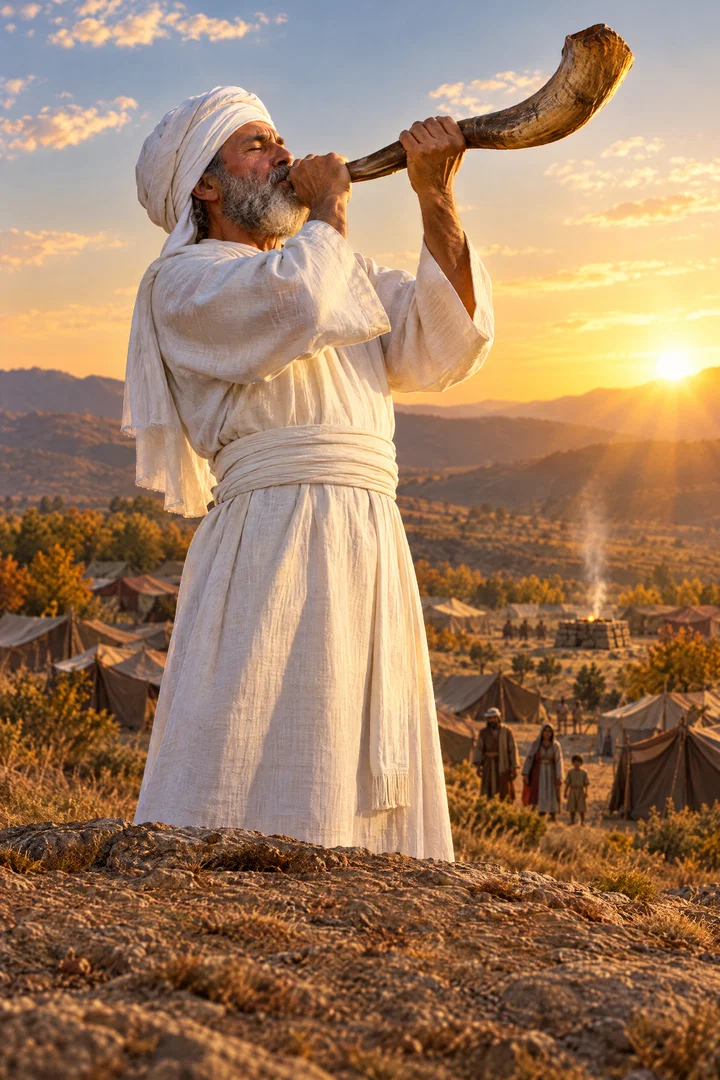
Cross-references 20 of 32
- Colossians 2:16-17
Let no man therefore judge you in meat, or in drink, or in respect of an holyday, or of the new moon, or of the sabbath days:
Linked to the fulfillment and abolition of the feast sabbaths.
- Leviticus 23:38
Beside the sabbaths of the LORD, and beside your gifts, and beside all your vows, and beside all your freewill offerings, which ye give unto the LORD.
Sets the feast offerings apart from the Lord’s Sabbaths and other gifts.
- Exodus 20:8-11
Remember the sabbath day, to keep it holy.
The weekly Sabbath grounded in creation is distinguished from annual feast-day sabbaths.
- Leviticus 23:3
Six days shall work be done: but the seventh day is the sabbath of rest, an holy convocation; ye shall do no work therein: it is the sabbath of the LORD in all your dwellings.
Distinguishes the weekly Sabbath from the annual festival sabbaths.
- Leviticus 23:7-8
In the first day ye shall have an holy convocation: ye shall do no servile work therein.
Two Feast of Unleavened Bread days forbid servile work as annual sabbaths.
- Leviticus 23:21
And ye shall proclaim on the selfsame day, that it may be an holy convocation unto you: ye shall do no servile work therein: it shall be a statute for ever in all your dwellings throughout your generations.
The Feast of Weeks is a holy convocation with a prohibition on servile work.
- Acts 2:1-4
And when the day of Pentecost was fully come, they were all with one accord in one place.
The Holy Spirit’s descent fulfills the Pentecost feast on its appointed day.
- Numbers 29:1-6
And in the seventh month, on the first day of the month, ye shall have an holy convocation; ye shall do no servile work: it is a day of blowing the trumpets unto you.
Lists the offerings commanded for the same holy day.
- Hebrews 10:1
For the law having a shadow of good things to come, and not the very image of the things, can never with those sacrifices which they offered year by year continually make the comers thereunto perfect.
The sacrificial law is a shadow pointing forward, and its repeated sacrifices had limited effect.
- Leviticus 23:35-36
On the first day shall be an holy convocation: ye shall do no servile work therein.
Prescribes no servile work on the feast’s holy days.
- Colossians 2:17
Which are a shadow of things to come; but the body is of Christ.
The yearly sabbath is a shadow; its substance is Christ.
- Numbers 28:18-31
In the first day shall be an holy convocation; ye shall do no manner of servile work therein:
Lists the offerings accompanying holy convocations and feast days.
- Genesis 2:2-3
And on the seventh day God ended his work which he had made; and he rested on the seventh day from all his work which he had made.
The weekly Sabbath is grounded in God’s creation and rest.
- Exodus 12:16
And in the first day there shall be an holy convocation, and in the seventh day there shall be an holy convocation to you; no manner of work shall be done in them, save that which every man must eat, that only may be done of you.
Both prescribe holy convocations with restrictions on work during feast days.
- Leviticus 23:32
It shall be unto you a sabbath of rest, and ye shall afflict your souls: in the ninth day of the month at even, from even unto even, shall ye celebrate your sabbath.
Both prescribe ceremonial sabbath observance for Israel’s annual feasts.
- Ephesians 2:15-16
Having abolished in his flesh the enmity, even the law of commandments contained in ordinances; for to make in himself of twain one new man, so making peace;
Christ abolished the law of ordinances through his death.
- Leviticus 23:37
These are the feasts of the LORD, which ye shall proclaim to be holy convocations, to offer an offering made by fire unto the LORD, a burnt offering, and a meat offering, a sacrifice, and drink offerings, every thing upon his day:
Lists the appointed feasts and their offerings, including drink offerings.
- John 1:29
The next day John seeth Jesus coming unto him, and saith, Behold the Lamb of God, which taketh away the sin of the world.
The sacrifices pointed to the Lamb who takes away sin.
- Hebrews 4:9-11
There remaineth therefore a rest to the people of God.
Invoked for the claim that a further Sabbath rest remains for God’s people.
- Numbers 29:39
These things ye shall do unto the LORD in your set feasts, beside your vows, and your freewill offerings, for your burnt offerings, and for your meat offerings, and for your drink offerings, and for your peace offerings.
Lists offerings appointed for the annual feasts.
Commentary
Each commentary is drawn from primary sources: the writings of Ellen G. White and Adventist pioneers and periodicals. Each commentary is separate. Its own words are not a quotation; follow the references to read the source passages.
Pioneers and periodicals
103 sources
The verse appoints the first day of the seventh month as the Feast of Trumpets, a memorial of blowing of trumpets and a holy convocation kept as the old civil New Year, on which no servile ordinary labor is to be done and an offering made by fire is to be presented to the Lord.ST Jul 3, 1879RH Jan 22, 1914RH Feb 19, 1914RH Aug 24, 1905RH Feb 17, 1874 It is one of the seven yearly feast-day sabbaths, standing beside and in addition to the weekly seventh-day Sabbath of the Lord and of the fourth commandment, not that Sabbath itself.ST Jun 4, 1902ST Jun 17, 1903ST Jun 10, 1886ST Dec 13, 1905 It belongs to the ceremonial law of Moses governing feasts, offerings and priesthood, a shadow and type centering in Christ which expired by limitation and ceased to be obligatory at the cross when the sacrificial system ended.ST May 27, 1908ST Jun 17, 1903ST Dec 13, 1905RH Aug 31, 1905ST Sep 21, 1876 With the days that follow it, it foreshadows the work of Jesus as High Priest in the most holy place of the heavenly sanctuary from the tenth day of the seventh month in 1844 until the consummation, when the sanctuary is cleansed and the righteous are gathered in.RH May 13, 1862ST May 7, 1912RH Mar 31, 1868ST Jun 19, 1907RH Aug 10, 1916 These yearly sabbaths are the plural sabbaths as shadows whose body is Christ in Colossians 2:14-17, joined with meats, drinks, holy days and new moons, over which Christians are not to be judged.ST Aug 10, 1882STST Oct 18, 1877
Festival Setting and Wording
The first day of the seventh month, Tisri, is appointed as the Feast of Trumpets, a memorial of blowing of trumpets and a holy convocation, observed as the old civil New Year.ST Jul 3, 1879RH Jan 22, 1914RH Feb 19, 1914RH Jan 14, 1862ST Dec 13, 1905 It is the fourth annual sabbath of the Hebrews, on which ordinary labor was forbidden and offerings were to be presented to the Lord.ST Jul 3, 1879RH Jan 22, 1914RH Aug 24, 1905RH Jan 14, 1862 Like the other annual feasts and sabbaths it was set apart for offerings and sacrifices distinct from the weekly Sabbath.RH Feb 19, 1914RH Aug 24, 1905ST Dec 13, 1905 Its rules about rest and sacrifice belong to the Mosaic ceremonial rites and temple services.RH Aug 24, 1905ST Dec 13, 1905
No servile, ordinary labor was to be done on that day, but an offering made by fire was to be offered unto the Lord.RH Jan 14, 1862ST Oct 31, 1900ST Apr 1, 1886 The prescribed offerings were additional to the usual gifts and freewill offerings.RH Aug 24, 1905 Israel was to set apart appointed holy days from ordinary labor for such fire offerings, with firstfruits given as thank-offerings acknowledging God as giver of temporal blessings, the first sheaf presented before harvest and the first loaf from harvested grain given to the Lord.RH Aug 24, 1905RH Feb 17, 1874 This annual, typical sabbath belonged to the sacrificial system that arose after sin and pointed forward to the Saviour, standing with meat offerings and drink offerings besides the Sabbath of the Lord as one of the shadowy sabbaths.ST Oct 31, 1900ST Apr 1, 1886
The forbidding of servile work is less strict than the weekly Sabbath on which no work at all is to be done.ST Jul 17, 1879 The day stands on the same level as the fifteenth of Abib and the other annual sabbaths, while the tenth day of the seventh month is more sacred than the rest.ST Jul 17, 1879 It comes once a year, not once a week like the Sabbath of the Lord.ST Jul 17, 1879
The annual sabbaths are appointed on particular days of the month, distinct from the Lord's weekly Sabbath, and did not regularly fall on it though they sometimes coincided with it.ST Jul 17, 1879ST Aug 18, 1909 They fell on certain days of certain months and feasts and could naturally fall on all days of the week, unlike the weekly Sabbath which always falls on the seventh day.ST Aug 18, 1909ST Sep 9, 1880ST Apr 8, 1897 They give no reckoning of the days of the week, and the eighth day spoken of in Leviticus 23 is the day of the feast, not a day of the week, so to take it as Sunday is an unwarrantable assumption and any argument for Sunday-keeping built on that expression falls for lack of its central point.RH Apr 19, 1870ST Sep 9, 1880 These yearly, typical, shadowy sabbaths set forth in Leviticus 23:4-37 stand beside the Sabbaths of the Lord, are typical of events in redemption, and expired by limitation when the shadow reached the substance.ST Apr 8, 1897
The holy day begins at even, at the setting of the sun, and must be kept from even unto even to its close, and because all days commence at the same point every Sabbath must be observed in that same sunset-to-sunset period.ST Mar 8, 1883
The record is also set within the Day of Atonement cleansing work and the Feast of Tabernacles ingathering after harvest.ST May 7, 1912ST Dec 12, 1916ST Jun 19, 1907 The Day of Atonement is the day of final cleansing and remission for sanctuary and people, closing the complete yearly round of ministration in both apartments by cleansing the sanctuary of sins transferred there by daily ministration through the year, when those who did not cease from works and afflict their souls were cut off.ST Dec 12, 1916ST Jun 19, 1907RH Aug 10, 1916 The last day of the yearly sanctuary round was the great judgment-day of the year when cases were brought in final review, sins brought by sprinkled blood into remembrance before the veil were brought by the high priest into the most holy and confessed before the ark containing the law, the atonement-goat's blood sprinkled there, and the priest in his own person brought out those sins and placed them on the goat chosen for Satan to be sent away into oblivion and destroyed, while those who afflicted their souls, confessed and put away sin stood clear.ST May 7, 1912 The setting in the seventh month follows the Day of Atonement when the sanctuary was cleansed, and together atonement and feast typified Christ's work in the heavenly sanctuary in final cleansing identified with judgment followed by ingathering of the righteous as harvest of His love and labor; the Passover week whose first and last days are holy and the tenth-day requirements belong to the same appointed feast-day system of offerings pointing to Christ and blotted out by His death.ST May 7, 1912RH Aug 10, 1916ST Jan 20, 1881
The seventh month contains three feasts, Trumpets, Atonement and Tabernacles.ST Dec 18, 1893ST Dec 26, 1892RH Oct 21, 1851 The verse is the first of four annual Jewish sabbaths in Leviticus 23:24-39, on the first, tenth, fifteenth and twenty-second days, counted among the seven annual sabbaths and feast days and among seven kinds of Sabbaths including the seventh-month Sabbath.RH Jan 14, 1862ST Dec 18, 1893RH Oct 21, 1851SMV 22.1–24.1 The blowing of trumpets called all the people together in preparation for building the altar.ST Dec 26, 1892
The feast is named in an indefinite way without the definite article the, marking the first enactment of the institution.RH Sep 24, 1872 It is a memorial of blowing of trumpets and holy convocation as one of the seven annual Sabbaths given to Israel.RH Jan 14, 1862RH Sep 24, 1872 Its trumpet blowing heralds and announces the great Day of Atonement ten days later on the tenth day of the same month, as one of five yearly celebrations whose work is to herald that day.RH Feb 2, 1911ST Jun 22, 1915RH Oct 31, 1854 In the type this trumpet day ten days earlier announced the approach of the judgment and cleansing of the earthly sanctuary, with priests at Jerusalem blowing trumpets announcing the definite time of that solemn cleansing, so that the sanctuary cleansing comes on a fixed, announced schedule requiring a similar heavenly announcement ten prophetic years before the cleansing of the heavenly sanctuary on a day-for-a-year reckoning, fulfilled in the falling of the stars over the Western Hemisphere on the night of November 13, 1833, when multitudes streamed for ten hours and lightened midnight earth.ST Jun 22, 1915ST Apr 28, 1914
The Feast of Trumpets is included among Israel's appointed yearly gatherings at the sanctuary during the year, one of three special occasions considered alongside Passover and the Day of Atonement.RH Aug 3, 1916
Annual Sabbaths Versus Weekly Sabbath
The verse belongs to a yearly feast-day sabbath, one of seven yearly sabbaths set forth in Leviticus 23:4-37, and not to the weekly seventh-day Sabbath of the Lord of the fourth commandment.ST Jun 4, 1902ST Jun 10, 1886ST Dec 13, 1905RH Aug 31, 1905RH Dec 29, 1859 The chapter distinguishes the feasts of the Lord from the Sabbath of the Lord, placing the feast sabbaths once a year as additional to the weekly Sabbaths of the Lord.ST Jun 4, 1902ST Jun 10, 1886 They are typical, shadowy ceremonial sabbath days, shadows of things to come, local and ceremonial, which received authority from the ceremonial law and ceased when that law was abolished at the cross.ST Jun 10, 1886ST Dec 13, 1905RH Aug 31, 1905RH Dec 29, 1859 They fell on certain days of certain months and feasts and could naturally fall on all days of the week, being typical of certain events in the work of redemption and expiring by limitation when the thing typified was reached, when the shadow reached the substance.
The yearly sabbaths stand beside and in addition to the Sabbaths of the Lord, set apart as days for bringing special offerings to the Lord, while the weekly Sabbath comes in constant succession every seventh day.ST Jun 17, 1903RH Aug 13, 1857RH Jan 22, 1914 They are enumerated with Passover, Firstfruits, Trumpets and Atonement, came in consequence of sin as types and prophecies pointing forward to Christ, met their fulfilment in Christ Jesus, and ceased with the sacrificial law at the cross.ST Jun 17, 1903RH Jan 22, 1914 The first day of the seventh month, the feast of trumpets, was expressly called a sabbath, a holy day set apart from common days on which no servile work was to be done, distinct from the weekly Sabbath and shadowing forth Christ and part of Christ's work.ST Sep 9, 1913 The seven yearly sabbaths are separate from the weekly seventh-day Sabbath, which is based on creation, memorializes creation, and is eternal.ST Apr 8, 1897
The weekly Sabbath is called the Sabbath, the Sabbath of the Lord thy God, my holy day, the holy of the Lord and thy holy Sabbath, while the festival sabbaths are called your sabbath and her sabbaths.RH Oct 21, 1851RH Oct 21, 1851 The first of four annual sabbaths falls on the first day of the seventh month, with the tenth, fifteenth and twenty-second days making the other three, requiring no servile work and a fire offering to the Lord in the midst of the ordinances of meat-offering, sacrifice and drink-offerings, sharing their same nature, origin and end.RH Oct 21, 1851 It is not the Sabbath of the Lord which comes every seventh day, was instituted at creation before the fall for the whole human race to commemorate God's rest, and was placed in the midst of the Ten Commandments as ever binding, but one given at Mount Sinai twenty-five hundred years later, sometimes only four or nine days apart, to be observed besides the Sabbaths of the Lord.RH Oct 21, 1851 It was a shadow of things to come, blotted out and nailed to the cross, whose mirth was to cease, and it is the kind of sabbath meant by sabbath-days associated with meat, drink and new moon, plural sabbaths associated with feast-days, holy convocations and new moons.RH Oct 21, 1851RH Oct 21, 1851
The weekly Sabbath memorializes creation, was instituted at creation before the fall and before the apostasy for all mankind and all humanity as a special memorial of God's goodness and power in the finished work of creation, while the yearly day originated this side of the fall at Sinai after types and shadows were introduced and would never have existed but for sin.ST Feb 25, 1875RH Oct 21, 1851RH Feb 20, 1872RH Oct 14, 1873 The weekly Sabbath was spoken by God's voice from heaven, twice written by His finger, engraven on stone, placed in the moral law and placed in the ark in the most holy place as part of God's unchangeable, eternal moral law and a constant memorial and sign of power to create, uphold and sanctify; the yearly observance was not so commanded or written or placed, but was written by men on parchment in a book placed beside the ark.ST Feb 25, 1875ST Feb 13, 1896 The yearly sabbaths are ceremonial, temporal, shadowy and typical, for one nation and especially for the people in Canaan, not unchangeable, perpetual and for all people, having no basis in God's act of creation and not being God's own rest day.ST Feb 25, 1875RH Oct 14, 1873 They came in consequence of sin with the sacrifices, symbols and ceremonies that point to the Saviour who takes away sins, whose body is Christ, whereas Gentiles must be circumcised to keep them and they must be kept by going up to Jerusalem, whereas the Sabbath is kept wherever people are.ST Feb 25, 1875ST Nov 10, 1914
The Sabbath is sanctified by resting from ordinary labor, not by doing the work of the other six days, gathering in holy convocation to hear the law, worship God and pray.ST Apr 1, 1875 The people of God were commanded to hold holy convocations on days besides the seventh day, so meeting together for worship on a day does not prove that day is the rest-day or Sabbath.RH Mar 18, 1862 Israel had holy convocations on days other than the weekly Sabbath when no servile work was permitted, and such assemblies did not cancel or violate the command to work six days and rest on the seventh.RH Dec 17, 1857
The seventh-day Sabbath is presented as first among Israel's appointed feasts and holy convocations, and those who so class it treat the feasts, including the Sabbath, as abolished together.RH Mar 8, 1864 The word Sabbath was applied to great festivals as well as to the seventh day, and not to the seventh day alone, so that the holy day and Sabbath days include both the yearly sabbaths connected with the feasts and the weekly Sabbaths.RH Oct 29, 1872ST Aug 25, 1881 Those who so apply it make the Sabbath a type, which destroys every moral difference between the weekly and annual sabbaths and places the Sabbath in the category of positive institutions, for moral institutions are not typical nor typical institutions moral.RH Oct 29, 1872
The prevailing teaching distinguishes the movable sabbaths connected with feasts and dates from the weekly Sabbath, whose seventh day does not change when feast dates change, the same day Jesus kept and still identifiable as the day before Sunday. The sacred calendar and feast days were regulated by the moon and barley harvest.RH Feb 6, 1879 Those who held otherwise explained the Sabbath of the fourth commandment as requiring observance on fixed dates that change the weekday from year to year, so that the Sabbath Christ kept fell twenty-eight times in the Gospels on Thursday, once on Friday, and a number of times on Saturday during the last year of His public teaching, and no one now keeps the Sabbath in the manner Christ kept it.ST Apr 15, 1897
Ceremonial Shadow Ended in Christ
This day belongs to the ceremonial law, the law of Moses governing feasts, offerings, temple service and the Levitical priesthood, not to the eternal moral law of the Ten Commandments.ST Dec 13, 1905RH Aug 31, 1905ST Sep 21, 1876ST Dec 13, 1905RH Oct 31, 1854 It is one of the typical sabbath days which were shadows of things to come, a ceremonial sabbath and feast-day sabbath distinct from the seventh-day Sabbath of the fourth commandment and from the Lord's weekly Sabbath.ST Dec 13, 1905RH Aug 31, 1905ST Sep 21, 1876ST Aug 10, 1882 Its rule to refrain from servile work and present an offering made by fire belongs to the Mosaic ceremonial rites and temple services for the first day of the seventh month, the Feast of Trumpets, among the annual sabbaths of the seventh month associated with the appointed feasts and with new moons and feast days.ST Sep 21, 1876ST Dec 13, 1905RH Oct 31, 1854ST Aug 10, 1882 These annual festival sabbaths were instituted in the wilderness and placed among Israel's festival observances, distinct also from the seventh-year sabbath of the land, and they explain Paul's reference to plural sabbaths as shadows of things to come.RH Oct 31, 1854ST Aug 10, 1882 They were shadows pointing forward to Christ's death and expired when He died, being removed by Christ at the cross, when that ceremonial law was abolished; they were not the Sabbath established at creation.RH Aug 31, 1905ST Sep 21, 1876RH Oct 31, 1854
The yearly sabbaths and feasts came in consequence of sin as shadows, types and prophecies centering in Christ, and when the shadow reached the substance they expired by limitation and ceased to be obligatory at the cross when the sacrificial system ended.ST Jun 17, 1903ST Jun 10, 1886RH Feb 19, 1914ST Sep 21, 1876 They were celebrated from year to year when Israel lived faithfully before God, but as types fulfilled in Christ and His priestly work they need not be celebrated year by year while awaiting their complete antitypical fulfilment.ST May 27, 1908ST Jun 17, 1903 The chapter distinguishes the feasts of the Lord from the Sabbath of the Lord, and the seven yearly, typical, shadowy sabbaths and feasts in Leviticus 23:4-37 are not connected with the weekly Sabbaths of the Lord but stand beside the Sabbaths of the Lord.ST Jun 17, 1903ST Jun 10, 1886 The first day of the seventh month, Tisri, as an annual sabbath and first day of the old civil year, was like the other annual feasts and sabbaths set apart for offerings and sacrifices, typical of certain events in the work of redemption.RH Feb 19, 1914 The eternal Sabbath of the Lord is the weekly seventh day in constant succession, while the yearly sabbaths fell on certain days of certain months and feasts and might fall on any day of the week.ST Jun 17, 1903
The yearly system with its meats, drinks, new moons and carnal ordinances was against men, a yoke of bondage when trusted for righteousness, blotted out and nailed to the cross; the weekly Sabbath established before sin is not a shadow and was not nailed to the cross.STRH Dec 18, 1860ST Jan 1, 1885ST Nov 10, 1914 These yearly sabbaths connected with Passover, Pentecost and other feasts are distinct from the regular weekly Sabbaths of Jehovah, the seventh day, having come in after sin entered as shadows, symbols and types of better things to come centering in Christ Jesus.STST Jan 1, 1885ST Nov 10, 1914 They are the sabbath days in Colossians 2:14-16, where feast days and new moons and sabbath days are called shadows whose body is Christ, joined with meats and drinks as component parts of the typical and shadowy system.STRH Dec 18, 1860RH Dec 20, 1853 The annual sabbath joined with meat, drink, holy day, new moon and offering-made-by-fire ordinances does not refer to the Sabbath of the Lord our God, the seventh-day Sabbath, but to a ceremonial yearly sabbath of the kind meant by sabbath-days in Colossians 2:16.RH Dec 18, 1860RH Dec 20, 1853 It stands with meat offerings and drink offerings besides the Sabbath of the Lord and besides the Sabbaths of Jehovah, in contradistinction to the weekly seventh-day Sabbath; it is not the weekly Sabbath made for man and guarded by the fourth commandment, about which there is nothing shadowy, but one of the Colossian sabbaths that were against men and taken out of the way.RH Dec 18, 1860ST Nov 10, 1914 Unlike the seventh-day Sabbath, God's memorial of creation instituted in Eden before sin entered, these ceremonial sabbaths originated in the typical system introduced because of sin, with the sacrifices and symbols and ceremonies that point to the Saviour who takes away sins.STST Jan 1, 1885ST Nov 10, 1914
The feasts with their burnt offerings and like services belonged to the first division of sanctuary ministration, the continual daily service in the holy place with morning and evening burnt offering, incense and individual offerings, distinct from the yearly high-priestly work in the most holy place and from the daily round.RH Oct 30, 1855RH Feb 3, 1853RH Mar 8, 1870ST Jan 21, 1886 The ministration in the first apartment of the earthly sanctuary, performed by the Levitical priesthood, included special work upon the Lord's Sabbaths and upon the annual sabbaths, new moons and feasts, alongside the regular morning and evening burnt offering, the burning of sweet incense, and the offerings for individuals.RH Feb 3, 1853RH Mar 8, 1870 That earthly holy-place work was the example and shadow of Christ's more excellent ministry in the true tabernacle in heaven, distinct as first-division daily service from the second division, the yearly work of the high priest alone in the most holy place for the sins of the people and for the cleansing of the sanctuary.RH Feb 3, 1853RH Mar 8, 1870 The services of this verse belong to those performed in the sanctuary from time to time, distinct from the daily round of morning and evening service, showing that burnt offerings and like services belonged to holy days.RH Oct 30, 1855ST Jan 21, 1886 Those preliminary and circumstantial offerings on the day of firstfruits and the feast of weeks, like those on the day of atonement, did not prevent the grand event of each day from meeting its antitype on the very day of the type: Christ our Passover sacrificed on the fourteenth day of the first month, the resurrection on the day of firstfruits, and the outpouring of the Holy Spirit on Pentecost, so the grand work in the holiest on the tenth day of the seventh month must commence its antitype on that day, while the antitype commencing on the day of the type may extend far forward.RH Oct 30, 1855
The chapter's sacrifices are types of Jesus as the Lamb of God, and the commanded fire offering finds its fuller meaning in His sacrifice, life and work; the feasts need not be kept year by year while awaiting complete antitypical fulfilment but are met in Christ and in newness of life.ST May 27, 1908ST Feb 7, 1911 The slain animals point to the Lamb of God who takes away the sin of the world, and the commanded offering made by fire is one of the sacrificial details whose fuller meaning is found in the sacrifice, life, and work of Jesus Christ.ST Feb 7, 1911 The instructions for the annual feasts, celebrated from year to year when Israel lived faithfully, required the people to appear before the Lord at His sanctuary, and these festivals with all the ceremonies of the Levitical law were fulfilled in Christ's priestly service.ST May 27, 1908ST Apr 23, 1912 Each and all of these feasts are typical and are distinguished from the Sabbath of Jehovah.ST May 27, 1908ST Feb 7, 1911
The ceremonial sabbaths listed in Leviticus 23, distinct from the Lord's weekly Sabbath, could be taken away from the wicked as a judicial punishment, just as someone may now be excluded from the Lord's Supper.ST Nov 16, 1876RH Aug 29, 1871 They belonged to the ceremonial code which pertained to Israel's earthly inheritance in Canaan, and differed from the weekly Sabbath, a higher-order institution that remained unaffected when the land was overrun and the ceremonial sabbaths could no longer be kept.ST Nov 16, 1876RH Aug 29, 1871 Unlike that higher weekly institution which remains the Lord's day, they ceased when the land was overrun.RH Aug 29, 1871
Prophetic Type and Sanctuary Cleansing
The series in verses 23-32 foreshadows the work of Jesus as High Priest in the most holy place of the heavenly sanctuary from the tenth day of the seventh month in 1844 until the consummation.RH May 13, 1862 Like the spring types, the autumn observances were to be fulfilled in their proper order and time.RH Mar 31, 1868RH Oct 30, 1855RH Dec 15, 1868 Christ our Passover was sacrificed on the fourteenth day of the first month, the resurrection met its antitype on the day of firstfruits, and the outpouring of the Holy Spirit in Acts 2 met its antitype on Pentecost fifty days later.RH Oct 30, 1855RH Dec 15, 1868RH Mar 31, 1874 That Pentecost fulfilment honored the antitype of the feast and not the first day of the week on which it happened to fall, and says nothing about changing the Sabbath of the Lord.RH Mar 31, 1874
Burnt offerings and like services belonged to those holy days, and the day of firstfruits and the feast of weeks had the same work of burnt offerings as the day of atonement.RH Oct 30, 1855RH Dec 15, 1868 Those preliminary and circumstantial offerings did not prevent the grand event of each day from meeting its antitype on the very day of the type.RH Oct 30, 1855RH Dec 15, 1868 The antitype commencing on the day of the type may extend far forward.RH Oct 30, 1855RH Dec 15, 1868 So the grand work in the holiest on the tenth day of the seventh month must commence its antitype on that day, though the work may extend beyond that day.RH Oct 30, 1855RH Dec 15, 1868
The yearly service of the tenth day of the seventh month, the Day of Atonement, closed the complete yearly round of ministration in both apartments.ST Jun 19, 1907ST Jun 19, 1907 It cleansed the sanctuary of the sins of God's people that had been transferred there by the daily ministration through the year.ST Jun 19, 1907ST Nov 19, 1894 Atonement was made for each apartment of the sanctuary and for the altar to cleanse it and hallow it from the uncleanness of the children of Israel, made necessary because those transferred sins defiled the holy places and required a special work for their removal.ST Jun 19, 1907ST Nov 19, 1894
The last day of the yearly round was the great Day of Atonement, the judgment-day of the year when all the cases of the days before were brought in final review before God.RH Aug 10, 1916 It marked the final review and disposition of the sins confessed during the year, so the people treated it as a serious day of judgment and examined their lives beforehand.RH Aug 10, 1916 On that day the sins brought by sprinkled blood into remembrance in the holy place before the veil were brought by the high priest into the most holy place and confessed before the ark containing the law of God. There the blood of the atonement-goat was sprinkled, and the priest in his own person brought out those sins and placed them on the goat chosen for Satan to be sent away by a fit man into oblivion and destroyed. Those who afflicted their souls, confessed their sins, ceased from their works and put them away stood clear before God with final cleansing and remission, while those who did not cease and afflict their souls were cut off from the congregation of God's people.ST Dec 12, 1916
Together the atonement and the following feast typified Christ's work in the heavenly sanctuary: the final cleansing of the sanctuary, identified with judgment, followed by the ingathering of the righteous as the harvest of Christ's love and labor after the harvest.ST May 7, 1912 The tenth day marked the high priest's emergence from the sanctuary to bless the people, and prefigured Christ, the great High Priest, coming from heaven to bless His waiting people with immortality.RH Mar 31, 1868 The trumpet type ten days before, when priests at Jerusalem blew trumpets announcing the definite time of that solemn cleansing, means the sanctuary cleansing comes on a fixed, announced schedule.ST Apr 28, 1914 The earthly ten days require a similar heavenly announcement ten prophetic years before the cleansing of the heavenly sanctuary on a day-for-a-year reckoning, and that announcement arrived on time just ten years before the cleansing Judgment began in the falling of the stars over the greater portion of the Western Hemisphere on the night of November 13, 1833, when multitudes streamed from one point in the heavens for ten hours and lightened the earth at midnight.ST Apr 28, 1914
The first day of the seventh month is appointed as the memorial of blowing of trumpets, kept as New Year when the fate of the world is written but not sealed, allowing ten days for repentance and ten penitential days until the tenth day, the Day of Atonement, when fate is sealed.ST Oct 2, 1879ST Sep 9, 1880 That seventh-month New Year marked the beginning of the civil year, in contrast with Nisan, the first month associated with Passover and Israel's independence from Egyptian slavery.ST Sep 9, 1880 The Day of Atonement is the judgment work of the high priest in which the sins of God's people are blotted out from the presence of God and transferred to the scapegoat to be borne away to a land not inhabited.ST Oct 2, 1879 Atonement means to cover, carrying the ideas of expiating, purging, covering sins, pardoning, appeasing and placating, and the mercy-seat means literally a covering.ST Oct 2, 1879 These yearly feast Sabbaths, unlike the seventh-day Sabbath, formed a burdensome ceremonial system tied to particular dates in particular months alongside sacrifices and other observances, and could serve as types of the earth's rest in the seventh millennium.RH Apr 9, 1872
Scriptural Links and Calendar Details
The yearly sabbaths explain the plural sabbaths in Colossians 2:14-17, which with meats and drinks, holy days and new moons are shadows whose body is Christ and over which Christians are not to be judged.ST Aug 10, 1882STST Oct 18, 1877RH Dec 18, 1860RH Dec 20, 1853 The first day of the seventh month with its command of no servile work is one of those annual sabbaths ordained in the list of set feasts, joined with meat, drink, holy day, new moon and offering by fire ordinances.ST Aug 10, 1882STRH Dec 20, 1853 They are yearly and ceremonial sabbaths of the Jews, component parts of the typical shadowy system that came in after sin as symbols and types of better things centering in Christ, distinct from the regular weekly Sabbaths of Jehovah on the seventh day and from the Sabbath instituted in Eden before the fall and guarded by the fourth commandment, about which there is nothing shadowy.STRH Dec 18, 1860RH Dec 20, 1853 They are also called sabbath days distinct from the Sabbath of the Lord, and seven annual Jewish Sabbaths are listed besides the Lord's seventh-day Sabbaths.ST Oct 18, 1877RH Dec 5, 1871
The annual days belong to the class discussed in Romans 14, where Jewish Christians still observing Passover, Atonement and other days from old association may keep them or esteem them alike without judging one another.RH Apr 1, 1873ST Sep 16, 1875ST Feb 7, 1911ST Oct 19, 1888 They are feast days and fast days connected with eating of herbs and the like, like New Years, Christmas and Thanksgiving day, belonging to the Jewish ritual system of feasts and feast-days with its distinctions of meats and drinks and carnal ordinances, a connected whole entirely separate from the seventh-day Sabbath spoken by God's own voice and written on stone.RH Apr 1, 1873ST Sep 16, 1875 Their observance is a matter of indifference and within Christian liberty so long as justification is not sought through them to the rejection of Christ's sacrifice, while the weekly Sabbath stands apart as a holy sacred day from creation guarded by one of the Ten Commandments, God's day not man's, outside that liberty and not set aside by Romans 14.RH Apr 1, 1873ST Sep 16, 1875ST Feb 7, 1911 The every day that may be esteemed alike is the six working days, and converted Jews who still regarded the festivals as morally binding are distinguished from the continuing obligation of the seventh-day Sabbath.ST Feb 7, 1911ST Oct 19, 1888
Hosea foretold the ceasing of feast days, new moons and other solemn feasts, to which the annual Jewish sabbath associated with the feasts belongs.RH Aug 11, 1853RH Feb 21, 1854 Isaiah's rebuke of sabbaths and new moons means those annual sabbaths and the new moons observed in sin and not pleasing to God, not the weekly Sabbath of the fourth commandment.RH Aug 11, 1853RH Apr 28, 1874 The weekly Sabbath remains holy and honorable, to be kept by God's scattered people with promise of gathering to His holy mountain and by Gentiles with promise of joining His people in blessing, with a place in His immortal kingdom for those who turn from trampling it and honor Him in it.RH Apr 28, 1874
Pentecost is an annual Jewish feast counted from the Passover Sabbath, not from the weekly Sabbath, and because its date was reckoned from that annual Sabbath it could fall on any day of the week.RH Nov 1850 The statements about the firstfruits of the barley harvest to be offered on the morrow after the Sabbath establish the fifteenth of Abib as the first Sabbath in the series of weekly Sabbaths observed by the Hebrews, so that the offering falls on the sixteenth of the first month and the months are so shaped that the weekly Sabbath fills them in turn and comes again on the fifteenth of Abib in the next sacred year.ST Jul 3, 1879
One of the annual rest days could have fallen between the Sabbath of the meeting at Antioch and the next seventh-day Sabbath.RH Dec 5, 1871 Certain feast days, including an eighth day, are called a Sabbath and a great day, but that eighth day connected with feasts beginning on fixed days of fixed months falls on a different day of the week from year to year and does not mean the first day of the week.RH Jan 13, 1874 Those eighth-day Sabbaths therefore do not prefigure the exalting of the eighth day or first day of the week as the Sabbath under the gospel, and types of gospel events and ordinances must agree with plain New Testament fact, which contains no command making the first day the weekly Sabbath.RH Jan 13, 1874
The verse shows no reckoning of the days of the week, and the eighth day spoken of is the day of the feast, not a day of the week, so to take it as Sunday is an unwarrantable assumption.RH Apr 19, 1870 Any argument for Sunday-keeping built on that expression therefore falls to the ground because its central and vital point is missing, and as one of the yearly feast days not a day of the weekly cycle it does not establish Sunday as a weekly Sabbath.RH Apr 19, 1870ST Sep 24, 1894
The instruction regarding the yearly feasts is paralleled by Deuteronomy 16 and is counted among references to festival days and other nonweekly sabbaths rather than to the weekly Sabbath, with the annual feasts of the Levitical service separate from the weekly Sabbath.ST Mar 18, 1913RH Oct 23, 1913ST May 16, 1878 Mixing the annual feasts with the weekly Sabbath loses the day of the Sabbath in the Old Testament.RH Oct 23, 1913 The appointed days on which the commemorative institutions were observed were different from the days on which they were instituted, and nearly all would have fallen on the same day if the time of institution fixed the time of observance, so the time of instituting an institution has nothing to do with the time of observing it.RH Jun 17, 1873 The law gives a specific statement of time for instituting and observing the feasts, while the Lord's Supper has no such stated time for its observance.RH Jun 17, 1873
The description of the main features of the service of the sanctuary reveals God's way, power and glory and serves as an object-lesson teaching about the temple of God in heaven and Christ's priestly service there, written for learning, doctrine, reproof, correction, instruction in righteousness, patience, comfort and hope.ST Jun 19, 1907
Obedience and Present Application
God requires the heart's supreme affection joined to the offering made by fire, and without it labor and sacrifice are not accepted.ST Aug 14, 1879 The offering is a thank-offering acknowledging Him as giver of all temporal blessings, giving Him the first-fruits of the best received.RH Feb 17, 1874ST Aug 14, 1879 In the harvest setting the first sheaf was presented before the sickle was put to the grain and before the harvest was gathered, and the first loaf made from the first threshed and ground corn was given after harvest as acknowledgment of His goodness.RH Feb 17, 1874ST Aug 14, 1879
The appointed feasts lasted several days during which labor was forbidden, showing that God sets times for rest and worship.RH Aug 21, 1860 He neither requires harmful overwork nor endorses idleness.RH Aug 21, 1860 These annually repeated services were ordered to be kept in their prescribed form, and departure from even a small particular was blameworthy.ST Mar 24, 1887
The special Sabbath laws regulating worship were binding on Israel as a nation but are not legally binding on other nations, though their underlying principles remain binding.RH Nov 12, 1908 The Feast of Trumpets observed as the Jewish New Year was a religious occasion on which servile work was not to be done, reflected in leave from labor for Jewish soldiers keeping it.RH Mar 25, 1909 The blowing of trumpets once called all the people together in preparation for building the altar, within the three seventh-month feasts of Trumpets, Atonement and Tabernacles.ST Dec 26, 1892
The Jewish holy days and ceremonial sabbaths were observed in addition to the Lord's Sabbaths as shadows pointing to Christ, and were not to be used as a means of earning salvation.ST Jun 8, 1915 The yearly sabbath belongs to the Jewish ritual system of feasts and feast-days with its distinctions of meats and drinks and carnal ordinances, a connected whole entirely separate from the seventh-day Sabbath spoken by God's own voice and written on tables of stone.ST Sep 16, 1875 Its observance belongs to the class of days spoken of in Romans 14 and is a matter of indifference so long as justification is not sought through it to the rejection of Christ's sacrifice.ST Sep 16, 1875
Sources