Leviticus 23:7
In the first day ye shall have an holy convocation: ye shall do no servile work therein.
Translations
In the first day you shall have an holy convocation: you shall do no servile work therein.
In the first day ye shall have an holy convocation: ye shall do no servile work therein.
In the first day ye shall have a holy convocation: ye shall do no servile work therein.
In the first day ye shall have a holy convocation: ye shall do no servile work in it.
In the first day ye shall have an holy convocation: ye shall do no servile work.
In the first day ye shall have a holy convocation: ye shall do no servile work.
on the first day ye have a holy convocation, ye do no servile work;
On the first day ye shall have a holy convocation: no manner of servile work shall ye do.
On the first day—a holy convocation, shall there be to you: no laborious work, shall ye do.
Berean Standard Bible, Majority Standard Bible
On the first day you are to hold a sacred assembly; you are not to do any regular work.
In the first day you shall have a holy convocation. You shall do no regular work.
On the first day you will have a holy meeting; you may do no sort of field-work.
In the first day yee shall haue an holy conuocation: ye shall do no seruile worke therein.
Douay-Rheims (Challoner revision)
The first day shall be most solemn unto you, and holy: you shall do no servile work therein:
Pictures
Cross-references 20 of 53
- Colossians 2:16-17
Let no man therefore judge you in meat, or in drink, or in respect of an holyday, or of the new moon, or of the sabbath days:
Connects feast-day sabbaths with shadows fulfilled in Christ.
- Leviticus 23:37-38
These are the feasts of the LORD, which ye shall proclaim to be holy convocations, to offer an offering made by fire unto the LORD, a burnt offering, and a meat offering, a sacrifice, and drink offerings, every thing upon his day:
Distinguishes feast-day Sabbaths from the Lord’s weekly Sabbaths.
- Exodus 20:8-11
Remember the sabbath day, to keep it holy.
Distinguishes the weekly Sabbath command from the feast-day sabbaths.
- Genesis 2:2-3
And on the seventh day God ended his work which he had made; and he rested on the seventh day from all his work which he had made.
God’s rest and sanctification of the seventh day ground the Sabbath in creation.
- Leviticus 23:3
Six days shall work be done: but the seventh day is the sabbath of rest, an holy convocation; ye shall do no work therein: it is the sabbath of the LORD in all your dwellings.
Contrasts the weekly Sabbath with the annual feast-day observances.
- Exodus 12:16
And in the first day there shall be an holy convocation, and in the seventh day there shall be an holy convocation to you; no manner of work shall be done in them, save that which every man must eat, that only may be done of you.
Both require a holy convocation and forbid ordinary work on the feast’s first day.
- Leviticus 23:24-25
Speak unto the children of Israel, saying, In the seventh month, in the first day of the month, shall ye have a sabbath, a memorial of blowing of trumpets, an holy convocation.
Another annual feast day is a holy convocation with no servile work.
- John 19:31
The Jews therefore, because it was the preparation, that the bodies should not remain upon the cross on the sabbath day, ( for that sabbath day was an high day,) besought Pilate that their legs might be broken, and that they might be taken away.
The feast Sabbath coincided with the weekly Sabbath, making it a high day.
- Leviticus 23:27-32
Also on the tenth day of this seventh month there shall be a day of atonement: it shall be an holy convocation unto you; and ye shall afflict your souls, and offer an offering made by fire unto the LORD.
lists another annual sabbath in the same series
- 1 Corinthians 5:7
Purge out therefore the old leaven, that ye may be a new lump, as ye are unleavened. For even Christ our passover is sacrificed for us:
Christ is identified as the Passover sacrifice represented by the spring feast.
- Numbers 28:18
In the first day shall be an holy convocation; ye shall do no manner of servile work therein:
Both prescribe a holy convocation and prohibit servile work on the feast’s first day.
- Leviticus 23:35-36
On the first day shall be an holy convocation: ye shall do no servile work therein.
Both passages prescribe holy convocations and prohibit servile work on feast days.
- Leviticus 23:39
Also in the fifteenth day of the seventh month, when ye have gathered in the fruit of the land, ye shall keep a feast unto the LORD seven days: on the first day shall be a sabbath, and on the eighth day shall be a sabbath.
The feast’s first and eighth days were sabbaths.
- Leviticus 23:21
And ye shall proclaim on the selfsame day, that it may be an holy convocation unto you: ye shall do no servile work therein: it shall be a statute for ever in all your dwellings throughout your generations.
Requires a holy gathering and forbids servile work.
- Isaiah 66:23
And it shall come to pass, that from one new moon to another, and from one sabbath to another, shall all flesh come to worship before me, saith the LORD.
Weekly Sabbath observance continues in the new earth.
- Romans 14:5-6
One man esteemeth one day above another: another esteemeth every day alike. Let every man be fully persuaded in his own mind.
Days may be observed or not observed unto the Lord.
- Exodus 16:23
And he said unto them, This is that which the LORD hath said, To morrow is the rest of the holy sabbath unto the LORD: bake that which ye will bake to day, and seethe that ye will seethe; and that which remaineth over lay up for you to be kept until the morning.
Sabbath food preparation is permitted beforehand, while ordinary work is forbidden on the holy day.
- Acts 2:1-4
And when the day of Pentecost was fully come, they were all with one accord in one place.
The Spirit’s descent fulfills the feast of Pentecost on its appointed day.
- Numbers 29:1
And in the seventh month, on the first day of the month, ye shall have an holy convocation; ye shall do no servile work: it is a day of blowing the trumpets unto you.
Both prescribe a holy convocation on the first day of the seventh month with no servile work.
- Exodus 23:14-16
Three times thou shalt keep a feast unto me in the year.
Lists the annual feasts, including the Feast of Unleavened Bread.
Commentary
Each commentary is drawn from primary sources: the writings of Ellen G. White and Adventist pioneers and periodicals. Each commentary is separate. Its own words are not a quotation; follow the references to read the source passages.
Ellen G. White
2 sources
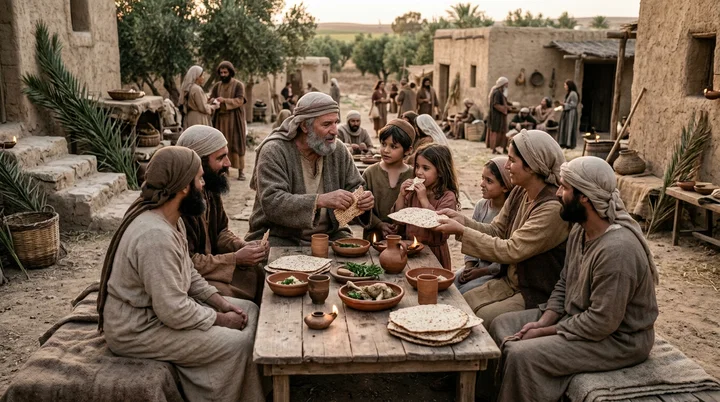
The verse concerns the first day of the seven-day Feast of Unleavened Bread that followed the Passover.PP 539.4 That first day was set apart as a holy convocation for gathering before God.2T 573.1 On it no servile or unnecessary work was to be done.PP 539.42T 573.1 The seventh day of the feast was to be kept in the same way as the first.PP 539.4 The time was to be devoted to remembering God's blessings and rejoicing.2T 573.1 Gifts and thank offerings were to be brought in proportion to the blessings received, revealing how deeply the people valued those blessings and loved their Benefactor.2T 573.1
Sources
Pioneers and periodicals
98 sources
The first day is the fifteenth day of the first month Abib, the opening day of the seven-day Feast of Unleavened Bread kept yearly as a memorial of deliverance from Egypt, with special offerings each day and unleavened bread eaten from its beginning.ST Apr 30, 1912ST May 27, 1908ST Apr 30, 1912 It was a holy convocation calling the people together for worship and sacrifice, on which no servile or ordinary labor was done though food for eating could be prepared, making it a sabbath rest regardless of the weekday.ST Apr 30, 1912ST May 27, 1908RH Oct 21, 1851ST Oct 7, 1930ST Jul 17, 1879 It was one of the yearly ceremonial sabbaths beside the weekly Sabbath, falling on a fixed date by the moon and so on any weekday, while the weekly Sabbath is the seventh day in constant succession from creation before sin and remains moral and perpetual.ST Oct 2, 1884ST Dec 13, 1905ST Jun 17, 1903RH Aug 31, 1905RH Dec 29, 1859 Together with the other spring types it foreshadowed Christ's work and met its fulfillment exactly on time in His sacrifice as the paschal lamb, then ceased at the cross as a shadow whose substance had come while the creation Sabbath remains in force.ST May 27, 1908RH May 13, 1862ST Jun 17, 1903RH Aug 5, 1852RH Nov 1850 It therefore gives no warrant for a weekly first-day Sabbath or for Sunday sacredness, since its holiness rested on the feast date and not on the weekday, and the count to Pentecost from the morrow after the sabbath fell on different weekdays in different years.ST Jun 24, 1897ST Jun 4, 1902ST Jul 11, 1911RH Nov 1850RH Apr 19, 1870
Day's Date and Calendar Place
The first day is the first day of the Feast of Unleavened Bread, also called the Passover feast or Passover.ST Apr 30, 1912ST May 27, 1908ST Apr 30, 1912ST Jul 3, 1879RH Oct 21, 1851 It falls on the fifteenth day of the first month Abib, afterward called Nisan.ST Apr 30, 1912ST Apr 30, 1912ST Jul 3, 1879ST Jun 24, 1897RH Oct 21, 1851 The seven-day feast runs from the fifteenth to the twenty-first, with the first and last days as annual sabbaths set apart for holy gathering with ordinary work forbidden.ST Apr 30, 1912ST Apr 30, 1912ST Jul 3, 1879RH Oct 21, 1851RH Jan 15, 1914 The fourteenth is preparation when the lamb is slain between the evenings and all leaven is put out of houses, special offerings are brought by fire each day of the feast, and eating unleavened bread begins at the start of the fifteenth.ST May 27, 1908RH Oct 21, 1851RH Jan 15, 1914 The feast is kept yearly as a memorial of deliverance from Egyptian bondage and of Israel's departure from Egypt, celebrated year by year when Israel lived faithfully before God.ST May 27, 1908RH Jan 15, 1914
First day means the first day of the feast concerned, not the first day of the week or the first day of the month.ST Jun 24, 1897ST Jun 4, 1902ST Nov 22, 1883 Likewise seventh day and eighth day in the chapter mean days of the feast, not days of the week, and the chapter gives no reckoning of weekdays.RH Apr 19, 1870RH Oct 15, 1872ST Nov 22, 1883 Its first-day holy convocation therefore does not prove a weekly first-day Sabbath or that the weekly first day was kept as the great day or as the Sabbath of creation superior to the seventh-day Sabbath.RH Jul 24, 1866ST Nov 22, 1883 As the seven days appointed for compassing Jericho meant days of the compassing, not days of the week, there is no evidence or reasonable inference that Jericho was taken on the Sabbath.RH Oct 15, 1872
The day falls on a fixed date of the month regardless of the day of the week, whatever weekday it was.ST Jul 3, 1879ST Jun 24, 1897RH Jan 22, 1914ST Jul 17, 1879 It is governed by the lunar calendar and the moon and barley harvest, varying with the moon like New Year's Day, Thanksgiving, or the Fourth of July.ST Apr 30, 1912ST Jun 4, 1902 It therefore could fall on any day of the week and fell on different weekdays from year to year, coming only once a year as a pre-eminent day of its feast.ST Apr 30, 1912RH Jan 22, 1914ST Jun 4, 1902RH Jul 24, 1866 It did not fix a weekday, create a newly instituted week, or transfer the solemnity of the seventh-day Sabbath to another weekday.ST Apr 30, 1912ST Jul 3, 1879ST Jul 17, 1879
The wave sheaf of firstfruits is waved on the morrow after this sabbath, on the sixteenth day during the feast.RH Jan 15, 1914RH Feb 12, 1914ST Dec 23, 1903RH Jun 16, 1863 The feast continues through the twenty-first of Nisan, and the count of seven complete weeks plus one day to Pentecost begins from that sixteenth.RH Jan 15, 1914ST Dec 23, 1903RH Jun 16, 1863 In the year of Christ's crucifixion that sixteenth fell on the weekly seventh-day Sabbath while Christ lay in the tomb, which made that Sabbath a high day.RH Feb 12, 1914RH Jun 16, 1863
The holy day begins at evening at the setting of the sun and continues until the next evening.ST Mar 8, 1883 Evening and the going down of the sun are the same point of time, marking the close of one day and the commencement of the next, so Sabbath rest closes and the sick could be brought for healing at even when the sun did set.ST Mar 8, 1883RH Jul 29, 1873 Observance beginning at sunset on the preceding day involved time away from work.RH Mar 25, 1909 The argument treats the Sabbath as ending at sunset and disputes the claim that the first day began at sunrise.RH Jul 29, 1873
The phrase for holy convocation is used without the Hebrew definite article, which is invariable for that phrase and does not distinguish this day from any other day so called.RH Oct 29, 1872 The same indefinite wording had already been used for the same feast a year earlier.RH Oct 29, 1872
Holy Gathering Without Servile Work
A holy convocation is a sacred assembly in which the people are called together for religious services and sacrifices, to hear the law read, to worship God, and to pray for needed good things, and a day is so called when such a solemn assembly is convened.ST Apr 30, 1912ST May 27, 1908RH Oct 21, 1851ST Apr 1, 1875ST Sep 9, 1913 The first day of the Feast of Unleavened Bread is set apart as such a holy gathering distinct from common days, one of the feasts of the Lord proclaimed in their seasons with seven days of eating unleavened bread and offerings made by fire, coming right after the Passover.ST Apr 30, 1912ST May 27, 1908RH Oct 21, 1851ST Sep 9, 1913ST Jan 20, 1881 It is a yearly sabbath and holy day and a ceremonial feast day associated with offerings, belonging to the ceremonial law that ceased after Christ's crucifixion, fulfilled in Christ and His priestly work and shadowing forth Christ or some part of His work, and it does not require yearly observance until every antitypical fulfillment is complete.ST Apr 30, 1912ST May 27, 1908ST Sep 9, 1913ST Jan 20, 1881 It stands distinct from and beside the seventh-day Sabbath of rest, for the weekly seventh day is the Sabbath of the Lord and an holy convocation with no work, but it is not a feast day any more than the other six working days are.ST Apr 30, 1912RH Oct 21, 1851ST Sep 9, 1913
No servile or ordinary labor is to be done on the day, making it a sabbath rest from labor irrespective of the weekday, but preparing food that every man must eat and necessary articles of food is permitted.ST Oct 7, 1930ST Jul 17, 1879RH Feb 5, 1914ST Apr 12, 1883RH Jan 14, 1862 In this it differs from the weekly seventh day, on which no work at all is to be done, while the feast day is kept like a Sabbath with only necessary work permitted and no manner of work except preparing food for eating.ST Oct 7, 1930ST Jul 17, 1879RH Jan 14, 1862 The first day of the seven-day Passover feast falls on the fifteenth day of the first month and is called a Passover sabbath, the first of the seven annual sabbaths paired with the seventh day of that feast on the twenty-first day of the month, an annual rest day on a fixed date of the month distinct from the weekly Sabbath.RH Feb 5, 1914ST Apr 12, 1883RH Jan 14, 1862 The same rule of holy convocation, special offerings, worship gathering, and refraining from servile work with food preparation allowed applies to the last day on the twenty-first of Abib, so that when this Passover sabbath fell on Friday in the year of Christ's crucifixion that Friday could still be called the preparation before the weekly Sabbath.RH Feb 5, 1914RH Jan 22, 1914
Only the first and last days of the seven-day Passover festival and the first and last days of the eight-day Feast of Tabernacles have this solemnity and cessation from labor with a holy convocation, while the other days of the feasts are simply holidays called feast days or heorte without this rest requirement.ST Oct 4, 1883ST Apr 3, 1879RH Dec 27, 1870 This shows the first day was a sabbath distinct from ordinary feast days and that sabbaths can refer to feast days as well as the weekly Sabbath.RH Aug 12, 1858RH Nov 8, 1853ST Oct 4, 1883ST Apr 3, 1879RH Dec 27, 1870 It is one of seven yearly ceremonial sabbaths connected with the three yearly feasts, and these two Passover sabbaths were dependent on the Passover for their existence as a typical shadow whose body is Christ.RH Aug 12, 1858 Unlike the weekly Sabbath of the Lord, which is absolute and independent, this day stands on a typical basis indissolubly connected with the work of Christ, so that when Christ the antitype of the paschal lamb was sacrificed the Passover ceased and the sabbaths connected with it could no longer exist.RH Aug 12, 1858
God set apart such days for rest from servile work to give periods of relief from toil and care so people may be refreshed, setting aside times to seek God without the burden of worldly work. As a national law this special Sabbath law requiring a holy gathering on the first day of the feast and forbidding ordinary labor that day is not legally binding today, though its underlying principles remain.RH Nov 12, 1908 Its example raises whether God's people in the last generation should also have a holy convocation.
Yearly Sabbaths Beside Weekly Sabbath
The first day of unleavened bread on the fifteenth of the first month is the first of seven yearly sabbaths connected with Israel's three annual feasts, paired with the seventh day of that feast on the twenty-first, and ordained as a holy convocation with no manner of work except preparing food for eating.RH Dec 29, 1859RH Jan 14, 1862 They are listed together with the new moons and the sabbaths relating to the land, though in another counting they are reckoned as four ceremonial sabbaths.RH Dec 29, 1859 They are called your sabbaths or her sabbaths, not the Sabbaths of the Lord, and stand beside and apart from the weekly Sabbaths of Jehovah.ST Dec 13, 1905RH Dec 29, 1859 They were observed besides or in addition to the Lord's Sabbaths, deriving their authority from the ceremonial law and ceasing when that law was abolished at Christ's death.ST Jun 17, 1903RH Aug 31, 1905RH Dec 1850 One could therefore fall between one weekly Sabbath and the next, as between the Sabbath at Antioch and the following weekly Sabbath.RH Dec 5, 1871
The yearly sabbaths came in after sin entered and in consequence of sin, as types and prophecies pointing forward to Christ and centering in Him.ST Jun 17, 1903STRH Dec 18, 1860 They belong to the typical, shadowy, temporary system for one nation only, coming once a year and contingent on the sacrificial service, serving as shadows of things to come whose body is Christ.ST Oct 2, 1884ST Dec 13, 1905ST By contrast the weekly Sabbath originated before sin in Eden at creation, from God's holy act of rest, blessing, and sanctification.STRH Dec 18, 1860ST Jan 1, 1885 It is eternal, moral, unchangeable, perpetual, and weekly, and for all people, as the memorial of God's creative power and the sign of His power to sanctify, uphold, create, and redeem.ST Jun 17, 1903RH Dec 18, 1860 It is not a shadow of things to come and would have existed even without sin, while the feast sabbaths met their fulfillment in Christ Jesus and expired by limitation when shadow met substance.ST Jun 17, 1903RH Dec 18, 1860ST Jan 1, 1885
The weekly Sabbath is always the seventh day of the week in constant succession, while the yearly sabbath falls on a fixed day of the month and set date and could fall on any day of the week.ST Jul 17, 1879ST Jun 17, 1903ST Jul 3, 1879 The first and last Passover sabbaths stand only five days apart without regard to the day of the week, showing they do not identify the weekly Sabbath with the fifteenth of the first month nor govern it by the moon nor change it yearly.RH Feb 6, 1879 A yearly sabbath may sometimes coincide with the weekly Sabbath, but it does not do so regularly.ST Jul 17, 1879ST Jul 17, 1879 That coincidence makes the day a high day without changing which weekday is the seventh day, without interrupting the succession of seventh-day Sabbaths, and without proving that any day of the week may be made the Sabbath.ST Jun 17, 1903RH Feb 6, 1879
The yearly sabbath belongs to the ceremonial law of Moses written in ordinances, with its meats, drinks, offerings, and festivals, enforced with meat and drink offerings and described as shadows whose body is Christ.STST Feb 13, 1912 It is distinct from the moral law of the Ten Commandments spoken by God, written on stone, and deposited in the ark.ST Oct 2, 1884RH Aug 11, 1853 The weekly Sabbath is guarded by the fourth commandment, made for man, and remains the Sabbath and the Lord's day.RH Dec 18, 1860RH Aug 11, 1853ST Dec 18, 1893 The feast sabbaths drew their force from the typical ordinances of the Levitical law, not from the eternal moral law, and are classed as positive institutions of the old economy distinct from the Lord's weekly Sabbath.ST Feb 13, 1912RH Dec 1850
Shadows Fulfilled in Christ
Taken together the feast types foreshadowed the good things of the gospel, including Christ's sacrifice, death, resurrection, ascension, and priestly work and the outpouring of the Holy Spirit at Pentecost, with fuller meaning found in the sacrifice, life, and work of Jesus.ST May 27, 1908RH May 13, 1862ST Feb 7, 1911 Each foreshadowed a particular event in the work of redemption, looked back to deliverance from Egypt and forward to Christ's sacrifice, and expired by limitation when the thing typified was reached and shadow met substance.ST Jun 17, 1903 They came in consequence of sin as types and prophecies pointing forward to Christ and met their fulfillment in Christ Jesus, and they were celebrated year by year when Israel lived faithfully before God without requiring yearly observance until every antitypical fulfillment is complete.ST May 27, 1908ST Jun 17, 1903 They stand as seven yearly typical sabbaths and feasts listed in Leviticus 23:4-37, beside and apart from the Sabbaths of Jehovah, connected with Passover, First-fruits, Trumpets, and Atonement and with the typical sacrificial service.ST Jun 17, 1903ST Oct 31, 1900 They are different in nature from the Sabbath of the Lord, which is eternal as the memorial of God's creative power and the sign of His power to sanctify, always the seventh day in constant succession, while the yearly sabbath could fall on any day of the week.ST Apr 30, 1912ST Jun 17, 1903
The spring types with exact dates were fulfilled exactly on time, the Passover on the fourteenth of the first month in Christ sacrificed as the paschal lamb, the sheaf of firstfruits on the sixteenth on the morrow after the Sabbath in Christ risen as firstfruit of them that slept, and Pentecost on the fiftieth day from firstfruits in the outpouring of the Holy Spirit.RH Aug 5, 1852RH Oct 30, 1855RH Mar 31, 1874 Mere preliminary burnt offerings on those days did not prevent the grand event of the day from meeting its antitype at the pointed time, so the same holds for the tenth day of the seventh month.RH Oct 30, 1855RH Dec 15, 1868 The antitype commences on the day of the type but extends forward, as believers still feed on Christ the Passover, still keep the feast of unleavened bread, and the Spirit given at Pentecost still abides.RH Oct 30, 1855RH Dec 15, 1868 As the vernal types were fulfilled in order and time so the autumnal types will be fulfilled in events connected with the second advent.RH Oct 30, 1855 The feast typified Christ's death and resurrection, and Christ died and rose on its anniversary.ST Jun 1, 1882
The fifty days to Pentecost are counted from the morrow after the annual Passover Sabbath, not from the weekly Sabbath, and Pentecost as an annual feast fifty days from the Passover held on the fourteenth could fall on the first or any other day of the week.RH Nov 1850 The descent of the Holy Spirit then was the fulfillment of the promise that the disciples would be baptized with the Holy Ghost, and it made famous only the Jews' feast of Pentecost, giving no special honor to the first day of the week or to any weekly day.RH Nov 1850RH Mar 31, 1874 The honor God designed in that outpouring was for the antitype of the feast of Pentecost distinctly named in Leviticus 23, not for the first day of the week on which it happened, whose weekday is passed in silence though the ten days of prayer after the ascension included two first-days.RH Mar 31, 1874 God speaks nothing there respecting a change of His Sabbath, and to make it prove Sunday-keeping adds to His words.RH Mar 31, 1874
As a shadow of things to come the yearly sabbath ended when Christ the reality came, ceased when the types met their antitype and when the sacrificial and ceremonial law ceased and was abolished at Christ's death and the cross, was blotted out and nailed to the cross, and is no longer obligatory or of further use.ST Oct 2, 1884RH Aug 31, 1905RH May 3, 1860 The first day of the Feast of Unleavened Bread on the fifteenth of the first month, whatever weekday it was, was one of the Jews' yearly sabbaths whose observance ended at the cross, distinct from the Lord's Sabbath commanded in the law written on stone.ST Apr 30, 1912ST Jun 24, 1897ST Oct 2, 1884 As one of the feast sabbaths tied to the sacrificial system, including the first and eighth days of the feasts, it ceased to be obligatory when that system ended, deriving its authority from the ceremonial law.RH Aug 31, 1905RH Feb 19, 1914 Christians are released from observing these special holydays as religious requirements, while the creation-based weekly Sabbath and the moral law remain sacredly in force.ST Oct 2, 1884
These annual sabbaths with their meats, drinks, holy days, and new moons are the sabbath days of Colossians 2 and the days of Romans 14, where esteeming one day above another or every day alike was indifferent so long as men did not seek justification through them.ST Dec 25, 1893RH Feb 21, 1854RH Dec 20, 1853 That text has no reference to the Sabbath of the Lord of the fourth commandment, the seventh-day Sabbath made for man, while Jewish believers may keep them from old association without judging one another and the weekly Sabbath remains binding as God's day.RH Dec 20, 1853 The chapter contains four ceremonial sabbaths, or seven yearly sabbaths, distinct from the Sabbath of the Lord, proved plural and ceremonial and enforced with meat and drink offerings besides the Sabbath of the Lord, and they were to cease as foretold and were against us and taken out of the way.RH Feb 21, 1854RH Dec 20, 1853 The ceremonial sabbaths arose with the typical system introduced because of sin, while the weekly Sabbath was instituted at creation and would have existed even without sin, a memorial rather than a shadow pointing forward to Christ.ST Jan 1, 1885ST Jun 5, 1884ST Dec 25, 1893
In disagreement, some classed the seventh-day Sabbath with the feast days and holy convocations as the first of them with all abolished together.RH Mar 8, 1864 Others treated the Sabbath in that system as typical and therefore a positive institution with no moral basis, including weekly Sabbaths in Colossians 2, since moral institutions are not typical and typical institutions are not moral, and pointing back to the past does not keep it from pointing forward and being a type, just as the Passover pointed back and yet was a type.RH Oct 29, 1872 Others argued the weekly Sabbaths commemorated freedom from slavery on Abib 15, fell on fixed calendar dates changing weekdays yearly with an eight-day Pentecost week, so that while Christ kept the true Sabbath the word Sabbath in the Gospels is mostly not Saturday but more probably Thursday, once Friday, and sometimes Saturday.ST Apr 15, 1897 Still others argued God gave a new weekly Sabbath at the Exodus by hallowing Abib 15 though the sixth day of the prior week, with Abib 15 as a weekly Sabbath recurring annually on that date and Abib 16 as the seventh day of the original week by exact count from creation, which the verse does not ordain, does not shape the year to always fall on Saturday, affords no pretext for rearranging the week, and would prove nothing about a change in Egypt without also proving the original Sabbath was on Abib 16.RH Oct 31, 1871ST Jun 19, 1879ST Jun 26, 1879
Crucifixion Pentecost and Sunday Claims
The fifteenth of Abib is the first Passover sabbath, a yearly ceremonial sabbath with holy convocation and no servile work that is distinct from the weekly Sabbath and ceased to be obligatory when the sacrificial system ended at the cross.ST Apr 30, 1912RH Feb 5, 1914RH Feb 19, 1914 It was the day Christ was crucified in A.D. 31, the lamb having been slain on the afternoon of the fourteenth between the two evenings, with the fifteenth beginning at sunset after that slaying and continuing until sunset the next day.ST Apr 30, 1912RH Mar 1, 1906 In the crucifixion year that fifteenth fell on Friday, so Friday could still be called the preparation before the weekly Sabbath because necessary articles of food might be prepared on the fifteenth.RH Feb 5, 1914ST Mar 11, 1886 The waving of the sheaf of firstfruits came the day before which is the sixteenth, on the morrow after that sabbath, and in that year the sixteenth fell on the weekly seventh-day Sabbath while Christ lay in the tomb.RH Feb 12, 1914RH Jun 16, 1863ST Mar 11, 1886 That concurrence made the Sabbath a high day when Passover sabbath and weekly Sabbath came at the same time, while those who placed them together held that at the crucifixion the ceremonial sabbath fell on the same day as the weekly Sabbath.RH Feb 12, 1914RH Jun 16, 1863
The sheaf waved on the morrow after that sabbath, taken as the Sabbath of Leviticus 23:11 and falling on the sixteenth of Nisan, starts the count of seven complete weeks plus one day to Pentecost on the fiftieth day.ST Jul 11, 1911ST Dec 23, 1903RH Jun 16, 1863 Forty-nine days is seven complete weeks no matter what weekday the count begins on, so Pentecost counted from the Passover season fixed by the Passover on the fourteenth fell on different weekdays in different years like New Year's Day or the Fourth of July, rather than always on Sunday.RH Nov 1850ST Oct 28, 1889 Counted from the morrow after the annual Passover Sabbath and not from the weekly Sabbath, Pentecost is an annual Jewish feast fifty days from the Passover that can fall on the first or any other day of the week, and in the year of the outpouring it fell on the fifth or seventh day, with the count that year bringing the fiftieth day to the seventh day.RH Nov 1850ST Mar 11, 1886 The Pentecost so appointed met its antitype in the outpouring of the Holy Spirit in fulfillment of the promise of baptism with the Holy Ghost and then ended.RH Nov 1850ST Oct 28, 1889 That outpouring made famous only the Jews' feast of Pentecost distinctly named, giving no special honor or holiness to the first day of the week or to any weekly day on which it happened.RH Nov 1850ST Oct 28, 1889
The verse does not identify the weekly Sabbath with the fifteenth day of the first month, govern it by the moon, or show that it changed every year.RH Feb 6, 1879 As an annual Sabbath of the feast falling on a set date it could fall on different weekdays, forming with the seventh day of the feast a pair of annual Sabbaths only five days apart coming without regard to the day of the week, and like the eighth day of the feasts and circumcision on the eighth day after birth it shifted weekdays as calendar dates shifted.RH Feb 6, 1879RH Jan 13, 1874 It therefore does not prefigure the exaltation of the first day of the week as a weekly Sabbath under the gospel, transfer solemnity from the seventh to the sixth day, or give holiness to Sunday.RH Nov 1850RH Jan 13, 1874ST Oct 28, 1889 Israel's holy convocations on weekdays with servile work forbidden stood in addition to the Lord's Sabbaths and did not cancel the command to work six days and rest on the seventh, since a day devoted to worship could be observed without changing the Sabbath.RH Dec 17, 1857 Treating the first day's holiness as proof of a weekly Sabbath would likewise imply holiness for the seventh day of the feast, which has the same holy convocation, and the changing date of the feast-day Sabbath does not change which weekday is the seventh day or alter the weekly Sabbath.RH Jul 24, 1866
Sanctuary Service and Practical Lessons
Leviticus 23 belongs to the instruction for Israel's three yearly gatherings at the sanctuary when the males appeared before the Lord, and it sets forth the main features of sanctuary service as profitable instruction written for learning and hope.RH Aug 3, 1916ST Jun 19, 1907 It prescribes the special work to be done in the holy place upon the Lord's Sabbaths and upon the annual sabbaths, new moons and feasts, which was part of the daily service accomplished continually by the priests in the first tabernacle.RH Feb 3, 1853RH Mar 8, 1870 That continual work stood alongside the regular morning and evening burnt offering with its meat and drink offering, the burning of sweet incense, and the offerings for individuals, and it included the other services performed from time to time besides the daily round.RH Feb 3, 1853RH Mar 8, 1870ST Jan 21, 1886 This special festal work belonged to the daily ministration continually in the holy place, distinct from the yearly work of the high priest alone in the most holy place, and the whole earthly ministration was the example and shadow of Christ's more excellent ministry in the true tabernacle in heaven.RH Mar 8, 1870 The yearly feasts of Leviticus 23 are revisited in parallel in Deuteronomy 16.ST Mar 18, 1913
Because the sins of Israel transferred in figure to the sanctuary through the daily blood and flesh ceremonies defiled the holy places, a special atoning work was commanded to cleanse and hallow each sacred apartment and the altar from the uncleanness of the children of Israel for the removal of sins.ST Nov 19, 1894 The chapter therefore records the Day of Atonement, when sanctuary and people received final cleansing and remission of sins, and on that day those who did not cease from their works and afflict their souls were cut off from the people.ST Dec 12, 1916 Its feasts and sacrifices are types pointing to Jesus, and the annual service culminated in the Day of Atonement as a type of the final judgment.
Appointed observances are positive institutions that as a rule are commemorative and fall most appropriately on memorable days when they can be permanently located.RH Jun 24, 1873 Holy convocations were held on days other than the seventh-day Sabbath, so a gathering for worship on a particular day does not by itself establish that day as a rest-day or Sabbath.RH Mar 18, 1862 Israel held holy convocations on weekdays when servile work was forbidden, in addition to the Lord's Sabbaths, and such meetings did not cancel the command to work six days and rest on the seventh, for a day devoted to worship could be observed without changing the Sabbath.RH Dec 17, 1857 A day is called a holy convocation when a solemn assembly is convened, and the first day of the Passover week is distinguished as such a holy convocation on which servile work was forbidden.RH Jul 29, 1873RH Jul 8, 1873 The yearly feast days are called holy convocations, while Sabbath in the instructions for counting to Pentecost refers to the weekly Sabbath.RH Jul 8, 1873 The feasts were given a specific, express statement of the time of their instituting and observing, in contrast to the Lord's supper for which no such stated time is given, and their institution time did not determine a different later day since they were kept on the prescribed days.RH Jun 17, 1873
The seven yearly sabbaths connected with Israel's three annual feasts were local and ceremonial, distinct from the weekly Sabbath, and were called your sabbaths or her sabbaths, not the Sabbaths of the Lord.RH Dec 29, 1859 These ceremonial sabbaths with their solemn feasts could be taken away as a judicial punishment.ST Nov 16, 1876 They pertained to Canaan, the earthly inheritance, and were especially for people living there as shadows pointing forward to Christ, among the ceremonies abolished when Christ died, unlike the seventh-day Sabbath which is a creation memorial for all humanity.RH Aug 29, 1871RH Oct 14, 1873 When the land came under Gentile rule after Israel's dispersion and these ceremonial sabbaths could not be kept, the weekly Sabbath remained unaffected.RH Aug 29, 1871 The yearly system was carefully ordered, burdensome for Gentiles, local and temporary, and could serve as types of the seventh millennium when the earth rests from the curse.RH Oct 14, 1873 The Sabbath has first place among the sacred observances and serves as the basis from which the other festivals are dated. Yet the Sabbath did not begin with Jewish worship but was appointed before the apostasy as a memorial of God's goodness and power in creation, while the annual sabbaths were not pleasing to God amid the people's sins.RH Feb 20, 1872
Those who held it taught that this festival rest belongs to the first edition of the Sabbath law with its offerings and new moon, which has not been shown to be abolished.RH Aug 13, 1857 In that reading the holy days, including Passover, Pentecost, Atonement and others, are distinguished by the ceremonial law along with the new moon, and some still esteemed them above other days while others counted them level with common days.RH Jul 16, 1861 That distinction stands apart from the weekly Sabbath, which the creating God ordained and sanctified before the entrance of sin and which already existed when the ceremonial law was established, so that neither the institution of that law because of sin nor its abolition affects that Sabbath or releases the sons of Adam from devoting the seventh part of time to the service of God.RH Jul 16, 1861
Sources