Leviticus 23:43
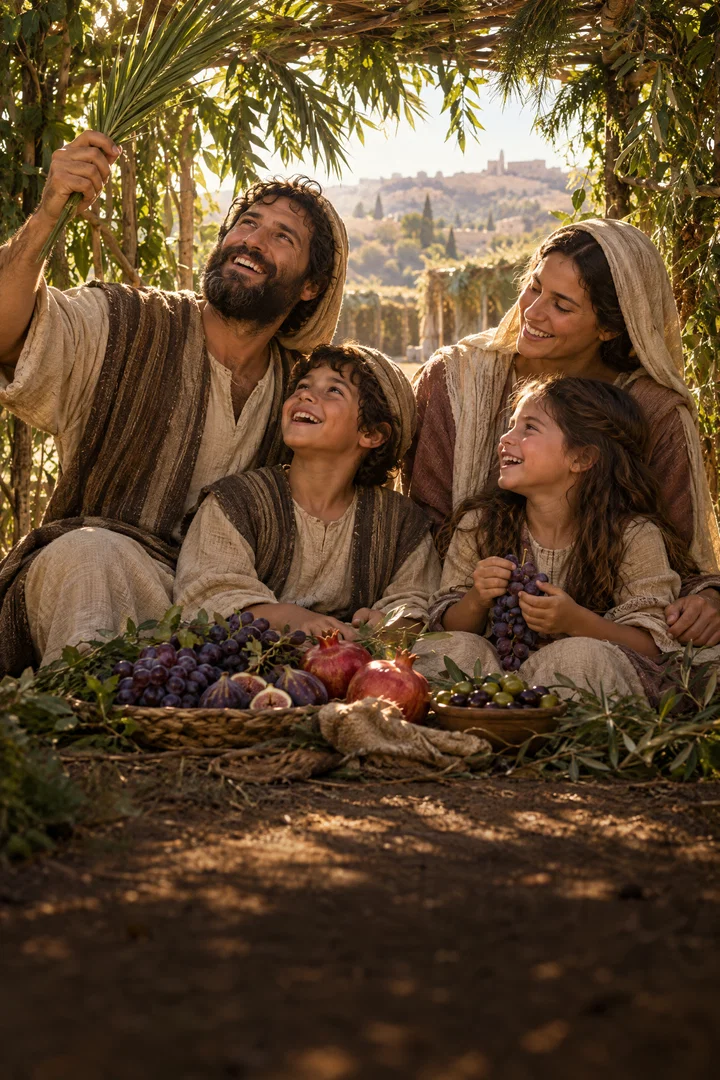
That your generations may know that I made the children of Israel to dwell in booths, when I brought them out of the land of Egypt: I am the LORD your God.
Translations
American King James Version, King James Version, Webster Bible
That your generations may know that I made the children of Israel to dwell in booths, when I brought them out of the land of Egypt: I am the LORD your God.
that your generations may know that I made the children of Israel to dwell in booths, when I brought them out of the land of Egypt: I am the Lord your God.
that your generations may know that I made the children of Israel to dwell in booths, when I brought them out of the land of Egypt: I am the LORD your God.
that your generations may know that I made the children of Israel to dwell in booths, when I brought them out of the land of Egypt: I am Jehovah your God.
so that your generations do know that in booths I caused the sons of Israel to dwell; in my bringing them out of the land of Egypt; I, Jehovah, [am] your God.'
that your generations may know that I caused the children of Israel to dwell in booths, when I brought them out of the land of Egypt: I am Jehovah your God.
To the end that your generations may know, that, in booths, made I the sons of Israel to dwell, when I brought them forth out of the land of Egypt,—I—Yahweh, am your God.
Berean Standard Bible, Majority Standard Bible
so that your descendants may know that I made the Israelites dwell in booths when I brought them out of the land of Egypt. I am the LORD your God.’”
that your generations may know that I made the children of Israel to dwell in temporary shelters when I brought them out of the land of Egypt. I am the LORD your God.’”
So that future generations may keep in mind how I gave the children of Israel tents as their living-places when I took them out of the land of Egypt: I am the Lord your God.
That your posterity may know that I haue made the children of Israel to dwell in boothes, when I brought them out of the lande of Egypt: I am the Lord your God.
Douay-Rheims (Challoner revision)
That your posterity may know, that I made the children of Israel to dwell in tabernacles, when I brought them out of the land of Egypt. I am the Lord your God.
Pictures
Cross-references 20 of 23
- Colossians 2:16-17
Let no man therefore judge you in meat, or in drink, or in respect of an holyday, or of the new moon, or of the sabbath days:
Festival days and sabbaths are shadows whose substance is Christ.
- Deuteronomy 16:13-15
Thou shalt observe the feast of tabernacles seven days, after that thou hast gathered in thy corn and thy wine:
Describes the seven-day Feast of Tabernacles and its joyful observance.
- Exodus 23:14-16
Three times thou shalt keep a feast unto me in the year.
Lists Israel’s three yearly feasts, including the feast commemorating deliverance from Egypt.
- Nehemiah 8:14-17
And they found written in the law which the LORD had commanded by Moses, that the children of Israel should dwell in booths in the feast of the seventh month:
Israel obeys the command to dwell in booths for the feast.
- Leviticus 23:37-38
These are the feasts of the LORD, which ye shall proclaim to be holy convocations, to offer an offering made by fire unto the LORD, a burnt offering, and a meat offering, a sacrifice, and drink offerings, every thing upon his day:
Distinguishes festival sabbaths from the Lord’s weekly Sabbaths.
- Zechariah 14:16-19
And it shall come to pass, that every one that is left of all the nations which came against Jerusalem shall even go up from year to year to worship the King, the LORD of hosts, and to keep the feast of tabernacles.
The nations worship the Lord annually at the Feast of Tabernacles.
- Exodus 12:37
And the children of Israel journeyed from Rameses to Succoth, about six hundred thousand on foot that were men, beside children.
Names Succoth as Israel’s first encampment after leaving Egypt.
- John 7:2
Now the Jews’ feast of tabernacles was at hand.
Identifies the feast celebrated in Jerusalem.
- Leviticus 23:34
Speak unto the children of Israel, saying, The fifteenth day of this seventh month shall be the feast of tabernacles for seven days unto the LORD.
Fixes the feast of tabernacles to the fifteenth day of the seventh month.
- Exodus 12:17
And ye shall observe the feast of unleavened bread; for in this selfsame day have I brought your armies out of the land of Egypt: therefore shall ye observe this day in your generations by an ordinance for ever.
Both commemorate Israel’s departure from Egypt as a lasting observance.
- Leviticus 23:39
Also in the fifteenth day of the seventh month, when ye have gathered in the fruit of the land, ye shall keep a feast unto the LORD seven days: on the first day shall be a sabbath, and on the eighth day shall be a sabbath.
It sets the Feast of Booths’ seven days, with sabbaths on the first and eighth days.
- Numbers 29:12-39
And on the fifteenth day of the seventh month ye shall have an holy convocation; ye shall do no servile work, and ye shall keep a feast unto the LORD seven days:
Prescribes the offerings and observances for the Feast of Tabernacles.
- John 7:37
In the last day, that great day of the feast, Jesus stood and cried, saying, If any man thirst, let him come unto me, and drink.
Jesus speaks at the Feast of Tabernacles’ final day.
- Nehemiah 8:17
And all the congregation of them that were come again out of the captivity made booths, and sat under the booths: for since the days of Jeshua the son of Nun unto that day had not the children of Israel done so. And there was very great gladness.
Recalls Israel’s dwelling in booths during the feast.
- John 7:10
But when his brethren were gone up, then went he also up unto the feast, not openly, but as it were in secret.
Jesus went up to the feast of tabernacles.
- 1 Kings 12:32-33
And Jeroboam ordained a feast in the eighth month, on the fifteenth day of the month, like unto the feast that is in Judah, and he offered upon the altar. So did he in Beth-el, sacrificing unto the calves that he had made: and he placed in Beth-el the priests of the high places which he had made.
Jeroboam’s self-appointed feast perverts the feast of tabernacles.
- Revelation 21:3
And I heard a great voice out of heaven saying, Behold, the tabernacle of God is with men, and he will dwell with them, and they shall be his people, and God himself shall be with them, and be their God.
The Feast of Tabernacles points to God dwelling with his people in the New Jerusalem.
- Leviticus 23:4-21
These are the feasts of the LORD, even holy convocations, which ye shall proclaim in their seasons.
The appointed feasts foreshadow Christ’s sacrifice, resurrection, ascension, and Pentecost.
- Leviticus 23:36
Seven days ye shall offer an offering made by fire unto the LORD: on the eighth day shall be an holy convocation unto you; and ye shall offer an offering made by fire unto the LORD: it is a solemn assembly; and ye shall do no servile work therein.
gives seven days with sabbaths first and eighth
- Nehemiah 8:10
Then he said unto them, Go your way, eat the fat, and drink the sweet, and send portions unto them for whom nothing is prepared: for this day is holy unto our Lord: neither be ye sorry; for the joy of the LORD is your strength.
A holy feast calls for joy and sharing food with those in need.
Commentary
Each commentary is drawn from primary sources: the writings of Ellen G. White and Adventist pioneers and periodicals. Each commentary is separate. Its own words are not a quotation; follow the references to read the source passages.
Ellen G. White
17 sources
God appointed that every generation should live for a time in temporary shelters so they would know that He brought Israel out of Egypt and made them dwell in booths on the wilderness journey.PP 540.4–51RED 89.3LC1 89.2 What they were to remember was their life as pilgrims and His sustaining and protecting care, deliverance and preservation, goodness, mercy and guidance.PP 540.4–5DA 448.1DA 447.1–2 The same gathering closed the year in the seventh month after the harvest as a joyous thanksgiving for His goodness and continuing care seen in the stored produce that crowned the year.ST Sep 23, 1897ST Sep 23, 1897ST Nov 2, 1915PK 37.3 The week together was devoted to teaching coming generations to know God and have fellowship with Him, joined with social reunion and generous hospitality to the Levites of the sanctuary and to strangers and the poor.ST Sep 23, 1897PK 665.2ST Nov 2, 1915ED 42.3–43.1MH 281.3–4 It also teaches His people to remember with gratitude how He brings them out of spiritual darkness into the light of His grace and truth.PP 540.6
Memorial of Wilderness Deliverance
The dwelling in booths was appointed so that every generation might know that the Lord brought the children of Israel out of Egypt and made them dwell in booths or tents on the wilderness journey.PP 540.4–5LC1 89.2DA 448.1DA 447.1–2PK 665.2 The Feast of Tabernacles kept that pilgrim tent-life before the people, that they should remember how their ancestors lived as pilgrims in the wilderness.PP 540.4–51RED 89.3LC1 89.2DA 448.12SP 343.4 What was to be remembered was God's sustaining and protecting care in that journey, His deliverance and preservation of Israel after the Exodus.PP 540.4–5DA 448.1PP 540.6DA 448.2 It was a memorial of His goodness and mercy, a time to reflect on His guidance and blessings and continuing care.DA 448.1DA 447.1–2DA 448.2
To keep it the people left their houses to live for the time in booths made of leafy branches or green boughs.1RED 89.3ST Sep 23, 1897DA 448.12SP 343.4 The booths were set up on housetops, in streets and temple courts, and outside the city in valleys and on hillsides around Jerusalem.1RED 89.3ST Sep 23, 1897 The feast was kept at Jerusalem from the fifteenth through the twenty-second day of the seventh month, with the law read each day.PK 665.2PK 37.3 The seven-day encampment thus brought the whole observance before the eyes of each household in a visible dwelling in booths.1RED 89.3ST Sep 23, 1897PK 665.2
The feast belongs among the appointed memorial gatherings meant to call God to mind.ST Sep 23, 1897 Its observance was resumed after the return from captivity, yet its purpose was often forgotten by priests and leaders.ST Sep 23, 1897 Its most joyful ceremony commemorated an event of the wilderness sojourn.DA 448.3
Harvest Thanksgiving and Instruction
The feast was the year's closing gathering in the seventh month, a joyous occasion kept after the harvest when the people were free from ordinary cares to take part in its sacred celebrations.ST Sep 23, 1897PK 37.3 It was a time to reflect on God's goodness and mercy and on His continuing care, shown in the land's harvest and its stored produce.ST Sep 23, 1897 The dwelling in booths thus joined remembrance of the wilderness to the harvest, encouraging gratitude to God and providing a time devoted to education.ED 42.3–43.1
It was Israel's great thanksgiving harvest festival, a time of rejoicing and thanksgiving to God for His goodness and for the year's harvest that crowned the year with goodness.ST Sep 23, 1897ST Nov 2, 1915 The gratitude was lifted by offerings from orchard and field, and by minds directed to God's continuing care seen in the harvest and stored produce.ST Sep 23, 1897ST Nov 2, 1915 The commemoration joined God's care for Israel during the wilderness journey and their dwelling in booths after the Exodus to thanksgiving for present blessing.ED 42.3–43.1DA 448.2
The seven-day feast brought people from Palestine and other lands together in a week's encampment in leafy booths.ST Sep 23, 1897ST Nov 2, 1915 The week spent in booths and the journeys to the feasts provided outdoor recreation and social life, with social reunions alongside sacred memorial service.ST Nov 2, 1915MH 281.3–4 It was an occasion for rejoicing shared through hospitable welcome and generous hospitality to the Levites of the sanctuary and to strangers and the poor.ST Nov 2, 1915MH 281.3–4
The dwelling in booths was to teach coming generations to know God.ST Nov 2, 1915 Knowledge of God, with fellowship with Him in study and labor and likeness to Him in character, was to be the source, means and aim of the education parents gave their children.ST Nov 2, 1915 The feast also teaches God's people to remember with gratitude how He brings them out of spiritual darkness into the light of His grace and truth.PP 540.6
Sources
Pioneers and periodicals
90 sources
The verse gives the reason for dwelling in booths, that succeeding generations might know that the Lord made Israel dwell in booths when He brought them out of Egypt and know Him as their God.RH Feb 10, 1916RH Jan 15, 1914ST Jun 8, 1915 The booths recalled their pilgrim tent-life and wilderness sojourn after the exodus, when they had no settled habitation and first encamped at Succoth under green boughs.RH Oct 31, 1912RH Jan 15, 1914RH Jan 14, 1862 The remembrance taught deliverance from oppression and bondage into freedom, that a booth in the desert was better than the well-provided houses of Egypt, and that God cared for and delivered His people.RH Aug 4, 1874ST May 7, 1912RH Jun 11, 1857 It was kept as a week of joyful worship and thanksgiving for His providential goodness, mercy and continuing care seen in the finished harvest and stored produce of orchard, field and vineyard.ST Sep 23, 1897RH Aug 4, 1874ST Nov 17, 1898 Looking back to the exodus did not keep it from pointing forward to the final deliverance from sin and death, the gathering of the redeemed from the four winds, and their rejoicing when brought into the kingdom in the New Jerusalem.ST May 27, 1908ST May 7, 1912RH May 13, 1862RH Jan 14, 1862ST Nov 17, 1898
Memorial Purpose Explained
The dwelling in booths was commanded so that succeeding generations would know that the Lord made the children of Israel dwell in booths when He brought them out of Egypt, and would know Him as their God.ST Feb 2, 1882RH Feb 10, 1916RH Jan 15, 1914ST Jun 8, 1915ST Oct 15, 1896 The feast was therefore not solely an ingathering or thanksgiving for the harvest, for its very name and its command that all Israelites born dwell in booths seven days marked this memorial purpose.RH Feb 10, 1916ST Jun 8, 1915ST Oct 15, 1896 That clearly revealed command was binding regardless of whether earlier generations had obeyed it, as shown when the returned exiles restored the observance in a way not kept since Joshua's time.ST Oct 15, 1896ST Feb 12, 1885 The annual keeping brought physical and spiritual blessings while keeping generations mindful of the exodus.ST Feb 2, 1882RH Feb 10, 1916
The booths commemorated Israel's pilgrim tent-life and wilderness sojourn after the exodus, when they had no settled habitation.RH Oct 31, 1912RH Jan 15, 1914RH Jan 14, 1862ST Oct 15, 1896RH Feb 2, 1911 They recalled in particular the first encampment at Succoth under green boughs, made from branches of goodly trees, palm branches, boughs of thick trees, willows, and similar boughs as temporary shelters for the seven days.ST Feb 2, 1882RH Oct 31, 1912ST Mar 8, 1899 The remembrance taught deliverance from oppression and bondage to freedom, that God cared for and delivered His people.RH Aug 4, 1874ST May 7, 1912RH Jun 11, 1857ST Nov 17, 1898RH Nov 25, 1915 It impressed the lesson that a booth in the desert was preferable to the well-provided residences of Egypt, a thought every Feast of Tabernacles was intended to recall.RH Aug 4, 1874RH Nov 25, 1915ST Oct 15, 1896
The feast provided a week of joyful religious worship and thanksgiving for God's providential blessings, goodness, mercy, and continuing care.ST Sep 23, 1897ST Sep 23, 1897RH Aug 4, 1874ST Nov 17, 1898RH Nov 25, 1915 That gratitude was shown in the finished harvest and stored produce of orchard, field, and vineyard, with the people gathered from Palestine and other lands in rejoicing in streets, temple courts, housetops, and surrounding hills and valleys.ST Sep 23, 1897ST Sep 23, 1897ST Nov 2, 1915ST Nov 17, 1898RH Nov 25, 1915 As one of Israel's appointed memorial gatherings it was designed to call God to the people's minds and to teach coming generations to know God.ST Nov 2, 1915ST Sep 23, 1897ST Jun 8, 1915 That knowledge of God, with fellowship with Him in study and labor and likeness to Him in character, was to be the source, means, and aim of the education parents gave their children.ST Nov 2, 1915
Feast Observance Described
The Feast of Tabernacles or Ingathering was kept in the seventh month from the fifteenth to the twenty-second day, seven days of dwelling in booths, coming five days after the Day of Atonement.ST Nov 24, 1881RH Jun 11, 1857ST Nov 17, 1881 Its first and last days were holy convocations, sometimes called sabbaths, in which no servile work was to be done, set apart from common days and distinct from the weekly Sabbath.ST Nov 24, 1881ST Sep 9, 1913ST Nov 17, 1881RH Aug 21, 1860 The booths were temporary shelters of branches used for the seven days to recall how God had Israel live in booths after bringing them out of Egypt, so that later generations would remember the exodus.RH Jun 11, 1857ST Mar 8, 1899RH Aug 21, 1860
During the seven days all Israel made booths from boughs of goodly trees, branches of palm trees, boughs of thick trees, willows of the brook, olive, myrtle and fir, and lived in them.RH Oct 31, 1912ST Nov 17, 1881 They raised booths of living twigs in the streets, on housetops, in their courts and in the courts of the house of God, and also in Jerusalem's streets, temple courts, and across the surrounding hills and valleys, with people coming from Palestine and other lands.ST Sep 23, 1897RH Oct 31, 1912ST Nov 17, 1881 They carried a citron in the left hand and in the right the lulab, a palm branch woven round with willow and myrtle.ST Nov 17, 1881 God Himself made the terms and defined the conditions of blessing, requiring Israel to leave houses, gather boughs, build booths and dwell in them to worship Him and receive blessing, so that refusal to comply forfeited blessing.ST Aug 12, 1889
It was a period of rejoicing to be shared with the poor, the stranger and the Levites, with social reunions, sacred memorial service, and generous hospitality to the Levites of the sanctuary and to strangers and the poor.ST Nov 2, 1915RH Oct 31, 1912 The gatherings included offerings of the land's produce and labor, offerings from orchard and field, pledges or vows, and freewill gifts, including bringing God gifts from the fruit of one's work as was done in olden times.ST Nov 2, 1915RH Oct 2, 1913ST Apr 2, 1902 On each of the seven feast days the priests went out with music and the choir of Levites amidst shouts of vast multitudes to draw water in a golden vessel from Siloah to be poured at the morning offering as a libation on the west side of the great altar amidst great joy, singing and dancing.ST Nov 17, 1881 On the evening of the first day a grand illumination from huge candelabra shedding light over the city began in the Court of the Women with torch dances, music and songs till the temple gates closed.ST Nov 17, 1881
It was one of the three great annual feasts requiring attendance, with Israel's males to appear before the Lord at the sanctuary three times each year.ST Apr 23, 1912ST Nov 17, 1881 It was the year's closing gathering at the harvest ingathering in the seventh month, a time to reflect on God's goodness and mercy and continuing care shown in the land's harvest and stored produce, and its instruction is paralleled in Deuteronomy 16.ST Sep 23, 1897ST Sep 23, 1897ST Jun 1, 1882ST Mar 18, 1913 Its instruction about beginning and ending belongs to the Lord's annual feasts and sabbaths in the sacred year.ST Sep 9, 1913RH Aug 21, 1860
When the returned exiles heard the command to dwell in booths in the seventh month in remembrance of God making Israel dwell in booths after the exodus, they made booths and lived in them, restoring an observance that had not been kept in this way since Joshua's time.ST May 28, 1902ST Feb 12, 1885 The observance resumed after the return from captivity as an appointed memorial gathering designed to call God to mind, but its purpose was often forgotten by the priests and leaders.ST Sep 23, 1897 A clearly revealed command is binding regardless of whether earlier generations obeyed it.ST Feb 12, 1885 Jeroboam's feast in the eighth month was a variation of the Lord's appointed seventh-month occasion, set at a time of his own devising and a purposeful perversion condemned by the words devised of his own heart.ST Jun 29, 1904
The eighth day connected with the feasts means the eighth day of the feast, not the eighth day of the week, and there is nothing about reckoning days of the week in the chapter; feast reckoning is not week reckoning.RH Apr 19, 1870 That eighth day is called a great day and even a Sabbath, but it does not always mean the first day of the week.RH Apr 19, 1870RH Jan 13, 1874 Since the feasts commence on fixed days of fixed months, their eighth day falls on one weekday one year and another weekday another year, like New Year's Day and the Fourth of July.RH Jan 13, 1874 To take it as the day of the week in order to argue for Sunday-keeping is an unwarrantable assumption, and without that assumption the argument falls; it does not prefigure exaltation of the eighth day or first day as the Sabbath under the gospel, for types relating to gospel events must agree with plain gospel facts, and there is no plain New Testament declaration exalting the first day as a weekly Sabbath.RH Apr 19, 1870RH Jan 13, 1874
Future Fulfilment Foretold
The feast was both commemorative and typical, looking back to dwelling in booths after the exodus yet pointing forward to fulfilment in Christ, and a backward reference does not prevent a forward type, just as Passover pointed back yet was a type.RH Oct 31, 1912RH Jan 28, 1902RH Oct 29, 1872 Its types meet their antitype in Christ's work and ministry and in a life of consistent devotion to him, and as shadows fulfilled in Christ the ceremonial sabbaths connected with it are not binding observances for Christians.ST May 27, 1908RH Jan 28, 1902RH Oct 29, 1872 The yearly dwelling for seven days in booths made from boughs of goodly trees, palm branches, boughs of thick trees and willows of the brook, in streets, on housetops, in courts and in the courts of the house of God, was a period of rejoicing to be shared with the poor, the stranger and the Levites.RH Oct 31, 1912
It foreshadowed the final deliverance of God's people from sin and death and their rejoicing after being gathered into the kingdom, celebrated in the New Jerusalem as the great antitypical home-coming.ST May 27, 1908ST May 7, 1912RH Jan 14, 1862 As the feast of ingathering at the end of the harvest year it typifies the final gathering of all the saints to the kingdom of God and the New Jerusalem, the gathering of the redeemed from the four winds of heaven as the great result of Christ's intervention and work for humanity.RH May 13, 1862ST Jun 1, 1882RH May 13, 1862 In its immortal-state fulfilment pilgrims to Zion wander no more, the saints enter rest at the end of the sanctuary year, and possessing the earth they rejoice in their home.RH May 13, 1862ST Nov 17, 1898RH Feb 2, 1911ST Nov 21, 1906ST Jan 7, 1903
Coming immediately after the Day of Atonement it is an occasion of great joy and rejoicing after solemn penitential tears and contrition over past errors, weakness and sloth have been accepted through the High Priest's mediation with assurance of pardon.ST Sep 11, 1884ST Jan 7, 1903 It commemorates deliverance from the bondage of sin as dwelling in booths commemorated bringing Israel out of Egypt, kept from the fifteenth to the twenty-second day of the seventh month after the gathering of the land's fruit as the final observance connected with the sanctuary's cleansing.RH Jun 11, 1857ST Sep 11, 1884 That heavenly cleansing is the judgment blotting out the sins of God's people of all ages, not a cleansing of physical uncleanness, giving final riddance of sin from people and sanctuary through the yearly closing service on the tenth day of the seventh month.RH Jun 11, 1857ST Jun 19, 1907
The spring types establish the timing principle, for the slaying of the paschal lamb on the fourteenth day of the first month met its antitype in the death of the Lamb of God on that day, the offering of firstfruits on the morrow after the Sabbath met its antitype in the resurrection of Christ as firstfruits of them that slept, and Pentecost fifty days later met its antitype in the descent of the Holy Spirit in Acts 2.RH Dec 15, 1868RH Mar 31, 1874 That outpouring honored Pentecost, not the first day of the week, and shows the event represented begins on its appointed day though fulfilment may continue long afterward, so the antitypical atonement in the holiest place begins on the tenth day of the seventh month and the autumn festivals' timing will likewise be fulfilled in Christ's work.RH Mar 31, 1868RH Dec 15, 1868RH Mar 31, 1874 By the same reckoning the tenth day of the seventh month, when the high priest came out to bless the people, applies to Christ's coming from heaven as High Priest to bless His waiting people with immortality.RH Mar 31, 1868 As the final typical feast, following the Day of Atonement with greater rejoicing than Firstfruits and lasting seven days, it typifies a latter-time work of the Holy Ghost before the harvest, bringing times of refreshing and completing Joel's prophecy with power, dreams, visions, signs and wonders.RH Sep 2, 1851
Its complete fulfilment is not a reason to keep celebrating it year by year beforehand, for the feasts are fulfilled in Christ's ministry and in consistent devotion rather than by yearly repetition.ST May 27, 1908 Teaching that Christians must observe this feast is error, and its antitypical fulfilment is not simply a re-institution of the former observance under the Levitical law.ST May 27, 1908RH Mar 10, 1903RH Feb 16, 1860
Annual Sabbaths Distinguished
Leviticus 23 sets forth Israel's yearly feasts, fasts, holy convocations and seven annual sabbaths connected with Passover, Firstfruits, Trumpets, Atonement, Booths and Pentecost, with offerings including drink offerings.ST Jun 17, 1903RH Dec 29, 1859RH Aug 12, 1858 The first and eighth days of the feasts were holy convocations sometimes called sabbaths, and the Feast of Tabernacles beginning on the fifteenth day of the seventh month had such holy convocations on its first and last days.RH Aug 31, 1905ST Nov 24, 1881 These festival days were ceremonial, local, movable and temporary, typical and distinguished from the Sabbath of Jehovah.RH Aug 31, 1905RH Dec 29, 1859ST Feb 7, 1911 They are distinct from the Lord's seventh-day Sabbath ordained at creation and guarded by the Fourth Commandment, being set apart by the words besides the Sabbaths of Jehovah.ST Nov 24, 1881ST Jun 17, 1903ST Jul 17, 1879 These annual sabbaths could fall on a weekly Sabbath but did not regularly do so.ST Jul 17, 1879
The yearly sabbaths came in because of sin as part of the typical sacrificial system with meats, drinks and new moons, pointing forward to Christ as shadows whose body is Christ.ST Jun 17, 1903ST Oct 31, 1900RH Dec 18, 1860 They were dependent for their existence on those typical feasts and meet their antitype in the work of Christ, ceasing when the antitype arrives.RH Aug 12, 1858ST Jan 3, 1878 They expired by limitation, were lost in him, were blotted out and nailed to the cross, while the festivals and ceremonial types were fulfilled in him and the original Sabbath law remained in force.RH Aug 12, 1858ST Jan 3, 1878 The weekly Sabbath by contrast points back to creation, is a memorial of creative and sanctifying power, is eternal as a sign of power to sanctify, and will exist in the new earth when all types and shadows have vanished away.ST Jun 17, 1903RH Dec 18, 1860 About the Sabbath instituted in Eden before the fall there was nothing shadowy, for it was an absolute and independent institution wholly unlike the yearly sabbaths.RH Aug 12, 1858RH Dec 18, 1860
The annual sabbaths fell on specified dates and specified days of the month regardless of the day of the week, and could therefore occur on different weekdays, unlike the weekly Sabbath which comes every seventh day in constant succession.ST Jun 17, 1903ST Sep 9, 1880 Changing feast dates did not change the seventh day of the week. The fifteenth of Abib, the first day of unleavened bread, holds the same rank as the other annual sabbaths except that the tenth of the seventh month is more sacred than the rest, coming once a year not once a week like the seventh-day Sabbath.ST Jul 17, 1879 The different work rules prove the difference, since no servile work was forbidden on feast days while no work at all applied to the weekly Sabbath.ST Aug 31, 1882ST Jul 17, 1879 Preparation of food is expressly allowed on Abib 15 but expressly forbidden on the weekly Sabbath, which proves the fifteenth of Abib was not made to recur regularly on the day of the weekly Sabbath.ST Jul 17, 1879ST Jul 15, 1880
The yearly system was tied to Israel's earthly inheritance in the land of Canaan, required going up to Jerusalem with sacrifices, and was not kept until Palestine was reached.RH Aug 29, 1871RH Oct 14, 1873RH Apr 9, 1872 It required circumcision of participating Gentiles, while the weekly Sabbath could be kept by Gentiles without circumcision and could be kept everywhere.RH Mar 18, 1875 That system was a middle wall of partition separating Jews and Gentiles, was against Gentiles and contrary to them, and was a yoke they could not bear.RH Oct 14, 1873RH Apr 9, 1872 When Gentile rule and dispersion made those observances impossible, the weekly Sabbath remained unaffected as a higher-order institution made for the race and for man.RH Aug 29, 1871RH Oct 14, 1873 The festival days grew out of man's actions as a sinner and would never have existed but for sin, originating this side of the fall after types and shadows were introduced and therefore shadowy and typical, yearly, ceremonial, temporal and for one nation only, while the Sabbath grew out of the action of a holy God, was given in Eden before types, made at creation before the fall and before man needed types, kept long before the Jews saw Canaan, and is weekly, unchangeable, perpetual and for all people.RH Oct 14, 1873RH Mar 18, 1875 Its annual sabbaths could typify the seventh millennium when the earth rests from the curse.RH Apr 9, 1872
The sabbath-days of Colossians 2:16 are these annual sabbaths associated with ordinances of meat, drink, holy days and new moons, distinct from the Sabbath of the Lord our God, the seventh-day Sabbath of the fourth commandment, and that text says nothing about abolishing the weekly Sabbath.RH Dec 20, 1853ST Aug 25, 1881 The days esteemed above other days in Romans 14 are these feast-days and fast days with their distinctions of meats and drinks and eating herbs, like modern New Years, Christmas and Thanksgiving, belonging to the Jewish ritual of carnal ordinances forming one connected system entirely separate from the Sabbath spoken by God's own voice and written on the tables of stone.RH Apr 1, 1873ST Sep 16, 1875 Their observance is a matter of indifference so long as justification is not sought through them apart from the sacrifice of the Saviour, and there is no condemnation for not observing them unless justification is sought through them apart from Christ.ST Sep 16, 1875 These festivals were among the Jewish institutions that converted Jews once regarded as morally binding.ST Oct 19, 1888
The sacred year, feasts and sabbaths were regulated by the moon and the barley harvest, with Passover always held on the fourteenth day of the first month.ST Jul 3, 1879RH Feb 6, 1879 Its rules for the first-fruit offering began with the ripening of the barley harvest: the offering was made on the day after a weekly Sabbath when reaping began, and the seven-week count toward Pentecost began when reaping began.ST Jul 3, 1879 The law therefore fixed the offering's place in the week but did not fix the Sabbath or offering to a particular date in the first month, while leaving Pentecost's date to the harvest.ST Jul 3, 1879 The beginning of the year was irregular and moved with early or late seasons and harvests, so a sheaf of ripe barley was required to be waved before the Lord on the definite sixteenth day, on the morrow after the Sabbath.RH Feb 6, 1879 The chapter sets the Passover and Feast of Unleavened Bread at defined dates in the first month and the Feast of Booths recalling that God made Israel dwell in booths after bringing them out of Egypt in the seventh, while leaving Pentecost's date to the harvest.ST Jul 3, 1879
Like all Bible memorials the Feast of Tabernacles began with the event it commemorates, Israel dwelling in booths when brought out of Egypt, so a memorial is not instituted long after what it remembers.RH Feb 3, 1852 Such positive commemorative institutions are appropriately placed on days with special significance to recall memorable events, yet the time of instituting has nothing to do with the time of observing, for commemorative institutions fall on different days than they were instituted and not nearly all on the same day.RH Jun 24, 1873RH Jun 17, 1873 Its time of observance is expressly stated, which is different from the Lord's supper for which no such specific time of observance is stated.RH Jun 17, 1873 God can make any day of the week a Sabbath if He chooses, as shown by annual sabbaths listed in addition to the weekly Sabbath.RH Apr 24, 1879 God Himself makes the terms and defines the conditions on which blessing is given at the feast requiring Israel to leave houses, go to the woods, gather boughs, build booths and dwell in them to worship and receive blessing, so one refusing to comply would not receive the blessing even though God could have blessed him in his house if He had chosen.ST Aug 12, 1889
The people of God for ages held holy convocations on days besides the seventh day, so meeting for worship on a day does not make that day the rest-day or Sabbath.RH Mar 18, 1862 The Jewish feast days including dwelling in booths to remember that God made Israel dwell in booths when He brought them out of Egypt include other holy days and sabbaths besides the seventh-day Sabbath, showing that sabbaths in the New Testament does not always mean the seventh day.RH Nov 8, 1853
Present-Day Application
The camp-meeting is the Feast of Tabernacles kept now, when believers from every part gather together in tents as ancient Israel dwelt in booths to appear before God.ST Sep 1, 1881ST Sep 16, 1875ST Aug 13, 1874ST May 6, 1875 It follows the yearly autumn pattern of setting apart time to seek the groves and worship the Creator free from perplexing cares of life while beholding nature's grandeur.ST Sep 1, 1881ST Oct 13, 1881 In that gathering worship together makes grand feasts of tabernacles, for living in booths was given so later generations would remember how God brought Israel out of Egypt and cared for them.ST Aug 13, 1874ST May 6, 1875
All brothers and sisters are to make special effort to come up at the appointed time and stay until the close.ST Sep 1, 1881ST Sep 8, 1881 Those who attend come bringing their own bedding and food and come prepared to labor.RH Oct 21, 1858 They assemble with good order away from the cities to hear preaching, meet with the Holy Spirit, transact church business in the election of officers, take counsel with wisdom and consecration to lay broad plans for the advancement of the work, and give special attention to children and young people, that possessors of publications and tracts may be brought to saving knowledge and many precious souls gathered.RH Apr 30, 1908RH Aug 27, 1872 It comes at the ripening time of the harvest of the earth, when temporal wants are supplied and God's people need the influence of the power and Spirit of God to overcome tendencies to wrong-doing, to have the graces of the Spirit more fully matured, and to be in condition to be perfected by the latter rain soon to be poured out.ST Sep 1, 1881ST Oct 13, 1881ST Sep 8, 1881
The American feast of Thanksgiving is none other than that ancient Jewish Feast of Ingathering continued by the President's yearly proclamation of what was first commanded through Moses.ST Dec 9, 1897 As Easter enters into and with divine light transfigures the Passover, so Thanksgiving illumines and glorifies the Feast of Ingathering, making one of the old and the new.ST Dec 9, 1897 Recalling this links America with Israel, the nation through which God revealed Himself to the world, lifts the day out of mere local or national limitations, and proves Americans too are children of Abraham in the high spiritual sense by which all are of the household of faith, thus demonstrating the essential unity of God's purposes throughout all generations.ST Dec 9, 1897 Its fall timing after harvest and ingathering in connection with Israel's deliverance from Egypt explains the seasonal basis for Thanksgiving in November.ST Dec 9, 1897RH Nov 26, 1901
The timing at the ripening harvest shows gatherings are needed when temporal wants are supplied, to perfect God's people for the final ingathering.ST Sep 1, 1881ST Sep 8, 1881 The appointed feasts to which dwelling in booths belongs included several days when the people were not to labor.RH Aug 21, 1860 They included offerings of the land's produce and labor, pledges or vows, and freewill gifts, linking remembrance that the Lord had ancestors live in booths after bringing them out of Egypt with bringing God gifts from the fruit of one's work for the support of His cause as people did in olden times.RH Oct 2, 1913RH Aug 21, 1860ST Apr 2, 1902
Sources