Leviticus 3:1
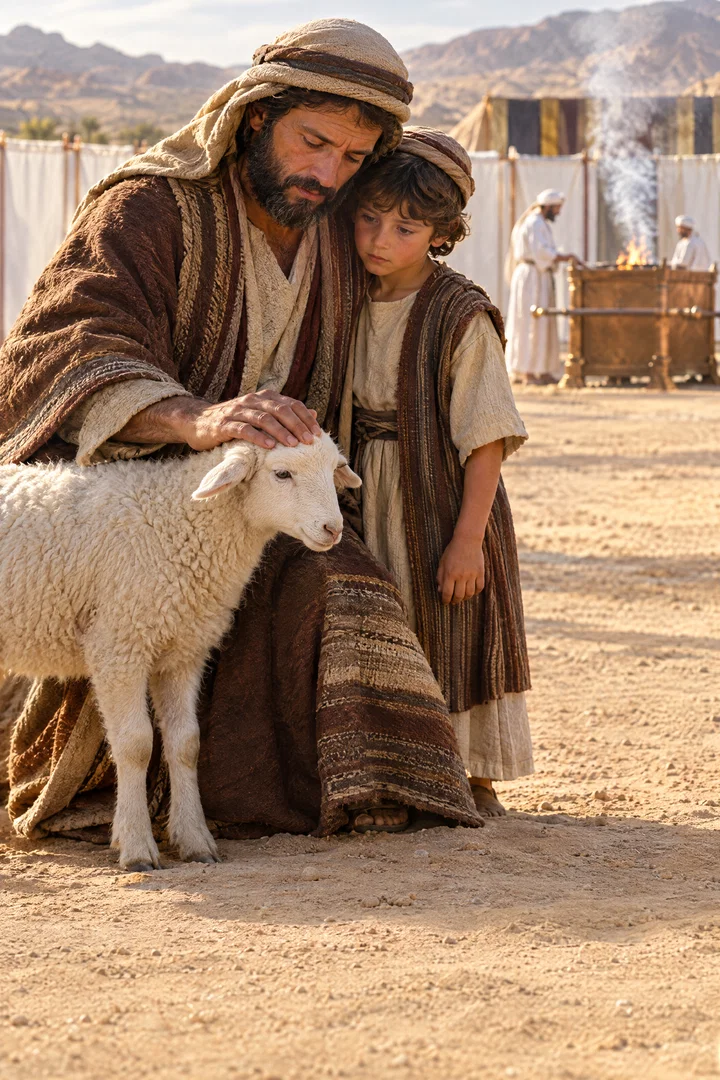
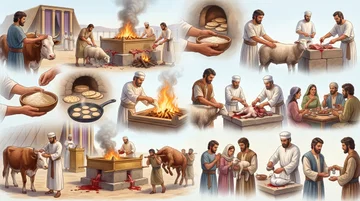
And if his oblation be a sacrifice of peace offering, if he offer it of the herd; whether it be a male or female, he shall offer it without blemish before the LORD.
Translations
American King James Version, King James Version
And if his oblation be a sacrifice of peace offering, if he offer it of the herd; whether it be a male or female, he shall offer it without blemish before the LORD.
And if his oblation be a sacrifice of peace offering, if he offer it of the herd; whether it be a male or female, he shall offer it without blemish before the Lord.
And if his oblation shall be a sacrifice of peace-offering, if he shall offer it of the herd, whether a male or female; he shall offer it without blemish before the LORD.
And if his oblation be a sacrifice of peace offerings; if he offer of the herd, whether male or female, he shall offer it without blemish before the LORD.
And if his oblation be a sacrifice of peace-offerings; if he offer of the herd, whether male or female, he shall offer it without blemish before Jehovah.
'And if his offering [is] a sacrifice of peace-offerings, if out of the herd he is bringing near, whether male or female, a perfect one he doth bring near before Jehovah,
And if his offering be a sacrifice of peace-offering, — if he present [ it] of the herd, whether a male or female, he shall present it without blemish before Jehovah.
But, if a peace-offering, be his oblation, if, of the herd, he himself, be bringing near,—whether male or female, without defect, shall he bring it near before Yahweh.
Berean Standard Bible, Majority Standard Bible
“ If one’s offering is a peace offering and he offers an animal from the herd, whether male or female, he must present it without blemish before the LORD.
“‘ If his offering is a sacrifice of peace offerings, if he offers it from the herd, whether male or female, he shall offer it without defect before the LORD.
And if his offering is given for a peace-offering; if he gives of the herd, male or female, let him give it without any mark on it, before the Lord.
Also if his oblation be a peace offering, if he will offer of the droue (whether it be male or female) he shall offer such as is without blemish, before the Lord,
Douay-Rheims (Challoner revision)
And if his oblation be a sacrifice of peace offerings, and he will offer of the herd, whether male or female, he shall offer them without blemish before the Lord.
Pictures
Cross-references
- Leviticus 1
And the LORD called unto Moses, and spake unto him out of the tabernacle of the congregation, saying,
The first chapters of Leviticus describe individuals’ offerings as expressions of faith in the coming Redeemer.
- Hebrews 9:12
Neither by the blood of goats and calves, but by his own blood he entered in once into the holy place, having obtained eternal redemption for us.
Christ’s own blood accomplishes the eternal redemption foreshadowed by the offerings.
- Malachi 1:13-14
Ye said also, Behold, what a weariness is it! and ye have snuffed at it, saith the LORD of hosts; and ye brought that which was torn, and the lame, and the sick; thus ye brought an offering: should I accept this of your hand? saith the LORD.
Condemns presenting a blemished animal as an offering to God.
- Leviticus 22:21-22
And whosoever offereth a sacrifice of peace offerings unto the LORD to accomplish his vow, or a freewill offering in beeves or sheep, it shall be perfect to be accepted; there shall be no blemish therein.
Specifies that peace offerings must be without blemish and lists disqualifying defects.
- Leviticus 3:7
If he offer a lamb for his offering, then shall he offer it before the LORD.
Names a lamb as another animal permitted for the peace offering.
- Leviticus 3:12
And if his offering be a goat, then he shall offer it before the LORD.
Extends the peace-offering instructions to a goat.
- Hebrews 8:5
Who serve unto the example and shadow of heavenly things, as Moses was admonished of God when he was about to make the tabernacle: for, See, saith he, that thou make all things according to the pattern shewed to thee in the mount.
Earthly priestly service follows the pattern of heavenly things.
- Hebrews 9:23-28
It was therefore necessary that the patterns of things in the heavens should be purified with these; but the heavenly things themselves with better sacrifices than these.
Christ’s ministry in heaven fulfills the sanctuary cleansing foreshadowed by sacrifice.
- Leviticus 7:11-15
And this is the law of the sacrifice of peace offerings, which he shall offer unto the LORD.
Both describe peace offerings, including offerings made in thanksgiving.
- Hebrews 10:1
For the law having a shadow of good things to come, and not the very image of the things, can never with those sacrifices which they offered year by year continually make the comers thereunto perfect.
The offerings are described as shadows whose substance is Christ.
- Hebrews 10:3-4
But in those sacrifices there is a remembrance again made of sins every year.
Repeated sacrifices recalled sin and pointed in faith to the One who takes it away.
- Exodus 24:5
And he sent young men of the children of Israel, which offered burnt offerings, and sacrificed peace offerings of oxen unto the LORD.
Peace offerings were used when confirming the covenant with Israel.
- 1 Chronicles 16:1
So they brought the ark of God, and set it in the midst of the tent that David had pitched for it: and they offered burnt sacrifices and peace offerings before God.
David offered peace offerings before God when bringing the ark to Jerusalem.
- Malachi 1:7
Ye offer polluted bread upon mine altar; and ye say, Wherein have we polluted thee? In that ye say, The table of the LORD is contemptible.
Defective offerings dishonor God.
- Ephesians 2:14
For he is our peace, who hath made both one, and hath broken down the middle wall of partition between us;
Christ is our peace, linking him to the peace offering.
- 1 John 3:5
And ye know that he was manifested to take away our sins; and in him is no sin.
States that Christ had no sin, corresponding to the unblemished offering.
- Exodus 29:13
And thou shalt take all the fat that covereth the inwards, and the caul that is above the liver, and the two kidneys, and the fat that is upon them, and burn them upon the altar.
Both define sacrificial fat belonging to God.
Commentary
Each commentary is drawn from primary sources: the writings of Ellen G. White and Adventist pioneers and periodicals. Each commentary is separate. Its own words are not a quotation; follow the references to read the source passages.
Ellen G. White
2 sources
A peace offering taken from the herd might be a male or a female, yet it had to be without blemish and be offered before the Lord.ST Jul 15, 1880 Those sacrificial requirements were given to represent Christ and His ministry and death, with the unblemished animal symbolizing Christ.ST Jul 15, 1880 The offering was presented before the Lord with prayer for God's acceptance and blessing, and the portion reserved for the people was blessed before they shared it together in a sacred feast.ST Jul 20, 1882 The ritual signified more than an outward act or ceremony.ST Jul 15, 1880ST Jul 20, 1882 It was not to be made an occasion for self-gratification but, when properly conducted, encouraged true devotion, piety, kindness, and sympathy among the worshipers.ST Jul 20, 1882
Sources
Pioneers and periodicals
21 sources
A peace offering from the herd could be either a male or a female, but it had to be without blemish and presented before the Lord.ST Jul 15, 1880ST Jun 5, 1901 Even a small mark, injury, missing part, or unsightly growth disqualified the animal, because honoring God required a gift fit for One held in high esteem.ST Jun 5, 1901 The unblemished animal represented Christ, who had no sin, as the Prince of Peace, and like every sacrifice in Leviticus 1-8 it pointed forward in faith to the coming Redeemer.ST Jul 15, 1880RH Jun 13, 1912ST Feb 3, 1909ST Feb 13, 1912RH Jun 6, 1912 It was distinct from the sin offering through which the offerer received forgiveness, with peace following repentance and pardon and then a life renewed and consecrated to God's service.ST Sep 19, 1900RH Sep 16, 1852 The offering was brought to give thanks, to confirm a vow or covenant, or as a voluntary gift in times of special rejoicing, and unlike most offerings its flesh was eaten by the people in a sacred feast.ST Jul 20, 1882RH Jun 6, 1912RH Jun 6, 1912
The Offering Described
A peace offering taken from the herd might be either a male or a female, but it had to be perfect and without blemish and had to be presented before the Lord.ST Jul 15, 1880ST Jun 5, 1901RH Jun 13, 1912RH Feb 3, 1853ST Jun 5, 1901 It was one of the individual offerings brought through the year, belonging to the daily ministry in the first apartment.RH Feb 3, 1853 The offerer was left free to choose the kind of animal, but not its condition, for even a small mark or injury, a missing part, or an unsightly growth disqualified it from acceptance.ST Jun 5, 1901 Such strictness honored God with a gift fit for One held in high esteem, since to accept a defective offering would dishonor Him and weaken the regard due to Him.ST Jun 5, 1901
The peace offering is the third offering described in Leviticus, distinct from the sin offering described in chapter 4 as an offering for sins through which the offerer received forgiveness.RH Sep 16, 1852 In God's order the offerings begin with the burnt offering and close with the sin offering, while coming to Him begins with the sin offering and ends with the burnt offering.ST Jan 31, 1911 The peace offering followed the burnt offering, and the burnt offering followed the sinner's acceptance, pardon, and reconciliation through a sin or trespass offering.ST Sep 19, 1900 The sequence shows that peace follows repentance and pardon, and then a renewed life consecrated to God's service.ST Sep 19, 1900
An individual brought the animal as a substitute, laid a hand on its head in confession to signify the transfer of sin to the victim, and the victim was then slain in the sinner's place.RH Feb 25, 1858ST Feb 17, 1890RH Feb 3, 1853RH Mar 28, 1854 The priest then used its blood in ministry for the penitent, so that sin was transferred in figure from the sinner to the victim and then to the sanctuary.RH Feb 25, 1858RH Feb 3, 1853RH Mar 28, 1854 The animal's death acknowledged that the sinner deserved death, and its blood represented its life.ST Feb 17, 1890 The service belonged to the daily ministry in the first apartment, where blood bearing sin and guilt was carried into the sanctuary.ST Feb 17, 1890RH Feb 3, 1853 In some cases where the blood was not brought inside, the priest ate the flesh in the holy place, and the sin was transferred in that way.ST Feb 17, 1890
The forgiven sins, whether brought by an offering made in faith by a sinner or by the daily offering, were left there in figure in the sanctuary until the yearly cleansing.ST In the peace offering itself the offerer killed the animal, the priest sprinkled its blood around the altar, and its fat was burned upon the burnt offering.ST Sep 19, 1900 The animal stood for the offerer and its life for his life.ST Sep 19, 1900 The chapter defines that certain fat from certain parts of beasts offered in sacrifice belonged to God and must not be eaten, which does not forbid eating the ordinary fat of meat used for food.ST Jun 20, 1911
Christ and Sanctuary Foreshadowed
The verse belongs to the ceremonial law of ordinances, to a sacrificial system instituted in consequence of sin.RH Jan 10, 1916 It stands among the instructions for offerings, which show that God hates sin and that sin demands a penalty.ST Feb 3, 1909 Those offerings are shadows of their fulfillment in Jesus Christ.ST Feb 3, 1909
Like every sacrifice described in Leviticus 1-8, the peace offering from the herd holds something in type concerning the work of Jesus Christ.ST Feb 13, 1912 The offerings that individuals brought in faith pointed forward to the coming Redeemer.ST Apr 2, 1912 The sacrificial requirements were given to represent Christ and His ministry and death.ST Jul 15, 1880 The animal required to be without blemish symbolized Christ, who had no sin.ST Jul 15, 1880RH Jun 13, 1912 That unblemished animal represented the Prince of Peace.RH Jun 6, 1912
The animal stood for the offerer and its life for his life: the offerer killed it, the priest sprinkled its blood around the altar, and its fat was burned on the burnt offering.ST Sep 19, 1900 The peace offering followed the burnt offering, which followed the sinner's acceptance, pardon, and reconciliation through a sin or trespass offering.ST Sep 19, 1900 The sequence shows that peace follows repentance and pardon, then a renewed life consecrated to God's service.ST Sep 19, 1900 The types in Leviticus 1-4 point to worship, and the meaning of the clean beast without blemish, with the fine flour and the oil and the frankincense of the offerings, is to be noted.ST Jul 15, 1880ST Jan 31, 1911 In God's order the offerings begin with the burnt offering and close with the sin offering, while coming to Him begins with the sin offering and ends with the burnt offering, teaching worshipers that the ritual signified more than an outward act.ST Jul 15, 1880ST Jan 31, 1911
Worship and Daily Application
Peace offerings were given to express thanks, to confirm a vow or covenant, or as voluntary gifts.RH Jun 6, 1912 They were celebrated at times of special rejoicing.RH Jun 6, 1912 Such an offering confirmed the covenant Moses made with Israel.RH Jun 6, 1912 Unlike most offerings, the flesh of the peace offering could be eaten by the people in a sacred feast shared together.ST Jul 20, 1882RH Jun 6, 1912 The offering was accompanied by prayer for God's acceptance and blessing, and the portion reserved for the people was blessed before they partook of it.ST Jul 20, 1882
Unlike the Passover offering, the peace offering could be celebrated on any day of the year, teaching how to obtain peace from the Prince of Peace.RH Jun 6, 1912 Properly conducted, this worship was more than outward ceremony or an occasion for self-gratification, and it encouraged true devotion, piety, kindness, and sympathy among the worshipers.ST Jul 20, 1882 The bringing of such a sacrifice to God applies to times when His people enjoy peace and prosperity, as an act of acknowledgment to Him.RH Aug 18, 1868
Sources