Malachi 1:7
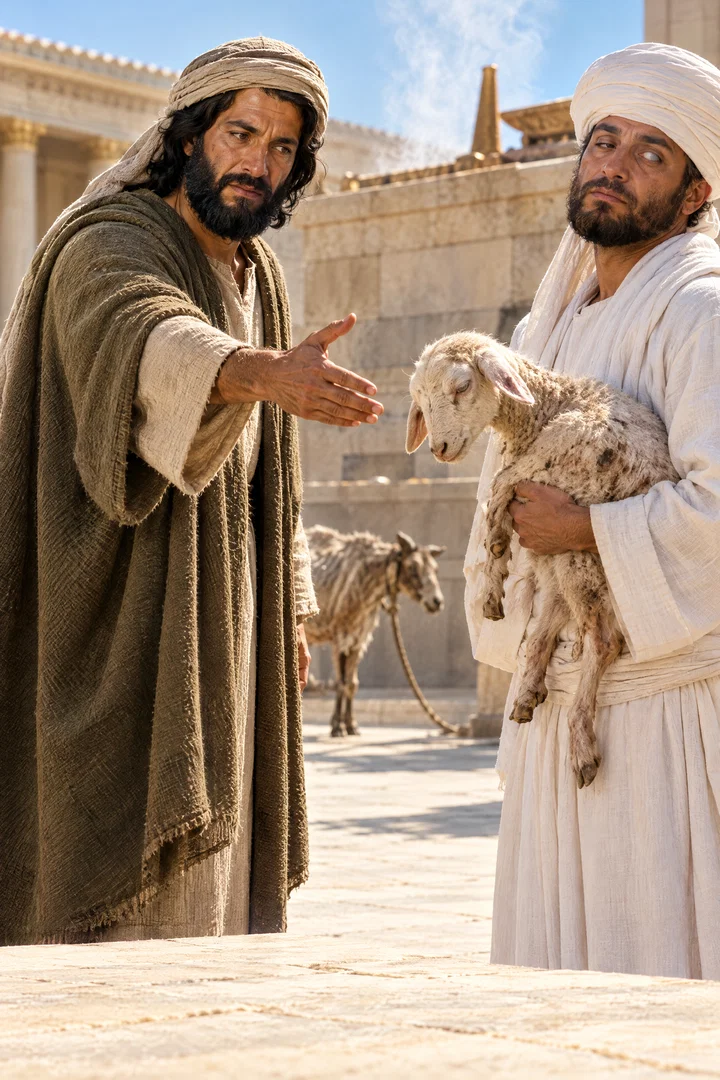
Ye offer polluted bread upon mine altar; and ye say, Wherein have we polluted thee? In that ye say, The table of the LORD is contemptible.
Translations
You offer polluted bread on my altar; and you say, Wherein have we polluted you? In that you say, The table of the LORD is contemptible.
Ye offer polluted bread upon mine altar; and ye say, Wherein have we polluted thee? In that ye say, The table of the LORD is contemptible.
Ye offer polluted bread upon mine altar;
And ye say, Wherein have we polluted thee?
In that ye say, The table of the Lord is contemptible.Ye offer polluted bread upon my altar? and ye say, In what have we polluted thee? In that ye say, The table of the LORD is contemptible.
Ye offer polluted bread upon mine altar. And ye say, Wherein have we polluted thee? In that ye say, The table of the LORD is contemptible.
Ye offer polluted bread upon mine altar. And ye say, Wherein have we polluted thee? In that ye say, The table of Jehovah is contemptible.
Ye are bringing nigh on Mine altar polluted bread, And ye have said: 'In what have we polluted Thee?' In your saying: 'The table of Jehovah — it [is] despicable,'
Ye offer polluted bread upon mine altar; and ye say, Wherein have we polluted thee? In that ye say, The table of Jehovah is contemptible.
In bringing near upon mine altar, polluted food, while yet ye say, Wherein have we polluted thee? Because ye say, As for the table of Yahweh, a thing to be despised, it is;
Berean Standard Bible, Majority Standard Bible
By presenting defiled food on My altar.But you ask, ‘ How have we defiled You?’By saying that the table of the LORD is contemptible.
You offer polluted bread on my altar. You say, ‘ How have we polluted you?’ In that you say, ‘ The LORD’s table is contemptible.’
You put unclean bread on my altar. And you say, How have we made it unclean? By your saying, The table of the Lord is of no value.
Ye offer vncleane bread vpon mine altar, and you say, Wherein haue we polluted thee? In that ye say the table of the Lord is not to be regarded.
Douay-Rheims (Challoner revision)
To you, O priests, that despise my name, and have said: Wherein have we despised thy name? You offer polluted bread upon my altar, and you say: Wherein have we polluted thee? In that you say: The table of the Lord is contemptible.
Pictures
Cross-references
- Isaiah 1:12
When ye come to appear before me, who hath required this at your hand, to tread my courts?
Both rebuke unrequired, self-chosen service offered to God.
- Malachi 1:13-14
Ye said also, Behold, what a weariness is it! and ye have snuffed at it, saith the LORD of hosts; and ye brought that which was torn, and the lame, and the sick; thus ye brought an offering: should I accept this of your hand? saith the LORD.
The people’s weariness and contempt are shown in their defective offerings and deceitful vows.
- Malachi 3:8
Will a man rob God? Yet ye have robbed me. But ye say, Wherein have we robbed thee? In tithes and offerings.
Both condemn polluted offerings as robbing God.
- Leviticus 10:1
And Nadab and Abihu, the sons of Aaron, took either of them his censer, and put fire therein, and put incense thereon, and offered strange fire before the LORD, which he commanded them not.
Strange fire illustrates worship contrary to God’s instructions.
- Malachi 1:12
But ye have profaned it, in that ye say, The table of the LORD is polluted; and the fruit thereof, even his meat, is contemptible.
Both describe profaning the Lord’s table.
- Leviticus 22:20-22
But whatsoever hath a blemish, that shall ye not offer: for it shall not be acceptable for you.
God forbids blemished offerings, while Malachi condemns polluted offerings on the altar.
- Ezekiel 44:7
In that ye have brought into my sanctuary strangers, uncircumcised in heart, and uncircumcised in flesh, to be in my sanctuary, to pollute it, even my house, when ye offer my bread, the fat and the blood, and they have broken my covenant because of all your abominations.
Both call the sacrificial offering God’s food.
- Exodus 20:25
And if thou wilt make me an altar of stone, thou shalt not build it of hewn stone: for if thou lift up thy tool upon it, thou hast polluted it.
Both texts say that misuse pollutes the Lord’s altar.
- Psalms 51:17
The sacrifices of God are a broken spirit: a broken and a contrite heart, O God, thou wilt not despise.
A broken and contrite heart is named as the sacrifice God accepts.
- Malachi 2:1-2
And now, O ye priests, this commandment is for you.
Warns priests of a curse if they fail to honor God’s name.
- Leviticus 27:30-32
And all the tithe of the land, whether of the seed of the land, or of the fruit of the tree, is the LORD’s: it is holy unto the LORD.
tithe is holy unto the Lord
- Leviticus 3:11
And the priest shall burn it upon the altar: it is the food of the offering made by fire unto the LORD.
The offering is called food for the Lord.
- Leviticus 3:14-17
And he shall offer thereof his offering, even an offering made by fire unto the LORD; the fat that covereth the inwards, and all the fat that is upon the inwards,
These verses assign the fat of the offerings to the Lord.
Commentary
Each commentary is drawn from primary sources: the writings of Ellen G. White and Adventist pioneers and periodicals. Each commentary is separate. Its own words are not a quotation; follow the references to read the source passages.
Ellen G. White
13 sources
Malachi 1:7 rebukes the priests for dishonoring God by placing defiled food on His altar while denying any wrong and declaring His table worthless.BS 23.2–3ST Oct 5, 1882 The defiled food was damaged animal sacrifices that were blind, lame, sick, torn and diseased, though He had required offerings without defect, the best and most perfect.BS 23.2–3ST Oct 5, 1882Lt 46, 1888, par. 12 To substitute the common for the holy despises His name and withholds the honor due Him as Father and the reverence due Him as Master, and it is evil that He rejects and will not accept, as a governor would refuse such a gift.Lt 46, 1888, par. 12Ms 106, 1893, par. 1–2 A defiled offering stands for a sin-stained life brought by those who profess to serve Him, which He does not accept and which must no longer be brought to Him undefiled by sin.ST2 14.2STA 123.2STBk 123.2 This same sin is committed by corrupting what is offered through careless disregard instead of keeping body and daily habits fit as a living, holy sacrifice, and by taking for common work the seventh day He reserved, sanctified and blessed, and presenting in its place a day He has not blessed.ST Oct 5, 1882Ms 106, 1893, par. 1–2
Priests' Contempt for God
Malachi 1:7 is a rebuke to the priests for dishonoring God by placing polluted bread upon His altar while declaring His table contemptible and denying that they had polluted Him.BS 23.2–3ST Oct 5, 1882 The polluted bread was animal sacrifice that was defective and diseased, including the blind, the lame, the sick, and the torn.BS 23.2–3ST Oct 5, 1882Lt 46, 1888, par. 12Ms 106, 1893, par. 1–2 God had required that offerings be without defect, the best and most perfect.BS 23.2–3ST Oct 5, 1882
To put the common in place of the holy is to despise His name and to withhold the honor due Him as Father and the fear due Him as Master.Ms 106, 1893, par. 1–2 To bring the blind, the lame, and the sick is evil, and He rejects it and will not accept it, just as a governor would not accept it or be pleased with the person who brought it.Lt 46, 1888, par. 12Ms 106, 1893, par. 1–2 It also includes treating worship as a duty not worth doing without payment.Lt 46, 1888, par. 12
That same indifference continued to the time of Christ's birth, when priests were still offering polluted sacrifices.4SP 197.2–198.2 They did so in pomp and pride in the chosen city and in the temple where the divine presence had been manifested for ages, yet with the same indifference as the rest of the nation.4SP 197.2–198.2 They showed no expectancy of the Messiah's coming, no voice of praise and triumph that His coming was at hand, and no preparation for the Prince of life.4SP 197.2–198.2
Polluted Offerings Today
A polluted offering is a sin-stained soul brought by those who profess to serve God.ST2 14.2STA 123.2STBk 123.2Ms 40, 1890, par. 107–108Lt 92, 1891, par. 9 What is offered to God must not be defiled by sin.ST2 14.2STA 123.2STBk 123.2 God does not accept a polluted sacrifice, and such an offering must no longer be brought.Lt 63, 1888, par. 1–6Ms 40, 1890, par. 107–108Lt 92, 1891, par. 9 Unconfessed and unrepented wrongdoing leaves a person's life unfit for service to God.Lt 63, 1888, par. 1–6
That sin-stained condition includes bowing to the idol of men's opinions and being slaves to shameful lusts.Ms 61, 1890, par. 45Ms 40, 1890, par. 107–108Lt 92, 1891, par. 9 It includes ranging with transgressors of God's law by seeing with the eyes and hearing with the ears and understanding with perverted senses, of the kind represented by the offerings of the Moabites and Amorites.Ms 61, 1890, par. 45Ms 40, 1890, par. 107–108Lt 92, 1891, par. 9 The rebuke requires that what is offered not be corrupted by careless disregard.ST Oct 5, 1882 Believers must therefore keep their bodies and daily habits fit to offer to God as a living, holy sacrifice.ST Oct 5, 1882
Taking for common work the seventh day that God reserved for Himself and sanctified and blessed as His Sabbath, and presenting to Him in its stead a day He has not blessed, is this same sin of offering polluted bread and saying His table is contemptible.Ms 106, 1893, par. 1–2 It is a great sin of robbing God.Ms 106, 1893, par. 1–2 Those who claim to keep God's commandments and serve Him must not betray sacred responsibilities or let corrupt influences shape their choices.LSEGW 330.1–2 They must stop these practices and press together and labor to become a unit, holy in life and pure in character.LSEGW 330.1–2Ms 61, 1890, par. 45Ms 40, 1890, par. 107–108Lt 92, 1891, par. 9
Sources
Pioneers and periodicals
33 sources
To offer defiled food on God's altar is to keep the best for oneself while giving him what is blind, lame, sick and worthless, because it costs less and is unfit for one's own use.ST Aug 14, 1879ST Feb 27, 1901RH Feb 17, 1874 To count his table as despicable is to treat his altar, its offerings and his worship and service as unimportant and therefore to defile what belongs to him, even when the contempt is shown by actions rather than spoken in words.ST Nov 22, 1899ST Nov 22, 1899ST Mar 29, 1883RH Feb 17, 1874ST Nov 22, 1899 Such offerings deny to God as Father and Master the honor and reverence due to his name, holiness and greatness, showing less respect than would be given to a human governor and serving him only when it costs nothing.ST Aug 14, 1879ST Nov 22, 1899RH Feb 17, 1874ST Jun 18, 1902ST Feb 27, 1901 Giving must therefore begin with giving self to the Lord and then giving joyfully and bountifully, for to give him what is worthless to oneself robs him, is unacceptable, withholds his blessing until covetousness is abandoned, and brings a curse.ST Nov 22, 1899ST Apr 27, 1882ST Nov 22, 1899RH May 5, 1859RH Mar 31, 1903 The same defilement is committed by will-worship that follows human feeling and will instead of his commandments, by setting up worship he has not required while neglecting what he has expressly demanded, and by profaning the seventh-day Sabbath he commanded while keeping another day in its place.RH May 1, 1855ST Mar 11, 1886ST Apr 6, 1888RH Jun 10, 1875ST May 20, 1875
Words and Contempt
The polluted bread was inferior, unclean refuse kept for God while the best was kept for self, the blind, lame, sick, torn and diseased animals and the very poorest worthless things unfit for one's own use, offered because they cost less and put self first.ST Oct 5, 1882ST Aug 14, 1879ST Feb 27, 1901ST Feb 27, 1901ST Nov 22, 1899 To bring what was unwanted instead of honoring God with the best was to serve Him only when it cost nothing, and to give little while squandering much in self-pleasing.ST Aug 14, 1879ST Nov 22, 1899 Such careless, inferior offerings profaned the altar as sacred food and revealed contempt for His name and ordinances even while the offense was denied.ST Feb 27, 1901RH Feb 17, 1874
To say the table of the Lord is contemptible is to treat His altar, its offerings, worship and service as worthless and unimportant, and so to pollute and profane what belongs to Him.ST Nov 22, 1899ST Nov 22, 1899ST Feb 27, 1901ST Dec 20, 1899ST Jun 5, 1901 The defilement lay in counting the Lord's table as worthless, and the disregard shown by such treatment dishonored God and made the offering unacceptable.ST Nov 22, 1899ST Nov 22, 1899ST Dec 20, 1899 Service to God must therefore be offered with love and care, not negligently or as though sacred work were of little worth.ST Mar 29, 1883
The altar is His because He enjoined it and requires it, ownership grounded in precept, and the offerings placed upon it are His food or bread.RH Aug 27, 1872ST May 22, 1901 Disregard for the altar therefore profanes what was made for the Lord.ST May 22, 1901 The question Wherein have we polluted thee shows denial and failure to recognize the offense and to discern disrespect for His worship.RH Feb 17, 1874ST Jul 15, 1880 The priests may not have said the table was contemptible in open words, but their actions said it for them by inference from the way they treated it.ST Nov 22, 1899ST Feb 27, 1901
The offerings showed less respect for God than would be shown to a visible human governor, giving God what was unfit even for a governor.ST Aug 14, 1879ST Jun 18, 1902ST Feb 27, 1901 They valued God less than the visible human governor because weakened faith and selfish practice blinded them to His holiness and greatness.ST Feb 27, 1901
Honor Due to God
The verse rebukes the withholding from God as Father and Master of the honor and fear due to his name, his holiness and greatness, his ordinances and his glory.ST Nov 22, 1899RH Feb 17, 1874ST Feb 27, 1901ST Jun 5, 1901 Defiled food was put upon his altar, and that defilement lay in counting his table as worthless and treating his altar, worship and service as unimportant.ST Nov 22, 1899ST Feb 27, 1901ST Jun 5, 1901 The inferior offerings were careless and revealed contempt for his name and ordinances even while the offerers asked wherein they had defiled him.ST Nov 22, 1899RH Feb 17, 1874 That failure to discern his holiness and greatness arose from weakened faith and selfish practice, which blinded them to their contempt.ST Feb 27, 1901 The claim not to have polluted him is answered by the contemptuous attitude toward what belongs to him, demanding that offerings honor him rather than diminish his glory.ST Jun 5, 1901
Keeping the best for themselves while giving God what was unfit even for a human governor contradicted profession that God had given his first and best for salvation.ST Jun 18, 1902 To offer him the inferior and refuse while valuing him less than a visible human governor showed unbelief that God had made or would make a true offering for them.ST Jun 18, 1902ST Feb 27, 1901 The cheap animals were chosen because they cost less, putting self first and serving only when it cost nothing.ST Feb 27, 1901 Service to God must therefore be offered with love and care, not negligently or as though sacred work were of little worth.ST Mar 29, 1883 What is offered to him must not be corrupted by careless disregard, for he had required the best and most perfect, not blind, lame, sick and torn animals.ST Oct 5, 1882
The verse condemns will-worship, the fruit of following one's own feelings, will and spirit instead of God's commandments.ST Mar 11, 1886ST Apr 2, 1896ST Jun 12, 1884 It means changing his prescribed offerings and substituting the lame and the blind at one's own will.ST Mar 11, 1886ST Apr 2, 1896ST Jun 12, 1884 It means volunteering an offering he did not require while withholding what he commanded.ST Mar 11, 1886RH Jun 10, 1875ST Apr 2, 1896 Such professed service is vain and fleshly-minded, puffed up by the carnal mind not subject to God's law, and is everywhere denounced by God rather than accepted as true spiritual worship in letter and spirit.ST Mar 11, 1886RH Jun 10, 1875ST May 20, 1875ST Apr 2, 1896ST Jun 12, 1884 To set up anything as worship or honor to God or his Son that he has not required and for which there is no divine command, while neglecting what he has expressly demanded, is to despise his name and to offer polluted bread upon his altar.ST Apr 6, 1888 That charge falls on those who make mention of Israel's God but do not serve him truthfully and righteously, offering lame and blind sacrifices and neglecting his ordinances.
Giving, Ordinances, and Prophecy
The verse calls for joyful, bountiful and cheerful giving that begins by first giving the self to the Lord, following Christ who gave himself to redeem and purify a people zealous of good works.ST Nov 22, 1899 The table of the Lord is counted contemptible not only in direct words but by inference from treatment, when the very poorest, worthless and polluted things unfit for one's own use are brought instead of the best.ST Nov 22, 1899 The same contempt is shown today when only small change is given to the Lord's work while dollars are squandered in self-pleasing.ST Nov 22, 1899 He who gives little lays up little treasure above, and so has little heart interest there and little spiritual growth here, and the smallness of offerings largely causes the spiritual dearth of the present time.ST Nov 22, 1899
To give God what is worthless to oneself treats his table with contempt, pollutes the offering, robs him and brings a curse.ST Apr 27, 1882 Offerings made without genuine respect dishonor his altar and treat his service as contemptible, and giving what costs nothing, even when presented as support for religious work, is not acceptable worship.RH May 5, 1859 A curse is pronounced on such offerings, and blessing is withheld until repentance and abandoning of covetous practices.RH May 5, 1859 Accepting lame and blind sacrifices to accommodate selfishness shows turning away from the Lord's ways into backsliding, unlike the sons of Levi who stood firmly against worship of the golden calf.RH Mar 31, 1903 The rebuke that what is offered must not be corrupted by careless disregard applies to believers, whose bodies and daily habits must be kept fit to offer to God as a living, holy sacrifice, since God required the best and most perfect rather than blind, lame, sick and torn animals.ST Oct 5, 1882
Offering polluted bread dishonors God even when worshipers fail to recognize the offense.RH Jun 4, 1901 Applied to the Lord's Supper, the bread and wine are sacred emblems of Christ's body and blood, so leavened bread and fermented wine are unsuitable because they represent corruption which does not fit Christ's body.RH Jun 4, 1901 The question wherein have we polluted thee stands as warning that Christians may unknowingly dishonor God by improper emblems.RH Jun 4, 1901 Rejecting the seventh-day Sabbath as Jewish and unworthy of observance, regarding the memorial of creation as contemptible and keeping another day in its place, is an impure offering that dishonors God and despises his name.RH May 1, 1855 Keeping the first day while profaning the seventh day God commanded is offering polluted bread and counting his table contemptible even when professed to honor Christ, and drawing a contrast between Old and New Testaments, declaring independence from the Old Testament and refusing to live by every word from God's mouth, brings his displeasure.ST Apr 6, 1888 Replacing the sacred seventh day God commanded with Sunday makes disobedience lawful under false claim of obedience, presenting blemished sacrifices instead of pure ones with contempt for altar and offering.RH Aug 14, 1868
The condemnation of degeneracy in the priesthood and shortcomings among God's people also illustrates the closing days of the Christian dispensation and the judgments separating the righteous from the wicked.ST Aug 29, 1911 Israel failed the conditions attached to promises concerning land and religious services by offering torn and diseased animals and polluting the altar.RH Jul 21, 1910 Such animal offerings belonged to a system pointing forward to Christ and were not the gospel way of expressing faith in him.RH Jul 21, 1910 Therefore Ezekiel's arrangements for land, priesthood and city cannot apply as a future system of worship.RH Jul 21, 1910
Sources