Leviticus 22:21
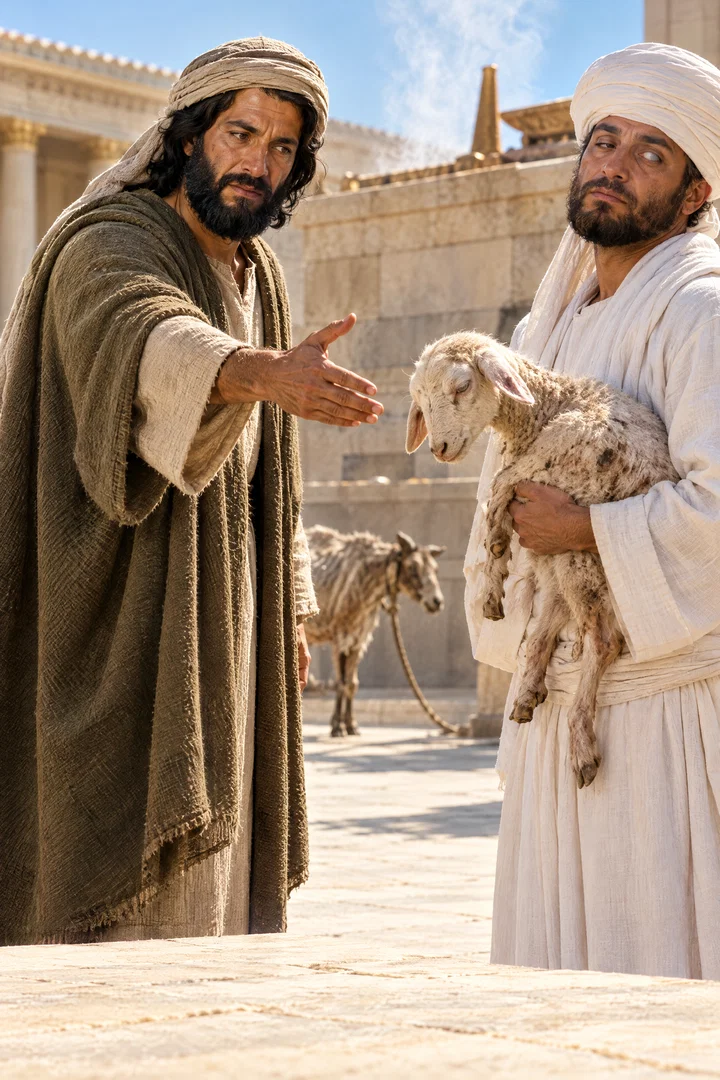
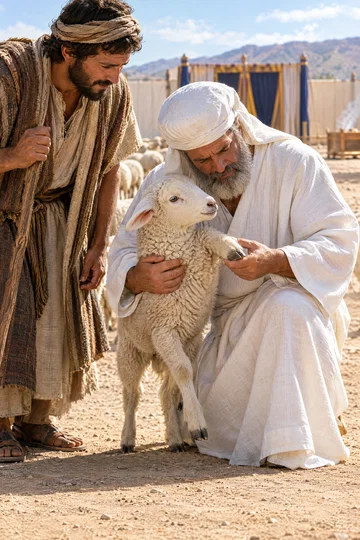
And whosoever offereth a sacrifice of peace offerings unto the LORD to accomplish his vow, or a freewill offering in beeves or sheep, it shall be perfect to be accepted; there shall be no blemish therein.
Translations
And whoever offers a sacrifice of peace offerings to the LORD to accomplish his vow, or a freewill offering in beeves or sheep, it shall be perfect to be accepted; there shall be no blemish therein.
And whosoever offereth a sacrifice of peace offerings unto the LORD to accomplish his vow, or a freewill offering in beeves or sheep, it shall be perfect to be accepted; there shall be no blemish therein.
And whosoever offereth a sacrifice of peace offerings unto the Lord to accomplish his vow, or a freewill offering in beeves or sheep, it shall be perfect to be accepted; there shall be no blemish therein.
And whoever offereth a sacrifice of peace-offerings to the LORD to accomplish his vow, or a free-will-offering in beeves, or sheep, it shall be perfect to be accepted: there shall be in it no blemish.
And whosoever offereth a sacrifice of peace offerings unto the LORD to accomplish a vow, or for a freewill offering, of the herd or of the flock, it shall be perfect to be accepted; there shall be no blemish therein.
And whosoever offereth a sacrifice of peace-offerings unto Jehovah to accomplish a vow, or for a freewill-offering, of the herd or of the flock, it shall be perfect to be accepted; there shall be no blemish therein.
'And when a man bringeth near a sacrifice of peace-offerings to Jehovah, to complete a vow, or for a willing-offering, of the herd or of the flock, it is perfect for a pleasing thing: no blemish is in it;
And if any present a sacrifice of peace-offering to Jehovah to accomplish a vow, or a voluntary offering of oxen or small cattle, it shall be without blemish to be accepted: there shall be no defect therein.
And, whosoever would bring near a peace-offering unto Yahweh, to consecrate a vow or as a freewill-offering with a bullock or a sheep, without defect, shall it be, to be accepted, no, blemish, shall be therein.
Berean Standard Bible, Majority Standard Bible
When a man presents a peace offering to the LORD from the herd or flock to fulfill a vow or as a freewill offering, it must be without blemish or defect to be acceptable.
Whoever offers a sacrifice of peace offerings to the LORD to accomplish a vow, or for a free will offering of the herd or of the flock, it shall be perfect to be accepted. It shall have no defect.
And whoever makes a peace-offering to the Lord, in payment of an oath or as a free offering, from the herd or the flock, if it is to be pleasing to the Lord, let it be free from any mark or damage.
And whosoeuer bringeth a peace offring vnto ye Lord to accomplish his vowe, or for a free offring, of the beeues, or of the sheepe, his free offring shall bee perfect, no blemish shalbe in it.
Douay-Rheims (Challoner revision)
The man that offereth a victim of peace offerings to the Lord, either paying his vows, or offering of his own accord, whether of beeves or of sheep, shall offer it without blemish, that it may be acceptable: there shall be no blemish in it.
Pictures
Cross-references
- Romans 12:1
I beseech you therefore, brethren, by the mercies of God, that ye present your bodies a living sacrifice, holy, acceptable unto God, which is your reasonable service.
The unblemished offering standard informs presenting the body as a holy, acceptable living sacrifice.
- Malachi 1:8
And if ye offer the blind for sacrifice, is it not evil? and if ye offer the lame and sick, is it not evil? offer it now unto thy governor; will he be pleased with thee, or accept thy person? saith the LORD of hosts.
Both condemn offering blind, lame, or otherwise blemished animals to God.
- Deuteronomy 15:21
And if there be any blemish therein, as if it be lame, or blind, or have any ill blemish, thou shalt not sacrifice it unto the LORD thy God.
Both forbid offering an animal with a blemish.
- Malachi 1:14
But cursed be the deceiver, which hath in his flock a male, and voweth, and sacrificeth unto the Lord a corrupt thing: for I am a great King, saith the LORD of hosts, and my name is dreadful among the heathen.
Both require offerings to be perfect and without blemish.
- Leviticus 1:3
If his offering be a burnt sacrifice of the herd, let him offer a male without blemish: he shall offer it of his own voluntary will at the door of the tabernacle of the congregation before the LORD.
Both require voluntary offerings to be without blemish.
- Deuteronomy 17:1
Thou shalt not sacrifice unto the LORD thy God any bullock, or sheep, wherein is blemish, or any evilfavouredness: for that is an abomination unto the LORD thy God.
Blemished animals are forbidden as sacrifices.
- 1 Peter 1:19
But with the precious blood of Christ, as of a lamb without blemish and without spot:
Christ is the spotless sacrifice the offerings symbolized.
- Leviticus 1:10
And if his offering be of the flocks, namely, of the sheep, or of the goats, for a burnt sacrifice; he shall bring it a male without blemish.
Sheep and goats offered as sacrifices must be without blemish.
- Leviticus 3:1-12
And if his oblation be a sacrifice of peace offering, if he offer it of the herd; whether it be a male or female, he shall offer it without blemish before the LORD.
shows free choice of herd or flock, male or female
- Hebrews 10:9-11
Then said he, Lo, I come to do thy will, O God. He taketh away the first, that he may establish the second.
It contrasts repeated sacrifices with Christ's offering.
- Leviticus 7:31
And the priest shall burn the fat upon the altar: but the breast shall be Aaron’s and his sons’.
The fat is burned for the Lord while the breast is assigned to the priests.
Commentary
Each commentary is drawn from primary sources: the writings of Ellen G. White and Adventist pioneers and periodicals. Each commentary is separate. Its own words are not a quotation; follow the references to read the source passages.
Ellen G. White
17 sources
Whosoever brought a peace offering to fulfill a vow or a freewill offering of cattle or sheep had to bring an animal that was perfect and without any blemish in order for it to be accepted.ST Jul 15, 1880SG4 210.2–31T 221.1 Each animal was examined with close scrutiny, and even the smallest defect, impurity or taint of disease caused its rejection, for the maimed, halt and blind were forbidden on the altar and only what was sound, whole, clean, valuable and the best of its kind was fit, pointing to Christ.ST Jul 15, 1880SG4 210.2–31T 221.1LC1 165.2–3ST Oct 5, 1882 This requires His followers to give God their most precious gifts and wholehearted service, offering freely and gratefully out of all He has bestowed, not a lame, grudging or stinted gift.ST Jul 15, 1880SG4 210.2–31T 221.1SG4 195.1–2 The same standard calls for the whole person to be presented as a living sacrifice, holy and acceptable to Him, by preserving every physical and mental power in the best condition and bringing appetite and habits of eating, drinking and dressing into harmony with health.LC1 165.2–3ST Oct 5, 1882BS 23.2–3ST Apr 19, 1910CH 68.2 A diseased and decaying body corrupted by indulgence and hurtful lust is offensive to a pure and holy God and cannot be sanctified, for the body is His temple and must be kept free from sin and pollution, consecrated to holiness and cared for in the best health for His service.LC1 165.2–3ST Aug 13, 1874RH Mar 8, 1870CTBH 52.3–53.1
The Unblemished Sacrifice
The rule applies to a peace offering brought to accomplish a vow, and equally to a freewill offering in beeves or sheep, which must be perfect in order to be accepted, with no blemish therein.ST Jul 15, 1880SG4 210.2–31T 221.11T 196.1–2ST Aug 13, 1874 It belongs with the requirement in Leviticus 22:19-22 that peace and freewill offerings be unblemished, sound, whole and valuable, and that defective or diseased animals are not fit offerings.LC1 165.2–3ST Oct 5, 1882GC88 473.24SP 302.2–304.1RH Sep 8, 1874 Whether given to fulfill a vow or given freely, the offering had to be without blemish and of the best quality to be accepted.ST Jul 15, 1880SG4 210.2–31T 221.11T 196.1–2
Every offering was examined with careful scrutiny to see if any blemish was upon it or if it was tainted with disease.LC1 165.2–3ST Aug 13, 1874 Even the least defect, impurity, or taint of disease was sufficient reason for the priests to reject it.LC1 165.2–3ST Aug 13, 1874RH Sep 8, 1874 The maimed, the halt, and the blind were forbidden to be laid on the altar, for only a sound, whole, and valuable animal was fit.LC1 165.2–3ST Oct 5, 1882ST Aug 13, 1874GC88 473.2Lt 62, 1886, par. 9–11 An animal offered to God had to be free from disease or blemish, and if examined and found to have any defect it was to be refused.GC88 473.24SP 302.2–304.1
The offering was not to be a stinted portion but the best of its kind from the flock or field, clean and valuable rather than poor or grudging.ST Jul 15, 1880SG4 210.2–31T 221.1LC1 165.2–31T 196.1–2 It must be sound and valuable, whole and without blemish.LC1 165.2–3ST Oct 5, 1882ST Aug 13, 1874RH Sep 8, 1874 Those clean, valuable animals symbolized Christ.ST Jul 15, 1880
Giving God Our Best
The demand for a perfect, unblemished animal teaches that the followers of Christ are to give God their most precious gifts and wholehearted service, withholding nothing bestowed on them that can honor Him.ST Jul 15, 1880 A freewill offering was to be given freely and wholeheartedly as an expression of gratitude, not as a lame, grudging, or stinted gift, but as the best of the flock or field rather than a stinted portion.SG4 210.2–31T 221.1SG4 195.1–2 The same standard applies to preparing a place of worship, for God's people are to share together in providing a suitable house for Him.1T 196.1–2SG4 195.1–2 They are to offer their best rather than giving as little as possible or treating the cost as wasted, bringing to His house the same wisdom and effort they use for their own homes, as an expression of gratitude and not a lame or grudging gift.1T 196.1–2SG4 195.1–2
Withholding a suitable share brings loss of God's blessing, including curses upon harvests and flocks and affliction in families.SG4 210.2–31T 221.1 By contrast the offering freely given is connected with His blessing upon families and possessions.SG4 210.2–31T 221.1 God is no better pleased with the poorest offerings today, and He does not accept half-hearted, selfish work at all.Lt 62, 1886, par. 9–11 He claims every power He has lent for active exercise that it may receive strength and culture, and He requires the best.Lt 62, 1886, par. 9–11
To offer weak and feeble intellect, ill-trained movements, and faculties clogged and weakened by disuse so as to be unable to do good service cannot please Him.Lt 62, 1886, par. 9–11 Those connected with His work to benefit humanity must honor Him with the best they are capable of doing, as well-trained, picked workers judiciously exercising every faculty.Lt 62, 1886, par. 9–11 They are to rejoice in the vigorous use of all powers and constantly seek perfection in the most perfect service.Lt 62, 1886, par. 9–11
The Body as Living Sacrifice
Just as the peace offering to fulfill a vow or the freewill offering in beeves or sheep had to be perfect and without blemish to be accepted, so the whole person is to be offered to God as a living sacrifice that is holy and acceptable to Him.LC1 165.2–3ST Oct 5, 1882BS 23.2–3ST Apr 19, 1910ST Aug 13, 1874 The ancient rule required the animal to be sound, whole, valuable and without defect, with even the least blemish, impurity or taint of disease sufficient cause for the priests to reject it after careful scrutiny.LC1 165.2–3ST Aug 13, 1874RH Sep 8, 1874 What was presented had to be fit and worthy, free from sin and pollution and consecrated to holiness.ST Oct 5, 1882BS 23.2–3RH Mar 8, 1870
Like the unblemished animal, every power is to be preserved in the best possible condition for His service, since practices that weaken physical or mental strength make a person less fit to serve the Creator.ST Apr 19, 1910GC88 473.24SP 302.2–304.1 Appetite and habits of life must therefore be brought into conformity with natural law, for physical habits that damage health weaken the faculties offered in God's service.ST Oct 5, 1882BS 23.2–3CH 68.2 Eating, drinking and dressing are to preserve physical, mental and moral health rather than corrupt the body offered in His service.ST Oct 5, 1882BS 23.2–3CH 68.2
A diseased, decaying offering defiled by indulgence of appetite and hurtful lust is not fitting, but is offensive to a pure and holy God.LC1 165.2–3ST Aug 13, 1874CTBH 52.3–53.1RH Sep 8, 1874 A body filled with disease and corruption cannot be acceptable, and indulgence that defiles it makes sanctification of body and spirit impossible.ST Aug 13, 1874CTBH 52.3–53.1RH Sep 8, 1874 The body is God's temple and must be cared for and kept in the best condition of health so that it can serve God and fulfill its duties.CTBH 52.3–53.1
Sources
Pioneers and periodicals
26 sources
Voluntary peace offerings of cattle or sheep made to fulfill a vow or as a free gift were distinct from and additional to tithes.RH Jul 29, 1862 The offerer could freely choose herd or flock and male or female, but the animal had to be exactly as God prescribed, sound and of the kind He required, to be accepted.ST Jun 5, 1901 To be perfect meant to be the best and most valuable, without any defect, blemish, disease, lameness, blindness, or even a slight bruise or scratch.ST Jun 5, 1901ST Jun 17, 1875RH Jul 2, 1861 All these sacrifices were types of Jesus Christ, with the clean, valuable, unblemished animal pointing forward to the Lamb of God and representing divine perfection and His perfect purity.ST Jul 15, 1880ST Nov 28, 1892 What is given to God must therefore be the best, not what is damaged, rejected, or valued least, but what is dearest and most choice with wholehearted service withholding nothing that can honor Him.ST Jul 15, 1880ST May 27, 1897RH Sep 17, 1901 Christians must present their bodies to God as living, holy and acceptable sacrifices, free from sin and pollution and preserved in the best condition of health, and not offer Him the soiled and broken remnant of a misspent life.ST Aug 13, 1874RH Mar 8, 1870RH Sep 8, 1874ST Jul 29, 1897RH Jun 4, 1867
The Offering and Its Standard
The verse concerns voluntary peace offerings of cattle or sheep brought to accomplish a vow or as a freewill offering, which were distinct from and additional to tithes and went beyond them.RH Jul 29, 1862 Though no one might give less than the tithe, all might give more as circumstances or inclination dictated, and vows, voluntary gifts and peace offerings often amounted to more in value than the stated tenth.RH Jul 29, 1862 The tithe represents the element of permanency in supporting God's service, while the verse represents the element of voluntariness resting on the character and circumstances of the worshiper.RH Jul 29, 1862
The offerer could freely choose whether the peace offering was from the herd or the flock and whether it was male or female, but its condition had to be exactly as divinely prescribed to be accepted.ST Jun 5, 1901 To be perfect to be accepted with no blemish therein means to be sound, valuable, and the best of the flock and herd, without defect.ST Aug 13, 1874RH Sep 8, 1874ST Jun 5, 1901ST Jun 17, 1875RH Jul 2, 1861 Any superfluous appendage, wart, scurf, unseemly mark, lacking part such as the tip of an ear or the point of the tail, and not even a slight bruise, tiny scratch, disease, lameness, or blindness could be received.ST Jun 5, 1901ST Jun 17, 1875RH Jul 2, 1861 The same standard applied to time as well as animals, so that God must receive the best.RH Jul 2, 1861
All Jewish sacrifices were examined with careful scrutiny to see if any blemish was upon them or if they were tainted with disease, and the least defect or impurity was sufficient reason for rejection.ST Aug 13, 1874RH Sep 8, 1874 The offering had to be sound and valuable.ST Aug 13, 1874RH Sep 8, 1874 The verse is part of the laws governing the offerings and ritual of the Lord's house, setting forth the duty of the people in worship and giving instruction about what makes an offering acceptable.RH Feb 3, 1916 Approach to a holy God by a sinful yet chosen people must be suitable and proper, and this teaching is important and is to be read carefully rather than lightly passed over as ancient rite.RH Feb 3, 1916
The flesh permitted to be eaten came from young, unblemished animals, a limited allowance of lean meat from healthy animals.RH Mar 31, 1868
Christ Foreshadowed in Perfection
Every detail of the laws of sacrifices and offerings carried significance and finds its fuller meaning in the sacrifice, life, and work of Jesus Christ.ST Feb 7, 1911 All these sacrifices were types of the Lord Jesus Christ, with the clean and valuable animals symbolizing Christ and all the slain beasts pointing forward to the Lamb of God that takes away the sin of the world.ST Jul 15, 1880 The requirement that an offering made to accomplish a vow or given freely be whole and without blemish in order to be accepted showed that sacrificial offerings were to represent divine perfection and Christ's perfect purity.ST Jul 15, 1880ST Nov 28, 1892ST Nov 19, 1894 By that same principle the emblems of the new dispensation appropriately represent the Saviour only when they are perfect.ST Nov 28, 1892
The strict rule is one of the mighty object-lessons given in Leviticus to emphasize everywhere the exceeding sinfulness of sin. Although the one bringing a peace offering could freely choose whether it was from the herd or the flock and whether it was male or female, its condition had to be exactly as divinely prescribed, both sound and of the kind prescribed, without blemish, to be accepted.ST Jun 5, 1901 Any defect placed it in the rejected list, so that any superfluous appendage, wart, scurf, or unseemly mark, any lacking part such as the tip of an ear or the point of the tail, and not even a slight bruise or tiny scratch could be received.ST Jun 5, 1901 The reason is that when a man voluntarily selects a gift for another whom he highly esteems he does not choose something ordinary, much less defective or unseemly, lest it be refused to his shame.ST Jun 5, 1901 Were God to receive a defective gift which an earthly prince would despise and refuse, the earthly would soon be rated above the heavenly and His controlling influence over minds would lose potency and come to be despised, for God requires the honor due Him and will give no countenance to anything detracting from His glory.ST Jun 5, 1901
The same God who rejected blemished or unsound offerings in the old dispensation is equally particular now, and no scripture teaches less strictness. God has not become indulgent, but still guards the honor of His word and the requirements of His law with a jealous eye.
Giving God Our Best
What is given to God must be the best, not what is damaged or rejected by others or valued least, but what is dearest and most choice, with the most precious gifts and wholehearted service, withholding nothing bestowed that can honor Him.ST Jul 15, 1880ST May 27, 1897RH Sep 17, 1901 The old Jews disobeyed by persistently bringing maimed, lame, and blind animals when spotless offerings without defect were demanded, setting an example of how prone human nature is to give broken and inferior things to God instead of the best.ST Mar 11, 1875 The gift of oneself to Christ is to be honored through sincere effort to make the most of oneself and to serve faithfully, rather than offering the Lord less care than would be given to an earthly friend.ST Mar 11, 1886
Giving money as free-will thank-offerings to the treasury for the work of Bible truth fulfills the verse for those blessed with health, prosperity in business, increase of property, or spiritual advancement such as sparing of life or conversion of family, and vows to help the cause with means when worldly circumstances improve belong to the vow part of the verse and must be paid, with trespass-offerings also to be brought when due.RH Nov 23, 1869 A freewill offering is an offering to the Lord and not a recompense for time or labor spent in writing or other work, for time and talent and all a person has and is belong to the Lord, and the reward for service given in this way is expected in the world to come in the kingdom of God.RH Oct 24, 1854 God must receive the best as applied to time as well as animals, so the earliest hour of morning, the best of the day, belongs to seeking God in prayer instead of being used for worldly affairs.RH Jul 2, 1861
Applied to the fourth commandment, the Sabbath must be kept with its perfect proportions unmarred, not cracked or battered at either end by secular pursuits continued too long or begun too soon, with service coming up to the line and plummet of God's righteousness and judgment in letter and in spirit too.RH Jul 7, 1859 A Sabbath kept with liberties, clipped at its corners, with minds burdened by secular plans and anxiety for it to end, asking when will the Sabbath be gone, is a polluted offering, worse than vain and offensive in God's sight.RH Nov 5, 1861 He rightly requires the perfect because all things proceeded perfect from His good hand, sin has marred His work, and He still gives men perfect gifts of fruit and flocks and herds and iron and copper and silver and gold and grains and herbs, so men must not insult Him by offering what sin has most marred but must give their hearts' best, purest service.RH Nov 5, 1861 Transgressing one of the least of God's commandments and offering a man-made substitute is presumption and grievous sin in God's sight, for all such substitutes are lame offerings, and whoever willingly presents them does so at the peril of his own soul. The same principle applies to the emblems of the new dispensation, which appropriately represent the Saviour only when they are perfect.ST Nov 28, 1892
The standard that what is presented to God must be worthy and acceptable applies to presenting the body as a living sacrifice, which is to be kept from dishonoring God's image and respected through obedience to the laws that preserve it, with habits of eating, drinking, and dressing preserving physical, mental, and moral health rather than corrupting it, and powers preserved in the best possible condition, since practices that weaken physical or mental strength make one less fit to serve the Creator.ST Oct 5, 1882ST Apr 19, 1910ST Jul 29, 1897 The rule for Jewish sacrifices, where every offering was examined with careful scrutiny and the least defect or impurity was sufficient reason for rejection and only what was sound and valuable could be received, illustrates that Christians must present their bodies to God as living, holy, and acceptable sacrifices, free from sin and pollution and consecrated to holiness, not a diseased, decaying offering defiled by indulgence of appetite and harmful habits and hurtful lust that would make sanctification of body and spirit impossible and be offensive to a pure and holy God.ST Aug 13, 1874RH Mar 8, 1870RH Sep 8, 1874 The body as a sacrifice should not be physically distorted or hindered, because it is the temple through which Jesus expresses Himself and makes the gospel known, so a blemished sacrifice can be physical as well as spiritual.ST Jul 29, 1897 God who anciently demanded a blameless sacrifice will not accept the soiled and broken remnant of a misspent life, so youthful and healthful days must not be given to worldly ambition and sinful pleasure with the plan to offer God what is left afterward, because God is not mocked, and as a person lives so he will probably die.RH Jun 4, 1867
Sources