Leviticus 3:2
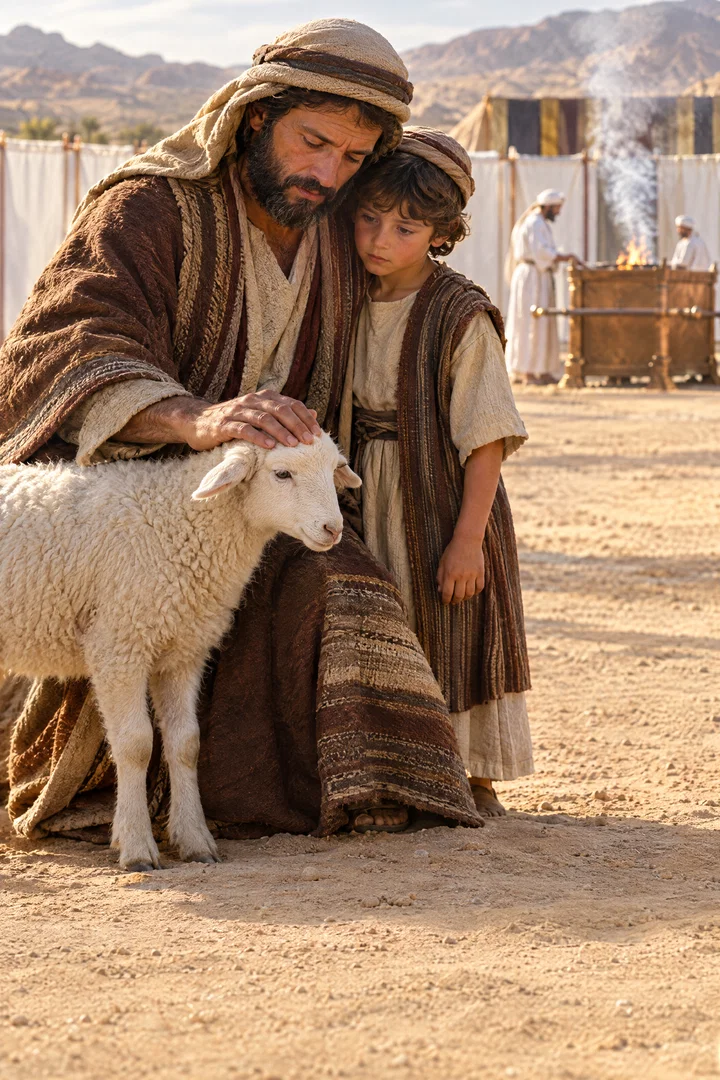
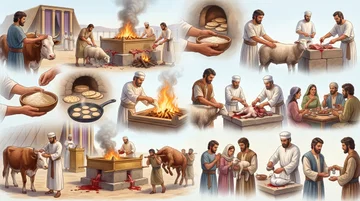
And he shall lay his hand upon the head of his offering, and kill it at the door of the tabernacle of the congregation: and Aaron’s sons the priests shall sprinkle the blood upon the altar round about.
Translations
And he shall lay his hand on the head of his offering, and kill it at the door of the tabernacle of the congregation: and Aaron’s sons the priests shall sprinkle the blood on the altar round about.
King James Version, KJV Cambridge Paragraph Bible
And he shall lay his hand upon the head of his offering, and kill it at the door of the tabernacle of the congregation: and Aaron’s sons the priests shall sprinkle the blood upon the altar round about.
And he shall lay his hand upon the head of his offering, and kill it at the door of the tabernacle of the congregation: and Aaron's sons the priests shall sprinkle the blood upon the altar round about.
Revised Version, American Standard Version
And he shall lay his hand upon the head of his oblation, and kill it at the door of the tent of meeting: and Aaron’s sons the priests shall sprinkle the blood upon the altar round about.
and he hath laid his hand on the head of his offering, and hath slaughtered it at the opening of the tent of meeting, and sons of Aaron, the priests, have sprinkled the blood on the altar round about.
And he shall lay his hand on the head of his offering, and slaughter it at the entrance of the tent of meeting; and Aaron's sons, the priests, shall sprinkle the blood on the altar round about.
Then shall he lean his hand upon the head of his oblation, and slay it at the entrance of the tent of meeting,—and the sons of Aaron the priests shall dash the blood against the altar round about,
He is to lay his hand on the head of the offering and slaughter it at the entrance to the Tent of Meeting. Then Aaron’s sons the priests shall sprinkle the blood on all sides of the altar.
He is to lay his hand on the head of the offering and slaughter it at the entrance to the Tent of Meeting. Then Aaron’s sons the priests shall splatter the blood on all sides of the altar.
He shall lay his hand on the head of his offering, and kill it at the door of the Tent of Meeting. Aaron’s sons, the priests, shall sprinkle the blood around on the altar.
And he is to put his hand on the head of his offering and put it to death at the door of the Tent of meeting; and Aaron's sons, the priests, are to put some of the blood on and round the altar.
And shall put his hande vpon the head of his offering, and kill it at the doore of the Tabernacle of the Congregation: and Aarons sonnes the Priestes shall sprinkle the blood vpon the altar rounde about.
Douay-Rheims (Challoner revision)
And he shall lay his hand upon the head of his victim, which shall be slain in the entry of the tabernacle of the testimony, and the sons of Aaron the priests shall pour the blood round about upon the altar.
Pictures
Cross-references 20 of 29
- Leviticus 1:4-5
And he shall put his hand upon the head of the burnt offering; and it shall be accepted for him to make atonement for him.
Both describe the offerer laying a hand on the victim, its slaughter, and the priests sprinkling its blood.
- Leviticus 4:4
And he shall bring the bullock unto the door of the tabernacle of the congregation before the LORD; and shall lay his hand upon the bullock’s head, and kill the bullock before the LORD.
Both describe laying a hand on the sin offering before it is slain.
- Leviticus 3:8
And he shall lay his hand upon the head of his offering, and kill it before the tabernacle of the congregation: and Aaron’s sons shall sprinkle the blood thereof round about upon the altar.
The offerer lays a hand on the peace-offering victim.
- Hebrews 8:5
Who serve unto the example and shadow of heavenly things, as Moses was admonished of God when he was about to make the tabernacle: for, See, saith he, that thou make all things according to the pattern shewed to thee in the mount.
Earthly sanctuary service was a pattern of heavenly things.
- Leviticus 3:13
And he shall lay his hand upon the head of it, and kill it before the tabernacle of the congregation: and the sons of Aaron shall sprinkle the blood thereof upon the altar round about.
The offering repeats the hand-laying rite and sprinkling of blood.
- Leviticus 17:11
For the life of the flesh is in the blood: and I have given it to you upon the altar to make an atonement for your souls: for it is the blood that maketh an atonement for the soul.
The blood represents the animal’s life, given for atonement.
- Leviticus 4:15
And the elders of the congregation shall lay their hands upon the head of the bullock before the LORD: and the bullock shall be killed before the LORD.
The elders lay hands on the congregation’s sin offering before it is killed.
- Hebrews 10:4
For it is not possible that the blood of bulls and of goats should take away sins.
Animal blood could not take away sins.
- Leviticus 4:24
And he shall lay his hand upon the head of the goat, and kill it in the place where they kill the burnt offering before the LORD: it is a sin offering.
It gives another case of laying a hand on a sin offering.
- Hebrews 9:6-7
Now when these things were thus ordained, the priests went always into the first tabernacle, accomplishing the service of God.
Priests perform sanctuary service with blood offerings.
- Hebrews 9:23-24
It was therefore necessary that the patterns of things in the heavens should be purified with these; but the heavenly things themselves with better sacrifices than these.
Earthly sanctuary rites correspond to the cleansing of the heavenly sanctuary through Christ’s ministry.
- Leviticus 4:6
And the priest shall dip his finger in the blood, and sprinkle of the blood seven times before the LORD, before the vail of the sanctuary.
Contrasts dipping with sprinkling in the blood rite.
- Hebrews 9:11-12
But Christ being come an high priest of good things to come, by a greater and more perfect tabernacle, not made with hands, that is to say, not of this building;
Christ’s sacrifice and priestly ministry fulfill the earthly sanctuary pattern.
- Leviticus 7:15-16
And the flesh of the sacrifice of his peace offerings for thanksgiving shall be eaten the same day that it is offered; he shall not leave any of it until the morning.
Both describe peace offerings, including offerings for thanksgiving, vows, and voluntary gifts.
- Leviticus 4:29-30
And he shall lay his hand upon the head of the sin offering, and slay the sin offering in the place of the burnt offering.
The rite gives the corresponding procedure for an individual’s sin offering.
- Leviticus 1:5
And he shall kill the bullock before the LORD: and the priests, Aaron’s sons, shall bring the blood, and sprinkle the blood round about upon the altar that is by the door of the tabernacle of the congregation.
Both describe priests sprinkling sacrificial blood around the altar using the same Hebrew word.
- John 1:29
The next day John seeth Jesus coming unto him, and saith, Behold the Lamb of God, which taketh away the sin of the world.
Jesus is identified as the Lamb who takes away the world’s sin.
- Leviticus 3:14
And he shall offer thereof his offering, even an offering made by fire unto the LORD; the fat that covereth the inwards, and all the fat that is upon the inwards,
The hand-laying requirement is repeated for another peace-offering.
- Leviticus 8:14
And he brought the bullock for the sin offering: and Aaron and his sons laid their hands upon the head of the bullock for the sin offering.
Both describe hands laid on the head of an offering.
- Exodus 29:15
Thou shalt also take one ram; and Aaron and his sons shall put their hands upon the head of the ram.
Aaron and his sons lay their hands on the ram’s head.
Commentary
Each commentary is drawn from primary sources: the writings of Ellen G. White and Adventist pioneers and periodicals. Each commentary is separate. Its own words are not a quotation; follow the references to read the source passages.
Ellen G. White
2 sources
Leviticus 3:2 belongs to the directions given through Moses for the peace offering.ST Jul 15, 1880ST Jul 20, 1882 The sacrifices thus prescribed were not empty forms but were designed to point to Christ's ministry and death as the Savior who would bear the world's sins and die for its redemption.ST Jul 15, 1880 The peace offering was accompanied by prayer for God's acceptance and blessing.ST Jul 20, 1882 The people shared in the portion set aside for them in a sacred feast.ST Jul 20, 1882 When properly conducted, the service fostered genuine devotion, piety, kindness, and sympathy instead of becoming mere ceremony or self-gratification.ST Jul 20, 1882
Sources
Pioneers and periodicals
24 sources
The verse sets forth the procedure for a peace offering, in which the worshiper presses a hand upon the animal's head and slays it at the entrance of the tent of meeting while the priests scatter its blood around the altar.ST Jun 5, 1901 The pressing of the hand, joined with confession, figuratively moves the offerer's guilt onto the victim so that it stands in his place and bears his sin.RH Oct 13, 1863 The innocent animal is then killed because the sin deserves death, and its blood, which is its life, is carried and scattered by the priest to transfer that sin in figure to the sanctuary until its yearly cleansing.RH Feb 19, 1901RH Feb 25, 1858 These rites were not empty forms but shadows pointing to Jesus Christ, whose death was vicarious and substitutionary to bear the world's sins and redeem sinners.ST Jul 15, 1880ST Nov 22, 1883RH Apr 7, 1874ST Feb 3, 1909ST Nov 28, 1895 The offering thus stood for the offerer and its life for his life, teaching that peace with God comes through repentance, pardon, and reconciliation, with the renewed life willingly given to Him in service.ST Jul 20, 1882ST Sep 19, 1900
The Ritual Described
Leviticus 3:2 sets forth the procedure for the peace offering: the one bringing it was to lay his hand upon the head of the animal and kill it at the entrance to the tent of meeting, while Aaron's sons the priests sprinkled its blood upon the altar round about.ST Jun 5, 1901ST Jun 5, 1901ST Jun 19, 1907 The same order held for the daily ministration for sin in the first apartment of the earthly sanctuary through the year, when the sinner brought his victim to the door of the holy place to be offered for himself.RH Feb 3, 1853RH Mar 8, 1870 It was an individual offering of the kind brought as special offerings during the year as part of the priests' daily ministry.RH Feb 3, 1853RH Mar 8, 1870
The laying of a hand on the victim's head was indispensable and was required whether the peace offering was a bullock, a lamb, or a goat.ST Feb 8, 1883 It was an act of identification between the offerer and the offering, belonging to a ritual used throughout the sacrificial system from sacrifices for inadvertent sin to the Day of Atonement.ST Feb 8, 1883 The peace offering was presented at the tabernacle in nearly the same manner as a burnt offering.ST Jun 5, 1901 It could serve different purposes, including thanksgiving, fulfilling a vow, or as a voluntary sacrifice.ST Jun 5, 1901
When the peace offering was for thanksgiving it was accompanied by cakes made with oil.ST Jun 5, 1901 On such an occasion it was also accompanied by prayer for God's acceptance and blessing, and the people shared in the portion set aside for them in a sacred feast.ST Jul 20, 1882 The animal's fat and specified inward parts were then burned on the altar as an offering to the Lord, a pleasing savor.ST Jun 5, 1901 Certain fat from certain parts of beasts offered in sacrifice belonged to God and must not be eaten, while the ordinary fat of meat used for food was not forbidden.ST Jun 20, 1911
The Hebrew word rendered sprinkle is zah-rak, meaning to scatter and hence to sprinkle, so the blood was sprinkled around the altar and not applied by dipping or immersing.ST May 6, 1880 The verse stands in the first chapters of Leviticus, which deal wholly with offerings, Leviticus 1-7 being the instructions for offerings.RH Jan 10, 1916ST Jan 31, 1911 It belongs to the ceremonial law, which was instituted because of sin.RH Jan 10, 1916 It holds its place in God's order of presenting the offerings, beginning with the burnt offering and closing with the sin offering, while man in going to God begins with the sin offering and ends with the burnt offering, and the details belonging to these offerings — the fine flour, the oil, the frankincense, and the clean beast without blemish — carry meaning to be noted.ST Jan 31, 1911
What the Ritual Teaches
The laying of the hand upon the head, with confession over the victim, transfers the offerer's sin and guilt to the victim in figure, so that the offering bears the man's sin and stands accepted for him in his stead.RH Oct 13, 1863RH Feb 25, 1858RH Feb 13, 1879 The innocent victim is then slain on account of that transgression in the sinner's place, acknowledging that the sinner himself deserves death.RH Feb 25, 1858ST Feb 17, 1890RH Feb 3, 1853 In the individual procedure this killing comes after confession and restitution and before the priest's blood rites by which atonement is made and sin forgiven.RH Mar 8, 1870
The blood represents life, including the sinner's sinful life and sins, and the priest's carrying and sprinkling of it transfers the sin figuratively from the victim to the sanctuary.RH Feb 19, 1901ST Feb 17, 1890RH Feb 3, 1853 There the forgiven sins are left in figure until the yearly cleansing.RH Feb 25, 1858 The continual incense of the incense altar covered that blood and thus the sins before God.RH Feb 19, 1901
The meaning of the hand-laying is made clear by the same laying on of both hands with confession of all iniquities and transgressions putting them upon the head.RH Apr 7, 1874 As one of the Levitical sacrifices typifying Christ's death, the rite proves His death was vicarious and substitutionary, the animal dying in the ritual as Christ died in fact.RH Oct 13, 1863ST Nov 22, 1883RH Apr 7, 1874 The sacrifices were not empty forms but shadows of their fulfillment in Jesus Christ, designed to point to Christ's ministry and death as the Savior who would bear the world's sins and die for redemption.ST Jul 15, 1880ST Feb 3, 1909ST Feb 13, 1912 Like every sacrifice in Leviticus they hold something in type concerning His work, and the yearly round typified His ministry in the heavenly sanctuary, fulfilled once for all.ST Nov 28, 1895ST Feb 13, 1912
The offerings show God's hatred of sin and that sin demands a penalty.ST Feb 3, 1909 Individual worshipers brought them expressing faith in the Redeemer to come, for the sacrifices did not themselves remove sin but pointed forward to Christ.ST Feb 3, 1909ST Apr 2, 1912 The offering stood for the offerer and its life for his life, teaching that peace with God follows repentance, pardon, and reconciliation and that the renewed life is willingly given to God for service.ST Sep 19, 1900 The peace offering was burned on the burnt offering, which represented that consecrated life.ST Sep 19, 1900 When accompanied by prayer for acceptance and blessing, with the people sharing the portion set aside for them in a sacred feast, the properly conducted service fostered genuine devotion, piety, kindness, and sympathy rather than mere ceremony or self-gratification.ST Jul 20, 1882
Sources