Translations
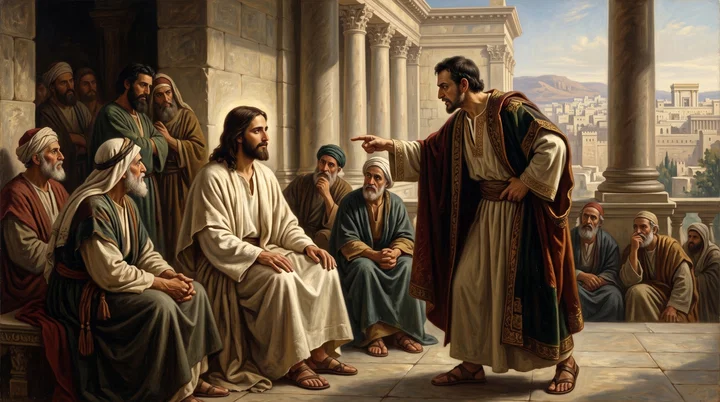
He said to him, What is written in the law? how read you?
King James Version, KJV Cambridge Paragraph Bible
He said unto him, What is written in the law? how readest thou?
He said to him, What is written in the law? how readest thou?
Revised Version, American Standard Version
And he said unto him, What is written in the law? how readest thou?
And he said unto him, 'In the law what hath been written? how dost thou read?'
And he said to him, What is written in the law? how readest thou?
And, he, said unto him—In the law, what is written? how dost thou read?
Berean Standard Bible, Majority Standard Bible
“ What is written in the Law?” Jesus replied. “ How do you read it?”
He said to him, “ What is written in the law? How do you read it?”
And he said to him, What does the law say, in your reading of it?
And he saide vnto him, What is written in the Lawe? howe readest thou?
Douay-Rheims (Challoner revision)
But he said to him: What is written in the law? how readest thou?
Pictures
Cross-references 20 of 54
- Leviticus 19:18
Thou shalt not avenge, nor bear any grudge against the children of thy people, but thou shalt love thy neighbour as thyself: I am the LORD.
Commands love for one’s neighbor as oneself, which the lawyer cites in his answer.
- Deuteronomy 6:5
And thou shalt love the LORD thy God with all thine heart, and with all thy soul, and with all thy might.
The lawyer answers with the command to love God wholeheartedly.
- Matthew 22:37-40
Jesus said unto him, Thou shalt love the Lord thy God with all thy heart, and with all thy soul, and with all thy mind.
Jesus presents love of God and neighbor as the principles on which the law and prophets depend.
- Luke 10:36-37
Which now of these three, thinkest thou, was neighbour unto him that fell among the thieves?
Jesus identifies the neighbor as the one who showed mercy and calls for merciful action.
- Matthew 19:17
And he said unto him, Why callest thou me good? there is none good but one, that is, God: but if thou wilt enter into life, keep the commandments.
both give keeping commandments as way to life
- Exodus 20:1-17
And God spake all these words, saying,
The law Jesus asks about is identified as the commandments given at Sinai.
- Matthew 5:17-19
Think not that I am come to destroy the law, or the prophets: I am not come to destroy, but to fulfil.
Christ upholds the law and affirms its enduring authority and the importance of keeping it.
- Romans 13:9
For this, Thou shalt not commit adultery, Thou shalt not kill, Thou shalt not steal, Thou shalt not bear false witness, Thou shalt not covet; and if there be any other commandment, it is briefly comprehended in this saying, namely, Thou shalt love thy neighbour as thyself.
Love of neighbor sums up the law’s commands.
- James 2:10-11
For whosoever shall keep the whole law, and yet offend in one point, he is guilty of all.
The commandments are interrelated; breaking one makes a person a transgressor of the law.
- Mark 12:29-31
And Jesus answered him, The first of all the commandments is, Hear, O Israel; The Lord our God is one Lord:
Jesus states the two great commandments of love for God and neighbor.
- Deuteronomy 10:12-13
And now, Israel, what doth the LORD thy God require of thee, but to fear the LORD thy God, to walk in all his ways, and to love him, and to serve the LORD thy God with all thy heart and with all thy soul,
States what God requires, including love and keeping his commandments.
- Matthew 7:12
Therefore all things whatsoever ye would that men should do to you, do ye even so to them: for this is the law and the prophets.
The Golden Rule is presented as expressing the law and the prophets.
- Matthew 12:3
But he said unto them, Have ye not read what David did, when he was an hungred, and they that were with him;
Christ appeals to what Scripture says.
- Romans 7:12
Wherefore the law is holy, and the commandment holy, and just, and good.
The law and its commandment are called holy, just, and good.
- Luke 10:30-35
And Jesus answering said, A certain man went down from Jerusalem to Jericho, and fell among thieves, which stripped him of his raiment, and wounded him, and departed, leaving him half dead.
The parable defines who is a neighbor and illustrates keeping the law.
- Psalms 19:7
The law of the LORD is perfect, converting the soul: the testimony of the LORD is sure, making wise the simple.
The law is perfect and converts the soul.
- Galatians 5:14
For all the law is fulfilled in one word, even in this; Thou shalt love thy neighbour as thyself.
Love of neighbor fulfills the law.
- Romans 10:5
For Moses describeth the righteousness which is of the law, That the man which doeth those things shall live by them.
Doing what the law requires is linked with living by it.
- Leviticus 18:5
Ye shall therefore keep my statutes, and my judgments: which if a man do, he shall live in them: I am the LORD.
Doing God’s statutes is linked with life.
- John 10:34
Jesus answered them, Is it not written in your law, I said, Ye are gods?
Christ appeals to what is written in the law.
Commentary
Each commentary is drawn from primary sources: the writings of Ellen G. White and Adventist pioneers and periodicals. Each commentary is separate. Its own words are not a quotation; follow the references to read the source passages.
Ellen G. White
86 sources
When tested in public about inheriting eternal life, Jesus laid the burden back on the questioner by pointing him to what stands written in the law and to how he himself reads and understands it.Ms 80, 1900, par. 5Ms 8, 1897, par. 1Ms 100, 1904, par. 5–11Lt 304, 1908, par. 11–12 The right reading is supreme love to God with all heart, soul, strength and mind and unselfish love to neighbor as oneself, the two great principles on which hang all the law and the prophets.ST Jul 7, 1890ST Oct 28, 1889ST Nov 24, 1887 That answer He affirmed as correct, declaring that doing this is the condition of eternal life, not mere profession, belief, feeling or outward ceremony.ST Jul 7, 1890ST Oct 28, 1889ST Nov 24, 1887Ms 87, 1894, par. 28–31Ms 120, 1901, par. 2 Neighbor means not merely one's own race, faith or friends, but anyone who needs help, proved by showing active mercy as the Samaritan did to the wounded man and commanded to go and do likewise.COL 376.1–23T 523.2–3Lt 98, 1896, par. 8–10Lt 217, 1905, par. 6–11Ms 87, 1894, par. 28–31 Each person must therefore search Scripture for himself and carry out every principle in thought, word and deed, which sinners cannot do in their own strength but can do through Christ's grace and power received by faith.ST Nov 24, 1887Lt 113, 1890, par. 20Lt 122, 1896, par. 9–126MR 196.5–197.2Ms 17, 1887, par. 3–4
Setting of the Exchange
The question about inheriting eternal life was put to Jesus by a lawyer who stood up to test, tempt and entangle Him, approaching with prejudice and a spirit of controversy in hope of catching something from His words to condemn Him.Ms 71, 1897, par. 29–32Ms 100, 1904, par. 5–11Ms 40, 1889, par. 1–2Ms 163a, 1898, par. 1Ms 10, 1894, par. 11–13 In answer Jesus pointed him back to what is written in the law and to how he himself read it.Ms 71, 1897, par. 29–32Ms 100, 1904, par. 5–11Ms 40, 1889, par. 1–2Ms 163a, 1898, par. 1Ms 24, 1901, par. 6–7 That reply drew from the lawyer himself the summary that the law requires loving God with all heart, soul, strength and mind and loving neighbor as self, which Jesus declared right with the command to do this and live.Ms 71, 1897, par. 29–32Ms 40, 1889, par. 1–2Ms 163a, 1898, par. 1Ms 24, 1901, par. 6–7Ms 10, 1894, par. 11–13
The lawyer did not act alone, for the question had been prompted by others and was asked in public before a large crowd listening with intense interest.Ms 71, 1897, par. 29–32Lt 304, 1908, par. 11–12Ms 31, 1902, par. 13–16 It was suggested by Pharisees, Sadducees, priests, rulers, lawyers, rabbis, synagogue rulers and Herodians, after Pharisees, Herodians and Sadducees had been silenced, acting in bitter hatred as scheming enemies.Ms 71, 1897, par. 29–32Lt 304, 1908, par. 11–12Ms 31, 1902, par. 13–16Ms 45, 1900, par. 2–3Ms 43a, 1894, par. 11–14 They hoped for an answer they could report to the Jewish authorities, waiting to twist His words to hurt His influence, destroy His life, and secure His condemnation.Ms 24, 1901, par. 6–7Ms 10, 1894, par. 11–13Ms 31, 1902, par. 13–16Ms 45, 1900, par. 2–3Ms 43a, 1894, par. 11–14
Christ knew the heart, designs, purposes and plotting of the questioner and listeners, and read their hearts when He questioned the lawyer.Ms 163a, 1898, par. 1Ms 31, 1902, par. 13–16Ms 45, 1900, par. 2–3Ms 43a, 1894, par. 11–14 He entered into no controversy but with self-possession, wisdom and authority laid the burden of answering back on the lawyer himself and required the answer from him from Scripture.Ms 100, 1904, par. 5–11Lt 113, 1890, par. 20Ms 163a, 1898, par. 1Lt 105, 1902, par. 2–5Lt 107, 1902, par. 4–6 By asking what the law says and how it is read He met His adversaries and showed the lawyer's question was needless because he could answer it himself.Lt 304, 1908, par. 11–12Ms 24, 1901, par. 6–7Ms 10, 1894, par. 11–13 The setting also shows a sincere desire to learn the real meaning of the law in the question about inheriting eternal life, with ceremonial and ritual precepts set aside as having no value in the answer.DA 497.4–498.1
Wording and Method
The opening question turns the inquirer to what stands written in the law as the ground for answering how eternal life is inherited.Ms 80, 1900, par. 5Ms 8, 1897, par. 1Lt 74, 1900, par. 39Lt 113, 1890, par. 20Ms 96, 1899, par. 10–12 That written law is the Scriptures given as Israel's lesson book, the Ten Commandments given at Sinai and engraved on stone.Ms 80, 1900, par. 5Ms 8, 1897, par. 1Ms 96, 1899, par. 10–12 It is the original moral law standing immutable, the foundation of all truth and the perfect standard of righteousness whose requirement is wholehearted love to God and love to neighbor as self.Ms 80, 1900, par. 5Ms 8, 1897, par. 1Lt 74, 1900, par. 39 Doing what is so written is the way to live, and rejecting it is rejecting the conditions of salvation.Ms 80, 1900, par. 5Ms 8, 1897, par. 1Lt 74, 1900, par. 39Lt 390, 1904, par. 2–4
The companion question asks how the reader reads, and so places responsibility on each person to answer from Scripture by reading, understanding, interpreting and practicing for himself.Lt 98, 1896, par. 8–10Ms 87, 1894, par. 28–31Lt 113, 1890, par. 20Lt 105, 1902, par. 2–5Lt 390, 1904, par. 2–4 Knowing the words is not enough, for the letter may be insisted on while letter and spirit are both broken, as when the law is known yet its mercy is not shown.Lt 98, 1896, par. 8–10Ms 87, 1894, par. 28–31Ms 120, 1901, par. 2 Careful understanding must therefore be joined to practice, with firm determination to obey and to carry out every principle in active, impartial love rather than merely professing, preaching, or keeping outward ceremony.Ms 87, 1894, par. 28–31Lt 390, 1904, par. 2–4Ms 120, 1901, par. 2 Leaving a suffering person without help breaks the law, while merciful action even across social or religious division shows its true meaning.Lt 98, 1896, par. 8–10Ms 87, 1894, par. 28–31
This directing to the written Word was Christ's constant practice, meeting questions and objections from Scripture rather than from human wisdom, opinions, religious teachers, tradition, theory or speculation.Lt 20, 1895, par. 9–10Lt 8, 1895, par. 26–27Ms 39, 1893, par. 8–11 The Scriptures are the inspired source of light and knowledge, the great storehouse of knowledge and the sure guide for understanding and doing the work God gives, explaining patriarchs and prophets with clearness and power.Lt 20, 1895, par. 9–10Lt 48, 1899, par. 40–41Ms 39, 1893, par. 8–11 Each person must therefore learn God's requirements and God's will by thoughtful, prayerful study for himself in order to cooperate in the saving of the soul, since good intentions, personal conviction, confidence and a minister's judgment are no substitute and ignorance does not excuse transgression.Lt 8, 1895, par. 26–27Lt 48, 1899, par. 40–41GC 598.1 Searching the living testimony in this way prepares to meet temptation with God's Word as It is written, which drives Satan back and keeps safe from his power, while the law identifies sin, reveals defects of character, convicts the sinner as the first step in conversion, and then points to the Saviour who pardons without abolishing the law or reducing its sacred claims.Lt 48, 1899, par. 40–41GC 598.1
Law's Twofold Love Requirement
The right reading drawn from the law is supreme love to the Lord God with all heart and soul and strength and mind and unselfish love to neighbor as self, and doing this is the way to live and the condition of inheriting eternal life.ST Jul 7, 1890ST Oct 28, 1889ST Nov 24, 18873T 523.2–3Ms 80, 1900, par. 5 These are the two great principles on which hang all the law and the prophets, the whole duty of humanity, a standard of righteousness to be kept in the heart and not merely observed outwardly.ST Jul 7, 1890ST Nov 24, 1887Lt 217, 1905, par. 6–11Ms 75, 1898, par. 3–5 They are expressed in the first four commandments showing duty to God and the last six showing duty to fellow men, forming a divine unity in which no commandment can be kept while another is broken.Ms 6a, 1886, par. 15–16Ms 70a, 1897, par. 5HMW 30.5 Setting the affections on the things of this life and failing to love God with all the heart and neighbor as self leaves the conditions unfulfilled, so that there is no expectation of salvation without repenting and turning to God with all the soul.ST Oct 28, 1889
Loving God wholly takes in all there is of a person and requires the whole person to be converted, for God does not accept a divided heart.Lt 22, 1901, par. 16–19Lt 19, 1894, par. 5–8Lt 155, 1902, par. 7–8 That requirement embraces will power, speech, hearing, sight, physical strength, time, influence, intellect, reason, education, ability, talents and possessions, with all powers of mind and body and the whole wealth of affection laid at His feet in entire consecration.Lt 155, 1902, par. 7–8Ms 10, 1894, par. 11–13Ms 12, 1868, par. 7–9 It claims for God the first place, the first thoughts and the first action, reaching to the inner sanctuary of the soul's affections with undivided affection that puts no human love before Him and leaves His claims no second place.Lt 19, 1894, par. 5–8Lt 78, 1894, par. 3–4 It allows no reserve and no separation of the affections from God, not one-quarter or one-half or two-thirds, and any soul or object that divides the affections, engages the mind and is enthroned in the heart takes the form of an idol.Lt 19, 1894, par. 5–8Ms 10, 1894, par. 11–13Ms 12, 1868, par. 7–9
The law so read is the Ten Commandments given to Israel at Sinai, sacred teachings whose custodians had nearly lost sight of their precepts.Ms 109, 1906, par. 2–4Ms 6a, 1886, par. 15–16RH Sep 13, 1906 It is the original moral law engraved on tables of stone, standing immutable and holding its claims on people in all ages when the typical sacrifices ceased at the death of Christ, with human duty in the Christian age not limited or relaxed but more especially defined and simply expressed.Ms 66, 1886, par. 6Ms 70a, 1897, par. 5ST Apr 29, 1875 It includes the seventh-day Sabbath established when God finished creation, rested, blessed the seventh day and made it holy, and it includes the tithing plan with the extending gospel requiring still greater provision to sustain its work.Ms 66, 1886, par. 6ST Apr 29, 1875 Its ten Thou shalt and Thou shalt not are ten promises secured to those who render obedience to the law governing the universe, outlining the terms of salvation for every son and daughter of Adam.Ms 70a, 1897, par. 5
The scribes and Pharisees and Jewish religionists insisted on the letter yet failed to keep it in either letter or spirit, being strict about the law outwardly while continually breaking it.Lt 98, 1896, par. 8–10Ms 87, 1894, par. 28–31Ms 75, 1898, par. 3–5 They taught human maxims, traditions and doctrines for God's commandments, making void the commandments of God, and were ignorant of the Scriptures and the power of God.Ms 10, 1894, par. 11–13Ms 75, 1898, par. 3–5 The lawyer knew the law's letter and could answer from it, but he had not loved others as himself and was wanting in love to God and to neighbor, which is the very essence of religion.Ms 87, 1894, par. 28–31COS 68.4Lt 22, 1889, par. 35–36 Though he could have vindicated himself on the ground of ceremonial correctness and blamelessness touching the law, even keeping the first four or the last six he had not kept, and reliance on forms and ceremonies will not save because God weighs the motive of the heart and Bible religion is a principle in the soul whose natural fruits are virtuous acts.Lt 98, 1896, par. 8–10HMW 30.5Lt 22, 1889, par. 35–36
Obedience as Condition of Life
Jesus met the question about inheriting eternal life by turning the lawyer to what stands written in the law and to how he read it, drawing from him the sum of wholehearted love to God and love to neighbor as self.ST Jul 7, 1890ST Oct 28, 1889ST Nov 24, 18873T 523.2–3Lt 217, 1905, par. 6–11 He affirmed that answer as right and declared that doing it gives life, making keeping the commandments the whole duty of man and the condition of eternal life.ST Jul 7, 1890ST Oct 28, 1889ST Nov 24, 18873T 523.2–3Ms 80, 1900, par. 5 That life is the life that measures with the life of God, the reward of obedience both in the present life and in the life to come.Ms 130, 1906, par. 11–12Ms 102, 1902, par. 12–14Ms 27, 1899, par. 22–23 Complete obedience is the only condition that meets the requirement of the law, which claims the whole man at all times, and it stands as the unchangeable gospel standard that will decide every case in the last great day.Lt 122, 1896, par. 9–12Ms 27, 1899, par. 22–23
Eternal life is not secured by mere belief regardless of what is believed, nor by emotion, good feeling, assent to evidence, profession, church membership, or outward ceremony.Ms 87, 1894, par. 28–31Ms 59, 1899, par. 9 It calls for searching Scripture to understand truth, rather than resting on theory or on what those in authority say while ignoring its claims.Ms 120, 1901, par. 2Ms 59, 1899, par. 9 What is required is practicing supreme love to God and love to neighbor in thought, word, and deed, not merely preaching it or observing outward ceremony.Ms 87, 1894, par. 28–31Ms 120, 1901, par. 2FE 419.2–3 True religion demands the energetic use of mental and physical powers, not idleness or mere contemplation, and doing the law brings reward while disobedience brings curse, death, and the abiding wrath of God on the guilty.FE 419.2–3Ms 27, 1899, par. 22–23
Fallen men cannot fulfill this duty in their own strength because the natural condition is sinfulness.ST Nov 24, 1887Lt 122, 1896, par. 9–12Ms 167, 1898, par. 2–4 Only through Christ's divine power, virtue, grace, propitiation for sin, and great infinite sacrifice, accepted by belief and walked in by the Spirit, can the righteousness of the law be fulfilled and wholehearted love to God and neighbor become possible.ST Nov 24, 1887Lt 122, 1896, par. 9–12Ms 167, 1898, par. 2–4Lt 180, 1903, par. 29–31 Christ lived in obedience to God's law so that men might obey and be saved, leading to the highest good in this life and to everlasting life as the reward of obedience.Lt 180, 1903, par. 29–31Ms 77, 1899, par. 6 His sacrifice makes forgiveness possible for the transgressor whose only hope is to believe in Christ as Redeemer, yet God's mercy and forgiveness do not abolish or diminish the holy and binding claims of the law.Lt 2, 1893, par. 11–13Ms 77, 1899, par. 6
Setting the affections on the things of this life and failing to love God with all the heart and neighbor as self means the conditions are not fulfilled, leaving no expectation of being saved without repenting and turning to God with all the soul.ST Oct 28, 1889 Even professing knowledge of the truth, preaching the Word, and understanding all mysteries while disregarding its principles brings eating the fruit of one's own doings and being filled with one's own devices.Ms 116, 1898, par. 3–4 Cherishing suspicion and imagining evil shows failure to carry out the law and brings upon oneself the evils imagined, for God will not be trifled with and His Word is to be cherished and obeyed.Ms 116, 1898, par. 3–4 Learning the divine will from Scripture and doing it is therefore a matter of greatest importance, requiring taking the eyes from self to behold Jesus the perfect Pattern, striving for the same perfection of character, sincerely examining self and cutting away everything unlike Him, and diligently studying the Word.Ms 102, 1902, par. 12–14Ms 60, 1898, par. 58–60
Neighbor Shown by Mercy
The question about inheriting eternal life leads to the further question, who is my neighbor, and that is answered by the parable of a man going down from Jerusalem to Jericho who fell among thieves and was left half dead.3T 523.2–3Lt 217, 1905, par. 6–11Ms 71, 1897, par. 29–32Lt 134, 1902, par. 17–19Lt 42, 1907, par. 14–16 A priest and a Levite passed him by, but a Samaritan pitied him, bound up his wounds with oil and wine, set him on his own beast, brought him to an inn, paid two pence and promised to repay more on his return.3T 523.2–3Ms 71, 1897, par. 29–32Lt 134, 1902, par. 17–19 The right reading of the law drawn out in the exchange is to love the Lord God with all heart and soul and strength and mind and to love one's neighbor as oneself, and doing this gives life.3T 523.2–3Lt 217, 1905, par. 6–11Lt 134, 1902, par. 17–19Ms 153, 1904, par. 15–19 The neighbor is proved to be the one who shows mercy, and the command is to go and do likewise, for in the parable of the good Samaritan are summed up all the principles contained in the law of God.3T 523.2–3Lt 217, 1905, par. 6–11Ms 71, 1897, par. 29–32Lt 134, 1902, par. 17–19Lt 42, 1907, par. 14–16 Keeping the law is thus shown through the Samaritan's merciful care for the wounded man, which means showing mercy through practical care even to someone outside one's own group.Lt 42, 1907, par. 14–16Ms 153, 1904, par. 15–19
A neighbor is not merely someone of one's own faith, race, color, class, nation, relative, friend or church member, but anyone who needs help, charity, grace and patience.COL 376.1–2Lt 98, 1896, par. 8–10Ms 87, 1894, par. 28–31Ms 101, 1901, par. 42–46Ms 75, 1895, par. 5 Every needy soul is our neighbor, including the wounded, the uncourteous and disagreeable, and every person who belongs to God, even across social or religious divisions.COL 376.1–2Lt 98, 1896, par. 8–10Ms 101, 1901, par. 42–46Ms 75, 1895, par. 5SW 41.1 This embraces Gentiles counted as dogs and Samaritans despised and cursed by Jewish teaching, and extends to the whole human family and to one who needs our charity and help.COL 376.1–2SW 41.1 Knowing the words of the law is not enough, for those who insisted on its letter yet failed to keep it in letter or spirit left suffering persons without help, while the Samaritan's actions reveal that love of neighbor is impartial and active.Lt 98, 1896, par. 8–10Ms 87, 1894, par. 28–31
Keeping the law means loving deeds that bring the greatest good to others and express genuine goodness, rather than systems, creeds or rites, outward ceremony, or mere profession of belief.DA 497.1Ms 87, 1894, par. 28–314T 57.2 It means not passing a needy brother by on the other side, but showing interest, speaking and acting kindly, encouraging and restoring those fallen into decay, and giving whatever help can be bestowed to everyone in need even when it brings inconvenience, cost, care and anxiety.Lt 98, 1896, par. 8–10Ms 87, 1894, par. 28–31Ms 101, 1901, par. 42–46 It means relieving suffering promptly without inquiring about belief, and laying the foundation for hospitals, sanitariums and genuine medical missionary work, which is the law of God practiced.Ms 101, 1901, par. 42–46 Leaving a suffering person without help or neglecting any needy case breaks God's law and the second great commandment and forfeits eternal life.Ms 87, 1894, par. 28–31Ms 101, 1901, par. 42–46
Personal Study and Duty
Christ turns the question of what to do to be saved back to what is laid out in the law, to love the Lord God with all heart and soul and strength and mind and the neighbor as self, and the conditions are not left indistinct and indefinite nor made to rest on emotion but on taking that distinct course.6MR 196.5–197.2Ms 17, 1887, par. 3–4Lt 8, 1901, par. 19–20 The question concerns eternal interest lasting through eternity, eternal life, the incorruptible inheritance, the building made by God and not by human hands, and the home on the earth made new, and it must not be treated as a risk but met with intelligent knowledge and with careful attention as careful as businessmen give to temporal investments.6MR 196.5–197.2Ms 17, 1887, par. 3–4RH Jun 28, 1906 Jesus directs the learner to the Scriptures to learn what God requires, attending both to what the law says and to how it is read, for the law faithfully presents God's principles and claims.RH Jun 28, 1906Lt 8, 1901, par. 19–20Ms 164, 1907, par. 7–9Ms 116, 1905, par. 3–9 Ignorance does not excuse young or old for transgressing it, and good intentions, personal confidence, reliance on a minister's judgment, human authority, opinion and sentiment are no sound foundation.6MR 196.5–197.2RH Jun 28, 1906 Each person must therefore search Scripture for himself because salvation and eternal interests are at stake, understanding and applying what it teaches and testing whether life is lived according to God's Word.RH Jun 28, 1906Lt 8, 1901, par. 19–20Ms 164, 1907, par. 7–9Ms 116, 1905, par. 3–9
What is written and how it is read allows no separation of the affections from God but lays on all the positive duty to render the service He requires with the entire being, in unreserved surrender and entire consecration with the whole wealth of affection, talents, possessions and all laid at His feet.Ms 12, 1868, par. 7–9Lt 148, 1902, par. 5–616MR 260.4–261.1 That means appreciating the atonement and turning away from the glitter of the world, money and honor to the attractions of heaven, and enlisting heart, mind, soul and strength in His service.Ms 12, 1868, par. 7–9Lt 148, 1902, par. 5–6Ms 2, 1893, par. 5 Supreme love for God governs the use of property as entrusted gifts to be used wisely for God's glory and eternal interests, giving what is unnecessary for comfort, dealing fairly without misrepresentation or selfish disregard of the rights and property of others, and drawing no thread of selfishness into schools and sanitariums, as in not starting rival sanitarium work where one is already established nor interfering with another's work.16MR 260.4–261.1Ms 93, 1901, par. 6–10Ms 2, 1893, par. 5 The same service is not confined to believers but becomes acquainted with unbelievers, places truth before those living up to all the light they have, loves those for whom God gave His only begotten Son, uses the open door Christ's death has provided to bring others into fellowship with the saints, and carries light beyond America to destitute fields and precious souls such as those in Melbourne.Lt 148, 1902, par. 5–6Ms 26, 1901, par. 19–20 It also lifts distressed institutions such as the Huntsville school by personal effort and liberal gifts, made possible because Jesus Christ paid the price for redemption from perdition and for the sins of the whole world, establishing feet on the Rock of ages unto life that measures with the life of God.Ms 12, 1868, par. 7–9Ms 2, 1893, par. 5
The how readest thou still sounds down to this time, calling each person seeking eternal life to examine how he reads and obeys Scripture, and the answer confirmed with Thou hast answered right, This do, and thou shalt live stands for all time and will decide the case of everyone before God in the last great day, for the law of Jehovah and not human policy and inventions will decide destiny.Ms 24, 1901, par. 6–7Lt 21, 1901, par. 36–37Ms 149, 1901, par. 17–19Ms 75, 1895, par. 5 That reading comprehends the whole duty of man and what accepting the gospel means, requiring forsaking all to follow Christ with undivided heart in supreme love to God and love to neighbor as self, with no adequate excuse for refusal, and opening the lesson that every needy soul is neighbor.Lt 21, 1901, par. 36–37Ms 75, 1895, par. 5Lt 8, 1901, par. 19–20 Where supreme love is lacking it convicts of neglect, and failure to be Bible-keepers who obey God's commandments must be corrected by looking to Jesus.Ms 149, 1901, par. 17–19Lt 8, 1901, par. 19–20 Church membership or belonging to a group cannot save, for personal obedience and surrender test conversion, character and fitness for heaven, whether one is converted and bears Christ's character in kindness, patience, tenderness, purity and love for souls through faith that works by love and purifies the soul.Ms 149, 1901, par. 17–19Ms 35, 1891, par. 24–25 Baptismal candidates are therefore to be fully instructed to understand this undivided love and obedience in practice rather than mere profession.Ms 149, 1901, par. 17–19Ms 35, 1891, par. 24–2517MR 303.3–304.3
The all-important question has been clearly answered in what is written and how it is read, calling for appreciating and studying the grand elevating truths given for adults and children and for spending no time seeking to know what gives no spiritual help.Ms 10, 1905, par. 5Ms 26, 1901, par. 19–20Ms 189, 1907, par. 19–20 Speculative and nonessential questions that distract from the principles of God's law, such as who will compose the 144,000, are not essential to salvation, would have been told by Christ if they were, and will be known without question by the elect in a short time.Ms 26, 1901, par. 19–2021MR 419.6–420.217MR 303.3–304.3 In their place the essential matters are to be taught, the great principles of wholehearted love for God and love for neighbor, and done by beholding Christ the Pattern, cutting away what is unlike Him.Ms 10, 1905, par. 521MR 419.6–420.217MR 303.3–304.3 This neighborly love is a principle to cultivate in family life and teach to children, using the question Who is my neighbor to press home a familiar case of mercy.Ms 10, 1905, par. 5Ms 189, 1907, par. 19–20
Sources
Pioneers and periodicals
82 sources
Jesus turned the lawyer who was testing Him about eternal life back to the law itself, asking what was written there and how he read it so that he had to give the answer from Scripture himself.ST Jul 7, 1890ST May 28, 1894ST Feb 26, 1902 The law meant is the written law of God given at Sinai, the five books of Moses and specifically the moral law of the Ten Commandments, not the ceremonial system that ended at Christ's death.RH Jan 1851RH Sep 17, 1908RH Oct 7, 1851 The question asks two distinct things, what is written and how it is read, requiring plain reading according to its real meaning and reverent, humble, prayerful searching by each person for himself to learn and do, rather than bending the text to creed, opinion, tradition, or ministers.ST Oct 15, 1885ST Sep 18, 1901RH Mar 25, 1902RH Jan 11, 1915 The right answer drawn from Deuteronomy and Leviticus is to love the Lord with all heart, soul, strength, and mind and to love one's neighbor as oneself, which is no new law but gathers the principles of the Decalogue, the first four showing love to God and the last six love to man, and doing it is the condition of eternal life.ST Oct 28, 1889ST Nov 24, 1887ST Mar 6, 1884ST May 24, 1883ST Jun 7, 1877 That moral law stands universally and perpetually binding, vindicated at the cross and never abolished, so that what is written still requires the seventh day as the Lord's Sabbath and forbids substituting the first day by human tradition.RH Jan 1851RH Jun 24, 1852ST Mar 10, 1890RH Mar 25, 1902ST May 27, 1908 Neighbor means every person in need without regard to rank, color, creed, race, or nation, as shown when the despised Samaritan had compassion on the wounded man the priest and Levite passed by, and the closing command requires going and actively showing that same impartial, practical mercy in deed.ST Feb 24, 1898ST Aug 21, 1907ST Mar 12, 1896RH Jun 6, 1912
Setting and Wording
The question comes from a lawyer testing Jesus about what to do to inherit eternal life, and Jesus turns him back to the law itself by asking what is written there and how he reads it, so that the lawyer must supply the answer from Scripture himself without controversy.ST Jul 7, 1890ST May 28, 1894ST Feb 26, 1902RH Jul 29, 1902 The answer thus drawn out is to love God wholly and to love one's neighbor as oneself, which Jesus affirms as right and correct with the promise that doing it leads to life, making the law the standard of righteousness to be kept in the heart and not merely observed outwardly.ST Jul 7, 1890ST May 28, 1894ST Feb 26, 1902ST Aug 2, 1899
The exchange happened after the transfiguration on the mount and after the sending out and return of the seventy, while Jesus was on His way to Jerusalem passing through Perea, the country east of the Jordan.ST Feb 20, 1896 It stands against a Jewish background that counted only those of their own nation as neighbors and looked on Gentiles with contempt as dogs, uncircumcised, unclean and polluted, and above all despised the Samaritans, cursing them and having no dealings with them.ST Jul 16, 1894 The lawyer means a teacher of the law of the same class as the scribes, men of the letter who rejected the traditions of the elders and admitted nothing but the written word and who kept more closely to the spiritual meaning of the law and prophets than the Pharisees did, and he supposed neighbor meant every Jew and the Jews only and thought he had amply fulfilled the law because he had never failed in conduct to any of his own nation, wanting to appear as a righteous man in the straight road to the kingdom.ST Jan 5, 1882
The law in the question means the written law of God on its original basis, given at Sinai: the Pentateuch, the five books of Moses, as shown by the lawyer's reply quoting from Deuteronomy and Leviticus.RH Sep 13, 1906RH Sep 17, 1908RH Oct 7, 1851 It is specifically the moral law of the Ten Commandments, the Father's commandments and the foundation of the law and prophets, engraved on tables of stone, standing immutable with its claims on people in all ages.ST Apr 29, 1875RH Jan 1851RH Oct 7, 1851RH Oct 27, 1868 It is not the ceremonial system of typical sacrifices that ceased at Christ's death, but the original moral law proposed as the rule of action grounded in righteousness and the road to eternal life, though those entrusted with it had nearly lost sight of its precepts.RH Sep 13, 1906ST Apr 29, 1875RH Jan 1851 Because the commandments include all ten, the Sabbath is included and was not abolished at the cross.RH Jan 1851
Reading Scripture Rightly
Jesus asks two distinct things, what stands written and how it is read, showing that what matters is not merely reading the Bible but the manner of reading it.RH Mar 25, 1902RH Jan 11, 1915ST Feb 28, 1884ST Aug 13, 1912 The questions call for reading God's word according to what it plainly says, not reversing or distorting its meaning, and they remain relevant to readers today.ST Feb 28, 1884 The same words can be read in ways that give them opposite meanings, so Scripture must be read faithfully according to its real meaning rather than made to fit an established opinion or personal experience, and allowed to guide experience.RH Mar 25, 1902 Knowing the truth and refusing or neglecting to do it makes condemnation more certain, as the lawyer's knowledge did him no good while he tempted the One who gave the law. People can mistake even plain language when they read carelessly, indifferently, or with prejudice, so disagreement does not show that the Bible is confused.ST Feb 28, 1884
Scripture should be read according to what it plainly says, comparing reading with the words themselves rather than reversing or distorting their meaning to suit personal ideas.ST Oct 15, 1885 Christ settles questions by pointing to what is written in the law and how it is read, asking not for human meaning, opinion, or interpretation, but for the exact reading, what the law says.ST Sep 18, 1901 The duty is to consider what the Lord says, notice it distinctly, understand the reading, believe it, and let the plain statement end controversy and debate.ST Sep 18, 1901 Scripture means what it says unless text or context clearly shows a parable or figure, setting an example for those who teach the Bible.RH May 13, 1875 Taken as it reads, without human interpretation, the Word leaves no room for difference, and in the judgment people will meet it as it reads.ST Sep 18, 1901
Differences in belief among those claiming faith in the same Bible arise from readers' preconceptions, not from the Bible teaching different things to different people, so asking how Scripture is read is pertinent.ST Dec 17, 1885 Reading must attend closely to wording rather than changing meaning to fit prior opinions or experience; for example, the Sabbath command says the seventh day — not merely one-seventh of time — is the Lord's Sabbath.RH Mar 25, 1902 Reading the Scriptures directly on the Sabbath question shows the seventh day is the Lord's Sabbath, while accepting human tradition instead of divine command leads to distorting and undermining Scripture.RH Nov 29, 1906
Jesus directs the lawyer to the Scriptures to learn what God requires, attending to both what the law says and how he reads it, for the law faithfully presents God's principles and claims so that ignorance does not excuse young or old for transgressing it.RH Jun 28, 1906 Good intentions, personal confidence, personal opinions, feelings, or reliance on a minister's judgment are not a sound foundation and are no substitute for searching Scripture for oneself, because each person's salvation is at stake and each must learn the truth, follow it, and answer to God.RH Jun 28, 1906 Christ's appeal to the written Scriptures rather than tradition demonstrates that Scripture is the final authority, the foundation of faith and end of controversy.RH Jan 11, 1915 By asking what is written in the law and how it is read, Christ makes the written Word the final authority for faith and practice, and every tradition must be tested by it, never appealing to tradition. His appeal reflects reverence for Scripture as authoritative and confidence that it gives the true understanding of God's purposes.RH Sep 28, 1905
He could have answered every perplexing question brought to Him, but He did not; He directed questioners to the great storehouse of knowledge, desiring to teach them to make the Word their dependence when He could not always be with them in human form.ST Mar 28, 1906 He referred them to His own inspired Word, that when tempted by the enemy they might meet him as He had done, saying It is written, and thus the enemy could be repulsed, for he has no power over one who relies on the testimony of God's Word.ST Mar 28, 1906 When a question was brought to Christ His answer was Have ye not read, What saith the Scriptures, What is written in the law.ST Mar 28, 1906
Right reading is reverent, humble reading rather than misrepresenting Scripture, for reading wrongly brings confusion when Christ returns to reckon with His servants.ST Feb 18, 1886 The decisive issue is how the law is read, whether in light of one's own desires or with earnest desire to see Christ and His ways revealed in it, discerning the inner heart-searching meaning of the moral rule of God's government, and that reading leads to doing.ST Feb 3, 1909 Jesus used the Scriptures to reveal their true meaning, and becoming familiar with them helps people understand God's word and live by it.ST Sep 5, 1895 Reading what God has written requires more than grasping words on the page; the reader must understand them through God's Spirit, with knowledge of His thoughts and revelation, serving not merely the letter but the Spirit which gives life.RH Jun 19, 1900 How people conceive what is written differs because they do not see from the same point of view, so reasoning together about the text should more fully realize God's greatness and human littleness rather than presume to find out the infinite which finite man cannot know.ST Feb 27, 1901
Christ answers the question how to inherit eternal life by directing to what stands written in the law and how it is read, not teaching that merely believing saves regardless of what is believed.RH Jun 26, 1900 Sinners are called to understand the true character of sin, to search the Scriptures on bended knees to know truth, and to pray for anointed eyes to see the grace of Christ, sweeping away the false doctrine that man has nothing to do but believe, because eternal life is given on condition of obeying God's commandments.RH Jun 26, 1900 Right reading means reading prayerfully to learn and do, to seek instruction and be taught by God, trusting that what the early prophets wrote agrees with what Christ and His apostles quote and trusting no creed that cannot stand with what has been penned by one and verified by all.RH Jan 11, 1915 Wrong reading includes reading as a weekly duty without seeking instruction, reading to gain reputation, to dispute, because neighbors do, to see how fast it can be finished, for wonders such as how David killed a lion and a bear, to find contradictions, through father's specs to see only what father said, to prove a preadopted creed by bending every passage to suit that end, to teach the book instead of being taught, and to read out of spite; in the latter days many read in many contradictory ways, and few read right.RH Jan 11, 1915
Christ's way of meeting questioners is to point directly to what is written in God's word and press them on how they read it for themselves, with the word of God as the subject of His teaching. He explained it everywhere He went — from place to place, by the sea, on the mountainside, in the streets, in the synagogue, and in the outer court of the temple so Gentiles could hear — taking the gospel to the poor in highways and byways rather than taking the highest place among teachers. This plain appeal arrested attention because it was unlike the scribes and Pharisees, who dwelt on tradition and human theory and speculation and often put what men had taught and written in place of Scripture itself. At every awakened interest, whether from friend or foe, He presented the Word with clearness and power, shedding light on patriarchs and prophets so the Scriptures came as a new revelation of depth of meaning. He used questions like this to turn attention to God's word and explain its meaning, presenting the gospel through the Scriptures, with God's word as the plain guide to salvation rather than a mystery made obscure by human reasoning, centering His teaching on God's Word rather than human tradition, theory, or speculation.ST Jul 2, 1896ST Oct 30, 1907ST Jun 9, 1914 Here the question also supports the call to search the Scriptures, which testify of Jesus and identify Him as the Messiah.ST Jun 30, 1914
Love, Obedience and Life
Jesus turned the question about inheriting eternal life back upon the law itself, requiring the inquirer to state what stands written there and how he reads it.ST Oct 28, 1889ST Nov 24, 1887ST May 22, 1901ST Mar 6, 1884ST Apr 3, 1901 The answer drawn from the law is supreme love to the Lord God with all heart and soul and strength and mind, and unselfish love to one's neighbor as oneself.ST Oct 28, 1889ST Nov 24, 1887ST May 22, 1901ST Mar 6, 1884ST Apr 3, 1901 Jesus affirmed that answer as right and correct.ST May 22, 1901ST Mar 6, 1884ST Apr 3, 1901 To it He joined the promise that doing this brings life, meaning eternal life.ST Nov 24, 1887ST May 22, 1901ST Mar 6, 1884ST Apr 3, 1901RH Oct 21, 1902 Fulfilling these conditions requires the whole affections given to God rather than set upon the things of this life, and without repenting and turning to God with all the soul there can be no expectation of being saved.ST Oct 28, 1889RH Oct 21, 1902
This twofold love is the way of keeping God's moral law, not a different way from keeping the Ten Commandments.ST Mar 6, 1884ST Jun 7, 1877ST Mar 10, 1890 It gathers the principles of the moral law and agrees with every precept of the Decalogue, rather than reducing the law to two commandments or repealing the rest.ST Jun 7, 1877RH Dec 31, 1901ST Mar 10, 1890 Its content comes directly from the Old Testament, in Deuteronomy 6:5 and Leviticus 19:18, showing the New Testament builds on and explains the Old and that love was already commanded.ST May 24, 1883 Keeping the first four commandments expresses love to God and keeping the last six expresses love to man, and keeping both tables fills the law full, for they cannot be separated.RH Dec 31, 1901 The two great principles on which the law and prophets depend form a divine unity in which no one can keep one commandment while breaking another, still demanding willing obedience to all God's commands as the foundation of all true godliness.ST May 22, 1901
Doing this love is the whole duty of humanity and the condition of life.ST Nov 24, 1887ST Jan 31, 1906ST Jan 17, 1906 Obedience and righteousness are the way of life, while disobedience and sin lead to death, and keeping the commandments is the way to enter eternal life and abide in Christ's love even as He kept His Father's commandments.ST Jan 31, 1906ST Feb 15, 1905ST Dec 20, 1905ST Jan 17, 1906ST Jun 15, 1904 The law so kept is the perfect standard of righteousness, holy and just and good, right and true and loving and immutable.ST Jun 15, 1904 It must be kept in heart and life and not merely known, professed, or outwardly observed, for knowing its requirements without doing them does not bring life.RH Jun 26, 1900ST Jul 20, 1904 The confession that secures salvation is therefore not mere mouth confession but heart belief with obedience to His will, so that the life itself is a continuous confession, cited as the appeal to the law that brings sinners back to obedience under the new covenant.ST Jun 15, 1904RH Apr 12, 1860
No one can fulfill this duty in his own strength.ST Nov 24, 1887 The law identifies sin, reveals defects of character, and convicts the sinner, which is the first step in conversion, calling sinners to understand the true character of sin and to search the Scriptures to know truth.RH Jun 26, 1900ST Feb 15, 1905 Hearing the Word in this way gives faith, and by that faith in Christ the law is kept in heart and life, so that the doer lives.ST Jul 20, 1904 Christ's divine power, grace, and the faith of Jesus enable its righteousness to be fulfilled in those who walk by the Spirit, pardoning sin without abolishing the law or reducing its claims.ST Nov 24, 1887RH Jun 26, 1900 The transgressor justified by faith is thus brought into peace with God and harmony with the law he formerly broke, requiring the whole being in God's service with nothing left for self or the world and no reservation.ST Jan 9, 1893ST Jun 15, 1904
Law Endures Including Sabbath
The question about what is written in the law and how it is read directs attention to the law as already given and authoritative rather than introducing something new.RH Jan 1851RH Jun 24, 1852ST Mar 10, 1890 The law so addressed stands on its original basis as the moral law, with its commandments forming the foundation of the law and the prophets and the road to eternal life.RH Jan 1851RH Jun 24, 1852RH Oct 7, 1851 It is holy, right, true, loving, perfect and immutable, the same unchangeable truth never needing alteration, vindicated rather than abolished at the cross.RH Jan 1851ST Mar 23, 1904ST May 27, 1908 Its injunction to keep the commandments is for all time, universally and perpetually binding, taught more fully to Israel and written on conscience, still demanding willing obedience to all of God's commands.RH Apr 12, 1860ST Mar 23, 1904ST May 27, 1908 This exchange is therefore an appeal to the law in connection with bringing sinners back to obedience under the new covenant, contrary to the claim that it applied exclusively to the Jews or that love was not commanded in the old covenant.ST Mar 10, 1890RH Oct 7, 1851RH Apr 12, 1860
Because the commandments include all ten, the Sabbath is included and was not abolished.RH Jan 1851RH Jun 24, 1852 Reading what is written plainly shows that the seventh day is the Lord's Sabbath and forbids work on it, not merely one-seventh of time in general.RH Mar 25, 1902RH Nov 29, 1906ST Dec 16, 1889 The Bible identifies Sunday as the first day of the week before the seventh, which makes the seventh day identifiable.RH Nov 29, 1906ST Dec 16, 1889 Changing the precept to require Sunday therefore declares that the law does need alteration and turns God's truth into a lie, leaving the choice between the law that never needs alteration and changing uncertain traditions of men.RH Mar 25, 1902ST May 27, 1908RH Nov 29, 1906 Since every precept remains in full force as written, those who keep Sunday will have no answer when Christ as Judge asks what is written and how it is read.ST May 27, 1908ST Jul 21, 1914
Who Counts as Neighbor
The lawyer's follow-up question about who counts as neighbor was asked to evade duty and to justify himself.ST Aug 21, 1907ST Mar 12, 1896ST Dec 23, 1903 Jesus did not answer by defining who is neighbor but by showing whom the hearer must be neighbor to.ST Aug 21, 1907ST Jan 5, 1882ST Dec 23, 1903 Every person in need is neighbor without reference to rank, office, color, creed, nationality, age, social condition, religion, race, industrial ties, or place of living.ST Mar 12, 1896ST Jan 5, 1882ST Feb 20, 1896ST Dec 23, 1903 This includes a Jew in need to a Samaritan, a Chinese man, or the neediest one though far away.ST Jul 16, 1894ST Jan 5, 1882ST Dec 23, 1903 For neighbor in its plain literal sense means one who is near and within reach, anyone known or dwelling hard by or passing near, who at that moment has a claim upon mercy and kindness.ST Aug 21, 1907ST Jan 5, 1882ST Feb 20, 1896
The parable tells of a certain man going down from Jerusalem to Jericho who fell among thieves that stripped him, wounded him, robbed him of life, and left him half dead.ST Jul 16, 1894RH Oct 8, 1901ST Dec 23, 1903 The man stripped and wounded gave opportunity for neighborly ministry to the priest and the Levite, but both passed by on the other side as far as possible from the case of need.ST Sep 23, 1908RH Oct 8, 1901ST Dec 23, 1903 This shows how forms and ceremonies without spiritual help fail to move to help a suffering person.ST Apr 3, 1901 While they failed, a despised Samaritan of a people cursed for centuries had compassion, went to him, bound his wounds, brought him to safety, cared for him till well, and provided for the expense.ST Jul 16, 1894ST Sep 23, 1908RH Oct 8, 1901ST Dec 23, 1903
The true neighbor is he that showed mercy, the one who comes near to the one who needs help.ST Aug 21, 1907RH Oct 8, 1901RH Oct 8, 1901 A neighbor is not the one who helps us but the soul in need to whom mercy is shown, as the Samaritan proved neighbor to the man who fell among thieves by showing mercy on him.ST Aug 21, 1907ST Dec 23, 1903ST Jul 14, 1887 That need includes physical and spiritual distress and the opening it gives for ministry, and by coming near the helper becomes the connecting channel between need and God's supply through whom life flows from the fountain of life, himself sharing in the benefits of his own ministry.RH Oct 8, 1901RH Oct 8, 1901 The relationship is decided by condition and need and not by place, and is set forth by Jesus' own example and His instruction to show mercy and do likewise, which is perfect obedience to the command to love one's neighbor as oneself.RH Mar 27, 1900RH Jun 6, 1912ST Jul 14, 1887RH Oct 8, 1901
The story also pictures Christ's mission to helpless humanity ruined by Satan, coming to rescue, heal, provide safety, and cover people with His righteousness.ST Jul 16, 1894 At the same time it exposes popular religion as stagnant and centered on outward show and argument without power to reform character, for mere religious profession is empty when it does not lead to loving action.ST Apr 3, 1901ST Apr 3, 1901 Its setting is associated with the region of the Inn of the Good Samaritan.ST Apr 3, 1901ST Apr 3, 1901 Its context does not reduce the gospel to improving this life only, for it also addresses sin and eternal life.ST Feb 20, 1896RH May 28, 1908
Practicing Mercy Daily
The closing command to go and do likewise requires seeking out those in need and actively showing mercy in their behalf.RH Dec 29, 1910RH Jun 6, 1912ST Dec 23, 1903 Being a neighbor means showing mercy to everyone needing sympathy and help, not to fellow believers only, whatever their religion, race, social standing, or industrial ties.RH Mar 27, 1900ST Dec 23, 1903 That impartial, practical compassion is to be expressed in deeds and words, in hospitality, in feeding the hungry, and in bearing burdens, toward the uncourteous, the disagreeable, and those unlikely to return kindness.ST Feb 24, 1898ST Dec 23, 1903 Mere profession is empty, for knowing the requirements without doing them does not bring life; the law is represented in a life of active love whose quiet help shows the Christ-principle alive in the heart and receives Christ's approval.ST Feb 24, 1898RH Jun 6, 1912
This neighbor work is the best example and definition of true medical missionary work and of the mission of Christianity itself.RH Jun 6, 1912RH Jun 10, 1909ST Jul 15, 1908 It is to seek out people in need and care for them physically and spiritually with a tender, gentle spirit of compassion and love, not making the work largely professional and merely medical nor serving from desire for gain.RH Dec 29, 1910RH Jun 10, 1909RH Sep 9, 1915 When personal attention cannot be given, suitable care is to be arranged and the expense provided, after the Samaritan's example of making mercy practical service including medical care for the sick.RH Dec 29, 1910ST Dec 23, 1903 This work is to be done everywhere and not confined to sanitariums, for the neighbor is anyone among the whole human family wherever that person lives.ST Dec 23, 1903RH Jun 10, 1909ST Jun 7, 1905 Knowing that New Testament definition gives the right view of how the world is to be evangelized, obligating those who have received saving truth to share it freely with those who have not.ST Jul 15, 1908ST Jun 7, 1905
Keeping this law of self-renouncing love brings life, with peace and prosperity, and even better success in the things of this world because God works with the obedient.ST Jan 9, 1893ST Jan 31, 1906RH Oct 21, 1902ST Jun 15, 1904 Godliness supplies what is essential for welfare in this world and happiness in the next, calling for the whole being with nothing left for self or the world.ST Jul 2, 1894ST Jan 9, 1893 Supreme love for God sanctifies the affections and bears fruit in love to mankind, making those tested in loving others as themselves fit for an inheritance with the saints in light, pure and undefiled, without exalting self as Lucifer did.ST Jul 2, 1894RH Oct 21, 1902 By contrast, loving worldly name, position, wealth, or anything that makes one forget God is idolatry, and the second commandment is easily disobeyed if the first is not kept.ST Jul 2, 1894 Reading must therefore be reverent and humble rather than bent to fit theory, for denying Christ's literal return in person and His literal kingdom distorts many texts, undermines the gospel, and brings confusion when He returns to reckon with His servants.ST Feb 18, 1886
Sources