Luke 10:36
Which now of these three, thinkest thou, was neighbour unto him that fell among the thieves?
Translations
Which now of these three, think you, was neighbor to him that fell among the thieves?
King James Version, KJV Cambridge Paragraph Bible
Which now of these three, thinkest thou, was neighbour unto him that fell among the thieves?
Which now of these three, thinkest thou, was neighbor to him that fell among the robbers?
Which of these three, thinkest thou, proved neighbour unto him that fell among the robbers?
Which of these three, thinkest thou, proved neighbor unto him that fell among the robbers?
'Who, then, of these three, seemeth to thee to have become neighbour of him who fell among the robbers?'
Which [ now] of these three seems to thee to have been neighbour of him who fell into [ the hands of] the robbers?
Which of these three, seemeth unto thee to have become, neighbour, unto him who fell among the robbers?
Which of these three do you think was a neighbor to the man who fell into the hands of robbers?”
So which of these three do you think was a neighbor to the man who fell into the hands of robbers?”
Now which of these three do you think seemed to be a neighbor to him who fell among the robbers?”
Which of these three men, in your opinion, was neighbour to the man who came into the hands of thieves?
Which nowe of these three, thinkest thou, was neighbour vnto him that fell among the theeues?
Douay-Rheims (Challoner revision)
Which of these three, in thy opinion, was neighbour to him that fell among the robbers?
Pictures


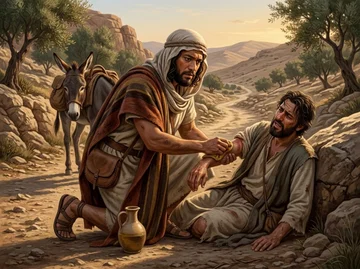
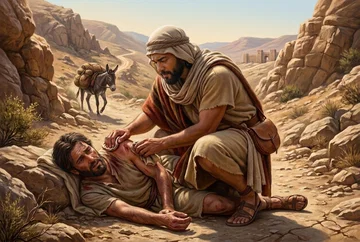


Cross-references 20 of 25
- Luke 10:27-29
And he answering said, Thou shalt love the Lord thy God with all thy heart, and with all thy soul, and with all thy strength, and with all thy mind; and thy neighbour as thyself.
The command to love God and neighbor leads into the parable’s question of who is a neighbor.
- Leviticus 19:18
Thou shalt not avenge, nor bear any grudge against the children of thy people, but thou shalt love thy neighbour as thyself: I am the LORD.
The Samaritan’s care fulfills the command to love one’s neighbor as oneself.
- Luke 10:29
But he, willing to justify himself, said unto Jesus, And who is my neighbour?
The lawyer asks who is a neighbor; Jesus’ parable answers by showing what it means to be one.
- Matthew 22:39
And the second is like unto it, Thou shalt love thy neighbour as thyself.
The parable illustrates the command to love one’s neighbor.
- Luke 10:31-32
And by chance there came down a certain priest that way: and when he saw him, he passed by on the other side.
The priest and Levite pass by the injured man, contrasting failure with true neighborliness.
- Matthew 25:35-40
For I was an hungred, and ye gave me meat: I was thirsty, and ye gave me drink: I was a stranger, and ye took me in:
Acts of care for people in need count as service to Christ.
- Luke 10:25
And, behold, a certain lawyer stood up, and tempted him, saying, Master, what shall I do to inherit eternal life?
The lawyer’s question about eternal life introduces the parable and its answer about who is neighbor.
- Matthew 7:12
Therefore all things whatsoever ye would that men should do to you, do ye even so to them: for this is the law and the prophets.
Both teach practical care for others as one would wish for oneself.
- Matthew 5:43-47
Ye have heard that it hath been said, Thou shalt love thy neighbour, and hate thine enemy.
Calls for love and kindness beyond familiar or favored people, including enemies.
- John 13:34
A new commandment I give unto you, That ye love one another; as I have loved you, that ye also love one another.
Jesus commands love of neighbor after teaching love as he loved.
- Mark 12:31
And the second is like, namely this, Thou shalt love thy neighbour as thyself. There is none other commandment greater than these.
parable explains how to keep this command
- Leviticus 19:34
But the stranger that dwelleth with you shall be unto you as one born among you, and thou shalt love him as thyself; for ye were strangers in the land of Egypt: I am the LORD your God.
Extends love of neighbor to the stranger.
- 1 John 3:17
But whoso hath this world’s good, and seeth his brother have need, and shutteth up his bowels of compassion from him, how dwelleth the love of God in him?
Love is shown by helping a person in need.
- John 15:17
These things I command you, that ye love one another.
Jesus commands his followers to love one another, as shown by the Samaritan’s example.
- John 4:9
Then saith the woman of Samaria unto him, How is it that thou, being a Jew, askest drink of me, which am a woman of Samaria? for the Jews have no dealings with the Samaritans.
Both texts show a Samaritan crossing Jewish-Samaritan enmity through neighborly kindness.
- Luke 10:30
And Jesus answering said, A certain man went down from Jerusalem to Jericho, and fell among thieves, which stripped him of his raiment, and wounded him, and departed, leaving him half dead.
Describes the wounded victim named in the question.
- Romans 13:9-10
For this, Thou shalt not commit adultery, Thou shalt not kill, Thou shalt not steal, Thou shalt not bear false witness, Thou shalt not covet; and if there be any other commandment, it is briefly comprehended in this saying, namely, Thou shalt love thy neighbour as thyself.
Love for one’s neighbour fulfills the law.
- James 2:8
If ye fulfil the royal law according to the scripture, Thou shalt love thy neighbour as thyself, ye do well:
Both identify love of one’s neighbor as the governing command.
- Deuteronomy 10:19
Love ye therefore the stranger: for ye were strangers in the land of Egypt.
The command to love the stranger contrasts with failing to help the wounded man.
- 1 John 4:20
If a man say, I love God, and hateth his brother, he is a liar: for he that loveth not his brother whom he hath seen, how can he love God whom he hath not seen?
Love for God cannot be separated from love for others.
Commentary
Each commentary is drawn from primary sources: the writings of Ellen G. White and Adventist pioneers and periodicals. Each commentary is separate. Its own words are not a quotation; follow the references to read the source passages.
Ellen G. White
121 sources
Jesus closes the Samaritan story by turning the lawyer's question back on him and asking him to judge which of the three travelers acted as neighbour to the robbed and wounded man.ST Jul 23, 1894Ms 71, 1897, par. 29–32Ms 31, 1902, par. 13–16 The right answer is the one who showed mercy, proving that being a neighbour is shown by compassionate practical help and not by office, nationality, or group.COS 69.1–70.3Lt 98, 1896, par. 8–10Lt 217, 1905, par. 6–11Ms 101, 1901, par. 42–46Ms 167, 1898, par. 8–10 A neighbour is also every suffering person in need whose distress calls for help, without limit of race, creed, class, or enmity.COL 376.1–2Ms 40, 1889, par. 1–2ST Jul 23, 1894SW 41.14T 226.3 The command that follows makes this mercy the test of keeping God's law of love and the condition of eternal life, to be lived out in daily deeds of relief and restoration.3T 523.2–3Ms 97, 1901, par. 15–18Lt 134, 1902, par. 17–19Ms 109, 1906, par. 8–14ST Jul 6, 1915 The merciful traveler further pictures Christ Himself rescuing ruined humanity at His own cost, calling His followers to the same self-sacrificing work.ST Jul 7, 1890DA 503.5ST Jul 23, 1894
Parable Setting and Question
The closing question comes at the end of the parable of the good Samaritan, given to answer the lawyer's questions about what to do to inherit eternal life and who is neighbour, and to expound love to God with all heart, soul, strength and mind and love to neighbour as self as the way of life.Ms 97, 1901, par. 15–18Lt 134, 1902, par. 17–19Ms 31, 1902, par. 13–16Lt 8, 1895, par. 22–25Ms 21, 1889, par. 36–38 The lawyer had rightly answered that the law requires that twofold love, yet knowing he had not obeyed it he asked who is neighbour to justify himself.Ms 97, 1901, par. 15–18Lt 134, 1902, par. 17–19Ms 31, 1902, par. 13–16 When pressed over how many to take in as neighbour, Christ gave the whole parable running to the close of the chapter, showing that eternal life is not found through the highest sophistry, education, or spiritualistic ideas, but in the solid foundation He Himself created by giving His own life for the life of the world.Ms 97, 1901, par. 15–18Lt 134, 1902, par. 17–19Ms 160, 1904, par. 27–32 In the parable are summed up all the principles contained in the law of God, on which hang all the law and the prophets, outlining the whole duty of man, which when followed brings peace and happiness and joy into the home and the church.Ms 97, 1901, par. 15–18Lt 134, 1902, par. 17–19Ms 160, 1904, par. 27–32
The parable was told as an incident that had lately taken place and that actually happened, turned into a parable to teach who is neighbour and that neighbour must be loved as self.Ms 97, 1901, par. 15–18Lt 134, 1902, par. 17–19Ms 45, 1900, par. 7–9 It was spoken as an incident many present knew, before a large and intensely interested crowd of Pharisees, Sadducees, priests, lawyers and rulers gathered hoping to catch something from His lips to trap, condemn and kill Him.Ms 97, 1901, par. 15–18Ms 31, 1902, par. 13–16Ms 160, 1904, par. 27–32 The lawyer's question about eternal life was put before that watching crowd, and Christ answered by pointing to loving God and neighbour as the appointed work.Ms 31, 1902, par. 13–16Ms 160, 1904, par. 27–32
The story is of a man going down from Jerusalem to Jericho who fell among thieves who stripped him, wounded him and left him half dead.3T 523.2–3Ms 97, 1901, par. 15–18Ms 100, 1904, par. 5–11Lt 134, 1902, par. 17–19Ms 31, 1902, par. 13–16 The priest came down, saw him and passed by on the other side, and the Levite came, looked on him and passed by on the other side.3T 523.2–3ST Jul 23, 1894Ms 71, 1897, par. 29–32Ms 100, 1904, par. 5–11Lt 134, 1902, par. 17–19 But the Samaritan came where he was, had compassion on him, went to him, bound up his wounds pouring in oil and wine, set him on his own beast, brought him to an inn, took care of him, paid twopence to the host to continue his care, and promised to repay more on return.3T 523.2–3ST Jul 23, 1894Ms 97, 1901, par. 15–18Ms 71, 1897, par. 29–32Ms 100, 1904, par. 5–11
Jesus put the question back to the lawyer for his own judgment, forcing him to decide which of the three, priest, Levite and Samaritan, was neighbour unto him that fell among the thieves.ST Jul 23, 1894Ms 71, 1897, par. 29–32Ms 100, 1904, par. 5–11Ms 31, 1902, par. 13–16Ms 167, 1898, par. 8–10 The lawyer and many present joined in answering, He that shewed mercy on him, and Jesus commanded, Go, and do thou likewise.ST Jul 23, 1894Ms 31, 1902, par. 13–16ST Jul 6, 1915Ms 116, 1905, par. 3–9Ms 167, 1898, par. 8–10 The lawyer would not credit the Samaritan by name because of national dislike and prejudice, saying only he that showed mercy, though his national prejudice kept him from naming the Samaritan.ST Jul 6, 1915Lt 304, 1908, par. 16–17Ms 167, 1898, par. 8–10 Yet Christ had put the principles of the law of God in direct, forcible form so His hearers had neglected them yet found no chance to cavil or object, and the lawyer found nothing to criticize and his prejudice against Christ was removed.Lt 304, 1908, par. 16–17Ms 167, 1898, par. 8–10RH Sep 13, 1906 The conduct of the priest and Levite toward the wounded man agreed with the lawyer's own ideas and with what he had been taught that forms and ceremonies were all the law required, and the question exposed his failure to keep the law's demand for mercy, condemned his own practice, and exposed neglect of the law's principles by those who knew its words without doing them.ST Jul 23, 1894Lt 98, 1896, par. 8–10Ms 87, 1894, par. 28–31Lt 304, 1908, par. 16–17Ms 167, 1898, par. 8–10
Meaning of True Neighbor
A neighbour is the one who shows mercy to someone in need, as the Samaritan did for the wounded man, and being a neighbour is defined and proved by merciful, compassionate action and practical help rather than by status, religious office, nationality or group identity.COS 69.1–70.3Lt 98, 1896, par. 8–10Lt 217, 1905, par. 6–11Lt 81, 1901, par. 7–10Lt 105, 1902, par. 2–5 Jesus’ question forces judgment between the priest and Levite who failed to help and the Samaritan whose compassionate care made him neighbour, and the lawyer’s answer, he that shewed mercy on him, both condemns his own practice and leads to the command to go and do likewise.Lt 98, 1896, par. 8–10Lt 217, 1905, par. 6–11Lt 81, 1901, par. 7–10Lt 107, 1902, par. 4–6Ms 190, 1903, par. 13–19 The Samaritan, not the priest or Levite who passed by, was neighbour because he stopped, cared for the man, treated his wounds, brought him to an inn and paid for his recovery.Ms 101, 1901, par. 42–46Lt 107, 1902, par. 4–6Ms 190, 1903, par. 13–19RH Sep 2, 1902ST Jan 7, 1897
A neighbour is also anyone who needs help, sympathy and practical relief, every soul wounded and bruised by the adversary, every suffering, destitute and helpless person who is God’s property and whose need calls for help, whatever his class.COL 376.1–24T 226.36T 294.1–2DA 503.4ST Feb 25, 1886 The question teaches that love of neighbour requires practical care across social divisions, that those entrusted with wealth, ability or grace must use them as faithful stewards rather than keep advantages for themselves, and that meeting physical need can open the heart to virtue and religion and spiritual truth.SW 41.14T 226.36T 294.1–2ST Feb 25, 1886 The church must not stand asking who is neighbour but must undertake the work lying nearest it, for in Christ the distinctions as to who was neighbour are swept away.SW 41.16T 294.1–2
Neighbourhood has no territorial lines, no artificial distinctions, no caste, rank or aristocracy, and is not limited to church or faith, race, color, social class, friendship, kin, country or creed, but crosses hostility and enmity.COL 376.1–2ST Jul 23, 18946T 294.1–2DA 503.4 It extends even to the despised, the unpleasant, the stranger and the bitterest opponent, to anyone needing Christ’s grace and patience even when uncourteous or when kindness goes unappreciated and unrepaid, and it requires recognizing the sufferer as a fellow human being and representing mercy, compassion and tenderness toward all who suffer.COS 69.1–70.3Ms 40, 1889, par. 1–2ST Jul 23, 1894ST Feb 24, 1898 Love for God is shown in loving others through deeds and words in unselfish service to all.ST Feb 24, 1898
The priest and the Levite who saw the suffering man and passed by on the other side were not neighbours, while the Samaritan of a despised, hated and cursed class whom the Pharisees cursed proved far more righteous than his denouncers.Ms 101, 1901, par. 42–46Ms 167, 1898, par. 8–103T 511.2–3ST Jul 23, 1894RH Mar 27, 1900 He fulfilled Thou shalt love thy neighbour as thyself, obeyed the spirit of the commandments and the law of human kindness, manifested pity and love where they showed none, proved a heart that feels for suffering humanity and nobility of soul to show mercy to one he did not know, and received Christ’s approval for disinterested benevolence that treated the wounded stranger as he himself would desire to be treated.Ms 167, 1898, par. 8–103T 511.2–3ST Jul 23, 1894 He is neighbour because he helps the sufferer without questioning whether he is relative or of the same country or creed, but goes to work because work needs to be done, relieving him as best he can, putting him on his own beast, carrying him to an inn and providing for his wants at his own expense, while the priest and Levite represent indifference to those needing sympathy and help and failure to represent Christ through refusal of kindness and encouragement to people in trouble.3T 511.2–3ST Jul 23, 1894RH Mar 27, 1900 The exposure of the cruelty and selfishness of the nation’s representatives in setting this Samaritan before them as true neighbour shows unselfish love to neighbour as one of the two great principles of the law, supreme love to God and unselfish love to neighbour, from which the first four commandments and the last six grow.3T 511.2–3ST Jul 23, 1894
The man who fell among thieves was a stranger yet a neighbour and a brother in suffering, a Jew who should have awakened the sympathy of his own nation, and his helpless, wounded, dying condition should have moved the priest and Levite to pity even more than a beast of burden would.Ms 167, 1898, par. 8–103T 524.1ST Jul 23, 1894 Though they had read the law commanding love to the stranger they had not brought it into practical life, though professing the law of God as guide they should have been first to minister with tender compassion to their suffering brother.Ms 167, 1898, par. 8–10ST Jul 23, 1894 He represents all who claim interest, sympathy and charity when brought under notice, the wounded, robbed, needy and unfortunate no matter who they are and whether they are kith or kin.3T 524.1ST Jul 23, 1894
The question turns attention away from arguing who qualifies as neighbour toward acting compassionately and doing the neighbourly thing.Lt 105, 1902, par. 2–5RH Sep 2, 19027MR 237.1–238.1ST Jan 7, 1897Lt 109a, 1898, par. 10–11 The less important dispute over definition must give way to doing the work of righteousness placed before us, to recognizing merciful action and acting likewise in keeping with the principles of God’s law through practical help to those in distress.Lt 105, 1902, par. 2–5RH Sep 2, 19027MR 237.1–238.1ST Jan 7, 1897Lt 109a, 1898, par. 10–11
Christ Pictured in Samaritan
The Samaritan is Christ Himself, and the story is a picture of His mission.ST Jul 7, 1890DA 503.5 The man who fell among thieves is humanity, deceived, bruised, robbed and ruined by Satan and left to perish, helpless and ready to die.ST Jul 7, 1890DA 503.5ST Jul 23, 1894 Christ had compassion on helpless human need, left His glory to come to the rescue, undertook the case, found men ready to die, healed their wounds, covered them with His righteousness, opened a refuge of safety, made complete provision for their needs at His own charges, and died to redeem them.ST Jul 7, 1890DA 503.5 The wounded and destitute man represents the sinner and the lost human family, and the Samaritan's mercy presents Christ's love and character.ST Jul 23, 1894
His pity for helpless suffering, careful dressing of wounds, carrying on his own beast, sheltering at the inn, and paying the cost represent the pity and compassion and self-sacrificing Spirit of Christ who left the royal courts and gave His life to save souls perishing in sin.RH Sep 13, 1906DA 503.5Lt 64, 1909, par. 6–7 He humbled Himself to serve, took humanity so He could reach humanity, and became poor for our sake.RH Sep 13, 1906 The priest and Levite who saw the need they could meet and passed by on the other side stand in contrast as neglect, false reasoning, indifference, and refusal to be inconvenienced by those who should have been first to help, and all heaven looked upon the scene as a contrast between Christ's compassion and their neglect.Lt 64, 1909, par. 6–7
Seeing Christ's Spirit and work as the neighbor exposes the life and work of believers in the light reflected from Him, showing how far short they come of keeping the commandments of God and of loving their neighbors as themselves.ST Jul 7, 1890 His example calls His followers to love one another as He loved them.DA 503.5 The lesson calls for doing, not merely speaking, for the Samaritan obeyed a loving heart and thereby proved himself a doer of the law.DA 504.1 The question rebukes indifference and reproves all who profess His name yet refuse self-denying labor together with God.Lt 64, 1909, par. 6–7
The commendation of the good Samaritan taught the disciples that Christ's love toward Samaritans remained unchanged despite their rejection of Him, preparing them to bring the gospel to them and receive them as fellow believers.DA 488.4–6 The wounded man also figures the straying, backslidden soul caught in Satan's snare, spiritually ready to perish and spiritually dead.Lt 69, 1893, par. 11–13 He figures as well those for the time fallen under Satan's temptations through liquor drinking, tobacco using, and fiery stimulants, who are ruining themselves and their wives and children, who are for the time under a demon's power and not sane, who curse themselves and will go over the same ground again without help.Ms 87, 1898, par. 20–23
To be neighbor is to refuse to pass such poor helpless beings by on the other side as too weak in moral power and a loss of time, but to do Christ's work to rescue them.Ms 87, 1898, par. 20–23ST Mar 24, 1898Lt 69, 1893, par. 11–13 It is to seek out wounded people struggling with temptation and help lead them to Him, rather than passing them by.ST Mar 24, 1898 It is to search for them with earnest, persevering, personal effort wherever they are and in whatever position of trust, to consult with others to awaken interest, to pray over the parable and make it a living reality, and to restore them with soft, tender, broken hearts and human sympathy made sacred and holy by cooperation with the divine, stirring others to well directed and wise efforts.Lt 69, 1893, par. 11–13 It is to support the weak, speak words that encourage faith, strengthen every good trait, show friendship without blame when sober, arouse the sense that it is not too late to be men, and strive with all power because Christ died and paid a heavy ransom for that soul, so that one soul rescued is a soul saved from Satan's grasp.Ms 87, 1898, par. 20–23
Law Obedience and Life
In this closing question are summed up all the principles contained in God's law, supreme love to the Lord God with all heart and soul and strength and mind and unselfish love to neighbor as self, on which hang all the law and the prophets.3T 523.2–3Ms 97, 1901, par. 15–18Lt 134, 1902, par. 17–19 That whole duty of man is comprised in keeping the first four commandments toward God and the last six toward man, where supreme love to God sanctifies the affections and bears fruit in love to mankind.ST Jul 2, 18943T 511.2–3 When that love is followed it brings peace and happiness and joy into the home and the church.Ms 97, 1901, par. 15–18 Those tested and proved in loving others as themselves will be pronounced meet for an inheritance with the saints in light as pure and undefiled people who will not exalt self or rebel over another's brighter crown.ST Jul 2, 1894 Love for God and impartial love for other people are the principles running through the whole law.DA 497.4–498.1
The law is a unity in which keeping one precept while breaking another is not obedience, and human destiny is determined by obedience to the whole law.DA 497.4–498.1 Neglecting mercy to the wounded and robbed and needy and unfortunate who are brought under notice breaks the second great commandment on which the last six commandments depend, and to offend in that one point is to be guilty of all.3T 524.1 Whoever will not open the heart to the wants and sufferings of humanity will not open the heart to the claims of God stated in the first four precepts, but lets idols claim the heart and affections so that God is not honored and does not reign supreme.3T 524.1
Showing the same tender kindness and regard to those in need is the evidence of keeping the whole law.Ms 109, 1906, par. 8–14ST Jul 6, 1915Lt 304, 1908, par. 16–17Ms 167, 1898, par. 8–10HMW 31.4–32.1 Genuine loyalty is proved by compassionate practical benevolence, not by profession or outward observance or insistence on the letter, and the question exposes neglect of the law's principles while presenting them in direct forcible form that leaves no room to cavil or object.Lt 304, 1908, par. 16–17HMW 31.4–32.1RH Sep 13, 1906 The priest and the Levite professed the law of God as their guide yet should have been first to minister with tender compassion to their suffering brother and instead passed by on the other side, while the Samaritan whom opposers cursed and of whom they would say nothing good proved far more righteous than his denouncers and so fulfilled Thou shalt love thy neighbour as thyself.Ms 167, 1898, par. 8–10 True religion is expressed in loving deeds that bring others the greatest good and in genuine goodness, not merely in systems and creeds and rites.DA 497.1DA 497.2–3 The Samaritan obeyed a loving heart and thereby proved himself a doer of the law, and the lesson calls for doing and not merely speaking and for following that example in practical care for others.DA 504.1
The conduct of the priest and Levite toward the wounded man agreed with the idea that forms and ceremonies were all the law required, set against the Samaritan who came where he was and had compassion and bound wounds with oil and wine and carried and cared and paid and promised more.ST Jul 23, 1894 The law's command to love neighbor must be practiced through impartial compassion and help, not merely understood or accompanied by religious ceremonies, and knowing its words without doing them leaves a person a lawbreaker and exposes failure to keep its demand for mercy.Ms 87, 1894, par. 28–31 Loving one's neighbor as oneself is a binding demand of God's law and part of true religion, not merely outward show or ceremony.Ms 150, 1899, par. 17–19
Keeping the law thus described by going and doing likewise is the plain condition of living and inheriting eternal life.3T 523.2–3 The parable sums up the principles of the law which are bound to the way of eternal life, and violating justice and mercy in word or action is sin.Lt 165, 1901, par. 23–25 To act as the true neighbor who showed mercy is to keep the law of loving God with all heart and soul and strength and neighbor as self, the doing that gives entrance into the kingdom of heaven.Ms 153, 1904, par. 15–19 Sowing the gospel and practically doing the truth in such merciful help as gospel ministry practically acted binds church members and all others alike and decides the salvation of the soul and eternal life.Ms 45, 1900, par. 7–9 Eternal life is not found through reaching for the highest sophistry or the highest education or spiritualistic ideas, but in the solid foundation of giving life for the life of the world.Ms 160, 1904, par. 27–32
Neglecting known duty in meeting the claim of all who are wounded and bruised and claim interest and sympathy and charity leaves no assurance of eternal life because the claims of God are left unanswered, violates the commandments, and can result in loss of eternal life, and failing to improve great light brings condemnation.3T 524.1 Sinful people can obey this standard only through the merit and grace of Jesus, who gives His righteousness to cover the soul, and those who believe in Him receive everlasting life.ST Jul 23, 1894 Love for God is shown in loving others through deeds and words toward anyone needing grace and patience, even one uncourteous or unpleasant whose kindness may go unappreciated or unrepaid, and no one must regard self as superior or treat others with contempt or indifference.ST Feb 24, 1898ST Jul 23, 1894
The passage presents the difference between obedience and disobedience to the law for transgressors, applied to temperance against intemperance including drink and tobacco and perverted appetite that enslaves men, set against the world before the Flood and before the destruction of Sodom and against the sacrilegious feast of Belshazzar.Lt 58, 1898, par. 8–11 It measures the value of the human soul in the light of the cross of Calvary and warns that disobedience is weighed in the balances and found wanting.Lt 58, 1898, par. 8–11 It presses every hearer as deciding eternal destiny with souls to save or to lose, urging waste of no more moments but flight to refuge and making Christ strength and safety and protection from the enemy and laying hold on eternal life so as not to be compelled to sin.Lt 58, 1898, par. 8–11
Love for neighbor alongside wholehearted love for God is a binding part of the terms of salvation that cannot be divided or treated lightly, and failure to care for others including spiritually or financially harming fellow believers dishonors God.Lt 22, 1901, par. 16–19 Property is a loaned talent to be managed with sound judgment, kept subordinate to eternal interests, and used to advance God's glory, for loving God supremely includes loving neighbor and using what is entrusted wisely.16MR 260.4–261.1
Go and Do Likewise
The command to go and do likewise makes mercy a practical daily duty for church members and for all others, calling for treating anyone needing help that can be given as neighbor even when helping is inconvenient or costly, and for restoring and encouraging those fallen into difficulty.Lt 105, 1902, par. 2–5Ms 101, 1901, par. 42–46Ms 126, 1905, par. 8–12 Being neighbor is proved by acting mercifully toward someone in need as the Samaritan cared for the wounded man, while the priest and Levite failed by passing by, and attention is turned away from defining who qualifies toward compassionate action.Lt 105, 1902, par. 2–5Ms 101, 1901, par. 42–46Ms 126, 1905, par. 8–12 That lesson belongs in daily practice, especially in medical missionary work, through personal, patient and sometimes self-sacrificing effort offered where people are and in the spirit of Christ.Ms 126, 1905, par. 8–12Ms 14a, 1897, par. 1–4Lt 69, 1895, par. 3–4 Seeing a neighbor in need and passing by on the other side is failure to do a plain duty which caution does not excuse, and obedience means being quick to notice and relieve suffering whatever the needy person's religious beliefs.Ms 14a, 1897, par. 1–4Lt 69, 1895, par. 3–4Ms 31, 1902, par. 18
Being neighbor means seeing and feeling another's suffering with a heart made tender by the Holy Spirit, sensitive to pain and accepting responsibility to minister rather than avoiding duty by passing by the wounded and helpless.6T 294.36T 303.2Lt 113, 1901, par. 8–12 Such compassion evidences the Spirit's control and Christ dwelling within, shown in mercy to the destitute, suffering, wounded and dying and in seeking to restore humanity.Lt 113, 1901, par. 8–12Ms 115, 1899, par. 18Ms 115a, 1899, par. 12 Knowing that Satan has his trap set for a soul and then going home caring not for the lost sheep is refusing to be neighbor, leaving those who need the power of the divine Healer uncared for and unnoticed.6T 294.36T 303.2 Those who manifest such a spirit partake not of the divine nature but of the attributes of the enemy, in contrast to humble, contrite, tender ministry in cooperation with angels under the working of the Holy Spirit upon mind and heart.6T 294.310MR 96.1–2Ms 115a, 1899, par. 12
God's people are required to reveal His character to suffering humanity and to represent Christ as Christ represented the Father, as the Samaritan went to the sufferer, bound up wounds pouring in oil and wine, brought him to an inn and took care of him while priest and Levite passed by on the other side.Lt 79, 1898, par. 4–510MR 96.1–2COL 388.2 Ministering to the poor and distressed, respecting their rights and meeting their needs, cannot be neglected or justified away as an obstacle to a supposedly great work for Christ.COL 388.2COL 382.3RH Jan 19, 1911 Those who so minister have the companionship of heavenly angels and the cooperation of Christ the Restorer, and in that ministry the power of the Lord is magnified.10MR 96.1–2COL 388.2RH Jan 19, 1911
The man who fell among thieves stands for the Southern field, robbed and beaten and left by the roadside to die, while priest and Levite stand for those who feel pity yet pass by on the other side.Ms 77, 1901, par. 6–7RH Aug 27, 1901Ms 21a, 1895, par. 4 Passing by means leaving the colored race in the South to perish by the wayside, neglected since emancipation by those professing to know God so that thousands fail to gain spiritual freedom.Ms 21a, 1895, par. 4Ms 21a, 1895, par. 16SW 52.1 Being neighbor means refusing continued indifference and making decided efforts to save them, seeing need, having compassion, binding up wounds, carrying and caring for them, and leading those in darkness into light as Christ bridged the gulf transgression made.Ms 21a, 1895, par. 4Ms 21a, 1895, par. 16SW 52.1 The right answer, he that showed mercy, requires doing much more evangelistic work in the South, putting a thousand workers where there is now one, using means rightly instead of neglecting known duty, and helping free the oppressed from spiritual as well as physical bondage through united practical missionary work.Ms 77, 1901, par. 6–7RH Aug 27, 1901Lt 80a, 1895, par. 11–15
The neighbor is the destitute Southern field, black and white people in great ignorance and human wretchedness, and in particular the work at Nashville and sister institutions that lack buildings and means to get upon a working foundation.Lt 205, 1901, par. 14–16Lt 205, 1901, par. 10–13Lt 156, 1900, par. 1–3 To be neighbor is to see that existing need and relieve it with a proportion of the Lord's goods, sending larger gifts, helping create and finish the neighboring enterprise and not resting until it is in running order.Lt 205, 1901, par. 14–16RH Sep 28, 1905Ms 100, 1904, par. 12–14 It means sustaining destitute necessities like the Huntsville school by redeeming past neglect, arousing others to duty, and giving liberal unselfish help from stronger conferences with the promise of blessing, and answering which nearby cities and people still lack light by putting every power of body and mind to work.Ms 100, 1904, par. 12–14Ms 152, 1904, par. 21–24Lt 156, 1900, par. 1–3 To fail is to be like priest and Levite, having every advantage yet locking up sympathy, studying how to invest thousands for self in unjust proportions, binding about supposed necessities while staying investment only in extra buildings, presses, facilities and conveniences for already large overgrown established institutions.SPBC 164.1Lt 205, 1901, par. 14–16Lt 205, 1901, par. 10–13 That course is supreme selfishness with money that belongs to God, drying up the soul until selfishness grows as a giant and the heart becomes granite, bringing God's displeasure and dishonor.Lt 205, 1901, par. 14–16Lt 205, 1901, par. 10–13
Passing by pictures churches and ministers who see great necessity yet touch the Southern field only with the tips of the fingers when not one hundredth part of the needed work has been done.SBAWP 63.1–64.1Lt 5, 1895, par. 12–13RH Sep 28, 1905 It means keeping silent instead of presenting clearly the needs of the long-neglected field, leaving cities unentered and barren, and using resources for greater comfort, convenience and display rather than for the benefit of the poor, beaten down, oppressed and neglected.SPBC 164.1Lt 5, 1895, par. 12–13RH Sep 28, 1905 Such indifference and cruel neglect of colored people living in ignorance of the message right within the shadow of doors shares the reproach resting on all who so pass by.Lt 5, 1895, par. 12–13RH Sep 28, 1905CH 525.1 That neglect is cruel and wicked, supreme selfishness that dries the soul, and calls for taking up responsibility with both practical and spiritual help and labor proportioned to circumstances.SPBC 164.1SBAWP 63.1–64.1SW 27.1
Being neighbor means gathering in the needy, the oppressed, the suffering and the destitute, feeding the hungry, bringing the poor that are cast out into homes, reaching to the very depths of human misery, and helping those who cannot possibly help themselves.4T 226.3ST Feb 25, 18866T 275.2–276.1 It includes finding work for the needy so he can support his family rather than leaving him to beg, sheltering disaster victims free of cost, and lifting the fallen with peace to aching hearts.Lt 105, 1902, par. 6–8Lt 83, 1897, par. 14–16Ms 14a, 1897, par. 11–12 Meeting immediate physical needs as far as possible opens the way to reach the heart with virtue and religion and gives favorable opportunity to set forth Christ the crucified One.4T 226.3ST Feb 25, 18866T 275.2–276.1 This is the very work every church believing present truth should long since have been doing, requiring grace and strength gathered from God every day, first meeting temporal need then connecting sufferers with care.6T 275.2–276.1Lt 83, 1897, par. 14–16Ms 14a, 1897, par. 11–12
Sanitariums are to do the Samaritan's work by giving suffering people a place of help with personal sympathy, welcoming and relieving them and not merely performing services without compassion.Ms 141, 1906, par. 43–4613MR 285.2–286.1Ms 141, 1906, par. 47–48 Physicians are to act vigorously to relieve suffering like the good Samaritan, giving the afflicted the safest, most comfortable care and best available comfort even at personal or organizational expense.13MR 285.2–286.1Ms 63, 1899, par. 17–19Lt 40, 1897, par. 13–16 Loving a brother as oneself means charging fairly and honestly for medical services, without excessive fees or large charges for services never given, since diseased bodies are God's property.Ms 63, 1899, par. 17–19Lt 40, 1897, par. 13–1615MR 34.1–3 Caring for Christ's disciple in this way is caring for Jesus, representing the Great Physician while resisting satanic agencies.13MR 285.2–286.1Ms 141, 1906, par. 47–48Lt 40, 1897, par. 13–16
The lesson reaches brethren, the sick, the crippled and afflicted, the struggling poor, the discouraged and oppressed of another race, the intemperate, and helpless individuals like Brother Leininger and Edson.MH 172.2Ms 1, 1856, par. 5Lt 6, 1901, par. 1–4 It means brethren feeling interested for one another, those blessed with health having kind regard and care for those without health and favoring them, pitying and sympathizing with a crippled brother, supplying his lack and comforting, cheering and strengthening his heart with even a little aid, doing as one would wish to be done by.Ms 1, 1856, par. 51T 150.3–43T 531.1 It means showing tender love to discouraged and oppressed people and helping them find a way forward, and meeting the intemperate with physical help and uplifting influence rather than leaving them without aid.MH 172.2Lt 6, 1901, par. 1–43T 531.1 True neighbors seek the lost with self-denying love, restore the wounded and pour oil into wounds, making decided personal persevering effort with prayer and cooperation rather than prescribing impossible conditions, disheartening and discouraging, or pouring vitriol into wounds.MH 172.2Lt 6, 1901, par. 1–4Lt 23, 1894, par. 8–9
Neighbor love must become whole-being service with heart, mind, soul and strength, not confined to believers but becoming labor for unbelievers, becoming acquainted with them, seeking precious souls living up to all the light they have, placing truth before them and bringing them through the open door into fellowship.Lt 148, 1902, par. 5–6Ms 15, 1897, par. 1Lt 4, 1901, par. 12–13 Benevolence must not be driven merely by impulse or personal preference but guided by careful judgment about how to show mercy, using entrusted resources to relieve temporal and spiritual distress without narrow or self-directed principles.Lt 31b, 1895, par. 11Ms 11, 1892, par. 9–11Ms 15, 1897, par. 1 Those who can help the perishing should humbly work to save them rather than turn away to their own way.Ms 11, 1892, par. 9–11Lt 4, 1901, par. 12–13 The full meaning of who is neighbor is learned through a life of such service, consummated in joyful companionship in heaven.Lt 148, 1902, par. 5–6COL 389.1
This love lifts above prejudice of color or caste into a pure heavenly unselfish atmosphere, loving as Christ loved with hearts filled with faith that takes hold of eternal realities, works by love and purifies the soul.9T 209.1–2Ms 103, 1908, par. 18–19 That love uplifts the divine Author of truth and brings triumph of humanity over prejudice in seeking the salvation of souls.9T 209.1–2Ms 103, 1908, par. 18–19
To see need and pass by on the other side and leave one to die is cruel and wicked and deserves righteous indignation, hot and intense as the grief and love of parents whose child might have lived if men had been more neighborly.Ms 133, 1897, par. 6–9 To see souls in peril ready to die and say nothing and do nothing, giving all attention to the ninety and nine within the fold while lost souls around are unwarned, is to fail as neighbor, for every man's sufferings are the sufferings of God's child.Ms 133, 1897, par. 6–9 Passing by fellow beings without pity or help provokes God's grievous anger, while being faithful to fellow men and loving the world as God loves it pleases God.Ms 133, 1897, par. 6–9
Sources
Pioneers and periodicals
88 sources
Jesus turns the question of who counts as neighbor back upon the asker, demanding judgment of which of the three proved neighbor to the man who fell among thieves by showing him mercy.ST May 1, 1907ST Aug 21, 1907 A neighbor is not decided by friendship, kinship, nationality, rank, color, creed or religion, but is both the one who acts with compassion and the soul in need whom one has power to aid and bless.ST May 1, 1907ST Nov 25, 1886ST Aug 21, 1907ST Feb 20, 1896ST Oct 7, 1886 The priest and Levite saw the stripped and half-dead traveler and passed by on the other side, while the despised Samaritan came where he was, bound his wounds, carried him to an inn, paid for his care and promised more.ST Jul 23, 1894ST Jul 22, 1886ST Feb 26, 1902ST Feb 20, 1896 The Samaritan pictures Christ himself, who had compassion on humanity robbed and ruined by Satan, left glory to come to the rescue, healed wounds and made complete provision at his own cost.ST Jul 7, 1890RH Sep 13, 1906 Keeping the whole law and loving neighbor as self is therefore proved not by profession or ceremony but by tender, practical kindness that relieves body and soul and opens hearts to spiritual teaching.ST Jul 6, 1915ST Jul 2, 1894ST Mar 3, 1887ST Feb 20, 1896RH Jan 1, 1914 This makes every believer and every church a good Samaritan, bound to seek out the fallen nearby and far off, to provide places of healing like the inn, to lift the lowly without color line, and to do daily small mercies along the traveled way.ST Mar 31, 1898RH Oct 7, 1915RH Dec 29, 1910RH Dec 29, 1910ST Jul 11, 1916
Question Setting and Wording
Jesus turns the lawyer's question, Who is my neighbor, back upon him by asking which of the three proved neighbor to him that fell among thieves, forcing him to judge for himself.ST Jul 23, 1894ST May 1, 1907ST Aug 21, 1907ST Feb 26, 1902 The priest ought in spirit to have been neighbor and the Levite ought to have been neighbor, but the Samaritan alone was neighbor because he showed mercy, so neighbor is not the one nigh in sympathy to us but everyone in need to whom warm sympathy is to be felt.ST May 1, 1907ST Aug 21, 1907 Being neighbor is defined by showing mercy to someone in need rather than by status or group, and the required response is to go and do likewise by seeking those to whom one can be neighbor.ST May 1, 1907ST Aug 21, 1907
The question comes after the lawyer asked what to do to inherit eternal life and was told to love the Lord God with all heart and soul and strength and mind and his neighbor as himself, and after he sought to justify himself.ST Feb 26, 1902ST Feb 20, 1896 It is framed by the command to love one's neighbor as oneself, which sums true love to neighbor and gives with the command to go and act in the same way the full reply to what must be done to inherit eternal life.ST Feb 20, 1896ST Sep 19, 1900ST Feb 20, 1896 It was spoken on the way to Jerusalem through Perea east of the Jordan after the transfiguration and the sending out and return of the seventy.ST Feb 20, 1896
The story concerns a man going down from Jerusalem to Jericho who fell among robbers and was stripped and left half dead on a dangerous road.ST Feb 26, 1902ST Feb 20, 1896ST Mar 31, 1898 The place near Jericho makes the rescue vivid, and even a Jew in such need could touch the compassion of a Samaritan.ST Jul 23, 1894ST Feb 26, 1902ST Feb 20, 1896 Giving and receiving drink belongs to hospitality and truce even between enemies.ST Jul 23, 1894ST Feb 26, 1902ST Feb 20, 1896 The priest saw him and passed by on the other side claiming more important work, and the Levite looked and passed by judging him unworthy, though they were supposed to be exemplary in sympathy and knew his sad condition.ST Jul 2, 1894ST Feb 26, 1902ST Mar 31, 1898 Against them stands the Samaritan, who came where he was, was moved with compassion, bound up his wounds pouring on oil and wine, set him on his own beast, brought him to an inn, cared for him, charged the keeper to care for him, paid twopence with promise to repay whatever more was needed.ST Jul 23, 1894ST Feb 26, 1902ST Feb 20, 1896ST Mar 31, 1898
The lawyer answers that the neighbor was he that showed mercy, and his national prejudice kept him from naming the Samaritan, yet his answer shows he saw the lesson designed to be taught.ST Jul 23, 1894ST Jul 6, 1915ST Feb 26, 1902ST Feb 26, 1902 Jesus seals that answer with the command to go and do likewise, making shown mercy the mark of a neighbor.ST Jul 23, 1894ST Feb 26, 1902ST Feb 20, 1896ST Feb 26, 1902
The good Samaritan is left unnamed with no clue to identify or locate him, drawing attention instead to the generous spirit that prompted his act rather than to identity.ST Feb 6, 1879ST Feb 6, 1879 Kind deeds are therefore to be done without holding back when they may go unnoticed, and the pleasure of doing such a deed can itself be sufficient reward, fostering many small acts of kindness.ST Feb 6, 1879ST Feb 6, 1879
Who Counts as Neighbor
The question is answered by pointing to conduct, not to class: the neighbor is the one who shows mercy to a person in need, and the Samaritan rather than the priest or the Levite proved neighbor because he helped with compassionate, practical action.ST May 1, 1907ST Aug 21, 1907RH Jul 29, 1902 To be neighbor is to show mercy, and the command joined to the answer is to go and do the same.ST Aug 21, 1907RH Jul 29, 1902ST May 28, 1894
Looked at from the other side, the neighbor is the soul in need, anyone whom one has power to aid and bless, every person on earth who is in need and especially the one who needs most.ST May 1, 1907ST Nov 25, 1886ST Aug 21, 1907ST Mar 12, 1896ST Mar 31, 1898 That includes need of body and need of soul, the friendly yet unsaved who are without hope and without God, little ones and lonely and sad and old ones, everyone met in the path of life and everyone for whom Christ died.ST May 1, 1907ST Nov 25, 1886ST Aug 21, 1907ST Mar 31, 1898RH Jul 14, 1910
No boundary of friendship or kinship or nationality limits this neighborhood, nor does status or rank or office, color or creed, class or education, wealth or distance or religion.ST Nov 25, 1886ST Feb 20, 1896ST May 12, 1881ST Mar 12, 1896ST Nov 27, 1893 Stranger and alien are included, and heretic and even bitter enemy, for enemies are to be treated as neighbors with kindly consideration and tender care.ST Nov 25, 1886ST Feb 20, 1896ST Oct 7, 1886ST May 12, 1881ST Nov 27, 1893
The form of the question itself makes the turn: it does not tell who is neighbor but tells to whom to be neighbor.ST May 1, 1907ST Aug 21, 1907RH Jul 29, 1902ST Mar 31, 1898RH Oct 8, 1901 Instead of deciding who qualifies, the hearer is to judge who behaved as neighbor, to choose to show mercy, and to seek out those to whom he can be neighbor.RH Sep 2, 1902ST May 1, 1907ST Aug 21, 1907RH Jul 29, 1902RH Oct 8, 1901
Priest Levite and Samaritan
The priest and the Levite saw the wounded man and passed by on the other side, the priest pleading more important work on his way to the temple to worship and the Levite looking and judging the man unworthy of charity.ST Feb 26, 1902ST Mar 31, 1898RH Oct 7, 1915 Though as priest and Levite they were supposed to be exemplary in sympathy and kindness and knew his sad condition, they were destitute of compassion and selfishly neglected him in his greatest need.RH May 22, 1913ST Mar 31, 1898 Their failure was selfishness deserving emphatic condemnation, with no excuse for letting other and minor affairs keep them from true expressions of sympathy, and being busy doing big things for God while failing in mercy puts one with them and unfit for holy priesthood.ST Jul 22, 1886RH May 22, 1913 Their conduct agreed with the idea that forms and ceremonies were all the law required, and Christ set it beside the Samaritan and put the question of neighborliness back for judgment as to which of the three proved neighbor to him that fell among thieves.ST Jul 23, 1894ST Feb 26, 1902
The Samaritan came where the wounded man was, had compassion on the stripped, naked, wounded, half-dead traveler, and ministered to what he had lost.ST Jul 23, 1894ST Mar 31, 1898RH Oct 8, 1901 He bound his wounds pouring on oil and wine, set him on his own beast, brought him to an inn, cared for him, paid twopence to the host and promised to repay whatever more was needed, charging the keeper to care for him till well.ST Jul 23, 1894ST Feb 26, 1902ST Feb 20, 1896ST Mar 31, 1898 Having no sanitarium or better place, he used the inn where needed help could be received, and by coming near he became the connecting channel through whom life flowed from the fountain of life to supply perishing need.RH Oct 7, 1915RH Oct 8, 1901 The true neighbor is he that showed mercy, and the required response is to go and do likewise.ST Jul 2, 1894ST Feb 26, 1902
The helper was a despised, hated Samaritan and the wounded man was presumably or probably a Jew, the two peoples being bitter enemies for centuries.ST Nov 25, 1886ST Mar 31, 1898ST Dec 23, 1903 The alien succored the suffering Jew, binding his wounds and caring for him till well while priest and Levite passed by, though the priest and Levite saw he was not of their class or set and the Samaritan saw the Jew was not of his set or nation.ST Dec 23, 1903ST Jun 12, 1907 Jesus approved his conduct as true neighbor-ship and true obedience to love the neighbor as oneself, showing him more righteous than those who despised him.RH Sep 13, 1906ST Dec 23, 1903ST Jun 12, 1907 Neighborly love is thus shown by serving anyone in need without deciding whether that person is neighbor or enemy, for enemies are to be treated as neighbors with kindly consideration.ST Nov 25, 1886ST Dec 20, 1905
Being neighbor means coming where the wounded man is instead of looking from a distance or passing by on the other side as far as possible from need.RH Oct 8, 1901RH Dec 5, 1871 It means getting near enough for sympathy to be felt and touched, as Christ came down where men are and brought purity into contact with impurity, and personally caring for the wounded, friendless man.RH Sep 7, 1905RH Dec 5, 1871 It means interrupting one's own urgent business and planned errand, using the nearby inn instead of waiting for familiar services, and paying from one's own pocket when no formal fund is available.ST Jul 21, 1909ST Jul 21, 1909 Adapting to the need at hand even when inconvenient, irregular, or outside usual plans and without expecting appreciation or public notice exemplifies service arising from love and a life in harmony with Christ.RH Sep 7, 1905ST Jul 21, 1909 Once a man needs help, caring for him becomes one's business, for love calls for benevolent concern and practical aid, not meddling or unsolicited control.ST Dec 8, 1887
Failure to be neighbor comes from working for humanity's sake alone, which leads to judging men by human worth and stopping short of God's plan.ST Mar 31, 1898 On that ground men look on the wounded and decide he is not worth working for, just as men today decide a bloated drunkard or a morphine addict is not worth working for, whereas true friendship does not inquire into worthiness but goes especially to the weak and unworthy.ST Mar 31, 1898 Much failure comes not from seeing clear trouble that could be relieved and deliberately doing nothing, but from being absorbed in one's own interests and never noticing the thousand chances to help, seeing need only dimly without telling whether the man is hurt or drunk or asleep.RH Jan 31, 1871 No business, housekeeping, trade, or pressure of task-work excuses being too occupied to do the kindness called for, and a great world going unheedingly on, too busy with other matters to pay attention to one lying wounded by the roadside, fails to be neighbor.ST Jan 16, 1896RH May 27, 1902
Christ Foreshadowed in Samaritan
The Samaritan pictures Christ himself and his mission, and the man that fell among thieves is humanity deceived, bruised, robbed and ruined by Satan and left to perish.ST Jul 7, 1890RH Sep 13, 1906 He had compassion on helpless human need, left his glory to come to the rescue, found men ready to die, undertook their case, healed their wounds, covered them with his righteousness, opened a refuge of safety, and made complete provision for their needs at his own charges, even dying to redeem them.ST Jul 7, 1890ST Nov 25, 1913 He humbled himself to serve, took humanity so he could reach humanity, became poor for our sake, came to this perishing world, bound up its wounds, provided for its care, and paid the cost.RH Sep 13, 1906ST Jul 23, 1894ST Nov 25, 1913 In the application of the parable, those who held it teach that the good Samaritan also represents Christ's true followers carrying that same work to people in bondage and darkness of sin.RH Apr 6, 1911
The wounded and destitute man represents the sinner and the lost human family, people in bondage and darkness of sin without the gospel.ST Jul 23, 1894RH Apr 6, 1911 He represents the neglected Southern field left uncared for and needing evangelistic work, and the people of Haiti stripped and left for dead while others pass by, to be helped by prayer and material support.RH Aug 27, 1901RH Aug 1, 1907 He represents foreigners in the city slums left by the roadside, whom duty requires helping nearby rather than passing by while supporting only distant work, and the Indians in the midst of Christians, enslaved rubber gatherers, youth robbed by rum and tobacco, and tempted and weary servants too weak to call for help.RH Aug 27, 1901RH Apr 6, 1911RH Sep 16, 1915 He also illustrates those spiritually lost for want of a word, because no one speaks to correct them or lead them to Christ, while the traveler in disguise is Jesus himself, so that mercy shown is done unto him.ST Jul 23, 1894RH Oct 27, 1874
Seeing Christ's Spirit and work as the neighbor exposes the life and work of believers in the light reflected from him, showing how far short they come of keeping God's commandments and of loving their neighbors as themselves.ST Jul 7, 1890 Those who refuse kindness and encouragement to people in trouble fail to represent Christ, and Jesus himself acted as neighbor to those who opposed him while hatred toward him broke God's law.RH Mar 27, 1900RH Dec 13, 1853 Those who receive God's comfort should also seek to comfort suffering people, and those who serve others in this way have the help of heavenly angels and Christ with them.RH Jan 19, 1911
Law Love and Obedience
Showing tender kindness to those in need gives evidence of keeping the whole law and fulfills the command to love one's neighbor as oneself.ST Jul 6, 1915ST Jul 2, 1894RH Sep 13, 1906 The neighbor is defined not by race or office but by showing mercy, as the Samaritan did when he had compassion on the man stripped and left half dead, bound his wounds with oil and wine, carried him to an inn, cared for him and paid for his care, while priest and Levite passed by on the other side.ST Jul 6, 1915ST Jul 2, 1894ST Feb 20, 1896 That line of conduct is to love God supremely and neighbor as self, with the command to go and do likewise, so that no one need walk in darkness.ST Jul 2, 1894ST Feb 20, 1896 That love is the whole duty of man, comprised in keeping the first four and the last six commandments, where supreme love to God sanctifies the affections and bears fruit in love to mankind, and those proved in loving others as themselves will be pronounced meet for an inheritance with the saints in light as pure and undefiled people who will not exalt self like Lucifer or rebel over another's brighter crown.ST Jul 2, 1894 Knowledge of God and His righteousness come through the faith of Jesus Christ alone, and the question exposes how the law's principles had been neglected and presents them plainly, leaving no room for objection.RH Sep 13, 1906 The Samaritan fulfilled that command by risking his life and treating the wounded stranger as his brother, exercising benevolence toward friends, strangers, and all who need help.ST Jul 6, 1915ST Mar 3, 1887RH Sep 13, 1906
Professing reverence for God's law without living out this love is not keeping its principles.ST Mar 3, 1887ST Mar 3, 1887 Genuine loyalty to God's law is proved by compassionate action toward others, not by profession alone, for the Samaritan obeyed the spirit of the commandments through practical benevolence while the priest and Levite professed respect for the law but failed to live its spirit.ST Mar 3, 1887ST Mar 3, 1887 Outward show of religion without a life connected with God lacks power, whereas the Christ-principle alive in the heart acts with blessing; religious standing that does not lead to help is contrasted with the outcast who acted as neighbor regardless of race, nationality, or family ties.ST Apr 3, 1901ST Apr 3, 1901 Putting teaching into practice matters more than making a profession, since the priest and Levite failed to live out their professed calling while the Samaritan served without making a profession.RH Jan 1, 1914 Mercy is an active principle prompting pity, love, and tenderness, as shown by the Samaritan and by Christ coming to earth to save a lost race, and all who are saved must follow that example in deeds of kindness and love without hope of reward in this life because it is noble and right and because the Lord set the example.ST Apr 21, 1881 Loving mercy means rising above mere duty and delighting to do good for its own sake and for Christ's sake, which brings trust in God, cheerfulness, happiness, and the peace of God ruling in the heart.ST Apr 21, 1881
True worship is offered by blessing and helping the needy, including on the Sabbath, for the Samaritan who cared for the injured traveler was the true worshiper unlike the priest and Levite who passed him by on their way to the temple.ST Feb 24, 1914 Love for God makes compassion for people in misery shine out clearly in practical sympathy.RH May 12, 1859 The most effectual way to manifest gratitude to God is to help great benevolent causes and institutions and to relieve the suffering of His needy children.RH Sep 30, 1902 Long prayers, eloquent sermons, and loud speeches on thanksgiving day count in the Heavenly Father's book of reckoning only when supplemented with real acts of kindness and relief-giving, such as a kind word spoken, sympathy with the bereaved, a visit to one afflicted in body, and directing one far from God to the sinfulness of sin and the goodness and mercy of God, which are thank-offerings of great price, while prayers alone weigh almost nothing in God's estimate of gratitude.RH Sep 30, 1902
God's law requires active love, not merely refraining from harm; the Samaritan sought the wounded man's good and tenderly cared for him, even as for one regarded as an enemy.ST May 12, 1881 A neighbor is any human being needing sympathy and practical help whatever their class, and suffering is to be relieved as far as possible.ST Aug 25, 1881ST Feb 25, 1886 Meeting temporal needs can open hearts to spiritual teaching and to spiritual truth.ST Aug 25, 1881ST Feb 25, 1886 True service therefore joins practical care with spiritual help, since the injured man could have been helped not only physically but spiritually, and healing is for body and soul.RH Jun 10, 1909 Service must be motivated by love rather than gain, after the model of compassionate, selfless care, moving to acts of human kindness regardless of creed, caste, or condition after the example of Jesus who went about doing good.RH Sep 9, 1915RH May 20, 1902
The lesson belongs with Christ's blessing on the merciful and His command to love enemies and bless those who curse, as the Samaritan succored and befriended a suffering Jew.ST Dec 20, 1905 It is associated with the spirit of the golden rule and care for others.RH May 28, 1908 Yet it must not be reduced to bettering life in this world alone, for the gospel also addresses sin and eternal life.RH May 28, 1908
Practical Mercy and Mission
The question who proved neighbor to the man fallen among robbers exposes professed worshipers who pass a wounded half-dead man because they do not count giving physical help as part of mission or gospel work, and sets forth as true neighbor the one who had compassion, dressed and bound up wounds, and, having no better place, took him to an inn where he could receive needed help.RH Oct 7, 1915RH Dec 29, 1910RH Dec 29, 1910 Each church member is therefore to be a good Samaritan, and the church is to have suitable places where the sick may be taken and tenderly cared for back to health.RH Oct 7, 1915RH Dec 29, 1910RH Jan 25, 1906 Such sanitariums carry out the inn work by helping people, teaching obedience to natural law through health reform, seeking out the unfortunate, and nursing the sick and afflicted back to health as the gospel in action.RH Oct 7, 1915RH Dec 29, 1910RH Dec 29, 1910RH Jan 25, 1906 When personal help is not enough, neighborliness arranges proper care elsewhere and provides for the costs rather than burdening the institutions that receive the sick, and Jesus' command to do likewise makes this practical care for physical needs part of Christian service.RH Dec 29, 1910RH Dec 29, 1910RH Dec 29, 1910
The definition of neighbor found in the question requires believing in missions and sharing in evangelizing the world, by freely giving to others the life-saving truth freely received.RH Oct 8, 1901ST Jul 15, 1908 That ministry gives life for healing of the body to open the way for ministry of the same life to the soul by pointing sinners to the Saviour, and it enlarges the giver's own capacity to receive and enjoy the fullness of God.RH Oct 8, 1901 In everyone's path lie destitute men fallen among thieves, in nearby missions, the neglected Southern field, cities, Africa, India suffering plague and famine, Haiti stripped and left for dead, American Indians, colored people in the Southern States, and foreigners in large cities.RH Aug 27, 1901RH Aug 1, 1907RH Mar 17, 1910 They are not to be passed by as priest and Levite did, nor helped only at a distance while the near are neglected, but helped without delay by going, praying for reapers, and supplying funds, prayer and material support, since neighbor is not limited to those nearby or liked and need in distress makes a neighbor.RH Oct 8, 1901RH Aug 1, 1907RH Mar 17, 1910
Being neighbor to him that fell among thieves means not passing by victims of intemperance as hopeless cases, as Christians in the same communities as drunkards do when they leave them alone.ST Sep 8, 1914ST Feb 23, 1915 The temperance man is neighbor and true friend to humanity because he urges the man ruined by drink to repent and reform, helps him take up total abstinence, brings him to a caring family, cares for wife and children, and offers kindness and prayer.ST Nov 1, 1877ST Jun 14, 1883ST Jun 12, 1884 First attention is to be given to physical condition with wholesome unstimulating food and drink, clean clothing, opportunity for physical cleanliness, and a surrounding atmosphere of helpful uplifting Christian influence, helping him give up intoxicating and exciting foods and drink and pointing him to God as the source of strength and to Christ.ST Sep 8, 1914ST Jun 12, 1884ST Feb 23, 1915 In every city there is to be a place where slaves of evil habit may receive help to break chains that bind them, so strong drink need not be regarded as the only solace in trouble, and youth robbed by rum and tobacco as thieves robbing every virtue and even life itself and leaving them naked are to be rescued by united cooperation.ST Sep 8, 1914ST Jan 16, 1907
Neighbor is anyone whom one has power to aid and bless, wherever a less favored human form is met, with aching heart or burning brow, the fainting poor dim with want whom hunger sends from door to door, the weary bent with age and sickness and pain, the bereft widow and helpless orphan stripped of earthly good, the toiling slave, little ones, lonely ones, sad ones and old ones, anyone to whom comfort or aid can be given and whose footsteps can be turned toward the heavenly land.RH Jun 29, 1869RH Jul 14, 1868RH Nov 13, 1900 The answer is therefore not to pass heedlessly by, for selfish turning away does not leave one guiltless, but to tend the wounded and helpless with compassion as the measure of neighborliness.RH Jun 29, 1869RH Nov 3, 1868 Along the traveled way this means succoring the hungry, comforting the sick, sheltering widow and orphan, ransoming the slave, visiting homes of sorrow, aiding the weak and burdened, giving bread instead of stone and sharing one's lot to redeem the breaking heart from misery.RH Jun 29, 1869RH Jul 14, 1868 In daily small acts it is helping a crying child, a crippled man across the street, a discouraged sister, a neighbor's child, a poor sick child at home, a sick stranger, a Chinese neighbor gathering scattered goods, a disabled salesman, and widows, orphans and homeless through judicious relief, employment and nurture.RH Jun 29, 1869RH Nov 3, 1868 Such service is missionary work and service to Christ, written as precious record, bringing peace to the giver and blessing both rescuer and rescued.RH Jun 29, 1869RH Nov 3, 1868
The question teaches universal brotherhood in which true Christian sympathy is not shut within narrow bound but sweeps through the whole world to find objects of mercy, blessing all alike without regard to color, name or place, as every person bearing the human image is brother and neighbor.ST Mar 31, 1898RH Jan 28, 1858 Neighbor means all men, not only members of one's own group, for the Samaritan was an outsider yet was neighbor because he saw need and helped, while priest and Levite saw the fallen man was not of their class or set and passed by in the guild and union class spirit.ST Jun 12, 1907 True neighborliness therefore crosses class, national and union lines, forbids a color line that keeps distance while professing to help, and calls the strong to help the weak by gathering the bruised and broken and binding up wounds irrespective of race, color or religion.ST Mar 31, 1898ST Jul 11, 1916ST Jun 12, 1907 Care for victims includes preventing further harm by making the road safe, lifting the lowly instead of enslaving or disfranchising, rescuing perishing souls, helping Mexicans and enemies in war with medicines, provisions, clothing and teaching rather than shooting, sheltering even persecutors, offering compassionate service freely as example rather than imposing by law or military force, and giving up lawful liberty when it could harm another.ST Mar 31, 1898ST Jul 11, 1916RH Jul 31, 1913
Sources