Luke 10:34
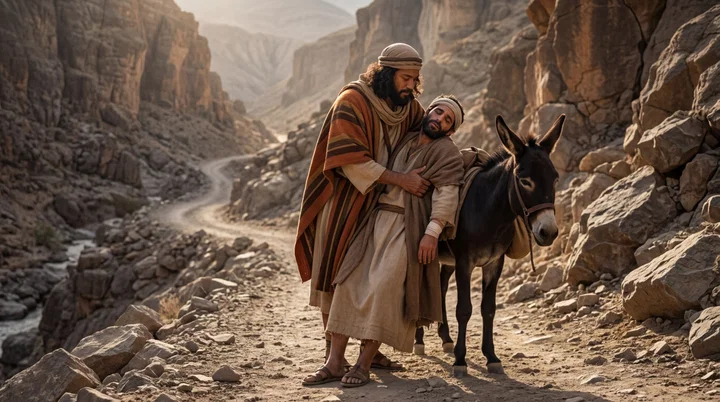
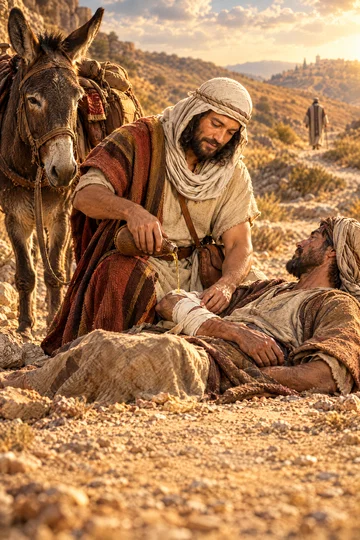
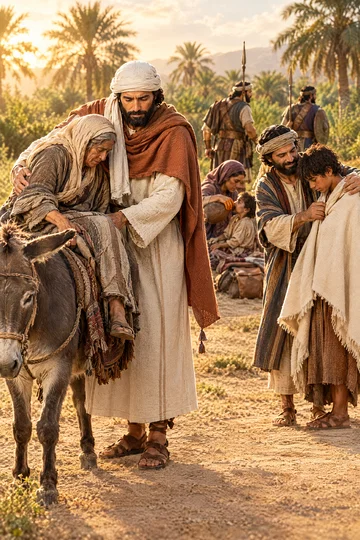
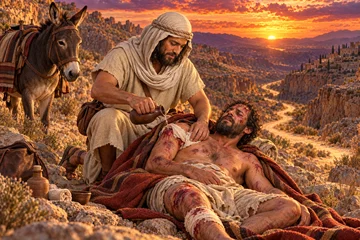
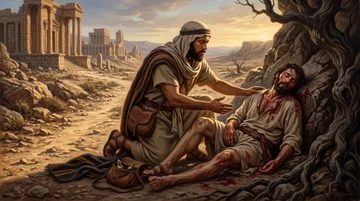
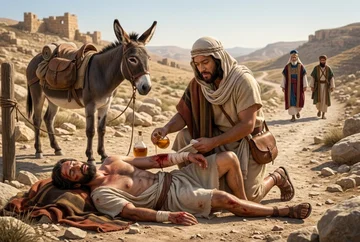
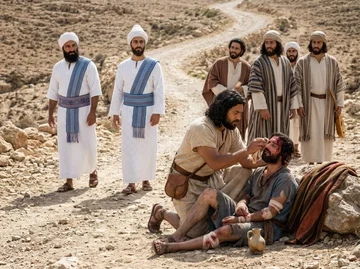
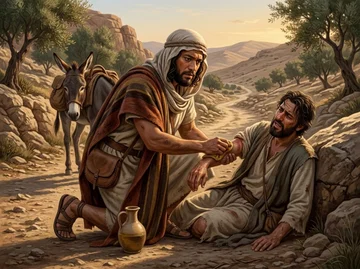
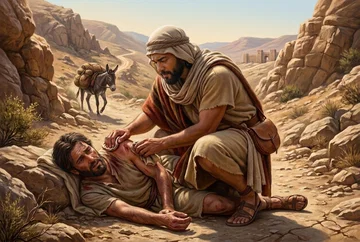
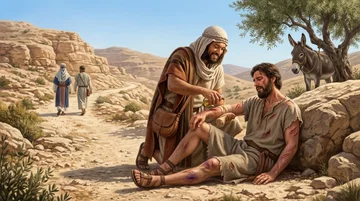
And went to him, and bound up his wounds, pouring in oil and wine, and set him on his own beast, and brought him to an inn, and took care of him.
Translations
American King James Version, King James Version, Webster Bible
And went to him, and bound up his wounds, pouring in oil and wine, and set him on his own beast, and brought him to an inn, and took care of him.
and went to him, and bound up his wounds, pouring in oil and wine, and set him on his own beast, and brought him to an inn, and took care of him.
Revised Version, American Standard Version
and came to him, and bound up his wounds, pouring on them oil and wine; and he set him on his own beast, and brought him to an inn, and took care of him.
and having come near, he bound up his wounds, pouring on oil and wine, and having lifted him up on his own beast, he brought him to an inn, and was careful of him;
and came up [ to him] and bound up his wounds, pouring in oil and wine; and having put him on his own beast, took him to [ the] inn and took care of him.
and, coming near, bound up his bruises, pouring thereon oil and wine,—and, setting him on his own beast, brought him into an inn, and took care of him.
Berean Standard Bible, Majority Standard Bible
He went to him and bandaged his wounds, pouring on oil and wine. Then he put him on his own animal, brought him to an inn, and took care of him.
came to him, and bound up his wounds, pouring on oil and wine. He set him on his own animal, brought him to an inn, and took care of him.
And came to him and put clean linen round his wounds, with oil and wine; and he put him on his beast and took him to a house and took care of him.
And went to him, and bound vp his wounds, and powred in oyle and wine, and put him on his owne beast, and brought him to an Inne, and made prouision for him.
Douay-Rheims (Challoner revision)
And going up to him, bound up his wounds, pouring in oil and wine: and setting him upon his own beast, brought him to an inn, and took care of him.
Pictures



Cross-references
- Luke 10:27-28
And he answering said, Thou shalt love the Lord thy God with all thy heart, and with all thy soul, and with all thy strength, and with all thy mind; and thy neighbour as thyself.
The Samaritan’s care fulfills the command to love one’s neighbor.
- Leviticus 19:18
Thou shalt not avenge, nor bear any grudge against the children of thy people, but thou shalt love thy neighbour as thyself: I am the LORD.
The Samaritan’s care puts the command to love one’s neighbor into action.
- Luke 10:29
But he, willing to justify himself, said unto Jesus, And who is my neighbour?
The question about who counts as a neighbor prompts the Samaritan’s example.
- Matthew 22:39
And the second is like unto it, Thou shalt love thy neighbour as thyself.
The Samaritan’s practical care puts the command to love one’s neighbor into action.
- Matthew 25:35-40
For I was an hungred, and ye gave me meat: I was thirsty, and ye gave me drink: I was a stranger, and ye took me in:
Care for suffering people is counted as service to Christ.
- Isaiah 61:1
The Spirit of the Lord GOD is upon me; because the LORD hath anointed me to preach good tidings unto the meek; he hath sent me to bind up the brokenhearted, to proclaim liberty to the captives, and the opening of the prison to them that are bound;
Both describe Christ’s restoring work of binding up the brokenhearted.
- Luke 10:30
And Jesus answering said, A certain man went down from Jerusalem to Jericho, and fell among thieves, which stripped him of his raiment, and wounded him, and departed, leaving him half dead.
Identifies the wounded man the Samaritan helps.
- Luke 10:25
And, behold, a certain lawyer stood up, and tempted him, saying, Master, what shall I do to inherit eternal life?
The lawyer’s question about eternal life leads to the Samaritan parable.
- Matthew 25:40
And the King shall answer and say unto them, Verily I say unto you, Inasmuch as ye have done it unto one of the least of these my brethren, ye have done it unto me.
Care for the wounded stranger is counted as care for Christ.
- Deuteronomy 10:19
Love ye therefore the stranger: for ye were strangers in the land of Egypt.
Love for the stranger is shown through practical care for someone in need.
- Mark 12:30-31
And thou shalt love the Lord thy God with all thy heart, and with all thy soul, and with all thy mind, and with all thy strength: this is the first commandment.
Samaritan's care fulfills love command
- Luke 10:28
And he said unto him, Thou hast answered right: this do, and thou shalt live.
Christ’s command to do what the law requires is applied through merciful action.
- Deuteronomy 22:4
Thou shalt not see thy brother’s ass or his ox fall down by the way, and hide thyself from them: thou shalt surely help him to lift them up again.
The law requires helping another in distress; the Samaritan tends the wounded man.
- Galatians 6:1-2
Brethren, if a man be overtaken in a fault, ye which are spiritual, restore such an one in the spirit of meekness; considering thyself, lest thou also be tempted.
The wounded are to be patiently helped and restored.
- Matthew 5:43-45
Ye have heard that it hath been said, Thou shalt love thy neighbour, and hate thine enemy.
Commands kindness toward enemies, as the Samaritan shows.
Commentary part 1 of 2
Each commentary is drawn from primary sources: the writings of Ellen G. White and Adventist pioneers and periodicals. Each commentary is separate. Its own words are not a quotation; follow the references to read the source passages.
Ellen G. White
121 sources
The verse shows a despised traveler going to a man stripped and left half dead by robbers, treating his wounds with oil and wine, carrying him on his own animal to shelter and caring for him at his own expense.ST Jul 23, 1894COL 376.1–2DA 497Ms 153, 1904, par. 15–19Ms 130, 1906, par. 46–48
A neighbor is anyone wounded and in need of help, without limit of race, creed, class or enmity, and being a neighbor means showing such concrete mercy rather than merely feeling pity or professing religion.COL 376.1–2DA 497.1Ms 100, 1904, par. 5–11SW 41.1DA 503.4
Loving God with the whole heart and loving the neighbor as oneself are the terms of eternal life, kept not by profession but by benevolent deeds that prove true conversion and harmony with the law.Ms 97, 1901, par. 15–18Lt 22, 1901, par. 16–19Ms 101, 1901, par. 42–46ST Jul 6, 1915Lt 304, 1908, par. 13–15
The Samaritan figures Christ, who left His glory and became poor to rescue humanity robbed and ruined by Satan, healing wounds, covering with His righteousness, opening a refuge of safety and making full provision at the cost of His own death.Ms 109, 1906, par. 8–14ST Jul 7, 1890RH Sep 13, 1906ST Jul 23, 1894
His example carries the command to go and do likewise, relieving physical suffering as far as possible to open hearts to the gospel, with personal, persevering care for the poor, the sick, the fallen, and the neglected.Lt 52, 1906, par. 29–31Lt 81, 1901, par. 7–10Lt 42, 1907, par. 14–164T 226.36T 294.1–2
Story and Setting
Luke 10:34 belongs to Christ's answer to the lawyer's questions what to do to inherit eternal life and who is the neighbor, giving the solid foundation for eternal life and presenting the truth as it is in Jesus.3T 523.2–3Ms 100, 1904, par. 5–11Ms 97, 1901, par. 15–18Ms 160, 1904, par. 27–32Lt 82, 1895, par. 23 Loving God with all the heart and loving the neighbor as oneself outlines the whole duty of man, on which hang all the law and the prophets, bringing peace and happiness and joy when followed, and the verse shows what loving the neighbor as oneself does in practical, costly care.3T 523.2–3Ms 100, 1904, par. 5–11Ms 97, 1901, par. 15–18 Luke 10:25-37 uses the good Samaritan to show who counts as a neighbor, and the account of the Samaritan caring for the wounded man illustrates love for one's neighbor as oneself.Ms 160, 1904, par. 27–32Lt 82, 1895, par. 23Ms 150, 1899, par. 17–19
The story recounts an incident that had lately taken place and was fresh in the hearers' minds, on the road from Jerusalem to Jericho where thieves stripped a traveler and left him wounded and half dead.Ms 97, 1901, par. 15–18Lt 98, 1896, par. 8–10Ms 167, 1898, par. 5–7 After robbers left him cut and wounded unto death, a priest passed by on the other side and a Levite whose business it was to help left him, refusing the work as too much trouble.Lt 98, 1896, par. 8–10Ms 153, 1904, par. 15–19Lt 304, 1908, par. 13–15 The neglect shows that priests and scribes had read the law commanding love and mercy but had not brought it into practical life, while the wounded stranger, neighbor and brother in suffering, should have moved hearts to pity even more than a beast of burden would.Lt 98, 1896, par. 8–10Lt 304, 1908, par. 13–15ST Jul 23, 1894
The verse shows the Samaritan's compassion in practical, costly acts: he came where the wounded man was, had compassion on him, went to him, bound up his wounds pouring in oil and wine, set him on his own beast, brought him to an inn, and took care of him.ST Jul 23, 1894DA 497ST Jul 7, 1890Ms 40, 1889, par. 1–2Lt 52, 1906, par. 29–31 In the parable the injured man represents anyone wounded and bruised by the adversary, and the Samaritan's care illustrates that a neighbor is anyone who needs help, regardless of faith, race, color, or social class.COL 376.1–2ST Jul 7, 1890Ms 40, 1889, par. 1–2 He acts as a neighbor across national and religious divisions, unlike those who rely on religious observances without showing mercy, making plain that love of neighbor is more than formal religious service.ST Jul 7, 1890Ms 40, 1889, par. 1–2Lt 52, 1906, par. 29–31
The care was personal and attentive at his own expense, for he got down from his own animal, examined the man, and lifted him onto his own beast.Ms 153, 1904, par. 15–19DA 500.3–503.1ST Jul 23, 1894 He used his own oil and wine brought for his own journey to heal and refresh the sufferer, covered him with his own garment, and carried him carefully so the journey would not worsen his pain, traveling slowly so the man would not suffer more pain and walking beside him to the inn.Ms 153, 1904, par. 15–19DA 500.3–503.1ST Jul 23, 1894 He brought the stranger to an inn, watched over him through the night and tenderly cared for him, arranging the best available accommodation rather than leaving him to suffer.DA 500.3–503.1ST Jul 23, 189413MR 285.2–286.1 Before leaving he entrusted him to the innkeeper, paid the charges with money for his care, and promised to repay any further cost on his return, opening homes to shelter strangers in trouble, taking care of them free of all cost, and doing all in one's power to make them comfortable.Ms 153, 1904, par. 15–19Ms 130, 1906, par. 46–48DA 500.3–503.1ST Jul 23, 1894Lt 189, 1899, par. 2–4
The meeting was brought about by God's providence, who weaves human events and places sufferers where sympathy will meet them, and the account is a real event in which people are neighbors and brothers across divisions such as Jew and Samaritan.Lt 98, 1896, par. 8–10Ms 167, 1898, par. 5–7Lt 82a, 1897, par. 7–13 The Samaritan, though despised, hated, cursed and excommunicated by the Jews and made a byword, proved superior in character to those claiming exalted righteousness, possessing a heart that can feel for suffering humanity and nobility of soul to show mercy to one whom he did not know.Lt 98, 1896, par. 8–10COS 69.1–70.3ST Jul 23, 1894 His love was of the right quality, flowing out in disinterested benevolence and treating the wounded stranger as he himself would desire to be treated, doing with gentleness and kindness what the priest and Levite refused.Lt 304, 1908, par. 13–15ST Jul 23, 1894Ms 87, 1894, par. 38–39 Although the man belonged to a people the Jews despised, the Samaritan acted as his brother and friend, showing that love of neighbor crosses hostility between peoples, and Christ's commendation of him helped prepare the disciples to carry the message to Samaria.COS 69.1–70.3Ms 87, 1894, par. 38–3921MR 190.2–4
Meaning of Neighborly Mercy
A neighbor is anyone wounded and bruised by the adversary, anyone who most needs sympathy and help, whoever they may be, including strangers and families close at hand.COL 376.1–2SW 41.1DA 503.46T 294.1–2Ms 87, 1894, par. 40–41 No limits of church, faith, race, color, class, caste, territory, friendship or enmity set who counts, for in Christ Jewish distinctions about neighbor are swept away and help is owed wherever opportunity to minister appears.COL 376.1–2SW 41.1DA 503.46T 294.1–2 The wounded man is every soul who is God's property and most needs charity, and the question Who is my neighbor must never be used to stand aside from duty.SW 41.1DA 503.46T 294.1–2 Love for God is made visible through deeds of mercy to the fullest extent of ability, doing good to everyone who needs sympathy and help and not only to relatives, friends, fellow believers or those of one's own faith.COL 376.1–2Ms 87, 1894, par. 40–41
Neighborly love crosses national, religious and social divisions and acts as neighbor across hostility, prejudice and personal danger, unlike reliance on religious observances without mercy.ST Jul 7, 1890Ms 40, 1889, par. 1–2Ms 109, 1906, par. 8–14COS 69.1–70.3 It does not first ask whether the sufferer is pleasant or disagreeable, courteous or difficult, a Jew or Gentile, of one's country, creed, kin or church, or whether kindness will be returned.ST Jul 23, 1894COS 69.1–70.33T 511.2–3 The Samaritan did not question whether the wounded stranger was a relative or of his country or creed, but went to work because help was needed, relieved him as best he could, set him on his own beast, carried him to an inn, and met his wants at his own expense.ST Jul 7, 1890Ms 109, 1906, par. 8–143T 511.2–3 Those who so act are neighbor to those who fall among thieves, true helpers with Christ imitating His example in doing good, showing Christ's mercy, compassion and tenderness without regard to race, color or class and giving evidence of keeping the whole law.Ms 109, 1906, par. 8–14ST Jul 23, 18943T 511.2–3
Mercy is doing what the sufferer needs through concrete, personal help rather than merely feeling sympathy, weeping, noticing, pitying, professing faith, or relying on forms, ceremonies, systems, creeds, rites and outward religion.DA 497.1Ms 100, 1904, par. 5–11Lt 134, 1902, par. 17–19Ms 87, 1894, par. 28–31 True religion is loving action, genuine goodness, and doing what brings the greatest good to others.DA 497.1Ms 100, 1904, par. 5–11 To be a neighbor and to inherit eternal life by loving God with all the heart and the neighbor as self means going to the sufferer, binding injuries with soothing and healing provision of oil and wine, lifting at personal cost, carrying to shelter on one's own animal, and continuing to care.Ms 100, 1904, par. 5–11Lt 81, 1901, par. 7–10Lt 42, 1907, par. 14–16Lt 134, 1902, par. 17–19Ms 87, 1894, par. 28–31 This practical, costly compassion in answer to who is my neighbor is part of the principles contained in God's law, and the command to love must be practiced.Lt 42, 1907, par. 14–16Lt 134, 1902, par. 17–19Ms 87, 1894, par. 28–31
The duty was no more agreeable for the Samaritan than for the priest and Levite, yet he did with gentleness and kindness what they refused as too much trouble.ST Jul 6, 1915Ms 117, 1903, par. 8–13Lt 304, 1908, par. 13–15 Tending injuries, lifting the man onto his own animal, bringing him to lodging and caring for him proves true conversion and harmony with God in spirit and works, in contrast to mere profession of piety.ST Jul 6, 1915Ms 117, 1903, par. 8–13Lt 304, 1908, par. 13–15 Kindness to people in need is a duty, not something to avoid as disagreeable or someone else's concern, and the priest and Levite's failure shows that caution and excuses are wrong when God's Word has made the duty plain.Ms 117, 1903, par. 8–13Lt 69, 1895, par. 3–4ST Jan 7, 1897 Christ's followers are not to pass suffering people by but to help them and lead them to Christ.ST Jan 7, 1897ST Mar 24, 1898
The Samaritan is the neighbor because he showed mercy, and his example defines being a neighbor and carries Christ's command to go and do likewise.Lt 52, 1906, par. 29–31Lt 81, 1901, par. 7–10Lt 79, 1898, par. 4–5Lt 70, 1906, par. 6–8 His practical, costly compassion — approaching the stripped and half-dead man, treating wounds with oil and wine, placing him on his own animal, bringing him to an inn, and personally caring for him — illustrates the mercy that answers who is a neighbor and the command to love one's neighbor as oneself.Lt 52, 1906, par. 29–31Lt 81, 1901, par. 7–10Lt 42, 1907, par. 14–16Lt 79, 1898, par. 4–5Lt 70, 1906, par. 6–8 In contrast to the priest and Levite who saw suffering and passed by on the other side, Jesus calls people to act with the same mercy.Lt 79, 1898, par. 4–5
Law Obedience and Eternal Life
Loving God with all the heart, mind, soul and strength and loving the neighbor as oneself are the terms of salvation, requiring the whole person to be converted and not a divided devotion.Ms 97, 1901, par. 15–18Lt 22, 1901, par. 16–19 Studied carefully and applied personally, this love outlines the whole duty of man, on which hang all the law and the prophets.Ms 97, 1901, par. 15–18Lt 22, 1901, par. 16–19Ms 101, 1901, par. 42–46 Going to the wounded man, binding his wounds with oil and wine, setting him on his own beast, bringing him to an inn and taking care of him shows that love in practical mercy.Ms 97, 1901, par. 15–18Ms 101, 1901, par. 42–46Ms 21, 1889, par. 36–38 That practical mercy is the law of God practiced in Christlike love and genuine medical missionary work, restoring fallen brethren by showing interest and speaking and acting kindly instead of passing by on the other side, even when the work is uninviting and costs inconvenience, care and anxiety.Ms 101, 1901, par. 42–46 It gives the solid foundation for eternal life, not higher education in sophistries and spiritualistic ideas, a foundation created by giving His own life for the life of the world, presenting the truth as it is in Jesus to give light, calling hearers to obey and walk in the way of the commandments of God, and bringing peace and happiness and joy into the home and the church when followed.Ms 97, 1901, par. 15–18Ms 160, 1904, par. 27–32Lt 82, 1895, par. 23
Supreme love to God sanctifies the affections and bears fruit in love to mankind.ST Jul 2, 1894 Together they comprise the whole duty of keeping the first four and the last six commandments as the two great arms of the law.Ms 17, 1893, par. 1ST Jul 2, 1894 The wounded and bruised man is the neighbor, and pitying him, going to him and caring for his needs at personal cost belongs to love for fellow man under the last six commandments.Ms 17, 1893, par. 1 Every needy and unfortunate person brought under notice, whoever they may be and even with no tie of kith or kin, has this claim to interest, sympathy and charity, because every neighbor is the purchase of blood, and answering it keeps the second great commandment on which the last six depend.Ms 17, 1893, par. 13T 524.1 Loving God supremely first gives the mind of Christ, so no one loves God without loving the neighbor in this active way that seeks out sufferers rather than enclosing itself in four walls away from suffering, joining God's love to man with man's love for God, and those tested and proved in loving others as themselves in this way will be pronounced fit for an inheritance with the saints in light in the pure home of joy.Ms 17, 1893, par. 1ST Jul 2, 1894Ms 40, 1889, par. 3
Keeping the law requires living out its principles through benevolent deeds, not mere profession of piety or reverence for the law.COL 379.3ST Mar 3, 1887RH Sep 13, 1906 Tending injuries with oil and wine, lifting the man onto his own animal, carrying him to lodging and caring for him proves true conversion and harmony with God in spirit and works.ST Jul 6, 1915Lt 304, 1908, par. 13–15COL 379.3HMW 31.3 The duty was no more agreeable for him than for the priest and Levite, yet he did with gentleness and kindness what they refused to do.ST Jul 6, 1915Lt 304, 1908, par. 13–15 His costly, willing service shows love of neighbor and mercy toward anyone in need, including strangers, and that faith and loyalty to the law must be shown by tender kindness and deeds, including love for neighbor.ST Mar 3, 1887HMW 31.3RH Sep 13, 1906
Violating the principles of justice and mercy in word or deed is sin, and the teaching forces the difference between obedience and disobedience upon transgressors.Lt 58, 1898, par. 8–11Lt 165, 1901, par. 23–25 Neglecting such care breaks the commandment professed, and neglecting such cases breaks that commandment and leaves no assurance of eternal life.3T 524.14T 56.3–57.1 Offending in that one point makes guilty of all, for a heart not opened to the wants and sufferings of humanity will not open to the claims of God stated in the first four precepts, so idols claim the heart and affections and God is not honored and does not reign supreme.3T 524.1 The failure of self-love to fulfill God's law is thus exposed, and hearers are warned that they have souls to save or souls to lose and are deciding their own destiny for eternity, so they must waste no more moments and must flee to refuge and lay hold on eternal life as their only safety and strength against sin, slavery to disobedience, intemperance and perverted appetite.Lt 58, 1898, par. 8–11Lt 8, 1895, par. 22–254T 58.1
When God is loved supremely, property is an entrusted trust to be used wisely for others and for God's glory and subordinated to eternal interests.Ms 25, 1896, par. 20–2216MR 260.4–261.1 Love calls for action to relieve physical distress and for using what is not truly needed for self to help others.Lt 82a, 1897, par. 7–13 Treating wounds, carrying the sufferer, arranging continued care and paying for it shows that people are neighbors and brothers across divisions, and possessions are not to be held above obedience to God.Lt 82a, 1897, par. 7–13Ms 25, 1896, par. 20–22
Christ Seen in Samaritan
The Samaritan stands for Christ Himself, who looked with compassion upon helpless humanity and humbled Himself to serve it.Ms 109, 1906, par. 8–14ST Jul 7, 1890RH Sep 13, 1906 He left His glory to come to the rescue, laying aside royal robe and crown, clothing divinity with humanity in poverty and self-denial, taking humanity upon Himself and becoming poor for the sake of men ready to die.ST Jul 7, 1890RH Sep 13, 1906DA 503.5Ms 62, 1894, par. 14Ms 21a, 1895, par. 4 He found men ready to die and undertook their case, uplifting and caring for the wounded and bruised stranger at practical, costly personal care, and in that He both fulfilled the whole law of love to neighbor and revealed the compassion that bridges the gulf of transgression separating man from God.Ms 109, 1906, par. 8–14ST Jul 7, 1890Ms 62, 1894, par. 14Ms 21a, 1895, par. 4
The stripped, wounded, half-dead traveler is man deceived, bruised, robbed and ruined by Satan and left to perish by the wayside.COL 376.1–2ST Jul 7, 1890DA 503.5 He pictures the sinner and the lost human race left destitute, every soul wounded and bruised by the adversary who is the property of God and most needs sympathy and help.COL 376.1–2DA 503.46T 294.1–2ST Jul 23, 1894 Humanity lay helpless and ready to perish in its degradation and corruption, left without strength to save itself.ST Jul 7, 1890DA 503.5Ms 21a, 1895, par. 4
Binding up the wounds is Christ healing human wounds and covering the soul with His robe of righteousness.ST Jul 7, 1890ST Jul 23, 1894DA 503.5 Bringing to an inn is His opening a refuge of safety and providing shelter until restored.ST Jul 7, 1890DA 503.5Ms 21a, 1895, par. 4 Caring at His own charges is His making complete provision for human need at His own cost by dying to redeem, and His life and Spirit and work both expose how far short men come of keeping the commandments and loving neighbor as self and call His followers to love one another as He loved them.ST Jul 7, 1890DA 503.5
Pouring in oil and wine figures consolation, sympathy and restoring care given to a poor soul in need.Lt 23, 1894, par. 8–9ST Aug 14, 1884Lt 32, 1899, par. 12–14 God gives comfort and strength to those who seek Him in trusting, persistent prayer, and Christ, touched by human weakness, binds up the brokenhearted.ST Aug 14, 1884Lt 32, 1899, par. 12–14 Those who receive His comfort learn by experience that He is their personal Saviour and then share with others the comfort they have received.Lt 23, 1894, par. 8–9Lt 32, 1899, par. 12–14 To pass by on the other side, and to pour vitriol into wounds instead of oil by words and acts that dishearten and discourage, is to lack the love of the true Shepherd, to neglect a soul for whom Christ is working and to hinder the seeking and restoring work by which God brings back His lost sheep, not counting sins against him but counting Christ's righteousness to him.Lt 23, 1894, par. 8–9
Body and Soul Together
Relieving immediate physical suffering as far as possible is the lesson of binding wounds and pouring in oil and wine and carrying to an inn and caring. 4T 226.3ST Feb 25, 1886Ms 14a, 1897, par. 11–12Lt 83, 1897, par. 14–16 Anyone in need of sympathy and help is neighbor, and the wounded man is every soul wounded and bruised by the adversary, everyone who is God's property and most needs sympathy and help, including families within the shadow of church doors. 4T 226.36T 294.1–2ST Feb 25, 1886 The question Who is my neighbor must not be used to stand aside from duty, for in Christ Jewish distinctions about who counts are swept away, so help is owed without territorial lines, artificial distinctions, caste or aristocracy, wherever opportunity to minister appears, and this is the work every church in every locality must do for those nearest at hand. 6T 294.1–2 Meeting temporal needs by tending injuries and caring can open the way to the heart for spiritual truth, and supplying physical necessities, feeding the hungry, bringing the poor that are cast out into homes, and reaching to the very depths of human misery to help those who cannot possibly help themselves gives a favorable opportunity to set forth Christ the crucified One and to present Christ and the gospel. 4T 226.3ST Feb 25, 18866T 275.2–276.1Ms 14a, 1897, par. 11–12Lt 83, 1897, par. 14–16 That work belongs especially to every church that believes the truth for this time, requires daily gathering of grace and strength from God and seeking strength from Him, and requires personal service from all according to strength and opportunity which donations of money cannot replace. 6T 275.2–276.1Ms 14a, 1897, par. 11–12
Binding up wounds and pouring in oil and wine and setting on his own beast and bringing to an inn and taking care is genuine medical missionary work, which is the law of God practiced in Christlike love in obedience to supreme love for God and unselfish love for others on which hang all the law and the prophets and which leads to eternal life. Ms 101, 1901, par. 42–46Ms 150, 1901, par. 11–14 It pictures restoring brethren who have fallen into decay by showing interest in them and speaking and acting kindly toward them instead of passing them by on the other side, for every person in need of help that can be bestowed is a neighbor and Christians must be the Lord's helping hand to encourage him even when the work is uninviting and costs inconvenience, care and anxiety. Ms 101, 1901, par. 42–46Ms 33, 1899, par. 1 Acting as the good Samaritan means welcoming and caring for suffering people with sympathy and not merely performing charitable tasks, and sanitariums are to provide a place for such care where those who serve represent the Great Physician and relieve suffering while standing against satanic agencies. Ms 141, 1906, par. 47–48 Those who do it are partakers of the divine nature and should not hide their faith or identity as Seventh-day Adventists, and medical missionary work reaches people whom others neglect and supports the call to relieve suffering and heal the sick in homes. Ms 141, 1906, par. 47–48Ms 33, 1899, par. 1Ms 150, 1901, par. 11–14 Physicians are to follow the example by working vigorously to truly relieve rather than merely speaking a few words and charging a large or exorbitant fee. Ms 63, 1899, par. 17–19Ms 150, 1901, par. 11–14 Caring for the wounded means taking up the burden of thinking, caretaking, and studying complicated cases, for education has only begun when the diploma is received, and the one who feels himself a ripe scholar knows little while the one who knows more senses his inability and works in humility under the weight of suffering humanity. HPMMW 34.5 He refuses to take human life and human bodies into his own hands without joining himself to an experienced physician as a child to a father to be instructed, nourished, and corrected when in error, beginning at the lower round of the ladder and by careful, earnest, thoughtful exertion climbing round after round, with Bible religion as the mainspring of action. HPMMW 34.5
Compassion for a wounded, helpless person means accepting responsibility to help rather than passing by, and a heart made tender and sensitive by the Holy Spirit responds to another's suffering. 6T 303.2Ms 115, 1899, par. 18Ms 115a, 1899, par. 12 Seeing the man was enough to move the Samaritan to act, and his compassion and practical care were evidence that he was controlled by the Holy Spirit and that Christ dwelt in him. Ms 115, 1899, par. 1810MR 96.1–2Ms 115a, 1899, par. 12 The Holy Spirit moves people to accept this duty and minister to others in charity and godliness in action. 6T 303.210MR 96.1–2 Angels were beside the Samaritan as he tended wounds and carried to an inn and looked after him, and angels stand by all who serve God by ministering to others, with God's angels cooperating with people in caring for souls. 6T 303.2COL 388.2RH Jan 19, 1911 Christ works with those who serve under His care as the Restorer, and their work done with heavenly help and His cooperation can bring great results. COL 388.2RH Jan 19, 1911
Samaritan work gives character to presenting truth by helping people just where they are, and means work properly conducted to save poor sinners who have been passed by the churches. STMW11 32.2 It acts as the entering wedge that gives truth standing-room. STMW11 32.2 It calls for a different order of things among God's people and creates an entirely different atmosphere around the souls of the workers, for the Holy Spirit communicates to all who are doing God's service, and those worked by the Holy Spirit become a power for God in lifting up, strengthening, and saving souls that are ready to perish. STMW11 32.2 Compassionate action in treating wounds and carrying on his own animal and taking to an inn for shelter represents the Saviour's spirit and reproves indifference and neglect toward people who need help, including patient, practical compassion for people who are fallen, wounded, bruised, and near perishing. Lt 64, 1909, par. 6–7Lt 83, 1897, par. 10
Called to Do Likewise
The robbed and beaten traveler left half dead by the roadside is the Southern field and the colored people since freedom, wounded by neglect and left without spiritual freedom, warning and light while the enemy gained the advantage.Ms 77, 1901, par. 6–7RH Aug 27, 1901SW 21.2SBAWP 63.1–64.1Ms 21a, 1895, par. 4 The priest and Levite who pitied him and passed by on the other side picture those with great light who neglect that field, keeping their eyes on promising fields and spending means on their own conveniences, as when resources are spent making things more convenient in Battle Creek while the destitute South lies unrelieved.Ms 77, 1901, par. 6–7SW 27.1SPBC 164.18T 59.1–2SBAWP 63.1–64.1 Those who would serve the Southern race must not pass by but make practical, persevering efforts to care for them, tending wounds, carrying, sheltering and sustaining until restored, giving both temporal and spiritual help to help them gain spiritual freedom.RH Aug 27, 1901SW 21.2SW 27.1SBAWP 63.1–64.1Ms 21a, 1895, par. 4
Obedience means decided, persevering, large-hearted effort for that field across the color line, lifting the eyes to destitute unworked places, going in person, educating the ignorant, warning the indifferent, and ministering to needy souls with schools and temporal and spiritual help.Lt 6, 1901, par. 1–4Lt 26, 1894, par. 169T 209.1–2Ms 21a, 1895, par. 4Ms 103, 1908, par. 18–19 It means sending larger gifts in just proportion and means to Nashville and Huntsville, sustaining the destitute school by liberal gifts and tried men, keeping the foot off the brake, and laboring together in tent-meetings and large assemblies until prejudice is triumphed over by the Holy Spirit and converts rescue others.9T 209.1–2Lt 205, 1901, par. 14–16Ms 103, 1908, par. 18–19 Close connection with Christ lifts above prejudice of color or caste, fills the heart with faith that works by love and purifies the soul, lifts the mind into a pure, heavenly, unselfish atmosphere, and regards the color line very differently when God controls minds.Lt 6, 1901, par. 1–49T 209.1–2Ms 103, 1908, par. 18–19 Following in the footsteps of Jesus is acting the Samaritan's part toward the discouraged and oppressed whom Satan has tried to discourage, encouraging a fallen brother, setting him to work, giving practical help to clear his path, and refusing to imperil one soul for whom so great a price was paid, for there is hope for the man.Lt 6, 1901, par. 1–4Lt 26, 1894, par. 16Ms 21a, 1895, par. 4
The same binding up, carrying to the inn, and taking responsibility belongs to brethren, the sick, the poor cast out, travelers, the drowned-out and homeless, struggling families, faithful servants in poverty, and all helpless and forsaken.6T 294.36T 275.2–276.1Ms 96, 1899, par. 10–12Ms 1, 1856, par. 5Lt 105, 1902, par. 6–8 It means looking to the afflicted, supplying lack, comforting, cheering and strengthening hearts, searching out unknown causes before need becomes desperate, giving safe comfortable care and shelter free of cost, arranging the best available accommodation, and helping them help themselves and earn support to sustain the family.6T 275.2–276.1Ms 96, 1899, par. 10–1213MR 285.2–286.1Ms 1, 1856, par. 5Lt 105, 1902, par. 6–8 Those blessed with health must have kind regard for those without it, pitying and sympathizing and lending a helping hand and doing as they would wish if crippled themselves, and must not oppress or withhold favor from a generous-hearted brother cruelly torn and left unable to bear obstacles, with shocked nerves and crippled affliction even though he erred in judgment, but all kindly aid him a little, for God notices and what is done for the least and for a disciple is done for Christ.6T 294.313MR 285.2–286.1Ms 1, 1856, par. 5 This work belongs especially to every church, requires daily gathering of grace and strength from God, requires personal service from all according to strength and opportunity that no donation of money replaces, and gives opportunity to set forth Christ crucified and break every yoke.6T 294.36T 275.2–276.1
The verse calls for rescuing perishing souls in sin and intemperance with hopeful words, food, unstimulating drink, clean clothing, encouragement to faith, and patient help that lifts without blame.ST Jun 6, 1900MH 172.2Ms 62, 1894, par. 18–19Ms 133, 1897, par. 6–9Ms 87, 1898, par. 20–23 The strong are to support the weak weakened in moral power by liquor and tobacco, remembering the man is for the time under a demon's power and not sane, befriending him when sober without blame, helping him rise lest he go over the same ground again, strengthening every good trait, and arousing the sense that it is not too late to be a man, rather than passing by saying it is lost time to work for so weak a man.ST Jun 6, 1900MH 172.2Ms 87, 1898, par. 20–23 Backsliders and straying brethren are to be sought with tender meekness instead of harsh criticism, indifference, or impossible conditions, for harshness worsens hurt while sympathy and a helping hand heal, and to see souls ready to die in peril of losing heaven and say and do nothing while giving all attention to the ninety and nine safe in the fold is cruel and provokes grievous anger.Ms 62, 1894, par. 15–17Ms 62, 1894, par. 18–19Ms 133, 1897, par. 6–9 One soul rescued is saved from Satan's grasp, thousands might have been saved by such faithfulness, and the Great Physician stands beside the faithful worker forgiving the repentant discouraged soul.ST Jun 6, 1900Ms 87, 1898, par. 20–23
Churches, institutions, and those established on vantage ground must not spend extra hundreds of thousands on additional Battle Creek buildings, presses, facilities and conveniences for themselves while a destitute portion of the world and destitute neighbors lie unrelieved.6T 275.2–276.1SPBC 164.18T 59.1–2Lt 205, 1901, par. 14–16Lt 5, 1895, par. 12–13 God has a controversy over this locking up of sympathy, and requires staying the hand from overgrown establishments, binding about supposed necessities, dividing means, and sending not merely a few hundred dollars but larger gifts in just proportion to establish His work, especially the sister enterprise in Nashville and the Southern field of black and white people, until neighboring institutions are finished and in running order.SPBC 164.18T 59.1–2Lt 205, 1901, par. 14–16 The neglected mission work at home and abroad and among oppressed people needing education and the gospel must be taken up wholeheartedly with true missionary spirit, becoming acquainted with unbelievers, placing truth before those living up to all the light they have, and reaching precious souls in the city, for loving God with the whole being requires loving those for whom His Son was given.Lt 148, 1902, par. 5–66T 275.2–276.1SPBC 164.1Lt 5, 1895, par. 12–13
Every person met is a neighbor, including opponents, strangers, household members, children, and city dwellers, and no question is to be asked whether the sufferer is relative or of one's country, creed, kin or church, but work is to be done because help is needed, relieving as best can be done and meeting wants at one's own expense.Ms 189, 1907, par. 19–203T 511.2–3RH Mar 27, 1900Ms 66, 1890, par. 2–418MR 114.3–115.1 Neighbor-love so shown is to be cultivated in family life and taught to children, learned through ministry that develops compassion and fitness for angels, reaching unbelievers living up to light and bringing them into fellowship with the saints.Lt 148, 1902, par. 5–6Ms 189, 1907, par. 19–20Ms 132, 1902, par. 12 Withholding kindness and encouragement contradicts Christ and does not represent Him or belong to His family, and holding sacred office is no excuse, for the priest and Levite's failure shows neglect is guilt however exalted the position, while the Samaritan's compassion, mercy, benevolence and obedience to the law of human kindness is approved by Christ and recorded as the model.3T 511.2–3RH Mar 27, 1900Ms 66, 1890, par. 2–418MR 114.3–115.1Ms 132, 1902, par. 12
Sources