Luke 10:35
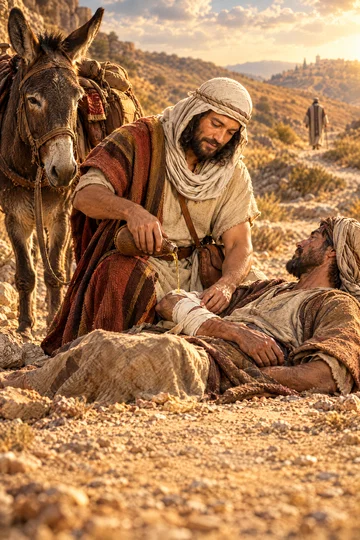
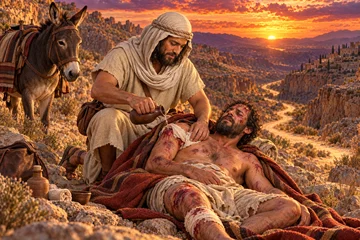
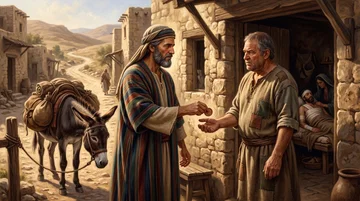
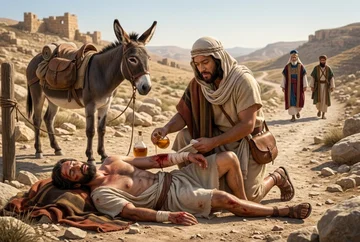
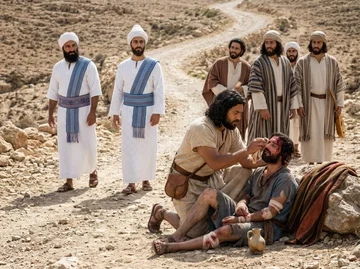
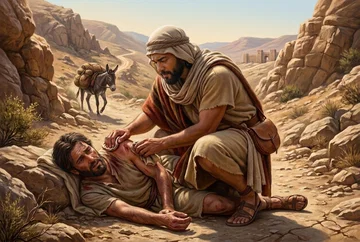
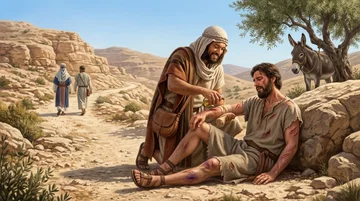
And on the morrow when he departed, he took out two pence, and gave them to the host, and said unto him, Take care of him; and whatsoever thou spendest more, when I come again, I will repay thee.
Translations
And on the morrow when he departed, he took out two pence, and gave them to the host, and said to him, Take care of him; and whatever you spend more, when I come again, I will repay you.
King James Version, KJV Cambridge Paragraph Bible
And on the morrow when he departed, he took out two pence, and gave them to the host, and said unto him, Take care of him; and whatsoever thou spendest more, when I come again, I will repay thee.
And on the morrow, when he departed, he took out two pence, and gave them to the host, and said to him, Take care of him: and whatever thou spendest more, when I come again, I will repay thee.
And on the morrow he took out two pence, and gave them to the host, and said, Take care of him; and whatsoever thou spendest more, I, when I come back again, will repay thee.
And on the morrow he took out two shillings, and gave them to the host, and said, Take care of him; and whatsoever thou spendest more, I, when I come back again, will repay thee.
and on the morrow, going forth, taking out two denaries, he gave to the innkeeper, and said to him, Be careful of him, and whatever thou mayest spend more, I, in my coming again, will give back to thee.
And on the morrow [ as he left], taking out two denarii he gave them to the innkeeper, and said to him, Take care of him, and whatsoever thou shalt expend more, I will render to thee on my coming back.
And, on the morrow, throwing out two denaries, he gave them to the inn-keeper, and said—Take care of him, and, whatsoever thou shall further spend, I, when on my way back, will duly pay thee.
The next day he took out two denarii and gave them to the innkeeper. ‘ Take care of him,’ he said, ‘ and on my return I will repay you for any additional expense.’
The next day when he departed he took out two denarii and gave them to the innkeeper. ‘ Take care of him,’ he said, ‘ and on my return I will repay you for any additional expense.’
On the next day, when he departed, he took out two denarii, gave them to the host, and said to him, ‘ Take care of him. Whatever you spend beyond that, I will repay you when I return.’
And the day after he took two pennies and gave them to the owner of the house and said, Take care of him; and if this money is not enough, when I come again I will give you whatever more is needed.
And on the morowe when he departed, he tooke out two pence, and gaue them to the hoste, and said vnto him, Take care of him, and whatsoeuer thou spendest more, when I come againe, I will recompense thee.
Douay-Rheims (Challoner revision)
And the next day he took out two pence, and gave to the host, and said: Take care of him; and whatsoever thou shalt spend over and above, I, at my return, will repay thee.
Pictures



Cross-references
- Leviticus 19:18
Thou shalt not avenge, nor bear any grudge against the children of thy people, but thou shalt love thy neighbour as thyself: I am the LORD.
The Samaritan’s care puts the command to love one’s neighbor into action.
- Luke 10:27
And he answering said, Thou shalt love the Lord thy God with all thy heart, and with all thy soul, and with all thy strength, and with all thy mind; and thy neighbour as thyself.
The Samaritan’s practical care enacts the command to love one’s neighbor.
- Luke 10:29
But he, willing to justify himself, said unto Jesus, And who is my neighbour?
The lawyer’s question about who counts as a neighbor introduces the parable.
- Luke 10:25
And, behold, a certain lawyer stood up, and tempted him, saying, Master, what shall I do to inherit eternal life?
The lawyer’s question about eternal life introduces the Samaritan’s care for his neighbor.
- Luke 10:30
And Jesus answering said, A certain man went down from Jerusalem to Jericho, and fell among thieves, which stripped him of his raiment, and wounded him, and departed, leaving him half dead.
Identifies the wounded traveler whom the Samaritan pays to help.
- Matthew 22:39
And the second is like unto it, Thou shalt love thy neighbour as thyself.
Repeats the command illustrated by the Samaritan’s example.
- Matthew 25:35-40
For I was an hungred, and ye gave me meat: I was thirsty, and ye gave me drink: I was a stranger, and ye took me in:
Care for people in need is treated as service to Christ and grounds the welcome of the blessed.
- Matthew 25:42-45
For I was an hungred, and ye gave me no meat: I was thirsty, and ye gave me no drink:
Failure to care for people in need is condemned as failure to serve Christ.
- James 2:15-16
If a brother or sister be naked, and destitute of daily food,
Both condemn failing to help people in need when help is possible.
Commentary part 1 of 2
Each commentary is drawn from primary sources: the writings of Ellen G. White and Adventist pioneers and periodicals. Each commentary is separate. Its own words are not a quotation; follow the references to read the source passages.
Ellen G. White
114 sources
On the morrow the Samaritan left the inn, paid the host two pence to keep caring for the wounded traveler, and promised to repay any further expense on his return.ST Jul 23, 18943T 523.2–3COS 69.1–70.3 A neighbor is anyone in need without regard to faith, race, class or standing, and the one who proves neighbor is the one who shows mercy and is told to go and do likewise.ST Jul 23, 18943T 523.2–3COL 376.1–2Lt 134, 1902, par. 17–19ST Jul 23, 1894 That mercy is practical, costly and continuing care that does not stop after first rescue but takes personal responsibility for full restoration in body and soul.COS 69.1–70.3COL 376Lt 98, 1896, par. 8–10Ms 101, 1901, par. 42–467MR 237.1–238.1 The Samaritan pictures Jesus himself, who left glory to rescue humanity robbed and left to perish by Satan, healing wounds, covering with His own righteousness, and providing redemption at His own cost.Lt 64, 1909, par. 6–7ST Jul 7, 1890RH Sep 13, 1906DA 503.5ST Jul 23, 1894 The parable sums up the whole law as supreme love to God joined with love to fellow man, and living it out in deeds is the condition and foundation for inheriting eternal life.3T 523.2–3Lt 134, 1902, par. 17–19Ms 97, 1901, par. 15–18Lt 165, 1901, par. 23–25Ms 160, 1904, par. 27–32
Narrative Details and Setting
Jesus gave this charge as part of His answer to a lawyer who first asked what to do to inherit eternal life and then, seeking to justify himself, asked who is my neighbor.3T 523.2–3Lt 134, 1902, par. 17–19Ms 71, 1897, par. 29–32Ms 97, 1901, par. 15–18Ms 31, 1902, par. 13–16 The lawyer himself had summed up the law as loving God with all heart and soul and strength and mind and loving neighbor as self, which Jesus affirmed with the command to do this and live.3T 523.2–3Lt 134, 1902, par. 17–19Ms 71, 1897, par. 29–32Ms 100, 1904, par. 5–11Ms 97, 1901, par. 15–18 That questioning was put to Jesus at the urging of Pharisees, Herodians and Sadducees who had been silenced.Ms 71, 1897, par. 29–32
The setting is the road down from Jerusalem to Jericho, where a man fell among thieves who stripped him and wounded him and left him half dead.ST Jul 23, 1894Lt 134, 1902, par. 17–19Ms 100, 1904, par. 5–11Ms 97, 1901, par. 15–183T 511.2–3 A priest and a Levite came that way, saw him, and passed by on the other side.ST Jul 23, 1894Lt 134, 1902, par. 17–19Ms 100, 1904, par. 5–11Ms 153, 1904, par. 15–193T 511.2–3 But the Samaritan had compassion when he saw him, bound up his wounds pouring in oil and wine, set him on his own beast, brought him to an inn, and took care of him.ST Jul 23, 1894Lt 134, 1902, par. 17–19Ms 100, 1904, par. 5–11Ms 97, 1901, par. 15–183T 511.2–3
On the morrow when he departed, he took out two pence and gave them to the host with the charge to take care of him.ST Jul 23, 18943T 523.2–3COS 69.1–70.3COL 376Lt 81, 1901, par. 7–10 He promised that whatsoever more was spent, when he came again he would repay it.ST Jul 23, 18943T 523.2–3COS 69.1–70.3Lt 81, 1901, par. 7–10Lt 134, 1902, par. 17–19 That payment and promise arranged continued care after his own personal care through the night, so the rescue did not end with first aid.ST Jul 23, 18943T 523.2–3Lt 81, 1901, par. 7–10Lt 134, 1902, par. 17–19
Christ told it in the form of a parable, but it narrated an incident that had lately taken place.Ms 97, 1901, par. 15–18Ms 167, 1898, par. 5–7Ms 31, 1902, par. 13–16 It was familiar to many who listened and fresh in the minds of all who heard, describing a true event.Ms 97, 1901, par. 15–18Ms 167, 1898, par. 5–7Ms 31, 1902, par. 13–1621MR 190.2–4
The rescue was patient and costly in every detail.Ms 153, 1904, par. 15–19ST Jul 23, 1894 He covered the wounded man's nakedness with his own garment and used the oil and wine carried for his own comfort to heal and refresh him.ST Jul 23, 1894 He stayed with him despite danger from robbers, lifted him onto his own beast, and walked slowly and evenly beside him so the ride would not jar him and increase his pain.Ms 153, 1904, par. 15–19ST Jul 23, 1894 He brought him to a comfortable inn, nursed him through the night and watched his condition carefully, and in the morning when the man had improved he entrusted him to the innkeeper with money and the promise to repay more.Ms 153, 1904, par. 15–19ST Jul 23, 1894
Who Counts as Neighbor
A neighbor is anyone who needs help, regardless of church, faith, race, color, class, territory, social distinction, caste or rank, and that includes every wounded person and every person who belongs to God.COL 376.1–2ST Jul 23, 18943T 511.2–34T 226.36T 294.1–2 God's gifts of means, ability and grace are to be used for those who suffer rather than kept for personal advantage, and the care for the injured man is the practice of God's commandments and service to others.SW 41.14T 226.3 Those whose names are upon the church book must represent mercy, compassion and tenderness to any human being in need and suffering, relieving physical needs and suffering in a way that can open hearts to spiritual teaching.ST Jul 23, 18943T 511.2–34T 226.3
Being neighbor does not mean belonging to one's own group or faith, for God's law calls for love expressed in practical, unselfish care for an unfortunate person even outside one's own group.Ms 40, 1889, par. 1–2ST Jul 23, 18943T 511.2–3 The Samaritan did not stop to consider whether the man would be pleasant or disagreeable, whether he was Jew or Gentile, or whether he was relative or countryman or of his creed, but went to work because work needed to be done.ST Jul 23, 18943T 511.2–3ST Jul 23, 1894 His compassion was practical and generous and crossed the hostility between Samaritan and Jew, so that the despised Samaritan alone helped the wounded man, who was a Jew, and acted as his brother and friend in disinterested love that treats another as he would wish to be treated.Lt 82a, 1897, par. 7–13ST Jul 23, 189421MR 190.2–4
The neighbor is the one who shows mercy, for after compassion, binding wounds, pouring in oil and wine, setting the wounded man on his own beast, bringing him to an inn and caring for him, the Samaritan on the next morning paid the host to continue the care and promised to repay on his return whatever more was spent.ST Jul 23, 18943T 523.2–3Lt 134, 1902, par. 17–19Ms 100, 1904, par. 5–11Ms 97, 1901, par. 15–18 This paying and promising proves that being neighbor means showing mercy in practical, costly, continuing care, in contrast to the priest and the Levite whose neglect matched the idea that forms and ceremonies were all the law required.ST Jul 23, 18943T 523.2–3 Christ's question which of the three was neighbor to him that fell among thieves is answered by he that had mercy on him, and it carries the command to go and do likewise in order to live, summing up all principles contained in the law of God and outlining the whole duty of man on which hang all the law and the prophets.Lt 134, 1902, par. 17–19Ms 100, 1904, par. 5–11Ms 97, 1901, par. 15–18Ms 31, 1902, par. 13–16
The wounded and dying man was a stranger, yet a neighbor and a brother in suffering whose condition should move the heart to pity even more than a beast of burden.DA 503.4ST Jul 23, 1894 The neglect of him shows failure to bring into practical life God's law commanding love and care for the stranger.ST Jul 23, 1894 Love does not leave someone in peril without care, and a neighbor is anyone who needs help, especially a soul wounded and bruised by the adversary, uplifted when Christ abides in the heart.DA 503.4Ms 52, 1896, par. 45–48
Mercy Through Continuing Care
Luke 10:35 shows neighbor-love as practical, generous, sustained care that does not stop with first aid on the roadside but arranges continued care afterward.COS 69.1–70.3COL 376Lt 98, 1896, par. 8–10Lt 81, 1901, par. 7–10Lt 217, 1905, par. 6–11 The Samaritan's care did not end with treating the wounded man and bringing him to safety, but before leaving on the morrow he paid the innkeeper, entrusted the man's continued care to him, and promised to cover any further expense when he returned.COS 69.1–70.3COL 376Lt 81, 1901, par. 7–10Lt 217, 1905, par. 6–11Lt 107, 1902, par. 4–6 The parable thus outlines the work called for toward followers: practical, continuing action for someone in helpless need when others would not help.Lt 98, 1896, par. 8–10Lt 217, 1905, par. 6–11Lt 107, 1902, par. 4–6
Such mercy is costly and disinterested, treating another as one would wish to be treated and given without regard to the stranger's identity.Ms 101, 1901, par. 42–467MR 237.1–238.1ST Jul 23, 1894 It involves practical help with time and money, and may require inconvenience, expense, care and anxiety, yet the command to go and do likewise requires bearing that cost and seeing the restoration through instead of passing by on the other side.Ms 101, 1901, par. 42–467MR 237.1–238.1ST Jul 23, 1894 This is genuine medical missionary work and the practice of the law of God through unselfish love that restores fallen brethren, expressing the principles of God's law.Ms 101, 1901, par. 42–467MR 237.1–238.1 Seeing a wounded neighbor creates a duty to spend money to care for him and to provide for his continued care until he is restored, using one's resources to meet another's present need and to establish continued care for the destitute even at personal cost.Lt 205, 1901, par. 14–16Lt 205, 1901, par. 10–13Lt 205, 1901, par. 2–4
Mercy toward a neighbor requires more than feeling compassion or concern; it means giving concrete help, taking personal responsibility, and accepting responsibility for the person's care.Ms 87, 1894, par. 28–31Lt 31b, 1895, par. 11 That help must be guided by wise judgment about how to help, in contrast to the priest and Levite who passed by.Ms 87, 1894, par. 28–31Lt 31b, 1895, par. 11 Being neighbor means looking into a needy man's circumstances, finding what means of support he and his family have, and seeing that he has work to do so he can earn money for their support.Lt 105, 1902, par. 6–8Lt 105, 1902, par. 11 It requires searching out quiet, worthy cases who will not push themselves into notice, anticipating their needs, and providing opportunity to earn sufficient early and late so they do not want for any of the necessaries of life and are never placed where they must beg for work, caring for spiritual interests as well as temporal needs and giving people support and a place to serve.Lt 105, 1902, par. 6–8Lt 105, 1902, par. 11
The Samaritan's use of money shows property is an entrusted loan and trust from God to be used with wise judgment for His glory, eternal interests, and others' good rather than becoming an object of personal attachment, worship, or personal interests.Ms 25, 1896, par. 20–2216MR 260.4–261.1Ms 11, 1892, par. 9–11 The money is God's, not man's, and there is no moral right to lock up sympathy or to invest thousands in extra buildings, presses, and conveniences for large, overgrown, established institutions while a destitute neighboring work is left unfinished.Lt 205, 1901, par. 14–16Lt 205, 1901, par. 10–13 Those on vantage ground must bind about supposed necessities, stay the hand that would enlarge themselves, and send not merely a few hundred dollars but larger gifts to supply great need, with established works helping needy fields until they are in running order.Lt 205, 1901, par. 14–16Lt 205, 1901, par. 10–13 Means must be divided and subdivided to create properly proportioned institutions in many places, for God's institutions are not to stand independent of each other but one must help create the other, condemning passing needy people by.Lt 205, 1901, par. 14–16Lt 205, 1901, par. 10–13Ms 11, 1892, par. 9–11
Christ Pictured by Samaritan
The wounded traveler stripped, beaten, and left half dead on the road is humanity itself, deceived, bruised, robbed and ruined by Satan and left to perish, the whole lost human family lying naked, bleeding and destitute in sin.Lt 64, 1909, par. 6–7ST Jul 7, 1890ST Jul 23, 1894 The compassionate Samaritan is Jesus Himself and His mission, leaving His glory and the royal courts of heaven to rescue helpless sinners found ready to die.Lt 64, 1909, par. 6–7ST Jul 7, 1890ST Jul 23, 1894 His pity is seen in dressing wounds, lifting the sufferer onto his own beast, bringing him to an inn for shelter, paying his expenses and promising to repay whatever more is spent on his return, all watched by all heaven.Lt 64, 1909, par. 6–7ST Jul 7, 1890
Having found them ready to die, He undertakes their case, heals their wounds, opens a refuge of safety, and makes complete provision for their needs at His own cost by dying to redeem them.ST Jul 7, 1890DA 503.5 He covers the believing soul with His own robe of righteousness so that whoever believes in Him shall not perish but have everlasting life.DA 503.5ST Jul 23, 1894 That continued care, providing for need and accepting the cost of further care, fulfills love to neighbor and shows One who humbled Himself to serve humanity, living in poverty and self-denial and becoming poor for humanity's sake.ST Jul 7, 1890RH Sep 13, 1906DA 503.5
In such works of love toward the lost and erring He reveals His own love and character, revealing God's character to suffering humanity and representing Christ even as Christ represented the Father.Lt 79, 1898, par. 4–5ST Jul 23, 1894 His Spirit, pity and compassion become the light by which to view human life and work, showing how far short men come of keeping God's commandments and loving their neighbors as themselves.Lt 64, 1909, par. 6–7ST Jul 7, 1890 Being neighbor therefore means showing mercy by going to the suffering, binding up wounds and taking care of need, in contrast to the priest and Levite who saw one they could help and passed by on the other side with neglect and false reasoning, under the command to go and do likewise.Lt 79, 1898, par. 4–5Lt 64, 1909, par. 6–7
Law Kept and Eternal Life
The parable sums up all the principles contained in the law of God, outlining the whole duty of man on which hang all the law and the prophets.Lt 134, 1902, par. 17–19Ms 97, 1901, par. 15–18Lt 165, 1901, par. 23–25 Supreme love to God belonging to the first four commandments is joined as one of two great arms with love to fellow man belonging to the last six, and loving God supremely gives the mind of Christ for loving men.Ms 97, 1901, par. 15–18Ms 17, 1893, par. 13T 511.2–3 No one loves God without loving his neighbor, for the neighbor is the purchase of the blood of Christ, and true love does not shut itself away from suffering but goes to sinners and sufferers with pity and active help.Ms 17, 1893, par. 13T 511.2–3 Violating those principles of justice and mercy in word or deed is sin, and the priest and the Levite who saw the suffering man and passed by represent those in the church who are indifferent to the very ones who need sympathy and help and are commandment-breakers.Lt 165, 1901, par. 23–253T 511.2–3
True religion is not a matter of systems, creeds, rites, forms or ceremonies, but of loving deeds, genuine goodness, and seeking the greatest good of others.ST Jul 23, 1894DA 497.1ST Jul 7, 1890 Righteousness is shown by doing, not merely speaking, for the children of God are to live as Christ lived, and true loyalty to God's law is not merely professed but shown through practical benevolence toward one's neighbor.DA 504.14T 58.1ST Mar 3, 1887 Such practical, generous, continuing care embodies the spirit of God's law and shows that true faith is expressed in works and benevolence toward others.ST Jul 23, 18944T 58.1ST Mar 3, 1887 A person's worth to God does not depend on nation or religious profession, and the parable exposes religion that keeps outward ceremonies but fails to keep the law in the heart, matching the neglect of the priest and Levite.ST Jul 23, 1894ST Jul 7, 1890
The continuing payment for care shows part of the condition and solid foundation for inheriting eternal life and entrance into the kingdom of heaven.3T 523.2–3Ms 160, 1904, par. 27–32Ms 153, 1904, par. 15–19 It is the very work appointed to do, not gaining a wonderful higher education in sophistries and spiritualistic ideas but living out love to God and neighbor on the foundation Christ Himself created by giving His own life for the life of the world.Ms 160, 1904, par. 27–32Ms 153, 1904, par. 15–19Lt 82, 1895, par. 23 Luke 10:25 to the close of the chapter presents the truth as it is in Jesus and gives light under the Holy Spirit that calls hearers to obey and to walk in the way of the commandments of God.Ms 160, 1904, par. 27–32Lt 82, 1895, par. 23 Neglecting needy cases leaves no assurance of eternal life, because it transgresses the second great commandment to love one's neighbor, upon which the last six commandments depend, and to offend in one point is to be guilty of all.3T 523.2–33T 524.13T 533.1–3 Refusing to open the heart to the wants and sufferings of humanity closes the heart to the claims of God stated in the first four precepts, leaving idols to claim the heart and affections so that God is not honored and does not reign supreme, and passing by another's suffering puts eternal life at risk.3T 524.13T 533.1–3
The Samaritan's spirit and works prove true conversion and harmony with God, in contrast to the priest and Levite who only profess piety and pass by.Lt 304, 1908, par. 13–15HMW 31.3COL 379.3 His willingness to provide ongoing help at effort and cost, doing with gentleness and kindness the work they refused, showed compassion in action and harmony with God.ST Jul 6, 1915Lt 304, 1908, par. 13–15COL 379.3 This love to God sanctifies the affections and bears fruit in love to mankind, bringing peace and happiness and joy into the home and the church.Ms 97, 1901, par. 15–18ST Jul 2, 1894 Those tested and proved in loving others as themselves will be pronounced meet for an inheritance with the saints in light in heaven, the home of the pure and undefiled.Ms 97, 1901, par. 15–18ST Jul 2, 1894
Tender compassion moved by sight of need moves people to help, with God's power magnified and angels ready to cooperate as the Holy Spirit works in human hearts.6T 303.2Ms 115a, 1899, par. 12Ms 115, 1899, par. 18 The Samaritan's readiness to help and to pay for continued care is evidence of the Holy Spirit's control and of Christ dwelling within.6T 303.2Ms 115a, 1899, par. 12Ms 115, 1899, par. 18 His ministry had the companionship of angels, and those who serve others have the support of heaven and Christ.6T 303.2COL 388.2COL 389.1 Serving others on earth in this way prepares people for companionship with angels in heaven.COL 388.2COL 389.1
Work for Neglected Fields
The robbed and beaten man left by the roadside to die stands for the Southern field, passed by like priest and Levite, and the two pence paid to the innkeeper with the promise to repay whatever more is spent when he comes again charges ongoing practical and evangelistic care there instead of passing by.Ms 77, 1901, par. 6–7RH Aug 27, 1901SBAWP 63.1–64.1SW 27.1 The wounded man pictures a neglected people left undone, and the lesson requires giving the help their circumstances require in education and the gospel through a true missionary spirit and self-denying aid.SW 27.1Lt 5, 1895, par. 12–13Lt 80a, 1895, par. 11–15 Workers must do more than pity them, supplying practical, sustained help with the means and facilities needed to carry the work forward.Lt 5, 1895, par. 12–13Lt 80a, 1895, par. 11–15
The bruised, wounded, robbed man left by the wayside is the colored race in the South, left to perish and greatly neglected in spiritual things since gaining freedom, wounded by slavery and neglect by a so-called Christian nation.Ms 21a, 1895, par. 4Ms 21a, 1895, par. 16Ms 21a, 1895, par. 15 To see their hunger for sympathy and help and pass by on the other side is to act the part of the priest and Levite who profess to know God yet left thousands without spiritual freedom.Ms 21a, 1895, par. 4Ms 21a, 1895, par. 16RH Sep 28, 1905 Being a true neighbor means decided personal efforts, schools, and large outlay of means to bind up wounds, sustain them, and lift them from darkness into light, so that when converted they become partakers of the divine nature and go forth to rescue their fellow men.Ms 21a, 1895, par. 4Ms 21a, 1895, par. 16Lt 5, 1895, par. 12–13Ms 33, 1899, par. 1 God gave special help and enlightenment to many in slavery, illuminating their darkness in the most unfavorable circumstances, and they revealed greatness in Christian character, which requires decided efforts to counteract the wrong done to them.Ms 21a, 1895, par. 15
Samaritan work is the example for overcoming prejudice of color or caste, for to be closely connected with Christ lifts above such prejudice into a pure, heavenly, unselfish atmosphere where faith works by love and purifies the soul.9T 209.1–2Ms 103, 1908, par. 18–19 To love as Christ loved seeks the salvation of souls and brings triumph of humanity over prejudice when the Holy Spirit is poured out, so that the color line is regarded very differently as God controls minds and hearts to love as Christ loved.9T 209.1–2Ms 103, 1908, par. 18–19 As the Southern field is worked and the loud cry is given, this means colored men of talent laboring together with God for their own people and bearing testimony in tent meetings and large assemblies reaching many souls.9T 209.1–2
Seeing a wounded neighbor creates a duty to spend money to care for him and provide for his continued care until he is restored, for the money is God's and not man's.Lt 205, 1901, par. 14–16Lt 205, 1901, par. 10–13 There is no moral right to lock up sympathy like the sanctimonious, self-sufficient, self-righteous priest and Levite, nor to invest thousands in extra buildings, presses, and conveniences for large, overgrown, established institutions while a destitute neighboring work is left unfinished.Lt 205, 1901, par. 14–16Lt 205, 1901, par. 10–13 Means must be divided and subdivided to create properly proportioned institutions in many places, with those on vantage ground binding about supposed necessities, staying the hand that would enlarge themselves, and sending larger gifts to establish the work in the Southern field and in Nashville to supply great need and put sister institutions in running order, for God's institutions are not to stand independent but one must help create the other.Lt 205, 1901, par. 14–16Lt 205, 1901, par. 10–13
Being neighbor refuses to let a brother, a neighbor, or a needy institution struggle unaided under adverse circumstances and destitution, but takes a neighborly, substantial, unselfish interest in its welfare.Ms 100, 1904, par. 12–14 That calls for sustaining a destitute school such as the Huntsville school by liberal gifts, setting its needs before churches and redeeming past heartless neglect of duty, with those in the same field bearing faithful responsibility for the institution planted among them while believers in stronger conferences also help, and God blessing every unselfish effort put forth.Ms 100, 1904, par. 12–14 The priest and Levite who failed to help the helpless wounded man apply to many in Battle Creek who neglect those in need while resources are spent on local advantages and display, calling for means to be used to help neglected fields, especially the Southern field.8T 59.1–2SPBC 164.1 The same neglect applies to unentered city fields, calling for taking up neglected work in the cities wholeheartedly and not passing by those who need help, since people living in the cities are neighbors who need care and effort.11MR 355.2Lt 187, 1905, par. 6
Care for Suffering People
The two pence and the promise to repay more make this verse the pattern for sanitariums and physicians, who are to show practical sympathy by providing care and support as representatives of the Great Physician.Ms 141, 1906, par. 43–46Ms 141, 1906, par. 47–48 Physicians are to copy the Samaritan by going vigorously to work to relieve the sufferer and do real service, rather than speaking a few words, doing nothing to relieve pain, and then charging a large or exorbitant fee.Ms 63, 1899, par. 17–1915MR 34.1–3Ms 169a, 1899, par. 7–10 Honest dealing before God requires a simple price for simple work and charges proportionate to work actually done, for dishonest overcharging does not glorify God as Restorer.15MR 34.1–3Ms 169a, 1899, par. 7–10
The same continuing payment calls Christians to help those suffering from intemperance and those fallen under Satan's temptation with weakened moral power, by meeting physical needs rather than passing by like priest and Levite.MH 172.2Ms 87, 1898, par. 20–23 Rescue of such poor helpless beings is to be done by supporting the weak, speaking words that encourage faith, strengthening every good trait, showing friendship without blame, helping them rise when sober, and arousing in them the sense that it is not too late to be men.Ms 87, 1898, par. 20–23 One soul so rescued is a soul saved from Satan's grasp, because Christ died for that soul and paid a heavy ransom for him, and the great Physician stands by the faithful worker to forgive the repentant, discouraged soul.Ms 87, 1898, par. 20–23
The charge to take care of him and pay whatever more is needed applies to the wounded, robbed and bruised backslidden soul who has strayed from the fold into Satan's snare and is spiritually ready to perish or already dead.Lt 69, 1893, par. 11–13Lt 83, 1897, par. 10 It forbids passing by on the other side in cold-hearted, indifferent neglect and requires taking personal responsibility to restore him by spending time and means and whatever more is needed.Lt 69, 1893, par. 11–13 Every disciple in every place and position of trust is to make the parable a living reality by searching out the lost, awakening interest with others, putting forth well-directed and wise personal effort with soft, tender, broken hearts and human sympathy made sacred and holy by cooperation with the divine, and stirring others to do the same in the spirit of meekness.Lt 69, 1893, par. 11–13 Fallen, degraded, wounded, bruised sufferers near perishing are to be helped rather than passed by through such practical, continuing help.Lt 83, 1897, par. 10
Tender sympathy here means supplying physical necessities, feeding the hungry, bringing the poor that are cast out into homes, and reaching to the very depths of human misery to help those who cannot possibly help themselves by grace and strength gathered from God every day.6T 275.2–276.1 It is the very work every church believing present truth should long since have been doing, requiring personal ministry according to strength and opportunity and not money alone, and in doing it there is favorable opportunity to set forth Christ the crucified One.6T 275.2–276.1 Like the Samaritan entrusting the injured man to the host and promising to repay further expense, Christians should make a sick and vulnerable person as comfortable as possible and charge the cost to their own account.Lt 40, 1897, par. 13–16 Acting the Samaritan's part means opening houses to people overtaken by disaster and left homeless and destitute by storm, taking them in and taking care of them free of all cost and doing all in one's power to make them comfortable, for true friends are revealed in time of need by this free hospitality.Lt 189, 1899, par. 2–4Ms 192, 1899, par. 12–15 Seeing fellow believers in distress creates duty to help and forbids passing by like priest and Levite, for though the wave of poverty cannot be turned back by human will alone, as far as God provides means those means must be used to break every yoke and let the oppressed go free and relieve prevailing distress.Lt 46a, 1894, par. 13
Those blessed with health must have kind regard and care for those without good health and favor them, showing pity, sympathy and a helping hand toward a generous but broken, crippled and afflicted brother even when he erred in judgment.Ms 1, 1856, par. 51T 150.3–4 They are to supply his lack and comfort and cheer his heart instead of oppressing him, doing to him as they would wish to be done by were they crippled like him.Ms 1, 1856, par. 5 If all kindly aided him a little each they would not feel it, yet would comfort and strengthen him and have sweet satisfaction and the reward of well doing in their own souls, while failure to do so is noticed by God.Ms 1, 1856, par. 5 The Samaritan's payment to the innkeeper to continue caring for the injured stranger and to cover further expense is the lesson for such costly care among believers.1T 150.3–4
Those who know the Word of God and their duty must not act like priest and Levite who passed by on the other side, but must take care of bruised and wounded souls in need by searching out the cause they do not know, securing help, and placing means in the hands of a distressed brother who gave his money to the cause, rather than allowing him to come to debt, mortgage his place, and plead for relief in vain.Lt 16, 1898, par. 1–3 Every Christian must practice as well as preach love for neighbor by making the condition of an unfortunate brother his own, not going over on the other side of the road and making no decided effort to change suffering.Ms 34, 1894, par. 6 That means actively helping a man struggling with honest endeavor to sustain himself and his family yet suffering for necessary food and clothing, and it forbids ministering brethren looking on with indifference or prescribing conditions virtually impossible of fulfillment.Ms 34, 1894, par. 6
Samaritan work properly conducted to save poor sinners who have been passed by the churches becomes the entering wedge that gives truth standing room and gives character to its presentation.4T 226.3STMW11 32.2Ms 14a, 1897, par. 1–4 Relieving physical needs and suffering opens hearts to spiritual teaching, and doing this work creates an entirely different atmosphere around the workers, for the Holy Spirit communicates to all who are doing God's service, and those worked by the Holy Spirit become a power for God in lifting up, strengthening, and saving souls ready to perish.4T 226.3STMW11 32.2 This practical, patient care and continued help reaches those whom churches have passed by and prepares them to receive the truth, modeling tender sympathy and meeting physical needs as part of helping people in deep distress in order to lead them to Christ.Ms 14a, 1897, par. 1–4Lt 83, 1897, par. 14–16 As when practical care for a seriously ill woman relieved her suffering and opened a way to speak with her about the truth, so compassionate service helps bring souls to faith.Lt 66, 1893, par. 5
Obedience taught here means being wide-awake to duty, quick to see necessities and quick to help without first asking whether sufferers share one's doctrines or beliefs.Lt 22, 1901, par. 16–19Lt 58, 1898, par. 8–11Lt 148, 1902, par. 5–6ST Feb 24, 18986T 294.3 Love of neighbor must be studied and applied personally, giving plain straightforward testimony even to those outside the faith who are transgressors of the law, pressing the difference between obedience and disobedience, calling for temperance instead of intemperance, for regard for the value of the human soul in light of the cross of Calvary, and for warning that every life is weighed in the balances and may be found wanting.Lt 22, 1901, par. 16–19Lt 58, 1898, par. 8–11 Labor must not be confined to believers but must reach unbelievers and those outside the fold and precious souls in the city, becoming acquainted with them and placing truth before those living up to all the light they have, using the open door to bring them into fellowship with the saints, for love to God with all the heart requires love for those for whom He gave His only begotten Son to redeem from sin and calls for whole heart, mind, soul and strength in God's service.Lt 148, 1902, par. 5–6 A neighbor is anyone in need of mercy and of the grace and patience that can be offered, and love must be shown in practical deeds even when unappreciated or unrepaid, acting as God's helping hand to suffering humanity whatever their religion, with the world as the field, taking people from selfish narrowness to be laborers together with God.ST Feb 24, 18986T 294.3RH Mar 27, 1900
Sources