Matthew 19:22
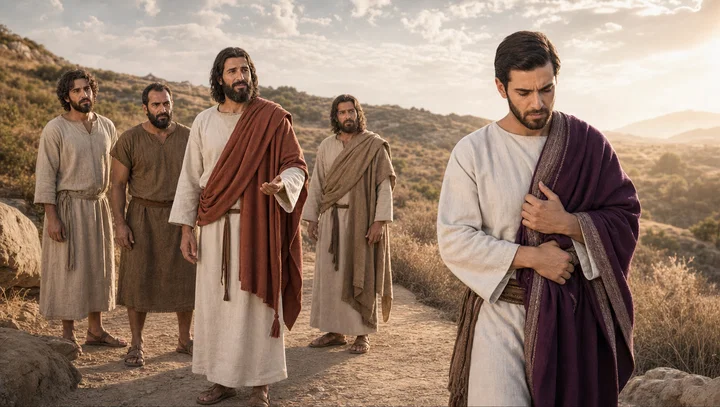
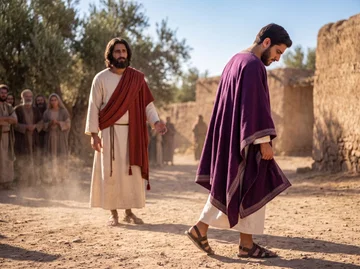
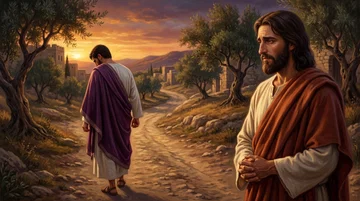
But when the young man heard that saying, he went away sorrowful: for he had great possessions.
Translations
American King James Version, King James Version, KJV Cambridge Paragraph Bible, Webster Bible
But when the young man heard that saying, he went away sorrowful: for he had great possessions.
But when the young man heard the saying, he went away sorrowful: for he was one that had great possessions.
But when the young man heard the saying, he went away sorrowful; for he was one that had great possessions.
And the young man, having heard the word, went away sorrowful, for he had many possessions;
But the young man, having heard the word, went away grieved, for he had large possessions.
And the young man, hearing, this word, went away sorrowing,—for he was holding large possessions.
Berean Standard Bible, Majority Standard Bible
When the young man heard this, he went away in sorrow, because he had great wealth.
But when the young man heard this, he went away sad, for he was one who had great possessions.
But hearing these words the young man went away sorrowing: for he had much property.
And when the yong man heard that saying, he went away sorowfull: for he had great possessions.
Douay-Rheims (Challoner revision)
And when the young man had heard this word, he went away sad: for he had great possessions.
Pictures

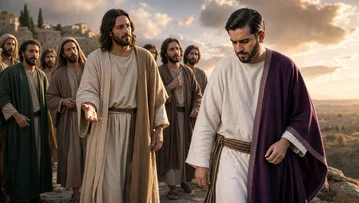
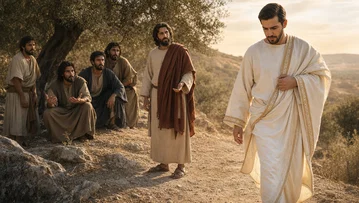
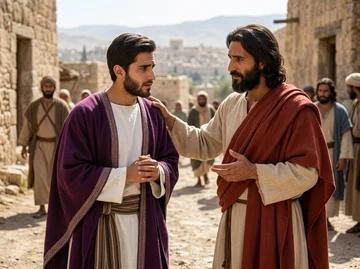
Cross-references 20 of 44
- Mark 10:17-22
And when he was gone forth into the way, there came one running, and kneeled to him, and asked him, Good Master, what shall I do that I may inherit eternal life?
The parallel account of the rich young man
- Luke 18:18-23
And a certain ruler asked him, saying, Good Master, what shall I do to inherit eternal life?
Parallel account of the ruler who left sorrowful over his possessions.
- Matthew 6:19-21
Lay not up for yourselves treasures upon earth, where moth and rust doth corrupt, and where thieves break through and steal:
Earthly possessions compete with heavenly treasure and reveal where the heart is.
- Matthew 19:29
And every one that hath forsaken houses, or brethren, or sisters, or father, or mother, or wife, or children, or lands, for my name’s sake, shall receive an hundredfold, and shall inherit everlasting life.
Jesus promises reward and everlasting life to those who forsake possessions for his name.
- Exodus 20:12-16
Honour thy father and thy mother: that thy days may be long upon the land which the LORD thy God giveth thee.
Jesus names commandments the young man claimed to have kept.
- 1 Timothy 6:17-19
Charge them that are rich in this world, that they be not highminded, nor trust in uncertain riches, but in the living God, who giveth us richly all things to enjoy;
The rich are urged to share their wealth and lay up treasure for the future.
- Matthew 6:24
No man can serve two masters: for either he will hate the one, and love the other; or else he will hold to the one, and despise the other. Ye cannot serve God and mammon.
The young man’s riches compete with his loyalty to God.
- Mark 10:24
And the disciples were astonished at his words. But Jesus answereth again, and saith unto them, Children, how hard is it for them that trust in riches to enter into the kingdom of God!
Jesus warns that trusting in riches makes entering God’s kingdom difficult.
- 2 Corinthians 8:9
For ye know the grace of our Lord Jesus Christ, that, though he was rich, yet for your sakes he became poor, that ye through his poverty might be rich.
Christ became poor for others, modeling the sacrifice the ruler refused.
- 1 Timothy 6:9-10
But they that will be rich fall into temptation and a snare, and into many foolish and hurtful lusts, which drown men in destruction and perdition.
Craving riches brings temptation, spiritual harm, and sorrow.
- Mark 4:19
And the cares of this world, and the deceitfulness of riches, and the lusts of other things entering in, choke the word, and it becometh unfruitful.
Worldly cares and riches choke the word, as the young man’s sorrowful departure shows.
- Mark 10:21
Then Jesus beholding him loved him, and said unto him, One thing thou lackest: go thy way, sell whatsoever thou hast, and give to the poor, and thou shalt have treasure in heaven: and come, take up the cross, and follow me.
Jesus loved the young man and called him to give his possessions and follow him.
- Matthew 19:16
And, behold, one came and said unto him, Good Master, what good thing shall I do, that I may have eternal life?
The ruler asks Christ how to gain eternal life.
- Matthew 13:22
He also that received seed among the thorns is he that heareth the word; and the care of this world, and the deceitfulness of riches, choke the word, and he becometh unfruitful.
Riches deceive and choke the word, leaving a person unfruitful.
- Matthew 19:17
And he said unto him, Why callest thou me good? there is none good but one, that is, God: but if thou wilt enter into life, keep the commandments.
Jesus gives keeping the commandments as the condition for entering life.
- Luke 12:33
Sell that ye have, and give alms; provide yourselves bags which wax not old, a treasure in the heavens that faileth not, where no thief approacheth, neither moth corrupteth.
The question’s call to sell possessions and give alms echoes this teaching.
- Matthew 19:26
But Jesus beheld them, and said unto them, With men this is impossible; but with God all things are possible.
God alone can make salvation possible despite the obstacle of riches.
- Acts 4:34-35
Neither was there any among them that lacked: for as many as were possessors of lands or houses sold them, and brought the prices of the things that were sold,
Believers sold possessions and shared the proceeds to meet others’ needs.
- James 5:1-3
Go to now, ye rich men, weep and howl for your miseries that shall come upon you.
Hoarded riches bring judgment, echoing the rich young man’s sorrowful attachment to possessions.
- Matthew 16:24
Then said Jesus unto his disciples, If any man will come after me, let him deny himself, and take up his cross, and follow me.
Following Christ requires self-denial and taking up the cross.
Commentary
Each commentary is drawn from primary sources: the writings of Ellen G. White and Adventist pioneers and periodicals. Each commentary is separate. Its own words are not a quotation; follow the references to read the source passages.
Ellen G. White
88 sources
When Jesus told him to sell what he had, give to the poor to have treasure in heaven, and come follow Him, he refused the requirement and went away sorrowful because he had great possessions.SG2 239.1–240.1Lt 354, 1907, par. 13–15Lt 195, 1903, par. 8–10 He prized his possessions, honor, power and standing more than heavenly treasure, eternal life and fellowship with Christ, and chose to retain earthly riches rather than give to help the poor.RH May 20, 1862SG4 265.5CET 164.3 His attachment exposed that he did not love God with all heart and soul and mind and did not love his neighbor as himself, but with the world first in his affections self-love was supreme.1T 170.4–171.3SG2 240.2–241.1ST Feb 14, 1878 By clinging to earthly wealth rather than valuing Christ and the eternal above the earthly, his decision fixed his destiny and risked losing both worlds.ST Mar 30, 1876Lt 202, 1899, par. 3–4 His response pictures the condition of many Sabbath-keepers who seek eternal life yet love riches better than God, better than fellow men and better than truth, for the love of Jesus and riches cannot dwell in the same heart.1T 170.4–171.3SG2 239.1–240.1SG2 242.1–3
Narrative Setting and Context
The verse belongs to the account of a young ruler with great possessions who sincerely desired eternal life and wanted to become Christ's disciple, and his wealth and high position form the setting for his encounter with Jesus.DA 518.1–3 As Jesus was walking by the way, the young ruler came running to Him, kneeled and reverently asked what good thing he should do that he might have eternal life, addressing Him merely as an honored rabbi without discerning in Him the Son of God.COL 390.2–391.1 Jesus answered by asking on what ground he called Him good, since God is the one good, so that to recognize Jesus as good is to receive Him as God's Son and representative.COL 390.2–391.1 He added that to enter into life he must keep the commandments, because the character of God is expressed in His law and the principles of His law must be the spring of every action in order to be in harmony with God, and loving God with the whole heart leads to life.COL 390.2–391.1Ms 35, 1889, par. 3
Jesus said obedience to God's commandments was necessary, and the ruler claimed he had kept them from youth and asked what he still lacked.DA 518.6 He thought highly of his own righteousness but was not fully satisfied, for he felt that he lacked something and hoped Jesus could bless him and satisfy his deepest need.DA 518.5 The story is told in Matthew 19:16-22, Mark 10:17-22 and Luke 18:18-23, and is summed up by the words One thing thou lackest.DA 517.6 The ruler recognized Christ as a teacher by whom he was willing to be taught, having observed His compassion for the poor and ignorant and having been touched by His meekness and lowliness of heart.Ms 40, 1905, par. 3–5 He had high motives but was not perfect in understanding, and Christ's close requirement to sell what he had, give to the poor, and follow Him meant too much to him.Ms 40, 1905, par. 3–5
Christ loved the young ruler and longed to develop and sanctify his character.DA 519.3 He did not compel him but left him free to choose whether to obey or refuse, though meeting the conditions Christ set before him was required for eternal life.Lt 118, 1897, par. 37–40Lt 160, 1899, par. 2–3 If he had placed himself under Christ's guidance and given himself to Him, he could have become Christ's co-worker, reflected God's likeness, and used his abilities as a power for good, and that choice would have made his future different.DA 519.3 His property had become an idol that stood in the way of following Jesus and receiving treasure in heaven.Lt 160, 1899, par. 2–3
The verse is part of the account in which Jesus presented the rich young ruler with the condition of discipleship, and Judas thought Jesus was wrong to risk losing a wealthy man who could support the cause.DA 719.3 His case sets up the contrast with the disciples, who had left their boats and nets to follow Jesus, and though their possessions were few, their sacrifice was accepted because it was all they had and was dear to them.Ms 40, 1905, par. 11–12
Demand He Heard and Refused
The saying he heard was the call to sell what he had and give to the poor in order to have treasure in heaven, and to come and follow Him, and hearing that requirement he went away sorrowful because he had great possessions and would not accept it.SG2 239.1–240.1Lt 354, 1907, par. 13–15Lt 195, 1903, par. 8–10Lt 44, 1893, par. 8–9STB 572.2–5 That demand to be perfect by selling, giving, and following tested whether he prized eternal life higher than riches, and his attachment to wealth stood in the way of following and receiving eternal life.Lt 354, 1907, par. 13–15Lt 195, 1903, par. 8–10Lt 44, 1893, par. 8–91T 207.2 His response illustrates that entering into life and following involve conditions, and that attachment to possessions can prevent a person from accepting the call.Lt 44, 1893, par. 8–91T 207.2
He valued his possessions more than the heavenly treasure and eternal life offered to him, and when giving up his possessions and helping the poor was made the condition of following, his desire was chilled.RH May 20, 1862SG4 265.5CET 164.34T 219.3 He chose to retain his riches rather than become a follower, rejecting the conditions set before him and choosing earthly treasure over Heaven.CET 164.34T 219.34T 50.2 His wealth represented honor and power to him, and his attachment to it kept him from receiving heavenly treasure, so he gave up immortal life rather than obey and follow.RH May 20, 1862ST Jan 27, 18764T 50.2 He wanted Heaven but desired to keep his great wealth, and his love of money and power mattered more to him than the heavenly reward.4T 219.3ST Jan 27, 18764T 50.2
His great possessions held his heart and his affection so firmly that he would not sacrifice them to follow, take up the cross, and gain treasure in heaven.2T 679.1–680.11T 172.1–31T 351.1–2 Though he wanted eternal life and the heavenly inheritance and was willing to keep the commandments, his love for earthly riches outweighed his love for others and for eternal life.2T 679.1–680.11T 351.1–2ST Nov 5, 1894 He preferred worldly wealth to loving God, loving his fellow people, and receiving eternal life, and what he valued most was thereby revealed.2T 679.1–680.11T 172.1–3 His great possessions made that sacrifice too costly to him, and his sorrow when faced with that cost shows how love of riches can keep a person from choosing heaven and from using what he has for God and others and for His cause.1T 351.1–2ST Nov 5, 1894CET 165.2–3
His wealth was his idol and stood in the way of eternal life, and his love of riches was supreme.Lt 345, 1904, par. 7–11Lt 118, 1897, par. 21–25Lt 345, 1904, par. 2–6Ms 123, 1908, par. 35–42STB 573.3–574.1 He loved God's gifts and the goods entrusted to him more than the Giver, more than God and His service, and would not use them as a faithful steward, and his claim to have kept God's law was thereby exposed as false.Lt 118, 1897, par. 21–25ST Oct 28, 1908DA 520.4 He wanted eternal life and heavenly treasure but was unwilling to give up the temporal advantages his wealth offered for an unseen reward, judging the unseen heavenly treasure too great a risk in exchange for what he possessed.Lt 345, 1904, par. 7–11Lt 345, 1904, par. 2–6Ms 123, 1908, par. 35–42 He would not give up visible earthly treasure for unseen heavenly treasure, so he refused the offer and the fellowship, rejected eternal life, and thereafter the world received his worship.Lt 345, 1904, par. 7–11Ms 123, 1908, par. 35–42STB 573.3–574.1ST Oct 28, 1908
He understood the sacrifice required yet was unwilling to give up the worldly advantages, temporal prospects, honor and power his riches offered.ST Oct 28, 1908DA 520.3 He wanted both the earthly riches he cherished and the heavenly inheritance, but he would not transfer his treasure to heaven by loosening his attachment to it and using it to help others, and he chose the earthly and sacrificed the heavenly.ST Mar 11, 1889ST Oct 28, 1908DA 520.3 The cost seemed too great to him, his sorrow did not lead him to choose eternal life, and with the world first in his affections he could not keep God's commandments.DA 520.3DA 520.4 Choosing the world over Christ in this way turns people away from the Saviour.
His great possessions made the command to give to the poor seem impossible, for his wealth represented honor and power.ST Jan 27, 18764T 49.3–50.1 The verse shows the danger of riches: the more an avaricious person gains the harder it may be to give, until earthly possessions hold the affections that should belong to God and others.4T 49.3–50.1 Few know how strong their love for riches is until the test comes, and his sorrowful going away proves by works that he loved riches more than his neighbor and his God and was unprepared for Heaven.2T 680.2 The greater the treasures laid up on earth, the harder it is for the owner to realize they are not his own but are lent to him to use for God's glory, and when the way is pointed out and the cost counted they decide Heaven costs too much.2T 680.2
It was difficult for him to withdraw his affections from his earthly possessions and worldly treasure even with eternal life promised as his reward.ST Oct 29, 18942T 689.1–690.2 He went away displeased when the words corrected him, because he was unwilling to yield his pride and cherished interests to the light he had received.Ms 4, 1883, par. 70–72
Heart Exposed by Law
His claim to have kept the commandments from his youth was false, and his going away sorrowful exposed the failure of his heart behind that claim.Ms 23, 1885, par. 25–27ST Oct 29, 1912ST Oct 22, 1894 His outwardly faultless obedience did not mean his heart was right with God, for when he was told to sell what he owned, give to the poor, and follow, his attachment to wealth revealed what he lacked and stood in the way of giving and following.Ms 23, 1885, par. 25–27ST Oct 29, 1912COL 391.4–5 Outward confidence in obedience can conceal a failure to grasp the depth and significance of the law, and he did not understand its demands as he supposed.Ms 23, 1885, par. 25–27ST Oct 29, 1912ST Oct 22, 1894 He sincerely believed he had kept God's commandments, yet he lacked discernment of his need for heart devotion and Christian goodness.Ms 1, 1889, par. 35–40DA 519.2 His sorrowful departure reflected a heart still needing humility and contrition, supreme love for God, and the recognition that his lack could be hidden only in Christ's perfection.Ms 1, 1889, par. 35–40DA 519.2 He had not truly kept the commandments, for he needed Christ's righteousness received by faith and divine power to obey God's law.Ms 1, 1889, par. 35–40DA 519.2
His lack was failure to keep the first four commandments containing duty to God and failure to keep the last six.1T 170.4–171.3SG2 240.2–241.1 He did not love God with all heart and soul and mind, and he did not love his neighbor as himself, but with the world first in his affections self-love was supreme.1T 170.4–171.3SG2 240.2–241.113MR 21.1–3 His love of riches was supreme and was his idol, making it impossible to love God wholly, shutting his eyes to the wants of fellow men, and swallowing up his heart in earthly possessions which he loved better than God and better than the heavenly treasure.1T 170.4–171.3SG2 240.2–241.113MR 21.1–3 Jesus' call to sell and give to the poor exposed that attachment and tested whether he prized eternal life higher than riches, and he would not remove that obstacle.1T 170.4–171.3SG2 240.2–241.1ST Feb 14, 1878 That attachment exposed a fatal selfishness beneath outward keeping, for he loved his possessions above God and His service and more than the souls of his fellow men.Lt 8, 1895, par. 22–25ST Feb 14, 187813MR 21.1–3 The direction to sell, give to the poor, and follow pointed him to duties he had not done which the law plainly specified — to love God supremely and his neighbor as himself — showing that entering into life by keeping the ten holy precepts requires that love.Ms 150, 1899, par. 22–27Lt 8, 1895, par. 22–2513MR 21.1–3
His great possessions stood in the way of his loving God with his whole heart and following in self-denial.Ms 39, 1886, par. 1–33MR 66.2–67.2RH Sep 11, 1900 Though he thought he kept the commandments, he was unwilling to give up what was shown to be blocking his devotion, revealing his weakness and that he was not a true lover of God.Ms 39, 1886, par. 1–33MR 66.2–67.2 Though he thought himself perfect, he proved himself destitute of love for both God and man.Ms 39, 1886, par. 1–3RH Sep 11, 1900 His love of the world was not overcome, leaving no room in his heart for the love of God, for his possessions were his idol and he did not value Christ enough to follow His instruction.ST Jul 21, 1898RH Sep 11, 1900 He did not receive Christ or believe in Him, revealing an unregenerate heart in which outwardly proper conduct cannot replace obedience from the heart.ST Jul 21, 1898RH Sep 11, 1900
Christ's demand tested him by the law of righteousness, which requires love for one's neighbor as oneself.Ms 150, 1899, par. 22–27RH Sep 11, 1900RH Sep 11, 1900 Weighed in the balances of the sanctuary he was found wanting and alienated from God, because he regarded what God had given him in trust as of far more value than heavenly treasure.Ms 150, 1899, par. 22–27RH Sep 11, 1900RH Sep 11, 1900 His wealth had been entrusted to him to relieve others' suffering and help bring them to the Saviour, and using it that way would have been faithful stewardship laying up treasure in heaven.Ms 150, 1899, par. 22–27RH Sep 11, 1900 He could not selfishly keep his possessions and at the same time follow Christ, for inheriting eternal life has definite conditions, including surrendering whatever competes with love and service to God.Ms 150, 1899, par. 22–27Lt 8, 1895, par. 22–25RH Sep 11, 1900 If he had let the commandment reveal his sin, as it did for Paul, his sinful nature would have been exposed and put to death and he could have laid hold of eternal life.Ms 150, 1899, par. 28–29 The law must reach the conscience so a person sees sin's great evil, dies to self, and can know spiritual holiness.RH Sep 11, 1900Ms 150, 1899, par. 28–29
Choice and Eternal Consequence
He would not give up all he had and would not accept the terms Jesus gave him, and his sorrow went with his choice to turn away.DA 523.2DA 523.1 He understood the cost of the offer but was unwilling to surrender his wealth and worldly standing to follow, so his sorrow did not lead him to choose eternal life. He weighed Christ against the world and turned from the Saviour rather than have Him as leader, which warns that choosing the world over Christ turns people away from the Saviour.DA 523.1 Entering Christ's service requires surrendering all to Him, with obedience to God's law shaping life and character, and Christ offers to use the person and his means in God's work as part of how He saves him.DA 523.2
Though the answer exposed the plague-spot of his soul, he chose earthly treasure over heaven and went away sorrowful.ST Mar 30, 1876 He valued earthly possessions more than the heavenly treasure and loved God's gifts more than the Giver, for the world held first place in his affections and proved his claim to keep God's law false. His great possessions held his affection so firmly that he would not sacrifice them to follow and receive eternal life, and that decision fixed his destiny.ST Mar 30, 1876 By holding back and clinging to earthly wealth rather than valuing Christ and the eternal above the earthly, he risked losing both worlds.Lt 202, 1899, par. 3–4
His love for his possessions was greater than his love for God, and his refusal to renounce all for Christ proved him unworthy of a place in the Master's service.PK 221.1–2 His wealth was his idol, revealing selfishness beneath outward commandment-keeping.COL 392.1 He lacked true love for God and for others, which is the very spirit of the commandments, and was therefore out of harmony with heaven's principles and unfit for its kingdom.COL 392.1
Jesus knew the sin that had to be removed, selfishness and its indulgences, and that attachment to possessions put eternal life in danger.Ms 43, 1900, par. 46 God's truth must cut selfishness out of the character, or there is no hope of eternal life.Ms 43, 1900, par. 46 Riches make entrance into God's kingdom hard when people trust them or insist on their own way, but God can make salvation possible, and wealth can instead be invested in God's cause under His blessing.Ms 43, 1900, par. 49
His high position and possessions subtly drew his affections from God.DA 520.2 If cherished, worldly things would take God's place and weaken moral strength and usefulness.DA 520.2 Obeying Jesus' words was his only hope of salvation and the way to develop a complete Christian character.DA 520.2
Conditions for Eternal Life
Inheriting eternal life has definite conditions, and entering into life and following Christ involve conditions that must be met.Lt 8, 1895, par. 22–25Lt 44, 1893, par. 8–9 The young man's going away sorrowful shows that he loved his possessions more than God and His service and more than the souls of his fellow men, and his riches were his idol.Lt 8, 1895, par. 22–25 His response revealed that he had not fulfilled the law's call to love God supremely and his neighbor as himself, and surrendering whatever competes with love and service to God belongs to those conditions.Lt 8, 1895, par. 22–25 His refusal to accept the call to sell what he had, give to the poor, and follow shows how attachment to possessions can prevent a person from accepting Christ's call.Lt 44, 1893, par. 8–9
Following Christ required him to give up his great possessions, and his sorrowful departure illustrates that wealth and other attachments can make self-surrender seem too great a sacrifice.DA 523.4 Obedience is nevertheless required of all who would be Christ's disciples.DA 523.4 For that reason the verse illustrates why Christ calls people to cut away whatever would corrupt their whole being.DA 523.4 He was willing to keep the commandments and desired eternal life, but he lacked one thing, for he loved his possessions more than the life he sought.CET 166.2SG4 267.1 His attachment to wealth kept him from valuing truth and the heavenly inheritance.CET 166.2SG4 267.1
Earthly wealth and its concerns can deceive people, choke the word, and leave it unfruitful.CET 166.2SG4 267.1 Those who do not seek truth and the light needed to understand it lose that light and are left in darkness without excuse.CET 166.2SG4 267.1 He represents a large class who, when duty is brought to bear on them, see a cross to be lifted and turn away sorrowful, and earthly treasures holding them is the reason so few obey God.3MR 69.1–3 Laying up treasures in heaven, perfecting Christian character, and faithfully using entrusted sacred truths and talents as true followers of Christ secures eternal life.3MR 69.1–3 Letting light shine instead of hiding it belongs to that faithful course.3MR 69.1–3
Warning to Believers Today
His going away sorrowful pictures the condition of many Sabbath-keepers who like him seek eternal life.1T 170.4–171.3SG2 239.1–240.1 He heard the condition that selling what he had and giving to the poor would give him treasure in heaven, and this tested whether he prized eternal life higher than riches.1T 170.4–171.3 He did not eagerly lay hold of the prospect of eternal life and did not strive to remove the obstacle to heavenly treasure, but left grieving because his holdings were large.1T 170.4–171.3 His lack was failure to keep the first four commandments containing duty to God and failure to keep the last six, for his supreme idolatrous love of riches made it impossible to love God with all heart and soul and mind and shut his eyes to the wants of fellow men, so that he did not love his neighbor as himself.1T 170.4–171.3 His heart was on his treasure and swallowed up in earthly possessions, which he loved better than God and better than the heavenly treasure, and when the heart is on riches and riches are loved better than God, better than fellow men, and better than truth, eternal life cannot be had, for the love of Jesus and riches cannot dwell in the same heart.1T 170.4–171.3SG2 242.1–3
He represents a large class who, when duty is brought to bear on them, see a cross to be lifted and turn away sorrowful.3MR 69.1–3Ms 39, 1886, par. 9–10 Earthly treasures hold them and earthly possessions keep them from obeying when duty requires giving them up, and that hold is the reason so few obey God.3MR 69.1–3Ms 39, 1886, par. 9–10 Laying up treasures in heaven, perfecting Christian character, and faithfully using entrusted sacred truths and talents as true followers, letting light shine instead of hiding it, secures eternal life, and following Christ requires faithfulness when duty conflicts with earthly wealth.3MR 69.1–3Ms 39, 1886, par. 9–10
People may grieve when shown their duty, as when keeping the Sabbath requires them to lift the cross.Ms 39, 1886, par. 1–33MR 66.2–67.2 His great possessions stood in the way of his loving God with his whole heart and following Jesus in self-denial, and though he thought he kept the commandments he was unwilling to give up what blocked his devotion and to deny himself and follow Christ, revealing his weakness and that he was not a true lover of God and was not ready to do so.Ms 39, 1886, par. 1–33MR 66.2–67.2 Few know how strong their love for riches is until the test comes, and his sorrowful going away proves by works that he loved riches more than his neighbor and his God and was unprepared for heaven.2T 680.2 The same happens with all who like him ask the way to life; when the way is pointed out and the cost is counted and they are convinced they must sacrifice earthly riches and become rich in good works, they decide heaven costs too much.2T 680.2
The verse applies to people who withhold their means when God's work needs support, including supporting messengers carrying spiritual food to people in need and helping others receive spiritual nourishment and present truth.STBk 105.1STM2 30.1STM2 29.5Ms 4, 1850, par. 1–2 Like the young man they cling to earthly goods instead of sacrificing for others and laying up treasure in heaven, and their sorrow exposes attachment and unwillingness to cut loose and distribute property to carry forward God's work.STBk 105.1ST2 46.1STA 104.4–106.1STM2 29.5 Their refusal leaves people without spiritual truth, for those who profess the truth may likewise allow attachment to property to keep them from sacrifice.STM2 30.1ExVEGW 29.3–30.1STM2 29.5 Those attached to wealth and unwilling to give when God's cause calls for it likewise turn away sorrowfully and illustrate the sorrow of those who value earthly wealth more than sacrifice for God's work and the salvation of others.CET 106.1–2ExVEGW 29.3–30.1EW 40.1–2 His many possessions mattered more to him than eternal life, showing how attachment to earthly wealth can keep people from making the sacrifice truth requires and from laying up treasure in heaven.Lt 2, 1857, par. 6–8
Earthly possessions will soon be swept away in coming destruction and by the overflowing scourge, leaving it too late then to sacrifice them and lay up treasure in heaven, while sacrifice made in time lays up treasure in heaven.STBk 105.1ST2 46.1STM2 30.1STA 104.4–106.1EW 40.1–2 Clinging to earthly goods can leave them lost when destruction comes.CET 106.1–2 The greater the treasures laid up on earth, the harder it is for the owner to realize they are not his own but are lent to him to use for God's glory.2T 680.2
Here character is proved to show how much God and truth are loved: those tested would rather yield the truth than sell and give to the poor, and they venture to risk eternal life for worldly possession.SG2 242.1–3 Many repeat his choice and go away sorrowful because they cannot have their riches and a treasure in heaven too.SG2 242.1–3 Entrance into the kingdom requires truth crowding out the love of riches by the Spirit, breaking away from riches, transferring affection to God, holding all as the Lord's goods, and faithfully discharging duty as God's steward to bless the needy and advance God's work.SG2 242.1–3
Sources
Pioneers and periodicals
136 sources
When told to sell what he had and give to the poor and follow Him so as to have treasure in heaven and be perfect, the young man heard the demand and went away sorrowful because he had great possessions and would not surrender them.RH Feb 20, 1855RH Nov 20, 1856 He was a rich young ruler who had come eagerly asking what to do to inherit eternal life and what he still lacked.ST Sep 26, 1906ST Dec 19, 1900RH Apr 23, 1901 The test exposed him to himself, showing that beneath confident claims to have kept the commandments he loved his possessions more than God and his neighbor, making riches his idol.RH Nov 12, 1857RH Apr 13, 1869RH Sep 4, 1866RH Oct 25, 1906RH Feb 25, 1873 His great possessions thus stood between him and eternal life, for he wanted both earthly riches and the heavenly inheritance but chose the earthly and counted the cost of exchange too great.RH May 20, 1862ST Mar 11, 1889ST Sep 17, 1912ST Dec 19, 1900ST Mar 12, 1885 Following Christ requires willingness to surrender all that hinders obedience and to use entrusted means for the poor and God's work, and keeping God's commandments, including the Sabbath, remains the condition of entering life.RH Jun 10, 1852RH Jun 10, 1852RH Aug 20, 1914RH Feb 19, 1867RH Aug 25, 1904
Narrative Context and Sorrow
The saying he heard was the call to sell what he had, give to the poor, and follow Jesus, so that he would have treasure in heaven and be perfect, and hearing it he went away sorrowful because he had great possessions and would not surrender his wealth.RH Feb 20, 1855RH Nov 20, 1856ST Nov 14, 1900ST Nov 14, 1900 His wealth stood in the way of accepting that call, and his unwillingness exposed an attachment that kept him from eternal life even though he had asked how to receive it.RH Feb 20, 1855RH Nov 20, 1856ST Nov 14, 1900ST Nov 14, 1900ST Jun 19, 1884
The man was a rich young ruler who came eagerly to Jesus concerned about his salvation, asking what to do to inherit eternal life and what he still lacked in keeping the commandments.ST Sep 26, 1906ST Dec 19, 1900RH Apr 23, 1901RH Dec 2, 1873 His departure belongs with the warning that it is hard for those who trust in riches to enter the kingdom of God, and he is presented as a seeker who sorrowfully turned away from cross-bearing counsel.ST Dec 19, 1900RH Dec 2, 1873 His sorrow came from going away from Christ and not from coming to Him, for coming to Christ brings peace and joy to guilty, wandering, condemned sinners, and no one finds sorrow by coming to Him.RH Nov 13, 1860 The same occurrence is also recorded in Mark and Luke.
He is representative of the respectable wealth-loving of every age and land, his response holds practical lessons for every age and especially days of peril, and Christ's words to him present eternal truth.ST Feb 10, 1898 He was called to give up all he had and follow Jesus in order to become a herald and evangelist carrying Jesus' message to the world in a self-denying life.ST Jan 28, 1913RH Jul 29, 1909 That call is understood to have offered him the place among the apostles that Judas would leave, and had he obeyed he might have become one of Christ's apostles.RH Jul 29, 1909
His eternal future is not revealed, and he may have repented afterward, but so far as the account indicates he did not return after turning away sorrowfully when he heard the conditions.ST Oct 4, 1905RH Apr 12, 1870 His earthly riches were temporary and have all been swept away, while only heavenly things are eternal, and for long centuries he has been sleeping in an unknown grave. The condition Christ gave him did not require him to profess Christ's deity.ST Nov 23, 1915
Heart Exposed by Test
Though confident, sincere, amiable and promising, the young man supposed he had kept all the commandments from his youth, but he was self-deceived and his claim was false.ST Oct 29, 1912RH Apr 13, 1869RH Sep 4, 1866RH Jul 10, 1856 Jesus expanded the commandments to expose his mistake and what he still lacked, testing his love for his neighbor by confronting him with his surplus wealth while people lacked life's necessities.ST Nov 24, 1881RH Jul 10, 1856 A person with the spirit of the law could not keep far more than he needed while seeing others suffer, and moral attainment and confidence in understanding do not remove the need to follow Jesus' teaching in practice.ST Oct 29, 1912ST Nov 24, 1881RH Jul 10, 1856 His sorrowful departure when told to sell, give to the poor and follow showed he loved riches more than his neighbor and lacked the spirit of Christ, despite having tried to obey as far as he understood.RH Apr 13, 1869RH Sep 4, 1866ST Nov 24, 1881
Christ's words exposed the ruler to himself, reaching a hardened conscience to reveal blindness, self-righteousness and hidden attachment to possessions.ST Mar 4, 1889ST Oct 28, 1889 That painful recognition that brings sorrow is like ointment that stings before it heals.ST Mar 4, 1889 The test exposed selfishness beneath outward commandment-keeping: he lacked wholehearted devotion to God, a deficiency that nullified his other virtues and undermined his confidence in God's favor.ST Feb 14, 1878ST Apr 15, 1880 His attachment revealed a fatal selfishness he did not recognize, though he believed he kept the commandments, and in this extreme case he had to give up all his property and follow Christ.ST Feb 14, 1878ST Apr 15, 1880
His refusal revealed that he did not truly love his neighbor as himself, for he would not sell and give to the poor or use even part of his surplus to alleviate suffering.RH Nov 26, 1857RH Nov 12, 1857ST Jun 14, 1899ST Nov 24, 1881 His sorrowful departure showed he valued great earthly possessions above heavenly treasure, loved possessions more than his neighbor, and was guilty of idolatry in loving neither God nor people as the commandments require.RH Nov 26, 1857RH Nov 12, 1857 Keeping them all and not merely part is required for eternal life, and riches could not purchase God's gift of eternal life. His attachment was idolatry and covetousness: riches had become his idol, he loved God's gifts more than the Giver and loved possessions more than God supremely.ST Oct 28, 1908RH Nov 12, 1857RH Oct 25, 1906RH Oct 21, 1873 Having great possessions was not itself the wrong, but his love of money made him its slave, his trust was in riches rather than God who alone must be supreme, and covetousness is idolatry that bars an idolater from God's kingdom.RH Oct 25, 1906
He violated even the commandment against coveting that Christ had not named, and Christ's selective list did not make omitted precepts nonbinding but identified the whole law he meant.RH Feb 25, 1873RH Oct 21, 1873 His failure to keep the commandments as a whole showed he was not perfect, for keeping them all is required and violating even one command is enough to bring the law's penalty and keep a person from heaven though he had kept the rest from youth.ST Jul 22, 1880 He was just but not good: a man of strict integrity and innocence who rendered to every man his due, yet a stranger to magnanimity, extensive philanthropy and disinterested care for the needy and suffering.ST Nov 25, 1886ST Mar 22, 1883 His sorrowful refusal to part with many possessions proves that want of goodness, commendable for justice but detestable for want of benevolence.ST Nov 25, 1886ST Mar 22, 1883
Though morally upright and having done much, one cherished sin and one lacking point of obedience kept him from the kingdom and could not be excused by his other good qualities.ST Dec 16, 1908RH Aug 15, 1871 Jesus loved him, but those willing to do much could obey in this matter too.RH Aug 15, 1871 His response revealed an unregenerate heart weighed in the balances of the sanctuary and found wanting: outwardly proper conduct or a claim to believe truth cannot replace obedience from the heart.RH Sep 11, 1900RH Sep 11, 1900 He proved destitute of love for both God and man though he thought himself perfect, regarding what God had given in trust as of far more value than heavenly treasure, because he would not deny self, take up the cross and follow Christ.RH Sep 11, 1900RH Sep 11, 1900 The law must reach the conscience until a person sees sin's great evil, dies to self and can know spiritual holiness.RH Sep 11, 1900
His own estimate of obedience was not God's standard, for he still came short and lacked faith in Jesus, whose justifying blood and perfect obedience bring the righteousness needed to stand complete before God.ST Oct 21, 1886 His outward observance did not mean he understood the law's spiritual significance and depth.ST Oct 29, 1912ST Oct 22, 1894RH Sep 18, 1900 The gospel exposed his failure to grasp the law's full demand and showed salvation is by grace through faith in Jesus Christ.RH Sep 18, 1900 A moral life and outwardly good conduct do not by themselves secure eternal life, but the law's beauty is reflected when a person aided by the Spirit conforms to Christ its perfect pattern with the Spirit's fruits manifest.
Wealth as Spiritual Hindrance
Having great possessions was not itself the wrong, but love of money made the young man its slave so that his possessions controlled him and he would not surrender his idol and accept freedom.RH Oct 25, 1906 His trust was in riches rather than God, though God alone must be supreme, and his wealth held him in mammon's power despite merciful love and call.RH Oct 25, 1906RH Dec 31, 1908 Covetousness is idolatry, and an idolater cannot enter God's kingdom.RH Oct 25, 1906
He valued his possessions and standing among people more than Christ's call, fellowship, and the offer of eternal life, and thereafter gave his worship to the world.ST Oct 28, 1908RH Jan 12, 1905 He valued great possessions, social position, and the praise wealth brought him more than eternal life and following Jesus, for his riches had bound his heart.ST Sep 26, 1906 He valued earthly goods and self more than the Creator without realizing they had become his gods, for he was self-deceived and had not prized the spiritual above the natural.RH Feb 23, 1905 Had he known the happiness obedience held, wealth would have seemed of little value and he would not have hesitated to give it up, yet he would not give up visible earthly treasure for unseen heavenly treasure and so rejected Christ's fellowship and chose the world.ST Oct 28, 1908RH Feb 23, 1905
He wanted both earthly riches and the heavenly inheritance and tried to keep both the world and salvation, but he chose the earthly and sacrificed the heavenly.RH May 20, 1862ST Mar 11, 1889ST Mar 12, 1885 His desire for eternal life was overcome by love of wealth when giving up possessions and helping the poor was made the condition of following, and a strong hold on worldly interests can keep people from accepting plain truth until they become blinded and believe they are right.RH May 20, 1862ST Mar 12, 1885 He would not transfer treasure to heaven by loosening attachment and using wealth to help others, but valued temporal prospects too highly and counted the cost too great, though he understood the sacrifice required.ST Mar 11, 1889ST Oct 28, 1908 His great possessions held his affection so firmly that he would not sacrifice them to follow Christ and receive eternal life, and when the plague-spot of his soul was exposed his decision fixed his destiny.ST Mar 30, 1876 His sorrow did not lead him to choose eternal life, for he loved God's gifts more than the Giver and the world held first place in his affections, which exposed his claim to keep God's law as false and turned him away from the Saviour.
He turned away sorrowfully rather than exchange temporary wealth enjoyed only briefly for an eternal inheritance, failing to value a wise investment in the opportunity of eternal life.RH Apr 9, 1901 When offered heavenly treasure in exchange for worldly possessions his great wealth made him unwilling to accept, and his attachment kept him from the offer.ST Mar 25, 1880RH Jul 22, 1873 That choice was a poor and disastrous bargain, for in sorrow he left heavenly treasure and grasped earthly possessions instead.RH Jul 22, 1873 Earthly riches are temporary and have all been swept away while only heavenly things are eternal, so no coveted desire or treasure should cause the same exchange. Some recognize the value of the treasure but refuse its cost because they will not give up all they have to pay the price required to obtain it.RH Oct 13, 1868
His great possessions stood between him and eternal life and stood in the way of following Jesus, for he could not give himself wholly to God while serving gold.ST Sep 17, 1912 Riches can be a snare and make it difficult to enter the kingdom of heaven, and the lesson connects his departure with the warning that it is hard for those who trust in riches to enter the kingdom of God.ST Dec 19, 1900RH Oct 30, 1856 His attachment revealed unrecognized selfishness despite his belief that he kept the commandments, and in this extreme case he had to give up all his property and follow Christ, showing wealth can become an obstacle to eternal life. Trust in riches can obstruct salvation, so following Christ requires surrendering anything that hinders obedience however valuable or painful to give up.RH Nov 27, 1860 Riches can burden the heart and keep a person from following God, and treating wealth as God's property by giving generously to the poor and doing good keeps the heart warm and the believer spiritually alert.ST Mar 9, 1882
The rich are the most handicapped spiritually, for the ruler went away sorrowful because he thought so much about his wealth that he forgot his neighbors' needs, while poverty is no hindrance to spiritual growth.ST Sep 22, 1914 He was told to sell and give to the poor not from hatred as a capitalist or opposition to the economic system by which he gained wealth, but from love to save him from the love of money, which is the root of all evil, knowing salvation would be worth the price.ST Sep 22, 1914 Possession of riches is rebuked only when riches hinder the growth of noble character, because change of heart is of far more value than change in outward economic conditions.ST Sep 22, 1914
His response illustrates the sorrow and spiritual danger associated with wealth.ST Aug 12, 1889 How difficult it was for him to withdraw his affections from earthly possessions, even with eternal life promised as reward.ST Oct 29, 1894ST Aug 12, 1889
His attachment to wealth was so deeply rooted that casting down his idol felt like self-crucifixion, for following Christ required giving up riches he had made an idol.ST Nov 14, 1900 Though wealthy he was poor in the deeper sense, for his soul remained unsatisfied and starving because he would not give up his secret idol, showing outward religious devotion and possessions cannot bring inward peace when something is clung to above God.RH Jun 12, 1900
Increasing possessions can harden the heart and lead a person to stifle conviction and silence conscience rather than risk losing them, as seen when love of wealth and human praise keeps one who believes from openly becoming a disciple.
Cost of Discipleship
Following Jesus requires giving up worldly wealth, pleasures, and business when they stand in the way of devotion to Him, maintaining a clear line of separation between His service and the world.RH Jul 3, 1856RH Jul 24, 1856RH Sep 16, 1902 Those who refuse His terms are rejected, while those who give up all for His sake receive treasure in heaven.RH Jul 3, 1856RH Jul 24, 1856 The young man's great possessions stood in the way of following Christ, and no argument that it was reasonable for a good young man to enjoy an estate could make that wealth harmless.RH Sep 16, 1902RH Jul 31, 1856 To become a laborer together with Jesus he could not take his riches or his business along with him.RH Sep 16, 1902
This demand was not an arbitrary, special hardship imposed only on him, but a duty grounded in a Christian temper of denying the world and seeking heaven, required of Christians in every age.RH Jul 3, 1856 The law reaches beyond outward conduct to the heart, exposing failure to let its demand to care for others govern the heart when wealth is kept for self while others are in need.ST Feb 3, 1909 People may therefore turn away sorrowful when a newly revealed demand requires personal sacrifice.ST Feb 3, 1909
The command to sell all was specific to him and given in this extreme case because he needed it, since keeping the commandments was not enough while his heart remained attached to wealth.RH Dec 8, 1874 More broadly it teaches that each person must part with whatever holds the heart back from following Jesus.RH Dec 8, 1874RH Nov 27, 1860 Following Christ requires surrendering anything that hinders obedience, however valuable or painful to give up, because trust in riches can obstruct salvation.RH Nov 27, 1860RH Apr 5, 1870 Refusing a known duty because the way is hard, because others may ridicule, or because obedience may cost earthly happiness risks losing eternal life and entering darkness without knowing where one is going.RH Apr 5, 1870
He wanted to become a disciple while keeping his money and keeping control of it while still receiving credit for giving himself, but Jesus would not accept discipleship on those terms.RH Sep 11, 1900ST Mar 24, 1881ST Feb 14, 1884 No one can selfishly keep possessions and at the same time follow Christ.RH Sep 11, 1900RH Sep 11, 1900 He lost the hope of salvation by refusing the blessing Jesus offered through a wise, God-directed use of his possessions.ST Feb 14, 1884 Weighed in the balances of the sanctuary he was found wanting, regarding what God had given him in trust as of far more value than heavenly treasure and proving destitute of love for both God and man though he thought himself perfect.RH Sep 11, 1900
His wealth had been entrusted to him to relieve others' suffering and distress, to help bring them to the Saviour, and to be used for that purpose rather than for luxury, vain indulgence, and worldly pleasure.RH Sep 11, 1900RH Jul 31, 1856 Using it this way would have laid up treasure in heaven.RH Sep 11, 1900 His attachment kept him from following Christ and receiving heavenly treasure, for his wealth represented honor and power and he chose earthly riches over immortal life.ST Jan 27, 1876
Eternal salvation requires willingness to sacrifice all for Christ, to give up earthly goods and become poor, dead to self, and wholly consecrated.RH Feb 19, 1867RH Aug 25, 1904RH Mar 30, 1876 True discipleship calls for wholehearted surrender and giving all for Christ to enter the kingdom, and attachment to possessions can keep a person from that surrender.RH Aug 25, 1904 Those who cling to self rather than become dead to self and wholly consecrated to Christ will not be among the saved.RH Mar 30, 1876
Those commanded to give up their goods should obey without sorrow, trusting that God will provide what they need.RH Feb 7, 1854 Laying aside that burden and obeying brings joy, while attachment to wealth that keeps a person from obeying the Lord brings sorrow.RH Jun 6, 1907RH Feb 7, 1854
His example warns against withholding means from the cause of truth and refusing generous support for present truth.RH Jan 15, 1857RH Apr 23, 1861 Possessions should be given judiciously, decently, in order, and according to need to help others receive the message and to advance God's work.ST Aug 25, 1881RH Jan 15, 1857 Giving is an essential though not the whole part of Christian religion, and wealth clung to until it can serve only as evidence of selfishness shows attachment that forces a choice of whom to serve.ST Aug 25, 1881RH Jan 15, 1857RH Apr 23, 1861
Putting worldly interests first brings loss, while returning entrusted talents to God brings reward in the kingdom of heaven.ST May 18, 1882 Those who willingly give their worldly substance to advance God's work exchange temporary wealth for eternal life, durable riches, and an imperishable inheritance.ST May 18, 1882RH Apr 3, 1855 People with means who resist the call of God's providence to use their resources for the work of Christ repeat his sorrowful turning away when called to give up possessions and follow Him.ST May 18, 1882RH Apr 3, 1855
His refusal contrasts with generous giving that reflects love for God's cause.ST Apr 3, 1884 His encounter illustrates casting bread upon the waters by sharing a portion of riches with the needy brother, which his great possessions made painful for him to do.
Law Sabbath and Salvation
Keeping God's commandments is the condition of entering eternal life, meaning the Ten Commandments including the fourth and the seventh.RH Jun 10, 1852RH Jun 10, 1852RH Aug 20, 1914 Obedience and righteousness bring life, while disobedience and sin bring death.ST Jan 31, 1906 He was directed to keep the commandments, and when asked which ones was given five precepts quoted from the Father's moral law rather than the ceremonial law.RH Oct 10, 1854RH Aug 20, 1914ST Jan 27, 1881 In naming only commandments of duty to fellow man, attention was called to the points where he was specially deficient.RH Jun 10, 1852ST Jan 27, 1881
The selective mention did not imply that omitted commandments were unnecessary or nonbinding, and did not cancel the first four duties to God.RH Oct 11, 1906ST Oct 18, 1877RH Jun 10, 1852 The selective list indicated the whole law without naming every precept, so the Sabbath, including the seventh-day Sabbath, cannot be left out because it was not listed.RH Oct 11, 1906ST Oct 18, 1877RH Jun 10, 1852 His sorrow after being told to sell possessions and give to the poor revealed violation of the tenth commandment against coveting, even though that commandment had not been named directly.RH Feb 25, 1873 Eternal life requires keeping all of the commandments as a whole, not merely the ones listed, and the young man's failure to love those around him exposed his true attitude toward God.RH Oct 11, 1906
The account cites the existing law rather than establishing a new one, revising the law, or setting up a new decalogue.RH Oct 10, 1854RH Apr 16, 1861 It teaches the Father's law and its continuing authority rather than abolishing it.RH Apr 16, 1861RH Apr 16, 1861 The omission of the fourth commandment when commandments were repeated challenges the claim that it was deliberately avoided because the Sabbath commandment had ceased to apply.RH May 2, 1854 Taking Christ's yoke means becoming submissive to His will by yielding obedience to His commands, and that moral law which is Christ's yoke is not grievous.ST Jun 19, 1884 Good works do not save a person, but keeping God's commandments is essential to entering eternal life, so rather than condemning the young man people should examine whether they are keeping them all, including the fourth.ST Mar 1, 1877
His response to the demand to sell possessions, give to the poor, and follow led into the question of what the disciples would receive for leaving everything.ST Mar 5, 1902 That encounter also prompted the parable teaching that reward is given by grace, not earned by works.ST Mar 5, 1902 Eternal life is God's gift that riches cannot purchase, and his great possessions kept him from receiving it because he would not give up wealth to help the poor and follow. A lesser-held teaching places this commandment-keeping instruction under the old covenant.RH Apr 9, 1872
Warning and Application Today
The sorrowful departure stands as the condition of many Sabbath-keepers, whose attachment to wealth keeps them from giving up worldly possessions for eternal life and following God.RH Nov 26, 1857RH Nov 30, 1911 Clinging to wealth rather than using it to advance God's work and help others shows love of the world outweighing love for God and truth.RH Nov 30, 1911 It warns people of wealth, rank, and power to choose Christ rather than let wealth rule their lives in mammon's power despite love and merciful call.RH Dec 31, 1908 It warns against letting possessions keep a person from obeying God, for those commanded to give up goods should obey without sorrow trusting God will provide what is needed.RH Feb 7, 1854
No one can keep selfish riches and have treasure in heaven too, for he loved riches better than God, better than fellow men, better than truth and eternal life, with heart set on possessions.RH Nov 26, 1857 His sorrow proves how much God and truth are loved when tested by the command to sell and give to the poor, and he chose to yield truth rather than part with riches, forfeiting eternal life for worldly possession.RH Nov 26, 1857 Love for Jesus and love for riches cannot dwell in the same heart until truth crowds out love of riches and affections are transferred to God to keep the commandments as a faithful steward, a departure repeated by many who will not use riches to bless the needy and advance God's work.RH Nov 26, 1857 A professed follower may turn away sorrowfully when following requires giving up earthly possessions in hope of heavenly reward, revealing attachment to riches and a life governed by what is seen rather than trust in God's promise.RH Mar 17, 1859RH Oct 15, 1857RH Feb 27, 1908
People may hear truth and turn away sorrowfully because they value wealth, social position, intellectual gifts, or something else too highly to give up for Christ.RH May 30, 1871 Like the young man with great possessions, two ministers valued honors, riches, and donations more than acknowledged truth and became its enemies.RH Aug 14, 1860 A strong hold on worldly interests can keep people from accepting plain truth they recognize, leading them to try to keep both the world and salvation until blinded and believing themselves right.ST Mar 12, 1885 Love of worldly wealth can lead people to refuse light and the joy and peace in love and faith in Jesus even while professing to keep God's commandments.RH Jul 19, 1870
His sorrow did not amount to conversion, for he was diverted for a time by the gospel call but remained divided between Christ and sin, showing sorrow alone is not enough.ST Nov 24, 1887 He knew his duty but could not part with possessions, showing the danger of stifling conviction and deferring action when convinced of duty, for his sorrow did him no good because it was not of the right kind.ST Aug 21, 1884 Disregarding an impression of duty or a faithful warning is disregarding the Spirit and dangerous in the extreme, because the carnal mind is enmity against God and no one comes to Christ except the Father by His Spirit draw him, and God's Spirit will not always strive with man.ST Aug 21, 1884 For all such opportunities and mercies an account must be rendered, and to him as to Felix who trembled and Agrippa who was almost persuaded truth became the savor of death unto death, with still another sorrow awaiting.ST Aug 21, 1884 His response exposed his idol when he thought himself on the strait and narrow way, showing the need to examine whether the heart is truly dead to the world and alive to God.RH Dec 10, 1857
Jesus did not spare a wealthy man when confronting him with gospel demands and did not make a special effort to keep him when he went away sorrowful, though regarded as respectable by worldly standards.RH Feb 11, 1858RH Feb 3, 1910 Preaching should therefore plainly address those demands even when they challenge a wealthy liberal church member, for wealth gives no favored place among followers.RH Feb 11, 1858RH Feb 3, 1910 The account addresses selfishness as an example for counteracting that trait and keeping it out of the church. Attachment to wealth can keep a person from supporting God's work and helping those needing saving truth, since earthly possessions may soon be swept away while willing sacrifice lays up treasure in heaven.
Delaying sacrifice until possessions are lost leaves no opportunity to lay up treasure in heaven, illustrating the sorrow of clinging to earthly goods rather than sacrificing for God's work and others' salvation.RH Aug 25, 1904RH Nov 19, 1908 Earthly wealth can keep people from giving themselves and their means to God's work when called to discipleship.RH Aug 25, 1904 His attachment kept him from answering the Saviour's call to sacrifice though nominally religious and able to look back on earlier blessing, for he loved wealth more than the Lord, other people, and treasure in heaven.RH Sep 4, 1866RH Sep 4, 1866 His refusal illustrates those called to sacrifice who do not do so and later become jealous and complain against the Lord when others heed the call and are blessed.RH Sep 4, 1866
His hesitation pictures the temptation to withdraw when becoming a Christian requires giving up cherished advantages or making difficult amends, standing painful and on the verge of turning away sorrowfully. Machbor reflects the same conflict, believing Jesus is the Messiah yet kept by love of wealth and human praise from openly becoming a disciple though wanting to follow.ST Feb 14, 1911 Increasing possessions can harden the heart and lead a person to stifle conviction and silence conscience rather than risk losing them. Though regarded as respectable, amiable and morally blameless, he was still lost for lack of the one thing needful, acceptance of Christ's salvation, showing usefulness to the church and support for its ministry do not make a person a Christian or secure salvation.RH Feb 11, 1858RH May 18, 1876
His abundant possessions did not make him a recipient of grace, leaving him absent from the banker's book of grace unlike the repentant dying thief who received grace despite desperate condition.RH Apr 11, 1854 Treating wealth as God's property and doing good by giving generously to the poor keeps the heart warm and the believer spiritually alert against riches burdening the heart and keeping him from following God.ST Mar 9, 1882 Choosing the world over Christ turns people away from the Saviour, for he understood the cost yet was unwilling to surrender wealth and worldly standing, valuing earthly possessions more than heavenly treasure and loving God's gifts more than the Giver. Refusing known duty because the way is hard, others may ridicule, or obedience may cost earthly happiness risks losing eternal life and entering darkness without knowing where one is going.RH Apr 5, 1870
Keeping purses locked while treasuring truth and leaving the poor to carry the work with hard daily earnings repeats his failure, for Christ required true sacrifice not mere surplus after gratifying wants.RH Mar 23, 1852 Nothing less than that same sacrifice is required now to inherit eternal life and to be gathered with those who make a covenant by sacrifice.RH Mar 23, 1852 Love of earthly comforts can cause people to forsake Christ when tested, and losing such comforts may preserve from temptation that would endanger the soul.RH Nov 6, 1856 If he had truly loved his neighbor he would have given joyfully and followed Jesus, for outward keeping did not make him perfect.RH Jul 11, 1854 Those who serve God from the heart do not turn away sorrowful when called to sacrifice but rejoice to use what belongs to the Lord in a way that pleases Him, for his treasure was on earth and he was self-deceived about obedience.RH Oct 15, 1857
He wanted discipleship's reward without self-denial and surrender of self-interest, but discipleship requires denying self and surrendering what competes with Christ.ST Nov 11, 1889 Obedience to God's law must shape life and character, and becoming Christ's follower requires surrendering all that one has and is to God, for his attachment was so deeply rooted that casting down the idol felt like self-crucifixion.ST Nov 14, 1900 Giving is an essential though not the whole part of Christian religion, carried out decently, in order, and according to need rather than recklessly, and attachment to wealth can keep a person from obeying the Lord and investing possessions in God's cause, losing the soul by rejecting the saving course.ST Aug 25, 1881ST May 31, 1905
The verse means the love of money is the root of all evil, for he thought so much about wealth that he forgot neighbors' needs, showing the rich most handicapped spiritually while poverty is no hindrance to spiritual growth.ST Sep 22, 1914 Jesus told him to sell and give not from hatred of him as a capitalist or opposition to his economic system, but from love to save him from love of money, knowing salvation worth the price, for change of heart is far more valuable than outward economic change, and He rebukes riches only when they hinder growth of noble character.ST Sep 22, 1914 It warns that covetousness is idolatry and an idolater cannot enter God's kingdom, for having great possessions was not itself wrong but love of money made him its slave, his trust in riches rather than God though God alone must be supreme, so he would not surrender his idol and accept freedom.RH Oct 25, 1906
Attachment to earthly wealth can turn the heart from preparing for eternal life and make following Christ costly, for he would not accept the call to sell, give to the poor, and follow.RH Feb 20, 1855RH Nov 20, 1856 Moral life and outwardly good conduct alone do not secure eternal life, though one may live respectably and still fail, while the law's beauty is reflected when a person aided by the Spirit conforms to Christ its perfect pattern with fruits of the Spirit manifest. Undue desire for riches can hinder people from coming to God and being saved, for his great possessions and desire kept him from following the Lord.RH Mar 16, 1916 Wealth can choke God's word, deceive into believing riches will make happy, and turn hearts toward earthly instead of heavenly treasure, for his attachment outweighed willingness to follow and gain eternal life.RH Dec 17, 1872
Love of riches can keep a person from choosing heaven when the way to life requires giving up earthly wealth and using it for God and others, for the sacrifice seemed too costly.ST Nov 5, 1894 His decision when Jesus exposed his soul's plague-spot fixed his destiny, for though the answer exposed it he chose earthly treasure over heaven.ST Mar 30, 1876 His love of the world was not overcome, leaving no room for love of God, revealing lack in character and failure to value Christ enough to follow instruction, so he did not receive Christ or believe in Him.ST Jul 21, 1898 Thereafter he gave his worship to the world, valuing wealth and standing among people more than eternal life and refusing Christ's offer.RH Jan 12, 1905 Parting with possessions was necessary to free him from love of earthly wealth and follow Jesus, for his grieving showed valuing them more than eternal life.RH Dec 2, 1873 Admiration of Christ and gracious words are not enough when one will not surrender what competes with Him, for his claim to love the Saviour was tested and he clung to riches as an idol loving them more than Christ.RH Sep 25, 1900 Had he known the happiness obedience held, wealth would have seemed of little value and he would not have hesitated to give it up and follow, for he valued earthly goods and self more than the Creator without realizing they had become his gods, self-deceived and not prizing the spiritual above the natural.RH Feb 23, 1905
Sources