Luke 23:47
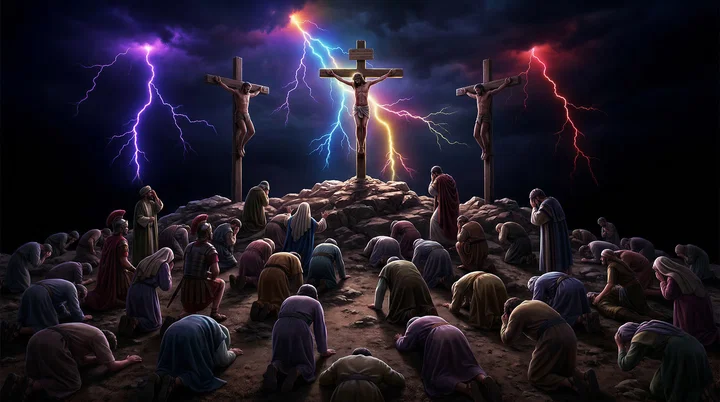
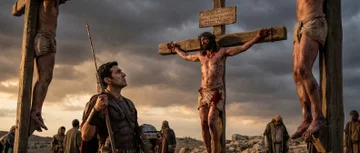
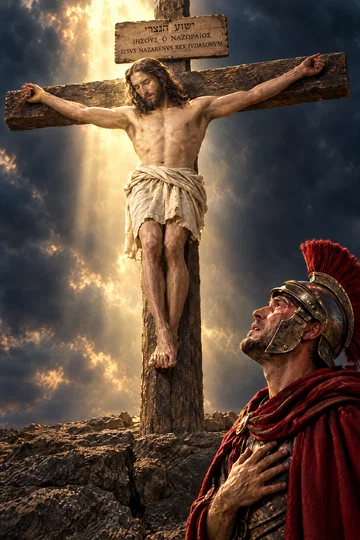
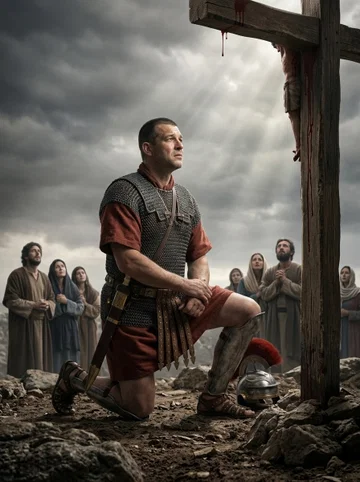
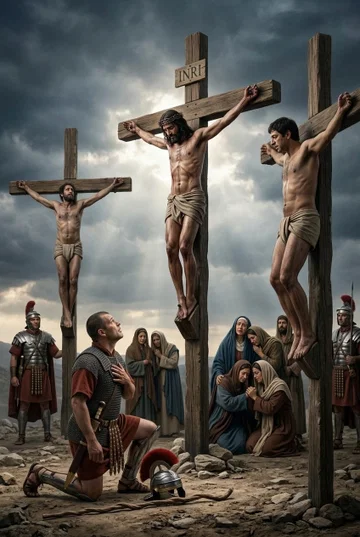
Now when the centurion saw what was done, he glorified God, saying, Certainly this was a righteous man.
Translations
American King James Version, King James Version, KJV Cambridge Paragraph Bible, Webster Bible
Now when the centurion saw what was done, he glorified God, saying, Certainly this was a righteous man.
Revised Version, American Standard Version
And when the centurion saw what was done, he glorified God, saying, Certainly this was a righteous man.
And the centurion having seen what was done, did glorify God, saying, 'Really this man was righteous;'
Now the centurion, seeing what took place, glorified God, saying, In very deed this man was just.
And the centurion, beholding that which came to pass, began to glorify God, saying—In very deed, this man, was, righteous.
Berean Standard Bible, Majority Standard Bible
When the centurion saw what had happened, he gave glory to God, saying, “Surely this was a righteous man.”
When the centurion saw what was done, he glorified God, saying, “ Certainly this was a righteous man.”
And when the captain saw what was done, he gave praise to God, saying, Without doubt this was an upright man.
Nowe when the Centurion saw what was done, he glorified God, saying, Of a suretie this man was iust.
Douay-Rheims (Challoner revision)
Now the centurion, seeing what was done, glorified God, saying: Indeed this was a just man.
Pictures
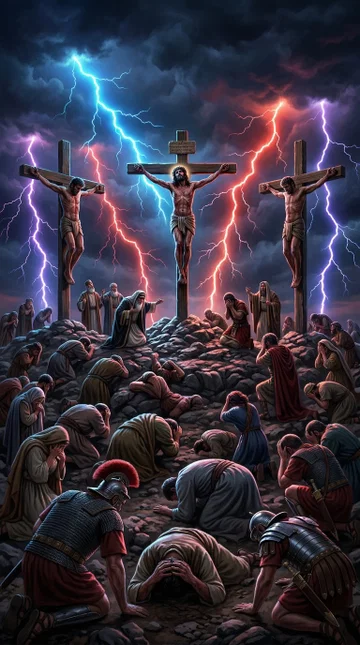
Cross-references
- Matthew 27:54
Now when the centurion, and they that were with him, watching Jesus, saw the earthquake, and those things that were done, they feared greatly, saying, Truly this was the Son of God.
The centurion responds to the signs at Jesus’ death, confessing his identity.
- Mark 15:39
And when the centurion, which stood over against him, saw that he so cried out, and gave up the ghost, he said, Truly this man was the Son of God.
The centurion responds to Jesus’ death by acknowledging him.
- John 19:30
When Jesus therefore had received the vinegar, he said, It is finished: and he bowed his head, and gave up the ghost.
Jesus’ final words as he dies prompt a confession of his righteousness.
- Luke 23:42
And he said unto Jesus, Lord, remember me when thou comest into thy kingdom.
The centurion’s confession and the thief’s confession both recognize Jesus at the cross.
- Luke 23:4
Then said Pilate to the chief priests and to the people, I find no fault in this man.
Pilate and the centurion both testify to Jesus’ innocence.
- Matthew 27:51
And, behold, the veil of the temple was rent in twain from the top to the bottom; and the earth did quake, and the rocks rent;
Both describe the earthquake, rent rocks, and torn veil at Jesus’ death.
- Luke 23:54-56
And that day was the preparation, and the sabbath drew on.
The preparation-day burial is followed by Sabbath rest.
- Luke 23:14-15
Said unto them, Ye have brought this man unto me, as one that perverteth the people: and, behold, I, having examined him before you, have found no fault in this man touching those things whereof ye accuse him:
Both texts affirm that Jesus was innocent and undeserving of death.
- Mark 15:44
And Pilate marvelled if he were already dead: and calling unto him the centurion, he asked him whether he had been any while dead.
Pilate surprised Jesus died so soon
- Luke 23:22
And he said unto them the third time, Why, what evil hath he done? I have found no cause of death in him: I will therefore chastise him, and let him go.
Pilate declares Jesus innocent, as the centurion calls him righteous.
- 2 Corinthians 5:21
For he hath made him to be sin for us, who knew no sin; that we might be made the righteousness of God in him.
The sinless Jesus bore sin for others.
Commentary
Each commentary is drawn from primary sources: the writings of Ellen G. White and Adventist pioneers and periodicals. Each commentary is separate. Its own words are not a quotation; follow the references to read the source passages.
Ellen G. White
12 sources
The centurion was present at the cross in command of the detachment of soldiers guarding it, and saw what was done there.5RED 93.2–3ST Aug 1, 18785RED 89.2–90.1
What he saw included the mysterious darkness enshrouding the earth for three hours and passing away at the very moment Jesus died, the sun veiled, the heaving and shaking earth and mighty earthquake underfoot, the rending of the rocks, the rending of the veil of the temple, the piercing and loud final cry of It is finished spoken in startling power and clearness of voice, and the sudden instant death of Jesus.ST Jun 10, 1889ST Aug 1, 1878ST Dec 8, 1898ST Feb 4, 19135RED 89.2–90.1
The strength of that cry and the suddenness of death within six hours was astonishing to Roman officers experienced in such scenes, because death by crucifixion was a slow and lingering exhaustion where the moment of death was hard to determine, those crucified frequently lingered days on the cross, and they had never witnessed a death like this on a cross.ST Aug 1, 18785RED 89.2–90.1
Immediately after that cry of victory the centurion glorified God and openly declared on the very day of Jesus death his certainty that Jesus was righteous, his belief that Jesus was the Son of God.Ms 93, 1899, par. 23–24ST Jun 10, 18895RED 89.2–90.1
His declaration that Jesus was righteous affirms Jesus innocence as He suffered the penalty of sin in the sinner's place.Ms 93, 1899, par. 23–24
The same signs and loud cry troubled His enemies and made His murderers tremble; terror seized the executioners and spectators, the mocking and jeering of the chief priests and elders was hushed, and the astonished throng withdrew groping their way in darkness toward the city, smiting their breasts, stumbling and falling in terror lest the quaking earth and rent trembling rocks end their own lives.ST Feb 15, 1883SG1 63.1ST Dec 8, 1898ST Feb 4, 1913EW 148.1
The wonders forced a confession from many hardened witnesses who had scoffed and jeered; made terribly afraid they declared Him righteous, said in whispers of terror that an innocent person had been murdered, and wondered whether He might indeed be as He asserted the Son of God, proclaiming that it was the Son of God who died.ST Feb 15, 1883ST Dec 8, 1898ST Feb 4, 191312MR 386.2–4Ms 91, 1897, par. 7–9
The conviction begun at His trial and deepened by the darkness over the cross and by His last words became seed that later ripened into a harvest when the disciples boldly proclaimed the gospel after His ascension, when many who had scoffed became afraid and many Jewish priests changed their faith.ST Dec 8, 189812MR 386.2–4Ms 91, 1897, par. 7–9
The centurion knew for a certainty that Jesus was really dead, and his testimony confirms that Jesus had died; his witness to the fearful scenes first reached Pilate in conflicting reports about the strange events while knowledge of the death was purposely kept from him, and then by direct recounting that corroborated Joseph's report when Joseph went boldly to beg the body for burial, which Pilate granted having first learned from Joseph that Jesus was dead.5RED 93.2–3ST Aug 1, 1878
The account surprised Pilate, caused him to believe more firmly that Jesus was innocent and no ordinary man, and left him strangely agitated and keenly regretting his part in condemning Jesus.ST Aug 1, 1878
The centurion stands with the man who bore Jesus cross and the man who died on the cross beside Jesus as three widely different men who openly declared belief in Christ that day.5RED 89.2–90.1
Sources
Pioneers and periodicals
23 sources
When the officer in charge of the crucifixion saw what was done at the cross he glorified God by declaring with certainty that Jesus was a righteous man.ST Aug 1, 1878RH May 7, 1867RH Jun 25, 1867RH Oct 26, 1905 What he saw was the darkness passing away at the moment of death, the piercing cry and sudden death, the veiled sun, the earthquake with rending rocks, the rent veil of the temple, and the testimony of Pilate and the penitent thief.ST Jun 10, 1889ST Feb 15, 1883ST Aug 1, 1878RH Jun 25, 1867 In that confession he acknowledged the character Christ had sustained and the circumstances attending His death, owning Him as the innocent Holy One who suffered through no fault of His own but for the sins of the guilty world.RH May 7, 1867RH Apr 22, 1862RH Jun 25, 1867RH Oct 26, 1905 His witness joined the public testimony to that innocence, for the betrayer owned to betraying innocent blood and neither Pilate nor Herod found grounds for death, and it became seed that ripened after the ascension when many who had mocked recognized the accusations were false and were converted at Pentecost.ST Dec 8, 1898ST Jul 25, 1878RH Apr 22, 1862 It took place on preparation day when Jesus was laid in the new tomb, while the Sabbath according to the commandment intervened before the first day of the week, showing the seventh day then kept is the true seventh day from Creation kept in unbroken succession ever since.ST Sep 23, 1913ST Jun 3, 1908ST Feb 1, 1905
Witness at the Cross
This belongs to the detailed and circumstantially accurate Gospel history of Jesus' trial, execution, and burial, the saddest tragedy in human history in which the Man of Galilee was crucified by a bloodthirsty, sin-hardened mob.RH Feb 11, 1862 The centurion in command of the soldiers at the cross saw what was done, including the mysterious darkness enshrouding the earth passing away at the very moment Jesus died, and knew for a certainty that Jesus was really dead.ST Aug 1, 1878
What he saw included Pilate's testimony to Jesus' innocence, the confession of the penitent thief, the strange piercing cry of the Divine Sufferer and His sudden death, three hours of darkness with the sun veiled, convulsion and heaving of the earth with a mighty earthquake, the rending of the rocks, and the rent veil of the temple.ST Jun 10, 1889ST Feb 15, 1883ST Dec 8, 1898ST Feb 4, 1913RH Jun 25, 1867 The terror of the darkness and earthquake confirmed the truth of his judgment and led witnesses to consider that Jesus was the Son of God, silencing mocking and filling executioners and spectators with fear.ST Jun 10, 1889ST Feb 15, 1883ST Feb 4, 1913 Their fearing and glorifying God when they saw the earthquake and the events condemns those who remain unmoved by a frightening display of God's power.RH Jan 4, 1870
By glorifying God he acknowledged the righteousness of Christ when His character and works were seen.RH May 7, 1867RH Oct 26, 1905 Though a sinner with no saving interest in Christ, by considering the character Christ had sustained and the circumstances attending His death he declared Him a righteous man, the innocent Holy One, the immaculate Messiah, the Son of David.RH May 7, 1867RH Jun 25, 1867 His recognition was part of the events at the cross that revealed the plan of salvation and marked a dividing line between belief and unbelief.RH Oct 26, 1905
The officer overseeing the crucifixion thus joined the other public testimony that Jesus was innocent.RH Apr 22, 1862 His betrayer admitted betraying innocent blood, Pilate repeatedly found no fault in Him, and neither Pilate nor Herod found grounds for His death.RH Apr 22, 1862 These circumstances showed He suffered through no fault of His own but for the sins of the guilty world so people could be reconciled to God.RH Apr 22, 1862
Sabbath Setting and Continuity
The centurion's confession belongs to preparation day, Friday afternoon, when Jesus died and was laid in the tomb, and to the Sabbath according to the commandment that followed and the first day of the week that came next.ST Sep 23, 1913 After He died Joseph of Arimathea asked Pilate for the body, and Joseph with Nicodemus buried Him in a new tomb. Pilate granted the request for burial and ordered soldiers to superintend the interment lest it be profaned, and a few days afterward the sepulcher was found empty while the disciples published that Jesus had risen as He had foretold.RH Jul 16, 1861 On that Sabbath Jesus rested in the tomb and the women who had seen the burial rested after preparing sweet spices to anoint the body, then came to the sepulcher early on the first day of the week and found the stone rolled away and Jesus risen.
The Sabbath kept at that death was the seventh day enjoined in the fourth commandment, blessed and hallowed because God rested in it from all His work of creation.ST Jan 24, 1884 The faithful kept that Sabbath through the time of the cross, and work upon the body was deferred until Sunday because the Sabbath prevented it.ST Oct 21, 1889ST Jan 31, 1911 The plain record places the Sabbath before the first day of the week as one week follows another, showing the first day is not the Sabbath and pointing out duty as creatures to the Creator.ST Jan 24, 1884RH Dec 8, 1874
The naming of the seventh day and the first day in immediate connection in the crucifixion and resurrection record fixes the weekly order at the cross.ST Jun 3, 1908ST Feb 1, 1905 The seventh day and the first day have traveled side by side ever since in unbroken succession, so the days of the week have not been lost or shifted since Christ's time.ST Jun 3, 1908ST Feb 1, 1905 The seventh day then kept is therefore the true seventh day from Creation, and its identity has not been lost between the cross and the present.ST Feb 1, 1905
In that setting Christ died on Friday afternoon, three days before the first day of the week mentioned in the following events, and His death sealed the new covenant.ST Sep 23, 1913 His death ended the typical system that had pointed forward to it. With every passage on Sabbath and law from Genesis to Revelation this proves the law of God is still binding and the seventh day is the Sabbath as part of that law, which sums up the whole duty of man to keep the commandments.RH Dec 8, 1874 The promise to make all things new does not abolish the Sabbath now, because it belongs to the future time when there is no more death.RH Dec 8, 1874
The crucifixion took place in A.D. 31, the same year as the resurrection and ascension, after a public ministry lasting nearer three years and six months.ST Sep 22, 1909
Testimony and Its Harvest
The wonders at the cross forced confession even from hardened witnesses and scoffers.ST Dec 8, 1898ST Feb 4, 1913 The conviction had begun at His trial and was deepened by three hours of darkness over the cross and by His last words.ST Dec 8, 1898 That revelation of the plan of salvation marked a dividing line between belief and unbelief.RH Oct 26, 1905 The shaking earth, the piercing cry, and the sudden death of Jesus compelled even those who had scoffed and jeered to declare Him righteous.ST Dec 8, 1898 The terrific darkness with the sun veiled, the heaving earth and mighty earthquake underfoot, the rending of the rocks, and the rending of the veil of the temple proclaimed that it was the Son of God who died.ST Feb 4, 1913 The centurion confessed the truth about Jesus despite pressure from Caiaphas, and his confession confirmed that Pilate had consented to the death of a divine personage.ST Feb 7, 1911
Terror seized the executioners and spectators, and the mocking and jeering of the chief priests and elders was hushed.ST Feb 15, 1883ST Feb 4, 1913 The darkness, earthquake, and rending rocks filled them with terror and silenced the mocking leaders as they considered that He might indeed be as He asserted the Son of God.ST Feb 15, 1883ST Feb 4, 1913 The astonished throng withdrew and groped their way in darkness toward the city, smiting their breasts and speaking in whispers of terror that an innocent person had been murdered.ST Feb 4, 1913 They hastened from the scene stumbling and falling in terror lest the quaking earth and rent trembling rocks end their own lives.ST Dec 8, 1898 What the centurion saw included Pilate's testimony to the innocence of Jesus, the confession of the penitent thief on the cross, the strange cry of the Divine Sufferer, the convulsion of nature, the rent veil of the temple, and the three hours of darkness.RH Jun 25, 1867 These things proved Jesus to be a righteous man, the innocent Holy One, the immaculate Messiah, the Son of David, and they moved the beholders with deep remorse as sharers in His death to smite their breasts in penitence.RH Jun 25, 1867
When the soldiers saw the earthquake and the events accompanying Jesus' death, they feared and glorified God.RH Jan 4, 1870 Their response condemns those who remain unmoved by a frightening display of God's power.RH Jan 4, 1870
The centurion in command of the soldiers at the cross saw what was done, including the mysterious darkness enshrouding the earth passing away at the very moment Jesus died, and knew for a certainty that Jesus was really dead.ST Aug 1, 1878 His witness to the fearful scenes of Calvary first reached Pilate in conflicting reports about the strange events attending the crucifixion while the knowledge of the death was purposely kept from him.ST Aug 1, 1878 Then by direct recounting it corroborated Joseph's testimony when Joseph went boldly to Pilate and begged the body of Jesus for burial.ST Aug 1, 1878 Pilate granted it, having first learned from Joseph that Jesus was dead.ST Aug 1, 1878 The account caused Pilate to believe more firmly that Jesus was innocent and no ordinary man, surprised him because those crucified frequently lingered days on the cross, and left him strangely agitated and keenly regretting his part in condemning Jesus.ST Aug 1, 1878
The conviction became seed that later ripened into a harvest when the Gospel was proclaimed by His disciples after His ascension.ST Dec 8, 1898 People who had joined in mocking recognized the priests' accusations were false and Jesus was no pretender.ST Jul 25, 1878 Many of these people later became converts when Peter preached at Pentecost and explained the mystery of the cross and the Messiah.ST Jul 25, 1878
The conversion of the Roman centurion at the cross was one of three on the dark day of the crucifixion, together with Simon who bore the cross and the repentant thief.ST Dec 5, 1916 He represents the descendants of Japheth, while Simon represents Ham and the thief represents Shem.ST Dec 5, 1916 Together the three form a glorious wave sheaf of first rescues from every branch of humanity, presented by Christ to the Father amid the throes of Calvary as His very last earthly work.ST Dec 5, 1916
Sources