Mark 15:39
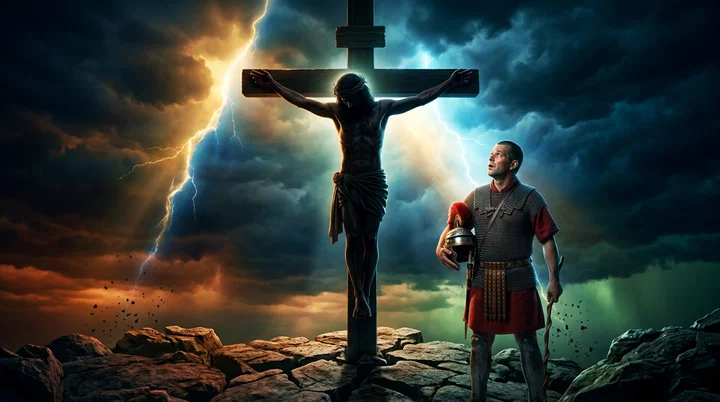
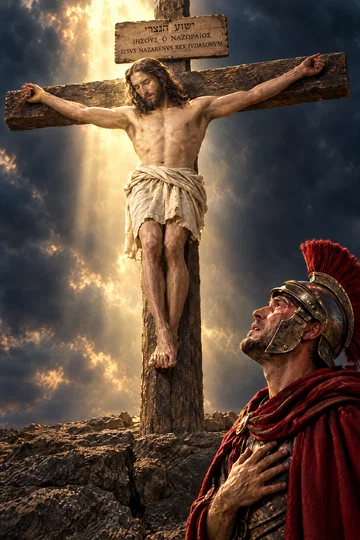
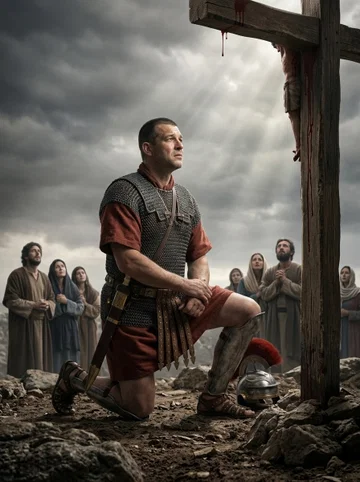
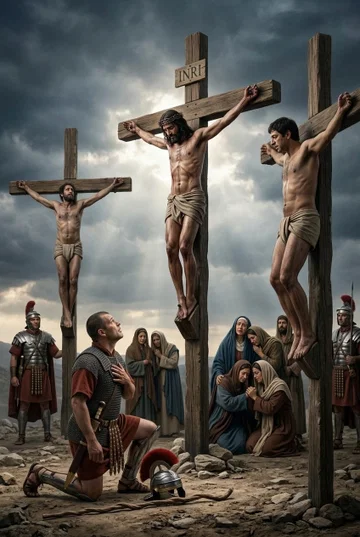
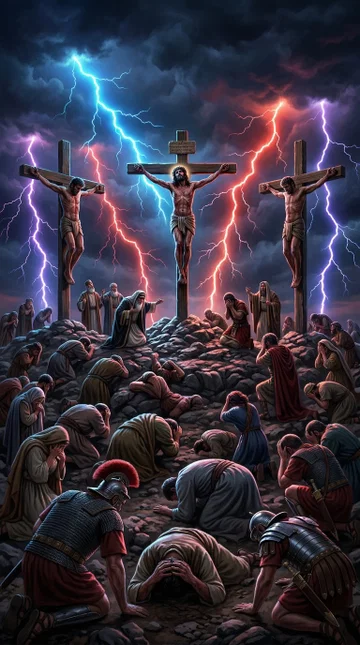
And when the centurion, which stood over against him, saw that he so cried out, and gave up the ghost, he said, Truly this man was the Son of God.
Translations
American King James Version, King James Version, KJV Cambridge Paragraph Bible
And when the centurion, which stood over against him, saw that he so cried out, and gave up the ghost, he said, Truly this man was the Son of God.
And when the centurion who stood over against him, saw that he so cried out, and expired, he said, Truly this man was the Son of God.
And when the centurion, which stood by over against him, saw that he so gave up the ghost, he said, Truly this man was the Son of God.
And when the centurion, who stood by over against him, saw that he so gave up the ghost, he said, Truly this man was the Son of God.
and the centurion who was standing over-against him, having seen that, having so cried out, he yielded the spirit, said, 'Truly this man was Son of God.'
And the centurion who stood by over against him, when he saw that he had expired having thus cried out, said, Truly this man was Son of God.
Now the centurion, who was standing near, out over against him, seeing, that, thus, he ceased to breathe, said—Truly, this man, was God’s son!
When the centurion standing there in front of Jesus saw how He had breathed His last, he said, “ Truly this man was the Son of God!”
When the centurion standing there in front of Jesus saw how He had cried out and breathed His last, he said, “ Truly this man was the Son of God!”
When the centurion, who stood by opposite him, saw that he cried out like this and breathed his last, he said, “ Truly this man was the Son of God!”
And when the captain, who was near, saw how he gave up his spirit, he said, Truly this man was a son of God.
Nowe when the Centurion, which stoode ouer against him, sawe that he thus crying gaue vp the ghost, he saide, Truely this man was the Sonne of God.
Douay-Rheims (Challoner revision)
And the centurion who stood over against him, seeing that crying out in this manner he had given up the ghost, said: Indeed this man was the son of God.
Pictures
Cross-references
- Luke 23:47
Now when the centurion saw what was done, he glorified God, saying, Certainly this was a righteous man.
The centurion responds to Jesus’ death by declaring him innocent.
- Matthew 27:54
Now when the centurion, and they that were with him, watching Jesus, saw the earthquake, and those things that were done, they feared greatly, saying, Truly this was the Son of God.
The centurion makes the same confession after witnessing Jesus’ death.
- John 19:30
When Jesus therefore had received the vinegar, he said, It is finished: and he bowed his head, and gave up the ghost.
Jesus’ final cry precedes his death and prompts the centurion’s confession.
- 1 Corinthians 15:3
For I delivered unto you first of all that which I also received, how that Christ died for our sins according to the scriptures;
Christ’s death is described as being for our sins.
- Luke 23:46
And when Jesus had cried with a loud voice, he said, Father, into thy hands I commend my spirit: and having said thus, he gave up the ghost.
Jesus’ final cry and death preceded the centurion’s confession.
- Mark 15:34
And at the ninth hour Jesus cried with a loud voice, saying, Eloi, Eloi, lama sabachthani? which is, being interpreted, My God, my God, why hast thou forsaken me?
Jesus cries out before his sudden death.
- John 19:31-35
The Jews therefore, because it was the preparation, that the bodies should not remain upon the cross on the sabbath day, ( for that sabbath day was an high day,) besought Pilate that their legs might be broken, and that they might be taken away.
Records confirmation that Jesus had died.
- Mark 5:7
And cried with a loud voice, and said, What have I to do with thee, Jesus, thou Son of the most high God? I adjure thee by God, that thou torment me not.
Both identify Jesus as the Son of God.
- Mark 15:33
And when the sixth hour was come, there was darkness over the whole land until the ninth hour.
Darkness at the crucifixion convinced onlookers.
- Luke 23:44-45
And it was about the sixth hour, and there was a darkness over all the earth until the ninth hour.
Darkness and signs at the cross helped convince witnesses.
- Luke 23:42
And he said unto Jesus, Lord, remember me when thou comest into thy kingdom.
The criminal expresses faith in Jesus while dying.
- Mark 8:31
And he began to teach them, that the Son of man must suffer many things, and be rejected of the elders, and of the chief priests, and scribes, and be killed, and after three days rise again.
Jesus had foretold that he would rise from the dead.
- Acts 2:36
Therefore let all the house of Israel know assuredly, that God hath made that same Jesus, whom ye have crucified, both Lord and Christ.
Peter proclaims crucified Jesus as Lord and Christ, and many become converts.
Commentary
Each commentary is drawn from primary sources: the writings of Ellen G. White and Adventist pioneers and periodicals. Each commentary is separate. Its own words are not a quotation; follow the references to read the source passages.
Ellen G. White
14 sources
The Roman centurion in charge of the soldiers stood opposite Jesus by the cross, and when he saw and heard Him cry out loudly and give up His life, he declared that He truly was the Son of God.ST Jun 10, 1889Ms 91, 1897, par. 7–9DA 770.1–2 What moved him was the manner of the death, His patience, His sudden death within six hours of crucifixion and so soon after being crucified, and His strong, clear, forceful, piercing cry of victory immediately before dying, which astonished the experienced Roman officers.DA 770.1–23SP 169.2–170.25RED 89.2–90.1 His declaration was an open confession of faith and belief that gave witness to Jesus' divinity and to the fruit of His suffering, made with overpowering conviction even while others mocked His claim to be God's Son.ST Jun 10, 1889DA 770.1–23SP 169.2–170.25RED 89.2–90.112MR 386.2–4 The death took place beneath a dark sky amid fearful events, about three hours of mysterious darkness over the cross that ended just as Jesus died, an earthquake with shaking earth and trembling, and rent and splitting rocks, which with the piercing cry, last words, and sudden death made His identity as the Son of God evident and filled executioners, spectators, and the crowd with terror.ST Jun 10, 1889SG1 63.1ST Feb 15, 1883 The fearful admission was forced from many, not from the centurion alone, for even many who had scoffed and jeered became terribly afraid that He was innocent and might truly be the Son of God as He had claimed, and hastened from the scene stumbling and falling in awful terror.ST Jun 10, 1889ST Feb 15, 1883ST Dec 8, 1898 Their conviction, begun at His trial and deepened by the darkness, earthquake, and manner of dying, was sown as seed that ripened into a harvest after His ascension, and the centurion's testimony to Pilate that Jesus was already dead sooner than crucified men usually die led Pilate to believe more firmly that Jesus was no ordinary man and to regret condemning Him.Ms 91, 1897, par. 7–95RED 93.2–3ST Dec 8, 1898ST Aug 1, 187812MR 386.2–4
The Centurion's Confession
The speaker is the Roman centurion in charge of the soldiers, standing opposite Jesus by the cross, who on seeing and hearing Jesus cry out loudly and give up his life declared that He truly was the Son of God.ST Jun 10, 1889Ms 91, 1897, par. 7–9DA 770.1–25RED 89.2–90.112MR 386.2–4 His confession came as Jesus suffered and died on the cross.ST Jun 10, 1889Ms 91, 1897, par. 7–9
What moved him was the manner of the death: Jesus' patience, His sudden death within six hours of crucifixion and so soon after being crucified, and His strong, clear, forceful, piercing cry of victory immediately before dying.DA 770.1–23SP 169.2–170.25RED 89.2–90.1ST Dec 8, 1898 That strength of voice at the moment of death, with power and clarity extraordinary for a dying man, astonished the experienced Roman officers.3SP 169.2–170.25RED 89.2–90.1
His declaration was an open confession of faith and belief that gave witness to Jesus' divinity and to the fruit of His suffering, made with overpowering conviction.DA 770.1–25RED 89.2–90.112MR 386.2–4 The confession was made while others were mocking Jesus' claim to be God's Son.ST Jun 10, 1889 Spectators and soldiers became convinced He was the Redeemer Israel awaited, while the priests and rulers remained hardened against the evidence of His divinity.3SP 169.2–170.2
The centurion was one of three men who made a public declaration of faith in Jesus on the day of His death.DA 770.1–23SP 169.2–170.2
Signs and Wider Impact
Jesus died beneath a dark sky amid fearful upheavals of nature.ST Jun 10, 1889SG1 63.1DA 684 About three hours of mysterious darkness hung over the cross and ended just as He died, with shaking earth and trembling, rent and splitting rocks, an earthquake and other disturbances surrounding His giving up of life.ST Jun 10, 1889SG1 63.1ST Feb 15, 18835RED 93.2–3ST Dec 8, 1898 The darkness, earthquake, rending rocks, piercing cry, last words and sudden death made His identity as the Son of God evident.ST Jun 10, 1889ST Feb 15, 1883ST Dec 8, 1898 His enemies were troubled, executioners, spectators and the crowd were filled with terror, and His murderers trembled.ST Jun 10, 1889SG1 63.1ST Feb 15, 1883DA 684EW 148.1
The fearful admission was forced from many, not from the centurion alone.ST Jun 10, 1889ST Dec 8, 1898 Even many who had scoffed and jeered at the Son of God became terribly afraid that He was innocent and might truly be the Son of God as He had claimed.ST Jun 10, 1889ST Feb 15, 1883ST Dec 8, 1898 They hastened from the scene stumbling and falling in awful terror lest the shaking earth and the rent and trembling rocks should put an end to their own lives.ST Dec 8, 1898
Conviction had begun at His trial, and the earthquake, darkness and manner of dying helped bring conviction to others as well.Ms 91, 1897, par. 7–9ST Dec 8, 189812MR 386.2–4 Their words and convictions were sown as seed that ripened into a harvest after His ascension when the disciples boldly proclaimed the gospel.Ms 91, 1897, par. 7–9ST Dec 8, 189812MR 386.2–4
The centurion who had witnessed the death and surrounding events testified to Pilate that Jesus was already dead.5RED 93.2–3 Jesus had died just as the mysterious darkness passed, sooner than crucified men usually did, since they often lingered for days.5RED 93.2–3ST Aug 1, 1878 The unusually early death and his account led Pilate to believe more firmly that Jesus was no ordinary man and to regret condemning Him.5RED 93.2–3
Sources
Pioneers and periodicals
21 sources
The Roman officer in charge of the execution stood opposite Jesus and watched how He uttered a strong, clear cry and then died.ST Jun 10, 1889ST Jul 25, 1878ST Jul 25, 1911ST Jun 1, 1904RH Feb 8, 1915 He died that same day on the preparation before the Sabbath, at the ninth hour as the darkness ended and at the time appointed for the Passover sacrifice, far sooner than crucified men usually lingered.ST Aug 1, 1878ST Oct 7, 1930ST Jun 20, 1911 The darkness, the earthquake with rent rocks, the piercing cry and the sudden death filled the executioners and onlookers with terror and forced the confession from the centurion and many others.ST Jun 10, 1889ST Feb 15, 1883ST Dec 8, 1898ST Mar 20, 1901ST Feb 7, 1911 That confession declares that the crucified Jesus is truly the Son of God, whose veiled divine glory flashed through His humanity and could not be hidden.ST Apr 8, 1903 He so died as the acceptable substitute for sin, bearing the world's woe in love for souls and thereby magnifying the law and proving it honorable and unabolished.ST Jun 15, 1904RH Jan 16, 1908
Witness at the Cross
The witness was a Roman centurion, an officer in command of a hundred soldiers, who stood opposite Jesus and oversaw the execution he had commanded.ST Jul 25, 1911RH Feb 8, 1915 Hardened by military campaigns, he is known only by his rank, and shared rank alone does not make him Cornelius of Acts 10:1.ST Jul 25, 1911ST Oct 31, 1916
Jesus died on the very day He was crucified, the preparation day before the weekly Sabbath.ST Oct 7, 1930 His death came after the ninth hour when the darkness ended, between the two evenings at the time appointed for the Passover sacrifice, just as the mysterious darkness lifted.ST Aug 1, 1878ST Jun 20, 1911 Since crucified men often lingered for days, this unusually early death led Pilate to conclude Jesus was no ordinary man.ST Aug 1, 1878
What moved the centurion was seeing how Jesus cried out and died, while others mocked His claim to be God's Son.ST Jun 10, 1889ST Jun 1, 1904 Jesus uttered a powerful, clear cry immediately before death, and His conduct and suffering under execution impressed the centurion with a verdict upon what he had seen.ST Jul 25, 1878ST Aug 14, 1884 Crucifixion usually brought slow decline, and death within six hours was already unusual, so such strength at the point of death astonished the experienced officers.ST Jul 25, 1878 His declaration was one of three open expressions of belief in Christ that day, alongside that of the man who carried His cross and that of the man crucified beside Him.ST Jul 25, 1878
The signs accompanying the death — darkness, earthquake, rending rocks and other upheavals of nature — made His identity as the Son of God evident and filled the witnesses with terror.ST Jun 10, 1889ST Feb 15, 1883 The terror of the executioners, spectators and even the crowd gave way to the fearful admission that Jesus was innocent and might truly be the Son of God as He had claimed.ST Jun 10, 1889ST Feb 15, 1883
The confession was not made by the centurion alone but was forced from many by the three hours of darkness over the cross, the shaking earth, the piercing cry, the last words and the sudden death.ST Dec 8, 1898 Many who had scoffed and jeered hastened from the scene stumbling and falling in awful terror lest the shaking earth and the rent and trembling rocks put an end to their own lives.ST Dec 8, 1898 The parallel account in Luke says the centurion glorified God and called Him righteous.ST Mar 20, 1901 His confession came after witnessing the death and stood despite the priests' attempt to bribe him.ST Feb 7, 1911 Those who had joined in mocking became conscience-stricken and recognized the priests' accusations false and Jesus no pretender, conviction sown at His trial and cross ripening into harvest after His ascension when the disciples proclaimed the Gospel and at Pentecost when many witnesses became converts.ST Dec 8, 1898ST Jul 25, 1878
The account belongs to the inspired history of Christ's trial, execution and burial, presented as the saddest tragedy since creation, brought by a bloodthirsty, sin-hardened mob.RH Feb 11, 1862 It is told with minute accuracy about customs, opinions, political events and institutions — that Jesus was brought to Pontius Pilate, then governor of Judea, whose sentence was necessary because the power of life and death rested with the Roman governor; that He was treated with derision and scourged according to usual Roman practice toward criminals before and during execution; that His accusation was affixed atop the cross in three languages as crimes were affixed and public notices at Jerusalem were commonly written; that He bore His cross as was constant practice; and that His body was released to friends at their request as was law and custom unless the criminal was infamous.RH Feb 11, 1862 These details flow naturally and undesignedly out of the narrative without forced introduction, which gives presumption of truth.RH Feb 11, 1862 The crucifixion as a principal transaction is also mentioned in the Babylonian Talmud.RH Sep 5, 1865
What the Death Reveals
The Man who died on the cross truly was the Son of God and Savior.ST Apr 8, 1903 He was a poor young Man of royal blood, the purest and noblest who ever walked the earth, who bore His own instrument of death and sank under exhaustion before He was nailed to the cross on the skull-like hill.ST Apr 8, 1903 He died amid wonders and convulsions in heaven and earth in the glorious triumph of the principle of eternal righteousness, as a victim to hellish hate, to Jewish blindness, and to Roman ignorance.ST Apr 8, 1903 Wealthy friends laid Him in a rich man's rock-hewn tomb, wrapped in linen with aloes and myrrh behind a great officially sealed stone, where a mighty angel declared His identity as the Son of God called by His Father, and He came forth Conqueror over the mightiest foes of the ages, sin and death, for you and for me.ST Apr 8, 1903 The cross thus reveals Him bearing human sin and making atonement, drawing people to God.
The centurion's confession was compelled by Christ's veiled divine glory flashing through His humanity with an intensity His pure humanity could not entirely conceal. He did not cease to be God when He became man, but kept His Godhead while faithful and true, with human and divine closely and inseparably one yet distinct. On special occasions that indwelling glory shone forth before scoffing priests and rulers and spoke to every heart with unmistakable evidence through the veil of humiliation, compelling men and devils to confess Him as the Son of God. That confession revealed God and glorified Christ, yet while some acknowledged Him as the Christ, the larger portion who were forced to see Him as the Son of God refused to receive Him, their blindness matching determined resistance.
His death on the cross took place within His agony of love and concern for souls, while the Father beheld Him.RH Jan 16, 1908 His suffering was the anguish of bearing the world's woe.RH Jan 16, 1908 He was crucified and died for sins according to the Scriptures as an acceptable substitute.ST Jun 15, 1904 Sin is the transgression of the law, its penalty is death, and all have sinned, so all must die or an acceptable substitute must die in their stead, which Jesus did.ST Jun 15, 1904 His death magnified the law and made it honorable, vindicating its claims and proving the law was not abolished, for it is so firmly established that not one jot or tittle could be repealed.ST Jun 15, 1904 Had the law outlived its usefulness His death in behalf of those living afterward would not have been necessary, and all who accept Him by faith acknowledge the just claims of the law upon them.ST Jun 15, 1904
Sources