Luke 23:46
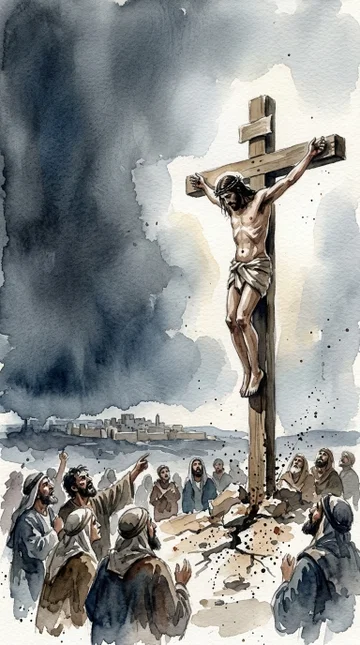
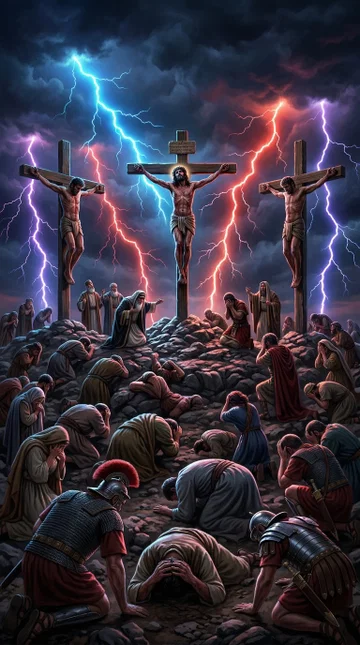
And when Jesus had cried with a loud voice, he said, Father, into thy hands I commend my spirit: and having said thus, he gave up the ghost.
Translations
And when Jesus had cried with a loud voice, he said, Father, into your hands I commend my spirit: and having said thus, he gave up the ghost.
King James Version, KJV Cambridge Paragraph Bible
And when Jesus had cried with a loud voice, he said, Father, into thy hands I commend my spirit: and having said thus, he gave up the ghost.
And when Jesus had cried with a loud voice, he said, Father, into thy hands I commend my spirit: and having said thus, he expired.
And when Jesus had cried with a loud voice, he said, Father, into thy hands I commend my spirit: and having said this, he gave up the ghost.
And Jesus, crying with a loud voice, said, Father, into thy hands I commend my spirit: and having said this, he gave up the ghost.
and having cried with a loud voice, Jesus said, 'Father, to Thy hands I commit my spirit;' and these things having said, he breathed forth the spirit.
And Jesus, having cried with a loud voice, said, Father, into thy hands I commit my spirit. And having said this, he expired.
And, calling out with a loud voice, Jesus said—Father! into thy hands, I commend my spirit. And, this, saying, he ceased to breathe.
Berean Standard Bible, Majority Standard Bible
Then Jesus called out in a loud voice, “ Father, into Your hands I commit My Spirit.” And when He had said this, He breathed His last.
Jesus, crying with a loud voice, said, “ Father, into your hands I commit my spirit!” Having said this, he breathed his last.
And Jesus gave a loud cry and said, Father, into your hands I give my spirit: and when he had said this, he gave up his spirit.
And Iesus cryed with a loude voyce, and sayd, Father, into thine hands I commend my spirit. And when hee thus had sayd, hee gaue vp the ghost.
Douay-Rheims (Challoner revision)
And Jesus crying out with a loud voice, said: Father, into thy hands I commend my spirit. And saying this, he gave up the ghost.
Pictures
Cross-references 20 of 62
- John 19:30
When Jesus therefore had received the vinegar, he said, It is finished: and he bowed his head, and gave up the ghost.
Jesus declares his saving work finished as he dies.
- Psalms 31:5
Into thine hand I commit my spirit: thou hast redeemed me, O LORD God of truth.
Jesus’ words echo the psalmist’s entrusting his spirit to God.
- Acts 7:59
And they stoned Stephen, calling upon God, and saying, Lord Jesus, receive my spirit.
Stephen entrusts his spirit to Jesus as he dies, echoing Christ’s committal prayer.
- Matthew 27:50
Jesus, when he had cried again with a loud voice, yielded up the ghost.
Jesus’ final cry and surrender to death parallel Luke’s account of his death.
- Mark 15:34
And at the ninth hour Jesus cried with a loud voice, saying, Eloi, Eloi, lama sabachthani? which is, being interpreted, My God, my God, why hast thou forsaken me?
It records Jesus’ cry of abandonment earlier in the darkness.
- Matthew 27:51
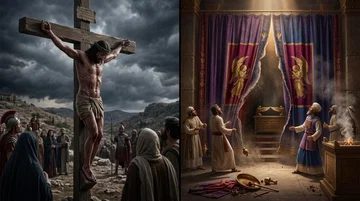
And, behold, the veil of the temple was rent in twain from the top to the bottom; and the earth did quake, and the rocks rent;
The earthquake and torn temple veil accompany Jesus’ death.
- Luke 24:1
Now upon the first day of the week, very early in the morning, they came unto the sepulchre, bringing the spices which they had prepared, and certain others with them.
The women came to the tomb on the first day after the Sabbath.
- John 10:18
No man taketh it from me, but I lay it down of myself. I have power to lay it down, and I have power to take it again. This commandment have I received of my Father.
Jesus willingly lays down his life and has power to take it again.
- Ecclesiastes 12:7
Then shall the dust return to the earth as it was: and the spirit shall return unto God who gave it.
Both describe the spirit returning to God at death.
- Luke 23:54-56
And that day was the preparation, and the sabbath drew on.
The women rested on the Sabbath after Jesus’ death and burial.
- Mark 15:37
And Jesus cried with a loud voice, and gave up the ghost.
Parallel account of Jesus’ final cry and death.
- Acts 2:24
Whom God hath raised up, having loosed the pains of death: because it was not possible that he should be holden of it.
God raised Jesus; death could not hold him.
- John 19:31
The Jews therefore, because it was the preparation, that the bodies should not remain upon the cross on the sabbath day, ( for that sabbath day was an high day,) besought Pilate that their legs might be broken, and that they might be taken away.
Jesus dies before the Sabbath, as the soldiers prepare to remove the crucified bodies.
- Philippians 2:8-9
And being found in fashion as a man, he humbled himself, and became obedient unto death, even the death of the cross.
Christ’s obedience unto death is followed by exaltation.
- Acts 7:60
And he kneeled down, and cried with a loud voice, Lord, lay not this sin to their charge. And when he had said this, he fell asleep.
Both cry aloud with forgiving prayers before dying.
- Luke 23:34
Then said Jesus, Father, forgive them; for they know not what they do. And they parted his raiment, and cast lots.
Jesus prays for his enemies and forgives them on the cross.
- Hebrews 2:14-15
Forasmuch then as the children are partakers of flesh and blood, he also himself likewise took part of the same; that through death he might destroy him that had the power of death, that is, the devil;
Christ took human nature and died to defeat Satan and free people from death’s fear.
- Matthew 27:45
Now from the sixth hour there was darkness over all the land unto the ninth hour.
Darkness surrounded the crucifixion during Jesus’ final hours.
- Matthew 27:54
Now when the centurion, and they that were with him, watching Jesus, saw the earthquake, and those things that were done, they feared greatly, saying, Truly this was the Son of God.
The centurion and soldiers confess Jesus as God’s Son after his death.
- Mark 15:39
And when the centurion, which stood over against him, saw that he so cried out, and gave up the ghost, he said, Truly this man was the Son of God.
The centurion declares Jesus to be God’s Son after witnessing his death.
Commentary
Each commentary is drawn from primary sources: the writings of Ellen G. White and Adventist pioneers and periodicals. Each commentary is separate. Its own words are not a quotation; follow the references to read the source passages.
Ellen G. White
43 sources
With a loud, clear, triumphant voice that astonished those at the cross, Jesus entrusted His spirit to the Father after finishing the work He came to do, then bowed His head and voluntarily yielded His life in death as the Son of God and Messiah.ST Jan 27, 1914Ms 41, 1887, par. 17–21COS 163.6–8Ms 45, 1897, par. 18Ms 91, 1897, par. 7–9 He made this committal in trustful submission at the close of suffering and darkness, continuing communion with the Father to the end.ST Jan 27, 1914Ms 45, 1892, par. 32–36Ms 138, 1899, par. 46–47Ms 94, 1899, par. 32–33 He did so by faith alone while feeling forsaken and withdrawn from the Father's favor, without clear assurance beyond death, resting on what He knew of the Father's just, merciful and loving character and on tokens already given of acceptance.ST Jan 27, 1914Ms 45, 1892, par. 32–36Ms 205, 1899, par. 8 His death thus completed the work of redemption to that point, for the Guiltless bore the sinner's penalty with a heart broken by mental anguish, and in resisting unto death He gained the victory and defeated Satan.Lt 125, 1902, par. 8–12Ms 93, 1899, par. 23–24Ms 94, 1899, par. 32–33ST Jun 10, 1889ST Jun 10, 1889 The manner of His death, amid lifted gloom and light about the cross with earthquake, rent rocks, opened graves and the rending of the temple veil, forced conviction upon the centurion and many witnesses that He was righteous and truly the Son of God, silencing and terrifying His mockers.Ms 41, 1887, par. 17–21Ms 91, 1897, par. 7–9Ms 93, 1899, par. 23–24ST Oct 7, 1886ST Dec 8, 1898
Wording and Circumstances
The final committal was uttered with a loud voice, not in whispered tones.COS 163.6–8Ms 91, 1897, par. 7–9DA 772.1–25RED 85.3ST Jul 25, 1878 It was clear and triumphant, described as trumpet-like and piercing, seeming to resound throughout creation.Ms 41, 1887, par. 17–21COS 163.6–8Ms 91, 1897, par. 7–95RED 85.3ST Jul 25, 1878 Its unusual strength at the very moment of death astonished experienced Roman officers.Ms 91, 1897, par. 7–9
The words Father, into thy hands I commend my spirit were spoken together with the declaration It is finished.Ms 45, 1897, par. 18Lt 125, 1902, par. 8–12Ms 91, 1897, par. 7–9Ms 93, 1899, par. 23–24Ms 138, 1899, par. 46–47 They came after Jesus had completed the work He came to do, at the close of His life and after the agony brought upon Him by the sins of the world.Ms 45, 1897, par. 18Lt 125, 1902, par. 8–12Ms 93, 1899, par. 23–24Ms 138, 1899, par. 46–47DA 771.1–2 His prayerful communion with the Father thus continued to the end of His life.Ms 138, 1899, par. 46–47
Having said this He bowed His head upon His breast and died, yielding up His life.Ms 41, 1887, par. 17–21COS 163.6–8Lt 125, 1902, par. 8–125RED 85.3ST Jul 25, 1878 His death was sudden and supernatural, voluntary and powerful.Ms 91, 1897, par. 7–9 The Majesty of heaven, the King of glory, the Son of God and long-expected Messiah truly died.ST Jan 27, 1914Ms 45, 1897, par. 18
The verse belongs to the account of Jesus being led from the judgment-hall to Calvary to be crucified after news of His condemnation spread throughout Jerusalem.DA 741.3 People of all classes and ranks flocked toward the place of crucifixion.DA 741.3 Disciples and believers from the city and the surrounding region joined the throng following the Saviour because the priests and rulers were bound by a promise not to molest His followers if He Himself were delivered to them.DA 741.3
The crucifixion was at the place called Calvary outside the boundaries of Jerusalem, outside the gate where felons and murderers were executed.DA 741.1–2 There He died as substitute for transgression of the law of God that He might sanctify the people with His own blood.DA 741.1–2 By being made a curse for them He redeemed them from the curse of the law.DA 741.1–2
He died at the very moment the mysterious darkness that enshrouded the earth passed away.5RED 93.2–3ST Aug 1, 1878 This was unusually soon, since those crucified frequently lingered days upon the cross, so Pilate was surprised.5RED 93.2–3ST Aug 1, 1878 Pilate had heard conflicting reports about the strange events at the crucifixion but did not know He was really dead until Joseph's testimony, corroborated by the centurion in command at the cross, gave certainty of it.5RED 93.2–3ST Aug 1, 1878 The timing and manner more firmly convinced Pilate that Jesus was innocent and no ordinary man, leaving him strangely agitated and keenly regretting his part in condemning Him.5RED 93.2–3ST Aug 1, 1878
Trusting Submission by Faith
At the close of His suffering, after despair and darkness and the agony brought upon Him by the sins of the world, Jesus entrusted His spirit and life to the Father in trustful confidence and submission.Ms 45, 1892, par. 32–36Ms 138, 1899, par. 46–47Ms 94, 1899, par. 32–33RH Oct 30, 1900 His prayerful communion with the Father had continued through His life and continued to the end of His life, and His final committal came after He declared His work finished.Ms 138, 1899, par. 46–47DA 771.1–2RH Oct 30, 1900 He yielded up His precious life only after He had resisted Satan even unto death and gained the victory He came to win.Ms 45, 1892, par. 32–36Ms 94, 1899, par. 32–33
He did this by faith alone amid gloom and oppressive darkness, after enduring the sense of being forsaken and the withdrawal of the Father's love and favor.ST Jan 27, 1914Ms 45, 1892, par. 32–362T 210.2ST Feb 15, 1883 He acted without clear hope or assurance of future triumph, unable to see beyond death or to feel assurance of acceptance.Ms 205, 1899, par. 82T 210.2ST Feb 15, 1883ST Jun 10, 1889 His death followed the suffering caused by bearing the world's sin and its penalty, and He yielded up His life after completing His work.Ms 205, 1899, par. 8ST Jun 10, 1889
His trust rested on what He knew of the Father's character as just and merciful and loving and full of compassion.Ms 45, 1892, par. 32–36Ms 205, 1899, par. 82T 210.2ST Feb 15, 1883ST Jun 10, 1889 It rested also on tokens and evidence heretofore given of the Father's acceptance of His work and love for Him.ST Jan 27, 1914Ms 45, 1892, par. 32–36Ms 205, 1899, par. 8DA 755.1–756.4 It rested on One whom it had ever been His joy to obey, in whom He rested by faith alone.Ms 45, 1892, par. 32–36DA 755.1–756.4
As He thus committed Himself to God, the sense of the loss of His Father's favor was withdrawn, and He was victorious.ST Jan 27, 1914DA 755.1–756.4 By faith He dimly believed He would triumph over death, sustained by faith in His Father as He died.Ms 45, 1892, par. 32–36Ms 205, 1899, par. 8 He had drained the cup of suffering to the dregs amid darkness felt even by nature, while apparently forsaken in awful darkness and human woe.Ms 45, 1892, par. 32–36DA 755.1–756.4 Having resisted Satan even unto death, He gained the victory He came to win.Ms 94, 1899, par. 32–33DA 755.1–756.4
Completed Atoning Work
His final committal came only after He had completed the work He came to do, so those last words marked the completion of the work of redemption to that point.ST Jun 10, 1889ST Jun 10, 1889ST Aug 28, 1879ST Dec 21, 1888ST Feb 15, 1883 He yielded up His life after bearing the world's sin and its penalty, having entrusted Himself to the Father through the darkness and agony.ST Jun 10, 1889ST Aug 28, 1879 His death was the sacrifice that opened the way for humanity to be saved and to gain victory over sin.Lt 125, 1902, par. 8–12 The Guiltless bore the penalty of sin in the sinner's place.Ms 93, 1899, par. 23–24
The loud cry together with blood and water flowing from His side declared He died from a broken heart caused by mental anguish.DA 772.1–2 He was slain by the sin of the world, not by the spear thrust or the pain of crucifixion.DA 772.1–2 Sin caused this suffering, and the sundering between Father and Son would never happen again through eternity.Ms 93, 1899, par. 23–24 In dying He defeated Satan, having resisted him even unto death and gained the victory He came to win.Ms 94, 1899, par. 32–33ST Jun 10, 1889ST Dec 21, 1888ST Feb 15, 1883 That death carried forward the plan of redemption.ST Jun 10, 1889ST Dec 21, 1888
Signs Attending Death
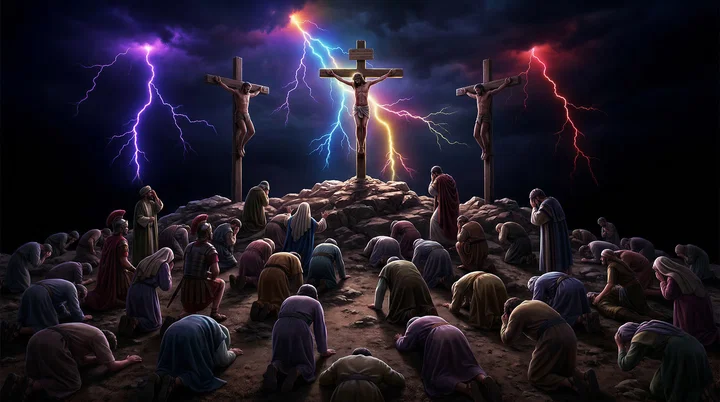
After the gloom lifted from the cross a light encircled it and His face shone with glory like the sun while the people watched in silence.5RED 85.33SP 165.2–3ST Jul 25, 1878ST Oct 7, 1886DA 755.1–756.4 The committal of His spirit to the Father was spoken then, joined with the declaration that His work was finished, in a clear and triumphant voice described as trumpet-like and seeming to resound throughout creation.5RED 85.33SP 165.2–3ST Jul 25, 1878ST Oct 7, 1886DA 755.1–756.4 Having spoken thus He bowed His head upon His breast and died, while spectators stood paralyzed gazing upon Him with bated breath.Ms 41, 1887, par. 17–215RED 85.3ST Jul 25, 1878ST Oct 7, 1886DA 755.1–756.4
His death came amid three hours of darkness over the land with no natural cause and upheaval in nature, with a mighty earthquake, rent rocks, burst-open graves and sepulchres casting out the dead, all nature in commotion in sympathy with its dying Author, and the mysterious rending of the heavy temple veil from top to bottom.Ms 91, 1897, par. 7–9ST Oct 7, 1886SG1 63.1EW 148.1 The darkness, earthquake and other signs troubled His enemies and made His murderers tremble.Ms 91, 1897, par. 7–9SG1 63.1EW 148.1 Immediately afterward darkness again settled with hoarse rumbling like heavy thunder and violent trembling that shook the multitude together and tumbled rocks from mountains to plains, broke open the sepulchres and cast out the dead, leaving priests, rulers, soldiers and executioners mute with terror and prostrate on the ground.Ms 91, 1897, par. 7–9ST Oct 7, 1886
Impact on Witnesses
The manner of His dying forced overpowering conviction upon the Roman centurion in charge and upon many witnesses that He was righteous and truly the Son of God.Ms 91, 1897, par. 7–9Ms 93, 1899, par. 23–24ST Dec 8, 189812MR 386.2–4 His unusual strength at the moment of death astonished the experienced Roman officers, for He cried out with great power and clear speech and then suddenly died a voluntary and powerful death.Ms 91, 1897, par. 7–9ST Dec 8, 18985RED 89.2–90.1 That conviction came through the loud, piercing cry with which He commended His spirit to the Father after declaring His work finished, joined with three hours of darkness over the land, shaking earth, rent rocks, mighty earthquake, burst-open graves and the rending of the temple veil.Ms 91, 1897, par. 7–9Ms 93, 1899, par. 23–24ST Dec 8, 1898
His words spoken amid darkness, earthquake and convulsions of nature silenced the mocking priests and elders.2T 211.1–2ST Feb 4, 1913 Those who had scoffed and jeered and taunted Him were terrified and fled beating their breasts for fear the earth would swallow them and the earthquake destroy their own lives.Ms 91, 1897, par. 7–9ST Dec 8, 1898 The terrified crowd and spectators were left fearful and wondering whether the innocent man who had been killed was the Son of God.Ms 91, 1897, par. 7–92T 211.1–2ST Feb 4, 1913
The Jewish rulers who had carried out their purpose of putting the Son of God to death heard both dying cries, saw the rocks rent and felt the mighty earthquake.Ms 94, 1897, par. 1 They did not feel the expected sense of victory from silencing the great Teacher, but even in the hour of apparent triumph were harassed with doubt about what would next take place.Ms 94, 1897, par. 1 They were restless and uneasy and not at rest, with the words Jesus had spoken when under their cruel power recurring to their minds.Ms 94, 1897, par. 1
That conviction was seed sown at the trial, the darkness and the last words that ripened into harvest after His ascension when the disciples boldly proclaimed the gospel.Ms 91, 1897, par. 7–9ST Dec 8, 189812MR 386.2–4 Then a great company of priests became obedient to the faith, and many others in Jerusalem accepted the faith when the gospel was preached.Ms 91, 1897, par. 7–912MR 386.2–4
The crucifixion scene closed in evening stillness over Calvary as the crowd dispersed to Jerusalem greatly changed in spirit.ST Jul 25, 1878 Many had come from curiosity and not from hatred, yet had accepted the priests' fabricated reports, looked upon Him as a malefactor, caught the spirit of the leading Jews, and under unnatural excitement had joined in mocking and railing.ST Jul 25, 1878 When the earth was draped with blackness they stood accused by their own consciences, reason resumed sway, mocking ceased in the fearful gloom, and they felt guilty of a great wrong.ST Jul 25, 1878 When the darkness lifted they went solemnly to their homes awe-struck and conscience-smitten, convinced the priests' accusations were false and Jesus was no pretender.ST Jul 25, 1878 A few weeks later many of them were among the thousands who became thorough converts when Peter preached on the day of Pentecost and the mystery of the cross was explained with other mysteries in regard to Messiah.ST Jul 25, 1878
His death ended the disciples' hopes that He would reign as a temporal prince, in whom they had centered their hopes of eternal life.SG1 63.1EW 148.1ST Jul 7, 1898 They were left sorrowful and uncertain, afraid, grieving and doubting whether He had deceived them, with faith tried and hope and courage failing.SG1 63.1EW 148.1ST Jul 7, 1898 Even His mother's faith in Him as Messiah wavered.EW 148.1 His death brought days of trial and temptation when the presence of the Comforter was not clearly discerned, giving them cause to mourn and fast as at the taking away of the Bridegroom when lifted up as a malefactor.ST Jul 7, 1898
Pattern for Followers
Entrusting the spirit to the Father in death stands as a model of trust at the end of life.GC 108.4–109.1GC88 108.3–109.1 It is echoed when Huss, facing execution, commends his spirit to Jesus in confidence that Jesus has redeemed him and in trust in Him as Redeemer.GC 108.4–109.1GC88 108.3–109.1 The suffering and death on the cross display the immense self-denial endured for humanity, which puts into the shade any self-denial required of followers.Lt 1a, 1861, par. 2–5
Sources
Pioneers and periodicals
135 sources
These were his final words on the cross, spoken with a loud voice to entrust his spirit to the Father, and having said thus he expired and died.ST Nov 26, 1894RH Oct 20, 1859RH Dec 2, 1909 Spirit here means life, the vital principle residing in the breath that God gives, and giving up the ghost means breathing out the breath of life in resignation of life to God.RH May 14, 1861RH Sep 19, 1854RH Apr 29, 1862RH Jun 26, 1866 Commending it is entrusting life to God for safekeeping while entering unconsciousness and inactivity, to be kept until restored in the resurrection, and it does not teach a deathless separated part living consciously between death and resurrection.ST Apr 26, 1910RH Sep 15, 1859ST Nov 14, 1892RH May 14, 1872 Amid darkness and feeling forsaken he entrusted himself wholly to the Father by faith in his justice, mercy and love, and in that submission the sense of lost favor was withdrawn and he was victorious over sin and death.ST Jan 27, 1914ST Jun 10, 1889ST Mar 20, 1901ST Jan 16, 1912ST Jan 18, 1899 Those who held the spirit to be a distinct entity that can exist apart from the body taught that he entrusted his human spirit as distinct from his dying body, proving the soul does not die with the body.RH Jun 26, 1866RH Jul 4, 1865RH Jul 12, 1864RH Jul 12, 1864 It is a model of surrender for believers to place life, soul and body in God's hands without fear, as Stephen did when stoned and as Huss, Luther and others did facing death.ST Apr 8, 1889RH Jun 3, 1862ST Aug 26, 1875ST Feb 4, 1897ST Sep 2, 1897
Final Words and Death
These were his final words, spoken with a loud voice to entrust his spirit to the Father, and having said thus he expired, yielded up his breath, and died in prayerful resignation in the agony of death on the cross of Calvary.ST Nov 26, 1894RH Oct 20, 1859ST Dec 22, 1881ST Jan 31, 1911
It is the eighth and last sentence he spoke on the cross and one of seven sayings spoken during the seven hours he hung there, after which he bowed his head and yielded to death as the Friend of sinners.RH Dec 2, 1909RH Sep 15, 1874
He finished his suffering with a loud cry in clear trumpet tones that seemed to resound throughout creation, spoken together with It is finished after the gloom lifted from the cross while the people watched in silence.ST Jul 25, 1878ST Oct 7, 1886RH Jul 4, 1865
A light encircled the cross and his face shone with glory like the sun, then he bowed his head upon his breast and died while the spectators stood paralyzed gazing upon him with bated breath.ST Jul 25, 1878ST Oct 7, 1886
This came after the mocking by rulers and soldiers, the darkness over the earth, the darkened sun and the rent veil of the temple, and immediately before the centurion called him righteous and the onlookers reacted.RH Jul 4, 1865
His dying words were heard amid darkness and convulsions of nature; they silenced the mockers and left the spectators fearful and wondering whether the innocent man who had died was the Son of God.ST Feb 4, 1913
Immediately afterward darkness again settled on the earth with hoarse rumbling like heavy thunder and violent trembling of the earth that shook the multitude together, burst rocks asunder in the mountains and tumbled them to the plains, broke open the sepulchres and cast out the dead, leaving priests, rulers, soldiers and executioners mute with terror and prostrate on the ground.ST Oct 7, 1886
He died at the very moment the mysterious darkness passed away, and conflicting reports of the strange events with so soon a death more firmly convinced Pilate that he was innocent and no ordinary man, leaving Pilate strangely agitated and keenly regretting his part in condemning him.ST Aug 1, 1878
He died at the ninth hour, about three o'clock Friday afternoon, after declaring his work finished, establishing that he died on the day he was crucified.RH Apr 7, 1851RH Mar 10, 1859
He willingly gave up his life when his work was done, about six hours after being nailed to the cross, a dreadful death endured for us.RH Oct 10, 1854
His crucifixion is placed in A.D. 31.ST Sep 22, 1909
This timing leaves the remaining hours for Joseph to take his body from the cross and lay it in the tomb before the Sabbath began.RH Apr 7, 1851
He truly died and was laid in the sepulcher before the Sabbath, his body being prepared for burial and later sought at the tomb.ST Aug 22, 1878
After his death and the finishing of his sacrifice, Joseph of Arimathea came weeping and knelt before Pilate to beg permission to bury Jesus of Nazareth, and Pilate granted the request and ordered Manlius to take soldiers to oversee the burial so it would not be profaned.RH Jul 16, 1861
A few days afterward the sepulcher was found empty, and the disciples published everywhere that he had risen from the dead just as he had foretold.RH Jul 16, 1861
He gives up his life slain and breathless, in contrast to the rulers' concern for the Sabbath though they do not hesitate to kill him.RH Dec 12, 1912
The Lord of life expired after enduring agony, with the fate of the human race depending on the power of his promise to overcome death.ST Sep 7, 1904
He died on the shameful cross on Mount Calvary's height as the spotless victim and priceless sacrifice, yielding his breath in the midst of cruel foes.ST Jul 25, 1878
His death darkens the pitying sun and throws shades of darkest night over Calvary, rends the flinty rocks in twain, opens the graves so sleeping saints rise immortal from the silent dust, and makes inanimate creation groan.ST Jul 25, 1878
Pitying angels weep and keep sacred vigil over his lonely tomb, and the One once slain for us will come again to earth in glorious majesty and power to reign forevermore.ST Jul 25, 1878
Sabbath Before and After
He died on preparation day, Friday afternoon, and his body was taken down from the cross and laid in the tomb that same day before the Sabbath began, where he rested on the Sabbath.ST Aug 22, 1878ST Sep 3, 1902 The women saw where he was laid and bought sweet spices to anoint him at a future time, but the embalming could not be done on the Sabbath and was deferred until Sunday, the next convenient day.ST Jan 31, 1911 He had truly died and was laid in the sepulcher before the Sabbath, his body prepared for burial and later sought at the tomb.ST Aug 22, 1878
That Sabbath stands wedged between Friday crucifixion day and Sunday resurrection day, immediately before the first day of the week when he rose, identifying it as the seventh day and showing no transfer of the Sabbath to the first day.ST Jun 3, 1908ST Oct 21, 1889 The day called the Sabbath was the day enjoined in the fourth commandment, blessed from the beginning because God rested from creation and commanded for that reason, and it was succeeded by the first day of the week as one week follows another.ST Jan 24, 1884 The record states the preparation day was the day before the Sabbath and the first day of the week was the day after the Sabbath.ST May 11, 1904
Luke's record, written twenty-eight years after the resurrection, still calls Sunday only the first day of the week and gives no hint that the Sabbath was changed, abolished, or replaced.ST Sep 20, 1899 The holy women would not do on the Sabbath the work of preparing and bringing spices that they intended to do on the first day as an ordinary working day, showing the seventh-day Sabbath remained binding after his death.ST Sep 20, 1899 His closest earthly associates refrained from anointing his body on that seventh-day Sabbath kept according to the commandment and waited until the first day of the week.RH Aug 1, 1912 The faithful kept that seventh-day Sabbath instituted at the beginning and confirmed by the law from Moses to the cross.ST Oct 21, 1889
The seventh day and the first day are mentioned in immediate connection in the record of the crucifixion and resurrection, and the two days have traveled side by side in unbroken succession ever since, so the weekly reckoning from the cross to the present is certain and the identity of the true seventh day has not been lost.ST Feb 1, 1905 He sealed the new covenant with his blood at his death late on Friday, with the empty tomb discovered on Sunday, so Sunday came three days too late to be its Sabbath and no one may disannul or add to the covenant after it has been sealed.ST Sep 23, 1913 Together with the resurrection accounts, the account places the crucifixion on the day before the Sabbath and the resurrection on the day after the Sabbath, rather than after three full nights in the tomb.ST Jun 10, 1875
Meaning of Entrusted Spirit
Spirit here means life, the vital principle residing in the breath that God gives, and giving up the ghost means breathing out the breath of life in resignation of life to God.RH May 14, 1861RH Sep 19, 1854RH Apr 29, 1862ST Apr 10, 1907 The Greek pneuma for spirit has the same sense as ghost elsewhere, and spirit is used like soul, mind and heart to express life or the seat of the affections or of the intellect, not a deathless entity.ST Feb 13, 1912RH Aug 7, 1916 Commending it is entrusting life to God for safekeeping while entering unconsciousness and inactivity, to be kept until restored in the resurrection when laid down to be taken up again.RH Sep 15, 1859ST Nov 14, 1892ST Dec 9, 1880 Life can be laid down or taken away and handed over as what passes out of possession at death, and God holds that life-principle until He gives it again; the believer's life is hidden with Christ in God until He appears.RH Sep 15, 1859 When the spirit returns to God the dead are spoken of as asleep until the resurrection.ST Mar 18, 1903
This does not mean a separated, deathless part or teach natural immortality or conscious existence between death and resurrection.ST Apr 26, 1910RH May 14, 1872ST Aug 28, 1898 He lay cold and silent in death and His soul went into the tomb with Him rather than remaining alive apart from His body, His soul poured out unto death after being sorrowful even unto death.ST Mar 7, 1906ST May 1, 1907 The term immortal part is not found in the Bible, and life is not in man himself but in Christ, entrusted back to God as the great Source of life while for those who live it blooms into immortality at Christ's coming.ST May 1, 1907ST Aug 28, 1898 David used the same language while his spirit remained with his body, and Stephen commended his whole person rather than an already separated spirit.RH Nov 18, 1858RH Aug 12, 1862 Jesus' spirit was to be raised with His body on the third day while Stephen's was kept until the Lord's appearing, and Stephen then fell asleep after calling on the Lord to receive his life.RH Nov 18, 1858RH Aug 12, 1862
Life and the air sustaining life are distinct; life is an endowment God gives, not itself a living being or a few cubic inches of air, entrusted for restoration.RH Jun 26, 1866RH Jun 26, 1866 To make it mean spirit and soul together taking flight to heaven would place righteous and wicked alike in heaven with no distinction between the precious and the vile, making heaven the home of every wicked unbeliever no matter how he lived.ST Jun 23, 1909 It would leave only His body on the cross, which could not make atonement for the sins of the world; the spirit only leaves the body.ST Jun 23, 1909 His death was a real death of the whole person, not the escape of a surviving part, and the same Jesus laid in the tomb rose again.RH Nov 21, 1854
Buried Friday evening and lying in the tomb Saturday before returning Sunday morning, it raises where He returned from and whether being elsewhere divides Him into two personalities.ST Nov 4, 1880 He laid down His life with purpose to take it again, committing it to God who restored it by raising Him from the dead on the third day.RH Sep 20, 1864ST Dec 9, 1880 Because righteous the grave could not keep Him under God's promise not to leave Him in the grave or in its power, and His confidence rested on demonstrated love and perfect righteousness while His individuality and divine character were preserved through utter unconsciousness and powerlessness.ST Jan 20, 1904 His death that day does not establish immediate conscious paradise, since in the same account He Himself did not go to paradise that day though promising paradise to the criminal.RH Oct 1, 1872
On one position held, the spirit is a distinct entity God can receive and keep, not breath or mere vital essence or a few cubic inches of atmospheric air.RH Jun 26, 1866RH Jul 4, 1865 On that position Jesus believed human spirits exist apart from bodies, entrusted His human spirit identified as His human soul not His divine nature, showing the body can be killed but the soul not, and distinguishing the entrusted spirit from the dying body that fell under the dominion of death.RH Jul 4, 1865RH Jul 12, 1864RH Sep 20, 1864 On that view His example proves the soul does not die with the body.RH Jul 12, 1864
Trust Faith and Victory
He gave up his life with calm resignation, entrusting himself wholly to the Father.ST Mar 20, 1901ST Mar 20, 1901 Amid darkness without clear hope or assurance of triumph, and after feeling forsaken, he entrusted his life to the Father by faith.ST Feb 15, 1883ST Jun 10, 1889ST Aug 28, 1879 He relied on what he knew of the Father's justice, mercy, love and eternal power, and on prior evidence of acceptance, looking forward and upward without despair.ST Jan 27, 1914ST Feb 15, 1883ST Jun 10, 1889RH Jan 31, 1871 He could not see beyond death or feel assurance of acceptance, yet he trusted the Father's character and submitted himself into his hands after bearing the world's sin and its penalty.ST Jun 10, 1889ST Aug 28, 1879ST Dec 21, 1888 Even when the Father's presence was withdrawn he held firm faith that God would fulfill the word that he would not be left in the grave but be brought from the dead on the third day.ST Jan 16, 1912ST Jan 18, 1899 He had lived by the Father and he died in the same faith, and that faith is exercised in those in whom he dwells, unchanged yesterday, today and forever, delivering from Satan's power as believers let him live in them, acknowledge him and let his mind be in them.ST Jan 18, 1899 Those who persevere may likewise trust the Father to receive their spirit in peace, with work finished in God's time by themselves or by others.RH Jan 31, 1871
In submitting himself to God the sense of loss of the Father's favor was withdrawn and he was victorious.ST Jan 27, 1914RH Jan 14, 1904 That faith gave him complete victory over sin and therefore victory over death, defeated Satan and carried the plan of redemption forward.ST Jun 10, 1889ST Dec 21, 1888ST Feb 15, 1883ST Jan 18, 1899 His words were spoken after he had completed the work he came to do and join with it is finished.ST Jun 10, 1889ST Jun 10, 1889ST Aug 28, 1879ST Dec 21, 1888ST Feb 15, 1883 His life was offered as a sacrifice for human sin, asking the Father to accept that sacrifice, and his sacrifice was finished.RH Mar 10, 1868 His expiring cry was not momentary enthusiasm but closed a deliberate settled purpose of self-neglect, counting the cost and laying down life in service to others.ST Jul 22, 1897ST Mar 20, 1901
Death was only one moment in a long career of the same giving, for his life was just as truly laid down before he came to earth and while he walked and suffered in Judea and Galilee as in that final breath, and when giving was done he entrusted his spirit to the Father.ST Jul 22, 1897ST Mar 20, 1901 He willingly gave up his life when his work was done, dying about six hours after being nailed to the cross, a dreadful death endured for us.RH Oct 10, 1854 Suffering the law's penalty with filial trust and willing acceptance, without complaint or resistance under its full demands and sanctions, he showed the law righteous and good, leaving men no just answer against it even when bearing its curse.RH Mar 17, 1863 His whole life is summed in not my way but thine, giving up his own way for the Father's way not because reason was seen but because the Father is love.ST Mar 6, 1893
That trust was spoken in darkness when justice and reason could not be seen, trusting the future to make light what was dark, willing to go even through the dark valley if it was the Father's will, turning almost immediately after feeling forsaken from despair into faith.ST Mar 6, 1893 It proves his obedience was at every step, not only at Gethsemane, not his own doctrine or works but the Father's in him, the pattern of the Christian life whose mark is joyful observance of the Sabbath because God commands it, leaving scorn and results with him as open evidence of recognizing the Father's right to command even where reasons cannot be seen.ST Mar 6, 1893 His complete submission while dying in our stead under agony like that of the lost in the final judgment was the secret of his sinless unbending life against Satan, so sin's assaults could not overcome him.RH Jun 20, 1912 His final surrender was in perfect submission to the Father's will.RH Dec 11, 1916 By placing his spirit in the Father's hands he absolutely resigned life and committed even his power to lay it down and take it again to the Father to hold and use for him.ST May 13, 1908ST Mar 29, 1899
The Father gave life and power back to him after the resurrection, without which he remained dead, his life safe in the Father's hands whom he had revealed and death unable to hold him, after which he was exalted to glory at the right hand.ST May 13, 1908ST Mar 29, 1899ST Jun 18, 1902 Likewise those in Christ are dead and their eternal life is hid with Christ in God until Christ who is their life appears, and when Christians can no longer keep their lives they may entrust them to the Father and receive them again at the resurrection of the just.ST May 13, 1908ST Jun 18, 1902 He laid down the life principle belonging to living beings and received it again in the resurrection, which means living again, not laying down animal propensities.RH Feb 14, 1865 In his greatest trial he drew comfort from Old Testament words, living and dying by them, his dying cry taken from the older Scriptures.ST Feb 15, 1883ST Apr 23, 1885
His loud piercing cry and sudden death after three hours of darkness, with shaking earth and rent rocks, forced conviction upon many witnesses that he was a righteous man and the Son of God.ST Dec 8, 1898 That conviction was seed sown at the trial, the darkness and the last words that ripened into harvest after his ascension when the disciples proclaimed the gospel, while scoffers fled in awful terror lest the earthquake destroy them.ST Dec 8, 1898 Along with testimony to his innocence, the penitent thief and the signs, that cry awakened remorse so the people returned smiting their breasts in penitence.RH Jun 25, 1867 When darkness lifted the crowd went solemnly home awe-struck and conscience-smitten, convinced the priests' accusations were false and he was no pretender, mocking having ceased in the fearful gloom, and a few weeks later many were among the thousands converted when Peter preached at Pentecost and the mystery of the cross was explained.ST Jul 25, 1878
His death is a triumph of eternal righteousness, given after yielding fully to the Father's will and going unwaveringly to the cross in trust resting on the Father's love, power and wisdom, bringing salvation to the world and his eternal exaltation.ST Apr 8, 1903ST Mar 7, 1906 His last words were an expression of faith as he entered the silent tomb, his death a temporary sleep of the righteous through which he took away the terrors of the grave for his children.ST Mar 27, 1901 In his night of weeping as substitute bearing the curse under momentary anger, his soul sorrowful even unto death and sunk beneath waves of sorrow with strong crying and tears, he commended his spirit into the Father's hands, and that night ended with the morning of resurrection when he came forth leaving sorrow behind girded with gladness.RH Jun 12, 1855 His finding morning and joy as firstfruits of them that slept means his rising is the rising of his saints, guaranteeing a morning bright with resurrection glory for them.RH Jun 12, 1855 His earthly life closed in death yet not powerless or permanently bound, breaking death's hold and resuming divine life.RH Dec 15, 1859
Dying between thieves as God's great Middleman for the saving of the lost, nothing could hinder his work, and Calvary became a church with the cross a mountain pulpit and the crowd a waiting congregation.ST Dec 5, 1916 His very last earthly work was to present to the Father a wave sheaf of three souls rescued amid Calvary's throes from every division of men, Simon who bore the cross from Ham, the thief from Shem, and the Roman centurion from Japheth.ST Dec 5, 1916 His whole bruised person calls for consecration of all self, head pierced by thorns for wisdom, back lacerated by scourge for burdens, heart reached by spear for love, feet pierced for duty and hands for blessed service, Christianity being the only religion with a cross and the only one with salvation, winning honest hearts even when habits are criticized and the message rejected.ST Dec 5, 1916 His being lifted up took away the Bridegroom in whom the disciples had centered hopes of eternal life, bringing days of trial when the Comforter's presence was not clearly discerned and faith, hope and courage failed, giving cause to mourn and fast.ST Jul 7, 1898 He died at noon darkness for sinners, in anguish and love with breaking heart beheld by the Father, yet without murmur in courage inspiring worship, suffering for people in India as well as for others.RH Jan 16, 1908ST Dec 18, 1901RH Aug 5, 1873RH Mar 9, 1905
Prophecy Atonement and Resurrection
The dying entrustment literally fulfills Psalm 31:5, one of at least twenty-four Old Testament prophecies concerning betrayal, trial, death and burial uttered by several different prophets from about 1000 to about 500 B.C. and all literally fulfilled within twenty-four hours on crucifixion day, marking Calvary as climax and crisis in the divine plan for the earth.ST Oct 21, 1930 The words taken from Psalm 31:5 were also taken up by Stephen and by many later Christians as they faced death.RH Apr 27, 1916
He died after the ninth hour had passed and after the darkness ended, between the two evenings, and by that death met the exact appointed time of the Passover on the same day His anticipatory Passover supper with the disciples was eaten.ST Jun 20, 1911 He was crucified in the afternoon of the Passover at three o'clock, a crucifixion and hour expressly recorded even in Jewish records kept by bitter enemies of Christianity, giving outside confirmation that the crucifixion happened and happened at that time.RH Sep 5, 1865 His crucifixion and death are Christ's death for sins according to the Scriptures.ST Jun 11, 1896 He died at the ninth hour, about three o'clock on Friday, and that death marked the finishing of the atonement, not His resurrection on the first day of the week.RH Aug 15, 1854
That death ended the whole typical system that had pointed forward to that event as the beginning of its antitype, after which Joseph of Arimathea asked Pilate for the body and with the help of Nicodemus buried it in his own new tomb. Yielding His spirit to the Father did not complete His mediatorial work and did not commence His priesthood, for death and atonement are distinct.ST Jan 24, 1884RH May 26, 1874RH Nov 24, 1863 His death was the sacrifice that prepared the way for the atonement, while His priestly mediation applying His blood and interceding for sinners began afterward in the heavenly sanctuary where He entered by His own blood to appear before God for humanity.ST Jan 24, 1884RH May 26, 1874RH Nov 24, 1863 Losing sight of that distinction leads to the error that the atonement was made at death with a general application for all mankind.RH May 26, 1874
Pattern for Believers Today
It is the pattern for surrender, to place life and will in God's hands, to trust divine love and care and rest without fear in the divine will.ST Apr 8, 1889ST Aug 26, 1875ST Nov 5, 1912 In sickness this means commending life to God and accepting either life or death, confident of being safe when wholly His.RH Mar 11, 1915RH Jun 3, 1862RH Jul 21, 1868 Soul, body and life are committed without distrust, while asking to live the allotted time for God's glory, yielding the soul to God's care and breathing one's last in faith.RH Mar 11, 1915ST Aug 26, 1875RH Jul 21, 1868 That trust is sung as resolve to place all in God's hand and accept His will through sorrow or joy and in changing circumstances, in life or in death, finding comfort in Christ's earthly sorrow and sustainment in hope of God's care.ST Apr 8, 1889ST Nov 5, 1912 It also expresses readiness to die by entrusting the spirit to God after sending wealth ahead by lending it to the Lord.RH Jan 31, 1856
It exemplifies earnest prayer and complete dependence, spoken at the close of a life of prayerful communion with the Father in final trust.RH Oct 30, 1900RH Jul 15, 1858 Even after feeling forsaken there is confidence without despair, looking forward and upward in assurance that God remains Father, that work accomplished will be finished in God's time by oneself or by others, and that the Father will receive the spirit in peace.RH Jan 31, 1871 So dying becomes dying in prayer, entrusting one's own spirit and loved ones to the Saviour.RH Oct 29, 1914RH May 9, 1912 The dying turn to God in repentance after wandering far, trusting the Father's love to forgive even great wickedness, communing when too weak to speak with folded hands, upturned eyes and moving lips, and that entrusting brings quietness of mind and a peaceful death without struggle.RH Oct 29, 1914RH May 9, 1912
It gives words for the wronged and the weak, overwhelmed by enemies, to seek help in prayer and entrust self and cause to the Father as righteous Judge.ST Jul 2, 1885 It exemplifies sublime confidence in God's eternal power and justice despite apparent defeat and suffering, doing right and trusting God without relying on success, prosperity or temporal reward.ST Jul 2, 1885 It is holding to the holy mission on the cross instead of turning aside through compromise with the world or worldly principles and methods, resisting persuasion as Christ did so followers can resist in all time, for the way of Gethsemane, the crown of thorns and Calvary is better than political gain and ends in triumphant resurrection, since every compromise makes the Christian and the church the loser.ST Jul 25, 1911
The spiritual life received through faith is committed to God, who keeps it in His care until the resurrection.ST Dec 19, 1900ST Jun 18, 1902 Jesus yielded up His life for a time and entrusted it to the care of His loving Father whose character He had revealed, safe in the Father's hands where death could not hold Him, and the Father restored His life and exalted Him to glory at His right hand.ST Jun 18, 1902 So Christians, when they can no longer keep their lives, may entrust them to the Father and receive them again at the resurrection of the just.ST Dec 19, 1900ST Jun 18, 1902
Stephen showed himself a true follower by the same pattern, committing life into God's hands as Christ did.ST Feb 4, 1897ST Sep 2, 1897ST Sep 2, 1897 Full of the Holy Ghost and seeing the glory of God and Jesus standing at the right hand of God, while being stoned he called upon the Lord Jesus to receive his spirit.ST Sep 2, 1897ST Feb 4, 1897ST Sep 2, 1897 Then kneeling down he cried with a loud voice for his murderers' sin not to be laid to their charge before he fell asleep, and both prayers mean committing life to God.ST Feb 4, 1897ST Sep 2, 1897ST Feb 4, 1897 Faithful people condemned to die speak these words with eyes lifted toward heaven, committing the spirit into the hands of the Lord Jesus.RH Dec 22, 1874ST Jul 2, 1885ST Jan 4, 1883 The prayer answers human condemnation that devotes the soul to the devil, declaring trust that Jesus Christ as Lord has bought it back and redeemed the dying one and will receive the spirit, following Him who wore a crown of thorns for others so believers willingly bear shame for Him.RH Dec 22, 1874ST Jul 2, 1885 John James used the same words facing execution in trust and resignation at death, and Luther on his sickbed on February seventeenth thanked God for revealing Christ in whom he had believed and whom he had confessed and loved and declared and preached, then earnestly and repeatedly prayed the committal placing his soul in God's keeping in trust that God as truth had redeemed him and asking the Lord Jesus Christ to receive it three times, and passed away quietly and gently.ST Jan 4, 1883RH May 27, 1862ST Jun 6, 1916
Abraham giving up the ghost and being gathered to his people is linked as the same expression of commending or giving up the spirit.RH Feb 10, 1859 It is echoed in a will committing the soul into the Saviour's hands in confidence in Christ's redemption and in presentation faultless before the Father.RH May 8, 1913 The crucifixion account containing it leads a young man to love Jesus because He died for him.ST Jan 1, 1894
Sources