Luke 23:48
And all the people that came together to that sight, beholding the things which were done, smote their breasts, and returned.
Translations
American King James Version, King James Version, KJV Cambridge Paragraph Bible, Webster Bible
And all the people that came together to that sight, beholding the things which were done, smote their breasts, and returned.
Revised Version, American Standard Version
And all the multitudes that came together to this sight, when they beheld the things that were done, returned smiting their breasts.
and all the multitudes who were come together to this sight, beholding the things that came to pass, smiting their breasts did turn back;
And all the crowds who had come together to that sight, having seen the things that took place, returned, beating [ their] breasts.
And, all the multitudes who had been drawn together unto this spectacle, having looked upon the things that came to pass, smiting their breasts, began to return.
Berean Standard Bible, Majority Standard Bible
And when all the people who had gathered for this spectacle saw what had happened, they returned home beating their breasts.
All the multitudes that came together to see this, when they saw the things that were done, returned home beating their chests.
And all the people who had come together to see it, when they saw the things which were done, went back again making signs of grief.
And all the people that came together to that sight, beholding the things, which were done, smote their brestes, and returned.
Douay-Rheims (Challoner revision)
And all the multitude of them that were come together to that sight, and saw the things that were done, returned striking their breasts.
Pictures
Cross-references
- Luke 23:56
And they returned, and prepared spices and ointments; and rested the sabbath day according to the commandment.
The women rested on the Sabbath before preparing spices to anoint Jesus’ body.
- Matthew 27:51-54
And, behold, the veil of the temple was rent in twain from the top to the bottom; and the earth did quake, and the rocks rent;
Earthquake and other signs at Jesus’ death leave witnesses fearful and recognizing him.
- Mark 15:38-39
And the veil of the temple was rent in twain from the top to the bottom.
Jesus’ death prompts the crowd’s reaction, while the centurion recognizes him as God’s Son.
- John 19:16-42
Then delivered he him therefore unto them to be crucified. And they took Jesus, and led him away.
The crucifixion account parallels the spectators’ reaction to Jesus’ death.
- Matthew 27:54
Now when the centurion, and they that were with him, watching Jesus, saw the earthquake, and those things that were done, they feared greatly, saying, Truly this was the Son of God.
Witnesses respond to the signs by recognizing Jesus as the Son of God.
- Luke 24:6-7
He is not here, but is risen: remember how he spake unto you when he was yet in Galilee,
Jesus rose from the dead, as he had foretold.
- Mark 15:42-47
And now when the even was come, because it was the preparation, that is, the day before the sabbath,
It links the crucifixion’s timing with Jesus’ burial before the Sabbath.
- Luke 23:34
Then said Jesus, Father, forgive them; for they know not what they do. And they parted his raiment, and cast lots.
Both verses describe events in the crucifixion narrative.
- Luke 23:42
And he said unto Jesus, Lord, remember me when thou comest into thy kingdom.
The thief confesses and asks Jesus for mercy.
- John 19:31
The Jews therefore, because it was the preparation, that the bodies should not remain upon the cross on the sabbath day, ( for that sabbath day was an high day,) besought Pilate that their legs might be broken, and that they might be taken away.
states same preparation before Sabbath order
- John 19:38-42
And after this Joseph of Arimathaea, being a disciple of Jesus, but secretly for fear of the Jews, besought Pilate that he might take away the body of Jesus: and Pilate gave him leave. He came therefore, and took the body of Jesus.
It describes Jesus laid in a new tomb after the crucifixion.
- Acts 2:22-23
Ye men of Israel, hear these words; Jesus of Nazareth, a man approved of God among you by miracles and wonders and signs, which God did by him in the midst of you, as ye yourselves also know:
Peter explains Jesus’ crucifixion, and the people respond with repentance and conversion.
Commentary
Each commentary is drawn from primary sources: the writings of Ellen G. White and Adventist pioneers and periodicals. Each commentary is separate. Its own words are not a quotation; follow the references to read the source passages.
Ellen G. White
8 sources
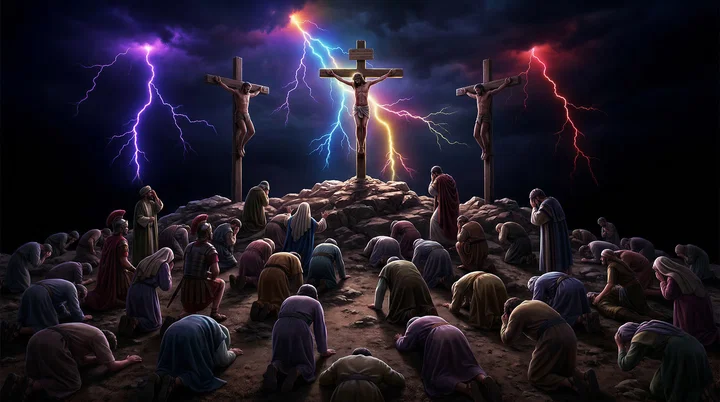
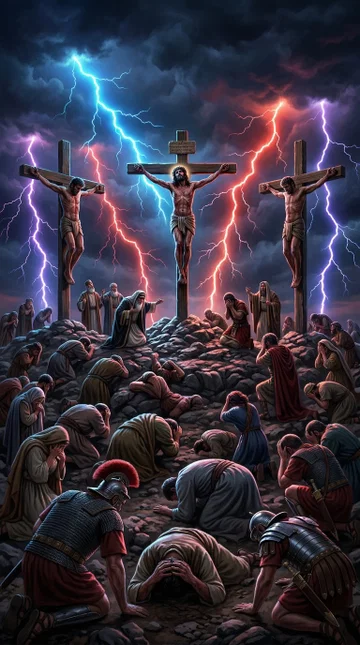
Luke 23:48 describes the crowd's response to the supernatural signs at the crucifixion, when darkness covered Calvary, the earth shook, and vivid flashes of lightning broke from the cloud to reveal the cross and the crucified Redeemer.ST Jun 10, 1889ST Feb 15, 18833SP 163.2–164.22T 211.1–2DA 754.1 The spectators who had come together to that sight were seized with terror by the darkness and earthquake and began leaving the scene and groping their way back toward the city.ST Jun 10, 1889ST Feb 15, 18832T 211.1–2ST Dec 21, 1888DA 754.1
A nameless terror fell upon the throng, so that cursing and reviling stopped in the midst of half-uttered sentences.DA 754.1 Men, women, and children fell prostrate upon the earth, then beat their breasts in grief and fear and wailed as they tried to feel their way back to the city in darkness.3SP 163.2–164.2ST Dec 21, 1888DA 754.1 Priests, rulers, scribes, executioners, and the mob alike thought their time of retribution had come when the lightnings revealed the cross.DA 754.1 After a while some of them whispered that Jesus would now come down from the cross.DA 754.1
As they went they struck their breasts and acknowledged that an innocent person had been murdered.ST Jun 10, 1889ST Feb 15, 18832T 211.1–2ST Dec 21, 1888 Though they had accepted the priests' false accusations and joined in mocking Him, they became convinced that the charges against Jesus were false and that He was no pretender.DA 770.33SP 168.3–169.1 The signs led the people to wonder whether the innocent man they had seen killed truly was the Son of God.ST Jun 10, 1889ST Feb 15, 18832T 211.1–2ST Dec 21, 1888 Their consciences accused them of wrongdoing and guilt, leaving many who had joined the crowd deeply changed in spirit.DA 770.33SP 168.3–169.1 Some of them later became converts to Christ when Peter preached at Pentecost and the meaning of the cross was explained.DA 770.33SP 168.3–169.1
Sources
Pioneers and periodicals
17 sources
The crowds who had gathered to watch the crucifixion looked upon what was done and then withdrew toward the city in darkness, beating their breasts as they returned home.ST Nov 26, 1894ST Mar 20, 1901ST Nov 26, 1894 Their beating of the breast was an Eastern expression of grief, deep distress and alarm, showing penitence, remorse, sorrow and conviction in terror.ST Nov 26, 1894RH Jun 25, 1867ST Mar 20, 1901RH Jul 4, 1865RH Jul 16, 1861 They were deeply moved and terrified by what they witnessed, including the testimony to His innocence, the penitent thief's confession, His cry, the torn veil, three hours of darkness, and the earthquake and disturbance of nature, which awakened conscience to guilt for a great wrong.ST Jun 10, 1889ST Feb 15, 1883RH Jun 25, 1867 As they went they acknowledged in grief and fear that an innocent person, the Holy One and innocent Messiah, had been murdered, feeling remorse for their part and wondering whether Jesus truly was the Son of God.ST Jun 10, 1889ST Feb 15, 1883RH Jun 25, 1867 Many who had joined in mocking Him left deeply changed and convinced that the priests' accusations were false and that He was no pretender, and some afterward became converts when Peter preached at Pentecost and explained the meaning of the cross and the Messiah.ST Jul 25, 1878
Crowd's Reaction at Calvary
All the people who had come together to that sight beheld the things that were done and then left, smiting their breasts and returning home, withdrawing toward the city in darkness.ST Feb 15, 1883ST Nov 26, 1894ST Mar 20, 1901ST Nov 26, 1894RH Jul 16, 1861 Their beating of the breast was a sign of grief and deep distress and alarm at the events surrounding the death.ST Nov 26, 1894ST Mar 20, 1901ST Nov 26, 1894 It was an Eastern sign of penitence, remorse, sorrow and conviction, done in terror and remorse.RH Jun 25, 1867RH Jul 4, 1865RH Jul 16, 1861
They were deeply moved and terrified by what they saw, with conscience awakening guilt for a great wrong.ST Jun 10, 1889ST Feb 15, 1883ST Dec 21, 1888ST Jul 25, 1878RH Jun 25, 1867 What moved them included Pilate's testimony to His innocence, the penitent thief's confession, Jesus' cry, the torn temple veil, three hours of darkness, and the darkness and earthquake and disturbance of nature.ST Jun 10, 1889ST Feb 15, 1883ST Dec 21, 1888ST Jul 25, 1878RH Jun 25, 1867
As they went they acknowledged in grief and fear, even whispering, that an innocent person, the Holy One and innocent Messiah, had been murdered, with remorse for their part, and wondered whether Jesus truly was the Son of God.ST Jun 10, 1889ST Feb 15, 1883ST Dec 21, 1888RH Jun 25, 1867 Many who had joined in mocking Him left deeply changed and convinced that the priests' accusations were false and that Jesus was no pretender, and some later became converts when Peter preached at Pentecost and explained the meaning of the cross and the Messiah.ST Jul 25, 1878
Crucifixion Setting and Sabbath
Luke 23:48 belongs to the account of Christ's crucifixion and burial, which the surrounding narrative places before the Sabbath when the women rested on the seventh-day Sabbath and went to the tomb on the first day of the week.ST Sep 3, 1902 That surrounding account places his burial and the women's Sabbath rest after the crucifixion and before their visit to the tomb on the first day of the week.ST Sep 3, 1902 It is the account of the events surrounding his crucifixion and burial leading into that rest and that first-day visit.ST Sep 3, 1902
It happened on the preparation day, Friday, when Jesus was laid in the tomb just before the Sabbath day according to the commandment. The women had bought sweet spices to anoint him, then rested on that Sabbath according to the commandment. They came early the first day of the week and found the stone rolled away and Jesus risen. Together with the Gospel resurrection accounts, the crucifixion account identifies the Sabbath according to the commandment as the day before the first day of the week, making the weekly sequence traceable from Christ's time.ST Jun 3, 1908
The work of preparing his body was postponed because the Sabbath prevented it and was done on the next convenient day, Sunday.ST Jan 31, 1911 The crucifixion occurred during Passover week when Jerusalem was crowded with pilgrims.ST Jan 31, 1911 The Sabbath following the crucifixion was unlike any other, and Jesus lay in a new tomb outside the city.ST Jan 31, 1911 That crucifixion occurred in A.D. 31, and his resurrection and ascension also took place that year.ST Sep 22, 1909
It belongs to the inspired account of the saddest tragedy in human history, the death of the Man of Galilee at the hands of a bloodthirsty, sin-hardened mob.
Prophecy and Gospel Witness
The multitude that gathered together to watch the dying suffered to behold the things that were done at the cross, and then smote their breasts in sorrow and conviction and went away.RH Jul 4, 1865 This record of suffering and death belongs to what was foretold, and when set beside prophecy it proves that Jesus is the Christ.RH Jul 4, 1865 The Gospel itself is thus the fulfillment of prophecy.RH Jul 4, 1865
The detailed account of trial and execution to which this scene belongs carries incidental circumstances in harmony with the customs and conditions of the time, and this harmony stands as evidence of its historical credibility.RH Feb 11, 1862 At the death of the Saviour upon the cross the whole typical system that had pointed forward to that event as the commencement of its antitype expired with Him. Then Joseph of Arimathea went to Pilate to beg the body of Jesus and, with the assistance of Nicodemus, laid it in his own new tomb. The surrounding events present Jesus dying in the triumph of eternal righteousness, then buried, then rising as conqueror over sin and death.ST Apr 8, 1903
Sources