Luke 7:19
And John calling unto him two of his disciples sent them to Jesus, saying, Art thou he that should come? or look we for another?
Translations
And John calling to him two of his disciples sent them to Jesus, saying, Are you he that should come? or look we for another?
King James Version, KJV Cambridge Paragraph Bible
And John calling unto him two of his disciples sent them to Jesus, saying, Art thou he that should come? or look we for another?
And John calling two of his disciples sent them to Jesus, saying, Art thou he that should come? or look we for another?
Revised Version, American Standard Version
And John calling unto him two of his disciples sent them to the Lord, saying, Art thou he that cometh, or look we for another?
and John having called near a certain two of his disciples, sent unto Jesus, saying, 'Art thou he who is coming, or for another do we look?'
and John, having called two of his disciples, sent to Jesus, saying, Art thou he that is coming, or are we to wait for another?
And, calling unto him certain two of his disciples, John sent unto the Lord, saying—Art, thou, the Coming One, or, a different one, are we to expect?
So John called two of his disciples and sent them to ask the Lord, “ Are You the One who was to come, or should we look for someone else?”
So John called two of his disciples and sent them to ask Jesus, “ Are You the One who was to come, or should we look for someone else?”
John, calling to himself two of his disciples, sent them to Jesus, saying, “ Are you the one who is coming, or should we look for another?”
Then John sent two of his disciples to the Lord, saying, Are you he who is to come, or are we waiting for another?
So Iohn called vnto him two certaine men of his disciples, and sent them to Iesus, saying, Art thou hee that should come, or shall we waite for another?
Douay-Rheims (Challoner revision)
And John called to him two of his disciples, and sent them to Jesus, saying: Art thou he that art to come; or look we for another?
Pictures

Cross-references
- Matthew 11:2-6
Now when John had heard in the prison the works of Christ, he sent two of his disciples,
John asks whether Jesus is the coming one, and Jesus answers with evidence from his works.
- Isaiah 35:5-6
Then the eyes of the blind shall be opened, and the ears of the deaf shall be unstopped.
Jesus’ healings echo the promised signs of the coming Messiah.
- Isaiah 61:1
The Spirit of the Lord GOD is upon me; because the LORD hath anointed me to preach good tidings unto the meek; he hath sent me to bind up the brokenhearted, to proclaim liberty to the captives, and the opening of the prison to them that are bound;
Good news preached to the poor is a sign of Christ’s mission.
- Mark 6:17-20
For Herod himself had sent forth and laid hold upon John, and bound him in prison for Herodias’ sake, his brother Philip’s wife: for he had married her.
Herod imprisoned John after John rebuked him.
- Luke 7:27
This is he, of whom it is written, Behold, I send my messenger before thy face, which shall prepare thy way before thee.
Identifies John as the messenger who prepares the way.
- Luke 3:19-20
But Herod the tetrarch, being reproved by him for Herodias his brother Philip’s wife, and for all the evils which Herod had done,
Herod imprisoned John after John reproved him, setting the scene for John's message.
- Matthew 11:4-5
Jesus answered and said unto them, Go and shew John again those things which ye do hear and see:
Jesus answers John’s question with signs of his identity.
- Malachi 3:1
Behold, I will send my messenger, and he shall prepare the way before me: and the Lord, whom ye seek, shall suddenly come to his temple, even the messenger of the covenant, whom ye delight in: behold, he shall come, saith the LORD of hosts.
Jesus identifies John as the messenger sent to prepare the way.
- John 1:29
The next day John seeth Jesus coming unto him, and saith, Behold the Lamb of God, which taketh away the sin of the world.
John had earlier identified Jesus as the Lamb of God.
- John 1:27
He it is, who coming after me is preferred before me, whose shoe’s latchet I am not worthy to unloose.
John had earlier testified that Jesus, who came after him, was greater.
- Isaiah 40:3-5
The voice of him that crieth in the wilderness, Prepare ye the way of the LORD, make straight in the desert a highway for our God.
John’s expectation draws on the prophecy of preparing the Lord’s way.
- Luke 1:17
And he shall go before him in the spirit and power of Elias, to turn the hearts of the fathers to the children, and the disobedient to the wisdom of the just; to make ready a people prepared for the Lord.
John’s ministry is described as having Elijah’s spirit and power.
- Luke 7:31-35
And the Lord said, Whereunto then shall I liken the men of this generation? and to what are they like?
The generation rejects both John and Jesus despite their contrasting ways.
- John 4:25-26
The woman saith unto him, I know that Messias cometh, which is called Christ: when he is come, he will tell us all things.
Jesus expressly identifies himself as the Messiah.
- Matthew 14:3-11
For Herod had laid hold on John, and bound him, and put him in prison for Herodias’ sake, his brother Philip’s wife.
Recounts John’s imprisonment and death.
- Matthew 3:12
Whose fan is in his hand, and he will throughly purge his floor, and gather his wheat into the garner; but he will burn up the chaff with unquenchable fire.
John expected the Messiah to separate wheat from chaff.
- Mark 14:61-62
But he held his peace, and answered nothing. Again the high priest asked him, and said unto him, Art thou the Christ, the Son of the Blessed?
Jesus answers directly that he is the Christ.
- Luke 24:25-27
Then he said unto them, O fools, and slow of heart to believe all that the prophets have spoken:
Jesus explains how the Scriptures’ account of the Messiah fits his history.
- Luke 3:22
And the Holy Ghost descended in a bodily shape like a dove upon him, and a voice came from heaven, which said, Thou art my beloved Son; in thee I am well pleased.
The dove and heavenly voice identified Jesus as God’s beloved Son.
Commentary
Each commentary is drawn from primary sources: the writings of Ellen G. White and Adventist pioneers and periodicals. Each commentary is separate. Its own words are not a quotation; follow the references to read the source passages.
Ellen G. White
17 sources
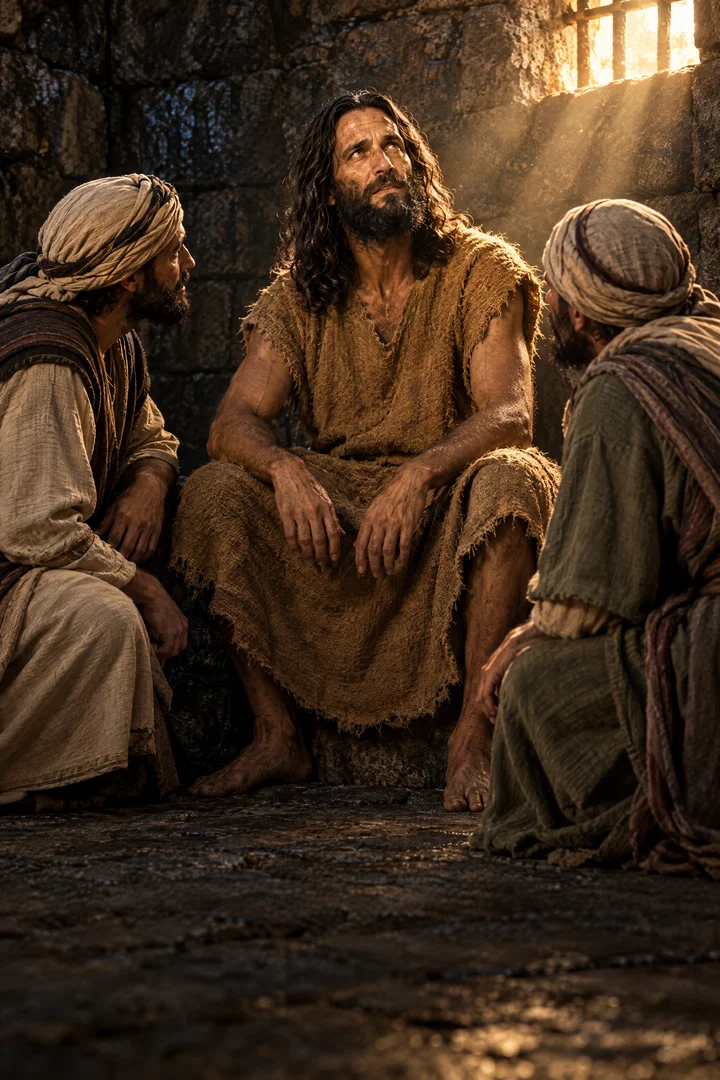
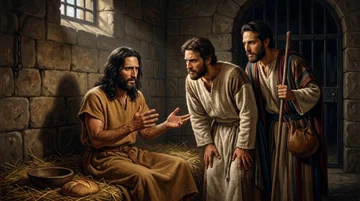
John in prison called two of his disciples and sent them to Jesus to ask whether He is the promised One who was to come or whether they should look for another.15MR 261.2–3Lt 281, 1904, par. 10–12DA 214.2–215.2 He had openly heralded Christ's kingdom and condemned Herod's immorality and unlawful marriage, and for this he was confined in Herod Antipas's fortress prison where his active ministry gave way to captivity and suffering.DA 21415MR 261.2–3Lt 281, 1904, par. 10–12 His question grew from discouragement and perplexity, because he expected the Messiah to claim royal authority, establish an earthly kingdom from David's throne, and overthrow Roman power, and he was troubled that Jesus did not free him or act as that kingly deliverer.15MR 261.2–3Lt 281, 1904, par. 10–12DA 214.2–215.2ST Mar 1, 18832SP 70.3 He sent the disciples in part for their sake, that meeting Jesus would strengthen their faith and turn them to follow Him as the great teacher, while he also longed for a word from Christ for himself.DA 216.3–4EW 124.3–125.1 Jesus answered with evidence of His divine power in healing the deaf, blind, sick, and demon-possessed and told them to report what they had seen and heard, teaching that in discouragement faith is strengthened by remembering His works and looking to Him.ST Sep 17, 1896
Imprisonment and Inquiry
The verse belongs to the account of John's imprisonment and death.DA 214DA 214.1 After heralding Christ's kingdom, John openly condemned Herod's sexual immorality and unlawful marriage, and for that was confined in Herod Antipas's fortress prison.15MR 261.2–3Lt 281, 1904, par. 10–12DA 214.1 There his active ministry gave way to captivity and suffering.DA 214.1
While in prison John could not hear Jesus' gracious words for himself nor see His work with his own eyes.2SP 70.2ST Mar 1, 18831RED 44.3 He learned through his disciples about Jesus' mighty works.2SP 70.32SP 70.2ST Mar 1, 18831RED 44.3 Their reports comforted him.ST Mar 1, 18831RED 44.3
John called two of his disciples and sent them to Jesus.DA 214.2–215.2DA 216.3–42SP 70.2 He sent them to ask whether Jesus is the One who was to come, the promised Messiah and coming One, or whether they should expect another.15MR 261.2–3Lt 281, 1904, par. 10–12DA 214.2–215.2DA 216.3–42SP 70.3 He sent them in part for their own sake, hoping that meeting Jesus would strengthen their faith and through them assure the others.DA 216.3–4 At the same time he longed for a word from Christ directly for himself, and he taught his followers to look to Jesus and follow Him as the great teacher.DA 216.3–4EW 124.3–125.1
Mistaken Expectations and Faith
John's question, "Art thou he that should come? or look we for another?" grew out of discouragement, doubt and perplexity in prison, for he wondered why Jesus did not use His power to free him.15MR 261.2–3Lt 281, 1904, par. 10–12ST Mar 1, 1883 He was troubled that Jesus did not act as the kingly deliverer he expected and did not claim royal authority.DA 214.2–215.2ST Mar 1, 1883 His confinement sharpened that perplexity, because he had looked for a Messiah who would assert Himself as king and release His forerunner.DA 214.2–215.22SP 71.1
He expected the Messiah to establish a temporal earthly kingdom, to rule from David's throne in Jerusalem, to subdue earthly kingdoms and overthrow Roman power.ST Mar 1, 18832SP 71.1RH Apr 8, 1873 He expected Jesus to proclaim Himself publicly as the Saviour of the world.2SP 70.32SP 71.1 When Jesus did not take kingly authority and did not set up that rule, John grew impatient and uncertain, asking whether another was still to come.ST Mar 1, 18832SP 71.22SP 71.1RH Apr 8, 1873
That impatience and unbelief reflected an indistinct understanding of Christ's mission.ST Mar 1, 1883ST Mar 15, 1883RH Apr 8, 1873 He did not clearly understand that Christ's kingdom was not the earthly rule he anticipated, nor did he clearly grasp the future immortal life through Christ.ST Mar 15, 1883RH Apr 8, 1873 Christ's first coming brought light into the moral darkness caused by sin, and His practical teaching illuminated the prophecies.ST Mar 15, 1883RH Apr 8, 1873
Although John's prophetic mission was great, he did not live to witness the full display of Christ's ministry, power and miracles.ST Mar 15, 1883RH Apr 8, 1873 Those who heard and saw Jesus therefore had clearer light and greater privilege than John.ST Mar 15, 1883RH Apr 8, 1873
Jesus answered the two disciples with evidence of His divine power, healing the deaf, the blind, the sick and the demon-possessed.ST Sep 17, 1896 He told them to report what they had seen and heard.ST Sep 17, 1896 In discouragement and difficulty, faith is strengthened by remembering Jesus' works and looking to Him rather than giving way to unbelief.ST Sep 17, 1896
Sources
Pioneers and periodicals
22 sources
Imprisoned in Herod's fortress and cut off from hearing Jesus himself, John sent two of his disciples to Jesus to ask whether He is the promised Coming One or whether they should wait for another deliverer.GSAM 63.2ST Oct 10, 1911ST Apr 2, 1894 He asked because he expected the Messiah to claim kingly authority, take David's throne and establish a temporal kingdom that would overthrow Roman rule and free him from prison, and he was perplexed and discouraged that Jesus had made no such claim.GSAM 63.2ST Mar 1, 1883ST Dec 12, 1892ST Jun 2, 1881ST Nov 19, 1894 Jesus did not answer with a direct statement but in that same hour healed the blind, deaf, sick, lame and demon-possessed, cleansed lepers, raised the dead and preached the gospel to the poor, and told the messengers to report to John what they had seen and heard.ST Jan 26, 1915ST Dec 12, 1892 Those works fulfilled Isaiah's prophecy concerning the Messiah and were the convincing divine credentials that He is the Sent of God and Saviour, bringing the gospel of deliverance to the humble and contrite.ST May 3, 1899ST Jan 26, 1915ST Dec 12, 1892ST Nov 19, 1894RH Oct 28, 1915 After the messengers departed Jesus vindicated John as the greatest born of woman, and the account teaches that even faithful workers may suffer temporary despondency when God's work does not meet their expectations, but faith is strengthened in discouragement by looking to Jesus and remembering His works.ST Sep 17, 1896ST Jun 2, 1881
John's Question in Prison
John sent two of his disciples as messengers to Jesus himself to ask the question while he was imprisoned, after hearing in prison of the wonderful works of Jesus through the reports of his disciples, which comforted him.ST Oct 10, 1911ST Mar 1, 1883ST Apr 2, 1894ST Mar 31, 1887 He was in Herod's prison, a dispirited prisoner on bare rock in the fortress of Macherus in the latter days of his prison life.ST Apr 28, 1898 He had been put there soon after the baptism of Jesus for preaching saving truth while Jesus was still unrecognized except by few, and being cut off so he could not hear Jesus personally.ST Mar 1, 1883ST Apr 2, 1894ST Apr 28, 1898
The question asks whether Jesus is he that should come, the promised Messiah and Coming One, or whether they should look and wait for another deliverer.GSAM 63.2ST Jan 26, 1915RH Aug 11, 1859 John asked because he expected the Messiah to publicly claim kingly authority, take David's throne, establish God's temporal kingdom on earth, reign from Jerusalem, subdue earthly kingdoms, overthrow Roman rule, and free him from prison, and Jesus' lack of such a claim left him perplexed about the nature of Christ's kingdom.GSAM 63.2ST Mar 1, 1883RH Apr 8, 1873ST Dec 12, 1892ST Jun 2, 1881 His circumstances and the gap between his expectations and Jesus' work brought disappointment, discouragement, despondency, impatience and unbelief.ST Mar 1, 1883ST Mar 15, 1883ST Jun 2, 1881ST Nov 19, 1894 The human supports of his faith trembled under him and the adversary almost caused his feet to slip into doubt, reflecting indistinct understanding of Christ's mission.ST Mar 1, 1883ST Sep 27, 1910
He did not clearly understand that Christ's kingdom was not the earthly rule he anticipated, or the future immortal life through Christ.ST Mar 15, 1883RH Apr 8, 1873 He did not doubt the message he had borne but questioned whether Jesus fulfilled it, asking Jesus himself and not the enemy or his agents.ST Apr 28, 1898 He had already seen the Holy Spirit descend upon Jesus in bodily form like a dove at the Jordan, and the verse raises the unanswered question of what led him to inquire despite that witness.RH Dec 29, 1859
Christ's Answering Proof
Jesus gave no direct declaration in reply but in that same hour displayed divine power before the messengers, healing the blind, the deaf, the sick and the lame, delivering the demon-possessed, cleansing lepers, raising the dead, and preaching the gospel to the poor, then bade them report to John what they had seen and heard.ST Oct 10, 1911ST May 3, 1899ST Dec 12, 1892ST Nov 19, 1894 The answer came through the works themselves rather than through a statement, with miracle following miracle while the two disciples looked on, so that what they witnessed would be the message carried back to the prison.ST Jan 26, 1915ST Dec 12, 1892ST Nov 19, 1894 The sick healed, the dead raised, and the poor hearing good news formed the substance of the testimony John was to weigh.ST May 3, 1899ST Jan 26, 1915
Those works were suited to lead the messengers and John to recognize Him as the Christ who was to come, fulfilling Isaiah's prophecy and the predictions about the Messiah.ST Jan 26, 1915ST Dec 12, 1892ST Nov 19, 1894ST Mar 31, 1887 They testified that He brings the gospel of deliverance, and His own works bore witness to the truth of John's message concerning Him.ST Jan 26, 1915ST Mar 31, 1887ST Apr 28, 1898 By comparing what was seen and heard with what prophecy said would happen when Christ came, John could be convinced by prophecy itself that Jesus was the true Messiah.ST Dec 12, 1892ST Nov 19, 1894
They revealed the divine character of Christ's religion and identified Him as the Saviour, altogether unlike the figure wrongly expected.ST May 3, 1899 The gospel was therein revealed to the humble and contrite rather than to those who counted themselves spiritually rich, and the fountain opened for sin and the water of life were freely offered to all who thirst.ST May 3, 1899 His deeds in ministering to the sick were the only reliable and convincing evidence that He was the Sent of God, bearing the divine credentials.RH Oct 28, 1915 That asking Jesus for confirmation of His identity was met in this way shows that asking for a sign is not necessarily skepticism, since extraordinary signs may be given to support human weakness.ST Aug 7, 1901
After the messengers departed Jesus vindicated John, calling him the greatest born of woman and an heroic servant of God, with the praise made more emphatic by the prison doubt that had preceded it.ST Jun 2, 1881 The question had drawn a gentle reproof of impatience, to which John submitted in faith whether he lived or died.ST Jun 2, 1881 He was forgiven for that doubt when the dove-like form seen at the Jordan was brought to his remembrance, together with the voice declaring the One he had baptized to be the Beloved of the Father, so that doubt no longer troubled his heart and he held firm faith and hope to stand in his lot at the end of the days.ST Sep 27, 1910
Jesus mercifully withheld from the messengers that John would soon be beheaded and instead sent a message to rejoice his heart in his cell, leaving him to hope for release and for the kingdom he longed for, though the executioner came instead.ST Dec 12, 1892 In the resurrection, to him the next instant after death, more than his brightest hopes will be realized.ST Dec 12, 1892 The raising of the widow of Nain's son recorded in the same chapter was done by virtue of the sacrifice of the Son of God, which although not then accomplished was established in the purpose of God.ST Oct 12, 1876
Encouragement for Discouraged Faith
In discouragement and difficulty faith is strengthened by remembering the works of Jesus and looking to him rather than giving way to unbelief, as shown when John the Baptist, discouraged in prison, sent two disciples to ask whether Jesus was the promised one or whether another was to be expected, and Jesus answered with evidence of divine power in healing the deaf, blind, sick and demon-possessed and bade them report what they had seen and heard.ST Sep 17, 1896 His despondency over his circumstances, unanswered questions, hardship and lack of recognition illustrates that even faithful workers may experience temporary depression when they focus on their own hardship and on the gap between their expectations and God's work. Imprisoned and troubled because Jesus had not taken David's throne, established God's kingdom on earth, or freed him from prison, John wondered why the Messiah did not act as expected, and his circumstances brought him to despondency.
The first coming of Christ brought light into humanity's moral darkness caused by sin, and his practical teaching illuminated the prophecies.ST Mar 15, 1883RH Apr 8, 1873 John's prophetic mission was great, yet he did not clearly understand that Christ's kingdom was not the earthly rule he anticipated, nor the future immortal life through Christ, and becoming impatient and unbelieving when Jesus did not establish the temporal kingdom he expected, he sent his disciples to ask whether Jesus was the coming One.ST Mar 15, 1883RH Apr 8, 1873 He had expected Christ to establish a temporal kingdom, subdue earthly kingdoms and free him from prison, and his unmet expectations brought impatience and unbelief.RH Apr 8, 1873 He did not live to witness the full display of Christ's ministry, miracles and power, so those who heard and saw Jesus had clearer light and greater privilege than John.ST Mar 15, 1883RH Apr 8, 1873
That same ministry of healing, by which Jesus answered the messengers to report that the blind see, the lame walk, the lepers are cleansed, the deaf hear, the dead are raised and the gospel is preached to the poor, was the only reliable and convincing evidence that he was the Sent of God, bearing the divine credentials.RH Oct 28, 1915 That same ministry commends itself to honest men and women, breaks down prejudice, makes friends, and is to carry conviction wherever the third angel's message is proclaimed.RH Oct 28, 1915 The teaching of John connected with this inquiry, together with the surrounding miracles, is wonderfully interesting, touching, uplifting and pathetic, stands in mighty contrast to the low condition of Israel in the time of the judges, speaks of the goodness and mercy of God, and provides a lesson for meditation and spiritual growth.ST Mar 24, 1909
Sources