Translations
And blessed is he, whoever shall not be offended in me.
King James Version, KJV Cambridge Paragraph Bible
And blessed is he, whosoever shall not be offended in me.
And blessed is he, to whom I shall not be a stumbling block.
And blessed is he, whosoever shall find none occasion of stumbling in me.
And blessed is he, whosoever shall find no occasion of stumbling in me.
and happy is he whoever may not be stumbled in me.'
and blessed is whosoever shall not be offended in me.
And, happy, is he, whosoever shall not find occasion of stumbling in me!
Berean Standard Bible, Majority Standard Bible
Blessed is the one who does not fall away on account of Me.”
Blessed is he who finds no occasion for stumbling in me.”
And a blessing will be on him who has no doubts about me.
And blessed is hee, that shall not be offended in me.
Douay-Rheims (Challoner revision)
And blessed is he whosoever shall not be scandalized in me.
Pictures

Cross-references
- Matthew 11:6
And blessed is he, who soever shall not be offended in me.
Matthew records the parallel saying about being blessed rather than taking offense at Jesus.
- Luke 7:19
And John calling unto him two of his disciples sent them to Jesus, saying, Art thou he that should come? or look we for another?
John asks whether Jesus is the promised one.
- Isaiah 35:5-6
Then the eyes of the blind shall be opened, and the ears of the deaf shall be unstopped.
The healings Jesus names are signs of the promised restoration.
- 1 Peter 2:8
And a stone of stumbling, and a rock of offence, even to them which stumble at the word, being disobedient: whereunto also they were appointed.
Christ is a rock of offense to those who reject him.
- Luke 6:22
Blessed are ye, when men shall hate you, and when they shall separate you from their company, and shall reproach you, and cast out your name as evil, for the Son of man’s sake.
Both call the faithful blessed amid opposition.
- Luke 7:36-50
And one of the Pharisees desired him that he would eat with him. And he went into the Pharisee’s house, and sat down to meat.
The woman’s loving act toward Jesus illustrates the account.
- Luke 7:11-17
And it came to pass the day after, that he went into a city called Nain; and many of his disciples went with him, and much people.
Jesus’ compassionate raising of the widow’s son displays God’s mercy.
- Psalms 119:165
Great peace have they which love thy law: and nothing shall offend them.
Both promise blessing and peace to those who are not offended.
- Matthew 3:12
Whose fan is in his hand, and he will throughly purge his floor, and gather his wheat into the garner; but he will burn up the chaff with unquenchable fire.
John expected Jesus to purge the floor and burn the chaff.
- Luke 3:19-20
But Herod the tetrarch, being reproved by him for Herodias his brother Philip’s wife, and for all the evils which Herod had done,
gives imprisonment behind John's message
- Luke 7:1-10
Now when he had ended all his sayings in the audience of the people, he entered into Capernaum.
Jesus heals the centurion’s servant, showing mercy and miraculous power.
- Matthew 5:11
Blessed are ye, when men shall revile you, and persecute you, and shall say all manner of evil against you falsely, for my sake.
Both pronounce blessing on those who endure opposition for Christ’s sake.
Commentary
Each commentary is drawn from primary sources: the writings of Ellen G. White and Adventist pioneers and periodicals. Each commentary is separate. Its own words are not a quotation; follow the references to read the source passages.
Ellen G. White
9 sources
The saying belongs to the history of John the Baptist as first in heralding Christ's kingdom and first in suffering for it.DA 214.1 After ministering east of Jordan under the dominion of Herod Antipas, where Herod feared John as a just and holy man and heard him gladly and did many things at his word, John faithfully denounced Herod's unlawful alliance with Herodias his brother's wife, and Herodias had Herod shut him in a dungeon cell in the fortress of Herod Antipas.Lt 281, 1904, par. 10–12DA 214.1
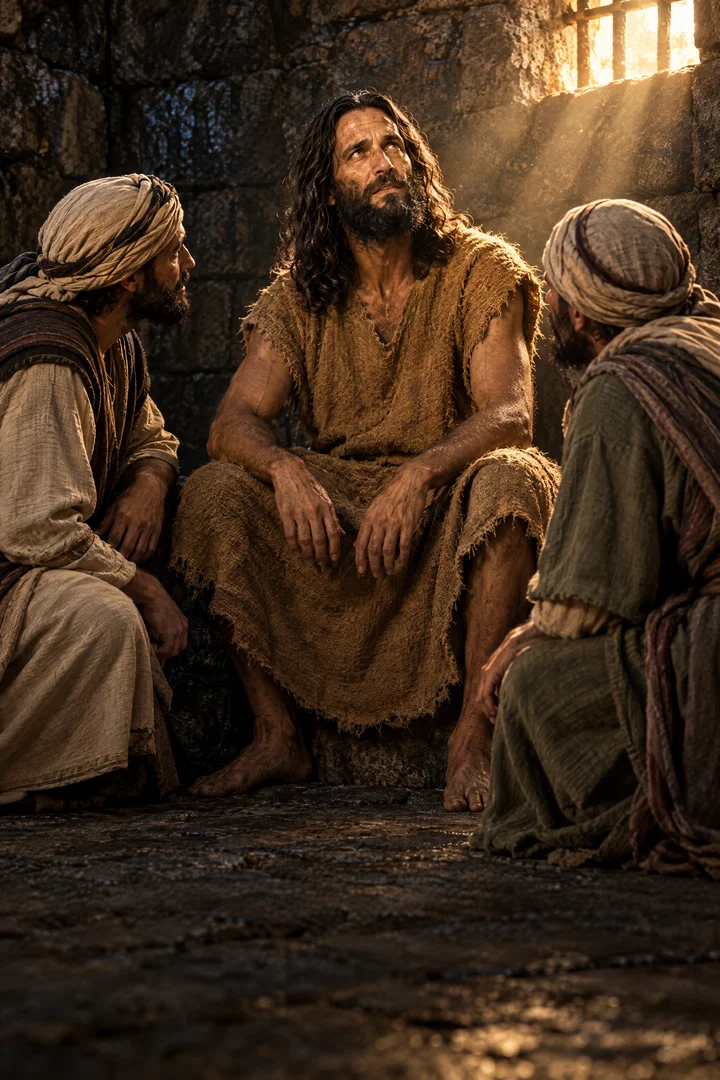
In prison John fell into gloom and inaction as week after week brought no change and no release.DA 214.2–215.2 Visits from his disciples bringing news of Jesus' works, joined with their questioning why the Messiah did nothing to free His herald, bruised his soul, depressed him, and gave Satan room to suggest doubts that otherwise would never have arisen.DA 214.2–215.2 So discouraged and wondering why Christ did not use His power to deliver him, he questioned whether Jesus was the promised One.15MR 261.2–3Lt 281, 1904, par. 10–12ST Sep 17, 1896
His perplexity came from not understanding the nature of Christ's kingdom and expecting earthly fulfillment.DA 214.2–215.2 He expected Jesus to take the throne of David, immediately assume political power, cast down the high places of human pride and power, and reveal Himself by fire to purge His floor and burn the chaff.DA 214.2–215.2ST Mar 1, 1883 So Jesus' course of only healing, teaching, and gathering disciples troubled him and tempted him to be offended.DA 214.2–215.2
Jesus answered by pointing John's messengers to the works they had witnessed as evidence of His saving power, identity, and mission, telling them to report what they saw and heard.15MR 261.2–3Lt 281, 1904, par. 10–12ST Sep 17, 1896 Those works were healing the sick, restoring sight and hearing, freeing the afflicted, forgiving sins, raising the dead, and preaching the gospel to the poor.15MR 261.2–32SP 71.2DA 216.6–217.2 They showed His divine character and power through mercy and service, with His glory appearing in humility and care for suffering people.DA 216.6–217.2ST Sep 17, 1896
The verse promises blessing on whoever does not stumble over Jesus, reject Him, or turn against Him when His actions fail to match human hopes and when difficulty and disappointment come.15MR 261.2–3Lt 281, 1904, par. 10–12ST Mar 1, 1883DA 216.6–217.2ST Sep 17, 1896 It gently rebuked John's impatience, corrected his expectation of political deliverance, and called him to trust Christ's mission even at the cost of his own life.ST Mar 1, 18832SP 71.2DA 216.6–217.2
Christ's works revealed both His Messiahship and a kingdom established not by force or political upheaval but by mercy and self-sacrifice that speaks to human hearts.DA 216.6–217.2DA 217.3–218.2 John came to understand the nature of Christ's mission more clearly and submitted himself in faith to God's will, yielded to God ready for life or death in its service.ST Mar 1, 1883DA 217.3–218.2 The blessing is for refusing offense and holding faith through disappointment, disheartening words from friends, and despondency.DA 214.2–215.2 In times of adversity, remembering Jesus' past acts of kindness and power helps keep faith from being clouded by unbelief.ST Sep 17, 1896
Sources
Pioneers and periodicals
13 sources
Blessed is anyone who does not stumble over Jesus, take offense at him or turn away because of him. He spoke it to close his answer to the messengers John sent from prison to ask if he was the Coming One, after pointing to his miracles as proof that he was the Messiah.RH Mar 12, 1867ST Apr 2, 1894 Those works were healing the sick, opening blind eyes and deaf ears, raising the dead and preaching good news to the poor. John had sent because, dispirited in prison with his work done, he was perplexed and shaken in faith, expecting the Messiah at once to take earthly kingship and David's throne and set him free.ST Mar 1, 1883ST Sep 17, 1896ST Jun 2, 1881ST Sep 27, 1910 The words gently reproved his impatience and called him to clearer sight of Christ's mission and to trust God's will whether he lived or died, warning all whose expectations are disappointed not to stumble but to hold fast in faith.ST Mar 1, 1883ST Apr 2, 1894ST Jun 2, 1881
Context and Wording
Blessed is the one who does not stumble over Jesus, take offense at him, or reject him.ST Apr 2, 1894ST Jan 26, 1915 The blessing rests on whoever is not offended in him but trusts him rather than turning away when his work does not fit expectations.ST Apr 2, 1894ST Jan 26, 1915ST Jun 13, 1900
It is the closing word of the answer Jesus returned to the message John the Baptist sent by his disciples from prison after hearing of his wonderful works, asking whether he was the Coming One whose Messiahship was in question.ST Sep 17, 1896RH Mar 12, 1867ST Apr 2, 1894ST Sep 27, 1910 It was given after Jesus pointed to his mighty miracles as proof of his Messiahship and evidence that he is the promised deliverer and his identity as the coming one.RH Mar 12, 1867ST Apr 2, 1894ST Jan 26, 1915 The works he cited as identifying his mission were healing the sick, restoring sight and hearing, raising the dead, and preaching good news to the poor.ST Apr 2, 1894ST Jan 26, 1915
Jesus first did works before John's disciples and then spoke these words for them to report to John, answering with incontestable proofs they had seen and heard confirming the truth of John's testimony and his own claims.ST Sep 17, 1896ST Apr 2, 1894 This is an example of God giving extraordinary signs to support human weakness.ST Aug 7, 1901ST Apr 2, 1894 The verse belongs to Luke 7:1-30, which includes the healing of the centurion's servant and the raising of the widow of Nain's only son and the lesson drawn from the teaching of John the Baptist.ST Jun 13, 1900ST Mar 24, 1909 That whole portion gives material for meditation and spiritual growth, showing the goodness and mercy of God in mighty contrast to Israel's low condition in the time of the judges.ST Mar 24, 1909
After the messengers departed, Jesus vindicated John with high praise as greatest among those born of woman, an heroic servant of God. He was as unlike the reeds of his desert home as he was unlike the gorgeously apparelled courtiers living delicately in Herod's palace, showing what sort of men are held honorable and what sort despicable. John was the most ascetic of ascetics in food and dress, as wild as the wilderness in which he lived, while Jesus without that asceticism accepted the usages of common life and sanctified them by the word of God and prayer, yet loved and admired John though they were very unlike.
Trust Without Taking Offense
John sent his question from prison because his work was done and he lay dispirited on the bare rock in the fortress of Macherus, with the human supports of his faith trembling, discouraged and almost slipping through doubt, perplexed and needing certification of the Messiahship.ST Sep 17, 1896ST Sep 27, 1910 He had nearly slipped through doubt while left in prison without deliverance, and asked whether Jesus was the Coming One or whether another was to be expected.ST Sep 17, 1896ST Sep 27, 1910 Jesus answered his messengers with incontestable proofs they had seen and heard, confirming the truth of John's own testimony, for them to report to their master.ST Sep 17, 1896
His faith was tested because he expected the Messiah to immediately assume political power and claim earthly kingship, to establish an earthly theocracy and take David's throne, and to free him from prison.ST Mar 1, 1883ST Jun 2, 1881 Jesus' refusal to claim earthly kingship or to free him put that expectation under strain, so that wondering why David's throne was not taken and why no deliverance came could bring despondency.ST Mar 1, 1883ST Jun 2, 1881 The closing blessing gently reproved John's impatience and corrected his expectation, helped him understand Christ's mission more clearly, and led him to submit in faith to God's will, whether he lived or died.ST Mar 1, 1883ST Jun 2, 1881
God forgave John's doubt and brought back to his mind the dove-like form at the Jordan and the voice of the Eternal declaring the One he baptized to be the Beloved of the Father, the Son of the Highest, the Anointed of Israel.ST Sep 27, 1910 Freed from doubt he would no longer let evil shake his heart but would trust, though he would perish without seeing Jesus again in this life, that he would stand in his lot at the end of the days.ST Sep 27, 1910 The verse therefore warns of the danger of stumbling when Jesus' work does not appear to fulfill what was expected.ST Apr 2, 1894ST Jan 26, 1915ST Apr 28, 1898 John did not doubt his own message but questioned whether Jesus fulfilled it, and Jesus answered by letting his works bear witness to the message, calling for trust when his work does not fit expectations.ST Apr 2, 1894ST Jan 26, 1915ST Apr 28, 1898
Those works — healing the sick, restoring sight and hearing, raising the dead, and preaching good news to the poor — identify his mission as the promised deliverer, and blessing rests on those whom these signs lead to trust him rather than take offense at him.ST Apr 2, 1894ST Jan 26, 1915 To be offended in him is to stumble when imperfect Christians, rescued from a corrupt race and led step by step rather than made instantly holy, commit open wrongs or neglect duty and become a stumbling block.RH Mar 12, 1867 It is also to stumble when someone like Judas betrays the cause as far as he can into Satan's hands, when persecution frightens the timid from the path, or when a disciple is called to renounce a favorite article of dress or food, tobacco, stimulating drinks, a gay circle of friends, or a favorite idol of gold or pleasure or honor or fame.RH Mar 12, 1867
Blessedness comes from accepting Christ and making his way one's own rather than letting difficulty or disappointment turn one against him.ST Sep 17, 1896ST Jun 30, 1909 Any offense arises from humanity's unreasonable attitude, since true happiness comes from making Christ's way one's own.ST Jun 30, 1909 Remembering Jesus' past acts of kindness and power keeps faith from being clouded by unbelief in times of adversity, for those who love God's law have great peace and nothing causes them to stumble.ST Sep 17, 1896ST Jun 30, 1909
Sources