Translations
And blessed is he, whoever shall not be offended in me.
And blessed is he, who soever shall not be offended in me.
And blessed is he, whosoever shall not be offended in me.
And blessed is he to whom I shall not be the cause of his falling into sin.
And blessed is he, whosoever shall find none occasion of stumbling in me.
And blessed is he, whosoever shall find no occasion of stumbling in me.
and happy is he who may not be stumbled in me.'
and blessed is whosoever shall not be offended in me.
And, happy, is he, whosoever shall not find cause of stumbling, in me.
Berean Standard Bible, Majority Standard Bible
Blessed is the one who does not fall away on account of Me.”
Blessed is he who finds no occasion for stumbling in me.”
And a blessing will be on him who has no doubts about me.
And blessed is he that shall not be offeded in me.
Douay-Rheims (Challoner revision)
And blessed is he that shall not be scandalized in me.
Pictures

Cross-references
- Luke 7:23
And blessed is he, whosoever shall not be offended in me.
The parallel account gives Jesus’ blessing to those who do not stumble over him.
- Isaiah 35:5-6
Then the eyes of the blind shall be opened, and the ears of the deaf shall be unstopped.
The promised healings identify the Messiah’s work, as Jesus’ healings demonstrate.
- John 16:1
These things have I spoken unto you, that ye should not be offended.
Jesus spoke to keep his followers from stumbling.
- Isaiah 8:14
And he shall be for a sanctuary; but for a stone of stumbling and for a rock of offence to both the houses of Israel, for a gin and for a snare to the inhabitants of Jerusalem.
Christ is a rock of offense to those who reject him.
- John 20:29
Jesus saith unto him, Thomas, because thou hast seen me, thou hast believed: blessed are they that have not seen, and yet have believed.
Both bless those who believe without stumbling.
- Mark 4:17
And have no root in themselves, and so endure but for a time: afterward, when affliction or persecution ariseth for the word’s sake, immediately they are offended.
Trouble or opposition because of the word can cause people to stumble.
- Psalms 119:165
Great peace have they which love thy law: and nothing shall offend them.
Those who love God’s law have peace and are not offended.
- Mark 8:38
Whosoever therefore shall be ashamed of me and of my words in this adulterous and sinful generation; of him also shall the Son of man be ashamed, when he cometh in the glory of his Father with the holy angels.
Christ will be ashamed of those who are ashamed of him.
- Matthew 11:11
Verily I say unto you, Among them that are born of women there hath not risen a greater than John the Baptist: notwithstanding he that is least in the kingdom of heaven is greater than he.
shows John's greatness despite doubt
- Matthew 14:3-12
For Herod had laid hold on John, and bound him, and put him in prison for Herodias’ sake, his brother Philip’s wife.
John’s imprisonment and death are described.
- Isaiah 61:1-2
The Spirit of the Lord GOD is upon me; because the LORD hath anointed me to preach good tidings unto the meek; he hath sent me to bind up the brokenhearted, to proclaim liberty to the captives, and the opening of the prison to them that are bound;
The prophecy describes the Messiah’s mission to the afflicted and captive.
- John 1:29
The next day John seeth Jesus coming unto him, and saith, Behold the Lamb of God, which taketh away the sin of the world.
John identifies Jesus as the Lamb of God.
Commentary
Each commentary is drawn from primary sources: the writings of Ellen G. White and Adventist pioneers and periodicals. Each commentary is separate. Its own words are not a quotation; follow the references to read the source passages.
Ellen G. White
12 sources
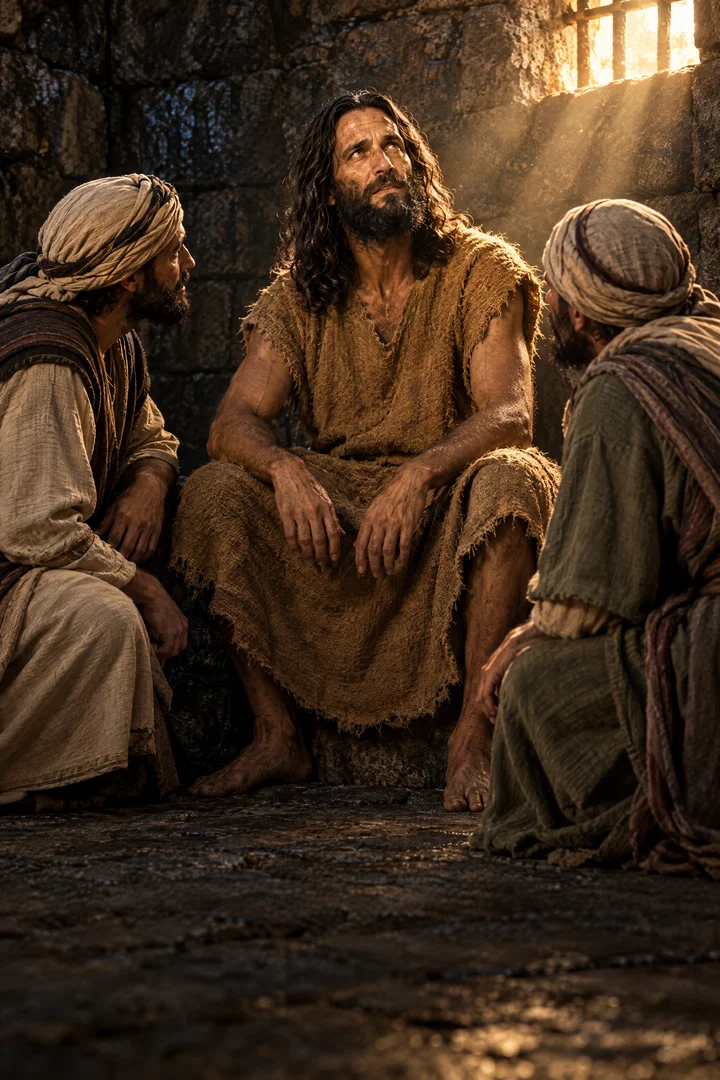
Blessing belongs to whoever does not stumble, take offense, lose faith, or reject Jesus because of Him.DA 214Ms 96, 1897, par. 15ST Nov 1, 1877RH Mar 4, 1873 The saying was spoken to John the Baptist in his perplexity and discouragement while shut in a lonely dungeon, when he sent his disciples to ask Jesus whether He was the coming one.DA 214.2–215.2ST Sep 17, 1896 John had looked for the Messiah to take David's throne, establish an earthly kingdom, openly claim kingship and kingly power, overthrow Roman rule and oppressors, and judge the wicked, while Jesus instead gathered disciples, healed, taught, and served with humility.DA 214.2–215.2ST Mar 1, 1883RH Mar 4, 1873DA 216.6–217.2
John and his disciples were troubled, impatient, and offended that Jesus did not use His power to free John from prison and immediately claim political rule.Ms 96, 1897, par. 152SP 71.2ST Mar 1, 1883ST Nov 1, 1877RH Mar 4, 1873 Jesus answered by pointing to unmistakable evidence of His divinity and mission, healing the afflicted, opening blind eyes and deaf ears, healing fever and demoniacs, raising the dead, teaching the poor, and preaching the gospel, the good news of eternal life, to the poor and socially shunned, and He sent the disciples back to tell John what they saw and heard.MH 34.1–35.1Ms 96, 1897, par. 152SP 71.2ST Mar 1, 1883ST Nov 1, 1877 That evidence was to be trusted despite perplexity and Jesus' unexpected manner of ministry.MH 34.1–35.1Ms 96, 1897, par. 15
The saying gently reproved and corrected John's impatience and mistaken expectations.2SP 71.2ST Mar 1, 1883ST Nov 1, 1877RH Mar 4, 1873DA 216.6–217.2 It calls for accepting His merciful, self-sacrificing mission with faith and submission, entrusting life and death to God whether He releases or not and whether one lives or dies.2SP 71.2ST Mar 1, 1883ST Nov 1, 1877RH Mar 4, 1873DA 216.6–217.2 Christ's works showed He was the Messiah whose kingdom would be established not by force, weapons, or political overthrow, but by mercy, self-sacrifice, and speaking to people's hearts.DA 216.6–217.2DA 217.3–218.2
The same stumbling happens when pride and fear of being mocked keep people from acknowledging the humble Nazarene in His lowly appearance, though acknowledging Him would be for their good.10MR 153.1–2 The same Jesus is Saviour today and is as willing to manifest His power for believers now as He was for John.ST Sep 17, 1896 So when hedged about by discouragement, adverse circumstances, and difficulties that seem impossible to surmount, there is to be no murmuring but remembrance of past loving-kindnesses and looking to Jesus to endure as seeing Him who is invisible, keeping the mind from being clouded by unbelief.ST Sep 17, 1896
Sources
Pioneers and periodicals
26 sources
To be offended in him means to stumble over him and turn away from him, and the happiness belongs to whoever does not do so whatever happens.RH Mar 12, 1867ST Jul 16, 1894ST Apr 1, 1897 The saying closes the gentle answer Jesus sent back to John when he wavered in his lonely prison over whether Jesus was the promised Coming One, after letting John's messengers watch his cures and telling them to report what they had seen and heard.ST Feb 10, 1898ST Nov 19, 1894ST Jan 30, 1896 Jesus met the doubt not with arguments from prophecy but with present deeds as witness, the blind seeing, the lame walking, lepers cleansed, the deaf hearing, the dead raised, and the poor hearing the good news, exactly as foretold.RH May 6, 1909ST Nov 19, 1894ST Apr 28, 1898 Those works revealed the true glory of his mission in humble service rather than earthly kingship and display, which John had expected with deliverance from prison and overthrow of Rome.ST Jul 18, 1916ST Mar 1, 1883ST Nov 1, 1877ST Jun 2, 1881 The blessing is therefore steadfast trust that does not stumble when his way disappoints human hopes, is hedged about by discouragement, or costs suffering and loss, but brings doubts directly to him and endures seeing him who is invisible.ST Jul 18, 1916ST Sep 17, 1896RH May 6, 1909ST Aug 18, 1887
Words and Historical Setting
To be offended in this saying means to be caused to stumble, not to be made angry.ST Apr 1, 1897 It belongs to the account of John's message to Jesus and Jesus' discourse about John in Matthew 11:2-19 and Luke 7:18-35. It forms part of Jesus' answer to John's question whether He is the promised Messiah.ST Nov 19, 1894
It is the closing word of the gentle message Christ sent back to John by two disciples. After letting the messengers watch Him cure diseases and plagues and evil spirits and give sight to many blind, He told them to report to John what they had seen and heard, ending with blessing on all who find no cause for stumbling in Him. The message sent to John in prison was meant to strengthen him rather than become a cause for doubt.ST Jan 30, 1896 The warnings in this setting stand to lead people to seek God's kingdom and righteousness, not to condemn them.ST Feb 10, 1898
John asked from prison at Machaerus, in a lonely dungeon, while imprisoned and facing death.ST Sep 17, 1896ST Jul 8, 1913 Discouraged and wavering, he questioned whether Jesus was the Coming One and whether Jesus fulfilled the message John had preached, though he did not doubt his own message.ST Sep 17, 1896ST Sep 27, 1910ST Apr 28, 1898 He was comforted when he heard a good report of Jesus' work.RH Jul 3, 1913
He was impatient and was gently reproved because he expected Jesus to publicly claim kingship, take David's throne, establish an earthly kingdom and theocracy, overthrow Roman rule, and free John from prison.ST Mar 1, 1883ST Nov 1, 1877RH Mar 4, 1873ST Jun 2, 1881 He wondered why he remained in prison apparently forgotten and set aside. He took the correction with submission and faith, entrusting himself to God whether he lived or died.ST Mar 1, 1883ST Nov 1, 1877RH Mar 4, 1873ST Jun 2, 1881 He remained faithful even though Jesus did not free him and he died in prison, accepting his place as a fellow sufferer with Christ and the martyrs to follow.ST Sep 27, 1910ST Mar 2, 1904
Messiah Proved by Works
When John sent to ask whether Jesus was the Coming One, the answer came not in reasoned proofs drawn from Old Testament prophecy but in present deeds set before the messengers to see and hear, so that the works themselves bore witness to the mission and confirmed both John's own testimony and Jesus' claims with a greater and divine attestation.RH May 6, 1909ST Apr 28, 1898ST Jul 8, 1913 The messengers were allowed to watch and then told to carry back report of what they had witnessed, and that firsthand evidence was meant to settle perplexity about the Messiahship rather than leave it to argument.RH May 6, 1909ST Apr 28, 1898
Those deeds were the foretold and convincing marks of divine power, exactly fulfilling what had been predicted concerning Him and His work.ST Nov 19, 1894ST Sep 13, 1905ST Dec 22, 1898 The blind received sight, the lame walked, lepers were cleansed, the deaf heard, the dead were raised, and the poor had the gospel preached to them, with the blessings of Heaven attending the work.RH May 6, 1909ST Nov 19, 1894 The demonstration was unmistakable and mighty, curing diseases and plagues and evil spirits, healing fever and demoniacs, and giving sight to many who were blind, as the messengers looked on before returning to tell John what they had seen and heard.ST Sep 17, 1896 In this way the miracles stood as evidence that Jesus of Nazareth was fulfilling the predictions given of the Messiah.ST Nov 19, 1894ST Sep 13, 1905ST Dec 22, 1898
Healing of suffering people and preaching of the good news to the poor revealed the true character and glory of the mission as humble service rather than worldly power or display.ST Jul 18, 1916ST Mar 1, 1883ST Nov 1, 1877RH Mar 4, 1873ST Jun 2, 1881 That correction gently met impatience over the failure to claim kingship openly, take political rule, overthrow Roman power, and free John from prison, calling instead for trust in the mission as shown by healing the afflicted, raising the dead, and preaching to the poor.ST Mar 1, 1883ST Nov 1, 1877RH Mar 4, 1873ST Jun 2, 1881 Remembering the sign at the Jordan and the Father's testimony, John regained confidence that Jesus was the promised One and met the correction with submission and faith, entrusting himself to God whether he should live or die and remaining faithful even though he was not freed but died in prison.ST Mar 1, 1883ST Nov 1, 1877RH Mar 4, 1873ST Jun 2, 1881ST Sep 27, 1910
Blessing of Steadfast Faith
Blessed is everyone who does not stumble over Jesus, turn away from Him, or take offense at Him and His work, whatever the case may be.RH Mar 12, 1867ST Jul 16, 1894RH Jun 15, 1916 Real blessedness, happiness and success is found only in finding His way to be our way, and there can be no true blessedness in any course that makes Christ an offender.ST Jun 30, 1909 There is no reason for offense in Christ, for offense comes from humanity's unreasonable attitude, while those who love God's law have great peace and nothing offends them.ST Jun 30, 1909
The blessing is abiding trust that does not take offense when Christ's work and manner do not match human expectations.ST Jul 18, 1916 It is the faith that rests on Him as the sure cornerstone without haste or shame. It belongs to those who accept Him as the Christ even when confessing Him brings rejection, rather than treating Him as merely a good teacher.ST Aug 18, 1887
Blessing comes to the one who does not stumble or turn against Christ when tried and disappointed, when hedged about by discouragement and adverse circumstances, or when perplexed by work difficult to understand.ST Sep 17, 1896RH May 6, 1909 John's imprisonment was such a trial and disappointment.ST Mar 24, 1887 The same temporary depression can come from focusing on self and seeming lack of appreciation, when events seem contrary to expectations.
A person may stumble because Christ's followers act wrongly or neglect their duties, because betrayal harms the cause, or because persecution and following Christ require giving up favored habits, possessions, pleasures, or companions.RH Mar 12, 1867 The call is to remain faithful through these obstacles and to bring down every cherished idol, including gold, pleasure, honor, and fame.RH Mar 12, 1867 Doubters with John's right spirit must bring doubts fairly and directly to Jesus and to God for light and deliverance according to faith and need.RH May 6, 1909
They are not to oppose and tear down the work, spread evil reports, or confide in other unsettled souls and be led into darkness.RH May 6, 1909 Remaining unoffended calls for bearing the cross in Christ's name and staying receptive to the claims of God's word, including the seventh-day Sabbath, the teaching about death, and Christ's return.ST Jul 16, 1894 Those who expect Christ's coming should not be shaken by reproach or accusations but remain calm when belief is grounded in careful search of Scripture.RH May 9, 1854
The verse applies to witnesses who endure suffering without abandoning trust in God, especially when suffering for Christ and the gospel or when followers suffer rather than receive deliverance.ST Mar 2, 1904RH Jun 15, 1916RH Jan 8, 1857 They must guard their hearts against shrinking back, murmuring, or abandoning Him, and remain steadfast in honoring His name.ST Sep 17, 1896RH Jan 8, 1857 Disappointment can help develop character when it does not cause stumbling over Christ or loss of faith in Him.ST Mar 24, 1887
That same Jesus is Saviour today and is as willing to manifest His power for believers now as for John.ST Sep 17, 1896 So when surrounded by difficulties that seem impossible to surmount there is to be remembrance of past loving-kindnesses, with no murmuring.ST Sep 17, 1896 There is to be looking to Jesus to endure as seeing Him who is invisible, keeping the mind from being clouded by unbelief.ST Sep 17, 1896
Sources