Translations
American King James Version, King James Version, Webster Bible
And began to salute him, Hail, King of the Jews!
and began to salute him, Hail, King of the Jews.
Revised Version, American Standard Version
and they began to salute him, Hail, King of the Jews!
and began to salute him, 'Hail, King of the Jews.'
And they began to salute him, Hail, King of the Jews!
and began to be saluting him—Joy to thee! King of the Jews!
Berean Standard Bible, Majority Standard Bible
And they began to salute Him: “ Hail, King of the Jews!”
They began to salute him, “ Hail, King of the Jews!”
And, as if honouring him, they said, Long life to the King of the Jews!
And began to salute him, saying, Haile, King of the Iewes.
Douay-Rheims (Challoner revision)
And they began to salute him: Hail, king of the Jews.
Pictures
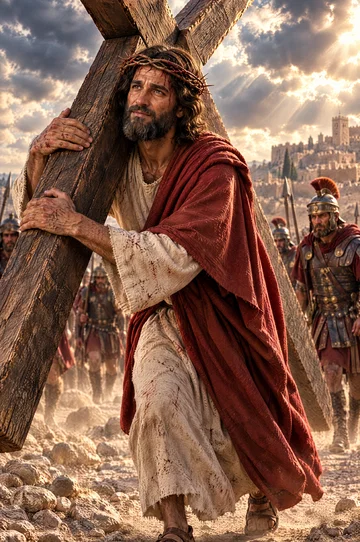
Cross-references
- Matthew 27:29
And when they had platted a crown of thorns, they put it upon his head, and a reed in his right hand: and they bowed the knee before him, and mocked him, saying, Hail, King of the Jews!
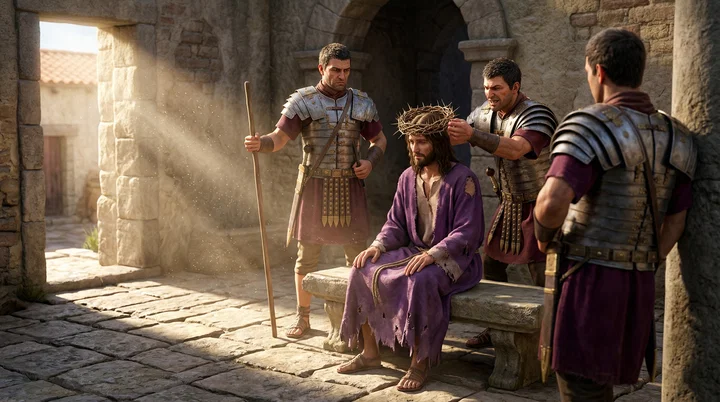
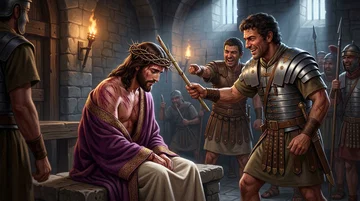
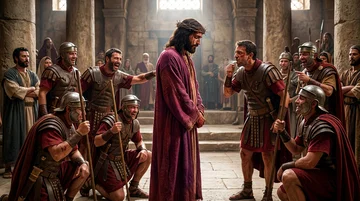
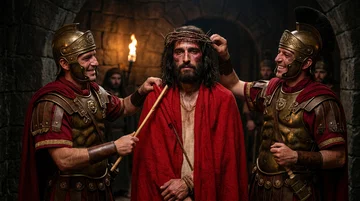
The soldiers mockingly hail Jesus as king.
- John 19:3
And said, Hail, King of the Jews! and they smote him with their hands.
The soldiers mockingly hail Jesus as King of the Jews and strike him.
- Luke 23:11
And Herod with his men of war set him at nought, and mocked him, and arrayed him in a gorgeous robe, and sent him again to Pilate.
Herod and his soldiers mock Jesus and dress him in a splendid robe.
- John 18:36
Jesus answered, My kingdom is not of this world: if my kingdom were of this world, then would my servants fight, that I should not be delivered to the Jews: but now is my kingdom not from hence.
Christ says his kingdom is not of this world.
- Mark 11:9-10
And they that went before, and they that followed, cried, saying, Hosanna; Blessed is he that cometh in the name of the Lord:
The people hailed Jesus as king before turning against him.
- Isaiah 53:7
He was oppressed, and he was afflicted, yet he opened not his mouth: he is brought as a lamb to the slaughter, and as a sheep before her shearers is dumb, so he openeth not his mouth.
Christ’s patient endurance of abuse reflects the suffering servant’s silence.
- Mark 15:34
And at the ninth hour Jesus cried with a loud voice, saying, Eloi, Eloi, lama sabachthani? which is, being interpreted, My God, my God, why hast thou forsaken me?
Jesus’ cry of abandonment is quoted alongside his mockers’ salute.
- Luke 23:13-24
And Pilate, when he had called together the chief priests and the rulers and the people,
Both recount Pilate’s trial of Jesus and the crowd’s demand for his crucifixion.
Commentary
Each commentary is drawn from primary sources: the writings of Ellen G. White and Adventist pioneers and periodicals. Each commentary is separate. Its own words are not a quotation; follow the references to read the source passages.
Ellen G. White
17 sources
In Pilate's judgment hall after He was scourged, the soldiers clothed the wounded Jesus in a purple robe, pressed a crown of thorns on His head, put a reed in His hand for a scepter, and greeted Him as king with bowed knee and mock worship before striking Him and spitting on Him.Lt 115, 1903, par. 13–14DA 723.1–724.1DA 722.5SG1 50.1DA 734.1–5 The royal salute treated His kingship as a joke, turning the title into insult and derision and ridiculing His claim to be the Son of God.5RED 58.1–2SG1 50.15RED 63.1 Though He could have summoned heaven to His aid, He bore it all with perfect calmness, meekness and patience without retaliation or complaint, because one failure to endure would have made Him an imperfect offering and broken up the plan of salvation.SG1 50.1DA 734.1–53SP 138.1–2EW 138.1 While cruelty degraded His torturers into the likeness of Satan, His meek endurance exalted Him above humanity and proved His kinship to God, so that His abasement became the pledge of His exaltation as great high priest.DA 734.1–5
The Mocking Scene
The salute took place in Pilate's judgment hall, the Praetorium, where Jesus stood bound as a prisoner with a guard of soldiers about Him while the hall fast filled with spectators, and just outside the entrance stood the judges of the Sanhedrin, priests, rulers, elders and the mob who would not enter for fear of ceremonial defilement before the Passover.DA 723.1–724.1 It belongs to His public humiliation after He was scourged, in the judgment hall before His crucifixion, when He was cruelly mocked and insulted with this greeting as part of the abuse He endured.3SP 143.1–2Lt 1a, 1861, par. 2–5 The jeering continued as He was led from Pilate's hall and hurried toward Calvary, amid the crowd's shouts and jeers, with the cross prepared for Barabbas laid upon His bruised and bleeding shoulders and with two thieves to be executed with Him.DA 722.5COS 155.1
The whole band gathered around Him when He was faint and wounded from scourging.DA 734.1–5 They clothed Him in a purple and tattered royal robe, plaited a crown of thorns upon His head, and put a reed in His hand as a scepter, then greeted Him as King of the Jews with mock worship and mock homage, bowing the knee and bowing before Him in derision.Lt 115, 1903, par. 13–14SG1 50.1DA 734.1–53SP 138.1–2EW 138.3 They spit upon Him, struck Him with the reed, and snatched the reed to strike the crown into His temples until blood trickled down His face and beard, amid jeering, blasphemy, and ridicule of His lowly birth.DA 734.1–5ST Jul 7, 1898
The royal greeting treated His kingship as a joke and turned the title King of the Jews into an insult and derision during His suffering.SG1 50.15RED 63.1 It continued the derision in which Herod had Him dressed and treated like a ruler, so that instead of honoring Him they bowed and jeered.5RED 58.1–2 In this they ridiculed His claim to be the Son of God.DA 734.1–53SP 148.1 The crowd's turn from hailing Him as king to reviling and condemning Him in humiliation reveals the fickleness of popular favor.4RED 102.2–103.1
Endurance and Its Meaning
The mocking salute was led by Satan to provoke Jesus to retaliation or complaint, or to use His divine power to work a miracle to release Himself, and so to break up the plan of salvation, for one stain upon His human life and one failure to endure the trial would have made the Lamb of God an imperfect offering and would have made redemption a failure.DA 734.1–5EW 138.1 Though by a command He could have brought the heavenly host to His aid or have driven the mob away by His divine majesty, He submitted with perfect calmness, meekness, patience, and Godlike fortitude, without retaliation, without the least murmur, and without departing in any particular from His Father's will, suffering as part of the plan of salvation so that the plan did not fail.SG1 50.1DA 734.1–53SP 138.1–2EW 138.1 The salute that treated His kingship as a joke, with bowing in derision while He was dressed in purple and a tattered royal robe and struck with a reed, was part of the cruelty and insults He endured without retaliation.SG1 50.13SP 138.1–2
His enemies had demanded a miracle as evidence of divinity, and they received still greater evidence, for as cruelty degraded His torturers below humanity into the likeness of Satan, His meekness and patience exalted Him above humanity and proved His kinship to God.DA 734.1–5 His abasement was the pledge of His exaltation, and the drops of blood that trickled from His wounded temples were the pledge of His anointing with the oil of gladness as great high priest.DA 734.1–5
He had prepared His disciples for this trial so that they would not be overwhelmed, yet seeing the One in whom they had placed their hope and in whom their hopes of eternal life were centered treated as a criminal tested their faith and caused hope and courage to fail.4RED 102.2–103.1ST Jul 7, 1898Ms 3, 1898, par. 20–21 Joined with His own nation clamoring for His blood, His scourging as the worst of criminals, the choosing of the murderous Barabbas in His place, and His being lifted up on the cross to die as a malefactor, the depths of His humiliation — clad in the purple robe with the plaited crown of thorns on His sacred brow and the reed placed in His hand while His persecutors bowed before Him in mock homage and struck Him with the reed — marked the taking away of the Bridegroom when there would be cause to mourn and fast.ST Jul 7, 1898Ms 3, 1898, par. 20–21 The crowd's turn from hailing Him as king to reviling and condemning Him in humiliation reveals the fickleness of popular favor.4RED 102.2–103.1
Sources
Pioneers and periodicals
26 sources
The verse records the beginning of a cruel mock salute in which Roman soldiers made Jesus an object of sport before His crucifixion, bowing the knee in false worship and hailing Him in sarcastic derision as King of the Jews.RH Nov 30, 1916ST Oct 31, 1916ST Jul 14, 1881 They arrayed Him as a pretended king in a royal-colored robe covering His wounds, with a plaited crown of thorns and a fragile reed for a scepter in His right hand, then spit upon Him and smote Him on the cheek and head so the thorns pierced Him.RH Nov 5, 1872RH Dec 9, 1858ST Jan 23, 1907 While turning His kingship into a taunt, the insult makes plain His true kingship and royal glory, so that His lowliness in suffering is itself presented as a coronation.ST Sep 23, 1889ST Dec 17, 1912ST Jan 17, 1911 He meekly endured this humiliation for humanity's salvation without anger though He could have freed Himself, and the head crowned with thorns will later be crowned with gold when He returns as conquering King to deliver His saints.RH Nov 5, 1872ST Jan 27, 1904RH Dec 12, 1865 The greeting with mock honor while abusing Him is a pattern for how those who claim to honor Christ may wound Him by forcing temporal sovereignty upon Him, for earthly power professing honor while degrading the faith corrupts Christianity far more than open opposition crushes it.ST Jan 23, 1907ST Nov 13, 1893ST Jan 24, 1906ST May 21, 1912ST Feb 22, 1910
Mockery in Context
The greeting marks the start of a mock salute in which Roman soldiers, joined by the rabble and onlookers, turned Jesus into an object of sport before His crucifixion after condemnation and sentence.RH Nov 30, 1916ST Oct 31, 1916ST Jul 14, 1881ST Apr 4, 1906ST Aug 17, 1904 They bent the knee in false worship and hailed Him as king of the Jews in cruel, sarcastic derision.ST Oct 31, 1916ST Jul 14, 1881ST Aug 17, 1904RH Dec 25, 1856RH Jun 20, 1871 The whole band took part in ridiculing and abusing Him before His own garments were put back on and He was led away to be crucified.ST Apr 4, 1906ST Aug 17, 1904RH Dec 25, 1856
The false enthronement arrayed Him as a pretended king by stripping Him and clothing Him in a purple, scarlet, or old robe of royal color that covered His wounds.RH Nov 5, 1872RH Dec 9, 1858ST Jan 23, 1907ST Aug 17, 1904RH Oct 25, 1870 A plaited crown of thorns was set on His head and a fragile reed was placed in His right hand for a scepter.RH Dec 9, 1858ST Jan 23, 1907ST Aug 17, 1904RH Oct 25, 1870RH Jun 20, 1871 Then He was spit upon and smitten on the cheek and on the head with the reed, so that the thorns were cruelly forced to pierce Him on every side.RH Dec 9, 1858ST Aug 17, 1904RH Oct 25, 1870 Bowing was joined to spitting and shouting was joined to blows, with blood trickling from His temples over His face.RH Dec 9, 1858ST Aug 17, 1904RH Oct 25, 1870
This took place in Pilate's Praetorium at Jerusalem on the morning of His death.RH Oct 25, 1870RH Dec 25, 1856 It followed a night of fatigue and anguish in which He was led about the streets for seven hours from tribunal to tribunal, buffeted, veiled, and struck on the head with staves, then bound with cords and lacerated with rods until bathed in blood.RH May 27, 1873RH Oct 25, 1870 His sacred body was all one wound, and He stood stripped to the waist with long cruel stripes exposed and blood flowing freely.ST Oct 7, 1886RH May 27, 1873RH Oct 25, 1870 His face was stained with blood and marked by exhaustion and pain.RH Dec 9, 1858ST Oct 7, 1886
Pilate, though convinced of His innocence, had Him scourged and exhibited side by side with Barabbas the robber chief in the vain hope of stirring pity so the multitude would deem the punishment enough.RH Dec 9, 1858ST Oct 7, 1886ST Aug 17, 1904 Permitting the whole band's abuse was another cowardly ruse before finally giving Him into the hands of His enemies.RH Dec 9, 1858ST Aug 17, 1904 When priests and people renewed the cry to crucify Him, Pilate, threatened with not being Caesar's friend and fearing ruin by accusation before the suspicious and jealous Tiberius Caesar, resisted conscience for worldly interest and ordered the execution to proceed.RH Dec 9, 1858 His own garments were then put back on His wounds, His cross was laid on Him, and He was led away to be crucified.ST Jul 7, 1898ST Apr 4, 1906RH Oct 25, 1870 There He would be stripped a third time of cloak, coat, and under-dress to die naked on the gibbet before a multitude.RH Oct 25, 1870
Such derision before execution was customary treatment of criminals at that time.RH Feb 11, 1862 The soldiers' making a condemned prisoner a mock king imitated the yearly festival of Saturn, in which soldiers placed royal robes on a chosen man and let him direct wild carousing for a certain number of days before he was put to the sword.ST Jun 8, 1904 That riotous rite was a favorite amusement of soldiers with condemned culprits and others who had incurred their displeasure when handed over to the executioners.ST Jun 8, 1904
True King in Humiliation
The jeering greeting turns kingship into insult and cruel joke, yet in that very mockery with purple robe and thorn crown His true kingship, royal lineage and glory are made plain, so that His lowliness in suffering and humility stands itself as a coronation.ST Sep 23, 1889ST Dec 17, 1912ST Jan 17, 1911 The Son of God meekly bore that humiliation for humanity's salvation, without anger or resentment though He could have freed Himself.RH Nov 5, 1872ST Jan 27, 1904RH Dec 12, 1865 Followed to Calvary and stretched on the tree, fainting and crushed beneath the load of sin to redeem the ruined race, He endured what the mob and soldiers laid upon Him.RH Nov 5, 1872ST Jan 27, 1904RH May 27, 1873
What He did and suffered there gives the clearest discovery of the dreadful evil and exceeding sinfulness of sin.RH May 27, 1873 The head then crowned with thorns will later be crowned with gold when He returns as conquering King to deliver His saints and recompense the proud oppressors.RH Dec 12, 1865 The scene was witnessed by His disciples whose hopes of eternal life were centered in Him, and joined with His own nation clamoring for His blood, His scourging as the worst of criminals, the choosing of the murderous Barabbas in His place, and His being lifted up on the cross to die as a malefactor, it marked the taking away of the Bridegroom when faith would be tried and hope and courage would fail and there would be cause to mourn and fast.ST Jul 7, 1898 Even so, with crown of thorns on His head, stripped to the waist with long cruel stripes exposed and blood flowing freely and face stained with blood and marked by exhaustion and pain, placed side by side with Barabbas, His noble character could not be hidden and stood in marked contrast to Barabbas the robber chief, whose every feature showed a debased and hardened desperado.ST Jul 7, 1898ST Oct 7, 1886
The mock homage displays love become poorer than the birds and foxes, willing to be deprived of all even to its cloak.RH Oct 25, 1870 Stripped of His own garments and clothed in scarlet, given a reed for scepter, bowed before, spit upon and saluted, then having His garments replaced upon His wounds to bear His cross to Calvary where He would be stripped a third time of cloak, coat and under-dress to die naked on the gibbet before a multitude, He shows a touching, sublime detail of pathetic grandeur that shows the majesty and simplicity of Scripture.RH Oct 25, 1870
Warning Against Political Alliance
The shouted hail to the King of the Jews was mock honor joined to abuse, bowing the knee joined to spitting and shouting joined to blows and smiting on the cheek.ST Jan 23, 1907ST Jan 24, 1906ST Feb 22, 1910ST Apr 3, 1928 It was part of a false royal display in which a fragile reed was put forward for a scepter, thorns for a crown, and purple to cover inflicted wounds.ST Jan 23, 1907ST Jan 24, 1906ST Feb 22, 1910ST Apr 3, 1928 That treatment stands as the pattern for how those who claim to honor Christ may wound, disgrace, dishonor and humiliate Him through their actions.ST Jan 23, 1907ST Jan 24, 1906ST May 21, 1912ST Feb 22, 1910
His persecutors hailed Him as king while rejecting the kind of kingdom He had declared to be not of this world.ST Nov 13, 1893 Those who try to impose temporal sovereignty upon Him and force it upon Christianity repeat that treatment given by His persecutors.ST Nov 13, 1893ST Apr 3, 1928 Earthly power claiming authority over Christianity professes honor while wounding, degrading and humiliating the faith it claims to honor, offering titles, robes and symbols of rule.ST May 21, 1912ST Feb 22, 1910ST Apr 3, 1928 The fragile reed, the thorns, the purple covering wounds, and the magnificent title over the cross belong to the same false enthronement, honoring with titles and robes while wounding and fixing to perish in shame and pain.ST Apr 3, 1928
The verse thus shows the danger that Christianity may be corrupted by alliance with political power rather than destroyed by open opposition.ST Jan 24, 1906ST Apr 3, 1928 That alliance corrupts Christianity far more than opposition crushes it.ST Jan 24, 1906ST Apr 3, 1928
Sources