Mark 15:7
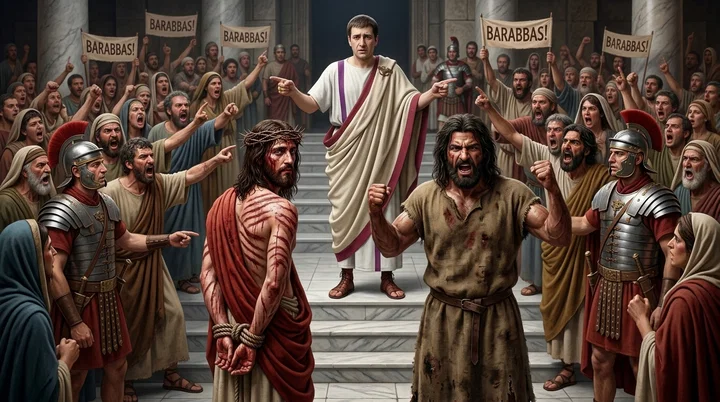
And there was one named Barabbas, which lay bound with them that had made insurrection with him, who had committed murder in the insurrection.
Translations
American King James Version, King James Version, KJV Cambridge Paragraph Bible
And there was one named Barabbas, which lay bound with them that had made insurrection with him, who had committed murder in the insurrection.
And there was one named Barabbas, who lay bound with them that had made insurrection with him, who had committed murder in the insurrection.
Revised Version, American Standard Version
And there was one called Barabbas, lying bound with them that had made insurrection, men who in the insurrection had committed murder.
and there was [one] named Barabbas, bound with those making insurrection with him, who had in the insurrection committed murder.
Now there was the [person] named Barabbas bound with those who had made insurrection with [ him], [ and] that had committed murder in the insurrection.
And there was the so-called Barabbas, with the rebels, bound, even with them who, in the rebellion, had committed, murder.
And a man named Barabbas was imprisoned with the rebels who had committed murder during the insurrection.
And a man named Barabbas was imprisoned with his fellow rebels who had committed murder during the insurrection.
There was one called Barabbas, bound with his fellow insurgents, men who in the insurrection had committed murder.
And there was one named Barabbas, in prison with those who had gone against the government and in the fight had taken life.
Then there was one named Barabbas, which was bounde with his fellowes, that had made insurrection, who in the insurrection had committed murder.
Douay-Rheims (Challoner revision)
And there was one called Barabbas, who was put in prison with some seditious men, who in the sedition had committed murder.
Pictures
Cross-references
- Luke 23:19
( Who for a certain sedition made in the city, and for murder, was cast into prison.)
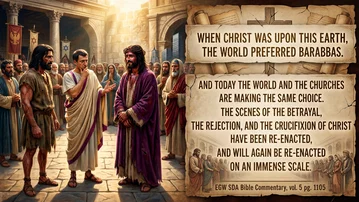
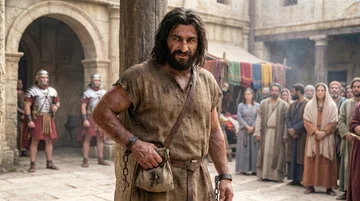
Barabbas was imprisoned for insurrection and murder.
- Matthew 27:16-17
And they had then a notable prisoner, called Barabbas.
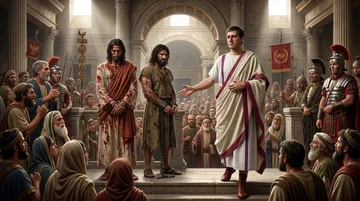
Pilate presents Barabbas, a prisoner, for release instead of Jesus.
- John 18:40
Then cried they all again, saying, Not this man, but Barabbas. Now Barabbas was a robber.
The crowd chooses Barabbas instead of Jesus.
- Matthew 27:20-21
But the chief priests and elders persuaded the multitude that they should ask Barabbas, and destroy Jesus.
The crowd chooses Barabbas instead of Jesus.
- John 19:1-16
Then Pilate therefore took Jesus, and scourged him.
Parallel account of Jesus before Pilate and the events leading to his crucifixion.
- Mark 15:11
But the chief priests moved the people, that he should rather release Barabbas unto them.
multitude stirred to choose Barabbas
- Mark 15:15
And so Pilate, willing to content the people, released Barabbas unto them, and delivered Jesus, when he had scourged him, to be crucified.
Pilate frees Barabbas and condemns Jesus.
Commentary
Each commentary is drawn from primary sources: the writings of Ellen G. White and Adventist pioneers and periodicals. Each commentary is separate. Its own words are not a quotation; follow the references to read the source passages.
Ellen G. White
10 sources
Mark 15:7 belongs to the trial of Jesus before Pilate the Roman governor and the events leading to His crucifixion, and to the road from Pilate's hall to Calvary where Jesus was led to be crucified.ST Jun 3, 1889DA 723.1–724.1DA 722.5 Pilate found no fault in Jesus and recognized that the charges against Him came from the envy and plotting of the Jewish leaders.ST Jun 3, 1889 Christ stood bound as a prisoner in the judgment-hall surrounded by a guard of soldiers while the hall fast filled with spectators, and the judges of the Sanhedrin, priests, rulers, elders, and the mob who had brought Him from their condemnation to have the sentence confirmed and executed remained outside.DA 723.1–724.1
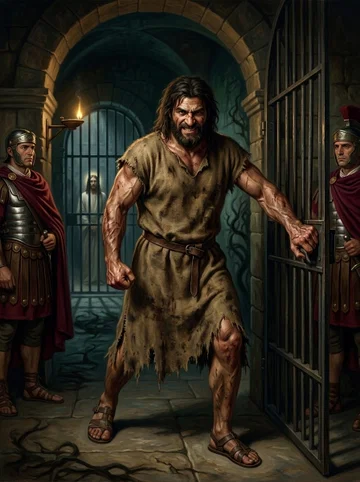
Barabbas was a prisoner bound with the other rebels who had made insurrection with him, and he had committed murder in the insurrection, making him a notorious robber and murderer.ST Jun 3, 188916MR 259.3–260.1Ms 112, 1897, par. 33–345RED 61.1ST Jul 18, 1878 He was a hardened ruffian whose guilt and dangerous character could be read at a glance and drew contempt even from the Roman soldiers.DA 735.1–5 He had falsely claimed to be Christ and, under satanic delusion, practiced theft, robbery, and murder while claiming religious power and the right to establish a new order and set the world right.Ms 112, 1897, par. 33–34
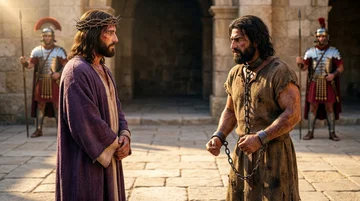
Set side by side with Jesus, Barabbas in his hardened guilt stood in striking contrast to the innocent Saviour.DA 735.1–5ST Jun 3, 1889Ms 112, 1897, par. 33–345RED 61.1 Jesus appeared stripped and bleeding from scourging, wearing the robe of mockery and crown of thorns, yet beautiful in gentleness and resignation and tender pity for His foes, with the strength and dignity of longsuffering and no cowardly weakness.DA 735.1–5 The contrast spoke to every beholder, moving spectators to weeping sympathy, convicting even priests and rulers that Jesus was all He claimed to be, filling the watching soldiers with deep pity at His silent submission, and amazing Pilate, who hoped the sight would move the Jews to release Jesus as innocent.DA 735.1–5
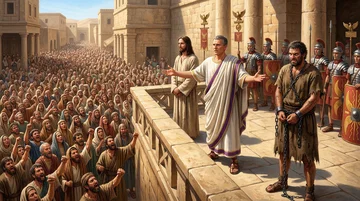
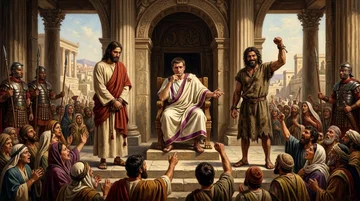
When Pilate offered the choice between the two, the crowd that had once hailed Jesus as king turned against Him.DA 735.1–5ST Jun 3, 18895RED 61.14RED 102.2–103.1 At the urging of fanatical hatred from the priests, rulers, and mob, the people demanded the release of Barabbas the criminal instead of the innocent Jesus and cried for the crucifixion of Jesus.DA 735.1–5ST Jun 3, 18895RED 61.14RED 102.2–103.1 The cross prepared for Barabbas was instead laid on Jesus, while Barabbas's fellow insurrectionists were to be executed with Jesus.ST Jul 18, 1878
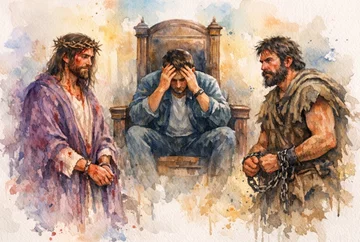
Placed beside Jesus, Barabbas represents Satan, whom the crowd chose instead of Christ, and that choice is repeated whenever people choose Satan and reject Christ, so that each person demonstrates a choice between them.16MR 259.3–260.1 The disciples saw in this sudden turning of the crowd how quickly the world's favor can change, and were prepared not to base their faith on the crowd's approval.4RED 102.2–103.1
Sources
Pioneers and periodicals
18 sources
Mark 15:7 presents Barabbas as a noted prisoner lying bound with his fellow insurrectionists, convicted and charged for murder committed in an uprising against Roman rule.ST Jun 3, 1889ST May 25, 1904ST Nov 9, 1882ST Jun 3, 1908 He belonged to the growing anti-Roman party later known as the Zealots, whose violence many counted as patriotism, though he was guilty of the very sedition falsely charged against Jesus.ST Nov 9, 1882 When Pilate publicly declared he found no fault in Jesus and sought to use the Passover custom of releasing one prisoner to free Him in the interest of justice, the multitude, moved by the chief priests, chose Barabbas instead.ST Jun 3, 1889ST Jun 15, 1904ST Mar 13, 1901ST Aug 17, 1904 They preferred a known murderer, robber and rebel to the innocent Christ, so Pilate released Barabbas and, after scourging, delivered Jesus to be crucified.ST Jun 3, 1889ST May 25, 1904ST Oct 27, 1898 Their choice exposed the rulers' hypocrisy in urging freedom for a man convicted of violent rebellion while demanding death for Jesus against whom Rome brought no charge, and it stands as the unjust putting to death of Christ, the just for the unjust to bring sinners to God.ST Jun 15, 1904ST Nov 9, 1882ST May 17, 1905
Barabbas and Trial Setting
Barabbas was a noted prisoner lying bound with fellow insurrectionists who had made insurrection with him, held imprisoned with them under conviction and charge for that uprising in which murder had been committed.ST Jun 3, 1889ST May 25, 1904ST Nov 9, 1882ST Mar 13, 1901 He had committed murder in that uprising against Roman rule, for which he stood convicted and charged as a violent rebel and outlaw, a robber and assassin who led an armed band and was counted among the leaders of the revolt.ST Jul 9, 1912ST May 25, 1904ST Nov 9, 1882ST Jun 3, 1908ST Oct 4, 1910 He was captured and arrested with his fellow rebels and bound with the men who had joined his insurrection, and those who so describe him call him Joseph Barabbas.ST Oct 4, 1910ST Jan 31, 1911ST Jan 10, 1911 His actions represent lawlessness.ST Jun 3, 1908
He belonged to the growing anti-Roman party later known as the Zealots, and his uprising and bloodshed were regarded by many who favored national independence as patriotism, though he was guilty of the sedition falsely charged against Jesus.ST Nov 9, 1882 He claimed to be the Messiah, is described as the son of an Israelite rabbi, is said to seek Israel's restoration and to be credited by people with miracles, but his violent rebellion is not a rightful means of deliverance.ST Oct 4, 1910ST Oct 4, 1910 A council member suspected that Jesus might be connected with Barabbas, who had been captured and imprisoned as a robber.ST Jan 10, 1911
The cross prepared for Barabbas was instead laid on Jesus, while Barabbas's companions were also to be executed with Jesus.ST Jul 18, 1878 Jesus was crucified between two thieves described as Barabbas's companions, bound with him as men who had joined his insurrection and committed murder.ST Jul 18, 1878ST Jan 31, 1911 The verse stands in the Passover feast custom by which Pilate released to the multitude one prisoner, one Jewish prisoner condemned under Roman law, a custom that pleased the people gathered from all parts of the province for their principal feast by letting them choose who should be released.ST May 25, 1904ST Mar 13, 1901ST Aug 17, 1904
Christ Rejected for Barabbas
Mark 15:7 belongs to the account of Jesus before Pilate, in which Pilate publicly declared to the chief priests and to the people that he found no fault in Jesus.ST Jun 3, 1889ST Jun 15, 1904ST Aug 17, 1904 He recognized that the charges against Jesus came from the envy and plotting of the Jewish leaders, yet he put Jesus on a level with a convicted criminal and left His fate to His avowed enemies.ST Jun 3, 1889ST Aug 17, 1904 He tried to use the Passover custom of releasing one prisoner condemned under Roman law so that the people would choose Jesus in the interest of justice.ST Mar 13, 1901ST Aug 17, 1904
That declaration that he found no fault in this Man was the world's official declaration that Christ was unjustly put to death.ST Jun 15, 1904 It showed that Christ suffered for sins as the just for the unjust to bring sinners to God, put to death in the flesh but quickened by the Spirit.ST Jun 15, 1904 That the apostate people of God could not see Christ's innocence when it was clear to the mind of a heathen judge shows that if the light within is darkness, how great is that darkness.ST Jun 15, 1904 Pilate still trusted the people could be moved in the interest of justice even though he knew the chief priests had delivered Jesus from envy.ST Aug 17, 1904
Pilate tried to shift responsibility for Jesus' release onto the priests and rulers by inducing them to consent to His pardon under the custom, but the attempt failed and the weight of responsibility grew heavier.ST Mar 13, 1901 With every evasion of duty the situation became more difficult.ST Mar 13, 1901 Moved by the chief priests, the multitude chose Barabbas for release instead of Jesus, preferring a noted prisoner bound with fellow insurrectionists and under conviction for insurrection and murder, a known murderer, robber and rebel, to the innocent Christ.ST Jun 3, 1889ST Jul 9, 1912ST May 25, 1904ST Oct 27, 1898 Christ made no retaliatory response to this further act of hostility.ST Oct 27, 1898 Pilate then released Barabbas while delivering Jesus, after scourging, to be crucified, setting aside one who was King of Kings and Lord of Lords.ST Jul 23, 1912ST May 25, 1904
The people scouted the idea of Jesus' release and demanded Barabbas, demanding not only death for Jesus but death by crucifixion, showing how dramatically their attitude toward Jesus had turned.ST Mar 13, 1901RH Feb 27, 1872 Pilate appealed a third time to be allowed to do his duty, suggesting that Jesus be chastised and then released to appease the mob.ST Mar 13, 1901 The rulers' efforts to free Barabbas and condemn Jesus exposed their hypocrisy, for they urged the release of a man convicted of violent rebellion while demanding the death of Jesus whom they had charged with the same crime.ST Nov 9, 1882ST May 17, 1905 The Roman authorities had brought no charge of wrongdoing against Jesus, whose work had brought no such charge, though Barabbas was guilty of the sedition falsely charged against Jesus.ST Nov 9, 1882ST May 17, 1905 Their choice contradicted their claim that following Jesus would provoke Roman intervention, and within less than thirty years Rome destroyed Jerusalem and its temple.ST May 17, 1905
Barabbas's insurrection and murder represent lawlessness, in contrast with Christ's sinless obedience to the law.ST Jun 3, 1908 His release instead of Jesus illustrates the people's rejection of Christ in favor of a leader of rebellion.ST Jul 9, 1912 Choosing to honor Satan by exalting the spurious Sabbath is compared to that choice.ST Jul 9, 1912 Those who rejected and crucified Jesus, setting Him aside for a robber and murderer, will see His glory.ST Jul 9, 1912ST Jul 23, 1912
Sources