Mark 4:41
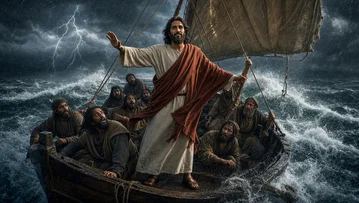
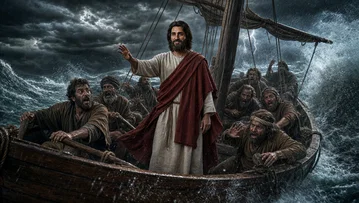
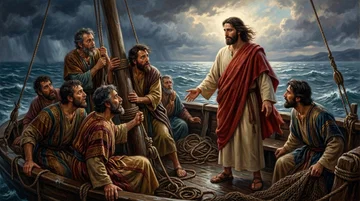
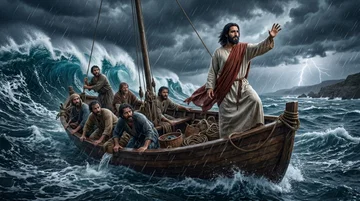
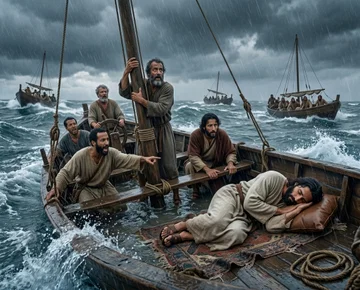
And they feared exceedingly, and said one to another, What manner of man is this, that even the wind and the sea obey him?
Translations
American King James Version, King James Version, KJV Cambridge Paragraph Bible, Webster Bible
And they feared exceedingly, and said one to another, What manner of man is this, that even the wind and the sea obey him?
Revised Version, American Standard Version
And they feared exceedingly, and said one to another, Who then is this, that even the wind and the sea obey him?
and they feared a great fear, and said one to another, 'Who, then, is this, that even the wind and the sea do obey him?'
And they feared [ with] great fear, and said one to another, Who then is this, that even the wind and the sea obey him?
And they were caused to fear a great fear, and were saying one to another—Who then is, this, that, both the wind and the sea, give ear unto him?
Overwhelmed with fear, they asked one another, “ Who is this, that even the wind and the sea obey Him?”
Overwhelmed with fear, they asked one another, “ Who then is this, that even the wind and the sea obey Him?”
They were greatly afraid and said to one another, “ Who then is this, that even the wind and the sea obey him?”
And their fear was great, and they said one to another, Who then is this, that even the wind and the sea do his orders?
And they feared exceedingly, and said one to another, Who is this, that both the winde and sea obey him?
Douay-Rheims (Challoner revision)
And he said to them: Why are you fearful? have you not faith yet? And they feared exceedingly: and they said one to another: Who is this (thinkest thou) that both wind and sea obey him?
Pictures
Cross-references
- Matthew 8:27
But the men marvelled, saying, What manner of man is this, that even the winds and the sea obey him!
Jesus commands the storm, and it obeys him.
- Luke 8:22-25
Now it came to pass on a certain day, that he went into a ship with his disciples: and he said unto them, Let us go over unto the other side of the lake. And they launched forth.
Jesus stills the storm, prompting the disciples’ question about who he is.
- Psalms 107:29-30
He maketh the storm a calm, so that the waves thereof are still.
God stills the storm and brings those at sea to safety.
- Mark 6:48-51
And he saw them toiling in rowing; for the wind was contrary unto them: and about the fourth watch of the night he cometh unto them, walking upon the sea, and would have passed by them.
Jesus walks on the sea, joins his disciples, and the wind ceases.
- Matthew 14:25
And in the fourth watch of the night Jesus went unto them, walking on the sea.
Jesus walks on the waves to rescue the disciples.
- John 6:19
So when they had rowed about five and twenty or thirty furlongs, they see Jesus walking on the sea, and drawing nigh unto the ship: and they were afraid.
Jesus walks on the sea toward the disciples.
- Mark 4:37
And there arose a great storm of wind, and the waves beat into the ship, so that it was now full.
Describes the deadly storm before Christ calms it.
- Luke 8:24
And they came to him, and awoke him, saying, Master, master, we perish. Then he arose, and rebuked the wind and the raging of the water: and they ceased, and there was a calm.
The disciples cry out to Jesus in peril, and he stills the storm.
- Matthew 8:25
And his disciples came to him, and awoke him, saying, Lord, save us: we perish.
The disciples cry out to Jesus in peril and awaken him.
- Matthew 14:30
But when he saw the wind boisterous, he was afraid; and beginning to sink, he cried, saying, Lord, save me.
Both describe fear amid the wind and a cry for the Lord to save.
- Matthew 14:29
And he said, Come. And when Peter was come down out of the ship, he walked on the water, to go to Jesus.
Christ’s word sustains Peter as he walks on the water.
- Exodus 14:15-22
And the LORD said unto Moses, Wherefore criest thou unto me? speak unto the children of Israel, that they go forward:
Israel is told to go forward through the divided sea.
Commentary
Each commentary is drawn from primary sources: the writings of Ellen G. White and Adventist pioneers and periodicals. Each commentary is separate. Its own words are not a quotation; follow the references to read the source passages.
Ellen G. White
35 sources
After a day of teaching the Saviour crossed to the eastern shore with other boats following, a sudden storm threatened to sink them while He slept, and at His command the wind ceased and the sea became perfectly calm while all who shared the peril looked on in reverent awe and wondered what kind of man even wind and sea obey.DA 333.3–334.1ST Jul 14, 18813RED 84.12SP 308.2–309.1Ms 130, 1903, par. 15–17 Their exceeding fear was wonder at His identity and authority over nature, for the obedience of the elements revealed divine power and majesty.DA 333.1–2DA 331.33RED 85.1ST Jan 18, 1877ST Oct 24, 1900 Asleep in exhaustion yet awake as Commander to be obeyed, He spoke as One equal with the Father, nature recognized the voice of her Lord, and the stilling stands through all time as evidence that He is the Son of God and Messiah.DA 335.3–4ST Jul 25, 1878Ms 130, 1903, par. 15–177MR 280.4–281.23SP 28.1–30.1 Their terror in the storm showed unbelief and self-reliance in trying to save themselves instead of turning to Him from the first moment of danger, and He reproves that failure yet hears every earnest cry of faith and delivers in the way He knows is best.2SP 310.13RED 85.13RED 85.2ST Jan 18, 18772SP 309.2 The calming was wrought for believers in every age, that there is no need of fear on land or sea when the Master is on board, and calling on Jesus to save amid temptation and trouble is never in vain.2SP 310.13RED 85.2Ms 130, 1903, par. 19Lt 20, 1896, par. 5–73RED 85.3
Storm Setting and Miracle
The crossing came after a day spent in teaching and healing, when Jesus sought seclusion on the less-populated eastern shore and the people followed Him in other boats.DA 333.3–334.1 A sudden storm rose that threatened to sink the boat while Jesus slept, leaving even experienced fishermen helpless, fearing death and despairing when their efforts and skill could not control it.2SP 307.1–308.13RED 82.2DA 334.2–5 They had forgotten that Jesus was with them and had commanded the crossing, and only when their own efforts failed did they remember Him as their only hope and cry out to Him.2SP 307.1–308.13RED 83.1–2DA 334.2–5
At His command the wind ceased, the waves sank to rest, the clouds rolled away, and the boat sat motionless on a quiet and perfectly calm sea.ST Jul 14, 1881Ms 130, 1903, par. 15–17 A sudden hush followed in which not a word was spoken aloud, even by impulsive Peter.ST Jul 14, 1881 The fury of the storm had driven the following boats into close nearness, so that all on board shared the same peril and beheld the miracle.ST Jul 14, 1881DA 335.3–4 Then the disciples together with the people in the other boats whispered among themselves in reverent awe, asking what kind of man this is that even wind and sea obey Him.ST Jul 14, 18813RED 84.12SP 308.2–309.1ST Jan 18, 1877DA 335.3–4
That impressive scene was never forgotten by those who witnessed it and remains an enduring cause of reverence and awe for God's children.ST Jul 14, 18813RED 84.12SP 308.2–309.1ST Jan 18, 1877 The disciples were overcome with exceeding fear and awe and wondered at His identity and authority over nature, because even the wind and the sea obeyed Him.DA 333.1–2DA 331.3ST Jan 18, 1877
Divine Power Revealed
The obedience of wind and sea to His command revealed His divine power, majesty, and authority over nature, filling all who witnessed it with awe.3RED 85.1ST Oct 24, 1900 He slept in the boat as an exhausted man, yet awoke as a commander to be obeyed, showing no alarm but resting in faith in the Father's love and care.DA 335.3–4Ms 130, 1903, par. 15–17 Speaking as One equal with the Father, His word stilled the storm by the power of God, and at His word nature recognized the voice of her Lord and Master and obeyed until the sea became perfectly calm.DA 335.3–4Ms 130, 1903, par. 15–17
That display was given to increase the faith of the disciples and to stand through all time as evidence of the divine character of His mission as the Sent of God.Ms 130, 1903, par. 15–17 Nature's obedience testified that He is the Son of God and the Messiah, displaying His mighty power as evidence of His Messiahship, even though priests and rulers rejected that evidence of His divinity.ST Jul 25, 1878Ms 130, 1903, par. 15–173SP 28.1–30.1 The stilling reveals a majesty far above human comprehension, for He holds the winds in His hand and controls the waters, beholding at one glance the highest heavens and the midst of the sea.7MR 280.4–281.2 Though human beings are mere specks upon the broad deep in His sight, angels are sent from His excellent glory to guard the little boat careening over the waves, calling for awe-filled reverence at this grand, watchful, protecting power.7MR 280.4–281.2
The disciples remembered the calming of the elements as evidence that He was the Son of God, yet during His trial they still hoped He would use that power to free Himself and prove Himself Israel's King.EW 139.3 This power over nature stands together with His walking upon the heaving billows to rescue the disciples, treading the foaming white-capped billows on the Sea of Galilee as the Pattern Man as certainly fulfilling His mission as when He toiled as a carpenter hiding the great secret of His divine mission, raised the dead to life, and died as man's sacrifice to lift the race to new life.6RED 64.23RED 112.2Lt 1, 1880, par. 5–6 It stands likewise with His being ever touched by human woe in healing the sick, restoring sight to the blind, hearing to the deaf and speech to the dumb, feeding the hungry, comforting the sorrowful, casting out devils who in departing acknowledged Him to be the Son of God, breaking the slumbers of the dead, holding thousands entranced by words of wisdom, and raising the dead, yet He who did these things was driven away from the people He labored to save, unable to reach hearts blinded by prejudice and hatred who resolutely rejected the light.3RED 112.2Lt 1, 1880, par. 5–6
The same hand that beckoned the waves to rest held the demon-possessed men helpless before Him on shore at Galilee, showing His authority continues on land and that His power over nature was evident before He confronted the demons.ST Feb 4, 18892SP 311.1–312.23RED 86.1–88.2 Having met Satan before and conquered him, He stood calm when the demoniacs rushed toward Him and did not flee from Satan or his forces, and with raised hand held them back so they could come no nearer.ST Feb 4, 18893RED 86.1–88.2 Those who witnessed the stilling and crossed the lake with Him told the people on shore of both the danger and the deliverance and of the previous night's miracle by which He stilled the storm, revealing He could control the elements.2SP 316.23RED 91.1–2 Yet the Gadarenes, blinded by concern over worldly loss of property, refused to value the presence of One who could control the elements.2SP 316.23RED 91.1–2
Trusting Jesus in Trials
The fear that cried out, What manner of man is this, exposed unbelief and self-reliance, for the disciples tried to save themselves instead of turning to Jesus from the first moment of danger, forgetting that He was with them and had power to command wind and sea.3RED 85.1ST Jan 18, 18772SP 309.2 They should have remembered His presence and called upon Him when peril first appeared, rather than relying on their own strength and skill.3RED 85.1ST Jan 18, 18772SP 309.2 Their failure to seek Him at the very beginning of trial is reproved as unbelief and self-confidence.3RED 85.1ST Jan 18, 18772SP 309.2
Yet He hears earnest, sincere, fearful cries of faith and will not forsake those who trust Him, but gives the help they need.2SP 310.13RED 85.13RED 85.2ST Jan 18, 18772SP 309.2 He may reprove self-confidence, but He still answers humble petition and delivers in the way He knows is best.3RED 85.1ST Jan 18, 18772SP 309.23RED 85.3 The stilling of the tempest therefore assures all who are in danger that they can call to Jesus and He will save them.2SP 310.13RED 85.2ST Jan 18, 1877 It gives believers reason to trust Him amid life's troubles and to turn to Him rather than wearying themselves in efforts to save themselves by finite human strength, skill, and wearying efforts.ST Jan 18, 1877ST Oct 24, 19003RED 85.3
There is no need of fear whether on land or on sea, sleeping or waking, when the Saviour is in the heart and the Master is on board.Ms 130, 1903, par. 193RED 85.3 Through storms of difficulty His people must remember that He is with them, look to Him, strengthen faith, and go forward with hope and courage.Ms 130, 1903, par. 19Lt 20, 1896, par. 5–73RED 85.3 The fearful cry of faith always meets with a response.Ms 130, 1903, par. 193RED 85.3
The calming was wrought for present believers as well as for the occupants of the boat.Ms 130, 1903, par. 19 Their fear in the tempest is the experience of believers when temptations gather like storms, with flashing lightning and sweeping waves, while they battle alone in their own strength and forget that One can help them until hope is lost and they are ready to perish.Ms 130, 1903, par. 19 Calling on Jesus to save is never in vain, and living faith in the Redeemer smooths the sea of life and delivers from danger in the way He knows to be best.Ms 130, 1903, par. 193RED 85.3
Sources
Pioneers and periodicals
70 sources
After Jesus spoke to the storm the wind ceased and the sea became calm, and the disciples were filled with great fear and awe and asked one another what manner of man this is that even wind and sea obey him.ST Jan 26, 1915RH Nov 30, 1916 He calms the tempest with a word of command because wind and sea belong to him and serve at his will, and their obedience testifies that he is the Son of God with divine power and majesty.RH Oct 30, 1860RH Nov 30, 1916RH Jul 1, 1862ST May 18, 1904 His presence in the boat did not keep the tempest from arising, yet no storm can overwhelm those he is with, so when he seems to sleep there is no reason to fear being lost.ST Jul 25, 1911ST Oct 6, 1887ST Aug 7, 1901 The same Lord who stilled Galilee still speaks peace to the storms of passion, temptation, distress and guilt that threaten the soul, giving the peace that passes understanding to the heart submitted to God.ST Jul 19, 1905ST Jun 26, 1879ST Jun 20, 1906ST Feb 22, 1905ST Dec 4, 1901 Those who make him their refuge are safe through tribulation, and he will bring them safely through the coming storm over the whole earth to their final home with him.ST Jul 1, 1886ST Dec 1, 1887
Setting on the Lake
The crossing belonged to the evening after a busy day of teaching, including the parables recorded in Matthew 13.ST Nov 15, 1910ST Jul 19, 1905 Jesus went with the disciples across the lake, weary from long toil yet full of inward peace and contentment.ST Nov 15, 1910ST May 18, 1904 He was asleep in the boat, in the stern, in the hinder part of the boat, on a pillow in a fisherman's boat.ST Jul 19, 1905ST May 18, 1904RH Jul 22, 1873RH May 27, 1858 This was during his frequent crossings in labors of love around the shores where much of his public life was spent.RH May 27, 1858
The lake could become turbulent when fierce winds swept down from the valley.ST Jul 19, 1905 It still makes sudden wind and rough waves that endanger small fisher boats crossing between Tiberias and the eastern shore, so a modern crossing can bring experience of the same scriptural storm.RH May 14, 1872
Other boats had followed Jesus and shared the same peril.ST Jul 14, 1881 The fury of the storm had driven the boats into close nearness so that all on board beheld the miracle.ST Jul 14, 1881 The stilling on Galilee was one of two times he stilled their fear on those waters, the other being when he came to them walking on the sea in the fourth watch of the night while they were toiling in rowing.RH May 27, 1858
Disciples' Awe and Question
After Jesus rebuked the storm and the wind and the sea became calm, the disciples were filled with great fear, amazement and awe and said one to another, asking what manner of man this is, that even the wind and the sea obey him.ST Jan 26, 1915RH Nov 30, 1916ST May 17, 1899 Their question recognized that even the forces of nature obey his authority and displayed his divinity, and even his closest disciples were fearful and amazed to see the quieted stormy sea obey his command.ST Jan 26, 1915RH Nov 30, 1916ST May 17, 1899ST May 17, 1899
A sudden hush crept over the disciples so that not a word was spoken aloud, even impulsive Peter saying nothing.ST Jul 14, 1881 They with the people in the other boats that had followed Jesus and shared the same peril whispered among themselves, because the fury of the storm had driven the boats into close nearness so that all on board beheld the miracle and all fear was allayed once the danger was over.ST Jul 14, 1881ST Jan 18, 1877 They spoke with pale lips and faint yet growing wonder, with limbs faint and courage fled, in dread and strange awe at seeing the waves subside at his mere spoken word, when the wind ceased, the waves sank to rest, the clouds rolled away and the boat sat motionless on a quiet sea.ST Jul 14, 1881RH Feb 16, 1860ST Apr 1, 1897 The impressive scene was never forgotten by those who witnessed it and will never fail to inspire reverence and awe in the children of God.ST Jul 14, 1881ST Jan 18, 1877
The sea was his creature, and his word had authority to still its waves; there had been no real danger.ST Jan 23, 1893 Their fear after the calming showed they had not trusted him, though they had seen many miracles.RH Jan 21, 1858 The storm exposed how little their faith held under danger, despite earlier confidence in calm conditions, revealing weak and quickly shaken faith.RH Feb 16, 1860RH Jan 21, 1858RH Jan 1, 1861
Christ's Authority and Identity
Jesus holds sovereign power over wind and sea, and calms the tempest with a word, a command, his voice saying peace, be still.RH Jul 1, 1862ST Aug 7, 1901ST Mar 20, 1907ST Jul 7, 1898 The wind and sea obeyed quickly because they belong to him and serve at his will and word as God's obedient daughters and angels, returning at once to calm and mirroring the sky.ST May 18, 1904 He is Master of ocean and earth and skies, and owner and master of the boat and the sea.ST Aug 7, 1901ST Mar 20, 1907
The miracle displays his divinity, divine power and majesty, and living energy that stands out prominently in Mark.ST Oct 24, 1900RH Oct 30, 1860RH Nov 30, 1916ST Jul 22, 1908 Nature's obedience testified that he was the Son of God, even though the priests and rulers rejected the evidence of his divinity.ST Jul 25, 1878 He is a defender and deliverer whose authority serves others without selfish ambition.RH Oct 30, 1860
The same command over wind and waves revealed power also shown over evil spirits, demons and death.ST Feb 4, 1889ST Oct 4, 1910 The same hand that beckoned the waves to rest could hold the demon-possessed men helpless before him, showing he did not flee from Satan or his forces.ST Feb 4, 1889 The sea obeys Christ's voice as it obeyed God's voice at creation, assuring his people that God can make a way forward when hemmed in by danger.RH Jan 14, 1902
The stilling of the sea is a real miraculous event, named among Bible miracles that some critics reject as incredible, and rejecting it is part of denying the reliability of Scripture.RH May 10, 1906 The disciples had witnessed Jesus still the tempest and had seen the power of his word before arriving on shore, and these works taught them about his mission and kingdom before he sent them out to preach and do his work.ST Jun 3, 1908 His power over nature did not make prayer unnecessary, for though free from sin he often prayed earnestly, identifying himself with humanity's needs, weaknesses and failings and seeking his Father's help and support.ST Dec 12, 1892 His stilling of the storm is an example of the faith of Jesus that his followers will have, and it serves as an example of a physical work that his followers would not necessarily surpass in number, since the greater works promised to them are miracles of grace that transform human hearts.ST May 5, 1914RH Aug 7, 1913
Faith and Christ's Presence
The fear in the storm showed unbelief, for the disciples tried to save themselves instead of turning to Jesus from the first moment.ST Jan 18, 1877 All human skill at the helm avails nothing against being overwhelmed by the waters.ST Mar 20, 1907 In danger people should call on Jesus at once and not rely on their own strength and skill.ST Jan 18, 1877 Deliverance comes by wakening the sleeping Jesus with a cry for him to take command.ST Mar 20, 1907
His presence in the ship did not prevent a tempest from arising, so storms are no proof that he is absent.ST Jul 25, 1911ST Jan 29, 1880 He was with them in the boat, and they had no reason to think he could perish in the deep.ST Oct 6, 1887 The boat is safe because he is in it, and no storm can overwhelm those he is with.ST Aug 7, 1901ST Apr 3, 1928 When the Saviour is with believers, even if he seems to sleep, they need not fear that they will be lost, for God's power to save is as great as his power to bring devastation when he sees it necessary.RH Jul 2, 1901 He hears sincere cries for help and does not forsake those who trust him, though he may reprove their self-confidence and deliver them in the way he knows is best.ST Jan 18, 1877
The same Lord is present on life's dark and troubled ocean with the trembling soul.RH Jul 22, 1873 He knows sorrow, cares, and will listen to prayer and hear silent breathing before his throne, for though he slept then he now reigns in glory and never sleeps.RH Jul 22, 1873 That stilling of the storm gives believers reason to trust amid life's troubles and to have no need of fear when he is with them.ST Jan 18, 1877 That same care gives even a child reason not to fear during a thunderstorm.ST Jun 3, 1880
Trouble at sea shows that trouble can test faith, while trust rests in God's care.ST Jan 17, 1911 The tempest will not last forever, and God's protecting hand will guide safely through hardship.ST Jan 17, 1911 His presence is the only hope of salvation as his people pass through tribulation, and when his commands are obeyed unbelief gives way to calm and they reach safety.ST Mar 22, 1899 His power to still the waves again according to his will gives courage in trials.ST Oct 14, 1913 The God who rules wind and sea is also our Father, so there is no need to be afraid to come to him in prayer.RH Jul 30, 1914
Calm for Troubled Souls
The stilling of the storm teaches a powerful lesson of faith to troubled souls and encourages faith, holding rare treasure in encouragement like the preaching of Jesus, the parable of the sower, the lesson on who are his brethren, and the healing of the demoniac.ST Feb 6, 1896 Faith believes all things and hopes all things, and this hope holds the soul sure and steadfast as an anchor, proving he is just as able to bring peaceful calm to the troubled soul when the enemy tries to convince him he is without hope.ST Mar 16, 1904 He has power to calm storms not only on Galilee but also the storms of passion, hatred, lawlessness and distress that threaten the human soul, the world and the church.ST Jul 19, 1905 That power gives hope when temptation threatens to overwhelm the soul, when storms of sin and anguish and storms of sin breaking around threaten; the Savior is near, and those who humbly bow at his cross can receive heavenly joy as he stills their temptations.ST Jun 26, 1879ST Jun 20, 1906ST Jul 28, 1898
He can speak peace to the turbulent forces ruling the soul, control all its powers, and carry through passion's tumult to finish life's measure and mission and come home at eventime.ST May 18, 1904 Under his power the stormy sea grows quiet like a child falling asleep to a lullaby.ST Feb 6, 1893 Raging winds and stormy sea are ever subject to his will, and when he whispers peace and stillness the waves become peaceful.ST Apr 17, 1901 He is refuge in storm, keeping those who rest on his breast safe and secure and blessed in storm or calm, and the human heart is called to obey his word just as the wind and wave obeyed him.ST Apr 17, 1901 He is the Master who can guide and protect those traveling over the sea, shown when a wrecked schooner's letter was carried safely to shore at the right place and time and when travelers in danger at sea cried to him, were heard, and reached land and safe harbor.ST Jun 18, 1894RH Jul 28, 1910RH Jun 29, 1905
He possesses and gives the peace that passes understanding in the midst of turmoil.ST Feb 22, 1905 Sleeping peacefully in the tossing boat while his disciples were frightened, he imparted that peace both to the elements and to their hearts when he spoke and the raging waters and howling storm became still.ST Feb 22, 1905 The storm-tossed waters picture the worries, afflictions, strife, contention and war of the world, yet the Christian's heart can be a citadel of peace in the greatest turmoils, and the Christian in Christ's name can speak to the storm tossing a human soul and be obeyed, because the storm has lost its power to toss the soul when Christ has spoken peace.ST Feb 22, 1905 That peace comes only to the heart submitted to the will of God, can keep a Christian calm amid trouble, and can be shared with others whose hearts are afraid.ST Feb 22, 1905ST Dec 4, 1901 The same wonder belongs to every guilty soul tossed on the stormy sea of life strewn with wrecks and hopeless in supreme need, seeking glad release from sense of sin and fear, to whom the one who once quieted the tempest still says to have faith and receive peace.ST Apr 1, 1897
One lonely and adrift on a troubled sea, with cold pitiless waves breaking over him, can call on Jesus to be with him and bring that same stillness to his heart.ST Dec 8, 1881 The storm's waves are compared with grief and pain, while the peace and joy that rise from inner depths are likened to springs beneath the waves.ST Jun 26, 1893 His voice brings peace to the heart in the storm's danger and helplessness, his word can bring calm when the storms of life arise giving his followers peace, and the same Lord who calmed the tempest can calm the tempest within the heart.RH Dec 10, 1901ST Jan 23, 1893RH Jan 23, 1908 That calming of the storm is applied to the troubled soul as the Savior stills grief and brings comfort, and his power to still the waves and to calm the sea is invoked as a plea for him to calm a troubled soul and as a refuge from the tumults of the soul.ST Feb 10, 1887ST Apr 15, 1875ST Jan 14, 1913 When the angry sea roars, darkness overshadows, rude winds threaten, waves creep higher and leap over the head, and the heart sinks in alarm, Jesus as Lord over wind and sea can be called on to extend his powerful arm to help, shield from harm, save the perishing, speak peace and stillness to the wild billows, keep the soul, reconcile the erring child to God through himself as the undefiled Christ, give rest on himself, enable the believer to breast the waves, bless with his sweet presence, and soothe each fear so nothing molests peace for one who humbly meets God's will.RH Jun 3, 1873
In hardship, faith can hold to his power ruling the believer's storm-tossed ship when human help offers no hope, for Christ sustains and protects through the trial.RH Nov 28, 1865
Final Deliverance and Wider Witness
The stilling of the sea shows that those who make Jesus their refuge are safe, for his authority over wind and wave delivers his followers.ST Jul 1, 1886 It also stands as a picture of a coming storm over the whole earth, from which only those who trust in him will escape God's judgment.ST Jul 1, 1886 The Lord who has sailed through storms holds his people when hardship strikes and brings them safely to their final home with him.ST Dec 1, 1887 That same stilling belongs to the likeness of him as the same Jesus who will appear in the opening heavens, whom those who have known and loved him will still know and love and will not fear to meet.RH Mar 21, 1912
Sources