Mark 4:40
And he said unto them, Why are ye so fearful? how is it that ye have no faith?
Translations
And he said to them, Why are you so fearful? how is it that you have no faith?
And he said unto them, Why are ye so fearful? how is it that ye have no faith?
And he said unto them, Why are ye so fearful? how is it that you have no faith?
And he said to them, Why are ye so fearful? how is it that ye have no faith?
Revised Version, American Standard Version
And he said unto them, Why are ye fearful? have ye not yet faith?
and he said to them, 'Why are ye so fearful? how have ye not faith?'
And he said to them, Why are ye [ thus] fearful? how [ is it] ye have not faith?
And he said unto them—Why, are ye, fearful? Not yet, have ye faith?
“ Why are you so afraid?” He asked. “ Do you still have no faith?”
“ Why are you so afraid?” He asked. “ How do you still have no faith?”
He said to them, “ Why are you so afraid? How is it that you have no faith?”
And he said to them, Why are you full of fear? have you still no faith?
Then he saide vnto them, Why are ye so fearefull? how is it that ye haue no faith?
Pictures
Cross-references 20 of 21
- Matthew 8:23-27
And when he was entered into a ship, his disciples followed him.
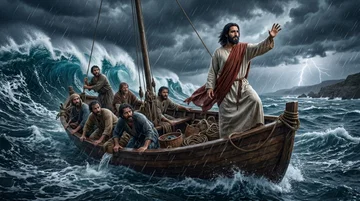
Jesus calms the storm and questions the disciples’ fear and little faith.
- Luke 8:22-25
Now it came to pass on a certain day, that he went into a ship with his disciples: and he said unto them, Let us go over unto the other side of the lake. And they launched forth.
Jesus calms the storm and questions the disciples’ fear and lack of faith.
- Psalms 107:29-30
He maketh the storm a calm, so that the waves thereof are still.
God stills the storm and brings those in danger safely to harbor.
- Matthew 14:25-31
And in the fourth watch of the night Jesus went unto them, walking on the sea.
Jesus walks on the water and rescues the fearful disciples.
- John 6:19-20
So when they had rowed about five and twenty or thirty furlongs, they see Jesus walking on the sea, and drawing nigh unto the ship: and they were afraid.
Jesus comes to the disciples walking on the sea and tells them not to fear.
- Mark 6:48-51
And he saw them toiling in rowing; for the wind was contrary unto them: and about the fourth watch of the night he cometh unto them, walking upon the sea, and would have passed by them.
Jesus comes to the disciples walking on the water and calms their fear.
- John 14:27
Peace I leave with you, my peace I give unto you: not as the world giveth, give I unto you. Let not your heart be troubled, neither let it be afraid.
Christ gives peace that steadies troubled and fearful hearts.
- Luke 8:24
And they came to him, and awoke him, saying, Master, master, we perish. Then he arose, and rebuked the wind and the raging of the water: and they ceased, and there was a calm.
Jesus calms the storm after the disciples cry to him in fear.
- Matthew 14:29
And he said, Come. And when Peter was come down out of the ship, he walked on the water, to go to Jesus.
Peter walks toward Jesus on his word, contrasting faith with fear.
- Matthew 8:25
And his disciples came to him, and awoke him, saying, Lord, save us: we perish.
records the despairing cry to Jesus
- Mark 11:22
And Jesus answering saith unto them, Have faith in God.
both show faith means confidence in God
- Luke 8:50
But when Jesus heard it, he answered him, saying, Fear not: believe only, and she shall be made whole.
both call the fearful to believe only
- 2 Corinthians 5:7
( For we walk by faith, not by sight:)
to be known by faith not sight
- Matthew 14:30
But when he saw the wind boisterous, he was afraid; and beginning to sink, he cried, saying, Lord, save me.
Both recount fear in the storm and a cry to Jesus for help.
- Luke 17:5
And the apostles said unto the Lord, Increase our faith.
both show faith means confidence in God
- Matthew 8:10
When Jesus heard it, he marvelled, and said to them that followed, Verily I say unto you, I have not found so great faith, no, not in Israel.
both cited to define faith as belief
- Isaiah 26:3
Thou wilt keep him in perfect peace, whose mind is stayed on thee: because he trusteth in thee.
Trust in God brings peace amid danger.
- Matthew 6:30
Wherefore, if God so clothe the grass of the field, which to day is, and to morrow is cast into the oven, shall he not much more clothe you, O ye of little faith?
Both texts challenge fear and little faith by calling for trust in God’s care.
- Matthew 9:22
But Jesus turned him about, and when he saw her, he said, Daughter, be of good comfort; thy faith hath made thee whole. And the woman was made whole from that hour.
both cited to define faith as belief
- Luke 8:48
And he said unto her, Daughter, be of good comfort: thy faith hath made thee whole; go in peace.
both incidents illustrate encouragement of faith
Commentary
Each commentary is drawn from primary sources: the writings of Ellen G. White and Adventist pioneers and periodicals. Each commentary is separate. Its own words are not a quotation; follow the references to read the source passages.
Ellen G. White
36 sources
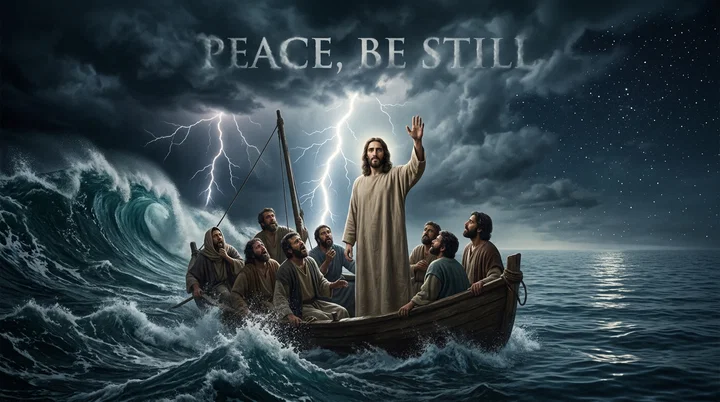
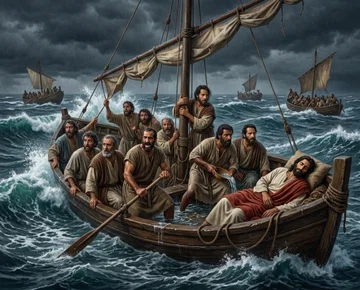
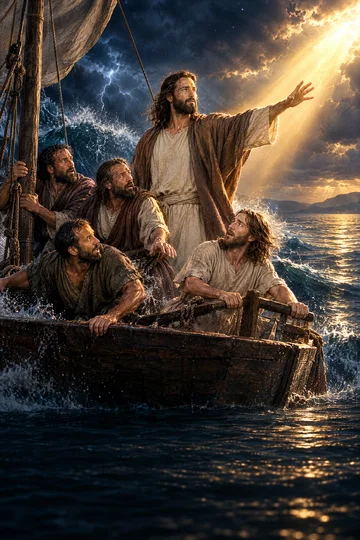
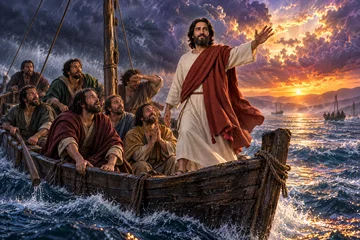
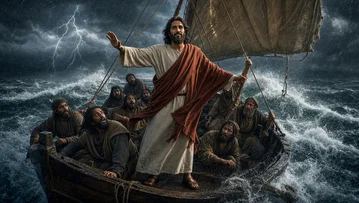
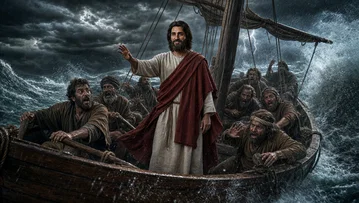
On a night crossing to the Gadarenes a sudden violent storm filled the boat with wave after wave until even experienced fishermen despaired of saving themselves, though Jesus was with them calm and unafraid.ST Jul 14, 18812SP 310.13RED 82.26RED 64.2Ms 130, 1903, par. 15–17 After He rose and stopped the wind and sea by His word, leaving the waves at rest, He asked why they were so fearful and without faith.3RED 85.23RED 83.3ST Jul 25, 18787MR 280.4–281.23SP 28.1–30.1 His question exposes their fear as unbelief, for they forgot His presence and power and struggled in their own skill instead of calling on Him in faith as soon as danger appeared.DA 333.1–2ST Jan 18, 1877ST Jan 18, 1877ST Jan 18, 1877ST Oct 24, 1900 The same authority that commands wind and water is joined to power over demons, disease, and death, proving Him the Son of God and the Savior of His followers in peril.ST Jul 25, 18783RED 91.1–23RED 112.2DA 338.4–339.23SP 28.1–30.1 Those in trial are therefore to remember He is with them and call on Him at once, for living faith in Him replaces fear with peace and rest even amid danger on land or sea.2SP 310.13RED 85.23RED 83.1–2DA 336.1Ms 130, 1903, par. 19
Storm and Rebuke Setting
The verse belongs to a sudden, violent storm on the Sea of Galilee that terrified even experienced fishermen who feared their boat was sinking.3RED 82.26RED 64.2Ms 130, 1903, par. 15–17 Their skill failed in the tempest, the boat became unmanageable and had to drive before the gale toward destruction.6RED 64.2Ms 130, 1903, par. 15–17 Wave after wave beat in until the deck flooded and the boat was full and leaking, and those aboard despaired of saving themselves even though Jesus was on board.ST Jul 14, 1881Ms 130, 1903, par. 15–17
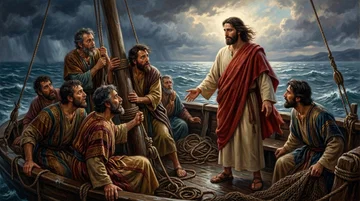
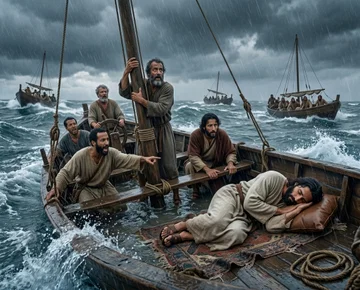
Jesus was in the boat with them, calm and showing no alarm, though they forgot His presence and power and His command to cross to the other side.ST Jul 14, 18812SP 307.1–308.1Ms 130, 1903, par. 15–17 They stayed busy trying to save themselves by skill and effort until hope was lost, forgetting He was their only hope and that His calm presence meant He had not deserted them.ST Jul 14, 18812SP 307.1–308.1 He rose in divine majesty as a commander equal with the Father, and with His voice stopped the wind and sea so the elements obeyed.ST Jul 14, 18813RED 85.22SP 307.1–308.1Ms 130, 1903, par. 15–17 The angry sea was calmed, the waves left at rest, the danger over and all fear ended, proving Him master of the situation and Savior of His followers in peril who hears their cry and will not forsake those who trust Him.ST Jul 14, 18812SP 310.13RED 85.22SP 316.2Ms 130, 1903, par. 15–17
His question about being so fearful and having no faith was spoken after He stilled the tempest, exposing lack of faith amid danger even though He was with them and had power to end the storm.ST Jul 14, 18813RED 83.3 It corrected fear and lack of faith that had not yet learned to rely on Him despite reason to trust Him.ST Jul 14, 1881 It left the disciples in hushed reverential awe at His authority over wind and sea, an awe shared by those in the accompanying boats.ST Jul 14, 1881 Angels guarded the small boat amid the display of God's power over wind and water, and the disciples' helplessness made the majesty of God's works vivid.7MR 280.4–281.2
The crossing was a night voyage to the other side, to the Gadarenes and Gergesa, with others accompanying Him in boats across the lake.3RED 91.1–23RED 86.1–88.2DA 338.4–339.22SP 311.1–312.2 By the time they landed the night on the water was over.2SP 311.1–312.2 What happened to the wind and sea was told to the people of that coast by those who had crossed with Him, yet the people of Gergesa responded with fear for earthly interests and further loss after the destruction of the swine, and sent Him away despite seeing evidence of His power and mercy.3RED 91.1–2DA 338.4–339.2
The same divine power was shown when He trod the foaming, white-capped billows and walked upon the heaving sea and silenced its roaring by a word.ST Feb 4, 18893RED 112.2Lt 1, 1880, par. 5–6 That exercise of divine power was as truly His fulfilling of His mission as the Pattern Man as toiling as a carpenter hiding His divine mission, raising the dead, and dying as man's sacrifice to lift the race to new life.Lt 1, 1880, par. 5–6 That authority over the storm explains His calm when confronted by the demon-possessed men, showing He had no cause to flee while the disciples fled in terror, and revealing authority over Satan whom He had met before and conquered.ST Feb 4, 18893RED 86.1–88.2
Fear Reveals Lack of Faith
The question exposes that fear in the storm was unbelief and want of trust in Jesus in the very danger they faced.DA 333.1–2ST Jan 18, 1877 Though He was with them and had Himself commanded them to cross the sea, they had not yet learned to rely on Him.ST Jan 18, 1877 They fixed their minds on saving themselves and forgot Him, and only when they remembered Him did they see that their sole hope lay in His power.ST Jan 18, 1877 His question therefore rebukes their fear and calls them to trust Him in danger.DA 333.1–2ST Jan 18, 1877
That fear grew because they forgot He was with them and fell back on their own skill and efforts to save themselves.ST Jan 18, 1877DA 334.2–5 Dependence on human strength leaves God out of sight, while Jesus who commands the winds and waves and is obeyed is the one to trust for help.ST Oct 24, 1900 They despaired and relied only on their own efforts instead of trusting Him who was present with them.ST Jan 18, 1877 Only when they saw that they could not save themselves did they remember that He was their only hope.DA 334.2–5
They ought to have called upon Him in faith as soon as danger appeared, trusting that He could help them.ST Jan 18, 18773RED 85.12SP 309.22SP 308.2–309.1 Instead they forgot He was with them and struggled alone in self-confidence and self-reliance until wearied, discouraged, and made to feel their need.ST Jan 18, 18773RED 85.12SP 309.2 His question reproves that fear, unbelief, distrust, self-confidence, and delay in seeking Him.ST Jan 18, 18773RED 85.12SP 309.22SP 308.2–309.1 Yet though He reproves unbelief and self-confidence for not seeking Him sooner, He still hears the earnest, humble cry and helps, accepts humble petitions, answers need without failing, and gives the help He knows is best.ST Jan 18, 18773RED 85.12SP 309.2
Their fear stands in contrast to His peaceful trust in God's love and care, for faith rests in God even amid danger.DA 334.6–335.2 His presence and power can give peace and rest even amid danger, so that faith in Him replaces fear and quiets fear even when danger seems overwhelming.DA 331.32SP 308.2–309.1 Fear in a crisis reveals weak faith, as when the work of God seems to pitch and toss like a boat in the waves.Lt 20, 1896, par. 5–7 That faith is to be strengthened by looking to Jesus and bringing Him every difficulty, with calm, courage, and trust.Lt 20, 1896, par. 5–7
Christ's Authority and Our Trust
The sea obeyed His command to be still, displaying authority over the very elements by word and even by the lifting of a finger.ST Jul 25, 18783RED 91.1–23SP 28.1–30.1 That calming of the troubled sea was a mighty work giving evidence that He is the Son of God and the Messiah.ST Jul 25, 18783SP 28.1–30.1
That same authority over wind and water belongs with authority over Satan, demons, disease, the diseased and imbecile healed by a word or the touch of His hand, death itself, and the roaring sea silenced and walked upon.3RED 91.1–23RED 112.2 The stilling of the tempest on the night voyage to the Gadarenes and Gergesa was reported to the people of that coast by those who had crossed with Him, yet they feared further loss of property after the swine were destroyed and sent Him away rather than count the advantage of having such a One among them.3RED 91.1–2DA 338.4–339.2 Priests and rulers likewise rejected the evidence, for prejudice and hatred closed hearts that even such displays of power and mercy could not overcome.ST Jul 25, 18783RED 112.2 Remembering the miracle strengthened the disciples' confidence that He was the Son of God, yet they still feared and doubted at His trial and expected Him to use His power to escape.DA 338.4–339.2EW 139.3
In peril those who trust Him may remember He is aboard as their only hope and call to Him at once, instead of forgetting His presence and power, relying on their own skill and strength, and struggling until desperate, wearied, and thinking themselves lost.2SP 310.13RED 85.23RED 83.1–2 His question exposes that fear, unbelief, self-confidence, and delay in seeking Him at the very beginning of trial.3RED 83.1–2Ms 130, 1903, par. 193RED 85.3 Yet He who reproves unbelief hears the earnest, humble cry, accepts the humble petition, will not forsake those who trust Him, and gives the help they need in the way He knows is best.2SP 310.13RED 85.2DA 336.1Ms 130, 1903, par. 193RED 85.3
Living faith in the Redeemer removes the need for fear and brings peace and rest amid temptation and danger, smoothing the sea of life.DA 336.1Ms 130, 1903, par. 193RED 85.3 There is no need for fear on land or on sea, sleeping or waking, if the Saviour is in the heart.3RED 85.3 He delivers from danger in the way He knows to be best.DA 336.1Ms 130, 1903, par. 193RED 85.3
Sources
Pioneers and periodicals
70 sources
On the crossing after a day of teaching the crowds in parables, Jesus slept weary in the small boat when a sudden fierce wind raised dangerous waves that threatened to sink it.ST Jul 19, 1905ST Nov 15, 1910ST May 18, 1904 When the disciples had exhausted their own skill and cried out in terror for rescue, he rose and by his word stilled wind and sea, then turned to them in gentle reproof for being so fearful and without faith.ST Jul 14, 1881ST May 17, 1899ST Their panic showed weak and shaken trust, forgetting that he was with them, that he had bidden them cross to the other side, and that he cared and was able to save even while he seemed asleep.ST Jan 18, 1877ST Jan 18, 1877RH Jan 21, 1858ST Nov 22, 1910 His presence in the vessel does not keep tempests from arising, yet he who made the sea remains its Master, watching over his own with power to command obedience from wind and water.ST Jan 23, 1893ST Mar 4, 1903ST Jul 25, 1911ST Aug 7, 1901ST Jun 3, 1880 So in every storm of trial, temptation, grief, and troubled soul, living faith leaves self-effort and self-confidence, calls upon him at once in prayer, and rests in his nearness and care to bring peace within as surely as he calmed the waves.ST Mar 16, 1904ST Mar 4, 1903ST Nov 15, 1910
Storm Setting and Wording
The crossing belongs to the Sea of Galilee after a busy day of teaching the crowds, including the parables found in Matthew 13.ST Jul 19, 1905ST Nov 15, 1910 Jesus was weary from long toil in teaching the multitude and was asleep in a small fisherman's boat as they crossed.ST Jul 19, 1905ST Nov 15, 1910ST May 18, 1904 A fierce, sudden storm arose with wind and roughened waves, the kind the lake still brings even when a crossing begins with no wind, making the passage tedious and frightening.ST Jul 19, 1905ST Jul 14, 1898RH May 14, 1872 That tempest sweeping over the waters is the setting for the question about fear and lack of faith, remembered as the voice of the Lord that stilled the storm.ST Jul 19, 1905ST Jul 14, 1898
The disciples grew terrified as the waves threatened the boat, struggled by skill and effort until the vessel was leaking and sinking, and then gave way to despair.ST Jul 14, 1881ST They woke Jesus pleading to be saved, reproaching Him as not caring while all hope seemed gone.ST Jul 14, 1881ST He rose in divine majesty and commanded the wind and waves to be still with the word Peace, be still, by sovereign power.ST Jul 14, 1881RH Jul 22, 1873 The tempest ceased, the sea was left at rest, the danger was over, all fear was ended, and calm returned as the raging waves grew still.ST Jul 14, 1881ST Jul 7, 1898 The disciples and those in the accompanying boats were left in hushed reverential awe at His authority over wind and sea, while He rested peacefully in the tossing boat and imparted peace to their hearts.ST Jul 14, 1881ST Feb 22, 1905
Mark's account of the stilling of the tempest is one of the most wonderful miracles of Christ's earth-life and is somewhat more complete than the parallel accounts.ST It records a real miracle rather than an invented or poetic story.RH May 10, 1906 In it the disciples witnessed His power over the storm and the power of His word.ST Jun 3, 1908
The question about being fearful and without faith was spoken after the wind and sea were calmed, as Jesus turned to the startled disciples watching the waves subside.ST May 17, 1899RH Feb 16, 1860 It confronted their fear and failure to trust Him even though He was with them and had power to calm the storm.ST Nov 15, 1910 It was a righteous chiding spoken in mournful tones for fearing wreck and death as if forsaken by heaven, and at the same time a gentle reproof of weak faith calling them to rest in nearness and union with Him.RH Feb 16, 1860ST Nov 15, 1910 Such faith trusts that even when danger and darkness surround His followers He is with them, cares for them, watches over them, and has power to save.ST Nov 15, 1910
Faith here does not mean the word of God or the Scriptures, since putting word of God in its place would make the question absurd.RH Oct 22, 1857 It means belief and confidence exercised in God's power and promises, a faith that believeth all things and hopeth all things and holds as a sure and steadfast anchor of the soul.ST Mar 16, 1904RH Oct 22, 1857 All through His teaching Jesus was working to put such faith in His word into His disciples, wanting to be known by faith and not by sight.ST Apr 10, 1901 That same search for faith explains His dealing with Mary at the tomb, when He asked why she wept and whom she sought instead of at once telling her who He was, looking for a spark of faith; had she expected in faith to see Him alive she would have recognized Him at a glance, but without that faith she did not know Him.ST Apr 10, 1901 The stilling of the tempest shows Jesus' own faith had power over the storm, and His followers would have faith like His.ST May 5, 1914
Fear Rebuked as Unbelief
Jesus confronted his disciples after he calmed the wind and sea, rebuking them for being afraid in the storm and asking why they had no faith.ST Jan 26, 1915RH Oct 30, 1860ST Jan 23, 1893ST May 17, 1899RH Jul 1, 1862 His question challenged their fear and their failure to trust him, teaching that trust in him should keep them from being overwhelmed by danger.ST Jan 26, 1915ST Jan 23, 1893ST May 17, 1899ST Mar 4, 1903 They had no reason to fear, for the sea belonged to him and his word had stilled the waves, so his authority over wind and sea showed they could trust him even in danger rather than giving way to fear.ST Jan 26, 1915RH Oct 30, 1860ST Jan 23, 1893 The one who created the sea could speak peace to its troubled waters, and that same word has power to bring peace to the troubled soul that calls upon him, so fear in danger gives way to trust in Jesus whose power can calm the storm and whose care remains with those who face trouble.ST Mar 4, 1903RH Jul 1, 1862
Their fear of wreck and death, as though God had forsaken them, revealed faith that was absent, weak, or quickly shaken.ST Jan 18, 1877RH Jan 21, 1858ST Nov 22, 1910 Despite the miracles they had seen, they panicked in the threatening storm instead of holding the trust they should have had in him.ST Jan 18, 1877RH Jan 21, 1858 Their panic made them forget that he was with them and able to save them even while he slept.ST Jan 18, 1877ST Nov 22, 1910 His power over the tempest gave them reason to trust him, and their fear showed they had not yet learned to rely on him.ST Nov 22, 1910
Their lack of faith meant forgetting that Jesus was in the boat with them, forgetting his command to cross to the other side, and forgetting his care.ST Jan 18, 1877ST Jan 18, 1877 They stayed busy trying to save themselves by their own efforts, skill, and self-confidence until they gave way to despair, when in their danger he was their only hope.ST Jan 18, 1877ST Jan 18, 1877 Christ was with them, so they had no reason to think he could perish or leave them to perish, for human skill cannot secure the way but Christ has power over wind and waves.ST Oct 6, 1887 Dependence on human strength leaves God out of sight, whereas the one who commands the winds and waves and is obeyed is the one to trust for help.ST Oct 24, 1900 The same applies to trials and temptations: those who trust in the Saviour need not face them alone, for living faith rests in his care and help and trusts that Christ remains with his people through life's storms.ST Oct 6, 1887
They should have called on him as soon as danger appeared instead of relying on their own efforts and seeking his help only when distress came.ST Jan 18, 1877RH Apr 15, 1909 He reproved their unbelief and self-confidence for not seeking him sooner, yet he heard their earnest cry and gave them the help they needed in the way he knew was best.ST Jan 18, 1877 He did not withhold the help they needed, but accepted their humble petitions and gave deliverance with peace in the way he knows is best.ST Jan 18, 1877 Faith should therefore lead people to rely on him in a crisis and turn to the Saviour rather than battling alone, remembering in trials that Jesus is with them and calling on him in faith.ST Jan 18, 1877RH Apr 15, 1909
Christ's Power and Presence
The sea belonged to him, and for that reason there was no cause for fear when the waves rose.ST Jan 23, 1893ST Apr 1, 1897 The one who created the sea could speak peace to its troubled waters, and his word stilled the waves and brought peace to the troubled soul that calls upon him.ST Mar 4, 1903ST Apr 1, 1897 That command hushed the angry roar of the water and revealed his authority, giving reason to trust him rather than perish in fear.ST Apr 1, 1897ST May 30, 1878 The obedience of the sea displayed his authority as Son of God, even though priests and rulers rejected that evidence.ST Jul 25, 1878 His power over the sea at Galilee gives reason to go forward by faith when danger blocks the way, as Israel did at the sea, for the Fourth Commandment points to him as Maker and Master of the sea as well as heaven and earth.RH Jan 14, 1902 Guilty people seeking release from sin and fear find the same lesson, that faith in Christ brings peace.ST Apr 1, 1897
The presence of Christ in the ship does not prevent tempests and storms from arising.ST Jul 25, 1911 He may seem asleep while the waves threaten to engulf the boat and all hope seems gone, yet he is with his followers, and the vessel need not be lost while he is aboard.ST Aug 7, 1901RH Jul 2, 1901ST Jan 29, 1880 A storm and circumstances going contrary do not mean the Lord is absent or will not help, for he cares for his disciples, watches over them, and has power to command the storm to be still.ST Jun 3, 1880RH Jul 2, 1901ST Jan 29, 1880 The same care reaches into danger in everyday life, so that Jesus can care for people in a thunderstorm as he cared for the disciples in the boat.ST Jun 3, 1880 The ship is safe despite all outward appearances of peril if Jesus is aboard, as with the old ship Zion, and those aboard should cry earnestly in faith while the Master rebukes the wind, so that no storm shall overwhelm as long as he is with them.ST Aug 7, 1901
The winds and waters are obedient servants at his will and word, daughters of Jehovah and angels of God who come to attention and grow calm at his command of peace, be still, until the waters mirror the blue sky.ST May 18, 1904 The storm displays God's power and majesty, and his power to save is no less than his power to bring devastation when necessary.RH Jul 2, 1901 The calm sea shows how the waters appeared after he commanded the raging waves to be still.ST Jul 7, 1898
His stilling of the tempest and his calm when confronted by men possessed by demons show that he had no cause to flee.ST Feb 4, 1889
Trust in Life's Storms
Those who trust in the Saviour need not meet trial, temptation and tempest alone, for living faith turns to him when life's storms arise instead of battling alone, resting in his nearness, union, presence, power and care.ST Nov 15, 1910ST Mar 20, 1907 That faith cries out earnestly and seeks his aid in prayer as speaking to the Son of man as man speaks to man, with confidence in God's word unshaken rather than giving way to fear.ST Nov 15, 1910ST Mar 20, 1907RH Dec 10, 1901RH Sep 22, 1868 He meets his followers not only in calm and joyful times but also amid storms and deep distress, and when they are helpless and pray he brings peace to their hearts.RH Dec 10, 1901RH Sep 22, 1868
He has equal ability to calm the raging waves of the sea and to bring peaceful calm to the troubled soul when the enemy tries to convince a person that he is without hope.ST Mar 16, 1904ST Mar 4, 1903ST Apr 1, 1897 His word that spoke peace to the troubled waters of the sea he created has power to bring peace to the troubled soul that calls upon him, calming the storms of the soul, the tempest within the heart, and the storms of sin breaking about his people.ST Mar 4, 1903ST Apr 17, 1901ST Jan 14, 1913ST Dec 8, 1881 So guilty people seeking release from sin and fear find peace through faith in Christ, and those who trust him lie safe and secure with a balm for every ill when the heart itself, like the stormy sea and raging wave, obeys his word.ST Apr 1, 1897ST Apr 17, 1901
His power to calm the storm steadies the troubled heart amid danger and distress, quiets fear even amid severe turmoil, sustains faith amid suffering, calms frightened hearts, and gives comfort and rest even in the face of death.ST Jul 24, 1907ST Jun 26, 1893ST Apr 15, 1875ST Feb 22, 1905 It comforts those distressed by grief, turmoil, pain, loneliness, and the sense of being adrift on a troubled sea with cold pitiless waves breaking over them, calling on him to be present and give that same stillness within.RH Jul 22, 1873RH Jun 3, 1873ST Jun 26, 1893ST Apr 15, 1875ST Dec 8, 1881 That peace comes to the trembling soul on life's dark and troubled ocean who bows before his throne and submits humbly to God's will, and trouble can thus give rise to deeper peace and joy that may be shared with others.RH Jul 22, 1873RH Jun 3, 1873ST Jun 26, 1893
Faith is tested in trouble and not only in calm and favorable times, and shrinking from gloom and gale marks a sordid heart while trust endures even when danger makes it seem all hope is lost.RH Jan 21, 1858RH Jan 1, 1861 Such trust endures when deliverance by human help looks unlikely and when his leading is not understood, resting on Christ's protecting care through danger and knowing that tempests do not last forever but that God guides his creatures safely to rest.ST Mar 22, 1899ST Jan 17, 1911ST Jan 9, 1912 It holds fast to God's promises rather than to worldly security, seeking God's kingdom first and entrusting food, clothing, life and needs to him, willing even to give up worldly treasures to follow Jesus in hope of heavenly treasure.RH Jan 21, 1858RH Jan 1, 1861 The one who stilled that storm remains able to still life's storms, so faith in him gives courage through trial and his presence is the only hope of salvation in trials pictured as a storm-tossed sea.ST Mar 22, 1899ST Oct 14, 1913ST Jan 9, 1912
Amid overwhelming storms of passion, hatred, lust, lawlessness and crime in the soul, in the world, or in the church, people should not conclude that all is lost but should trust God's power to deliver.ST Jul 19, 1905 Those who make Jesus their refuge and Pilot are safe when a greater storm of judgment sweeps over the earth, and he guides missionary sailors across the sea as he guided the boat on Galilee.ST Jun 18, 1894ST Jul 1, 1886 Those who have known and loved the stiller of the storm will not fear to meet the same Jesus when he soon appears in the opening heavens.RH Mar 21, 1912
His power need not make his children afraid, for God is their Father and they may come to him in prayer without fear.ST Jan 23, 1893RH Jul 30, 1914 No power can harm the person in whose heart Christ dwells by faith, for the sea belonged to him and his word stilled the waves.ST Jan 23, 1893ST Oct 6, 1887 The old ship Zion is safe despite outward peril as long as he is aboard, since human skill cannot secure the way but Christ has power over wind and waves.ST Jun 26, 1879ST Oct 6, 1887 His abiding presence gives courage and rest through danger and hardship, calming doubts and fears in times of temptation and bringing peace.ST Jun 26, 1879ST Apr 3, 1928
Wider Scriptural Connections
All through His teaching Jesus was working to put faith in His word into His disciples, wanting to be known by faith and not by sight.ST Apr 10, 1901 That same search for faith explains His dealing with Mary at the tomb, when He asked why she wept and whom she sought instead of at once telling her who He was, because He was looking for a spark of faith.ST Apr 10, 1901 Had Mary been expecting in faith to see Him alive she would have recognized Him at a glance, but without that faith she did not know Him.ST Apr 10, 1901
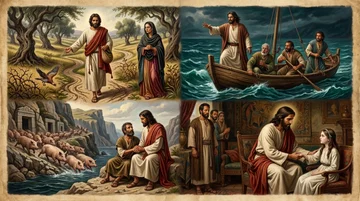
When the sea obeyed Jesus at Galilee the disciples were challenged to trust Him rather than give way to fear, and troubled souls should have faith instead of fear.ST Feb 6, 1896RH Jan 14, 1902 God's power over the sea gives His people reason to go forward by faith even when danger blocks their way, as Israel did at the sea, for He is Maker and Master of the sea as well as heaven and earth.RH Jan 14, 1902 The stilling of the storm teaches a powerful lesson of faith that encourages faith, along with His other works in preaching, the parable of the sower, His teaching about His true brethren, the healing of the demoniac, and the healings of the afflicted woman and Jairus's daughter.ST Feb 6, 1896
The stilling of the stormy sea stands among His works.RH Aug 7, 1913 Those works of Christ display His power over nature.RH Aug 7, 1913 His followers are given a greater work, namely the transformation of human hearts by grace.RH Aug 7, 1913
Sources