Translations
American King James Version, King James Version, KJV Cambridge Paragraph Bible
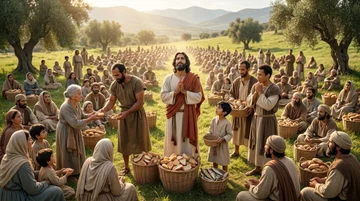
And they that did eat of the loaves were about five thousand men.
And they that ate of the loaves, were about five thousand men.
Revised Version, American Standard Version
And they that ate the loaves were five thousand men.
and those eating of the loaves were about five thousand men.
And those that ate of the loaves were five thousand men.
And they who did eat the loaves were, five thousand men.
Berean Standard Bible, Majority Standard Bible
And there were five thousand men who had eaten the loaves.
Those who ate the loaves were five thousand men.
And those who took of the bread were five thousand men.
And they that had eaten, were about fiue thousand men.
Douay-Rheims (Challoner revision)
And they that did eat, were five thousand men.
Pictures
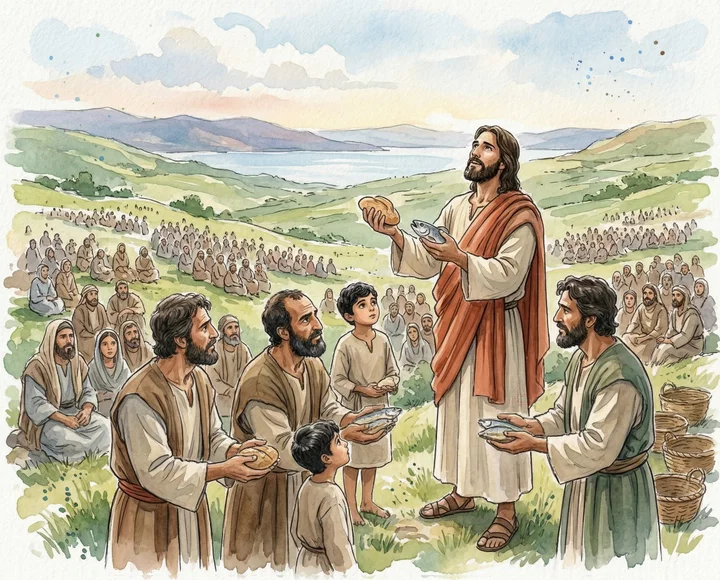
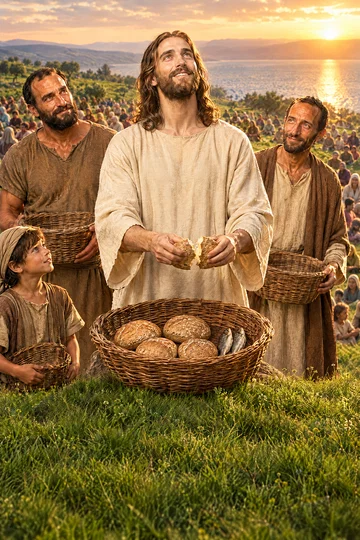
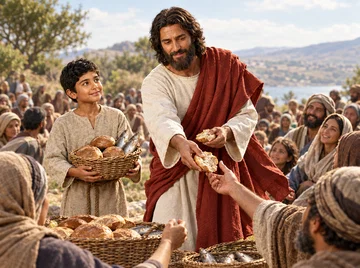
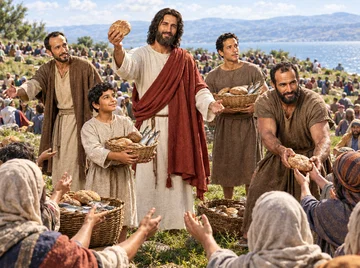
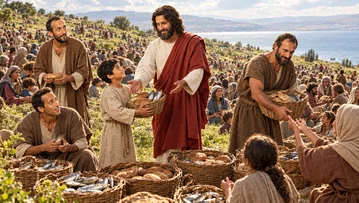
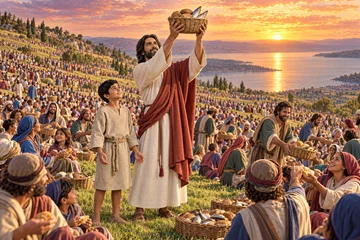
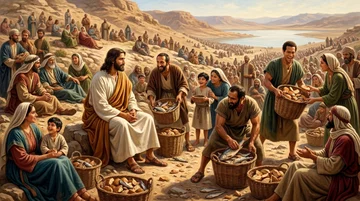
Cross-references
- John 6:10-13
And Jesus said, Make the men sit down. Now there was much grass in the place. So the men sat down, in number about five thousand.
John recounts the same feeding miracle, including the five thousand men.
- Matthew 14:21
And they that had eaten were about five thousand men, beside women and children.
Both texts give the number of men fed by Jesus.
- Luke 9:14-17
For they were about five thousand men. And he said to his disciples, Make them sit down by fifties in a company.
Parallel account gives the crowd’s size, the feeding, and the abundance of leftovers.
- John 6:35
And Jesus said unto them, I am the bread of life: he that cometh to me shall never hunger; and he that believeth on me shall never thirst.
miracle reveals Jesus as bread
- John 6:9
There is a lad here, which hath five barley loaves, and two small fishes: but what are they among so many?
A lad has five barley loaves and two fish for the five thousand.
- 2 Kings 4:42-44
And there came a man from Baal-shalisha, and brought the man of God bread of the firstfruits, twenty loaves of barley, and full ears of corn in the husk thereof. And he said, Give unto the people, that they may eat.
Both accounts show God multiplying limited food to feed a crowd.
- Mark 6:37
He answered and said unto them, Give ye them to eat. And they say unto him, Shall we go and buy two hundred pennyworth of bread, and give them to eat?
Jesus commands the disciples to feed the crowd.
- Mark 8:9
And they that had eaten were about four thousand: and he sent them away.
Both recount Christ feeding a multitude, with about four thousand here and five thousand there.
- Deuteronomy 8:3
And he humbled thee, and suffered thee to hunger, and fed thee with manna, which thou knewest not, neither did thy fathers know; that he might make thee know that man doth not live by bread only, but by every word that proceedeth out of the mouth of the LORD doth man live.
Wilderness manna taught that life depends on God’s provision.
- Luke 9:14
For they were about five thousand men. And he said to his disciples, Make them sit down by fifties in a company.
gives same number seated in fifties
- Mark 6:38
He saith unto them, How many loaves have ye? go and see. And when they knew, they say, Five, and two fishes.
Five loaves and two fishes supply the feeding of the five thousand.
- Mark 8:19-20
When I brake the five loaves among five thousand, how many baskets full of fragments took ye up? They say unto him, Twelve.
Jesus recalls the feeding of the five thousand and the four thousand.
- Matthew 16:9-10
Do ye not yet understand, neither remember the five loaves of the five thousand, and how many baskets ye took up?
Jesus recalls the feeding of the five thousand while correcting the disciples’ worry about bread.
- John 6:14
Then those men, when they had seen the miracle that Jesus did, said, This is of a truth that prophet that should come into the world.
The crowd recognizes Jesus as the promised prophet after the feeding sign.
- Mark 6:52
For they considered not the miracle of the loaves: for their heart was hardened.
Failure to consider the loaves caused amazement and doubt.
- Exodus 16:14-15
And when the dew that lay was gone up, behold, upon the face of the wilderness there lay a small round thing, as small as the hoar frost on the ground.
The passage contrasts contentment with dissatisfaction over God’s provision.
- Mark 6:34
And Jesus, when he came out, saw much people, and was moved with compassion toward them, because they were as sheep not having a shepherd: and he began to teach them many things.
gives the pity that moved the feeding
Commentary
Each commentary is drawn from primary sources: the writings of Ellen G. White and Adventist pioneers and periodicals. Each commentary is separate. Its own words are not a quotation; follow the references to read the source passages.
Ellen G. White
50 sources
About five thousand men ate of the loaves, besides women and children who were present, making the whole company fed more than ten thousand people.ST May 7, 1912DA 364.1DA 364.26RED 64.2 They had followed Him into a retired grassy wilderness beside Galilee, had listened long until they were hungry and faint with no food near at hand, and were seated in orderly companies of fifties and hundreds to rest and witness what was done.ST May 7, 1912ST3RED 55.1DA 368.2–3ST May 10, 1883 From only five barley loaves and two small fishes, which Jesus blessed and broke and gave through His disciples to distribute, the food increased as it was served until all ate and were satisfied, with twelve baskets of fragments gathered afterward.ST May 7, 1912Ms 197, 1907, par. 1–4ST May 10, 1883ST May 20, 18863RED 55.2 The work was a mighty miracle by God's creative power, proving Jesus to be the Messiah, the Son of God in human nature meeting human need in dependence on His Father.STED 107.3DA 368.2–3ST Mar 18, 1913ST Aug 19, 1897 It calls for trust in God in strait places, grateful receiving and free sharing of His gifts so they increase in giving, and careful thrift that lets nothing be lost.Ms 197, 1907, par. 1–4STB 772.1–2STMW8 30.2–31.2DA 368.2–3ST Aug 19, 1897
Number and Crowd
About five thousand men ate of the loaves.ST May 7, 1912DA 364.1ST May 10, 1883ST Aug 12, 1897ST May 20, 1886 The count of about five thousand is men only.ST May 7, 1912DA 364.1DA 364.2ST Aug 12, 1897ST May 20, 1886 Women and children were present in addition to that number, so the whole multitude fed was greater than the men counted.ST May 7, 1912DA 364.1ST Aug 12, 1897ST May 20, 18862SP 261.2–262.2 With them added, the assembly is more than ten thousand people gathered on the shore of Galilee.6RED 64.2
Setting and Circumstances
The crowd that came to number about five thousand men grew as those who missed Jesus asked where He was, saw the direction He and His disciples had taken, and followed after Him, many traveling by land and others crossing by boat, while bands of pilgrims from far and near on their way up to Jerusalem joined them because the Passover was at hand.DA 364.1
The feeding took place in the wilderness in a retired grassy place away from the cities, beside the sea on the shore of Galilee, where Jesus led the people aside and had a place prepared for them to be seated.STDA 368.2–3ST Aug 19, 1897Ms 186, 1907, par. 8–9Ms 64, 1910, par. 10–11 It was a grassy plot where about five thousand men besides women and children could sit down together, men and women together, after following Him on foot as He traveled teaching the Word.Ms 186, 1907, par. 8–9Ms 64, 1910, par. 10–11DA 369.1
The people had come without invitation or command and were far from home, having listened long to His instruction until they were hungry and faint.DA 368.2–3ST Aug 19, 1897 They had gone without food all day, were weary and fainting with their food used up and no means to buy food, since food was not near at hand.ST Mar 1, 1877ST May 10, 1883ST Aug 19, 1897Ms 186, 1907, par. 8–9Ms 182, 1907, par. 21–23 Some were already fainting from weariness and hunger, yet they continued to follow and press for help.Ms 186, 1907, par. 8–9Ms 182, 1907, par. 21–23
On this occasion they are also described as having been with Him three days with their food used up, while on other occasions the crowds that gathered to Him were even larger.Ms 186, 1907, par. 8–9Ms 64, 1910, par. 10–11
Jesus had them sit down on the grass and on the ground in companies of fifty and one hundred, marshaled through His disciples to preserve order so that all might witness the miracle, and so they could rest.ST May 7, 19123RED 55.1Ms 186, 1907, par. 8–9Ms 180, 1907, par. 27–28Ms 182, 1907, par. 21–23 The seating was fully accomplished in orderly companies, and the meal set before them was simple food without elaborate arrangements or a variety of dishes.Ms 197, 1907, par. 1–43RED 55.1
Miracle of Multiplication
The provision at hand for about five thousand men was only five barley loaves and two small fishes, a very meager supply for so many.ST May 20, 18863RED 55.22SP 261.2–262.2STST Mar 1, 1877 Women and children were present besides the men counted, so the whole assembly fed was greater still.ST May 20, 18862SP 261.2–262.2STST Mar 1, 1877
When the disciples said there was nothing to feed the multitude, Jesus asked what food was at hand and had it brought forward.Ms 197, 1907, par. 1–4Ms 186, 1907, par. 8–9Ms 64, 1910, par. 10–11Ms 123, 1909, par. 32–34 He commanded the people to sit down, and they were seated on the grass in companies of fifty and one hundred through His disciples to preserve order so that all might witness the miracle.3RED 55.1Ms 180, 1907, par. 27–28Ms 182, 1907, par. 21–23 A hymn was sung, and He gave thanks and asked the blessing on the food.Ms 197, 1907, par. 1–43RED 55.1Ms 182, 1907, par. 21–23 He broke the bread and fishes into small pieces and placed them in the hands of His disciples to distribute to the multitude in quantities sufficient to satisfy appetite.Ms 197, 1907, par. 1–43RED 55.1Ms 186, 1907, par. 8–9Ms 182, 1907, par. 21–23Ms 64, 1910, par. 10–11
The food did not diminish as it was distributed but increased as it was served and imparted.Ms 197, 1907, par. 1–43RED 55.2Ms 182, 1907, par. 21–23 Every time the distributors gave out all they had and returned for more there was a fresh supply that kept increasing.Ms 197, 1907, par. 1–4Ms 182, 1907, par. 21–23Ms 64, 1910, par. 10–11 All ate and were filled and satisfied, with just as much remaining.ST May 7, 1912ST May 10, 1883ST Aug 12, 18972SP 261.2–262.2Ms 182, 1907, par. 21–23
Twelve baskets of fragments remained after this feeding, in contrast to seven in the other feeding.ST May 10, 1883ST Aug 12, 18973RED 55.2STMs 123, 1909, par. 32–34 The fragments were gathered rather than wasted, and the remaining food was shared with others.ST May 10, 1883ST Aug 12, 1897ST Dec 15, 1909 Jesus then commanded to gather up the fragments and let nothing be lost.Ms 197, 1907, par. 1–4STB 772.1–2ST Dec 15, 1909Ms 182, 1907, par. 21–23Ms 64, 1910, par. 10–11
Christ's Power and Identity
The feeding displays God's creative power at work, the same power that continually multiplies seed and feeds millions through the harvest of the earth.ED 107.3 Human labor in tending grain and making bread cooperates with God, but it does not replace His agency, and recognizing Him as the source of daily food turns His gifts into blessings received with gratitude rather than things misused selfishly.ED 107.3
From a supply of only five barley loaves and two small fishes, with women and children present besides the men, Christ made a scanty provision abundant until all were satisfied and twelve baskets of fragments remained.STST Mar 18, 1913Lt 121, 1904, par. 14–16 The scanty supply kept increasing as the disciples distributed it, so that what seemed inadequate became more than sufficient and left something to share, teaching trust that meager means put to best use can be blessed and multiplied.Lt 121, 1904, par. 14–16STB 119.3–4Lt 24a, 1896, par. 22–24 His command to feed others rests on that same supplying power, and as He then met bodily need He still gives practical knowledge that helps provide food in different places.DA 369.117MR 252.3 This provision was a similar wonder to the earlier multiplication of food for one hundred men, proving what He can do from what seems inadequate.Ms 114, 1899, par. 1–3
No human power could produce food for so many from so little, so the mighty miracle strengthened the people's conviction that Jesus was the Messiah, the world's Redeemer possessing omnipotent and divine power.STST Mar 18, 19132SP 262.3–263.1ST Aug 12, 1897 Its news spread widely and drew people back to the shore the next morning.ST Dec 29, 1887 Providence had placed Him there as the Son of God in human nature, one with the people in their need of food, when they had come without invitation or command, were far from home, lacked means to buy, and after long listening were hungry and faint with food not near at hand.DA 368.2–3ST Aug 19, 1897 Having apparently no means at His command, He depended on His heavenly Father to relieve the need, and that dependence in strait places remains the lesson, joined with wisdom to follow God's instructions and not create difficulty by reckless choice or neglect of available means.DA 368.2–3ST Aug 19, 1897
The power by which He fed the multitude on the shores of Galilee was the same divine power He already possessed while spending the greater part of His earthly life in patient toil from His earliest years in the carpenter's shop at Nazareth.RP 26.5–6CT 276.3–4 He did not employ it to lessen His burdens or lighten His toil, for He had taken humanity with all its ills, lived in a peasant's home, was clothed in coarse garments, mingled with the lowly, walked unrecognized and unhonored beside peasants and laborers, went forth to support the family by daily toil, and did not flinch from its severest trials.CT 276.3–4 That restraint honors the hard and wearisome path of toil with the Redeemer's footprints and shows that industriousness is duty and useful labor is honorable and dignified.RP 26.5–6CT 276.3–4 The feeding belonged to His mission of love, picturing His compassion on the large crowd as He healed the sick, taught them through the wearing day, seated them on the grass, and met their bodily needs for rest and food as evening drew on.Ms 180, 1907, par. 27–28Lt 160, 1899, par. 10–12Ms 18, 1898, par. 11Lt 3, 1859, par. 4–5 It calls for the same compassion and practical care for seekers of salvation, sharing what one has in self-denial, considering those who lack the truth, and meeting physical need so none leave weary, hungry, or discouraged.Ms 180, 1907, par. 27–28ST Aug 12, 1897
Lessons for Daily Living
The feeding teaches dependence on God and trust in Him when brought into strait places, rather than anxious reliance on human plans.STMW8 30.2–31.2DA 368.2–3ST Aug 19, 1897 He can do all things for His people, and can minister to them, teach them, and guide them into truth, so the lesson calls for more faith.DA 368.2–3Ms 123, 1909, par. 32–34 At the same time wisdom is required to follow His instructions and to use available means, and not to create difficulties through reckless choices or neglect.DA 368.2–3 Recognizing God as the source of daily food leads to receiving His gifts as blessings with gratitude and praise rather than misusing them selfishly.ED 107.3ST Aug 12, 1897 The same creative power that multiplied the loaves continually multiplies seed and feeds millions through the earth's harvest, while human work in caring for grain and making bread cooperates with God without replacing His agency.ED 107.3 He meets genuine physical need with simple food, and He can still give practical gifts including tact, skill, understanding, and knowledge that helps provide food in different places.ST Aug 12, 189717MR 252.3Ms 14, 1902, par. 4
The command to gather up the fragments so that nothing is lost teaches careful use of resources, thrift, order, and economy.Ms 197, 1907, par. 1–4STB 772.1–2ST Dec 15, 190915MR 41.2–3 It is a lesson especially needed in difficult times when close economy is necessary, calling for industry and faithful stewardship of strength, living within means, owing no one anything, and laboring for small wages as well as large.STB 772.1–22T 435.3 It calls for plain and simple building while still providing room to care for people and impress them.Ms 197, 1907, par. 1–4 What remains is to be shared with others rather than wasted, in both material help and spiritual nourishment.ST Dec 15, 1909 Those who receive what God gives must impart it freely and not waste it, nor get means by gambling or robbing others.Ms 182, 1907, par. 21–23 Dedicating oneself to the Lord God of heaven brings the Holy Spirit to enable communicating supply to those in necessity.Ms 186, 1907, par. 8–9
All present works of Christ by message or by any helpful work are to be kept as a credit, and every such act of healing and provision should leave a lasting impression of truth on human minds, especially on those healed and witnessing the miracle.Ms 197, 1907, par. 1–4Ms 64, 1910, par. 10–11 The event illustrates giving needy souls the bread of life through Christ, for God can bless and multiply the resources entrusted to His followers until a small provision meets the needs of many.STMW8 30.2–31.2STB 148.2–3Ms 66a, 1900, par. 30–31 What seems meager can become enough to satisfy and leave something to share with others when received in faith in His hands.Lt 121, 1904, par. 14–16Ms 66, 1900, par. 11–12 Food remained undiminished as it was shared, teaching that resources wisely and economically used in God's service can increase as they are given, sustaining those who rely on God and enabling them to share even in forbidding circumstances.DA 370.4 The same principle applies to unselfish gifts and resources used in His work.Ms 66a, 1900, par. 30–31
Christ's example guides practical care for people seeking salvation, teaching compassion expressed in meeting their physical needs so they will not leave weary, hungry, or discouraged, and in giving them rest as well as food.ST May 7, 1912ST Aug 12, 1897 The method includes simple, inexpensive preparations and the avoidance of selfish interests that obstruct the work.Lt 302, 1906, par. 5 It calls for sharing what one has in compassion and self-denial, and for considering those who lack the truth.Ms 180, 1907, par. 27–28 Scattered, meager means placed in missionary work will be multiplied by God in the same way the small provision was multiplied as it was imparted until all ate and were filled.2MR 283.1–284.2 Believers must therefore lay hold upon God by faith and expect success, planning and working to diffuse the gospel over the whole earth whether means are large or small, without stopping work to measure advance by the means at hand, for measuring by visible supply shows very limited faith.2MR 283.1–284.2
Sources
Pioneers and periodicals
49 sources
About five thousand men ate of the loaves in the feeding in the wilderness in Galilee, the count naming men only besides the women and children who were also fed.ST May 7, 1912ST Jun 14, 1899ST Oct 12, 1904ST Jun 6, 1900
From only five small barley loaves and two little fishes the whole multitude was filled, and twelve baskets of fragments remained over.ST May 10, 1883ST Jul 26, 1905ST Feb 1, 1899ST Dec 22, 1887
The feeding was a true miracle of creation by his divine power, which no human power could do.STST Feb 1, 1899ST Aug 26, 1880ST Jul 25, 1911
It revealed him as the divine Provider and the Messiah, the Prophet that comes into the world, who cares for bodily hunger and for deeper spiritual need as the Bread of Life.RH Oct 30, 1860ST Jul 26, 1905ST Feb 1, 1899
His provision still reaches the multitude through his followers, for what is placed in his hands is blessed and multiplied so that even a little can feed many.ST Apr 11, 1906ST Dec 22, 1887ST Sep 18, 1893RH Feb 6, 1908
Number and Setting
About five thousand men ate of the loaves in the feeding of the multitude at Bethsaida and Capernaum in A.D. 30.ST Jun 14, 1899ST Oct 12, 1904ST Jun 6, 1900RH Jul 28, 1903ST The count is of men only, for women and children were also fed in addition to that number, so the whole crowd was larger, reckoned by some at about ten thousand when women and children were included.ST May 7, 1912ST Aug 12, 1897ST Oct 12, 1904ST Jun 6, 1900 They were fed to fullness besides women and children unnumbered, and all ate and were filled.ST May 7, 1912ST Aug 12, 1897
The feeding took place in the wilderness, in a deserted place away from all towns, in Syrian country.ST Jul 26, 1905ST Sep 18, 1893ST It was on a hillside and plain in Galilee, on the northern bank of the Sea of Galilee near Bethsaida and in the desert near Bethsaida.ST Jun 14, 1899ST Sep 18, 1893ST May 13, 1880ST Jesus and his disciples had gone apart to rest, and the crowd followed them there because of his works, bringing that rest to an end.ST Jul 26, 1905ST May 25, 1904ST Sep 18, 1893 Afterward he sent the crowd away and went up the mountain to pray.ST May 25, 1904
The people were made to sit down on much grass, on green grass, in orderly groups to rest.ST May 7, 1912ST Feb 1, 1899ST May 29, 1884ST May 20, 1886 They sat in companies of about fifty, in ranks by hundreds and by fifties, in orderly companies of fifty and one hundred.ST Feb 1, 1899ST Dec 22, 1887ST May 20, 1886 This order preserved order and enabled all to witness the miracle, while giving rest and refreshment to the gathered crowds.ST May 7, 1912ST Dec 22, 1887ST May 29, 1884
The crowd had followed because of his works and needed both food for the body and the words of life, and they listened long to his instruction.ST Aug 19, 1897ST Jul 26, 1905 They had gone without food all day until they were hungry and faint, far from home with night near and no food at hand and apparently no means at command.ST Mar 1, 1877ST May 10, 1883STST Aug 19, 1897 He pitied them as sheep having no shepherd, spreading a table in the wilderness by his own hand for those on their way to the Passover.ST Nov 11, 1886
Miracle's Course and Scale
The whole visible stock was five barley loaves — thin loaves — and two little fishes belonging to a lad, brought by the boy, loaves that a woman had made, and the meager store was scarcely enough for twenty persons.ST Feb 1, 1899ST Dec 22, 1887ST May 29, 1884ST May 20, 1886 Jesus took the loaves and the fishes, looked up to heaven, gave thanks and blessed them, broke them, and gave them to the disciples to set before the multitudes.ST Feb 1, 1899ST Dec 22, 1887ST May 20, 1886 The disciples served the crowds and furnished fresh supply as often as they returned to him, the food not diminishing as he handed it out, and each received as much as he wanted.ST Feb 1, 1899ST Dec 22, 1887ST May 20, 1886
The bread multiplied by creative power through the creative word as Jesus broke, as the disciples broke from what they held, and as the people received and ate, so that what was shared increased rather than diminished.RH Apr 17, 1900ST May 13, 1880 The miracle multiplied what was given without changing its kind.RH Apr 17, 1900 All ate of the plain, substantial food, the same kind given to Jesus and his disciples, and were filled and satisfied and refreshed.ST May 7, 1912ST May 10, 1883ST Aug 12, 1897ST Jul 26, 1905 The provision was enough to fully satisfy appetite, and the meal refreshed the gathered crowds.STST Dec 22, 1887ST May 29, 1884
Twelve baskets of broken pieces from the loaves and fishes remained over, more than twelve times the original quantity.ST May 10, 1883ST Aug 12, 1897ST Feb 1, 1899ST Dec 22, 1887 They were gathered so that nothing was lost.ST May 10, 1883ST Aug 12, 1897ST Jul 26, 1905ST Feb 1, 1899ST Dec 22, 1887
The feeding was a true, literal miracle and a true record of creative power, not merely a symbolic feeding of souls and not to be explained away.ST Jul 25, 1911ST Jan 2, 1907 It was a direct, instantaneous act of the Creator, wholly outside natural law as known to man, done completely without time, means, or other visible agencies, when thousands of loaves were created in the twinkling of an eye.ST Jan 2, 1907 It is different from the yearly growth of seed into grain and of wheat in the field, which is a marvel and mystery that custom makes easy to overlook though it likewise astonished when noticed.ST Aug 26, 1880ST Jan 2, 1907 It is one of the great miracles recorded by all four evangelists, whose accounts compared together bring out its details, and its news spread widely and drew people back to the shore the next morning.ST Dec 29, 1887
Christ Revealed as Provider
About five thousand men ate of the loaves with only a few loaves to feed them, revealing his power and generous care for those he helps as the divine Provider, and the crowd recognized the feeding in the wilderness as a mighty act of God.RH Oct 30, 1860ST Jul 26, 1905 The multitude had followed because of his works and needed both food for the body and the words of life, and moved by compassion he provided for them rather than sending them away until all were filled and satisfied with twelve baskets left over.ST Jul 26, 1905
Feeding thousands from five barley loaves and two little fishes belonging to a lad, which no human power could do, strengthened conviction that he is the Messiah and the Prophet that comes into the world.STST Mar 18, 1913ST Feb 1, 1899 The scale of the miracle was evidence that he is the world's Redeemer with omnipotent power, the infinite Lord with infinite resources.ST Aug 12, 1897RH Jul 16, 1901 Women and children were also present besides the five thousand men, so the whole company was larger, yet all were satisfied from so little and twelve baskets of fragments remained.STST Mar 18, 1913
He met bodily hunger and deeper spiritual need together, pointing hungry people to the words of life and showing himself to be the Bread of Life.ST Feb 1, 1899ST Jul 26, 1905 The loaves he supplied through his disciples and the gathered fragments point to him as that Bread, and those joined to him receive spiritual nourishment to pass on to others. The food he gave was plain, substantial food, the same kind given to himself and his disciples.
Moved by compassion he would not send the hungry and faint away when night was near and food was not at hand far from home, but relied on his Father to provide, looking to heaven.STST Jul 26, 1905 Providence had placed him there as the Son of God in human nature, one with the people in their need of food though he had apparently no means at his command.ST Aug 19, 1897 That dependence on God when brought into strait places is a lesson for his followers in all time.ST Aug 19, 1897
The miracle was made possible by the union of humanity and divinity in him, calling for faith that lays hold of Christ and for self-denial and self-sacrifice so believers may be united with him.ST Aug 19, 1897RH May 20, 1909 The one who fed the multitude in the wilderness was the same who had fed Israel with manna. The one who spread a table in the wilderness by his own hand pitied them as sheep having no shepherd on their way to the Passover, and the act proves what he will be to his own tempted and wearied servants in healing wounds, supplying needs, and comforting hearts as the good Samaritan did for the wounded traveler.ST Nov 11, 1886 The feeding of the multitude is an image of heaven, where everyone is assured of ample food.RH Mar 9, 1916
The miracle should have taught trust, for the small amount of bread available did not limit his ability to provide, and the disciples should have remembered it when they worried about having no bread.ST Sep 22, 1881 The One who multiplied the bread before their eyes and commanded them to cross the sea was able to sustain them through contrary winds, and their hard night of doubt and unbelief on the sea came because they considered not the miracle of the loaves and their heart was hardened.RH Jul 16, 1901 The same lesson holds now not to limit the Holy One of Israel but to come with humble childlike faith for all supplies, trusting his blessing on the little in hand to do a mighty work.RH Jul 16, 1901 The people themselves partly misunderstood, wanting him as a temporal king because they thought his power to provide bread could fulfill their political ambitions, and their desire showed a blind misunderstanding of his mission.ST Aug 2, 1905
Provision Shared in Ministry
Christ received from the Father and gave to the disciples, and they passed the food to the crowd, who also shared with one another, so that about five thousand men ate through provision reaching many through his followers.ST Apr 11, 1906ST Dec 22, 1887 The disciples served the multitudes and were furnished fresh supply as often as they returned, the food not diminishing as it was handed out in quantities sufficient to satisfy appetite.ST Apr 11, 1906ST Dec 22, 1887 Even a meager portion received from him and carried to hungry people can feed a multitude, because his supply of spiritual and temporal food keeps increasing.ST Mar 22, 1899RH Jul 11, 1912 Disciples may give what they have and return to him for more, and his blessing can make what his people have and do sufficient to carry the bread of life to the whole world.RH Jul 28, 1903RH Jul 11, 1912RH Mar 27, 1900 The feeding satisfied the whole crowd, and it shows his care that sends no one away hungry.RH Jul 28, 1903
Scarcity gives no reason to withhold help, for his blessing on the little store of five loaves and two little fishes makes it more than enough.ST Sep 18, 1893RH Jul 16, 1901RH Apr 10, 1900 A small offering placed in his care could serve a great multitude, and gifts offered prayerfully may be multiplied to bless many.RH Feb 6, 1908ST Mar 26, 1912ST Mar 26, 1912 What is placed in his hands can become ample provision for those who are spiritually hungry, feeding the hungry in hard times and supplying gospel work such as that among the spiritually hungry.ST Sep 18, 1893ST Mar 26, 1912ST Mar 26, 1912 He needs only what his people have and can bless and multiply it to make it ample and sufficient, rather than ignoring what little is available.RH Jul 16, 1901RH Apr 10, 1900 As he multiplied the loaves and fishes then, he can now multiply the means in the hands of his people.RH Jul 16, 1901
The same blessing can make what his people have and do sufficient to carry the bread of life to the whole world and to carry his work to completion among the nations of the earth and warn the world, without dependence on money in worldly hands.RH Jul 11, 1912RH Jul 16, 1901 The greatness and vastness of the work should drive his people in helplessness to him for his blessing on the mere pittance in their hands, since he must bless and increase it in order for the work to be done.RH Jul 16, 1901RH Jul 16, 1901 Trust in his blessing on the little in hand to do a mighty work comes with humble childlike faith for all supplies, not limiting the Holy One of Israel.RH Jul 16, 1901
The fragments were valuable as food and as evidence of God's power and goodness through Christ, and gathering them rather than wasting them teaches no waste of material blessings or opportunities to do good.ST Dec 15, 1909ST Mar 26, 1912 The remaining food was shared with others, teaching care for God's gifts and the sharing of both material help and spiritual nourishment, which is economy and stewardship.ST Dec 15, 1909 About five thousand men ate of plain, substantial food meeting genuine physical need, and such provision sustains life and deserves gratitude and praise.ST May 7, 1912ST Aug 12, 1897 He had them sit down so they could rest, and all ate and were filled, showing provision for physical need as well as spiritual need.ST May 7, 1912ST Aug 12, 1897 His care for the hungry is a model for caring for needy children, healing wounds, supplying needs, and comforting tempted and wearied servants as the good Samaritan did, so that none leave weary, hungry, or discouraged.ST Aug 12, 1897RH Jun 22, 1905ST Nov 11, 1886
The recorded miracles are given to comfort people of every class and are not limited to one people.ST Jul 29, 1908 A great work grows from a small beginning when a moment spent uttering good words feeds thousands, and it is often not a whole sermon but a single sentence in it that wings God's arrows to the heart and feeds multitudes, even five hundred thousand.ST Jul 29, 1908 Those joined to him receive spiritual nourishment to pass on to others, for the loaves and gathered fragments point to him as the Bread of Life.RH Mar 27, 1900 People who follow him should answer his call to bring spiritual food to those hungering for God, giving what they have and returning to him for more.RH Jul 28, 1903RH Mar 27, 1900 This calls for faith that lays hold of Christ and for self-denial and self-sacrifice so believers may be united with him, the union of humanity and divinity in him having made the miracle possible.RH May 20, 1909
Sources