John 6:10
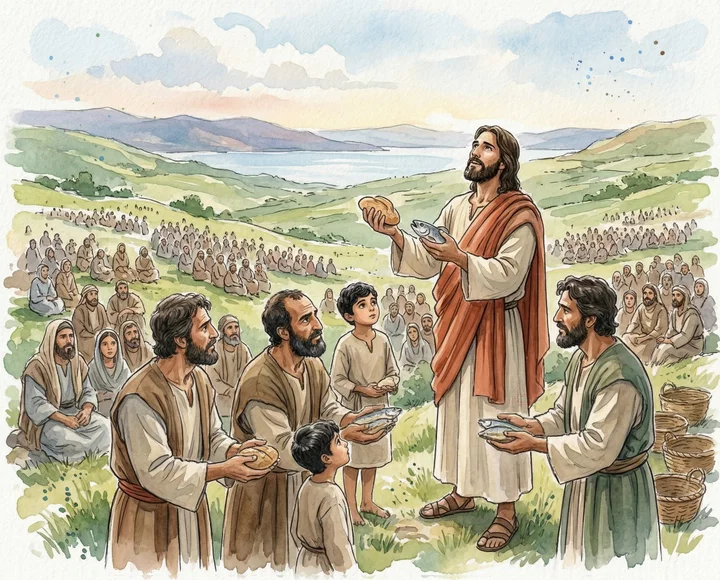
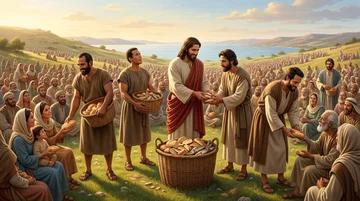
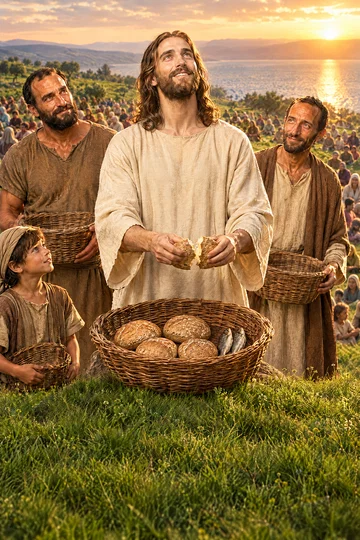
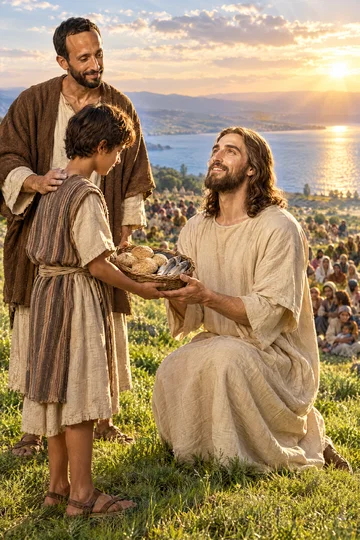
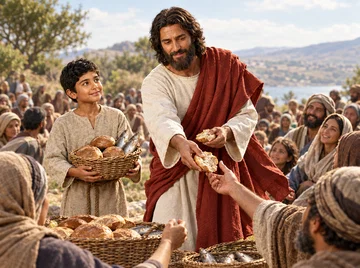
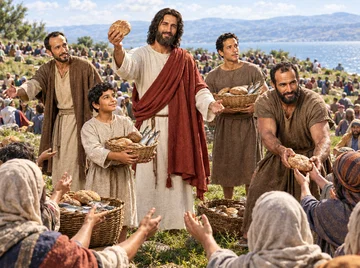
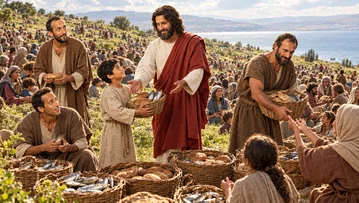
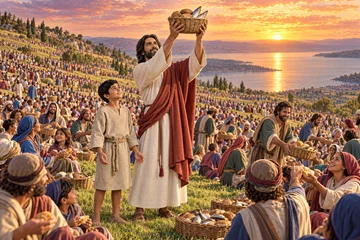
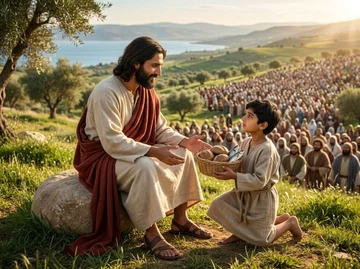
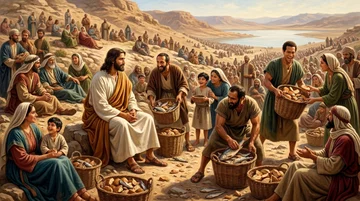
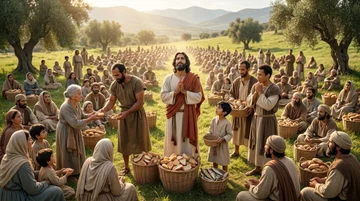
And Jesus said, Make the men sit down. Now there was much grass in the place. So the men sat down, in number about five thousand.
Translations
American King James Version, King James Version, KJV Cambridge Paragraph Bible
And Jesus said, Make the men sit down. Now there was much grass in the place. So the men sat down, in number about five thousand.
And Jesus said, Make the men sit down. (Now there was much grass in the place.) So the men sat down in number about five thousand.
Revised Version, American Standard Version
Jesus said, Make the people sit down. Now there was much grass in the place. So the men sat down, in number about five thousand.
And Jesus said, 'Make the men to sit down;' and there was much grass in the place, the men then sat down, in number, as it were, five thousand,
[ And] Jesus said, Make the men sit down. Now there was much grass in the place: the men therefore sat down, in number about five thousand.
Jesus said—Make the people recline. Now there was much grass in the place. So the men reclined, to the number of about five thousand.
Berean Standard Bible, Majority Standard Bible
“ Have the people sit down,” Jesus said. Now there was plenty of grass in that place, so the men sat down, about five thousand of them.
Jesus said, “ Have the people sit down.” Now there was much grass in that place. So the men sat down, in number about five thousand.
Jesus said, Let the people be seated. Now there was much grass in that place. And those seated on the grass were about five thousand.
And Iesus saide, Make ye people sit downe. (Nowe there was much grasse in that place.) Then the men sate downe in nomber, about fiue thousande.
Douay-Rheims (Challoner revision)
Then Jesus said: Make the men sit down. Now there was much grass in the place. The men therefore sat down, in number about five thousand.
Pictures
Cross-references 20 of 37
- Matthew 14:19-21
And he commanded the multitude to sit down on the grass, and took the five loaves, and the two fishes, and looking up to heaven, he blessed, and brake, and gave the loaves to his disciples, and the disciples to the multitude.
Jesus seats the crowd and feeds about five thousand from a small store of food.
- Mark 6:39-44
And he commanded them to make all sit down by companies upon the green grass.
Jesus seats the crowd in groups on the grass and feeds about five thousand.
- Luke 9:14-15
For they were about five thousand men. And he said to his disciples, Make them sit down by fifties in a company.
A parallel account describes the crowd seated before the meal.
- John 6:35
And Jesus said unto them, I am the bread of life: he that cometh to me shall never hunger; and he that believeth on me shall never thirst.
Connects the feeding miracle with Jesus as the bread of life.
- John 6:15
When Jesus therefore perceived that they would come and take him by force, to make him a king, he departed again into a mountain himself alone.
After the feeding, the crowd tried to make Jesus king by force, and he withdrew.
- John 6:26
Jesus answered them and said, Verily, verily, I say unto you, Ye seek me, not because ye saw the miracles, but because ye did eat of the loaves, and were filled.
Jesus says the crowd sought him for bread, not because they understood the sign.
- Matthew 14:21
And they that had eaten were about five thousand men, beside women and children.
Adds women and children to the five thousand men.
- Mark 6:41-44
And when he had taken the five loaves and the two fishes, he looked up to heaven, and blessed, and brake the loaves, and gave them to his disciples to set before them; and the two fishes divided he among them all.
Parallel account of the meal and its abundance.
- Matthew 14:16
But Jesus said unto them, They need not depart; give ye them to eat.
Jesus commands his disciples to feed the crowd.
- Exodus 16:14-15
And when the dew that lay was gone up, behold, upon the face of the wilderness there lay a small round thing, as small as the hoar frost on the ground.
The crowd recalls God providing manna in the wilderness as Jesus feeds them.
- John 6:32-33
Then Jesus said unto them, Verily, verily, I say unto you, Moses gave you not that bread from heaven; but my Father giveth you the true bread from heaven.
The feeding miracle leads Jesus to identify himself as the true bread from heaven.
- Luke 9:16-17
Then he took the five loaves and the two fishes, and looking up to heaven, he blessed them, and brake, and gave to the disciples to set before the multitude.
Jesus provides food for the crowd.
- Mark 6:38
He saith unto them, How many loaves have ye? go and see. And when they knew, they say, Five, and two fishes.
Both describe the loaves and fishes available for feeding the five thousand.
- John 6:5
When Jesus then lifted up his eyes, and saw a great company come unto him, he saith unto Philip, Whence shall we buy bread, that these may eat?
Jesus sees the crowd and asks where to obtain bread.
- Matthew 16:9
Do ye not yet understand, neither remember the five loaves of the five thousand, and how many baskets ye took up?
Recalls the baskets of fragments gathered after feeding the five thousand.
- 2 Kings 4:42-44
And there came a man from Baal-shalisha, and brought the man of God bread of the firstfruits, twenty loaves of barley, and full ears of corn in the husk thereof. And he said, Give unto the people, that they may eat.
Both accounts show God multiplying a small food supply to feed a crowd.
- John 6:14
Then those men, when they had seen the miracle that Jesus did, said, This is of a truth that prophet that should come into the world.
The crowd responds to the feeding miracle by recognizing Jesus as the promised prophet and Messiah.
- Psalms 78:19
Yea, they spake against God; they said, Can God furnish a table in the wilderness?
God spreads a table in the wilderness.
- Psalms 78:25
Man did eat angels’ food: he sent them meat to the full.
The crowd compares Jesus’ provision with manna, described as food from heaven.
- John 21:12-13
Jesus saith unto them, Come and dine. And none of the disciples durst ask him, Who art thou? knowing that it was the Lord.
Jesus gives bread and fish to the disciples, recalling the feeding of the five thousand.
Commentary
Each commentary is drawn from primary sources: the writings of Ellen G. White and Adventist pioneers and periodicals. Each commentary is separate. Its own words are not a quotation; follow the references to read the source passages.
Ellen G. White
108 sources
Jesus had the crowd sit down on the plentiful grass, and about five thousand men took their places, with women and children present so the whole company was larger still.Lt 9, 1902, par. 1–7Lt 302, 1907, par. 3–6Ms 156, 1902, par. 1–5Ms 60, 1897, par. 21–23 At His command they were seated in orderly companies of fifties and hundreds, fully arranged in His presence before any food was given.Lt 302, 1907, par. 3–6Lt 304, 1906, par. 6–13Ms 197, 1907, par. 1–4 That seating kept order, gave the weary rest, and let all be served and witness what followed.2SP 261.2–262.2ST May 10, 1883ST May 10, 1883 From a boy's five barley loaves and two small fishes He gave thanks, broke the food, and had it distributed until all ate as much as they wanted and were satisfied.Ms 156, 1902, par. 1–5Lt 252, 1906, par. 2–6Ms 197, 1907, par. 1–4 As temporal bread gave strength to the body, so receiving Christ Himself as the living bread gives spiritual vigor and everlasting life.RH Jun 18, 1901Ms 81, 1906, par. 2–82SP 282.1–283.24RED 95.1
Setting, Crowd, and Numbers
The feeding happened where there was much grass, on pleasant grassy ground chosen for the tired multitude.Lt 302, 1907, par. 3–6Ms 186, 1898, par. 17Ms 188, 1907, par. 10Lt 304, 1906, par. 6–13Ms 60, 1897, par. 21–23 That place is a grassy hillside, plain and eminence set apart where all could see and hear, in a wilderness where food was not readily available.Lt 302, 1907, par. 3–6Ms 60, 1897, par. 21–23DA 364.1 It was a spring evening, on a beach beside the Sea of Galilee not far from Capernaum and within sight of where the disciples later gathered, also called a mountainside and a barren shore.Lt 302, 1907, par. 3–6Ms 186, 1898, par. 17Ms 188, 1907, par. 10
About five thousand men sat down at His direction before the meal was shared.Lt 302, 1907, par. 3–6Ms 186, 1898, par. 17Ms 156, 1902, par. 1–5Ms 188, 1907, par. 10Lt 304, 1906, par. 6–13 They were part of a larger company, for besides the men there were women and children, and all received enough to eat.Lt 9, 1902, par. 1–7Ms 156, 1902, par. 1–5Ms 60, 1897, par. 21–23Ms 95, 1908, par. 25–26DA 364.1 The whole multitude is estimated at about ten thousand in all, including five thousand women and five thousand children, with people still coming and gathering.DA 364.2Ms 124, 1909, par. 21RH Apr 8, 1909
They had followed Him to hear words of life and teaching never heard before, listening long until in the evening they were weary, hungry and faint.17MR 252.1Ms 130, 1909, par. 4–6Ms 124, 1909, par. 21RH Apr 8, 1909RH Jan 21, 1909 He had healed their sick and comforted their sorrow, and looking upon them after His interrupted rest He was moved with compassion toward them as sheep not having a shepherd, receiving no help from priests and rulers.Ms 130, 1909, par. 4–6DA 364.2Ms 124, 1909, par. 21 He knew they would hunger and faint on the way, pitied their need, and would not send them home fasting but led them to a convenient place to minister and feed them.Lt 9, 1902, par. 1–717MR 252.1DA 364.2Ms 124, 1909, par. 21RH Jan 21, 1909
Orderly Seating Before Miracle
At His command the disciples had the people sit down on the grass, and the marshaling of the five thousand was fully accomplished with all seated in His presence before He took, blessed, and distributed the food.Lt 302, 1907, par. 3–6Lt 304, 1906, par. 6–132SP 261.2–262.2ST May 10, 1883ST May 20, 1886 The crowd was arranged in orderly companies of fifty and one hundred, with about five thousand men present besides women and children.2SP 261.2–262.2ST May 10, 1883ST Mar 1, 1877ST May 20, 1886ST The orderly seating on the abundant grassy ground preceded the miraculous distribution, as the blessed food passed through the disciples and continued to supply the hungry until all were satisfied.Lt 302, 1907, par. 3–6Lt 304, 1906, par. 6–13Ms 197, 1907, par. 1–4
The arrangement preserved order and kept the large crowd from trampling one another.ST May 10, 1883ST May 20, 1886ST It gave the weary people rest that met their real needs while enabling all to be served in an orderly way.ST Mar 1, 1877ST May 20, 1886ST Seated in the Saviour's presence on a grassy eminence apart where all could see and hear, everyone could witness the miracle He was about to do.2SP 261.2–262.2ST May 10, 1883ST Mar 1, 1877ST May 20, 1886
The sitting down prepared for both the miracle and the teaching, for He took advantage of circumstances to become a field preacher to the multitude that followed Him.21MR 138.2–3Lt 252, 1906, par. 2–6 He sat not at ease but as One having authority in the chair of state and of instruction to give the people the Word which is the bread of life.21MR 138.2–3Lt 252, 1906, par. 2–6 The miracle of enlarging a small substance of temporal food to feed the hungry made the occasion long to be remembered, and the temporal supply opened the way to place Him in the chair of instruction.21MR 138.2–3Lt 252, 1906, par. 2–6Ms 197, 1907, par. 1–4 That material provision prepared the way for the gospel message, with the feeding representing hungry souls fed by the Word of God passed from Him through the disciples as the Bread of life.21MR 138.2–3Lt 252, 1906, par. 2–6Ms 81, 1906, par. 2–8
Miraculous Provision of Food
The starting supply was a lad's, a boy's, five barley loaves and two small fishes, which seemed as nothing among so many.Ms 156, 1902, par. 1–5Lt 252, 1906, par. 2–6Ms 130, 1909, par. 4–6Ms 124, 1909, par. 21RH Apr 8, 1909 Jesus had that little food brought to Him, gave thanks and blessed it, broke and divided it, and gave it to the disciples to distribute to those seated on the grass.Ms 156, 1902, par. 1–5Lt 252, 1906, par. 2–6Ms 130, 1909, par. 4–6Ms 124, 1909, par. 21 The seated thousands received as much as they wanted until all were satisfied, for the loaves multiplied in the distribution and the fish increased in the hands of those who distributed them.Ms 156, 1902, par. 1–5Lt 252, 1906, par. 2–6Ms 197, 1907, par. 1–4RH Apr 8, 1909 The food multiplied and increased in His own hands and in the hands of the distributors, remaining undiminished, with more still available whenever the disciples returned for more.Lt 252, 1906, par. 2–6Ms 197, 1907, par. 1–4Ms 130, 1909, par. 4–6Ms 124, 1909, par. 21
After all were satisfied Jesus commanded that the fragments be gathered so that nothing would be lost.Ms 130, 1909, par. 4–6Ms 124, 1909, par. 21RH Apr 8, 19093RED 55.2ST Dec 15, 1909 The remaining fragments taken up filled twelve baskets.RH Apr 8, 19093RED 55.2ST Dec 15, 1909CH 283.1–22T 292.1 That amount is also given as five or seven baskets full.Ms 130, 1909, par. 4–6
In a moment He created a supply of food sufficient to feed more than five thousand people, exercising power to create food.Ms 156, 1902, par. 6–7Ms 123, 1898, par. 14 That same breaking and dividing of bread and fish at the seashore after His resurrection distinctly brought the mountainside miracle to the minds of the seven disciples.6RED 65.3–66.16RED 46.1–2 In that act He was known and acknowledged by them all as their resurrected Saviour, and the memory filled them with awe.6RED 65.3–66.16RED 46.1–2
Compassion and Divine Power
The seating on the grass came because He cared for bodily hunger as well as for hunger to hear words of life, and He would not send the faint evening crowd home fasting in a wilderness where food was not readily available and many lacked means to buy it.Lt 9, 1902, par. 1–717MR 252.1RH Jan 21, 1909DA 368.2–36T 345.1–3 He knew a tired, hungry multitude after long listening could not receive spiritual benefit, so His provision met temporal need out of dependence on divine providence and showed both loving care and power in ordinary needs.DA 368.2–3CH 283.1–26T 345.1–3ST Aug 12, 1897 The five thousand men were part of a larger company with women and children, and all were fed with enough simple food, giving an example of sharing what is had.Lt 9, 1902, par. 1–717MR 252.1RH Jan 21, 19096T 345.1–3Lt 106, 1896, par. 31–36
No human power could create from five barley loaves and two small fishes food sufficient for thousands, and the bountiful feast gave evidence heaped upon evidence sufficient to convince any mind open to evidence.ST May 20, 1886ST May 10, 1883DA 377.1Ms 57, 1898, par. 22–25 It revealed omnipotent power and beneficence, divinity, the source of every blessing and of His power, a convincing sign revealing the Father as the world's Redeemer.ST May 10, 1883Ms 57, 1898, par. 22–25ST Aug 12, 1897Lt 90, 1900, par. 6–7 Thoughtful and candid witnesses were led to exalted views of His character and office.Ms 57, 1898, par. 22–25
While eating, many decided He was indeed the Messiah, the prophet Moses foretold, connecting the provision with God feeding Israel manna in the wilderness.ST May 20, 1886DA 377.1 His pure and simple doctrine had laid hold of their minds and His tender benevolence and healing and comforting of sorrow had won their hearts, and this miracle crowned that growing conviction with entire belief and strengthened belief in His divinity.ST May 20, 18863RED 56.1 It was the work of the same Christ who supplied bread and clear flowing streams in the wilderness and who in Old Testament times fed one hundred men, proving Him greater than Moses though He walked in lowliness and poverty, the I AM before Abraham casting His glory on those He guided then as on those He taught in humanity.Ms 114, 1899, par. 1–3 By the touch of His hand God's grace on a small portion makes it all-sufficient, multiplying it a hundredfold, and He is able from His resources to spread a table in the wilderness for more than a million people.Ms 114, 1899, par. 1–3
The miracle shows openly what God does continually through the harvest, for the power that multiplied the loaves also multiplies seed and gives life to it and continually feeds people through the earth's crops and grain.ED 107.3ST May 7, 1912DA 367.3 Daily growth by rain and sunshine is no less dependent on divine power than loaves serving thousands, for God is actively sustaining life in nature and can act instantaneously when great need requires.ST May 7, 19123MR 352.4 Human work in tending grain and making bread and natural processes do not replace His agency or obscure it without loss, and ordinary food from the earth depends on His miracle-working power.ED 107.3DA 367.3Lt 106, 1896, par. 31–36 It is a gift meant for blessing not selfish use, to be recognized with glory to the Giver rather than credited to human effort alone.ED 107.3ST May 7, 1912DA 367.3
Bread of Life Teaching
John 6 presents Christ as the living bread and the bread from heaven, and His words as spirit and life to be studied and obeyed.21MR 44.1–2Lt 263, 1903, par. 27–28Lt 40, 1899, par. 17–18 Eating His flesh and drinking His blood means receiving His words and truth as it is in Jesus into the mind, to be understood, practiced, lived, and made part of the whole life and daily experience.21MR 44.1–2Ms 63, 1890, par. 5–7Lt 93, 1901, par. 11Lt 263, 1903, par. 27–28 So received and lived, that bread nourishes the soul instead of leaving it in spiritual hunger and supports continual growth in grace.21MR 44.1–2Lt 93, 1901, par. 11 The feeding of the five thousand belongs to that same work by which He gives eternal life through eating His flesh and drinking His blood.RH Jun 18, 1901Lt 263, 1903, par. 27–28
Receiving Him by faith is sanctification, righteousness, and reward, the source of strength and sufficiency for dependence on Christ rather than on human beings.Ms 78, 1902, par. 5–7 The truth of the chapter cherished in the heart works by love and purifies the soul, and shows how eternal life is gained.Lt 95, 1901, par. 18–19 Those who receive Him have resurrection at the last day, for even if a believer dies as Christ died the life of the Saviour is in him and his life is hid with Christ in God, because Christ came to give life more abundantly.RH Jun 18, 1901 By this great process believers are made one with Him in this present life to be one with Him throughout all eternity.RH Jun 18, 1901 John 6 thus defines the righteousness of Christ, and accepting that righteousness puts on the wedding garment as the standard of character required to be counted a fit guest at the wedding for the marriage of humanity with divinity.Ms 13, 1899, par. 1–2
The Word as the bread of life representing the body and blood of the Son of God does not address the understanding alone as mathematics addresses the intellect alone, for human beings are not devoid of moral nature.Lt 5, 1898, par. 13–15 Its aim is the heart; it addresses moral nature and takes possession of the will, casting down imaginations and every high thing exalting itself against the knowledge of God and bringing every thought into captivity to obedience.Lt 5, 1898, par. 13–15 Tasting that the Lord is gracious is eating the flesh and drinking the blood of the Son of God, and belongs to the actual experience of everyone who names the name of Christ.FE 458.2–459.2 This nourishment through the living oracles was available even before the crucifixion, for Christ's work as substitute for sin was ancient Israel's only hope.Lt 40, 1899, par. 17–18 The New Testament does not replace the Old but sheds light back on it, revealing the significance of the Jewish system and affirming the call to practical holiness and obedience.Lt 40, 1899, par. 17–18
The chapter plainly expresses the will of God for His people and contains the divine antidote for the sin of the whole world.RH Jun 18, 1901 Its instruction is meant to cure dissension and produce unity and love with one another and with Christ.21MR 346.1–3 It gives the rich manna of heaven on which to feed for spiritual strength and comfort, and sets before the reader the choice of whom to serve as a question of life or death.11MR 340.3 Keeping the transactions of the theater before eyes and ears takes away soul hunger for God, and closing the heart to light from the throne of God to give the mind to stage performances leaves no peace, no joy, no hope, no spirit of assurance, and lets love for Bible religion die out, because God cannot be served with a divided heart.11MR 340.3
The seating of the five thousand on the grass before they were fed represents hungry souls being fed with the Word of God, the Bread of life, with food passed from Jesus through the disciples, and this material provision prepared the way for the gospel message.Ms 81, 1906, par. 2–8 The feeding furnishes a forcible figure to illustrate His work on earth.2SP 282.1–283.24RED 95.1 As temporal and ordinary bread imparted health and strength to the body, so faith in Christ and obedience to His teachings give spiritual vigor to the soul and life everlasting.2SP 282.1–283.24RED 95.1
Disciples Receiving to Impart
Christ received from the Father and passed to the disciples, and they passed to the people seated on the grass, establishing the order by which those united to Him receive the bread of life from Him and pass it on to others.DA 364DA 369.2–4ST Aug 19, 1897MH 49.1 The disciples could supply spiritual need only from what they received from Christ, for they could not supply this spiritual food from themselves and were to seek from God what they needed to serve others as His representatives appointed to give the people the bread of life.DA 369.2–4ST Aug 19, 1897RH Aug 11, 1910MH 49.1 As they imparted what they received they continued to receive, so that the gift increased in the sharing and His command to provide was backed by the power that multiplied the small supply.DA 369.2–4ST Aug 19, 1897DA 369.1
Their lack of resources showed they must seek supply from God and not turn anyone away unfed.RH Aug 11, 1910COL 140.4–5 When people need the bread of life His children should not assume they must send for someone from afar to feed them, for Christ is present and they should commune with Him and bring what they have to Him.RH Aug 11, 1910DA 370.3 They were instruments of the Lord, not the source of the provision nor entitled to its credit, with all glory for the work belonging to God, for the miracle was wrought not to exalt power or to add glory to the disciples but in intelligent necessity to satisfy hunger.Lt 252, 1906, par. 2–6ST Apr 24, 1901
He condescended to bring His disciples forward before the large numbers to give them reputation, so that many would recognize in their workings that they worked as He worked and His deeds of mercy would open a door for them.21MR 138.2–3Lt 252, 1906, par. 2–6 He used a boy's practical contribution of five loaves as an example honoring everyday work.ED 217.1–2 God's blessing will be upon disciples as they break the bread of life to the necessities of hungry souls, gathering all His words without wasting a fragment and giving them as the bread of life to the multitude, with all however weak feeding souls needy of instruction and speaking the truth in love.Lt 252, 1906, par. 2–6
Judas assisted in distributing the food to the hungry multitude and in bringing the sick and suffering to Christ, seeing the benefit it was in his power to impart and the satisfaction that comes in service with the relief, joy and gladness that came to human hearts through healing, which might have taught him Christ's methods.DA 718.2Ms 106, 1903, par. 46 Instead, still holding that Christ would reign as king in Jerusalem and blinded by selfish desires, he was first to take advantage of the enthusiasm excited by the loaves to set on foot the project to take Christ by force and make Him king.DA 718.2Ms 106, 1903, par. 46Ms 28, 1897, par. 10–12 His high hopes ended in bitter disappointment and dissatisfaction when Jesus rebuked the plan with greater and unusual authority than He usually exercised.DA 718.2Ms 28, 1897, par. 10–12
His command to provide is backed by the multiplying power and teaches followers not to hold back from helping people in need because their means seem insufficient, but to trust Him as they give.DA 369.1 Gifts given with thanksgiving and prayer will be multiplied and blessed by the Lord in the same way as the food given to the disciples to give to the people.STB 148.2–3STB 119.3–4 If the best use is made of the means available, God will enable His workers to feed multitudes who are starving for the bread of life through soul-saving work and soul-saving medical missionary work.STB 148.2–3STB 119.3–4
Responses After the Miracle
The feeding with five loaves and two small fishes was a sign of power meant to awaken faith in the Son of God as the Bread of life, but many who witnessed it wanted that power used for earthly benefits rather than to understand the teaching.4RED 97.213MR 219.4–220.1Lt 73, 1901, par. 16–18 Those who had been among the multitude miraculously fed later asked for a sign, hoping He would repeat the miracle and show how the food was increased so they could learn a method to use for their own benefit.13MR 219.4–220.1Lt 73, 1901, par. 16–18 They followed not for the miracles but because they ate and were filled, coming only for the temporal advantages and necessities they could obtain, hoping He would be exalted to David's throne with themselves in the highest place.4RED 97.2Lt 17, 1897, par. 6–8 That demand for a further sign did not come from lack of evidence, for the feeding of the five thousand had already given fresh and sufficient evidence of who He was.ST Nov 3, 1898ST Jan 11, 1899 The priests and others closed their eyes to its light, and the call for a sign served as an excuse to avoid the self-denial involved in accepting the Gospel, so they rejected the lesson.13MR 219.4–220.1Lt 73, 1901, par. 16–18ST Nov 3, 1898ST Jan 11, 1899
He refused the attempt to take Him by force and make Him king, a plan Judas promoted and was first to set on foot, which Jesus rebuked with greater authority than He usually exercised, leaving Judas dissatisfied and disappointed.Ms 9, 1898, par. 31–32Ms 28, 1897, par. 10–12 Afterward His popularity began to wane, and He devoted Himself more earnestly to instructing His disciples.Ms 9, 1898, par. 31–32 After being fed on the preceding day on the barren shore, the multitude left Him there knowing no boat remained by which He could depart, while He watched their departure with compassionate eyes.3RED 63.22SP 270.2 News of the wonderful miracle spread far and near, so that early the following morning people began arriving by land and water in large numbers at the spot where they had last seen Him, and searched in vain for Him before returning to Capernaum still seeking Him.3RED 63.22SP 270.2 He made the miracle the occasion for His sermon on the bread of life declaring the conditions of eternal life and entrance into the kingdom of God, and when they heard those conditions many went back and walked no more with Him, an apostasy following almost immediately.Lt 17, 1897, par. 6–8
The story of the loaves and fishes stands joined with Christ walking on the water and His statement to His hearers that He was the bread of life, which caused some of His disciples to turn from Him, together forming a body of teaching that holds many subjects.9MR 242.19MR 32.3–5 The feeding took place on the preceding day before the stormy night crossing of the sea.3RED 63.22SP 270.2 It came before His private talk with His disciples, before that crossing, and before His teaching in the synagogue about being the Bread of Life.
Practical Stewardship and Trust
After the crowd was satisfied, the fragments were to be gathered so that nothing would be lost, and this teaches care, thrift, and economy with no careless waste of good and necessary food.STB 772.1–2ST Dec 15, 1909CH 283.1–22T 292.12T 435.3 The lesson applies especially in times of need and in difficult circumstances, calling for saving what can be saved rather than treating leftovers carelessly even amid abundance.STB 772.1–22T 292.1Ms 3, 1912, par. 4–52T 435.3 What was gathered could be shared with others, for what people possess comes from God entrusted for faithful use, and food from the earth is provided by His power.ST Dec 15, 1909Ms 3, 1912, par. 4–5
God multiplies a small, scattered, and scanty supply when it is placed in missionary work and imparted to others, so that all eat and are filled.6T 467.1Ms 66a, 1900, par. 30–31Lt 121, 1904, par. 14–16Ms 47, 1894, par. 10–11Ms 38, 1895, par. 58–60 The five loaves and two fishes fed five thousand men besides women and children until all were satisfied, with twelve baskets of fragments remaining, showing that what appears meager becomes abundant when Christ provides.Ms 66a, 1900, par. 30–31Lt 121, 1904, par. 14–16Ms 47, 1894, par. 10–11 This calls for faith that lays hold upon God and expects success, planning and working whether means are large or small to diffuse the gospel over the whole earth, refusing to stop work or measure advance by the means at hand, faithfully using and sharing unselfish offerings and what has been received even when resources seem inadequate.Ms 66a, 1900, par. 30–31Ms 47, 1894, par. 10–11Ms 38, 1895, par. 58–60
The feeding is a model for food work by simple, economical means rather than costly preparations, without selfish private interests obstructing the work.Lt 302, 1906, par. 5 The food business is one of the Lord's own instrumentalities for supplying human necessity, and as heavenly Provider and Creator of food Christ will not leave His people in ignorance but will teach the best foods for all times and occasions.17MR 252.3Ms 81, 1902, par. 14Ms 81, 1906, par. 18–21 Those handling food should seek His counsel, and the same power that fed the five thousand will supply present needs by giving wisdom, skill, talent, and ingenuity to manufacture wholesome, inexpensive foods from the productions of the earth and sell them low to the poor, a work especially needed in the Southern states.Ms 81, 1906, par. 18–21Lt 27, 1902, par. 17–19 His continuing benevolence gives knowledge to provide food in different places and ways, and no human restrictions should be placed on food nor God-given work hindered.17MR 252.3Lt 199, 1901, par. 18–20
Though He had divine power to provide for the crowd, He did not use it to lessen the burdens of His own daily work, showing that useful labor is honorable and people should work diligently.RP 26.5–6 He would not send the hungry home without food but supplied enough simple food to meet their need, knowing that a tired, hungry crowd could not receive spiritual benefit.6T 345.1–3MH 200.2RH May 30, 1871 His care teaches compassion for weary, hungry seekers, making sure they can rest on the grassy place and hear without being sent away faint or discouraged, removing obstacles as Christian duty.Ms 186, 1907, par. 8–9Ms 180, 1907, par. 27–28RH May 30, 1871 His provision shows both power and loving care in ordinary needs as Keeper, giving an example of sharing what is had, especially truth, with those who lack it, and those who dedicate themselves may receive the Holy Spirit to serve and provide for people in need.6T 345.1–3Ms 186, 1907, par. 8–9Ms 180, 1907, par. 27–28MH 200.2
Sources
Pioneers and periodicals
90 sources
At His word the great crowd sat down on the abundant grass of a hillside apart, about five thousand men besides women and children, perhaps ten thousand or more in all.ST Mar 15, 1905ST Jun 6, 1900RH Feb 26, 1901ST May 20, 1886 They were arranged in orderly companies by hundreds and fifties, so the weary could rest and all could witness without confusion what He was about to do.ST May 20, 1886RH May 29, 1900ST Jul 26, 1905 Moved with compassion He would not send them away hungry, but as a whole Saviour first taught and healed them and then supplied their bodily need from a lad's five barley loaves and two fishes.RH Jan 21, 1909ST Mar 8, 1899ST Oct 12, 1904ST Mar 22, 1899 Blessed and broken in His hands the scant supply multiplied by creative power until all were filled and twelve baskets of fragments remained, showing that all food comes from Him and that nothing is to be wasted.ST Dec 15, 1909RH Mar 16, 1905RH Apr 22, 1915ST Dec 24, 1902 The outward feeding proves Him the divine Messiah and points to Himself as the Bread of Life to be received by faith unto resurrection at the last day, and it patterns His work through disciples who yield what they have to Him and pass His gifts on to others.RH Jun 18, 1901ST May 20, 1886ST May 10, 1883ST Mar 15, 1905
Place Time and Number
The feeding belongs on the Sea of Galilee, on its east side and its northwest shore, at Tiberias, near Capernaum and Bethsaida.ST Mar 8, 1899 It was on a grassy hillside, an eminence and a mountain apart, in a wilderness or desert meaning an uninhabited country place away from towns, not barren land.STST Oct 12, 1904ST Aug 13, 1902 The place had much green grass where the crowd could sit, see, and hear, and Jesus directed them to sit down on it before the meal.ST Jun 6, 1900ST May 20, 1886 Jesus and His disciples had crossed from Capernaum to that shore for much-needed rest, but the multitude followed them.ST Mar 8, 1899ST Oct 12, 1904
About five thousand men sat down on the plentiful grassy ground, arranged in orderly companies.ST Mar 15, 1905RH Feb 26, 1901RH May 29, 1900ST Jul 26, 1905 Besides them were women and children uncounted and unnumbered.ST May 20, 1886 Counting them makes perhaps ten thousand in all, or more than ten thousand people.ST Oct 12, 1904
The setting was near Passover, when the Jews assembled to remember the lamb whose blood marked safety from the slaying of the firstborn in Egypt.ST Sep 1, 1881ST Aug 13, 1902 It was after the cruel death of John the Baptist by Herod, when Jesus had withdrawn with His disciples apart for rest, instruction, meditation, and prayer.ST Mar 8, 1899ST Oct 12, 1904 The multitude followed without being invited, and He would not turn them away or let them go home fasting.STST Mar 8, 1899ST Oct 12, 1904 He spent the remainder of the day healing their sick, comforting sorrow, and teaching them words of life until evening, and as evening came they were hungry and faint after listening all day, far from home with no food nearby and many unable to buy.STST Mar 8, 1899ST Oct 12, 1904 Afterward the disciples were sent across the sea by night toward Capernaum, Jesus withdrew alone into the mountain to pray, and then came His synagogue teaching about the Bread of Life.ST Aug 13, 1902
The much grass in the place, the sitting down, and the number about five thousand men are part of a minuteness of detail that marks truth.RH Feb 4, 1862 It was a public miracle not done in a corner, recorded with the time of year when and the place where it was done and many other circumstances connected with it, putting it into the power of those five thousand men and myriads of their contemporaries to have exposed the fraud if it had been one.RH Feb 4, 1862 It is a great miracle recorded by all four evangelists, whose parallel accounts should be compared for important details. The feeding of about five thousand men was known and expressly mentioned as a real event by about A.D. 176 even by hostile opponents of Christianity, though credited to magical influence rather than divine power, showing the gospel account was already in existence and circulation.ST Jul 16, 1885
Command to Sit in Order
At His command to make the men sit down, the crowd was placed on the much green grass in orderly companies before any food was provided.ST May 20, 1886RH May 29, 1900ST Jul 26, 1905 The disciples set them in ranks by hundreds and by fifties, in groups of fifty and one hundred, numbering about five thousand men besides women and children.ST May 10, 1883ST May 20, 1886ST Dec 22, 1887 Their seating in His presence put them where they could witness what He was about to do.ST May 10, 1883ST May 10, 1883ST Dec 22, 1887
The orderly seating prepared the multitude to receive and be served conveniently and without disorder.RH May 29, 1900ST Jul 26, 1905ST Feb 1, 1899 It preserved order among the large crowd so they would not trample one another, quieted clamor before the miracle, and gave the weary a chance to rest.ST May 10, 1883ST Dec 22, 1887ST Nov 21, 1911RH May 13, 1862 Seated thus, all could see and receive the food He would distribute and behold His care and power to provide.ST May 10, 1883RH May 29, 1900ST Jul 26, 1905ST Dec 22, 1887
The command first quieted the clamor and restored order before the feeding, for order is Heaven's first law.ST Nov 21, 1911 The Lord's work shown here is orderly and thorough, and order belongs to His example in giving thanks and feeding the multitude in a quiet manner.ST Feb 1, 1899RH May 13, 1862 His word on that occasion was tempered to suit it and displays fully developed self-control and true government, a perfect example without wrong principle or mistake for self-government and for the government of others in home and school.RH Feb 18, 1902
Compassionate Care for Need
When He saw their eagerness and need He was moved with compassion toward them, laying aside all consideration of self to feed them with the bread of life until evening and then to relieve their physical necessities by miracle.RH Jan 21, 1909ST Mar 8, 1899ST Mar 22, 1899 The multitude had followed without being invited into a wilderness place where no food was nearby, and after listening all day they were hungry and faint and far from home, with many unable to buy, yet He would not turn them away or let them go home fasting.STST Oct 12, 1904ST Mar 22, 1899 The same Jesus who knew hunger as a man cares for bodily needs as well as spiritual needs, showing He is a whole Saviour for every need who will not forget those who seek Him even where they can see no earthly support.RH Jan 21, 1909ST Mar 8, 1899ST Mar 22, 1899ST Apr 15, 1897 In emergencies and strait places His people are to depend on God whose resources are infinite, for a tired, hungry crowd cannot receive spiritual benefit unless bodily need is regarded.STRH May 30, 1871
He had withdrawn apart for instruction, meditation and prayer after the cruel death of John the Baptist, but He spent the remainder of the day healing their sick, comforting their sorrow, and teaching them words of life never heard before that sank into their hearts.ST May 20, 1886ST Oct 12, 1904 His pure and simple doctrine laid hold of their minds while His tender benevolence won their hearts, and rather than send them away hungering He had the crowd of about five thousand men, perhaps ten thousand in all with women and children, sit down and fed them all bounteously and abundantly.ST May 20, 1886ST Oct 12, 1904ST Mar 14, 1911 The food came from barely enough for the twelve, an exceedingly small supply far from other supplies, yet all were satisfied and much more was left than He started with, showing His kindness, pity and power and how His power multiplies responsive human effort.ST May 20, 1886ST Oct 12, 1904ST Mar 14, 1911
The meal was simple, with no delicacies merely to please or tempt the appetite, and with rest on the grass it met their real needs for food and rest.STST Aug 12, 1897ST Sep 3, 1896 In having them sit it gave the weary a chance to rest and kept the large crowd from trampling one another, displaying both His power and His tender care for ordinary needs.STST Aug 12, 1897 He does not promise His followers worldly luxuries but promises that their needs will be supplied, offering the better gift of His abiding presence and a picture of ample provision where all are sure to have food.STRH Mar 9, 1916 Because He pitied them as sheep having no shepherd He spread a table in the wilderness by His own hand on their way to the Passover, proving He will be to His own tempted and wearied servants what the good Samaritan was to the wounded traveler, healing wounds, supplying needs and comforting hearts.STRH Mar 9, 1916ST Nov 24, 1887
Multiplication of Small Supply
The seated crowd was fed from a lad's small lunch of five thin barley loaves and two little fishes, brought by a boy and involving unnoticed work such as a woman's and a mother's making of the loaves.RH Apr 22, 1915ST May 29, 1884 Jesus blessed, broke, and gave that scant supply through the disciples until all were fed and filled by creative power and word, with the food undiminished as it was shared.RH Apr 8, 1909 Twelve baskets of fragments were gathered afterward, more than twelve times the original quantity.RH Mar 16, 1905 The few barley loaves and two small fish were thus multiplied by Christ's creative word until the multitude was satisfied, with food left over to fill the twelve baskets.RH Apr 8, 1909RH Mar 16, 1905
The instant creating of thousands of loaves was a direct miracle revealing that the power producing food ordinarily through sunshine, rain, sowing, harvest, growth of grain, and human work comes from Christ.RH Jan 9, 1900RH Feb 8, 1906RH Apr 9, 1901 Every loaf is a miraculous gift, and the daily multiplication of seed into ears of grain, by which God supplies food to people and animals, is no less dependent on divine power.ST Dec 24, 1902ST Aug 26, 1880RH Apr 9, 1901 A progressive miracle is as much a miracle as an instantaneous one, illustrating continuing provision for the world.ST Dec 24, 1902RH Apr 9, 1901 The twelve baskets of broken pieces left over, far greater than the boy's original store, show inexhaustible supplies for a hungry world, with the last row fed as fully as the first and the fountain still full.ST Dec 24, 1902ST Mar 30, 1904
The miracle was out of the ordinary and was not meant to introduce a new way of obtaining food.RH Jun 22, 1916 God's plan still stands that man earn bread by the sweat of the brow, and that ordinary way is the better way.RH Jun 22, 1916 He gave the accustomed food the people longed for and that would satisfy them, showing that forced reform without conviction and education does not benefit.RH Dec 21, 1905 By that miracle He honored and sanctified barley bread just as much as He ever honored wine at Cana, yet the miracle does not require continued use, since people set barley aside merely because they do not like it.ST Jan 12, 1882ST Jan 24, 1878ST Apr 22, 1889 The verse therefore removes the excuse that what Jesus miraculously made must be used, and teaches that wine should be put away from the higher motive of bearing the infirmity of the weaker brother and so fulfilling the law of Christ.ST Jan 12, 1882ST Jan 24, 1878ST Apr 22, 1889
Christ directed that the fragments be gathered so nothing would be wasted, teaching careful stewardship and restraint rather than extravagance.ST Dec 15, 1909RH Mar 16, 1905RH May 29, 1900 God's gifts gathered up could be shared with others and not lost.ST Dec 15, 1909RH May 29, 1900 While He supplied what man could not do for himself in miraculously providing loaves and fishes for the five thousand, He left the disciples the work they could do of gathering up the fragments.RH Jul 23, 1901
Proof of Messiahship Rejected
No human power could create from five barley loaves and two small fishes food sufficient for thousands, and as the seated multitude ate they concluded He was indeed the Messiah.ST May 20, 1886ST May 10, 1883ST Dec 22, 1887 His pure and simple doctrine had laid hold of their minds, His tender benevolence in healing the sick and comforting sorrow had won their hearts, and this miracle crowned their growing conviction of His divinity with entire belief.ST May 20, 1886ST Dec 22, 1887 He is divine, the world's Redeemer possessing omnipotent power and beneficence, mighty over nature and mighty to raise the dead.ST May 20, 1886RH Mar 22, 1906 Divinity and humanity were combined in Him, which enabled Him to perform the miracle and points to the union believers need through self-denial and laying aside wrong habits.RH May 20, 1909
The feeding was a real bodily feeding of people on the grass, about five thousand men seated together, not merely souls receiving the bread of life.ST Jul 25, 1911STRH Jul 11, 1871 It supplied real food to the masses, unlike merely fanciful gains of fine-spun Christianity.ST Jul 25, 1911RH Jul 11, 1871 That public meal served to a crowd stands contrasted with the Lord's supper, which was instituted on a special occasion in a private room and given to His disciples.RH May 27, 1873 The miracle recalled the manna God gave Israel in the wilderness, yet showed that Christ, not Moses, is the true bread from heaven who gives life to the world.ST Nov 21, 1892
As they ate, many decided the promised King had come who could supply all their needs in the desert and furnish everything necessary to make them the first kingdom in the world, freed forever from intolerance and oppression and from the Roman yoke.ST Sep 25, 1893ST Mar 5, 1896 Because He did not offer Himself as king they would come and take Him by force to proclaim Him king and rouse the Jews to throw off Rome under His leadership.ST Sep 25, 1893ST Mar 5, 1896 Judas of Kerioth worked hard that day giving out the food, then counted how many shekels it would have brought if sold instead of given, resenting that the free feeding brought no money into the disciples' bag, and he headed the movement to crown Jesus at Jerusalem on the argument that one who could create food could feed an army to go up against the Romans.ST Nov 22, 1910ST Oct 25, 1910 That selfish and patriotic movement was shaped by Satan and was the temptation in another form to avoid Gethsemane and Calvary, reflecting the expectation that the Messiah would establish a visible political kingdom.ST Sep 25, 1893ST Mar 5, 1896
Jesus refused the earthly throne, dismissed the crowd, went alone to pray, and did not stay to receive praise or be made king but continued doing His Father's will. The disciples wrongly thought the time for enthronement had come. Many followed Him because they thought His power to heal the sick, feed the multitude, and raise the dead would help them in temporal necessities, hoping He would be exalted to David's throne and wanting the highest place for themselves, wanting Him as king because of the loaves and fishes and not because of His character, which did not show readiness to be subjects of His kingdom.ST Jul 21, 1898ST Sep 5, 1895 That feeding had already given fresh and sufficient evidence of who He was, yet priests and Jews closed their eyes to its light and later demanded a sign, not from lack of evidence but as an excuse to avoid the self-denial involved in accepting the Gospel.ST Nov 3, 1898ST Jan 11, 1899
Bread of Life and Resurrection
John 6 belongs to a chapter that plainly expresses God's will for His people and holds the divine antidote for the sin of the whole world.RH Jun 18, 1901 It teaches the need to eat the bread from heaven in order to live, for life does not come from the material food itself but from Christ, the living eternal Word of God.RH Jun 18, 1901ST Sep 17, 1912 That spiritual life is given now through faith in Jesus Christ, by believing in Christ and living in harmony with God's law.ST Oct 6, 1909 It is distinct from the natural life received from parents and sustained by food, air, and sunshine.ST Oct 6, 1909
The feeding of about five thousand men points to Christ as the spiritual bread come down from heaven, of which if a man eat he shall never hunger.ST Nov 3, 1898 Eating of Him is what keeps the soul, and that keeping must be daily and fresh morning by morning, prayed for as daily bread, because old manna turned to corruption and only a daily living experience feeds the soul.ST Nov 3, 1898 The bread freely distributed to the seated crowd is an image of spiritual benefit coming through Christ its Author and through those who serve Him, for those opposed to Him may carry the vessels but cannot feed the multitude.RH Aug 6, 1908 The miracle is repeated spiritually when people receive Christ and His Word into their lives, and those who truly feed on Christ become living messages of God's Word, sharing it with others so that they too may receive life, so that through people changed by His Word its nourishment multiplies.RH Aug 6, 1908
Feeding the multitude together with teaching about the bread from heaven showed the disciples their work as His representatives to give the people the bread of life.RH Aug 11, 1910 Because they could not supply this spiritual food from themselves, they were to seek from God what they needed to serve others, receiving from Christ as the Bread of Life and passing His gifts on to others.ST Aug 19, 1897RH Aug 11, 1910 In that distribution they were instruments of the Lord, not the source of the provision nor entitled to its credit, with all glory for the work belonging to God.ST Aug 19, 1897ST Apr 24, 1901 By this Christ carries on the great process by which believers are made one with Him in this present life to be one with Him throughout all eternity.RH Jun 18, 1901
The chapter gives eternal life now through faith, while immortality, meaning deathlessness and incorruptibility, is bestowed on Christ's people at the resurrection. That promise to raise up at the last day is conditional upon complying by believing on the Son, and it is repeated no less than six times, showing life is given only to those who believe and is not already possessed by nature as an immortal soul.RH Jun 13, 1854RH Dec 2, 1858 Those who do not comply will not be raised then, proving two distinct resurrections in which the blessed and holy are raised a thousand years before the rest of the dead.RH Jun 13, 1854 Even if a believer dies as Christ died, the life of the Saviour is in him and his life is hid with Christ in God, because Christ came to give life more abundantly.RH Jun 18, 1901
Pattern for Christian Service
Christ gives the food to His disciples and they pass it to the multitude, receiving blessings from Him so they can share them with others.ST Mar 15, 1905ST Apr 11, 1906 They are instruments of the work, not the source of the provision and not entitled to its credit, for all glory belongs to God.ST Apr 24, 1901 God's plan is cooperation between Himself and man, in which He miraculously supplies what man could not do for himself while leaving man the work he can do.RH Jul 23, 1901 So He blessed a small supply of loaves and fish that His disciples could feed the five thousand, and left them to gather the fragments, showing that His blessing can make what His people have and do sufficient to carry the bread of life to the whole world.RH Jul 11, 1912RH Jul 23, 1901
A scant supply placed wholly and unreservedly in the Saviour's hands becomes enough to feed the people, with food left over.RH Dec 8, 1904RH Dec 9, 1902 The few loaves and fishes, blessed and broken by Christ, were enough to feed about five thousand men sitting on the grassy ground, illustrating that God can make limited resources sufficient for a great work.RH Feb 26, 1901 Though He had power to provide by other means, He chose to use the small amount offered to satisfy the hungry, teaching hope and trust.RH Apr 10, 1900 When all is yielded to God and accompanied by earnest prayer and faith, His blessing makes human resources, which cannot accomplish His work by themselves, sufficient for it.RH Dec 8, 1904 Need and limited resources in a desert place, with only five loaves and two small fish, are not reasons to stop helping but occasions to act in faith, obey His command to feed the people, and seek His blessing that makes the small supply more than enough.ST Sep 18, 1893 In emergencies and strait places people are to depend on God whose resources are infinite, as shown when Jesus, placed by providence where a multitude that had followed without invitation was hungry and faint after listening all day, far from home with no food nearby and many unable to buy, would not let them go home fasting.ST
God brings great results out of little beginnings, and the smallness of a lad's lunch does not prevent its use to feed the multitude.RH Apr 22, 1915RH Aug 11, 1910 The lad's five loaves used in the miracle show that God honors everyday work and that ordinary provisions and the work of an everyday person can serve a great good.ST Jan 18, 1916 The lesson is to begin serving with what is available when Christ is with us, like Andrew who was willing to begin with a boy's lunch, rather than calculating like Philip that much more money would be needed or waiting until more is in hand.ST Aug 28, 1901 What is shared grows as it is distributed, for the bread broken on the grassy hillside multiplied in the distribution, showing that the treasure is not given to be selfishly hoarded but grows as it is shared.ST May 13, 1880 He has inexhaustible supplies for a hungry world, the last row fed as fully as the first and the fountain still full after millions have drunk, and the twelve baskets left over, far greater than the boy's original store, show the bread of God is more than enough, faithfully imparting Christ enriching rather than impoverishing, for the more He is given the more remains and the gift grows as it is eaten and carried to others.ST Mar 30, 1904
Having the men sit down quieted clamor and restored order before the miracle meal, teaching to stop, think, and quietly submit the cause to God rather than intensify trouble through unreasoning uproar, for order is Heaven's first law.ST Nov 21, 1911 His followers should bring what is available to Jesus, who can make a small supply sufficient for many, and hasten to share His love and provide for hungry and suffering people in need.ST Mar 26, 1912 They must compassionately care for seekers of salvation, making sure the weary and hungry can hear the Word of life and are not sent away faint or discouraged, for helping them and removing obstacles on the way to Christ are Christian duties.ST Aug 12, 1897 He cared for bodily needs, knowing a tired, hungry crowd could not receive spiritual benefit.RH May 30, 1871 Workers for Christ are to give just as good instruction to an audience of about five thousand men as to one person, since a moment spent speaking can bring blessing to thousands.ST Sep 10, 1896
Sources