Matthew 14:21
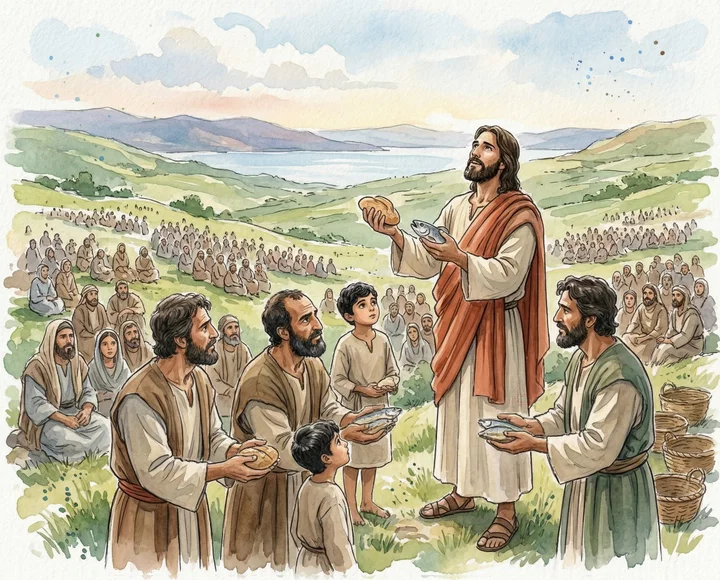
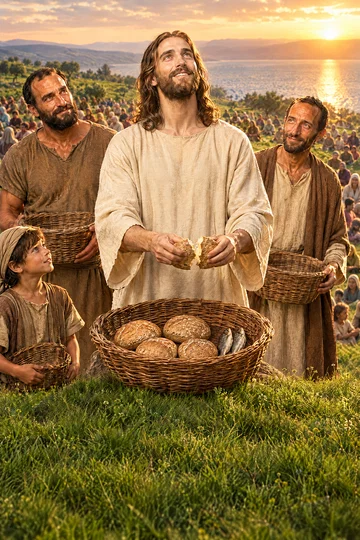
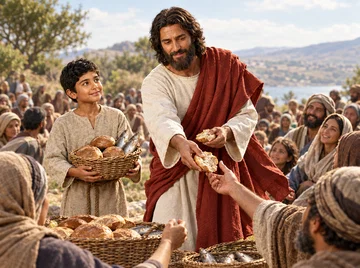
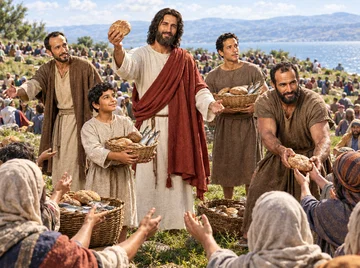
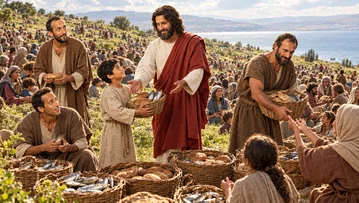
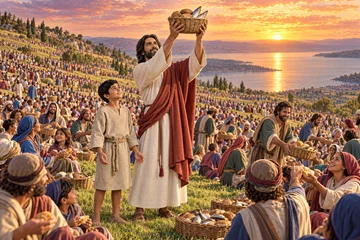
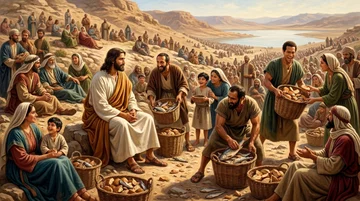
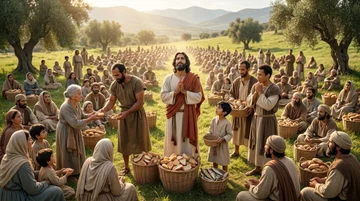
And they that had eaten were about five thousand men, beside women and children.
Translations
American King James Version, King James Version, KJV Cambridge Paragraph Bible
And they that had eaten were about five thousand men, beside women and children.
And they that had eaten were about five thousand men, besides women and children.
And they that did eat were about five thousand men, beside women an children.
And they that did eat were about five thousand men, besides women and children.
and those eating were about five thousand men, apart from women and children.
But those that had eaten were about five thousand men, besides women and children.
And, they who did eat, were about five thousand, men, besides women and children.
About five thousand men were fed, in addition to women and children.
About five thousand men were fed, besides women and children.
Those who ate were about five thousand men, in addition to women and children.
And those who had food were about five thousand men, in addition to women and children.
And they that had eaten, were about fiue thousande men, beside women and litle children.
Douay-Rheims (Challoner revision)
And the number of them that did eat, was five thousand men, besides women and children.
Pictures
Cross-references 20 of 30
- John 6:10-13
And Jesus said, Make the men sit down. Now there was much grass in the place. So the men sat down, in number about five thousand.
Parallel account of Jesus feeding the crowd and gathering the leftovers.
- Luke 9:12-17
And when the day began to wear away, then came the twelve, and said unto him, Send the multitude away, that they may go into the towns and country round about, and lodge, and get victuals: for we are here in a desert place.
Parallel account of Jesus feeding the crowd.
- Mark 6:30-44
And the apostles gathered themselves together unto Jesus, and told him all things, both what they had done, and what they had taught.
Parallel account of the feeding at Bethsaida.
- John 6:35
And Jesus said unto them, I am the bread of life: he that cometh to me shall never hunger; and he that believeth on me shall never thirst.
The miraculous meal points to Christ as the bread of life.
- Matthew 15:38
And they that did eat were four thousand men, beside women and children.
Both accounts count the men separately from women and children.
- John 6:9
There is a lad here, which hath five barley loaves, and two small fishes: but what are they among so many?
A boy’s loaves and fishes are the food Jesus uses to feed the five thousand.
- Matthew 14:16
But Jesus said unto them, They need not depart; give ye them to eat.
Jesus commands the disciples to feed the crowd.
- Exodus 16:4
Then said the LORD unto Moses, Behold, I will rain bread from heaven for you; and the people shall go out and gather a certain rate every day, that I may prove them, whether they will walk in my law, or no.
Jesus’ feeding of the multitude recalls God feeding Israel with manna in the wilderness.
- John 6:10
And Jesus said, Make the men sit down. Now there was much grass in the place. So the men sat down, in number about five thousand.
Describes the same feeding of the multitude.
- Exodus 16:14-15
And when the dew that lay was gone up, behold, upon the face of the wilderness there lay a small round thing, as small as the hoar frost on the ground.
Christ’s feeding recalls God’s provision of manna in the wilderness.
- Matthew 16:9
Do ye not yet understand, neither remember the five loaves of the five thousand, and how many baskets ye took up?
Jesus recalls the feeding of the five thousand and the baskets gathered.
- Mark 6:40
And they sat down in ranks, by hundreds, and by fifties.
The crowd sat in ordered ranks before the feeding.
- 2 Kings 4:42-44
And there came a man from Baal-shalisha, and brought the man of God bread of the firstfruits, twenty loaves of barley, and full ears of corn in the husk thereof. And he said, Give unto the people, that they may eat.
Elisha’s loaves fed one hundred men, with food left over.
- John 6:26
Jesus answered them and said, Verily, verily, I say unto you, Ye seek me, not because ye saw the miracles, but because ye did eat of the loaves, and were filled.
Jesus says the crowd sought him because they ate the loaves.
- 1 Kings 17:14-16
For thus saith the LORD God of Israel, The barrel of meal shall not waste, neither shall the cruse of oil fail, until the day that the LORD sendeth rain upon the earth.
God makes a small supply of food last.
- Luke 9:16-17
Then he took the five loaves and the two fishes, and looking up to heaven, he blessed them, and brake, and gave to the disciples to set before the multitude.
Parallel account of the crowd eating and twelve baskets remaining.
- Mark 6:52
For they considered not the miracle of the loaves: for their heart was hardened.
The disciples did not understand the miracle of the loaves because their hearts were hardened.
- John 6:5
When Jesus then lifted up his eyes, and saw a great company come unto him, he saith unto Philip, Whence shall we buy bread, that these may eat?
Jesus asks where bread for the crowd can be bought.
- Matthew 14:15
And when it was evening, his disciples came to him, saying, This is a desert place, and the time is now past; send the multitude away, that they may go into the villages, and buy themselves victuals.
The disciples urge Jesus to send the hungry crowd away before the feeding.
- John 6:7
Philip answered him, Two hundred pennyworth of bread is not sufficient for them, that every one of them may take a little.
gives Philip's two-hundred-pennyworth answer
Commentary
Each commentary is drawn from primary sources: the writings of Ellen G. White and Adventist pioneers and periodicals. Each commentary is separate. Its own words are not a quotation; follow the references to read the source passages.
Ellen G. White
56 sources
About five thousand men ate besides women and children, making the whole company larger than ten thousand people.Ms 197, 1907, par. 1–4Lt 318, 1908, par. 7–11DA 364.1 They were in a desert, out-of-the-way place far from home, hungry and faint in the evening after spending all day with Jesus hearing His teaching and receiving healing.Lt 318, 1908, par. 7–11MH 45.1–4MH 48.2–3 With only five small barley loaves and two small fishes brought by a lad, He had the people seated in orderly companies, gave thanks and blessed, broke and gave through His disciples until every appetite was satisfied, and then had twelve baskets full gathered so nothing was lost.Ms 197, 1907, par. 1–4MH 45.1–4ST May 10, 1883MH 48.2–3ST May 20, 1886 The wonder shows His compassion that would not send them home unrefreshed, His divine omnipotence as the world's Redeemer, and His tender care in ordinary needs by the same creative power that multiplies seed into harvest.Lt 318, 1908, par. 7–11DA 364.2MH 48.2–3ST Aug 19, 1897ST May 20, 1886 The feeding pictured the bread of life received from the Father by Christ, imparted to the disciples, by them to the multitude and by the people to one another, increasing in distribution so all who unite with Him receive only as they impart.6T 345.1–3ST Jan 22, 190216MR 70.1–2Lt 7, 1901, par. 1–3 A meager supply in His hands suffices and leaves more, calling for dependence on God, economy against waste in temporal and spiritual things, and practical service in giving what little is shared to feed the hungry and starving for truth.Ms 197, 1907, par. 1–4MH 48.2–3ST Aug 19, 1897STB 772.1–2ST Mar 7, 1906
Crowd Size and Circumstances
About five thousand men ate, besides women and children, so the whole company fed together as one great multitude was larger, numbering above ten thousand people.Ms 197, 1907, par. 1–4Lt 318, 1908, par. 7–11MH 45.1–46RED 64.26RED 44.2 The count is given as about five thousand men, not counting the women and children, with women and children in addition.DA 364.1ST May 10, 1883MH 48.2–3ST May 20, 1886ST
The feeding was in a desert, wilderness, out-of-the-way place away from the villages and far from home, where Christ had been opening the Scriptures.Lt 318, 1908, par. 7–11MH 45.1–4MH 48.2–3ST Aug 19, 1897ST May 20, 1886 He led them to a grass plot and had them seated on the grass, and by sunset many had eaten nothing since morning and some were faint for want of food.Lt 318, 1908, par. 7–11MH 45.1–4MH 48.2–3ST May 20, 1886ST They had spent all day beside the sea listening to His plain, healing words and receiving healing for the sick, so heaven-like that they did not notice their hunger, and the disciples wanted them sent to surrounding towns and villages for food.MH 45.1–4MH 48.2–3ST Aug 19, 1897ST May 20, 1886ST Jesus knew that after listening to His teaching for a long time the uninvited crowd would be hungry and faint, and He would not let them return home fasting.MH 45.1–4MH 48.2–3ST Aug 19, 1897ST May 20, 1886
People had gathered from near and far to see Jesus, many on foot with children in their arms, drawn by His words and understanding what He taught.DA 364.1Ms 122, 1909, par. 19–20Ms 73, 1910, par. 16Ms 123, 1909, par. 29–31 Among them were pilgrims traveling toward Jerusalem for Passover.DA 364.1 There were no sanitariums then where the sick could come to be healed, but they appealed to Christ and He healed them of their infirmities, and those He healed joined the crowds that followed Him from place to place, until on one occasion the gathering grew so large.Ms 113, 1908, par. 24–25Ms 73, 1910, par. 16Ms 123, 1909, par. 29–31
The place was a desert place beyond the sea from Capernaum, on the shore of Galilee at Bethsaida, on a grassy eminence where Jesus taught the multitude and healed the sick and afflicted brought to Him.ST May 20, 18866RED 64.26RED 44.2 It took place after Christ led the people away from the cities to a quiet place.Ms 64, 1910, par. 10–11 The feeding took place the day before the people returned to find Jesus on the shore.ST Dec 29, 1887 After the people had been fed, Jesus sent them away and sent His disciples across the lake.ST Dec 29, 1887
Miracle Details and Order
The entire supply to be found among that vast company was five small barley loaves and two small fishes, brought by a lad.MH 45.1–4ST May 20, 1886RH Apr 8, 1909ST Mar 7, 19066T 465.4 They were the daily fare of Galilean fisherfolk, a meager store sufficient only for His own family of disciples.MH 45.1–4MH 48.2–3ST May 20, 1886 About five thousand men ate from that little store, besides the women and children with them, all fed together as one great multitude.MH 45.1–4MH 48.2–3RH Apr 8, 1909
At His direction the people were seated upon the grass in orderly parties of fifty and one hundred, to preserve order and that all might witness what was done.Ms 197, 1907, par. 1–4ST May 10, 1883ST May 20, 1886 A hymn was sung, and He took the bread, looked up to heaven, gave thanks and blessed, broke the bread and divided the fishes.Ms 197, 1907, par. 1–4MH 45.1–4ST May 20, 1886 He placed the pieces in the hands of His disciples, and they put the food in the hands of the hungry and kept coming back for more, giving through to the multitude and the people to one another.Ms 197, 1907, par. 1–4MH 45.1–4ST May 20, 1886 The food multiplied in His hands and sufficed for them all, imparted and imparted until every appetite was satisfied without diminishing.Ms 197, 1907, par. 1–4MH 45.1–4ST May 10, 1883ST May 20, 1886ST
After all were filled and none had returned home fasting, He commanded that the fragments be gathered so that nothing would be lost.Ms 197, 1907, par. 1–4MH 45.1–4ST May 20, 1886 Twelve baskets full were taken up from what remained.MH 45.1–4ST May 10, 1883ST May 20, 1886STRH Apr 8, 1909 Those twelve baskets belong to this feeding, distinct from the seven baskets gathered at the other feeding.Ms 197, 1907, par. 1–4
Christ's Power and Care
Jesus was moved with compassion for the multitude gathered in a desert, out-of-the-way place away from the villages, where He had been opening the Scriptures in simplicity to receiving minds and sowing truth among souls who had not yet heard it.Lt 318, 1908, par. 7–11DA 364.2ST May 20, 1886 He taught and cared for people who had received no help from their religious leaders, healing their sick and ministering to all classes after they had spent all day with Him listening and receiving healing until many were faint for want of food.Lt 318, 1908, par. 7–11DA 364.2ST May 20, 1886ST May 10, 18833RED 54.2 As evening came He led them to a grass plot and would not send them to their homes unrefreshed nor let them faint by the way on their return.Lt 318, 1908, par. 7–11ST May 20, 1886ST May 10, 18833RED 54.26T 345.1–3 The plain meal He supplied from five loaves and two fishes until all ate and were filled showed His power and tender care in the ordinary needs of life.ST May 20, 1886ST May 10, 18836T 345.1–3
The feeding of about five thousand men besides women and children in the wilderness far from home, hungry and faint after listening all day, teaches dependence on God, for Jesus relied on His heavenly Father to provide what was needed when no food was apparently available.MH 48.2–3ST Aug 19, 1897STDA 368.2–3 He acted as the representative of the Father and did the works of the Father, and the passing of the food from hand to hand until it multiplied to more than enough, with twelve baskets of fragments gathered afterward, stands with His healing and ministering as evidence that He is in the Father and the Father in Him.MH 48.2–3STRH Jan 7, 1909 The miracle shows His divine power and omnipotence as the world's Redeemer and His tender care, the same creative power that multiplies seed into harvest and feeds millions from the earth, so that daily food is to be received with gratitude as God's gift rather than used selfishly.STED 107.36T 345.1–3 The wonder strengthened the people's conviction that He was the Messiah and promised Deliverer, leading them to plan to proclaim Him king.ST
Though He had power to feed thousands at once with five loaves and two small fishes, He had refused to work a miracle to satisfy His own hunger in the wilderness temptation and used the crowd's need instead to test the faith of His disciples.ST May 20, 18862RED 39.1–41.2LC1 143.1–145.1RH Aug 4, 1874 He did not use that same power on His own account or to satisfy Himself, because His mission was to save others and to bear the suffering of humanity, and doing so would not have accorded with the plan of salvation.2RED 39.1–41.2LC1 143.1–145.1RH Aug 4, 1874 He already possessed that divine power when He spent the greater part of His earthly life in patient toil in the carpenter's shop at Nazareth, going to and from humble labor in the garb of a common laborer to help support the family, yet He did not employ it to lessen His own burdens or lighten His toil.RP 26.5–6RH Oct 3, 1912 Having taken humanity with all its ills and lived in a peasant's home clothed with coarse garments among the lowly, His restraint proves it is man's duty to be industrious and that useful, hard and wearisome labor is honorable and made safe by the Redeemer's footprints.RP 26.5–6RH Oct 3, 1912
Having laid off His royal crown and robe in heaven and clothed His divinity with humanity to be born as a little child to poor parents, He suffered poverty's inconveniences that He might stand close to humanity and discern the needs of the poor.Ms 182, 1907, par. 21–23CT 34.1Ms 1, 1909, par. 5–6Ms 123, 1909, par. 29–31 He came not to gain popularity or secure worldly advantage, not to have temporal wants abundantly supplied, be honored by the titled and wealthy, wear priestly robes, or possess earthly riches, but for the work of ministering to the suffering and needy to help and uplift mankind.Ms 182, 1907, par. 21–23Ms 1, 1909, par. 5–6 Though living amid poverty He used divine power to meet bodily hunger and multiply small means until hunger was satisfied, teaching that those entrusted with God's gifts must impart what He has given and waste nothing.Ms 182, 1907, par. 21–23CT 34.1Ms 1, 1909, par. 5–6 The simple, plain meal from the daily food of Galilean fishermen was an assurance of His power and tender care for everyday needs, pledging supply for need and the abiding comfort of His presence rather than luxury or worldly goods.6T 345.1–3DA 367.1–2ST Aug 15, 1916
Spiritual Bread Through Disciples
The feeding pictured the bread of life, for Christ received from the Father and imparted to the disciples, they imparted to the multitude, and the people imparted to one another.6T 345.1–3ST Jan 22, 190216MR 70.1–2STB 119.3–4DA 370.1 In full reliance on God He took the small store, only a small supply for His own family of disciples, and did not invite them to eat but began to distribute to them and bade them serve the people.ST Jan 22, 1902 The food multiplied in His hands, and the hands of the disciples reaching out to Christ Himself the Bread of Life were never empty, so the little store was sufficient for all.ST Jan 22, 1902STB 119.3–4 After the wants of the people had been supplied the fragments were gathered up, and Christ and His disciples ate of the precious heaven-supplied food.ST Jan 22, 1902 The plain meal was sufficient for need, showing His power and tender care in the ordinary needs of life, and teaching that even with little to share people should give what they have and trust Christ to supply lack.6T 345.1–3
All who are united with Christ receive from Him the bread of life, the heavenly food, and impart it to others.ST Jan 22, 1902 The disciples were the channel of communication between Christ and the people, for Christ is the great Center, the Source of all strength, and His disciples are to receive their supplies from Him.ST Jan 22, 190216MR 70.1–2DA 370.1 The most intelligent, the most spiritually minded can bestow only as they receive, and of themselves can supply nothing for the needs of the soul.ST Jan 22, 1902 We can impart only as we receive, and we can receive only as we impart.ST Jan 22, 1902Lt 7, 1901, par. 1–3 As we continue to impart we shall continue to receive, and the more we impart the more we shall receive, for the gift increases in its distribution.ST Jan 22, 190216MR 70.1–2Lt 7, 1901, par. 1–3
Christ labored to sow the seed of truth among souls who had not yet heard it, traveling slowly and opening the Scriptures in simplicity to minds that would receive the truth.Lt 318, 1908, par. 7–11 He had been opening the Scriptures in a desert, out-of-the-way place away from the villages, moved with compassion toward the multitude and healing their sick, and when some were faint for want of food He led them to a grass plot, bade them be seated, and fed about five thousand men besides women and children from five loaves and two fishes until all ate and were filled.Lt 318, 1908, par. 7–11Ms 186, 1907, par. 8–9 All these circumstances make His work known to those who after His crucifixion and resurrection would be His disciples.Lt 318, 1908, par. 7–11 He used the feeding to impart spiritual truths of vital importance to the salvation of souls.Lt 318, 1908, par. 7–11Lt 93, 1892, par. 4–5
His command to provide for others is backed by the same power that supplied their food, and God provides what is needed and sustains those who labor for others even when the work appears slow or impossible.DA 370.1DA 369.1 Those who dedicate themselves to the Lord God of heaven will be given the Holy Spirit to communicate to those in necessity and to work the very works Christ worked.Ms 186, 1907, par. 8–9 He can minister, teach, guide into truth, and help in every wrestling and trial, and calls for more faith in Him as the mighty One who gives everlasting life in the kingdom of glory to the overcomer.Ms 123, 1909, par. 32–34 The miracle does not mean people are to put forth no effort to provide the necessities of life, nor that institutions for the suffering using hygienic living and treatment should be despised or abolished, because the Lord will not always work miracles to keep people alive.Lt 93, 1892, par. 4–5
The disciples were to give the people the bread of life and depend on Christ for the supply they needed to do so.DA 370.1ST Mar 16, 1915 At Bethsaida they had seen Jesus bless their small supply and feed this multitude through their hands with food Christ supplied.DA 370.1DA 404.1–405.2 Yet afterward they failed to trust that He could provide for the Gentile crowd in Decapolis.DA 404.1–405.2
Trust Economy and Service
The feeding teaches dependence on God, for Jesus Himself relied on His Father to provide when the multitude was in a wilderness far from home, hungry and faint after listening all day with no means to buy food, and would not send them home fasting.MH 48.2–3ST Aug 19, 1897DA 368.2–3 Placed in Christ's hands the five small loaves sufficed to feed about five thousand men besides women and children until all were fully satisfied, leaving twelve baskets of fragments, proving that a meager supply becomes abundant under His blessing.MH 48.2–3ST Mar 7, 1906 God can do great things even when resources seem too small, enlarging what is offered in faith, giving skill and the fruit of labor, and blessing work today.6T 465.47T 61.2 The same creative power that multiplied the loaves multiplies seed into harvest and feeds millions from the earth, yet human cooperation in tending grain and preparing bread can hide His agency, so daily food is to be recognized as His gift received with gratitude and used as blessing rather than selfishly.ED 107.3 Even a small supply put into missionary work will be multiplied when entrusted to Him.6T 465.4
His command to gather the fragments so nothing would be lost is as striking evidence of divinity as creating the food, teaching economy and careful stewardship against extravagance and waste in both temporal and spiritual things.Ms 197, 1907, par. 1–4STB 772.1–2ST Dec 15, 19092T 435.3 Nothing is to be wasted, no temporal opportunity or spiritual advantage let slip, nothing that would benefit a human being or relieve earth's hungry ones, for He places value on blessings of life, means, health, food and even the very air breathed, and His own industry and frugality teach careful use of gifts received at His hand.ST Dec 15, 1909 The lesson calls for plainness and simplicity, such as in building sanitariums and managing institutions, especially in difficult circumstances.Ms 197, 1907, par. 1–4STB 772.1–2 Helpful acts done in His name are to be valued and preserved, and the baskets carried away into all the region round about to friends at home mean those fed must repeat what they learned and give to others the bread that comes down from heaven to satisfy hunger of soul.ST Dec 15, 1909Ms 64, 1910, par. 10–11
The example guides practical service to give what little is shared to those in need and trust Christ to supply lack, showing hospitality and His power and tender care in ordinary needs in a plain and sufficient meal that also pictured the bread of life.6T 345.1–3 What people have should be shared with those in need, for disciples receive from Him what they pass on and the gift increases in distribution.Ms 180, 1907, par. 27–2816MR 70.1–2 Those who work with God are to help and encourage others rather than discourage or harm them, to care for the hungry and sick, and to use the best means available to feed multitudes starving for the Bread of Life.16MR 70.1–2 From the heavenly Provider may be learned how to prepare suitable foods and health foods for different times and occasions, and His methods guide practical food work.Lt 302, 1906, par. 5CH 599.1–2 God will not always work miracles to keep people alive, so the miracle does not excuse withholding effort to provide necessities nor abolish institutions using hygienic treatment.7T 61.2
Those entrusted with God's gifts must impart what He has given and waste nothing.16MR 70.1–2Ms 182, 1907, par. 21–23 They have no right to gamble or to get means by conniving that robs another, but must help and encourage others.16MR 70.1–2Ms 182, 1907, par. 21–23
Sources
Pioneers and periodicals
106 sources
The count is of about five thousand men who ate, with women and children present besides them and not included in that number, so the whole company fed was much larger, reckoned at about ten to twelve thousand in all.RH Mar 16, 1905ST Oct 12, 1904ST Jul 31, 1901
In a desert place as evening came on, the hungry multitude that had spent the day in teaching and healing was seated in orderly companies on the grass, and from only five barley loaves and two small fishes Jesus blessed, broke and multiplied the food till all ate and were filled and twelve baskets of fragments remained.ST May 10, 1883ST Aug 19, 1897ST May 20, 1886ST Sep 18, 1893ST Nov 15, 1899
The feeding was a real and literal act of creative power by his word, the same divine power that works in sunshine and rain and harvest to make bread from a single kernel, showing him as Creator, Son of God and Redeemer.ST Dec 15, 1909ST Aug 26, 1880RH May 20, 1858ST May 13, 1880
In tender compassion for bodily need as well as soul need he gave without requiring worthiness or faith, and he made the disciples the channel between himself and the people to receive, distribute and gather, teaching that blessings multiply by being shared.ST Apr 11, 1906ST Nov 14, 1906ST Mar 26, 1912RH Dec 4, 1860
The numbering of men only follows the Bible pattern of numbering Israel by males, illustrating how the 144,000 may be a representative count joined by others not in the numbering, and it calls for trust that God blesses small means and commands to feed the hungry with temporal and spiritual bread.ST May 13, 1897ST Mar 4, 1903ST Mar 19, 1912ST Jul 30, 1912ST Nov 21, 1906
Number and Wording
About five thousand men ate, besides women and children present in addition and not included in that number, so the whole multitude fed was larger than five thousand.RH Mar 16, 1905ST Mar 16, 1904ST Aug 2, 1905 The scale is that of a feeding with a few loaves and fishes, after which twelve baskets of fragments remained to be gathered so that nothing would be wasted.RH Mar 16, 1905ST Jul 26, 1905 The food multiplied as it was distributed, and everyone ate and was filled.ST Jul 26, 1905 In this setting the Shepherd can provide for His people under any circumstances and knows their every need, calling them to trust and obey His Word, which also supplies their spiritual needs.ST Mar 16, 1904 The people recognized the deed as a mighty miracle of God and called Jesus the coming prophet, while seeing His ability to provide bread by a word as power to make Him a temporal king to fulfill their political ambitions.ST Aug 2, 1905ST Jul 26, 1905
The crowd with women and children also present may have numbered about ten thousand altogether.ST Oct 12, 1904 It is also reckoned as about twelve thousand hungry people fed on the shores of Galilee with food that took away physical hunger.ST Jul 31, 1901 They were fed abundantly from the small amount of food available, with more left over than the original supply, showing that God's power multiplies responsive human effort.ST Oct 12, 1904 The same Jesus has a bountiful supply of the bread of life, which He offers without money and without price to all who will accept the gift.ST Jul 31, 1901
The count exemplifies the Bible pattern of numbering only the men, with women and children standing with them but counted separately and not in the stated total.ST May 13, 1897ST Mar 4, 1903ST Mar 19, 1912ST Jul 30, 1912 It shows the ancient method of counting only males of a certain age, as in the numbering of Israel when they left Egypt, in nearly all cases only males of a certain age being numbered.ST Mar 4, 1903ST Jan 11, 1905 Those fed were numbered that way, with women and children of like experience and relation included with the men but not in the numbering.ST Jan 11, 1905 This illustrates how a biblical numbering could represent a larger company that included women and children, and raises whether the 144,000 are a representative number counted in the same way, a count of men of strong age that does not include women and children even though they are saved with them and joined to them without those children being counted among them.ST Mar 4, 1903ST Mar 19, 1912ST Jul 30, 1912ST Jan 11, 1905
Setting and Circumstances
The feeding was in a desert or wilderness place, which means not an arid, barren plain but an uninhabited region.ST Aug 19, 1897STST May 20, 1880 It lay on the northern bank of the Sea of Galilee, beyond the sea from Capernaum and on the shores of Galilee, in a desert place near Bethsaida and Bethsaida Julia, on a hill and plain with grassy slopes and much green grass.ST May 20, 1886ST Sep 18, 1893STST May 20, 1886ST Oct 25, 1910 The little company of believers was there with the great suffering multitude, seeing the need yet feeling powerless because the whole visible supply was so small.ST Sep 18, 1893 With no food apparently available, Jesus depended on his heavenly Father to provide what was needed, for God's providence had placed him there.ST Aug 19, 1897ST
The crowd had spent the whole day listening to his teaching from a grassy eminence and receiving healing for the sick and afflicted brought to him.ST May 20, 1886ST As the sun was setting and evening and night approached in that deserted place far from home, with many unable to buy food, they had been all day without food and were hungry and faint.ST May 20, 1886ST May 10, 1883STST Jesus knew that after listening so long the uninvited crowd would be hungry and faint, and he would not send them to their homes unrefreshed nor let them faint by the way.ST Aug 19, 1897ST May 20, 1886 He commanded instead that they need not depart but must be given to eat, and he used their need to test the faith of his disciples.ST May 20, 1886ST Nov 15, 1899
The feeding took place between two evenings of the same day, after the evening when the disciples asked to send the crowd away in Matthew 14:15 and before the evening when Jesus was alone on the mountain praying in Matthew 14:23. Those two evenings show two evenings recognized in Scripture, the first beginning much earlier, about three o'clock, and the second being the true evening beginning at sunset and marking the beginning of the next day. The feeding is recorded by all four evangelists. It took place the day before the people returned to find Jesus on the shore.ST Dec 29, 1887
Jesus had the people seated upon the grass in orderly companies to preserve order and that all might witness what was done.ST May 20, 1886ST Dec 22, 1887 They sat on much green grass in a desert place belonging to Bethsaida, in parties of fifty and in ranks by hundreds and by fifties, in companies of about fifty.ST May 20, 1886ST May 29, 1884ST May 20, 1886 The crowd thus seated numbered about five thousand men besides women and children who were also present.ST May 10, 1883ST May 20, 1886
The visible supply found among them was only five barley loaves and two small fishes, a little lad's basket brought to him.ST May 20, 1886STST May 20, 1886 Jesus took them, looked up to heaven, blessed and gave thanks, broke and divided the fishes among them all and gave through the disciples to the multitude.ST May 20, 1886ST May 20, 1886 The food multiplied as the disciples distributed it, food sufficient to satisfy every appetite without diminishing, and all ate as much as they wanted and were filled.ST May 20, 1886ST Jul 26, 1905 After all were satisfied twelve baskets were filled with gathered fragments, more than at first, so that nothing would be wasted.ST May 10, 1883ST May 20, 1886RH Mar 16, 1905 After the people had been fed, Jesus sent the multitude away and sent his disciples across the lake.ST Dec 29, 1887
The people recognized the deed as a mighty miracle of God and said this is truly the prophet coming into the world.ST Jul 26, 1905ST May 20, 1886 The miracle strengthened their conviction that Jesus was the Messiah and the coming prophet.ST Many saw his ability to provide bread by a word as power to make him a temporal king and fulfill their political ambitions.ST Aug 2, 1905 Judas of Kerioth worked furiously that day in supplying the multitude with that food, then estimated how many shekels would have come if the food had been sold, showing his love of money.ST Oct 25, 1910 On that very day Judas headed the turbulent throng that sought to crown Jesus and take him to Jerusalem, arguing that one who could create food could feed an army to go up against the Romans.ST Oct 25, 1910
Nature of the Miracle
The feeding was real food for real hunger, created in an instant without visible means by word and command as a direct act of creative power.ST Jul 25, 1911ST Aug 2, 1899 The bread multiplied in his hands and farther as it was distributed, till about five thousand men besides women and children ate and were filled from five barley loaves and two small fishes.ST May 13, 1880ST Aug 2, 1899 The increase continued in distribution so that more fragments remained than at first, and they were gathered so nothing was lost.ST Dec 15, 1909ST May 13, 1880 It was literal provision for the multitude, not merely a symbolic feeding of the soul.ST Jul 25, 1911 Giving illustrates the same law, that God's blessings multiply by use while selfish withholding decreases, for his plan is increase by giving.ST May 13, 1880ST Aug 2, 1899
The same divine power that multiplied the loaves works indirectly in ordinary provision through sunshine, rain, planting, harvest, and the growth of wheat from one kernel into many.ST Aug 26, 1880RH Feb 8, 1906RH Apr 9, 1901ST Mar 31, 1898 The slower process is no less a miracle, though familiarity makes it seem ordinary and go unnoticed.ST Aug 26, 1880RH May 20, 1858RH Apr 9, 1901 The miracle was not greater in power than making grain grow, but a direct personal supply showing that the very substance of bread is his and revealing moment-by-moment presence and care.ST Aug 12, 1897RH Feb 8, 1906RH Apr 9, 1901 The simple food met a genuine need and teaches that both natural provision through human work and miraculous provision depend on his power.ST Aug 12, 1897ST Mar 31, 1898 The feeding is therefore no less credible than the recurring wonders by which the earth produces food for living creatures.ST Aug 26, 1880RH May 20, 1858
The scale of the deed shows Jesus as Creator of the bread, Son of God, Master of men and of nature, the world's Redeemer of omnipotent power and great beneficence.RH May 20, 1909ST Aug 2, 1905RH Apr 15, 1909 Humanity and divinity were united in him, and because of that union he could work miracles and even in human nature feed thousands.RH May 20, 1909 The act displays compassionate power to make a small supply satisfy great hunger and encourages trust in him.RH Apr 15, 1909 Those fed are to take hold of Christ by faith in self-denial and self-sacrifice and become united with him.RH May 20, 1909ST Aug 2, 1905
The power shown on the shore of Galilee was the same power he possessed while toiling daily to support his family, yet he did not employ it to lessen his burdens or lighten his toil.RH Oct 3, 1912RH Aug 4, 1874 Though Lord of life in human form with all its ills, he lived in a peasant home, wore coarse garments, mingled with the lowly, and labored with patient hands in the carpenter shop at Nazareth.RH Oct 3, 1912 That restraint dignifies useful labor, proves industry honorable and man's duty, and makes the hard path of toil safe because marked by the Redeemer's footprints.RH Oct 3, 1912 He who by a miracle of mercy fed five thousand at once had power to satisfy his own hunger in the wilderness, but would not work a miracle on his own account because it was not in accordance with the plan of salvation.RH Aug 4, 1874ST Jun 25, 1874 He nourished crowds with bread while denying himself even a meal, and provided for thousands though he himself had known hunger.ST Jun 25, 1874ST Nov 15, 1905ST Jun 16, 1898
The feeding is true matter of fact, a real miracle requiring divine power, not an incredible or fanciful story nor an imagined report.ST May 13, 1897RH May 10, 1906ST Sep 13, 1905 Though inconceivable to human reason, like Jonah's survival it cannot be rejected merely because contrary to nature.ST May 13, 1897ST Mar 1, 1899 If untrue it would have been most easy of detection, disproof and exposure, yet no ancient enemy writer ever contradicted or denied it though every means was used to put Christianity down.RH May 10, 1906RH Feb 11, 1862 Their permitting it to go out uncontradicted is testimony in its behalf and evidence that the gospel narratives are true.ST May 13, 1897RH Feb 11, 1862
Christ's Compassionate Provision
The feeding displays tender compassion, sympathy and loving care for the multitudes, sharing in human joys and sorrows and blessing mankind as the harmless, sinless, spotless one who had done only good and no evil.ST Nov 14, 1906RH Jan 9, 1900 His compassionate power made a little fish and bread abundantly feed five hungry thousands, marking him as Master and Son of God, and the command to give them to eat applies the lesson to feeding the hungry and sharing what is available.ST Mar 26, 1912 His provision of bread after teaching is an example of universal charity and kindness, and his miraculous care for the bodily needs of about five thousand men gathered to hear him enabled them to receive his teaching.RH May 30, 1871RH Dec 4, 1860
He fed minds with the word of life and bodies with food, caring for bodily needs as well as the soul after the multitude had received spiritual teaching.RH May 30, 1871RH Jul 28, 1903RH Dec 4, 1860ST May 27, 1897 The simple food he provided met a genuine need and shows that both ordinary provision through nature and human work and miraculous provision depend on his power and care.ST Aug 12, 1897 His disciples are taught by this to show compassion and practical care for seekers, providing for them when weary and hungry and removing obstacles that might make the way burdensome or discouraging.ST Aug 12, 1897
The miracle proves the Father's loving care for his creatures and man's day-by-day dependence upon God for daily bread as asked in Give us this day our daily bread. As Shepherd he can provide for his people under any circumstances and knows their every need, calling them to trust and obey his Word which also supplies spiritual need, and he is not limited in resources nor in ways and means for sustaining them, so that more was taken up in fragments than there was at first.ST Mar 16, 1904ST Oct 22, 1902 He had not summoned the crowd, but he knew their need when in a wilderness far from home they were hungry and faint after listening all day with night approaching and many unable to buy food, and God's providence having placed him there he depended on his Father to provide in an emergency where help seemed unavailable.ST The little company of believers saw the great need yet felt powerless with only five loaves and two little fishes, but as they obeyed his command to feed the multitude themselves his blessing made the little store more than enough, so that great need with small means is a test of faith calling for enlarged effort rather than slackened work.ST Sep 18, 1893 Heaven's supply is ready when faith calls, for his commands carry power to be carried out, and he multiplies responsive effort when the whole needy crowd numbering more than five thousand is fed from five loaves and two fishes.ST Mar 11, 1908
He fed and healed without first requiring worthiness, gratitude or faith, and without asking whether the sufferer was Gentile or Jew.ST Apr 29, 1908ST Nov 20, 1901 His bread was an example of universal charity extending even to the ignorant, dull, condemned by the world and sinful, and the bountiful meal was not given alone to the faithful and true.RH Dec 4, 1860ST Nov 20, 1901 Help for bodily need is therefore to be given without first judging the cause of want, whether misfortune came to the good or folly wrought the wreck, without scanning closely the frailties of those who ask, but giving to the friendless and not turning away from him that would borrow, as an example of helping without expecting thanks.ST Apr 29, 1908ST Nov 20, 1901
The wilderness feast where all are sure to have ample food is an image of heaven.RH Mar 9, 1916RH Oct 28, 1915 The act belongs to the work of the same Jesus for whom his followers await his return.RH Mar 21, 1912 Those hungry ones he fed were among those for whom he suffered on the cross, with the poor who heard his word, the broken-hearted he healed, and others to whom he had restored the dead.RH Aug 21, 1860
The chapter's warnings concerning a momentous event are meant to lead people to seek God's kingdom and righteousness rather than to condemn them.ST Feb 10, 1898 Practical relief of bodily need was part of his work of doing good and served the greater purpose of leading people to salvation. The bread he gave was broken and distributed until thousands were filled, and through that shared bread he was made known to the crowd.ST Nov 27, 1893
Sharing Through Disciples
Christ received from the Father and gave to the disciples, and they gave to the multitude, who shared with one another, and afterward the disciples gathered the fragments that remained.STST Jan 22, 1902ST Apr 11, 1906RH Nov 17, 1910 In this the disciples were the channel of communication between Christ and the people, the means through which He supplied their need, directed by Him in distributing the food and gathering what was left.STST Jan 22, 1902ST Apr 11, 1906ST Jan 9, 1907ST Mar 22, 1899 They did not supply the miracle themselves and were not the source of the food nor entitled to the praise, for Jesus directed it and supplied what made it possible.ST Jan 9, 1907RH Jul 11, 1912 Yet they were graciously given a part in the work, and after serving the people they themselves ate with Jesus of the heaven-supplied food.STST Jan 22, 1902 Even a small portion received from Jesus in this way can be carried to others while He supplies an ever-increasing abundance of spiritual and physical food.ST Mar 22, 1899RH Jul 11, 1912
All who are united to Christ receive from Him the bread of life, the heavenly food, and impart it to others.STST Jan 22, 1902RH Nov 17, 1910 Of themselves even the most intelligent and spiritually minded can supply nothing for the needs of the soul, but can bestow only as they receive.ST Jan 22, 1902 They can impart only as they receive, and they can receive only as they impart, so that as they continue to impart they continue to receive.ST Jan 22, 1902RH Nov 17, 1910 The hands of the disciples reaching out to Christ Himself, the Bread of Life, were never empty, and the little store was sufficient for all and multiplied in His hands as it was passed from hand to hand until there was more than enough.ST Jan 22, 1902RH Jan 7, 1909 God's plan is increase by giving, in contrast to man's selfish plan of decrease by withholding, for God's blessings multiply by use while efforts planned for self wear out, and the farther the loaves and fishes were distributed the more they became till five thousand men besides women and children were fed.ST Aug 2, 1899
The command not to send the hungry away but to give them to eat lays duty on followers now to feed souls hungering for the food of life.ST Nov 15, 1899ST Mar 11, 1908RH Jul 11, 1912 They are to give of God's sweet manna, the heavenly bread, till the multitude is fed and famine's craving is stilled, sharing the bread of life at once in discreet love because time is fleet.ST Nov 15, 1899 This work is at home and abroad, on lonely roads and crowded streets, and beyond the seas in distant lands where multitudes are dying, cooperating with God to carry the bread of life to the whole world.ST Nov 15, 1899RH Jul 11, 1912 God's blessing can enable His people with a small supply to nourish many hungry souls, as Christ's blessing enabled the disciples to use a few loaves and fishes to feed many.ST Mar 22, 1899RH Jul 11, 1912RH Nov 1, 1906
Human gifts and efforts accomplish little unless God blesses and uses them.RH Mar 6, 1913 The great need of the suffering multitude with only five barley loaves and two little fishes for visible supply put the little company of believers to the test, feeling powerless to help.ST May 20, 1886ST Sep 18, 1893 Such a time of great human need and small apparent means is a test of faith calling for enlarged effort rather than slackened work and for obedience in engaging in the work, trusting God to multiply a little store to feed a hungry multitude.ST May 20, 1886ST Sep 18, 1893ST Mar 11, 1908 His commands carry power to be carried out, and heaven's supply is ready when faith calls for it.ST Mar 11, 1908
Jesus afterward recalled the five loaves of the five thousand and how many baskets were taken up to rebuke the disciples for reasoning among themselves because they had no bread.ST Jun 28, 1899ST Sep 22, 1881ST Sep 22, 1881 They should have perceived His power to provide abundantly even when they had little, and their failure to take its meaning to heart was linked to hardened hearts and little faith.ST Jun 28, 1899ST Sep 22, 1881ST Feb 11, 1886 By that reminder they should have known He spoke not concerning literal bread when He warned them to beware of the leaven of the Pharisees and Sadducees, which meant their teaching.ST Jun 28, 1899
Prophecy and Biblical Parallels
The count of about five thousand men besides women and children follows the Bible pattern of numbering only the men, and in nearly all cases only males of a certain age were numbered, as in the numbering of Israel when they left Egypt.ST Mar 4, 1903ST Mar 19, 1912ST Jan 11, 1905 Those fed were numbered that way, with women and children of like experience and relation included with the men but counted separately and not in the numbering.ST Mar 4, 1903ST Mar 19, 1912ST Jan 11, 1905 This pattern raises whether the 144,000 are a representative number counted in the same way, a count of men of strong age that does not include women and children even though they are saved with them.ST Mar 4, 1903ST Mar 19, 1912ST Jan 11, 1905
The men-only count illustrates how a biblical numbering could represent a larger company that included women and children also present.ST Jul 30, 1912ST Nov 21, 1906ST Mar 21, 1911 In that light the 144,000 may be a representative count that includes others rather than the exact total of those saved when Christ comes.ST Jul 30, 1912ST Nov 21, 1906 They may likewise be joined by children without those children being counted among them, even though the children stand with the people who are numbered.ST Jul 30, 1912ST Nov 21, 1906ST Mar 21, 1911
The feeding of the five thousand took place just before a Passover, the one before the last Passover of Christ's ministry, and after the disciples rubbed the ears of corn near an earlier Passover after John the Baptist was imprisoned.RH Apr 2, 1908 This order proves the intermediate feast in John was a Passover and proves Christ's ministry lasted more than three years, three and a half years to the ceasing of sacrifice in the midst of Daniel's seventieth week.RH Apr 2, 1908 The one who fed the multitude was the same one who gave Israel manna in the wilderness, and he provided plain, substantial food, the same food served to himself and his disciples. It was one of two times food was created for the multitude, and Christ pointed back to it to rebuke forgetfulness and to impress that he himself is living bread, so those who possess him can never hunger and where he is there can be no lack, because his spoken word can when necessary take material form and become nourishing substance for the body.ST Jun 28, 1899
Practical Lessons for Life
About five thousand men besides women and children were out in a desert place with nothing to eat, and the little company with them saw the great need yet felt powerless because the whole visible supply was only five loaves and two little fishes.ST Mar 7, 1906ST Sep 18, 1893ST Mar 11, 1908 Christ commanded them to feed the multitude themselves, and as they obeyed and engaged in the work his blessing on their little store made it more than enough, with all fully satisfied and twelve baskets of fragments remaining.ST Mar 7, 1906ST Sep 18, 1893ST Mar 11, 1908 A time of great human need and small apparent means is therefore a test of faith calling for enlarged effort rather than slackened work, and for Christian courage to take up great works, make large ventures and trust God for great things.ST Sep 18, 1893RH Mar 31, 1874 His commands carry power to be carried out, heaven's supply is ready when faith calls for it, and though he had infinite power to create food around them he used what was available to show hope and trust in his power to make much from little.ST Mar 11, 1908RH Apr 10, 1900 His miraculous power to increase a small supply to meet great need is more worthy of trust than visible abundance, making ability equal to the work and multiplying small resources to meet the large need.RH Jun 9, 1903RH Mar 31, 1874
What is given to Christ can bring blessing to many while the giver also receives blessing, for had the boy kept his five barley loaves and two small fish thousands would have left hungry.RH Nov 17, 1904 A small offering placed wholly in his hands with love and prayer is multiplied to meet great need, so children with only wee pennies can give them to God and see them grow to feed multitudes, send the gospel to the heathen and help homeless children who know no kind parents nor home.RH Nov 17, 1904RH Nov 1, 1906RH Feb 6, 1908 The few loaves and fish had to be placed in the Saviour's hands before he fed the multitude, and in the same way even limited money and possessions must be wholly yielded to him for the work to be finished.RH Jan 14, 1904RH Sep 14, 1911 That same blessing makes a small income stretch to meet many needs, so fifteen dollars a week covers many ways to spend money for others and the pocketbook never gets quite empty, and a gift so blessed is worth more than a million given without love.ST Feb 27, 1893RH Sep 14, 1911
The tiny provision for so great a multitude was a feeble and unpromising means, proving that God accomplishes great designs by weak instruments and brings great results from little beginnings when his blessing enables distribution.RH Aug 11, 1910RH Apr 2, 1861 There is no restraint to the Lord to save by few or by many.RH Apr 2, 1861 After all had eaten he commanded that the fragments be gathered so nothing would be lost, and twelve baskets full were taken up, striking evidence of divinity as essential as creating the food.ST Dec 15, 1909RH Jan 7, 1909RH Mar 16, 1905 That care points to God's standard of economy that the bounties of Providence are not to be squandered in an aimless or wasteful manner but have use, setting the value he places on his blessings of life, means, health, food and the very air breathed.ST Dec 15, 1909 The lesson is twofold, that in spiritual as in temporal things nothing is to be wasted, no temporal opportunity or spiritual advantage let slip, nothing that would benefit a human being or relieve the necessities of earth's hungry ones.ST Dec 15, 1909 The baskets were wanted for friends at home, distributed among the eager throng and carried away into all the region round about, which means those at the feast were to give to others the bread that comes down from heaven to satisfy hunger of soul and to repeat what they had learned of the wonderful things of God.ST Dec 15, 1909ST Jan 11, 1877
He provided plain, substantial, accustomed daily food, the same food served to himself and his disciples, showing that temperance and simple eating do not mean starvation. The feeding included bread and fish, food from creatures that had once been alive, given from what they had and multiplied to what they wanted, likely the only food that would satisfy them.ST Jun 6, 1906RH Dec 21, 1905 Eating flesh is therefore not inherently sinful, though circumstances can make abstaining preferable.RH Sep 24, 1901 The increase in the disciples' hands shows the word can be given in plenty even when the preacher feels unable to begin, and a moment spent speaking God's words can have far-reaching effect to feed thousands and even greater numbers.RH Dec 22, 1859 A mother's daily responsibility to provide food for her children recalls the same physical needs of the crowd.
Feeding the five thousand, fasting forty days, raising the dead, being crucified and rising again are his own mighty works, and like the forty-day fast the feeding is not an identical act every disciple must perform to follow him.ST Dec 5, 1892ST Jun 23, 1909 Christ is example in moral submission to the Father's will, in obedience and in overcoming and walking above sin, and he is the mighty Helper in that work, so faith lays hold of him and his fast and his works become the believer's.ST Jun 23, 1909 His personal presence feeding the hungry multitude from nothing, together with healing the sick, curing loathsome diseases, quieting the angry waves, raising the dead at will, instructing by gracious words and enabling the disciples to cast out devils in his name, made his presence exceedingly comforting and attached the disciples to him as children to a parent.ST Jun 26, 1893 They felt they could not be separated from him and questioned how another, the Comforter, could do as much for them as he had done, while by contrast the dying robber believed even when Jesus appeared forsaken and powerless unlike in this mighty work.ST Sep 5, 1911ST Jun 26, 1893
Sources