Translations
American King James Version, King James Version, Webster Bible
But be shod with sandals; and not put on two coats.
but be shod with sandals; and not put on two coats.
Revised Version, American Standard Version
but to go shod with sandals: and, said he, put not on two coats.
but having been shod with sandals, and ye may not put on two coats.
but be shod with sandals, and put not on two body-coats.
but having bound on light sandals, and not to put on, two tunics;
Berean Standard Bible, Majority Standard Bible
and to wear sandals, but not a second tunic.
but to wear sandals, and not put on two tunics.
They were to go with common shoes on their feet, and not to take two coats.
But that they should be shod with sandals, and that they should not put on two coates.
Douay-Rheims (Challoner revision)
But to be shod with sandals, and that they should not put on two coats.
Pictures
Cross-references
- Luke 9:3
And he said unto them, Take nothing for your journey, neither staves, nor scrip, neither bread, neither money; neither have two coats apiece.
Gives the same instruction to travel with nothing and not take two coats.
- Matthew 10:9-10
Provide neither gold, nor silver, nor brass in your purses,
Gives the parallel instruction for the apostles’ journey.
- Luke 10:4-7
Carry neither purse, nor scrip, nor shoes: and salute no man by the way.
The seventy receive travel instructions and are to depend on their hosts.
- Luke 22:35
And he said unto them, When I sent you without purse, and scrip, and shoes, lacked ye any thing? And they said, Nothing.
Jesus recalls sending the disciples without supplies, showing that restriction was temporary.
- Matthew 10:14-17
And whosoever shall not receive you, nor hear your words, when ye depart out of that house or city, shake off the dust of your feet.
The instructions address rejection and the risks of their mission.
Commentary
Each commentary is drawn from primary sources: the writings of Ellen G. White and Adventist pioneers and periodicals. Each commentary is separate. Its own words are not a quotation; follow the references to read the source passages.
Ellen G. White
4 sources
Jesus sent the twelve out as His representatives after they had traveled with Him on foot through Galilee.DA 349.1–2 They had shared His toils and hardships, listened to His teaching, watched His life, and worked with Him for the multitudes.DA 349.1–2
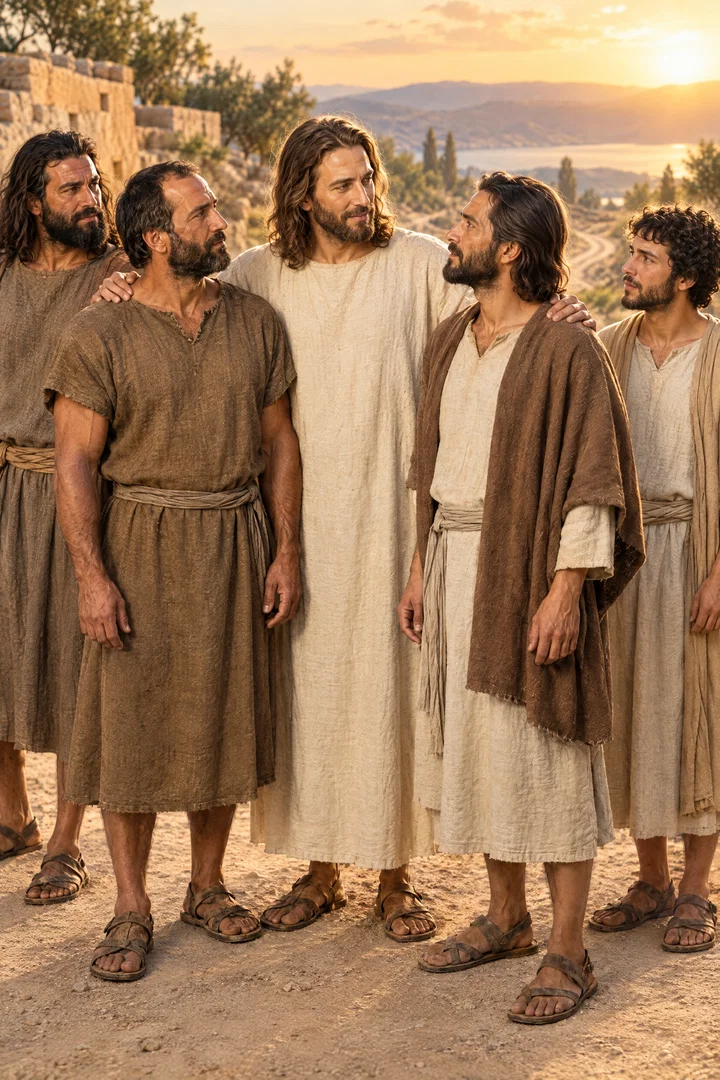
For that preaching mission they were to go shod with sandals and not put on two coats, taking only what was needed and traveling simply and unencumbered.DA 348Lt 45, 1900, par. 44–47ST They were to rely on the homes they visited for food and a place to rest.Lt 45, 1900, par. 44–47 The support received in those households helped guide where they should spend their time and teach.Lt 45, 1900, par. 44–47
Sources
Pioneers and periodicals
9 sources
The verse belongs to the disciples' first missionary tour, when Jesus called the twelve and sent them forth two by two with authority over unclean spirits, after which they returned to Him and reported their experiences.ST Apr 30, 1912ST Jun 7, 1899 He regulated their conduct and equipment for the journey to simple travel, commanding them to go shod with sandals and without a second coat, taking nothing extra for the way, neither staff, nor wallet, nor bread, nor money.STST Jun 7, 1899ST Jun 7, 1899ST Dec 3, 1894 The directions limited their provisions as they went out to preach and do their work, requiring them to travel simply with only what was needed.STST Jun 7, 1899ST Dec 3, 1894
The sandals were simple leather soles fastened with thongs and suited for hard service, rather than shoes regarded as a luxury, and the second coat was a second tunic or undergarment, whose wearing was associated with rank, wealth, or official position.ST Aug 4, 1881ST Apr 6, 1882 This outfit was the ordinary, simple clothing of fishermen, shepherds, and farmers, so for men of that class it involved no extraordinary self-denial or departure from local custom.ST Apr 6, 1882 They were to preserve simplicity and assume nothing, unlike the Pharisees.ST Apr 6, 1882
The rule belonged to a mission to the lost sheep of the house of Israel to preach that men should repent and that the kingdom of heaven is at hand, to heal the sick, raise the dead, cleanse the lepers, and cast out devils, freely giving as they had freely received, abiding in whatever house received them and shaking off the dust from their feet for a testimony against any city that received them not.ST Jun 7, 1899 Their plain equipment was to keep their attention on their mission, avoid needless burdens, display humility, and show trust in God as they relied on local hospitality for food and shelter.ST Aug 4, 1881 Traveling without extra provisions placed the missionaries among their fellow villagers and encouraged them to rely on their hospitality, gaining their confidence.ST Apr 6, 1882
The instruction not to take extra clothing or footwear applied to that particular journey in Palestine, not to gospel ministry in general.RH Aug 13, 1872 It taught the apostles faith and sacrifice as they began preaching and set an example for future ministers, but it did not forbid ministers on later journeys from taking needed supplies or from using available means to support the work.RH Aug 13, 1872
Sources