Matthew 13:26
But when the blade was sprung up, and brought forth fruit, then appeared the tares also.
Translations
American King James Version, King James Version, KJV Cambridge Paragraph Bible
But when the blade was sprung up, and brought forth fruit, then appeared the tares also.
But when the blade had sprung up, and brought forth fruit, then appeared the tares also.
But when the blade sprang up, and brought forth fruit, then appeared the tares also.
But when the blade sprang up and brought forth fruit, then appeared the tares also.
and when the herb sprang up, and yielded fruit, then appeared also the darnel.
But when the blade shot up and produced fruit, then appeared the darnel also.
And, when the blade shot up, and brought forth, fruit, then, appeared, the darnel also.
Berean Standard Bible, Majority Standard Bible
When the wheat sprouted and bore grain, then the weeds also appeared.
But when the blade sprang up and produced grain, then the darnel weeds appeared also.
But when the green stem came up and gave fruit, the evil plants were seen at the same time.
And when the blade was sprong vp, and brought forth fruite, then appeared the tares also.
Douay-Rheims (Challoner revision)
And when the blade was sprung up, and had brought forth fruit, then appeared also the cockle.
Pictures
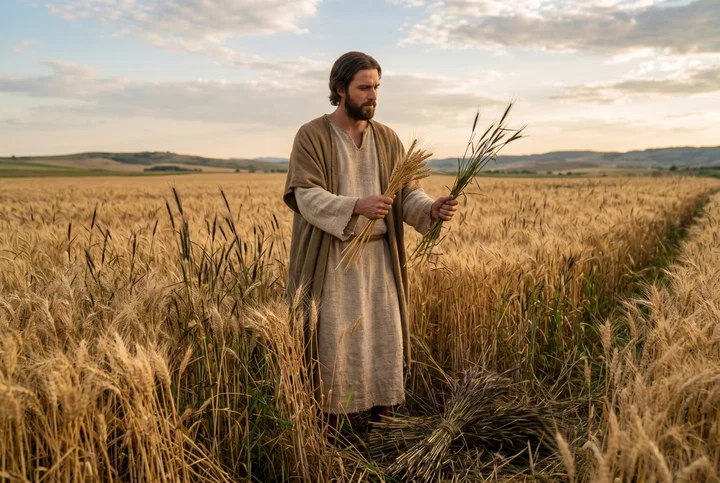
Cross-references 20 of 22
- Matthew 13:37-43
He answered and said unto them, He that soweth the good seed is the Son of man;
Explains the parable’s symbols and the final separation at the harvest.
- Matthew 13:30
Let both grow together until the harvest: and in the time of harvest I will say to the reapers, Gather ye together first the tares, and bind them in bundles to burn them: but gather the wheat into my barn.
The wheat and tares are gathered and separated at the harvest.
- Revelation 14:14-16
And I looked, and behold a white cloud, and upon the cloud one sat like unto the Son of man, having on his head a golden crown, and in his hand a sharp sickle.
The Son of Man reaps the ripe earth, gathering the wicked as tares for judgment.
- Matthew 13:40-43
As therefore the tares are gathered and burned in the fire; so shall it be in the end of this world.
Explains the harvest as the end-time separation of the wicked and righteous.
- Matthew 13:38
The field is the world; the good seed are the children of the kingdom; but the tares are the children of the wicked one;
Identifies the field as the world and the good seed and tares as two classes.
- Matthew 13:3-8
And he spake many things unto them in parables, saying, Behold, a sower went forth to sow;
The varied soils show fruitful hearers alongside those who fail to endure.
- Matthew 13:47-50
Again, the kingdom of heaven is like unto a net, that was cast into the sea, and gathered of every kind:
Both parables keep good and evil together until their separation at the end.
- Matthew 7:16
Ye shall know them by their fruits. Do men gather grapes of thorns, or figs of thistles?
Both use fruit to reveal the character and source of what bears it.
- Matthew 3:12
Whose fan is in his hand, and he will throughly purge his floor, and gather his wheat into the garner; but he will burn up the chaff with unquenchable fire.
Both describe separating the righteous from the wicked, with the wicked burned.
- Matthew 13:43
Then shall the righteous shine forth as the sun in the kingdom of their Father. Who hath ears to hear, let him hear.
The righteous shine in their Father’s kingdom after the harvest.
- Mark 4:28
For the earth bringeth forth fruit of herself; first the blade, then the ear, after that the full corn in the ear.
Both describe the blade appearing in the stages of growth toward harvest.
- Matthew 13:42
And shall cast them into a furnace of fire: there shall be wailing and gnashing of teeth.
The tares are gathered and cast into the furnace of fire.
- Revelation 14:14
And I looked, and behold a white cloud, and upon the cloud one sat like unto the Son of man, having on his head a golden crown, and in his hand a sharp sickle.
Christ reaps the harvest at the end, fulfilling the wheat and tares promise.
- Matthew 15:13
But he answered and said, Every plant, which my heavenly Father hath not planted, shall be rooted up.
Plants not planted by the Father will be rooted up.
- Matthew 13:40
As therefore the tares are gathered and burned in the fire; so shall it be in the end of this world.
The tares represent those destined for destruction at the end of the world.
- Matthew 13:37
He answered and said unto them, He that soweth the good seed is the Son of man;
identifies the sower of good seed
- Luke 3:17
Whose fan is in his hand, and he will throughly purge his floor, and will gather the wheat into his garner; but the chaff he will burn with fire unquenchable.
Both describe separating the wheat from what is unwanted.
- Matthew 13:49-50
So shall it be at the end of the world: the angels shall come forth, and sever the wicked from among the just,
The parable ends with the wicked separated from the just and punished.
- Luke 8:5-8
A sower went out to sow his seed: and as he sowed, some fell by the way side; and it was trodden down, and the fowls of the air devoured it.
Both describe the sower’s seed growing and bearing fruit among different soils.
- 2 Timothy 2:20
But in a great house there are not only vessels of gold and of silver, but also of wood and of earth; and some to honour, and some to dishonour.
The great house, like the field, contains both kinds.
Commentary part 1 of 3
Each commentary is drawn from primary sources: the writings of Ellen G. White and Adventist pioneers and periodicals. Each commentary is separate. Its own words are not a quotation; follow the references to read the source passages.
Ellen G. White
131 sources
When the grain grew and formed heads, the weeds sown among it came into view and could be seen standing with the wheat.ST Feb 9, 1915ST Nov 24, 1887COL 70.3 While green and young they look so much like wheat as to be hardly distinguishable, but at ripening the difference shows in the fruit, the wheat bowing with full heads and the worthless plants bearing no likeness to it.ST Nov 24, 1887Lt 86, 1907, par. 10–13ST May 10, 1877 The field is Christ's church in the world where both grow to ripeness for the harvest, the good seed being the children of the kingdom born of truth and the tares the children of the wicked one, sown not by God but by Satan while men slept in negligence and unwatchfulness.ST Feb 9, 1915COL 70.3COL 70.13T 113.1Ms 40a, 1890, par. 4–5 Thus the church on earth holds wheat and tares together until the end of the world, when angels without mistake will gather the righteous to eternal life and remove the wicked for destruction.Lt 102, 1901, par. 4–6Ms 52, 1899, par. 1–2Lt 98, 1896, par. 26–29ST May 10, 1877COL 75.1 People therefore must not judge hearts or uproot those they deem tares, lest wheat be destroyed and souls stumble, but leave judgment to Christ and His angels while showing forbearance, humility, and labor to strengthen and restore.Lt 86, 1907, par. 10–13Ms 52, 1899, par. 1–2Lt 98, 1896, par. 26–29TCBMP 143.1–145.1COL 74.2–3
Parable Words and Setting
The tares came into view among the wheat only as the plants grew, when the blade sprang up and brought forth fruit.ST Feb 9, 1915ST Nov 24, 1887COL 70.3Lt 102, 1901, par. 4–6Ms 52, 1899, par. 1–2 They are to be left to grow together with the wheat until the harvest, and the question of gathering them up beforehand is answered with No.Lt 102, 1901, par. 4–6Ms 52, 1899, par. 1–2 In this setting the field is Christ's church in the world, where true and false members grow together and where people grow and ripen for God's harvest.ST Feb 9, 1915COL 70.1COL 70.2 The church militant contains both, and their presence side by side is exposed over time.Lt 102, 1901, par. 4–6
While green and young the tares closely resemble the wheat and are hard to distinguish, so they cannot safely be pulled without risking damage to the wheat.ST Nov 24, 1887Lt 86, 1907, par. 10–13ST May 10, 18772SP 247.2–249.1 When the crop ripens and brings forth fruit they appear for what they are, for the worthless weeds then bear no likeness to the wheat that bows under the weight of its full, ripe heads.Lt 86, 1907, par. 10–13ST Nov 24, 1887COL 74.2–3 At harvest good and evil are clearly distinguished, with no likeness between them.Lt 86, 1907, par. 10–13ST Nov 24, 1887
The roots of wheat and tares are entwined, so ruthlessly tearing up the tares would disturb the wheat, destroy its young blades, and risk uprooting the precious grain.ST Nov 24, 1887COL 72.220MR 26.2 Removing them too soon can cause others who might have remained steadfast to stumble.COL 72.1 If left unchecked their rank growth spoils the wheat by crowding it, yet God's pity and compassion command both to keep growing together until the harvest, when only the Lord separates them at the appointed time.COL 71.120MR 26.2CT 188.3–189.2
The field is Christ's church in the world and the world itself, where good and evil grow together and members grow and ripen.ST Feb 9, 1915COL 70.1COL 70.2 The good seed are the children of the kingdom, people born of God's word, the truth, while the tares are the children of the wicked one, people brought in by Satan who embody error and false principles, bear Christ's name while denying His character, and by conduct dishonor God, misrepresent salvation, and put souls in danger.COL 70.3COL 71.1RH Apr 1, 1902 The tares become visible only after the wheat has grown and borne fruit, picturing how the presence of the wicked among God's people becomes apparent as their lives develop.RH Apr 1, 1902
Neither God nor His angels sow seed that produces tares; Satan sows them, and the sowing continues.COL 70.3Ms 40a, 1890, par. 4–5Ms 188, 1897, par. 12–13 They were sown among the wheat while the householder slept, and negligence gave opportunity for error to spread among hearts not sanctified.3T 113.1 That sleep is spiritual unwatchfulness, self-sufficiency, and neglect of constant prayer and watchfulness, when love of Christ is not abiding; Satan is wide awake while men sleep spiritually, watches to take God's standard from their hands and put his own there without their discerning it, exults when he can persuade men to take his arm and walk with him as his agents, and thereby carries on his rebellion as a devouring enemy who ensnares the unwary and blinds their understanding so they profess to work for God while serving the prince of darkness through dependence on human wisdom.3T 113.1Ms 40a, 1890, par. 4–5Ms 188, 1897, par. 12–13 Tares of misleading sentiments are thus sown among the good seed in the mind, forming yokes and fetters, and sleeping servants who silently allow evils that can be checked become implicated in guilt; it is high time to awake out of sleep, cast off Satan's arm, break connection with him, link up with Christ in meekness and lowliness, and with His help lifted up as a standard take a decided stand on the Lord's side through living faith, earnest prayer, watching, and anointed vision to discern the enemy.Ms 40a, 1890, par. 4–5Ms 188, 1897, par. 12–13Lt 116, 1906, par. 12–14Ms 128a, 1903, par. 7
The parable belongs to Christ's illustration of tares among the wheat, taught through familiar scenes of sowing, growing, and harvest that apply to people of every class.2SP 253.2–3ST May 1, 1901ST May 17, 1877 He used familiar things — fields, seed-sowers, and harvest — to make the things of God's kingdom plain and to impress divine truth on hearers' minds, so that seeing them later would recall His words.Ms 170, 1899, par. 12–13ST May 1, 1901ST May 17, 1877 Its stages of sowing, growing, and harvest teach that God works in nature and gives power to soil and seed, while people also have work to do.Ms 170, 1899, par. 12–13
Revealed by Fruit Over Time
Character hidden while closely joined is revealed as growth proceeds and fruit is borne, with evil fruit and conduct exposing tares and good fruit revealing wheat.Lt 86, 1907, par. 10–13Lt 98, 1896, par. 26–29ST Apr 14, 1914ST Jul 15, 1897ST Apr 9, 1912 While the blades are green the tares closely resemble the wheat, but when the blade brings forth fruit and the field ripens toward harvest they appear for what they are, the worthless weeds bearing no likeness to the wheat that bows under the weight of its full, ripe heads.Lt 86, 1907, par. 10–13Lt 98, 1896, par. 26–29 The church on earth is therefore mixed, with true Christians and counterfeit Christians growing together in every church and in every age, and the counterfeits become seen as character develops.Lt 98, 1896, par. 26–29ST Jul 15, 1897ST Apr 9, 1912 As wheat and tares grow both become apparent, the faithful ripening as wheat for God's harvest while the worldly ripen as tares for destruction, their opposing loyalties and sympathies leaving no unity of purpose between them.ST Apr 9, 1912RH Aug 25, 1910 At Corinth this was seen after Paul left, when the enemy's tares appeared among the wheat as they began to bear evil fruit, harmful influences gained ground, and some who had abandoned sinful habits returned to them and departed from the faith.ST Apr 14, 1914
Being in the church, having one's name on church books, outward appearance and profession of piety do not prove one is a Christian or joined to Christ.Lt 86, 1907, par. 10–13COL 74.2–3COL 74.1ST Feb 9, 1915Lt 19a, 1892, par. 16–18 Sinners who make a pretension of piety mingle for a time with the true followers of Christ, sharing the blessings and opportunities given to the righteous, and the semblance of Christianity is calculated to deceive many.Lt 86, 1907, par. 10–13COL 74.2–3 The tares are those whose names are entered on the church books but who are not joined to Christ, not transformed into His likeness, and not subjects of His kingdom, who may practice self-denial and perform good deeds yet misrepresent the Saviour in association and dealings with men and reveal another spirit than that of Christ under temptation.Lt 19a, 1892, par. 16–18Lt 38, 1894, par. 10 In contrast the true wheat build on Christ Jesus as the foundation, have the mind of Christ and live by every word that proceeds out of the mouth of God, crucify self, separate from idols and every unclean thing, worship God in spirit and truth and holiness, walk in the light, and have no occasion for stumbling.Lt 19a, 1892, par. 16–18 Character, not profession, decides destiny, for Christ will decide who is fit for heaven and judge each person by words and works, and in the harvest of the world at the end of the world there will be no likeness between good and evil.Lt 86, 1907, par. 10–13COL 74.2–3COL 74.1ST Feb 9, 1915 Those with only a superficial faith may turn away when Christ's words or the Gospel's requirements offend them, while those who have joined the church but have not joined Christ will be made manifest.Lt 86, 1907, par. 10–13ST Jul 15, 1897
Trials, testing, sifting and the approach of the end make manifest those regarded as wheat who are tares.SG4 234.2–235.1STA 84.2Lt 146, 1897, par. 11–13Lt 92, 1887, par. 2 Worldly-minded people whose spirit is aligned with the world may be present among Christ's followers, and the unjust may be found among the just, but a time of testing makes their character and allegiance plain as the church is tested and refined.SG4 234.2–235.1STA 84.2 As the end of time approaches God sifts His people and true character is revealed, the chaff is separated from the wheat and the tares are already binding in bundles to burn.Lt 92, 1887, par. 2Lt 9, 1869, par. 2 Those who have not the truth in the heart are not sanctified through the truth, having only tacked the truth onto carnal, unsanctified, unholy characters without bringing it into their lives and weaving it into their characters, and circumstances reveal their thoughts and actions in unholy works.Lt 92, 1887, par. 2 They will either be converted and sanctified by obeying the truth or remain with the world and share its reward, and a coming sifting will reveal those who have rejected the light given to them; all who claim to keep God's commandments must therefore live by every word that proceeds out of the mouth of God, and defects must be separated from a person or subdued by Christ's meek spirit rather than avoided by avoiding temptation and its exposure and growth.SG4 234.2–235.1STA 84.2Lt 92, 1887, par. 2Lt 9, 1869, par. 2
Wheat and tares remain distinct and do not change into each other.ST May 10, 1877COL 75.1COL 123.1–2ST Nov 24, 18872SP 249.2–250.2 The tares represent evil and false professors mingling with Christ's true followers, and they do not all turn into wheat but remain together until the harvest, which is the end of the world, when the difference is revealed and the wicked are removed and destroyed while the righteous are gathered to eternal life.ST May 10, 1877COL 75.1ST Nov 24, 18872SP 249.2–250.2 Repentance cannot turn tares into wheat, for the field is to be sown with pure wheat, not mixed with tares, and though mistaken teaching may be exposed as it develops, those who received chaff among the wheat have missed the light and experience they could have gained.Lt 136a, 1898, par. 23–27 The parable thus denies a temporal millennium in which tares are converted, teaching instead that good and evil remain together until that final separation rather than the wicked all turning to God before then.ST May 10, 1877COL 123.1–2 When the gospel work is complete, separation follows and each group's destiny is fixed forever, with no probation after the Judgment and reaping only as sown.COL 123.1–2
Mixed Church Until Harvest
The verse shows tares becoming visible among wheat as the plants grow and bear fruit, which explains how evil persons can be present within the church alongside the children of the kingdom.Lt 102, 1901, par. 4–6Ms 52, 1899, par. 1–2RCNBP 4.1–5.1RCNBP 15.2RCOC 6.2 The church on earth is mixed, with true Christians and counterfeit Christians growing together in every church and throughout its history, and the counterfeits are seen as character develops and fruit is borne.Lt 102, 1901, par. 4–6Ms 52, 1899, par. 1–2Lt 98, 1896, par. 26–29RCNBP 4.1–5.1RCNBP 15.2 The present church militant is wheat and tares together, not yet the perfect church triumphant, for not all who claim to be sons and daughters of God truly are.Lt 98, 1896, par. 26–29RCNBP 15.2RCOC 6.2 The wheat and tares are to be left to grow together until the harvest, since the work of condemning members and purifying the church is not committed to human agents who would make terrible mistakes and root up wheat with tares.Ms 52, 1899, par. 1–2Lt 98, 1896, par. 26–29RCNBP 4.1–5.1RCOC 6.21MR 362.2–363.1 All judgment is committed to the Son of God alone, who lived the law in humanity and understands temptation, weakness, and striving for Christian perfection.Ms 52, 1899, par. 1–2Lt 98, 1896, par. 26–29
The presence in the church of faulty, unconverted, hypocritical, worldly, or harmful persons whose pride, unbelief, or stubbornness injures others does not mean God has no church, invalidate its work, or prove Christianity false.RCNBP 4.1–5.1RCNBP 15.2RCOC 6.2COL 72.3 Their presence is no reason to abandon efforts to reach and save others, to despair, to refuse to believe in Christ and follow Him, to draw apart, disparage the church, disorganize or break it up, tear it to pieces, or hastily cut off those judged defective.Lt 30, 1895, par. 47–48RCNBP 4.1–5.1RCOC 6.21MR 362.2–363.1STMW11 24.2–25.1 Christ leaves these tares in place rather than entrusting people to uproot them, because doing so could destroy the wheat as well.Lt 30, 1895, par. 47–48RCNBP 4.1–5.1RCOC 6.2 Final separation is left until the harvest, when mature character makes wheat and tares distinguishable and angels—not people—separate them.RCNBP 4.1–5.1RCOC 6.21MR 362.2–363.1STMW11 24.2–25.1COL 72.3
The harvest is the end of the world, when good and evil remain together until that final separation rather than the tares being converted into wheat through a temporal millennium.ST May 10, 1877COL 75.1COL 123.1–22SP 249.2–250.2 The weeds grew among the good grain, resembled it while young and green, could not safely be pulled without risking damage to the wheat, and could be distinguished at harvest; so false professors of piety mingle for a time with true followers, bring reproach on Christianity, frustrate in part the work of salvation, deceive people, and lead observers to condemn the whole field.ST May 10, 18772SP 247.2–249.1ST Nov 24, 18872SP 249.2–250.2 At the harvest the difference is revealed and each group’s destiny is fixed forever with no probation after the Judgment: the wicked are removed and destroyed while the righteous are gathered safely to eternal life and the heavenly garner.ST May 10, 1877COL 123.1–22SP 247.2–249.1ST Nov 24, 18872SP 249.2–250.2
That separation of wheat from tares is the third angel’s work of selecting the precious from the vile, selecting the faithful, sealing and binding the wheat for the heavenly garner, a work that should claim the whole mind and attention.SCEV 38.3Ms 3, 1854, par. 16–17Ms 1, 1854, par. 7–8Ms 3, 1853, par. 7 At Corinth the enemy’s tares appeared after Paul left, when the good seed he had sown was joined by evil influences planted by the enemy that later emerged in conduct.ST Apr 14, 1914SLP 149.1AA 299.2–3 Harmful influences gained ground, some became careless, followed natural desires, returned to sinful habits they had abandoned at conversion, and departed from the faith as they began to bear evil fruit.ST Apr 14, 1914SLP 149.1AA 299.2–3
Divisions will come in the church and two parties will be developed, with wheat and tares growing up together until the harvest.Lt 19a, 1892, par. 16–18Ms 32, 1896, par. 34–3717MR 17.2–18.1 This mingling continues even while new life from heaven takes possession of God’s people and the work to be done now is sounding the last message of mercy to a fallen world, growing deeper and more earnest to the very close of time.Ms 32, 1896, par. 34–3717MR 17.2–18.1 The tares are those whose names are entered on church books but who are not joined to Christ, not transformed into His likeness, and not subjects of His kingdom; they may practice self-denial and perform good deeds, yet they are not Christians, and God does not need their profession, counsels, acknowledgments, cooperation or service to promote His glory or establish His kingdom.Lt 19a, 1892, par. 16–18 Under temptation they reveal another spirit than Christ’s, and in association and dealings misrepresent the Saviour, but the will of God is still done in the earth and His work is not long hindered by their objections or resistance.Lt 19a, 1892, par. 16–18 In contrast the true wheat build on Christ as foundation, have the mind of Christ and live by every word from God’s mouth, crucify self, hear the call to come up higher to holier ground, separate from idols and every unclean thing, worship in spirit and truth and holiness, walk in the light, and have no occasion for stumbling.Lt 19a, 1892, par. 16–18
Leave Judgment to God
No one has the right to measure the character of fellow members, judge hearts, or attempt to uproot those deemed to be tares, for human eyes cannot read hearts and would make terrible mistakes.Ms 52, 1899, par. 1–2Lt 98, 1896, par. 26–29Lt 30, 1895, par. 47–48Ms 92a, 1898, par. 14–18 The tares closely resemble the wheat while the blades are green and remain closely joined to true disciples, only appearing for what they are when the blade brings forth fruit and the field ripens toward harvest, when the worthless weeds bear no likeness to the wheat that bows under full ripe heads.Lt 86, 1907, par. 10–13COL 72.1COL 74.2–3COL 74.1 To try to gather them prematurely risks uprooting the precious grain with them and destroying the wheat as well.Lt 86, 1907, par. 10–13Ms 52, 1899, par. 1–2Lt 30, 1895, par. 47–48TCBMP 143.1–145.1Lt 64a, 1895, par. 12–16 Such premature removal can cause others who might have remained steadfast to stumble, and causes needless division in ministers and churches who must instead act with patience, prayer, and careful judgment.COL 72.1TCBMP 143.1–145.1 The church on earth is therefore mixed in every church, true and counterfeit Christians growing together, the present church militant of wheat and tares together and not yet the perfect church triumphant, and seeing faults never justifies refusing to be a Christian or to believe and follow Christ.Lt 98, 1896, par. 26–29Lt 30, 1895, par. 47–48
All judgment is committed to the Son of God alone, who lived the law in humanity and alone understands human weakness, striving for perfection, and the strength of temptations that come to every child of His.Ms 52, 1899, par. 1–2Lt 98, 1896, par. 26–29 Christ determines who belongs to Him and who is fit for heaven, judging each person by words and works, for profession and being in the church do not prove one a Christian and character, not profession, decides destiny.COL 74.2–3COL 74.1 At the harvest at the end of the world both are left to grow together until then, when the Lord alone separates them, gathering the righteous to God and removing the wicked.Lt 98, 1896, par. 26–29Lt 64a, 1895, par. 12–16 God's angels can identify and separate them without error and gather the wheat without mistake, for fruits reveal character where appearance cannot reliably distinguish them.Ms 92a, 1898, par. 14–18
The command to let both grow together until the harvest forbids using civil power to punish those considered heretics, even by imprisonment, torture, or death, for such a course follows Satan's spirit rather than Christ's and misrepresents God.COL 73.1 It likewise forbids violently attacking, denouncing, or excommunicating those considered to be in error, and forbids hastily trying to purify the church by cutting off those judged defective, since removing them prematurely risks uprooting wheat.RCNBP 4.1–5.1RCNBP 6.2 Judgment of those who despise truth is to be left to God, not exercised in anger by people.13MR 312.1 Their presence among the wheat in the organized church does not justify drawing apart from the body, weighing the church in human scales, pronouncing judgment against it, or tearing it to pieces.RCOC 10.1–2
The verse teaches forbearance toward fellow men rather than condemnation and judgment of others, and humility and distrust of self.Lt 86, 1907, par. 10–13COL 74.1 Evil must be allowed to develop fully enough for its character to be seen, illustrating God's patience in allowing Satan's character and the effects of evil to become clear, just as in dealing with men and angels He spared the author of evil to fully develop his character rather than leave doubt of His goodness, justice, and love.Lt 86, 1907, par. 10–13COL 72.2 Condemnation, criticism, and feeding on faults would rank the critic among tares, while God requires members instead to live as good examples and represent Jesus.5T 333.3 Ministers and churches must therefore show patience, forbearance, and careful judgment, feed on Christ, labor to strengthen, restore, and vitalize the church, and help inspire it with zeal, humbleness, devotedness, deeper sanctification, and the very atmosphere of heaven.TCBMP 143.1–145.15T 333.3RCOC 10.1–2
Satan's Sowing of Error
Satan diligently sows falsehood, evil and error alongside sound teaching and sound doctrine, and the tares become visible as the wheat grows and bears fruit.ST Nov 24, 1887GC88 248.34SP 173.1GC 248.3 He sows secretly in the human heart, where evil takes root, grows, bears harmful fruit, and sometimes crowds out and destroys what is good.ST Nov 24, 1887 He guards the planted error so it strengthens, eclipses truth, makes the wheat less abundant, and robs truth of its power among those who once rejoiced in it.STMW11 9.2–10.1Ms 30, 1898, par. 5–6 Sin thus planted spreads from life to life like seed carried into other fields.ST Nov 24, 1887
The tares are erroneous sentiments, deceptive theories, heresy, doubts and questionings, unbelief and skepticism, seducing spirits, fanaticism, strife and criticism causing division, and false witness injuring reputations.ST May 10, 18772SP 247.2–249.1Lt 200, 1906, par. 6–9 They mingle with truth and with true followers, resemble wheat while young, confuse discernment, make it difficult to distinguish right from wrong, and cannot safely be torn out without risking the wheat.ST May 10, 18772SP 247.2–249.16T 162.2–164.2 As they strengthen they hinder salvation, frustrate in measure Christ's work to save from Satan's power and make hearts fruitful in good works, bring reproach on Christianity, make the world doubt its truths, and become a barrier keeping many from believing.ST May 10, 1877ST Nov 24, 1887STMW11 9.2–10.1 To sow them is to pick at straws, create straw images to attack, pass along Satan's suggestions, and become a channel for doubt, so that as fast as one objection is cleared another is offered.Lt 200, 1906, par. 6–9
Tares are sown through education that mixes truth with erroneous ideas from infidel writers, fables, false science and new views, corrupting young minds and producing a harmful harvest.RH Jul 3, 1900CT 30.3CE 82.1–2Ms 45, 1898, par. 22 Objectionable books, novels and commercial literature corrupt teachers and students, lead away from Scripture and piety, and fill minds so full of error that there is no room for truth.6T 162.2–164.2Ms 45, 1898, par. 22 Preaching and printing seductive sophistries sows seed that springs up to unsettle faith, and those who place such ideas before young or old make themselves co-workers with Satan, often without thinking what kind of seed they sow, whose harvest they must at last garner.STE 159.1Ms 45, 1898, par. 22
The sowing succeeds while men sleep, for the enemy sowed among the wheat while the householder slept and negligence gave opportunity to spread error among unsanctified hearts.3T 113.1 That sleep is spiritual unwatchfulness, self-sufficiency, neglect of constant prayer and watchfulness, failure of abiding love for Christ, and minds not fed by the Spirit.3T 113.1Ms 40a, 1890, par. 4–5Lt 116, 1906, par. 12–14 Satan never slumbers but works while those responsible are unaware to corrupt minds and characters, link minds to himself without their knowing, blind understanding to specious devices, take God's standard from His people's hands and put his own there, and persuade men to take his arm, walk with him, and advance woe and misery as his agents professing to work for God while serving darkness through human wisdom.Ms 40a, 1890, par. 4–5FE 90.1Ms 188, 1897, par. 12–13 The call therefore is to awake out of sleep, watch and pray, discern with anointed vision through living faith, break connection with Satan, link with Christ in meekness and lowliness, take a decided stand with God's help as a standard against the enemy, and not silently allow checkable evils, lest silence support evil, implicate sleeping servants in guilt, and contribute to loss of souls.Ms 40a, 1890, par. 4–5Ms 188, 1897, par. 12–13Lt 116, 1906, par. 12–14Ms 128a, 1903, par. 7
The tares trace to the enemy's work through the curse and the fall, not to God's work, for God's spoken creation was perfect, nothing He made was useless, and all nature obeys His will.Lt 131, 1897, par. 3–517MR 58.1–59.16MR 30.2 Through disobedience man gave Satan opportunity to sow evil in the human heart, and ground that at first produced only good began to produce tares.Lt 5, 1900, par. 4 That seed grows as man reasons about what he once saw as opposed to Scripture until he views it favorably, until the tempter binds the once steadfast soul with confederacies of evil and tares appear even in men in positions of trust, where instead of fine gold of character are revealed principles bringing disaster, defeat, spiritual blindness, nakedness and despair.17MR 223.2–3 Rational beings alone add confusion by resisting God instead of obeying like nature, and must live to God, honor Him, trust the all-wise and all-sufficient Saviour whose perfection is to be revealed in them, while God works in man to defeat Satan's plans in continual warfare in which cultivation of soil mirrors His work on the soul.17MR 58.1–59.1Lt 5, 1900, par. 46MR 30.2
In institutions and fields of labor the tares appear as worldly elements entering church and institutions, gaining positions of trust, corrupting them, and blurring the distinction between those who serve God and those who do not.STMW6 4.1–2 In school life wrong associations, influences and sowing become visible among students, requiring faithful guardians who watch for souls, watch and pray, mark sowers of tares, set them in order by reproof, rebuke, correction and wholesome words, and refuse to let evil sowing continue in precept and practice because youth face spiritual and physical danger from contamination.Ms 81, 1897, par. 9 In gospel medical missionary work evils and objectionable sentiments choke the work and must be confronted and corrected rather than allowed to spread.Ms 128a, 1903, par. 9 At Battle Creek tares were sown in hearts of young helpers and nurses through contact with wealthy worldly patients, their display, favoritism, and inducements to enter their employ, tempting youth, surrounding them with leading-astray influences, and robbing fitness for service.YGBCOEP 53.3–4STB 332.3–4 In the long-neglected Southern field Satan had sown tares among the colored people for years, making the work harder yet leaving undiminished the duty to begin without delay.SW 39.1
All along, including in the history of the third angel's message, tares grow among wheat among believers as men who do much harm to God's cause, spots in feasts of charity and wolves among sheep ready to tear and devour, delighting to create lies, bear false witness, and cruelly injure reputation.STGC 87.2Ms 162, 1902, par. 43Ms 106, 1903, par. 60 They are left mixed with the wheat until God has appointed a day to judge the world in righteousness, when separation is made and each is rewarded according to works.STGC 87.2Ms 162, 1902, par. 43 In that day the destroyers of reputation are revealed as hypocrites who knew they dealt unjustly, and by their own lips comes testimony clearing from suspicion those against whom they reported evil.STGC 87.2Ms 162, 1902, par. 43Ms 106, 1903, par. 60
Sowing Wheat in Life
This life is the sowing time in which every person decides by seed-sowing whether to produce tares or a harvest of wheat.CT 491.1 What is sown bears fruit, for wheat and tares are the two kinds of character constantly growing from letters, thoughts, words, and the spirit of daily duties.Ms 54, 1899, par. 16–17Ms 73, 1911, par. 14 Pledging oneself to God makes the sowing produce wheat, and God works with the one who so pledges, increasing usefulness and entrusting talents to be used in His strength to produce a precious harvest.CT 491.1 The wheat is abiding in the true vine and partaking of the divine nature as devoted servants of Christ, growing in piety and grace by appropriating high and holy influences, while the tares are under the leadership of the enemy while imbibing pride and self-indulgence, growing in worldliness and sin by appropriating low and debasing influences, with worldly influences imperceptibly affecting the mind and forming the character.Ms 54, 1899, par. 16–17 When other than pure wheat is sown, tares appear when the blade springs up and bears fruit, so labor is of value with God only as it works the works of God.Lt 69, 1896, par. 29–30 Christians are to share truth and share knowledge of God with neighbors, relying on Christ so work is not defective, practicing truth and treating others patiently, kindly, and in a friendly way rather than sowing tares, for this work bears fruit and causes light and truth to shine in their own hearts.Ms 59, 1886, par. 7–8Ms 73, 1911, par. 14 Seeds of tares can be sown and must not be entertained in the mind.Lt 407, 1906, par. 1
The heart is a field that must be planted with truth and heavenly qualities through religious training, otherwise Satan sows tares there such as stubbornness, selfishness, love of pleasure, pride, and sinfulness, which take over the heart's field.ST Aug 6, 1912 An untrained mind is like an uncultivated field, and unless parents keep watchful guard the enemy sows tares in the minds of children and youth that will spring up to bear evil fruit.CT 136.4 The soil of the mind needs unceasing care and cultivation by sowing it with the precious seed of Bible truth, meaning teaching children to reject trashy, exciting tales and to turn to sensible reading that leads the mind to take interest in Bible story, history, and argument, and reading that throws light upon the Sacred Volume and quickens desire to study it is beneficial and not dangerous.CT 136.4 Parents should sow what is good and pure in children while young, before Satan can occupy the field and plant evil, and if parents first fill young minds with good principles Satan has less opportunity to plant evil influences.ST May 20, 1889ApM 58.1–59.2 Evil sown among good seed becomes visible as it grows and bears fruit, and tares become visible as the planted crop grows, representing harmful influences that can take root and produce evil unless parents guard and cultivate the mind with Bible truth.ST Aug 6, 1912 Even with tares present, nature still speaks of God's goodness, with the love that restores seen in singing bird and opening blossom, in rain and sunshine, in summer breeze and gentle dew, in ten thousand objects from the oak of the forest to the violet blossoming at its root, but the tare in nature represents the evil that blights and mars whose teaching can be read aright only in the light that shines from Calvary, through Bethlehem and the cross showing how good is to conquer evil and how every blessing is a gift of redemption.ED 101.2–3
Good instruction is like clean seed in children's hearts, while harmful influences are like weeds, and as the crop grows the tares appear too, warning that evil allowed to grow alongside good will increase.SG4 298.1ST Apr 17, 1884 Preventing that harm is easier and safer than trying to uproot it later, for once allowed to grow the enemy's bad seed takes root and produces a harvest and may become harder to remove after taking root.SG4 298.1SG4 301.2 Parents should sow good instruction early rather than trust that good will eventually overcome evil, and must begin early to guard children's virtue.ST Apr 17, 1884ApM 58.1–59.2 The evil seed sown in the heart eventually grows and becomes visible, and wrong habits and principles allowed to take root in youth may bear lasting fruit so effects can be seen throughout life and leave marks that remain, with efforts to correct them later doing little.1T 403.1SG4 301.2 Evil learned in youth can grow and spread more rapidly than good, making harmful impressions difficult to remove later, so it is safer to plant good influences in children's hearts from the beginning than to expect evil influences to fade away.CTBH 138.3–139.1
A student's influence sows either wheat or tares: wrong conduct can sow tares, while faithful conduct sows the good seed of the kingdom.FE 301.2–3 Students should do their best and work with Christ to draw people to Him rather than discouraging anyone from doing right, living and working in a way that encourages right doing rather than adding a harmful influence.FE 301.2–3Lt 11, 1893, par. 24–28 Sowing tares represents students' harmful influence, which can trouble and discourage teachers and cause others to stumble, and students who tempt or discourage teachers are sowing tares whose effects can harm others even among people pursuing good work.FE 249.2SCE 28.1 Harmful seeds sown in hearts — such as envy, fretting, complaining, and evil thoughts — can spring up and take hold like tares among good growth, for words and actions can plant these seeds in one another, so children should be kind and thoughtful and resist temptations that strengthen defective traits.1MR 346.3–4 Praising people who did not honor God is sowing tares among the wheat in publishing material that mixes harmful influence with what should nourish God's people, and can misdirect young people from holiness.Lt 106, 1902, par. 4–6
Ministers and leading church workers sow tares when they neglect personal religion and their own soul's interest and lack a sense of their own shortcomings.Lt 2, 1898, par. 1–4 Not sowing tares requires close self-examination whether in the faith and in the love of Christ, with sanctified hearts where Christ can abide, so that when truth known in theory is in the heart the worker reveals truth as it is in Jesus and represents His character in every sphere of action.Lt 2, 1898, par. 1–4 Sowing impure seed means arousing suspicions that have no true foundation through unguarded words and actions, so ministers must closely guard words and actions and take time to study the Word of God so they have food that will nourish souls instead of seed that brings forth tares.Lt 69, 1896, par. 29–30 The tares are seeds of doubt and unbelief sown by words and actions, especially by those in responsible positions who criticize the work of laborers together with God and reject the messages they bear, working both openly and secretly under guidance of evil angels to counteract what God appointed His divine agencies to perform through human agencies, seeing with defective and perverted eyesight with imagination inspired by satanic agencies and seeing many things in false light, and unless they repent they will soon, like Esau, find no place for repentance though they seek it carefully with tears.Lt 87, 1896, par. 15 Sowing tares is what happens when the heart has not been wrought upon, meaning tame, lifeless sermonizing, meeting the world's standard, catching the world's ideas, and speaking smooth things and prophesying deceit instead of giving the trumpet a certain sound with lips touched with a live coal and a living testimony, which each one especially in responsible positions must avoid by heart work.Lt 92, 1891, par. 5 The sowing of tares represents the introduction of wrong principles into God's work, and the spirit behind this sowing will be revealed in the books of heaven at the judgment.Ms 65, 1898, par. 3
The thirteenth chapter of Matthew must be read as for life and heeded, letting no man blind by human sophistries or mocking burlesque of sacred things, for it contemplates the future destiny of beings for whom Christ gave His life and warns who shall stand before the judgment seat of Christ acquitted, without spot or stain upon character.Lt 317, 1905, par. 7–9 Those saved must form characters without fault in sight of a pure and holy God, doing the work God has given, wearing Christ's yoke and learning His meekness and lowliness, for at the great day every man will be judged according to deeds done in this life.Lt 317, 1905, par. 7–9 The tares becoming visible when grain grows and bears fruit points to the need to heed Christ's teaching and be ready to stand acquitted at the judgment with character free from stain.Lt 317a, 1905, par. 6–8 All who believe God's Word are to awake out of sleep, to receive precious Bible light appropriate for this time showing perils right upon them, and to let that light lead to diligent study of Scriptures and critical examination of positions held, for God allows heresies to come among His people when other means fail to arouse them, and the appearing of tares with wheat separates chaff from wheat.ST Nov 15, 1905 Good and evil grow together in the world so that as good seed grows and bears fruit the tares become visible, with good and evil workers continuing sowing in the same field until the great harvest in decided opposition and vital conflict before all the world till the close of earth's history.RH Apr 3, 1900Lt 176, 1900, par. 3 God tests and proves His people in a time when everything that can be shaken will be shaken so that what cannot be shaken may remain, having long borne with men who provoke Him by stubborn self-indulgence, and clear spiritual sight is needed to distinguish evil mixed among good.Lt 176, 1900, par. 3Lt 208, 1900, par. 6
Exciting meetings should be judged by their actual harvest, since excitement without souls gathered is not fruitful labor.Lt 29, 1872, par. 1–2
Sources