Luke 9:28
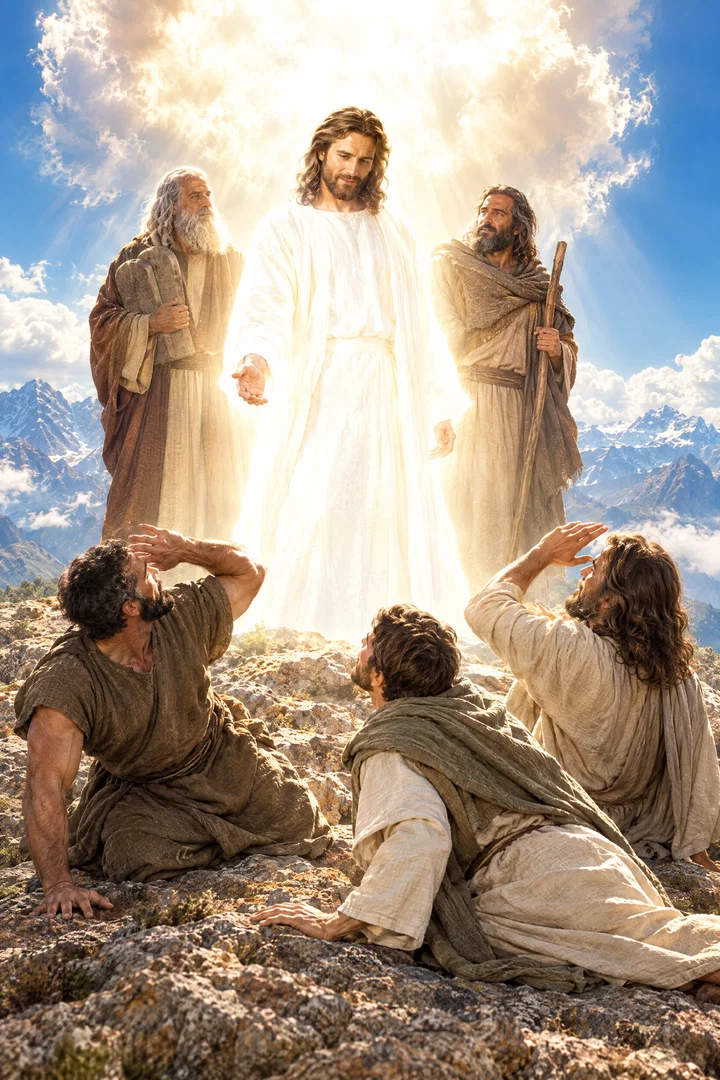
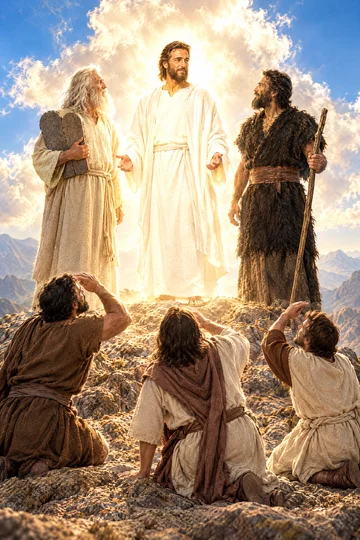
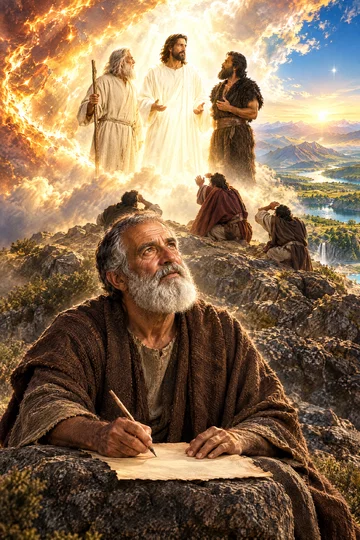
And it came to pass about an eight days after these sayings, he took Peter and John and James, and went up into a mountain to pray.
Translations
American King James Version, King James Version, KJV Cambridge Paragraph Bible
And it came to pass about an eight days after these sayings, he took Peter and John and James, and went up into a mountain to pray.
And it came to pass, about eight days after these sayings, he took Peter, and John, and James, and went up upon a mountain to pray.
And it came to pass about eight days after these sayings, he took with him Peter and John and James, and went up into the mountain to pray.
And it came to pass about eight days after these sayings, that he took with him Peter and John and James, and went up into the mountain to pray.
And it came to pass, after these words, as it were eight days, that having taken Peter, and John, and James, he went up to the mountain to pray,
And it came to pass after these words, about eight days, that taking Peter and John and James he went up into a mountain to pray.
And it came to pass, after these words, about eight days, taking with him Peter and John and James, he went up into the mountain to pray.
Berean Standard Bible, Majority Standard Bible
About eight days after Jesus had said these things, He took with Him Peter, John, and James, and went up on a mountain to pray.
About eight days after these sayings, he took with him Peter, John, and James, and went up onto the mountain to pray.
And about eight days after he had said these things, he took Peter and John and James with him and went up into the mountain for prayer.
And it came to passe about an eyght dayes after those wordes, that he tooke Peter and Iohn, and Iames, and went vp into a mountaine to pray.
Douay-Rheims (Challoner revision)
And it came to pass about eight days after these words, that he took Peter, and James, and John, and went up into a mountain to pray.
Pictures
Cross-references 20 of 25
- Matthew 17:1-8
And after six days Jesus taketh Peter, James, and John his brother, and bringeth them up into an high mountain apart,
Parallel account of Jesus’ transfiguration on the mountain.
- Mark 9:2-8
And after six days Jesus taketh with him Peter, and James, and John, and leadeth them up into an high mountain apart by themselves: and he was transfigured before them.
Parallel account of the transfiguration, occurring after six days.
- 2 Peter 1:16-18
For we have not followed cunningly devised fables, when we made known unto you the power and coming of our Lord Jesus Christ, but were eyewitnesses of his majesty.
Peter recalls the holy mount as eyewitness evidence of Christ’s majesty and coming.
- Matthew 16:28
Verily I say unto you, There be some standing here, which shall not taste of death, till they see the Son of man coming in his kingdom.
Jesus promises that some present will see his kingdom, fulfilled in the transfiguration.
- Mark 9:1
And he said unto them, Verily I say unto you, That there be some of them that stand here, which shall not taste of death, till they have seen the kingdom of God come with power.
The promise that some would see the kingdom come with power is fulfilled in the transfiguration.
- Luke 9:35
And there came a voice out of the cloud, saying, This is my beloved Son: hear him.
The voice from the cloud identifies Jesus as God’s beloved Son and commands the disciples to hear him.
- Matthew 17:2
And was transfigured before them: and his face did shine as the sun, and his raiment was white as the light.
Jesus appears in glory at the transfiguration, with a shining face and radiant clothing.
- Matthew 17:9
And as they came down from the mountain, Jesus charged them, saying, Tell the vision to no man, until the Son of man be risen again from the dead.
Jesus calls the mountain experience a vision and tells the disciples to keep it private until his resurrection.
- Luke 9:33
And it came to pass, as they departed from him, Peter said unto Jesus, Master, it is good for us to be here: and let us make three tabernacles; one for thee, and one for Moses, and one for Elias: not knowing what he said.
Peter names Moses and Elijah and proposes three tabernacles.
- Luke 6:12
And it came to pass in those days, that he went out into a mountain to pray, and continued all night in prayer to God.
Both describe Jesus praying on a mountain.
- Luke 9:32
But Peter and they that were with him were heavy with sleep: and when they were awake, they saw his glory, and the two men that stood with him.
The disciples awaken and see Jesus’ glory and the two men with him.
- Matthew 26:37
And he took with him Peter and the two sons of Zebedee, and began to be sorrowful and very heavy.
The same three disciples accompany Jesus as he prays.
- Luke 22:39-40
And he came out, and went, as he was wont, to the mount of Olives; and his disciples also followed him.
Peter, James, and John accompany Jesus as he goes to pray.
- 2 Peter 1:18
And this voice which came from heaven we heard, when we were with him in the holy mount.
Peter identifies the holy mount as the setting of the event.
- Luke 9:36
And when the voice was past, Jesus was found alone. And they kept it close, and told no man in those days any of those things which they had seen.
After the glory departs, Jesus is found alone.
- Matthew 17:3
And, behold, there appeared unto them Moses and Elias talking with him.
both record Moses appearing and talking
- Exodus 34:29-35
And it came to pass, when Moses came down from mount Sinai with the two tables of testimony in Moses’ hand, when he came down from the mount, that Moses wist not that the skin of his face shone while he talked with him.
Moses’ face shone after meeting with God, though less gloriously.
- 1 Kings 19:11-13
And he said, Go forth, and stand upon the mount before the LORD. And, behold, the LORD passed by, and a great and strong wind rent the mountains, and brake in pieces the rocks before the LORD; but the LORD was not in the wind: and after the wind an earthquake; but the LORD was not in the earthquake:
The passage alludes to God’s voice at Horeb as another revelation.
- 2 Kings 2:11
And it came to pass, as they still went on, and talked, that, behold, there appeared a chariot of fire, and horses of fire, and parted them both asunder; and Elijah went up by a whirlwind into heaven.
Elijah was translated to appear with Moses at the transfiguration.
- Matthew 17:14-18
And when they were come to the multitude, there came to him a certain man, kneeling down to him, and saying,
The boy is healed after Jesus comes down from the mountain.
Commentary
Each commentary is drawn from primary sources: the writings of Ellen G. White and Adventist pioneers and periodicals. Each commentary is separate. Its own words are not a quotation; follow the references to read the source passages.
Ellen G. White
41 sources
About eight days after his sayings, after six gloomy days of journeying toward his expected death, Jesus took only Peter and John and James up a rugged mountain in the evening to seek solitude in prayer.DA 419.1–4Ms 72, 1911, par. 1–53RED 115.1–116.1ST Jun 7, 1877DA 418.2 He prayed through the night for strength to face suffering and temptation and for his disciples, that their faith would not fail but that they would see his glory as God's Son.DA 419.1–43RED 115.1–116.1ST Jun 7, 1877DA 421.1–2 As he prayed he was transfigured before them with face shining like the sun and raiment white and glistening, and Moses and Elijah came from heaven to comfort him and speak with him of his coming death in Jerusalem while the Father's voice proclaimed him the beloved Son.2SP 328.1–329.1EW 134.1ST Jun 7, 1877SG1 43.2AA 534.2 The sight was given to prove him the promised Messiah and to strengthen both him and the three witnesses for his betrayal and crucifixion, and it showed his kingdom in miniature with Moses representing those raised from the dead and Elijah those translated alive at his coming.EW 131.3EW 134.12SP 336.2SG1 40.13RED 122.1 The mount of glory then leads back to the plain, where his servants must leave moments of illumination to work among those enslaved by Satan with self-sacrificing service.DA 429.2–430.1ST Jan 22, 1902
Time, Place, and Companions
The mountain scene comes about eight days after the preceding sayings.DA 419.1–4 Those intervening days were six gloomy days in which the disciples sorrowed and doubted and hoped and feared while journeying toward the city where they expected his death.DA 418.2 The whole account belongs to his final time with them before he was taken from them, when he was reflecting light upon the people and impressing what he had taught upon the disciples' memory.Ms 72, 1911, par. 1–5
It was evening after a day spent in travel and in teaching and healing the people.DA 419.1–43RED 115.1–116.1ST Jun 7, 1877 He led the disciples up a rugged and steep mountain, seeking solitude away from the crowds for meditation and prayer.3RED 115.1–116.1ST Jun 7, 18772SP 326.1–2 The climb left both him and the disciples weary.DA 419.1–43RED 115.1–116.1ST Jun 7, 1877 Evening was falling as they ascended, and the gathering darkness matched their sorrow over his foretold suffering.2SP 326.1–2
He took with him only Peter and John and James.DA 419.1–4ST Dec 17, 1912AC1 68.1 These three were the closest to him, admitted to witness his glory on the mountain and afterward to serve as his chief witnesses after his death.AC1 68.1RH Apr 27, 1911BS 45.1–3 Judas was not included among the chosen three.ST Dec 17, 1912 His exclusion at once stirred jealousy in him and marked his shipwreck of faith, opening the door for doubt and envy and suspicion and bitterness and hatred to dwell in him, with the leaven of disaffection developing rapidly from that point.ST Dec 17, 1912
Prayer on the Mountain
Going up the mountain to pray was His custom when preparing for an important work or a great trial, seeking solitude in the mountains and spending the night in prayer.MH 509.1 A night of prayer had likewise gone before the choosing of the apostles, the sermon on the mount, the agony before the judgment hall and the cross, and the resurrection glory.MH 509.1 The transfiguration belongs among those occasions of prayer before trial and decisive work.
There He prayed earnestly and pleaded through the night for strength to bear His afflictions and to face the test, suffering, and coming trial ahead.DA 419.1–43RED 115.1–116.1ST Jun 7, 18772SP 327.1 He sought help to withstand continual temptation.Ms 202, 1899, par. 12 At the same time He prayed for grace to help His disciples endure their coming trials, that their faith would not fail.DA 419.1–43RED 115.1–116.1ST Jun 7, 18772SP 327.1
He also prayed that they might witness a manifestation of His divinity and receive a visible sign of it and a symbol of His kingdom.3RED 115.1–116.1ST Jun 7, 1877Ms 202, 1899, par. 12 He asked that they should see His glory and recognize Him as the Son of God, so their doubts would be removed and their faith strengthened.DA 419.1–43RED 115.1–116.1ST Jun 7, 18772SP 327.1 By that revelation they were to understand that His death belonged to God's plan of redemption and was necessary for His own glory, the Father's glory, and humanity's sharing in that glory.DA 419.1–43RED 115.1–116.12SP 327.1Ms 202, 1899, par. 12
The three had been brought along to watch and pray with Him, yet being weary they fell asleep.2SP 327.1 His prayer for a revelation of divine glory to strengthen them was heard.DA 421.1–2 They awoke to see Him transfigured in heavenly radiance with Moses and Elijah.DA 421.1–2
Glory and Heavenly Visitors
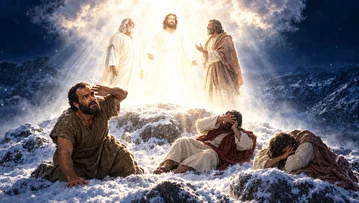
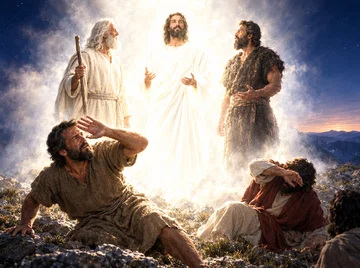
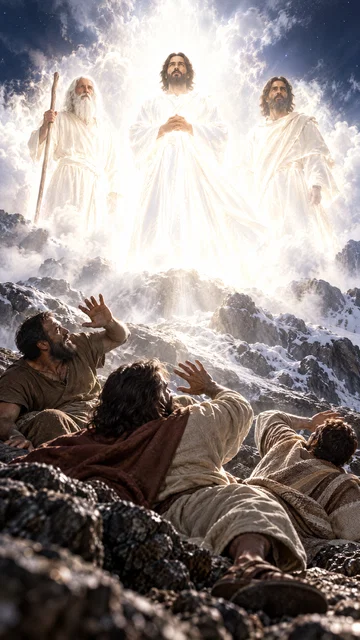
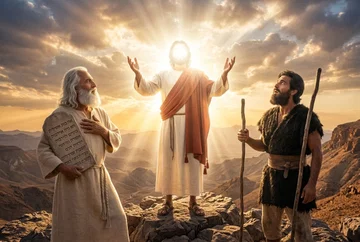
As He prayed He was transfigured before them, the fashion of His countenance was changed and His face shone like the sun, lighted with divine glory shining through His humanity, while His raiment became white and glistening and a cloud overshadowed them.EW 134.1SG1 43.2SG1 40.1Lt 64, 1900, par. 4 They beheld that excellent majesty with fear and astonishment, seeing as much of that glory as human beings could bear, so great a radiance that they must shield their eyes.SG1 43.22SP 330.2–3Lt 64, 1900, par. 4 God sent Moses and Elijah to speak with Him about the sufferings and death He would face in Jerusalem, and they came as honored messengers and bearers of light and glory from the Father to His Son.2SP 328.1–329.1ST Jun 7, 18773RED 117.1–118.1SG4 58.2PP 479.2–480.2 Their presence brought Him heaven's glory and comfort and glorified Him as He prepared to complete His mission.2SP 328.1–329.1ST Jun 7, 18773RED 117.1–118.1
They were chosen rather than angels because they had experienced earthly life and its trials, sorrow and suffering and could sympathize with Him.EW 131.3ST Jun 7, 1877SG1 40.1 Elijah had represented Christ as a prophet, and Moses had led Israel in Christ's place, communing with Him and following His directions.ST Jun 7, 1877 The Father's voice in terrible majesty proclaimed Him the beloved Son and commanded them to hear Him, raising Him above humanity to commune with Him.SG1 43.2AA 534.2Lt 64, 1900, par. 4 This was the second time God's voice proclaimed Christ as His Son, the first being at His baptism and the third coming just before His betrayal to witness to Him, in contrast to the crucifixion when heaven was silent and no testimony in His favor was heard while He suffered abuse and mockery alone.Ms 101, 1897, par. 30–32
In Moses' presence the prayer he had uttered so many centuries before was at last fulfilled, as he stood upon the goodly mountain within the heritage of his people.PP 479.2–480.2 There he bore witness to Him in whom all the promises to Israel centered, and such is the last scene revealed to mortal vision in the history of that man so highly honored of Heaven.PP 479.2–480.2 The disciples recognized Moses and Elijah as honored messengers from God, but took Elijah's appearance as the promised coming of Elijah and supposed Christ's kingdom was about to be established on earth.2SP 330.2–3 Peter proposed making shelters for Jesus, Moses and Elijah, thinking the heavenly visitors might protect Jesus from the death awaiting Him in Jerusalem, showing he had forgotten the teaching that the plan of salvation must be fulfilled through suffering and death.2SP 330.2–3
After they had witnessed Jesus glorified and exalted and heard the Father proclaim Him the Son of God, they descended the mountain and Jesus freed a demon-possessed child from the demon's power.2SP 336.1
Strength for Coming Suffering
The mountain was for Peter, John, and James further and undeniable proof that Jesus is the promised Messiah and Son of God, to remove their doubts and greatly strengthen their faith.SG1 40.13RED 122.12SP 326.1–2 God's voice declared Him to be His beloved Son and commanded them to hear Him, while Moses and Elijah honored Him, and what they saw and heard gave strong evidence of His Messiahship for the coming trial.SG1 40.13RED 122.12SP 326.1–2 What they beheld of His face lighted with divine glory and His raiment white and glistening, and what they heard of the voice in fearful majesty, strengthened them to endure His coming humiliation and crucifixion.EW 131.3SG1 40.13RED 122.1 So in bitter sorrow and disappointment over His foretold suffering they would not entirely cast away confidence, and the sorrow and disappointment of the cross would not destroy it.EW 131.3SG1 40.13RED 122.1EW 139.3
He Himself was glorified by His Father there before His betrayal and crucifixion to strengthen Him for His last dreadful sufferings, when it could be said that the Son of man was glorified and God glorified in Him.SG4 268.41T 353.3 They later remembered that glory and the voice of God from the cloud when they saw Him in Gethsemane, and the memory reassured them that God was protecting Him.5RED 22.1–3EW 139.3 They remembered that revelation of voice and glory during His trial as strengthening their faith that He was the Son of God, though they wrongly expected Him to use His power to escape and defeat His enemies rather than die.EW 139.3
Their eyewitness sight of His majesty and hearing of the Father's declaration gave confirmation of His divine honor and glory and bore witness to the power and coming of the Lord.AA 534.2AC1 68.1 These three who saw Him transfigured and glorified there were in close relationship with Him and later served as His chief witnesses after His death.7RED 68.1AA 534.2AC1 68.1 James's closeness on the mountain and his later suffering and execution gave him a fuller understanding of Jesus' words about drinking His cup and sharing His baptism of suffering.7RED 68.13SP 334.2RH Apr 27, 1911DA 487.2–3
Preview of Coming Kingdom
The ascent with Peter and John and James led to the transfiguration, which fulfilled Jesus' promise that some standing with him would not taste death till they saw the kingdom of God come with power.EW 134.12SP 336.23RED 126.1SG1 43.2 They saw Christ's kingdom and the kingdom of the redeemed in miniature, as Jesus appeared clothed in heaven's light and glory and the voice from the cloud acknowledged Him as the Son of God.2SP 336.23RED 126.1PK 227.2 With fear and astonishment they beheld His excellent majesty when the fashion of His countenance was changed and shone like the sun and His raiment became white and glistening, while a cloud overshadowed them and the voice of God in terrible majesty said, This is My beloved Son, hear Him.EW 134.1SG1 43.2
Moses was present and represented those who will be raised from the dead at the second appearing and second advent and second coming of Jesus, and Elijah, who was translated without seeing death, represented those who will be alive then and be changed from mortal to immortal and without seeing death be translated to heaven and taken to heaven without dying.EW 134.12SP 336.23RED 126.1SG1 43.2PK 227.2
The mountain setting precedes this revelation of glory by which Jesus was glorified by His Father to strengthen Him before betrayal and crucifixion.1T 353.3 In the final conflict His faithful people will grow up into Him and share His spirit and glory, the latter rain will revive and strengthen them to go through the time of trouble, and their faces will shine with the light attending the third angel's message.1T 353.3
Call to Watch and Serve
Luke 9:28 belongs to Christ's final time with His disciples before He was taken from them, when He reflected light upon the people and desired His disciples to remember what He had taught them.Ms 72, 1911, par. 1–5 The glory witnessed on the mountain stands in contrast with His humble act of rescuing the demon-possessed boy after the descent, and that contrast shows redemption, that the Divine One leaves the Father's glory to save the lost.DA 429.2–430.1 The mount of beholding His glory leads back to the plain, where those enslaved by Satan wait for faith-filled prayer to set them free.DA 429.2–430.1ST Jan 22, 1902
His servants must therefore work among people in need and not spend their lives only in moments of spiritual illumination.DA 429.2–430.1 Standing near Christ is joined to sharing His self-sacrificing love through service and sacrifice for others in need of faith and prayer for deliverance.ST Jan 22, 1902
Sources
Pioneers and periodicals
109 sources
About eight days after his sayings about suffering, rejection, death and rising, self-denial, and some not tasting death till they see the kingdom, Jesus took only Peter and John and James up into a lonely mountain to pray.ST Jul 18, 1900ST Sep 13, 1910ST Dec 2, 1880 Luke's about eight days is the same interval Matthew and Mark call after six days, by inclusive counting or approximate latitude, and about marks it as approximate rather than exact.ST Jul 18, 1900ST Sep 13, 1910ST Oct 6, 1881 The transfiguration that followed while he prayed fulfills his promise, giving the three a real preview in miniature of his glorious second coming and kingdom, with Jesus as glorified King proclaimed God's beloved Son to be heard.ST Dec 2, 1880RH Jun 13, 1854RH Jul 31, 1866RH Apr 13, 1876ST Jan 16, 1901 Moses stood there raised from the dead and Elijah translated without dying, representing those raised to immortality and those changed alive at his coming, while some held their presence instead proves righteous souls live on apart from resurrection.RH Oct 16, 1855ST Dec 8, 1914STST Jul 6, 1915RH Jun 26, 1866 The glory came in answer to earnest prayer for strength for coming suffering and light for the disciples, showing prayer as transfiguring power that must prepare all ministry before going down to serve the needy below.ST Jun 7, 1877ST Jun 7, 1877RH May 20, 1909RH Jan 4, 1912ST May 12, 1890
Time and Wording
The ascent took place about eight days after the sayings that came just before it.ST Jul 18, 1900ST Sep 13, 1910ST Dec 2, 1880RH Jun 13, 1854RH Jul 31, 1866 Those sayings were that the Son of man must suffer many things and be rejected by the elders and chief priests and scribes and be slain and be raised the third day, that his followers must practice self-denial and follow him even through suffering, and that some standing there would not taste death till they see the kingdom of God.ST Sep 13, 1910ST Dec 2, 1880RH Jun 13, 1854RH Jul 31, 1866ST May 12, 1890 They had been given after the feeding of the multitude with five loaves, near the close of nearly three years of preaching and miracles when followers anxiously expecting world sovereignty and the redemption of Israel were discouraged by the announcement of rejection and death and could not yet grasp the promise of rising the third day.ST May 12, 1890ST Jan 11, 1905 To understand the purpose of what followed, those two sayings about suffering with resurrection on the third day and about some seeing the kingdom must be kept together with the ascent to pray.RH Jun 13, 1854RH Jul 31, 1866ST May 12, 1890
Luke's about eight days after is the same interval that Matthew 17:1 and Mark 9:2 call after six days, with no contradiction between them.ST Jul 18, 1900ST Sep 13, 1910STST Mar 11, 1886 The difference is explained by counting the day on which the sayings ended and the day the group set out, leaving six clear days between them.ST Oct 6, 1881ST In this way inclusive reckoning of first and last days yields eight, while reckoning only the intervening days yields six.ST Jul 18, 1900ST Oct 6, 1881ST The accounts are also allowed legitimate latitude in describing the interval rather than giving an exact count, and about eight days is an approximate way of expressing the after six days interval without fixing an exact day.ST Jul 18, 1900ST Sep 13, 1910ST Mar 11, 1886
The exact length of the interval is not stated and is not vital or important.ST Jul 18, 1900ST Sep 13, 1910ST Mar 11, 1886 About marks the count as approximate rather than definite, meaning not far from.ST Sep 13, 1910ST Mar 11, 1886RH Jun 24, 1873ST Jul 18, 1900RH Jun 24, 1873 For that reason Matthew and Mark's after six days is not contradicted by Luke's wording, since the interval is approximate and its precise measure does not matter.ST Jul 18, 1900ST Sep 13, 1910ST Jul 18, 1900
The interval is described as about a week after the preceding incident and instruction and promise.ST Dec 8, 1914ST Jan 11, 1905ST Feb 13, 1896 In such a stated succession of days, day denotes a full twenty-four-hour period including both night and daylight.RH Dec 12, 1871 One account puts the transfiguration six days after the events of the preceding lesson.ST Mar 31, 1898
Mountain and Companions
The mountain where the ascent took place is not named in the account.ST Jul 18, 1900ST Oct 6, 1881ST Jul 18, 1900 It is generally identified as Hermon, or a spur of Hermon near Caesarea Philippi where Jesus was then teaching.ST Jul 18, 1900ST Oct 6, 1881ST Feb 13, 1896ST Jul 18, 1900 That identification is preferred because Tabor was fortified and did not afford the isolation described, so it could not have been the secluded place sought for prayer.ST Oct 6, 1881 An older tradition nevertheless places the transfiguration at Mount Tabor in Galilee, and a later peak near Hermon was also believed by some to be the site.ST Mar 31, 1898ST May 19, 1898
He went up into a mountain in Galilee, described as near the Sea of Galilee.ST Jan 27, 1904 It was a lonely mountain, apart from worldly distraction and from worldly pomp and art.ST Jan 15, 1880RH Jan 8, 1875 The quiet, lonely retreat apart was fitting for reverence, where the soul draws near to God and feels inner divine love.ST Jan 15, 1880RH Jan 8, 1875
He took only Peter and John and James with him, while the other disciples remained below.ST Jul 18, 1900RH Jan 23, 1866 These three were his closest and most trusted witnesses, considered best prepared among the twelve to understand the nature of his kingdom and the vision they were about to see.ST Jul 18, 1900RH Jan 23, 1866ST Jul 18, 1900 Their special privilege was not arbitrary favoritism, but readiness to grasp the lessons and fitness to bear witness to events foundational to the faith, so they were prepared for further advancement.ST Jul 18, 1900RH Jan 23, 1866 The same three had witnessed the raising of Jairus's daughter and would accompany him in his agony in Gethsemane.ST Jul 18, 1900RH Jan 23, 1866ST Jul 18, 1900 As his closest companions they had beheld his glory with Moses and Elijah and had heard the voice from heaven, and because they had shared that experience he desired them to be near him in his great struggle in Gethsemane.RH Apr 27, 1911ST Apr 11, 1900ST Mar 31, 1909
Judas was not included among the three chosen, and his exclusion stirred jealousy in him at once.ST Dec 17, 1912 That moment marked his shipwreck of faith, opening the door for doubt, envy, suspicion, bitterness and hatred to dwell in him, with the leaven of disaffection fast developing from that point.ST Dec 17, 1912 In carrying out Peter's proposal to make three tabernacles, three churches were later built on the summit of Tabor, the round dome seen to the east from Nazareth long held to be the mount of transfiguration.ST May 19, 1898
Prayer on the Mountain
He went up into the mountain to pray, taking Peter and John and James near the Sea of Galilee at the time of his transfiguration.RH Jan 23, 1866ST May 14, 1894 As he prayed his appearance was changed, his face and whole person shining with divine glory.RH Jan 23, 1866ST May 14, 1894 His clothing became dazzling white and glistening, brilliantly white beyond earthly measure.RH Jan 23, 1866ST May 14, 1894 The transfiguration with Moses and Elijah appearing took place while he was praying, and prayer accompanied him on this important occasion of his ministry.RH May 20, 1909RH Nov 14, 1912RH Nov 23, 1911
Prayer was his habit, often continued through midnight hours in communion with his Father in order to go down and work for people in the valley.ST Nov 11, 1889ST Jun 13, 1900 He sought the solitude of the mountain for meditation and undisturbed devotion after a day of teaching and healing.ST Jun 7, 1877ST May 12, 1890ST May 12, 1890 Though tired from labor and facing a steep climb, he went up at the close of day despite weariness and prayed on into the night.ST Jun 7, 1877ST May 12, 1890ST May 12, 1890 His companions grew weary and fell asleep while he continued, and his prayer is to be understood among fervent cries for help and the prayer of faith.ST Nov 11, 1889ST May 12, 1890RH Jan 17, 1871ST May 12, 1890 That night of undisturbed prayer was given to strengthen his discouraged disciples after he had foretold suffering, death and resurrection and the seeing of the kingdom of God about eight days before.ST May 12, 1890RH Jan 17, 1871
There he prayed earnestly for strength to face coming suffering and for grace to help his disciples endure their trials.ST Jun 7, 1877 He prayed also that they would witness a revelation of his divinity that would strengthen faith and assure them his death belonged to God's plan of redemption.ST Jun 7, 1877 The Father answered by sending Moses and Elijah from the realms of light to speak with him of his decease, death, burial and resurrection at Jerusalem.ST Jun 7, 1877ST May 12, 1890ST Sep 8, 1909 Their visit in answer to his prayer came to comfort, encourage, glorify and strengthen him for the ordeal ahead in carrying out redemption.ST Jun 7, 1877ST Sep 8, 1909ST Sep 22, 1909 They were chosen because they had known human sorrow and suffering and could sympathize, Elijah having represented Christ as a prophet and Moses having led Israel in Christ's place, communing with him and following his directions.ST Jun 7, 1877
Promise Fulfilled in Vision
The ascent fulfills the closing promise that some standing there would not taste death till they see the kingdom of God come with power, the Son of man coming in his kingdom.RH Jun 13, 1854RH Jul 31, 1866ST Jan 16, 1901ST Apr 28, 1898ST Dec 8, 1914 About eight days after words about suffering and self-denial and coming in glory, Peter and John and James were taken up a mountain to pray, and the transfiguration that followed gave assurance that the promised coming and kingdom are real.RH Jun 13, 1854RH Jul 31, 1866ST Jan 16, 1901 That going up leads into a miniature representation, pledge, type and panoramic preview of the Son of man coming in his kingdom, the kingdom of God come with power, still future until he comes again in glory to sit on the throne of his glory and not now set up and not a symbol of the intermediate state between death and resurrection.RH Jul 31, 1866ST Apr 28, 1898ST Dec 8, 1914ST Jan 11, 1905 The timing about a week after is deliberate and stands in the same setting in Matthew, Mark and Luke, following sayings about the Son of man suffering many things and being rejected, betrayed, killed, buried and rising after three days.ST May 12, 1890ST Dec 8, 1914ST Jan 11, 1905 It was given to convince the disciples that coming suffering and decease to be accomplished at Jerusalem leads to future honor and glory.ST Apr 28, 1898ST Jan 11, 1905
It came after Peter's rebuke of the suffering prediction and Jesus' stern reproof and restatement of the principles of his kingdom and prediction of his coming glory.ST Jan 11, 1905 For nearly three years preaching and miracles had fed anxious expectation that world sovereignty would be assumed and Israel redeemed, so announcement of rejection and death brought discouragement, and though rising the third day was added faith could not yet grasp it.ST May 12, 1890ST Jan 11, 1905ST May 12, 1890 To strengthen discouraged disciples and correct wrong ideas of the Messianic kingdom, the mountain prayer for undisturbed devotion was granted, and the prayer of faith was rewarded when glory appeared and heavenly messengers spoke of coming death in Jerusalem.ST May 12, 1890ST Jan 16, 1901RH Jan 17, 1871 It was a dramatic acted parable, a momentary drama and enacted celestial picture to fortify minds and teach the nature of the eternal kingdom, so that when earthly hopes centered in him should be dashed they would be bold and maintain faith.ST Jan 16, 1901RH Jan 17, 1871RH Jul 23, 1872 His glory there foreshadowed the supernatural character of God's kingdom and the transformed condition required for its coming, a preview of future glory and not the second coming itself.RH Jul 23, 1872
The transfiguration that followed was a real historical event witnessed by the three apostles, not a dream or imagined trance.RH Jan 23, 1866ST Apr 9, 1902ST Oct 11, 1905 It was a vision in the sense of supernatural seeing, but mountain, glory, voice, prophets and conversation about coming death were real, and vision means a seeing and does not make those seen unreal.RH Jan 23, 1866ST Apr 9, 1902ST Jan 9, 1901ST Jan 11, 1905 The whole scene is a miniature representation of the second coming with real persons and real encounter, where witnesses saw representatives of the kingdom that will be fully established.ST Oct 11, 1905ST Jan 9, 1901ST Jan 11, 1905 In a differing view held by some, the mountain appearance was a supernatural vision and not the actual presence of an immortal conscious spirit taking part in what is done here under the sun.RH Apr 16, 1872 As he prayed his appearance changed and his clothing became dazzling white and glistening, and the three saw his glory with Moses and Elijah.RH Jan 23, 1866ST May 14, 1894ST Jan 15, 1880
His face and whole person shone with divine glory and his garments became brilliantly white.RH Jan 23, 1866ST May 14, 1894ST Sep 11, 1893 The radiance surpassed even the light on Moses' face after communion with God and showed unique relation to God who is light.RH Jan 23, 1866 On the mountain he appears in native heavenly beauty, enthroned in light and revealed in kingly dignity possessed before earthly life.ST Jan 15, 1880ST Sep 8, 1909 Visitors from the realms of light spoke of death, burial and resurrection, and after the glory faded Jesus and the three descended carrying memory of a vision of glory not to be seen again until his return.ST Sep 8, 1909 Its central word is that Jesus is God's beloved Son to be heard.ST Sep 19, 1900ST Nov 13, 1893ST Sep 8, 1909ST Jan 16, 1907
On the holy mountain Peter witnessed majesty and heard the Father's voice giving honor and glory, and the transfiguration and the two men there have meaning connected with power and coming.ST Jul 23, 1885ST May 3, 1899ST Jan 16, 1907 Peter later pointed to that eyewitness seeing of majesty and hearing of the heavenly voice as evidence not fable, yet human senses can be mistaken and the prophetic word provides more certain evidence.ST Jul 23, 1885ST May 3, 1899 God rebuked dividing honor among Jesus, Moses and Elijah by directing attention to the beloved Son alone, and the visitors disappeared leaving Jesus only.ST Nov 13, 1893ST Sep 8, 1909 The splendor on the mount with shining garments and radiant face contrasts with suffering at Calvary, which reveals sin condemned and pardoned and brings hope of immortal life.ST Sep 11, 1893
Kingdom in Miniature
About eight days after the sayings about suffering and the promise that some standing there would not taste death till they see the kingdom of God, the taking of Peter and John and James up into a mountain to pray opens the revelation of the kingdom of glory in miniature.ST Dec 2, 1880RH Jul 31, 1866RH Apr 13, 1876ST Apr 28, 1898RH Oct 16, 1855 The transfiguration that followed is a miniature representation, pledge, type and panoramic preview of the second, personal, glorious coming of the Son of man in His kingdom, the kingdom of God come with power.RH Jul 31, 1866ST Sep 27, 1910ST Apr 28, 1898RH Oct 16, 1855ST Dec 8, 1914 That kingdom is still future and not now set up, until Christ comes again in glory to sit on the throne of His glory and reward each according to works, and because it represents His coming and kingdom it is not a symbol of the intermediate state between death and resurrection.ST Apr 28, 1898 It was given to convince the disciples that His coming suffering and decease to be accomplished at Jerusalem leads to future honor and glory.ST Apr 28, 1898
In that scene Jesus appears glorified as He will be in the kingdom, as its King in shining white robes and altered countenance, its central attraction, its light and sun, with heaven's light shining around Him.ST Dec 2, 1880RH Apr 13, 1876ST Jan 16, 1901RH Jun 13, 1854RH Feb 14, 1854 The Father's glory was present in the bright cloud, and the Father's voice proclaimed Him the Son of God.ST Oct 6, 1881RH Jun 13, 1854 Peter later pointed to the event as eyewitness evidence of Christ's majesty, power and coming, not fable, as assurance and demonstration of His future glorious appearing.RH Jun 13, 1854RH Feb 14, 1854 The glory did not continue but was only evidence of what shall be when the Son of man comes in His glory to sit upon the throne of His glory; it foreshadowed the supernatural character of God's kingdom and the transformed condition required for it, a preview of His future glory and reign after rising, not His second coming itself.ST Dec 11, 1879RH Jul 23, 1872
Moses in glory represents the saints who die and sleep in Jesus and will be raised from the dead in the first resurrection at Christ's coming and clothed with immortality, and Elijah represents those who will be alive at His coming and be changed from mortal to immortal and translated without seeing death.RH Oct 16, 1855ST Dec 8, 1914ST Jul 6, 1915ST Sep 2, 1880ST Dec 11, 1879 Moses himself was really there, not merely his spirit, having died but having been raised from the dead and taken to the heavenly Canaan and clothed with immortality when Michael, who is Christ as Archangel and Prince of Life by whose voice the dead are raised, prevailed over the devil disputing over his body; Elijah himself was there, not John the Baptist, having been taken without dying and changed from mortal to immortal.ST Jul 6, 1915ST Apr 21, 1898RH Apr 13, 1876ST Jan 16, 1901ST Dec 2, 1880 Their radiant appearance is compared with the garments of glory that clothed Adam and Eve before sin removed them.ST Apr 7, 1914 The facts are connected with the resurrection of Moses and with the meaning of Christ being the first-fruits.RH Jan 21, 1875
Till in the promise does not mean the disciples would die immediately after seeing the scene.ST Sep 7, 1904 The question is raised whether the six persons in the scene were resurrected to immortality; the episode gives no proof that they were, distinguishing being restored to life from being raised to immortal life.RH Nov 20, 1860
Resurrection and Death
Moses and Elijah were truly present on the mountain as two glorified men in material bodies, not as disembodied spirits or souls, and Moses himself was really there and really seen.ST Jul 23, 1885RH Oct 16, 1860RH Jan 14, 1873 Vision means a seeing and does not make those seen unreal, so the scene was a real encounter with real persons and not merely a trance.ST Jan 9, 1901ST Jan 11, 1905 Elijah had been taken to heaven without dying while Moses had been raised from the dead, so the two figures were literally Moses and Elijah and not spirits of the dead appearing apart from their bodies.RH Jan 14, 1873 In glory Christ stood as King, Moses stood for those who will be raised from the dead to everlasting life, and Elijah stood for those who will be living at Christ's coming and be changed and caught up without seeing death.ST Jan 9, 1901RH Jan 14, 1873
Those who held the differing view taught that their appearance proves the souls of the righteous live on after the body dies and that they were not resurrected bodies, since Christ had not yet died and risen and was to be the first to rise.RH Jun 26, 1866 The weight of the passages holds that Moses appears because he was raised from the dead and taken to the heavenly Canaan after the Lord buried him, with resurrection power manifested for him centuries after his death so that he could return from heaven to talk with Jesus about His coming death at Jerusalem.STST Apr 27, 1904ST Jul 6, 1915AUST Jun 21, 1920 Jude 9 explains the dispute of the devil over Moses' body, and Michael, who is Christ as Archangel and Prince of Life by whose voice the dead are raised, prevailed over the devil.STST Jan 16, 1901 Acting as Michael on Satan's own plane, Christ raised the body of Moses from the grave before the triumph of Calvary, and Satan disputed His authority to unseal the grave before He had obtained the keys of death and the grave by the cross, but Christ conquered with the certainty of the coming victory of Calvary in a glorious triumph of loyalty to God over Lucifer who refuses to let his prisoners go homeward.ST Jul 23, 1912ST Jan 16, 1901
Others also had been raised before Christ's resurrection.RH Nov 20, 1860 Elijah had been taken to heaven without dying in a chariot of fire, while Moses died, was buried by God with no funeral by friends, and his grave is unknown.ST Feb 25, 1875ST Jan 15, 1880RH Feb 4, 1875 Their appearance therefore gives no support to natural immortality, consciousness in death, an intelligent immortal soul after death, the dead watching the living, or the claim that men buried by friends remain conscious; it shows instead the necessity of resurrection and the second coming for the hope of all ages to be fulfilled.ST Jan 16, 1901ST Feb 25, 1875RH Jan 14, 1873RH Feb 4, 1875 It proves no general rule about the dead watching over the living.RH Jan 14, 1873
Moses, who viewed Canaan from Nebo and from Mount Nebo but did not enter it, appears as comforter to Jesus and as a real being in resurrected state representing the resurrected saints and all the righteous dead who sleep in Jesus.AUST Jun 21, 1920RH Jan 23, 1866ST Jan 16, 1901ST Jan 15, 1880 Moses and Elijah spoke with Him about His crucifixion, death, burial and resurrection and the decease He was about to accomplish at Jerusalem, coming from the realms of light to speak of it and to encourage Him in carrying out the plan of redemption.ST Nov 13, 1893ST Sep 8, 1909RH Apr 16, 1872ST Sep 22, 1909ST Apr 9, 1902 They were chosen because they knew human sorrow and suffering and could sympathize, Moses having led Israel in Christ's place, communing with Him and following His directions, and Elijah having represented Him as prophet.ST Jun 7, 1877 The scene was a vision in the sense of supernatural seeing, but mountain, glory, voice, prophets, conversation and coming death discussed were real, and because Moses had died his presence means he had been raised.RH Apr 16, 1872ST Apr 9, 1902
The three disciples recognized Moses and Elijah by name though they had never met them on earth, calling them by name and distinguishing Christ from each in proposing three shelters, and Moses and Elijah also knew each other without introduction.ST Jan 28, 1889 This proves that knowledge continues in the next world, that identity is not lost, that the redeemed recognize saints they never knew on earth and know each other, and that friends will be known in heaven.ST Jan 28, 1889
Sabbath Day Argument
Luke's about eight days after these sayings describes the same ascent to the transfiguration that Matthew 17:1 and Mark 9:2 date after six days, so counting inclusively can make the interval about eight days rather than exactly six elapsed days.ST Aug 13, 1874RH Mar 31, 1874ST Feb 10, 1887RH May 10, 1860ST Jul 1, 1880 Jewish expressions of time were not exact, and after so many days in Scripture is approximate rather than exact, so after six days can equal about eight days after.RH Mar 31, 1874ST Feb 10, 1887RH May 10, 1860ST Jul 1, 1880RH Oct 23, 1856 Luke's about eight days is therefore not an exact count that establishes a particular day of the week, and about means the count is approximate and does not give an exact date.ST Aug 13, 1874ST Jul 1, 1880RH Jun 24, 1873
Applied to John 20:26, this proves that after eight days cannot be proven to mean just a week later on the first day of the week, with a literal reading much nearer the ninth day.RH Mar 31, 1874RH May 10, 1860RH Feb 25, 1862RH Jul 11, 1854RH Feb 25, 1862 The same comparison is used to show that after eight days can mean about ten days, at least about ten days later no earlier than Monday evening and possibly midweek, or on Tuesday rather than the same weekday as the first meeting.ST Feb 10, 1887RH Feb 25, 1862RH Jul 11, 1854RH Feb 25, 1862 Seven days after would reach the next Sunday and eight days after would reach Monday, while after eight days falls several days short of the next Sunday.RH May 10, 1860 Christ's second meeting with the disciples within the house was therefore not a Sunday meeting establishing Sundaykeeping and said nothing about a change of the Sabbath.RH Mar 31, 1874RH May 10, 1860
Even if that meeting were on the first day it gives no proof that Sunday has taken the place of the Sabbath of the Lord.RH Mar 31, 1874 Those who held the differing qualification taught that about eight days, though approximate and not giving an exact date, does not overturn the argument that after eight days can denote the eighth day.RH Jun 24, 1873
Call to Service
The vision on the mountain did not end suffering and need below, and Jesus with the three had to come down to minister to the sick, the demon-possessed and the dying, giving the glory of his life to the needy multitude in the valley.RH Jan 4, 1912ST Dec 17, 1896ST May 8, 1901ST Aug 16, 1905 The mountain joy and blessing is set against suffering people waiting below, and the mountain-top triumph leads to valley ministry to sick bodies and dying souls in labor, travail, pain and triumph in saving souls.ST Dec 17, 1896ST May 8, 1901ST Aug 16, 1905 Strengthened by the heavenly glory and the Father's approval, he came down with renewed zeal to help the suffering and lost, rather than remaining apart from human need, while the other disciples who had remained below had been unable to help the afflicted boy brought to them.ST May 8, 1901ST Aug 16, 1905 Peter in awe wanted to stay and make tabernacles, but Christ had work for him in the valleys of the world's needs, work often not of one's own choosing.RH Jan 4, 1912ST Jan 27, 1904
Being with Christ on the mount in communion with the Father brings nearness to God's heart, and with it nearness to men in their sin, need and peril, with clear sight of man as God sees him, love for all humanity near and far, and freedom from indifference in service.ST Jun 13, 1900 They who have been with Christ on the mount are they who can cast out evil spirits at the foot of the mount.ST Jun 13, 1900 The mount of transfiguration is a place of beholding Christ's glory that leads back to the plain, where people enslaved by Satan need faith and prayer for deliverance, and standing near Christ is joined to sharing his self-sacrificing love through service and sacrifice for others.ST Jan 22, 1902ST Jun 13, 1900
The quiet lonely retreat apart from worldly distraction, pomp and art is a fitting place for prayer and reverence, where the soul can draw near to God and feel the inner glory of divine love burn with celestial fire.ST Jan 15, 1880RH Jan 8, 1875 Solitude gives the reverent mood, a blessed retreat to find God in need and to mount above worldly concern, and the sweet silence hallows the air while Jesus prays with tender loving voice until the listening three are melted and lifted in ecstasy toward the gates of day.RH Jan 8, 1875 Such exalted moments of spiritual vision do not last, but their remembered light gives strength for the continuing work of daily duty, which is to reflect the pattern shown on the mountain.ST Jun 23, 1909
Christ's divine glory was also revealed in his loving care for people in ordinary lowly ministry, showing humanity linked to God, so that those who follow him can see his divine character even when no outward light appears.ST Jul 29, 1897 God's holy presence on the barren mountain can be revealed not only in nature but also through a human life that reflects the Master.ST Jul 29, 1897ST Feb 4, 1903 Overwhelmed by unutterable glory with Moses and Elijah standing with Christ the fair, they proposed making three tabernacles to divide honor among Jesus, Moses and Elijah, but God rebuked the division and directed attention to his beloved Son alone.ST Jun 10, 1889ST Nov 13, 1893 Moses and Elijah, having spoken with Jesus about his crucifixion, then disappeared, and the disciples in awful fear stood lonely in darkness when the glory fled, and looking again saw Jesus only.ST Jun 10, 1889ST Nov 13, 1893
Jesus, the fount of life and light, was the Pattern shown to them in the mount, to be reflected in daily duty by the strength of its remembered light.ST Jun 10, 1889ST Jun 23, 1909 Humble work done the best one knows how in the place God assigns, whether amidst fields whitening for harvest or within the home, faithfully done, prepares believers to take part in that wonderful coming transfiguration when mortality shall put on immortality and hope shall be swallowed up in fruition, for the same Jesus who blessed Peter and James and John is coming again and his coming is near at hand.ST Jan 27, 1904ST Jun 23, 1909 James as one of the three closest witnessed the transfiguration, and that experience was part of the preparation through which he later understood more fully sharing Christ's cup and baptism of suffering.RH Apr 27, 1911 Their wish to remain delighted in that blessed heavenly glory contrasts with their later failure to stay awake with Jesus in Gethsemane and Peter's denial during Jesus' suffering.RH Jun 8, 1869 The memory of standing with Jesus transfigured came to Peter again when he saw the glory of God around Jesus during the later ascent from the Mount of Olives.ST Feb 14, 1911
Sources