Matthew 17:27
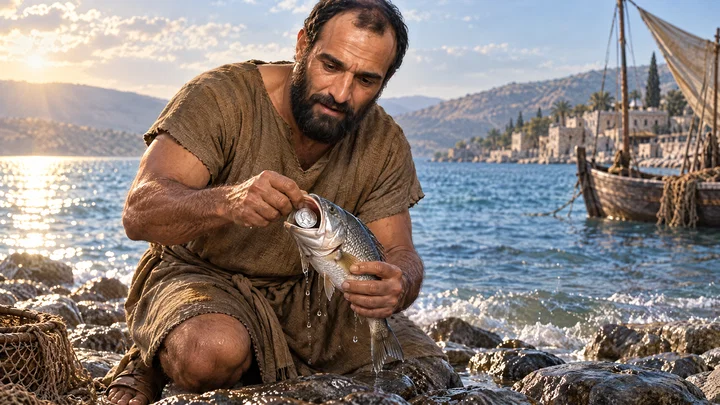
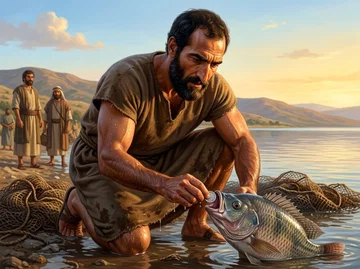
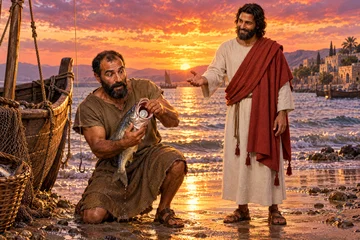
Notwithstanding, lest we should offend them, go thou to the sea, and cast an hook, and take up the fish that first cometh up; and when thou hast opened his mouth, thou shalt find a piece of money: that take, and give unto them for me and thee.
Translations
Notwithstanding, lest we should offend them, go you to the sea, and cast an hook, and take up the fish that first comes up; and when you have opened his mouth, you shall find a piece of money: that take, and give to them for me and you.
Notwithstanding, lest we should offend them, go thou to the sea, and cast an hook, and take up the fish that first cometh up; and when thou hast opened his mouth, thou shalt find a piece of money: that take, and give unto them for me and thee.
Notwithstanding, lest we should offend them, go thou to the sea, and cast a hook, and take up the fish that first cometh up; and when thou hast opened his mouth, thou shalt find a piece of money: that take, and give unto them for me and thee.
Notwithstanding, lest we should offend them, go thou to the sea, and cast a hook, and take the fish that first cometh up: and when thou hast opened his mouth, thou shalt find a piece of money: take that, and give to them for me and thee.
Revised Version, American Standard Version
But, lest we cause them to stumble, go thou to the sea, and cast a hook, and take up the fish that first cometh up; and when thou hast opened his mouth, thou shalt find a shekel: that take, and give unto them for me and thee.
but, that we may not cause them to stumble, having gone to the sea, cast a hook, and the fish that hath come up first take thou up, and having opened its mouth, thou shalt find a stater, that having taken, give to them for me and thee.'
But that we may not be an offence to them, go to the sea and cast a hook, and take the first fish that comes up, and when thou hast opened its mouth thou wilt find a stater; take that and give it to them for me and thee.
But, that we may not cause them to stumble, go unto the sea, and cast in a hook, and, the first fish that cometh up, take, and, opening its mouth, thou shalt find a shekel,—that, take, and give to them for me and thee.
Berean Standard Bible, Majority Standard Bible
“ But so that we may not offend them, go to the sea, cast a hook, and take the first fish you catch. When you open its mouth, you will find a four-drachma coin. Take it and give it to them for My tax and yours.”
But, lest we cause them to stumble, go to the sea, cast a hook, and take up the first fish that comes up. When you have opened its mouth, you will find a stater coin. Take that, and give it to them for me and you.”
But, so that we may not be a cause of trouble to them, go to the sea, and let down a hook, and take the first fish which comes up; and in his mouth you will see a bit of money: take that, and give it to them for me and you.
Neuerthelesse, lest we should offend them: goe to the sea, and cast in an angle, and take the first fish that commeth vp, and when thou hast opened his mouth, thou shalt finde a piece of twentie pence: that take, and giue it vnto them for me and thee.
Douay-Rheims (Challoner revision)
But that we may not scandalize them, go to the sea, and cast in a hook: and that fish which shall first come up, take: and when thou hast opened its mouth, thou shalt find a stater: take that, and give it to them for me and thee.
Pictures

Cross-references
- Exodus 30:13-16
This they shall give, every one that passeth among them that are numbered, half a shekel after the shekel of the sanctuary: (a shekel is twenty gerahs:) an half shekel shall be the offering of the LORD.
The required half-shekel offering explains the temple tribute Jesus paid.
- Matthew 22:21
They say unto him, Cæsar’s. Then saith he unto them, Render therefore unto Cæsar the things which are Cæsar’s; and unto God the things that are God’s.
Both teach that tribute due to Caesar should be paid.
- Romans 13:7
Render therefore to all their dues: tribute to whom tribute is due; custom to whom custom; fear to whom fear; honour to whom honour.
Both teach paying tribute to civil authorities.
- Luke 23:2
And they began to accuse him, saying, We found this fellow perverting the nation, and forbidding to give tribute to Cæsar, saying that he himself is Christ a King.
The false charge of opposing tribute contrasts with Jesus’ payment of it.
- Matthew 22:17
Tell us therefore, What thinkest thou? Is it lawful to give tribute unto Caesar, or not?
Contrasts the temple tribute with tribute to the Roman emperor.
Commentary
Each commentary is drawn from primary sources: the writings of Ellen G. White and Adventist pioneers and periodicals. Each commentary is separate. Its own words are not a quotation; follow the references to read the source passages.
Ellen G. White
11 sources
The tax in question was the annual religious contribution required of Jews for the temple.DA 432.1–2 The demand placed Jesus in a trap, for refusal could be portrayed as disloyalty to the temple while payment could be used to deny His standing as a prophet or teacher, and Peter hastily promised that Jesus would pay, thereby lending support to a false view of His status.DA 432.1–2 Though as the Son of God He was under no obligation to pay it, and by extension Peter was free, He chose to pay.Ms 163, 1898, par. 20–22DA 432.3–433.3DA 433.4–434.5
He told Peter to go to the sea, cast a hook, take up the fish that first came up, open its mouth, and find there a piece of money or coin sufficient to pay the tax for both of them.Ms 19, 1885, par. 1–2DA 432DA 432.3–433.3DA 432.1–2DA 433.4–434.5 The miraculous provision revealed His divine glory, character, and authority over the creatures, creation, and resources of the world, though as owner of the world He held no worldly possessions.Ms 19, 1885, par. 1–2DA 432.3–433.3DA 433.4–434.5 He had no money to pay the tax and obtained the small amount needed by miracle, showing that He lived among the poor and lowly and even in the poorest circumstances.Ms 19, 1885, par. 1–2Lt 119, 1893, par. 15
He paid the required tribute so as not to give offense or needless occasion for misunderstanding, controversy, and antagonism, and in doing so He taught His disciples to do the same in obedience to the ruling authority.Ms 163, 1898, par. 20–22DA 432DA 432.3–433.3DA 433.4–434.5Ms 22a, 1895 [Copy 1], par. 35 His payment did not mean He supported the false priestly charge that He forbade paying tribute to Caesar.3SP 129.3–130.1ST Jul 4, 1878 The act teaches the lasting lesson to avoid needless conflict and misinterpretation while never sacrificing any principle of truth, meaning not to defy civil powers when there is no conflict between God and conscience.Ms 163, 1898, par. 20–22DA 432.3–433.3DA 433.4–434.5
His example directs His followers and servants to submit to paying fines and penalties and to yield personal rights before courts rather than resist or insist on their own rights, even when those imposing them have no rightful claim, accepting unjust indignities when doing so does not bring them into conflict with God in order to preserve their service to God.Ms 22a, 1895 [Copy 1], par. 35Ms 22b, 1895 [Copy 2], par. 39–40 Where laws order work and presses to close on Sunday, the verse teaches to stop regular work rather than defy the authorities to gratify the devil and to use Sunday for missionary work drawing souls to Jesus Christ, with refusal coming only further on when authorities command keeping Sunday and forbid observing Saturday.Ms 163, 1898, par. 20–22
Sources
Pioneers and periodicals
44 sources
The tribute was the yearly half-shekel due for the service of the sanctuary, not a tax owed to the Roman government.ST Mar 26, 1896ST Mar 26, 1896ST Jul 12, 1899ST Mar 26, 1896ST Mar 26, 1896 As Son of God and Lord of the temple, Jesus was rightfully free from a levy collected for His Father's house, yet He waived His right and paid so as not to offend the collectors, cause stumbling, or seem to despise the temple.ST Jul 12, 1899ST Oct 27, 1881ST Jul 12, 1899RH Jan 27, 1863ST Oct 27, 1881 Having no money of His own, He supplied the payment by miracle, sending Peter to take the first fish, open its mouth, and find a stater worth a full shekel, enough for both of them.RH Jan 7, 1873ST Jul 12, 1899ST Jul 12, 1899RH Nov 4, 1873RH Apr 15, 1875 The provision came by His creative power over nature, showing the Father is able and willing to supply His people's needs without depending on human means.ST Jan 30, 1901RH Jan 29, 1861RH Jan 7, 1909ST Feb 14, 1911RH Feb 24, 1916 The payment does not establish Christian duty to pay civil taxes, since its argument about the king's children turns on His sonship to God; those who applied it to civil government taught from it that tribute should be paid and civil law obeyed when conscience toward God is not violated.ST Sep 2, 1889ST Mar 26, 1896ST Mar 26, 1896ST Mar 26, 1896
Tax and Historical Setting
The tribute demanded was the temple half-shekel collected for the sanctuary service, not a tax paid to the Roman government.ST Mar 26, 1896ST Mar 26, 1896ST Mar 26, 1896ST Mar 26, 1896ST Mar 26, 1896 It supported the temple service and was regarded as given to God.ST Mar 26, 1896ST Mar 26, 1896 Jewish law required each male to pay half a shekel yearly for the temple's support, the half-shekel being required of Israelites over twenty to support the tabernacle and later the temple.ST Jul 12, 1899ST Mar 26, 1896 Jews continued paying it wherever they lived until Vespasian redirected it to the Roman treasury.ST Mar 26, 1896 Because it was for the temple and not for Caesar, the saying that the king's children are free showed that as Son of God and Lord of the temple Jesus was not bound to pay a tax raised for God's service, which benefited those who were strangers to him, and the argument does not apply to tribute paid to Caesar since Jesus was not Caesar's son.ST Mar 26, 1896ST Mar 26, 1896ST Mar 26, 1896
The collectors likely thought Jesus, as a theocratic teacher, would regard himself as exempt.ST Mar 26, 1896 Peter, assuming from strict religious observance that Jesus would pay, answered hastily for him that he would.ST Mar 26, 1896 That quick promise rashly conceded that Jesus was bound to pay and failed to recognize his distinctive, exalted position as God's Son and his divine Sonship and freedom.ST Mar 26, 1896ST Mar 26, 1896 Jesus customarily paid the taxes and tributes common where he lived, as Peter's answer shows, according to those who held it.ST Mar 26, 1896 The miracle's central significance is to affirm and impress Jesus' claim and dignity as the Son of God, rather than to establish a lesson about civil taxes or to show his loyalty to civil government by miraculously obtaining money to pay a personal tax.ST Mar 26, 1896ST Mar 26, 1896
Peter was to find the money in the first fish he caught and use it to pay for both Jesus and himself.ST Mar 26, 1896 The miraculous stater found in the fish's mouth paid the amount due for both, being worth one shekel or thirty pence, enough to cover the half-shekel due for each.RH Jan 7, 1873ST Jul 12, 1899ST Jul 12, 1899 That silver piece was the same kind of coin Judas Iscariot received as the price of his treason.RH Aug 29, 1871 Coins of that kind, along with the penny bearing the image and superscription of Caesar and the mites the poor widow cast into the temple treasury, are still dug out of the ruins of once opulent and crowded cities, and their survival in the stones gives sure physical proof that the Bible record is true.RH Aug 29, 1871
The Greek word used for that coin is ekeinos, meaning that. Although the coin has no gender, it is referred to with a masculine form, showing that grammatical gender does not necessarily indicate personal gender. The account is identified as a miracle Jesus performed at Capernaum, providing the temple-tribute money through a fish caught by Peter.ST Jun 2, 1898 It took place during Christ's first advent, about twelve months before his mission closed, and is not his second coming.RH Jun 18, 1861
Miracle of the Coin
Jesus told Peter to go to the sea and cast a hook, take up the first fish that came up, open its mouth, find a coin there, and take it and give it to the collectors for Jesus and Peter, choosing to pay so as not to offend them even though the children are free.ST Mar 26, 1896RH Jan 7, 1873ST Jun 2, 1898ST Jan 20, 1909 The payment was for the temple tribute, with the coin found sufficient to cover the half-shekel due for both of them, and the event was a miracle performed at Capernaum.ST Mar 26, 1896ST Jul 12, 1899ST Jun 2, 1898
The money was not on hand, for Jesus had not a shilling to pay his tax until the fish was made to furnish it, and he and Peter had no money of their own to pay with, so that Peter did not have much silver and gold of his own and the money he used came to him only by miracle.ST Jul 12, 1899RH Nov 4, 1873RH Apr 15, 1875RH Oct 4, 1870 His lack of money showed a poor and destitute ministry dependent on others, with certain women ministering to him, part of a life without covetousness from stable and manger and carpenter toil to having nowhere to lay his head, riding a borrowed colt, keeping the Passover in a borrowed room, owning only coat and vesture at the cross, and lying in Joseph's tomb, enforcing the command to beware of covetousness.RH Nov 4, 1873 Their need for this miraculous expedient showed Peter's poverty and humble condition, needing a fish that had picked up money to pay for Jesus and himself.RH Apr 15, 1875
The supply came by supernatural power over nature, by the Creator's control reaching from his throne to the remotest atom of the universe drawing the fish with its treasure to Peter's hook.ST Jan 30, 1901RH Jan 29, 1861 Nature obeys Christ's command, and the miraculous way the coin was provided from the fish's mouth proves he was the Creator of the very powers he obeyed.ST Jan 30, 1901ST Feb 14, 1911 The act was part of Christ's continued perfect exercise of faith by the same divine authority by which he checked the tossing waves, made the sea solid under Peter's tread, and stopped the life-force in the fig tree.RH Jan 29, 1861 It proves faith is connected with spiritual heavenly gifts to the end of time and is not obsolete, for those who have faith can do the same works and even greater things.RH Jan 29, 1861
The Lord can provide necessary money miraculously, placing a coin in a fish's mouth to meet need.RH Jan 7, 1909ST Feb 14, 1911RH Feb 24, 1916 This shows the Father is able and willing to supply his people's needs and that Christ could provide what was needed by directing a fish to bring up money.ST Feb 14, 1911 It shows God does not depend on human agents to provide for his work, while giving is a privilege that lets people share in spreading the truth and later share the workers' joy over souls saved.RH Jan 7, 1909
Free Yet Avoiding Offense
As Son of God and Lord of the temple, Jesus was rightfully free and not lawfully bound to pay a tax collected for his Father's service.ST Oct 27, 1881ST Oct 27, 1881ST Mar 26, 1896ST Mar 26, 1896ST Mar 26, 1896 That expense benefited those who were strangers to him, and his saying that the king's children are free shows his freedom.ST Jul 12, 1899ST Mar 26, 1896 Peter's hasty promise to pay failed to recognize that divine Sonship and freedom.ST Mar 26, 1896 The collectors likely thought that as a theocratic teacher he would claim exemption, while Peter from strict religious observance assumed he would pay.ST Mar 26, 1896
He nevertheless chose to pay and waived his personal right to exemption, giving up his right rather than contend over it.ST Jul 12, 1899ST Jul 12, 1899RH Jan 27, 1863ST Jul 12, 1899 He did so lest he offend the collectors, cause stumbling, create wrong impressions, or provoke needless conflict and unnecessary opposition.ST Jul 12, 1899ST Jul 12, 1899RH Jul 4, 1907ST Jul 12, 1899 The provision of the money enabled payment without surrendering freedom as God's children.ST Jul 12, 1899
Refusing might have seemed to despise the temple and its service and to disregard it.ST Oct 27, 1881RH Jan 7, 1873ST Mar 26, 1896 It might have encouraged others to do likewise and given grounds for misunderstanding.ST Oct 27, 1881RH Jan 7, 1873ST Oct 27, 1881 It might also have revived a recent dispute over whether the two-drachm contribution was voluntary or compulsory.RH Jan 7, 1873
The payment did not concede that an obligation applied to him.RH Jul 4, 1907 Its central significance and emphasis is to affirm and impress his claim and dignity as God's Son and his distinctive, exalted position.ST Mar 26, 1896ST Mar 26, 1896ST Mar 26, 1896
Tribute and Civil Authority
Jesus himself paid the required tribute for himself and Peter and taught his disciples to do the same, thereby upholding the authority of the civil power and remaining obedient to the reigning power.ST Mar 19, 1896ST Sep 30, 1886ST Oct 26, 1882 His payment refuted the false charge that he forbade giving tribute to Caesar, and it did not mean he supported the priests' false charge.ST Jul 4, 1878ST Oct 26, 1882 His example proves it is right to pay tribute or tax to earthly government, for tribute is a tax levied on all within a ruled territory to support the officers necessary to maintain the laws of government.ST Sep 2, 1889ST Jan 30, 1901 Government is ordained of God and of divine institution, subjection to the higher powers fulfills the law of God, and Christians must render custom, tribute, fear and honor due to the state while not neglecting the fear and honor owed to God.ST Sep 2, 1889ST Jan 30, 1901
That protection preserves religious and personal liberty, because the fear of the law of the land restrains men from violating personal rights when the fear of God does not constrain them to do good.ST Jan 30, 1901 Obedience to government is part of duty to God, though earthly citizenship remains subordinate to citizenship in God's family.ST Jan 30, 1901RH Sep 18, 1866 Strictly, the collection concerned the half-shekel temple tribute for the sanctuary service, regarded as given to God, not a tax paid to the Roman government.ST Mar 26, 1896ST Mar 26, 1896ST Mar 26, 1896 As the Son of God and Lord of the temple Jesus was free from any claim to contribute to expenses benefiting strangers to him, he made this payment through a miracle, and the central significance of the miracle is to affirm his claim and dignity as God's Son rather than to establish a Christian duty to pay civil taxes.ST Mar 26, 1896ST Mar 26, 1896ST Mar 26, 1896 The argument about the king's children being free does not apply to tribute paid to Caesar, since Jesus was not Caesar's son, and he did not use miraculous power to make a personal obligation easier for himself but used that power for the benefit of others.ST Mar 26, 1896ST Mar 26, 1896
Even so, God's children should obey civil laws and pay public taxes even when a tax is unjust rather than rebel or oppose the authorities, when doing so does not violate conscience or God's law.ST Mar 5, 1896ST Mar 26, 1896 Their work is to reform morals, not the politics of nations, and the payment to avoid offense is cited as supporting obedience to law for Christ's sake.ST Mar 26, 1896 Jesus paid the tribute money demanded of him although it was unjustly required, so as not to offend the authorities or give them occasion against his work.RH May 9, 1865 He paid the civil tribute and taught his followers to do the same, providing money for himself and Peter so they would not give offense, which shows Christians can pay tribute to civil government without taking up arms or paying others to fight.RH May 9, 1865
Christ paid tribute to temporal authority instead of claiming exemption, submitting himself to it.RH Nov 29, 1870RH Dec 12, 1907 On that ground, anyone who exempts himself and his clergy from the temporal sword and civil authority is contrary to Christ and bears the mark of antichrist.RH Nov 29, 1870 The episode was also cited to argue that Christ acknowledged the superiority of temporal authority over spiritual authority.RH Dec 12, 1907 He paid tribute instead of taking it, proving his kingdom is not of this world and his character humble, poor and self-denying, the opposite of demanding tribute and seeking mastery of the world.ST Jun 15, 1904
Lessons for Christian Living
Though free from the temple tribute as Son of God, Jesus paid it so as not to cause offense or stumbling and so as not to provoke needless controversy over rights.RH Jul 4, 1907RH Jul 4, 1907 The payment did not concede that an obligation applied to him, for the money to meet the demand for himself and Peter was supplied miraculously from the first fish caught.RH Jul 4, 1907RH Jul 4, 1907 When yielding to an unjust demand sacrifices no principle, it is better to yield than to contend for rights or cause another to stumble.RH Jul 4, 1907RH Jul 4, 1907 Even where one is not morally bound to obey a law, obedience rather than opposition to authorities is right when conscience and God's law are not violated.ST Mar 5, 1896
The command to take the first fish and find a stater in its mouth, enough for both, taught Peter and the other disciples to work for their own support and that they could not claim freedom from working.ST Oct 27, 1881ST Oct 27, 1881 The same provision encouraged trust in Jesus' watchful care in every need.ST Oct 27, 1881ST Oct 27, 1881 God thus provides for emergency, meeting need by miracle when ordinary means fail.ST Mar 5, 1896
Supplying needed money by drawing the fish with its treasure to the hook was an exercise of supernatural power over nature, the Creator's control reaching from his throne to the remotest atom.RH Jan 29, 1861 It belonged to Christ's continued perfect exercise of faith, the same divine authority by which he checked the tossing waves, made the sea solid under Peter's tread, and stopped the life-force in the fig tree.RH Jan 29, 1861 Faith remains connected with spiritual heavenly gifts to the end of time and is not obsolete, for those who have faith can do the same works and even greater things.RH Jan 29, 1861
The Lord can provide necessary money miraculously, as by a coin from a fish's mouth, showing God does not depend on human agents to provide for his work.RH Jan 7, 1909 Giving is therefore a privilege that lets people share in spreading the truth and later share the workers' joy over souls saved.RH Jan 7, 1909
Jesus carried heavenly religion into the minutest actions by paying a few pence in taxes.RH Apr 2, 1861 Growth, usefulness and eminence in godliness are measured by obedience to the very least and humblest commandments, in which he gave the divine example.RH Apr 2, 1861 His startling displays were few, but every day and hour his life beamed spotless holiness, overlooking and neglecting nothing his wisdom deemed worthy of notice, as seen together in the tax payment, the reproof to Martha, and the message to Peter after the resurrection.RH Apr 2, 1861
Jesus had not a shilling to pay his tax until a fish was made to furnish it, proving his ministry poor and destitute and dependent on others, with women ministering to him.RH Nov 4, 1873 From stable and manger and carpenter toil to having nowhere to lay his head, riding a borrowed colt, keeping the Passover in a borrowed room, owning only coat and vesture at the cross, and lying in another's tomb, his life was without covetousness.RH Nov 4, 1873 That example enforces his command to take heed and beware of covetousness.RH Nov 4, 1873
Peter's poverty and humble condition appear in that he had to angle for a fish that had picked up money in order to pay for Jesus and himself, proving they had no money of their own to pay with.RH Apr 15, 1875 Such destitution contradicts the claim to be Peter's successor while wearing a jeweled fisherman's ring worth eight thousand dollars.RH Apr 15, 1875 The fish itself had no need of the tribute money found in its mouth.ST Jan 20, 1881 Likewise an infant has no need of most of an extravagant wardrobe, which condemns spending wealth on needless luxury when it could relieve the needs of others.ST Jan 20, 1881
Sources