Romans 13:7
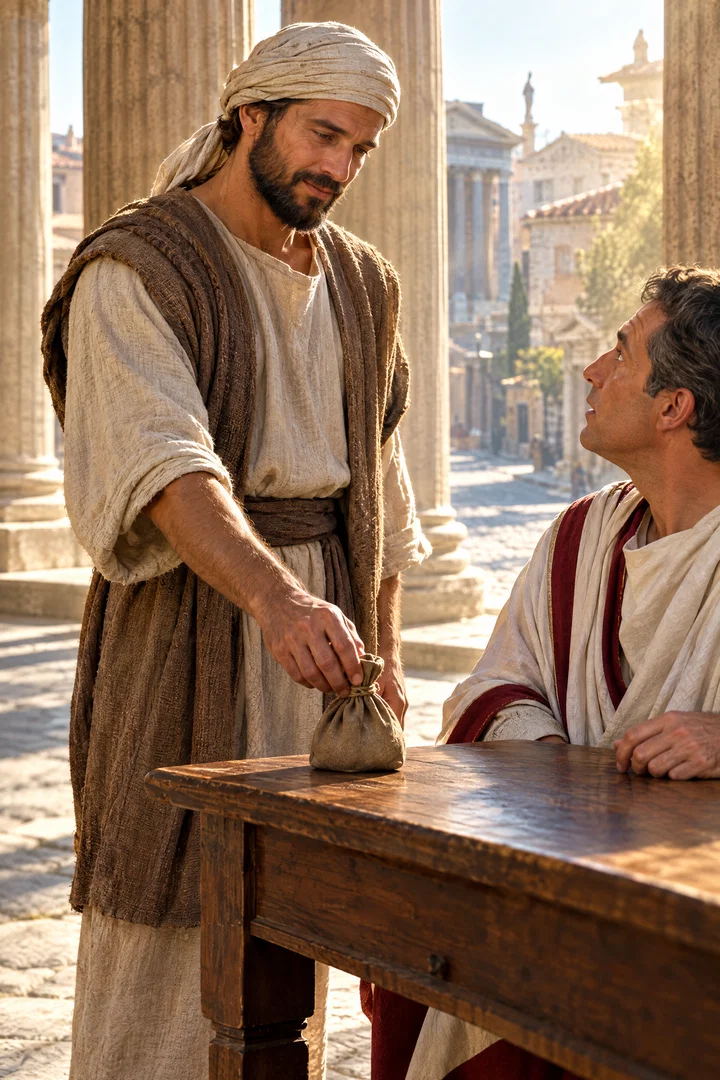
Render therefore to all their dues: tribute to whom tribute is due; custom to whom custom; fear to whom fear; honour to whom honour.
Translations
American King James Version, Webster Bible
Render therefore to all their dues: tribute to whom tribute is due; custom to whom custom; fear to whom fear; honor to whom honor.
King James Version, KJV Cambridge Paragraph Bible
Render therefore to all their dues: tribute to whom tribute is due; custom to whom custom; fear to whom fear; honour to whom honour.
Render to all their dues: tribute to whom tribute is due; custom to whom custom; fear to whom fear; honour to whom honour.
Render to all their dues: tribute to whom tribute is due; custom to whom custom; fear to whom fear; honor to whom honor.
render, therefore, to all [their] dues; to whom tribute, the tribute; to whom custom, the custom; to whom fear, the fear; to whom honour, the honour.
Render to all their dues: to whom tribute [ is due], tribute; to whom custom, custom; to whom fear, fear; to whom honour, honour.
Render unto all their dues,—unto whom tribute, tribute, unto whom tax, tax, unto whom fear, fear, unto whom honour, honour.
Pay everyone what you owe him: taxes to whom taxes are due, revenue to whom revenue is due, respect to whom respect is due, honor to whom honor is due.
Therefore pay everyone what you owe him: taxes to whom taxes are due, revenue to whom revenue is due, respect to whom respect is due, honor to whom honor is due.
Therefore give everyone what you owe: if you owe taxes, pay taxes; if customs, then customs; if respect, then respect; if honor, then honor.
Give to all what is their right: taxes to him whose they are, payment to him whose right it is, fear to whom fear, honour to whom honour is to be given.
Giue to all men therefore their duetie: tribute, to whome yee owe tribute: custome, to whom custome: feare, to whome feare: honour, to whom ye owe honour.
Douay-Rheims (Challoner revision)
Render therefore to all men their dues. Tribute, to whom tribute is due: custom, to whom custom: fear, to whom fear: honour, to whom honour.
Pictures
Cross-references 20 of 22
- Matthew 22:21
They say unto him, Cæsar’s. Then saith he unto them, Render therefore unto Cæsar the things which are Cæsar’s; and unto God the things that are God’s.
Paul repeats Christ's distinction
- 1 Peter 2:13-14
Submit yourselves to every ordinance of man for the Lord’s sake: whether it be to the king, as supreme;
Commands submission to civil authorities and respect for rulers.
- Acts 5:29
Then Peter and the other apostles answered and said, We ought to obey God rather than men.
Sets the limit on obeying human authority when it conflicts with God.
- Romans 13:1
Let every soul be subject unto the higher powers. For there is no power but of God: the powers that be are ordained of God.
Both teach subjection to governing powers ordained by God.
- 1 Timothy 2:1-2
I exhort therefore, that, first of all, supplications, prayers, intercessions, and giving of thanks, be made for all men;
Urges prayer for rulers so believers may live quiet and peaceable lives.
- Titus 3:1
Put them in mind to be subject to principalities and powers, to obey magistrates, to be ready to every good work,
Both call for obedience and submission to civil authorities.
- Mark 12:17
And Jesus answering said unto them, Render to Cæsar the things that are Cæsar’s, and to God the things that are God’s. And they marvelled at him.
Both teach giving civil rulers and God what is due to each.
- Luke 20:25
And he said unto them, Render therefore unto Cæsar the things which be Cæsar’s, and unto God the things which be God’s.
Distinguishes what is owed to Caesar from what is owed to God.
- Matthew 17:24-27
And when they were come to Capernaum, they that received tribute money came to Peter, and said, Doth not your master pay tribute?
Jesus pays the demanded tribute to avoid giving offense, exemplifying what is due.
- 1 Peter 2:17
Honour all men. Love the brotherhood. Fear God. Honour the king.
Both command honor to the king.
- Exodus 22:28
Thou shalt not revile the gods, nor curse the ruler of thy people.
Both forbid speaking evil of rulers.
- Matthew 22:20
And he saith unto them, Whose is this image and superscription?
ownership decides to whom obligation is rendered
- 2 Peter 2:10-11
But chiefly them that walk after the flesh in the lust of uncleanness, and despise government. Presumptuous are they, selfwilled, they are not afraid to speak evil of dignities.
Condemns despising government and reviling dignities.
- John 19:10-11
Then saith Pilate unto him, Speakest thou not unto me? knowest thou not that I have power to crucify thee, and have power to release thee?
Christ accepted government authority and said it came from above.
- Romans 2:6
Who will render to every man according to his deeds:
The same word is translated “rendering.”
- Acts 25:10-12
Then said Paul, I stand at Cæsar’s judgment seat, where I ought to be judged: to the Jews have I done no wrong, as thou very well knowest.
Paul recognizes Caesar’s authority and appeals to him as a Roman citizen.
- 1 Samuel 2:30
Wherefore the LORD God of Israel saith, I said indeed that thy house, and the house of thy father, should walk before me for ever: but now the LORD saith, Be it far from me; for them that honour me I will honour, and they that despise me shall be lightly esteemed.
proves honor is due to God
- Malachi 3:8
Will a man rob God? Yet ye have robbed me. But ye say, Wherein have we robbed thee? In tithes and offerings.
Both address withholding what is due as robbery.
- Leviticus 19:18
Thou shalt not avenge, nor bear any grudge against the children of thy people, but thou shalt love thy neighbour as thyself: I am the LORD.
Paul’s summary of the neighbor-directed commandments is quoted from this verse.
- Jeremiah 27:4-7
And command them to say unto their masters, Thus saith the LORD of hosts, the God of Israel; Thus shall ye say unto your masters;
Shows civil rule operating within earthly boundaries.
Commentary
Each commentary is drawn from primary sources: the writings of Ellen G. White and Adventist pioneers and periodicals. Each commentary is separate. Its own words are not a quotation; follow the references to read the source passages.
Ellen G. White
22 sources
Render to all what is owed them, to civil rulers tribute and taxes, customs and fees, reverence and honor, for human government is divinely appointed and obedience to it in its rightful sphere is a sacred duty to be met peaceably.STA 31.1STOM 25.1STBk 31.1 This submission is to be conscientious and for conscience's sake, not merely to escape punishment nor in a defiant spirit.STA 31.1STOM 25.1STBk 31.1 It holds only so far as it does not clash with duty to God, for God's word is supreme over all human law, and where rulers require what God forbids obedience belongs to God rather than men.ST Jun 29, 1882AA 68.2–69.19T 238.4 The same rule requires strict integrity in paying honest debts and wages in full to those entitled to them, since failure to repay defrauds neighbors and reproaches the Christian cause.Lt 112, 1900, par. 13–145T 179.2Ms 199, 1899, par. 30–32 It also requires giving honor and respect where they are due, to worn workers, to institutional leaders and managers in their trust, to patients and to all, in meekness and courtesy without exalting any man or worshiping those who did not honor God.1T 676.17T 185.3–186.1HRP 26.2Lt 43, 1897, par. 8–9Lt 106, 1902, par. 1–3
Dues to Civil Authority
Render to all their dues means rendering to civil authorities what belongs to them — tribute and taxes to whom tribute and taxes are due, custom and fees to whom custom and fees are due, fear and respect to whom fear and respect are due, and honour to whom honour is due.STA 31.1STOM 25.1STBk 31.1AA 68.2–69.1GC 191.2–3 Human government is an ordinance of divine appointment, and obedience to it within its legitimate sphere is a sacred duty to be met peaceably, remaining peaceably subject to the laws of the land and meeting the support civil authority requires.ST Jun 29, 1882AA 68.2–69.1 This submission is to be practiced for conscience's sake and conscientiously, not merely to avoid punishment and not in a defiant spirit.STA 31.1STOM 25.1STBk 31.1
The duty holds as long as it does not conflict with duty to God, whose claims must always be obeyed.ST Jun 29, 1882 God's word remains supreme above all human legislation of church or state, with the crown of Christ standing above earthly diadems, and when the claims of government conflict with the claims of God, obedience belongs to God rather than men.AA 68.2–69.1 God's people are to be taught to conform in all things to the laws of their state whenever they can do so without conflicting with the law of God.9T 238.4
When the law of God is made void, the true and loyal are to become more zealous, steadfast, positive, and unflinching in witness, with hearts fully surrendered to God.STA 31.1Lt 1f, 1890, par. 3–4STBk 31.1 Even then loyalty must not be expressed defiantly or as antagonistic to law and order.STA 31.1STOM 25.1Lt 1f, 1890, par. 3–4STBk 31.1AA 68.2–69.1 Speech and writing are to be careful, nothing is to be done that would needlessly close the way, but the way is to go forward in Christ's name advocating committed truth and holding aloft truth and religious liberty even in the last conflict.AA 68.2–69.1
Rejecting all civil control and order in the name of divine authority leads to rebellion and strife.GC 191.2–34SP 150.1–2 Obeying princes is not an attempt to serve both God and evil.4SP 150.1–2
Paying Debts and Wages
Romans 13:7 requires paying what is owed with strict integrity in meeting just obligations.5T 179.2 Failing to repay honest debts, such as for family provisions, defrauds neighbors and brings reproach on the Christian cause.5T 179.2 Such conduct can make others regard all believers as unreliable.5T 179.2 What is owed must be given to the person entitled to it, repaying every amount owed, including the full principal, without stopping until the debt is paid.Lt 112, 1900, par. 13–14
Publishing houses are to make restitution to authors and others they have treated unjustly, paying them their dues rather than withholding money that belongs to them.Lt 130, 1899, par. 7–8 Each person is to receive what is due, including wages proportionate to the work performed.Ms 199, 1899, par. 30–32 Workers are not to be deprived of wages to cover shortages caused by lavish or misdirected spending.Ms 199, 1899, par. 30–32 Fair pay leaves them able to help people in genuine need.Ms 199, 1899, par. 30–32
Giving Honor Where Due
Honor and respect are to be given where they are due, to those who merit and deserve them.1T 676.12T 553.1–555.14T 93.1–2 Giving such honor requires discernment and good manners, rather than a proud, defiant refusal to respect those who differ in opinion.2T 553.1–555.1 Honoring those who should be honored means exalting no man and never lifting up self in any place or on any occasion.Lt 43, 1897, par. 8–9 It does not mean worshiping or exalting human beings without regard to their lives, and it opposes praising people who did not honor God or represent Christ.Lt 106, 1902, par. 1–3
Honor includes recognizing moral worth and caring for a worn-out missionary who has embraced present truth, for neglecting her wrongs Jesus, whom she represents.1T 676.1 Thirty years of work should inspire confidence in integrity and warrant giving honor where honor is due, as with Bro. H’s thirty years of work.4T 93.1–2 Respect and honor are also to be shown to patients by not speaking to them in an irritating or disrespectful manner.HRP 26.2
Honor and respect are owed to those in authority in institutions, including managers and department leaders placed in charge, because they have been put in positions of trust with respect and honor shown them.7T 185.3–186.1 Children and youth must submit to their discipline and rules, and parents must uphold that authority rather than blindly sustain and sympathize with their children in differences with superiors.7T 185.3–186.1 When difficulty arises parents are to go directly to those in charge to learn the truth, manifest confidence in their judgment, and teach their children to respect and honor them, since those leaders know best what regulations are essential and honoring them upholds the principles at the foundation of loyalty to truth, to fellow beings, and to God.7T 185.3–186.1
Honoring church officers does not give them the right to rule arbitrarily or dominate others, for cooperation among believers should be harmonious and no human being is to come between a person and God as Counselor.Lt 311a, 1906, par. 6–7 Human judgment can misjudge people and assign them work they are not suited for, discouraging them and costing them time and courage.Ms 169, 1897, par. 8 In particular, encouraging those intending to prepare for ministry to become doctors can divert workers when ministers are greatly needed.Ms 169, 1897, par. 8 Pomposity and self-esteem are to be cut away, walking humbly and softly before God with conversation and conduct as a real and visible expression of grace and truth within, in a spirit, character, words, and actions that always reveal meekness, kindness, and Christian courtesy, which shows the Spirit of Christ abides in the soul and is necessary for success in God’s work and for receiving the Holy Spirit in rich measure.Lt 43, 1897, par. 8–9
Sources
Pioneers and periodicals
127 sources
Render to all what is owed, tribute and custom as payments for the support of government and fear and honor as respect due to those entitled to them.RH Jul 10, 1856ST Aug 22, 1911ST Aug 13, 1896 Tribute is a tax levied on all within a territory for the support of government, its officers and laws, and custom is duties on goods brought in, which must be paid even when the charge seems unjust.ST May 22, 1907ST Sep 2, 1889RH Jan 31, 1871 Christians must therefore be subject to the higher powers as ordained of God and willingly pay tribute, taxes and customs for conscience' sake, showing respect and honor even under corrupt and oppressive rule and praying for kings and all in authority.ST Jun 29, 1882ST Mar 19, 1896ST Apr 5, 1905ST Dec 20, 1905RH Oct 28, 1862 This repeats Christ's principle to render to Caesar what is Caesar's and to God what is God's, so subjection is required only when duty to God does not forbid, and what belongs solely to God in worship, Sabbath, conscience and faith cannot be given to the State.RH Jul 31, 1860ST Oct 31, 1895ST Sep 2, 1889ST Mar 19, 1896 Civil jurisdiction is confined to its proper secular sphere of restraining wrongdoing and protecting rights between people, and does not extend to religion or conscience, while the duties to neighbor gathered under love fulfill obligations to others without setting aside love to God.ST Oct 18, 1899ST Apr 8, 1903ST Aug 12, 1886RH Mar 26, 1914ST Mar 19, 1894
Words and Immediate Sense
The verse commands giving to everyone what is owed, tribute and custom where payment is due and fear and honor where respect is due, as the opening duty of the life of love toward civil rulers.RH Jul 10, 1856ST Aug 22, 1911ST Aug 13, 1896ST Apr 8, 1903 Tribute and custom are payments, and fear and honor are forms of respect owed to those entitled to them and to those in authority, to be given in support of civil authority in its proper work.RH Jul 10, 1856ST Aug 22, 1911ST Aug 13, 1896RH Jun 8, 1916
Tribute is a tax levied on all within a government's territory for its support, because government needs officers to maintain laws and funds to support them, and paying it is right.ST May 22, 1907ST Sep 2, 1889 Custom means customs duties, including duties on goods and on Bibles brought from Canada, which must be paid to one's country and obeyed even when the charge seems unjust, so that smuggling Bibles or receiving them fraudulently without paying duties violates the command to render custom to whom custom is due.ST May 22, 1907ST Sep 2, 1889RH Jan 31, 1871 Knowingly buying smuggled goods makes a person share in the crime, while buying them unknowingly does not make the buyer responsible.ST May 22, 1907
Honor is to be given to those who deserve it according to character, position and relationship, extending in spirit from honoring parents to honoring all people as is due them.RH Oct 21, 1873ST Oct 24, 1878RH Dec 9, 1852 It is right and scriptural to honor people whom God guides and who risk what they value for the cause of Jesus Christ, and honor given to one who patiently helps and teaches another does not take away from the glory due to God, since such honor does not mean praising or worshiping them.RH Oct 21, 1873RH Dec 9, 1852
Fear and honor are also owed to God and must not be neglected in giving dues to the State, for subjection must reach the heart and be expressed in love fulfilling God's law toward others and not be merely outward performance of civic duties.ST Dec 21, 1888ST Jan 30, 1901ST Jan 30, 1901 What is owed to God in tribute and honor is entirely different from what is owed to earthly governments, as shown by the parallel command to give to Caesar what belongs to Caesar and to God what belongs to God, with Caesar standing for earthly governments and what they can rightly demand.ST Dec 21, 1888ST Sep 2, 1889 Honor is owed to God, who honors only those who honor Him, so subjection to earthly powers must never conflict with subjection to God, governmental authority being divinely instituted to be recognized and obeyed in its rightful requirements while a law that violates God's law does not require obedience.ST Dec 21, 1888ST Jan 30, 1901ST Jan 30, 1901 Christ Himself kept this duty by paying tribute, an example of rendering what is due to civil authority while showing He is Creator of the powers He obeyed.ST Sep 2, 1889ST Jan 30, 1901
Place in Romans
Romans 13:7 stands in the practical portion of the letter that follows the doctrinal teaching of the first eight chapters, among the practical instructions of Romans 12 and 13 to be closely applied in daily life, including the teaching on how Christians should regard rulers.RH Mar 27, 1856ST Nov 21, 1911ST Apr 7, 1898 It states the opening duty of the life of love, requiring giving to all what is owed, payment where payment is due and respect where respect is due.ST Apr 8, 1903 The duties listed in Romans 13 do not exhaust every duty but are gathered under love for neighbor, which fulfills obligations to others and forms the basis of the second table, while love to God still includes duties such as keeping the Sabbath.ST Aug 12, 1886ST Jul 17, 1907ST Jun 17, 1903
Love of neighbor is the sum of the last six commandments, showing that this command belongs to the moral law rather than replacing it.RH Jul 22, 1852 Faith does not make the law void but causes believers to fulfill the righteousness of the law, rendering what is owed to God and to fellow men through the ten commandments not by mere outward act but from a heart filled with perfect love to God, which alone God accepts, leaving no room for Antinomianism.RH Feb 17, 1852
In context the verse belongs to the teaching that civil government is ordained by God, to which tribute, customary payments, respect and honor are to be given as dues appropriate to office.ST Feb 14, 1911RH Sep 23, 1862RH Oct 28, 1862 Civil rule became necessary because sin brought rebellion and threatened anarchy, borrowing from God's order to preserve human society, and God respects it and teaches respect for it while it stays within civil bounds and does not take God's place, while God is not responsible for human perversions of it.ST Feb 14, 1911 Earthly governments may rightly exercise authority to maintain law and order, and their officials and rulers serve God in carrying out this work, recognized as God's servants in their office, whose authority to punish criminals is not abolished.RH Sep 23, 1862RH Jul 4, 1854 Subjects should fulfill duties to government and its officers and sustain it, including paying what is due and obeying its laws unless they clearly conflict with God's law, in which case God is to be obeyed with patient acceptance of the penalty.RH Oct 28, 1862 God has a part in the laws and rulers of nations, the principles of Scripture support civil government, and the Christian message does not oppose any system of government but teaches people to live better under it.ST Jul 27, 1882
Civil government is established to restrain wrongdoing and protect people's rights in relations with one another, including life, property, chastity and reputation, and its authority is limited to that civil purpose without power over conscience or conduct concerning only the individual.RH Aug 13, 1908ST Jun 30, 1909 It serves God by restraining evil and praising good, being a terror to evildoers and a praise to those who do well, attending continually to this work with the sword, controlling those who do not yield to God's Spirit.ST Mar 19, 1896 Tribute is therefore due because rulers are ministers of God in this work, requiring subjection and willing payment and obedience to just laws not only to avoid punishment but for conscience' sake, since the moral law embraces what is just so Christians do not need compulsion.ST Mar 19, 1896RH Oct 14, 1862 This recognition and honor are owed without regard to the religion of ruler or people, following the example of recognizing pagan Rome.ST Mar 19, 1896
Duties to Government
Christians are to be subject to the higher powers as ordained of God, submitting to every human ordinance and to kings as supreme and to governors sent to punish evildoers and praise those who do well, without regard to the religion of ruler or people, following the example of Christ who recognized pagan Rome and did not resist judgment against His personal rights while recognizing authority from heaven.ST Mar 19, 1896ST Apr 5, 1905ST Dec 20, 1905RH May 2, 1912 Rendering to all their dues means giving tribute to whom tribute is due, custom to whom custom, fear to whom fear, and honor to whom honor, because rulers are ministers of God attending continually to restraining evil with the sword and praising good, requiring subjection for conscience' sake and not only to avoid punishment.ST Mar 19, 1896ST Apr 5, 1905RH May 2, 1912 God recognizes the necessity for human law alongside divine law, and the call to obedience applies with special force in the final period when the night is far spent, the day is at hand, salvation is nearer than when first believed, and it is high time to awake out of sleep amid riot and lawlessness.ST Apr 5, 1905RH May 2, 1912
This subjection requires respect and honor even under corrupt Roman government and under oppressive rule such as the Turkish government, bearing the yoke with Christian humility and forbearance, refusing to agitate for national liberty or seek vengeance through the powers of Europe but leaving vengeance to the Lord, a course bringing greater freedom than resistance.ST Nov 28, 1895 It requires speaking to rulers with urbanity as Paul did to Felix even while addressing guilt and judgment to come, and complying with laws and obeying rulers of whatever government without becoming partisan supporters, since faith is spiritual and worldwide and not an instrument for national political aims.ST Feb 19, 1885 Such respect for the administration does not imply agreement with its policies.ST Jun 7, 1899
Tribute, taxes and customs are to be paid willingly for the support of government because rulers attend continually to this work, for conscience' sake, in recognition that government provides protection from crime and invasion, roads and bridges, schools, and the recording and defense of property.RH Oct 28, 1862RH Nov 22, 1864ST Aug 13, 1896ST May 4, 1904ST Mar 16, 1876 Though earthly government is imperfect, its benefits give reason to pay willingly while remaining peaceably subject to the laws of the land so long as duty to God is not violated, whose claims must always be obeyed.ST Jun 29, 1882RH Oct 28, 1862 The same principle of paying for benefits received is applied by analogy to supporting the church, whose influence benefits society.ST May 4, 1904 Honor to secular authorities is shown by subjection, ready obedience, and paying of tribute.RH Nov 22, 1864ST Mar 16, 1876
Even taxes imposed directly that support war must be paid, though this does not require a voluntary offering to support war, and heavy or unjust taxes must be paid without rebellion, with customs duties paid even when the charge seems unjust.ST May 22, 1907RH Oct 2, 1900ST Aug 13, 1896 Knowingly buying smuggled goods shares in the crime, while buying unknowingly does not make the buyer responsible.ST May 22, 1907
Duty toward rulers includes not only tribute, fear and honor but praying for kings and for all in authority, respecting what God has ordained because in their own sphere rulers are God's ministers to promote peace by being a terror to evildoers and a praise to those who do well.ST Oct 31, 1895RH May 10, 1906RH May 10, 1906 It includes standing in sympathy with rulers and government in maintaining law and order, living peaceable and quiet lives as law-abiding people, continuing to pray for wisdom to govern with discretion and in the fear of God amid unsettled national affairs after a struggle for national existence.RH May 26, 1868 It includes wishing rulers health and success in working for peace, prosperity, welfare and religious freedom, with honor bounded by the supremacy of God and His Word in all spiritual things, maintaining total separation of church and state, opposing religious legislation, and disapproving enforcement of Sabbath observance by civil law even while faithfully observing the Sabbath.RH Jun 19, 1913RH Jun 8, 1905 It is bounded by giving to God what is His through obedience to His commandments, while rendering in love to government what is due to it.RH May 10, 1906RH May 10, 1906 Respect due to office is properly expressed in paying respects to the President and in expressing views about civil government.RH Jun 8, 1905
The verse forbids anarchy, which began in heaven and culminates on earth in riot, wrath, lawlessness and justice standing afar off, warning against temptation to lawlessness and requiring refusal to resist divinely ordained authority.RH May 2, 1912ST Apr 10, 1901 Christians uphold proper authority and representatives of law and order such as the chief magistrate of a city, giving taxes, customs, respect and honor, submitting to lawful government rather than resisting it.ST Apr 10, 1901ST Jul 16, 1894ST Oct 23, 1901 They have no sympathy with anarchy and lawlessness, including hissing, jeering, hooting at, laughing at, and calling rulers opprobrious names, though they may think rulers wrong and warn them while still upholding proper authority and showing respect.ST Oct 23, 1901
Submission to rightful authority does not require obedience to every human law, and can include enduring wrongful treatment without resisting while conscience toward God requires disobeying a command conflicting with God's law, remaining submissive even to a harsh ruler without compromising loyalty to God.ST Aug 13, 1896 Christians are not to act as censors over the government's conduct, a restraint applying even while regretting its policy.ST Feb 15, 1899
Those whose citizenship is in heaven and who are strangers, pilgrims and ambassadors seeking the continuing city and the better country must still diligently discharge every temporal obligation where they sojourn, rendering tribute, custom, fear and honor, respecting officers and obeying laws not contrary to heaven, promoting good order and morals so as to bless every community, while leaving political affairs, offices and issues to the world and studying the constitution, laws, spirit and principles of the better country.RH Dec 17, 1901ST Apr 8, 1903RH Feb 6, 1900 Their commission is service, being helpful to all at all times and in all places, paying taxes and debts and showing proper respect and deference to all, for to cease to serve is to cease to be a true Christian.ST Apr 8, 1903 Right citizenship takes care of itself from true Christianity, not from political agitation, the Christian citizenship movement, or making the teacher's work the training of youth for noble citizenship.ST Apr 8, 1903
Christians may use civil laws and provisions for truth and temporal concerns, since civil authorities are ordained by God.RH Aug 28, 1860 Even though a solemn promise before the Lord makes a true marriage, the formalities custom and law demand must still be observed to make marriage public and of record for the right of wife and children and the good of society, in conformity to civil law whenever duty to God does not forbid.ST May 4, 1904 Loyalty to national and town laws and obedience to lawful by-laws and orders are properly promised, as by settlers under United States government and town council.ST Nov 26, 1894 Christian sanction of civil government does not make government responsible for training people in religion.ST Nov 13, 1893
Respect for God's law supports respect for lawful civil government, while teaching that God's law may be disregarded encourages disloyalty, irreverence and general lawlessness.ST Jul 16, 1894 Loyalty to human government in its proper sphere reflects loyalty to God's government and its principles.ST Jul 23, 1894 Obedience to civil law where it does not conflict with God's law does not save or prove ability to keep God's law by unaided effort; God changes the heart and makes people new in Christ, and from that renewal they become good citizens.ST Jan 30, 1901
Christianity favors government as against anarchy and good government as against bad government, with the church standing for religion as the flag stands for patriotism, showing the true Christian citizenship God approves.RH Aug 12, 1902
Limits on Government Authority
Obedience and subjection to civil law are required only so long as duty to God does not forbid, and when human ordinances conflict with God's commands God must be obeyed.RH Jul 31, 1860RH Oct 28, 1862RH Jul 28, 1874RH Feb 9, 1860 In that conflict believers fulfill the civil dues they owe and sustain government, including paying what is due, yet obey God and patiently accept the penalty.RH Oct 28, 1862RH Jul 28, 1874 They remain faithful to God even if accused of breaking the law of the land, calmly explaining their position, doing duty to God, avoiding willful resistance or provocation that would invite persecution, and then seeking God's help with confidence.RH Mar 10, 1863RH Feb 9, 1860
What is due to civil authorities must be distinguished from what is due solely to God by asking whose it is and to whom it belongs.ST Mar 6, 1907ST Oct 31, 1895ST Mar 19, 1896 Civil government is due tribute and respect within the responsibilities God assigned it, including money bearing the state's image and superscription, while worship, service, tithe, Sabbath, Christian ordinances, vows, body, life, time, actions and service belong to the Lord who bought them with His own life and Christ's blood.ST Mar 6, 1907ST Oct 31, 1895ST Mar 19, 1896 These religious duties government has no right to claim, change or direct, and the person himself and his service cannot be given to put himself absolutely under the State's control.ST Mar 6, 1907ST Mar 19, 1896 What is owed to earthly government must be paid to earthly government, and a debt owed to one cannot be discharged by paying it to the other, so Christians must still render to Caesar what belongs to Caesar and must not stop paying civil dues in order to render them to God instead.ST Oct 31, 1895ST Oct 31, 1895
Together with doing no harm to one's neighbor, giving the State tribute, custom, fear and honor marks the limit of what is owed the State, recognizing its right to exist and to require subjection without giving it authority over duties to God, beyond which relationship and responsibility are to God.ST Oct 18, 1899ST Oct 31, 1895 Civil jurisdiction is therefore confined to its proper secular sphere of civil conduct between people and does not extend to religion, faith, conscience or observance of days.RH Mar 26, 1914ST Mar 19, 1894ST Mar 5, 1894ST Jul 17, 1907ST Jun 30, 1909 Religion is owed to God, so requiring religious duties joins religion and the State, subverts faith and requires sin, and civil government exceeds its proper role when it legislates religion or compels worship, since human power can compel outward compliance but not submission to God or change of heart.ST Oct 18, 1899ST Jun 30, 1909 Submission to earthly powers is limited to rightful civil jurisdiction, including protection of natural rights in dealings with one another such as life, property, chastity and reputation, and love for one another fulfills those obligations owed to one another.ST Jul 17, 1907ST Jun 30, 1909
Subjects are not bound to adopt their rulers' religion, since religious authority comes from God not princes, and conforming in temporal matters with worship and obedience to God kept distinct is compatible with religious freedom and allows faithfulness to God with loyalty to country in civil duty.ST May 28, 1912ST Mar 11, 1913 The verse does not require abstaining from work on Sunday in obedience to civil law, does not give government the right to take away time and privileges God granted including six days for labor, does not make a church institution such as Sunday something the State must protect by Sunday law, and does not require honoring a state-mandated Sabbath, because the Sabbath belongs to God who alone commands it and asking the State to protect what belongs to the Church goes beyond its proper dues.ST Feb 15, 1899ST Feb 25, 1889ST Dec 10, 1885ST Sep 9, 1889 One application claimed a nation may establish a legal Sabbath that Christians must obey for conscience' sake, but that use is set aside because civil law cannot promote holiness and no one can keep God's Sabbath in a place other than the one God appointed, and honor for authority goes with total separation of church and state and disapproval of enforcing Sabbath observance by civil law.ST Jan 24, 1900RH Jun 19, 1913
Obedience to government is owed when human laws protect everyone's equal natural rights and do not conflict with Christian duty, and such obedience does not require surrendering conscience or disobeying God.ST Nov 19, 1896ST Nov 5, 1896ST Nov 26, 1896ST Dec 3, 1896 The verse does not make Christians participants in the sword or political power: loyal subjects may provide money or service even if tribute pays soldiers, but they must not forcibly resist, fight or bear arms, since that conflicts with God's higher law and Christ's teachings on enemies and humanity.RH May 9, 1865RH Jul 31, 1856RH May 23, 1865RH May 28, 1867 A differing teaching held that government should be financially supported and, when absolutely necessary, supported with weapons in carrying out its lawful duty to punish wrongdoing and defend rights.RH Oct 14, 1862 Christians are to be subject to the civil powers rather than rule others or construct a Christian nation by earthly government, which distrusts God's government, since joining church and state misrepresents a spiritual and worldwide faith that cannot be built or administered by human law nor made an instrument of national aims.ST Aug 3, 1904RH Jun 18, 1908
The Bible sets limits on the authority of rulers and masters while commanding subjects to honor rulers and servants to obey, with God's blessing and protection promised to followers.RH Mar 30, 1869 Stopping a preacher from proclaiming the gospel while permitting infidel speech and other public disorder is an unjust use of that authority.ST Sep 11, 1884
Connections to Other Scriptures
Romans 13:7 restates the rule laid down by Jesus to give to Caesar what belongs to Caesar and to God what belongs to God, making the only question whose a thing is and to whom it belongs.ST Oct 31, 1895ST Sep 2, 1889ST Mar 19, 1896 Caesar stands for earthly governments and what they can rightly demand, especially tribute or tax levied on all within a territory for support of government, its officers and laws.ST Sep 2, 1889ST Mar 19, 1896 Money bearing the image and superscription of the state is to be rendered to it in tribute, custom, fear and honor where due, but the person himself with body, life, time, actions and service belongs to the Lord who bought them with His own life and the blood of Christ and cannot be given to put oneself absolutely under state control.ST Oct 31, 1895ST Mar 19, 1896 What belongs to earthly rulers is rendered to them, while what belongs to God, such as vows and tithes, is rendered to God, and giving each what is due includes honor where honor is due.ST Oct 31, 1895ST Aug 10, 1882
Jesus himself kept this duty by paying tribute, giving an example of rendering what is due to civil authority while showing He is Creator of the powers He obeyed.ST Sep 2, 1889ST Jan 30, 1901 The command continues His method of providing for each need beforehand so that no debt rested on the cause.RH Feb 13, 1913 It states the governing rule of the early church to owe no one anything except love, as believers looked to God to supply needful things through sold possessions at Jerusalem, contributions from the Gentiles for Christians in Judea in time of famine, and Paul working with his own hands making tents to meet temporal needs for himself and others.RH Feb 13, 1913
Staying out of debt in order to stay free is the force of paying to all what is owed and owing no one anything except love.RH Jul 31, 1913 Debt brings bondage by giving another power over liberty, laying a yoke and heavy burden on the debtor, so that one paying interest is in bondage just as a nation paying tribute is in bondage.RH Jul 31, 1913 God wants His people and His work in the earth to be free and to occupy a place of honor as the head and not the tail, not continually burdened by debt.RH Jul 31, 1913 Withholding payment while using money that belongs to a creditor is a form of stealing under the eighth commandment, and the instruction to render dues applies to taxes and to other debts.RH Jul 30, 1872 The command to render everyone their dues also applies to what is owed to God, whose claims must not be neglected or postponed while paying human debts, and pursuing a wrong or questionable course to meet those debts fails to honor obligations to God and others.RH Apr 23, 1872
The law of the land stands in this dispensation in the role of civil authority, distinct from national penalties imposed for national purposes in the old dispensation.RH Apr 23, 1872 An appeal to Romans 13 as part of a new law given from Pentecost onward, after the whole Jewish system including the Decalogue was swept away at the Crucifixion with nine of the ten precepts reenacted elsewhere over fifty days to thirty years, is rejected.ST Jul 21, 1909 That view would leave a period with no law in force, when God had abdicated His throne and there was no sin, yet Christ died to save men from sins that did not exist, a blunder worse than leaving a state without obtainable law and a source of confusion and chaos.ST Jul 21, 1909
Practical Life Applications
Paying what is owed extends to debts for books taken from messengers, with the obligation remaining until paid and requiring communication when settlement is not possible.RH Apr 8, 1858 It includes small sums owed for periodicals and publications, such as the eight thousand dollars due the Publishing Association, since leaving such debts unpaid violates the law of love that underlies the second table and must be obeyed in action and not merely heard.RH May 30, 1871 Paying only part of an honest obligation does not discharge the rest, for even where a creditor releases one who cannot pay in full, the unpaid balance remains to be settled if not before then at the judgment.RH Nov 27, 1860 Debts must be paid before the coming judgment, with forgiveness of sin linked to restoring to each what is due, and Christ enabling a life above sin and debt while God's people build institutions without debt.RH Feb 25, 1904 Honest dues for church buildings and institutions should therefore be paid through managing affairs within means and avoiding debts that burden churches and bring reproach on the cause.RH Jul 24, 1913
Giving everyone what is due belongs to serving God in daily life, calling for integrity, honesty and generosity in ordinary dealings as well as in religion. Paying what is owed and giving just dues means that evading debts is dishonest and hollows religious profession, while honest conduct belongs to Christian living.ST Apr 15, 1886 Rendering each due includes taxes and legitimate charges to civil government, so that evading postage fees defrauds the government of revenue.RH Sep 7, 1905 In dealings between people it means acting justly and recognizing that a neighbor's interests deserve consideration alongside one's own. Honesty and justice toward everyone includes liberty not only for oneself but for others as well.ST Feb 14, 1911 The same duty covers ordinary dealings and public obligations, ruling out defrauding a railway or street-car company or avoiding a child's fare by lying about age, and requiring repayment of what has been taken from others.RH Aug 21, 1913
Just taxes should be paid for protection and public improvements received, and by the same principle of recognizing benefits and giving their due the church should be supported because its influence benefits society.ST May 4, 1904 When faith in the Bible is undermined, people take the claims of the law of the land less seriously, since proper dues, respect and honor are owed to those entitled to them.RH Feb 15, 1912
Gratitude and honor should be given where due, thanking people for kindness and giving God praise for blessings provided. Honor belongs to those who deserve it, including remembering and acknowledging kindness shown, expressing appreciation before it is too late, and offering cheer and goodwill.RH Aug 11, 1903 Rendering to all their dues includes honor and credit where they belong, giving credit to the true source and refusing honor that rightfully belongs to another.ST Mar 11, 1889 Applied to authorship, what is rightfully due must be given by crediting a poem's true writer and not presenting another's work as one's own, for withholding that credit is stealing.ST Oct 13, 1898 Credit for a copied article is likewise due to its source.RH May 5, 1874 Closely adhering to justice and developing just character is the surest defense of nations, more than gunboats or battalions, since progress in military science and perfection of destructive weapons are insufficient.ST Apr 15, 1889
Open honor and love are owed to one who has shown unselfish devotion to the common cause through personal donations and influence securing donations from others, amounting to over $20,000 in direct cash benefit besides money loaned to churches and to the paper, so that such a laborer must be acknowledged for tender regard for the work and its prosperity rather than accused of selfishness or murmured against.ST Oct 12, 1876 This includes acknowledging substantial financial gifts and service to the California cause.ST Sep 12, 1878
Loving others includes giving each person what is due, including tribute, custom, fear and honor, together with a right example and Christian influence.RH Feb 25, 1915 Christians should behave respectfully toward everyone and give honor where due.RH May 7, 1861 Giving each person what is due, including honor to those owed honor, supports the duties of subjects to honor and servants to obey within civic and household authority.ST Jul 22, 1875 Full dues may be rendered to God and to Caesar yet in a hard, grudging manner, whereas duty should be accompanied by cordial, unselfish concern for others.ST Feb 8, 1883 The teaching belongs to the law of love and carries a temperance lesson, since love that works no ill to a neighbor fulfills the law.ST Jun 17, 1903
Sources